








































Article Contents:
- What types of floor skirting boards exist: a complete overview of materials
- Wooden skirting boards: natural material, live texture
- MDF skirting boards: even geometry, ease of work
- Solid wood skirting boards: status and durability
- White and paintable skirting boards: color versatility
- How to choose a floor skirting board: four main parameters
- By material
- By height
- By Profile Shape
- By finish
- How to match a floor skirting board to the interior
- For Apartments
- For Home
- For classic interiors
- For Modern Interiors
- For interiors with moldings and slatted panels
- How to choose a baseboard for the type of flooring
- Under laminate
- Under parquet
- For engineered board
- For solid wood
- Under tile and combined coverings
- How to choose floor baseboard height: detailed analysis
- For a standard apartment
- For high ceilings
- For small spaces
- When a wide baseboard is appropriate
- How baseboard height affects space perception
- Where to buy floor baseboards in Moscow
- What determines the price of floor baseboard
- Material
- Height and thickness
- Profile complexity
- Type of finish
- Wood sorting
- Solid Wood or MDF
- How to Match Floor Skirting: Interior System
- With Mouldings
- With cornices
- With slatted panels
- With doors and architraves
- With ceiling skirting
- With Molding and Interior Decor
- Common mistakes when choosing floor skirting boards
- Too Low Skirting in a Large Room
- Color Conflict with Doors
- Unsuitable Material for the Floor Type
- Choosing based only on price
- Lack of Connection with Interior Style
- FAQ: Common Questions About Floor Skirting in Moscow
- Why Floor Skirting is an Interior Solution, Not a Consumable
- About the Company: STAVROS — Manufacturer of Solid Wood Interior Decor

Baseboards are the detail you think about at the very end of a renovation. And that's exactly why mistakes are so common. Hastily purchased 'just to cover the joint,' they can ruin the impression of even a flawlessly executed floor and thoughtfully designed walls. On the contrary, a properly chosen floor baseboard works as the final punctuation in the interior statement: it pulls everything together, completes the look, and holds the style.
Floor baseboards in Moscow today are available in a huge assortment: wood and MDF, white and paintable, low and wide, classic and minimalist. The key question is not where to buy, but how to choose. This page is dedicated to precisely that: clearly, to the point, with specific guidelines.
What you'll find here:
-
All main types of floor baseboards — materials, profiles, formats
-
Selection logic based on floor type, ceiling height, and interior style
-
Tips for pairing with moldings, cornices, slatted panels
-
Practical price guidelines and common selection mistakes
-
Direct links to the catalog and help finding the right option
Ready to choose? Go to Floor skirting boards catalog or check out Solid wood skirting boards— there you'll find the current assortment with descriptions and prices.
Advantages of choosing from the catalog:
-
Wooden and MDF skirting boards in stock
-
Formats from narrow to wide, from low to high
-
Selection to match style, floor material, interior project
-
Delivery in Moscow and across Russia




What types of floor skirting boards exist: a complete overview of materials
Before discussing selection — one must understand what there is to choose from. The market features several fundamentally different categories of floor skirting boards, each with its own logic of application, its advantages, and its limitations.




Wooden skirting boards: natural material, living texture
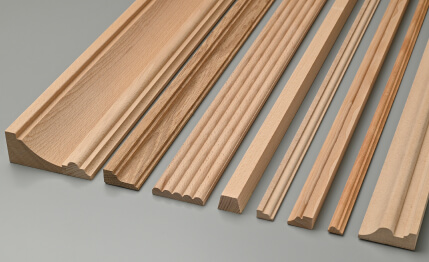
with a classic profile creates a sense of solidity, reliability.— is a world of its own. The plasticity, the play of fibers, the tactile warmth, the dignity of natural material — no synthetic analogue can reproduce all of this. Wooden floor skirting is made from pine, spruce, oak, beech, larch. Each species has its own character — and its own purpose.
Oak — hard, dense, with an expressive texture. Beech — more uniform, ideal for painting. Coniferous species — affordable, easy to work with, suitable for dachas and utility rooms.
Wooden skirting board — a choice for classic, neoclassical, Scandinavian, warm natural interiors. It looks organic next to parquet, engineered wood, solid wood flooring. With proper treatment, it lasts for decades — it can be sanded, repainted, refreshed.
Our factory also produces:


MDF skirting boards: even geometry, ease of installation.
Floor MDF skirting board— high-density pressed wood fiber. Main advantage: stable geometry. MDF does not warp, crack, or react to humidity changes as actively as solid wood. This makes it convenient to install and predictable in use.
MDF is a popular choice for modern interiors with white walls and light floors. It takes paint well, and under enamel looks neat and modern. Lines are clear, profile is stable, installation is simple.
Important nuance: MDF still falls short of solid wood in repairability. A deep scratch cannot be sanded out — only repainting or replacing the section.
Get Consultation
Solid wood skirting boards: status and durability.
Solid wood skirting board — a category above wooden skirting board made from coniferous wood. This refers to oak, beech, and other hardwoods, processed while preserving the integrity of the structure.Solid wood skirting boards— a choice for those building an interior for the long term and valuing the naturalness of the material.
Oil, varnish, wax, painting in any RAL — solid wood accepts any finishing treatment. Service life — 40–80 years with normal use. Repairability — complete: sanding restores the surface without traces.
White and paintable skirting boards: color versatility.
White floor skirting is perhaps the most popular color in Moscow apartments. It is neutral, versatile, and creates a clean line along the perimeter of the room. White skirting works in Scandinavian style, Provence, modern classic, minimalism—virtually any light interior.
Skirting for painting is an even more flexible solution: it can be painted the same shade as the walls, creating an effect of a continuous plane. Or—in a contrasting color for emphasis. Here, the only limit is imagination.
How to choose floor skirting: four key parameters
A random choice based on 'like or dislike' almost always leads to mismatch. A different principle works: consistently go through four parameters—and the decision will become obvious.
By material
Three questions help decide:
-
What type of floor? Parquet and engineered wood require wooden skirting. Laminate is compatible with both wood and MDF. Tile—MDF or plastic.
-
What interior style? Classic and neoclassical—wood, solid wood. Minimalism and high-tech—MDF or a white, sleek profile.
-
Is painting needed? For painting—beech or MDF. For a natural shade—oak with oil or varnish.
By height
Skirting height is not just a size, it's an architectural proportion. The higher the ceiling—the higher the skirting should be, otherwise it will get lost against the wall.
| Ceiling Height | Recommended skirting board height | Style |
|---|---|---|
| 2.3–2.6 m | 45–60 mm | Modern, minimalism |
| 2.6–2.8 m | 70–80 mm | Universal |
| 2.8–3.2 m | 100–120 mm | Classic, neoclassic |
| 3.2 m and above | 150–200 mm and more | Premium interior |
Low skirting board (45–60 mm) — for studio apartments, Scandinavian interiors, where the visual height of the wall is more important than the accent at the floor.
Medium (70–80 mm) — the workhorse of the Moscow market. Suitable for most standard apartments.
High floor skirting board (100–120 mm) — for spacious rooms, classic interiors, country houses. Creates architectural completeness.
Wide floor skirting board — a special category. Details in the article Wide Wooden Skirting Board.
By profile shape
The profile shape defines the interior's 'vocabulary':
-
Straight / laconic — no decor, clear edges, modern character. Ideal for minimalism, Scandinavian style, modern bright apartments.
-
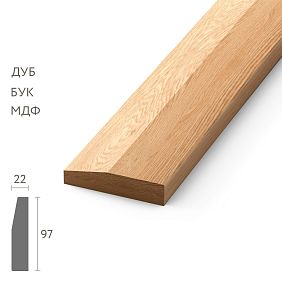
Classic — with fillets, roundings, stepped transitions. For traditional and neoclassical interiors.
-
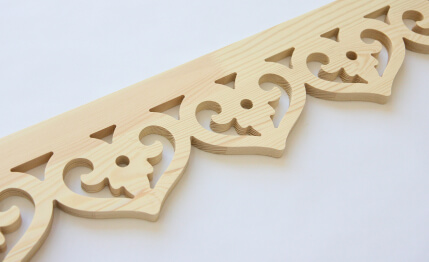
Decorative — rich relief, carved elements, milled grooves. For classic, empire, custom projects with high decor.
By finish
-
Unfinished — ready for any final treatment of your choice.
-
Primed for painting — sanded, primed, or prepared for enamel application.
-
Natural shade — oil, wax, or clear varnish preserving the wood's color and texture.
-
Enamel — a ready-painted skirting board, white or colored.
How to choose a floor skirting board to match your interior
Interior type is the main filter. Let's explore specific scenarios.
For apartments
Apartment — a compromise between aesthetics and practicality. For a standard Moscow apartment with 2.6–2.8 m ceilings and light walls, the optimal choice is a white or natural wooden skirting board made of beech or oak, 70–80 mm high, with a minimalist or moderately classic profile.
A skirting board primed for painting offers maximum freedom: it can be painted white, gray, beige — depending on the overall concept. This is especially relevant in apartments with frequently changing interior solutions.
For home
A country house allows for working with scale. High ceilings, spacious rooms, wood as a recurring material — all this calls for a taller and more expressive skirting board. A tall floor skirting board (100–150 mm) in a house with parquet, wooden doors, and a staircase looks like part of an architectural system, not a separate detail.
For a classic interior
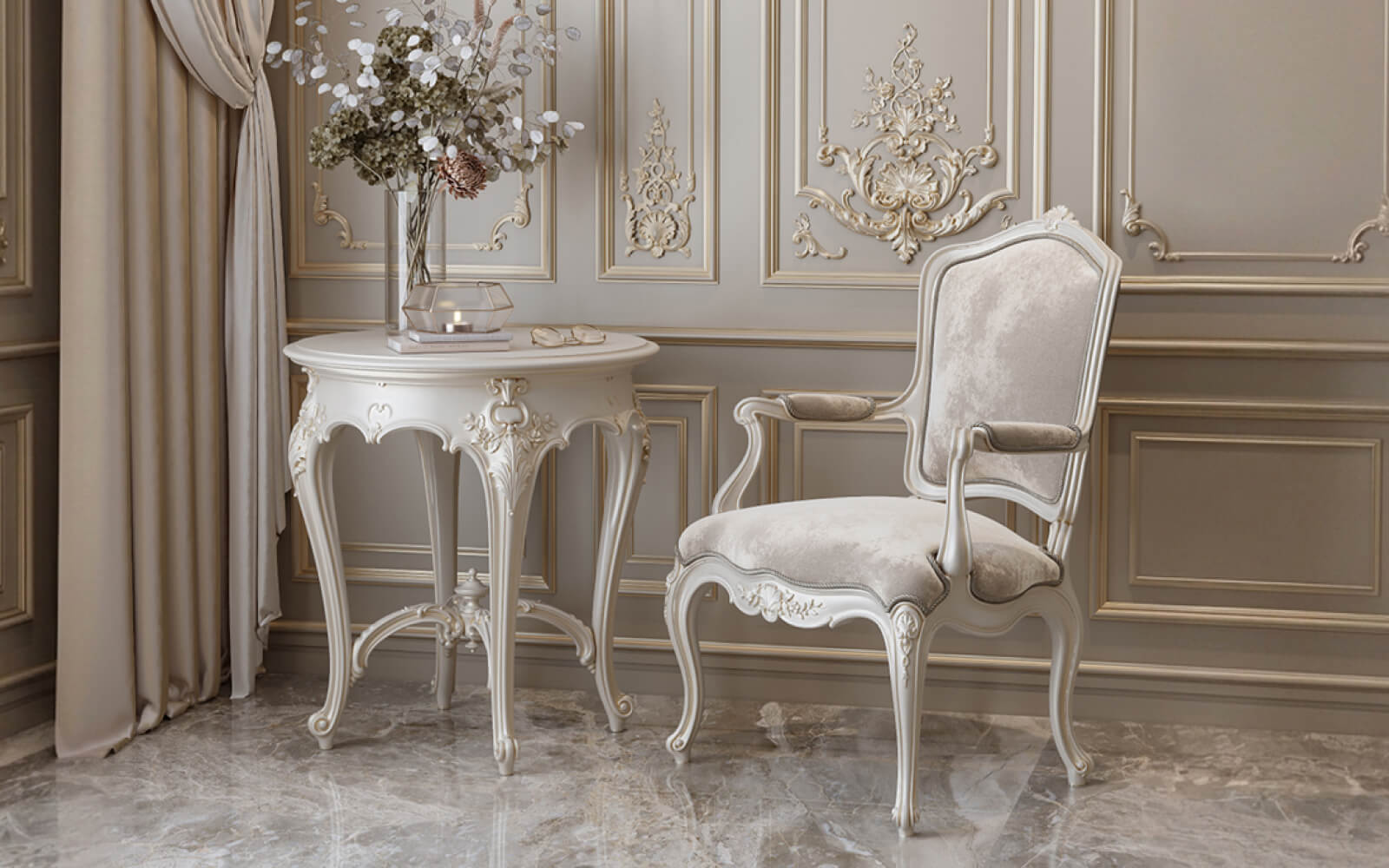
Classic is a system. Here, the skirting board works in ensemble with door casings,solid wood moldings, wooden cornicesand ceiling profiles. The profile should be expressive, with a height of at least 100 mm, and finished with varnish or enamel.
For a classic interior, it is especially relevantSolid wood moldings, cornices, and baseboards— a unified line allows for consistency across all profiles.
For a modern interior
Minimalism, Scandinavian style, and modern classic require restraint. A straight profile, 60–80 mm in height, in white or a neutral color. The baseboard should 'blend' into the space without drawing unnecessary attention.
Here, MDF with enamel or a wooden beech baseboard for painting are equally suitable solutions.
For an interior with moldings and slatted panels
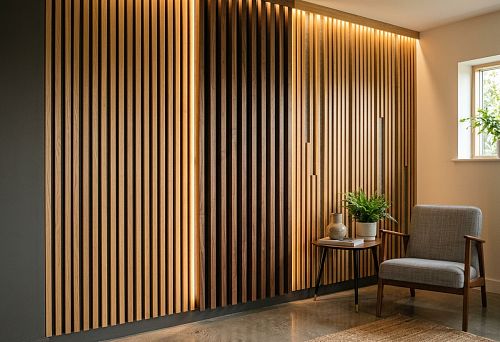
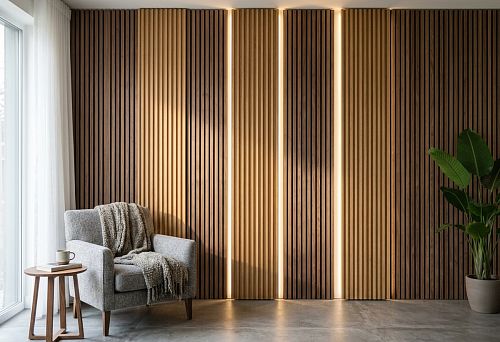
When the walls are decorated withslatted wall panels, the baseboard becomes the lower point of a unified wooden theme. It should be made from the same wood species, with the same finish—to create a continuous vertical line: floor → baseboard → wall → slat. This is a very modern and yet very organic solution.
How to choose a baseboard based on the type of flooring
The floor is the starting point when choosing a baseboard. Their compatibility determines the overall visual result.
Under laminate
Laminate is one of the most common types of flooring in Moscow apartments. Wooden or MDF skirting boards are equally suitable. The key is color coordination: warm brown laminate pairs better with a natural-tone wooden skirting board or one with a lacquer finish. Light laminate goes with white or beige skirting boards for painting.
Under parquet
Parquet is natural wood, and the skirting board should match the level of the flooring. The best choice is a wooden floor skirting board made from the same or a similar species. Oak parquet → oak skirting board. This creates a unity of material that is immediately noticeable and indicates a high level of renovation.
For engineered board
Engineered board is a hybrid flooring with a natural veneer. The same principle as with parquet: a wooden skirting board from the corresponding species. For light engineered board — light oak with oil. For dark — a dark-toned skirting board.
For solid wood
Solid wood floor + solid wood skirting board = an impeccable pair. Species, finish, tone — must be coordinated. There is no room for compromise solutions here: MDF next to solid wood is perceived as a mismatch.
For tile and combined floorings
Tile is most often found in hallways, kitchens, and bathrooms. For these rooms, wooden skirting boards are undesirable without special hydrophobic treatment — moisture affects solid wood. MDF with high-quality enamel is the optimal choice for rooms with tile.
How to choose the height of a floor skirting board: a detailed breakdown
Height is a parameter that many ignore. Yet, it is precisely what determines whether the skirting board will be noticeable as an architectural element or will blend into the space.
For a standard apartment
Ceilings 2.6–2.8 m are standard in Moscow new builds. Here, a height of 70–80 mm is optimal. Such a skirting board creates a confident lower line of the wall, is noticeable in the interior, but does not become a dominant element.
For high ceilings
Ceilings 3.0 m and higher are a completely different scale. A 70 mm skirting board here looks like a thin thread on the floor. For such spaces, a height of 100 mm or more is needed, ideally 120–150 mm. This creates a proportional 'foundation' for the wall.
For small rooms
In small rooms, a tall skirting board 'steals' the visual height of the wall, making the space appear even more squat. Here it's better to choose a low or medium skirting board (50–70 mm) in a light color, matching the wall tone if possible.
When a wide skirting board is appropriate
A wide floor skirting board (from 120–150 mm and above) is a design accent, an architectural solution. It is appropriate:
-
in living rooms with high ceilings;
-
in country houses with wooden decor;
-
in classic interiors with developed cornices and moldings;
-
in neoclassical styles where horizontal spatial rhythms are important.
More aboutwide wooden baseboard— in a separate article with specific examples and recommendations.
How skirting board height affects the perception of space
A low skirting board visually 'raises' the floor, making the room seem taller. A high skirting board 'lowers' the wall, creating a sense of monumentality and stability. A wide skirting board additionally creates a horizontal rhythm in the lower zone of the room.
This is not theory—these are the designer's working tools that influence the perception of space no less than wall color or lighting.
Where to buy floor skirting boards in Moscow
Today, you can buy floor skirting boards in Moscow in many places. But not everywhere provides the required quality of profile geometry, proper wood drying, stable stock availability, and the ability to select the entire set of interior decor in one place.
Before purchasing, it is important to consistently check several points.
What to check before placing an order:
-
Material: clarify the wood species, wood moisture content (for solid wood—no more than 8–12%), and the presence of kiln drying.
-
Profile geometry: whether the end is even, and if there are any waves or tear-outs after milling. Especially important for long straight sections.
-
Blank length: standard is 2 or 2.5 m per piece. Clarify the multiplicity to correctly calculate the quantity.
-
Finish: untreated, for painting, oil, varnish—choose according to your finishing task.
-
Stock availability: for large orders, check the actual balance, not the nominal one.
-
Delivery in Moscow: long items (2–2.5 m) require special transportation conditions. Check the possibility and cost.
-
Selection for a project: if you need a non-standard profile, atypical height, or special wood species — check the possibility of an individual order.
Buy floor skirting boards in Moscowwith real assortment and current prices — in the catalog. There you can also select the entire set: skirting boards, moldings, cornices, paneling — from one source.
What determines the price of a floor skirting board
The price range for floor skirting boards is wide: from 300–400 rubles per linear meter to 2000–4000 rubles and above per piece in premium execution. What lies behind this difference?
Material
Coniferous skirting board (pine, spruce) — the most affordable. Oak and beech — significantly more expensive due to density, labor-intensive processing, and raw material cost. MDF — an intermediate option in price, cheaper than oak, more expensive than coniferous.
Height and thickness
Direct dependence on material volume. A 45×15 mm skirting board and a 120×22 mm skirting board from the same wood species — a price difference of 2–3 times just due to the blank.
Profile complexity
A simple straight profile is milled quickly, practically without defects. A decorative profile with several beads, grooves, transitions — more complex in production, higher labor intensity, higher price.
Type of finish
Unfinished skirting board — base price. With oil-wax — 15–25% more expensive. With varnish — similarly. With applied enamel (especially white, in several coats) — most expensive, but the customer gets a product ready for installation.
Wood sorting
Grade "Extra" / "Premium" — hand-selected, no knots, color uniformity. Costs 20–40% more than standard. For rooms where the skirting board is visible under direct light — it's worth paying extra.
Solid wood or MDF
MDF, all else being equal, is cheaper than solid wood. But with the same profile and finish, the difference is not always fundamental — especially if you plan to paint.
Current prices and the entire range — see in thefloor skirting board catalog.
What to combine floor skirting board with: interior system
Floor skirting board works best not on its own, but in conjunction with other interior decor elements. This is the system principle: each element enhances the other.
With moldings
Moldings from solid wood— horizontal wall profiles — create panel division of space. The floor skirting board in this system is the lower "horizon". Profiles should be coordinated: similar rounding character, unified finish.
With cornices
Wooden cornicesThey complete the wall at the top — symmetrically to how the baseboard completes it at the bottom. For classical and neoclassical interiors, the combination 'cornice — molding — baseboard' is a mandatory technique. All three elements should be from the same collection or, at a minimum, coordinated in profile.
With slatted panels
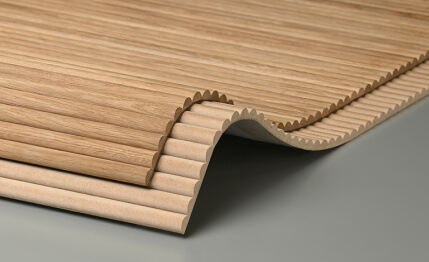
slatted panels for walls— is one of the main modern trends. Vertical wooden slats on the wall create a textural accent, warmth, and volume. A floor baseboard made from the same wood species logically completes this vertical theme — transitioning from floor to wall without a break in material.
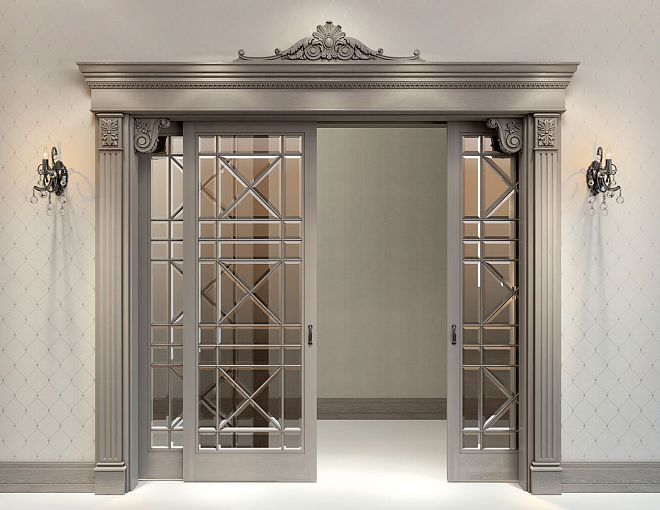
With doors and architraves
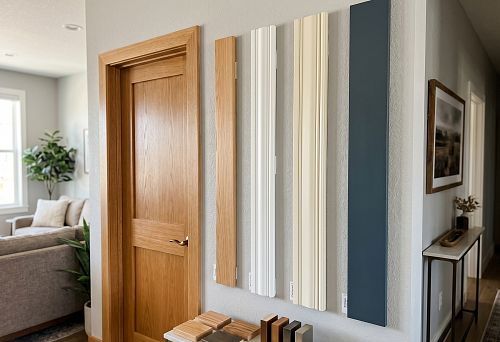
The color and profile of the baseboard should be coordinated with the door trims. If the trims are white — the baseboard is white. If they are oak — the baseboard is made of oak. A break here is perceived as a project error, not as a design technique.
With a ceiling baseboard
ceiling wooden skirting— the ceiling cove — is the symmetrical partner of the floor baseboard. In classical interiors, they form a unified frame around the space: floor → baseboard at the bottom → wall → baseboard at the top → ceiling. The more precisely these two elements are coordinated, the more finished the space appears.
With stucco and interior decor
For interiors with stucco, coffered ceilings, pilasters, and cornice shelves, the floor baseboard is part of a more complex decorative system. In such projectsPolyurethane moldingsandPolyurethane moldings, cornices, and skirting boardsoften work in tandem with a wooden floor baseboard — different materials, a unified decorative language.
Common mistakes when choosing floor skirting board
Knowing these mistakes — you won't make them. Here are the most common miscalculations:
Too low a baseboard in a large room
A 30 sq. m living room with 3 m ceilings and a baseboard height of 45 mm is a classic mistake. The baseboard gets lost, the wall seems unfinished, and the room looks incomplete. Rule: baseboard height is approximately 1/30–1/40 of the wall height.
Color conflict with doors
Dark floor + white baseboard + beige doors — three different stories in one room. Without a logical color connection, the space falls apart into unrelated details.
Unsuitable material for the floor type
MDF next to oak parquet is perceived as a compromise. A floor made of natural wood requires a wooden baseboard — this is the material's integrity, which the space 'feels'.
Choosing based on price alone
The cheapest baseboard often means crooked geometry, soft wood species, poor end processing. All of this will backfire during installation — gaps in corners, spaces near walls, rapid wear at joints.
Lack of connection with the interior style
A decorative Baroque baseboard in a modern apartment is like a tailcoat at a casual party. The profile should match the overall 'language' of the interior. To do this, first determine the style — then choose the profile.
FAQ: Frequently asked questions about floor baseboards in Moscow
Which floor baseboard is better — wooden or MDF?
Depends on the task. For parquet and engineered wood — wooden. For laminate and tile — MDF is quite appropriate. For a classic interior — solid wood has no alternatives. For a modern one to be painted — both options work.
What height should I choose for a baseboard in an apartment?
For standard Moscow apartments with ceilings of 2.6–2.8 m — 70–80 mm. If you want a more pronounced architectural accent — 100 mm.
How to calculate baseboard quantity?
Measure the perimeter of all rooms in meters. Subtract the width of the doorways. Add 10–15% for cutting and reserve. Divide by the length of one plank (usually 2 or 2.5 m) — you'll get the number of pieces.
Can a wooden baseboard be painted after installation?
Yes. A wooden beech baseboard for painting is designed specifically for this. It is primed and painted with acrylic enamel in any RAL color. With quality application, it holds color for years without peeling.
Can I buy a baseboard with delivery in Moscow?
Yes. Delivery in Moscow is available in the catalog — check the terms and conditions when placing your order. Long items (2–2.5 m) require special transport.
How to match a baseboard to the floor color?
There are three strategies: match the floor (unity of material), match the doors (vertical rhythm), match the walls (vanishing baseboard effect). Choose depending on what you want to accentuate.
Which skirting board to choose for a classical interior?
Wooden baseboard made of oak or beech with a classic profile (roundings, coves), height from 100 mm, finish under varnish or enamel. In an ensemble withmoldings and solid wood cornices.
What is more important — the profile or the height of the baseboard?
Both parameters are equally important. Height is about proportion in space. Profile is about style and character. A mistake in either leads to an incorrect result. The correct choice is first height (based on ceilings), then profile (based on style).
How much does floor baseboard cost in Moscow?
The range is wide. Solid wood baseboard — from 1600–2000 rubles per piece (for a standard-length item) in the basic line. Wide and decorative models — from 3000 to 7000+ rubles. MDF baseboard is somewhat cheaper for similar sizes. Current prices are in floor skirting board catalog.
Why floor baseboard is an interior design solution, not a consumable
Finishing a renovation is not the moment when the money runs out. It is the moment when all the details fall into place and the space gains integrity. Floor baseboard is one of these final details. Small. But noticeable.
A correctly chosen floor baseboard holds the bottom line of the interior, creates a transition between the floor and the wall, and sets the horizontal rhythm of the room. An incorrectly chosen one creates a dissonance that is impossible not to notice when you know what to look for.
In Moscow today, there is plenty to choose from. The main thing is to choose consciously: by material, height, profile, and interior logic. The rest is a matter of the catalog and delivery.
Select floor baseboard in the catalog — see moldings, cornices, and baseboards in a single section.
Buy floor skirting board in Moscow— current assortment, real prices, delivery.
About the company: STAVROS — manufacturer of solid wood interior decor
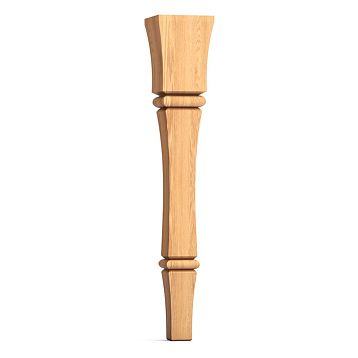
Behind every item in the catalog stands specific production, specific control, and specific results. STAVROS is a Russian manufacturer of solid oak and beech products: floor skirting boards, ceiling cornices, moldings, paneling, furniture decor, handles, legs, and much more.
Own production, chamber wood drying, constant warehouse stock. Over 4000 models, 20,000 modifications, 39 product groups — everything needed for comprehensive interior design: from floor skirting to ceiling cornice.
Order from one piece. Wide selection of formats, wood species, and finishes. Delivery across Moscow and all of Russia. Possibility of kit assembly for interior projects — when skirting boards, moldings, cornices, and panels from the same wood species, in the same finish, coordinated by profile are needed.
STAVROS is not a store that sells skirting boards. It is a manufacturer that makes interiors complete.