Article Contents:
- Physics of Reliability: Why Some Connections Last Centuries, While Others Fail Within a Year
- Analysis of Loads and Stresses in Stair Structures
- Material Science Aspects of Durability
- Revolutionary Fastening Technologies: From Traditions to Innovations
- Evolution of Fastening Systems
- Innovative Solutions for Complex Conditions
- Technological Processes of Professional Installation
- Preparation Operations and Marking
- Drilling Technology and Hole Preparation
- Specialized Fastening Systems for Various Base Materials
- Fastening to Wooden Structures
- Installation on Concrete and Stone Foundations
- Quality Control and Diagnostics of Connections
- Non-Destructive Testing Methods
- Criteria for Assessing Reliability
- Innovative Materials and Coatings for Fastening Elements
- High-Strength Alloys and Composites
- Functional Coatings and Surface Modifications
- Automation and Robotics in Fastening Processes
- Modern manufacturing technologies
- Systems for Automatic Quality Control
- Economic Aspects of Choosing Fastening Systems
- Lifecycle Cost Analysis
- Cost Optimization Without Compromising Quality
- Ecological aspects and sustainable development
- Recycling and Disposal of Fastening Materials
- Energy efficiency of production
- Future of Fastening Technologies: Trends and Prospects
- Intelligent Fastening Systems
- Nanotechnologies in Fastening Systems
- Regional Characteristics of Fastening System Application
- Climate Factors and Their Impact
- Seismic requirements and norms
- Conclusion
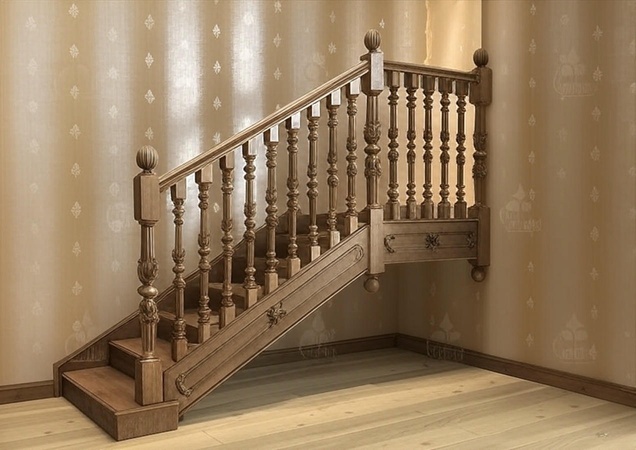
How many times have you seen loose balustrade railings that creak with every touch? How many times have you noticed how even the most beautiful wooden posts deform over time? The problem lies not in material quality, but in the incorrect approach to fastening elements. Professional baluster post mounting requires a deep understanding of load physics, material properties, and the nuances of installation technologies.
In this article, we will reveal secrets that allow creating balustrades that serve for decades without losing their original strength and aesthetics. You will learn about modern fastening methods, innovative fastening systems, and professional tricks that turn ordinary installation into a high-tech process.


Physics of reliability: why some connections last centuries, while others fail within a year




Analysis of loads and stresses in stair constructions
Each stair post experiences a complex of multidirectional loads. Vertical forces from railings' weight and accidental impacts combine with horizontal forces from people leaning on handrails. Dynamic loads arise during rapid stair movement, creating vibrations that gradually loosen weak connections.
The critical point becomes the concentration of stresses at connection points. Incorrectly distributed loads may exceed the strength limit of wood by tens of times, leading to the formation of microcracks that develop into serious damage over time.
Temperature deformations add complexity to calculations. Wood expands and contracts depending on humidity and temperature, creating additional stresses in rigid connections. Professional fastening systems account for these factors, ensuring compensation for natural material movements.
Our factory also produces:


Material science aspects of durability
The choice of fastening elements determines the lifespan of the entire structure. Ordinary steel screws are susceptible to corrosion, especially under variable humidity conditions. Corrosion products increase in volume, creating internal stresses that destroy wood from within.
Stainless steel grade A2 ensures long-term stability of connections. Its coefficient of linear expansion is close to that of wood, minimizing thermal stresses. Special coatings additionally protect the metal from aggressive influences.
Brass fastening elements demonstrate excellent corrosion resistance and aesthetic qualities. Their ductility allows compensating for minor deformations without damaging the connection. However, their high cost limits their use to premium projects.
Get Consultation
Revolutionary fastening technologies: from traditions to innovations
Evolution of fastening systems
Traditional pin connections remain the foundation of reliable fastening due to their simplicity and effectiveness. A metal pin with a diameter of 8-10 mm provides a strong connection capable of withstanding significant loads. The threaded part securely fastens into the wood, creating an inseparable connection.
Modern modifications of pin connections include self-tapping elements with variable thread pitch. Such a construction ensures a tighter fit in wood of varying density. The conical shape of the tip facilitates installation and reduces the risk of material cracking.
Chemical anchors represent a new generation of fastening systems. A special epoxy-based composition creates a monolithic connection with wood, distributing the load over a large area. Such connections surpass mechanical fasteners in strength and durability.
Innovative solutions for complex conditions
Vibration-damping connections solve the problem of dynamic loads in public buildings with heavy foot traffic. Elastomeric inserts absorb vibrations, preventing fatigue damage to wood. Such systems are especially relevant for shopping centers and office buildings.
Adjustable connections allow compensating for installation inaccuracies and natural structural deformations. Screw mechanisms provide precise adjustment of each post's position without dismantling the entire system. This is critically important for long stair runs, where manufacturing tolerances accumulate.
Quick-release connections simplify maintenance and repair of balustrades. Special locking mechanisms allow removing individual elements without compromising the structural integrity. Such solutions are in demand in commercial facilities where partial element replacement may be required.
Professional installation technology processes
Preparation operations and marking
Marking accuracy determines the quality of the entire structure. Modern laser levels allow creating perfectly straight lines at any distance. Marking error should not exceed 1 mm per meter of length, ensuring visual uniformity of the balustrade.
Drilling templates guarantee repeatability of operations and eliminate human error. Guides are made from strong materials with precise bushings. Using templates speeds up work several times and improves connection quality.
Pre-treatment of wood includes acclimatizing the material and protective impregnation of fastening zones. Antiseptic compositions prevent biological damage in high-risk zones. Hydrophobic impregnations protect end surfaces from moisture penetration.
Drilling technology and hole preparation
The quality of holes directly affects the strength of connections. Drill bits with chamfers provide clean edges without chips or burrs. Sharpness of cutting edges is critically important for achieving precise hole dimensions.
The drilling speed should correspond to the hardness of the wood. Excessively high speeds cause overheating and charring of the hole walls, reducing the connection strength. The optimal speed for coniferous species is 800-1200 rpm, and for hardwoods — 600-800 rpm.
Lubricating the drill with paraffin or special compounds reduces friction and prevents clogging with chips. Periodically removing the drill to clear chips ensures hole cleanliness and dimensional accuracy.
Specialized fastening systems for various base materials
Fastening to wooden structures
Joining wood to wood opens up wide possibilities for creating strong and aesthetically pleasing fastenings. Dovetail joints provide concealed mounting without visible fasteners. Wooden dowels with a diameter of 8-12 mm create a strong connection comparable to metal counterparts.
Adhesive joints enhance mechanical fastenings and compensate for manufacturing inaccuracies. Modern polyurethane adhesives have high strength and elasticity, which is especially important for wooden structures. The open time is 10-15 minutes, allowing for adjustment of element positions.
Combined systems combine different types of fastenings for maximum reliability. Fastening balusters of posts may include dowels for positioning, adhesive for sealing, and screws for final fixation.
Mounting on concrete and stone bases
Working with mineral bases requires a special approach and professional tools. Hammer drills with diamond bits provide precise holes in concrete without cracking. The drill bit diameter must exactly match the anchor size for tight fit.
Chemical anchors show excellent results in dense concrete and natural stone. Two-component compositions create a strong connection surpassing mechanical anchors in performance. Polymerization time is 2-4 hours depending on temperature.
Expansion anchors provide quick installation and the possibility of removal if needed. The conical design creates reliable fixation in the hole, while special grooves prevent rotation. Load capacity reaches 2-3 kN per anchor.
Quality control and diagnostics of connections
Non-destructive testing methods
Ultrasonic testing allows detecting hidden defects in connections without damaging them. Changes in the speed of ultrasonic wave propagation indicate the presence of voids, cracks, or poor contact. The method is especially effective for checking adhesive joints.
Thermographic diagnostics reveal zones of increased friction and wear in mechanical connections. Local heating indicates improper load distribution or loosening of fasteners. Regular monitoring helps prevent hazardous situations.
Vibroacoustic diagnostics are based on analyzing the natural frequencies of structural vibrations. Changes in the vibration spectrum indicate a loss of connection stiffness. The method allows assessing the condition of the entire fastening system simultaneously.
Criteria for assessing reliability
Static tests determine the ultimate load capacity of connections. The standard method involves applying a horizontal force of 100 kg to the top of the post. Deflection must not exceed 5 mm, and residual deformations must be absent.
Dynamic tests simulate real operating conditions with cyclic loads. The connection must withstand 50,000 load cycles without signs of weakening. Such tests are especially important for public buildings with intensive use.
Long-term tests in climate chambers simulate the effects of variable humidity and temperature. Connections are subjected to 100 cycles of condition changes from -20°C to +60°C at humidity levels from 30% to 90%. Quality fasteners retain their properties without change.
Innovative materials and coatings for fasteners
High-strength alloys and composites
Titanium alloys provide maximum corrosion resistance and strength at minimal weight. Their biocompatibility makes titanium ideal for medical and food facilities. High cost limits application to especially critical installations.
Carbon composites combine high strength with low weight and zero corrosion. Fibrous structure provides anisotropy of properties, allowing optimization for specific loads. Production technology is continuously improving, reducing product cost.
Ceramic coatings create a superhard surface with low friction coefficient. Such coatings practically do not wear and retain properties in aggressive environments. Application is limited by high brittleness and complex application.
Functional coatings and surface modifications
Anti-friction coatings based on polytetrafluoroethylene reduce installation forces and prevent seizing of threaded connections. Low friction coefficient ensures even stress distribution during tightening. Coating retains properties over a wide temperature range.
Self-lubricating coatings contain solid lubricants that are released under mechanical stress. Molybdenum disulfide and graphite provide lubrication in extreme conditions where liquid lubricants are ineffective. Service life of such coatings reaches 20-30 years.
Silver ion-based antibacterial coatings prevent the development of microorganisms on the surface of fasteners. This is especially important for medical facilities and food production, where higher sanitary standards are required.
Automation and robotization of fastening processes
Modern manufacturing technologies
CNC machines provide the highest precision in manufacturing fasteners. Tolerances for dimensions are ±0.01 mm, ensuring perfect fit in joints. Automatic tool change allows performing complex operations without operator involvement.
Robotized assembly lines eliminate human factors and ensure stable product quality. Vision systems monitor every stage of production, automatically rejecting defective items. Productivity increases 3-5 times compared to manual assembly.
Additive technologies open up possibilities for manufacturing fasteners of complex shapes unattainable by traditional methods. 3D printing from metal powders allows creating items with internal cavities and variable material density.
Systems of automatic quality control
Laser measurement systems provide non-contact control of geometric parameters of products. Measurement accuracy is ±0.001 mm, enabling detection of the slightest deviations from nominal dimensions. Inspection speed reaches 1000 items per hour.
X-ray inspection detects internal defects in fasteners. Pores, inclusions, and cracks are identified at an early stage, preventing defective items from reaching consumers. Automated image processing accelerates the inspection process.
Magnetic particle inspection specializes in detecting surface cracks in ferromagnetic materials. The method has high sensitivity and allows detection of defects as small as 0.1 mm. Automated setups ensure high inspection productivity.
Economic aspects of selecting fastening systems
Life Cycle Cost Analysis
Initial costs of high-quality fastening systems may exceed the cost of budget alternatives by 2-3 times. However, analysis of total cost of ownership shows the economic efficiency of premium solutions. The absence of need for repairs and replacements recoups additional investments within 5-7 years.
Maintenance costs of high-quality fasteners are minimal due to their durability and reliability. Regular inspections and preventive maintenance require minimal time and resources. Budget systems require constant attention and frequent repairs.
The impact on property value should also be considered when selecting fastening systems. High-quality stair railings increase the attractiveness and market value of a property. Investors are willing to pay extra for the reliability and longevity of structures.
Cost optimization without compromising quality
Standardization of fasteners reduces procurement and storage costs. Using standardized sizes and types of fasteners simplifies logistics and allows obtaining discounts for bulk purchases. Interchangeability of components facilitates maintenance and repair.
Localization of fastening system production can significantly reduce their cost. Development of domestic technologies and production capacities creates competition for imported suppliers. State support for innovative projects further stimulates industry development.
Partnership with manufacturers ensures stable supplies and favorable cooperation terms. Long-term contracts guarantee fixed prices and priority service. Technical support from manufacturers helps optimize product application.
Ecological aspects and sustainable development
Recycling and disposal of fastening materials
Modern requirements for environmental safety also apply to fastening systems. Metallic components are fully recyclable without loss of material quality. Sorting by alloy types ensures maximum efficiency of secondary use.
Biodegradable fastening elements made from special polymers are used in temporary structures. Such materials fully degrade in natural conditions within 2-3 years, leaving no harmful residues. Strength characteristics are sufficient for short-term use.
Take-back programs for used fastening elements encourage proper disposal. Manufacturers accept used products at discounted prices, ensuring their recycling. Such programs reduce environmental impact and support circular economy.
Production energy efficiency
Modern manufacturing technologies significantly reduce energy consumption in producing fasteners. Induction heating ensures precise temperature control and minimizes energy losses. Efficiency of modern installations reaches 90-95%.
Renewable energy sources are gradually being integrated into fastening system production. Solar panels and wind generators provide part of the energy needs of enterprises. Investments in green energy pay off within 7-10 years.
Heat recovery from production processes reduces overall energy consumption of enterprises. Heat from thermal treatment is used for heating production spaces and warming technological fluids. Energy efficiency increases by 20-30%.
Future of fastening technologies: trends and prospects
Intelligent fastening systems
Load sensors embedded in fasteners provide continuous monitoring of joint condition. Wireless data transmission allows tracking parameters in real time. Warning systems inform about exceeding allowable loads or loosening of fasteners.
Self-diagnosing joints automatically assess their condition and predict remaining service life. Machine learning algorithms analyze accumulated data and identify degradation patterns. Predictive maintenance prevents emergency situations.
Adaptive fasteners automatically adjust to changing operating conditions. Piezoelectric actuators adjust joint tension depending on load and temperature. Such systems ensure optimal performance under any conditions.
Nanotechnology in fastening systems
Nanostuctured coatings possess unique properties unattainable by traditional methods. Nanocrystalline structures provide ultra-high hardness and wear resistance. Self-healing coatings restore their structure upon local damage.
Carbon nanotubes enhance polymer fasteners, increasing their strength by tens of times. The electrical conductivity of nanotubes allows creating fasteners with built-in sensors. The cost of this technology is gradually decreasing, making it accessible for mass application.
Nanoclusters based on biomimetic principles replicate the adhesion mechanisms of living organisms. Reversible bonds allow disassembling and reassembling structures multiple times without loss of strength. Such technologies revolutionize approaches to designing disassemblable structures.
Regional characteristics of fastener system application
Climate factors and their influence
Arctic conditions require special fastening solutions resistant to extremely low temperatures. Brittleness of metals at -40°C and below may lead to sudden failure of connections. Special alloys with increased ductility ensure reliability in harsh conditions.
Tropical climate creates an aggressive environment with high humidity and temperature. Accelerated corrosion requires the use of special protective coatings and materials. Biological activity in tropical regions may lead to biological corrosion of metallic elements.
Marine climate is characterized by high salt content in the air, significantly accelerating corrosion processes. Baluster post fastening in coastal zones requires the use of marine alloys or special coatings.
Seismic requirements and standards
Seismically active regions impose special requirements on fastening systems. Dynamic loads during earthquakes may exceed static loads by tens of times. Fasteners must have high ductility to absorb seismic energy.
Damping elements in fastening systems reduce vibration transmission to the structure. Viscoelastic materials absorb vibration energy, preventing resonance phenomena. Properly designed dampers can reduce seismic loads by 2-3 times.
Quick-release connections allow structures to deform without damaging fastening elements. When exceeding design loads, connections temporarily disengage and then automatically restore. Such systems prevent catastrophic failures.
Conclusion
Professional baluster post mounting represents a complex engineering challenge requiring deep knowledge in materials science, mechanics, and manufacturing technologies. Modern scientific and technological achievements open new opportunities for creating fastening systems that surpass traditional solutions in all parameters.
Investments in quality fastening systems pay off multiple times due to their durability, reliability, and minimal maintenance requirements. The correct choice of fastening technology determines the service life of the entire staircase structure and its operational safety.
The future of fastening technologies is linked to system intelligence, application of nanotechnology, and development of eco-friendly materials. These trends establish new quality standards and open opportunities for creating fundamentally new architectural solutions.
When choosing a partner for implementing staircase railing projects, it is important to engage companies with long-standing experience and deep expertise in fastening technologies. STAVROS combines traditional craftsmanship with innovative approaches, creating solutions that serve as benchmarks for reliability and quality in the industry. Our engineers continuously refine fastening technologies, integrating the latest scientific and technological advancements. Entrust staircase construction to STAVROS professionals — and receive a guarantee of flawless quality for many years.