Article Contents:
- What is RPU-069
- Why highlight the intersection of moldings at all
- RPU-069 should not mask a poorly assembled joint
- First make a template 116 × 60 mm
- Why a rectangular template is slightly misleading
- How to calculate the number of RPU-069 by grid
- Table of quantity and budget
- Grid of three verticals and two horizontals: why it is not necessary to buy six rosettes
- When all intersections should be made the same
- When it's better to design only the central intersection
- When a regular joint is better than a decorative rosette
- Very frequent grid
- Very narrow frames
- Active molding
- Modern minimalist interior
- There is already strong decor on the wall
- Buy by the number of all intersections without checking the rhythm
- Choosing RPU-069 separately from the molding
- Considering MLDPU-003 guaranteed compatible only because of catalog adjacency
- Using the rosette as a way to hide a crooked cross
- Not taking into account the 11 mm depth
- Can I order only one RPU-069 for the central node?
- Do I need to buy RPU-069 with a reserve?
- Can I use RPU-069 if the horizontal and vertical moldings differ?
- What to do if electrical wiring or a mounting element passes through an intersection?
- Can RPU-069 be placed on an already painted wall?
- Can RPU-069 be combined with other sockets on the same wall?
- Should RPU-069 be used at every corner of a rectangular frame?
- Can RPU-069 be used in a very large panel?
- What matters more when choosing: the size of the wall or the size of the molding?
- What to do if four patterns look good, but eight already overload the wall?
- Can MLDPU-003 be considered a standard molding for RPU-069?
- Where can I see other rosettes if RPU-069 does not fit in size?
- Where can I order RPU-069?
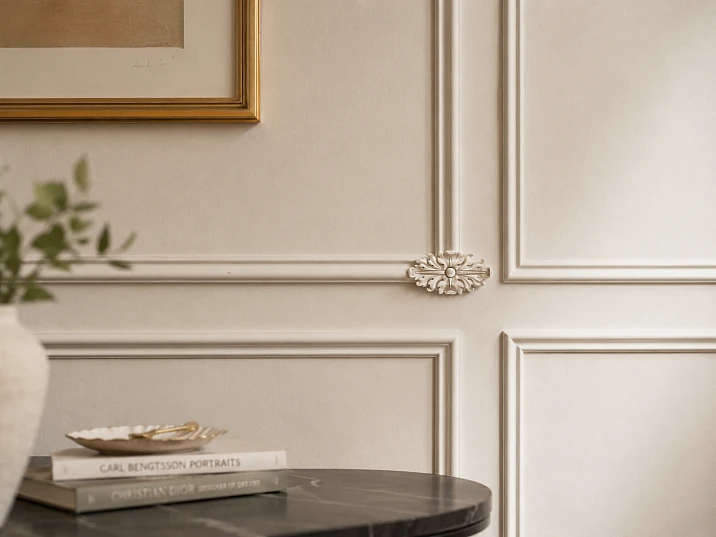
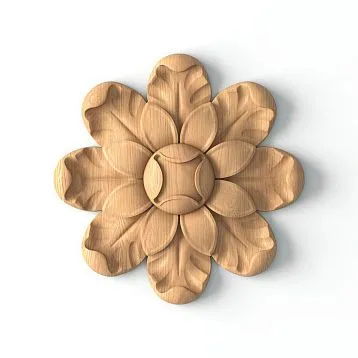
For the latter option, you can consider the carved rosette RPU-069 made of polyurethane, measuring 116 × 60 × 11 mm. The price at the time of checking is 980 ₽ per piece. The STAVROS card confirms the size and material of the product.
But RPU-069 should not be perceived as a universal "plug" for any bad joint. First, you need to understand the scale of the specific molding, check the actual position of the elongated rosette at the intersection, and decide how many such nodes should be accent ones at all.
The main calculation here differs from the usual stucco calculation: you need to count not the wall area and not the number of frames, but the number of selected intersections.
If two vertical lines are crossed by one horizontal line, there are two potential decorative nodes. If three vertical lines cross two horizontal lines, geometrically six intersection points arise. But this does not mean that six RPU-069 are necessarily needed. Sometimes it is more expressive to design only the central or most noticeable nodes.
Therefore, the correct order is:
draw a grid → count intersections → select accent points → make template RPU-069 116 × 60 mm → check the socket relative to the molding → only after that count the quantity and budget.
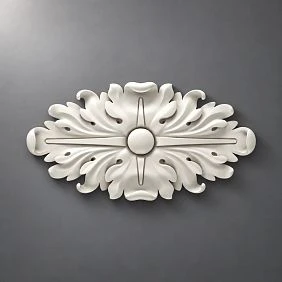
What is RPU-069
RPU-069 is a carved polyurethane rosette. Its current size in the manufacturer's card is 116 × 60 × 11 mm, price — 980 ₽.
| Parameter | RPU-069 |
|---|---|
| Product type | Carved rosette |
| Material | Polyurethane |
| Size | 116 × 60 × 11 mm |
| Long side | 116 мм |
| The second main side | 60 мм |
| Depth | 11 мм |
| Price at time of check | 980 ₽ |
This is a small elongated decorative element.
116 mm — 11.6 cm.
60 mm — 6 cm.
11 mm — 1.1 cm.
The last digit is especially important: the rosette is not a flat pattern. It creates its own relief and under side lighting becomes visually more noticeable than a paper outline of the same size.
It is precisely the elongated format that distinguishes RPU-069 from a round or square decorative point. Therefore, before purchasing, you need not only to check whether 116 × 60 mm fits at the intersection, but also to decide which side should run along the horizontal line and which along the vertical.
The record itself 116 × 60 × 11 mm cannot be automatically interpreted as a ready-made mounting orientation. For a specific layout, first look at the actual pattern of the product and the position of the ornament, then carry out calculations.




Why highlight the intersection of moldings at all
Not every intersection needs to be decorated.
On a modern, calm wall, a plain clean joint can look better than any additional ornament.
RPU-069 becomes meaningful when the intersection is meant to serve as a compositional node.
For example, on a wall there is one long horizontal line and several vertical divisions. Without additional decor, all lines are perceived the same. If small carved rosettes are installed at selected points, the grid gains points of rhythm.
This is especially noticeable on a large wall, where there are many straight lines and without accents they begin to be perceived simply as technical markings.
But the downside is obvious: if you put a rosette at every junction of a small, frequent grid, the number of decorative details quickly grows. Then, instead of clear geometry, many small ornamental spots appear.
Therefore, the first decision is not "how many to buy," but which intersections truly deserve emphasis.
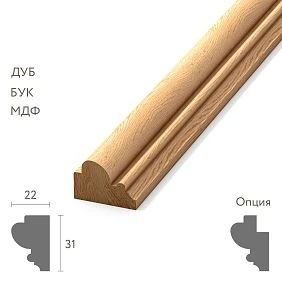
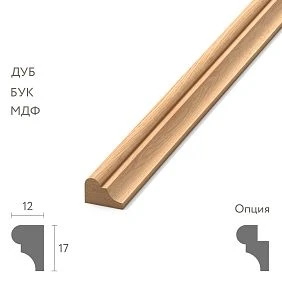
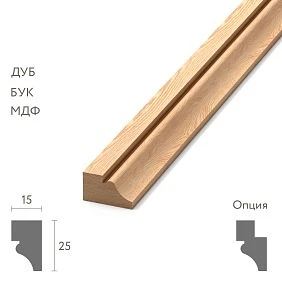
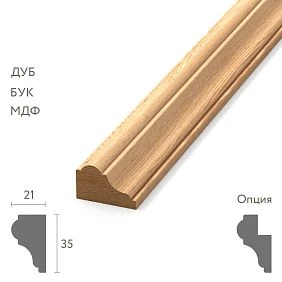
Our factory also produces:
RPU-069 should not mask a poorly assembled joint
There is a fundamental difference between two tasks:
deliberately cover a geometric intersection with a decorative element
и
try to hide a poor installation under a rosette.
If the molding lines are shifted, one profile is higher than another, or the intersection is built with an error, the decorative rosette does not fix the geometry of the entire wall.
On the contrary, a small symmetrical ornament can further emphasize that one line approaches it higher and another lower.
Therefore, the cross itself is checked first:
-
horizontal;
-
vertical;
-
position of the central point;
-
uniformity of the profiles' approach;
-
stability of the already assembled composition.
And only after that is the decorative node considered.
Thus, RPU-069 becomes part of the project, not a way to hide a defect.
Get Consultation
First, make a template 116 × 60 mm
This is the fastest way to check the size before ordering.
Cut out a rectangle from paper or thin cardboard:
116 × 60 mm.
Not "approximately 12 × 6 cm" if a serial composition is planned. It's better to make an exact template once.
Attach it to the intersection of the moldings.
First question: how large is the overall size relative to the profiles?
Second: how much does it overlap the lines converging toward the center?
Third: does the grid pattern itself remain legible?
Fourth: what would happen if similar elements appeared at five, eight, or twelve more points?
For the last question, a single template is not enough. If possible, make several copies and attach them to all the intended nodes simultaneously.
One RPU-069 on the wall may look neat. Eight identical sockets create a completely different rhythm.
Why the rectangular template is somewhat misleading
A paper rectangle of 116 × 60 mm shows the maximum overall size but does not show the actual carved shape.
A solid patch is visually heavier than a decorative rosette with relief and a figured contour.
Therefore, the template is used primarily as a check:
-
physical scale;
-
overlap boundaries;
-
distances;
-
number of elements.
If the rectangle already looks too large for a small intersection, that's a serious signal.
If it fits, the next step is to look at an image of the actual product at the correct scale or use the socket itself for a dry fit.
How to count the number of RPU-069 by grid
A simple formula is convenient here.
If V vertical lines fully intersect with H horizontal lines, the number of geometric intersections:
V × H
For example:
3 vertical × 2 horizontal = 6 intersections.
But the number RPU-069 is not determined automatically by this formula.
After calculation, you need to choose how many intersections will be decorative.
Suppose only four of the six nodes are decided to be highlighted.
Then the order:
4 RPU-069, not 6.
At a price of 980 ₽:
4 × 980 = 3 920 ₽.
It is useful to distinguish two concepts:
all intersections and decorated intersections.
It is the second number that goes into the cart.
Table of quantity and budget
At a price of 980 ₽ per RPU-069, the budget for the sockets themselves looks like this:
| Decorative nodes | RPU-069 | Cost |
|---|---|---|
| 1 | 1 | 980 ₽ |
| 2 | 2 | 1 960 ₽ |
| 3 | 3 | 2 940 ₽ |
| 4 | 4 | 3 920 ₽ |
| 6 | 6 | 5 880 ₽ |
| 8 | 8 | 7 840 ₽ |
| 10 | 10 | 9 800 ₽ |
| 12 | 12 | 11 760 ₽ |
The price is current as of the time the RPU-069 card was checked. It is reasonable to check it again before ordering.
The table does not include moldings, glue, surface preparation, painting, and installation work.
A grid of three verticals and two horizontals: why you don't necessarily need to buy six sockets
A full grid gives:
3 × 2 = 6 intersections.
The most obvious option is to install six RPU-069.
But there are other compositions.
You can decorate only the four outer nodes, leaving the central ones plain.
Conversely, one can highlight two intersections of the central vertical axis.
RPU-069 can be used only on the upper horizontal level.
The choice depends on where the rhythm should appear.
This is more important than pure arithmetic. The formula indicates the maximum potential nodes, while the design determines the actual quantity of goods.
When all intersections should be made identical
Full repetition makes sense if the geometric grid itself is built as a regular ornament.
For example, identical rectangular fields repeat across the entire width of the wall, and each joint is an equal part of the pattern.
Then a single RPU-069 in only one place may look random.
With a regular grid, the choice is often binary:
either most of the identical nodes remain clean;
Or a decorative element is repeated systematically.
An exception may be a deliberately highlighted central node — for example, above a console, fireplace, or between two symmetrical panels.
When it is better to design only the central intersection
If there is a main vertical axis on the wall, a single decorative node can work stronger than a row of identical rosettes.
Let's imagine a composition above a console.
A vertical molding passes through the center of the furniture.
A horizontal one divides the wall panel.
Their intersection coincides with the main axis of the entire composition.
Here, one RPU-069 can deliberately mark the center.
Adding the same elements to all adjacent joints will reduce the uniqueness of the central point.
This scenario requires:
1 RPU-069 = 980 ₽.
This is already a completely different purchasing logic, although there may be significantly more geometric intersections on the wall.
When a regular joint is better than a decorative rosette
There are several situations in which you should not buy RPU-069.
Very frequent grid
If intersections are located close to each other, additional ornament at each node creates visual noise.
Very narrow frames
The rosette 116 × 60 mm may take up too large a share of a small field.
Active molding
If the profile itself has a rich ornament, an additional rosette becomes another pattern on top of an already complex line.
Modern minimalist interior
Clean connections sometimes better support the overall style.
There is already strong decor on the wall
A painting, mirror, sconce, large furniture, or other carved elements can make additional nodes redundant.
Omitting the outlet in such cases is a normal design solution.
How to evaluate RPU-069 relative to the width of the molding
This is more important than comparing the outlet with the overall wall width.
Suppose a molding about 35 mm wide is used.
RPU-069 has dimensions of 116 × 60 mm.
This means one of its main sides noticeably exceeds the width of the profile.
This is expected for a decorative node: the rosette must extend beyond the boundaries of a single linear element, otherwise it will simply get lost in its width.
But the degree of overlap needs to be checked directly on the selected profile.
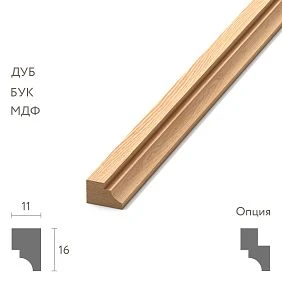
For the article, MLDPU-003 can be considered as a specific example of a polyurethane molding. Its current size is 35 × 12 × 2600 mm, and the price is 7,580 ₽.
At the same time, the presence of MLDPU-003 next to RPU-069 in the catalog logic cannot be considered proof that the two products are guaranteed to form a ready-made geometric node without additional verification.
What is known about MLDPU-003
molding MLDPU-003 has dimensions of 35 × 12 × 2600 mm and is made of polyurethane. The current price in the card is 7,580 ₽ per piece.
| Parameter | MLDPU-003 |
|---|---|
| Type | Polyurethane molding |
| Size A × C × L | 35 × 12 × 2600 mm |
| Length | 2600 мм |
| Material | Polyurethane |
| Price at time of check | 7 580 ₽ |
It can be used as a real example when checking the scale, but the article should not state:
RPU-069 is specifically designed for MLDPU-003.
Such a conclusion would require direct technical confirmation of compatibility.
The correct approach is different:
There is RPU-069 → there is a selected molding → we make a joint layout of the intersection → we check overlap, relief, and pattern → after that we make a decision.
Why "related product" is not equal to "compatible without checking"
Catalogs often show products that can be used in the same style, material, or scenario.
This is useful for searching.
But technical compatibility is a narrower concept.
To confidently state that RPU-069 and a specific molding form a finished assembly, you need to know:
-
profile shape;
-
actual contact surface;
-
relief at the overlap area;
-
position of the ornament;
-
required overlap;
-
trimming order.
If such data is not available, it is more honest to speak of a candidate for a joint composition rather than a guaranteed system.
This is especially important when purchasing several long moldings and six to eight rosettes at once.
Do moldings still need to be trimmed under RPU-069?
The topic title may create a false expectation: that the presence of a rosette completely eliminates the work with the joint.
In practice, a decorative element should not be an excuse for chaotic joining of profiles.
Even if the intersection on top is covered by a rosette, the lines should approach the node predictably and symmetrically.
Therefore, it is more correct to say:
RPU-069 allows changing the visual solution of the intersection and potentially hiding part of the technical joint under a decorative accent, but it does not eliminate the need for proper preliminary marking and fitting.
The exact extent to which the socket will overlap specific lines is checked with a template or a dry fit with the selected molding.
How to determine the center of a decorative node
If the horizontal and vertical lines intersect at a right angle, the geometric intersection point of their axes is marked first.
After that, the RPU-069 template is placed relative to it.
But the center of the rectangular footprint and the compositional center of the carved ornament may be perceived slightly differently.
Therefore, there are two stages.
First: mathematically align the centers.
Second: look at the actual pattern of the socket and, if necessary, refine the position within acceptable limits.
The main thing is to do it consistently in all repeating nodes.
If the first RPU-069 is offset from the axis by 5 mm, and the next one is offset by 5 mm in the opposite direction, the repeating grid will quickly reveal the difference.
How to orient an elongated socket
RPU-069 has two noticeably different main sides: 116 and 60 mm.
Therefore, the possible position affects the pattern of the node.
But you cannot simply decide:
116 mm horizontally is always correct.
First, you need to look at the actual ornament.
If the decorative pattern has a pronounced direction, it can set a logical orientation regardless of the dimensions of the molding grid.
In practice, both options are only tested when the actual shape of the product allows such a position.
For a serial wall, after choosing an orientation, it must be repeated identically in all nodes.
Random alternation of horizontal and vertical positions of identical rosettes creates an additional rhythm that must be designed in advance, not arise during installation.
What happens if the horizontal and vertical moldings have different widths
Such a scenario requires separate verification.
For example, the horizontal line is wide, while the vertical one is noticeably thinner.
Geometrically, this is still an intersection.
Visually, it is no longer a symmetrical cross.
If RPU-069 has a symmetrical or nearly symmetrical center, it can emphasize the difference in profiles.
Sometimes this is useful: the rosette combines two different linear elements into one decorative node.
Sometimes the opposite happens — it looks as if one side is too massive.
A full-size mockup is especially needed precisely when profiles have different widths.
What to do at a T-shaped junction
Not all decorative nodes are crosses.
Sometimes a vertical molding ends on a horizontal one.
This results in a T-shaped junction.
Physically, RPU-069 can also fit in such an area, but the compositional logic will be different.
The rosette is no longer at the center of four continuing directions.
One side of the ornament may visually appear to have "no continuation."
Therefore, you cannot automatically transfer the solution for a cross-shaped intersection to a T-joint.
You need to make a separate template and assess whether the rosette looks like a deliberate completion of the vertical line or like a detail designed for a missing fourth line.
If the second effect is stronger, a regular neat T-joint is better.
What to do if the molding ends at a node
A similar situation arises when a decorative line reaches RPU-069 and does not continue further.
Then the socket turns not into a "crossroads", but into a tip or endpoint.
This is a different intent.
For one wall, such an artistic technique is possible, but it should not be presented as the main purpose of the article.
Our task is repeated intersections of moldings, so most calculations and product quantities are built around them.
How to calculate the amount of molding separately from the number of sockets
The quantity of RPU-069 is calculated by nodes.
The quantity of molding is calculated by line length.
These two calculations should not be mixed.
For example, a wall contains:
two horizontal lines of 3 m each;
three vertical lines of 2 m each.
Total design length of molding:
2 × 3 + 3 × 2 = 12 m
before accounting for actual cutting, joints, and allowance.
Number of intersections:
2 × 3 = 6.
If all are being decorated:
6 RPU-069.
This results in two different purchase units:
meters/molding strips;
pieces of decorative rosettes.
This separation makes the estimate clearer.
Why the number of MLDPU-003 strips cannot be calculated simply as 12 / 2.6
MLDPU-003 has a length of 2600 mm, that is, 2.6 m.
If the design length of the lines is 12 m, simple arithmetic gives:
12 / 2.6 ≈ 4.62 strips.
But buying 4.62 items is impossible.
Even five strips do not necessarily solve the problem optimally, because the actual cutting depends on the length of each individual line.
For example, a horizontal section 3 m long cannot be obtained from a single 2.6 m strip.
A joint appears.
Therefore, for linear materials, a map of individual segments is more important than just the total sum of meters.
This is a good example of why RPU-069 and the molding should be calculated using different methods.
Painting moldings and RPU-069 in one color
For a repeating grid, this is the calmest option.
If moldings, rosettes, and the wall are painted the same, the geometry is read through relief and shadows.
RPU-069 becomes part of the architectural pattern, not a separate color spot.
This is especially useful when there are six to eight decorative nodes on the wall. Highlighting each one in contrast can make the composition too fragmented.
Monochrome finishing allows for more complex geometry without turning the wall into a set of separate decorations.
Contrasting RPU-069 changes the role of the node
If the moldings and wall are one color, and the rosette is contrasting, each joint becomes a separate point of attention.
Say, eight intersections.
In the monochrome version, the viewer first sees the overall grid.
With eight contrasting outlets, eight separate spots may be read first.
This is a completely different composition.
Therefore, it is wiser to use contrast:
for one central node;
for a small number of accents;
or in an interior where the repetition of decorative points is planned deliberately.
Relief of 11 mm and side light
The depth of RPU-069 is 11 mm.
This parameter is absent on the paper template.
If there is a window, wall lamp, or directional ceiling lights nearby, the small outlet gets its own shadow.
Several identical elements on one wall create repeating patches of light and shadow.
This can make the grid more interesting even when painted tone-on-tone.
But if the light almost skims along the wall, the relief is visually enhanced.
Therefore, after a dry fitting of one real product, it is useful to view it under evening lighting before installing the entire set.
When the small size of RPU-069 is an advantage
116 × 60 mm is a compact dimension relative to a large wall panel.
This allows adding an ornament at the intersection without turning it into a large rosette or medallion.
This format is especially useful when:
the grid itself should remain the main element;
decorative nodes are repeated several times;
a small rhythmic accent is needed;
a large overlay would cover too much of the moldings.
That is, compactness here is not a drawback, but a way to keep the lines readable.
When RPU-069 is lost
On a very wide and massive profile, a small rosette may look insufficiently noticeable.
For example, if each molding itself has a large relief and great width, the central element 116 × 60 mm may visually blend with the profile's ornament.
In such a case, the problem is not necessarily solved by increasing the number of RPU-069.
Need to compare:
a larger decorative unit;
a different profile;
A regular clean joint.
To search for alternatives, you can open the section Buy Decor for Moldings.
When RPU-069 overloads a small frame
The opposite case is very compact rectangles made of thin moldings.
If the inner field of the frame has a small width and height, the 116-millimeter part in each corner or intersection becomes a noticeable part of the entire panel.
A grid where nodes are close to each other gets overloaded especially quickly.
Therefore, the size is assessed not separately, but relative to the step between intersections.
If the distance between two adjacent sockets is only a few tens of centimeters, repetition can become too frequent.
The step between nodes is more important than the overall size of the wall
Two walls four meters wide each may require completely different amounts of RPU-069.
The first has only three large panels and two intersections.
The second has a frequent geometric grid with twelve joints.
The overall width is the same.
The number of decorative dots and their density differ by six times.
Therefore, when evaluating a composition, it is useful to measure:
the distance from the center of one node to the center of the next.
The smaller the step, the more carefully you need to use contrasting and complex decor.
How to check the entire wall before buying eight or ten sockets
You don't have to buy a full set for the first try.
Make paper copies of the size 116 × 60 mm.
Place them immediately at all intended points.
Step back a few meters.
Then remove every other one.
For example, out of eight nodes, leave four.
Compare the two options with photos.
This way you can see when the rhythm becomes too frequent.
After that, it is much clearer whether to buy four, six, or eight RPU-069.
Central nodes and peripheral ones do not have to be identical.
Regularity is important, but complete equality of all intersections is not a mandatory rule.
A large wall composition can have a hierarchy.
For example:
the two central nodes — with RPU-069;
side ones — without sockets;
Or:
top row — decorative;
bottom — clean.
The main thing is that the rule is readable.
A random set like “sockets are in the first, third, fourth, and seventh intersections” will look worse if there is no clear geometric reason behind it.
How to calculate an order for several identical walls
Suppose one hotel room has four selected decorative intersections.
Per room:
4 RPU-069.
If five identical rooms are being decorated:
4 × 5 = 20 RPU-069.
Cost:
20 × 980 = 19 600 ₽.
In a serial project, it is especially useful to first fully assemble one reference section.
If it turns out in the first room that the size or frequency of the nodes is not suitable, the error will not be repeated four more times.
What happens if part of the walls are mirrored
For RPU-069 this is simpler than for paired L/R overlays: the product is one.
The quantity depends on the number of selected nodes.
But the orientation of the elongated ornament must still be coordinated.
If the grid rotates in mirrored rooms, you need to decide in advance whether the socket itself or its pattern rotates with it, or whether the direction remains the same in all rooms.
This is a small detail, but during serial installation, it is precisely such differences that are clearly noticeable.
RPU-069 or a special corner element
The corner of the frame and the intersection of two passing lines are different tasks.
A special corner element usually works with a 90-degree turn of the line.
RPU-069 in this article is considered in a place where horizontal and vertical lines form a decorative knot.
One should not replace one type of product with another just because both are placed next to two moldings.
If you need to decorate exactly the corners of frames, it is more logical to first look Decor for Molding.
If you need to mark the center of intersection, then RPU-069 is checked.
RPU-069 or a regular decorative overlay
A rosette measuring 116 × 60 mm is convenient as a small center.
A large overlay performs a different function and covers a much larger part of the wall composition.
On a frequent grid, large decor quickly becomes impossible.
On one large central point, on the contrary, RPU-069 may turn out to be too delicate.
Therefore, the type of product is chosen according to the scale of the task:
small repeating node — compact rosette;
one large center — larger decor.
Why RPU-069 should not be called a ceiling rosette for a chandelier
The word "rosette" in interior decor is used for different products.
RPU-069 has a size of only 116 × 60 mm.
In the context of this article, it is a small carved decorative rosette for local ornamental use.
A person looking for a large ceiling rosette around the chandelier connection point is solving a completely different task.
Therefore, it is important to maintain the exact term and specific scale of the product in the text.
Practical selection scheme
Before ordering, perform the following steps.
1. Draw or mark out the entire molding grid.
Do not evaluate one joint separately from the wall.
2. Count all geometric intersections.
For example, 3 verticals × 2 horizontals = 6.
3. Choose only the decorative nodes.
Perhaps only two or four of the six are needed.
4. Make templates 116 × 60 mm.
Better to make them right away according to the number of planned rosettes.
5. Check the orientation of the actual ornament.
Do not automatically take the first digit of the size as the horizontal.
6. Compare RPU-069 with the selected molding.
Check the scale, overlap, and relief.
7. Evaluate the wall from a distance.
Not just up close.
8. Turn on real lighting.
A depth of 11 mm creates shadows.
9. Calculate the final quantity.
Only the selected decorative elements.
10. Calculate the cost.
Quantity × 980 ₽ at the current price.
After this, the purchase becomes concrete rather than experimental.
Main mistakes in designing nodes
Buying based on the number of all intersections without checking the rhythm
If the plan has six intersections, they automatically buy six sockets.
The reason for the mistake is simple: the technical grid is mistaken for a ready-made decorative scheme.
The consequence is an excessive number of ornamental points.
Check — paper templates in all nodes simultaneously.
Choosing RPU-069 separately from the molding
The socket seems small on the card, and so does the molding.
After combining, the proportions may turn out to be unexpected.
The solution is to always check two items at the same scale.
Considering MLDPU-003 guaranteed compatible only because of catalog proximity
MLDPU-003 indeed has confirmed dimensions of 35 × 12 × 2600 mm, but this alone does not prove a ready technical connection with RPU-069.
The solution is a mockup or dry fit.
Using a rosette as a way to hide a crooked cross
If the axes of the moldings do not align, small symmetrical decor can make the deviation even more noticeable.
First, the geometry of the joint is corrected.
Not accounting for the 11 mm depth
The rosette fits in frontal size, but under side lighting it looks much more active.
Check with real light before serial installation.
Where to buy RPU-069 and related elements
If after a full-size check the socket fits the selected intersections, you can buy the carved socket RPU-069 in its product card. The current size is 116 × 60 × 11 mm, the price at the time of check is 980 ₽.
Other options can be compared in the section buy carved polyurethane rosettes.
If the grid is still being designed, it is worth looking Moldings made of polyurethane before the final calculation of nodes.
A specific molding MLDPU-003 35 × 12 mm can be used as a separate option to check the scale. Its length is 2600 mm, the price at the time of check is 7,580 ₽.
For other ways of designing joints, see the section Buy Decor for Moldings.
A wider selection is available via the link You can buy ready-made stucco matching the Baroque style. Calculate the quantity: linear meters of cornices and moldings, number of rosettes, pilasters, consoles, corner elements. Add a ten to fifteen percent allowance for trimming..
What to put in the cart
For one selected decorative intersection:
1 × RPU-069 = 980 ₽.
For four:
4 × RPU-069 = 3 920 ₽.
For six:
6 × RPU-069 = 5 880 ₽.
For eight:
8 × RPU-069 = 7 840 ₽.
But the quantity is determined only after fitting the entire wall.
If there are geometrically eight intersections, it doesn't mean the cart must contain eight sockets.
Sometimes the correct order is four.
Sometimes it's two.
Sometimes it's zero, because clean intersections better match the interior.
When RPU-069 is really better than a complex decorative joint
The rosette is especially logical when several conditions are met simultaneously.
The intersection should be a visible decorative node, not a random technical spot.
The size of 116 × 60 mm should match the scale of the selected moldings.
The rosette should maintain the readability of the horizontal and vertical lines.
The number of repetitions should not turn the wall into a frequent ornament.
The actual relief of 11 mm should suit the lighting and depth of the adjacent decor.
If all this is fulfilled, one ready-made carved element allows making the intersection visually intentional and repeating one solution across the entire wall.
If at least one point raises doubt, a regular neat joint may prove stronger.
FAQ
Can I order just one RPU-069 for the central node?
Yes. The presence of multiple intersections does not obligate decorating each one. If one point is the compositional center of the wall, a single rosette can be a standalone solution.
Do I need to buy RPU-069 with a reserve?
For rosettes, there is no linear reserve principle like for moldings. The quantity is calculated based on selected nodes. It makes sense to buy an extra piece only for a specific project reason, not automatically.
Can RPU-069 be used if the horizontal and vertical moldings differ?
This option can be considered, but the combined scale needs to be checked with a mockup. The rosette does not guarantee that two different profiles will automatically look like a unified node.
What to do if electrical wiring passes through an intersection or a mounting element is located there?
This is already a technical limitation of the surface. You cannot choose the installation location of a decorative element without understanding the wall construction and the actual mounting area.
Can RPU-069 be placed on an already painted wall?
The fact of finished painting does not exclude decorative installation, but surface preparation and the adhesive composition used must match the specific coating. Before work, the requirements of the mounting materials need to be checked.
Can RPU-069 be combined with other rosettes on the same wall?
It is possible if there is a clear hierarchy. For example, a central node can differ from secondary ones. Random alternation of different sockets usually destroys the regularity of the grid.
Should RPU-069 be used at every corner of a rectangular frame?
A frame corner and the intersection of two passing lines are different decorative tasks. For corners, it is worth first comparing special elements from the molding decor section.
Can RPU-069 be used in a very large panel?
Yes, if a small local accent is needed. But on massive wide profiles, an element of 116 × 60 mm may be perceived as too delicate — this can only be verified at real scale.
What is more important when choosing: the size of the wall or the size of the molding?
For the node itself, the ratio of RPU-069 to the molding profile and the distance between neighboring intersections is more important. The overall wall size affects the quantity and rhythm, but does not determine the proportion of a single joint.
What to do if four patterns look good, but eight already overload the wall?
Decorate only four compositionally selected nodes. Decorative logic does not require filling every technical point.
Can MLDPU-003 be considered a standard molding for RPU-069?
Based on available data, this cannot be confidently stated. MLDPU-003 can be considered and tried on together with RPU-069, but exact geometric compatibility needs to be checked separately.
Where can I see other sockets if RPU-069 does not fit in size?
Other models are presented in the section of carved polyurethane sockets.
Where can I order RPU-069?
After checking the actual intersection, you can order RPU-069 116 × 60 × 11 mm. The price at the time of checking is 980 ₽.