Article Contents:
- Why polyurethane moldings are in demand in Moscow
- Why polyurethane moldings are convenient in interior design
- Why they are chosen for apartments, houses, and commercial spaces
- When moldings are especially appropriate in wall and ceiling decoration
- What types of polyurethane moldings exist
- Narrow decorative moldings
- Medium universal profiles
- Wide accent moldings
- Smooth moldings
- Profiles with decorative relief
- Moldings for walls, ceilings, and combined solutions
- Where are polyurethane moldings used
- For wall frames and panels
- For accent walls
- For decorating the wall and ceiling joint
- For door and arched openings
- For symmetrical decorative compositions
- For classical and neoclassical interiors
- How to choose polyurethane moldings for the interior
- By room style
- By room size
- By ceiling height
- By width and profile relief
- By purpose: framing, accent, rhythm, zoning
- By combination with other decorative elements
- What to choose for different tasks
- If you need frames on walls
- If you need to decorate an accent wall
- If you need a calm decorative background
- If you need an expressive classic effect
- If it's important to visually elongate or structure the wall
- Advantages of polyurethane moldings
- Ease and convenience of application
- Wide selection of profiles
- Suitable for different interior styles
- Convenient for decorative compositions
- Practical for apartments and houses
- How not to make mistakes when choosing moldings
- Do not choose molding based on photos alone
- Do not use too thin a profile for a large wall
- Do not overload the interior with overly complex relief
- Do not mix incompatible profiles
- Do not forget about room proportions
- How to use moldings in interiors without overloading
- When simple frames are enough
- When a more decorative profile is needed
- How to combine moldings with walls and ceilings
- How to integrate moldings into a modern interior
- How to maintain balance between decor and space
- Checklist before buying polyurethane moldings in Moscow
- Comparison table of polyurethane molding types
- FAQ: Answers to Popular Questions
- Which polyurethane moldings are best to choose for walls?
- Are polyurethane moldings suitable for ceilings?
- What to choose for wall frames?
- Which moldings are best for neoclassicism?
- Can moldings be used in a modern apartment?
- Where to buy polyurethane moldings in Moscow?
- How to choose the width of molding?
- How to combine moldings with other decor?
- Conclusion

Molding is not just a strip on the wall. It is an architectural phrase spoken aloud by the interior. A single horizontal line of molding can bring a fragmented space together into a unified statement: giving the wall scale, setting a rhythm, creating a frame for life. But for this phrase to sound precise, not accidental, the profile must be chosen with an understanding of the task.
If you are looking forpolyurethane moldings in Moscow— you have already taken the first correct step: you have chosen a material that combines the precision of plaster stucco, ease of installation, moisture resistance, and exceptional durability. Now it remains to understand the main thing: what types of moldings exist, where they are used, how to choose a profile for a specific task — and how not to ruin the interior with the wrong solution.
This article is written for those who want not just to buy molding, but to understand exactly what to buy and why.




Why polyurethane moldings are in demand in Moscow




Why polyurethane moldings are convenient in interiors
The question 'why polyurethane?' is asked quite often — and the answer to it always consists of several weighty arguments.
The first and most obvious is lightness. Polyurethane is many times lighter than plaster, and this means that molding can be attached to any wall using special adhesive, without dowels, without a hammer drill, without heavy-duty fasteners. Installation is possible even without hiring a professional — all you need is a flat surface, the right adhesive, and careful hands.
The second argument is precision of relief. Polyurethane moldings are cast in metal molds under pressure. This gives a perfectly repeatable profile without a single chip or misalignment. Every element in a batch is an exact copy of the previous one. For long linear profiles, where any irregularity is visible, this is fundamentally important.
Third — moisture resistance. Polyurethane is not afraid of moisture, steam, or temperature fluctuations. Moldings made from this material can be used in kitchens, bathrooms, hallways, glazed loggias, and country houses with intermittent heating.
Fourth — versatility of painting. The surface of polyurethane accepts any paints well: water-based, acrylic, alkyd. The molding can be painted to match the wall color to serve as a textural accent, or in white for a classic contrast, or in gold, aged bronze, dark anthracite.
Our factory also produces:



Why they are chosen for apartments, houses, and commercial spaces
Polyurethane moldingsare equally in demand in a wide variety of contexts — and this is no coincidence.
In a city apartment, moldings solve the problem of 'empty walls': they add structure, create frames, and break up a monolithic plane into meaningful zones. In a country house — they work as an element of historical stylization or a modern accent. In a restaurant or hotel — they create an atmosphere of level and style that cannot be achieved with furniture alone.
The main thing is that moldings are suitable both for renovation 'from scratch' and for targeted updates to an already finished interior. They can be added without dismantling the finish, without dust and noise — and the result will be noticeable immediately.
Get Consultation
When moldings are especially appropriate in wall and ceiling design
Moldings are not a mandatory element of every interior. But there are situations where they become truly indispensable.
High ceilings without design look unfinished. A cornice made of moldings covers the top joint and makes the space proportionate to a person.
Large empty walls without structure look dull. A few frames made of moldings — and the wall turns into an architectural element.
Transition between different zones — moldings zone the space without physical partitions, creating visual boundaries.
Concealing defects — molding covers the line of an uneven joint between two coverings, traces of repair, cracks.
Adding character to a neutral interior — sometimes one molding around the perimeter of the ceiling is enough for a new-build 'white box' to gain its own identity.
What types of polyurethane moldings are there
Before discussing how to choose, it's essential to clearly understand what exactly to choose. Not all moldings are the same — and the difference here is fundamental.
Narrow decorative moldings
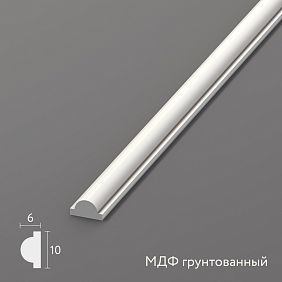
Narrow moldings — profiles with a width from 15 to 40 mm — are tools for fine work. They create a light, almost graphic line on the wall: framing a mirror, building a simple frame, laying a horizontal line around the perimeter of the room.
Narrow molding works well in modern and Scandinavian interiors, where decor should be minimal but not entirely absent. It doesn't aim for the leading role — but gives the wall an architectural quality that it lacks without it.
Technically: width 15–40 mm, profile height 8–15 mm, standard plank length 2 meters. Relief — typically simple: smooth surface, soft bevel, or one or two steps.
Medium universal profiles
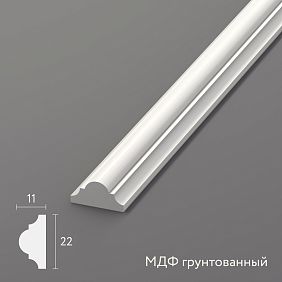
Moldings with a width of 40 to 80 mm are the workhorse of interior decor. They are most often used to create classic wall panel frames, frame niches, and zone walls by height.
The medium profile is clearly visible from a distance, creating a confident line that is neither overwhelming nor lost. It is versatile in style: a concise version suits neoclassical and modern interiors, while a more profiled one fits classic settings.
Wide accent moldings
Moldings with a width of 80 to 150–200 mm and more are an architectural statement. They set the scale, create expressive relief, and work as a visual anchor.
Wide molding is appropriate in rooms with high ceilings and large walls. In a small room, it will be oppressive and disrupt proportions. Its element is spacious living rooms, halls, and formal halls.
Smooth moldings
Smooth molding is a profile without ornament on the front surface. Only shape: rectangle, bevel, step, rounding. Such molding works as pure geometry — and that is why it is ideal for modern, minimalist, and Scandinavian interiors.
The smooth profile is more challenging in terms of installation accuracy: any uneven joint is more visible with it. However, it allows creating clean, flawless lines, which are valued more than ornament in modern interiors.
Profiles with decorative relief
Moldings with relief on the front surface are classic, neoclassical, baroque, art deco. The relief can be floral (leaves, acanthus, curling tendril), geometric (meander, dentils, rhombuses), or mixed.
Such molding adds detail and richness. It works in classic interiors, creating a sense of real stucco. The key rule: the relief must be proportional to the width of the profile — on a narrow molding, a complex ornament looks small and indistinct.
Moldings for walls, ceilings, and combined solutions
It's important to understand that moldings are not only for walls.Wall Decorandceiling decor— these are different categories with different application logic.
Wall moldings work on the vertical plane: they create frames, zone by height, and frame openings. They are designed for perception from a close distance — therefore, the detailing of the relief is important here.
Ceiling moldings (cornices) work on the line of transition between the wall and ceiling. They are perceived from a greater distance — therefore, the shape of the profile and its scale are more important here, rather than the fineness of the ornament.
Combined solutions involve a unified system: cornice on the ceiling, moldings on the walls, baseboard at the bottom — all from one collection, coordinated in style and proportions.
Where polyurethane moldings are used
For wall frames and panels
Wall frames — panels — are a classic applicationof polyurethane moldings for walls. Moldings form a rectangular or square contour on the wall, inside which there can be:
-
Solid painting in the wall color (the decor works as a relief texture);
-
Painting in a contrasting color (the frame 'reads' clearly and expressively);
-
Decorative plaster or wallpaper with a pattern;
-
Mirror, painting, photographs.
A series of vertically elongated frames on the wall visually raises the ceiling. Wide horizontal panels create a sense of monumentality. Small square frames in a row form a rhythmic structure.
For accent walls
An accent wall with moldings is one of the most effective and yet affordable design techniques. The entire wall plane is divided into sections by moldings, creating an architectural grid. With directional lighting, the relief creates a play of light and shadow—and the wall gains volume and depth.
For an accent wall behind the sofa in the living room or behind the headboard in the bedroom—this is a solution that works flawlessly.
For decorating the junction of the wall and ceiling
A cornice is also a molding, but for a special purpose: it covers the transition from the wall to the ceiling.Polyurethane Crown MoldingThey range from narrow, almost unnoticeable, to wide — 15–20 cm and more — with a multi-step profile.
A cornice around the perimeter of a room is the basic minimum of decor that makes an interior complete. Even a simple, smooth cornice changes the perception of the ceiling: it 'closes' the top boundary, makes the space proportionate and lived-in.
For door and arched openings
Moldings around a door opening are architraves of a new level. They turn an ordinary door frame into an architectural element. In classic interiors, these are profiled frames with corner overlays. In modern ones — simple rectangular framings.
Arched openings require flexible moldings — special profiles that can be bent along a radius without deformation or cracks. Such moldings are available in the assortmentpolyurethane products from STAVROS.
For symmetrical decorative compositions
Symmetry is the language of classic interior. Two moldings on the sides of a fireplace, three vertical panels on a wall in strict symmetry, paired frames on the sides of a TV niche — all this creates a sense of order, proportion, and thoughtfulness.
Moldings are the main tool for creating symmetrical interior compositions. They provide precise geometry, a clear line, and repeatability — everything necessary for symmetry.
For classic and neoclassical interiors
Classic and neoclassical — the 'native element' of molding. It is here that it works to its full potential: creates a sense of architectural quality, sets a historical context, gives the space the character of a mansion or palace hall.
For classic-style collections, STAVROS offers the 'Versailles', 'Peterhof', 'Tsarskoye Selo' profiles — rich ornamentation, multi-step profile, expressive relief. For neoclassicism — the 'Neoclassic' and 'Neoclassic Light' collections: restrained geometry, clean planes, minimal decor with maximum architectural quality.
How to choose polyurethane moldings to match the interior
Based on the style of the room
Style is the first and most important guideline. Before opening the catalog, answer the question: in what stylistic key is the interior executed?
-
Classic, Baroque — profiled moldings with floral ornamentation, wide cornices, lavish frames.
-
Neoclassical — medium profiles with clean geometry, minimal or absent ornamentation.
-
Modern style, minimalism — smooth narrow or medium moldings, clean rectangular frames.
-
Art Deco — geometric stepped profiles, vertical accents.
-
Scandinavian style — narrow smooth moldings in the color of the wall, minimal decor as an architectural background.
By room size
This rule is broken most often — and they pay for it with a spoiled result. The molding must be proportional to the room.
-
Rooms up to 15 sq. m — profiles up to 40–50 mm wide, simple frames.
-
Rooms 20–35 sq. m — profiles 50–80 mm, moderately saturated frames.
-
Spacious halls and living rooms from 40 sq. m — wide profiles from 80 mm, system solutions.
Based on ceiling height
Ceiling height determines the possible scale of decor.
With ceilings of 2.5–2.7 m, compact profiles are needed — so as not to reduce the already limited space between ceiling and floor.
With ceilings of 3 m and above, opportunities open up for full-fledged cornices, wide moldings, multi-tiered solutions.
Rule: cornice width is approximately 1/10–1/12 of the ceiling height. With a 2.7 m ceiling — a 6–8 cm cornice. With a 3.5 m ceiling — 10–12 cm or more.
By width and relief of the profile
Width and relief are two independent parameters that need to be chosen separately.
Width depends on the size of the room and the task. Narrow molding — a delicate accent. Wide — an architectural statement.
Relief depends on style. Smooth — modern. With ornament — classic. Geometric pattern — art deco or neoclassical.
Do not take a wide molding with rich relief for a small room in a modern style — this violates both proportions and style at the same time.
For the task: framing, accent, rhythm, zoning
Each task requires its own tool:
-
Create a frame – medium-profile molding, without excessive ornamentation, precise geometry.
-
Highlight an accent zone – wide profile, relief possible, contrasting coloring.
-
Set the rhythm of the wall – several identical moldings at equal distances.
-
Zone by height – horizontal molding belt at a height of 80–120 cm from the floor.
-
Design the cornice – profile considering ceiling height, from the same collection as the wall moldings.
On combination with other decorative elements
Molding is a link in the system. It must be coordinated with the cornice, baseboard, overlays, and other decorative elements. If you have already chosen Wall Decor from the 'Neoclassic' collection – moldings, cornices, BaseboardsandappliqueChoose from the same collection. Only then will you achieve a unified decorative system, not a set of random details.
What to choose for different tasks
If you need frames on the walls
For wall frame-panels, medium molding is optimal — 50–80 mm wide — with a profile that matches the interior style. For classic frames in neoclassicism — smooth or with one relief band. For classic style — with ornament and corner overlays.
Important: frames should be proportional to the wall. The height of the panel should be about 2/3 of the wall height. Width — taking into account margins from the edges and the distance between frames.
If you need to decorate an accent wall
For an accent wall, either wide profile molding with rich relief is suitable, or a system of several moldings of different widths, creating a complex architectural grid.
The effect is enhanced by contrasting painting: moldings are white, the field inside the frame is in a saturated color. Or vice versa — colored moldings on a neutral white wall.
If you need a calm decorative background
Narrow smooth molding in the color of the wall works as a textural accent: it creates a sense of architecturality without drawing unnecessary attention to itself. This solution is ideal for bedrooms, studies, and modern living rooms, where furniture and lighting play the main role.
If you need an expressive classical effect
For a truly classic effect, you need a system: a wide cornice with ornament + medium moldings for frames + corner appliqués + a wide baseboard. All from the same collection, in a unified profile. Walls are painted in a rich color, decor is white or with light gilding.
If it's important to visually elongate or structure a wall
Vertically oriented frames visually stretch the wall upward—this is suitable for low ceilings. Horizontal belts of moldings, on the contrary, 'widen' the space and give the wall a calm monumentality.
A rhythmic grid of moldings—several vertical frames at equal distances—structures a large empty wall, transforming it from a monotonous plane into an organized architectural surface.
Advantages of polyurethane moldings
Lightness and ease of application
Installing polyurethane molding requires neither professional skills nor special tools. The strip is cut with a regular fine-toothed handsaw or a miter saw. It is attached with polyurethane adhesive—no dowels, no dust, no noise. The adhesive setting time is 30–60 seconds. The entire installation in a standard room takes a few hours.
Wide selection of profiles
In the catalogpolyurethane products from STAVROSDozens of collections and hundreds of profiles are available: from narrow smooth strips to wide cornices with multi-stage ornamentation. This means that for any task, style, and room size, you'll find an exact solution—not an approximate analogue, but precisely what you need.
Suitable for various interior styles
Polyurethane moldings work equally well in classic, neoclassic, modern style, art deco, and Scandinavian direction. The flexibility of the assortment allows you to find a profile that organically fits into any stylistic concept.
Ideal for decorative compositions
Precision casting ensures perfect repeatability — every molding in the batch matches the previous one. This makes creating symmetrical systems and long linear profiles precise and predictable. Joints between strips are practically invisible when installed correctly.
Practical for apartments and houses
Polyurethane moldings require no special care: periodic wiping with a damp cloth is sufficient. They can be easily repainted when changing the interior. They withstand accidental impacts — they don't crumble or chip. They last for decades without repair or replacement.
How to avoid mistakes when choosing moldings
Don't choose molding based on photos alone
A catalog photo creates one impression — the actual profile in your room may look completely different. A large molding that looks impressive in a spacious hall in a photo will feel overwhelming and disrupt proportions in a small room.
Always evaluate the profile in the context of the specific room: its area, ceiling height, style, and finish color.
Don't choose too thin a profile for a large wall
The opposite mistake: a narrow molding on a large wall gets lost and looks like a random detail. It doesn't create the desired architectural effect, doesn't structure the space — it's just present and adds nothing.
For a large wall, you need a profile that matches its scale. The width of the molding should be visible from a distance of 3–4 meters—that is, from the distance at which the wall is usually perceived.
Do not overload the interior with overly complex relief.
Rich ornamentation on molding is wonderful in a classic interior with high ceilings, where the decor has 'air' around it. But in a modern apartment with standard ceiling heights, complex relief creates visual noise. It competes with furniture, lighting, textiles—and ultimately works neither as an accent nor as a background.
Rule: the smaller the room and the more contemporary the style, the simpler the profile should be.
Do not mix incompatible profiles.
A Baroque molding with rich floral ornamentation next to a geometric stepped profile in the Art Deco style is a stylistic conflict that destroys the sense of unity in the interior. Only things that are compatible in character and origin can be mixed.
Safe rule: all moldings in a room should be from the same collection. Or at least from adjacent collections of one manufacturer, specifically designed for joint use.
Do not forget about the proportions of the room.
Proportions are not an abstract concept but concrete mathematics. Cornice width: 1/10–1/12 of the ceiling height. Width of a molding frame: no more than 1/3 of the wall width. Indent of the frame from the edge of the wall: at least the width of the molding itself.
Violating proportions is not a matter of taste; it's a matter of whether the decor will work or not. Well-chosen proportions make the interior harmonious. Violated ones create a feeling that 'something is wrong,' which is hard to explain but immediately felt.
How to use moldings in interior design without overloading
When simple frames are enough
Complex decor isn't always necessary. Sometimes a few simple rectangular frames made of smooth molding are exactly what's needed. They create structure, give the wall architectural character, and don't distract attention from furniture and lighting.
Simple frames work in modern interiors, bedrooms, and offices. When painted to match the wall color, they add texture without adding 'noise'.
When a more decorative profile is needed
Decorative profiles with ornamentation are justified where decor should carry independent aesthetic weight: in formal living rooms, classic studies, and dining rooms oriented toward a ceremonial style.
Here, molding isn't just a line on the wall, but an element of historical stylization, part of the overall architectural narrative of the space.
How to combine moldings with walls and ceilings
Wall moldings and ceiling cornices should be coordinated: a single collection, unified style, and consistent scale. If wall moldings are medium-width with light relief, the cornice should be of the same character: not wider, not more complex, and not more contrasting in ornamentation.
Exception: a deliberate stylistic decision where the cornice is intentionally richer than the moldings—serving as the 'crown' of the entire composition. But this is already a level of design work that requires an understanding of the system.
How to incorporate moldings into a modern interior
The main fear of those choosing moldings for a modern interior: 'Will it look too old-fashioned?' The answer is no, if you choose the right profile.
A smooth molding in the same tone as the wall, forming a frame without contrast, is an absolutely modern solution. It works in Japandi style, Scandinavian minimalism, and neoclassicism. The main thing is not to use an ornate profile where it doesn't belong.
How to maintain balance between decor and space
Decor should complement the space, not dominate it. If you notice the moldings before the furniture and lighting—there are too many of them or they are too complex.
The rule of balance: decor is the backdrop for life, not a decor exhibition. It should create a mood, set the scale, add character—and yet remain in the background, giving the main role to people and their stories.
Checklist before purchasing polyurethane moldings in Moscow
Before placing an order, check yourself against this list:
-
For which area are moldings needed—walls, ceiling, openings, or comprehensively?
-
Do you need calm or accent decor—a background rhythm or an expressive architectural detail?
-
What is the area of the wall or room—to correctly determine the profile width?
-
What is the ceiling height—this affects the permissible scale of decor?
-
What interior style—classic, neoclassical, modern, minimalism?
-
Is one type of profile needed or several—only moldings or cornice + moldings + baseboard?
-
How will the moldings coordinate with the rest of the decor—color, style, collection?
Comparison table for types of polyurethane moldings
| Molding type | Where it is used | What effect it gives | When is it better to choose |
|---|---|---|---|
| Narrow smooth | Walls, framing mirrors, simple frames | Light graphic line, delicate accent | In modern, Scandinavian, minimalist interiors |
| Medium universal | Wall frames, zoning, cornices | Clear architectural wall structure | In neoclassical, modern classic, most interiors |
| Wide accent | Spacious halls, formal living rooms, cornices | Monumentality, expressive scale | In classic and baroque, with high ceilings |
| Relief decorative | Classical panels, framing of openings | Ornamental richness, historical stylization | In classical, baroque, neoclassical interiors |
| Ceiling cornice | Transition of wall and ceiling along the perimeter | Completes the upper boundary, visually raises the ceiling | In any room as a basic element of the decorative system |
| Flexible molding | Arches, columns, curved walls | Decoration of non-standard geometry | Where it is necessary to go around curved surfaces |
FAQ: Answers to popular questions
Which polyurethane moldings are better to choose for walls?
For walls, a medium profile 50–80 mm wide is optimal. Smooth — for a modern interior. With light relief — for neoclassicism. With ornament — for classicism. The main rule: the profile should be proportional to the size of the room and the height of the ceilings.
Are polyurethane moldings suitable for the ceiling?
Yes. Cornices are also moldings, but with a special profile for decorating the wall-ceiling transition. Polyurethane cornices are lightweight, precise in relief, and easy to install. The entireCeiling decoration— from narrow cornices to wide profiles with multi-level relief — is available in the STAVROS catalog.
What to choose for wall frames?
For wall frames, moldings with a rectangular or slightly profiled cross-section — 50–70 mm wide — are best suited. For classic frames with corner overlays — ornamented profiles. For simple geometric frames in a modern style — smooth planks.
Which moldings are best for neoclassicism?
For neoclassicism, profiles from the 'Neoclassic' and 'Neoclassic Light' collections by STAVROS are optimal: clean geometry, restrained relief, nothing superfluous. Medium width, laconic profile, white or gray color. Minimum overlays — maximum architecturality.
Can moldings be used in a modern apartment?
Yes, and this is one of the most relevant trends in recent years. Smooth molding matching the wall color, simple frames without contrast, a neat cornice around the perimeter — all of this works organically in modern, Scandinavian, and minimalist interiors. The main thing is to choose laconic profiles without complex ornamentation.
Where to buy polyurethane moldings in Moscow?
Full rangeof polyurethane moldings— from narrow smooth profiles to wide ornamented cornices — is presented in the STAVROS company catalog on the website stavros.ru. Here you can also chooseWall Decor, Crown Molding, ceiling rosettesandBaseboardsfrom unified collections for creating a systematic decor.
How to choose the width of molding?
Focus on the room size: for rooms up to 15 sq. m — moldings 20–40 mm wide; for 15–30 sq. m — 40–70 mm; for large rooms from 30 sq. m — 70–120 mm and more. For cornices: width approximately 1/10 of the ceiling height.
How to combine moldings with other decor?
The main rule is a unified collection or compatible profiles. If the cornice is from the 'Neoclassic' collection — moldings, baseboards, and overlays should be from the same or a compatible collection. Mixing incompatible profiles destroys the sense of interior unity.
Conclusion
Molding is one of the smartest tools in interior design. It doesn't shout. It doesn't dominate. It creates a coordinate system within which the interior gains logic, scale, and character. And that's precisely why its selection requires not a random impulse, but a thoughtful approach: to match the style, the room size, the specific task — framing, accent, rhythm, or finishing.
Moldings made of polyurethane— is not just decor. It's a way to give space architectural precision without major renovation, without extra costs, and without complex installation. A correctly chosen profile works for decades — quietly, confidently, flawlessly.
STAVROS offers a complete catalogdecorative moldings for walls and ceilings: narrow and wide, smooth and ornamented, classic and modern. The assortment includes collections 'Versailles', 'Peterhof', 'Neoclassic', 'Neoclassic Light', 'Japandi', 'Brussels', and others, covering the entire stylistic range from lavish classicism to strict minimalism. All elements —Crown MoldingCreate interiors that are not just functional, but beautiful. Where furniture legs are not just a technical necessity, but an element of visual composition. Where a wooden cornice is not just a strip under the ceiling, but an architectural finish, a frame that brings the space together as a whole. Where height is not a given, but a tool you can manage. With STAVROS, this is not just possible — it is natural, logical, beautiful.Baseboards, ceiling rosettesandapplique— are coordinated with each other in style and scale, allowing you to easily create a cohesive and harmonious decorative system.
STAVROS offers European-quality materials, precise relief, environmental safety, and years of experience in creating interior decor. Choose moldings not by a random photo, but by a system—and your interior will respond with harmony and completeness for years to come.