Article Contents:
- Profile as Architectural Code
- Profile Elements: Dictionary of Forms
- Reading Profiles: From Simple to Complex
- Symmetry and Asymmetry of Profile
- Profile Repetition Technique: From Furniture to Walls
- Analysis of Furniture Profile
- Selection of Matching Molding
- Scaling: Furniture Smaller, Walls Larger
- Molding Orientation: Horizontal and Vertical
- Creating Visual Connections: Horizontals and Verticals
- Horizontal Connections: Cornices, Panels, Friezes
- Vertical Connections: Pilasters, Vertical Moldings, Door Casings
- Corners and Intersections: Compositional Nodes
- Implementation Examples: From Baroque to Minimalism
- Baroque: Opulence and Abundance of Forms
- Neoclassicism: Strictness and Rhythm
- Empire Style: Monumentality and Contrast
- Scandinavian Style: Concision and Warmth
- Loft: Industrial Honesty
- Practical Implementation: Steps to Create a Cohesive Interior
- Step 1: Inventory of Existing Profiles
- Step 2: Selecting Moldings with Matching Profile
- Step 3: Planning Molding Placement
- Step 4: Calculating Material Quantities
- Step 5: Installing Moldings
- Step 6: Finishing and Painting
- Common Mistakes and How to Avoid Them
- Error 1: Inconsistency Between Furniture and Molding Profiles
- Error 2: Excessive Scaling
- Error 3: Chaotic Molding Placement
- Error 4: Ignoring corners and joints
- Error 5: Lack of connection with doors and windows
- Frequently Asked Questions
- Is it necessary to replicate profiles exactly, or is general similarity sufficient?
- Can different materials be used for furniture and moldings?
- How to replicate a profile if the furniture is modern, without pronounced moldings?
- What height should wall panels be?
- Should profiles be replicated in bathrooms and utility rooms?
- How to create a connection if the furniture is of different styles?
- Can wooden moldings and polyurethane ones be combined?
- How to add moldings to a finished interior without renovation?
- How much does it cost to create a molding system for a room?
- Where to buy moldings and furniture decor with coordinated profiles?
- Conclusion: the interior as a unified whole

The space speaks. Walls, ceiling, floor, furniture — these are not separate elements, but parts of a single composition. And the most powerful tool for creating this unity is repetition. When the molding profile on the wall echoes the profile of a chest of drawers' facade, when the horizontal line of a cornice resonates with the vertical line of a pilaster on a cabinet, when the rhythm of carved appliqués on furniture finds a response in the rhythm of wall panels — the space gains a voice, logic, harmony.Moldings and furniture decor— are not just decorations, they are the grammar of the interior, the language in which architecture and furniture engage in dialogue.
Why do some interiors look cohesive, well-thought-out, while others appear as a random collection of items? The secret lies in visual connections. Professional designers know: furniture does not exist separately from walls, walls from the ceiling, horizontals from verticals. Everything is connected by lines, shapes, rhythms. And moldings are the main tool for creating these connections, the invisible grid that organizes chaos, turning disparate elements into a whole.
In this article, we will delve into the technique of profile repetition: how to analyze the shape of a furniture facade, how to choose a molding with a similar profile, how to create visual connections between horizontal and vertical elements of the interior. We will see how a classic chest of drawers and a wall panel become parts of a single composition, how the cornice above a door resonates with the cornice of a cabinet, howinterior wall decorand furniture decor intertwine into the seamless fabric of space.



Profile as an architectural code
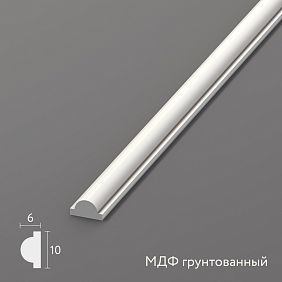
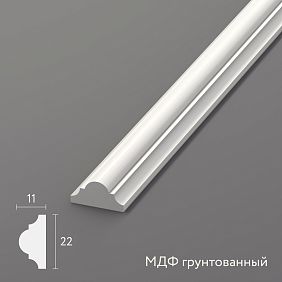
A profile is the cross-sectional shape of an element, the line we would see if we cut a molding or furniture facade across. A profile is described by geometric elements: shelves (flat horizontal sections), coves (concave curves), beads (convex curves), ogees (S-shaped curves), chamfers (beveled planes). The combination of these elements creates a unique pattern that defines the style, era, and character of the piece.




Profile elements: a dictionary of forms
Shelf — a horizontal straight section creating a step in the profile. Shelves can be wide (10-30 mm) and narrow (3-8 mm). Wide shelves are characteristic of simple, strict profiles (Neoclassical, Minimalism). Narrow ones — for complex, multi-element profiles (Baroque, Renaissance).
Cove — a concave curve, receding into the profile. Coves create soft shadows, smooth transitions. They are characteristic of classical styles, where elegance and the absence of sharp angles are valued.
Bead — a convex curve, protruding from the profile. Beads can be semicircular (180 degrees), quarter-round (90 degrees), or oval (elongated). Beads add volume and create play of light.
Ogee — an S-shaped curve connecting two shelves at different levels. The ogee is one of the most common elements of classical profiles, creating a smooth, elegant transition.
Chamfer — a beveled flat face at a 30-60 degree angle. Chamfers simplify the profile, making it more graphic and modern. Characteristic of Minimalism, Scandinavian style.
Ovolo — a complex curve combining convex and concave sections. The ovolo creates a wavelike movement, dynamism. Characteristic of Baroque, where complexity of form is valued.
Our factory also produces:


Reading a profile: from simple to complex
A simple profile contains 1-3 elements. For example: shelf + chamfer. Or: cove + bead. Such profiles are concise, universal, suitable for modern and transitional styles.
A medium profile contains 3-5 elements. For example: fillet + ovolo + torus + scotia + fillet. This is a classic profile, characteristic of Neoclassicism, Empire style, where the form is more complex but maintains readability and logic.
A complex profile contains 5-10 or more elements. The sequence of fillets, tori, scotias, and ovolos creates a rich interplay of forms, shadows, and volumes. Complex profiles are characteristic of Baroque, Rococo, and Victorian styles, where decorativeness dominates.
To read a profile, mentally (or actually, with a pencil on paper) trace its contour. Break it down into elementary forms: where are the fillets, where are the curves, where are the transitions. This will allow you to understand the structure, remember it, and reproduce it in another context.
Get Consultation
Symmetry and asymmetry of a profile
A symmetrical profile is identical relative to the central axis. For example, a torus in the center, scotias on the sides, then fillets. Symmetrical profiles are universal: they can be installed on any side, combined in mirror image.
An asymmetrical profile differs on each side. For example, a large torus on one side, a small scotia on the other. Asymmetrical profiles require orientation: top-bottom, left-right. They cannot be flipped without losing their meaning.
Most moldings are symmetrical vertically (relative to the axis perpendicular to the wall) but asymmetrical horizontally (the top differs from the bottom). This is related to function: the molding frames, creates a border, where the top and bottom play different roles.
Technique of repeating profiles: from furniture to walls
The main idea: the profile of furniture elements (front frames, cornices, plinths, pilasters) is repeated in the profile of moldings on walls, ceilings, and door frames. This creates visual unity, a sense that the furniture and architecture are executed in the same style, possibly by the same craftsman, in the same era.
Analysis of furniture profile
Start with the furniture. If the interior already hasClassic Furniture, study its profiles. Where are the key lines located?
Front frames — the framing of cabinet doors, dresser drawers. The frame has a profile: usually an ovolo + torus or scotia + fillet. Measure the frame width, sketch the profile, note the proportions of the elements.
Furniture cornices — the horizontal projection at the top of a cabinet, sideboard, secretary. The cornice has a complex profile: a sequence of projections, scotias, tori. A furniture cornice can be considered a direct analogy to a ceiling cornice, only on the scale of the object, not the room.
Furniture plinths — the lower part framing the base of a cabinet, dresser. The plinth also has a profile, usually simpler than the cornice, but consistent with the overall style.
Pilasters on furniture — vertical decorative elements imitating columns. Pilasters have capitals (upper terminations) and bases (lower), each with a profile.
Photograph the furniture, take measurements, create sketches of the profiles. This is your visual dictionary, which will be repeated on the walls.
Selecting a similar molding
Now the task: find a molding whose profile repeats or is close to the furniture profile. This is not always an exact match (the furniture profile may be 40 mm high, the wall molding 60 mm), but the structure should be recognizable: the same elements, the same proportions, the same transitions.
If the furniture frame profile is: 5 mm fillet + 10 mm ovolo + 8 mm torus, look for a molding with the structure: fillet + ovolo + torus. The dimensions can be scaled (7 mm fillet + 15 mm ovolo + 12 mm torus), but the sequence and proportions are preserved.
Molding manufacturers (especially those working with classical styles) offer profiles consistent with traditional furniture.Solid Wood Items from specialized companies include lines where furniture and wall elements are already coordinated in profiles, simplifying selection.
Scaling: furniture is smaller, walls are larger
Furniture profiles are usually smaller in size than wall moldings. A front frame has a profile height of 20-40 mm, a wall molding 40-80 mm, a ceiling cornice 60-150 mm. This is natural scaling: the larger the surface, the larger the profile should be to be noticeable.
Scaling rule: preserve the proportions of the elements. If in the furniture profile the torus constitutes 30% of the height, in the wall molding the torus should also be 30% of the height. If the ovolo in the furniture profile occupies half, in the wall molding it should also be half.
Scaling should not be too drastic. A furniture profile of 30 mm and a wall profile of 120 mm (scale 1:4) is the limit. More than that, and the profiles begin to be perceived as different, the connection is lost.
Orientation of moldings: horizontal and vertical
Moldings can be horizontal (run along the wall parallel to the floor) and vertical (run from floor to ceiling). The molding profile is oriented: it has a top and bottom (for horizontal) or left and right (for vertical).
When we repeat a furniture profile on walls, the orientation can change. The profile of a front frame (which is vertical on furniture) can be repeated in a horizontal molding on the wall. Visually, this is perceived as a connection because the form is recognizable, even if rotated.
However, if the profile has a clear gravitational logic (e.g., a cornice with an overhanging fillet on top), it cannot be flipped. A cornice profile must be a cornice (upper), and a plinth profile must be a plinth (lower).
Creating Visual Connections: Horizontals and Verticals
The interior is organized along two axes: horizontal (lines running along walls, parallel to the floor) and vertical (lines running from floor to ceiling).Moldings and furniture decorwork on both axes, creating a grid of visual connections.
Horizontal connections: cornices, panels, friezes
Ceiling cornice — a horizontal line at the junction of wall and ceiling. This is the dominant horizontal of the room, completing the vertical of the walls. The profile of the ceiling cornice should echo the profile of the cornice on furniture (cabinets, sideboards).
If the furniture cornice has a protruding shelf + cavetto + torus, the ceiling cornice should have the same structure. The scale is larger (the ceiling cornice is bigger), but the form is recognizable. The eye, moving from the furniture to the ceiling, recognizes the form, feels the connection, the harmony.
Wall panels — horizontal moldings dividing the wall into tiers. A classic technique: lower panel (from floor to a height of 70-100 cm), middle zone (from 100 to 180 cm), upper zone (from 180 cm to the ceiling). Each zone is framed by moldings.
The profile of wall panel moldings is coordinated with the profile of furniture front frames. If the furniture has frames with cavettos, the wall panels are framed with moldings with cavettos. If the furniture has straight chamfers, the wall moldings also have chamfers.
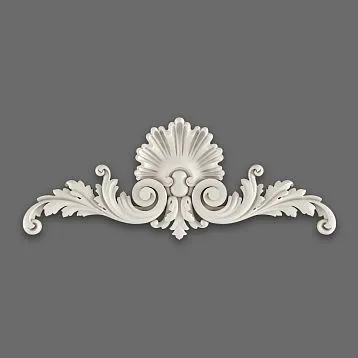
Frieze — a horizontal band under the ceiling cornice, often with ornamentation. The frieze can repeat the ornamentof furniture decor: if the furniture has carved appliqués with acanthus leaves, the frieze has the same leaves. This creates an ornamental connection, complementing the profile connection.
Vertical connections: pilasters, vertical moldings, door casings
Pilasters on walls — vertical decorative elements imitating columns. Pilasters divide the wall into sections, create rhythm. The profile of the pilasters (their capitals, bases, shafts) should be coordinated with the profile of pilasters on furniture.
If furniture pilasters have fluting (vertical grooves), wall pilasters should also have fluting. If furniture pilasters have carved capitals (acanthus, egg-and-dart), the wall capitals repeat the motif.
Vertical moldings — strips running from floor to ceiling, creating vertical articulation of the wall. They are less common than horizontal ones, but in classical interiors (especially with high ceilings) they create monumentality, architectural quality.
The profile of vertical moldings can be identical to horizontal ones (a symmetrical profile that works in any orientation) or complementary (supplementary, but not identical).
Door casings (architraves) — a vertical-horizontal frame around the door. The casings have a profile, and this profile should be coordinated with the profiles of moldings on walls and furniture.
A classic technique: door casings, wall panel moldings, furniture front frames have one profile. This creates total unity, where everything is connected, everything is part of one system.
Corners and intersections: compositional nodes
Room corners, intersections of horizontal and vertical moldings — these are compositional nodes requiring special attention. Here moldings meet, and the method of their connection affects perception.
45-degree miter joints — a classic way of joining moldings in corners. Two moldings are cut at 45 degrees, joined, forming a right angle. The profile smoothly transitions from one wall to the other.
Corner appliqués — special carved elements placed in corners. A corner appliqué conceals the molding joint, adds decorativeness, creates an accent.interior wall decorincludes corner appliqués, coordinated with the molding profile.
Intersections of vertical and horizontal moldings — complex nodes. Options are possible: the horizontal molding is interrupted by the vertical (horizontal is subordinate to vertical), the vertical is interrupted by the horizontal (vertical is subordinate to horizontal), both meet in a corner appliqué (equal connection).
The choice depends on hierarchy: what dominates — horizontal articulation (panels) or vertical (pilasters). In most classical interiors, horizontals dominate, verticals are subordinate, therefore vertical moldings are interrupted by horizontal ones.
Implementation examples: from Baroque to Minimalism
The technique of repeating profiles is universal, but is implemented differently depending on the style. Let's consider specific examples.
Baroque: opulence and abundance of forms
In a Baroque interior, furniture is massive, with carved fronts, large cornices, pilasters. Profiles are complex: many elements, S-shaped curves, deep coves.
Walls of a Baroque interior are divided by moldings into panels. The molding profile repeats the profile of furniture cornices: ogee + torus + cavetto + shelf. The ceiling cornice is even more complex: multi-tiered, with carved elements (dentils, modillions, acanthus consoles).
Pilasters on walls imitate pilasters on furniture: the same carved capitals with acanthus, the same fluting on the shafts, the same bases with tori. Door casings are wide (120-180 mm), with the same complex profile as the wall moldings.
Corners are decorated with large carved overlays: rocaille, cartouches, acanthus scrolls. The entire space is permeated by a unified decorative logic, where profiles and ornaments repeat, creating visual excess characteristic of Baroque.
Neoclassicism: Strictness and Rhythm
Neoclassical interiors are more restrained. Furniture has straight forms, cornices are simple (shelf + cyma reversa + torus), facade frames are laconic. Pilasters with fluting, without excessive decoration.
Walls are divided by moldings into rectangular panels. The molding profile is of medium complexity: 3-4 elements, symmetrical, clear. The ceiling cornice is moderate, without carving, with geometric elements (beads, egg-and-dart).
Pilasters on walls are strictly vertical, with simple capitals (Doric, Ionic), bases without excesses. Door architraves are of medium width (80-120 mm), with a profile identical to the wall moldings.
Corners are joined without overlays, with precise miters. The rhythm of panels is regular: identical rectangles on all walls. Symmetry is mandatory: the center of the wall is the axis, relative to which everything is mirrored.
Empire: Monumentality and Contrast
Empire adds scale. Furniture is large, cornices are massive, profiles are simple but expressive. Colors are contrasting: dark wood (mahogany, black lacquer) + gilded overlays.
Walls with large panels, framed by wide moldings (60-100 mm). The molding profile is powerful: large tori, wide shelves, clear transitions. The ceiling cornice is monumental, 100-200 mm high, with ornaments (palmettes, laurel wreaths, military trophies).
Pilasters on walls are thick (100-150 mm), with capitals decorated with gilded overlays.Furniture decor repeats on walls: if furniture has overlays with eagles, walls have a frieze with eagles. Door architraves are wide, with gilded rosettes in the corners.
Dominance of horizontals: wide cornices, friezes, panels create a sense of sprawl, monumentality, imperial grandeur.
Scandinavian Style: Laconicism and Warmth
Scandinavian interiors are minimalist but not cold. Furniture is simple, made of light wood, with straight fronts, without cornices. Profiles are minimal: a chamfer or rounded edge.
Walls are usually without moldings — white, smooth. But if moldings are used (for zoning, creating accents), they are simple: rectangular strips, thin (20-40 mm), made of light wood or painted white.
The molding profile is extremely laconic: shelf + chamfer. Or: a rounded torus without additional elements. The goal is not decorativeness, but structuring space, creating frames, highlighting zones.
Repetition of furniture profiles on walls here is conditional: furniture is almost without profiles, walls too. The connection is created by material (light wood), color (white, gray, natural), proportions (thin strips, lightness of forms).
Loft: industrial honesty
Loft rejects traditional moldings. Walls are brick, concrete, roughly plastered. Furniture is simple, often homemade, without cornices and carving. Profiles are absent.
But even here, a visual connection is possible: metal profiles (angle bars, channels, pipes), used for framing zones, repeat the metal legs of furniture, table frames. Wooden beams on the ceiling echo wooden countertops, shelves.
Loft creates connections not through elegant profiles, but through brutal materials, functional forms, honesty of construction. But the principle is the same: repetition, rhythm, visual logic.
Practical Implementation: Steps to Create a Cohesive Interior
How to apply the technique of repeating profiles in practice? Step-by-step instructions.
Step 1: Inventory of Existing Profiles
If furniture already exists, start with it. Photograph the fronts, cornices, pilasters. Take close-ups of the profiles. If possible, take measurements: width, height, depth of protrusions.
Create a profile album: each furniture element — a separate page with a photo, a sketch of the profile, dimensions. This is your database, which you will refer to when selecting moldings.
If furniture is not yet available, but the style is defined, find references: photos of classic furniture of the desired style, manufacturer catalogs. Study typical profiles for Baroque, Neoclassicism, Empire. Choose those that are close to you.
Step 2: Selecting Moldings with a Similar Profile
Refer to molding manufacturer catalogs. Look for profiles structurally close to furniture ones: the same elements, the same proportions. The scale will be larger, but the form should be recognizable.
Some manufacturers offer coordinated lines: furniture elements, wall moldings, ceiling cornices in the same style, with proportional profiles.Solid Wood Items from such lines simplifies selection, guarantees visual unity.
If there is no exact match, choose the closest possible profile. Preserving the structure (sequence of elements) is more important than exact dimensions. The eye perceives shape, not millimeters.
Step 3: Planning the placement of moldings
Determine where the moldings will go: ceiling cornice (mandatory), wall panels (if the style is classical), door casings (mandatory), pilasters (if the space is large, ceilings are high).
Draw a room plan to scale. Outline the furniture. Determine where the furniture is visible, where the gaze moves from the furniture to the walls. These are the zones where the connection of profiles will be most noticeable.
Mark horizontal molding lines on the plan (panel height, friezes, cornice). Mark vertical lines (pilasters, door casings). Check symmetry, rhythm, proportions.
Step 4: Calculating the quantity of materials
Measure the room perimeter for the ceiling cornice. Measure the lengths of all horizontal moldings for wall panels. Measure the lengths of vertical moldings and pilasters. Measure the perimeters of door openings for casings.
Add a 10-15% reserve for cutting, joints, possible defects. Moldings are sold in standard length pieces (usually 2.4 or 3 meters). Calculate how many pieces are needed for each type of molding.
If corner overlays, rosettes, capitals are used — count their quantity separately. Corner elements are usually sold individually.
Step 5: Installing moldings
Installation begins with the ceiling cornice: this is the upper boundary, setting the horizontal. The cornice is attached with adhesive (liquid nails, polyurethane glue) + additional fixation with screws (if the molding is heavy, wooden).
Ceiling cornice corners are joined with miters (at 45 degrees). Cutting is done with a miter box or miter saw. The joint is coated with glue, filled if necessary, sanded, painted.
Wall moldings are attached similarly: adhesive + fixation. It is important to maintain horizontality: use a laser level or water level for marking. Even a millimeter deviation over a length of 3-4 meters is noticeable to the eye.
Vertical moldings and pilasters are attached using a plumb line or laser level (vertical mode). They must be strictly vertical, otherwise the composition will fall apart.
Step 6: Finishing and painting
After installation, the moldings are painted. If the moldings are wooden, the choice is: preserve the wood texture (oil, wax, clear varnish) or paint (stain to change color, enamel for a solid coating).
Classical technique: moldings in the color of the walls, but a tone lighter or darker. This creates a subtle play of shades without overloading visually. Alternative: contrasting moldings (white moldings on colored walls), which enhances the structure, makes the division obvious.
If carved overlays, rosettes are used — they can be patinated (artificial aging), gilded (fully or partially), painted in a contrasting color. Patina and gilding emphasize the relief, add depth, luxury.
Common mistakes and how to avoid them
Error 1: Inconsistency between furniture and molding profiles
Furniture with simple bevels, moldings with lush Baroque profiles — visual dissonance. Furniture and walls speak different languages, the interior falls apart.
Solution: always start with an analysis of the furniture. If the furniture is simple, the moldings are simple. If the furniture is classical, the moldings are classical. The style must be consistent.
Error 2: Excessive scaling
Furniture profile 25 mm, wall molding 150 mm (scale 1:6) — the profiles are perceived as different, the connection is not readable. The eye does not recognize the shape, proportions are broken.
Solution: scale moderately. Optimal range 1:1.5 — 1:3. Furniture profile 30 mm → wall molding 50-90 mm. More — risk of losing recognizability.
Error 3: Chaotic placement of moldings
Moldings on one wall at a height of 90 cm, on another at 110 cm. Asymmetrical panels, crooked lines, lack of rhythm. The interior looks unprofessional, random.
Solution: plan carefully. Use drawings, levels, symmetry. All horizontal molding lines must be at the same height around the entire room perimeter. All vertical lines — strictly vertical.
Error 4: Ignoring corners and joints
Rough molding joints in corners, gaps, mismatched profiles. Corners are the most noticeable places, any mistake here catches the eye.
Solution: learn to cut miters correctly. Use a miter box or miter saw. Check the wall angle (it may not be 90 degrees) and adjust the cutting angles. Coat joints with glue, fill, sand. Or use corner overlays that hide the joints.
Error 5: Lack of connection with doors and windows
Door and window trims have a profile that is in no way related to the profile of wall moldings and furniture. Trims are separate elements that fall out of the overall composition.
Solution: door and window trims should be coordinated with the overall profile system. Ideally, the same profile for wall moldings and trims. At a minimum, profiles of the same style and similar complexity.
Frequently asked questions
Is it necessary to repeat the profiles exactly, or is general similarity sufficient?
Exact repetition is not necessary; structural similarity is more important. If a furniture profile has the sequence: shelf + cabriole leg + bead, the wall molding should have the same sequence, even if the sizes of the elements differ. The eye perceives structure, recognizes shape, and feels the connection.
Can different materials be used for furniture and moldings?
Yes, materials can differ. Furniture made of solid oak, moldings made of polyurethane or MDF — the main thing is that the profiles match and the finish (color, texture) is coordinated. After painting, the difference in materials is unnoticeable.
How to repeat the profile if the furniture is modern, without pronounced moldings?
Modern furniture often has hidden profiles: chamfers on edges, rounded corners, laconic protrusions. Repeat these elements on the walls with minimalist moldings: flat slats with chamfers, thin battens, rounded corner pieces. The connection is created not by opulence, but by laconicism.
How high should wall panels be?
Classical height of the lower panel: 70-100 cm (approximately one-third of the wall height with ceilings of 270-300 cm). The middle zone (from the top of the lower panel to the start of the frieze) is the main area where paintings, mirrors, and overlays are placed. The frieze (the zone under the ceiling cornice) is 20-40 cm.
Is it necessary to repeat profiles in bathrooms and technical rooms?
In bathrooms and kitchens, other materials (tiles, plastic panels) are often used, where moldings are inappropriate. But if the interior style is classical, total, even bathrooms can have moldings (polyurethane, moisture-resistant) that repeat the profiles of living rooms.
How to create a connection if the furniture is of different styles?
If the furniture is eclectic (a Baroque chest of drawers + a minimalist table), choose a neutral molding profile: medium complexity, not too opulent, not too laconic. Or use a minimum of moldings, creating a connection through color, material, proportions, rather than profiles.
Can wooden moldings and polyurethane ones be combined?
Yes, if the profiles match and the finish is coordinated. Polyurethane is cheaper, lighter, and easier to install. Wood is more noble, tactilely pleasant, and durable. Combination: wooden moldings at eye level (where they can be touched), polyurethane ones under the ceiling (where they are out of reach).
How to add moldings to a finished interior without renovation?
Moldings are mounted on the finished finish (wallpaper, paint) with minimal intervention. Glue + screws do not require wall destruction. After installation, the moldings are painted to match the wall color or in contrast. This is a cosmetic update that does not require major renovation.
How much does it cost to create a molding system for a room?
The cost depends on the material, complexity of the profiles, and the area of the room. Polyurethane moldings: from 300 to 1500 rubles per linear meter. Wooden: from 800 to 5000 rubles. For a 20 m² room (perimeter ~18 m), you will need: ceiling cornice ~18 m, wall moldings ~40-60 m, trims ~10-15 m. Total: from 30,000 to 200,000 rubles depending on the choice.
Where to buy moldings and furniture decor with coordinated profiles?
Contact specialized manufacturers offering comprehensive solutions: furniture elements, wall moldings, ceiling cornices in the same style. Check catalogs, compare profiles, request samples.
Conclusion: interior as a unified whole
When the molding profile on the wall repeats the profile of the furniture facade, magic happens: disparate elements intertwine into a single composition. Furniture ceases to be separate items placed in space — it becomes part of the architecture. Walls cease to be a neutral background — they engage in dialogue with the furniture, continue its lines, and enhance its character.
Moldings and furniture decor— these are tools for creating visual harmony, an invisible grammar that organizes chaos, turning the random into the deliberate. Profiles are the vocabulary of this language, the repetition of profiles is the syntax that links words into sentences, sentences into text.
The technique of repeating profiles works on two levels: rational and emotional. Rationally: the eye recognizes a shape, compares it with another similar shape, registers the connection, and evaluates the composition as holistic. Emotionally: the interior feels thoughtful, cozy, harmonious, evokes trust, and comfort.
Creating a connected interior does not require huge budgets or a design education. It requires attention to detail, understanding of principles, and a willingness to spend time on analysis, planning, and precise execution. But the result is worth the effort: an interior that looks expensive, professional, and intentional.
Solid Wood Items, coordinated in profiles, materials, and finishes — are the foundation of a quality interior. Wood is durable, eco-friendly, ages nobly, acquiring a patina of time. Profiles carved in solid wood are clear, deep, and create an expressive play of light and shadow.
interior wall decor and furniture decor from a single line guarantee visual unity. You don't need to be an expert in reading profiles, searching for analogs in different catalogs — the manufacturer has already coordinated the elements, selected proportions, and created a system.
The company STAVROS has been creatingFurniture decorand architectural elements made from solid oak and beech. The STAVROS range includes over 400 models of decorative overlays, dozens of profiles for moldings, cornices, casings, pilasters, and balusters. All elements are coordinated in style, profiles, and material, allowing for the creation of cohesive interiors from furniture to architecture.
Every STAVROS product is crafted from selected wood, dried to 8-10% moisture, processed on modern machinery (CNC, copy lathes, milling machines), and finished by hand by master carvers. The profiles are precise, symmetrical, and repeatable—critical for creating visual connections.
STAVROS offers unfinished products (for custom finishing to suit a specific project) and factory-finished products (oil, varnish, stain, patina, gilding). Custom profile development is available upon request, which is especially valuable for restoring historical interiors or creating exclusive projects.
By choosing STAVROS products, you get not just individual elements, but a system where every detail is connected to others by a common logic. You create an interior that won't become outdated, won't grow tiresome, will bring joy for decades, and can be passed down to future generations as a family heirloom.
An interior begins with an idea, continues with details, and concludes with wholeness. Moldings and furniture decor are not decorations or additions, but the foundation upon which harmony is built. Repeat profiles, create connections, transform space into a composition. Because a home is not a collection of rooms and objects, but a unified whole where everything is in its place, everything is coordinated, everything speaks the same language.