Article Contents:
- What Are MDF Moldings and Where Are They Used
- MDF Facade Moldings
- MDF Furniture Moldings
- MDF Kitchen Facade Moldings
- Moldings for Cabinets and Dressers
- MDF Profiles for Decorative Finishing
- Which Moldings Are Suitable for MDF
- Smooth Furniture Molding
- Relief molding
- MDF cornice as part of a decorative system
- Molding for painting
- Combination of MDF base and decorative wooden elements
- What is better for MDF facades: molding, cornice, or overlay decor
- When you specifically need molding
- When MDF cornice is better
- When overlay decor is suitable
- When it is advantageous to assemble a set
- How to choose moldings for MDF by furniture type
- For Kitchen
- For MDF wardrobe
- For a Dresser
- For a side table
- For classic furniture
- For facades for painting
- How to choose MDF moldings by style
- Classic
- Neoclassicism
- Strict modern facade
- Pronounced decorative relief
- Combination of molding with handles and overlays
- What elements to buy together with MDF moldings
- Furniture decor: corner and center overlays
- Overlay furniture decor: selection principle
- Wooden decor for furniture
- Furniture handles
- Furniture Legs and Supports
- Capitals and cornices for complex facades
- Which material to choose: MDF, wood or combination
- When MDF is specifically needed for molding
- When wood is better
- When to combine MDF base and wooden elements
- What matters more: price, style, or relief depth
- Mistakes when choosing moldings for MDF
- Too wide profile on a small facade
- Overloaded facade
- Conflict between molding and handles
- Mixing different ornamental traditions
- Drifting into wall or floor decor instead of furniture decor
- Where to buy moldings for MDF
- How to choose a profile
- How to choose the size
- What to buy as a set
- How to combine molding, cornice, overlays and handles
- FAQ: Answers to popular questions about MDF moldings
- Which moldings are suitable for MDF facades?
- What is better for MDF: molding or cornice?
- Can moldings be installed on kitchen MDF facades?
- How to choose molding for an MDF cabinet?
- What to buy together with MDF molding?
- Which handles go well with MDF facades with molding?
- How to properly glue molding onto MDF?
- Can MDF moldings be purchased individually?
- Is special wood treatment needed before installation on MDF?
- How to calculate the number of corner overlays?
- Why is wooden molding better than polyurethane for MDF?
- What are furniture decorative accessories in relation to MDF furniture?
- How much does decorating a cabinet with molding cost?
- About the Company STAVROS
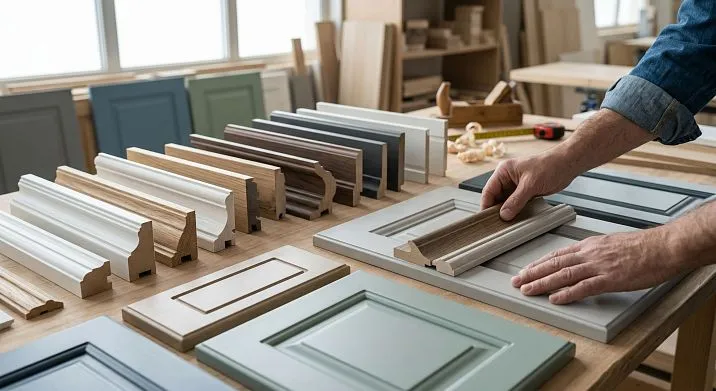
You are right. Preciselymoldings for MDFtransform a serial cabinet into a stylish interior item. This is not cosmetics or a glued-on 'beauty.' It's a systemic solution that works through geometry, proportion, light and shadow, and the logic of classical furniture architecture.
But the buyer always has many questions. Which profile is suitable for MDF? How does molding differ fromMDF cornice? When is the best time to get applied decor? What should be purchased as a set? Honest, detailed, and practically useful answers to these questions. No fluff, no unnecessary reasoning, based on real experience working with wooden furniture decor.
The first screen of this article contains exactly the conversation you need: aboutmoldings for MDF fronts, aboutMoldings for furniture, aboutdecor for furniture as a system. Let's go.




What are moldings for MDF and where are they used
MDF is one of the most common materials in modern furniture and kitchen sets. It provides a perfectly smooth surface, takes paint and varnish well, and is affordable. But it has one fundamental weakness: an MDF front by itself is a flat, featureless panel. No texture, no depth, no architectural character.
It is precisely to overcome this flatness thatmolding for MDF frontsand accompanying decor. The profile is glued onto the surface of the facade, creating a frame structure—a border with an offset from the edge that visually divides the surface into a 'field' and a 'frame'. This technique has been used for millennia in architecture and furniture making: the framed facade is the historical standard of quality joinery work.




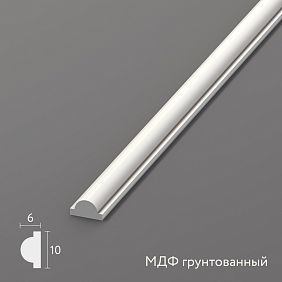
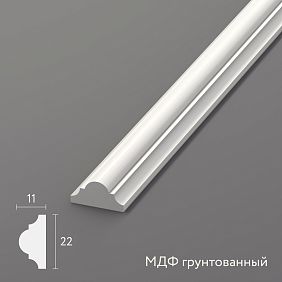
Moldings for MDF facades
An MDF facade with molding is the most common way to create a framed facade without milling. A profiled wooden strip is glued onto the flat surface around the perimeter, offset from the edge by 25–45 mm. The corners are cut at 45°. After painting in a single color, the result is indistinguishable from a factory-made framed facade. This is the solution used by craftsmen when upgrading old kitchens, when assembling furniture independently, and when custom-decorating mass-produced items.
Important technical point: the wooden molding is glued to the MDF base with woodworking PVA or special mounting adhesive. After drying, the joints are filled, sanded, and painted in the same color as the facade. With the correct technique, the seam disappears completely.
Our factory also produces:


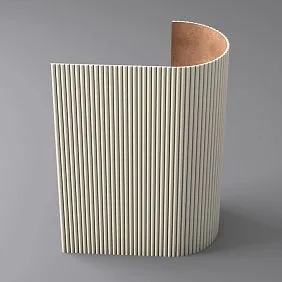
Moldings for MDF furniture
MDF furniture—cabinets, dressers, nightstands, bedside tables, shelving units with doors—all of this category benefits from decoration with a profile.Molding for MDF furnitureis selected taking into account the size of the facade: a narrow profile of 15–20 mm works on a small drawer, while a profile of 35–55 mm works on a tall cabinet door. Proportion is the main rule.
Get Consultation
Moldings for MDF kitchen facades
The kitchen is the most common object for decoration with a profile. Lower cabinets, upper cabinets, tall units, display cabinets—each has its own scale, and therefore its own molding width. A professional result requires a uniform profile throughout the kitchen: one cross-section, one width, one color. It is precisely this systematic approach that gives that 'expensive' look, which is hard to explain but easy to see.
Moldings for cabinets and dressers
A cabinet is a tall piece with large doors, where molding creates a monumental framing effect. A dresser is a horizontal piece with a rhythmic row of drawers, where molding transforms a set of planes into decorative rhythm. Both scenarios require a different approach to profile width — this is covered in detail in the section on selection by furniture type.
MDF profiles for decorative finishing
In addition to 'pure' molding on the facade, MDF surfaces are adorned with decorative belts, horizontal divisions, and vertical accents. These are more complex decorative schemes where molding is used not only as a framing element but also as an ornamental belt dividing the facade into zones. This technique is applied to wardrobes 2.2 m and taller, as well as large buffets and libraries.
Which moldings are suitable for MDF
Not every profile is equally good on an MDF surface. We'll break down the categories and explain the selection logic.
Smooth furniture molding
This is the most universal and in-demand type for MDF facades. A smooth profile without ornamental relief — rectangular, stepped, or with a slight curve in cross-section — creates a strict, elegant frame. When painted white or a neutral color, it completely 'dissolves' into the facade, leaving only the relief structure.
The main advantage of a smooth profile: it works in any style. Neoclassical, modern classic, Scandinavian interior with historical notes, French style — smooth molding is organic everywhere.
Relief molding
A relief profile has several height variations in cross-section: coves, heels, quarter-round projections. It is precisely these variations that create chiaroscuro interplay under side and top lighting. Relief molding 'comes alive' in light: it looks different in the morning than in the evening, under spot lighting—different than under diffuse light. This is a quality impossible to achieve with a smooth surface.
A relief profile requires a stricter stylistic context: it works best in classic and neoclassical styles. For modern, neutral interiors, relief can appear 'heavy'.
MDF cornice as part of a decorative system
MDF Crown— this is a separate category, fundamentally important for kitchen units and cabinets. The cornice works not on the front, but above it: it is mounted along the top horizontal line of the upper cabinets or tall units and creates an architectural 'crown' for the entire set. Without a cornice, the top line of the kitchen looks 'cut off'. With a cornice—complete.
When choosing moldings for MDF, always consider the cornice as an essential paired element: the profile of the molding and the profile of the cornice should speak the same decorative language. Smooth molding—smooth cornice. Relief molding—cornice with a corresponding historical profile.
Molding for painting
For MDF furniture, monochromatic painting is the standard finishing technology. Molding intended for painting should have a maximally even, fine-pored surface that accepts primer and enamel without emphasizing texture.
Beech is the best material for painting: fine, almost imperceptible pores, dense structure, even color. After two coats of primer and two coats of enamel, the surface of a wooden molding is indistinguishable from painted MDF. This is precisely what allows for creating monolithic frame fronts with a perfect surface.
Combining MDF base and decorative wooden elements
This is a practice professional craftsmen use to achieve a balance between price and quality: the carcass and front panels are made of MDF (cost-saving, evenness, lightness), while the molding, overlays, and handles are made of natural wood (finish quality, depth of relief, material feel). After unified painting, the difference in material is absolutely unnoticeable, but it is precisely the wooden elements that provide that feeling of 'authenticity' which MDF alone cannot create.
What is better for an MDF front: molding, cornice, or applied decor
This is a question with no universal answer — there is a task. And the right tool for each task.
When molding is specifically needed
Molding for MDFis indispensable where a geometric frame structure is needed on the surface of a facade. It is responsible for architecture: it divides the plane into a 'field' and a 'frame,' creates proportional zones, and sets the rhythm of repetitions across all facades of the item.
If the task is to create a framed facade from standard MDF, molding is the only correct tool. Without it, neither overlays nor cornices will solve this task.
When MDF cornice is better
Cornice for MDF facadessolves a different task — finishing the top line of cabinets and suites. It works not inside the facade, but above it. If the question is 'how to finish the top line of a kitchen' — that's a task for a cornice, not for molding.
For a kitchen, the correct system always includes both elements: molding on the facades plus a cornice on top. They do not replace but complement each other — molding creates the structure of each facade, the cornice completes the entire suite as a single architectural object.
When overlay decor is suitable
applied decoration for furniture— corner rosettes, cartouches, ornamental overlays — works within the frame structure created by molding. On their own, without molding, overlays create individual accents but do not form a system.
Overlay decor should be considered as the next level after molding: first create a frame, then decorate its corners and center. It is in this order that a true classic facade is born.
When it is advantageous to assemble a set
For classic and neoclassical furniture, the optimal result is always achieved through a set: moldings for MDF facades + corner overlays + cornice + handles. Purchasing from one catalog guarantees stylistic unity—no element will 'stand out' from the overall system. This is a professional approach practiced by experienced furniture makers and designers.
How to choose moldings for MDF based on furniture type
Different furniture items dictate different requirements for the profile. Here is specific practice for each type.
For Kitchen
The kitchen is the most systematic object for applying molding. Here, a uniform profile width across all facades is important, with slight visual differences between tiers:
| Kitchen zone | Front height | Recommended molding width |
|---|---|---|
| Drawers of the lower cabinet | 150–250 mm | 15–20 mm |
| Lower cabinets (doors) | 700–900 mm | 30–45 mm |
| Upper cabinets | 500–700 mm | 20–35 mm |
| Tall cabinets | 1800–2200 mm | 40–60 mm |
A uniform profile across the entire kitchen is a mandatory requirement. Even if the width varies slightly between tiers, the profile cross-section must be identical.
For an MDF cabinet
Standard hinged doors for a sliding wardrobe or built-in cabinet are 600–900 mm wide, 2000–2400 mm high. For this scale, the optimal molding width is 40–55 mm. On a tall and wide door, double framing is allowed: an outer frame around the perimeter and an inner division horizontally or vertically.
Buy moldings for MDFfor a cabinet, it's better with a 15% surplus: losses are inevitable when cutting corners at 45°.
For a chest of drawers
A chest of drawers is a horizontal piece with several drawers of different heights. The main aesthetic task here is to create a rhythmic pattern of repeating frames. Molding width is 20–35 mm depending on drawer height. A uniform indentation from the edge on all drawers is an absolute rule. Even a 2 mm difference is immediately 'read' by the eye and disrupts the rhythm.
For a side table
Bedside tables, TV stands, corner cabinets — small pieces with small fronts. For a cabinet 400–600 mm high, the molding should not exceed 20 mm: otherwise, the frame occupies too large a proportion of the surface and the front 'falls apart' visually.
For a cabinet, a smooth, narrow profile in white or a neutral color is optimal — delicate, elegant, unobtrusive.
For classic furniture
Classic MDF furniture requires a profile with a historical cross-section: ogee, torus, quarter-round, or their combinations. Width — from 35 mm. Without corner overlays, classic looks unfinished. Symmetry, proportion, unity — three laws that must not be broken.
More about the principles of classical furniture decor — in the expandedguide to classic furniturewith numerous examples and analysis of historical schools.
For painted facades
MDF facades for monochrome painting are the most common scenario in modern interiors. Here, molding works as a relief structure that 'disappears' in color but remains in shadow. That's why for painted facades, profiles with the clearest and deepest cross-section geometry are chosen: the more expressive the height variation in the profile, the stronger the shadows and the more 'architectural' the facade looks after painting.
How to choose moldings for MDF by style
Style is not just 'I like it'. It's a system of visual rules that must be followed from start to finish. Violating the system is always noticeable — even if you can't articulate exactly what's 'wrong'.
Classic
Classical style for MDF furniture: relief profile with historical cross-section (cavetto or ogee), width 35–55 mm, corner overlays with delicate floral or geometric ornamentation, cornice with corresponding profile. Color — white, ivory, soft cream. Proportions — strict, symmetrical.
Neoclassicism
Modern interpretation of classics allows smooth profile of medium width (25–40 mm), minimalist overlays with geometric motif, neutral colors — white, light gray, mint. Neoclassicism is when 'everything is in its place', but without solemnity.
For MDF, neoclassicism is an especially organic style: smooth wooden molding after painting creates a flawless surface with clear frame geometry.
Strict modern facade
Smooth profile of minimal width (15–25 mm), without overlays, without ornaments, only pure geometry. White or gray. This is for those who want 'a little bit of frame' without any historical context. A thin molding on a white facade is perfect restraint.
Pronounced decorative relief
For interiors with an emphasis on ornamental richness — a wide profile with a relief ornament, corner overlays with baroque decor, a cornice with a lush profile. This is high-level mastery: it requires precise ensemble work and a confident understanding of baroque visual logic. Read more about techniques and methods in the article on the art of furniture decoration.
Combination of molding with handles and overlays
Molding, to buy, which will allow you to transform your furniture using carved wooden elements. You can use the C-003-3 decor set to decorate furniture, walls, doors, or any other surface. The C-003-3 decor set is made of oak or beech, known for their strength, durability, and beauty. You can buy the C-003-3 decor set at the Stavros decor store, which specializes in producing and selling decorative elements and hardware for furniture and interiors. At the Stavros decor store, you will find a wide selection of decor sets of various shapes, sizes, and styles. You can choose in the form of overlays and Furniture Handles — this is a decorative triumvirate. The handle is the first element the eye stops on. It must speak the same language as the molding. A classic relief profile — a handle with a historical silhouette. Smooth neoclassical molding — an elegant bracket or wooden railing handle. Modern minimalist profile — a metal push-button handle or wooden slat handle.
What elements to buy together with MDF moldings
Molding starts working at full capacity only within a system. Let's list everything that makes sense to purchase as a set.
Furniture Decor: Corner and Center Appliques
buy furniture decorSimultaneously with the molding — the correct strategy. Corner appliques are mounted in the corners of the frame: they simultaneously simplify installation (no need for perfect 45° cuts) and create decorative focal points. Center ornaments — on the wide fronts of tall cabinets and wardrobes.
Overlay Decor for Furniture: Selection Principle
applied decoration for furnitureMust be compatible with the width of the molding: a 40×40 mm corner applique is not suitable for a 20 mm wide molding — it will 'crawl' out of the frame. Always check dimensional compatibility when purchasing.
Wooden decor for furniture
to buy, which will allow you to transform your furniture using carved wooden elements. You can use the C-003-3 decor set to decorate furniture, walls, doors, or any other surface. The C-003-3 decor set is made of oak or beech, known for their strength, durability, and beauty. You can buy the C-003-3 decor set at the Stavros decor store, which specializes in producing and selling decorative elements and hardware for furniture and interiors. At the Stavros decor store, you will find a wide selection of decor sets of various shapes, sizes, and styles. You can choose— cartouches, medallions, ornamental appliques made of beech and oak — are mounted on top of the MDF front in the same way as the molding. When painted in a single color, all materials merge into a monolithic surface. Natural wood provides a clearer relief than polyurethane and holds paint better.
Furniture handles
Furniture HandlesWooden handles — the most organic choice for MDF fronts with wooden molding. Buy handles in the same material as the molding: uniform raw material guarantees identical paint behavior and a unified finish for the entire surface.
A separate category —uncoated wooden handlesFor custom painting. This is a professional tool: handles are painted together with the fronts in a single color, and the result is absolute color monolithic unity of the entire surface.
Furniture legs and supports
furniture legsWooden legs complete the decorative system from below. For classic furniture with relief molding — turned legs with a lathed profile. For neoclassical with smooth molding — elegant conical or square legs.Furniture SupportsHandles and legs should be made from the same wood species as the molding — this ensures finish unity when painting.
Capitals and cornices for a complex facade
For tall cabinets, high buffets, and library cabinets, an upper decorative belt — a cornice — is added to the molding.MDF Crownor a wooden one completes the vertical composition and creates a 'crown' for the entire piece. For principles of working with capitals and architectural overlay elements, see the article aboutCapitals and overlays.
Which material to choose: MDF, wood, or a combination
This is not just a matter of taste, but also of specific tasks. Three options — three different scenarios.
When MDF is specifically needed for molding
MDF molding is economical and smooth. It takes paint well and does not deform under moderate humidity. Ideal for monochrome interiors where all decor is painted in a single color. Downside: MDF requires mandatory treatment of all ends and cuts — otherwise, with the slightest moisture, the end swells and lifts. This is especially relevant for kitchens.
When wood is better
Natural solid wood — beech or oak — provides deeper relief, holds paint better, and is not afraid of moderate moisture with intact coating. With the same cross-section, wooden molding always looks 'richer' than MDF — simply because the natural pore of wood creates a micro-relief that, under side lighting, gives a slightly more lively surface.
For kitchens, for high-class furniture, for objects with long-term quality requirements — choose wooden molding.
When to combine MDF base and wooden elements
This is the most common professional practice. MDF — for cases, internal shelves, upper horizontals: where economy and smoothness are needed. Wood — for moldings, overlays, handles, legs: where finish and the feel of the material are important.
After a uniform paint job, the difference between MDF and wood in the surface is unnoticeable. But it is the wooden decorative elements that provide the liveliness and precision of relief that MDF cannot replicate.
What matters more: price, style, or depth of relief?
| Priority | Recommended material |
|---|---|
| Minimum budget | MDF molding for painting |
| Quality of finish when painting | Beech |
| Texture under clear lacquer | Oak |
| Historical carving | Solid wood only |
| High-end kitchen | Beech or oak |
Mistakes when choosing moldings for MDF
Mistakes in furniture decor are immediately visible and take a long time to correct. It's better to know them in advance.
A profile that is too wide on a small front
A 50 mm molding on a drawer 180 mm high is a proportion disaster. The frame will eat up almost all the space. Rule: the sum of two opposite sides of the frame should not exceed 35–40% of the corresponding front dimension. For a 180 mm drawer — maximum 15 mm per side, meaning molding no wider than 15–18 mm.
Overloaded front
Molding + four corner overlays with baroque + a central cartouche + a wide cornice + voluminous handles — all on one piece of furniture of a small size. Overload kills style. For small cabinets and dressers — molding plus delicate overlays. High-complexity carved decor — only for large, representative furniture.
Conflict between molding and handles
Furniture HandlesHandles in an ultra-modern minimalist style on a front with classical relief molding — this is a stylistic contradiction that cannot be 'covered up' by color or finish. Handles and molding belong to the same era and the same stylistic system. Otherwise — it doesn't work.
Mixing different ornamental traditions
Molding with a meander plus overlays with baroque rocaille plus a cornice with Egyptian motifs — this is ornamental chaos. All decorative elements of one piece should belong to the same ornamental school. If you're not confident about this — choose a smooth profile without ornament. This is never a mistake.
Drifting into wall or floor decor instead of furniture decor
Ceiling skirting boards, MDF floor skirting boards, wall moldings — all these are created for other surfaces and other scales. On a furniture front, they look alien. Always choose a profile developed specifically as furniture — its proportions, profile, and material are designed for use in furniture decor, not on walls or floors.
Where to buy MDF moldings
How to choose a profile
When choosing a molding for MDF furniture, focus on three parameters:
-
Width — determined by the size of the facade according to the proportion table above.
-
Cross-section profile — smooth for neoclassical, relief for classic, carved for baroque.
-
Material — beech for painting, oak for tinting, MDF as a budget alternative.
How to choose the size
Measure the perimeter of each facade, multiply by the number of facades, add 15% for trimming and reserve. This is exactly how many linear meters of molding you will need. Don't forget to count the number of corner overlays (4 per facade if used) and handles (1 per drawer, 1–2 per door).
What to take as a set
Professional set for one wardrobe or kitchen:
-
molding for MDF fronts— the foundation of the frame structure;
-
applied decoration for furniture— corner and central accents;
-
MDF or wooden cornice— finishing the top line;
-
Furniture Handles— the final visual accent;
-
Furniture Supports— the lower architectural accent.
How to combine molding, cornice, overlays, and handles
The main principle: unity of style and material. All wooden elements from the same catalog are compatible in wood species, size range, and stylistic logic. After painting in a single color, they form a monolithic ensemble—exactly what it's all about.
FAQ: Answers to popular questions about moldings for MDF
Which moldings are suitable for MDF facades?
For MDF facades, wooden moldings made of beech or oak are best. Wood provides a clearer relief and accepts paint better than MDF profiles. With monochrome painting, the boundary between the MDF base and the wooden molding disappears completely.moldings for MDFfrom the Stavros catalog — specifically wooden ones, which is the optimal solution for MDF furniture.
What is better for MDF: molding or cornice?
These are different elements with different functions.Molding for MDFworks on the surface of the facade and creates a frame structure.MDF Crowncompletes the top line of the set. Both are needed for a full classic design.
Can moldings be installed on MDF kitchen facades?
Yes, and this is standard practice.moldings for MDF frontsare glued to MDF kitchen facades, filled at joints, and painted in a uniform color. With proper finishing (primer + enamel), wooden molding serves perfectly in the kitchen for many years.
How to choose molding for an MDF cabinet?
Focus on the height and width of the doors: for standard doors 600×2000 mm — a profile of 40–55 mm. Choose the cross-section according to the interior style: smooth — for neoclassical, relief — for classic.Buy MDF moldingfor the cabinet — with a 15% reserve.
What to buy together with MDF molding?
Mandatory minimum:to buy, which will allow you to transform your furniture using carved wooden elements. You can use the C-003-3 decor set to decorate furniture, walls, doors, or any other surface. The C-003-3 decor set is made of oak or beech, known for their strength, durability, and beauty. You can buy the C-003-3 decor set at the Stavros decor store, which specializes in producing and selling decorative elements and hardware for furniture and interiors. At the Stavros decor store, you will find a wide selection of decor sets of various shapes, sizes, and styles. You can choosein the form of corner overlays andFurniture Handles. For the kitchen, addMDF Crown— it completes the top line of the set.
Which handles go well with MDF fronts with molding?
uncoated wooden handlesfor painting — the most versatile choice. They are painted the same color as the front and create a monolithic surface. For classic molding — handles with a historical silhouette. For neoclassical smooth profile — elegant brackets or picket handles.
How to properly glue molding to MDF?
The MDF surface is degreased and lightly sanded with 120-grit sandpaper. The molding is applied using woodworking PVA or mounting adhesive, pressed, and secured with clamps or painter's tape for 24 hours. After drying, joints and corners are filled with wood putty, sanded smooth, primed, and painted.
Can it beBuy moldings for MDFone piece each?
Yes. The Stavros catalog offers trim by the piece. This is important for individual buyers and craftsmen who are decorating a specific piece of furniture, rather than ordering a wholesale batch.
Is special wood treatment required before installation on MDF?
No. Wooden molding is installed on MDF without special treatment. After installation, all elements—the molding and the front—are primed and painted together, ensuring a unified finish.
How to calculate the number of corner overlays?
Simple formula: number of overlays = number of fronts × 4. If there are 12 fronts (a standard kitchen), 48 corner overlays will be needed. Take an extra 5–10% in case of defects during painting.
Why is wooden molding better than polyurethane for MDF?
Wooden molding accepts paint better, provides sharper relief, does not deform upon impact, and lasts significantly longer. Polyurethane is cheaper, but if the coating is damaged, it deforms and loses its shape. For MDF furniture intended to be painted, wood is definitely the better choice.
What are furniture decorative accessories in relation to MDF furniture?
Furniture decorative accessories— is the entire set of decorative components: moldings, overlays, corner elements, handles, legs, cornices. In relation to MDF furniture — these are the wooden elements that are mounted on the MDF base and create the decorative image of the product.
How much does it cost to decorate a wardrobe with molding?
The cost depends on the area of the facades, the chosen profile, and the configuration. Molding + corner overlays + handles for a standard two-door wardrobe — this is an affordable budget that pays off many times over with the result: a wardrobe from a serial cabinet turns into an item with an authorial character.
About the company STAVROS
Everything written about in this article —moldings for MDF, MDF cornice and wooden, applied decoration for furniture, Furniture Handles, Legs and supports— all of this is collected in a single catalog of the company STAVROS.
STAVROS — a Russian manufacturer of wooden furniture decor and architectural elements made from natural beech and oak. The company works with both private buyers and professional craftsmen, furniture manufacturers, and design studios. The assortment includes wooden moldings of several profiles, corner and center overlays, wooden cornices, furniture handles of various styles, turned legs and supports.
Everything is made from natural wood. Everything is compatible within the catalog. Orders from one piece. Delivery throughout Russia and CIS countries.
When you make the decisionBuy moldings for MDF— do it where behind the word 'wood' stands real solid wood, and behind the word 'system' — real compatibility of all elements. STAVROS — is exactly that choice.