Article Contents:
- What exactly is included in the MLD-011 purchase item
- Why the material is fixed before calculation
- Why substitution in the middle of a series is especially dangerous
- Type A
- Type B
- Type B
- Why meters ÷ 2.4 gives only the theoretical minimum
- Example: same total length, different number of planks
- Why long parts are reserved first
- Example of a combination of short parts
- Why the cutting map should be a table, not a set of comments
- If the entire series is of one material
- Zone Z-01
- Zone Z-02
- How to label the source batch after receipt
- Why the code should change after cutting
- How to organize a serial frame map
- Why counting "frame by frame" is not always profitable
- Why a long remnant is not always useful
- How to classify remnants
- Why the linear meterage of remnants cannot be automatically counted as reserve
- Remainder
- Reserve
- Cutting reserve
- Reserve of long parts
- Installation reserve
- Operational reserve
- Why a whole plank is more valuable than a set of short offcuts
- How to determine the reserve size without a made-up percentage
- How to work with the first production batch
- What counts as a successful first batch
- How to record actual consumption
- Why overspending must be explained by a reason
- Goods acceptance
- Production acceptance
- Why several planks need to be checked before mass cutting
- Why damage to one end is especially critical for a long part
- How to divide the warehouse by material and purpose
- Oak
- Oak
- How to process deliveries by batches
- Phase 1
- Queue 2
- Queue 3
- How to maintain balance between batches
- Why the remnants of the previous batch need to be inventoried before a new purchase
- How to calculate the cost of a series without fixing a changing price
- Cost of one frame type
- Cost of one production batch
- Cost of material change
- Why the price per linear meter is not enough
- Map 1
- Map 2
- How to compare two commercial proposals
- What to pass to the supplier and what to the workshop
- What to check right before payment
- What to do if part of the approved material is missing from stock
- What to do if there is MDF but not enough solid wood
- How to place a reorder
- Why the phrase “same as last time” is dangerous
- How to maintain repairability after project handover
- Why it is better to store the repair stock as whole planks and parts at the same time
- When MLD-011 should not be purchased for a specific task
- First, count the finished parts
- Long verticals of type B
- Type B verticals, 1180 mm each
- Go
- How to check the marking in practice
- How to inspect the first assembled frame of each type
- Why finished frame inspection helps purchasing
- How to organize a repair passport by zones
- Z-01
- Z-02
- Why the batch date is useful
- How to verify a commercial order in reverse
- Why a large stock does not replace an accurate calculation
- How to tell that the article and specification solved the task
- Check #1 — is there any hidden double counting
- Check #2 — has an entire reserve been eaten up by short parts
- Check #3 — does the map explain the difference between net and purchased linear meters
- Why a serial batch must have a single master file
- Why this is especially important for oak and beech of the same model
- How to complete a project without unnamed leftovers
- How to verify that the first delivery truly matches the master specification
- How to check that a wholesale article hasn't turned into a regular product description
- Why the final purchase must reconcile with the renovation reserve
- 1. Counting only linear meters
- 2. Dividing meters by 2.4 and considering the task closed
- 3. Replacing MLD-011 with a similar 35 mm wide molding
- 4. Mixing beech and oak
- 5. Automatically replacing solid wood with MDF
- 6. Do not separate finish options
- 7. Start cutting with short parts
- 8. Treat any leftover as useful
- 9. Use one common reserve
- 10. Distribute the reserve into the main map
- 11. Do not label parts after cutting
- 12. Make each frame with an isolated cutting plan
- 13. Order the next batch without inventorying leftovers
- 14. Reorder “more MLD-011”
- 15. Record the current stock in the article as permanent
- What size is MLD-011?
- What is the length of the beech MLD-011?
- What is the length of the oak MLD-011?
- Is there an MLD-011 made of MDF?
- Can MLD-011 be bought wholesale?
- Why can't you just count linear meters?
- How do you create a cutting plan?
- Should beech and oak be counted separately?
- Can oak offcuts be used instead of beech?
- What margin is needed?
- Can short offcuts be used?
- How to mark the planks?
- How to label parts after cutting?
- How to receive a large batch?
- What to keep after installation?
- How to place an additional order?
- Where can I see the current price?
- Where to buy MLD-011 wholesale?
- How to check batch readiness before payment
- Project
- Production
- Purchasing
- Final readiness matrix
- What the final request should look like
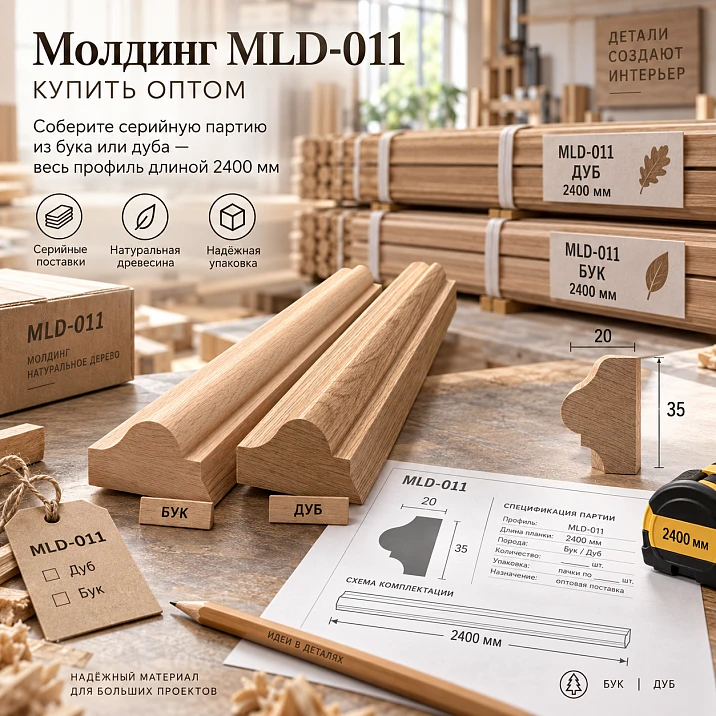
When MLD-011 has already been approved by the designer and constructor, the procurement task changes. There is no longer any need to choose between similar moldings, compare depth with MLD-006, or discuss which profile looks better on a specific door. A different, more practical task must be solved: convert dozens of identical frames, fronts, or decorative fields into the exact number of MLD-011 product strips, without losing the material, finish, and purpose of the parts, and then maintain the same configuration until the end of the series.
For the branch selected in this article, the MLD-011 made of solid wood has a cross-section of 35×20 mm, while beech and oak come in lengths of 2400 mm. That is why the calculation is based not on abstract linear meters, but on real parts and their combinations within each strip.
If the project requires buying MLD-011 molding wholesale, the working sequence should look like this:
frame type → finished lengths of parts → number of repeats → material → finish option → 2400 mm cutting map → usable remnants → number of whole strips → labeling → reserve → wholesale order.
Main rule of the article:
linear meterage is the control total, while the purchasing unit is a whole MLD-011 strip of a specific material and finish.
Entry:
MLD-011 — 180 m
insufficient.
Strong line:
MLD-011 / oak / 35×20×2400 mm / preparation ___ / 82 pcs. / zone Z-01.
This format answers four questions at once: what exactly we are purchasing, from what material, how many whole items are required, and where the batch is going.
What exactly is included in the procurement item MLD-011
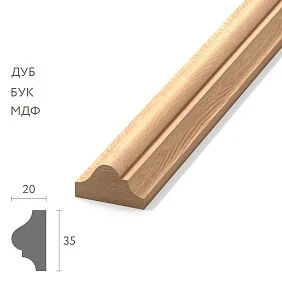
In the current MLD-011 range, it is offered with a cross-section of 35×20 mm. For solid wood, beech and oak come in lengths of 2400 mm. Sanding quality — "Prestige". The product range also includes MDF 35×20×2600 mm, but it is not included in the calculation in this article: here we are considering specifically the purchase of beech or oak MLD-011 with a length of 2400 mm.
Product card: buy molding MLD-011.
The following parameters are important for the buyer:
| Parameter | Working value of the article |
|---|---|
| Article number | MLD-011 |
| Cross-section | 35×20 mm |
| Material | Beech or oak |
| Product length of solid wood | 2400 мм |
| Sanding quality | «Prestige» |
| Preparation | according to the approved finishing system |
| Purchase unit | full plank |
| Production unit | ready-made part |
The last two lines cannot be mixed.
A strip is what comes from the supplier.
A finished part is what results after cutting: vertical, horizontal, side part of the frame, top part of the facade.




Why the material is fixed before calculation
If the project is approved in oak, the entire oak cutting is considered a separate material pool.
If part of the project is beech, it gets its own map.
You cannot first calculate:
MLD-011 — 120 pcs.,
and then decide at the warehouse how many of them are oak and how many are beech.
More correctly:
MLD-011 / beech / 35×20×2400 — 72 pcs.
MLD-011 / oak / 35×20×2400 — 48 pcs.
Even with identical part lengths, the remaining beech is not a substitute for oak.
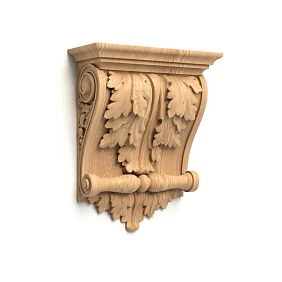
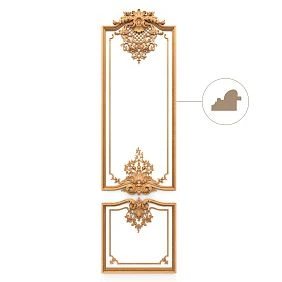
Our factory also produces:



Why MLD-011 cannot be considered simply a “35 mm wide molding”
After the SKU is approved, the purchaser must not independently substitute it with a similar profile.
Phrase:
a wooden molding of approximately 35 mm is needed
is not equivalent to:
MLD-011 35×20 mm is needed.
The SKU specifies not only the width, but also:
-
depth;
-
specific profile;
-
radii;
-
relief pattern;
-
jointing at corners;
-
appearance after finishing.
Even a different molding with a width of 35 mm can produce a different result.
Therefore, the article proceeds from a rigid premise:
MLD-011 has already been approved.
All further decisions concern the quantity, material, cutting, and components.
Get Consultation
Why replacement in the middle of a series is especially dangerous
Let's imagine 60 identical furniture fronts.
The first 30 are made from MLD-011.
After that, the buyer sees the shortage and decides:
let's take a similar profile of the same width.
Even if the new strip seems close, the series may differ:
-
by depth;
-
by shadow;
-
by the side platform;
-
by the corner joint;
-
in relation to the handle;
-
by the scale of the frame.
Therefore, the shortage must be resolved:
-
by reordering MLD-011;
-
by using the confirmed reserve;
-
redistribution of usable remnants of the same configuration.
Not by replacing the SKU "on site."
First we count parts, not linear meters
Let's imagine a project with three types of frames.
Type A
40 fronts.
For each:
-
2 verticals;
-
2 horizontals.
Type B
24 fronts.
The same model MLD-011, but a different size.
Type B
12 wall panels.
Also MLD-011.
Bad specification:
MLD-011 — 186 m.
She does not show:
-
how many long verticals;
-
how many short horizontals;
-
which lengths repeat;
-
what can be combined into one strip;
-
which leftovers will be useful.
It is better to make the schedule first.
For example:
| Code | Detail | Finished length | Quantity |
|---|---|---|---|
| A-B | vertical type A | 900 мм | 80 |
| A-D | horizontal type A | 620 мм | 80 |
| B-C | vertical type B | 1180 мм | 48 |
| B-D | horizontal type B | 760 мм | 48 |
| C-C | wall field vertical | 2050 мм | 24 |
| C-D | horizontal of the wall field | 1050 мм | 24 |
The numbers here are conditional — they demonstrate the method.
Only after such a schedule can you build a 2400 mm map.
Why dividing meters by 2.4 gives only a theoretical minimum
Suppose the net sum of parts equals:
180 m.
Simple division:
180 / 2.4 = 75 planks.
But 75 is the number you would get if the material could be assembled without limitations:
-
without a cut;
-
without waste;
-
without long parts;
-
without material;
-
without finishing separation.
Actual cutting may require:
-
81;
-
84;
-
90 strips.
The specific number depends on the length structure of the parts.
That is why it is useful to compare building materials at wholesale prices only after a finished specification, and not by the abstract price per linear meter: STAVROS.
Example: same linear footage, different number of strips
Scenario 1:
-
two parts of 1200 mm each.
Net total:
2400 mm.
But there is a saw kerf between the parts.
This means that two exact parts of 1200 mm each from one nominal 2400 mm strip are not guaranteed without an additional technological allowance.
Scenario 2:
-
1000 + 1000 mm.
Sum:
2000 mm.
400 mm remains before accounting for the saw kerf.
The same overall frame logic may require a completely different number of source boards.
How to convert a parts list into 2400 mm boards
Working algorithm:
-
separate beech and oak;
-
group identical lengths;
-
identify the longest parts;
-
protect parts that need almost a whole board;
-
build combinations of short parts;
-
account for the saw kerf;
-
check the suitability of the remaining stock;
-
assign real purposes to the remaining stock;
-
get the number of whole planks;
-
add the reserve separately.
This sequence prevents a common mistake: good long planks are first cut into short elements, and then it turns out there is nothing left to make the long verticals from.
Why long parts are reserved first
Suppose a wall vertical:
2050 mm.
Out of 2400 mm, what remains is:
350 mm before technological waste.
Such a part almost requires a whole plank.
If the plank was first cut in the warehouse:
760 + 760 + 760,
The total used length looks efficient, but a part longer than 2050 mm cannot be obtained.
Therefore, the map starts with the positions that have the fewest cutting options.
First:
-
2050;
-
1900;
-
1750 mm.
Then:
-
1180;
-
1050;
-
900;
-
760;
-
-
Example of a combination of short parts
Suppose the following are needed:
-
1180 mm;
-
1050 mm.
Sum:
2230 mm.
Nominally remains:
170 мм
up to the kerf.
Such a combination can be a good one.
Another option:
1180 + 1180 = 2360 mm.
Only remains:
40 мм
for the separating kerf and technological operations.
The feasibility of such a scheme must be confirmed by production.
The article does not assign the kerf width on its own.
Why the cutting map should be a table, not a set of comments
Convenient format:
| Plank | Part 1 | Part 2 | Part 3 | Remainder |
|---|---|---|---|---|
| 001 | 2050 | — | — | As per actual |
| 002 | 1180 | 1050 | — | As per actual |
| 003 | 900 | 760 | 620 | As per actual |
This shows:
-
which lengths are actually combined;
-
where the strip is used almost entirely;
-
where a usable remainder is left;
-
where the layout is too dense.
The map becomes a production document, not just a purchaser's calculation.
Beech and oak are treated as two separate purchasing configurations
MLD-011 in beech and MLD-011 in oak have the same cross-section of 35×20 mm and the same length of 2400 mm, but for purchasing these are two different items.
You cannot write:
MLD-011 — 120 pcs.
if part of the series is oak and part is beech.
More correctly:
MLD-011 / beech / 35×20×2400 / zone A — 72 pcs.
MLD-011 / oak / 35×20×2400 / zone B — 48 pcs.
Why this is important:
-
the remaining beech does not cover the oak item;
-
the finish may differ;
-
the visual matching of natural wood may vary;
-
the repair reserve must match the material of the original zone.
If the entire series is of one material
Then the map is simpler.
For example:
the entire furniture line — beech under enamel.
In this case, leftovers can be combined between different frame types if the following match:
-
material;
-
preparation;
-
surface condition;
-
finishing requirements.
This is especially useful on a large run, where short parts of one facade can be covered by leftovers from another.
Why MDF cannot be used as an automatic replacement for solid wood in this article
The current MLD-011 card also has an MDF version with a length of 2600 mm. But it is not part of the selected scenario, because the article is specifically about series purchasing of 2400 mm beech or oak.
If the project is approved in oak or beech, the shortfall cannot be covered by this logic:
let's take the same MLD-011 in MDF — the SKU is the same, after all.
The material changes:
-
the finishing base;
-
the surface behavior;
-
the visual result;
-
mass;
-
painting technology;
-
repairability.
Such a transition requires a new design revision and a separate procurement map.
The same applies in reverse: MDF 2600 mm should not be "converted" to solid wood 2400 mm without recalculating parts and cutting.
How to split one SKU by finish variants
Even within a single material, a batch may be non-uniform in finish.
For example:
Zone Z-01
MLD-011 / beech / for enamel.
Zone Z-02
MLD-011 / oak / for tinting.
Instead of the line:
MLD-011 — 200 pcs.
you need to have:
MLD-011 / beech / 2400 / F01 / Z01 — ___ pcs.
MLD-011 / oak / 2400 / F02 / Z02 — ___ pcs.
This way, the warehouse won't mix up two visually similar unfinished planks that should produce different results after finishing.
How to label the source batch after receipt
The code can be simple and clear.
For example:
MLD011-BEECH-F01-Z1
Where:
-
MLD011 — SKU;
-
BEECH — beech;
-
F01 — finish code;
-
Z1 — site zone.
For oak:
MLD011-OAK-F02-Z2.
If coding in English is inconvenient, you can use Russian abbreviations.
The main thing is that employees don't say:
take that 35 mm molding.
There must be one unambiguous code in the project series.
Why the code must change after cutting
The source strip is MLD-011.
After cutting, specific parts appear.
For example:
A-V-01 — vertical of a type A frame;
A-G-01 — horizontal of type A;
V-V-03 — wall vertical of type V.
So the workshop understands that this is no longer a universal long-length piece, but a part of a specific series.
How to organize a serial frame map
It is useful to have a master table:
| Type | Number of frames | Vertical | Horizontal | Material | Finish |
|---|---|---|---|---|---|
| А | 40 | 900 | 620 | Beech | F01 |
| Б | 24 | 1180 | 760 | Beech | F01 |
| В | 12 | 2050 | 1050 | Beech | F01 |
After this, the parts are combined:
-
A-B — 80 pcs.;
-
A-D — 80;
-
B-C — 48;
-
B-D — 48;
-
C-C — 24;
-
C-D — 24.
It is this table that turns the project into a cutting plan.
Why counting "frame by frame" is not always profitable
If each frame is closed only with its own slats, extra remnants appear.
For example, in type A, after one combination, a piece remains that is perfectly suited for type B.
If the calculation is isolated:
type A remainder = waste.
If combined:
type A remainder → part B-C.
Therefore, for a wholesale batch of a single material and finish, it is more efficient to build a combined map, and assemble the frames only after cutting.
How to use usable remnants
A remnant is considered usable if it:
-
sufficient length;
-
is of the correct material;
-
has the correct finish;
-
has no damage;
-
suitable in terms of surface quality;
-
has a real purpose detail.
Bad entry:
remaining MLD-011 — 14.2 m.
Stronger:
| Remainder code | Length | Material | Purpose |
|---|---|---|---|
| O-001 | 1080 мм | Beech | V-G 1050 |
| O-002 | 780 мм | Beech | B-G 760 |
| O-003 | 540 мм | Beech | Spacious |
| О-004 | 1260 мм | Oak | Repair reserve |
This makes it clear which meters actually work.
Why a long remnant is not always useful
Let's imagine a remnant:
1150 mm.
At first glance, it looks large.
But if all unclosed parts:
1180 mm and 2050 mm,
its usefulness for the current series is zero.
Therefore:
remnant length ≠ remnant value.
Value is determined by the next need.
How to classify remnants
It is useful to use statuses:
-
free;
-
assigned;
-
repair;
-
sample;
-
technological;
-
for write-off.
If a 780 mm piece is already assigned to B-G 760 mm, it ceases to be general stock.
This protects against double counting.
Why the linear meterage of remnants cannot be counted as reserve automatically
The warehouse may contain:
12 m of remnants.
But if these are:
-
20 pieces of 600 mm,
they will not replace a 2050 mm vertical.
Therefore, reserve and remnant are different entities.
Remainder
By-product of cutting.
Reserve
Material specifically reserved for project risks.
Sometimes a good leftover becomes a reserve.
But not just any.
How to create reserve MLD-011
Do not write:
+10 %.
Separate functions more clearly.
Cutting reserve
In case of a cutting error or defect.
Reserve of long parts
Whole 2400 mm planks for verticals.
Installation reserve
In case of damage during installation.
Operational reserve
Preserved after project handover.
This model explains why each additional MLD-011 is needed.
Why a whole plank is more valuable than a set of short offcuts
A whole 2400 mm plank can become:
-
a long vertical piece;
-
two medium parts;
-
several short pieces;
-
a new part after revision.
Short pieces are already limited by maximum length.
Therefore, it is useful to keep part of the reserve as whole products.
How to determine the reserve size without a made-up percentage
The reserve depends on:
-
the number of identical parts;
-
the lengths of critical elements;
-
the complexity of the angles;
-
the quality of the material;
-
the staged nature of delivery;
-
the ability to quickly reorder;
-
the cost of stopping production.
For example, if a series contains 24 verticals of 2050 mm each, the loss of two whole strips can halt two frames.
This is a different risk than the shortage of a short horizontal piece of 620 mm, which can sometimes be covered by an offcut.
How to work with the first production batch
Instead of immediately cutting the entire batch, you can start:
-
several frames A;
-
several B;
-
one C.
Check:
-
dimensional conformity;
-
actual kerf;
-
suitability of offcuts;
-
marking;
-
finishing;
-
kitting.
After that, the card is either confirmed or adjusted.
What counts as a successful first batch
The first batch is successful if:
-
lengths repeat;
-
parts do not require manual rework;
-
offcuts match the calculation;
-
workers understand the codes;
-
beech and oak are not mixed;
-
the material does not have to be changed during production.
If every second front requires individual adjustment, the production card is not ready yet.
How to record actual consumption
Example:
| Indicator | Plan | Actual |
|---|---|---|
| strips opened | 10 | 10 |
| parts A–B | 16 | 16 |
| parts A–D | 16 | 16 |
| parts B–D from leftovers | 4 | 4 |
| defects | 0 | 1 |
| reserve used | 0 | 0 |
This shows where consumption differs.
Entry:
slightly more was used
provides nothing for the next delivery.
Why overspending must be explained by its cause
Possible causes:
-
wood defects;
-
cutting error;
-
size changed;
-
incorrect map;
-
damage;
-
incorrect labeling;
-
finish change.
Each cause requires its own solution.
If the problem is labeling, adding another 10% of material will not fix it.
Packaging unit and purchasing unit are different things
MLD-011 is purchased in whole planks.
Logistics — in packaging units.
These entities are related but do not coincide.
In the request to the supplier, it is useful to separately ask for:
-
number of slats;
-
number of package units;
-
the length of each piece;
-
the ability to split the delivery by material;
-
the ability to apply project marking;
-
rules for transporting long-length items.
Bad specification:
12 packages of MLD-011.
It does not answer how much oak, how much beech, and how many whole planks were actually accepted.
Stronger:
MLD-011 / oak / 35×20×2400 — 48 pcs.;
MLD-011 / beech / 35×20×2400 — 72 pcs.;
packaging units — according to the agreed logistics scheme.
How to receive a wholesale batch of MLD-011
It is better to split acceptance into merchandise and production inspection.
Goods acceptance
Before cutting, the following are checked:
-
MLD-011;
-
cross-section 35×20 mm;
-
length 2400 mm for solid wood;
-
beech or oak;
-
sanding quality;
-
surface preparation option;
-
quantity;
-
integrity;
-
marking.
If an order contains two wood species, they are accepted separately.
Not:
a total of 120 moldings arrived.
But:
beech — 72;
oak — 48.
Production acceptance
After cutting, the finished parts are inspected:
-
code;
-
length;
-
frame type;
-
material;
-
finish;
-
revision;
-
set.
For example:
B-C / 1180 / beech / F01 / R1.
This way, incoming goods and finished parts are not mixed in the same accounting system.
Why several planks need to be checked before mass cutting
Even if the product card specifies nominal parameters, production must make sure that the received batch is suitable for the specific map.
Checked:
-
cross-section conformity;
-
end condition;
-
surface;
-
straightness;
-
absence of damage that would interfere with long parts.
The article does not assign its own tolerances.
Tolerances and inspection procedures are set by production.
But the principle is the same:
before mass cutting, you need to determine which whole planks are suitable for the longest elements.
Why damage to one end is especially critical for a long part
Let's imagine a vertical:
2320 mm.
Strip:
2400 mm.
Nominally, only 80 mm remains before the process allowance.
If one end is damaged and requires additional trimming, the part may no longer fit.
Therefore, long items close to 2400 mm should be assigned after visual and dimensional inspection.
One cannot assume that any strip from a bundle is equally suitable for the longest part.
How to divide the warehouse by material and purpose
Simple option:
Beech
-
main stock;
-
long parts;
-
short cutting list;
-
reserve.
Oak
Same separately.
Inside, it can be further divided:
-
F01;
-
F02;
-
zone Z1;
-
zone Z2.
The goal is not to create bureaucracy.
The goal is to ensure that a worker physically cannot take an oak plank from reserve and cut it into a beech series simply because both profiles look identical in cross-section.
How to arrange delivery by batches
A large project rarely requires the entire batch in one day.
For example:
Phase 1
Type A frames.
Phase 2
Type B.
Phase 3
Wall panels V.
But all queues must reduce a single master specification.
Bad scheme:
for each queue anew +10% reserve.
This is how the stock grows.
Stronger:
total project reserve = X whole planks;
after queue 1, Y used;
Z remaining;
before queue 2, we decide whether restoration is needed.
How to maintain balance between queues
Example:
Initially:
-
production — 80 planks;
-
reserve — 5.
After the first phase:
-
28 used;
-
reserve untouched;
-
usable leftovers — 7 pieces of various lengths.
Before the second:
-
leftovers are distributed to B-G and V-G;
-
only the deficit turns into a new order.
This is how wholesale purchasing works as a controlled material flow, not as a series of independent purchases.
Why leftover stock from the previous batch must be inventoried before a new purchase
If this is not done, the same part may be purchased twice.
For example:
the next batch requires:
12 horizontal pieces of 760 mm each.
The warehouse already has:
-
6 leftover pieces of 780–810 mm.
If a new order is created without inventory, purchasing buys material for all 12.
In fact, only the remaining 6 need to be covered.
Therefore, leftovers are not a junk report, but part of the future specification.
How to calculate the cost of a series without locking in a changing price
There is no need to tie the current price to a specific date in the article.
It is enough to describe the structure.
Total cost:
cost of MLD-011 + packaging + delivery + cutting + finishing + marking + reserve.
It is useful to calculate:
Cost of one frame type
For example:
type A — ___ rub.;
type B — ___;
type C — ___.
Cost of one production batch
This helps control the budget.
Cost of material change
Beech → oak.
Or vice versa.
This way the project sees not only the price of a single plank, but also the impact of the decision on the entire series.
Why the price per linear meter is not enough
Two maps can have the same net footage but a different number of planks.
For example:
Map 1
Many details:
-
1180;
-
1050;
-
-
They combine well.
Map 2
Many lengths:
-
2050;
-
2180;
-
-
Almost each one requires a separate strip.
The net square footage is close.
Purchasing is different.
Therefore, when working with wholesale suppliers of building materials offers should be compared on the same map, not on approximate meters.
How to compare two commercial offers
Both suppliers should receive the same specification.
For example:
MLD-011 / beech / 35×20×2400 / Prestige / preparation F01 / 72 pcs.;
MLD-011 / oak / 35×20×2400 / Prestige / F02 / 48 pcs.;
reserve separately;
delivery separately.
If the first counts 120 strips, and the second says “288 linear meters,” the quotes must first be brought to a single unit.
Otherwise, a low total may be explained by the fact that part of the long-length material, reserve, or packaging was simply not taken into account.
How to submit a request to the supplier
Ready structure:
Please calculate the wholesale batch MLD-011 35×20 mm for a serial project. The main order branch is solid wood 2400 mm long. Material: beech/oak according to the specification. Sanding quality — “Prestige.” The surface preparation option is indicated by a separate code. The number of whole strips is calculated from the finished parts list and the cutting map. Reserve strips are listed separately. Please confirm the current price, availability, lead time for the missing part, packaging, labeling, and delivery.
This way, the supplier does not need to interpret frame drawings.
They receive a precise product task.
What to send to the supplier and what to the workshop
To the supplier:
-
MLD-011;
-
material;
-
35×20×2400;
-
quality;
-
preparation;
-
quantity;
-
reserve;
-
deadline;
-
Delivery.
To the workshop:
-
frame types;
-
lengths of parts;
-
angles;
-
allowances;
-
cutting map;
-
part codes;
-
rules for using leftovers.
If these two levels are mixed, the supplier starts receiving excess production information, while the workshop receives insufficient information.
What to check immediately before payment
Price and availability change.
Therefore, before payment, the following are rechecked:
-
current price;
-
availability of beech;
-
availability of oak;
-
available number of planks;
-
production time for the missing part;
-
selected surface preparation;
-
packaging terms;
-
possibility of supplying the entire volume in one batch;
-
delivery of long-length items.
The article should not turn today's availability into a permanent fact.
The buyer checks the product card and quotation immediately before payment.
What to do if part of the approved material is missing from the warehouse
Let's imagine:
48 planks of oak are needed;
only 36 are confirmed.
Wrong decision:
we'll take the remaining 12 in beech.
Correct options:
-
wait for the oak;
-
split the delivery;
-
change the project only via a revision;
-
approve the new finish and material.
The material is part of the approved configuration.
Procurement does not change it on its own.
What to do if MDF is available but solid wood is not enough
The availability of MLD-011 in MDF 2600 mm does not make it an automatic fallback for oak or beech.
This is a different material branch.
If the project wants to switch to MDF:
-
a new revision is released;
-
the length 2600 is recalculated;
-
a new map is built;
-
the finish is specified;
-
the reserve changes.
This is a separate procurement task.
How to place an additional order
Bad request:
12 more MLD-011 are needed.
Stronger:
MLD-011 / oak / 35×20×2400 / Prestige / F02 / 12 pcs. / series B.R1.
This is how the manager sees it:
-
article number;
-
material;
-
length;
-
quality;
-
finishing;
-
quantity;
-
purpose.
Why the phrase "same as last time" is dangerous
The previous batch could have been:
-
beech;
-
oak;
-
with a different finish;
-
of a different revision;
-
for a different area.
That is why a repeat order must copy the master specification line, not the employee's memory.
How to preserve maintainability after project handover
After installation, it is useful to keep:
-
several whole planks or an agreed reserve;
-
a label;
-
article number;
-
material;
-
finish code;
-
batch date;
-
a chart of standard parts;
-
stock list;
-
a remainder of the finish coating, if provided for by the project.
A year later, the service team should not have to search for:
approximately this kind of 35 mm wooden molding.
They should open the passport and see:
MLD-011 / oak / 35×20×2400 / F02.
Why it is better to store the repair stock as whole planks and parts at the same time
A finished part is convenient for quick replacement.
A whole plank is more flexible.
For example, after delivery, the following remain:
-
2 ready-made horizontal pieces 760 mm;
-
2 whole planks 2400.
Damage to a horizontal piece is covered by a ready-made part.
A design change or a long vertical piece — with a whole plank.
This way, the repair stock covers different scenarios.
When MLD-011 does not need to be purchased for a specific task
Even if the item has already been considered, you should not finalize the purchase if:
-
the profile has not yet been approved;
-
a different cross-section is required;
-
the project requires a material that is not available in the selected configuration;
-
a length is needed that does not fit into the map;
-
the finish has not been confirmed;
-
adjacent hardware conflicts with a depth of 20 mm.
Expert procurement allows for a stop.
It is better to revise the project before payment than to replace the profile in the middle of a series.
Practical example: how one project turns into a quantity of whole strips
Let's take a conditional series of three frame types already listed above.
Type A:
-
40 frames;
-
verticals 900 mm;
-
horizontals 620 mm.
Type B:
-
24 frames;
-
verticals 1180 mm;
-
horizontals 760 mm.
Type C:
-
12 frames;
-
verticals 2050 mm;
-
horizontals 1050 mm.
The entire project — beech, one finish.
First, we count the finished parts
Type A:
-
80×900;
-
80×620.
Type B:
-
48×1180;
-
48×760.
Type C:
-
24×2050;
-
24×1050.
The total net linear meters can be calculated, but that alone does not determine the purchase.
Long verticals, type B
24 pieces at 2050 mm.
Each requires a separate 2400 mm strip.
Nominally, after one, the remainder is:
350 мм
before the saw cut and trimming.
Total:
24 planks.
Verticals, type B, at 1180 mm
Two finished parts:
1180 + 1180 = 2360 mm.
40 mm remains for the saw cut and processing operations.
This combination may be workable, but it must be confirmed by the workshop.
If confirmed:
48 verticals → 24 strips.
If not:
the map changes.
Go
Therefore, the decision on a single pool is made by the technologist, not just by the length table.
How to verify marking in practice
Before mass production, it is useful to hand the finished set to someone who was not involved in the calculation.
They should understand from the code:
-
material;
-
frame type;
-
vertical or horizontal;
-
finishing;
-
revision.
If you have to ask the author of the table:
What does B-G-F2 mean?
The marking system is too complex or insufficiently described.
A good code helps production rather than creating a new source of errors.
How to accept the first assembled frame of each type
Not only dimensions are checked, but also completeness:
-
all four parts belong to the correct revision;
-
the material is the same;
-
the finish is the same;
-
the angles match the drawing;
-
cutting leftovers are correctly returned to inventory.
If the first frame A passed inspection, this does not automatically confirm B and C.
Each type is checked at least once.
Why finished frame inspection helps procurement
At first glance, this is already a production stage.
But this is exactly where errors are found that change the future order.
For example:
-
the horizontal piece needs to be 8 mm longer;
-
one corner requires a larger allowance;
-
the remainder that was considered usable turns out to be too short after the actual cut.
If this was discovered after the first frames, the next delivery can be adjusted.
If it was discovered after the entire batch, an extra reorder is needed.
How to organize a repair passport by zones
For each zone, save:
Z-01
-
MLD-011;
-
beech;
-
35×20×2400;
-
F01;
-
frame types;
-
reserve.
Z-02
-
MLD-011;
-
oak;
-
F02;
-
its own reserve.
This way, a year later, the service team won't mix up the finishes of two parts of the property.
Why the batch date is useful
The date doesn't turn natural wood into a perfectly repeatable material, but it helps reconstruct the history:
-
when the purchase was made;
-
which finish was used;
-
which delivery document relates to the zone;
-
what leftovers remain.
This is especially useful when repairing the oak series.
How to verify a commercial request in reverse
Before payment, each line must have an explanation.
For example:
MLD-011 / beech / F01 — 91 pcs.
Let's break it down:
-
86 — production;
-
5 — reserve.
Next, 86 must be linked to the parts map.
If part of the number is explained only in words:
added a little just in case,
The specification is better to be refined.
Why a large stock does not replace an accurate calculation
One can solve:
let's take 20% more and it will definitely be enough.
This reduces the risk of shortage, but creates other problems:
-
extra money;
-
extra delivery;
-
extra warehouse;
-
mixing of leftovers;
-
unclear repair fund.
A reserve is needed.
But it must offset specific risks, not replace the cutting plan.
How to tell that the article and specification solved the task
After preparation, the reader should be able to:
-
select the correct product line MLD-011;
-
separate beech and oak;
-
create a parts list;
-
convert it to a 2400 mm cutting plan;
-
distinguish useful offcuts from useless ones;
-
identify the real reserve;
-
accept the batch;
-
mark;
-
process an additional order;
-
save the repair passport.
If there is only one result:
it is now clear that MLD-011 comes in 35×20,
the material is too superficial.
The purpose of this article is to bring a specific SKU to a finished wholesale specification.
How to conduct a final batch audit before ordering
Before sending a commercial inquiry, it is useful to go through the material in reverse: not from the frame to the strip, but from each ordered strip to a specific production requirement.
Suppose the final request contains:
MLD-011 / beech / F01 — 91 pcs.
MLD-011 / oak / F02 — 51 pcs.
For beech, it should be clear:
-
86 strips go into production;
-
5 remain as reserve;
-
inside 86, each group is linked to specific details of types A, B, and C;
-
remainders already assigned to future parts are not counted as free stock.
The same check is performed separately for oak.
If at least one row exists only because "it roughly came out that way," the calculation is not ready yet.
Check No. 1 — is there hidden double counting?
The same remainder must not be listed simultaneously as:
-
assigned to part B-G;
-
free warehouse stock;
-
repair reserve.
One status is needed.
Check No. 2 — has the entire reserve been consumed by short parts?
If 2400 mm reserve strips have already appeared in the short cutting map, they are no longer a reserve for long elements.
They are either returned to a separate fund, or the reserve is honestly reduced and the new risk is accepted.
Check No. 3 — does the map explain the difference between net and purchased linear meters
For example:
-
net linear meters — 196 m;
-
purchased — 218.4 m.
The difference:
22.4 m.
It should break down into:
-
cuts;
-
end trimming;
-
remnants;
-
reserve;
-
sample material.
If the difference cannot be explained, the final quantity must be checked again.
Why a serial batch should have a single master file
On a large project, it is easy to end up with several parallel tables:
-
for the designer;
-
for the purchaser;
-
for the workshop;
-
for the warehouse;
-
for the installers.
If each one lives separately, changes diverge.
It is better to have a single master file that stores:
-
frame types;
-
revisions;
-
lengths;
-
material;
-
finish;
-
cutting;
-
remnants;
-
reserve;
-
delivery queues.
From it, separate statements are already generated for each participant.
This way, a change from B.R1 → B.R2 does not have to be manually searched for in five different documents.
Why this is especially important for oak and beech of the same model
Both items have the same cross-section and length.
If the table has lost the "material" field, the error may not show up at the cutting stage: the dimensions will match.
The problem will be discovered later, during finishing or assembly.
Therefore, material must be a required attribute of each row, not a sheet header that is easily lost when copying.
How to complete a project without unnamed leftovers
After the last queue, a final inventory is carried out.
Each leftover is assigned one of the following decisions:
-
repair reserve;
-
stock for a specific part;
-
transfer to another project;
-
sample;
-
write-off.
Category:
MLD-011 stock
is too general.
Stronger:
O-17 / oak / F02 / 1260 mm / repair Z-02.
Then after a year the material remains clear and suitable for use.
How to verify that the first delivery actually matches the master specification
Before transferring the material to the workshop, it is useful to perform a check on a sample of several packaging groups.
Check:
-
whether the number of planks matches the document;
-
whether the species matches;
-
whether the finish code matches;
-
whether the reserve and the main stock are not mixed;
-
whether all 2400 mm strips assigned to long parts are physically allocated;
-
whether there is an old revision in the new delivery.
This check is especially useful for multi-stage deliveries. If one queue is already using B.R2, the next one should not accidentally revert to B.R1 just because the old file still contains the previous length.
How to verify that a wholesale item has not turned into a regular product description
After reading, the person should be able to take specific actions:
-
write out all finish parts;
-
group them by length;
-
separate beech from oak;
-
build a 2400 mm map;
-
determine usable remnants;
-
count whole planks;
-
allocate a reserve;
-
create a request for the supplier;
-
check the incoming batch;
-
place a reorder for the full configuration.
If an article only answers the questions “what size” and “what material,” it does not fulfill its B2B task. The value here lies precisely in translating the approved MLD-011 from a design solution into a managed serial procurement.
Why the final purchase must reconcile with the repair reserve
Before closing the project, it is useful to compare three figures:
-
how much MLD-011 was purchased;
-
how many planks actually went into production;
-
how many whole and usable remnants remained.
The difference must be documented: defects, trial cutting, remnants, reserve, reorder. If several planks “disappeared” between the warehouse and the workshop, the repair fund cannot be considered reliable.
Such a material balance is needed not only by accounting. It shows whether, a year later, a damaged frame can be reproduced with the same material and finish without a new investigation of the entire project history. Before the final write-off of remnants, they are once again checked against the standard frame map and repair scenarios: a long piece that is useless for the current queue may turn out to be an exact blank for a future service replacement.
Fifteen mistakes when buying MLD-011 wholesale
1. Counting only linear meters
Why it happens: it's easier to get a budget this way.
Consequence: the actual number of 2400 mm planks is unknown.
How to prevent it: first the parts list, then the cutting plan.
2. Dividing meters by 2.4 and considering the job done
Why it happens: it gives a clear number.
Consequence: the saw kerf and awkward offcuts are not taken into account.
How to prevent it: check real length combinations.
3. Replacing MLD-011 with a similar 35 mm wide molding
Why it happens: it seems that width determines the product.
Consequence: the series varies in depth and profile.
How to prevent: the SKU is locked before purchase.
4. Mix beech and oak
Why it happens: the cross-section is the same.
Consequence: leftovers and reserve become fictitious.
How to prevent: separate material pools.
5. Automatically replace solid wood with MDF
Why it happens: MLD-011 has an MDF version.
Consequence: the material and length of the original plank change.
How to prevent: transition only through a new project revision.
6. Do not separate finish options
Why it happens: all material looks the same before finishing.
Consequence: parts receive the wrong finishing system.
How to prevent: F01/F02 code in purchasing and in the warehouse.
7. Start cutting with short parts
Why it happens: they are easier.
Consequence: there are not enough whole strips for long verticals.
How to prevent: long elements are reserved first.
8. Consider any leftover useful
Why it happens: the warehouse sees meters.
Consequence: a 1150 mm piece is considered stock for a 1180 mm part.
How to prevent: tie the remainder to actual demand.
9. Use a single shared reserve
Why it happens: it's easier to write "+10%."
Consequence: it's unclear what exactly can be substituted.
How to prevent: reserve by function.
10. Distribute the reserve into the main map
Why it happens: the number adds up nicely.
Consequence: the stock exists only on paper.
How to prevent: a separate column and physical storage.
11. Do not label parts after cutting
Why it happens: the profile is the same.
Consequence: verticals and horizontals get mixed up.
How to prevent: frame type and part code.
12. Cut each frame as a separate batch
Why it happens: it is convenient for kitting.
Consequence: leftovers from one frame cannot be used for another.
How to prevent: a shared pool of the same material and finish.
13. Order the next batch without taking stock of leftovers
Why it happens: it is easier to repeat the original calculation.
Consequence: material is purchased twice.
How to prevent: balance before each delivery.
14. Reordering "more MLD-011"
Why it happens: the SKU is known.
Consequence: material, finish, and area are lost.
How to prevent: the full specification line.
15. Recording the current stock in the article as permanent
Why it happens: you want to provide accurate commercial information.
Consequence: the data quickly becomes outdated.
How to prevent: check price and availability before payment.
Practical questions before ordering
What size is MLD-011?
The main cross-section is 35×20 mm.
What is the length of the beech MLD-011?
In the considered array branch, it is 2400 mm.
What is the length of the oak MLD-011?
Also 2400 mm.
Is there an MDF version of MLD-011?
The current range includes MDF 35×20×2600 mm, but this is a separate configuration and a separate cutting map.
Can MLD-011 be purchased wholesale?
Yes. For a series purchase, the number of whole strips is best determined from the parts list and cutting map.
Why can't we count only linear meters?
Because the total length does not show how the parts are physically placed in the 2400 mm bars.
How to create a cutting map?
First select the long parts, then choose combinations of short ones, account for the saw kerf, and distribute the usable offcuts.
Should beech and oak be counted separately?
Yes. These are different product and warehouse pools.
Can an oak offcut be used instead of a beech one?
No.
What reserve is needed?
It depends on the project risks. It is useful to separate reserves for cutting, long parts, installation, and repair.
Can short remnants be used?
Yes, if they match the material, finish, and actual length of the next part.
How to label the planks?
Minimum: MLD-011 / material / finish / zone / status.
How to label parts after cutting?
Frame type code + purpose, e.g. B-V or V-G.
How to order a large batch?
By SKU, cross-section, length, material, quality, finish, and quantity for each group.
What to keep after installation?
The full reserve, ready-made spare parts, marking, frame map, and finish code.
How to place an additional order?
Repeat the full configuration of the original line.
Where can I see the current price?
In the MLD-011 product page right before ordering.
Where to buy MLD-011 wholesale?
Once the map is ready, you can order MLD-011 in the exact quantity and required material.
How to check batch readiness before payment
Before the final order, it is useful to go through three levels.
Project
Approved:
-
MLD-011;
-
frame types;
-
material;
-
finish;
-
finish lengths;
-
number of repeats.
Production
Ready:
-
parts list;
-
cutting map;
-
cutting rules;
-
part codes;
-
list of usable remnants;
-
first control batch.
Procurement
Known:
-
number of planks;
-
reserve;
-
delivery batches;
-
packaging;
-
delivery;
-
reorder format.
If there is only:
about 180 meters needed,
the order is not ready yet.
Final readiness matrix
| Check | Status |
|---|---|
| MLD-011 approved | Yes/No |
| 35×20 mm confirmed | Yes/No |
| Beech and oak separated | Yes/No |
| Solid wood branch 2400 mm highlighted | Yes/No |
| Finish coded | Yes/No |
| Frame types counted | Yes/No |
| Finish lengths confirmed | Yes/No |
| Long parts protected | Yes/No |
| Cutting map ready | Yes/No |
| Kerf accounted for | Yes/No |
| Remaining stock distributed | Yes/No |
| Reserve separated from production | Yes/No |
| First batch checked | Yes/No |
| Remainders from the previous batch accounted for | Yes/No |
| Additional order is placed as a full line | Yes/No |
If several key lines remain "no", it is too early to pay for the entire series.
What the final request should look like
Please calculate a wholesale batch of MLD-011 35×20 mm for a serial project. Beech and/or oak 2400 mm long are used for the selected branch. Materials are separated into individual lines. Sanding quality — "Prestige". The surface preparation option is specified by the finish code. The number of whole strips is calculated from the finished parts list and the cutting map, taking into account the kerf and usable remainders. Production and operational reserves are specified separately. Please confirm the current price, availability, production time for the missing volume, packaging, labeling, and delivery.
Checklist before wholesale order MLD-011
Before payment, the following must be determined:
-
MLD-011;
-
35×20 mm;
-
beech and/or oak;
-
2400 mm for the selected solid wood branch;
-
"Prestige";
-
finish code;
-
frame types;
-
number of repeats;
-
lengths of the verticals;
-
lengths of horizontal members;
-
saw cut;
-
processing allowances;
-
cutting map;
-
long critical parts;
-
usable leftovers;
-
free remnants;
-
marking;
-
production reserve;
-
installation reserve;
-
operational reserve;
-
first batch;
-
actual consumption;
-
packaging units;
-
reorder format;
-
repair passport.
If only the total footage and an approximate price are known, the purchasing specification is not ready yet.
Final logic of the MLD-011 wholesale order
For a serial project, the order should be as follows:
MLD-011
→ 35×20 MM
→ BEECH OR OAK
→ FINISH
→ FRAME TYPES
→ FINISHED PARTS LIST
→ GROUPING BY LENGTH
→ LONG PARTS FIRST
→ CUTTING MAP 2400 MM
→ SAW KERF AND MACHINING OPERATIONS
→ USABLE OFFcuts
→ number of whole strips
→ MARKING
→ RESERVE
→ FIRST PRODUCTION RUN
→ ACTUAL BALANCE
→ NEXT DELIVERY
→ REPAIR PASSPORT
→ REORDER IN FULL CONFIGURATION
The main question here is not:
how many linear meters of MLD-011 does the project need?
But:
which actual beech or oak parts form the series, how are they laid out into 2400 mm commercial strips, how many whole items need to be purchased after accounting for cutting waste and usable offcuts, and which reserve can truly replace critical elements?
Once this question is resolved, purchasing stops being an approximate conversion of meters into pieces. MLD-011 becomes a manageable production item: material, finish, cutting, offcuts, and reserve retain their identity from the commercial order to the repair of the finished project.
Material balance is locked.