Article Contents:
- 1. What is MDF and How is it Produced
- 2. Main Advantages of MDF
- 2.1. High Density and Strength
- 2.2. Machinability (Milling Capability)
- 2.3. High Moisture Resistance (with Proper Coating)
- 2.4. Smooth and Even Surface
- 2.5. Eco-Friendliness (Subject to Compliance with Standards)
- 4.1. PVC Film
- 4.2. Enamel (Painting)
- 4.3. Veneer
- 4.4. Acrylic
- 4.5. Lamination
- 6.1. MDF vs. Particleboard (Chipboard)
- 6.2. MDF vs. Solid Wood
- 6.3. MDF vs. Plywood
The modern furniture industry offers a whole range of wood-based materials that allow for the creation of both affordable and premium solutions for residential and office interiors. Among them, MDF (Medium Density Fiberboard) holds a special place — it is a fine wood fraction compressed under high pressure. This material combines many positive qualities: design flexibility, strength, good moisture resistance, and environmental safety (subject to compliance with technologies). In this article, we will examine in detail what MDF is, what advantages it has, what varieties exist, where and how it is used in furniture manufacturing, and also consider how to properly care for MDF products. The article is extensive (about 2000 words) to cover the topic as comprehensively as possible.


1. What is MDF and How is it Produced
MDF (Medium Density Fiberboard) is a medium-density fiberboard. For its production:
- Wood waste (sawdust, shavings, sometimes wood processing by-products) is ground into fine fibers.
- The resulting mass is steamed, mixed with binding components (typically with minimal formaldehyde resin content).
- Then the mixture is formed into sheets of the desired thickness and pressed under high pressure and elevated temperature.
- After pressing and cooling, the MDF panels are sanded and, if necessary, covered with protective film or veneer.
The result is a panel with a more uniform structure than particleboard (LDP), which provides MDF with several advantages in furniture manufacturing.




2. Main Advantages of MDF
Our factory also produces:


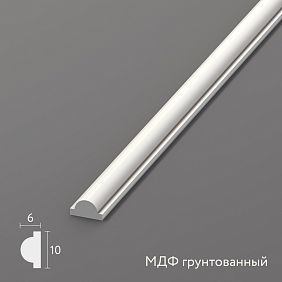
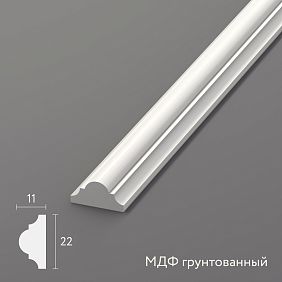
2.1. High Density and Strength
Due to the fine fiber fraction and dense pressing, MDF has a more uniform structure than particleboard. Screws hold more securely at the ends, reducing the risk of fastener pull-out during use. This factor is especially important when planning wall-mounted facades (e.g., in kitchens) or heavy doors.
Get Consultation
2.2. Machinability
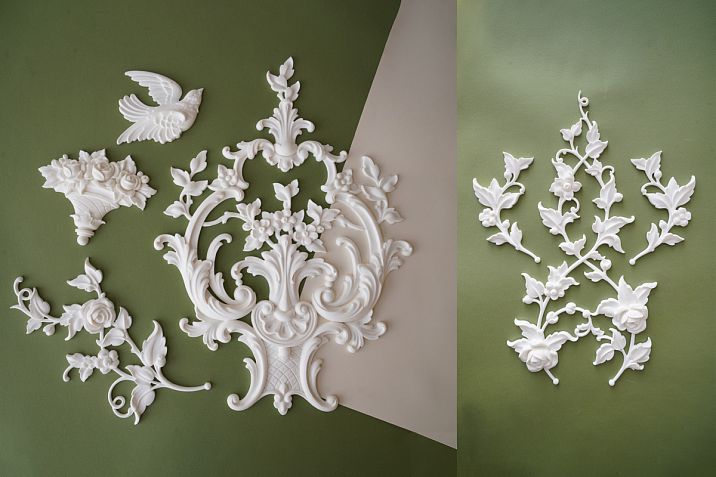
One of the key advantages of MDF is its ease of machining and cutting complex shapes. Thanks to this, MDF can be used to create classic panelled facades, intricate ornaments, and curved (radius) elements. Particleboard does not allow this: during machining, the particle structure quickly breaks down, resulting in poor quality.
2.3. High Moisture Resistance (with proper coating)
Although the MDF panel itself can absorb moisture, if the ends are left unsealed, its dense structure is less prone to damage than particleboard. And if the facades are coated with protective film (PVC, acrylic), enamel, or lacquered veneer, the risk of swelling is minimal. This makes MDF popular in kitchens, bathrooms, and high-humidity areas.
2.4. Smooth and Even Surface
Thanks to its fine dispersion composition, the MDF surface after sanding becomes almost perfect — free of large pores, bumps, or inclusions. This simplifies the application of enamels, primers, and films.
2.5. Eco-friendliness (provided standards are met)
Modern technologies allow producing MDF panels with formaldehyde emissions classified as E0 or E1, making them safe for use in residential spaces. Moreover, MDF is often “cleaner” than cheaper grades of particleboard in terms of harmful substance emissions.
3. Disadvantages and Limitations
Despite the listed advantages, MDF has certain drawbacks:
- Greater Weight
Compared to particleboard of the same thickness, MDF is heavier, which may complicate the installation of large panels or their transportation. - Price
MDF is usually more expensive than particleboard. With a limited budget, this may become a limiting factor. - Sensitivity to Damage from Impact
Although MDF is stronger at the ends, it can still develop dents under sharp, localized impacts. Its dense structure does not always protect against serious mechanical damage, and deep scratches are difficult to repair without special methods. - Need for Final Coating
Raw MDF quickly gets dirty and absorbs moisture. Therefore, facades and casings must be laminated, covered with film, veneer, enamel, acrylic, or other protective-decorative layers.
4. MDF Finishing Options
Most MDF products available on the market are facades and panels covered with various finishes:
4.1. PVC Film
● Principle: A PVC film is vacuum-mounted onto the milled facade, replicating the relief and protecting against moisture.
● Pros: variety of colors, ability to create complex shapes, more budget-friendly than enamel.
● Disadvantages: at high temperatures (e.g., near an oven), the film may begin to peel off, and at sites of strong impacts, creases form.
4.2. Enamel (painting)
● Description: The MDF surface is primed, sanded, and several layers of enamel (matte or glossy) are applied, then varnished.
● Advantages: rich color palette (according to RAL, NCS catalogs), striking deep gloss or noble matte finish.
● Disadvantages: higher price than film, complex production (requires painting chambers), paint may chip under harsh impacts.
4.3. Veneer
● Description: A thin slice of natural wood is glued onto MDF, then covered with varnish or oil.
● Advantages: natural appearance, "prestige" of wood, possibility to realize classic styles.
● Disadvantages: higher cost than film, susceptibility to chipping, requires delicate restoration upon damage.
4.4. Acrylic
● Description: Acrylic film or panels are mounted on MDF, providing bright gloss or deep matte finish.
● Advantages: visual "depth", modern appearance, moisture resistance.
● Disadvantages: fingerprints are noticeable, micro-scratches may occur (though some variants are polished).
4.5. Laminating
● Description: Melamine or laminate film is adhered to the MDF surface under pressure. Less popular than MDF, but offers resistance to stains.
● Advantages: budget-friendly, practical.
● Disadvantages: limited decorative options, cannot deeply profile relief.
5. Application of MDF in furniture manufacturing
Thanks to its milling capability, strength, and density, MDF is widely used in the following segments:
- Kitchen facades: one of the key directions. MDF is used to make doors, with the possibility of complex relief decoration for classic kitchens. Smooth facades with acrylic or matte coating suit modern styles.
- Cabinet doors in living rooms and bedrooms: especially if decorative relief, classic milling, or panel construction is needed.
- Furniture for bathrooms: moisture-resistant MDF with coating (film, enamel) can withstand increased humidity provided the ends are sealed.
- Office furniture: countertops, partitions, panel structures. MDF provides strength and an attractive appearance, especially in veneer/enamel finishes.
- Decorative panels and wall cladding: often used in hotel, restaurant, and retail interiors to add a "wooden" touch without significant cost.
6. Comparison of MDF with other materials
6.1. MDF vs. MDF (MDF vs. MDF)
● Strength and density: MDF is higher. MDF is cheaper, but more brittle at edges.
● Milling: practically impossible in MDF, MDF is easily machinable.
● Price: MDF is usually 20–30% (and more) more expensive under equal conditions.
6.2. MDF vs. Plywood
● Cost: solid wood is more expensive. MDF is cheaper and more stable (less prone to 'breathing').
● Appearance: solid wood has a unique grain pattern, while MDF requires a finish (enamel, veneer) for a 'natural' look.
● Weight: solid wood can be even heavier, while MDF is balanced in mass.
6.3. MDF vs Plywood
● Structure: plywood is a set of glued veneer layers, while MDF is compressed fibers.
● Application: plywood is favored in eco-style and DIY projects, while MDF is more commonly used for facades and routed details.
● Strength: plywood may exceed MDF in rigidity at the same thickness, but it is inferior in the ability to accommodate decorative profiles.
7. Hardware and MDF: Special Features
- Fasteners
Screws and fasteners hold well in MDF and are less likely to 'pull out' compared to MDF. However, repeated twisting may cause loosening. - Hinges
Standard surface-mounted (with stoppers), semi-surface-mounted, and inset types can be used. It is important to correctly drill the 'cup' into the MDF facade without damaging the back side. - Guides
Any system is suitable: roller, ball-bearing, or stoppers. MDF can withstand increased load if the cabinet thickness is sufficient (16–18 mm). - Handles
For MDF facades with routed classic profiles, decorative furniture handles (gold, patina) are often chosen. For minimalism, push-to-open or recessed profiles can be applied.
8. Care and Maintenance of MDF Furniture
- Water Protection
Despite high density, moisture penetrating unsealed ends may cause swelling. Immediately wipe spilled liquid and do not leave puddles on the surface. - Careful Cleaning
Use a soft, damp cloth with neutral detergent. Avoid abrasive sponges or stiff brushes. - Avoid Extreme Temperatures
If a cabinet is near a radiator or oven, a special thermal insulation strip is recommended to prevent damage to the facade edge. - Hardware adjustment
Over time, doors may slightly sag, so check hinges every six months to a year and tighten or adjust them for even closure.
9. How to Check MDF Quality When Purchasing
- Certificates
Ask about emission class (E0, E1). Major manufacturers (Egger, Kronospan, Swiss Krono, etc.) guarantee compliance with European standards. - Thickness
16–19 mm is commonly used for facades, while 22–25 mm is more rigid and suitable for countertops or large panels. - Density
Quality MDF does not crumble at the edges, and the cross-section shows a uniform structure without large lumps. - Finish
If this is a ready-made facade (with film or enamel), ensure there are no 'waves', bubbles, uneven color, and that edges and corners are evenly processed.
10. Features of making furniture from MDF by hand
● Tools: For cutting MDF, use disk saws with fine teeth; for routing, use a router or handheld router with quality bits.
● Dust removal: When working with MDF, fine dust is produced — it must be removed immediately (respirator, vacuum cleaner, good exhaust system).
● Finish: If you plan to paint or lacquer, you’ll need primer and intermediate sanding to achieve a smooth, even surface.
● Edge banding: It’s important to seal the ends of MDF parts tightly (with PVC/ABS edge banding or film).
11. Examples of MDF use in modern interiors
- Kitchens: Classic cabinets with routed details (wood-grain fronts) or modern glossy acrylic fronts on MDF base.
- Living rooms: TV cabinets, bookcases with panel doors, veneered wall panels.
- Bedrooms: Headboards (can be decorated with soft inserts or routed details).
- Children’s rooms: Durable, but without excessive toxicity (at certified emission class). Easy to paint in bright colors.
- Interior doors: Wide design and decoration options — carved or smooth variants.
12. Tips for choosing MDF or alternatives
- Compare prices: If your budget is too limited, laminated particleboard with suitable decor may be a reasonable compromise. But if routing or durability is important, MDF is justified.
- Optimal thickness: At least 16 mm for fronts, 19 mm is acceptable. Thin boards are less reliable.
- Surface finish type: PVC film is cheaper, enamel and acrylic are more expensive but more effective; veneer gives a natural look.
- Place of use: Kitchen/bathroom requires moisture-resistant version; bedroom/children’s room — eco-friendly options E0/E1.
- Hardware: Choose quality ball-bearing slides, hinges with closers, and furniture handles according to style (classic, high-tech, etc.).
13. Conclusion
MDF in furniture manufacturing has been leading for years, being one of the best options for making fronts, doors, decorative panels, and even carcasses. It is valued for:
● High density and reliable fastening;
● Design flexibility (routing capability);
● Good moisture resistance with proper finishing;
● Acceptable level of ecological safety when meeting standards.
Although MDF has competitors (laminated particleboard, solid wood, plywood, composites), its balanced combination of price, functional properties, and visual variety makes it the top choice for many kitchen, living room, and bedroom manufacturers. With proper finishing (PVC, enamel, acrylic, veneer), you can achieve furniture that is hard to distinguish from solid wood or premium materials, while maintaining budget and increasing practicality.
Conclusion: If you are looking for a reliable, durable, easy-to-process material for furniture that allows you to realize a wide range of design ideas (from classic to modern), MDF becomes the optimal solution. Just ensure the quality of the board, careful processing, use of good hardware, and proper finish — and then MDF furniture will serve you for many years, combining style, functionality, and comfort.