











































Article Contents:
- What it means to buy furniture hardware at retail
- You need one part for finished furniture
- You need a set for one new item
- You need samples before a future series
- Furniture handles
- Legs and Supports
- Fasteners for legs and handles
- Parts for finishing and protection
- Center-to-Center Distance
- Total length
- Front panel thickness
- Mounting screw length
- Grip shape
- Installation direction
- Material and Coating
- Handle pre-order checklist
- Leg height
- Number of supports
- Upper mounting part
- Material and finish
- Load and stability
- Leg and stud
- Stud and mounting plate
- Mounting plate and body
- Foot pad
- When fasteners are already included
- Finished coating
- Without coating
- What is more profitable
- Commode
- Cabinet
- Cabinet
- Console
- Table or desk
- Bench or small pouf
- Cheaper does not mean better value
- When a sample is more useful than a photo
- For the handle
- For the leg
- For the mounting plate
- For the glide foot
- Size
- Material
- Finish
- Quantity
- Mounting type
- Mating parts
- Reserve
- Delivery
- Mistake 1. Choosing only based on a photo
- Mistake 2. Not measuring the old holes
- Mistake 3. Buying a leg without fasteners
- Mistake 4. Not accounting for the total height
- Mistake 5. Comparing the price without the set
- Mistake 6. Ordering the entire volume without testing
- Mistake 7. Assuming that “uncoated” is a finished surface
- Mistake 8. Mixing up visually similar parts
- One of the four legs is damaged
- Need to replace the handles on the dresser
- The furniture height is changing
- The mounting system is changing
- First, rule out incompatible options
- Count the set
- Use one model in several places
- Don't buy extra stock
- Order a sample before an expensive set
- Choose the finish consciously
- The old structure requires a complete rework
- It is impossible to determine the installation geometry
- Need a production batch of an already approved SKU
- The new design requires a change to the front
- The project does not allow any visible difference between parts
- Select
- Request a sample
- Install
- Check
- Approve
- Order the volume
- Handles
- Legs
- Fasteners
- Finish and surface
- If you're choosing hardware for a dresser
- If you're choosing hardware for a nightstand
- If you're choosing hardware for a wardrobe
- If you're choosing hardware for a console
- If you're choosing hardware for a table
- If you're choosing hardware for a bench or ottoman
- Can furniture hardware be purchased individually?
- What dimensions should you know before buying a furniture handle?
- What should you buy together with a furniture leg?
- How can you tell if a leg and a mounting plate are compatible?
- Can you buy handles and legs without a finish?
- What should you choose for a single project: a ready-made finish or no finish?
- How do you calculate the amount of hardware for one piece of furniture?
- Do I need to buy a spare handle?
- Can you replace a broken leg with a single new one?
- How do you order a sample before a large batch?
- What matters more when buying online — photos or dimensions?
- How can you buy furniture hardware online without making a mistake?
- How does retail furniture hardware differ from wholesale ordering?

Title: Retail furniture hardware — buy handles, legs and fasteners | STAVROS
Description: How to buy retail furniture hardware and correctly assemble a set for a wardrobe, chest of drawers, cabinet or custom furniture. Handles, legs, supports, fasteners, dimensions, materials and choosing samples before ordering.
If you need one handle for a chest of drawers, four legs for a new cabinet or a fastener set for a custom console, the wholesale logic of a furniture factory does not fit. What matters more here is something else: whether you can buy one or several parts, whether the dimensions will match, whether the mounting will fit, whether a separate glide is needed, whether the screw length will be enough and whether you will have to redo the front after receiving the order.
That is why retail furniture hardware is a separate purchasing scenario. A person is no longer studying “what furniture hardware is,” but wants to solve a specific task: replace a part, assemble one piece of furniture, modify a finished item or order several samples before a bulk purchase.
The practical sequence here is short:
item → required part → measurement → compatibility → quantity → finish → fastener → order.
To begin with, it is convenient to open the general section STAVROS furniture fittings catalog, and then move on to a specific group: Wooden furniture handles, Legs and supports or fasteners for legs and handles.
The main rule of retail purchasing is simple: don't buy a beautiful part separately from its mounting geometry. The handle must fit the front and the screw. The leg must fit the furniture height, the body, the stud, and the mounting plate. The glide must fit the shape of the support and the floor covering. If all mating elements are checked before ordering, even a small retail set can be assembled without rework.
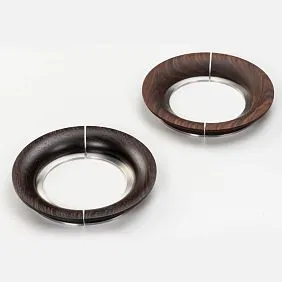


What it means to buy furniture hardware at retail
A retail purchase differs from a serial one not so much in quantity as in the task. A factory purchases a repeating SKU for dozens or hundreds of items. A private buyer, designer, carpenter, or small workshop solves a local task.
There are three typical scenarios.
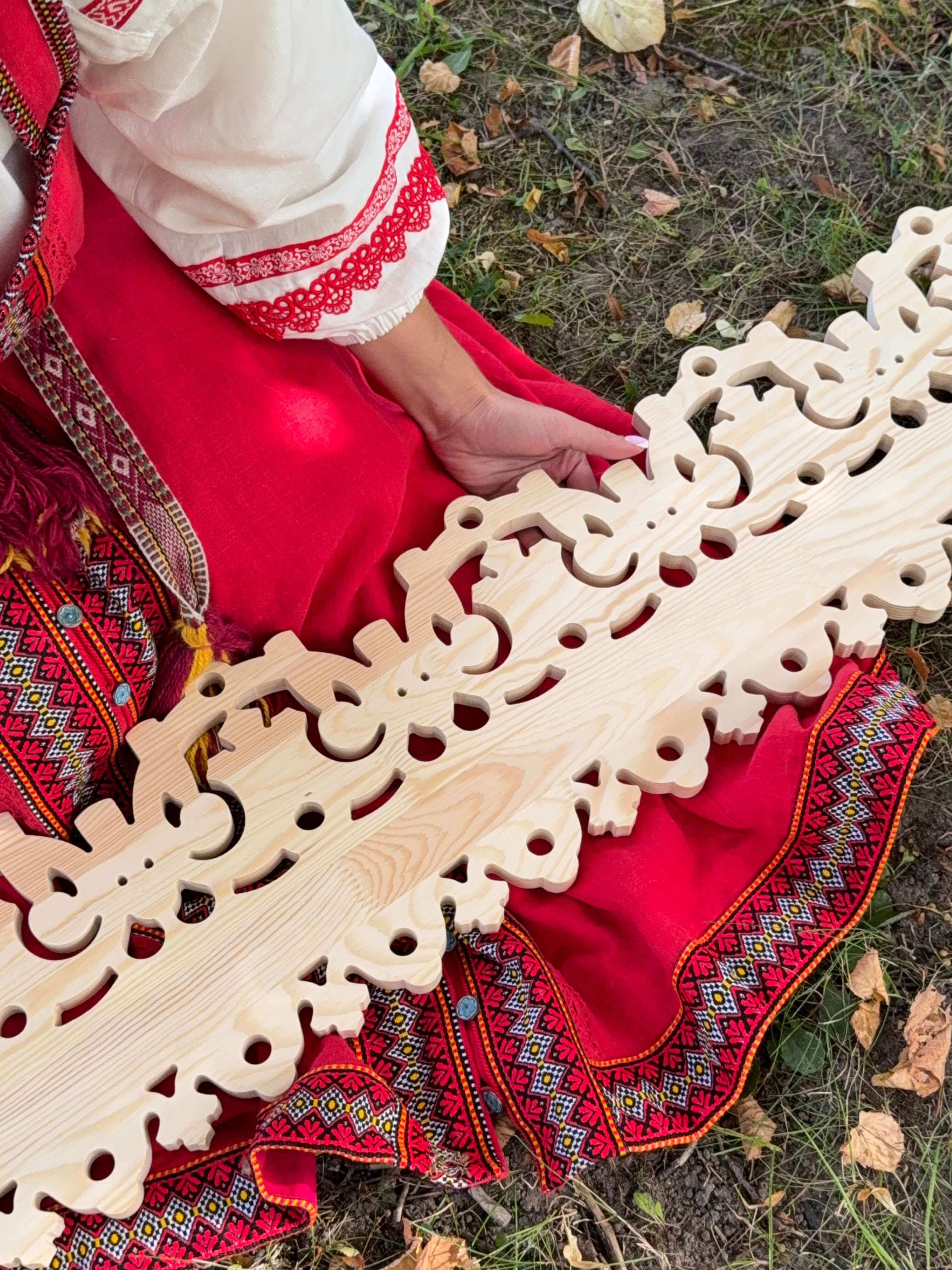
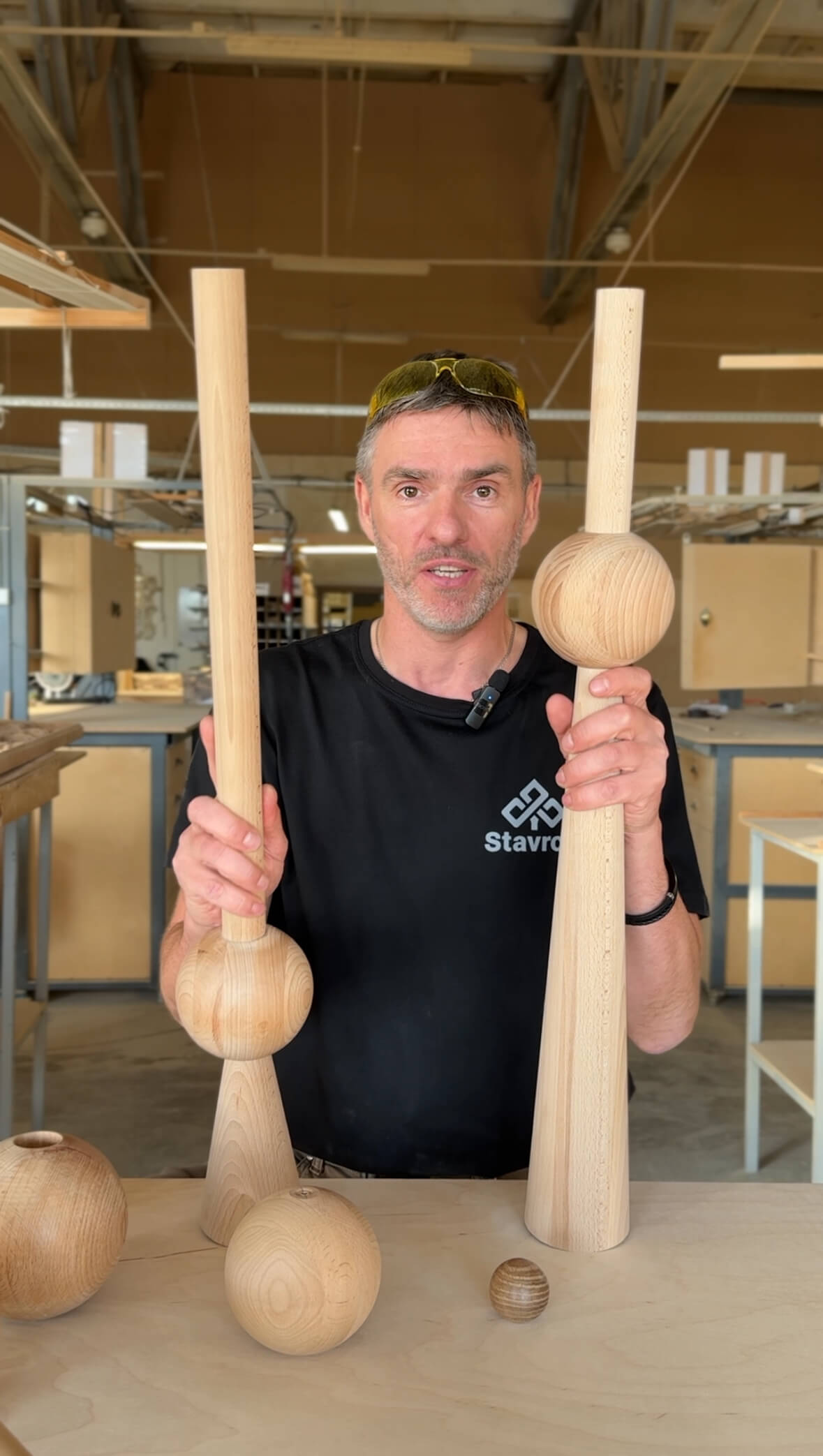

One part is needed for finished furniture
The most obvious case is replacing a damaged handle, leg, glide, or fastening element.
Here you first need to understand whether an identical part can be found. If the model is known, the task becomes easier: it is enough to verify the article number, size, color, and mounting method.
If the old part is unknown, you cannot select a new one based only on a photo. For a handle, the mounting dimensions matter; for a leg, the height and upper mounting part; for a plate, the thread and geometry.
Sometimes replacing one part is impossible without replacing the set. For example, if a chest of drawers has four identical wooden legs, and the new one differs noticeably in height or shade, it is more practical to replace all four than to install one visually foreign support.
Our factory also produces:




Need a set for one new product
The second scenario is when a person is making a chest of drawers, a cabinet, a console, a wardrobe, or a table and wants to buy furniture hardware right for the project.
Here it is more convenient to count not individual product items, but the full set per product.
For example, a small cabinet may require:
-
four legs;
-
four mounting plates;
-
four threaded rods;
-
four foot pads;
-
two handles;
-
handle fasteners.
If you forget one group, assembly will stop even if the main parts are available.
Get Consultation
Need samples before a future series
The third scenario is important for designers, furniture workshops, and factories. A retail order can be used not as a final purchase, but as a stage for qualifying a component.
Logic:
select → order 1–several samples → install → check → approve → lock in the SKU → order the batch.
This makes it possible to avoid buying hundreds of handles or legs before the actual component has been tested on a front or cabinet body.
This is how a retail purchase becomes a bridge between finding a solution and professional procurement.
What you can buy for a single furniture project
Furniture hardware is too broad a category, so for a specific piece it is better to divide the purchase into functional groups.
Furniture Handles
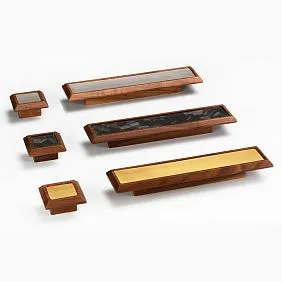
In the section wooden furniture handles STAVROS include knob handles, bow handles, long surface-mounted models, profile models, and other options.
A handle is responsible for three tasks at once:
-
opening of the facade;
-
grip ergonomics;
-
the appearance of the furniture.
Therefore, the query "buy furniture hardware handles" cannot be reduced to choosing a shape. Before ordering, the mounting and dimensions are checked.
Legs and supports
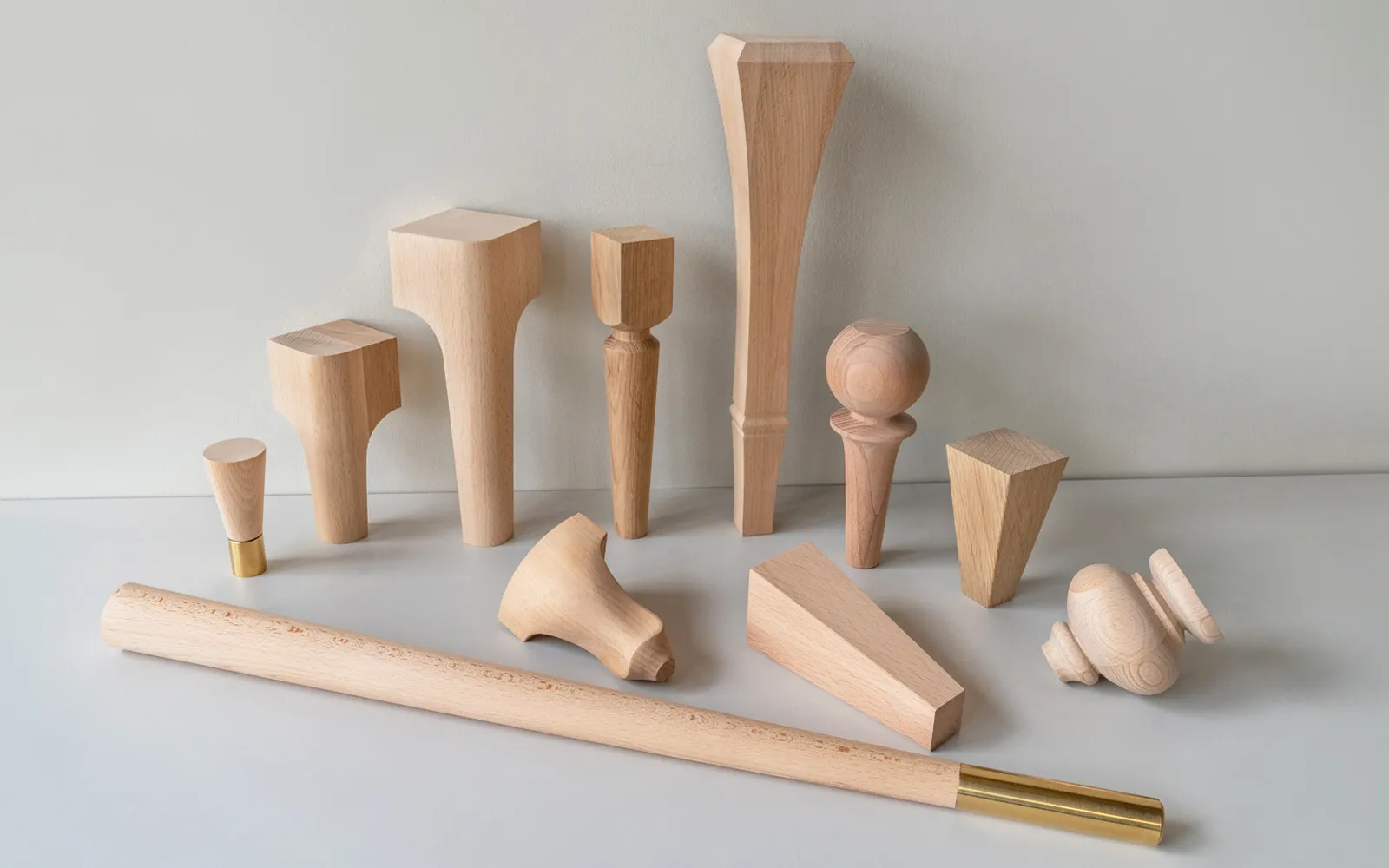
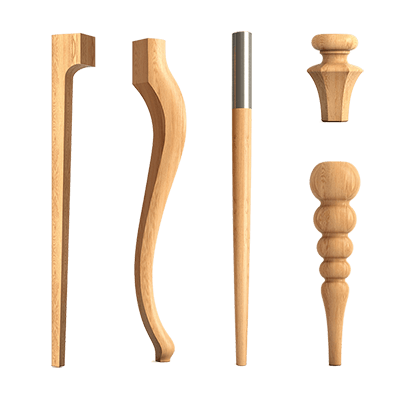
furniture legs and supports STAVROS suitable for various types of furniture: dressers, wardrobes, cabinets, tables, chairs, sofas, ottomans, and other structures.
For a leg, the following are important:
-
height;
-
upper mounting part;
-
material;
-
shape;
-
mounting method;
-
finish;
-
the number of supports.
In practice, the query "buy furniture hardware legs" means selecting an entire mounting assembly, not just a wooden part.
Fasteners for legs and handles
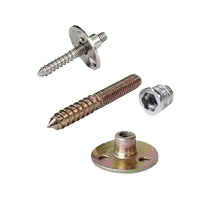
In the section hardware for legs and handles mounting plates, studs, glides, structural screws, and other elements are available.
Fasteners cannot be bought "approximately suitable." They have:
-
size;
-
thread;
-
the connection method;
-
base material;
-
length;
-
purpose.
For example, the mounting plate must be compatible with the stud and the leg, and the screw must be compatible with the material of the body.
Finishing and protection details
Wooden elements sometimes require their own finish. If a handle or leg is purchased without a coating, you need to decide in advance how it will be painted or tinted.
Besides the decorative result, there is a functional part: floor glides, protective pads, and other elements that come into contact with the floor.
A retail kit is considered complete only when it contains not only the visible parts, but also everything necessary for their installation.
How to buy furniture handles at retail and get the size right
Handles are most often chosen with the eyes, but mistakes happen in millimeters.
Before ordering, you need to measure not only the front panel, but also the mounting assembly itself.
Center distance
If the handle is attached with two screws, the center-to-center distance is the distance between the centers of the holes.
For replacing an existing handle, this is one of the first parameters.
If the old handle has two holes, the new one must either match them, or the front panel will have to be re-drilled. On a painted, veneered, or finished decorative front panel, extra holes may be unacceptable.
Therefore, when replacing, first measure the existing center-to-center distance, and only then choose the design.
Total length
Two handles with the same center-to-center distance may differ in overall length. One will be almost equal to the distance between the mounts, while the other will extend significantly beyond them.
This affects:
-
the proportion of the facade;
-
adjacency to the molding;
-
distance to the edge;
-
ease of grip.
Front thickness
The fastening screw passes through the facade and enters the handle. If the facade is thicker than standard for the selected fastener, the screw may not be long enough.
If the facade is thin, a screw that is too long may not tighten the connection.
Therefore, facade thickness is a full-fledged selection parameter.
Mounting screw length
You cannot choose a screw based only on thread diameter. The correct length is needed, taking into account the facade thickness and the depth of connection with the handle.
Practical check:
front panel thickness + required handle insertion depth = guideline for screw length.
The exact value depends on the specific design. Even if the fastener is included, it is still useful to check it on your facade before final installation.
Grip shape
A handle can look striking but be uncomfortable.
For a large drawer, check:
-
whether fingers fit;
-
whether the projection is too small;
-
whether there is a sharp edge;
-
whether it is comfortable to pull a loaded drawer;
-
whether the hand catches on the adjacent front.
For a small door or a light drawer, a knob handle is sufficient. For a wide front, a more pronounced grip is often more convenient.
Installation direction
Some models can be installed horizontally and vertically. But this does not mean that both options are equally convenient on a specific piece of furniture.
On a tall pantry cabinet, a vertical handle is natural. On a wide drawer, a horizontal one. On a designer front, other solutions are possible, but it is best to test them on a real mockup.
Material and finish
If a ready-made part is needed, choose furniture handles with coating.
If you plan your own finish, these are useful handles without coating.
The second option is especially interesting when the handle needs to be tinted to match the front, countertop, legs, or other wooden parts.
Handle checklist before ordering
| Parameter | What to Check | What will happen if you make a mistake |
|---|---|---|
| Center-to-center | distance between the centers of the holes | the handle will not fit the existing holes |
| Overall length | handle dimensions | the composition of the front will be disrupted |
| Facade thickness | actual thickness of the part | the screw may be too short or too long |
| Projection | distance from the facade to the grip area | it will be inconvenient to use the handle |
| Fastening | thread and screw length | the joint will not tighten |
| Orientation | horizontal / vertical | ergonomics will change |
| Finish | Finished or unfinished | the color won't match the project |
If all seven parameters are checked, the risk of an unsuccessful retail purchase is sharply lower.
How to choose furniture legs and supports
With legs, the mistake usually shows up more strongly than with handles: not only the appearance changes, but also the geometry of the furniture.
Before buying furniture hardware legs, you need to check at least four things: height, mounting method, cabinet material, and number of supports.
Leg height
The support height is added to the cabinet height. If a nightstand without legs has a height of 520 mm, and the selected leg is 180 mm, the finished item will be approximately 700 mm from the floor, taking into account the actual mounting scheme.
But simple addition is only a preliminary calculation. Part of the leg may go into the mounting assembly, the cabinet structure may have a plinth or lower rail, and the glide sometimes adds a few millimeters.
Therefore, after choosing the support, it is useful to make a control diagram:
cabinet → mounting plane → leg → glide → final height.
This is especially important for a chest of drawers, console, or bedside table, where the position of the top surface affects convenience.
Number of supports
Four legs are the most common, but not universal, option.
A long body may require a central or additional support. A heavy tabletop requires a wider support scheme. For a console, not only the number of legs matters, but also their position relative to the edge.
Therefore, one cannot calculate the allowable load using the formula "furniture weight / 4" without information about the specific construction. The load is not distributed perfectly evenly, a person may lean on the edge, drawers are pulled out, and furniture is moved.
For a retail project, a practical rule is sufficient: choose supports with a margin for the structural task and check the finished product in real assembly.
Upper mounting part
Two legs of the same height can be attached in completely different ways.
One has a stud, another has a prepared threaded hole, and a third is designed for a mounting plate. Therefore, a photo of the lower part is often more important than a photo of the profile.
Before ordering, you need to answer:
-
whether there is a thread;
-
what its size is;
-
whether a stud is needed;
-
whether a mounting plate is needed;
-
how the plate is attached to the body;
-
whether there is space for fasteners inside the structure.
Material and finish
For a wooden leg, the material affects the appearance after finishing. If the project is based on natural oak, a support made of a different species may look noticeably different after a clear finish.
If an opaque paint finish is planned, the difference in material may be less visually critical, but its processing and the actual characteristics of the specific product still need to be taken into account.
If you want to achieve the desired shade yourself, it is more convenient to look from STAVROS open boundless possibilities for designers, furniture makers, and anyone striving to create unique high-quality furniture..
Load and stability
A retail customer rarely has an engineering calculation for the entire piece of furniture, but that is not a reason to choose a support based only on appearance.
Need to consider:
-
body mass;
-
the contents of the furniture;
-
width and depth;
-
number of supports;
-
the distance between them;
-
the possible dynamic load;
-
base material.
A wide dresser with a pulled-out top drawer behaves differently from a compact cabinet. A tall console with a narrow tabletop requires a different stability assessment than a low bench.
If the project is non-standard, it is worth first assembling one unit or mockup rather than buying a full set for several items.
Why fasteners should be chosen together with the legs
One of the most common mistakes looks like this:
first buy beautiful legs → then figure out how to attach them.
The correct sequence is the reverse:
leg + thread + stud + mounting plate + body material + foot pad.
All elements must be compatible.
Leg and stud
If the leg is attached via a stud, you need to know the thread size and how the stud is installed into the leg itself.
You cannot replace a stud with a similar one without checking. Even a slight difference in thread means that the connection will either not assemble or will be unreliable.
Stud and mounting plate
The plate must have a compatible mounting seat. In the section STAVROS furniture mounting hardware mounting plates of various types are presented, so they should be selected according to a specific scheme, not on the principle of "any plate for a leg".
Mounting plate and body
The next question is what the plate itself is attached to.
Solid wood, plywood, MDF and other substrates require different attention to fastening. The length and type of screw must match the thickness and material so that the connection holds and does not pierce the part through.
Glide
The glide is installed at the lowest point of the support and solves several tasks:
-
protects the floor;
-
reduces direct contact between the wood and the surface;
-
sometimes helps compensate for minor unevenness;
-
makes it easier to move furniture.
But the glide also has a size and an installation method. You cannot automatically buy the largest or the softest one.
When the fasteners are already included
Some handles or individual elements may come with fasteners. This is convenient, but it does not eliminate the need to check.
If the front panel is of a non-standard thickness, the standard screw may not fit. If the leg is designed for a specific configuration, the kit may not include all the elements needed for your particular cabinet.
Therefore, the query "buy furniture hardware fasteners" is better turned into a list of specific connections rather than a separate basket of random metal parts.
Coated or uncoated: which is more worth buying
Wooden furniture hardware has two different purchasing scenarios.
Ready finish
The advantages are obvious:
-
the part is ready for installation;
-
no need to arrange painting;
-
no separate drying stage is needed;
-
it is easier to assemble a single item at home or in the workshop.
Ready Handles with Finish they are especially convenient if the project is built around an already chosen color and there is no need to exactly replicate your own furniture finish.
Limitation — the ready-made shade needs to be evaluated next to your facade. On screen it may be perceived differently.
Unfinished
An unpainted part is convenient if you need to:
-
tint the handles to match the facade color;
-
paint the legs together with the body;
-
use your own oil or lacquer;
-
achieve a single finish on different wooden elements;
-
run a test before launching the collection.
Suitable for this handles without coating и Unpainted legs.
But "uncoated" does not mean "install as is." If a part is to work in a finished interior, sanding, color, protective layer, and application technology must be planned in advance.
What is more profitable
You need to compare more than just the price of the item.
Finished part:
part price + installation.
Unpainted:
part cost + preparation + coating material + labor time + drying + risk of rework.
For a single small project, ready-made finishing often saves time. For designer furniture and small batches, in-house finishing can deliver a more precise result.
How to assemble a furniture hardware set for a single item
This is the most practical way to buy at retail: count not individual products, but a complete set for a specific item.
Chest of drawers
A typical four-drawer dresser may require:
-
4 legs;
-
4 mounting plates;
-
4 threaded rods;
-
4 support feet;
-
4–8 handles depending on the layout;
-
handle fasteners;
-
decorative elements, if they are included.
If each wide drawer has two handles, the quantity quickly doubles.
A useful mini-specification:
| Position | Quantity | What to Check |
|---|---|---|
| Leg | 4 | Height, mounting |
| Plate | 4 | compatibility with the pin |
| Screw | 4 | Carving |
| Thrust bearing | 4 | size of the lower part of the leg |
| Handle | 8 | center-to-center, front |
| handle screw | 8 | length by facade thickness |
Cabinet
A cabinet often requires:
-
4 legs;
-
leg mounting kit;
-
1–2 handles;
-
floor protectors;
-
decorative caps if needed.
If the cabinet stands next to the bed, the height of the legs affects the overall height of the product relative to the mattress. Therefore, the support cannot be chosen after the body is manufactured.
Wardrobe
In a wardrobe, the retail kit may be simpler:
-
handles;
-
handle fasteners;
-
glides or supports if needed;
-
Decorative elements.
If the handles are being changed on a finished cabinet, the center-to-center distance becomes the primary parameter again.
If the cabinet is being designed from scratch, you have more freedom to choose a new geometry.
Console
For a console, the support section is especially important:
-
4 supports or another scheme per the design;
-
mounting plates;
-
studs;
-
floor protectors;
-
handles, if there are drawers.
A narrow console is sensitive to the placement of its supports. Installing them too close to the center will reduce visual stability, while placing them too close to the edge may conflict with the apron or hardware.
Table or desk
If separate legs are used:
-
determine their number;
-
check the height;
-
check the mounting surface;
-
choose fasteners;
-
account for the thickness of the tabletop;
-
choose the glides.
In such a project, the mounting geometry is more important than the decorative shape. A beautiful leg cannot be used if the plate does not fit under the tabletop or the screws are too long.
A bench or a small pouf
On small furniture, a scale error becomes noticeable especially quickly.
A leg that is too tall visually detaches the soft body from the floor. A support that is too massive makes the item feel heavy. Therefore, it is useful here to first order one or several parts and place them against the actual body.
When you should first buy a single sample
A retail purchase is especially valuable where not everything can be checked from a catalog.
A sample is useful if you need to evaluate:
-
real color;
-
texture of the wood;
-
size;
-
sanding quality;
-
the mounting part;
-
handle convenience;
-
combination with the facade;
-
coating option;
-
mounting compatibility.
For a single home project, a "sample" may simply mean buying one handle before ordering the rest.
For a workshop — one leg and one plate before a full set for furniture.
For a factory — a qualification step before a serial order.
Working logic:
sample → fitting → approval → specification → batch.
If the part does not fit, the losses are limited to one sample rather than dozens or hundreds of items.
How to compare the price of furniture hardware
Queries like "buy furniture hardware price", "furniture hardware price buy", and "buy furniture hardware cheap" seem simple, but comparing only the price of one part is risky.
Two similar legs may differ in:
-
material;
-
coating;
-
height;
-
mounting method;
-
the need for a separate plate;
-
the presence of a stud;
-
the cost of finishing;
-
Delivery.
Two handles — center-to-center distance, fasteners, and surface readiness.
Therefore, it is better to compare the cost of the finished assembly.
For a handle:
handle + suitable fasteners + possible finishing + reworking the facade if the dimensions do not match.
For a leg:
leg + stud + mounting plate + screws + foot pad + finishing.
If one leg is cheaper by a few hundred rubles, but it requires purchasing separate fasteners and painting the wood yourself, the final set may end up more expensive.
Cheaper doesn't mean better value
A retail purchase is especially sensitive to mistakes, because people often order a small quantity and don't want to process a return for a single incompatible part.
It makes more sense to save where the specifications fully match the task.
Don't cut costs at the expense of:
-
the wrong size;
-
an unknown mounting;
-
an unsuitable material;
-
missing matching parts;
-
skipping the sample in an expensive project.
A good budget is not the minimum cart price, but the minimum price of a correctly assembled and installable set.
Buying furniture hardware online or viewing a sample first
The query "buy furniture hardware online" makes sense: most parameters can be checked on the product page, filters, and technical description.
Online purchase is sufficient when:
-
the exact item code is known;
-
the size is clear;
-
the material is known;
-
the finish is clear;
-
the mounting method has already been verified;
-
a repeat purchase of the same item is needed.
For example, if a specific handle is used in a finished project and another one is needed, there is no point in ordering a sample again.
When a sample is more useful than a photo
It is better to see the actual part first if:
-
a new furniture collection is being selected;
-
the shade of natural wood matters;
-
the handle is large and defines the look of the front;
-
the leg noticeably affects the proportions of the furniture;
-
the part is expensive;
-
the project is non-standard;
-
a large batch is planned after approval.
A screen shows the shape well. It conveys texture, true scale, and how the part interacts with a specific front less effectively.
If the project is expensive, one sample is usually cheaper than one rework.
How to check compatibility before placing an order
It is most convenient to start not from the catalog, but from the connection interface.
For the handle
Answer seven questions:
-
How many mounting points?
-
What is the center-to-center distance?
-
What is the facade thickness?
-
What screw length is needed?
-
Is there space for protruding elements on the back side?
-
How will the handle be installed?
-
Does the finish match the project?
If one answer is unknown, the purchase is not ready yet.
For the leg
Answers needed:
-
What final furniture height is required?
-
What is the height of the leg itself?
-
What is at the top of the support?
-
What type of thread or stud?
-
Is a mounting plate required?
-
What is the body made of?
-
Is the screw suitable for this material and thickness?
-
Is a glide needed?
-
Is there enough space for installation?
For the mounting plate
Need to check:
-
thread compatibility with the stud;
-
plate dimensions;
-
angle, if any;
-
location of mounting holes;
-
body thickness;
-
allowable screw length.
For the support foot
Checked:
-
shape of the lower part of the support;
-
size;
-
mounting method;
-
floor covering;
-
the need for adjustment.
Such an algorithm is more useful than a universal list of “the best furniture hardware,” because compatibility always depends on the specific item.
What to check before placing an order
Before buying furniture hardware at retail, it is useful to do a quick final check.
Size
Record the actual dimensions rather than estimating them from a photo.
Material
Check whether it suits the intended finish and style of the furniture.
Coating
Determine whether a ready-made finish is needed or your own treatment.
Quantity
Calculate per item, not “approximately.”
For four legs, you need a full fastening set for four supports, not one plate for testing.
Attachment type
The handle, leg, and plate must connect as intended.
Mating parts
Check whether a separate stud, support pad, screw, self-tapping screw, or cap is required.
Allowance
For a single item, a large stock is usually not needed. But if a small part is easily lost or it would be difficult to repeat the same finish, one spare unit may be reasonable.
Delivery
A fragile or long element should be assessed together with logistics. Delivering one small handle and a long decorative element are different tasks.
Typical mistakes when buying at retail
Mistake 1. Choosing only by photo
Why it happens: it seems that handles or legs of the same type are interchangeable.
Consequence: the size or mounting does not match.
How to avoid: verify the technical parameters before ordering.
Mistake 2. Not measuring the old holes
Why it happens: the user just wants to “refresh the handles.”
Consequence: the new bracket requires a different center-to-center distance.
How to avoid: measure the center-to-center distance of the existing holes before choosing a model.
Mistake 3. Buying a leg without fasteners
Why it happens: the mounting assembly seems like a separate task.
Consequence: you have the legs, but you can't assemble the furniture.
How to avoid: select the threaded rod, plate, and cabinet fasteners at the same time.
Mistake 4. Not accounting for the total height
Why it happens: the leg is seen only as decoration.
Consequence: the cabinet or console ends up taller/shorter than expected.
How to avoid: calculate the finished dimensions before purchasing.
Mistake 5. Comparing the price without the full set
Why it happens: the catalog shows the price of a single item.
Consequence: a cheap leg requires additional components and processing.
How to avoid: compare the cost of the assembled unit.
Mistake 6. Ordering the entire volume without testing
Why it happens: you want to save on delivery.
Consequence: an unsuitable finish or size is discovered only after a large purchase.
How to avoid: for a new solution, first buy a single sample.
Mistake 7. Assuming that "uncoated" is a finished surface
Why it happens: natural wood looks finished in the photo.
Consequence: the part is used without thoughtful protection or differs from the rest of the furniture.
How to avoid: determine the finishing system in advance.
Mistake 8. Mixing visually similar parts
Why it happens: two SKUs look identical.
Consequence: a single item ends up with legs of different heights or handles of different sizes.
How to avoid: assemble the project by SKU, not just by appearance.
When one part isn't enough and it's better to buy a set
A retail customer often comes for a single item, but the problem may require a set.
One leg out of four is damaged
If an identical model in the same finish is found, one is enough.
If there is no exact match, replacing all four may give a neater result.
Need to replace the handles on a dresser
If one handle is broken, an identical one is sought.
If the goal is to refresh the look, it is better to replace the handles on all identical fronts at once. Then there is no mix of different models.
The height of the furniture changes
If a cabinet or dresser needs to be raised, all supports are replaced and the installation is checked again.
You cannot install two taller legs and leave two old ones.
The mounting system changes
If the new leg requires a different plate, the mounting kit must be updated on all identical supports.
How to assemble an order for furniture restoration or updating
The restoration scenario differs from making new furniture in that part of the geometry can no longer be changed.
The front is pre-drilled. The cabinet has ready-made mounting points. The finish of old furniture develops over time.
Therefore, the order is as follows:
-
remove the old part;
-
measure the installation dimensions;
-
photograph the connection from the back side;
-
record the thickness of the front or cabinet;
-
choose the most compatible option;
-
only then compare style and finish.
If there is no perfect match, you need to decide what is easier to rework: the hardware, the holes, or the entire set.
For an old dresser, it is often more practical to replace all the handles on the fronts than to search for a single discontinued model.
With legs it is the opposite: if the geometry and height are critical, finding a fully compatible set is more important than a decorative match for a single support.
How to choose hardware for custom furniture
In a custom project there are fewer restrictions, because the holes and installation have not yet been made.
This gives freedom:
-
choose a long handle instead of a standard pull;
-
mount the handle vertically;
-
use tall wooden legs;
-
set a custom finish;
-
match handles and legs in one color;
-
plan the fasteners into the cabinet construction in advance.
But freedom increases responsibility for compatibility.
The best moment to choose hardware is before the final furniture drawings are released.
Then the front is designed for the handle, and the carcass for the leg and plate. As a result, the hardware is not "fitted" to a finished product but becomes part of the project.
How to test hardware on a mock-up before manufacturing furniture
If the carcass is not ready yet, you do not have to wait for it to be manufactured.
You can make a simple assembly mock-up.
For the handle, use a piece of material of the same thickness as the future front. Drill the holes, install the handle, and check the grip.
For the leg, use a fragment of the base made of the same material and thickness. Install the plate, stud, and support.
Such a mock-up shows:
-
whether the screw length is suitable;
-
whether it is convenient to work with the tool;
-
does the fastening hold;
-
is there space for the plate;
-
whether you like the real scale of the part.
For expensive custom furniture, this is cheap insurance against mistakes.
How to choose a store if you need furniture hardware at retail
The query "buy furniture hardware store" seems navigational, but a retail buyer has a specific criterion: the store should allow assembling not only a nice cart, but also a compatible set.
Before ordering, it is useful to check whether the website has:
-
product dimensions;
-
material;
-
photos of the mounting part;
-
finish options;
-
article number;
-
related mounting hardware;
-
availability information;
-
the ability to order a small quantity;
-
clear delivery terms.
If a product card shows only a beautiful interior photo but doesn't make it clear how the leg is mounted or what the handle size is, that's not enough for a real project.
A good catalog helps you follow the path:
category → specific model → dimensions → compatible hardware → order.
That's why on STAVROS it makes sense not to limit yourself to a single product card, but to look at related sections: Furniture Handles, Legs and supports и hardware for their installation.
Buying by the piece: when it's actually worth it
A per-piece order is needed not only when one handle breaks.
It is in
If the new center-to-center distance differs, replacing handles turns into a separate renovation project: the old holes need to be covered, and new ones drilled precisely according to the template.
In that case, choosing a model with a matching center-to-center distance is often more cost-effective than a cheaper handle that will require reworking the fronts.
How to buy furniture hardware inexpensively without false savings
The query “buy furniture hardware inexpensively” does not have to lead to the cheapest product.
Rational savings are built differently.
First, rule out incompatible options
There is no need to compare the prices of legs that cannot be installed on your cabinet without reworking it.
Count the set
The price of the leg without the plate and stud does not reflect the cost of the finished assembly.
Use one model in multiple places
If one handle fits a dresser, a nightstand, and a wardrobe in the same interior, you can reduce the number of different items and simplify ordering.
Don't buy extra stock
For a retail project, "just in case" stock easily turns into a box of unused expensive parts.
Order a sample before an expensive set
One test item can prevent the purchase of eight unsuitable ones.
Choose the finish consciously
A ready finish saves work. An unpainted part gives you freedom of color. The option that matches your process is the more profitable one.
When retail furniture hardware is not needed
There are situations where buying individual parts is not advisable.
The old structure requires a complete rework
If the mount is broken along with the body, a new leg alone will not solve the problem. The base must be restored first.
It is impossible to determine the mounting geometry
If there is no access to the mount and it is unknown how the part is installed, ordering based on appearance is too risky.
A production batch of an already approved SKU is needed
If the factory produces hundreds of items and the part has long been qualified, the retail scenario is over. What is needed next is a B2B order by specification.
A new design requires changing the front
If the handle is fundamentally different and the front is already finished, it is sometimes cheaper to keep the existing hardware than to redo the entire surface.
The project does not allow any visible difference between parts
If it is impossible to buy one identical element for an old set, replacing only one part may be worse than replacing the entire group.
An expert choice sometimes means not buying the product now, but first changing the repair or assembly plan itself.
From a retail sample to a production order
For a small workshop or furniture factory, a retail order can be the first stage of a much larger purchase.
Sequence:
select → receive a sample → install → check → approve → lock in the SKU → order the volume.
Select
Several suitable options are shortlisted from the catalog.
Receive a sample
You need a real part in the required material and, if it matters, in the required finish.
Install
The handle is mounted on the reference front. The leg — on the actual cabinet or a mounting mock-up.
Check
Evaluate dimensions, appearance, grip, fit, mounting, and interaction with other parts.
Approve
Record the exact SKU and finish.
Order the volume
After that, a retail purchase becomes a purchase by specification.
The main thing is to prevent the configuration from being lost between the sample and the batch. If the sample was without a finish, and the main batch was accidentally ordered with a different finish, the check loses its meaning.
For a professional buyer, a single retail order is valuable precisely as a controlled test, not as a random purchase of one beautiful part.
How to record an approved sample
Even for a small workshop, it is useful to write down:
-
article number;
-
name;
-
material;
-
size;
-
coating;
-
mounting method;
-
verification date;
-
the product on which the part was tested.
For the factory, BOM, revision, and quantity per product are added to this.
This way, when repurchasing a few months later, you don't have to search for the item by photo again.
Retail order checklist
Before clicking the order button, check:
-
exact article number;
-
sizes;
-
center-to-center distance for the handle;
-
facade thickness;
-
the height of the leg;
-
thread type;
-
mounting plate;
-
body fasteners;
-
thrust bearing;
-
material;
-
coating;
-
quantity;
-
stock, if it is really needed;
-
delivery;
-
all matching items in the cart.
If this list is closed, a retail purchase becomes almost as manageable as a professional specification — just at the scale of a single project.
What to check right after receiving the order
Compatibility must be checked not only before purchase, but also after delivery — before the part is finally installed or painted.
Unpack the kit and sort the items by function: handles, legs, plates, studs, glides, fasteners. Then check not by overall impression, but against your own project checklist.
Handles
Check the quantity, item code, length, center-to-center distance, and finish. If there are several handles, place them side by side: this makes it easier to notice an accidental difference in size or finish.
Before installing one handle on all fronts, it is useful to first attach it to a test drawer or door and check the grip.
Legs
Place the four supports side by side on a level surface. Compare the height and the bottom point. Check the top mounting part and that all fastening elements are present.
If the legs are to be painted yourself, first do a test coat on one part or on a sample piece of the same wood.
Fastening
Do not mix screws and studs of different sizes. First assemble one complete unit without final tightening and make sure the thread fits, the plate sits on the body, and the screws do not protrude from the back side.
Finish and surface
Evaluate wooden parts under normal lighting next to the furniture. If the visible shade is fundamentally unsuitable, it is better to discover the problem before installation and before tool marks appear.
Accepting a retail order takes a few minutes, but it protects against a situation where incompatibility is noticed after drilling, painting, or final assembly.
Quick selection by furniture type
The same catalog is read differently for different items.
If you are choosing hardware for a chest of drawers
The main parameters are the facade handles and the height of the supports. If there are many drawers, the repeatability of the handle position is especially important. The legs must provide the same final height at all four corners.
If you are choosing hardware for a bedside table
First determine the final height relative to the bed, then select the legs. The handle can be small, but it must work comfortably on a light drawer or door.
If you are choosing hardware for a wardrobe
When replacing existing hardware, the main things to check are the handle center-to-center distance and the traces of the old mountings. For a new project, also assess the vertical orientation and the ease of grip on tall fronts.
If you are choosing hardware for a console
The main risk area is the base. You need to check the leg height, the position of the mounting plates, and the stability of the narrow cabinet.
If you are choosing hardware for a table
The leg is selected together with the mounting surface and the tabletop thickness. The decorative shape must not interfere with the standard mounting.
If you are choosing hardware for a bench or ottoman
Here, the visual scale of the supports and stability are especially important. Before placing the full order, it is useful to place one actual leg against the cabinet or assemble a test unit.
This approach allows using the same the STAVROS catalog without universal advice: first the piece of furniture is determined, then its mounting constraints, and only after that the specific hardware.
FAQ
Can I buy furniture hardware as a single piece?
For a number of product categories, a retail order of one or several items is possible. This is convenient for repairs, a single furniture project, and a test sample. Before placing an order, it is better to check the specific product page and current availability: conditions may differ for different items.
For STAVROS wooden handles, the retail scenario is especially clear: you can first take one handle, test it on the front, and then buy the rest for the entire furniture set.
What dimensions do you need to know before buying a furniture handle?
At minimum, you need the total length of the handle, the center-to-center distance for two-point mounting, the thickness of the front, and the required length of the mounting screw. For a recessed or profile model, the dimensions of the mounting area are additionally checked.
If the handle is replacing an existing one, first remove the old one and measure the holes. Do not rely only on the external length.
What do you need to buy together with a furniture leg?
It depends on the specific design. Often you need a stud, a mounting plate, self-tapping screws for attaching the plate to the cabinet, and a foot pad. Sometimes some elements are already provided by the design or the kit.
It is more convenient to first choose the leg, then go to the section hardware for legs and handles and assemble the complete mounting unit.
How can I tell if a leg and a mounting plate are compatible?
The thread, the mounting part, and the connection principle are checked. If the leg is installed via a metric stud, the plate must have a compatible threaded socket. Then it is checked whether the plate itself can be securely attached to your cabinet.
You cannot conclude that they are compatible just because both items are labeled "for furniture legs."
Can handles and legs be purchased without a finish?
Yes, if the specific model is available in that version. Unfinished parts are especially convenient for custom tinting, painting, or oiling. They allow you to match the hardware color to the front and other wooden elements.
For selection, you can use the sections handles without coating и unpainted furniture legs.
What should I choose for one project: a ready-made finish or no finish?
If you need quick installation without your own finishing, a ready-made finish is more convenient. If the color must match your furniture exactly, it is better to consider an unfinished part and finish it together with the project.
Compare not only the price of the item, but also the time, materials, and risk of rework.
How do I calculate the amount of hardware for one piece of furniture?
Create a mini-BOM — a list of parts per item.
For example, for a chest of drawers:
-
4 legs;
-
4 plates;
-
4 threaded rods;
-
4 support feet;
-
8 handles;
-
8 mounting screws.
After that, decide whether a spare is needed. Do not use a universal percentage without reason: for a single project, the exact quantity and one additional small part are often enough if it will be difficult to reproduce later.
Do I need to buy a spare handle?
Not always. A spare is useful if the handle has a rare finish, the project is unique, or a future repeat purchase may be difficult. If the model is mass-produced and readily available, buying an extra expensive part is not necessary.
For a set of several identical fronts, a spare handle is sometimes convenient as a service part.
Can one new leg be installed instead of a broken one?
It is possible if the new leg fully matches in model, height, mounting, and visual finish. If there is no exact match, one new support may differ from the others both in appearance and in geometry.
In that case, it is more reasonable to consider replacing the entire set.
How do you order a sample before a large batch?
First, choose a specific SKU and finish. Then order one or a small number of parts, install them on a prototype or control front, and record the result.
After approval, write down the SKU, material, size, and finish. Only then move on to a larger volume. This transition from retail to batch is especially useful for furniture workshops and manufacturers.
What matters more when buying online — photos or dimensions?
Photos help you choose the style. Dimensions determine compatibility.
For a handle, the center-to-center distance, overall dimensions, and fastening matter most. For a leg — height, mounting part, and connection method. If you like the image but the technical data doesn't fit, the product isn't right for the project.
How to buy furniture hardware online without mistakes?
The procedure is as follows:
-
identify the specific part;
-
measure the installation location;
-
open the product page;
-
check the dimensions;
-
check the material and finish;
-
select matching fasteners;
-
count the quantity;
-
check availability;
-
place the order.
To browse the assortment, you can start with STAVROS catalog and then go to the desired product category.
How does retail furniture hardware differ from a wholesale order?
A retail purchase solves the task of a single item, a repair, or a test. The main questions are size, compatibility, and a small volume.
A wholesale purchase additionally requires managing SKUs, batches, repeatability, delivery times, and stock for the production program.
If one retail sample has passed the test and dozens or hundreds of identical parts are needed next, the buyer moves to the production scenario.
Bottom line: you need to buy not a separate part, but a compatible solution
The query “buy furniture hardware” seems simple until it comes to actual installation. Then it turns out that a handle has a center-to-center distance and a screw, a leg has a stud and a plate, a glide has its own size, and a finished finish and unfinished wood solve different tasks.
Therefore, a good retail order is built like this:
what we're making → what we're measuring → which SKU fits → what's needed for installation → how many parts are required → which finish → whether a sample is needed → placing the order.
If you need a single piece of furniture, start with a precise mini-specification. For handles, open catalog of wooden furniture handles, for the base — legs and furniture supports, and collect the fasteners at the same time in the section hardware for legs and handles.
This way, buying furniture hardware at retail isn't a set of random items from different product pages, but a complete kit for a specific chest of drawers, cabinet, wardrobe, console, or custom furniture. And if a retail part is used as a trial sample, the same approach lets you move from a single unit to a small workshop or a serial order without losing the configuration.