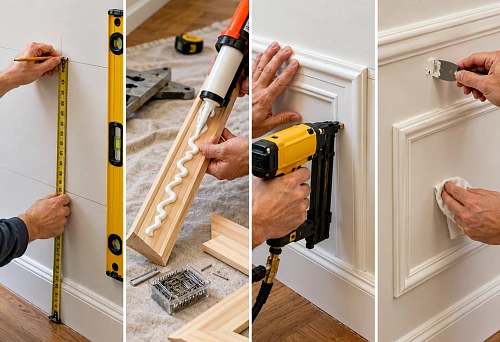









































































Article Contents:
- Where to buy furniture hardware in Kursk
- Local general store
- Specialized furniture hardware store
- Marketplace
- Manufacturer's online store
- What criteria to use to compare sellers
- Wooden furniture handles
- Furniture Legs and Supports
- Hardware for attaching furniture legs
- Materials for installation and finishing
- Center-to-Center Distance
- Total length
- Projection
- Facade thickness and mounting screw
- Grip shape
- Marks from an old handle
- Material and Coating
- Handle checklist
- Height
- Cross-section and upper mounting part
- Load capacity
- Number of supports
- Wood species
- Finish
- Installation method
- For a Dresser
- For a side table
- For a Wardrobe
- For table
- For a console
- Leg
- Stud
- Mounting plate
- Self-tapping screws or other base fasteners
- Foot pad
- Set for a dresser
- Kit for a cabinet
- Set for a wardrobe
- Console kit
- Kit for a small table
- Configuration table
- When ready-made coating is more convenient
- When an uncoated part is more useful
- Why identical wood does not guarantee identical color
- For the handle
- For the leg
- For the mounting plate
- For a threaded connection
- How to take measurements
- Step 1. Identify the task
- Step 2. Choose a category
- Step 3. Take measurements
- Step 4. Determine the material and finish
- Step 5. Check the mounting
- Step 6. Calculate the quantity
- Step 7. Check order repeatability
- Step 8. Record the item codes
- Step 9. Check delivery before payment
- One part
- Set for one item
- Small batch for the workshop
- Production batch
- New handle on an expensive front
- New leg on custom furniture
- Own finish
- Small furniture series
- What to check on the sample
- Example with handles
- Example with legs
- Example with finish
- Repeat order as part of the cost
- Mistake: choosing a handle by overall length
- Mistake: not measuring the facade thickness
- Mistake: ordering legs separately from the mounting
- Color is critical, but there is no sample
- A series is planned, but the SKU has not been approved yet
- 1. Article number
- 2. Size
- 3. Material
- 4. Coating
- 5. Installation
- 6. Quantity
- 7. Compatibility
- 8. Stock
- 9. Sample
- 10. Delivery
- 11. Reorder possibility
- Why you can't check only adjacent parts individually
- When it's useful to make a mock-up assembly
- One leg from the set broke
- The finished facade is already drilled
- Narrow console or cabinet
- Different furniture pieces in one room
- Need to buy one more part later
- First verify the quantity and SKUs
- Then check one complete assembly chain
- Check the surface before finishing and installation
- Do not mix batches before checking
- Check the final height before installing all the legs
- Can furniture hardware be ordered with delivery to Kursk?
- Can I buy a single furniture handle as a sample?
- How to choose the size of a furniture handle when replacing an old one?
- What should you buy together with a furniture leg?
- How to tell if a mounting plate is suitable?
- Can handles and legs be ordered without a finish?
- Should I buy a spare set of hardware?
- How to order furniture hardware wholesale?
- What should you do if you like a new handle but its center-to-center distance doesn't match the old one?
- How do you buy furniture hardware in Kursk without getting the set wrong?

If a chest of drawers needs new handles, a cabinet needs four wooden legs, and a console needs supports together with mounting plates and glides, choosing furniture hardware from a photo alone is not enough. Before ordering, you need to connect the appearance of the part with its size, mounting method, cabinet material, and the other elements of the mounting assembly. This is especially important when furniture hardware in Kursk is ordered online: a mistake will only be discovered after delivery, so it is better to rule it out at the specification stage.
For a buyer who wants to purchase furniture hardware in Kursk, it is useful to start not from the general question "which store to choose" but from the specific item. First, the piece of furniture and the function of the part are determined, then measurements are taken, the mating elements are checked, and only after that is the order formed. For a wooden handle, this means the holes and the thickness of the front. For a leg, it means the height, the upper mounting section, the fasteners, and the lower contact with the floor. For a mounting plate, it means the geometry, thread, and base material.
В furniture fittings catalog At STAVROS, these tasks are divided into related product categories: handles, legs and supports, hardware for attaching them, and materials for installation and finishing. This approach is convenient specifically for buying a complete set: you can not only choose the visible decorative part but also immediately check what will be needed for installation.
The practical sequence for a regional order looks like this:
piece of furniture → part → dimensions → material → finish → mounting → compatibility → quantity → delivery.
If any point remains unknown, it is better not to rush the purchase. One clarified dimension before ordering is usually more useful than trying to "fit" an already received part to a finished front or cabinet.
Where to buy furniture hardware in Kursk
The query "where to buy furniture hardware" in practice means choosing not only a seller but also a method of purchase. Different channels suit a single project: a local general store, a specialized retail outlet, a marketplace, or a manufacturer's online store. Each option has its own strength, but the criterion for the right choice is the same: the seller must provide enough data for the buyer to verify compatibility before paying.




Local general store
The advantage of buying locally is the ability to quickly get a standard part. This is convenient when you need standard fasteners, consumables, or an urgent replacement for simple hardware.
A limitation arises when you need a specific wooden handle, a leg of a particular shape, or a coordinated set of parts. A general store may have many product categories but few options within each. Then a leg that matches in color may not have the right height, and a beautiful handle will have to be installed in new holes.
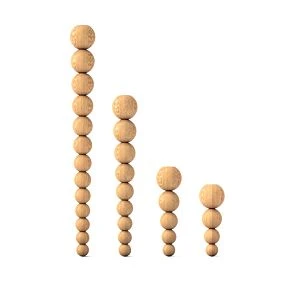
Our factory also produces:
Specialized furniture hardware store
Specialization is useful where the choice depends on technical parameters. A good furniture hardware store should let you compare not only the design, but also dimensions, material, finish, and mounting.
For the buyer, this means a simple test: can you tell from the product page how the part will be installed? If there is no data on fit, thickness, thread, center-to-center distance, or completeness, comparing only price is premature.
Get Consultation
Marketplace
A marketplace is convenient for the number of options and quick comparison of offers. But the same product name from different sellers does not yet mean the same geometry. For handles, center-to-center distance and projection are especially critical; for legs, height and mounting; for installation hardware, thread and strike plate.
If the task is to replace an existing part, a product page without a drawing or clear dimensions creates unnecessary risk. In this case, a wide selection does not compensate for the lack of technical information.
Manufacturer’s online store
This option makes sense when you need to assemble a connected system: for example, wooden legs, fasteners for them, and glides, or choose handles in the same style as the other wooden parts of the project.
STAVROS accepts orders remotely and ships to regions of Russia. For Kursk, this means you can buy furniture hardware without being tied to a local storefront: first select items in the catalog, then check the specification and arrange delivery. At the same time, it is better to confirm the timing of a specific shipment and the cost of transportation for the order itself, rather than applying data from another city or an old purchase to it.
What criteria to use to compare sellers
Before buying, it is useful to evaluate seven things:
-
are technical dimensions provided;
-
is the material specified;
-
is the mounting method clear;
-
can matching elements be selected;
-
is there a stable SKU for reordering;
-
can a small quantity or a sample be ordered;
-
is delivery to the required region available.
If a seller wins only on price but loses on two or three technical points, the final purchase may end up more expensive due to furniture rework.
What furniture hardware can be ordered for a project
The phrase “furniture components” is very broad. For a specific project, it is better not to try to buy “everything for furniture,” but to break the task down into functional groups.
Wooden furniture handles
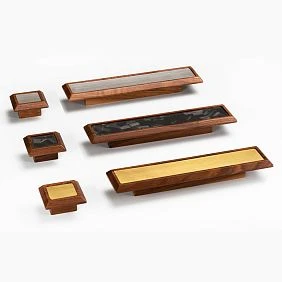
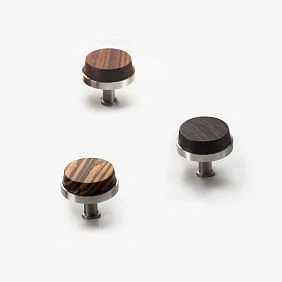
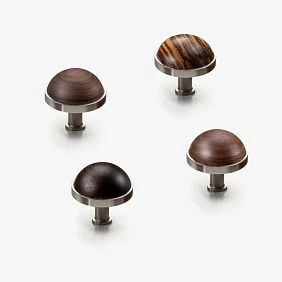
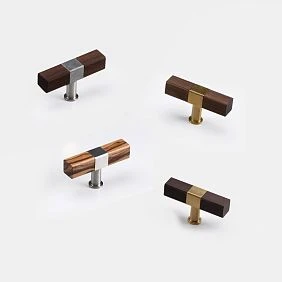
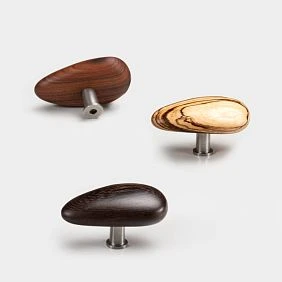
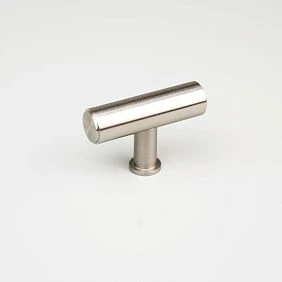
Wooden furniture handles are needed for hinged fronts, drawers, dressers, cabinets, nightstands, and other case furniture. The STAVROS catalog offers various geometric options, including knob handles and bow handles.
When choosing a handle, three tasks are solved simultaneously: whether it is comfortable to use, whether it suits the proportions of the front, and whether it matches the installation scheme. Therefore, the query "buy furniture handles" cannot be reduced to comparing color and shape.
If the handle is being installed on a new front, the holes can be marked out for the chosen model. If an old handle is being replaced, the order is reversed: first the existing holes are measured, then a compatible option is found to match them.
Furniture legs and supports
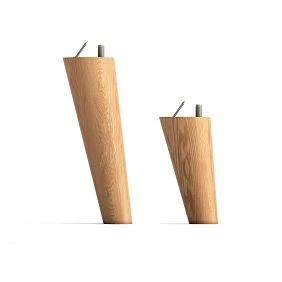
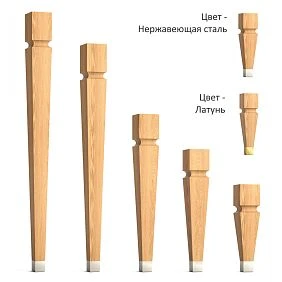
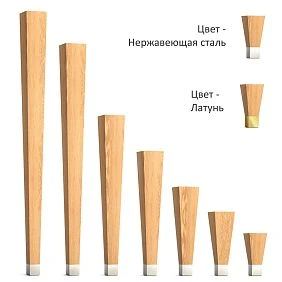
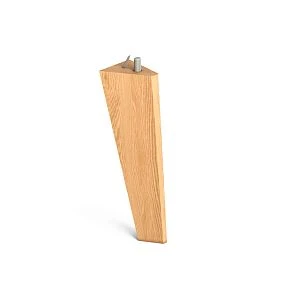
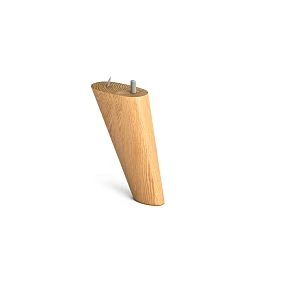
Furniture Legs and Supports they participate not only in the appearance but also in the geometry of the item. The height of the support changes the overall height of a dresser, nightstand, or console; the shape and cross-section affect the perception of the case; the mounting part determines how the component connects to the base.
Therefore, the query "buy furniture legs" is a choice of a structural assembly, not just a decorative element.
Hardware for attaching furniture legs
For the lower assembly of furniture, studs, plates, glides, and other fasteners may be needed. In the hardware section for furniture legs it makes sense to look not for "something suitable" but for parts compatible with a specific leg and base.
The critical mistake here is to assume that the same external size automatically means the same thread or mounting scheme. If one connection element does not match, the whole chain stops assembling.
Materials for installation and finishing
The project may require adhesives, oils, and other Materials for furniture assembly. Their role depends on the specific item: in some cases, only the installation of a ready-made part is needed, while in others, an unfinished handle or leg still needs to be tinted to match the facade color.
Therefore, a kit is considered complete not when the cart contains the main decorative parts, but when, after receiving the order, the entire planned installation can be carried out without searching for a missing small item.
How to choose furniture handles before purchasing
The most common mistake with handles is choosing them as an accessory rather than as a part with precise installation dimensions. In a photo, two models may look almost identical, but one will fit into the existing holes, while the other will require re-drilling the facade.
Center distance
If the handle is attached with two screws, measure the distance between the centers of the mounting holes. It is center-to-center, not the distance between the edges of the holes and not the overall length of the handle.
For new furniture, the center-to-center distance can be chosen more freely: the holes have not yet been made. For a finished facade, this parameter becomes a constraint. If the new handle does not match the existing layout, you will have to either drill new holes or change the installation method itself.
On a painted or finished facade, the old holes may remain visible. Therefore, when replacing handles, first remove one old handle, measure the mounting, and only then open the catalog.
Total length
The same center-to-center distance does not mean the same overall dimensions. One handle may extend only slightly beyond the mounting points, while another may extend significantly.
This affects the composition of the facade. For example, a long pull on a narrow drawer will visually take up most of the width. On a wide facade, the same model may look proportional.
A useful check is to mark the actual handle dimensions on the front panel with masking tape or a paper template. This way, the scale is assessed before drilling.
Projection
The projection shows how far the handle protrudes above the front panel. The less space there is for fingers, the more ergonomics depend on the shape.
For a deep drawer with heavy contents, a too-flat handle can be inconvenient, even if it looks perfect in the visualization. For a small, lightweight front panel, on the other hand, a massive handle is sometimes excessive.
Front panel thickness and mounting screw
The screw must pass through the front panel and enter the handle to a sufficient depth, but not bottom out before the connection is tightened.
Therefore, measure:
front panel thickness → handle mounting type → required screw length.
If the hardware is supplied with a specific model, it is still useful to check it against the actual thickness of your front panel. Non-standard cladding, an overlay, or a decorative layer can change the total thickness of the part.
Grip shape
A knob, a pull, and a long handle solve the same function in different ways. For a small door, a pinpoint grip is sufficient. For a wide drawer, a grip that can be confidently pulled with several fingers or the palm is more convenient.
Ergonomics cannot be fully assessed from an image. For a furniture series or an expensive project, it is reasonable to first buy one handle and test it on a control front panel.
Traces of the old handle
When replacing hardware, it's important to look not only at the holes. The old handle could have left:
-
a pressed-in spot;
-
a faded area;
-
a finish mark;
-
scratches;
-
an outline of the base.
The new model must either cover the traces or be part of a broader facade renovation. Otherwise, a technically correct replacement will remain visually untidy.
Material and finish
For the project, you can choose a ready-made finish or Uncoated furniture handles, if you plan to do your own tinting.
A ready-made finish saves the finishing stage. An unpainted wooden part gives more freedom: it can be matched in color to the legs, facade, countertop, or other elements. But then the finishing operation itself and materials need to be added to the specification.
Handle checklist
| Parameter | What to measure or check | Consequence of an error |
|---|---|---|
| Center-to-center distance | distance between the centers of the holes | the handle will not align with the markings |
| Overall length | Full dimensions | the proportions of the front will be disrupted |
| Projection | space for grip | it will be inconvenient to use the handle |
| Facade thickness | actual thickness at the installation point | the fasteners will be of the wrong length |
| Handle base | contact area with the front | old marks may remain visible |
| Orientation | vertical, horizontal, other | ergonomics and composition will change |
| Finish | finished or for custom finishing | a color mismatch will occur |
If these parameters are defined in advance, choosing from a large catalog becomes easier: technically unsuitable options are filtered out first, then the design is compared.
How to choose furniture legs and supports
The leg simultaneously affects the height, stability, visual mass, and mounting method of the furniture. A mistake here is usually more costly than a mistake with a handle, because it may require redoing the base.
Height
The leg height is added to the body height. If the body is designed in advance, this is a simple part of the calculation:
body height + support height + lower assembly elements = total product height.
But when replacing legs on finished furniture, you need to take into account the existing plinth, recessed mounting, glide, and other elements. Therefore, you cannot choose a new leg just because its nominal height is similar to the old one.
Cross-section and upper mounting part
The upper part of the leg must allow the chosen mounting system to be installed. A wide leg may have enough surface area for one solution, while a narrow one may require another.
The actual base area of the cabinet is especially important. If the plate extends beyond the edge or lands on a weak section of the material, the fastening assembly cannot be considered ready just because the threads match.
Load
Load capacity cannot be assessed by the thickness or appearance of the leg alone. For a specific item, you need to take into account the weight of the cabinet, its contents, dynamic impact, and the number of supports.
If the product page does not have a confirmed load rating for the model you are interested in, you should not make one up yourself. For a heavy table, cabinet, or upholstered furniture, it is safer to confirm the suitability of a specific leg before ordering.
Number of supports
Four legs is a standard layout, but not a universal one. A long cabinet may require an additional central support, and a table design may require a different base layout.
The number is determined not only by weight but also by the geometry of the cabinet. The greater the span between supports and the more flexible the base material, the more important it is to account for deflection and the actual furniture construction.
Wood species
For wooden legs, what matters is not the abstract phrase “natural wood” but the specific version of the chosen model. The STAVROS range includes items made of beech and oak. The species affects the grain, the color after finishing, and how the part combines with other wooden elements.
If the leg is being purchased for existing furniture, it is better to compare a real sample or a pre-approved finish system rather than the color name on the screen.
Coating
A ready-made leg is convenient for direct installation. from STAVROS open boundless possibilities for designers, furniture makers, and anyone striving to create unique high-quality furniture. useful when a project requires a custom color or a single finish for the entire series.
The second scheme requires discipline: before ordering a batch, a finish sample must first be approved. Otherwise, even identical wooden parts may end up with a different visual result due to the coating application technology.
Installation method
The fastening should be chosen at the same time as the leg. The working logic:
leg → threaded connection → mounting plate → cabinet base → glide.
If you first order only the legs and select the fasteners after receiving them, you may find that the plate does not fit the base size or the mating thread does not match.
For a chest of drawers
For a chest of drawers, evaluate the final height, the position of the legs relative to the side panels, the weight of the cabinet with filled drawers, and the external offset from the edge.
Too much inward offset visually “suspends” the cabinet and increases the span of the bottom panel. Installing too close to the edge may conflict with the cabinet’s fastening scheme. Therefore, the position of the supports should be included in the drawing rather than determined during assembly.
For a cabinet
A nightstand is usually more compact, but here height misalignment is especially noticeable. If one leg differs or the glide is installed differently, the facade gaps become visually uneven.
For a bedside or TV stand, it is also important to check in advance whether the height of the supports conflicts with neighboring furniture and equipment.
For a cabinet
A wardrobe is a heavy item, so a decorative support should not be chosen separately from the base structure. If the project includes legs, their number, position, and fastening must be calculated within the overall cabinet scheme.
When replacing existing supports, you cannot automatically transfer the scheme of a lightweight nightstand to a tall wardrobe.
For a table
A table experiences dynamic loads: people lean on the edge of the tabletop, the table is moved, and lateral forces are applied to it. That is why attaching the leg to the tabletop or the subframe is critical.
Here, the rigidity of the connection and the placement of the fastening points are especially important. An externally massive leg does not compensate for a weak plate or an incorrect base.
For a console
A console often has a shallow depth and a visually thin body. Because of this, a large mounting plate may simply not fit in the allotted area.
Before purchasing, it is useful to draw the underside to scale and place the actual dimensions of the fastening elements on it. This is a simple way to detect a conflict before ordering.
What to buy together with a furniture leg
The query “buy furniture fasteners” is best started with a specific leg. A mounting assembly has a sequence, and each part must be coordinated with the adjacent one.
Leg
Height, cross-section, material, top part, and connection method are checked.
Stud
Diameter, thread, length, and which mating part it works with are checked.
Mounting plate
Compatibility with the stud and the ability to secure the plate itself to the furniture base are checked.
Self-tapping screws or other base fasteners
The choice depends on the base material and the thickness of the part. The universal logic of “the longer, the stronger” is incorrect: too long a fastener may come through to the front side, while too short a one may not provide sufficient fixation.
Glide
The glide connects the bottom end of the leg to the floor. Its size and type must match the leg itself and the purpose: protecting the surface, compensating for minor unevenness, or another function of the specific model.
| Element | What to Check | Why this is important |
|---|---|---|
| Leg | height, cross-section, top fitting | determines the geometry and the starting point of the assembly |
| Screw | thread and length | connects the leg to the mount |
| Mounting plate | thread, size, fixing points | must fit on the base and accept the stud |
| Body fastener | length and base material | holds the plate in the body |
| Thrust bearing | size of the lower end and purpose | completes the contact of the support with the floor |
When ordering online, it is useful to assemble these items as a single specification. If one line remains undefined, the installation has not yet been fully designed.
How to assemble a hardware set for a single piece of furniture
Assembling by item is more convenient than buying by category. The buyer sees not “four legs and several handles,” but a complete set, after receiving which the product can be finished.
Set for dresser
For example, a chest of drawers has four drawers, each with two handles, and four wooden legs.
Minimum specification:
-
4 legs;
-
4 mounting units for the legs;
-
4 floor glides, if provided by the selected scheme;
-
8 handles;
-
handle fasteners;
-
finishing materials, if the parts are purchased without a coating.
Handle calculation:
4 drawers × 2 handles = 8 handles.
If one handle is first ordered as a sample and then used in the finished product, seven more must be ordered after approval. If the sample was damaged during test installation, it cannot be counted as part of the final set.
Set for a nightstand
For a nightstand with one door and four legs:
-
4 legs;
-
fasteners for 4 installation points;
-
1 handle;
-
1 handle fastener set;
-
floor glides or protective elements according to the selected scheme.
If the nightstands are a pair, as in a bedroom, the quantity is immediately multiplied by two. This is basic arithmetic, but it is useful for color: two nightstands are better ordered together in one order if visual consistency of the wooden parts is critical.
Set for wardrobe
In a wardrobe, the main product group is handles. The quantity is calculated by fronts, not “approximately by sections.”
For example:
-
two hinged doors — one handle per door;
-
four drawers — one handle per drawer;
-
total — 6 handles.
If the lower part of the cabinet is installed on decorative supports, they are added as a separate structural block with its own fasteners.
Console kit
A console with two drawers and four legs may require:
-
4 legs;
-
4 mounting plates or another provided assembly;
-
4 matching threaded elements;
-
4 support feet;
-
2 handles;
-
handle fasteners.
Here it is important to check the depth of the cabinet. On a narrow console, the mounting plates may compete for space with the drawers and lower rails.
Set for a small table
A table without drawers may not require handles at all, but the lower assembly becomes more critical:
-
legs;
-
leg fasteners;
-
mounting plates or a base frame — depending on the design;
-
protective elements on the lower ends.
There is no need to artificially add a product item just because it is present in the catalog. The set must correspond to the actual design.
Configuration table
| Item | Visible parts | Mounting elements | What to check separately |
|---|---|---|---|
| Commode | Handles, legs | leg fastening, handle screws | number of handles per drawer |
| Cabinet | handle, legs | plates, studs, foot pads | height of a pair of nightstands |
| Cabinet | handles, supports as required by design | fastening of handles and supports | number of fronts and body weight |
| Console | drawer handles, legs | complete lower assembly | depth and space for plates |
| Table | legs/supports | attachment to the tabletop or underframe | rigidity and load pattern |
Coated or uncoated hardware
Choosing a finish is not a question of “what looks nicer.” It determines who performs the finishing operation and how easy it is to replicate the color later.
When a ready finish is more convenient
A finished part is rational if:
-
the desired shade has already been chosen;
-
the item needs to move quickly to assembly;
-
there is no separate painting stage;
-
no exact match to a non-standard cabinet finish is required.
For a retail project, this is the shortest path: receive, inspect, and install.
When an unfinished part is more useful
An unfinished part is suitable if:
-
handles and legs need to be tinted together;
-
the project has its own color system;
-
the furniture workshop uses an approved oil or lacquer;
-
it is necessary to match a facade sample;
-
the series is produced in several finish options.
In this case, you need to save on mistakes, not on preparation. First, one sample is finished, the technology is approved, and only then is it repeated across the entire batch.
Why identical wood does not guarantee identical color
Natural material has its own pattern and original tone. The result depends on the species, batch, surface preparation, and finishing compound.
Therefore, the phrase "we'll paint everything with one oil" is not yet a guarantee of visual matching. For a responsible project, a control sample on the actual part is more important.
Which dimensions to check before ordering
Measuring is the cheapest part of a purchase and at the same time the most effective protection against returns or rework.
For the handle
Minimum set:
center-to-center distance → overall length → overhang → base size → facade thickness.
If this is a replacement, additionally photograph the old holes and marks on the facade.
For the leg
Required:
height → width or diameter → top part size → mounting area → bottom end.
If the leg has a complex shape, one maximum overall dimension is not enough. It is important to understand which part actually contacts the cabinet.
For the mounting plate
Check:
-
overall dimension;
-
hole locations;
-
central thread;
-
permissible installation zone;
-
base thickness.
The plate must not only connect to the stud, but also physically fit on the body.
For a threaded connection
Need to confirm:
thread type → diameter → length → mating part.
You cannot choose a stud by visual thickness or by the fact that it "looks like the previous one."
How to record measurements
A good practice is to make not a set of photos on your phone, but a short specification:
Handle: 8 pcs.; center-to-center ___ mm; front ___ mm; finish ___; fastening ___
Leg: 4 pcs.; height ___ mm; top plate ___; connection ___; finish ___
Plate: 4 pcs.; dimensions ___; thread ___; body base ___
This format reduces the risk of mixing up sizes between several pieces of furniture.
How to order furniture hardware online with delivery to Kursk
For a regional customer, remote ordering is a fully viable workflow if the technical part is prepared before checkout.
STAVROS's official terms provide for placing orders via the website, by phone, and by email, with delivery via transport companies and courier services across Russia. For a specific order to Kursk, it is best to check the shipping cost and time at checkout: they depend on the composition, quantity, and parameters of the shipment.
Step 1. Define the task
Not "I need furniture hardware," but:
-
replace 6 handles on a cabinet;
-
assemble the lower unit for 4 legs of a chest of drawers;
-
select 2 handles and 4 supports for a new console;
-
order a handle sample before the full series.
The more precise the task, the fewer unnecessary product options.
Step 2. Choose a category
For handles, open the dedicated section. For legs — the supports category. For fasteners — the related hardware.
There is no need to search for all items using a general query if you know exactly which part is required.
Step 3. Take measurements
All critical dimensions are recorded before adding the product to the cart.
If it is a replacement, it is useful to first remove one old part. Measuring on an installed handle or leg sometimes hides an important mounting part.
Step 4. Determine the material and finish
You need to understand which part is needed:
-
ready for installation;
-
without coating;
-
for own finishing;
-
as a sample before the future batch.
This affects both the set of materials and the sequence of work.
Step 5. Check the fastening
The handle has a screw and a front.
The leg has a threaded assembly, a plate, a base, and a foot pad.
The finishing operation has the part material and the selected coating system.
Step 6. Count the quantity
The quantity is counted by the actual installation points.
For handles:
number of fronts × handles per front.
For legs:
number of items × supports per item.
For mounting hardware:
number of supports × elements per assembly.
Step 7. Check order repeatability
If the project consists of several identical items, it is useful to decide whether to order everything at once or one test set first.
One set reduces the risk of error. One combined batch reduces the risk that later the required option will have to be assembled from different orders.
Step 8. Record the product codes
After approval, the exact product code and finish of the item are recorded. This is especially important for the workshop: a verbal description like “that long oak handle” is unsuitable for reordering.
Step 9. Check delivery before payment
For Kursk, the deadlines from an order in Moscow, St. Petersburg, or another region should not be carried over. The conditions of the specific shipment are what get checked.
For a small set of handles and for a large batch of legs, logistics may differ in packaging and cost, so it is part of the full project price.
Buy a single part, a set, or a batch
The same catalog is used in different scenarios, but the ordering logic differs.
One piece
A per-piece purchase is needed when:
-
one handle has broken;
-
one leg is damaged and an exact equivalent exists;
-
a sample is needed;
-
a new model is being checked.
The category page for STAVROS wooden handles states that ordering from one piece is possible, which makes this scenario practical for testing and repair.
But even when buying a single part, you need to make sure it can truly exist on its own. One new leg next to three old ones may differ in height or shade.
Set for one item
This is the main scenario for a private project. For example, for a chest of drawers, you don't buy "four legs," but:
legs + fasteners + glides + handles + mounting small parts.
The set is convenient because compatibility between product groups is checked right away.
Small batch for a workshop
A workshop can assemble 5–20 identical items, but it makes sense to first build one reference piece.
After assembly, problems become visible that are not always noticeable from the catalog:
-
the proportion of the handle on the front;
-
grip convenience;
-
the position of the plate;
-
tool access;
-
color after finishing;
-
actual installation time.
Only after that should the specification be frozen for repeat production.
Serial batch
If the item code has already been approved, dimensions verified, installation perfected, and the product is manufactured serially, the retail logic ends.
What matters next:
-
stability of the item code;
-
consistent execution;
-
delivery schedule;
-
packaging;
-
batch repeatability;
-
locking in changes.
The query "buy furniture hardware wholesale" already belongs to the procurement process, so a regional article should not turn into a large B2B regulation.
When you should order a sample first
A sample makes sense not only before a large factory batch. It is useful whenever the cost of a mistake is higher than the cost of one test piece.
A new handle on an expensive front
A single sample lets you check the scale, grip, overhang and actual color before drilling all the fronts.
A new leg on custom furniture
You can assemble one mounting unit on a test fragment of the base and make sure the plate fits, the fastener tightens, and the height matches the project.
Your own finish
An unpainted handle or leg is first coated using the chosen technique. This shows how the real wood looks after oil, stain or another finish.
A small furniture series
The first item becomes the reference:
sample → fitting → assembly → evaluation → adjustment → approval → repetition.
If a problem is found on the reference sample, one unit is corrected. If the sample is skipped, the same defect may recur across the entire batch.
What to check on the sample
Don't stop at appearance. Check:
-
sizes;
-
geometry;
-
fit;
-
tool access;
-
color;
-
surface quality;
-
handle convenience;
-
stability of the support;
-
compatibility of the fastening;
-
behavior after a trial installation.
A sample is valuable precisely because it turns a decision from an image and numbers into a real object.
How to compare the price of furniture hardware
The lowest price for an individual part does not always produce the cheapest project.
It is more useful to compare the full cost:
part + fastening + finishing + installation + delivery + risk of rework.
Example with handles
Option A is cheaper per piece, but has a different center-to-center distance. Installing it will require re-drilling the fronts and concealing the old holes.
Option B is more expensive per piece, but matches the existing layout.
Without the cost of rework, Option A seems more advantageous. Once the front work is included, the result may change.
Example with legs
One leg is sold separately, but requires fasteners that are not included. The other is initially more expensive, but a compatible mounting system is immediately available for it.
You should compare not the price of the leg, but the cost of the assembled lower unit.
Example with coating
An unfinished part may cost less than a finished one, but the project will still require material, preparation, application, and drying.
If the finishing operation already exists in production, that is fine. If the buyer is forced to arrange it for four legs, a ready-made coating may be more economically reasonable.
Repeat order as part of the cost
For a single item, this is secondary. For a workshop, it is critical.
If a month later you need another identical handle or a set of legs, a stable SKU and a clear specification reduce the cost of re-sourcing.
That is why "cheaper today" and "cheaper over the entire project cycle" are different metrics.
Mistakes when buying furniture hardware online
Mistake: choosing a handle by overall length
Why it happens: the overall dimension is easier to see in the product listing.
Consequence: the mounting holes do not line up.
How to avoid: for a two-point handle, check the center-to-center distance separately.
Mistake: not measuring the facade thickness
Why it happens: the buyer considers the screw a minor detail.
Consequence: the screw is too short or the connection cannot be tightened properly.
How to avoid: include the facade thickness in the handle specification.
Mistake: ordering legs separately from the mounting
Why it happens: the decorative element seems to be the main one.
Consequence: after delivery, a separate search begins for studs, plates, and glides
If the item must fit under a countertop, windowsill, or another fixed mark, you cannot choose legs without calculating the final height.
The color is critical, but there is no sample
For a project where wooden parts must match the facade exactly, a remote image may not be enough. It is more useful to first order a sample or choose a part for your own finish.
A series is planned, but the SKU has not yet been approved
Ordering dozens or hundreds of identical parts before a test installation is risky. First you need a reference, then the batch.
How to build a final order without omissions
Before placing the order, it helps to go through it as an assembler, not as a catalog shopper.
1. Article number
Each selected item must have an exact SKU and configuration variant recorded.
2. Size
All critical dimensions are recorded and verified against the furniture.
3. Material
The wood species or fastener material matches the project.
4. Finish
It is clear whether the part arrives finished or will be finished after receipt.
5. Mounting
For the handle, the screw and the front are checked. For the leg, the entire lower assembly.
6. Quantity
The quantity is calculated by installation points, not approximately.
7. Compatibility
Adjacent elements connect to each other without assumptions.
8. Stock
Stock is justified. For a serial project it can be useful; for an expensive one-off piece, an extra unit may be unjustified.
9. Sample
If the model is new to the project, it has been decided whether a test is needed before the main purchase.
10. Delivery
The terms specifically to Kursk for the specific order composition have been clarified.
11. Reorder possibility
For the workshop or series, the SKUs and configuration have been saved so that the next purchase does not start from scratch.
After this check, you can proceed to placing the order via STAVROS. The point of the final checklist is not to make the purchase more complicated, but to get a set that can be installed immediately after delivery.
A practical scheme: from search to finished furniture
If the entire article is reduced to a single working algorithm, the following sequence emerges.
Step 1. Identify the piece of furniture and the function of the part.
Step 2. Take actual measurements from the front, carcass, or old element.
Step 3. Choose the product category: handle, leg, support, fastener, finishing material.
Step 4. Rule out incompatible options by dimensions.
Step 5. Check the material and finish.
Step 6. For legs, assemble the complete mounting unit; for handles, check the fastening through the front.
Step 7. Calculate the quantity based on the actual installation points.
Step 8. If you decide to proceed, order a sample.
Step 9. After checking, confirm the SKUs.
Step 10. Place the main order and arrange delivery to Kursk.
This sequence works both for a single cabinet and for a small furniture workshop. The quantity changes, but not the principle: compatibility first, then purchase.
Compatibility map: what must match before payment
When a customer sees a beautiful handle or leg in the catalog, it is easy to perceive it as a standalone product. In real furniture, almost any such part exists within a chain of interfaces. Therefore, before payment, it is useful to check not each item separately, but the connections between them.
For a handle, the chain looks like this:
handle → mounting points → screw → front thickness → working grip.
For a leg:
leg → top mount → threaded rod or other connector → mounting plate → cabinet material → bottom edge → glide.
If even one transition is unknown, the specification is not yet complete.
| Node | What must match | What to check on furniture |
|---|---|---|
| Handle ↔ front panel | number of mounting points and center-to-center distance | old holes or new markings |
| Screw ↔ handle | connection type and working length | actual front panel thickness |
| Leg ↔ connector | fit and thread | design of the upper part of the leg |
| Connector ↔ plate | thread and geometry | ability to tighten the assembly |
| Plate ↔ body | dimensions and mounting points | base material and thickness |
| Leg ↔ glide | bottom geometry | floor type and glide purpose |
This table is especially useful when ordering remotely. It turns “it seems like it should fit” into a sequence of verifiable conditions.
Why you can't check only adjacent parts individually
Suppose a stud fits the leg, and the plate fits the stud. This still doesn't mean the whole assembly fits the cabinet. The plate may turn out to be too wide for the installation area, and its holes may end up close to the edge of the panel.
That is exactly why compatibility is a property of the entire chain, not just a pair of parts.
When it's useful to make a mock-up for installation
If the furniture hasn't been manufactured yet, you can test the assembly on an offcut of the same material and the same thickness. For a handle, a test fragment of the front is enough. For a leg, a fragment of the base on which the fastener is placed.
A mock-up helps you check what isn't visible in the catalog: screwdriver access, seating depth, hand position, the real scale, and whether adjacent parts get in the way.
Edge cases: when the usual algorithm isn't enough
A typical project easily fits the scheme "measure → choose → order." But it's precisely non-standard situations that more often lead to costly rework.
One leg from the set broke
If the same item number in the same finish is found, the task is simple: the dimensions and mounting are verified, after which one part is replaced.
If there is no exact match, buying the "most similar" leg is risky. Even a difference of a few millimeters in height affects stability. A difference in shape or shade will be visually noticeable.
In this case, two solutions are compared: searching longer for an identical replacement or changing the entire group of supports. The second option is more expensive in terms of the number of parts, but sometimes cheaper than correcting the misalignment and visual difference.
The finished facade is already drilled
For a new project, the handle can dictate the layout. For a finished facade, it is the opposite: the existing layout limits the choice of handle.
If you really like a model with a different center-to-center distance, you need to calculate not only its price, but also the cost of reworking the facade. The old holes will have to be filled, and new ones drilled using a template. On a painted or veneered surface, this can be more difficult than choosing a different handle.
Narrow console or cabinet
On a narrow cabinet, the problem often arises not with the leg itself, but with the mounting plate. In the drawing, the support fits, but the fasteners intersect with the side panel, drawer runner, or internal partition.
Before ordering, it is worth drawing the bottom plane to scale and placing the actual dimensions of the plate on it. For a complex project, this simple step is more useful than a dozen product photos.
Different pieces of furniture in the same room
If a chest of drawers, nightstands, and console should look like a single series, it is better to choose handles and legs not separately for each item, but as a common system.
First, the common language is set: wood species, character of the shape, finish. Then, a suitable size is selected for each cabinet. This way, you can maintain a unified visual motif without forcing the same part to work where it is inconvenient in scale.
You need to buy one more part after some time
For such a scenario, the saved SKU is especially valuable. A photo of the old order or a verbal description does not replace precise identification.
If the project involves further expansion, it is better to keep a small specification right after installation: SKU, material, finish, quantity, and type of fastening. This turns a future reorder into a repeat, not a new search.
How to receive furniture hardware after delivery
A regional order does not end at the moment of payment. The received hardware must be checked before mass installation, especially if the box contains a set for several items.
First, verify the quantity and SKUs
Before unpacking all the parts, it is useful to compare the actual items with your own specification. If the order consists of handles, legs, and fasteners, each product group is checked separately.
When there are many identical parts, it is convenient to sort them by future pieces of furniture: chest of drawers set, cabinet set, console set. This makes it faster to find the missing item.
Then check one complete installation chain
There is no need to install eight handles or four legs at once. First, assemble one point completely.
For the handle: one handle + actual front + screw.
For the leg: one leg + complete fastening assembly + actual base.
If the first point works correctly, only then repeat the installation.
Check the surface before finishing and installation
Wooden parts are inspected under good lighting. If you plan to do your own tinting, first select one element for a test and only after the result is approved proceed to the rest.
If the part already has a finished coating, the assessment is carried out before installation, while it can still be calmly compared with neighboring elements of the project.
Do not mix batches before checking
For the workshop, it is useful to maintain clear order identification until incoming inspection is complete. If several similar handles or legs are mixed in one box, it is then harder to determine which variant was approved as the reference.
Verify the final height before installing all legs
On one installed support, you can check the calculation, but the furniture still cannot be loaded as a finished product. After installing the entire set, check the horizontality and final height of the cabinet.
If the height does not match the project, it is better to detect the problem before installing the drawers, countertop, or heavy contents.
When a ready-made finish is more advantageous, and when your own finishing is
The catalog includes furniture handles with coating and individual items without a finish. These are not just two variants of the same product — they are two different production schemes.
A ready-made finish saves an operation. The buyer receives a part that can be installed after inspection. This is convenient for repairs, a single piece of furniture, and projects without their own painting technology.
Your own finishing requires more steps, but gives control over the color. It is especially logical if the workshop already finishes facades, legs, and other wooden elements with a single system.
These options should be compared by the full scope of work:
ready-made part = product price + installation;
part without a finish = product price + preparation + finishing material + application + drying + installation.
In serial production, the second scheme can be the norm. For a one-off repair, the first is often simpler. The decision is determined not only by the cost of the product, but by whether the project has its own finishing process.
How to avoid turning a regional purchase into a set of separate deliveries
With remote purchasing, extra follow-up orders are especially noticeable: a forgotten plate or four screws may cost little as a product, but require new packaging, processing, and delivery.
Therefore, before final checkout, it is useful to go through the cart using the principle of “what will happen during assembly”:
-
I take out the handle — are there fasteners and do they fit the front;
-
I take out the leg — is there a connector and a mounting plate;
-
I install the plate — are there fasteners to the body;
-
I finish the support — is a glide needed;
-
I finish the wood — are the necessary materials available;
-
I repeat the assembly — is the quantity enough for all items.
It is this approach that makes the order complete. It is more useful than trying to add as many items as possible from one category to the cart.
If everything is agreed upon after verification, buy furniture hardware you can proceed using the finalized specification rather than a process of trial and error.
FAQ
Can furniture hardware be ordered with delivery to Kursk?
Yes, a regional order can be placed remotely. STAVROS offers ordering via the website, phone, and email, as well as Contact us to confirm shipping to your destination. The specific timeframe and cost must be confirmed for the contents of your order.
Can I buy a single furniture handle as a sample?
For the wooden handle category, STAVROS specifies a minimum order of one piece. This is convenient if you need to check the size, grip, color, or installation method before purchasing a full set.
How do I choose the size of a furniture handle when replacing an old one?
Remove one old handle and measure the center-to-center distance between the centers of the holes. Additionally, check the overall length, projection, facade thickness, and any marks left by the old piece on the surface.
What do you need to buy together with a furniture leg?
It depends on the specific model and design, but usually the entire assembly needs to be checked: the leg, threaded element, mounting plate or other attachment method, fasteners to the body, and the base pad. All elements must be compatible with one another.
How can I tell if the mounting plate is suitable?
The plate dimensions, thread type and diameter, hole arrangement, and the material of the base to which it is attached are checked. Matching only one parameter is not enough.
Can handles and legs be ordered without a finish?
Yes, the STAVROS catalog includes separate options for handles and legs without a finish. This choice is useful if the project involves custom tinting or a unified finish with other wooden parts.
Do I need to buy a stock of hardware?
Not always. For a one-off project, an expensive extra element may not be justified. For a series, a stock can be useful if stopping assembly because of one damaged part costs more than the spare item. The decision depends on price, availability, and how repeatable the project is.
How to order furniture hardware wholesale?
First, the specific item codes and finish need to be approved on a sample or control item. After that, purchasing is based on the specification: quantity, material, finish, fasteners, packaging, and delivery terms. A regional retail article should not be used instead of a full supply procedure.
What should I do if I like a new handle but its center-to-center distance does not match the old one?
There are two options: choose a model with a compatible center-to-center distance or plan to rework the front. In the second case, you need to decide in advance how to cover the old holes and how to mark the new ones accurately. On a finished decorative front, the first option is often easier.
How to buy furniture hardware in Kursk and not make a mistake with the set?
Start not with the basket, but with the specification. Write down the furniture item, the number of installation points, dimensions, material, finish, and fasteners. After that, select items from the catalog and check the compatibility of adjacent parts. This order is far more reliable than buying by appearance.