Article Contents:
- Production alchemy: transforming wood raw material into high-tech material
- Wood raw material preparation: foundation of future quality
- Binding systems: chemistry of strength
- Press forming: birth of structure
- Continuous pressing technology
- Quality control during forming
- Precision mechanical processing: from blank to part
- Cutting and calibration technologies
- Profile milling: art of precision
- Final Finishing: Perfection in Details
- Grinding operations
- Dust removal and preparation for coating
- Quality Control: Guarantee of Perfection
- Incoming Raw Material and Component Inspection
- Operational Control
- Final Testing
- Specialized technologies: processing complex profiles
- Bending and forming
- Joining Parts
- Coatings and final finishing
- Coating application technologies
- Drying systems
- Automation and digitalization of production
- Computer-Aided Design Systems
- Production management systems
- Ecological aspects of production
- Closed production cycles
- Water purification
- Innovative Developments and Development Prospects
- Nanomodified materials
- Bio-composite materials
- Economic efficiency of production
- Material flow optimization
- Energy efficiency
- Frequently Asked Questions
- Conclusion: craftsmanship proven by time

The modern era of industrial production demands strict requirements for quality, precision, and efficiency in manufacturing furniture components. MDF part manufacturing is a complex technological process where each stage requires professional skill and application of advanced manufacturing solutions. This material revolutionized the furniture industry, enabling the creation of products that combine the beauty of natural wood, geometric stability, and affordable cost.
What lies behind the apparent simplicity of MDF panels? What technological secrets allow creating parts that often surpass solid wood products in performance characteristics? The answers lie in a deep understanding of manufacturing processes and material science principles underlying modern MDF part production.


Production alchemy: transforming wood raw material into high-tech material
The process of manufacturing MDF parts begins long before the material reaches the milling machine. It is a whole chain of technological operations, each critically important for achieving the highest quality product.




Wood raw material preparation: foundation of future quality
Selective wood selection is the first and most important stage of the production cycle. Only premium wood raw material from coniferous and deciduous species is used to manufacture high-quality MDF panels. Each batch of wood undergoes careful inspection for the absence of rot, fungal damage, metallic inclusions, and other defects that may negatively affect the quality of the final product.
The moisture content of incoming raw material should not exceed 50-55%, which is ensured by preliminary drying in special chambers. This parameter is critically important for the stability of subsequent technological processes and the quality of the binder.
Mechanical processing into fibers is carried out in several stages. First, the wood is ground into chips measuring 20-50 mm, then it undergoes steaming at a temperature of 160-180°C to soften lignin. Final fiber separation is performed in refiners under pressure at a temperature of 170-190°C.
The resulting fibers have a length of 0.5-3 mm and a diameter of 10-30 microns, ensuring optimal conditions for forming a strong and uniform panel structure. The quality of the fibers directly affects the strength characteristics of the finished molding and trim profiles made of MDF.
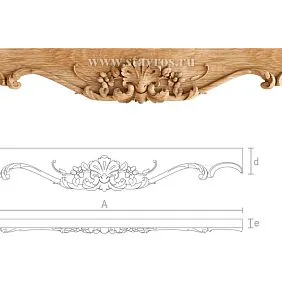
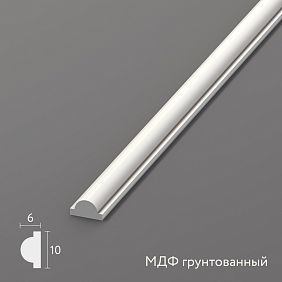
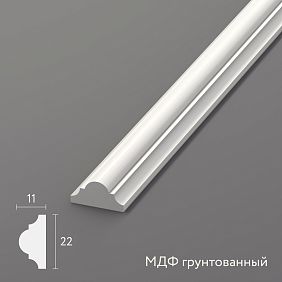
Our factory also produces:



Binder systems: chemistry of strength
Modern binder substances based on modified urea-formaldehyde resins provide not only fiber bonding strength but also compliance with strict ecological standards. The content of free formaldehyde in finished products does not exceed 0.1 mg/m³, corresponding to E0 emission class.
The binder application process occurs in special mixers under strictly controlled temperature and humidity parameters. Each fiber receives an even coating of binder material with a thickness of 2-5 microns, ensuring optimal adhesion during panel formation.
Additives and modifiers improve the material's operational characteristics. Hydrophobic agents enhance water resistance, flame retardants improve fire resistance, and biocides provide protection against biological damage.
Get Consultation
Pressing under pressure: birth of the structure
The hot pressing process is the climax in creating MDF panels. Here, all primary material characteristics — density, strength, dimensional stability — are determined.
Continuous pressing technology
Multi-story continuous presses are complex technical structures up to 40 meters long. The wood fiber mat, 200-300 mm thick, is fed between steel belts heated to a temperature of 200-220°C.
Pressing pressure reaches 40-50 MPa, which is hundreds of times greater than atmospheric pressure. Such extreme conditions are necessary for complete polymerization of the binder and formation of a dense, uniform structure.
The temperature gradient across the panel thickness is carefully controlled by an automatic regulation system. Outer layers heat faster, forming a dense surface crust, while inner layers heat gradually, preventing voids and delamination.
Pressing time is 8-12 minutes depending on panel thickness, determined by the rate of heat diffusion to the material's central layers. Insufficient time leads to incomplete binder polymerization, while excessive time causes destruction of wood fibers.
Quality control during forming
The continuous monitoring system tracks dozens of parameters: temperature at various points, pressure, feed rate, raw material moisture. Any deviation from set parameters is immediately corrected by the automatic control system.
Ultrasonic density control allows detecting internal panel defects even during forming. Density non-uniformities exceeding 5% result in automatic rejection of the affected panel section.
Precision mechanical processing: from blank to detail
Converting an MDF panel into a finished part requires high-precision equipment and deep understanding of the material's properties.
Cutting and calibration technologies
State-of-the-art format-cutting centers provide cutting accuracy of ±0.1 mm at feed speeds up to 60 m/min. Cutting discs with special geometry and hard-metal inserts ensure clean cuts without chipping edges.
The dust removal system not only ensures a clean working area but also prevents sawdust from adhering to cutting tools, which is critically important for MDF processing quality.
Calibration and grinding machines bring blank thickness to required dimensions with accuracy ±0.05 mm. Abrasive belts with grit P80-P120 remove saw marks and prepare the surface for final finishing.
Profile milling: the art of precision
Creating complex profiles MDF baseboards and molding profiles Requires specialized equipment and tools.
Four-sided planers process all four sides of the blank in one pass. Synchronization of all spindles is ensured by a CNC system with positioning accuracy of 0.01 mm.
Spindle speeds reach 6000-8000 rpm, which is necessary to achieve high surface quality when machining composite materials. Lower speeds result in chipping and scratches.
MDF cutter heads have special cutting edge geometry. The rake angle is 15-20°, the clearance angle is 12-15°, ensuring minimal cutting forces and high surface quality.
Tungsten carbide plates with diamond coating ensure stable processing quality over a long period. The service life of such cutters is 5-10 times higher than that of standard tools.
Final finishing: perfection in details
Surface quality is one of the key factors determining the appearance of finished MDF products.
Grinding operations
Grinding is performed in several stages with gradually decreasing abrasive grit size. Preliminary grinding with P150 abrasive removes tool marks, intermediate grinding with P220 removes scratches from the previous stage.
Final grinding with P320 abrasive achieves a surface roughness Ra ≤ 3.2 μm, meeting requirements for surfaces intended for high-quality painting.
End-face grinding ensures perpendicularity of end surfaces to front faces with deviation not exceeding 0.1 mm per 100 mm length. This is critically important for quality assembly joints. MDF trim.
Dust removal and surface preparation
Exhaust systems remove not only large dust particles but also microscopic fibers as small as 0.1 microns. Incomplete dust removal leads to defects in the coating and reduced adhesion.
Surface degreasing with solvents or alkaline aqueous solutions removes resin, oil, and fingerprint residues. Residual contamination may lead to crater formation and other coating defects.
Preconditioning blanks in climate chambers at 20±2°C and 65±5% humidity stabilizes material moisture content at 8±1%. Moisture deviations cause deformation of products after coating application.
Quality Control: Guarantee of Perfection
Manufacturing of high-quality MDF parts is impossible without a comprehensive quality control system at all production stages.
Incoming control of raw materials and components
Laboratory testing of each batch of MDF panels includes determining density, flexural strength, thickness swelling, and formaldehyde emissions. Material not meeting technical specifications is not allowed for further processing.
Geometric control includes measuring thickness at 9 points per sheet, checking surface flatness and edge straightness. Deviations exceeding allowable limits are grounds for rejection.
Operational Control
Statistical process control is based on continuous monitoring of key parameters and constructing control charts. Trends indicating approach to tolerance limits serve as signals for preventive equipment adjustment.
Geometric parameter sampling of finished parts is performed at a rate of 1 sample per 100 items. Linear dimensions, angles, fillet radii, and surface roughness are checked.
Final Testing
Climate tests of finished products simulate various operating conditions. Cycles of wetting and drying at temperatures from -20°C to +60°C allow assessment of dimensional stability.
Durability tests include cyclic mechanical loading simulating long-term operation. Test results are used to predict product service life.
Specialized technologies: processing complex profiles
Manufacturing MDF parts of complex configurations requires application of specialized technological solutions.
Bending and forming
Kerfing technology allows creating curved elements with small radii of curvature. Cross cuts at 70-80% of blank thickness are performed with 3-5 mm spacing. After bending, the kerfs are filled with adhesive.
Hot forming using molds is used to create parts with complex spatial shapes. The blank is heated to 120-140°C and formed under 5-10 MPa pressure.
Joining parts
Micro-rib joint provides adhesive joint strength up to 12 MPa. Micro-ribs of 0.3-0.5 mm height and 2-3 mm pitch are formed using special cutters on edge milling machines.
Lamellar joint is used to create wide panel structures. Oval laminates made from hardwood ensure precise part positioning and high joint strength.
Coatings and final finishing
Quality coating not only protects MDF from external influences, but also determines the aesthetic characteristics of finished products.
Coating application technologies
Spraying in an electrostatic field ensures uniform coating thickness of 100-150 microns with material transfer efficiency up to 85%. High voltage of 60-90 kV creates a directed stream of charged paint particles.
Rolling is used for applying primers and base coatings. The pressure roller system ensures uniform layer thickness with deviations no more than ±5 microns.
Drying systems
UV drying allows polymerization of the coating in seconds. Ultraviolet radiation at 80-120 W/cm initiates immediate polymerization of photoinitiators in the coating.
Convection drying in tunnel furnaces is used for traditional solvent-based coatings. Drying temperature of 60-80°C with holding time of 20-30 minutes ensures complete removal of solvents.
Automation and digitalization of production
Modern MDF part production cannot be imagined without extensive use of automation and digital technologies.
Automated design systems
CAD systems allow creating precise three-dimensional models of future products with detail down to fractions of a millimeter. Parametric modeling enables rapid changes to the design.
CAM systems automatically generate control programs for CNC machines, optimizing tool movement trajectories and processing modes for each specific material.
Production management systems
MES systems (Manufacturing Execution Systems) provide real-time operational control of production processes. Integration with planning systems allows optimizing equipment loading and minimizing downtime.
Traceability systems record the entire manufacturing history of each part: from raw material receipt to delivery of finished products. This enables rapid identification and elimination of defect causes.
Ecological Aspects of Production
Modern MDF part manufacturing takes into account not only economic, but also ecological factors.
Closed production cycles
Waste utilization is carried out by returning it to the production cycle. Shavings and sawdust from mechanical processing are ground and used to produce new MDF panels.
Heat recovery from drying units is used to preheat incoming air, reducing energy consumption by 20-30%.
Water purification
Closed water supply systems minimize fresh water consumption and prevent discharge of contaminated wastewater. Multi-stage purification includes mechanical filtration, biological oxidation, and polishing on activated carbon.
Emission control systems ensure compliance with regulations on formaldehyde, dust, and volatile organic compound content in atmospheric emissions.
Innovative developments and prospects for development
The MDF part manufacturing industry continues to actively develop, adopting new technologies and materials.
Nanomodified materials
Introducing silicon dioxide nanoparticles into the binder increases MDF strength by 25-30% while maintaining machinability. Nanoparticles sized 10-20 nm are evenly distributed in the polymer matrix, creating additional cross-linking sites.
Carbon nanotubes at 0.1-0.5% of binder mass increase MDF electrical conductivity, enabling the creation of antistatic coatings via electrostatic spraying.
Bio-composite materials
Replacing some wood fibers with flax, hemp, or bamboo fibers reduces dependence on forest resources. Plant fibers are pre-treated with silanes to improve adhesion to the binder.
Biodegradable binders based on modified starch or protein allow creating fully compostable MDF panels for temporary structures.
Economic efficiency of production
Proper organization of the MDF part manufacturing process ensures high economic efficiency of production.
Material flow optimization
Cutting plans created using specialized software ensure material utilization up to 95%. Optimization algorithms consider not only part dimensions but also fiber orientation and surface quality.
Warehouse inventory management systems minimize tied-up capital while ensuring uninterrupted production. Applying "just-in-time" methods reduces warehousing costs by 30-40%.
Energy efficiency
Heat recovery from compressor installations is used to preheat process liquids. Heat pumps allow utilization of up to 70% of heat from exhaust gases.
LED lighting in production areas reduces lighting energy consumption by 3-4 times compared to traditional light sources.
Frequently asked questions
What quality requirements are imposed on MDF panels for manufacturing furniture parts?
For furniture production, MDF with density 720-850 kg/m³, emission class E1 or E0, and bending strength not less than 25 MPa is used. Material moisture content should be 6-8%, thickness is controlled with accuracy ±0.2 mm. Surface must be defect-free, roughness not exceeding Ra 6.3.
Can complex-shaped parts be manufactured from MDF?
MDF is ideal for manufacturing parts with complex geometry. The material is easily machined, drilled, and can be bent to a radius of up to 50 cm without damage. For parts with smaller radii, kerfing — the application of cross cuts — is used.
What types of finishes are best suited for MDF?
MDF is compatible with all types of finishes: water-based and solvent-based varnishes, paints, PVC films, veneer, laminate. Proper surface preparation — sanding with P220-P320 abrasive and priming — is essential. For humid environments, polyurethane finishes are recommended.
How is dimensional accuracy ensured in mass production of MDF parts?
Accuracy is ensured by a combination of measures: calibration of panels before processing, use of high-precision CNC equipment, statistical process control, and application of measuring equipment with accuracy class ±0.01 mm. Every hundredth part undergoes control measurements.
What is the service life of MDF products and how can it be extended?
Well-made MDF products last 20-30 years with proper use. To extend service life, quality finishes, protection from excessive humidity, temperature fluctuations, and mechanical damage are essential. Regular reapplication of finishes can extend service life to 40-50 years.
What safety measures are required when processing MDF?
Processing MDF generates fine dust, so effective aspiration, use of FFP2-class respirators, and safety goggles are required. Maintaining air humidity above 40% reduces dust formation. Workstations must be equipped with local exhausts.
Conclusion: craftsmanship, proven over time
MDF part manufacturing It represents a highly complex technological process requiring deep knowledge of materials science, modern equipment, and the highest level of personnel expertise. Each stage — from raw material preparation to final finishing — affects the final product quality and requires careful control.
Modern technologies have brought MDF part production to a fundamentally new level. Process automation, CNC systems, and statistical quality control methods ensure consistently high product characteristics at optimal costs.
Environmental aspects of production are gaining increasing importance. Closed-loop cycles, waste utilization, and application of environmentally safe materials make modern MDF part production a model of responsible environmental stewardship.
Innovations in nanomaterials, biocomposites, and digital technologies open new horizons for industry development. Materials with enhanced properties, intelligent production control systems, and customized solutions — all of these shape the production landscape of the future.
Economic efficiency of modern MDF part production is achieved through optimization of all processes — from raw material procurement to logistics of finished goods. Application of lean production principles, digitalization of planning and management processes, and energy-saving technologies ensure competitiveness in the global market.
STAVROS — a recognized leader in manufacturing high-quality MDF parts. Decades of experience working with this material, deep understanding of its properties and technological characteristics enable STAVROS to create products that set new quality standards in the industry.
STAVROS invests in the most modern production equipment, quality control systems, and training of highly qualified specialists. Its own quality control laboratory, equipped with modern instruments, ensures full compliance of all products with the strictest technical requirements.
STAVROS' team of engineers and technologists continuously works on improving production processes, implementing new technologies, and developing innovative products. Close collaboration with leading scientific centers and international partners allows the company to remain at the forefront of technological progress.
By choosing STAVROS, clients receive not just high-quality MDF products, but comprehensive technological solutions based on deep understanding of modern production needs. Individual approach to each project, professional consultations at every stage of cooperation, and reliable technical support — all of this makes STAVROS the ideal partner for the most ambitious production tasks.
STAVROS — embodiment of technological excellence, guarantee of quality and reliability in the world of modern MDF part production.