Article Contents:
- Classification of Plaster Decor by Functional Purpose
- Ceiling Elements — Vertical Visual Perception
- Wall Decorations — Plane as Canvas
- Crown Systems — Architectural Crown
- Floor Plaster — Completing Composition from Below
- Types of Plaster Decor by Construction Features
- Trim Items — Linear Rhythm
- Individual Elements — Accents and Compositional Centers
- Modular Systems — Construction Kit for Walls
- Custom Plaster — Exclusive Forms
- Classification by Manufacturing Materials
- Gypsum Plaster — Classical Tradition
- Polyurethane Plaster — Modern Practicality
- Wood Carving — Warmth of Natural Material
- Polystyrene and Foam — Budget Solutions
- Polymer Concrete and Glass Fiber Concrete — Facade Strength
- Style Classification of Plaster Decor
- Classicism — Symmetry and Orders
- Baroque — Opulence and Dynamism
- Rococo — Elegance and Asymmetry
- Empire — Imperial Grandeur
- Modern — Natural Lines and Asymmetry
- Art Deco — Geometry and Luxury
- Minimalism — Plaster Without Ornament
- Neoclassicism — Classicism of the 21st Century
- Application of Plaster Decor in Interior Design
- Living Room — Formal Space
- Bedroom — Intimate Elegance
- Dining Room and Kitchen — Practicality and Style
- Dining Room and Kitchen — Practicality and Style
- Bathroom — Moisture-Resistant Solutions
- Entryway and Hallway — First Impression
- Installation and Maintenance of Moldings
- Surface Preparation — Foundation of Quality
- Mounting Elements — Adhesive and Anchors
- Jointing and Finishing Edges — Invisible Connections
- Painting and Decorative Finishing — Final Touch
- Maintenance of Moldings — Preserving Beauty
- Modern Trends in Moldings
- Minimalism with Accent — Less is More
- Colored Moldings — Bold Solutions
- Large Scale — Architectural Details
- Geometric Forms — From Classic to Contemporary
- Combining Materials — Wood, Metal, Moldings
- FAQ: Answers to Popular Questions about Moldings
- Conclusion: STAVROS Company — Your Partner in the World of Moldings

Moldings are not only homage to classical traditions. They are an active design element that works in any style: from palace opulence to Scandinavian minimalism. The question is not whether moldings are appropriate, but which type of ornament to choose, how to arrange them, what material to use, so that they fit organically into the space’s concept.
ModernPlaster ornaments for wallsMoldings are not only homage to classical traditions. They are an active design element that works in any style: from palace opulence to Scandinavian minimalism. The question is not whether moldings are appropriate, but which type of ornament to choose, how to arrange them, what material to use, so that they fit organically into the space’s concept.


Classification of Moldings by Functional Purpose




Ceiling Elements — Vertical Visual Perception
Ceiling — the Fifth Wall, Often Forgotten to Decorate. But preciselyMoldings for CeilingMoldings for ceiling create interior completeness, visually elevate the space, and define the room’s scale. Ceiling cornices are the first element that transitions from wall to ceiling. A classic cornice with profiled section works with light and shadow: protrusions cast shadows, recesses collect light, creating a living, pulsating line.
Ceiling Rosettes — Central Accent Framing the Chandelier. A rosette can be simple — a petal ring, or complex — a multi-tiered composition with acanthus leaves, volutes, garlands. The rosette size should correspond to the room and chandelier size: a too large rosette in a small room creates a heavy feeling, a too small one in a hall will disappear.
Coffers — Recesses on the ceiling framed by moldings, forming a regular grid. A coffered ceiling visually elevates the interior’s status, creates rhythm, sculptural quality. This solution is for high ceilings — from 3.2 meters, where coffer depth can reach 10–15 centimeters. Domes and vaults — architectural elements also decorated with moldings: ribs, nervures, keystone, coffers create a complex spatial composition.
Our factory also produces:


Wall Decorations — Plane as Canvas
Wall finishingMoldings transform a neutral plane into an architectural artwork. Moldings are the primary tool for wall composition. They create panel systems (boiserie), frame mirrors and paintings, form vertical and horizontal divisions, zone the space. Wide moldings form rectangular panels, within which colored paint, wallpaper, fabric, wooden panels can be used.
Pilasters — Vertical elements imitating columns, protruding from the wall plane. A pilaster consists of a base, shaft, and capital. It creates vertical rhythm, divides the wall into sections, emphasizes room height. Pairs of pilasters frame door and window openings, niches, fireplaces, creating architectural framing.
Moldings and panels are decorative elements that are adhered to walls as ornaments. These can be floral ornaments, cartouches with monograms, mascarons, garlands, rosettes.Internal wall finishingUsing moldings creates accents and points of visual interest that attract attention.
Friezes and borders are horizontal bands under the ceiling or at the height of the back of a chair, decorated with ornamentation. A frieze can be a sculpted relief with meanders, palmettes, garlands. Or it can be a simple profiled molding, creating horizontal division of the wall.
Get Consultation
Crown molding — architectural crown
Crown molding is not just a decorative strip under the ceiling. It is a complex architectural system that finishes the wall and creates a transition to the ceiling. A crown molding can be simple — one profile, or complex — multi-tiered, consisting of several elements.decorative wall finishingOften includes crown moldings that visually lift the ceiling, creating a sense of completion.
Crown moldings are classified by height: low (up to 10 cm) for modern minimalist interiors, medium (10–18 cm) for standard classical rooms, high (20–35 cm) for grand halls with ceilings over 3.5 meters. The profile shape of the crown molding can be smooth or ornamented: dentils (tooth-like elements), modillions (console blocks), Ionic (egg-shaped elements), meander, floral patterns.
Baseboard molding — completion of composition from below
Baseboards — floor molding protecting the lower part of the wall and covering the junction between the floor and the wall. The height of the baseboard affects the perception of the interior: low baseboards (5–7 cm) are typical for modern styles, medium (8–12 cm) — for classic styles, high (15–20 cm) — for grand interiors. The baseboard profile can be simple rectangular or classic with gussets and moldings.
Corner elements for the floor — decorative moldings that decorate interior and exterior corners of a room at floor level. Decorative borders and friezes on the floor — a rare but effective solution when molding frames parquet or marble flooring, creating a complete composition from floor to ceiling.
Types of plaster ornaments by construction features
Linear molding — rhythmic pattern
Linear molding elements are items of constant cross-section, sold by the linear meter and cut to the required length during installation. Linear molding includes crown moldings, moldings, baseboards, casings, bands, rails.wall finishing materialsIncludes a wide range of linear molding items made from different materials.
The advantage of linear molding is universality and economy. From one profile, you can create frames of different sizes, panel systems of any configuration. Linear molding joints at 45-degree angles, forming a continuous frame. The difficulty lies in precise cutting and fitting, especially on non-standard angles.
Individual elements — accents and compositional centers
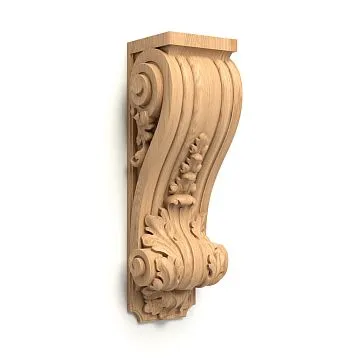
Individual elements are ready-made items of fixed size and shape: rosettes, moldings, cartouches, consoles, capitals, bases, corner elements. They are not cut but installed whole at specific points in the interior. Individual elements create accents, emphasize important zones, become compositional centers.
Ceiling rosettes — round, oval, polygonal elements for the center of the ceiling. Corner elements — ready-made interior or exterior corners for crown moldings and moldings, simplifying installation. Consoles and brackets — projecting elements visually supporting crown moldings, shelves, arches. Capitals and bases — upper and lower parts of pilasters and columns.
Modular systems — construction for walls
Modular molding — a system of elements that combine with each other to create complex compositions. For example, a modular system for boiserie includes corner elements, vertical and horizontal profiles, central moldings. From these elements, any configuration of panel system can be assembled.
The advantage of modular systems is speed of installation and guaranteed compatibility of elements. All details are designed to fit together without adjustment. The disadvantage is less flexibility compared to custom design.
Custom molding — exclusivity of forms
Molding made to order according to a custom sketch — the highest category of plaster decoration. These can be unique rosettes with original ornamentation, capitals with the client’s coat of arms, panels with narrative compositions.Internal decorative wall claddingHigher-level solutions often include custom molding.
The creation process includes sketching, modeling, making a mold, casting the item, finishing. It is labor-intensive and expensive, but the result is a unique element that cannot be replicated. Custom molding is a hallmark of exclusive interiors.
Classification by manufacturing materials
Gypsum molding — classical tradition
Gypsum is a traditional material for plaster ornaments. It is malleable, allowing the creation of delicate details, and has a noble matte texture.Plaster wall finishingIt creates a sense of authenticity, especially in classical and historical interiors.
Gypsum molding can be cast in molds (mass production) or hand-sculpted (original work). Gypsum is eco-friendly, 'breathes', regulates humidity. But it is heavy, fragile during installation, and does not tolerate moisture. Installing gypsum molding requires professionalism: heavy elements require additional mechanical fastening, joints must be carefully spackled.
Polyurethane moldings — modern practicality
Polyurethane — a synthetic material that revolutionized the molding market.Polyurethane wall claddingLightweight, durable, moisture-resistant, easy to install. Polyurethane elements are mounted with adhesive, require no additional fixation, and are easily cut with a saw.
Polyurethane precisely reproduces details, matching plaster. It can imitate any texture — from smooth to carved. Polyurethane moldings can be painted, patinated, or gilded. It is a universal material suitable for any room, including bathrooms and kitchens.Buy decorative wall finishesMade of polyurethane — a practical solution for modern projects.
Wooden carving — warmth of natural material
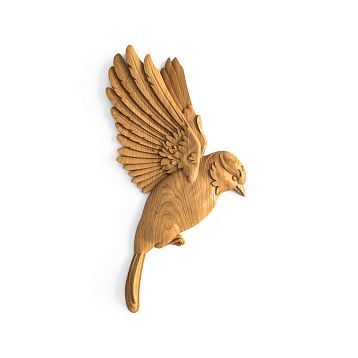
Wood — an alternative to plaster and polyurethane, especially in interiors where naturalness is valued.Wooden wall claddingMay include carved elements: moldings, cornices, appliqués, rosettes. Wood creates a unique atmosphere of warmth, coziness, and connection with nature.
Wood carving — an ancient craft requiring skill. Wooden elements can be machine-cut (milled) or hand-carved. Hand-carved work is unique and alive, carrying the energy of the craftsman. Wooden moldings suit country, Scandinavian, eco, and chalet styles.
Polystyrene and foam — budget solutions
Polystyrene moldings — the most affordable option. Lightweight and easy to install, it allows creating the effect of ornamental decoration with minimal cost. However, polystyrene has drawbacks: brittleness, rough texture, low detail. It is unsuitable for elements viewed up close but can be used for high cornices and ceiling elements.
Foam moldings are even more budget-friendly and less quality. They are suitable for temporary solutions, rental apartments, where durability and high aesthetics are not required.
Polymer concrete and glass fiber concrete — facade strength
For exterior use, strong materials are employed: polymer concrete (concrete with polymer additives) and glass fiber concrete (concrete reinforced with glass fiber). These materials withstand frost, precipitation, and solar radiation. Facade moldings made of polymer concrete reproduce classical architectural details: cornices, columns, capitals, balustrades, keystone stones.
Style classification of ornamental moldings
Neoclassicism — symmetry and order
Neoclassical moldings are strictly regulated by the order system. These are symmetrical compositions based on the golden ratio proportions. Ornamentation is restrained: meanders, Ionic, acanthus leaves, laurel wreaths. Color — white or bone, with delicate gilding.Wall cladding in an apartmentIn the classical style, strict adherence to proportions and symmetry is required.
Neoclassical cornices have clear profiles with classical elements: egg-and-dart, cyma, astragal, quarter-round. Rosettes are round with radial symmetry, ornamented with petals, rosettes, palmettes. Moldings form rectangular panels on walls, creating a bouillonnant effect.
Baroque — opulence and dynamism
Baroque moldings — sculpture on walls. Three-dimensional, dynamic, they create the effect of movement, breaking the plane. Cornices are interrupted by large consoles, cartouches, garlands. Ceilings are adorned with chandeliers with ornamental frames, from which figures of angels appear.
Baroque ornamentation: S-shaped and S-shaped scrolls (volutes), shells, lush garlands of flowers and fruits, mask-like faces with expressive features. Gilding is abundant, often on a colored background.Interior Wall Finishes PhotoIn baroque interiors, it demonstrates luxury and theatricality.
Rococo — elegance and asymmetry
Rococo — a lightened, elegant baroque. Moldings become delicate, thin, and asymmetrical. A characteristic motif — rocaille, a whimsical shell with scrolls. Ornamentation — interlacing fine lines, garlands of small flowers, putti (baby angels), birds.
Color palette is soft: pastel pinks, blues, pistachio shades. Gilding is delicate, often patinated. Rococo — a style of boudoirs, salons, intimate interiors, where moldings create an atmosphere of intimacy and elegance.
Empire — imperial grandeur
Empire — the style of Napoleon’s empire — combines the strictness of neoclassicism with symbols of power. Moldings include military attributes: wreaths of oak and laurel leaves, crossed swords, shields, eagles, torches. Egyptian motifs — sphinxes, palmettes, lotuses.
Color scheme is contrasting: white or gold moldings on bright walls — magenta, emerald, blue. Gilding is abundant but strict, emphasizing symmetry. Empire — a style of grand halls, offices, official residences.
Modern — natural lines and asymmetry
Modern rejected classical orders. Modern ornamentation — smooth, flowing lines resembling plant stems, waves, women's hair. Ornamentation — stylized irises, lilies, poppies, dragonflies. Asymmetry — key principle: ornamentation freely arranges on surfaces, creating a sense of organic growth.
Art Deco — geometry and luxury
Art Deco — geometric style of the 1920s–1930s. Ornamentation — stepped profiles, zigzags, sun rays, stylized fountains. Egyptian motifs, interpreted graphically. Materials are luxurious: gilding, silvering.3D Wall Finishingmay include Art Deco elements to create expressive interiors.
Minimalism — molding without ornamentation
Minimalist ornamentation — concise profiles without ornament. Simple cornice with clear geometry, smooth moldings forming strict panels. Color often blends with the wall.Plank wall cladding— a modern alternative to moldings, creating rhythm and relief without classical associations.
Neoclassicism — classicism of the 21st century
Neoclassical ornamentation — adaptation of classical forms to modernity. More concise, with simplified proportions and restrained ornamentation. The foundation remains classical: symmetry, recognizable elements.Wall cladding optionsin neoclassicism include elegant ornamentation that does not overload the space.
Application of ornamental moldings in interior design
Living room — formal space
Living room — space where ornamentation fully unfolds. Cornice under the ceiling, rosette above the chandelier, moldings on walls creating panels, pilasters framing the fireplace or TV.Wall finishing in a housein the living room with ornamentation creates an atmosphere of solemnity and prestige.
Ornamentation in the living room may be white classical or painted to match wall color for a modern effect. Gilding is appropriate in classical and neoclassical interiors. Coffered ceiling, wall boiserie, fireplace with ornamental portal — elements of a luxurious living room.
Bedroom — intimate elegance
In the bedroom, ornamentation creates an atmosphere of intimacy and coziness. The cornice may be lighter than in the living room. Moldings frame the headboard, creating a decorative frame. Ceiling rosette above the center of the room, where a chandelier or decorative element may be placed.
Ornamentation in the bedroom is often painted in soft shades — ivory, pastel, bluish tones. Patina creates an effect of antiquity and softness.Decorative Wall Finishes Photoin bedrooms demonstrates how ornamentation creates a romantic atmosphere.
Office — strict formality
The office requires strict, formal ornamentation. Classical cornices, wall boiserie made of moldings and wooden panels, bookcases with ornamental portals. Color — white, dark wood tones, gilding on details is possible.
Pilasters frame doorways, creating a formal entrance. Ceiling rosette may be strict and geometric. Ornamentation in the office emphasizes status, seriousness, and business atmosphere.
Dining room and kitchen — practicality and style
In the dining room, ornamentation creates an atmosphere of hospitality. Cornice, moldings framing the buffet or picture zone. In the kitchen, ornamentation is possible if it is polyurethane, moisture-resistant. Cornice under the ceiling, moldings on kitchen cabinet facades, creating a classic style.
Bathroom — moisture-resistant solutions
Ornamentation in the bathroom — always polyurethane, moisture-resistant. Cornice under the ceiling, moldings framing the mirror, ceiling rosette.Internal wooden wall finishesin the bathroom are unsuitable, but polyurethane ornamentation creates a classic style even in humid spaces.
Hallway and corridor — first impression
Hallway — the first thing a guest sees. Ornamentation here creates an impression of a status-conscious interior. Cornice, wall moldings, mirror framing, ornamental portal of the entrance door.Decorative wall finishingin the hallway sets the tone for the entire house.
Installation and maintenance of ornamental moldings
Surface preparation — foundation of quality
The surface must be flat, dry, and clean before installing the molding. Irregularities exceeding 5 mm per meter must be leveled with putty or plaster. The surface is primed to improve adhesive bonding.
Mounting elements — adhesive and anchors
Light polyurethane elements are mounted using special mounting adhesive (liquid nails, polyurethane adhesive). The adhesive is applied to the back of the element, the part is pressed against the surface and held for several minutes. Heavy plaster elements require additional mechanical fastening — anchors or screws.
Jointing and joint finishing — invisible connections
Trim elements are joined at corners with 45-degree bevel cuts. A miter box or circular saw is used for precise cutting. Joints between elements are filled with putty, sanded, and primed. Quality installation makes joints invisible.
Painting and decorative finishing — final touch
The molding is primed, then painted with acrylic or latex paint in 2–3 coats. Possible options: white molding, molding in wall color, colored molding, gold leaf.Wall cladding for paintingincludes preparation of decorative elements.
Patina — applying dark paint into recesses of the relief — creates an aged effect. Gold leaf with 24-karat gold or gold leaf adds luxury. Lustrous finish — applying semi-transparent paint layers — creates depth of color.
Care for molding — preserving beauty
Molding requires no complex care. Dry cleaning with a soft brush removes dust. Wet cleaning with a well-wrung cloth without aggressive cleaners. Painted molding is more durable. Do not wash plaster molding excessively; polyurethane molding can be wiped with a damp cloth.
Modern trends in decorative molding
Minimalism with emphasis — less is more
Modern trend — using molding sparingly. Not an abundance of decoration, but focal accents. One cornice under the ceiling, one rosette, minimal moldings forming simple panels.wall finishing with laths— modern alternative, creating rhythm without classical associations.
Colored molding — bold solutions
Molding does not have to be white. Painting in wall color creates a relief effect without contrast. Painting in contrasting color — bright green molding on white walls, black on light walls — creates a graphic, modern effect.
Large scale — architectural details
Trend toward larger scale: wide moldings (12–15 cm), tall cornices (25–35 cm), large rosettes (diameter 80–120 cm). This creates expressiveness, architectural character, and works well in large spaces.
Geometric forms — from classic to modern
Geometric molding — rectangular, square, hexagonal panels instead of classic ovals.Relief wall finishingis created using simple profiles forming geometric compositions.
Combining materials — wood, metal, molding
Modern interiors combine molding with wood, metal, and concrete. Polyurethane cornice with wooden strips on walls, decorative moldings with metal inserts.Decorative interior wall finishing priceincludes combined solutions.
FAQ: Answers to popular questions about decorative molding
What are decorative moldings?
Decorative moldings — decorative relief elements for interior and facade: cornices, moldings, rosettes, pilasters, appliqués. Made from plaster, polyurethane, wood.moldings for walls and ceilingscreate architectural expressiveness, emphasize style, add volume and relief.
What types of stucco decorations exist?
Main types: ceiling (cornices, rosettes, coffered ceilings), wall (moldings, pilasters, appliqués, panels), floor (baseboards). By construction: linear (cornices, moldings) and individual (rosettes, consoles). By material: gypsum, polyurethane, wooden, polystyrene.
Can stucco be used in modern interiors?
Yes, molding is suitable for any style. For modern interiors, choose minimalist profiles without ornamentation, simple geometric shapes, monochromatic coloring.Wall Finishing ElementsIncludes minimalist molding, which works well in Scandinavian style, loft, minimalism.
Polyurethane or gypsum — which is better?
Polyurethane is lighter, cheaper, easier to install, and resistant to moisture. Suitable for most projects. Gypsum is heavier, more expensive, requires professional installation, but offers fine detailing, authentic texture, and the possibility of creating unique elements. For standard solutions — polyurethane; for exclusive designs — gypsum.
How to calculate the amount of molding for a room?
For cornices: measure the room's perimeter and add 10% for trimming. For moldings: draw a panel layout, calculate the total line length, and add 15% for corners and joints. For rosettes: typically one per room, above a chandelier. It’s best to consult a designer or installer.
Yes, you can paint stucco; it is a common practice. Acrylic or latex paints for interiors are used. First, the stucco is primed, then paint is applied in 2–3 layers. Possible options: white stucco on a colored wall (classic), stucco matching the wall color (modern approach), colored stucco (bold solution), gilding or patina.
Yes, molding can be painted with interior acrylic or latex paint. It must be primed first, then painted in 2–3 coats. Options: white, matching wall color, contrasting, gold-leaf, patina.DIY decorative wall finishingIncludes painting the molding.
How much does molding cost?
Polystyrene — from 50 rubles per linear meter for cornices. Polyurethane — from 300 to 3,000 rubles per meter depending on complexity. Gypsum series — from 500 to 5,000 rubles. Gypsum custom — from 10,000 rubles per element.Decorative wall finishing priceDepends on material, complexity, and project volume.
How to care for moldings?
Dry cleaning with a soft brush or vacuum cleaner with a brush attachment removes dust. Wet cleaning with a well-wrung cloth without aggressive cleaners works well. Painted molding is more moisture-resistant. Gypsum should not be washed heavily. Polyurethane can be wiped with a damp cloth.
In which styles is molding appropriate?
Classicism, Baroque, Rococo, Empire, Modern, Art Deco — historical styles where molding is mandatory. Neoclassicism, contemporary classicism — molding is adapted. Minimalism, Scandinavian style, loft — minimalist molding without ornamentation is possible.Wall finishing photos in apartmentsDemonstrates the variety of applications.
Can molding be installed by oneself?
Polyurethane molding can be installed by yourself if you have basic repair skills. You’ll need: adhesive, angle cutter, putty, paint. Gypsum molding is better left to professionals — it is heavy, fragile, and requires experience.Wall finishing and decorationWorking with molding — a task requiring precision and patience.
Conclusion: STAVROS — your partner in the world of molded decorations
Molded decorations are not just decoration. They are tools that transform space into a work of architectural art. Understanding types, materials, styles allows you to consciously choose elements, create harmonious compositions, and avoid mistakes.Wall finishing with moldings, Decorative wall finishing with wood, Decorative wall panelingAll these solutions work together, creating an expressive interior.
The modern market offers a vast variety of molded decorations: from budget polystyrene to exclusive gypsum, from classic forms to avant-garde geometric compositions. The designer’s and client’s task is to choose what matches the interior concept, project budget, and personal taste.
Decorative wall finishing optionsIncludes countless combinations: molding with wallpaper, paint, wooden panels, decorative plaster.Wall finishing with wood photoDemonstrates how natural materials combine with molding, creating warm, cozy interiors.
STAVROS — a leading supplier of materials for interior decorative finishing — offers a full range of solutions for creating spaces using molded decorations. The catalog includesPolyurethane Itemscornices, moldings, rosettes, appliqués, columns, pilasters.moldings, cornices, baseboardsmade from natural wood for those who value the authenticity and warmth of natural material.
STAVROS works not only with end customers but also with designers, architects, and construction companies. Professional consultants will help select elements according to the project’s style, calculate quantities, suggest installation and finishing nuances.Racks for internal wall claddingPolyurethane molding — a modern alternative to classical molding, also available in the assortment.
Wall room finishing, Decorative Wall Finishing in a Room, Decorative wall finishing for interiorsAll these tasks are solved with STAVROS products. High-quality materials, precise dimensions, detailed relief, and the possibility of custom orders — the company offers solutions for any projects and budgets.
Wall finishing in a private house, Interior wall finishing in an apartment, Decorative corridor wall finishingEach project is unique, each requires an individual approach. STAVROS provides not just materials, but also expertise, support, and consultations at every stage of project implementation.
Relief ornaments are timeless classics that adapt to modern trends. From opulent baroque to restrained minimalism, from pristine plaster to brightly colored polyurethane — the variety allows everyone to find their own solution. And the company STAVROS — your reliable partner in this creative journey, where every detail matters, each element creates an atmosphere, and every line tells a story.