








































Article Contents:
- Why paint decorative elements in one color: the philosophy of unity
- Which elements are united by painting: the complete system composition
- Polyurethane stucco decor
- Wooden slats for painting
- MDF baseboard for painting
- Wooden baseboard for painting
- Wooden cornice for painting
- Moldings, corners, bars and trims
- MDF baseboard for painting: when it is the best choice
- Why MDF is the ideal base for painting
- White MDF baseboard: a classic that never goes out of style
- MDF baseboard for enamel: for precise color
- Floor MDF baseboard: parameters for selection
- Wooden slats for painting: three strategies and when each works
- Strategy one: slats in wall color
- Strategy two: natural slats as a warm accent
- Strategy three: contrasting slats as a graphic accent
- Painting slats: what to know before starting
- Moldings and stucco decor in wall color: architecture without extra noise
- Polyurethane moldings: a standard for painting
- Stucco frames in wall color: frame layout as a technique
- Ceiling decor in ceiling color
- Ceiling cornice and baseboard: the upper and lower frame of the room
- Six color strategies for cornice and baseboard
- How to connect cornice and baseboard with the color of slats
- Molding products for painting: ends, corners, and joints as part of the design
- Wooden corner for painting
- Wooden block for painting
- Wooden baguette for painting
- Linear wood products: a unified system
- Ready-made color schemes: specific solutions for different interiors
- Scheme 1: white on white
- Scheme 2: everything in wall color
- Scheme 3: black slats + white MDF baseboard + light stucco
- Scheme 4: gray tones in complete unity
- Scheme 5: wooden slats under enamel + polyurethane decor in the same color
- Scheme 6: baseboard and cornice in ceiling color
- Technical nuances of painting decorative elements
- Priming: a mandatory step for every material
- Choosing paint
- Application: brush, roller or spray gun
- Mistakes when painting decorative elements in one color
- Different paint for different elements
- Baseboard that doesn't match the architraves
- Mixing white shades of different temperatures
- Painting wood without preparation
- Simultaneously active slats, moldings and baseboard
- Forgotten ends and corners
- About the Company STAVROS
- Frequently Asked Questions (FAQ)
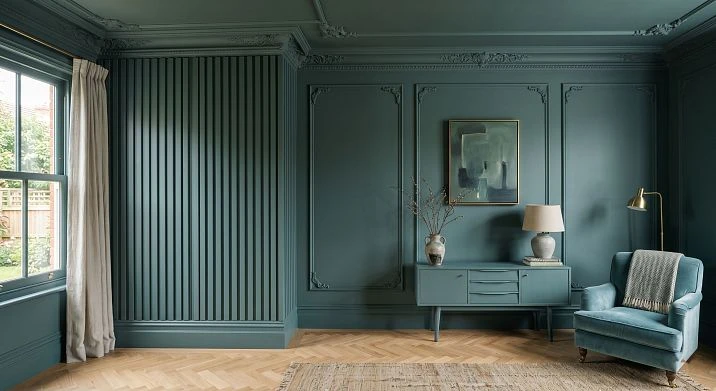
Imagine a room where there is not a single extra color spot. Moldings blend with the wall, the baseboard does not "pop out" as a contrasting strip near the floor, slats read as architectural relief — not as a separate material with a separate history. The cornice on the ceiling transition is almost invisible, but at the same time creates a feeling of completeness. Everything — in one color. And it is this unity that makes the space more expensive, calmer and at the same time richer in texture.
This is not minimalism for the sake of minimalism and not a fear of details. This is a conscious professional technique, behind which there is a clear logic: when stucco decor for painting, wooden slats for paintingand— is a horizontal element that frames the room at the bottom of the walls where the wall meets the floor. Skirting boards perform several functions: they hide the technological gap between the wall and floor covering (necessary for thermal expansion), protect the lower part of the wall from mechanical damage, create visual completion, and may conceal wiring.united by a single color, the interior transforms from a set of elements into a cohesive architectural story.


Why paint decorative elements in one color: the philosophy of unity
The question sounds paradoxical: why take beautiful wooden slats with natural texture or expressive polyurethane molding and cover them with paint? Isn't the essence of the material lost?
The answer is no. Because paint in this case is not a disguise. It is a tool of architectural unity.
When an interior contains oak wooden slats, polyurethane moldings, MDF baseboards, and a wooden cornice — each of these materials has its own texture, its own shade, its own surface nature. Without a unified color solution, they create visual noise: the eye 'jumps' from one material to another, the interior seems assembled from incompatible parts.
Unified painting radically solves this problem. Moldings, slats, baseboards, cornices, and trim painted in one color cease to be separate items and become elements of a single system. The relief remains — and it is this that creates the richness of the interior. The color unifies.
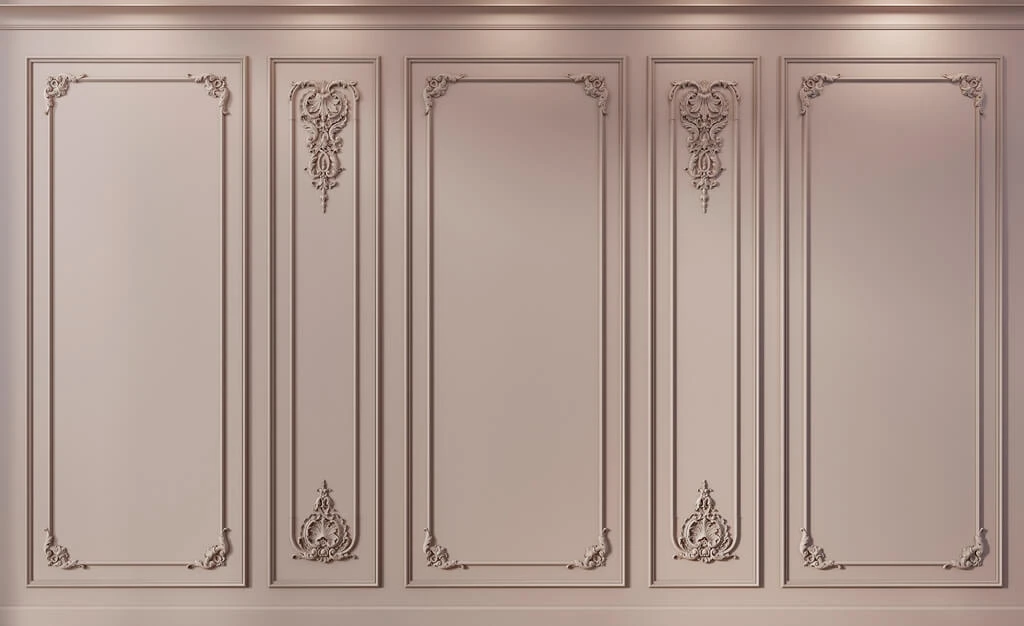
This technique is actively used in the design of neoclassical living rooms, modern bedrooms, strict studies, refined hallways, and elegant foyers in country houses. White walls with white stucco are a classic. Dark green walls with dark green moldings and slats are a strong modern move. Dusty pink walls with pink baseboards and cornices are tenderness and integrity at the same time.


Which elements are united by painting: the complete system composition
Before talking about color, let's define which elements we are referring to. What exactly can and should be painted to create a unified system?
Our factory also produces:

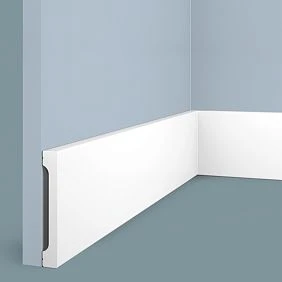
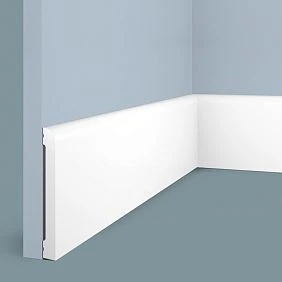
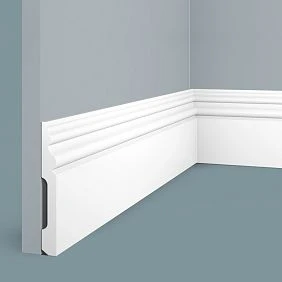
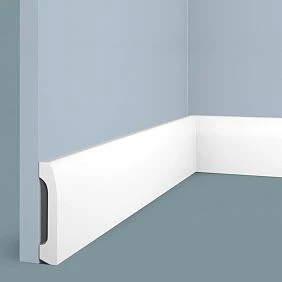

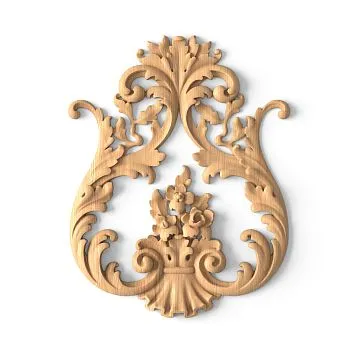
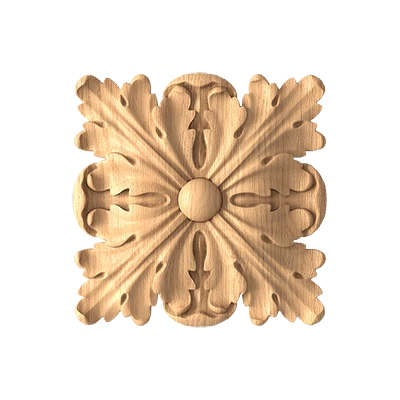
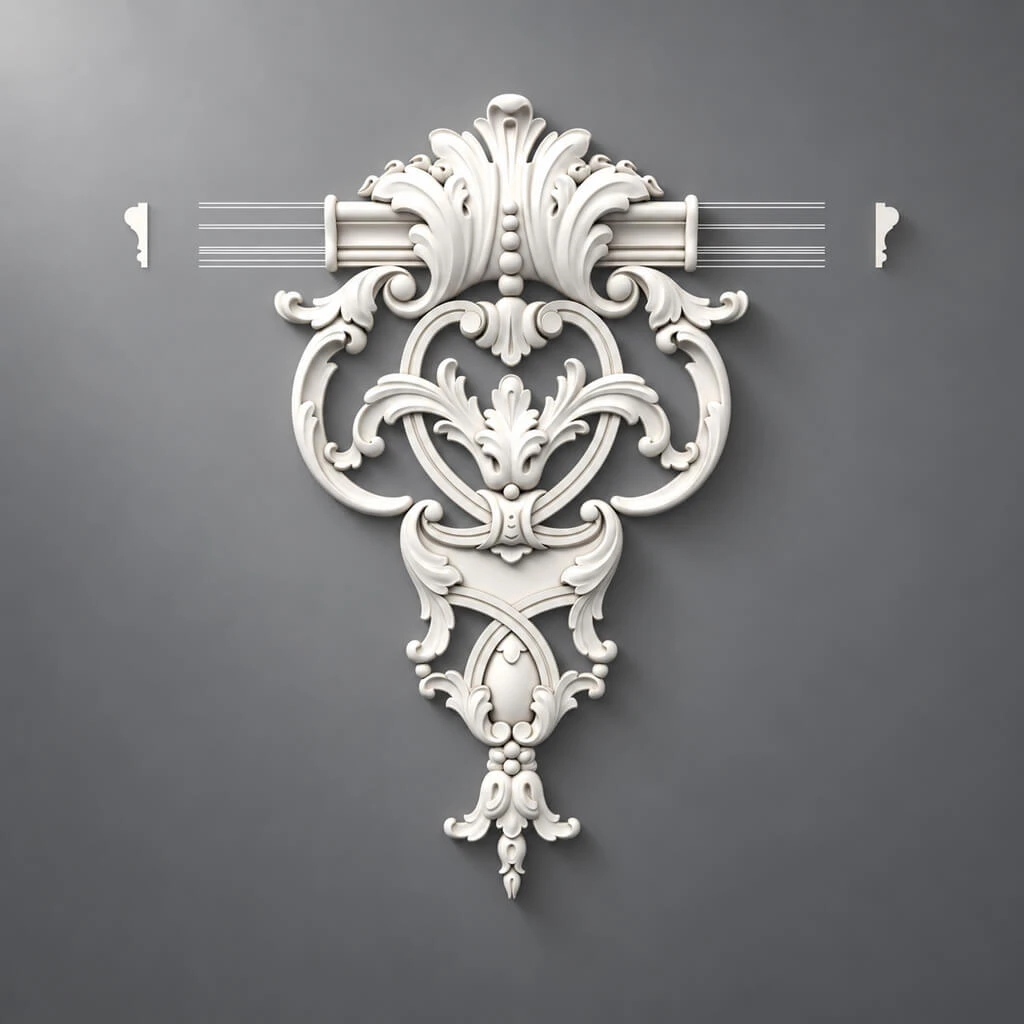
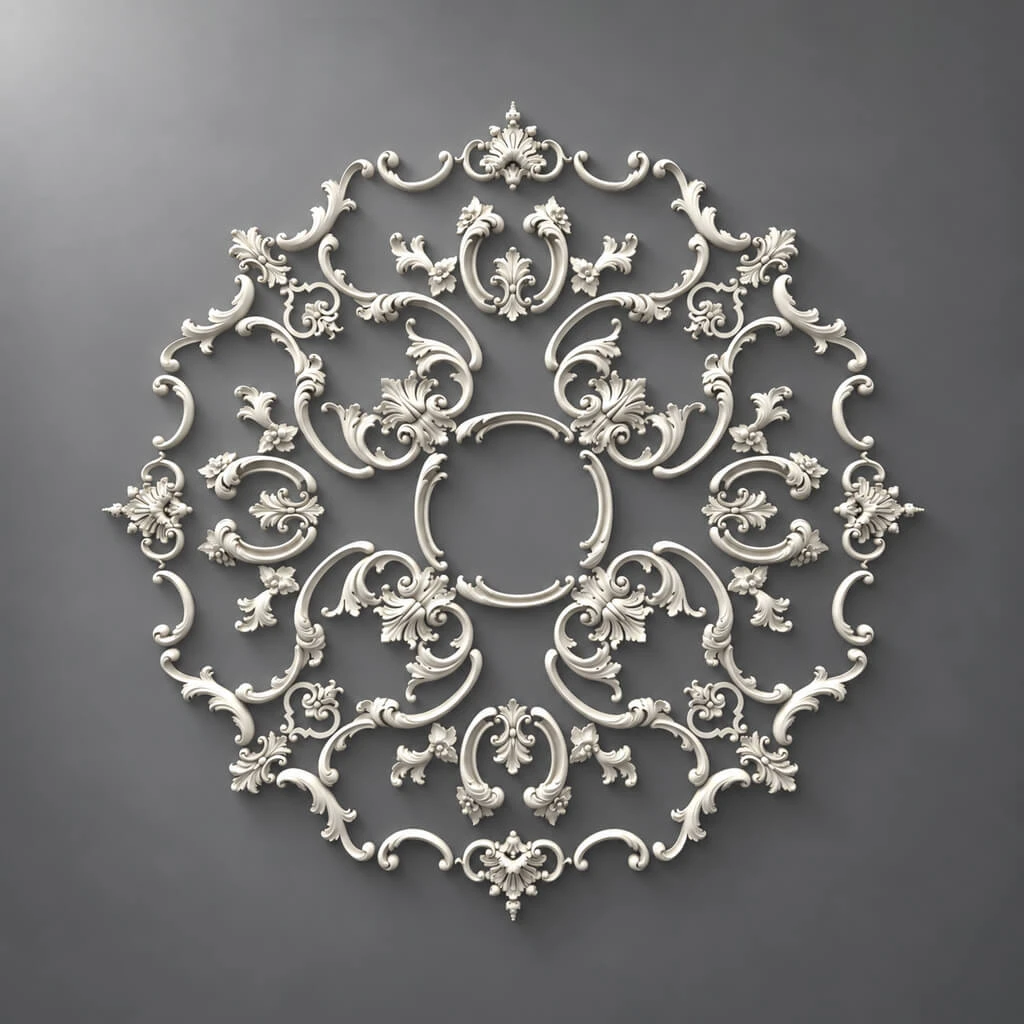
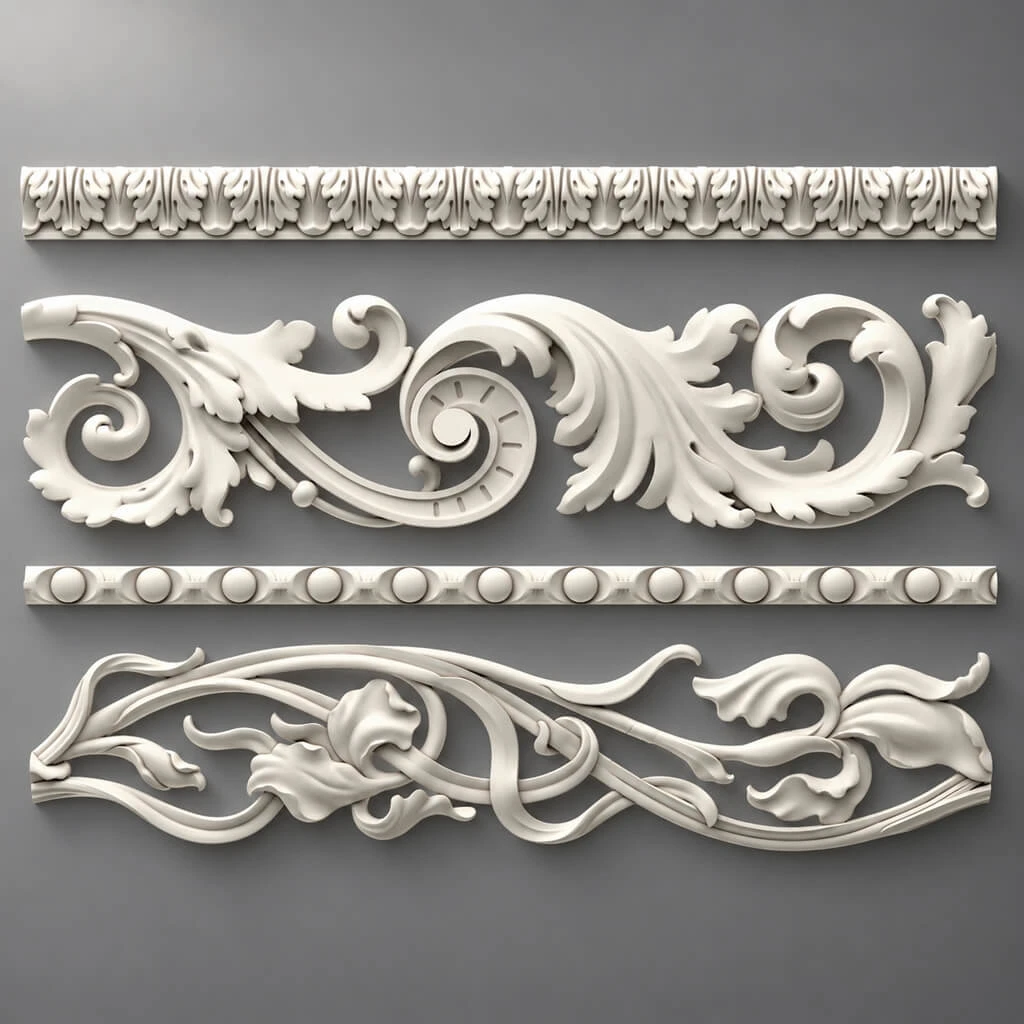
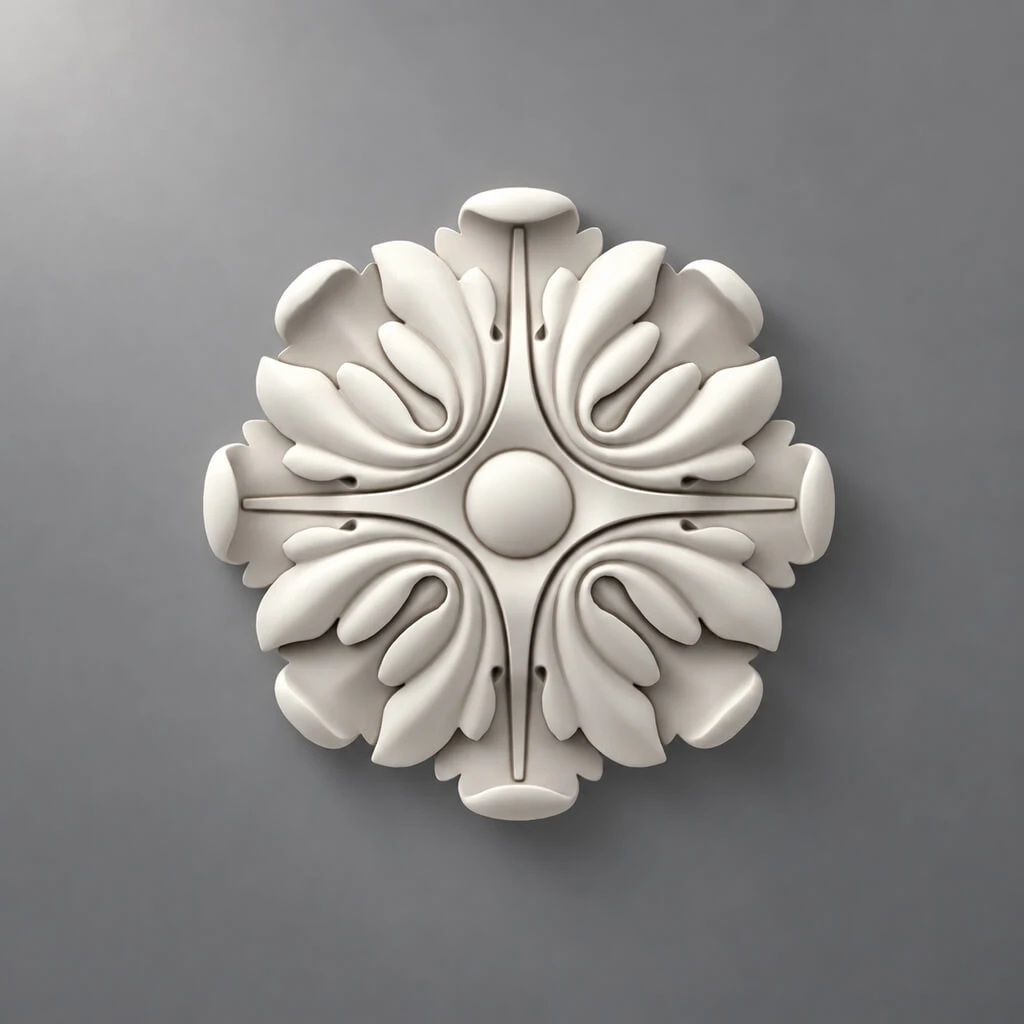
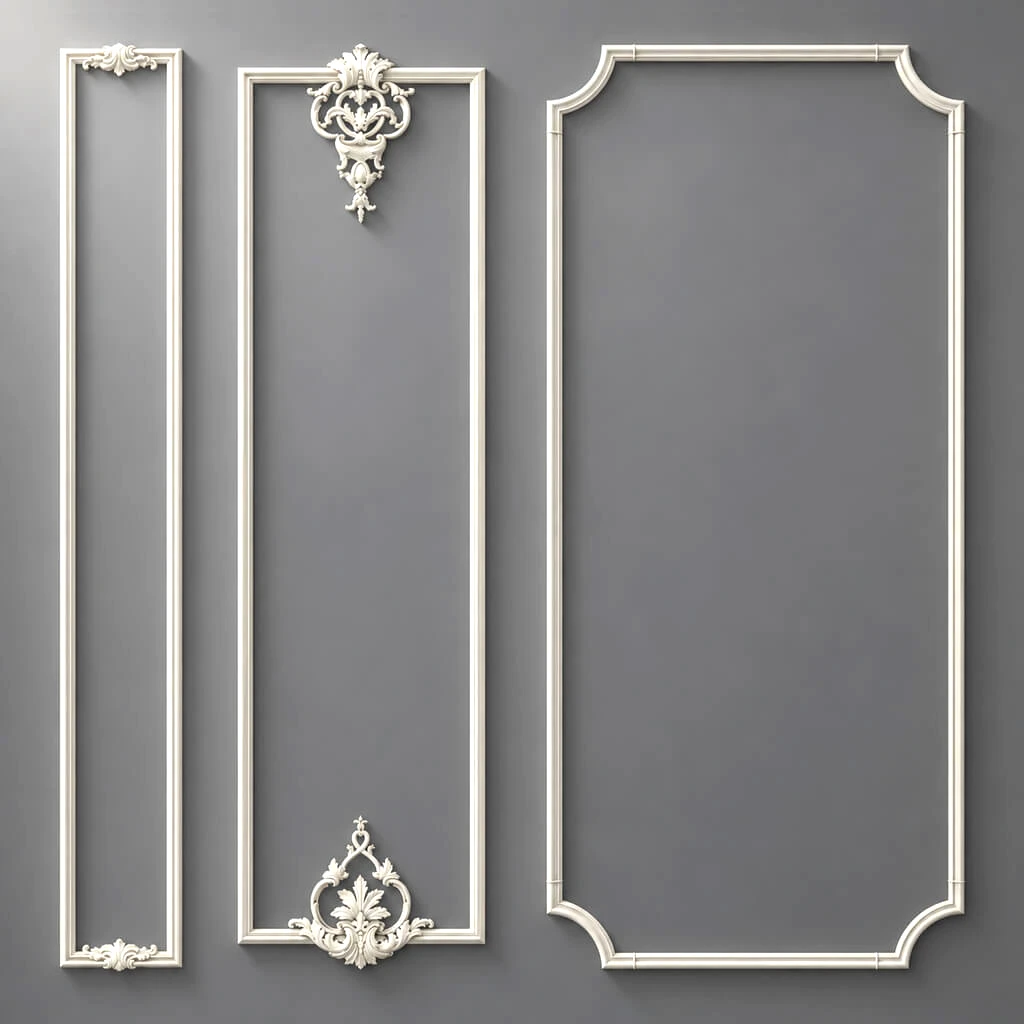
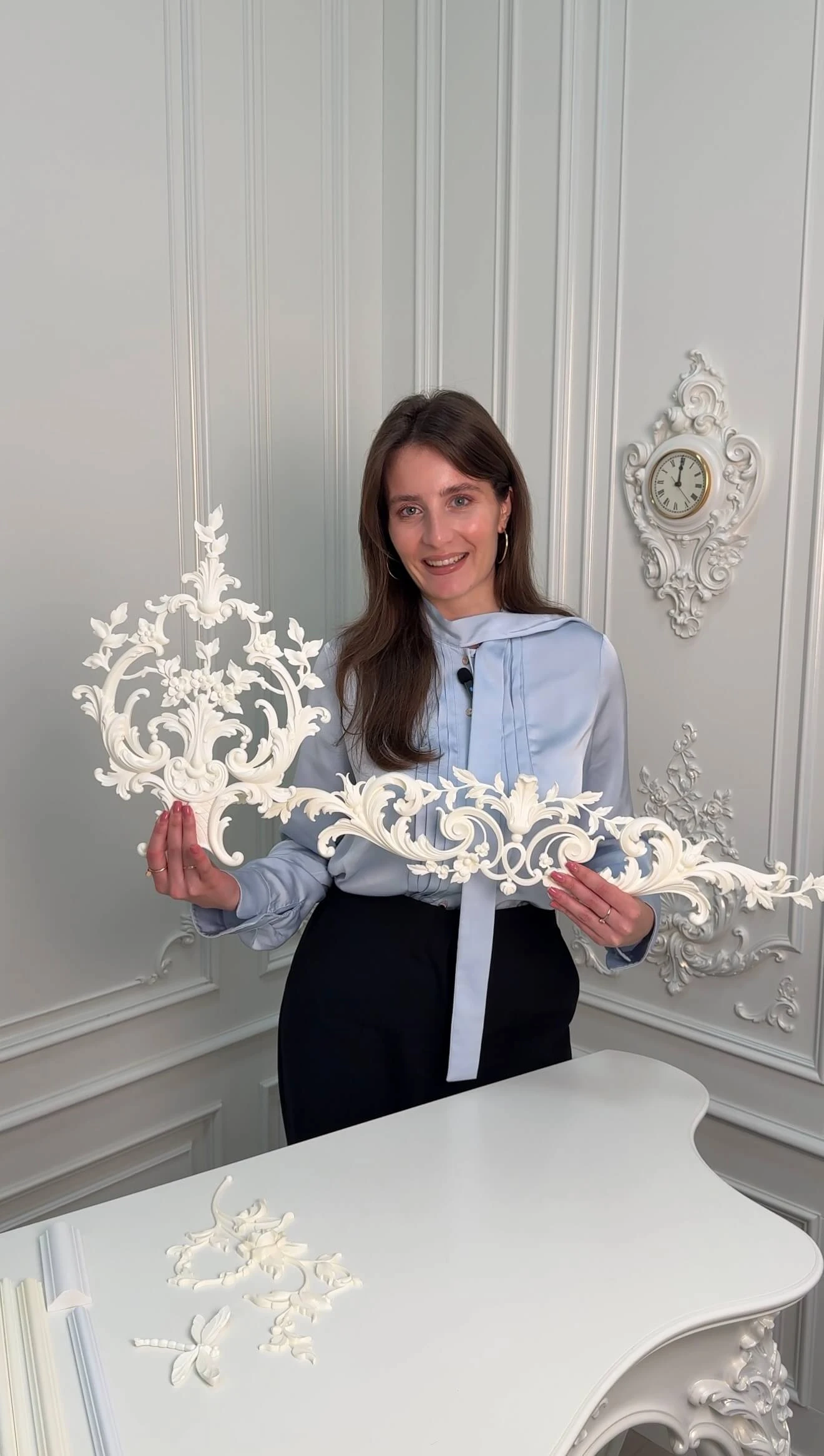
Polyurethane stucco decor
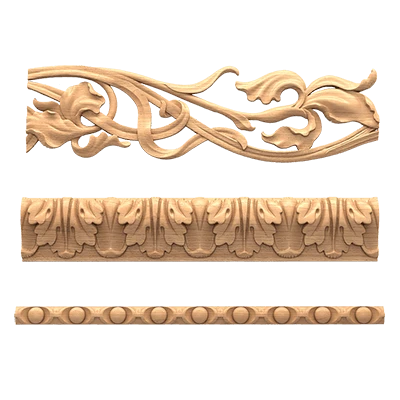
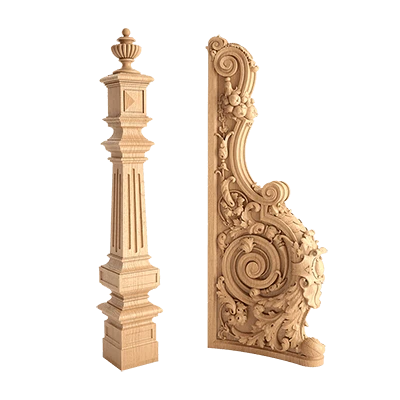
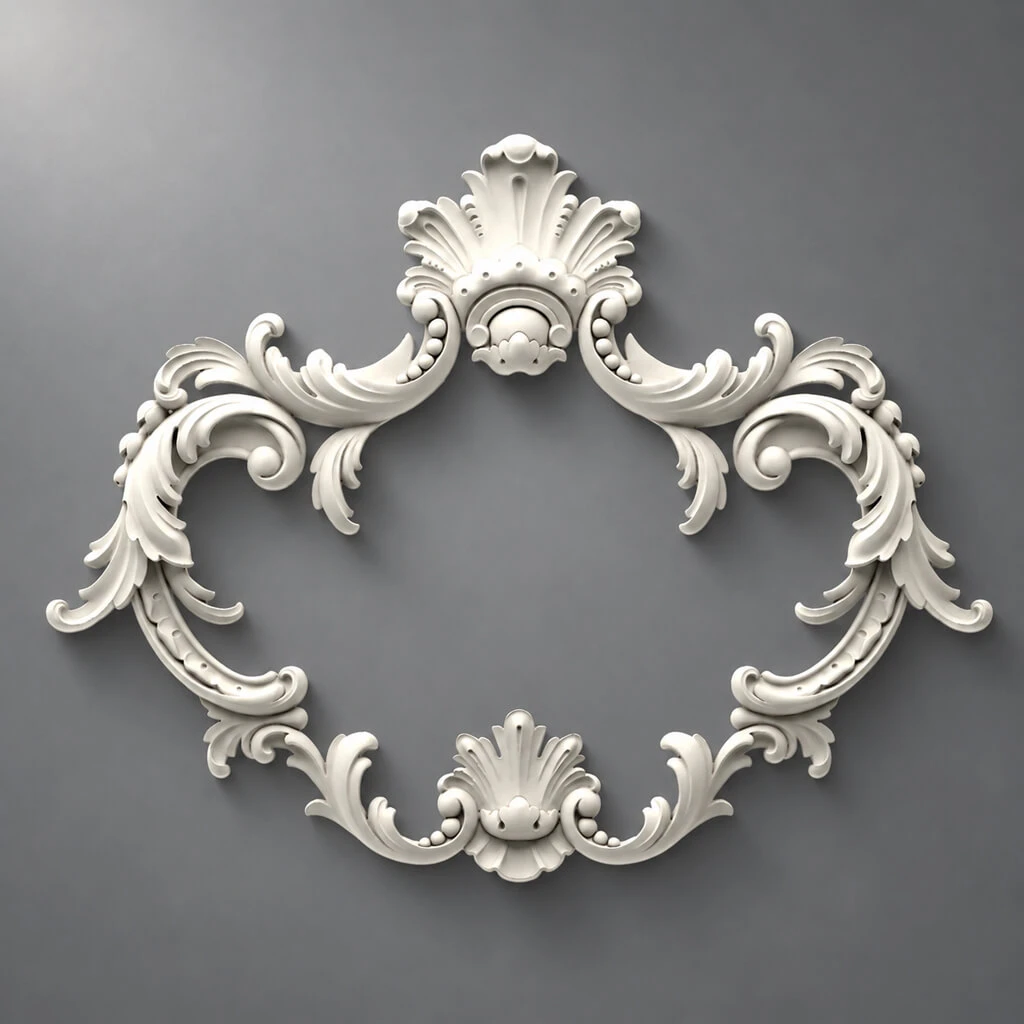
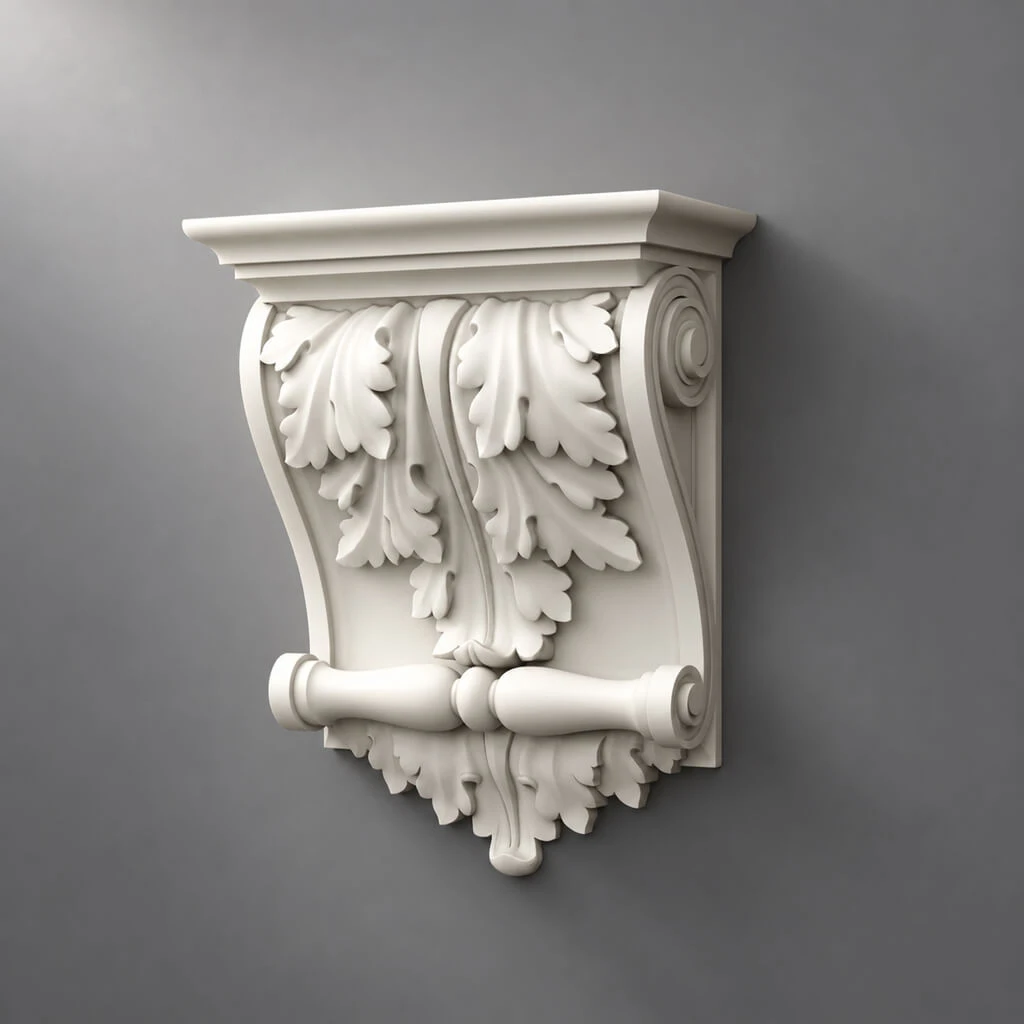
Moldings made of polyurethane — is one of the best materials for painting. Polyurethane has a smooth, dense surface without pores or lint. The paint applies evenly, does not absorb into the depth, and gives a clean color without streaks.Polyurethane wall decor — frames, friezes, corner elements, pilasters — all of this, when painted, turns into an architectural relief without a pronounced material character: the viewer sees the form, not the substance.
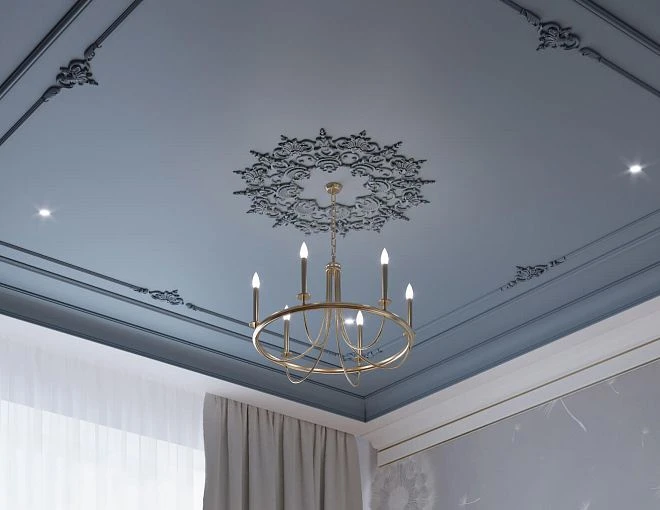
polyurethane ceiling decor — cornices, rosettes, coffered profiles — also paint perfectly. A polyurethane cornice in the color of the ceiling or the color of the wall disappears as a separate material and becomes an architectural detail.
Get Consultation
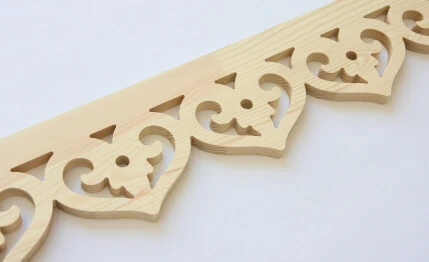
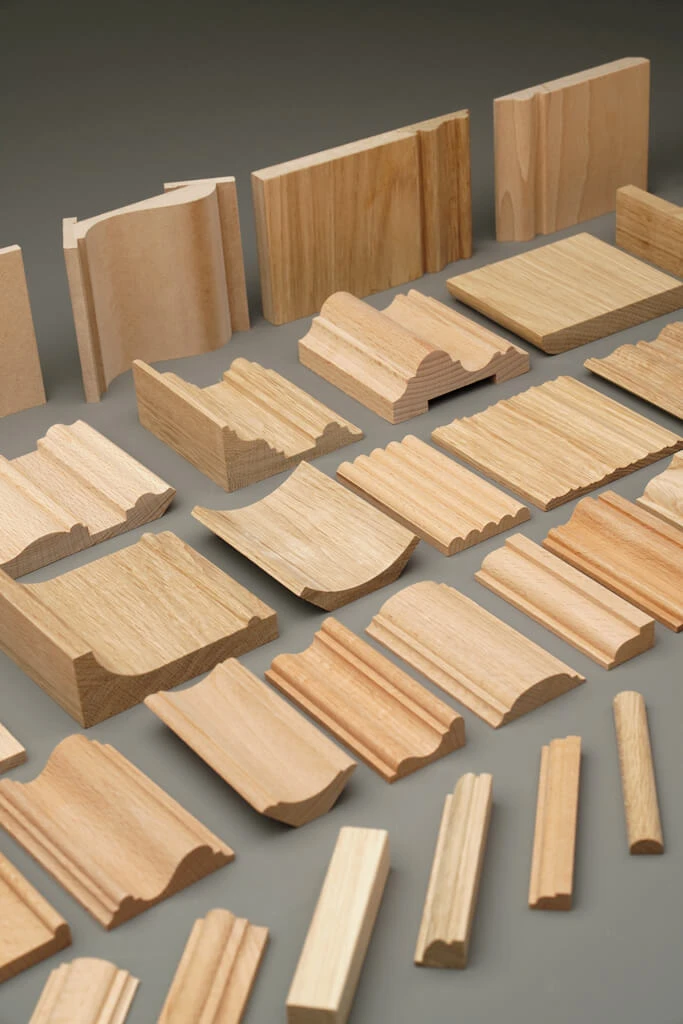
Wooden slats for painting
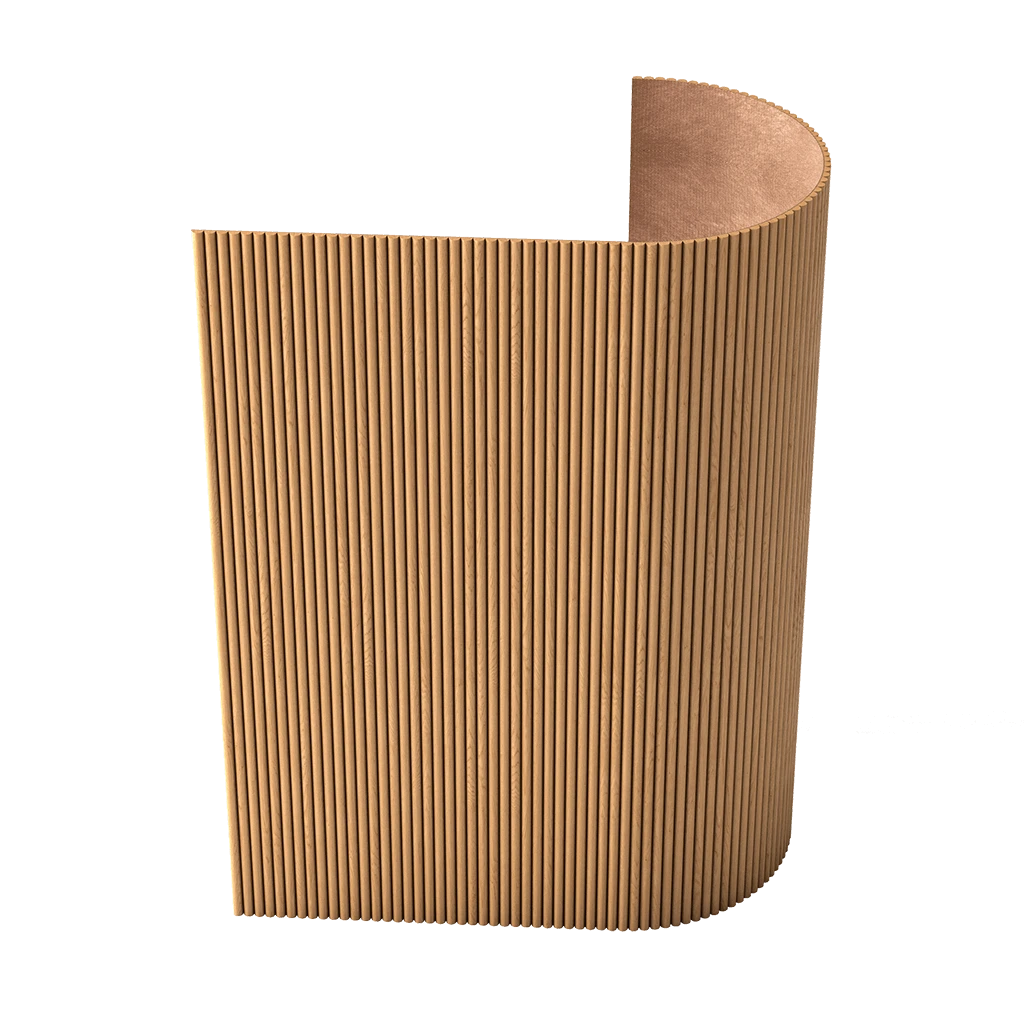
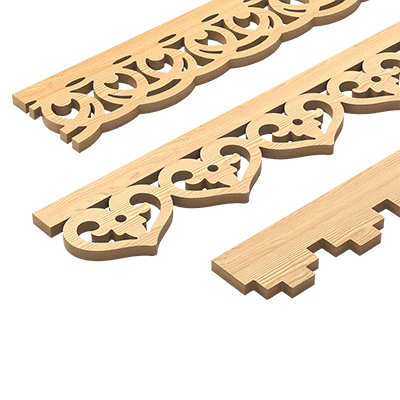
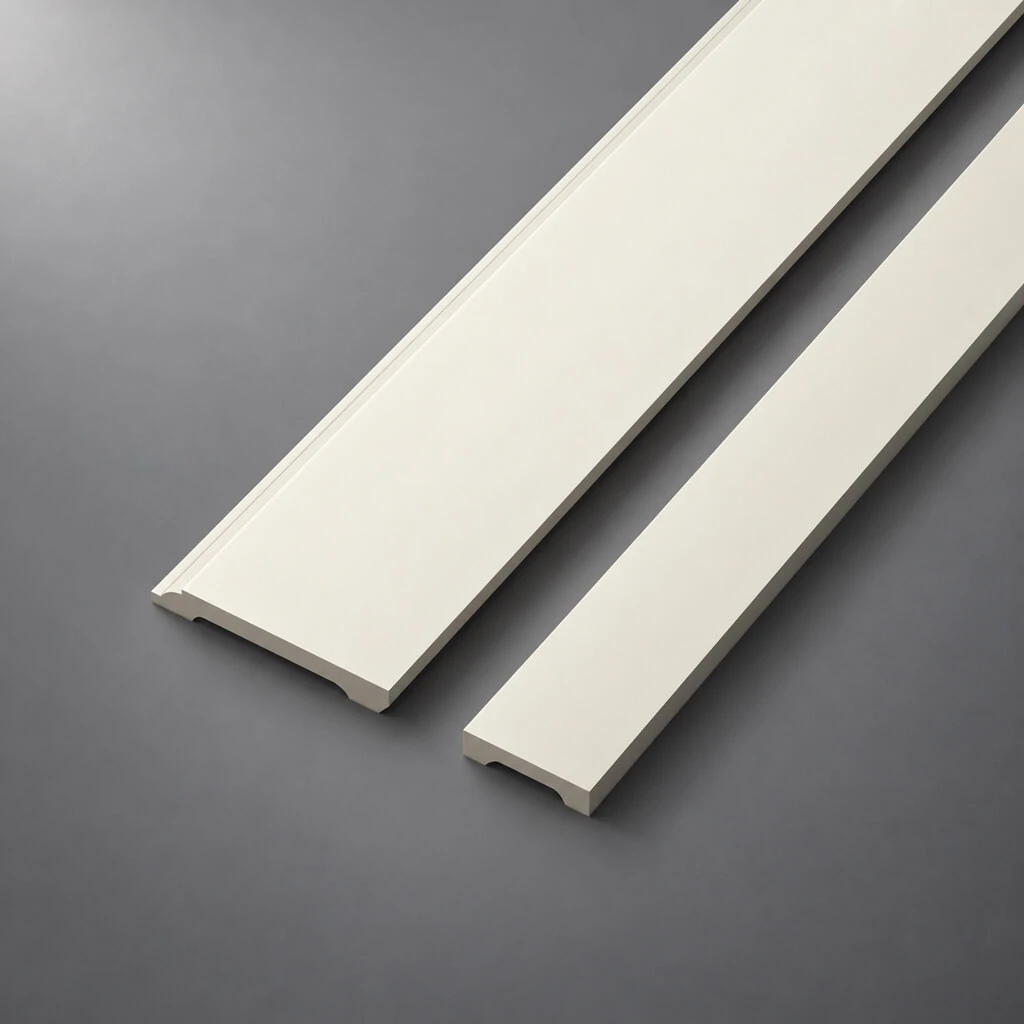
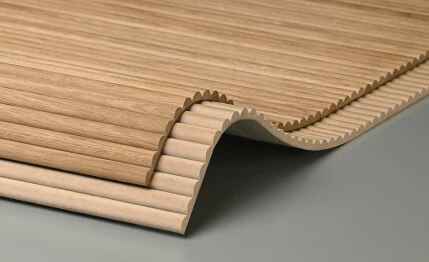
Wooden planks — made of solid oak and beech perfectly accept water-based, alkyd, and acrylic paints. Before painting, the surface is primed — this is a mandatory step for even color application. Slats for painting lose their wood texture but gain a clean color and architectural rhythm.
An important nuance: wood under paint continues to "breathe" — expand and contract with changes in humidity. Therefore, use elastic paints that do not crack when the material moves. For slats for painting — acrylate enamel or water-dispersion paint for wood.
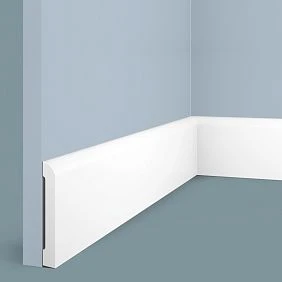
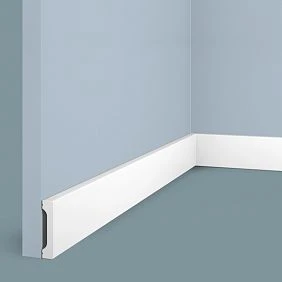
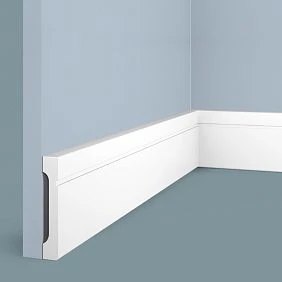
MDF baseboard for painting
— is a horizontal element that frames the room at the bottom of the walls where the wall meets the floor. Skirting boards perform several functions: they hide the technological gap between the wall and floor covering (necessary for thermal expansion), protect the lower part of the wall from mechanical damage, create visual completion, and may conceal wiring. — a material specially created for final painting. MDF has a perfectly smooth, dense surface that does not require complex preparation. One coat of primer and two coats of paint are enough — the result is flawless.
MDF Skirting Board — for painting is especially in demand where you want baseboards exactly matching the wall color or a specific RAL or NCS color. MDF accepts any paint without surprises: no resin pockets, no uneven absorption, no streaks.
Wooden baseboard for painting
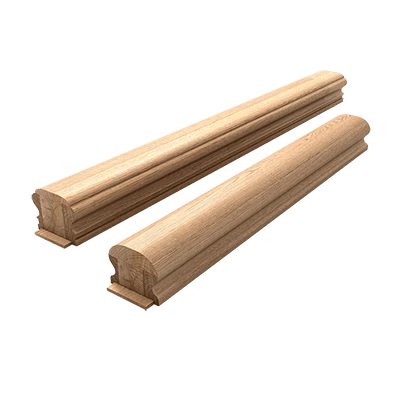
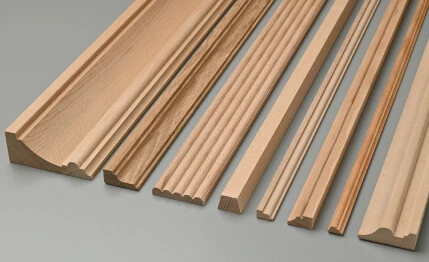
Wooden baseboard made of oak or beech also takes paint well. A wooden baseboard for enamel gives a noble, slightly matte surface. It is heavier than MDF, has a more pronounced profile relief — and under white or colored enamel, this profile reads especially clearly and beautifully.Wide Wooden Skirting Board (from 80 mm) for painting in halls and living rooms of country houses — a high-class solution.
Wooden cornice for painting
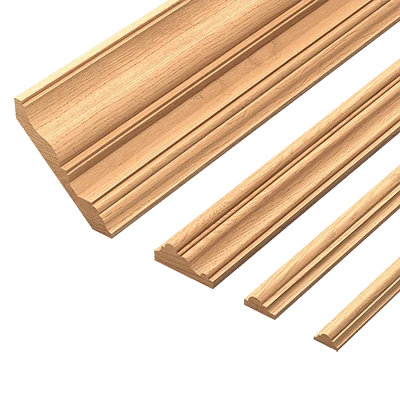
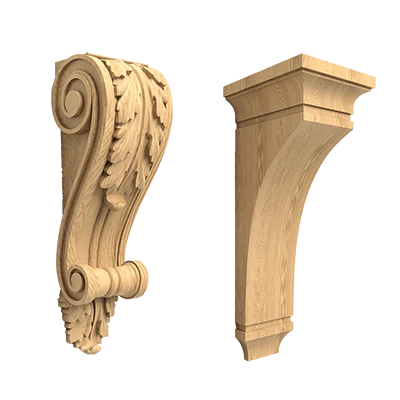
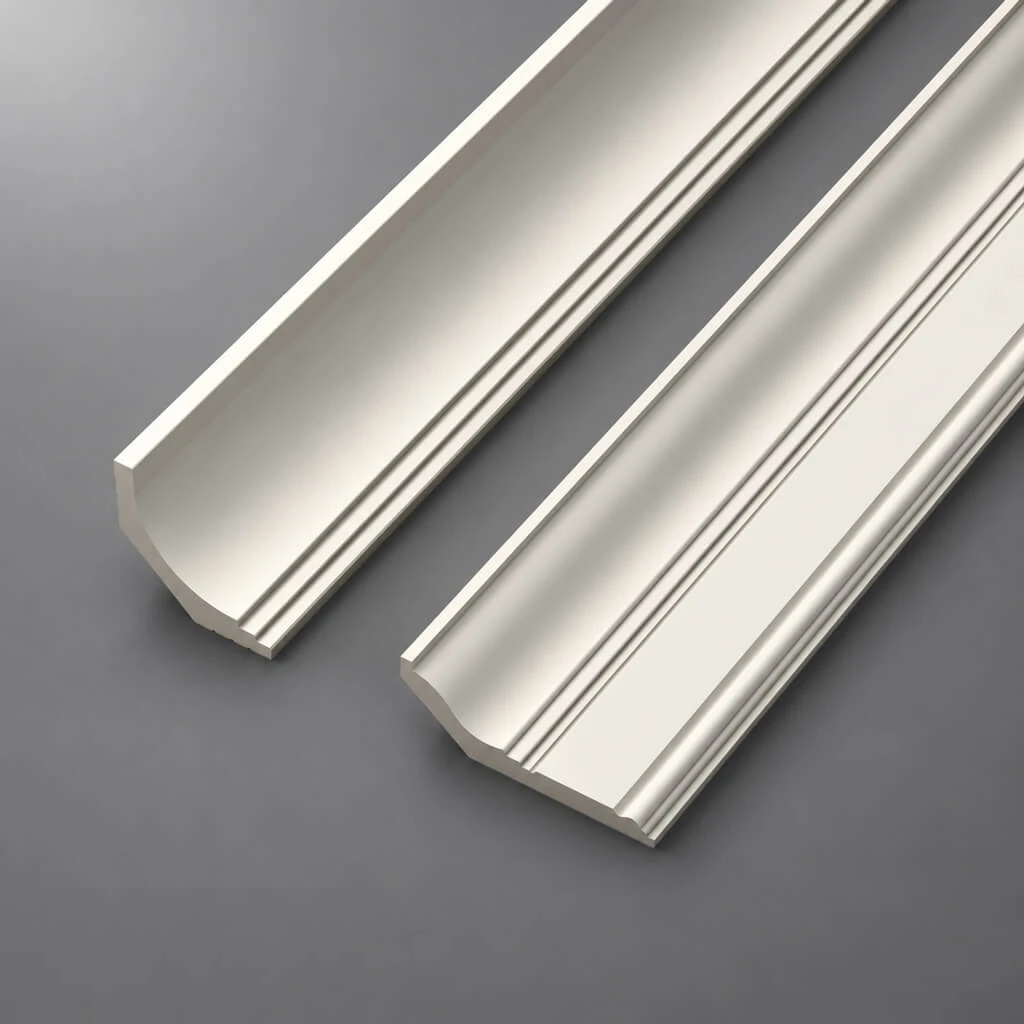
Wooden ceiling cornice for painting — an element that, with the right color strategy, either "dissolves" into the ceiling or becomes an expressive architectural line. A cornice in the color of the wall visually lowers the ceiling — a technique for high rooms where intimacy is needed. A cornice in the color of the ceiling disappears and at the same time structures the space.
Moldings, corners, strips, and trims
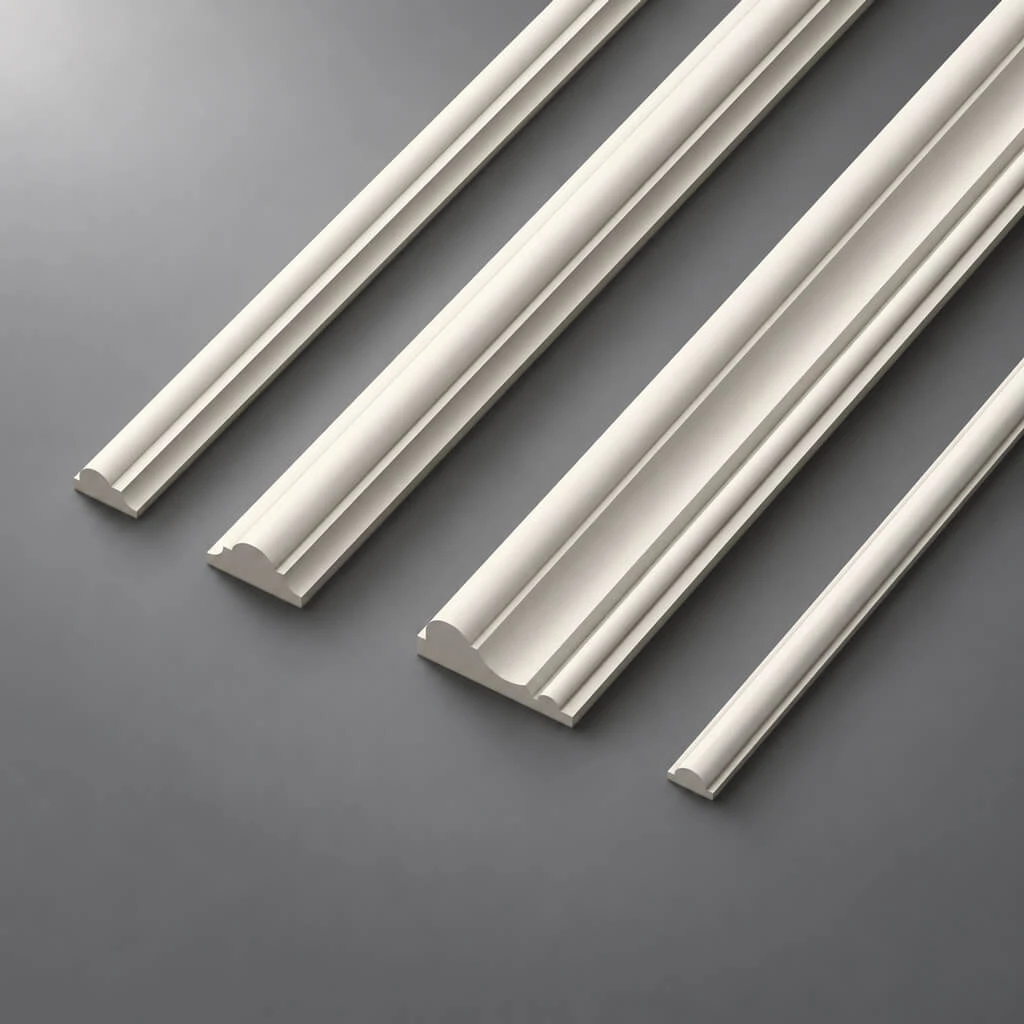
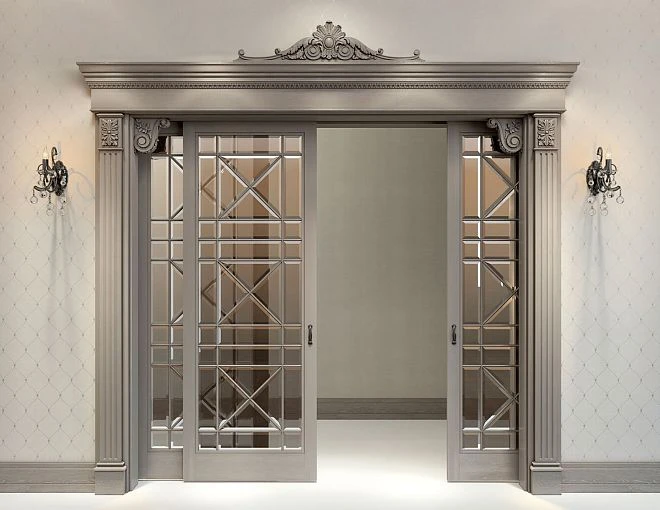
wood trim items — corners, strips, trims, baguettes — are also part of a unified painting system. Painted in the same color as the wall or the slats, they literally disappear as separate elements, leaving only pure geometry — the junction line, zone boundaries, closed ends.
MDF baseboard for painting: when it is the best choice
No other baseboard gives such predictable results when painting as MDF. This is no coincidence: the material is created for finishing specifically with paint in mind.
Why MDF is the ideal base for painting
MDF — medium-density fiberboard — has a homogeneous structure without resin inclusions, fibrousness, or porous zones. The surface under a thin layer of primer becomes nearly ideal for applying enamel. The result is a baseboard with factory-quality color, like on a painted metal structure.
Buy MDF baseboard for painting — means getting a blank that, after painting, will become a full-fledged interior element with precise color, clean lines, and a long service life.
White MDF baseboard: a classic that never goes out of style
White MDF Skirting Board — the most common ready-made solution. Already painted at the factory in RAL 9003 or RAL 9016, it comes as part of most modern interiors. The white lower contour of the room is a clean, neutral boundary that does not conflict with any wall color. White MDF baseboard suits natural wooden slats of any shade, polyurethane moldings in wall color, and any cornice.
MDF baseboard for enamel: for precise color
When a designer specifies a particular baseboard color — for example, Farrow & Ball Elephant's Breath or Little Greene Slaked Lime — MDF baseboard for painting ensures accurate shade reproduction.MDF baseboard for enamel accepts both alkyd and acrylic enamel, as well as water-dispersion paint with added varnish for surface durability.
Floor MDF baseboard: parameters for selection
Baseboard MDFAvailable in different heights: 40, 60, 80, 100 and more millimeters. For standard apartments with ceilings of 2.5–2.7 m, the optimal height is 60–80 mm. For high ceilings and spacious halls — from 80 to 120 mm. A too small baseboard in a large room gets lost; a too high one in a small room feels oppressive.
Wooden slats for painting: three strategies and when each works
Wooden planks for decoration— a material with two lives. The first — in its natural form, with wood texture, tinting or oil impregnation. The second — under paint, as a pure geometric element of architectural relief. Both lives are full. The choice depends on the task.
Strategy one: slats in the color of the wall
The most powerful technique in terms of architectural impression.Wall decoration with wooden slatsIn the exact color of the wall gives the effect of relief without a color accent. The wall ceases to be a plane and acquires depth, rhythm and texture — while not attracting attention. This is called "quiet design": a space that is rich but calm.
This technique works in a modern living room, a minimalist bedroom, a strict study. It looks especially advantageous with directional lighting: spotlights or hidden lighting along the slat zone create expressive play of shadows, impossible on a smooth plane.
Strategy two: natural slats as a warm accent
wooden slats for wall finishingIn a natural shade — oak, ash, beech — on a white or neutral wall. Here, the slats are the only color and texture accent in the room. All other elements — baseboard, cornice, moldings — are painted in the color of the wall. The slats "hold" the space with their warmth.
This is the most "lively" option: it has contrast, naturalness, and a sense of material. For Scandinavian, Japanese, eco and organic styles — an ideal scheme.
Strategy three: contrasting battens as a graphic accent
Blackvertical wooden slatson a white or light gray wall — one of the most recognizable modern techniques. Or dark green battens on a wall the color of young greenery — a tonal combination within the same color scheme.
In this strategy, the battens are the main graphic element of the interior. Everything else — a white MDF baseboard, a neutral cornice, calm moldings — serves as a backdrop. The "one accent" principle is strictly observed here: if the battens are contrasting, nothing else in the room should "scream."
Painting battens: what you need to know before starting
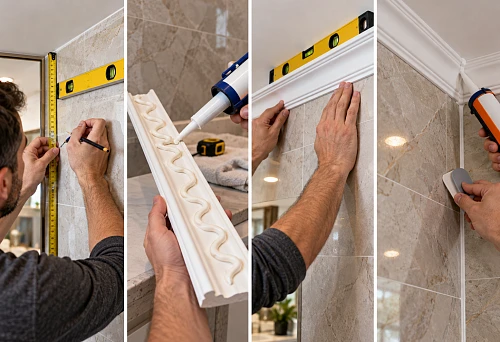
Before paintingwooden strip, the surface must be prepared. Sanding is mandatory: grit 120, then 180. Wood primer is mandatory: it binds the nap and evens out absorption. After priming, light sanding with 220 grit and a final coat of paint or enamel.
You can paint before installation (easier, smoother) or after (you can touch up joints and cuts). Ideally, do the main painting before installation and touch up the joints after.
Moldings and stucco decor in the color of the wall: architecture without unnecessary noise
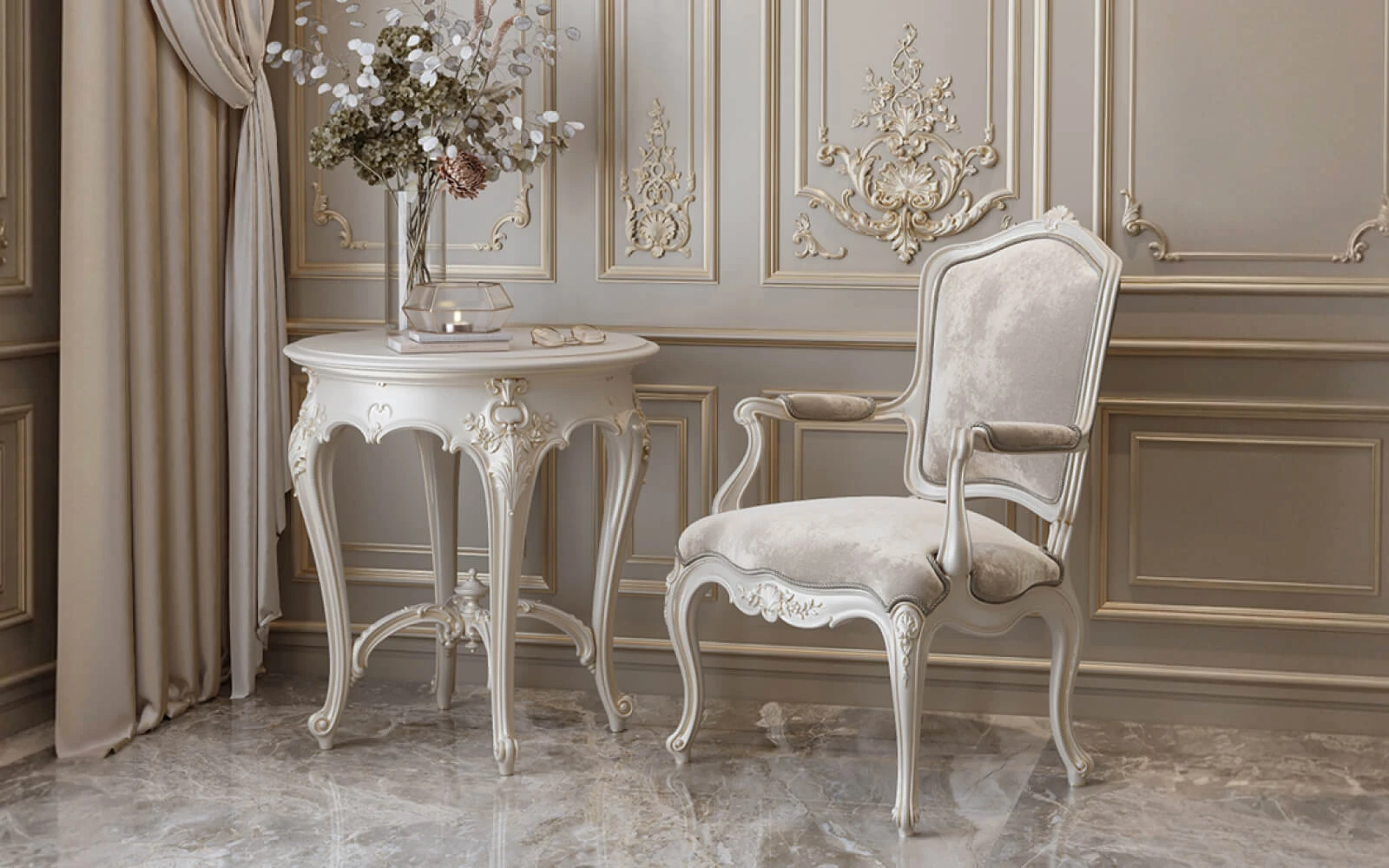
Moldings in the color of the wall is a technique that has become a symbol of mature, expensive design in the last decade. It is used in luxury projects, restrained neoclassicism, and modern interiors with architectural aspirations.
Why? Because a molding in the color of the wall is relief without contrast. It exists — it is visible only due to the shadow it casts. It is this delicacy that creates the feeling of an interior that has been thought about long and carefully.
Polyurethane moldings: a standard for painting
Polyurethane moldings for painting — the best choice for this technique. Polyurethane has no pores, does not absorb paint chaotically, and does not swell from moisture. After priming, the surface accepts any paint: acrylic, alkyd, water-based. The color lays evenly, without streaks.
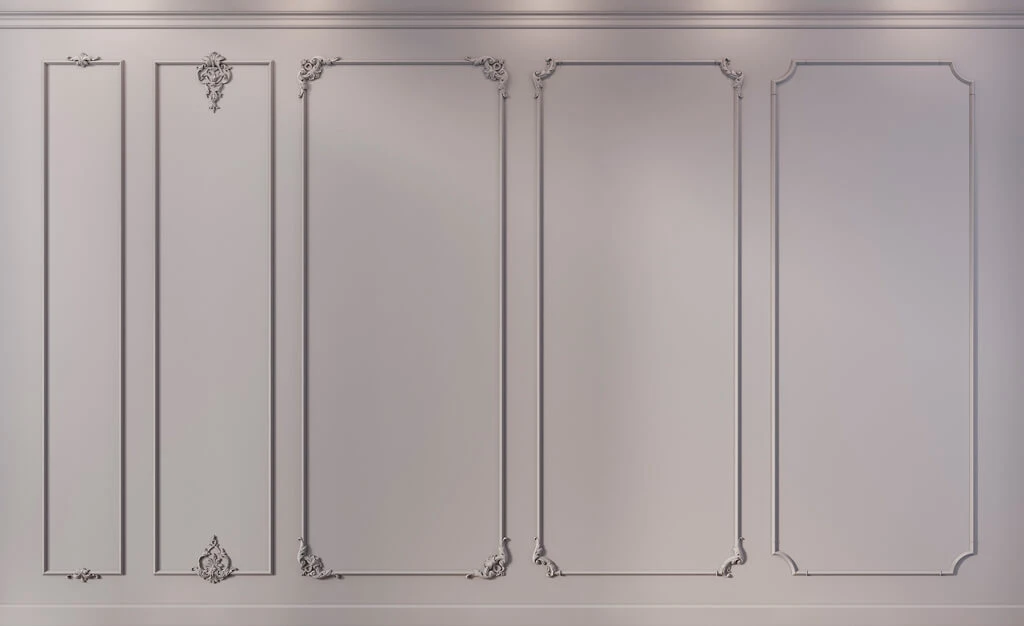
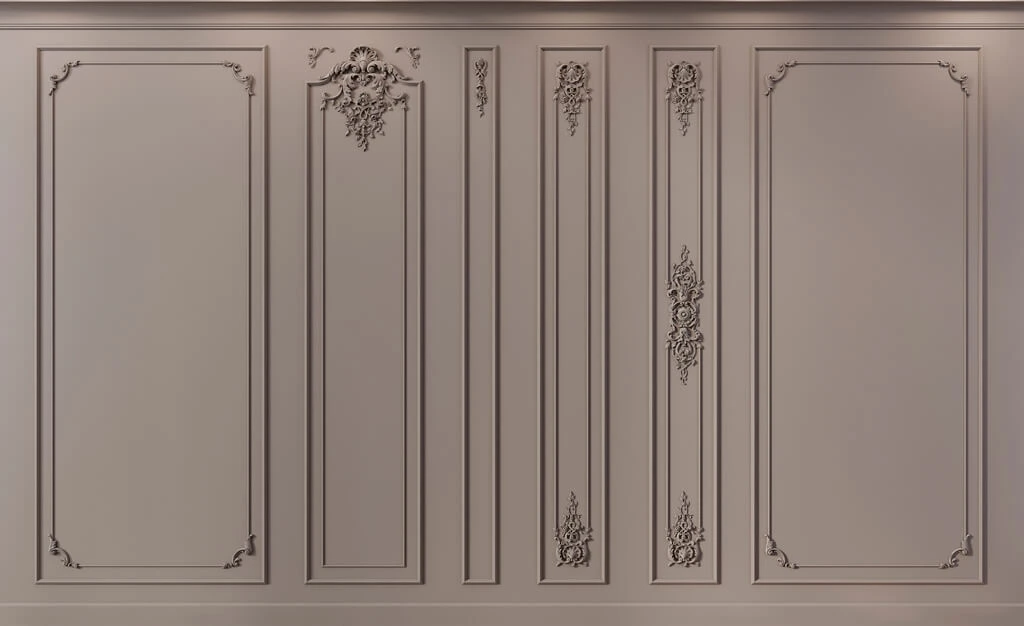
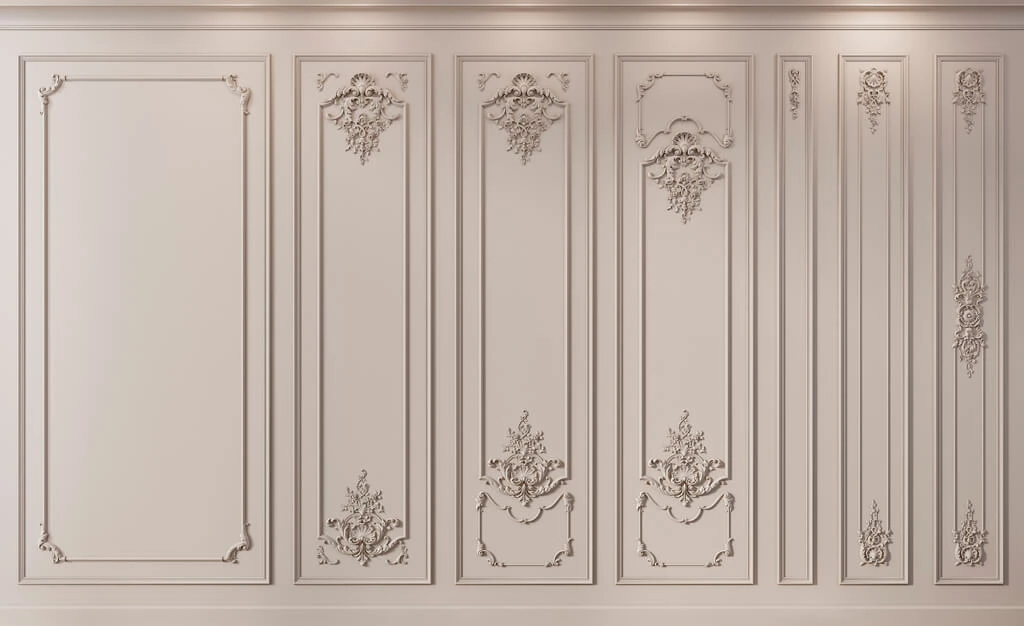
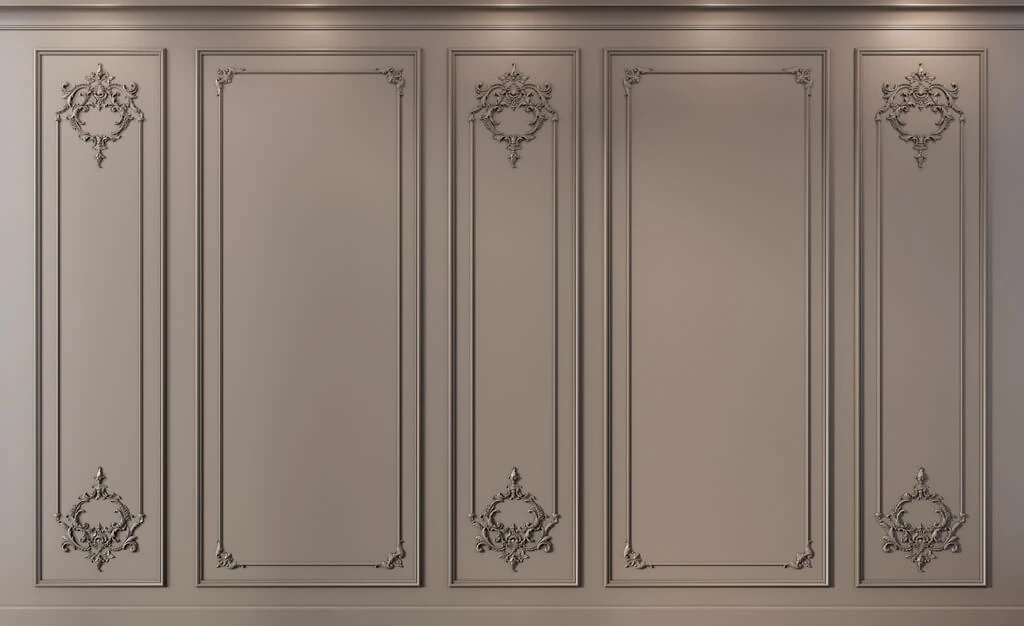
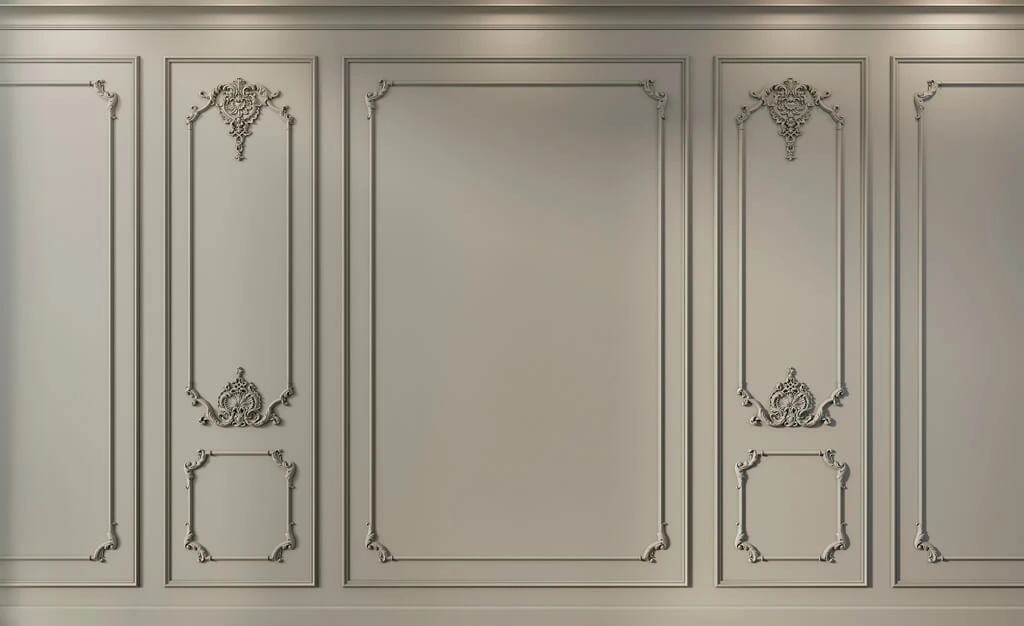
White moldings on white walls — timeless classic. Gray moldings on gray walls — modern restraint. Green moldings on green walls — boldness and consistency. In any of these options, stucco decor for walls and ceiling ceases to be a "decoration" and becomes architecture.
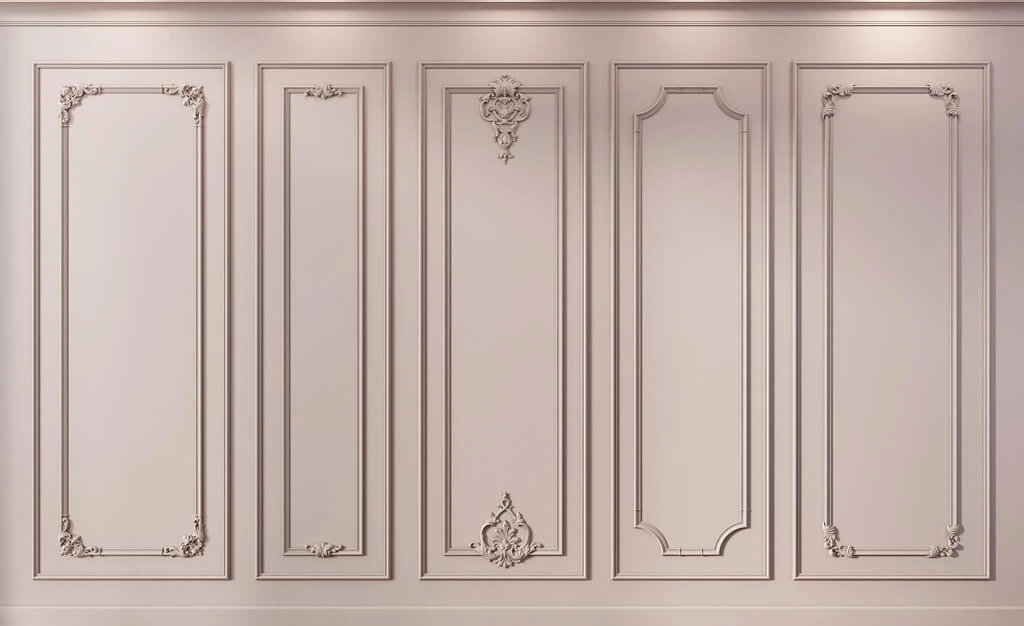
Stucco frames in wall color: frame layout as a technique
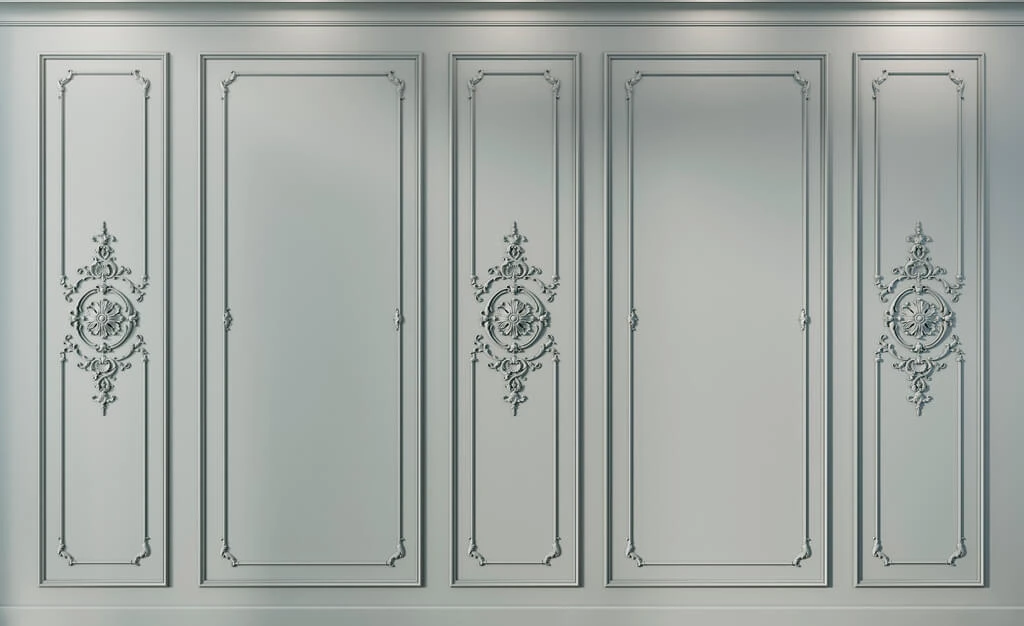
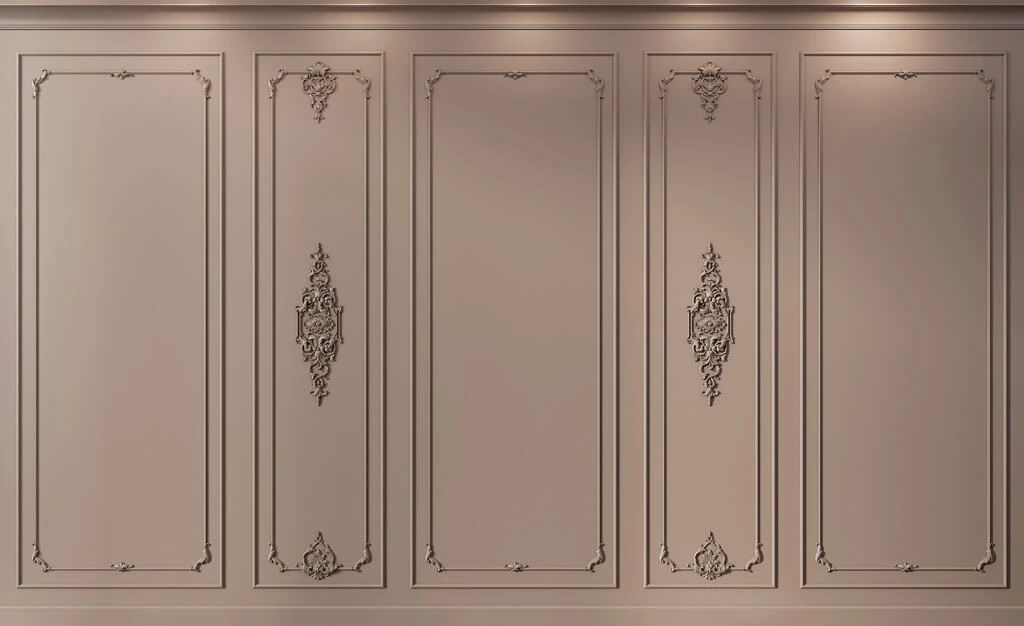
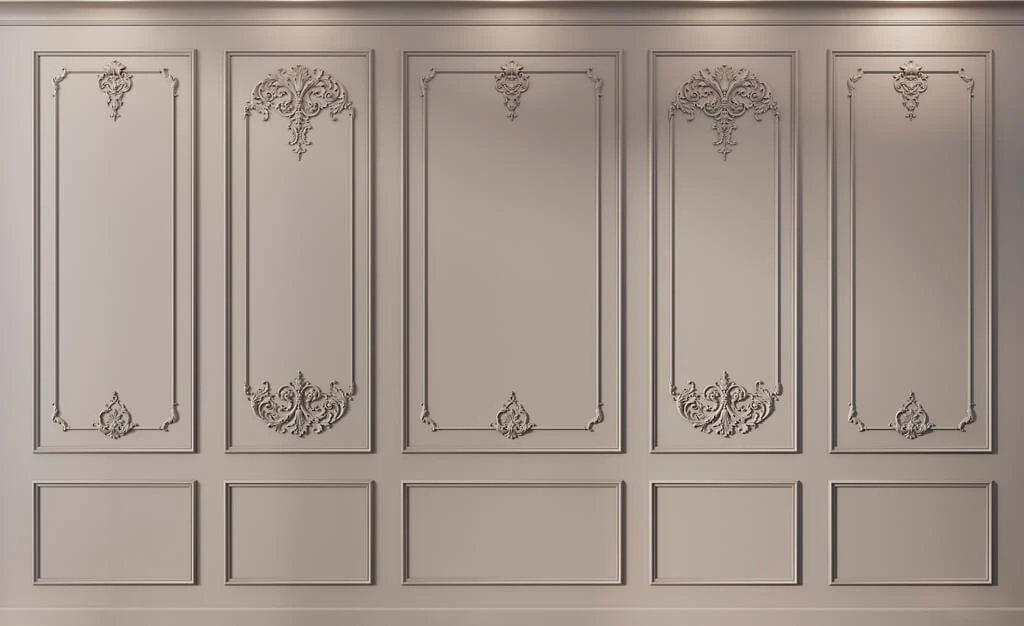
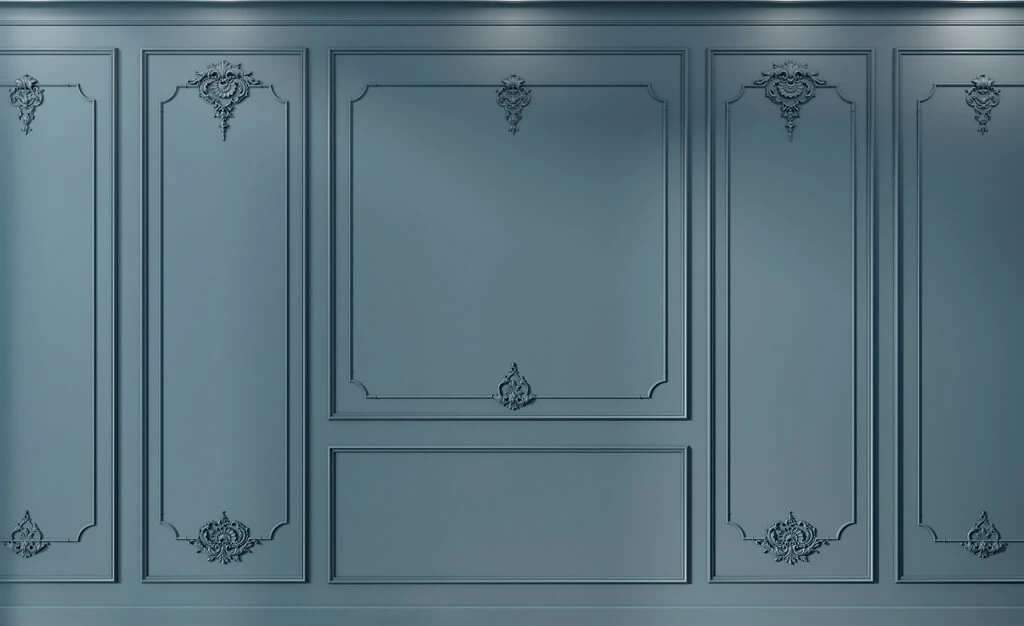
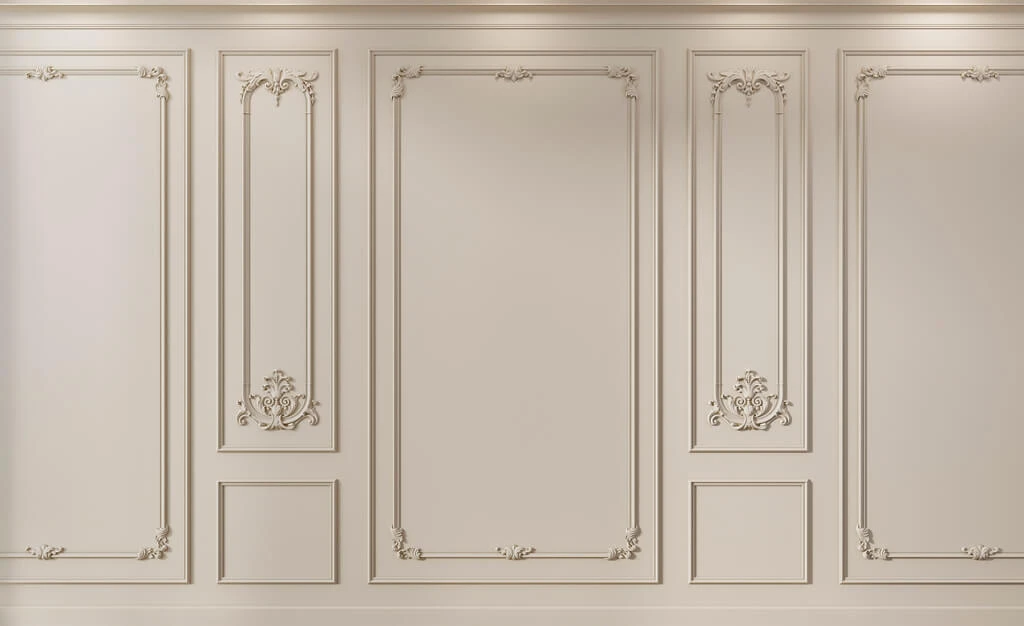
Frame layout — placing moldings in the form of rectangular frames on the wall plane — creates rhythm and scale in the room. In the wall color, these frames are read only as geometry: the shadow from the molding outlines a rectangle. This is a classic technique of palace interiors, adapted for modern apartments.
Polyurethane wall decor for frame layout is chosen with a moderate profile — not too narrow (not readable) and not too wide (looks heavy when installed in color). The optimal profile width for a frame molding in wall color is 30–60 mm.
Ceiling decor in ceiling color
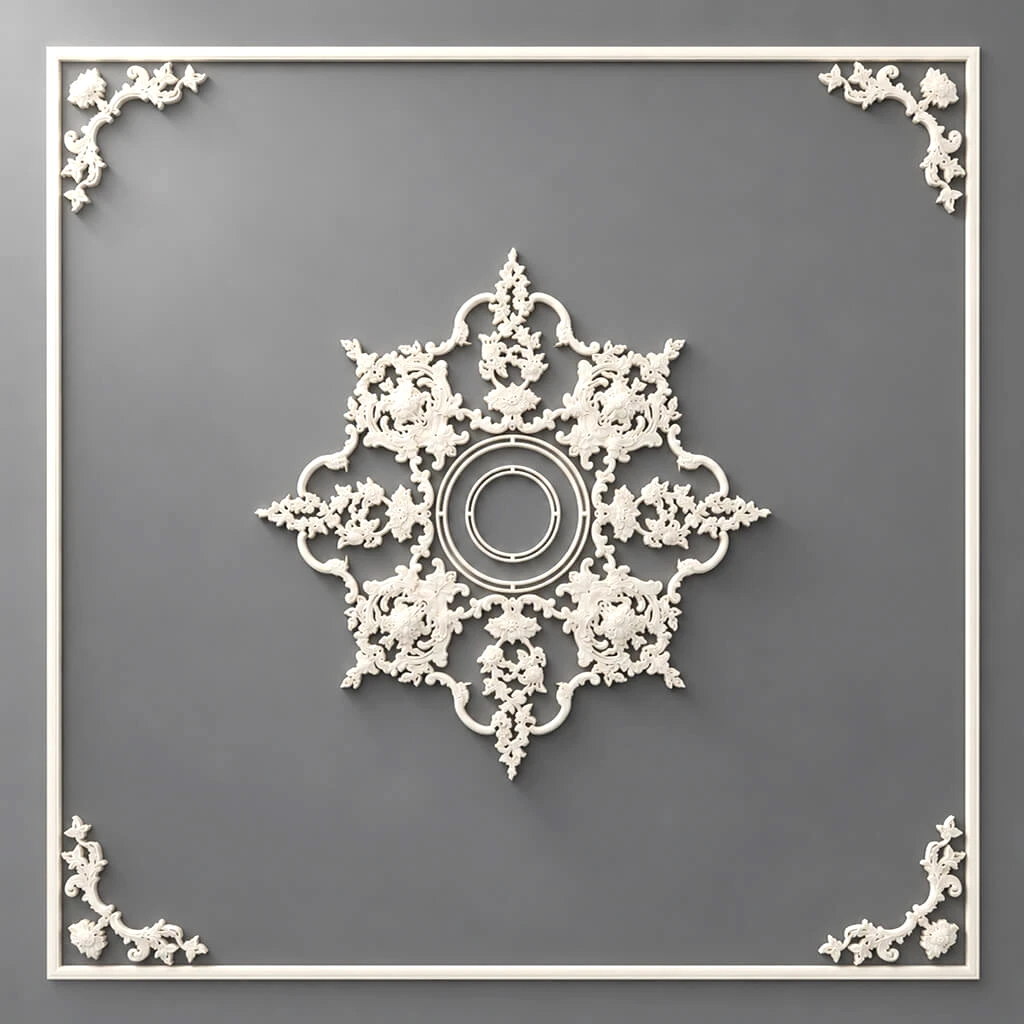
polyurethane ceiling decor — cornices, rosettes, fillets — in white on a white ceiling creates a classic neutral option. But the same decor in wall color (when the cornice transitions from wall to ceiling) gives an interesting "wrapped" architecture effect.
Ceiling cornice and baseboard: the top and bottom frame of the room
A room properly designed in terms of color has clear horizontal boundaries: a baseboard at the bottom and a cornice at the top. This is a frame that structures the space. And it is its color scheme that determines the character of the entire room.
Six color strategies for cornice and baseboard
1. Cornice and baseboard in wall color. Both elements are painted exactly the wall color. The wall, baseboard, and cornice merge into a single whole. The relief is visible only as a shadow. Effect: the space is perceived as monolithic, very modern. Suitable for rooms with expressive flooring and rich wooden slats.
2. Cornice and baseboard in white. A classic solution for colored or neutral walls.White MDF Skirting Board white baseboard at the bottom + white ceiling cornice at the top = a clear white frame around the wall. Works with any wall color. Especially good with dark and rich shades.
3. Cornice in ceiling color, baseboard in wall color. The cornice "disappears" on the ceiling, the baseboard accentuates the bottom line with the wall color. The ceiling appears higher. A technique for low rooms.
4. Baseboard in the color of wooden slats. If the slats are natural oak, the baseboard is also natural oak. The wooden material runs through the entire room in a single shade.with a classic profile creates a sense of solidity, reliability. in tone with the slats — an architectural rhyme from bottom to top.
5. Cornice and baseboard in a contrasting color. For those who are not afraid of boldness. A dark cornice and dark baseboard on a light wall — a graphic technique creating a clear rectangular outline of the room. Like a picture frame.
6. Cornice in wall color, baseboard white. Asymmetry: the top is calm, the bottom is clean. Works where the floor is light and the baseboard should harmonize with it, and the ceiling should "step back".
How to match the color of the cornice and baseboard with the slats
If the slats are a colored accent, it is recommended to paint the cornice and baseboard in one of the neutral colors: white, the color of the wall, or the color of the ceiling. The slats are the main element. The cornice and baseboard are the architectural background. If the slats are painted in the color of the wall, you can allow the cornice or baseboard to be slightly lighter or darker — for a soft rhythmic accent.
MDF cornice for paintingprovides the same freedom of color choice as an MDF baseboard: any RAL, any NCS, any branded shade — without limitations.
Molding products for painting: ends, corners, and joints as part of the design
A discussion of a unified color scheme would be incomplete without moldings. It is preciselyTrimming Itemsthat cover what remains unnoticed without them — but what destroys the feeling of quality.
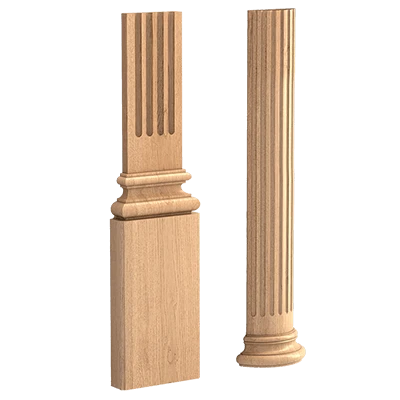
Wooden corner for painting
Wooden anglefor painting — a solution for external corners where a slatted panel or molding transitions across the edge of a wall. Painted in the color of the slats or wall, the corner becomes technically invisible — but creates a perfectly clean vertical line. Without it, the corner looks sloppy: open ends, color mismatch.
In a unified color scheme, the corner is painted together with all other elements of the system. This is a simple task, but it is what distinguishes an interior "with details" from an interior "almost with details."
Wooden block for painting
Wooden blockIn a system for painting, it is used as a limiting strip — horizontal at the top and bottom of the slat zone, vertical as a zone divider. Painted in the color of the slats, it organically "sews" into the system: the slat panel gets a clean frame without sharp transitions.
A block for painting is an element that works only as well as it is painted. A 5–10% difference in shade between the block and the slats will be visible even from 3 meters away. Therefore: a single color, a single paint, a single batch.
Wooden baguette for painting
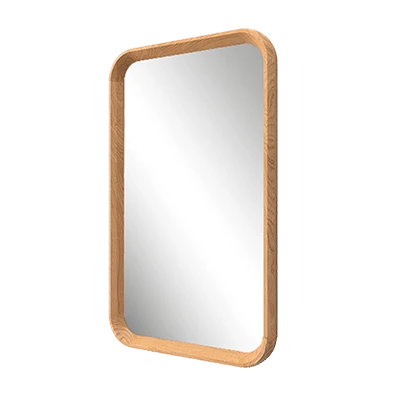
Decorative wooden moldingsIn a baguette format — a thin profile for framing zones, mirrors, panels, and doorways. When painted, a wooden baguette gains contour clarity and architectural precision. It works wherever a visible boundary without a pronounced material character is needed.
Wooden linear products: a unified system
wood trim itemsAs a system, it is a baseboard + cornice + corner + block + molding + baguette in one material and under a single paint job. If all these elements are purchased from one place, from the same wood species, and painted with the same paint, the interior achieves the quality commonly called "European finishing."
Ready-made color schemes: specific solutions for different interiors
Theory is good. But what exactly to paint and in what color — it's better to be specific. Here are six complete color schemes, each tested in practice.
Scheme 1: white on white
Moldings + white MDF baseboard + cornice — all in RAL 9003 (signal white). Walls — white or cream. Slats — natural oak or light ash. Floor — parquet or light laminate.
Result: a light, airy room where wooden slats are the only natural accent. Moldings and baseboards do not distract: they create architectural order while staying in the shadows. For Scandinavian style, light neoclassicism, modern residential interior.
Scheme 2: everything in wall color
Wall — warm gray-beige (Greige). Moldings, MDF baseboard, cornice, wooden slats — in the same exact shade. Floor — dark oak or concrete.
Result: a monolithic room where color is the only story. The relief of moldings and slats is only visible in side lighting. For a modern interior of the "quiet luxury" category.
Scheme 3: black slats + white MDF baseboard + light stucco
Slats — RAL 9005 (black). Wall — white or light gray.White MDF Skirting Board + polyurethane cornice in wall color. Moldings — in wall color.
Result: a graphic, modern interior. Slats are the only contrasting element. Everything else is a neutral background. For loft, modern minimalism, young design.
Scheme 4: gray tones in complete unity
Wall — ash gray (Light Warm Grey). Moldings, MDF baseboard, cornice — in the same shade. Slats — natural oak or slightly lightened. Floor — light concrete or warm laminate.
Result: a calm, deep interior without aggressive contrasts. The wooden slats bring warmth to the cold gray background. For a study, meeting room, modern living room.
Scheme 5: wooden slats under enamel + polyurethane decor in the same color
Decorative wooden strip + Moldings made of polyurethane — identical green (Vert de Gris or equivalent). Walls — white. Baseboard — white MDF. Cornice — white.
Result: a rich, striking interior where slats and moldings form a unified color story on a white background. For a living room, dining room, hall in a house.
Scheme 6: baseboard and cornice in the color of the ceiling
Wall — rich blue or dark green. Ceiling — white.— is a horizontal element that frames the room at the bottom of the walls where the wall meets the floor. Skirting boards perform several functions: they hide the technological gap between the wall and floor covering (necessary for thermal expansion), protect the lower part of the wall from mechanical damage, create visual completion, and may conceal wiring. — white, matching the ceiling color. Cornice — white. Slats — natural oak or honey shade.
Result: a dark, rich room with a sense of height (white baseboard and cornice optically "lower" the dark walls and emphasize the ceiling height). For a library, study, dining room in a classic style.
Technical nuances of painting decorative elements
Color theory is half the task. The other half is properly preparing and painting the elements so that the result matches the intent.
Priming: a mandatory step for every material
-
Wood (slats, baseboard, block, corner): water-based or alkyd-based primer with pore penetration. After drying — light sanding with 220 grit.
-
MDF (baseboard, cornice): universal MDF primer. Ends — must be coated with an additional layer: MDF ends absorb paint more intensively than the surface.
-
Polyurethane (moldings, decor): light matting primer for polyurethane. Without it, paint may not adhere to the glossy surface.
Paint Selection
For all elements in one room — use the same paint from the same manufacturer. Only this guarantees a uniform shade. Different brands of paint with the same RAL number can produce noticeably different results on different surfaces.
For wood and MDF: acrylic enamel (semi-matte or matte) or alkyd enamel. For polyurethane: acrylic paint for plastic or universal acrylic enamel.
Application: brush, roller, or spray gun
-
Brush — for complex profiles of moldings and cornices. Flat brush 25–40 mm wide.
-
Roller — for flat surfaces: baseboard on straight sections, slats over large areas. Fine-textured velour roller.
-
Spray gun — for large volumes and professional quality. Provides the best even coverage.
Number of layers: two for surfaces covered with soil, three for MDF ends and open wood cuts.
Mistakes when painting decorative elements in one color
The intention to create a unified color ensemble can be easily ruined by a few typical mistakes. Let's break down each one — to avoid making them.
Different paint for different elements
The most common mistake: baseboards are painted with one brand of paint, moldings with another, slats with a third. Three manufacturers, three 'whites' — and three different whites on the walls. Solution: buy all system elements for painting in advance, mix paint in a single batch, and paint everything from one can.
Baseboard that doesn't match the door trims
If the baseboard is painted one color and the door trims another, with no logical connection between them, the interior starts to conflict with itself. Trims are part of the same system. Either all in one color, or by a clear rule: baseboard + cornice = one color, trims + doors = another color, slats = a third, with a concept of flow.
Mixing white shades of different temperatures
Cool white (with a bluish undertone) and warm white (with a creamy undertone) next to each other — this is not a 'white interior'. It's a conflict. Especially noticeable in daylight. All 'white' elements in the room should be the same temperature: either all cool or all warm.
Painting wood without preparation
Unprimed wood absorbs paint unevenly: denser areas absorb less, more porous areas absorb more. The result is uneven surface tone even with uniform application. Always prime.
Simultaneously active slats, moldings, and baseboard
If the slats are large, dark, and contrasting, the moldings have a rich profile contrasting with the wall, and the baseboard is wide contrasting with the floor, then the room has three active decorative layers. This is overload even with a single color. Rule: one or two elements are active (color, contrast, scale). The rest are supporting (neutral, matching the background).
Forgotten ends and corners
MDF baseboard cut ends, open ends of slats, unpainted areas at wall junctions — all of this is visible in the finished interior. Carefully paint all visible surfaces, including joints and ends.
About the company STAVROS
Implementing a unified color scheme for an interior means gathering all necessary elements in one place:— is a horizontal element that frames the room at the bottom of the walls where the wall meets the floor. Skirting boards perform several functions: they hide the technological gap between the wall and floor covering (necessary for thermal expansion), protect the lower part of the wall from mechanical damage, create visual completion, and may conceal wiring., Wooden planks, Rafter panels, Wooden baseboard, Wooden beams, Decorative wooden moldings, wood trim items, Wooden corner pieces, stripsandPolyurethane Items — in a single system.
This is exactly how the STAVROS catalog is organized: all decorative elements for walls, ceilings, and floors — from coordinated materials (oak, beech, MDF, polyurethane), with a unified logic of profiles and sizes, for any style — from strict minimalism to rich neoclassicism.
STAVROS produceswooden slats for painting with a perfectly prepared surface,MDF Skirting Board with clean geometry without defects,Moldings made of polyurethanewith precise relief for painting andTrimming Itemsfor neat joints. All this is supplied with Contact us to confirm shipping to your destination. — and everything is ready for final painting immediately after installation.
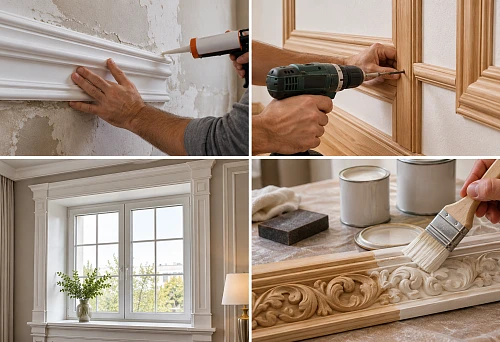
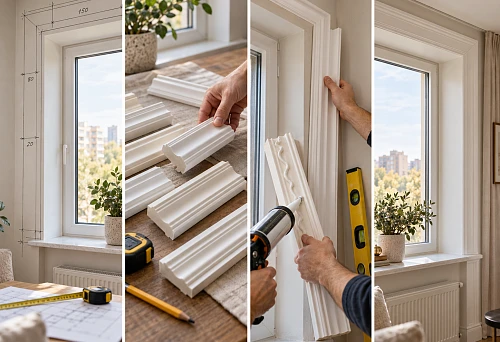
Detailed instructions forinstalling polyurethane molding— including work with corners, joints and painting — is published in the articles section on the STAVROS website.
Frequently Asked Questions (FAQ)
Can you paint an MDF baseboard yourself or is it better to buy a ready-painted one?
Both options work. A ready-made white MDF baseboard is a convenient solution for a standard white interior. An MDF baseboard for painting — for an exact RAL color or to match specific walls. Self-painting requires priming and two coats of paint — but gives complete freedom of color.
What to paint wooden slats with: paint or glaze?
For a unified color ensemble — paint or enamel (covering). Glaze preserves the visibility of the wood texture under the color — it's beautiful, but does not give a solid color. If the task is slats exactly the color of the wall or a contrasting shade without texture — only covering paint or enamel.
What is better for painting — MDF baseboard or wooden?
MDF is easier to paint: a smooth surface, no need to deal with pores and grain. A wooden baseboard under enamel looks richer in profile — especially a wide one. If the budget allows and a status interior is needed — wooden for painting. If speed and predictability of the result are more important — MDF.
Can slats and moldings be painted with different paints if they are different materials?
Theoretically — yes, if the shade is the same. In practice, different paints give different gloss and surface texture, which is noticeable when viewed from the side. Recommendation: one brand of paint, one composition, one batch, regardless of material.
How to choose the shade of a baseboard for natural-colored wooden slats?
Three options: white MDF baseboard (neutral, does not compete with wood), baseboard in the color of the wall (disappears), wooden baseboard of the same species (unified material story). A contrasting baseboard next to natural slats only works as a deliberate graphic technique.
Do I need to paint the wooden corner and block together with the slats?
Absolutely, if the goal is a uniform color. The corner and block are part of the same system. An unpainted or differently shaded corner destroys unity even with perfectly painted slats.
How to properly paint the ends of MDF baseboards at cuts?
MDF ends absorb paint more intensely than the surface. They need to be pre-impregnated with a special glue primer for MDF ends or apply an additional layer of regular primer, let it dry, and only then paint — at least two coats of paint.