Article Contents:
- Shape as a statement: why the square is architecture
- How a square rosette fundamentally differs from a round one
- When to choose a square ceiling rosette
- Which rooms suit a square rosette: a detailed breakdown
- Office
- Hall
- Living Room
- Dining Room
- Bedroom in modern classic style
- Hallway with rectilinear geometry
- How to choose the size of a square ceiling rosette
- Chandelier and its dimensions
- Ceiling Height
- Room area
- Square orientation
- Presence of molding frames
- Which relief to choose for a square socket
- Smooth square socket
- Socket with geometric belt
- Socket with corner accents
- Socket with central ornament
- Relief and style: brief table
- Square socket and chandelier: how they work together
- When a square socket works perfectly with a chandelier
- When a square ceiling rose may not fit
- Square ceiling rose and crown molding: a perfect pair
- How to build a ceiling system with a square ceiling rose
- Square ceiling rose in Art Deco: geometry as the main character
- What to buy together with a square ceiling rose
- Minimum installation kit
- Extended kit for ceiling system
- Installing a square ceiling rose: specifics of a rectangular shape
- Axis orientation
- Applying adhesive
- Filling straight-line gaps
- Painting
- Square ceiling rose in commercial interiors
- Why polyurethane is the right material for a square ceiling rose
- Square and octagon: intermediate forms
- Five interior scenarios: a square ceiling rose in specific examples
- Frequently Asked Questions
- About the Company STAVROS
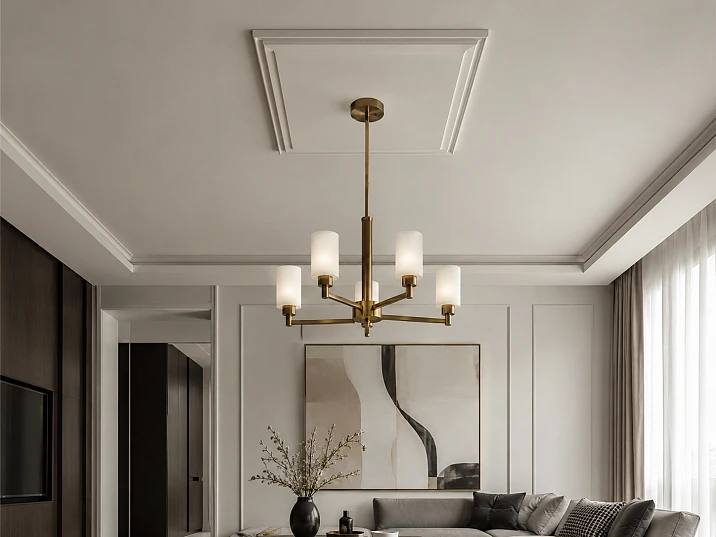
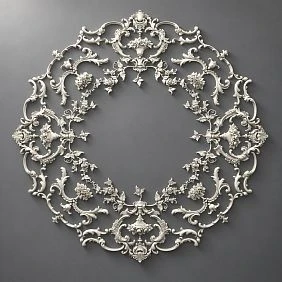
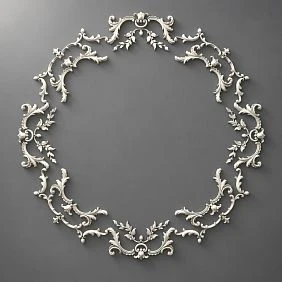
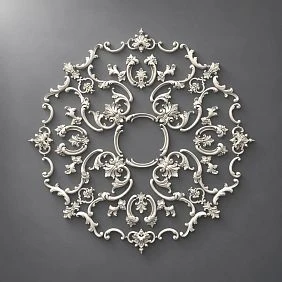
Form as a statement: why the square is architecture
There are interior solutions that simply decorate — and there are solutions that structure. A square ceiling rose belongs to the second category. It does not soften the space — it gathers it. It does not add ornament for the sake of ornament — but creates a geometric axis around which all ceiling decor is built.
Why exactly a square? Because a square is a form that resonates with the rectangular geometry of a room. The walls are straight, the corners are right, the window and door openings are rectangular, the furniture has strict lines. In such a space, a round ceiling rose works as a soft counterpoint — a delicate pause among straight lines. And a square ceiling rose works as a continuation of architectural logic: it picks up the room's geometry and transfers it to the ceiling plane.
That is why square polyurethane ceiling roses are increasingly chosen for modern classic, neoclassical with clear lines, studies, halls, and spaces with ceiling molding frames. This is not a trend — it is architectural consistency.




How a square ceiling rose fundamentally differs from a round one
Comparing a round and a square rosette is like comparing an arch and a rectangular opening. Both options solve the same problem—but they do so with fundamentally different character.
A round rosette is universal, soft, and neutral. It feels organic in any interior, easily pairs with any chandelier, and creates no geometric tension. It is chosen when decorative completeness is desired without an architectural accent.
A square rosette is specific, strict, and architectural. It makes a statement: the ceiling here is geometrically structured. It works well with rectilinear decor, supports molding frames, and enhances the symmetry of the space.
| Parameter | Round rosette | Square rosette |
|---|---|---|
| Character | Soft, universal | Strict, architectural |
| Suitable style | Any | Neoclassicism, modern classic, art deco |
| Combination with moldings | Good | Excellent—in unified geometry |
| Combination with chandelier | Any chandelier | Better—strict, geometric |
| Accent | Decorative center | Architectural center |
| Installation difficulty | Standard | Standard |
Neither option is "better" than the other in the abstract. The choice is determined by the specific interior, the specific ceiling, and the specific task.
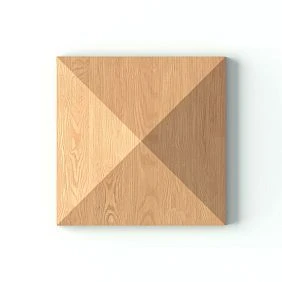
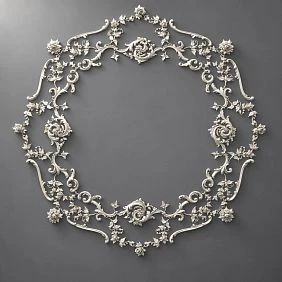
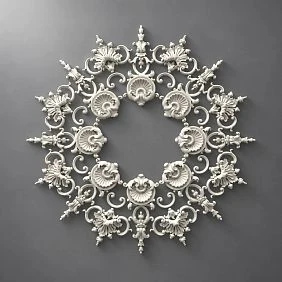
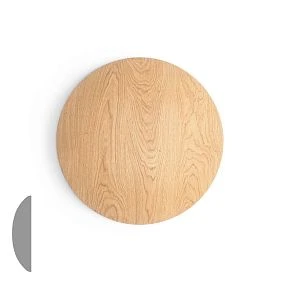
Our factory also produces:
When to choose a square ceiling rosette
The square shape is not for everyone and not for everywhere. It requires a certain context in which it fully unfolds. How to know that a square polyurethane rosette is the right choice?
Straight lines prevail in the interior. Straight cornices, rectangular moldings, strict furniture without rounded details, framed facades, built-in wardrobes with rectangular doors. A square rosette here is an organic continuation of the overall geometry.
There are or are planned molding frames on the ceiling. One of the best scenarios for using a square rosette is as the central element of a rectangular or square molding frame on the ceiling. This solution is a classic of neoclassical interior, adapted for modern housing.
The chandelier has a strict symmetrical silhouette. Chandeliers with a geometric metal base, fixtures with rectangular shades, strict multi-tiered pendants — all of these pair well with a square rosette.
Interior in neoclassical or modern classic style. Here, the square rosette works as a detail that adds historicism without Baroque heaviness. It references classical architecture — ceiling coffers, strict frame decorations of French mansions — but does so restrainedly.
Study, library, home office. Spaces where strictness is a virtue, not a flaw. A square rosette under a ceiling light in a study creates an atmosphere of composure and intellectual seriousness.
Hall and reception area. Ceremonial spaces where architectural expressiveness is important. A square ceiling medallion in a hall with a high ceiling and a strict cornice is a decor that is perceived as part of the architecture.
A geometrically precise ceiling system is needed. A square medallion + rectangular molding contours + a strict cornice — this is a ready-made architectural system that makes the ceiling absolutely complete.
Get Consultation
Which rooms are suitable for a square ceiling medallion: a detailed analysis
Office
A study is a space for intellectual work and decision-making. Everything here should be precise, strict, and convincing. A square ceiling medallion for a study is a detail that works in unison with bookshelves, a desk, and strict frames. The diameter (more precisely, the side of the square) is 250–350 mm, depending on the room size. The relief is moderate: a delicate geometric band, clear profiles, no organic ornaments with curls.
A ceiling light in a study is most often recessed or a small surface-mounted one. Above the desk is a compact pendant lamp. A square medallion with a small side (200–250 mm) above such a lamp creates a precise architectural accent.
Hall
A hall with a square medallion is a grand statement. Here, the square works especially expressively: the first space a guest sees should speak of the architectural thoughtfulness of the interior from the threshold. Square polyurethane ceiling medallion Large size — 400–500 mm per side — in a hall with a ceiling of 2.9–3.2 m looks convincing and monumental.
A hall is often decorated with molding frames on the ceiling — and a square medallion here becomes the logical center of this system. The frames and medallion create a unified geometric grid that turns the ceiling into an architectural plane.
Living Room
In a living room, a square medallion is a less common but very expressive solution. It works well in living rooms with a rectangular layout, strict furniture, neutral walls, and a geometric chandelier.
Important: in a living room with soft classic furniture, fabric curtains, and rounded details, a square ceiling rosette can create geometric dissonance. This requires a good spatial eye—or consultation with a designer.
For a living room of 20–30 m², the square side is 350–450 mm. The relief is moderate, with a soft ornamental band or geometric frame. The color is white to match the ceiling or a delicate contrasting accent.
Dining Room
In a dining room, a square rosette above the dining table creates a clear vertical axis: table — chandelier — rosette — ceiling. If the table is rectangular, the square rosette is oriented parallel to its long side. If the table is square, the rosette perfectly mirrors its shape, creating full symmetry from top to bottom.
This solution is used in neoclassical dining rooms, restaurant interiors, and conference rooms—anywhere the table is the main planning element and the ceiling decor must support this axis.
Bedroom in modern classic style
For a bedroom, a square rosette is a non-standard but possible solution. It works if the bedroom interior is built on strict lines: rectangular panel headboards, minimalist furniture, geometric textiles. In such a space, a small square rosette above a compact chandelier looks organic.
For a bedroom, the square side is 200–280 mm, with low or moderate relief. A round rosette is still more appropriate in most bedrooms—but a square in the right context gives a special character.
Hallway with rectilinear geometry
In a modern hallway with built-in wardrobes, straight lines, and minimalist lighting, a small square rosette above a ceiling light creates a neat architectural accent. The side is 150–200 mm. It is not monumental, but precise and clean.
How to choose the size of a square ceiling rosette
The principle of choosing the size of a square ceiling medallion largely coincides with that of a round one — but there are specific nuances that are important to consider specifically for the square shape.
Chandelier and its dimensions
The square medallion should be comparable in size to the chandelier. If the chandelier has a rectangular or square base — the medallion is oriented parallel to it. If the chandelier is round — the side of the square medallion should be close to the diameter of the shade or slightly smaller.
For a chandelier with a diameter of 40–50 cm — the side of the square is 280–350 mm. For a chandelier of 60–70 cm — 380–450 mm. For large chandeliers with a diameter of 80 cm and above — from 450 mm.
Ceiling height
With a ceiling height of 2.7 m — the side of the square is 250–350 mm, with moderate relief. With a ceiling height of 2.9–3.0 m — 350–450 mm, can be more expressive. With a ceiling height above 3.0 m — 450–600 mm, the relief can be more saturated.
Room area
Room 12–16 m² — side no more than 280–300 mm. Room 18–25 m² — 300–400 mm. Room 25–40 m² — 400–550 mm.
Square orientation
The square medallion can be oriented in two ways: sides parallel to the walls or sides rotated by 45° (diamond orientation). The second option creates a more dynamic, 'star-like' geometry — this is a choice for Art Deco and more energetic interiors. The first is the standard orientation for most cases.
Presence of molding frames
If there are or are planned molding frames on the ceiling — the medallion should fit into their geometry. It should be smaller than the inner contour of the frame — with a uniform offset around the perimeter. The ideal ratio: the medallion occupies no more than 40–50% of the inner field of the frame.
| Situation | Recommended size (square side) |
|---|---|
| Small bedroom, ceiling 2.6 m | 200–250 mm |
| Room 14–16 m², ceiling 2.8 m | 250–320 mm |
| Dining room with square table | 320–400 mm |
| Living room 22–30 m², ceiling 2.9 m | 380–460 mm |
| Hall with high ceiling | 450–550 mm |
| Ceiling with molding frame | 40–50% of the inner field width of the frame |
Which relief to choose for a square rosette
The relief of a square rosette is not just a decorative choice. It is a statement about interior style and architectural task.
Smooth square rosette
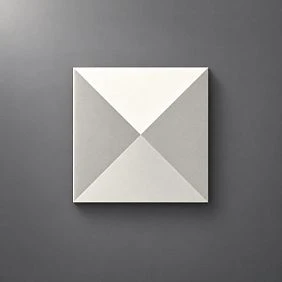
A smooth shape with clear profile edges is the most strict and modern solution. No ornamentation, only geometry. Square + clear profile + white color is minimalist neoclassicism in its most concise form.
This socket is ideal for a modern office, a minimalist living room, or a contemporary-style bedroom.
Socket with a geometric belt
One or two decorative belts with a geometric pattern around the perimeter of the square — rectangular borders, meander, Greek frieze. This is a classic decorative technique that creates expressiveness without ornamental complexity.
Ideal for neoclassicism, art deco, and modern classic with historical references.
Socket with corner accents
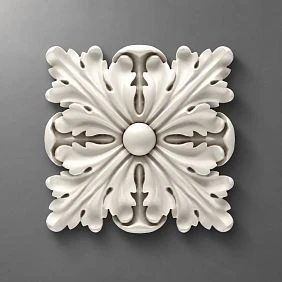
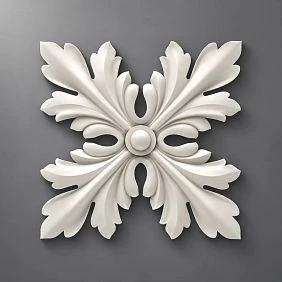
A square socket with decorative corner rosettes or acanthus details in the corners is a richer option. The central plane is calm, the accents are in the corners. This is restrained luxury: details are present, but they do not shout.
Works well in a hall, formal living room, or meeting room.
Socket with a central ornament
A square outline — and inside a round or geometric central medallion. Square and circle in one product is a classic architectural technique found in ceiling decorations of historical buildings. This is a more complex product that requires a confident architectural context.
Relief and style: a brief table
| Interior style | Recommended relief for a square rosette |
|---|---|
| Minimalism with details | Smooth shape, clear profile |
| Modern Classic | Geometric belt, meander |
| Neoclassical | Moderate acanthus or geometric ornament |
| Art Deco | Radial pattern, symmetrical geometric motifs |
| Formal interior | Corner accents, rich geometric pattern |
| Office | Strict, without organic elements |
Square ceiling plate and chandelier: how they work together
The question of whether a square ceiling plate will fit a particular chandelier is one of the most common. And the answer is not straightforward.
When a square ceiling plate works perfectly with a chandelier
Chandelier with a metal geometric base. If the chandelier's base is a rectangular or square metal plate, a square ceiling plate continues this geometry. One form 'speaks' to another.
Chandelier with rectangular or cylindrical shades. Strict cylinders, rectangular metal covers, minimalist tubes — all of these pair well with a square ceiling plate.
Multi-tiered symmetrical chandelier. If the chandelier is strictly symmetrical horizontally — several tiers, symmetrical arrangement of lamps — a square ceiling plate enhances this symmetry and transfers it to the ceiling plane.
Crystal chandelier with a geometric frame. Crystal is associated with classic style — and it might seem that only a round ceiling plate is needed here. But if the chandelier's frame has rectangular geometry, a square ceiling plate creates an expressive and unexpected duo.
When a square ceiling plate may not be suitable
Chandelier with very soft, rounded, floral details. A Baroque light fixture with floral pendants, a lush chandelier with vine motifs — in this case, a square ceiling plate creates a harsh geometric dissonance. It's better to choose a round one.
Chandelier in Provence or romantic style. Fabric lampshades, wrought iron curls, 'weathered' patina — this is a soft decorative language that pairs poorly with a strict square shape.
A very laconic light fixture on a stretch ceiling. If the fixture is a thin "spot" lamp without a noticeable base, a large square socket will look like an excessive detail around an insignificant object.
Square socket and ceiling moldings: a perfect pair
This is perhaps the strongest combination in which a square socket fully reveals itself. Ceiling molding in the form of molding frames and a square central socket is a classic ceiling system found in interiors from Regency-era mansions to modern neoclassical apartments.
How does it work? One or more rectangular or square contours made of of polyurethane moldings form a ceiling field. In the center of this field is a square socket. The moldings and socket are aligned in a single geometric system. The result is a ceiling that is perceived as an architectural plane, not just a painted surface.
An important nuance: the moldings and socket must be coordinated in relief. A too thin molding and a monumental relief socket are an uncoordinated pair. Moldings made of polyurethane and a socket from the same collection or a close stylistic series is an ideal solution.
How to build a ceiling system with a square socket
Step one: determine the center of the ceiling by the chandelier mounting point.
Step two: choose the size of the square ceiling rose — based on the chandelier, ceiling height, and room area.
Step three: decide whether there will be molding frames — a single contour around the rose or a more complex system.
Step four: choose Moldings made of polyurethane in a profile coordinated with the rose.
Step five: add a perimeter cornice — it will complete the system and connect the center of the ceiling to its perimeter.
Step six: if necessary — Decorative Inserts in the corners of the frames or at the intersections of the moldings.
Result: an architecturally balanced ceiling that looks expensive and well-thought-out.
Square ceiling rose in Art Deco: geometry as the main character
Art Deco is a style where geometry is the language of beauty. Diamonds, octagons, radial patterns, strict symmetries — all these are characteristic features of Art Deco. And a square ceiling rose in an Art Deco interior is not just appropriate — it is organic.
For Art Deco, a square rosette is often oriented at a 45° angle — diamond-shaped. This creates a radial dynamic that perfectly aligns with the style's aesthetic. The relief is geometric, radial, with clear transitions. The color is white, or with gold highlighting of individual elements, or in contrast with a darker ceiling.
A chandelier in an Art Deco interior with a square rosette is typically a multi-arm metal light fixture with geometric shades. This entire system — the style, the chandelier, the rosette — creates a complete architectural image.
What to buy together with a square ceiling rosette
A complete result requires a complete set. The square rosette is the central element, but not the only one.
Minimum installation kit
-
Glue for polyurethane molding — a specialized compound with strong adhesion. Apply evenly over the entire back surface of the rosette.
-
Acrylic sealant — for sealing the gap around the perimeter. Especially important for a square rosette: the straight sides of the square fit against the ceiling differently than a circle, and gaps at the corners and sides must be carefully sealed.
-
Primer — before painting. The polyurethane surface is primed for even paint application.
-
Paint — water-based or acrylic. White to match the ceiling, or colored for a decorative accent.
Extended kit for ceiling system
-
Ceiling moldings. Moldings made of polyurethane for creating frame contours around a square rosette — the main partner of the square shape.
-
Cornice. A perimeter cornice along all walls of the room — for complete architectural finish. Ceiling molding in the form of a cornice connects the center of the ceiling with its perimeter.
-
Corner decorative elements. Decorative stucco in the corners of molding frames — rosettes, overlays, ornamental details — saturate the ceiling field and create a complete system.
-
Spare materials. A small supply of glue and sealant — for correcting minor defects during installation.
Task What to buy Design a strict chandelier Square ceiling rosette of suitable size Create a symmetrical ceiling Square rosette + molding frames Support neoclassicism Rosette with moderate geometric relief Design the room A strict square rosette with a smooth profile Do not overload a low ceiling A rosette with a low relief in the color of the ceiling Assemble a complete ceiling set Socket, moldings, cornice, glue, paint, overlays
Installing a square rosette: specifics of a rectangular shape
Installing a square polyurethane rosette is generally similar to installing a round one — but has several specific nuances that are important to consider.
The complete algorithm for installing stucco molding is described in a detailed guide on installing polyurethane molding. Here — specifics important specifically for a square shape.
Orientation along axes
The square rosette must be oriented strictly parallel to the walls — unless a deliberate diagonal orientation is chosen. The slightest misalignment will be immediately noticeable: the straight side of the square instantly reveals a deviation from parallel. Use a laser level or a long bubble level.
For diagonal orientation (diamond), mark the rotation axis at 45° from the wall using a protractor or laser level in corner mode.
Applying adhesive
Apply glue along the entire perimeter of the back surface — especially thoroughly at the corners. The corners of a square rosette are risk zones: if there is insufficient glue here, the corner may lift slightly during drying. Check the adhesion of the corners after pressing.
Filling straight-line gaps
Along the straight sides of the square, fill gaps with acrylic sealant in an even continuous strip. Then, using a spatula or gloved finger, smooth it in one motion along the side. The result is a clean, straight seam that is virtually invisible after painting.
The corners of the square require special attention: smooth the sealant in the corner with two motions from the corner to the side.
Painting
After installation and filling, apply primer and paint in the ceiling color. White monochrome painting turns the square rosette into a monolithic element of the ceiling plane. If you want to highlight the geometric belts, delicate gilding or painting with a contrasting shade makes the relief more expressive.
Square rosette in a commercial interior
A topic often overlooked in reviews of decorative moldings. A square polyurethane ceiling rosette is an excellent solution for commercial spaces: offices, reception areas, meeting rooms, restaurant halls, boutiques, and showrooms.
Office and meeting room. In a neoclassical office interior, a square rosette above the conference table creates an architectural accent without excessive ornamentation. Strict, representative, convincing.
Restaurant and banquet hall. A square rosette above each table — if the ceiling allows such a system — creates an individual "ceiling frame" for each guest seat. This is both decorative and functional.
Boutique or showroom. In a neoclassical-style retail space, a square rosette above the central area creates an architectural center around which the display is built.
Reception area. Above the reception desk is a large square rosette with an expressive relief. This is the detail that the visitor notices first and that forms the first impression of the company.
For all these scenarios buy polyurethane ceiling rosettes available in the STAVROS catalog — with delivery and necessary installation materials.
Why polyurethane is the right material for a square rosette
For a square rosette, manufacturing precision is especially important. The straight sides of the square and clear corners require precise casting without deformation — otherwise a "crooked square" will be immediately visible. Polyurethane as a material provides exactly this precision.
Geometric stability. A polyurethane product does not deform during storage and transportation, does not warp with changes in humidity. The square remains a square — with straight sides and clear right angles.
Accurate reproduction of relief. Geometric band, meander, Greek frieze — all these ornaments are reproduced with high precision. Straight lines remain straight, transitions remain clear.
Light weight. A square rosette with a side of 400 mm made of polyurethane weighs 400–600 g. Installation with glue without anchors — sufficient and reliable.
Resistance to operating conditions. Polyurethane is not afraid of moisture, temperature changes, or vibrations. A properly installed square polyurethane rosette will last as long as the interior itself.
Ease of painting. The smooth, pore-free surface accepts paint evenly and without additional operations. buy polyurethane rosettes — means getting a product ready for installation and painting "here and now."
Square and octagon: intermediate forms
It is worth mentioning another form that lies between the square and the circle: the octagonal or chamfered square rosette. This is a square with cut corners — a shape that combines geometric certainty with a soft transition to circular symmetry.
The octagonal rosette works well where a square seems too rigid and a circle not expressive enough. It is especially organic in Art Deco — the octagon is one of the key forms of this style.
If you are torn between a square and a circle — the octagonal shape can be the perfect compromise. Polyurethane ceiling rosettes also include such intermediate forms.
Five interior scenarios: the square rosette in specific examples
Scenario one: a 16 m² study, ceiling height 2.8 m, built-in ceiling light.
Square smooth rosette with a side of 250 mm, a clear profile band around the perimeter. White color matching the ceiling. No molding frames — only the rosette as the sole decorative accent. Result: strict, precise, intellectual.
Scenario two: living room 28 m², ceiling 2.9 m, neoclassical interior, metal chandelier.
Square rosette with a side of 420 mm, moderate geometric relief. Two rectangular molding contours around the rosette. White color for the entire system. Result: a complete architectural ceiling system with an expressive central accent.
Scenario three: hall with a ceiling of 3.2 m, large hanging chandelier.
Square rosette with a side of 500 mm, rich geometric relief with corner accents. Diagonal orientation — diamond. Gold highlighting of individual relief elements. Result: a monumental ceiling accent that is memorable at first glance.
Scenario four: dining room with a square table, ceiling 2.7 m.
Square rosette with a side of 360 mm, oriented parallel to the walls, sides parallel to the sides of the table. Moderate delicate relief. White color. Result: an ideal vertical axis connecting the table, chandelier, and ceiling into a single system.
Scenario five: modern office, meeting room 20 m², business interior.
Square smooth rosette with a side of 300 mm above the center of the conference table. Without additional moldings — pure geometry. Gray-white neutral color. Result: an architectural accent that speaks to the seriousness and thoughtfulness of the interior.
Frequently asked questions
When to choose a square ceiling rosette instead of a round one?
A square rosette is chosen when the interior features straight lines, strict geometry, molding frames on the ceiling, or a chandelier with a strict shape. Also, a square rosette is the right choice for neoclassicism, art deco, office interiors, and halls. If the interior is soft with rounded details, a round rosette is more organic.
Will a square ceiling medallion fit a regular round chandelier?
Yes, if the chandelier has a clear symmetrical silhouette. A square medallion under a round chandelier creates an interesting geometric contrast of "square — circle," which works expressively in the right interior. It is important that the diameter of the chandelier does not significantly exceed the side of the square medallion.
Can a square medallion be combined with molding frames on the ceiling?
This is one of the best application scenarios. A square medallion and rectangular molding frames create a unified geometric system. It is important to match the relief of the medallion and the profile of the moldings — they should be comparable in "decorative weight."
How to orient a square medallion — parallel to the walls or diagonally?
Parallel orientation is standard and suitable for most interiors. Diagonal (diamond) orientation is for art deco and dynamic interiors where you want to add radial energy. In any case, the orientation must be precise — even a slight deviation is noticeable.
What to buy together with a square ceiling medallion?
Mandatory: glue, acrylic sealant, primer, paint. Optional: moldings for frame contours, perimeter cornice, corner decorative overlays. Full range — in the catalog polyurethane products.
How to install a square medallion yourself?
Similar to a round one — with glue, without anchors. Main nuances: precise orientation along axes using a laser level, thorough application of glue at corners, and careful sealing of gaps along straight sides. Detailed algorithm — in the guide installing polyurethane molding.
Can a square ceiling rosette be painted in a non-standard color?
Yes. The polyurethane surface accepts any paint evenly. Besides white — gold highlighting of relief elements, painting to match the walls, contrasting accent on geometric bands. Colored painting makes the square rosette an independent decorative object.
About the company STAVROS
STAVROS is a specialized supplier of polyurethane products for professional and private interior design. The company's catalog includes square and round ceiling rosettes of various sizes and styles, Moldings and cornices for ceiling frame systems, Decorative Inserts for corner accents, Ceiling molding and the full range polyurethane products for creating a complete architectural interior. All STAVROS products are manufactured with high precision, ready for painting, and available with Contact us to confirm shipping to your destination.