








































Article Contents:
- Buy skirting board in Moscow: which option to choose for your interior
- What skirting boards can be bought in Moscow
- Wooden skirting boards made of oak and beech
- Paintable MDF skirting boards
- Moisture-resistant baseboards made of polystyrene and phytopolymer
- How to choose skirting board by material
- When wood is better
- When MDF is more convenient
- When a Moisture-Resistant Option is Needed
- How to choose a skirting board by height and profile
- Low skirting boards (up to 60 mm)
- Medium height (70–80 mm)
- High skirting boards (100 mm and above)
- Wide profiles for status interior
- White and paintable
- How to choose a baseboard for your flooring
- Under laminate
- Under parquet
- For quartz vinyl
- For engineered board
- For tile and porcelain stoneware
- How to choose a baseboard to match your interior style
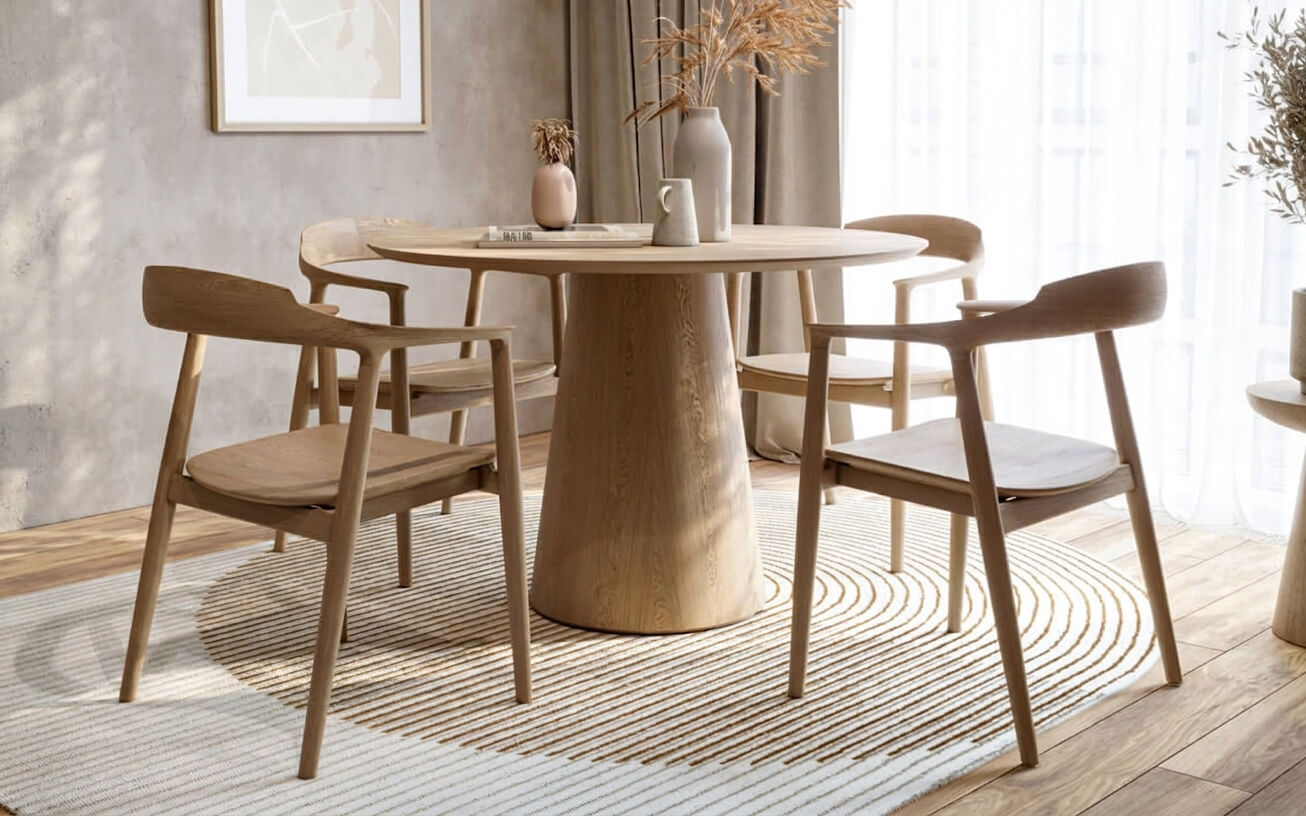
- Modern Interior
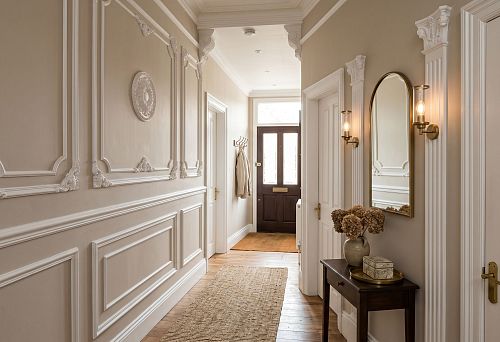
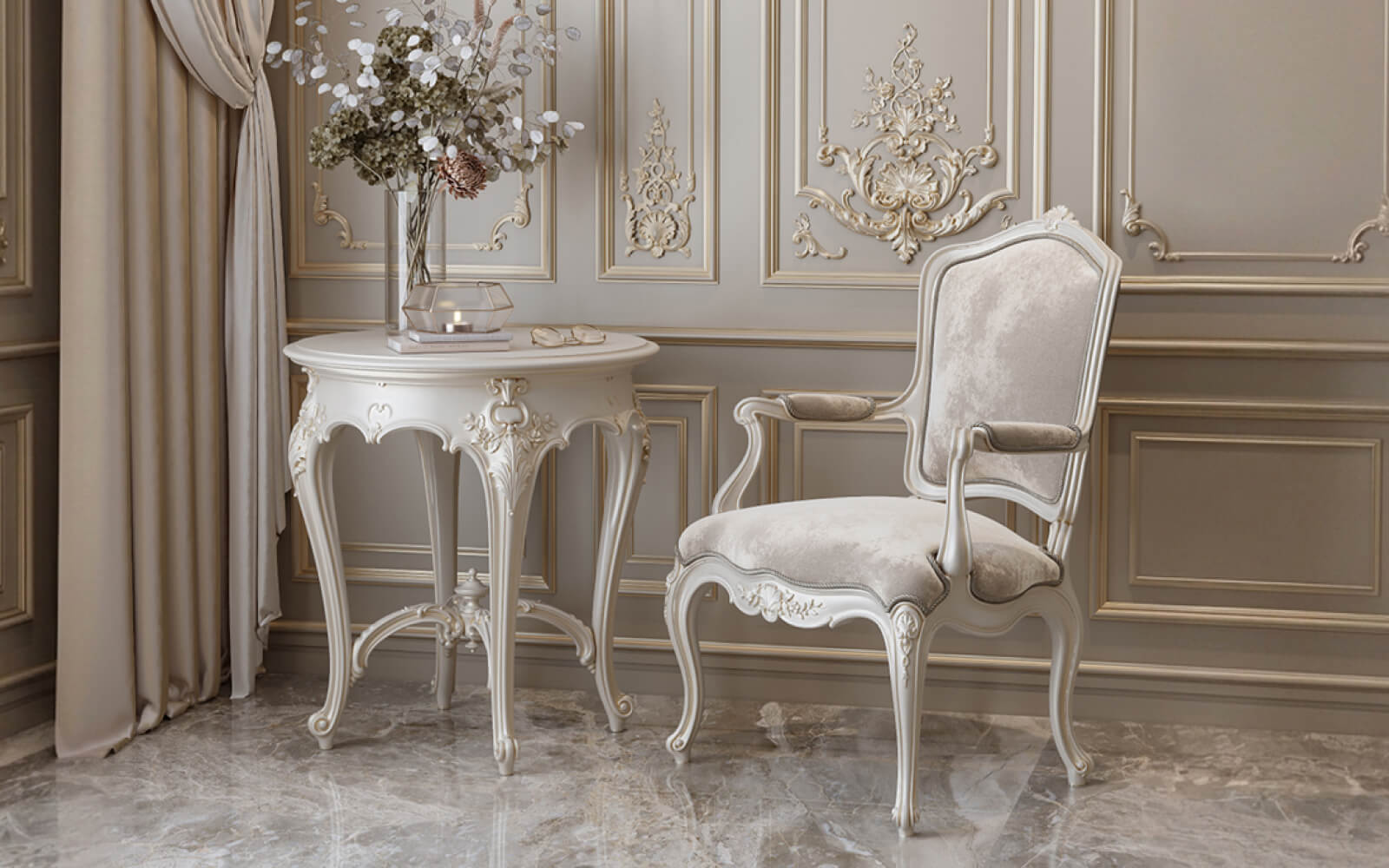
- Classic
- Neoclassicism
- Commercial interiors
- What to buy together with a baseboard
- Moldings and Cornices
- Slatted panels
- Decor for moldings
- Related trim
- Where to buy a baseboard in Moscow
- What to pay attention to when choosing a supplier
- Selection by height and material
- Delivery in Moscow
- Common mistakes when choosing baseboard
- Too low a baseboard for high walls
- Unsuitable material for a wet area
- Conflict with doors, moldings, and panels
- Choosing only by photo without considering the floor covering
- Ignoring the cable channel
- Frequently Asked Questions About Buying Skirting Boards in Moscow
- Conclusion

There are details you don't notice—until they are done incorrectly. A skirting board is exactly such a detail. When it is chosen correctly—by material, height, tone, profile—it's as if it isn't there. The space simply looks finished, cohesive, expensive. When it is chosen at random—the mismatch is felt immediately, although it can be difficult to explain in words.
Buying a skirting board in Moscow is a task with a specific algorithm. Not 'choose the most beautiful one from the first catalog you come across,' but make three sequential decisions: which material suits the operating conditions, which height corresponds to the proportions of the space, which profile works within the system with the flooring and other wooden elements.
This article is not a reference guide to types of skirting boards. It is a practical instruction for those who want to buy a floor skirting board in Moscow and not redo it later.




Buy a skirting board in Moscow: which option to choose for your interior
The Moscow market for floor skirting boards offers dozens of materials and hundreds of profiles. It is precisely this abundance that turns a seemingly simple task into a source of uncertainty. Where to start?
With three questions—and only with them.
First: where will the skirting board be installed? A dry living room and an entrance hall with street humidity are fundamentally different conditions. The material is chosen based on the operating environment, not just appearance.
Second: what is on the floor? Oak parquet, laminate under light pine, quartz vinyl under stone—each of these coverings dictates its own logic for selecting a skirting board by tone and material.
Third: what is the interior style? A tall profiled skirting board for classic. A narrow smooth one—for modern minimalism. A medium one with moderate relief—for neoclassical.
baseboard for floor— is not the final touch after renovation. It is an element that is planned together with the floor, doors, and other wooden moldings. The 'I'll buy something at the end' approach invariably leads to the baseboard either clashing with the system or being replaced later.




What baseboards can be bought in Moscow
Three categories of materials — three fundamentally different products with their own logic of application.
Our factory also produces:


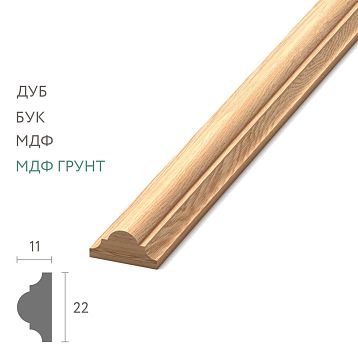
Wooden skirting boards made of oak and beech
Solid wood is not the 'expensive' category. It is the 'correct' category for a specific type of interior.Wooden baseboardmade of oak or beech carries what cannot be reproduced by any substitute: living texture, tactile density, natural wood scent — that very 'material honesty' sought in interiors with natural finishes.
Oak is the benchmark among species for floor baseboards. Density 700–800 kg/m³, expressive grain pattern, resistance to mechanical loads, long service life with proper treatment. Buying an oak baseboard in Moscow means choosing a detail that will outlast more than one renovation: it can be sanded and refreshed without replacing the profile.
Beech is somewhat softer than oak, with a uniform dense structure without a pronounced pattern. It is precisely the uniformity of beech that makes it an ideal object for staining: the stain applies evenly, the shade is predictable and reproducible. Buying a beech baseboard in Moscow is the right choice for interiors where precise stain color is important.
Wooden baseboard — a choice for:
-
spaces with parquet or engineered flooring from the same or similar species
-
classical and neoclassical interiors with a rich wooden system
-
long-term projects where the material must last 20–30 years
-
interiors with natural materials — wood, stone, natural textiles
Get Consultation
Baseboard — it is a modest detail, often unnoticed, but plays a critical role in creating the completeness of the interior.
MDF is pressed wood with a mathematically precise, uniform structure. No knots, no pores, no random variations in density. It is this precision that makes itMDF Skirting Boarda flawless base for finishing paint.
Buying white MDF skirting is a query that grows year after year in the Moscow market. The reason is clear: new residential complexes with finishing 'for painting,' white walls, white ceiling, white skirting — and all of it is a unified field. No texture, no wood tone, only pure geometry of a horizontal line.
It is advisable to buy MDF skirting for painting when:
-
the finishing is acrylic paint in any NCS, RAL, or Pantone color
-
the interior is Scandinavian, modern, minimalist, Art Deco with monochrome
-
a perfectly smooth surface without visible wood texture is needed
-
large linear footage — the meterage is significant, and the cost per linear meter of MDF is more advantageous than solid wood
-
Dry room without constant contact with moisture
A technical nuance often overlooked: MDF swells from moisture. The lower end of the profile that touches the floor in an entryway with outdoor dampness is the first victim of incorrect material choice. Entryways, kitchens, country houses with seasonal heating are not for MDF.
Moisture-resistant skirting boards made of polystyrene and phytopolymer
Moisture-resistant skirting boards made of polyurethane and polystyrene— the third fundamental category that is ignored without good reason.
Polystyrene is a high-strength thermoplastic polymer with a particularly dense structure. It does not absorb moisture, does not deform from temperature changes, and does not crack from mechanical impacts. Phytopolymer is a new-generation material combining plant-based fibers with a polymer binder. Externally, it is very close to wood; in moisture resistance, it is not inferior to polystyrene.
The HI WOOD line based on polystyrene — skirting boards from 58 to 140 mm in height, with a primed surface for any acrylic paint. This is simultaneously a moisture-resistant and visually 'interior' product: no plastic shine, no cheap appearance. The profile is cut with a regular handsaw, installed with liquid nails, and painted any color.
Buying a polystyrene skirting board in Moscow is the right decision for:
-
entryways, kitchens, rooms with regular wet cleaning
-
country houses with irregular heating
-
commercial interiors (restaurants, medical clinics, offices)
-
bathrooms where decorative molding is needed without risk of deformation
How to choose baseboard by material
A clear algorithm is better than vague recommendations.
When wood is better
Choose wooden baseboard to buy in Moscow if two conditions are simultaneously true: the room is dry (bedroom, living room, study) and the interior already has wooden elements that need a system. Oak parquet, wooden doors, wooden windowsills — and baseboard made of the same wood. One material, one tone, one system.
Additional arguments in favor of solid wood:
-
long-term project — solid wood is repaired, not replaced
-
tinting while preserving texture — only wood can do this
-
interior is 'authentic', not 'wood-like'
Solid oak baseboard 100 mm high next to oil-treated oak parquet — these are details of the same language. They communicate with each other without unnecessary explanations.
When MDF is more convenient
MDF Skirting Board Buyreasonable when:
-
task — painting white or any exact color
-
laminate or quartz vinyl in 'neutral' shades — no competition with natural texture needed
-
budget for moldings is limited, but there are many meters
-
interior — Scandinavian, modern, minimalist
-
room is definitely dry — bedroom or living room in a city apartment
MDF skirting is predictable and technological. It accepts paint evenly, holds geometry, does not deform under normal operating conditions.
When a moisture-resistant option is needed
Buy moisture-resistant skirting— not a compromise, but a professional solution for:
Hallways — contact with outdoor moisture is inevitable. Snow on soles, wet umbrellas, regular wet cleaning — all this destroys MDF in one Moscow autumn-winter season.
Kitchens — skirting by the kitchen island or under the sink cabinet. Splashes, steam, floor washing — normal for a kitchen, catastrophic for MDF.
Country houses — irregular heating, humidity fluctuations from 30% in summer to 70% in autumn. Under such conditions, untreated wooden skirting boards warp, MDF swells. Polystyrene remains stable under any conditions.
Commercial premises — daily wet cleaning, intensive traffic, high requirements for wear resistance.
How to choose skirting by height and profile
Skirting board height is an architectural decision, not just an aesthetic one. An error in height is immediately noticeable and can only be corrected by replacement.
Low skirting boards (up to 60 mm)
Minimalist profile. Delicate, almost invisible — it marks the boundary between floor and wall without claiming a decorative role.
Where it works:
-
small rooms with ceilings up to 2.6 m — the skirting board doesn't 'overwhelm'
-
modern interiors where there are intentionally no accents at the base of the wall
-
laminate or quartz vinyl flooring in light solid colors
Practical note: a skirting board 40–50 mm high practically doesn't hide cables. If you need a cable channel — choose a profile from 60 mm with an internal groove of at least 15×15 mm.
Average height (70–80 mm)
The most in-demand format on the Moscow market. Highly legible in space, functional, stylistically neutral. Suitable for apartments with ceilings of 2.7–3 m in most styles: from Scandinavian to moderate neoclassicism.
This specific range — 70–80 mm — covers the majority of 'buy skirting board in Moscow' requests for a standard residential interior. Tall enough for cable channels and hiding the expansion gap under laminate flooring. Modest enough not to compete with wall finishes.
Tall skirting boards (100 mm and above)
Buying a tall skirting board in Moscow is a design statement. A profile of 100–120 mm and above sets the scale, adds architectural weight to the base of the wall, and creates a pronounced horizontal belt.
Appropriate in:
-
classical and neoclassical interiors with ceilings from 3 m
-
spacious living rooms and halls of country houses
-
studies with dark parquet floors and rich wooden systems
-
historical apartments and apartments with high ceilings
The visual effect of a tall skirting board is paradoxical but real: it does not weigh down the space but, on the contrary, emphasizes the height of the ceiling, creating a clear 'foundation' for the vertical volume of the room.
Wide profiles for a status interior
Width (projection from the wall) — from 15 to 30 mm.wide floor skirting boardwith a pronounced cross-section creates a tangible volume at the base of the wall. With side or directional lighting, the wide profile casts a soft shadow, adding depth to the wall.
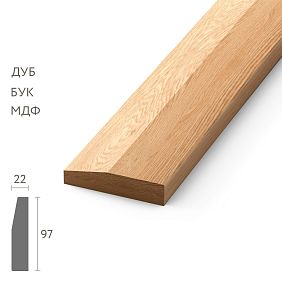
Wide solid oak skirting board 120×16 mm is not just a 'tall skirting board'. It is an architectural element with a pronounced relief, perceived as part of the wall finish, not just a technical detail at the floor.
White and paintable
Two approaches, two different visual results:
Skirting board matching the floor color visually expands the room. The boundary between floor and wall dissolves: the floor 'grows' up the wall from below. The effect is especially noticeable in small spaces.
Buy white skirting board in Moscow — a timeless classic. The white horizontal line at the base of the wall structures the space, creates a clear boundary between floor and wall, and 'freshens up' dark or rich-colored floors.
Skirting board matching the wall color — a professional monochrome technique. The wall visually extends all the way to the floor: the room appears taller.
Skirting board matching the color of doors and architraves — a systematic approach where all wooden elements are united in a single color scheme.
| Combination | Visual effect | Best style |
|---|---|---|
| Baseboard = floor tone | Expands the room | Modern, Scandinavian |
| White baseboard + dark floor | Classic contrast | Classic, neoclassic |
| Baseboard = wall tone | Monolithic height | Monochromatic modern |
| Baseboard = door tone | Unified wooden system | Neoclassical, classic |
| Anthracite + light floor | Industrial accent | Loft, industrial |
How to choose a baseboard for flooring
Flooring is the first technical reference. The baseboard should be part of the 'conversation' between the floor and the wall—not an outsider between them.
Under laminate
Laminate is a floating structure. It is laid with a 10–15 mm expansion gap from all walls: the material expands with changes in temperature and humidity. This gap is covered by the baseboard.
Key installation rule: the baseboard is attached only to the wall, not to the laminate. The laminate must move freely under the baseboard during temperature changes. If the baseboard is nailed to the floor—the laminate will 'buckle' at the first summer heat.
Buy baseboard for laminate in Moscow: MDF in the color of the laminate board—or white if the walls are white. For laminate 'oak' or 'walnut'—wooden baseboard in a similar tint.
Under parquet
Parquet is a living material. Natural wood requires a natural baseboard. The logic is simple: oak parquet—Skirting made of solid wood—from the same oak with the same oil or varnish tint. Ash parquet—baseboard from ash or beech in a similar shade.
Buy baseboard for parquet in Moscow—this is a fundamental request that does not tolerate compromise in material. MDF next to natural parquet is a visible mismatch that is felt upon closer inspection. Not critical from a distance of two meters, but noticeable to those who understand materials.
For quartz vinyl
Quartz vinyl tile (LVT) is a technological coating that imitates wood, stone, or concrete with high precision. It is laid in a 'floating' manner—the same requirements for the baseboard as for laminate: attachment only to the wall.
Buying skirting boards for quartz vinyl in Moscow — a task considering material imitation:
-
quartz vinyl "under dark oak" — wooden skirting board in a similar dark tone
-
quartz vinyl "under light ash" — white MDF or in light tint
-
quartz vinyl "under concrete" or "under stone" — gray or anthracite skirting board made of moisture-resistant polystyrene
For engineered board
Engineered board — a parquet panel with a top layer of natural veneer (usually 2–4 mm). Installed with adhesive or "floating" method. Visually — very close to parquet.
Buying skirting boards for engineered board in Moscow — the same logic as for parquet: wooden profile matching the tone of the top veneer layer. For oak engineered board — oak skirting board. For ash board — ash or beech skirting board.
Important nuance: engineered board is more stable to humidity than parquet, but a wooden skirting board next to it in the hallway is still undesirable — a moisture-resistant profile is more reliable.
For tile and porcelain stoneware
Tile and porcelain stoneware — covering for wet areas. Kitchen, hallway, bathroom, toilet. Buying skirting boards for tile in Moscow — definitely moisture-resistant.
Three options:
-
Porcelain stoneware skirting board — continuation of the covering itself vertically along the wall. Ideal for bathroom and kitchen, where 100% moisture resistance is needed.
-
Polystyrene skirting board for painting — matching the tile or in white. For hallway and kitchen with tile.
-
Moisture-resistant phytopolymer skirting board — a decorative profile with a rich selection of heights for commercial interiors with tiled flooring.
How to choose a skirting board to match the interior style
Modern interior
Minimalism in details — maximum in space. Modern interiors dislike decorative overload, and the skirting board here functions as a technical element with an ascetic profile.
White MDF skirting board to buy, 60–70 mm high with sharp edges and a perfectly smooth surface — the standard for a modern Moscow apartment. It serves its function and fades into the background.
For modern interiors with dark floors — anthracite or dark gray moisture-resistant skirting board. For 'concrete' loft-type spaces — light gray matte profile.
Classic
Classicism is the language of scale and detail. A low skirting board in a classic interior sounds like a false note in an orchestra: everything else is in place, but the wall base is disproportionately modest.
For classicism — a wooden skirting board made of dark oak, 100–120 mm high, with a pronounced profile section: one or two steps, a smooth curve at the base. Next to dark parquet, oak doors, and wooden wall moldings — it's a system, not a set of details.
Classicism requires a unified wooden program. That is why, along with the skirting board in a classic interior, they orderMoldings and cornicesfrom the same product line.
Neoclassicism
Neoclassicism is classicism with excesses removed. It retains architectural rigor but rejects baroque ornamentalism. Skirting board for neoclassicism: height 80–100 mm, one step in cross-section, smooth or with minimal relief surface.
Material — wooden in a light tone or MDF for painting white. For neoclassicism, a unified white 'frame' of skirting board, architraves, and cornices is important — and it is perfectly achieved through white MDF throughout the entire trim system.
Commercial interiors
Office, restaurant, medical clinic, hotel — commercial real estate imposes special requirements: durability, moisture resistance, ease of replacement, compatibility with strict cleaning regulations.
Ordering skirting boards for commercial interiors in Moscow means choosing a moisture-resistant profile made of polystyrene or phytopolymer, with the option to paint in corporate colors. Height range — from 60 to 140 mm. Surface — primed for painting or factory white.
What to buy together with skirting boards
A skirting board alone is a detail. A skirting board as part of a system is an interior. The difference lies in what you take along with it.
Moldings and cornices
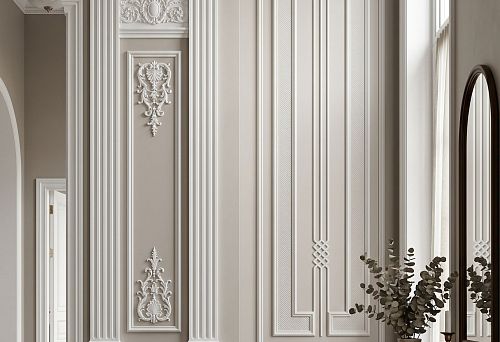
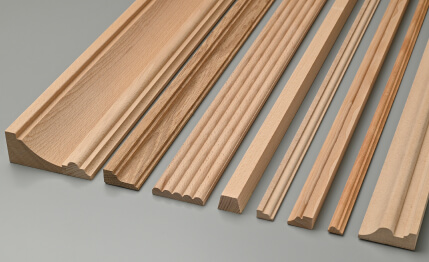
Moldings and cornicesFrom the same line as the skirting board — this is the vertical extension of the wooden system. The skirting board covers the base of the wall. The cornice finishes its top. The molding creates a framed structure in the middle.
This is especially important for classical and neoclassical interiors: uniform material and a single profile from floor to ceiling create that 'everything in its place' feeling that good designers strive for.
Rack panels
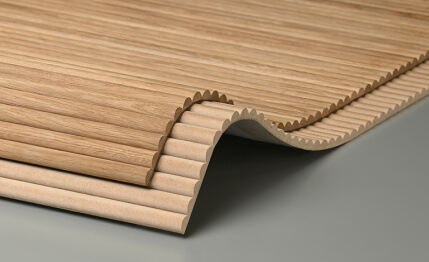
Rafter panels— one of the most relevant demands in the Moscow interior market in recent years. Vertical wooden slats on one or several walls create a rhythmic textured background that perfectly complements the floor skirting board made from the same wood species.
Oak slat panel + oak skirting board + oak parquet — this is a complete natural system. Floor, wall, wall base — one material environment. Such an interior requires no additional explanation: it works on its own.
Decor for moldings
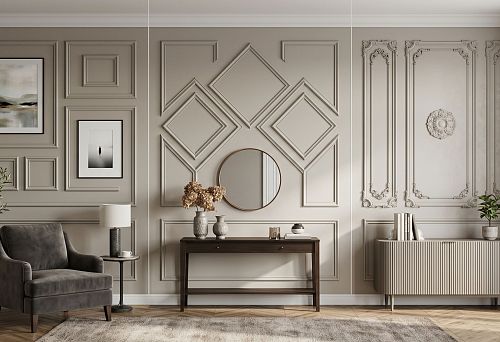
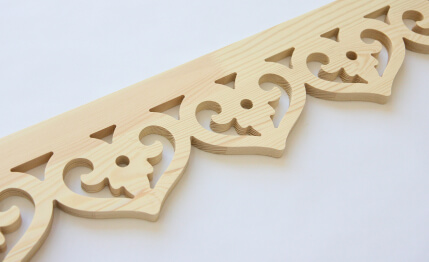
Decor for Molding— corner blocks, central overlays, ornamental inserts — details that transform a molding system from 'four planks on a wall' into decorative architectural panels.
If skirting boards are purchased together with moldings for framed panels, decorative elements are an essential component. Without corner blocks, the frame looks unfinished; with them — professional and expensive.
Related millwork
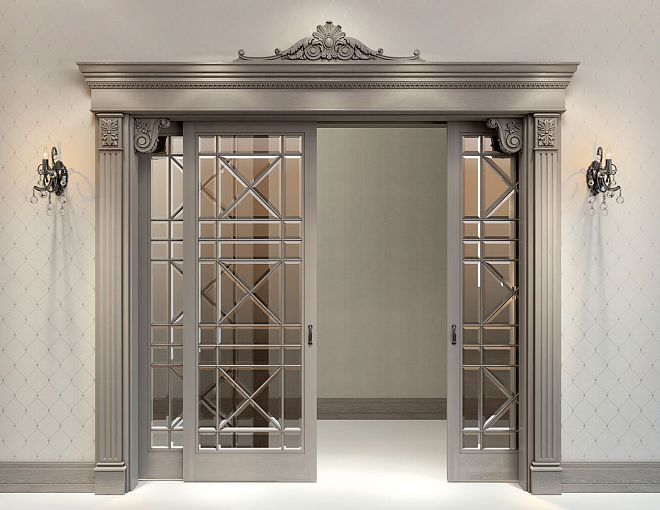
Door casing is the baseboard's first neighbor. They meet at one point: at the base of the door opening. Casing and baseboard from the same line, same material, same finish — that's systematic work. Different materials and different shades at this point create a visible break that cannot be hidden.
Buying baseboard as part of a unified system with casings is a professional standard, not perfectionism.
Where to buy baseboard in Moscow
Practical block — and the most important one for those who have already made a decision.
What to look for when choosing a supplier
Four criteria that distinguish a reliable supplier from an anonymous aggregator:
Actual warehouse availability. Long-length millwork — baseboards, cornices, paneling — is not stored by most intermediaries. 'Made to order' during renovation means delays and the risk of mismatch with already purchased flooring. Verify the availability of a specific profile before placing an order.
Samples before purchase. Wood finish on a screen and under natural lighting in your apartment are fundamentally different things. A supplier willing to send a sample eliminates the main risk: shade mismatch after installation.
Unified product line. Baseboard, cornice, molding, casing from the same series by one manufacturer — a guarantee of profile and finish compatibility. A hodgepodge from different manufacturers creates an 'invisible conflict': nothing specifically irritates, but the overall tone is off.
Professional packaging. Long-length millwork breaks during improper transportation. Professional packaging is not an option, but a mandatory condition for loss-free delivery.
Selection by height and material
Skirting board consultation — 15–20 minutes that save time on redoing incorrect choices. What to prepare:
-
Photo of flooring and door leaf
-
Ceiling height
-
Type of room (living room, hallway, kitchen, country house)
-
Interior style
-
Color of walls and ceiling
With this information, buying skirting board in Moscow — a matter of one conversation.
Delivery in Moscow
Buy skirting board in Moscowwith city delivery — if in stock, timeframe is 1–3 business days. Delivery of long-length skirting is carried out in special packaging that prevents breakage and surface damage.
Go to catalog — select the required category:
Common mistakes when choosing skirting boards
Predictable mistakes that occur regularly. Read — and don't repeat them.
Too low a skirting board for high walls
A 40 mm skirting board with a 3.2 m ceiling is an architectural error that is visible at first glance. The base of the wall is disproportionately thin, the space looks 'unearthly,' without a stable foundation.
Practical rule: skirting board height — about 1/40–1/50 of the ceiling height. With a 3 m ceiling — from 60–75 mm. With a 3.5 m ceiling — from 80–90 mm. With a 4 m ceiling — from 100 mm.
Unsuitable material for a wet area
An MDF skirting board in the hallway of a Moscow apartment is a skirting board for one autumn-winter season. A swollen lower edge, blistered paint, a deformed profile — all this appears within just three to four months with regular contact with moisture.
Hallway, kitchen, country house with irregular heating — only moisture-resistant skirting board. No exceptions.
Conflict with doors, moldings, and panels
Dark oak skirting board + white architraves + MDF cornice for painting in cream — three materials, three shades, three profiles. None of them are bad on their own, but together they create a visual break that a professional designer would call 'lack of system.'
A single line for all skirting boards is not perfectionism. It's a professional minimum for interiors where results matter.
Choosing only by photo without considering the floor covering
A photo of 'light oak' in one interior and in yours are two different colors under different lighting. The wood shade critically depends on the light source: the same oil on oak looks different under a warm floor lamp and under cold daylight from a window.
Always order a sample and place it against the floor and door before finalizing the order.
Ignoring the cable channel
This mistake is discovered when the renovation is already finished and the skirting board is installed: where to hide the wires? A skirting board without a cable channel is a closed question. Redoing after installation means demolition, a new order, and reinstallation.
If there are plans to run at least one cable along the wall—choose a profile with an internal groove from 15×15 mm when ordering.
Frequently asked questions about buying skirting boards in Moscow
Which skirting board is better to buy in Moscow—wooden or MDF?
Depends on the room and task. Wooden—for parquet, natural interiors, long-term projects. MDF—for modern minimalism, painting white, dry rooms. Moisture-resistant polystyrene—for the hallway, kitchen, country house.
What height of skirting board to choose for a standard apartment with a 2.7 m ceiling?
70–80 mm — optimal. For a modern interior — 60 mm. For classic or neoclassical — 100 mm.
Can you glue skirting board to laminate?
No — absolutely not. Skirting board is mounted only to the wall. Laminate must move freely under the skirting board during thermal expansion. Fixing to the floor = swollen laminate at the first heating.
How to match skirting board to parquet?
Same material (oak — to oak, ash — to ash), same tint. Request a skirting board sample and place it against the end of the parquet board in daylight.
How to properly paint MDF skirting board?
Sanding with P180 sandpaper → acrylic primer (2 coats with drying) → final acrylic paint (2 coats with a thin roller or brush). Each coat — complete drying.
What is better for an entrance hall — wooden or moisture-resistant skirting board?
Only moisture-resistant. The entrance hall is an area with constant humidity fluctuations. Polystyrene or phytopolymer skirting board is the only reliable choice for this zone.
Is a cable channel needed in the baseboard?
If you plan to hide wires from the TV, floor lamp, chargers — yes, it is needed. Choose a profile with an internal channel of at least 15×15 mm. Redoing it after installation is expensive and unsightly.
Which baseboard to choose for a classic interior in Moscow?
Wooden, made of dark oak, 100–120 mm high with a profiled section. In a system with cornices and moldings from the same line.
How to calculate the amount of baseboard for a room?
Room perimeter (sum of all walls) minus the total width of door openings, plus 10% for trimming and joints in corners. Corner caps — separately, one for each external and internal corner.
Buy oak baseboard in Moscow — which treatment is better?
Oil with wax — for a warm, natural look with a matte sheen. Varnish — for a more durable protective coating with a choice of gloss. Stain + varnish — for precise color with protection.
Is a tall baseboard in a small room too much?
Not necessarily. A tall baseboard (100 mm) in a small room with a high ceiling (from 3 m) works correctly. In a small room with a low ceiling (2.5 m) — yes, 100 mm will be heavy. Focus on the baseboard/ceiling ratio, not just the room size.
Conclusion
Buying skirting boards in Moscow is a task with right and wrong approaches. The right one involves three sequential decisions: material suited to operating conditions, height matching spatial proportions, and a system coordinated with other wooden moldings. The wrong one is 'whatever fits' at the end of the renovation.
Three materials — three logics of application:
-
Solid oak and beech — for parquet and natural interiors, for long-term projects
-
MDF for painting — for Scandinavian and contemporary aesthetics with a white system
-
Polystyrene and phytopolymer — for hallways, kitchens, country houses, commercial spaces
And one principle that always works: skirting boards in a unified line with architraves, cornices, and moldings create an interior. Mismatched pieces from different sources are just a set of elements that exist side by side, but not together.
Go to the catalog and select:
STAVROS Company is a Russian manufacturer of decorative interior products made from natural wood, MDF, and polyurethane. The STAVROS catalog includes floor skirting boards made of oak and beech with heights of 60–120 mm, MDF skirting boards for painting, moisture-resistant HI WOOD profiles made of polystyrene 58–140 mm, moldings, cornices, paneling, and decorative elements — a complete system of interior moldings from the manufacturer.
STAVROS works with private clients, designers and architects, construction companies, and developers across Russia. Delivery in Moscow when in stock — 1–3 business days in professional packaging. Consultation on selecting skirting boards for specific flooring and style — free of charge. Material samples — available upon request.
Order skirting boards in Moscow with guaranteed material quality, a compatible linear system, and personalized profile selection — STAVROS.