Article Contents:
- What types of wooden furniture legs exist: a complete breakdown of shapes
- Conical wooden furniture legs
- Shaped wooden legs for furniture
- Carved wooden furniture legs
- Simple wooden furniture supports
- Which furniture to choose wooden legs for: purpose and nuances
- Wooden legs for dresser
- Wooden legs for cabinet
- Wooden legs for sofa
- Wooden legs for cabinet and case furniture
- Wooden legs for table and console
- How to choose the height of wooden furniture legs
- Logic of height selection
- How not to make mistakes with proportions
- Leg height and flooring
- Wooden furniture legs in different interior styles
- Style selection table
- Classic: carving, ornament, hierarchy
- Neoclassical: restraint without losing decorativeness
- Provence: softness, lightness, femininity
- Modern classic: minimalism with dignity
- Material and finish of wooden furniture legs
- Why solid wood is essential
- Beech as the main material
- Wooden legs for painting
- Wooden legs for staining
- How to match legs with other furniture decor elements
- Legs + furniture handles
- Legs + carved overlays on facades
- Legs + moldings and trim
- Legs + wooden baguette and decorative elements
- Replacing furniture legs during restoration: how to do it right
- How to maintain style when replacing
- How to avoid mistakes with height during restoration
- Finishing during restoration
- Mistakes when choosing wooden furniture legs
- Where to buy STAVROS wooden furniture legs
- Frequently Asked Questions
- About the Company STAVROS
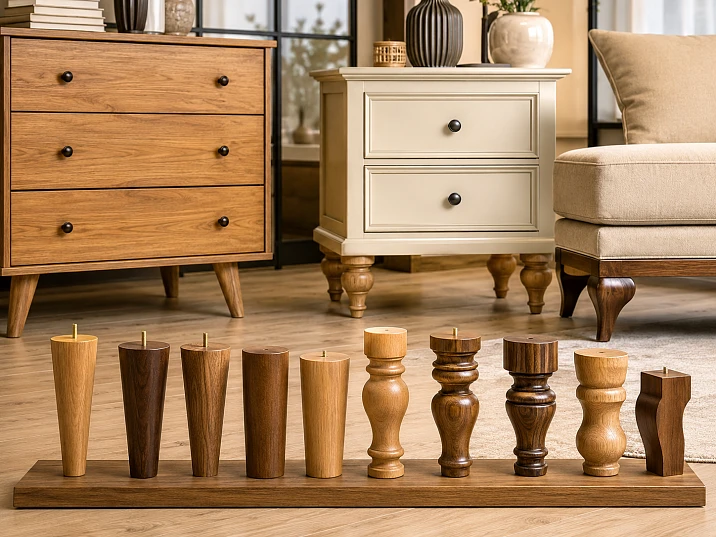
The leg is the first thing you see under furniture, and the last thing you think about when buying. And in vain. It is the leg that determines whether the furniture "stands" in the space or "flies" above the floor, whether the chest of drawers looks like a heavy monolith or a light classic piece, whether the sofa fits into the interior or contradicts it.
Buy wooden furniture legs is not the most difficult task. But choosing the right shape, the right height, and the appropriate style for a specific piece of furniture is work that requires understanding. Conical wooden furniture legs make furniture visually lighter and fresher. Shaped and carved ones add a classic character, connecting the support with the facade decor. Massive supports add weight and monumentality.
Where is the line between "beautiful" and "correct"? How not to buy legs that won't match the dresser? How to avoid a situation where a magnificent cabinet stands on unsuitable supports? Let's break it down by essence — shape, height, purpose, material, and connection with the rest of the decor.
What types of wooden furniture legs exist: a complete breakdown of shapes




Conical wooden furniture legs
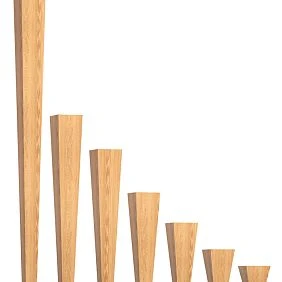
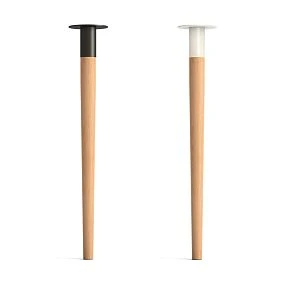
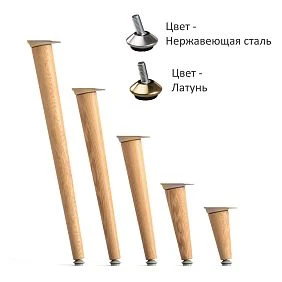
The cone is one of the most archetypal silhouettes in furniture design. A leg that uniformly tapers from the upper mounting platform to the lower end is an image that simultaneously references the mid-20th century (Copenhagen, Danish modernism) and contemporary neoclassical interiors with their love for clean lines.
Buy wooden conical furniture legs means getting a support that works to "lighten". A conical leg makes the furniture body visually weightless: it seems that the dresser or cabinet is not standing on the floor, but slightly floating above it. This is especially valuable for furniture with massive fronts — without legs it looks heavy, with conical supports it looks balanced.
In which interiors does a conical leg work best?
-
Modern classic: laconic fronts, neutral colors, clean geometry. The conical leg does not overload the look.
-
Neoclassicism: furniture with moldings and restrained decor. The cone maintains lightness with pronounced horizontal lines of the front.
-
Scandinavian style with classic features: thin conical legs in natural wood tone.
-
Provence in a soft version: cone-shaped legs under white enamel on a painted cabinet.
Cone-shaped legs come in short (5–8 cm), medium (10–15 cm), and tall (15–25 cm). The taller the leg, the lighter and more "airy" the furniture. The shorter the leg, the more stable and grounded the silhouette.
Our factory also produces:
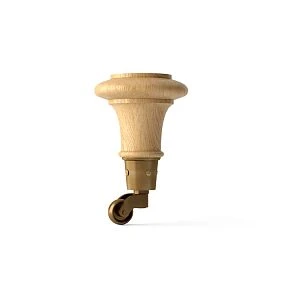
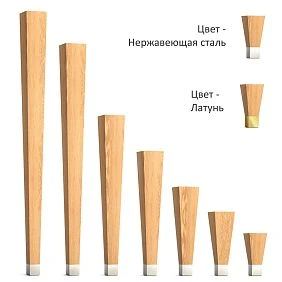
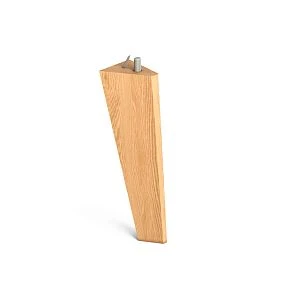
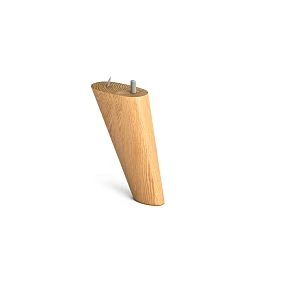
Shaped wooden legs for furniture
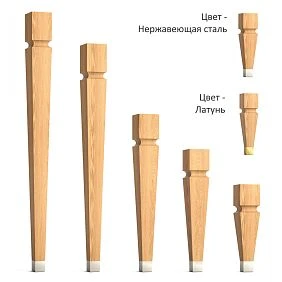
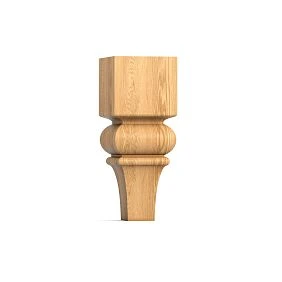
A shaped leg is a silhouette with a variable cross-section: thickening, narrowing, curve, geometric step. It is no longer just a support, but a decorative element with a distinct character.
Buy shaped wooden furniture legs — means adding ornamental strength to the furniture. A shaped leg works as a vertical accent: it is visible, it is noticed, it shapes the style. That is why shaped supports are so organic in interiors with carved overlays for furniture, wooden moldings and decorative handles.
Several characteristic shapes of shaped legs:
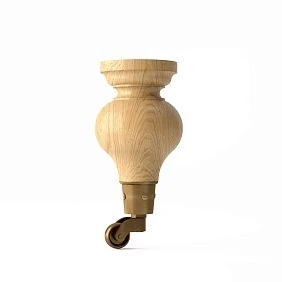
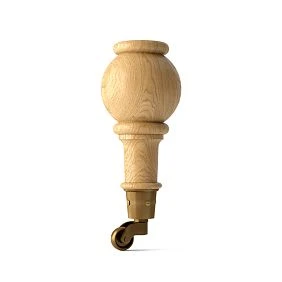
Leg with a "barrel". There is a bulge in the middle of the silhouette, tapering towards the ends. A classic type for Provencal and English furniture. It looks soft and rounded.
Leg with a "vase". A more complex silhouette: thickening in the upper third, smooth tapering towards the bottom with a slight widening at the base. This is a shape that came from 17th–18th century furniture and is still appropriate in classics.
Leg with a "square body". Rectangular or square cross-section with decorative chamfers, grooves, or relief. A more strict and architectural option for neoclassicism.
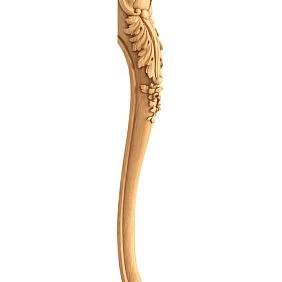
Cabriole leg. S-shaped curve with a "knee" at the top and a "foot" at the bottom. One of the most recognizable forms of European classical furniture — Baroque, Rococo, Louis XV. In modern interiors, it is used as a quotation or as an element of deliberate stylization.
Get Consultation
Carved wooden furniture legs
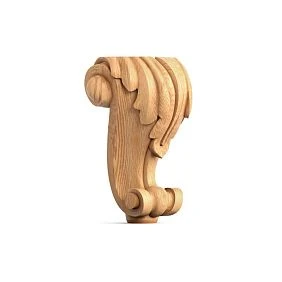
If a shaped leg is a silhouette, then a carved leg is also a surface. Carving turns the volume of the leg into an architectural object: ornamental motifs, relief patterns, leaf or geometric patterns.
Buy carved wooden furniture legs — this is a choice for classical and Baroque interiors, for restoration projects, for furniture with STAVROS carved decor, where all details must speak the same ornamental language.
A carved leg places high demands on the context: it is strong and noticeable. It must be accompanied by appropriate facades, handles, and overlays. A carved leg on a minimalist body is a visual conflict. A carved leg on a chest of drawers with wooden decorative elements and shaped handles is a cohesive image.
Simple wooden furniture supports
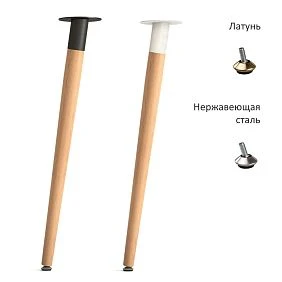
These are legs with minimal or no decoration: cylindrical, square in cross-section, slightly tapered. Their task is to support the body without drawing attention to themselves.
Buy wooden furniture legs and supports In the form of simple shapes — the right solution where decorative strength is concentrated in facades, handles, and overlays. The leg here is a neutral element that does not interfere with other details "sounding."
For which furniture to choose wooden legs: purpose and nuances
Wooden legs for a chest of drawers
A chest of drawers is case furniture with a pronounced horizontal rhythm: rows of drawers, horizontal lines of facades. Legs under the chest of drawers disrupt or emphasize this rhythm — depending on the choice of shape.
For a classic chest of drawers with carved inlays and shaped furniture handles — shaped or carved wooden legs. They support the ornamental language of the facade, "complete" the image from below. Height: 8–15 cm for standard waist-level chests of drawers; 5–8 cm for low buffet chests of drawers.
Tapered legs for a chest of drawers — for neoclassicism and modern classicism. Here, facades can have moldings but without complex carvings. Tapered supports add lightness, do not conflict with decor.
Chests and cabinets in the interior — these are areas where the leg is especially noticeable: the chest of drawers stands in an open space, visible from three sides. Therefore, mistakes in choosing the support are more obvious here than in other cases.
An important nuance for a chest of drawers: legs are installed under the four corners of the body. For large widths (over 120 cm), an additional fifth leg is recommended in the center of the back part — to prevent body sagging.
Wooden legs for a cabinet
A cabinet is a compact item where the body-to-leg ratio is crucial. A small bedside table 40 cm high on 15 cm tall legs looks like a child on stilts. The same table on low tapered legs of 6 cm appears proportional and confident.
For a bedside table: legs 5–10 cm depending on the bed height. Shape — tapered or decorative, but not massive: the table is small, the leg should not overpower the body.
For a TV cabinet: legs 5–15 cm. Tapered or simple — depending on the style. Legs that are too tall will push the cabinet upward, and the TV will be at an uncomfortable height.
For a decorative cabinet in the hallway or living room: more expressive decorative legs are acceptable here, especially if the cabinet is in an accent area.
Wooden legs for a sofa
A sofa on wooden legs is an image that is simultaneously the hallmark of a classic interior approach. It is the legs that determine whether the sofa "sticks" to the floor or lightly "sits" above it.
Buy wooden furniture legs for a sofa means first checking the sofa's construction. The legs on a sofa are attached to the frame: to the wooden bars of the lower frame or to a metal plate. Before purchasing, you need to know: the attachment method (M8/M10 thread or plate), the distance between attachment points, and the permissible load.
For a classic living room sofa — decorative or carved legs 10–15 cm high. They are visible from under the sofa skirt and create a decorative accent. The tint should match the wooden armrests or frame trim.
For a sofa in a modern classic interior — tapered legs of medium height (8–12 cm). Minimalist silhouette, natural wood tone or enamel finish.
Important: when replacing legs on a sofa, keep in mind that changing the height affects the seating. Increasing the leg height by 5 cm raises the seat by the same 5 cm. For a sofa with a seat height of 42–45 cm, this is standard. For a low lounge sofa with a 35 cm seat, raising the legs will disrupt the concept.
Wooden legs for cabinets and case furniture
A cabinet on legs is a solution that has appeared in interior mainstream relatively recently. Previously, cabinets stood directly on the floor or had a closed base section. Today, a cabinet on decorative legs is a style element: the furniture "breathes," and the space under the cabinet is visible.
For a cabinet made of solutions for cabinet decor important: legs must support a large weight. For a standard cabinet 2–2.2 m high and 120–160 cm wide — 4–6 legs, depending on the design. Shape — tapered or simple supports. Figurative legs under a massive cabinet are acceptable, but only if they are structurally strong enough.
Height: 8–12 cm is standard for a cabinet. Higher is not recommended for stability reasons with a tall body.
For a kitchen set: legs are used as base supports for floor modules. Adjustable supports are more commonly used here, covered by base panels — but in classic kitchens kitchen decor decorative wooden legs can be used as an accent element.
Wooden legs for tables and consoles
A table is a special case. A table with four legs (or three, or one central leg) is a classic that has existed for millennia. However, furniture legs from the STAVROS catalog are primarily used for small tables and consoles — not for dining tables with heavy loads.
Buy wooden furniture legs for a table — this is relevant for a dressing table, a console table in the hallway, a small coffee table, a lady's table in the bedroom. Here the loads are moderate, and the decorative effect is important.
For a console table in the hallway — shaped or carved legs 70–76 cm high (standard console height). For a coffee table — tapered legs 35–45 cm. For a dressing table — shaped, cabriole, or tapered legs, 65–72 cm.
How to choose the height of wooden furniture legs
Leg height is a parameter that changes everything. It affects the functionality of the furniture, its proportions, and its relationship to the space.
Logic of choosing height
Low legs (3–8 cm) visually "ground" the furniture. A chest of drawers appears more stable and grounded. A nightstand seems more compact. A sofa looks lower and wider. Low legs are suitable for interiors where horizontal rhythm and a sense of stability are important.
Medium legs (8–15 cm) are a universal range. The furniture visually lightens, and space appears underneath it, which reads as part of the interior. Tapered or shaped legs of medium height are the optimal choice for most items.
High legs (15–25 cm and above) radically change the appearance of furniture: it ceases to be a "body on the floor" and becomes an object with pronounced supports. This works for laconic, almost architectural solutions in neoclassical and modern interiors. For furniture with rich decor, high legs are a risk: too many active elements in different zones of the item.
How to avoid mistakes with proportions
A rule that always works: the leg height should not exceed 40% of the furniture body height. That is, for a chest of drawers 80 cm high, the legs should not be higher than 30–32 cm. For a nightstand 45 cm high — no higher than 18 cm.
Exceptions: sofa (here seating takes priority over proportion), console table (here the leg is essentially the entire support structure), bar stool.
Leg height and flooring
If the floor is heated, legs should not cover sensors. If the parquet has a pronounced pattern, high legs will allow the parquet to be seen under the furniture, enhancing the decorative effect. If there is a carpet, its thickness must be considered when calculating the final height of the furniture item.
Wooden furniture legs in different interior styles
Style selection table
| Style | Leg shape | Height | Finish | Connection with decor |
|---|---|---|---|---|
| Classic | Carved, shaped, cabriole | Medium, high | Tinting, varnish, patina | Overlays, handles, pilasters |
| Neoclassical | Conical, neat figured | Medium | Enamel, tinting | Moldings, minimalist handles |
| Provence | Figured with soft shapes | Medium | White/cream enamel, patina | Carved decor, open shelves |
| Modern Classic | Simple conical | Medium, high | Natural wood, varnish | Minimal decor |
| Restoration | In the shape of the original | In the height of the original | In the original tone | Everything — in accordance with the style |
Classics: carving, ornament, hierarchy
In a classic interior, the leg is part of the ornamental system of the object. It is in dialogue with the facade overlays, with pilasters and columns on cabinets, with molding profiles, with decorative rosettes of handles.
For a classic chest of drawers or cabinet — a leg with pronounced carving, a "vase" or cabriole silhouette. Toning to match the furniture's wood or darker. Height — medium: 10–15 cm. A too-small leg under a baroque chest of drawers looks like a misunderstanding.
In the system solutions for furniture classic legs are consistent with coated handles — gilded or patinated, — creating a unified image of the object.
Neoclassicism: restraint without loss of decorativeness
Neoclassicism is classicism cleansed of excessive ornament. Here, tapered legs on a painted chest of drawers are the ideal solution. The strict, clean silhouette of the support and neat rectangular moldings on the facades create an image that reads as classic but does not overwhelm with ornamental saturation.
Tapered legs under white enamel are the standard for neoclassical kitchen islands, bedside tables, and consoles. handles without coating in the same color — a unified system.
Provence: softness, lightness, femininity
The Provencal style features open cabinets painted white or cream, with soft shapes and a light patina. The legs here are shaped, with rounded forms: neither a strict cone nor heavy carving. The "barrel" shape or soft "vase" in white enamel with a light dark patina is a classic Provencal image.
In a Provencal interior, the legs of a chest of drawers or cabinet are often painted together with the body in a single color: there is no boundary between the "body" and the "support," everything is one.
Modern classic: minimalism with dignity
Modern classic loves natural wood in neutral tones. Conical legs made of beech under a clear matte lacquer on a natural wood chest or on furniture with white enamel — an image that looks equally good in Moscow and Copenhagen.
Wooden furniture legs and supports made of solid wood in a laconic form — the choice of those who do not want flashy decor but value material and proportion.
Material and finish of wooden furniture legs
Why solid wood is fundamentally important
Solid Wood Items — this is not a marketing word. It is a real difference in three parameters.
First: durability. A solid wood leg withstands load significantly better than MDF or glued plywood. This is important for chests of drawers with heavy contents, for sofas with dynamic load.
Second: finishing capability. Any coating holds well on solid wood: enamel, tinting, varnish, patina. MDF behaves differently under paint: it swells in humidity, is harder to sand.
Third: repairability. A solid wood leg can be repainted, sanded, refreshed. Laminated MDF, with any damage to the coating, begins to irreversibly degrade.
Beech as the main material
Beech is a universal furniture wood. Uniform density, neutral texture (slightly warmer, without a pronounced pattern), good workability. Beech legs accept any coating without surprises.
For legs under white or any other enamel, beech is optimal: the neutral texture does not 'show through' thin layers.
Wooden legs for painting
Legs without a finish coating — for projects where the leg color must exactly match the color of the furniture or interior. Technology: sanding → acrylic primer → finish enamel in 2 coats. Tip: paint the legs before installation, apply the final coat after installation.
Wooden furniture legs for painting are especially valuable in restoration: an old piece of furniture with new legs painted in the same tone as the facades looks like a single whole.
Wooden legs for tinting
For interiors with natural wood — legs for tinting. Stain → varnish. The shade is matched to the parquet, to the furniture, to the wooden trim room.
Tinting reveals the wood texture, adds depth. Different shades: from "natural beech" to "dark walnut" — a range that can fit any project.
How to match legs to other elements of furniture decor
A leg is not an independent item. It works within a system. Here is how this system looks in a real furniture project.
Legs + furniture handles
wooden furniture handles and legs are two elements that define the "top" and "bottom" of furniture decor. They must be coordinated: in style, in tinting, in level of ornamentation.
Classic principle: carved handles — carved or shaped legs. Minimalist handles — tapered legs. Handles with Finish with gold patina — legs in dark tinting with patination.
Violation of this principle is one of the most common mistakes: rich carved handles + simple conical legs create a sense of incompleteness.
Legs + carved overlays on facades
Carved decorative inserts for furniture are placed on facades: central cartouches, corner rosettes, framing profiles. If the overlays have a pronounced ornamental character — the legs should support this level.
For a facade with a central cartouche and corner overlays — legs with a figured silhouette or carved decor. Simple conical legs do not "hear" what is happening on the facade.
Legs + moldings and trim
wooden moldings, cornices, and baseboards in the room create a wall context. Furniture legs are the lowest point of the furniture, closest to the baseboard. They should "rhyme" with the baseboard: if the baseboard is high and decorative — the legs should be proportionate; if the baseboard is modest — the legs can be laconic.
Wooden trim in the interior and wooden furniture legs are a material rhyme: both are made of solid wood, both accept the same finishes. A unified tint for all wooden elements in the room (baseboards, architraves, legs, handles) is a sign of a well-planned interior.
Legs + wooden baguette and decorative elements
Wooden Picture Frame like a frame profile on furniture facades and legs with a figured silhouette — this is the vertical and horizontal frame system of the furniture. Horizontal lines of the baguette on the facade and vertical lines of the legs create the architectural "skeleton" of the piece.
wooden decorative elements — corner overlays, rosettes, cartouches — work as point accents on the body. In a system with carved legs, they complete the image, providing decorative richness at all levels: top (cornice), middle (facades with overlays), bottom (carved legs).
Replacing furniture legs during restoration: how to do it right
This section is for those who work not with new furniture, but with old — valuable, antique, or simply beloved.
Replacing furniture legs during restoration is one of the most common scenarios. The old leg is broken, dried out, lost, or simply does not fit the updated interior. The task: to install a new leg that does not disrupt the style of the piece.
How to preserve style when replacing
Before replacing: study the remaining legs. Photograph, measure height, diameter, silhouette shape, and attachment method. Choose a leg as close as possible in silhouette to the original.
Do not try to 'improve' the original — this leads to a style conflict. If the original leg was modest, the new one should also be modest. If the original was carved, look for an analog with a comparable ornament.
How to avoid mistakes with height during restoration
Replacing a leg with a different height changes the entire seating of the furniture. For a chest of drawers or a nightstand, this alters their height and usability. For a sofa, it affects the seating.
The golden rule of restoration: the new leg must have the same final height as the original, taking into account the attachment method. If the original leg was mounted in a groove 2 cm deep, and the new one is threaded without recess, the new leg will be 2 cm higher.
Finishing during restoration
Wooden legs for painting are an ideal choice for restoration. You paint the new leg exactly to match the original shade, and it becomes "invisible" next to the old legs. Tinting also allows you to achieve the desired hue.
Mistakes when choosing wooden furniture legs
Nine mistakes that occur most often and can be avoided.
1. Choosing only by photo. A photo does not convey scale. A leg that looks proportional in the picture may turn out to be twice as large or smaller than expected. Always check the dimensions: height, top diameter, bottom end diameter.
2. Not considering the height of the furniture. A 20 cm leg under a 30 cm cabinet is not furniture, it's a table on legs. The ratio of the leg to the body should be harmonious.
3. Choosing legs that are too thin for a massive body. Thin tapered legs with a 3 cm top diameter under a heavy solid wood dresser is a visual contradiction and a real risk of instability.
4. Mixing a modern shape with a classic facade. Tapered legs in a Scandinavian style under a baroque dresser with carved overlays is a stylistic disaster. The shape of the leg should match the style of the facade.
5. Not checking the mounting method. Different legs have different mounting options: threaded tenon, mounting plate, screws from below. Before ordering, make sure the mounting method is compatible with your furniture.
6. Not considering the finish and color. The finish of the leg should match the furniture's finish or be intentionally contrasting (which should also be planned). Accidental mismatch of tones is a constant annoyance.
7. Buying plastic supports instead of decorative wooden ones. For hidden supports under kitchen cabinets, it's acceptable. For visible decorative legs under a dresser, cabinet, or sofa, it's not. Plastic does not accept finish the same way wood does.
8. Forgetting about symmetry. The four legs must be identical: same height, same diameter, same fastening. The slightest discrepancy creates a skew.
9. Not connecting legs with handles and overlays. A leg, a handle, an overlay are three points of the furniture decorative system. If they are not stylistically coordinated, the furniture looks like it was assembled from different sources.
Where to buy wooden furniture legs STAVROS
Wooden furniture legs STAVROS — these are products made from solid beech in several shapes: conical, shaped, carved, and simple supports. Each catalog item is accompanied by exact dimensions and fastening method.
В catalog of solid wood products — a complete system of furniture decor:
-
wooden furniture handles — for coordination with legs
-
handles without coating — for custom finishing
-
Handles with Finish — ready for installation
-
carved appliqués — for facade decor
-
wooden decorative elements — sockets, cartouches, corner inserts
-
wooden moldings, cornices, and baseboards — for wall system
Contact us to confirm shipping to your destination. Warehouses in Moscow and St. Petersburg.
Frequently asked questions
Which wooden furniture legs to choose for a chest of drawers?
Depends on the style of the facades. For a classic chest of drawers with carved overlays — shaped or carved legs of medium height. For a chest of drawers in a neoclassical style with moldings — tapered wooden legs. For Provence — soft shaped legs under white enamel.
How do tapered legs differ from shaped legs?
Tapered legs have a simple decreasing silhouette without breaks — they look light and strict. Shaped legs have a variable cross-section: thickenings, curves, steps — more decorative and appropriate in classics. The choice depends on the style of furniture and interior.
Can the legs on a sofa be replaced?
Yes, if the sofa design provides removable legs. Before purchasing, check: the type of fastening (M8/M10 thread or plate), permissible height and load. Changing the leg height will change the seat height.
How to choose the height of legs for a cabinet?
Focus on the overall height of the cabinet and its function. Bedside cabinet: legs 5–10 cm, final height should match the mattress height. Decorative cabinet: legs 8–15 cm depending on the body.
Can wooden furniture legs be painted?
Yes, solid wood legs accept enamel, stain, and varnish well. It is recommended to prime before painting. The main layers are best applied before installation, the finishing layer after installation.
What to pair wooden furniture legs with in a decor system?
With furniture handles in the same style, carved overlays on facades, and wooden moldings in the room. A single material (solid wood) and a single stain for all wooden elements create a system where furniture and interior are inseparable.
Where to buy cone-shaped and shaped wooden legs?
In the STAVROS catalog — solid wood furniture legs in several shapes: cone-shaped, shaped, carved, and simple supports. Delivery across all of Russia.
About the company STAVROS
Furniture is a system. Leg, handle, overlay, molding, hand decor — each element does not exist on its own, but in dialogue with the others. When the system is built, furniture ceases to be just an object and becomes part of the space.
STAVROS is a Russian manufacturer of wooden furniture and interior decor. Products made from solid beech and oak: furniture legs, handles, overlays, moldings, millwork, baguettes, decorative elements, carved decor, pilasters, brackets. Manufacturing in Russia. Warehouses in Moscow and St. Petersburg. Delivery across all of Russia.
STAVROS is not a catalog of random items. It is a system where a wooden leg from one line is coordinated with a handle, overlay, and molding. That is why furniture assembled from STAVROS elements looks like an author's work — not like the result of searching for "something suitable."