





























































Article Contents:
- What are polyurethane capitals, columns, and pilasters
- What is a capital and why is it needed
- What is a decorative column
- What is a pilaster and where is it used
- How does a column differ from a pilaster
- How these elements work in one composition
- Where is polyurethane architectural decor used
- In classic interior
- In neoclassicism
- In halls, living rooms, and stairway areas
- In the design of openings and portals
- On building and house facades
- In commercial and public spaces
- How to choose polyurethane columns
- Which rooms they are suitable for
- When a column is appropriate as an accent
- How to select height and proportions
- When it's better to use half-columns
- How to combine a column with a capital and base
- How to choose polyurethane pilasters
- For walls and vertical rhythm
- For portals and doorways
- For symmetrical compositions
- When pilasters are better than columns
- How not to overload the interior with pilasters
- How to choose a polyurethane capital
- For a column
- For a pilaster
- By style and relief
- By room scale
- How to link the capital with the rest of the decor
- What to choose for different tasks
- For framing an opening
- For an accent wall
- For a hall or entrance area
- For a classic ceiling-wall ensemble
- For facade decor
- For a restrained neoclassical interior
- Advantages of polyurethane architectural decor
- Ease and convenience of application
- Clear decorative relief
- Suitable for interior and facade
- Ability to assemble a complete composition
- Wide selection of elements and profiles
- How to combine columns, pilasters, and capitals
- Unified style
- Proportions and scale
- Combination with cornices, moldings, and rosettes
- How to assemble a complete architectural composition
- How to avoid visual conflict of elements
- What mistakes are most commonly made when choosing
- Elements are chosen individually, not as a system
- Room size is not taken into account
- Too massive decor is chosen for a small room
- Incompatible reliefs are mixed
- Columns are used where pilasters would be more suitable
- How to buy polyurethane capitals, columns, and pilasters in Moscow without making a mistake
- First, define the task
- Then select the type of architectural element
- Check proportions and style
- Select capital, base, and main elements together immediately
- Consider where the decor will be used — in interior or on facade
- Pre-Purchase Checklist
- Comparative table of architectural elements
- FAQ: Answers to Popular Questions
- How does a column differ from a pilaster?
- When is it better to choose a pilaster instead of a column?
- How to select a capital for a column?
- How to choose architectural decor for an opening?
- Are polyurethane columns suitable for an apartment?
- Can pilasters be used on a facade?
- Where to buy polyurethane capitals, columns, and pilasters in Moscow?
- How to combine architectural decor with cornices and moldings?
- Conclusion

In architectural language, there are words that need no translation. Column. Pilaster. Capital. They are understood intuitively—even by those who have never heard these terms. Because behind them lie millennia: Greek temples, Roman basilicas, St. Petersburg palaces, Moscow mansions. These elements are not just decor. They are architectural grammar that gives space meaning, scale, and character.
Today, reproducing this language in an interior or on a facade has become easier than ever.Polyurethane capitals, columns, and pilasters—are an opportunity to create a space with genuine architectural dignity without colossal costs or lengthy work. Polyurethane is precise in relief, easy to install, and durable in use. And with the right choice, it is indistinguishable from real stone or plaster—especially where light plays on the profile of a capital or glides along the shaft of a pilaster.
But it is precisely in the phrase 'right choice' that the main question lies. How to choose? What to place in an opening—a column or a pilaster? Which capital to select? How not to overload the interior? The answers are below.
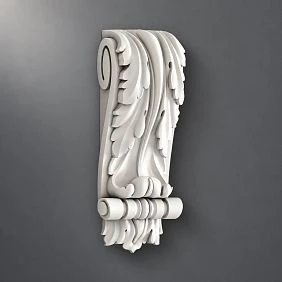
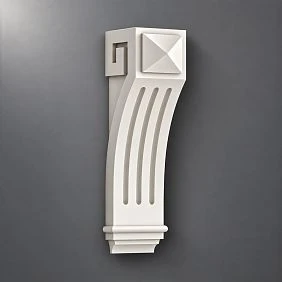

What are polyurethane capitals, columns, and pilasters
Before discussing choice, we must clearly distinguish the concepts. Three elements—three different roles in the architectural system. Mixing them or using them arbitrarily means violating the logic of the decor.



What is a capital and what is its purpose
A capital is the crowning part of a column or pilaster. It is located at the very top of the shaft and visually 'closes' the vertical element, creating a transition to the horizontal ceiling, cornice, or roof.
In classical architecture, the capital served a structural function: distributing the load from the ceiling to the shaft. In modern decorative applications, the capital plays an exclusively aesthetic role—but no less important for that.
polyurethane capital— is the finishing chord of the architectural vertical. Without it, a column or pilaster looks unfinished, like a sentence without a period. With it—it gains dignity and completeness.
Capital forms are classified by historical orders: Doric (strict, without ornament), Ionic (with characteristic volutes—spiral scrolls on the sides), Corinthian (the most ornate, with acanthus leaves). In modern interiors, Corinthian and Ionic capitals are most often used as the most decorative.
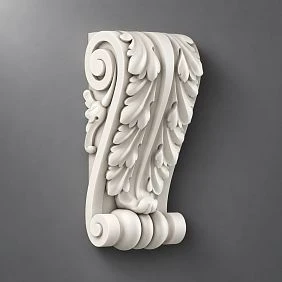
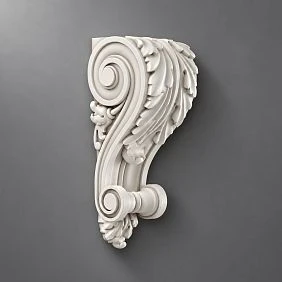
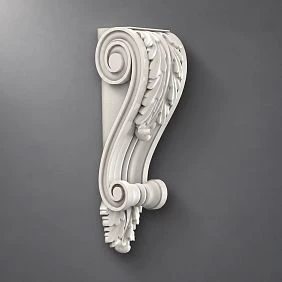
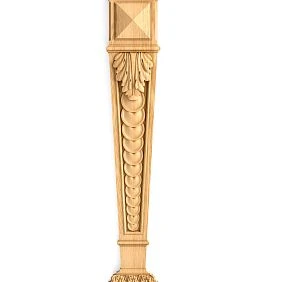
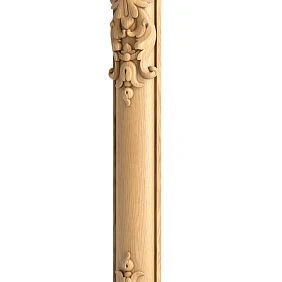
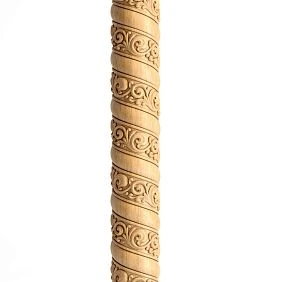
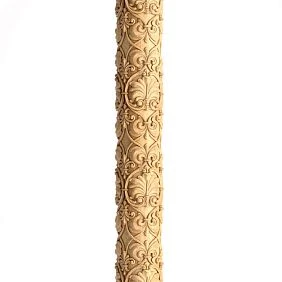
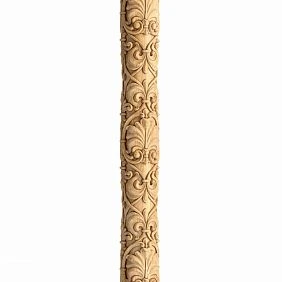
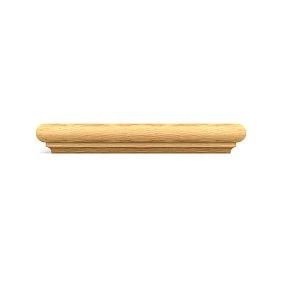
Our factory also produces:

What is a decorative column
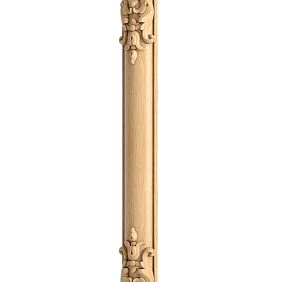
A column is a vertical support of circular cross-section. In an architectural sense, it stands separately from the wall and is surrounded on all sides. In interiors, a decorative polyurethane column most often represents a solid or composite element: a base at the bottom, a shaft (fust) in the center, and a capital at the top.
A full column occupies space and requires a corresponding scale of the room. It is appropriate where there is an opportunity to walk around it, where the space is large enough for the column to become an accent, not an obstacle.
A half-column is a decorative option that is attached to the wall and protrudes from it by half its diameter. It creates the effect of a column without occupying space, and that is precisely why it is much more often used in interiors.
Get Consultation
What is a pilaster and where is it used
A pilaster is a flat vertical projection on a wall, imitating a column. It has the same parts: a base, a shaft, and a capital—but at the same time, it is an inseparable part of the wall plane, protruding from it only slightly.
Polyurethane pilasters— is an architectural tool for working with walls: they structure the vertical plane, create rhythm, set scale, and accentuate openings and portals.
A pilaster is one of the most functional elements of classical decor. It takes up minimal space but creates maximum architectural effect.
How a column differs from a pilaster
This is the main question most buyers face. Let's break it down clearly.
| Parameter | Column | Pilaster |
|---|---|---|
| Cross-section shape | Round | Rectangular, flat |
| Position | Stands separately or flush against the wall | Is part of the wall |
| Occupies space | Yes (full column) | Practically none |
| Application | Zoning, separate accent | Walls, portals, openings |
| Installation | Requires floor and ceiling support | Mounted on the wall |
Simple rule: if the task is to create an architectural accent in the space, you need a column. If the task is to decorate a wall, structure its vertical plane, or frame an opening—you need a pilaster.
How these elements work together in a composition
In classical architecture, columns, pilasters, and capitals never existed separately—they worked as a system. Pilasters on walls set the rhythm, columns marked accent points, and capitals connected verticals with horizontal ceilings.
This principle persists in interior decor as well: polyurethane columns at the entrance, pilasters on side walls, cornices around the perimeter, capitals on all vertical elements—all from one collection, in a unified scale and style. Only this way does a cohesive architectural composition emerge.
Where polyurethane architectural decor is used
In a classical interior
Classicism is the historical birthplace of columns, pilasters, and capitals. In a classical interior, these elements are not just appropriate—they are essential. They create that very 'palatial' effect: a sense of scale, strict order, and architectural completeness.
In classic interiorPolyurethane architectural decorationorganically combines withcornices, moldingsandceiling rosettes, creating a unified decorative system. Each element enhances the other—and together they shape a space with genuine architectural character.
In neoclassicism
Neoclassicism is classicism reinterpreted through modernity. Here, columns, pilasters, and capitals are present, but in a more restrained key: without excessive ornamentation, with clean planes, emphasizing geometry rather than opulence.
For neoclassical interiors, pilasters with a smooth shaft and a laconic capital of the Ionic or simplified Corinthian type are suitable. Half-columns at the entrance opening or on the sides of a fireplace are a typical solution in this style.
In halls, living rooms, and stairwell areas
A large hall or double-height living room is the perfect place for decorative columns. The height of the space allows for full architectural verticals without a sense of overload.
The stairwell area is a classic field for pilasters: they structure the long wall along the staircase flight, create rhythm, and set the scale. In combination withwall decorand cornices, pilasters transform the staircase flight into a grand enfilade passage.
In the design of openings and portals
This is one of the most common and yet most advantageous application scenarios. A pair of pilasters or half-columns on either side of a doorway instantly turns an ordinary door into a portal—an architecturally framed entrance that accentuates the transition from one space to another.
A portal with pilasters and an entablature (a horizontal lintel with a cornice) is a classic solution that works equally well in an apartment, a country house, or a restaurant or hotel.
On building and house facades
Polyurethane is one of the few materials for decorative molding suitable for exterior use. It is resistant to moisture, temperature fluctuations, and ultraviolet light.
Facade decoration made of polyurethane— pilasters, cornices, capitals — gives a building an architectural character that cannot be created with finishing materials alone. A facade with pilasters looks like a full-fledged architectural work, not just a plastered box.
In commercial and public spaces
Restaurants, hotels, banks, company offices, theater lobbies — all these spaces use architectural decor to create an atmosphere of level and status. Columns in a restaurant hall, pilasters in a bank lobby, capitals on support posts — these are signals that are instantly read: aesthetics were considered here.
How to choose polyurethane columns
For which rooms are they suitable
Decorative polyurethane columns are suitable for rooms with ceiling heights from 2.7 m and an area sufficient for the column to become an accent, not an obstacle. Optimal — rooms from 20–25 sq. m and above.
Standard areas of application:
-
Spacious living rooms and halls
-
Halls and vestibules
-
Dining rooms with high ceilings
-
Entrance groups of buildings and cottages
-
Interior openings in open-plan homes
In a small apartment with standard ceiling heights, a full column is usually inappropriate—half-columns or pilasters work better here.
When a column is appropriate as an accent
A column as an independent accent is a solution for large spaces that need an 'architectural point': a visual element that catches the eye and sets the scale.
A pair of columns at the boundary between the living room and dining room in an open-plan home provides light zoning without a wall; the space remains unified but visually separated. This is one of the most elegant ways to organize an open space.
How to choose height and proportions
Classical column proportion: the height of the shaft equals 8–10 times the diameter of the base. With a diameter of 20 cm—shaft height 160–200 cm. With a diameter of 30 cm—240–300 cm.
Important: the total height of the column with base and capital should be at least 5–10 centimeters less than the room height. A column that touches the ceiling without a gap looks forced—like a temporary support, not an architectural accent.
With a standard ceiling of 2.7 m—columns 240–250 cm high including base and capital. With a 3 m ceiling—260–280 cm. With a height of 3.5 m—300–320 cm.
When it's better to use half-columns
A half-column is the right solution for most interior scenarios. It:
-
Does not occupy useful space
-
Attaches to the wall, simplifying installation
-
Creates the same visual effect as a full column
-
Suitable for framing openings, niches, fireplaces
For apartments, houses with moderate sizes, as well as for any wall-mounted solutions, a half-column is preferable to a full one. The effect is not inferior—with significantly less installation complexity.
How to combine a column with a capital and a base
A column is a three-part system: base + shaft + capital. All three elements should be from the same collection or a compatible series. A mismatch in scale or relief between the parts destroys unity.
The capital should be proportionate to the shaft diameter: for a shaft with a diameter of 20 cm, a capital width of 24–28 cm. A too-small capital looks accidental, a too-large one overloads the upper part.
The column base is also not a secondary element. It fixes the vertical on the horizontal plane of the floor, creates a 'landing'—the feeling that the column is actually standing, not just glued to the surface.
How to choose polyurethane pilasters
For walls and vertical rhythm
A pilaster on a wall is architectural rhythm. Several pilasters placed at equal intervals transform a monolithic wall plane into an organized system of vertical accents.
To create rhythm on a long wall (from 4–5 meters), three or four pilasters are used: at the ends of the wall and between them. The distance between pilasters should be approximately 3–4 times the width of the pilaster itself. This is a 'breathing' rhythm—not too dense and not too sparse.
For portals and doorways
Framing a doorway with pilasters is the most common application of this element in interiors. Two pilasters on either side of the door, connected by a horizontal entablature or an arch above, turn a simple opening into a full-fledged portal.
Polyurethane pilastersFor portals, pilasters are most often chosen to be floor-to-ceiling height or from the floor to the beginning of the door casing. In both cases, they should have a base at the bottom and a capital at the top.
For symmetrical compositions
Symmetry is the language of classical space. Pilasters are the main tool for creating it. Two pilasters on either side of a fireplace, paired pilasters on the side walls of a living room, pilasters on both sides of a TV niche—all of this creates a sense of order and architectural precision.
For symmetrical solutions, perfect uniformity of elements is important: pilasters from the same collection, of the same size, installed at the same height. Even a slight discrepancy is noticeable and disrupts the feeling of accuracy.
When Pilasters Are Better Than Columns
A pilaster is preferable to a column in the following cases:
-
The room is small — up to 25 sq. m
-
Standard ceiling height — 2.5–2.7 m
-
You need to structure a wall, not create a focal point in the space
-
The task is to frame an opening or portal
-
There is no possibility or desire to occupy floor space
-
The interior is restrained, and a neat architectural accent without pomp is needed
How to Avoid Overloading an Interior with Pilasters
A pilaster is a strong element. Several pilasters in a small room create overload. Rule: no more than four pilasters in one room if it is less than 30–35 sq. m. In small rooms up to 20 sq. m — one pair, on either side of the main opening or fireplace.
Another limitation: pilasters should not compete with other vertical elements. If the room already has floor-to-ceiling cabinets, tall windows, or rich moldings, pilasters will add overload. In such a situation, it's better to limit yourself to concise moldings.
How to choose a polyurethane capital
For a column
The capital for a column should be proportional to the diameter of the shaft. The standard ratio: the width of the capital is 1.2–1.4 times the diameter of the shaft. The height of the capital is approximately equal to the diameter of the shaft.
Regarding relief: for spacious classical interiors, Corinthian capitals with acanthus leaves are appropriate—rich, voluminous, and saturated. For neoclassical and restrained spaces—Ionic or simplified, with minimal ornamentation.
For a pilaster
The capital for a pilaster is flat or semi-flat: it does not protrude fully from the wall but in the same proportion as the pilaster itself. The width of the capital corresponds to the width of the pilaster shaft, and the height is similar to that of a column capital of the same style.
Important:capitals for pilasters and capitals for columns—these are different products. You should not use a round column capital on a flat pilaster—it will look incorrect and illogical.
By style and relief
The choice of capital style is determined by the style of the entire interior:
-
Doric — strict, without ornament, smooth echinus and abacus. For laconic classicism.
-
Ionic — with volutes on the sides, moderate ornament. For neoclassicism.
-
Corinthian — acanthus leaves, rich relief. For opulent classicism and baroque.
-
Modern laconic — geometric profile without historical ornament. For art deco and modern classicism.
By room scale
In a small room, a rich Corinthian capital will overload the space. Here it is more correct to choose an Ionic or laconic modern one.
In a spacious hall, a modest Doric capital may get lost — here you need expressiveness proportionate to the scale.
The principle is simple: the scale of the relief must correspond to the scale of the room.
How to connect the capital with the rest of the decor
The capital is the point where the vertical meets the horizontal. That is why it should echo withcrown moldingthat runs along the perimeter of the ceiling. The capital ornament and the cornice ornament should not conflict: either from the same collection, or neutrally compatible.
What to choose for different tasks
For doorway decoration
The best solution for a doorway is a pair of pilasters with capitals or a pair of half-columns. They frame the opening, give it architectural status, without taking up extra space. Height - from floor to ceiling or to the beginning of the arch. For arched openings - flexible profiles or special elements.
For an accent wall
For an accent wall in the living room or bedroom - three or four pilasters in a rhythmic arrangement. Molding frames can be placed between the pilasters - and you get a rich architectural panel.
For a hall or formal area
A spacious hall is an ideal place for decorative columns. A pair of full or half-columns at the entrance, pilasters on the side walls, a cornice around the perimeter,Ceiling rosettewith a chandelier in the center - this is a full-fledged formal area with the architectural character of a mansion.
For a classic ceiling-wall ensemble
System: pilasters on the walls + cornice at the ceiling + rosette in the center +moldings with framesbetween pilasters +Skirtingat the bottom. Everything from one collection — and you get a complete architectural environment that requires nothing additional.
For facade decoration
On facades, pilasters are used more often than columns — they don't protrude into space, don't create load, and are easily mounted on any surface. Pilasters on a building's facade between windows are a classic technique that gives the structure architectural rigor and status.
For facade capitals, resistance to external influences is especially important: polyurethane handles this task. It doesn't absorb moisture, doesn't crack in frost, and doesn't deform when heated.
For a restrained neoclassical interior
Neoclassicism requires precision, not opulence. Here, smooth pilasters of medium width with Ionic capitals, a thin cornice, and concise moldings are optimal. Everything — in white or cream, without gilding. Restrained nobility.
Advantages of architectural decor made of polyurethane
Lightness and ease of application
Polyurethane pilasters, columns, and capitals are attached with mounting adhesive, without reinforcement, without dowels, without a hammer drill. The weight of even large elements is significantly less than that of gypsum or concrete counterparts. This means easier installation, less load on load-bearing structures, and the ability to work without involving a construction crew.
Clear decorative relief
Metal molds and pressure casting ensure perfect repeatability of the relief. Every acanthus leaf on a Corinthian capital, every volute of the Ionic order, every flute on a pilaster shaft — is reproduced with absolute precision. The relief remains clear and expressive throughout its entire service life.
Suitable for interior and exterior
The same material performs in two different environments: indoors with its humidity and temperature fluctuations, and on the exterior with precipitation, frost, and ultraviolet exposure. This is a versatility that neither plaster nor wood possesses.
Ability to assemble a cohesive composition
In the catalogof polyurethane stucco decor STAVROSAll elements — columns, pilasters, capitals, cornices, moldings, rosettes, baseboards — are organized into collections. This means you can select a coordinated decorative system for the entire space in a unified style and scale.
Wide selection of elements and profiles
Dozens of collections cover the entire spectrum of historical styles — from strict Doric to lavish Baroque — and contemporary trends. This guarantees a precise solution for any task and any interior.
How to combine columns, pilasters, and capitals with each other
Unified Style
This is a fundamental rule. All architectural elements in one space should belong to the same style. Mixing Corinthian capitals with Art Deco pilasters creates a stylistic conflict that ruins the impression of the interior.
If the space is conceived in a classical vein — all elements are classical. If in neoclassical — all are restrained and geometric. If in modern classic — smooth or minimally ornamented.
Proportions and Scale
All elements must be proportionate to the space. A wide capital on a thin shaft, a small pilaster in a vast hall, a column with a base disproportionate to the shaft — all of this disrupts the visual balance.
It is optimal to select elements simultaneously—the pilaster, base, and its capital—to immediately see the proportions as a whole.
Combination with cornices, moldings, and rosettes
Architectural decor works as a system. Pilasters and columns are the verticals.Crown Molding— horizontals.Moldings— wall structure.Rosette— the center of the ceiling. Together they create an architectural environment. Individually, they are just a set of separate details.
When forming a decorative system, it is important: the cornice is coordinated with the capital in style, moldings are coordinated with pilasters in ornament,Skirtingechoes the column base.
How to assemble a complete architectural composition
Step 1: determine the style and key elements (columns or pilasters).
Step 2: choose a collection — all subsequent elements will be from it.
Step 3: select pilasters with bases and capitals.
Step 4: choose a cornice, coordinated with the capitals in style.
Step 5: add moldings to the walls, baseboard, and rosette.
Step 6: approve the proportions of all elements in the context of the room.
How to avoid visual conflict of elements
Conflict arises when two elements 'compete' for attention: both are richly ornamented, both are large, both are contrasting. The rule: one main element — one accent. The others support, not compete.
What mistakes are most often made when choosing
Elements are chosen individually, not as a system
A pilaster is bought from one catalog, a capital from another, a cornice from a third. As a result, all three elements may be beautiful individually — but together they do not form a system. Each speaks its own language.
Solution: choose all elements from one collection of one manufacturer. STAVROS organizes its assortment precisely by collections — this simplifies selection and guarantees compatibility.
They don't consider the room size
Large columns in a small room are a classic mistake. Elements that looked perfect in photos of a spacious hall will overwhelm the space in a 16-square-meter room.
Always start from the floor area and ceiling height — these are the primary parameters that determine the possible scale of decor.
They choose decor that is too massive for a small room
Related to the previous point, but separately: this applies not only to columns, but also to capitals and pilasters. A wide pilaster in a narrow hallway, a lush Corinthian capital in a room with a 2.5 m ceiling — this is a violation of proportion. The decor starts to 'close off' the space instead of decorating it.
They mix incompatible reliefs
A Corinthian capital with a smooth Doric pilaster, a Baroque cornice with an Art Deco capital — these are stylistic contradictions that destroy the integrity of the decor. Reliefs should be coordinated: equally rich or equally laconic.
They use columns where pilasters would be better suited
In small rooms, against walls, in hallways, with low ceilings — anywhere a column would take up extra space or create a feeling of tightness, the correct solution would be a pilaster. The effect is comparable, but the loss of space is not.
How to buy polyurethane capitals, columns, and pilasters in Moscow without making a mistake
First, define the task
What specific problem should architectural decor solve? Accentuate an opening? Create rhythm on a wall? Give a hallway a formal character? Structure a facade? The task determines the type of element — and only then does it make sense to open the catalog.
Then select the type of architectural element
Opening — pilasters or half-columns. Accent in space — full column. Wall — pilasters. Facade — pilasters with capitals. Decide on the type before choosing a specific model.
Check proportions and style
Selected elements should be proportionate to the room and consistent in style with existing decor or the designed interior. Check: does the pilaster height correspond to ceiling heights? Is the capital width proportional to the shaft? Does the style match the cornice?
Immediately select the capital, base, and main elements together
Don't buy a pilaster without a base and capital. Only a complete system — base + shaft + capital — creates a finished architectural element. Missing parts turn expensive decor into an incomplete detail.
Consider where the decor will be used — in the interior or on the facade
Requirements for materials differ for interior and facade use. Specify the intended use when ordering — this affects the choice of specific products from the assortment.
Checklist before purchase
-
For which zone is decor needed — interior or facade?
-
What is the task — to structure a wall, frame an opening, create a focal point?
-
What suits the type — pilaster, half-column, or full column?
-
What is the scale of the room — area, ceiling height?
-
Is a capital needed — and in what style?
-
Is there other stucco decor that needs to coordinate with the choice?
-
Is everything from one collection — pilaster, base, capital, cornice, moldings?
Comparative table of architectural elements
| Element | Where it is used | What effect it gives | When to choose |
|---|---|---|---|
| Full column | Spacious halls, lobbies, open layouts | Focal point in space, zoning | Height from 3 m, area from 25 sq. m |
| Half-column | At walls, openings, by the fireplace | Column effect without losing space | When a column is needed, but space is limited |
| Pilaster | Walls, portals, openings, facades | Rhythm, vertical accent, framing | In most interior scenarios |
| Capital for a column | Crowns the shaft of a full or half-column | Completes the vertical line, creates an architectural transition | Always together with a column |
| Capital for a pilaster | Crowns the shaft of a pilaster | Same as for a column, in flat execution | Always together with a pilaster |
| Base of column/pilaster | Lower part of the vertical element | "Planting" of the vertical on a horizontal plane | Always in the system with a pilaster or column |
FAQ: Answers to popular questions
How does a column differ from a pilaster?
A column is a freestanding vertical element with a circular cross-section. A pilaster is a flat vertical projection that is part of a wall. A column occupies space, a pilaster practically does not. Pilasters are more often used for wall and opening decoration, while columns are used for accents in space.
When is it better to choose a pilaster instead of a column?
A pilaster is preferable in small rooms, with standard ceiling heights, when there is a need to frame an opening or create a vertical rhythm on a wall. If there is no possibility or reason to occupy floor space—choose a pilaster.
How to select a capital for a column?
Capital width—1.2–1.4 times the shaft diameter. Style—should match the interior style and other decor. The capital, shaft, and base should be from the same collection. STAVROS specialists can help clarify the compatibility of specific products.
How to choose architectural decor for an opening?
For a door or arched opening, pilastersPolyurethane pilasterswith bases and capitals are optimal. Height—from floor to ceiling or to the start of the arch. For an arched opening—flexible or specially curved elements.
Are polyurethane columns suitable for apartments?
Yes — with the right size selection. In apartments, half-columns or pilasters are often more appropriate. Full columns are only for spacious areas with ceiling heights from 2.8–3 m. In small apartments, columns typically create a sense of clutter.
Can pilasters be used on facades?
Yes. Polyurethane is one of the few materials suitable for exterior use.Facade decoration made of polyurethaneIt is resistant to moisture, frost, and ultraviolet light. Pilasters on facades are a classic solution for giving a building architectural character.
Where to buy polyurethane capitals, columns, and pilasters in Moscow?
In the catalog of the company STAVROS on the website stavros.ru. Full rangeArchitectural decoration from polyurethane— from compact capitals to large decorative columns. All elements are organized into collections for easy selection of coordinated decorative systems.
How to combine architectural decor with cornices and moldings?
All elements should be from one collection or compatible series. The capital should echo withcrown moldingin style.Moldingsbetween pilasters — with the same richness of ornamentation as the capitals.Skirting— echoes the base of the pilaster. The entire system together should speak the same architectural language.
Conclusion
Capital, column, pilaster — these are not separate 'beautiful details.' This is architectural grammar that has its own logic, its own rules, and its own system. Applied correctly — they transform an interior or facade into a complete statement. Applied randomly — they crumble into a set of unrelated elements.
Choosingcapitals, columns, and pilasters made of polyurethaneshould begin with the task: what exactly should this decor do? Frame an opening? Create rhythm? Give the space a formal character? The answer to this question determines the type of element, its scale, style, and place in the overall decorative system.
Company STAVROS offers a full range ofArchitectural decoration from polyurethanefor interiors and facades. Columns and half-columns, pilasters with bases and capitals, cornices, moldings, rosettes, and baseboards — all organized into collections that ensure compatibility and stylistic unity of each element.
STAVROS — is European material quality, perfect precision of relief, a rich assortment of collections, and many years of experience in creating interior and facade decor. Architectural decor for your space — not a random choice, but a conscious decision.Start your selection in the catalog— and create an interior that speaks the language of true architecture.