Article Contents:
- What Does “High-Quality Polyurethane Molding” Actually Mean?
- First Check: Is the Product Really Polyurethane?
- Inspect the Casting: Surface Quality, Edges, and Fine Detail
- Look for defects that paint will not conceal
- Judge ornamental sharpness at normal viewing distance
- Do not confuse elaborate carving with functional quality
- Verify whether the surface is primed
- Choose compatible coatings rather than assuming “any paint works”
- The mounting surface matters as much as the ornament
- Bathrooms, kitchens, and laundry rooms
- Exterior architectural trim
- Heat and high-exposure locations
- Fire-performance testing: understand ASTM E84
- Verify certification claims independently
- What about VOCs, indoor air quality, and “eco-friendly” claims?
- Documentation checklist for an American project
- Wall moldings and picture-frame trim
- Ornamental linear trim and friezes
- Furniture onlays and appliques
- Ceiling medallions
- Rosettes, corners, and decorative brackets
- How can I tell whether polyurethane molding is good quality?
- Does higher-density polyurethane always last longer?
- Is polyurethane molding waterproof?
- Can I paint polyurethane trim with regular wall paint?
- What does ASTM E84 certification mean for molding?
- Is UL listing required for every decorative molding?
- How do I know whether an online product photo is accurate?
- What is more important for picture-frame wall molding: width or thickness?
- Are decorative polyurethane corbels load-bearing?
- Can a U.S. contractor order STAVROS polyurethane moldings?
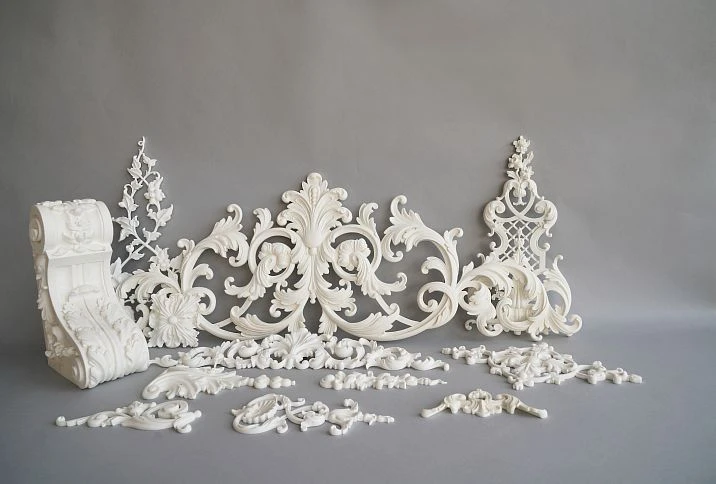
Beautiful architectural detailing is easy to appreciate in a finished room. It is harder to judge when you are looking at a product photograph, a dimensional drawing, or a sample of unpainted trim. Two polyurethane moldings can appear almost identical online yet behave very differently at the miter saw, along a painted wall, or beneath a finish coat. One may produce clean, repeatable joints; another may have inconsistent edges, surface defects, or a profile that does not match the specified dimensions.
For an American homeowner renovating a dining room, those differences can mean extra hours of filling and sanding. For an interior designer or finish carpenter specifying the same ornament across multiple rooms, they can affect the entire installation schedule. The sensible way to buy polyurethane molding is to evaluate the actual product—not simply the material name, the apparent complexity of its ornament, or an attractive price.
This guide explains what high-quality polyurethane molding should offer, how to evaluate decorative urethane trim before ordering, which documentation matters on U.S. projects, and how to compare profiles, onlays, rosettes, and ceiling medallions for a specific application. It also shows where to find the relevant products in the STAVROS polyurethane moldings and architectural decor catalog.



What Does “High-Quality Polyurethane Molding” Actually Mean?
Polyurethane is a family of materials, not a universal performance grade. Architectural ornaments are often cast from rigid polyurethane formulations, but different formulations and manufacturing methods produce products with different densities, hardness, flexibility, surface characteristics, and resistance to damage. A decorative wall onlay, a thin linear profile, and a deeply projected corbel do not necessarily need the same physical properties.
The practical definition of quality is fitness for the intended application, supported by consistent manufacturing and clear product information. Before accepting a claim that a molding is “premium,” ask whether it meets five tests:
-
Dimensional accuracy: Does the supplied profile match its stated width, projection, and length, and remain reasonably consistent from piece to piece?
-
Clean ornament and surface: Are the edges defined, the pattern repeatable, and the visible surfaces free from defects that would remain noticeable after painting?
-
Appropriate rigidity and handling characteristics: Is the product suitable for its intended location without excessive sagging, cracking, or damage during normal installation?
-
Finish and installation compatibility: Can the chosen primer, topcoat, joint treatment, and adhesive be used with that exact product and substrate?
-
Traceable product information: Can the supplier identify the material, model, dimensions, applications, limitations, and any claimed test results?
A decorative molding does not have to be the heaviest or hardest item in a showroom to be the right one. Likewise, a complex leaf pattern is not proof of higher quality than a simple bead. Quality becomes apparent when the molding can be specified accurately, installed consistently, and finished to the appearance the project demands.




First Check: Is the Product Really Polyurethane?
American catalogs use overlapping terms such as polyurethane molding, urethane molding, architectural trim, decorative molding, and stucco-style decor. These terms describe appearance or application as much as chemistry. Similar-looking products may be made from polyurethane, polystyrene, PVC, MDF, wood, or plaster.
That distinction matters. Different materials respond differently to moisture, fasteners, solvents, temperature changes, and painting. They can also have different fire-performance documentation and installation restrictions.
Always read the material field on the specific product page, not only the category heading. For example, the STAVROS polyurethane wall molding collection includes polyurethane profiles alongside other molding materials. The designation MLDPU identifies particular polyurethane items, but the material listed for the individual SKU remains the deciding reference.
Ask these questions before comparing prices:
-
Is the part made entirely of polyurethane, or is it one component of a mixed-material decorative kit?
-
Is it a rigid cast ornament, a flexible specialty profile, or a different type of product?
-
Does it come primed, unprimed, or with a factory-applied finish?
-
Is it designated for interior use, exterior use, or a more limited installation environment?
-
Are the stated dimensions nominal or subject to product-specific tolerances?
If a seller cannot answer basic material questions, it is difficult to assess subsequent claims about painting, durability, or code compliance.
Наша фабрика также производит:
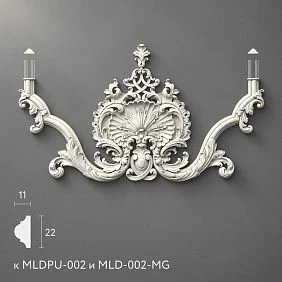
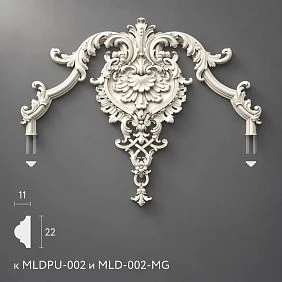
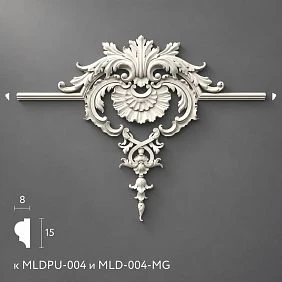
Смотреть весь Каталог продукции
Inspect the Casting: Surface Quality, Edges, and Fine Detail
For architectural decorative trim, the condition of the visible casting is one of the quickest indications of production quality. You are not merely purchasing a shape. You are purchasing a surface that will remain exposed under paint and often under raking light from windows, sconces, or ceiling fixtures.
Получить консультацию
Look for defects that paint will not conceal
Examine representative pieces under bright, angled lighting. Inspect both the decorative face and the plain mounting side. Pay particular attention to:
-
Pinholes and voids: Small cavities in exposed areas may become more apparent after a finish coat.
-
Cracks and chipped relief: Damaged thin leaves, beads, and scrolls can be difficult to repair invisibly.
-
Excess flashing: Raised seams or thin unwanted material along casting edges can complicate joints and finishing.
-
Warping or twist: A long strip that does not sit predictably against its intended surface creates installation problems.
-
Inconsistent texture: Unexpected rough patches, prominent pits, or surface contamination may require additional preparation.
-
Deformed corners: A supposedly square mounting edge may create gaps even on a properly prepared substrate.
A small manufacturing seam is not necessarily a reason to reject a product. The useful question is whether the condition is within the supplier's normal finish expectations and can be prepared without losing the intended detail. A defect on an exposed center ornament deserves more scrutiny than a minor mark on a concealed rear surface.
Judge ornamental sharpness at normal viewing distance
Polyurethane is commonly selected for its ability to reproduce detailed ornament. That makes the definition of the relief especially important for decorative trim with acanthus leaves, beading, braided patterns, or floral motifs.
View the ornament close up, then step back to the distance from which it will normally be seen. A cleanly produced piece should preserve the intended rhythm and separation between raised and recessed parts. Fine grooves should not disappear into blurred areas, and a repeating pattern should not change noticeably from one section to the next.
You can compare the visual language of several designs in the STAVROS ornamental polyurethane trim collection. A narrow beaded profile should present a regular sequence; a more sculptural floral frieze needs readable relief and consistent transitions at its ends.
Do not confuse elaborate carving with functional quality
An intricately modeled ornament may look impressive but still be the wrong choice for a shallow furniture panel. Conversely, a restrained molding with accurate geometry can deliver an excellent painted finish. Evaluate design quality and manufacturing quality separately: one determines whether you like the ornament; the other determines whether it can be used reliably.
Check Straightness, Dimensions, and Repeatability
Dimensional consistency becomes crucial when several lengths form a single wall frame or when matching decorative parts are installed on a row of cabinet doors.
A product page should provide the basic measurements: face width, projection from the wall, and stock length for linear profiles; width, height, and thickness for applied ornaments. In the United States these are commonly read in inches and feet, while many international manufacturers publish original dimensions in millimeters.
The MLDPU-001 polyurethane molding is listed at approximately 0.39 in. wide × 0.24 in. deep × 102.36 in. long (10 × 6 × 2,600 mm). It is a useful example of a slim decorative bead. The MLDPU-003 polyurethane molding is substantially broader, at approximately 1.38 in. wide × 0.47 in. deep × 102.36 in. long (35 × 12 × 2,600 mm). These two profiles may both qualify as wall molding, but they create very different proportions, shadows, and joint details.
When reviewing a sample or receiving an order, check the following:
Width and projection. Use a ruler or caliper at several points. You are looking for a consistent cross-section, not an invented zero-tolerance standard. Ask the supplier for permitted variation if the project has tight fit requirements.
Straightness and twist. Rest the profile against an appropriately flat reference surface without forcing it. A strip that must be heavily restrained just to appear straight deserves investigation. Bear in mind that storage, temperature, and manufacturer handling instructions can affect how it should be evaluated.
End geometry. Look for clean, consistent ends, particularly when a profile will be mitered or joined to an ornamental corner. The final installation cuts may remove factory ends, but inconsistent geometry along the length is harder to correct.
Pattern repeat. Ornamental trim often has a repeating motif. Check where the pattern begins and ends, especially when several lengths will be joined in a conspicuous location.
Matching parts. If your design includes left- and right-hand decorative elements, confirm that the corresponding SKUs are supplied. Similar designs are not always interchangeable simply by rotating them.
The STAVROS polyurethane molding corners and accents are useful when a composition calls for coordinated decorative joints. Check which straight molding series each ornament is intended to complement before ordering.
Density, Hardness, and Strength: What Buyers Should Really Test
It is tempting to judge polyurethane by squeezing a corner or pressing a thumbnail into the surface. That shortcut is unreliable.
Density alone does not establish durability. A denser material may feel more substantial, but density does not tell you everything about impact resistance, brittle fracture, dimensional stability, or attachment performance. A formulation engineered for a compact decorative onlay may differ from one intended for a long linear profile.
Similarly, hardness is not the same as toughness. A very hard edge can still chip. A material that gives slightly under pressure may be entirely appropriate for its specified decorative function. Randomly pressing or bending a sample can damage it without producing meaningful information.
For a professional specification, request the characteristics relevant to the application rather than a vague claim of “high density.” Depending on the project, those may include:
-
Product mass and dimensions, to plan handling and support.
-
The manufacturer's stated substrate and mounting recommendations.
-
Documented resistance to normal handling or impact, if a claim is made.
-
Dimensional stability information where large or repeated assemblies require it.
-
Any limitations concerning heat, moisture, ultraviolet exposure, or mechanical contact.
For small residential jobs, a representative sample and clear installation guidance may be sufficient. For extensive commercial installations, project-specific technical documentation becomes more important.
Be particularly careful with decorative polyurethane brackets. A corbel may look structural while functioning only as ornament. Unless the exact product has documented load-bearing capacity and an appropriate fastening design, it should not be relied upon to support a shelf, countertop, mantel, or other load. View decorative options in the STAVROS brackets and capitals category with that distinction in mind.
Paint Compatibility: A Critical Quality Test for U.S. Interiors
American remodels frequently use painted millwork, monochromatic wall paneling, and trim that matches existing doors or cabinetry. A successful polyurethane installation therefore depends heavily on the finish system, not just the casting.
Verify whether the surface is primed
Some decorative components are listed as primed and ready for further finishing, while others may require preparation. Do not assume that every white polyurethane product has the same factory coating—or that a pale surface is necessarily an approved primer.
Before you buy, determine whether cleaning, abrasion, spot filling, or a separate bonding primer is required. Ask for the product's finishing instructions when the finish will be highly visible or subject to frequent contact.
Choose compatible coatings rather than assuming “any paint works”
Water-based acrylic or latex architectural coatings may be appropriate for many primed decorative moldings, but compatibility depends on the exact primer, polyurethane formulation, and installation conditions. Some solvent-containing coatings or cleaners can damage particular finishes or interfere with adhesion.
For cabinet and furniture applications, the proposed topcoat may also have different durability requirements than ordinary wall paint. If a designer intends to use a specialty enamel, metallic finish, glaze, or lacquer system, a sample test is prudent.
A useful finish test is simple: prepare a representative piece as directed, apply the intended primer and topcoat, allow each layer to cure according to its instructions, and inspect the result in both daylight and raking artificial light. Pay attention to adhesion, coverage, gloss consistency, and whether paint has softened the finest ornament.
The mounting surface matters as much as the ornament
A compatible coating will not compensate for poor adhesion to the wall. Existing glossy cabinet enamel, contaminated drywall, damaged plaster, and unfinished wood can require different preparation methods. The adhesive must be suitable for both the back of the decorative element and the receiving substrate.
For combined polyurethane-and-MDF decor, verify the finishing and moisture requirements of every component. A visually coordinated set is not necessarily a single-material system.
Moisture, Humidity, UV Exposure, and Temperature
One of polyurethane's attractions is that selected formulations can be useful where a moisture-sensitive wood product would need additional protection. However, “polyurethane” is not a blanket approval for showers, wet walls, exterior façades, or extreme temperatures.
Bathrooms, kitchens, and laundry rooms
For a powder room or kitchen feature wall, evaluate the actual exposure. Occasional ambient humidity differs from direct water spray, persistent condensation, or regular cleaning with harsh chemicals. Even where the ornament itself resists moisture, water can still reach the adhesive joint or underlying substrate.
Ask whether the product is approved for the location, what coating system is recommended, and whether the substrate can remain dry and stable. In a mixed-material decorative kit, MDF or other components may set the practical limitation.
Exterior architectural trim
Exterior molding is a separate specification problem. Sunlight, ultraviolet radiation, rain, thermal cycling, freeze-thaw exposure, and movement of the underlying façade can affect the complete system.
An exterior product should have explicit exterior-use guidance, including required primer or finish, appropriate adhesive or fastening, joint treatment, and maintenance. Do not substitute an interior STAVROS decorative onlay for exterior façade trim merely because both are described as polyurethane. Exterior eligibility must be confirmed for the exact item.
Heat and high-exposure locations
Decorative polyurethane is not interchangeable with noncombustible plaster, stone, or metal. Do not place it near fireplaces, range hoods, heaters, or high-temperature light fixtures without checking material limits and required clearances. Those decisions depend on the installation, local code, and the product's documented use.
For commercial interiors, temperature and moisture evaluation should accompany—not replace—the required fire-performance review.
U.S. Certification and Code Documentation: What to Ask For
The phrase “certified polyurethane molding” can sound reassuring while conveying surprisingly little. The meaningful question is: Certified or tested to what, by whom, for which model, and for what intended use?
There is no single universal U.S. certificate that automatically proves every decorative polyurethane molding is safe for every building and location. A test report is not the same as a product certification, and a general statement that a material “meets ASTM standards” is incomplete unless the applicable test method and result are identified.
Fire-performance testing: understand ASTM E84
For some interior wall and ceiling finish applications, a project specification or the locally adopted building code may call for surface-burning performance information. ASTM E84 is a recognized test method that measures comparative flame spread and smoke development under defined test conditions. Results are ordinarily expressed as a flame-spread index and a smoke-developed index.
An ASTM E84 result does not by itself mean that a product is noncombustible, fireproof, or approved for every occupancy. The tested product, mounting arrangement, coatings, and applicable code provisions matter. Other evaluation methods, including room-corner testing, may be relevant to particular products or applications.
If fire performance is required for your project, ask for a report identifying the precise product or represented product family, tested construction, test standard and edition, laboratory, report date, and actual results. Then have the architect, specifier, contractor, or authority having jurisdiction (AHJ) determine whether it satisfies the project requirement.
Do not describe any STAVROS item as “Class A,” “UL Listed,” “fire-rated,” or “noncombustible” unless valid product-specific evidence supports that exact claim. A decorative product page alone is not proof of those classifications.
Verify certification claims independently
When a seller claims independent certification, look for a certificate or listing number, issuing organization, exact model or product family, scope, and validity information. For UL certifications, the issuing organization's official Product iQ database can be used to search by manufacturer, file number, category, or model where applicable.
For environmental claims, independently verifiable programs may include UL GREENGUARD or GREENGUARD Gold. UL's SPOT database is one place to investigate such claims. These programs address specific environmental or emissions criteria; they do not substitute for structural, fire, or exterior performance testing.
A certification logo shown without a product identifier is not enough to establish that a particular molding is covered.
What about VOCs, indoor air quality, and “eco-friendly” claims?
A finished decorative installation can include multiple substances: the ornament, factory primer, construction adhesive, filler, caulk, paint, and any cleaning products used during preparation. Indoor air quality questions cannot be settled by evaluating the polyurethane body alone.
If an owner, school, healthcare client, or commercial specification imposes emissions requirements, request information for the relevant products and coatings. Ask for the basis of any low-VOC or low-emitting claim rather than relying on terms such as “green,” “non-toxic,” or “environmentally safe.”
An SDS (Safety Data Sheet), where available and relevant, provides hazard communication information. It is not a universal quality certificate and does not establish fire classification, product longevity, or compliance with all indoor-air requirements.
Documentation checklist for an American project
| Document or evidence | What it helps establish | Important limitation |
|---|---|---|
| Product data sheet | Material, dimensions, intended use, finish and mounting instructions | Marketing language is not a laboratory test result |
| Dimensioned drawing | Cross-section, projection, lengths, mounting geometry | Confirm the drawing matches the ordered SKU and revision |
| Physical sample | Surface detail, edge quality, apparent straightness, finish trial | One sample cannot prove every property of a production batch |
| ASTM E84 report, if required | Reported flame-spread and smoke-developed behavior under test conditions | Does not independently prove noncombustibility or universal code approval |
| Third-party certificate, if claimed | Specific property or program covered by the issuing body | Confirm validity, exact products, and scope in the official registry |
| Finish and adhesive guidance | Compatible application system and surface preparation | Must match the jobsite substrate and service conditions |
| Shipping and return terms | Practical steps if goods arrive damaged or incorrect | Establish procedures before ordering internationally |
For an ordinary residential accent wall, the document package may be relatively simple. For a hotel lobby, restaurant, multifamily corridor, or other regulated application, the architect and local AHJ may need substantially more information. Neither extreme should be treated as the universal rule.
A Practical Quality-Control Checklist Before You Buy
Use the following sequence when comparing polyurethane molding for sale online or evaluating a sample from a supplier.
1. Identify the exact model. Record the full SKU, selected size, finish, and material. Avoid ordering based on a generic photograph or series name.
2. Confirm the application. Is the item decorative or intended to carry any load? Is it designed for walls, ceilings, furniture, or another location? Is it approved for the proposed environmental exposure?
3. Read the dimensions carefully. Verify whether the measurement describes overall width, face width, projection, thickness, or length. Compare original metric dimensions where available.
4. Request a side view. The face photograph shows style; the cross-section reveals how the molding actually meets the wall and how much shadow it creates.
5. Inspect the surface and ornament. Look at corners, groove definition, seams, repeated motifs, and any chips or pores likely to remain visible after finishing.
6. Evaluate the installation system. Confirm the substrate, compatible adhesive, mounting instructions, and whether the profile requires additional support or special treatment.
7. Test the intended finish. Use a representative sample to check coating adhesion, color, sheen, and the appearance of ornate recesses.
8. Verify required documentation. For a code-governed project, obtain the test reports or other evidence named in the project specification. Do not accept broad claims as replacements.
9. Prepare a cutting and quantity schedule. Count straight lengths, decorative corners, central onlays, left/right variants, and expected offcuts separately.
10. Confirm fulfillment details. Identify packaging requirements, production status, delivery destination, and the procedure for damaged or incorrect items.
A supplier that provides accurate product identification and clear limitations is more useful to a professional buyer than one that makes sweeping promises about every property of polyurethane.
Choose the Right Product Type, Not Just the Right Pattern
Different types of architectural decorative elements call for different inspection priorities. An item can be excellent in its own category and still be unsuitable for a different task.
Wall moldings and picture-frame trim
For wall-frame molding, the most important issues are cross-sectional consistency, straightness, clean mitering, and compatibility with the proposed finish. Projection matters because it determines the shadow line and relationship to nearby door casing and baseboards.
Review polyurethane moldings for wall panel designs by profile rather than by product name alone. A slim bead can support restrained picture-frame molding; a wider stepped profile can create a stronger architectural frame.
Ornamental linear trim and friezes
With ornate trim, pattern continuity is critical. Check whether adjacent lengths can be joined without disrupting a repeated leaf, rope, or bead design. Ask for stock length and inspect the start and end of the pattern.
The decorative polyurethane molding and trim range includes more sculptural motifs suited to cabinetry and traditional interior details. Such trim deserves particular attention to relief definition and finish buildup.
Furniture onlays and appliques
For an applied ornament, check the usable flat mounting area, overall thickness, symmetry, and clearance around handles, hinges, drawer movement, and panel edges. Large onlays often require more careful positioning than their weight suggests.
Browse polyurethane furniture onlays and decorative appliques with your cabinet elevation in hand. If the piece is meant to be centered on a panel, measure the available space inside any existing raised frame—not merely the cabinet's outside dimension.
Ceiling medallions
A ceiling medallion must be judged by its overall diameter or footprint, depth of relief, fixture canopy compatibility, and any center opening. A photograph alone cannot establish the fit.
Review the STAVROS polyurethane ceiling medallion collection against the lighting layout and ceiling dimensions. Remember that the medallion is decorative; the electrical fixture requires its own properly rated box or mounting support.
Rosettes, corners, and decorative brackets
Smaller accents require attention to handedness, relief depth, and coordination with surrounding profiles. For rosettes, check the relationship between their size and the molding they accompany. For brackets, also confirm whether the intended function is purely decorative.
The polyurethane rosettes collection and decorative brackets and capitals provide useful starting points for comparing these forms.
What a Sample Reveals—and What It Cannot
A sample is one of the most useful tools for a designer, cabinetmaker, or homeowner planning an expensive decorative finish. But it should be treated as a representative physical reference, not as proof of every performance claim.
A sample can help you judge the actual profile, surface feel, visible ornament quality, cutting behavior, and paint appearance. It can reveal that two apparently compatible pieces have different projection depths. It can show whether a decorative bead catches too much light on a small wall.
It cannot, by itself, confirm a fire classification, verify indoor emissions, establish long-term UV resistance, or demonstrate a load-bearing rating. Those questions require suitable technical evidence when they are relevant.
For a project requiring many repeated pieces, consider approving a finished mockup before full installation. Mount the selected profiles on the actual or representative substrate, complete the proposed joints, prime and paint them, and inspect them under the lighting conditions expected in the space. Keep a record of the accepted finish and detailing standard for the installation team.
Compare Polyurethane With Wood, Plaster, and Polystyrene Fairly
Choosing the right material is part of quality control. The best product is not always polyurethane; it is the product suited to the intended architectural result.
| Material | Potential advantages | Questions to resolve before ordering |
|---|---|---|
| Rigid polyurethane | Detailed cast ornament; often lighter than plaster; useful for applied decorative profiles | Exact formulation, profile accuracy, finish compatibility, environmental and fire documentation |
| Solid wood | Natural grain, traditional millwork appearance, options for stained finishes | Species, moisture movement, machining, finish and joint design |
| MDF | Smooth paint-grade surface; common in flat and shaped millwork | Moisture exposure, edge sealing, fastening and finish requirements |
| Polystyrene | Available in some lightweight architectural trim systems | Impact resistance, solvent compatibility, intended use and fire performance |
| Plaster | Traditional mineral decorative appearance and fine ornamental work | Weight, fragility, substrate support, installation and repair requirements |
Avoid treating all polymer moldings as equivalent. Also avoid assuming that every product labeled crown molding or baseboard in a broad catalog is polyurethane. For instance, some STAVROS decorative categories include polystyrene or MDF items. Checking the exact product material protects both the buyer and the integrity of the specification.
How to Evaluate Total Cost Without Choosing the Wrong Molding
The lowest unit price is not always the lowest installed cost. Compare the complete job rather than one length of trim.
A useful estimate includes the number of stock lengths, usable cuts per length, corner details, decorative onlays, finish supplies, expected cutting waste, labor, and any specialized packaging or freight. Profiles with elaborate repeating motifs may require additional waste to align the pattern at joints.
Consider three rectangular wall frames, each 24 inches wide by 48 inches high, measured at the outside edges. Their combined nominal perimeter is 36 linear feet. That number helps establish scale, but it does not automatically tell you how many stock pieces to order. A 102.36-inch molding strip is approximately 8.53 feet long, and the actual yield depends on the arrangement of 48-inch and 24-inch cuts, miter geometry, saw kerf, and any pattern-matching requirements.
Prepare a cut list instead of simply dividing total footage by stock length and rounding up. Determine how many full-height members and shorter horizontal members can be taken from each strip. Then allow for damaged ends, mistakes, and deliberate pattern alignment.
For a large commission, record the final quantity in the supplier's unit of sale: pieces, linear lengths, sets, or individual ornaments. This is especially important when one category includes both polyurethane and other materials.
How to Inspect a Polyurethane Molding Shipment
Quality control does not end at checkout. An accurately ordered molding can still arrive damaged, incomplete, or different from the approved sample.
When the shipment arrives, inspect the packaging before installation. Photograph visible freight damage and document discrepancies promptly under the applicable carrier and supplier procedures. Check the number of cartons, items, and product codes against the packing list.
Open a representative selection of packages and verify:
-
Correct SKU, dimensions, color or supplied finish, and material.
-
Straightness and visible condition of long profiles.
-
Undamaged corners, thin relief details, and exposed faces.
-
Correct quantities of left- and right-hand ornaments.
-
Consistent pattern and profile between pieces intended to connect.
-
Availability of any requested drawings, finish instructions, or installation guidance.
Handle and store items according to the manufacturer's instructions. Do not assume every product requires the same acclimation period or may be stacked or bent in the same way. Keep the materials protected until they are ready for installation.
If a defect will require significant repair, record it before cutting, painting, or permanently mounting the item. Establish the agreed return or replacement process before proceeding.
How to Buy Polyurethane Molding From STAVROS for a U.S. Project
STAVROS organizes its English-language catalog around several useful product types. For a carefully specified purchase, start with the architectural polyurethane decor catalog and narrow the selection to the exact components needed.
Start with the product drawing. Compare face width, projection, supplied length, and design. For an ornamental component, check overall width, height, thickness, and orientation. Where provided, use the available STAVROS product catalogs and drawings to coordinate a more precise specification.
Build a bill of materials. Record the item number, material, dimensions, unit of sale, quantity, and installation location for each component. Distinguish straight molding from corner ornaments and centerpieces. For multiroom projects, identify the room or elevation where each item belongs.
Ask the questions that matter. If you need a particular primer, adhesive, finish, sample, fire-performance report, exterior application approval, or custom production option, obtain confirmation before finalizing the order. A webpage description should not be interpreted as a blanket warranty covering all possible uses.
Confirm international fulfillment. Although the site displays U.S. dollar prices and inch dimensions, its published delivery information primarily addresses Russian and regional shipping arrangements. Buyers in the United States should confirm whether their destination can be served, current pricing and availability, packaging, freight arrangements, any import obligations, and the applicable return procedure. Do not assume U.S. delivery or a particular lead time until it is agreed for the order.
A professional buying process is straightforward: measure, compare, request evidence where necessary, order by exact SKU, and inspect before installation. The more visible or repetitive the architecture, the more valuable those steps become.
Frequently Asked Questions About Polyurethane Molding Quality
How can I tell whether polyurethane molding is good quality?
Start with the listed material, a dimensioned profile, clean casting, consistent geometry, and clear finish and installation instructions. A representative sample can help evaluate the surface and decorative relief. Claims about fire performance, emissions, or exterior suitability require their own evidence.
Does higher-density polyurethane always last longer?
No. Density is only one material property. Toughness, formulation, wall thickness, mounting method, finish, and exposure conditions also influence performance. Ask which property matters for your application instead of treating density as a universal quality score.
Is polyurethane molding waterproof?
Do not assume so. Some polyurethane products resist moisture, but installed performance also depends on coating, adhesive, joints, substrate, and the exact exposure. Direct water spray, persistent condensation, and exterior weather require product-specific guidance.
Can I paint polyurethane trim with regular wall paint?
Some primed decorative moldings accept compatible water-based architectural paint. Check the supplied surface and the manufacturer's instructions first. Test the complete primer-and-topcoat system when the finish is important or when the application involves cabinetry or specialized coatings.
What does ASTM E84 certification mean for molding?
ASTM E84 is a fire-test method, not a universal product certification. A report may provide flame-spread and smoke-developed results under specified conditions. Whether those results satisfy a given project depends on the product, test conditions, local code, and the review of the architect or AHJ.
Is UL listing required for every decorative molding?
There is no blanket rule that every decorative molding must be UL Listed. Requirements vary by product, application, occupancy, and locally adopted code. If a specific listing or certification is claimed or required, verify the exact product and listing scope with the issuing body.
How do I know whether an online product photo is accurate?
Use the photo together with a dimensioned drawing, a side or cross-section view, a precise SKU, and preferably a sample. Lighting, camera angle, and image scaling can make a narrow molding look much larger or deeper than it actually is.
What is more important for picture-frame wall molding: width or thickness?
Both matter, but they perform different visual functions. Face width affects the apparent weight of the frame, while projection influences the shadow line. The right combination depends on the wall size, ceiling height, adjacent trim, and desired style.
Are decorative polyurethane corbels load-bearing?
Never assume a decorative corbel is load-bearing. Unless the specific item has documented capacity and an appropriate installation design, treat it as ornament and provide a separate structural support wherever loads are involved.
Can a U.S. contractor order STAVROS polyurethane moldings?
The English STAVROS website provides product information, including dimensions in inches and pricing displayed in U.S. dollars. Contractors should confirm shipping availability to their specific U.S. address, product availability, documentation, freight conditions, and any import requirements before committing to a project schedule.
Choose Architectural Detail With Confidence
High-quality polyurethane molding is not defined by a dramatic marketing claim. It is defined by whether the product arrives with the right geometry, carries a clean and consistent ornament, accepts the specified finish, suits its location, and can be documented for the project where necessary.
For a single accent wall, careful measurements and a well-chosen sample may prevent most expensive mistakes. For an architect, designer, or millwork contractor specifying repeated details, drawings, product identification, representative mockups, and clearly defined acceptance criteria provide the foundation for consistent results.
Explore STAVROS polyurethane wall moldings, ornamental urethane trim, and decorative onlays for furniture and walls with your actual measurements and intended finish in hand. Compare the individual specifications, identify the components that belong together, and confirm any application or delivery requirements before purchasing.
The right decorative molding should do more than look good in a photograph. It should fit the design, the installation, and the standards of workmanship expected in the finished space.