Article Contents:
- Joint geometry: what happens at the connection point
- Types of joints when installing slatted panels: classification
- End joint along the length: when one panel is not enough
- Transverse joint: changing the finishing zone
- Corner joint: internal and external angle
- Joint with another material: transition to tile, plaster, glass
- What to consider regarding panel direction, spacing, and geometry before installation
- Laying direction and its influence on joints
- Batten spacing and its effect on joints
- Wall geometry: pre-installation check
- Polyurethane wall moldings: when they help
- When moldings get in the way
- Inside corners: three methods for finishing batten panels
- The 'overlap' method: simplicity with limitations
- Corner insert method: polyurethane corner
- 45-degree miter cut method: elegance requires precision
- Outside corners: projections, pylons, columns
- How to finish transitions between different finishing sections
- Horizontal transition: panel below, plaster above
- Vertical transition: slatted panel area adjacent to another area
- Transition to tile in bathroom or kitchen
- MDF panels and solid wood: different requirements for joints
- MDF slatted panel
- Solid wood slatted panels
- Practical scenarios: how connections work in real rooms
- Living room: accent wall behind the sofa
- Bedroom: bed headboard with vertical moldings
- Entryway with double zoning
- TV wall in living room with lighting
- Main mistakes when joining slatted panels: complete breakdown
- Mistake 1: joints not on the frame
- Mistake 2: different planes on adjacent sections
- Mistake 3: molding as 'putty' instead of as an architectural element
- Mistake 4: inconsistency of moldings in profile
- Mistake 5: molding is attached without level marking
- Mistake 6: ignoring material expansion
- Mistake 7: painting before installing moldings
- Mistake 8: same color of molding and panels without a conscious decision
- STAVROS: slatted panels and polyurethane moldings as a unified system

A joint is where one material ends and another begins. Another panel, another surface, another angle, another room. It's precisely at the joint points that the difference between a 'done' renovation and a 'thought-out' renovation becomes apparent. Smooth panel surfaces, neat slat patterns, beautiful wood or MDF texture—all of this can be ruined by one unsightly joint. Conversely, even simple finishing with properly executed transitions looks professional and expensive.
The question of how to join slatted panels together and how to use polyurethane wall moldings at transition points is one of the most practically important in the topic of slatted finishing. There is no room for intuitive 'by eye' decisions here. Logic is needed: the logic of geometry, the logic of the material, the logic of visual perception.
This article is a systematic breakdown of the topic of joints. Not a list of tips, not a short FAQ, but a comprehensive guide for those who want results, not just 'somehow done'.



Joint Geometry: What Happens at the Connection Point
Before discussing technique, one must understand the nature of a joint. A slatted panel is a linear element with a pronounced rhythm. Each slat is a horizontal or vertical strip, and when there are many such strips, they create a rhythmic pattern perceived as a single surface. It is this perceived integrity that is the main visual virtue of slatted finishing.
A joint breaks the rhythm. And the task of the entire connection system is to make this break either unnoticeable (dissolve the joint into the overall surface) or deliberately pronounced (turn the joint into an architectural element). There is no third option: a random, unthought-out joint is neither one nor the other—it is simply visible as a mistake.
Understanding this principle changes the approach to installation.slatted panels for walls— are not just boards attached to the wall. It is a system that works as a single whole, and joints are part of that system.




Types of Joints When Installing Slatted Panels: Classification
Practically all joints in slatted wall finishing can be classified into one of four types. Each type has its own logic for execution and its own requirements.
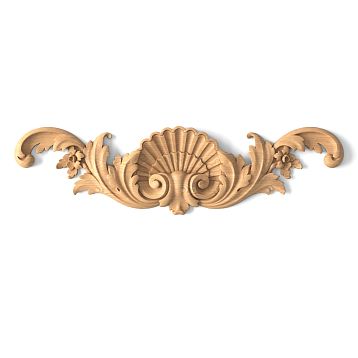
Our factory also produces:



End-to-end joint along the length: when one panel is not enough
The standard length of a slatted panel is 2400, 2700, or 3000 mm. In rooms where the wall length exceeds this value, one panel is insufficient: it is necessary to join them along the length. This is one of the most technically delicate joints: the slats continue each other, and the boundary between them should be practically invisible.
How to do it correctly:
-
The ends of the two panels must align exactly in the same plane—without a step and without divergence in the height of the slat.
-
The joint must fall on a supporting element of the frame (a batten of the sheathing), not hang in the air between them.
-
It is advisable to treat the ends: for MDF—edge compound or wax; for solid wood—impregnation or oil.
-
The direction of the pattern (texture, painting) on both panels must match. If the texture is 'wood-like,' the grain on the two joined fragments should run in the same direction.
How to join slatted panelsalong the length with a minimally noticeable joint is primarily a matter of preparation and planning. Joints should be placed at predetermined points, not where the panel 'ended.' The best positions for an end-to-end joint are behind vertical furniture elements, in the corner of the room in the entry area, or evenly distributed along the length of the wall, taking into account the visual rhythm.
Get Consultation
Transverse joint: changing the finishing zone
A slatted panel does not cover the entire wall height—for example, only the lower zone (panel finish), only the upper zone (frieze), or a local area (TV wall, bed headboard). In these cases, a horizontal joint arises: the slatted panel ends at the bottom or top, and another material begins—plaster, wallpaper, painted surface.
This joint is the place for molding. A horizontal stripof polyurethane wall moldingframes the transition between two materials, creates a visually clear horizontal line, and protects the panel end. Without molding, the cross joint looks like an unfinished cut.
Corner joint: internal and external corner
Corners are the most challenging area for slatted finishing. An internal corner (where two walls meet in a room) and an external corner (a protruding corner—column, pilaster, wall projection) require different solutions.
For an internal corner, there are three approaches:
-
One wall reaches the corner flush, and the slats of the second wall overlap behind it—a simple but often unsightly solution with a noticeable joint.
-
Both walls reach the corner with a gap, and a special corner profile is inserted into the corner.
-
The slats of one or both walls are mitered at a 45-degree angle—elegant, but technically complex and requires precise tools.
For external corners, primarily use polyurethane corner molding or metal corner profiles. This both protects the panel end from mechanical damage and visually finishes the corner.
Junction with another material: transition to tile, plaster, glass
Slatted wall panelsIn interiors, they often border tile (in bathrooms and kitchens), glass (partitions), and plaster. A junction with another material is where two different logics meet, and it needs to be finished so that the transition is either unnoticeable or clearly defined.
Here, polyurethane moldings are not the only tool: metal T-profiles, L-profiles, special transition strips made of metal or the same material as the panels. The choice depends on the context: for classic and contemporary interiors — polyurethane molding; for loft and industrial styles — metal; for minimalism — a 'flush' cut with acrylic sealant.
What to consider regarding panel direction, spacing, and geometry before installation
Joints don't appear by themselves. Most problems with connections can be prevented at the planning stage — before the first screw is driven into the wall.
Laying direction and its influence on joints
slatted panels for wallsCan be laid horizontally, vertically, and diagonally. Each direction creates different jointing tasks.
Horizontal laying is classic. The battens run parallel to the floor. End joints along the length are in vertical positions and can be hidden with molding or a corner profile. Horizontal lines visually widen a room and lower the perceived height.
Vertical laying — battens run from bottom to top. Joints along the length here are horizontal and more noticeable. This option requires more careful planning of length: ideally, one batten should cover the room height without a lengthwise joint. Vertical lines visually 'raise' the ceiling.
Diagonal layout – planks at a 30, 45, or 60-degree angle. Technically the most complex option: cutting angles on all edges are non-standard, joints in room corners require precise calculations. However, diagonal layout provides the most dynamic visual effect and hides base irregularities better than other directions.
Plank spacing and its effect on joints
Plank spacing – the distance between the centers of adjacent lamellas – determines the rhythm density. With narrow spacing (less than 40 mm between planks), a joint is perceived as an interruption of a dense pattern and is very noticeable. With wide spacing (more than 80 mm between planks), a joint is less noticeable because there is space between the planks that 'dilutes' the rhythm.
This point needs to be considered during planning:Wall finishing with slatted panelswith tight spacing requires more thorough planning of joints and more careful finishing.
Wall geometry: pre-installation check
Real walls in real apartments are not perfect planes. Small bulges, waves, deviations from verticality up to 10–15 mm over the height – this is normal for residential buildings. Slatted panels are mounted on a lathing, which evens out these deviations, but only if the lathing is set in a single plane.
Plane misalignment is the main cause of 'steps' at joints between adjacent finishing sections. If the frame on two adjacent walls is set differently, the panels end up in different planes, and a step forms at the corner joint, which cannot be covered by any molding.
Conclusion: before thinking about how to join slatted panels, you need to ensure that the frame on all sections is brought into a single coordinate system.
Polyurethane wall moldings: when they help
The rule for applying moldings in slat paneling is simple: molding is needed where a joint is unavoidable and cannot be made 'flush,' or where the transition between materials requires architectural finishing.
polyurethane wall moldings— these are not just decorative strips. They are functional architectural elements that:
-
conceal technological gaps and joint imperfections;
-
protect panel edges from mechanical impact and moisture;
-
create visually clear horizontal and vertical lines that structure the space;
-
unite different materials into a single system.
When molding is necessary:
-
At a horizontal transition between slat panels and another material (wallpaper, plaster, tile).
-
At a vertical joint in corners — external and complex internal ones.
-
At the 'wall-ceiling' transition when the wall is finished with slat paneling up to the ceiling.
-
At the wall-to-floor transition, if the baseboard is installed after the panel installation.
-
In horizontal wall division: panel zone at the bottom, zone of different finish at the top.
For each of these tasks, different profiles exist.installing polyurethane molding— a separate technology with precise rules described in detail in the relevant guide.
When moldings interfere
This is an important question that is rarely asked. A molding can ruin the result in several cases.
In a minimalist interior, extra horizontal and vertical profiles create visual noise. Here, an 'invisible' joint works better: a 'flush' cut, precise work with the angle geometry, minimal transition elements.
When a too ornate profile is used in an inappropriate context. An ornamental wide molding in a space with simple furniture and light walls creates dissonance: the decor appeals to one style, the surroundings to another.
When the scale is incorrectly chosen. A too narrow molding does not cover the gap. A too wide one overloads the space and visually 'cuts off' finish zones that should be perceived as a single whole.
When installed without surface preparation. A molding glued to loose plaster or unprimed PVC inevitably comes off—and then the entire installation has to be redone.
Internal Corners: Three Methods for Installing Slat Panels
Internal corners are the most common place for mistakes. Let's examine all three professional methods.
Method 1: 'Overlap' - Simplicity with Limitations
The first method is the simplest. Slats on one wall are installed all the way to the corner, flush against the perpendicular wall. Slats on the second wall cover the ends of the first: the outermost slat of the second wall is pressed against the ends of the first wall's slats.
Pros: simple and fast. Cons: the joint is visible. The end of the first wall's slats peeks out from behind the outermost slat of the second wall if that slat is narrower than the end. This creates a 'step' in the corner, which looks like an imperfection.
When this method is appropriate: for vertical panel installation in technical rooms, in hallways with tightly placed furniture — where the corner is practically not visible.
Method 2: Corner Insert - Polyurethane Corner
The second method uses a special corner profile, which is installed in the corner before mounting the panels. Slats from both walls fit under the profile's flanges, their ends hidden inside. Only the profile itself remains visible — a neat vertical detail.
polyurethane wall moldingsinclude corner profiles for internal corners — with different flange sizes to accommodate different widths of slat panels. The profile is attached to the wall with adhesive and/or screws before panel installation. After all panels are laid, the profile is painted to match the panel color or remains as an accent element in a contrasting color.
This is a professional method that yields a clean and neat result with any corner geometry — even if the angle is not 90 degrees.
45-degree miter cut method: elegance demands precision
The third method — the battens of both walls are mitered at 45 degrees and meet in the corner 'flush'. With perfectly executed work, the seam is practically invisible. This is the most elegant method.
Requirements: a miter saw capable of setting the angle; panels of the same thickness on both walls; frames precisely aligned in the same plane. If the room angle is not 90 degrees — the miter angle is calculated as half of the actual angle.
Forwooden slat panelsthis method works especially well with solid wood: wood cuts precisely, the cut can be sanded and treated with oil or wax to protect the exposed end. OnMDF batten panelsthe cut must be coated with an edge compound — exposed MDF at the end swells from moisture and deteriorates.
External corners: projections, pylons, columns
An external corner is a place with high mechanical load. The end of a batten panel on an external corner is unprotected: an accidental hit with the edge of a box or the back of a chair — and the end chips, and with wooden panels — it splits.
The solution for an external corner always includes a protective element. Options:
Metal corner profile — aluminum or steel L-profile, inserted between the ends of two adjacent panels. Reliable protection, minimalist appearance. Works well in loft-style and modern minimalist interiors.
Polyurethane corner molding — a profile with a rounded or straight outer corner and two shelves for panels. Attached with adhesive. Works best in classic and modern interiors with paint-ready finishes.
Wooden corner element — an insert made of the same material as the panels, with a 45-degree miter or an angled groove. The most organic method for wooden finishes.
Forslatted wall panels in the interiorFor protruding volumes — columns, pilasters, decorative boxes — it is important to wrap the volume sequentially, maintaining a uniform slat rhythm across all faces. This requires careful calculation: the width of the faces must be considered so that the slat pattern 'flows' from one face to another without visible breaks.
How to design transitions between finishing sections
Slatted panels rarely cover an entire wall. More often, they occupy a specific zone: the lower third of a wall, an accent wall in the living room, the headboard area in a bedroom. In each of these cases, the slatted zone borders another finish.
Horizontal transition: panel below, plaster above
This is the most common scheme forslatted panels in the interior. The lower part of the wall is a slatted panel 80–120 centimeters high. The upper part is plaster for painting or wallpaper.
A clear transition is needed at the horizontal boundary between these zones. Here, a horizontal polyurethane molding is used — a profile that covers the top edge of the slatted panels and the bottom edge of the plaster. The profile should be proportionate to the panel height: for a 100 cm high panel — a molding 40–60 mm high. For a 120 cm high panel — 50–80 mm.
It is fundamentally important that the molding is level. A horizontal element in space is the 'horizon,' and the slightest deviation is visible to the naked eye. Marking with a laser level is mandatory.
Vertical transition: an area of slatted panels adjacent to another area
For example,Slatted panels in the living room interioras a background wall behind the sofa — and adjacent, on neighboring walls, wallpaper. The vertical boundary between the slatted area and the wallpaper areas needs finishing.
If the slatted panel is mounted from floor to ceiling, the vertical transition in the corner of the room is a corner joint, as described above. If the slatted panel occupies only the central part of the wall, not reaching the corners — the vertical ends on both sides are finished with vertical moldings.
A vertical polyurethane molding in this role is not just a technical element. It creates a framed composition around the slatted section, turning functional finishing into an intentional architectural accent.
Transition to tile in the bathroom or kitchen
Slatted panels in the kitchenor in the bathroom, they border tile. The transition between wood (or MDF) and tile is a place where two fundamentally different materials meet.
Two aspects are important here. The first is protecting the end of the wooden or MDF panel from moisture exposure. An exposed MDF end in kitchen steam conditions is a disaster: the material will swell and lose its shape in one season. The end must be protected by molding or completely sealed with a special coating. The second is the visual transition: the molding must be proportionate to both materials and stylistically neutral.
For such transitions, both a polyurethane molding with a simple profile and a metal transition profile are suitable. The choice depends on the overall style of the room.
MDF panels and solid wood: different requirements for joints
Different materials of slat panels require different approaches to joints—and this is important to understand.
MDF slat panel
MDF Slatted Wall Panel—a homogeneous material without a pronounced wood grain. The texture is applied decoratively—printing or veneer. When joining two MDF panels lengthwise, the pattern may match or not. If the panels are from the same article—matching is possible with proper selection. If the articles are different—the pattern will differ, and the joint will become noticeable.
MDF end grain—exposed fiber. Any exposed end grain not covered by molding or treated with edge compound is a vulnerable spot, especially under variable humidity conditions.
Advantage of MDF over solid wood in the context of joints: MDF does not 'warp' from humidity changes. Solid wood may slightly change dimensions with indoor humidity fluctuations. If a joint is made 'flush' without allowance—over time it may either close up causing warping or separate.
Solid wood slat panels
Wooden slat panels—a living material. Before installation, panels must acclimate in the room: at least 48 hours under conditions close to operational ones. Without acclimation, panels will continue to change dimensions after installation, and joints will 'shift'.
For end-to-end lengthwise joints in solid wood panels, a compensation gap is important: 1–2 mm between ends, which will be covered by molding. This gap compensates for panel expansion with increased humidity.
The grain in solid wood—living and unique. At the joint of two fragments, this will always be visible as a transition. The task of the designer and installer is either to make this transition inconspicuous (via molding) or to use it as an intentional rhythmic element.
Practical scenarios: how joints work in real rooms
Living room: accent wall behind the sofa
Slatted panels in the living room interiorOn the accent wall, they are mounted from floor to ceiling across the entire width of the wall. On the sides are the room corners, where the slatted finish meets the plastered adjacent walls.
Corners are finished with polyurethane corner profiles—an internal corner with two shelves. The profile is painted the color of the adjacent room's wall, the slats—their own color. The 'wall-to-ceiling' transition is a polyurethane ceiling cornice around the entire perimeter of the room. The 'wall-to-floor' transition is a baseboard, coordinated in profile with the cornice.
Result: the accent wall looks like a complete architectural object, integrated into the room's space—not glued on, but organic.
Bedroom: bed headboard with vertical moldings
slatted panels in the bedroomOn the wall behind the bed—a local accent panel, not occupying the entire wall. On the sides—two vertical polyurethane moldings framing the edges of the paneled section. At the top—a horizontal molding separating the slatted zone from the plaster. At the bottom—the surface of the slats extends almost to floor level or to the top edge of the baseboard.
Such a composition turns the slatted finish into a decorative panel, resembling an inlay in a frame.Wide polyurethane moldingsOn the vertical sides, they create the effect of a massive frame that 'holds' the wooden texture.
Hallway with double zoning
Slatted panels in the hallway interiorOn the lower part of the walls—protection from impacts, dirt, umbrellas, and bags. At a height of 90–100 centimeters, the slatted zone transitions to plaster. A horizontal polyurethane molding at this transition is functional and decorative. Vertical joints in the hallway corners are corner profiles.
This solution addresses several tasks at once: protecting walls in the high-traffic area, visually structuring the hallway space, and architectural completeness.
TV wall in the living room with backlighting
Slatted panels with lightingTV walls are a special case. Slats with a channel for LED strips are a system where joints are more noticeable due to the lighting accent. Each joint along the length or in a corner, illuminated from within, is more clearly visible than without backlighting.
Here, zero-clearance corner cuts are mandatory, and moldings are used only where they do not interrupt the lighting effect. Corner profiles are selected with consideration for the continuation of the lighting channel through the corner.
Main mistakes when joining slatted panels: complete breakdown
Mistake 1: joints not on the frame
An end joint of two panels, hanging 'in the air' between the battens of the sheathing, is a non-rigid structure. Under load or vibration, the joint separates. Rule: every end joint must be on a frame batten. If a batten does not fall in the right place — an additional sheathing element is added precisely at the joint point.
Mistake 2: different planes on adjacent sections
If the frame on two walls meeting at a corner is set in different planes — no molding will fix the step at the joint. This is a problem that is solved only at the sheathing installation stage — through careful control of the planes.Slatted panel installationalways begins with checking the frame — this is not a formality.
Error 3: Molding as 'putty' instead of as an architectural element
Using molding to hide a crooked joint that could have been made straight is not a professional solution. Molding should be used where it is logically needed for a transition, not as a lifebuoy for poor workmanship. The difference is visible: properly applied molding looks like part of the design; 'putty' molding looks like an attempt to hide something.
Error 4: Inconsistency of molding profiles
In one room, all moldings—horizontal, vertical, corner—should be from the same line with a consistent profile. A cornice from one profile, a baseboard from another, corner elements from a third. Three different profiles in one room create visual chaos. A unified line creates a system.
Error 5: Molding installed without level marking
Installing horizontal molding without a laser level is a 50/50 risk. The wall 'leads' the eye, and you won't catch the deviation by sight until the molding is already glued. Marking with a laser level is 15 minutes of work that saves several hours of redoing.
Error 6: Ignoring material expansion
No expansion gap was left for solid wood plank panels. After several months of operation with changes in humidity, the planks press against each other and begin to warp. A 1–2 mm gap between the ends is a mandatory element of installationwooden slat panelsin any climatically active room.
Error 7: Painting before installing moldings
A painted wall to which molding is glued is an unreliable base. The paint layer reduces adhesive adhesion. Correct sequence: install molding → seal joints → prime → finish painting. Not the reverse.
Mistake 8: molding and panels in the same color without a deliberate decision
Molding matching the panel color blends into the surface—whether this is good or bad depends on the goal. Molding in a contrasting color accentuates the transition. The choice should be deliberate, not accidental. If the decision isn't thought through—the result looks random.
STAVROS: slatted panels and polyurethane moldings as a unified system
When slatted cladding is made from materials by a single manufacturer, with coordinated panels and moldings—the joints function as part of the system. This is exactly what STAVROS offers:Rafter panelsfrom solid oak, ash, walnut, and other valuable woods, as well asPolyurethane moldings and cornicesdesigned for use in a unified finishing system.
In the STAVROS assortment—Wide polyurethane moldingsfor wall zoning, corner profiles for finishing internal and external corners of slatted cladding, ceiling cornices for wall-ceiling transitions. All profiles are coordinated in scale and style—from laconic minimalism to classic ornamental lines.
buy slatted panelsfor walls together with a full set of moldings for finishing joints—is a choice for a systematic result, not a random assortment of materials from different sources. STAVROS ensures consistency from the first slat to the final cornice.
FAQ: Answers to Popular Questions
How to join slatted panels in a corner without molding?
The optimal method without molding is a 45-degree miter cut from each wall. The battens of two adjacent walls are cut at half the actual room angle (not always 45°, if the angle is not 90°) and meet 'flush'. The ends are finished, the joint is sealed with acrylic sealant and painted. This method requires precise tools and careful preparation.
Which molding should I choose for a horizontal transition between batten panels and wallpaper?
The molding profile should overlap the gap between the panels and wallpaper (usually 5–10 mm) with a margin. The profile height should be proportionate to the height of the batten zone: for a panel height of 90–100 cm, use a 40–60 mm molding. The profile should be from a line coordinated with the room's baseboard and cornice.
Is it necessary to leave a gap between solid wood batten panels at the lengthwise joint?
Yes, it is mandatory. A 1–2 mm expansion gap between the ends of two solid wood panels protects against warping due to humidity changes. The gap is covered by molding and is not visible in the finished look, but serves an important function throughout the lifespan of the finish.
How to design the transition between batten panels and tile in a bathroom?
The end of an MDF or solid wood batten panel in a bathroom is a vulnerable spot. It must be covered with molding featuring a moisture-resistant coating or a metal L-profile. The panel end should be treated with a moisture-resistant edge compound before installation. Seal the joint between the molding and tile with a neutral silicone sealant (not acrylic—for bathrooms).
Can batten panels and moldings be painted in different colors?
Yes, this is a deliberate design technique. Molding in a contrasting color accentuates zone boundaries and functions as an architectural element. However, the color difference should be thoughtful and coordinated with the overall interior color scheme. An arbitrary color difference without design logic looks like a mistake.
How to attach batten panels to the wall so that the joints remain even?
A frame is the only way to guarantee even joints. The lathing is aligned to a single plane using a laser level. Every lengthwise joint must land on a lathing strip. Without a frame and without a level, even joints are unattainable—it's a matter of physics, not the installer's care.