Article Contents:
- Why point changes are not enough: furniture loves a systematic approach
- Furniture legs: the first and most visually significant step
- What to choose: turned, tapered, or carved
- Leg height: how not to make a mistake with proportion
- Attaching furniture legs: practical issues
- Unpainted legs: a special category
- Moldings for the facade: turning a plane into relief
- Wooden moldings for furniture
- Polyurethane moldings for furniture
- How to properly make a frame on a door
- Double frame: the effect of tall furniture
- Decorative overlays and moldings: an accent that is remembered
- Wooden carved overlays for furniture
- Polyurethane decorative moldings for furniture
- Where to place decor on a furniture facade
- Furniture handles: the final touch
- Painting: the color that ties everything together
- Tips on paint and primer
- Practical examples: three typical scenarios
- Scenario one: a bedside table in Scandinavian style
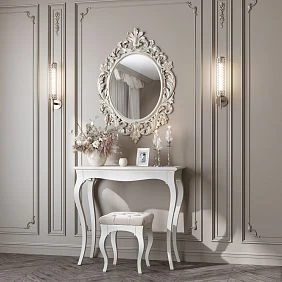
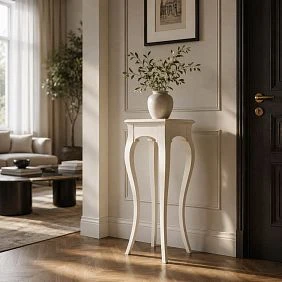
- Scenario two: a console in the hallway in neoclassical style
- Scenario three: a chest of drawers in a classic study
- How not to overload furniture: the rule of three elements
- What to buy for different tasks: summary table
- Frequently asked questions
- STAVROS: a complete set for furniture you want to keep forever
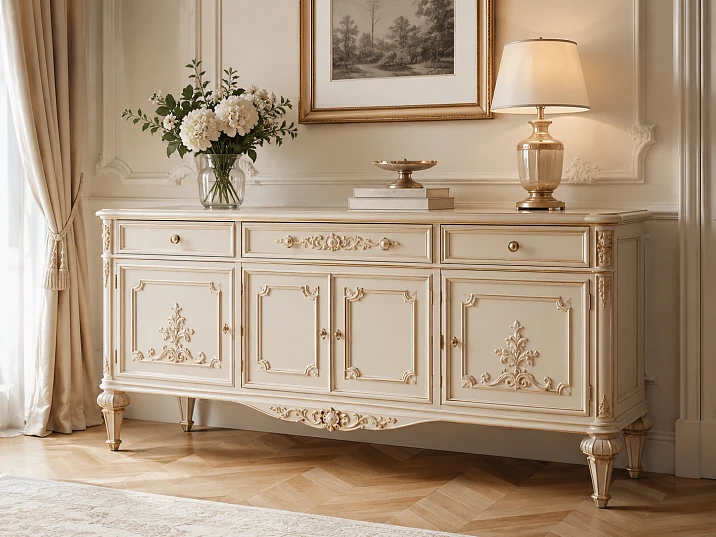
Take any white cabinet from mass market. Remove its handles. Place it in the middle of an empty room. What do you see? A rectangle. A box with doors. An object with neither character nor architectural language. It is utilitarian to the point of facelessness.
Now add turned Wooden legsGlue a frame of furniture moldingsIn the center of the facade — a small decorative overlay with a floral pattern. Place wooden Furniture HandlesPaint it matte dusty green. The same cabinet — a completely different story.
A cabinet or console looks more expensive when its entire image is cohesive: Furniture legs they give a beautiful silhouette, moldings create frames on the facade, stucco adds an accent, and handles and paint tie the furniture into one finished piece. That's what this article is really about.
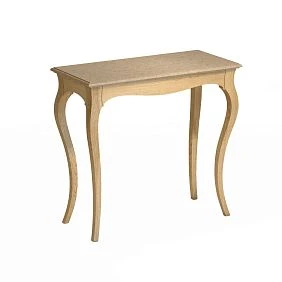
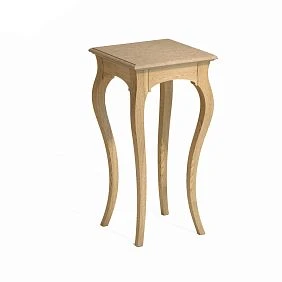
Why spot changes aren't enough: furniture loves a systematic approach
The first temptation when wanting to update furniture is to change just one thing. Put new handles. Repaint. Add a decorative sticker. This approach works poorly — and here's why.
Furniture is perceived as a single object that has a silhouette (shape + space underneath), a surface (facade, pattern, details), and a finish (handles, color, trim). If you change only one parameter — the others 'scream' about the mismatch. New metal handles on a flat white facade with MDF legs look like an expensive button on a cheap coat. Beautiful legs under a cabinet with a bare rectangular facade — like elegant heels under a baggy dress.
The working principle is different: change everything at once — silhouette, facade, finish. Not necessarily expensive. Definitely — systematic.




Furniture legs: the first and most visually significant step
When furniture stands directly on the floor — it's heavy. Literally: there's no space underneath, no 'breathing', no light. This is called visual weight. A bedside table without legs is a nightstand. The same nightstand on turned furniture legs 10–15 cm high — that's already furniture with character.
Legs do three things at once: lift the furniture off the floor, create a sense of lightness, and add a decorative element from below — one that's immediately visible when looking at the furniture.
Our factory also produces:
What to choose: turned, tapered or carved
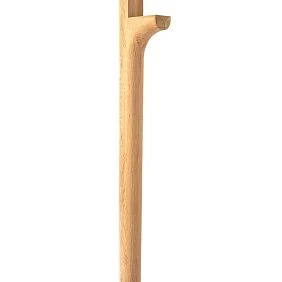
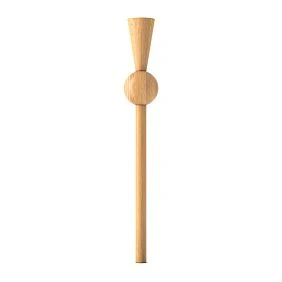
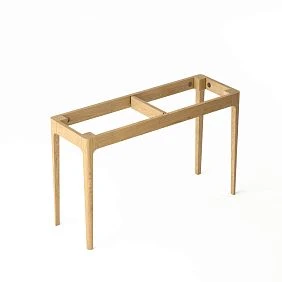
furniture legs solid wood legs are available in over 130 models. For practical selection, they can be divided into several groups.
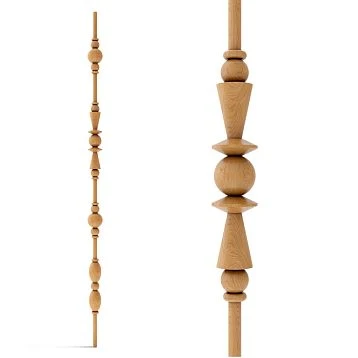
Turned legs are a classic of furniture production. The profile features alternating narrowings and widenings, sometimes with a small ball at the heel or base. This is the most versatile type: it works in classic interiors, neoclassical, Provence style, and modern apartments with soft shapes. Height — from 50 to 250 mm, diameter — from 30 to 60 mm.
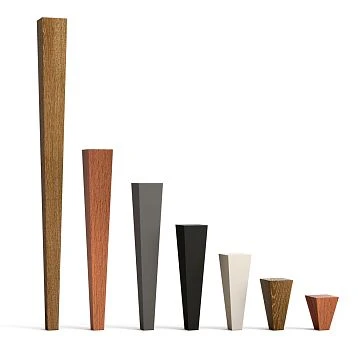
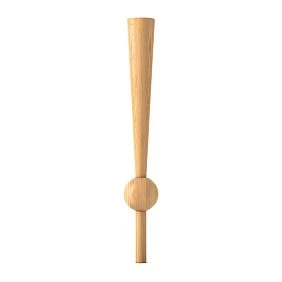
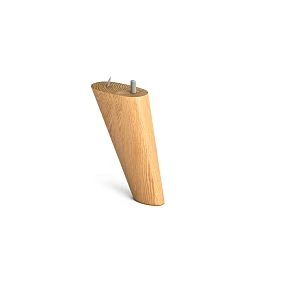
Tapered legs are a more modern option. Square or round cross-section, tapering from the base to the floor. Minimalist, architectural, suitable for Scandinavian, neoclassical, and minimalist interiors. They look expensive paired with matte furniture paint in a neutral color.
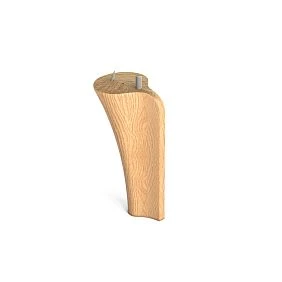
Carved legs are the most decorative option. Complex pattern, leg with ornament, Empire-style "paws", profiles with floral motifs. This is for classic living rooms, boudoirs, studies with wooden libraries. A carved leg on a console in the hallway is an immediately recognizable "marker" of a serious classic interior.
Straight square legs are a strict geometric option. No ornament, only proportions. They work in interiors from Art Deco to modern classic. They are especially good under a console in a hall with geometric wall decor.
Get Consultation
Leg height: how not to make a mistake with proportion
The height of the leg determines the balance of the entire piece of furniture. Too low legs (30–50 mm) provide a small "gap" under the furniture but do not create a feeling of lightness. This is a technical minimum — the furniture is slightly raised. For classic-style dressers, it's normal.
Medium legs (80–120 mm) are the most popular choice for cabinets, bedside tables, small cabinets in the hallway. The furniture is noticeably raised, there is space underneath, the floor is visible — this creates lightness.
High legs (150–250 mm) are for consoles, dressing tables, narrow cabinets in the hallway. Here the legs are no longer just "supports" — they are an architectural element that is visible and occupies a significant portion of the furniture's silhouette.
For a pedestal 70–80 cm high, the optimal legs are 80–120 mm. For a console 80–85 cm high — 100–150 mm.
Attaching furniture legs: practical questions
furniture legs are attached in several ways. The most common and convenient is a threaded pin (stud) at the end of the leg and a threaded insert (rapid nut) in the furniture base. This allows quick installation and the ability to replace the leg if necessary.
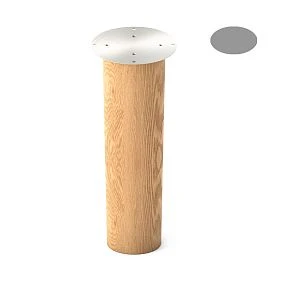
The second option is a mounting plate on the leg, which is screwed to the base. Used for larger and heavier legs.
Important: before installing the legs, make sure the bottom of the furniture body is thick enough for the fasteners. 16 mm MDF is the minimum thickness for threaded studs. For plates, 16 mm is also sufficient.
Unpainted legs: a special category
Buy furniture legs for a 200-room hotel project — this is not an ordinary deal, but a partnership requiring a special approach. in the unpainted version — this is the opportunity to choose the finish yourself: paint to match the furniture, tint to look like oak or walnut, apply patina, or preserve the natural wood look. Unpainted pine or birch legs are cheaper than ready-made painted ones — and give complete freedom in choosing the finish.
Moldings for the facade: turning a flat surface into relief
A flat furniture facade is a backdrop. A framed facade is architecture. The difference between them is the molding, glued or nailed along the perimeter of the door or drawer.
Molding creates relief on a flat surface. Relief creates shadow. Shadow creates depth. Depth creates the feeling of an expensive, "joinery" facade — even if it's just ordinary MDF underneath.
Wooden moldings for furniture
Moldings for furniture Solid wood is the right choice for wooden or wood-like furniture. Wood glues to wood without issues: PVA, wood glue, construction adhesive — any of these compounds ensures a reliable bond.
Wooden molding is CNC-machined with precision down to fractions of a millimeter, has a clear profile, and after painting looks like a factory-made part. This is important: on a white matte-painted facade, low-quality molding with an uneven profile is immediately noticeable. Wooden molding with a precise cross-section never is.
The width of the molding for a furniture facade is selected based on the door size:
-
Door 30–40 cm wide — molding 15–20 mm.
-
Door 40–60 cm — molding 20–30 mm.
-
Wide facade 60–90 cm — molding 25–35 mm.
Distance from the edge of the door to the molding — 3–5 cm. This creates a "field" between the door edge and the frame, which looks proportional.
Polyurethane moldings for furniture
Moldings made of polyurethane — an alternative to wood with several advantages for furniture use. Polyurethane is easier to cut at an angle, less sensitive to humidity (relevant for hallways and kitchens), and costs less than its wooden counterpart.
Polyurethane moldings are especially good for long horizontal applications: a cornice above the furniture body, a horizontal belt on the body of a tall cabinet, a baseboard under the lower part of the body.
How to properly make a frame on a door
Important rule: the molding frame should not interfere with opening the door. If the molding is glued to the door itself and it opens towards you — no problem. If the molding extends beyond the door onto the fixed part of the body — you need to ensure that when opening, it does not hit the adjacent door.
For double doors with moldings between them — the distance from the edge of the door to the molding is at least 5 mm. This provides a gap when opening.
Moldings are cut at a 45° angle to create frame corners. The long side (horizontal) is cut first, then the short vertical sides are cut to fit it. Dry assembly before gluing is a mandatory step.
Double frame: effect of tall furniture
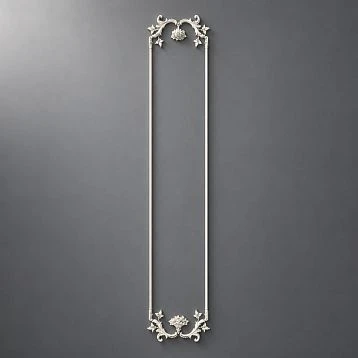
A double frame — two molding contours, outer and inner — creates a sense of depth and complexity associated with high-end joinery. The outer contour can be made from a wider profile, the inner from a thin or decorative one.
This technique is used on large facades: wardrobe sliding doors, double cabinet doors, a chest of drawers facade with several rows of drawers. For a small nightstand, one frame is enough.
Decorative overlays and stucco: an accent that is remembered
A molding frame creates structure. A decorative overlay creates character. These are different things, and their combination is different levels of the same effect.
Wooden carved overlays for furniture
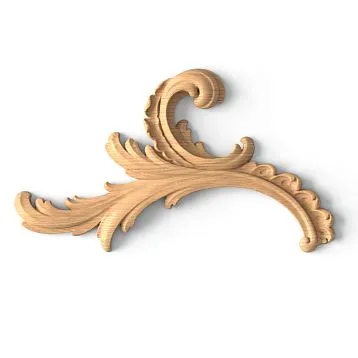
buy furniture decor in the form of wooden carved overlays — this is an investment in furniture that lasts for years. A wooden overlay with a floral or acanthus pattern in the center of the door transforms the facade from "framed" to "decorated."
STAVROS offers over 400 models of wooden overlays. Prices start from 920 rubles for a small element (N-506 series) and reach 31,540 rubles for large ornamental panels (C-020 set). For a standard task — updating a cabinet or console — overlays in the range of 1,500–8,000 rubles are needed.
Central overlays are a single element in the center of a door or facade. Acanthus leaf, cartouche, floral rosette, bas-relief medallion. Size — 10–20 cm for medium doors, 20–30 cm for large ones. This is a minimalist decor option: one accent that is immediately noticeable.
Corner overlays are small elements at the corners of a door or inside a molding frame. Often come in pairs or sets of four. They create a sense of a "set" — like on antique handmade furniture.
Decor sets are collections that include a central element and matching corner or side pieces. STAVROS offers sets from C-015 (from 7,270 rubles) to C-021 (from 29,260 rubles). A set is convenient because all elements are already coordinated in style and proportions: no need to select them manually.
Polyurethane decorative molding for furniture
Buy decorative stucco for furniture facades — a more affordable option compared to wooden overlays. Polyurethane overlays weigh much less, are easy to cut, and can be painted with any composition. For small cabinets and consoles — an excellent choice.
Polyurethane works particularly well Relief Decoration on white furniture for painting: the overlay is glued, puttied, painted in the color of the entire facade, and creates a relief that is indistinguishable from wood when viewed from a distance of one to two meters. This is exactly the effect needed in most residential interiors.
Where to place decor on a furniture facade
Several proven schemes.
One central element on a door or drawer — a minimalist yet expressive technique. Works well on small cabinets and consoles. Does not overload the facade.
Central element + molding frame — a standard classic set. The frame creates a field, the overlay centers it. The result reads as "classic furniture with carved decor."
Corner overlays at the four corners of the molding frame — an option for more complex facades. Four corner elements make the frame "complete" and add detail upon close inspection.
Horizontal overlays on the upper part of the facade — for chests of drawers with a row of drawers. A horizontal garland along the top edge or a decorative frieze above the last row of drawers.
Furniture handles: the final touch
Handles are what the hand touches every time a door is opened or a drawer is pulled out. This is the detail that is noticed first at close glance. And that is why the wrong handle ruins the entire look — even with perfectly matched legs and overlays.
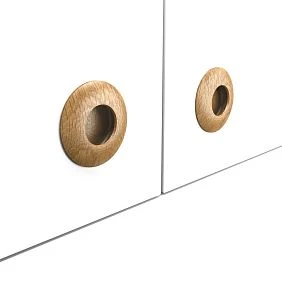
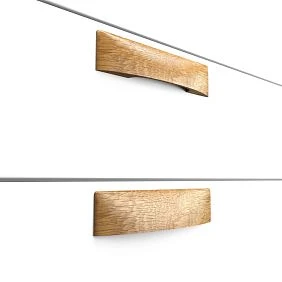
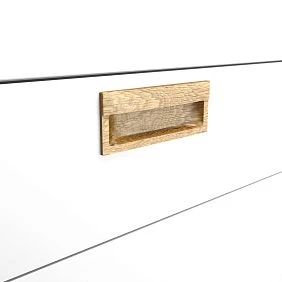
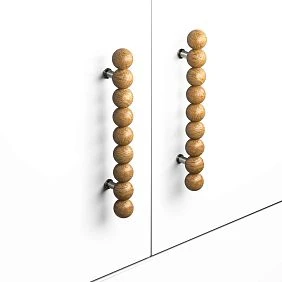
Furniture Handles made of wood — an organic choice for wooden furniture with wooden overlays. Wood to wood — a unified material language. The shape of the handle should match the style of the legs and overlays: a turned handle for turned legs, a carved handle for carved decor.
For a classic console or cabinet in a neoclassical style, knob handles (single-point) or pull handles (two-point) with a relief profile are suitable. For Provence and country — handles in the shape of a shell, leaf, or ring. For Scandinavian and modern — minimalist straight pulls or rounded knobs.
Painting: the color that ties everything together
All components — legs, moldings, overlays, handles — are unified by a single color. This is a crucial step that cannot be skipped.
Two approaches to painting.
Monochrome. Everything — the body, legs, overlays, moldings — is painted in one color. White, cream, dusty pink, sage green, Tiffany blue. This is a modern and very elegant technique: the furniture looks like a single architectural object, the relief of the decor is read through shadow, not through contrast.
Two-tone. The body is in one color (e.g., white), the legs and handles are in another (gold, bronze, black, natural wood). The facade is in the first color, the overlays are with patina or in contrast. This is a richer option that requires precise color calibration, but with the right selection gives a very luxurious result.
Tips on paint and primer
Before painting polyurethane and wooden elements — mandatory primer. The primer evens out absorbency and ensures paint adhesion. Two to three thin coats of matte acrylic paint are better than one thick coat. Each coat dries completely before applying the next.
For wooden overlays with relief ornament — first go over the ornament with a brush (pressing the paint into the recesses), then use a flat brush on the flat areas. After complete drying — light sanding with fine-grit sandpaper (240 grit) and a finishing coat.
Practical examples: three typical scenarios
Scenario one: a bedside table in Scandinavian style
Source material: white MDF bedside table 50×40×50 cm with one door and one drawer.
What to add:
-
Four cone-shaped wooden legs 120 mm high — delicate, without ornament.
-
On the door — a single molding frame made of of wooden moldings 15 mm.
-
In the center of the door — a small overlay N-506 (from 920 rubles) — a minimalist floral element.
-
Wooden knob handle.
-
Painting: all elements in matte white.
Result: from a standard "IKEA item" — a delicate nightstand with architectural character. Decor budget — about 2,000–3,000 rubles.
Scenario two: a console in the hallway in neoclassical style
Source material: narrow console 90×30×80 cm made of white MDF without decor.
What to add:
-
Four turned furniture legs 150 mm high — classic profile.
-
On the front (if there are doors) — double molding frame.
-
Central decorative insert N-154.1 (from 3,050 RUB) with acanthus motif.
-
Wooden handle brackets with relief.
-
Painting: body — matte cream, legs — with gold patina.
Result: a console that the guest notices from the doorstep. Decor budget — 5,000–8,000 rubles.
Scenario three: chest of drawers in a classic study
Source material: a four-drawer chest of drawers 90×45×90 cm made of wood-look MDF.
What to add:
-
Four carved Furniture legs 100 mm high in the Empire style.
-
On each drawer — a molding frame made of of wooden moldings 20 mm.
-
On the upper corners of each drawer — small corner overlays N-093 (from 1,370 rubles per pair).
-
Horizontal decorative strip of molding under the top lid.
-
Handles — carved wooden brackets with a floral motif.
-
Decorative stucco on the ends of the chest — symmetrical floral overlays.
-
Painting: anthracite with gold patina on the overlays.
Result: an antique store level dresser — at the price of furniture decor.
How not to overload furniture: the rule of three elements
Overloaded furniture looks just as bad as bare furniture. When one door has molding, three overlays, ornate hinges, and an elaborate handle — the eye doesn't know where to focus. Everything clamors at once.
A working rule: no more than three decorative solutions on one piece of furniture.
Legs are the first element. A molding frame is the second. An overlay or Buy Moldings as the third. The handle — it's part of the final look, but doesn't add decorative 'noise' if chosen correctly.
A fourth element — only if the first three are calm. For example, monochrome painting with a molding frame and an overlay is already three. Adding corner overlays on all four corners makes four. But if the main three elements are restrained, the fourth works as a quiet accent, not as extra noise.
What to buy for different tasks: summary table
| Task | What to purchase |
|---|---|
| Make the cabinet taller and lighter | Furniture legs or furniture legs + hardware |
| Update a flat facade | Moldings for furniture + glue + paint |
| Make the console classic | Legs + moldings + Wooden Inlays + handles |
| Add an expensive accent to the facade | Decorative stucco or decor for furniture |
| Update the dresser completely | Legs + handles + moldings + overlays + painting |
| Don't overload the furniture | Thin moldings + calm tapered legs + one central overlay |
| Make kitchen cabinets more expensive | Molding frames on facades + handles + cornice from of polyurethane moldings |
Frequently Asked Questions
What to buy to make the cabinet look more expensive?
Minimum set: Furniture legs (change the silhouette), molding for the facade (create a frame), new handles, glue, and paint. This updates three parameters at once: shape, surface, and finish. For a more expressive result — Decorative Inserts to the center of the facade.
Can stucco be used on furniture facades?
Yes. Both wooden carved overlays and buy decorative moldings polyurethane ones are quite suitable for furniture facades. The main thing is to choose the right size (the overlay should not occupy more than 1/3 of the door area) and ensure it does not interfere with opening the door. After installation, everything is painted in a single color.
What is more important: legs or facade decor?
Legs change the silhouette — how the furniture looks in the space from a distance. Facade decor changes the style — how the furniture reads up close. Both parameters are important, and the best result is when they are chosen together, in a unified architectural key.
What legs to choose for a classic console?
For a classic console — turned or carved Wooden legs height 120–180 mm. Profile — with relief elements (balls, toruses, floral details). Coordination with moldings and overlays in style is mandatory.
How many legs to put under the cabinet?
Standard — four legs at the corners. For very wide cabinets (from 100 cm) — you can add a fifth in the center of the back part. For narrow consoles with narrow legs — four at the corners are enough.
How to attach wooden overlays to an MDF facade?
Mounting adhesive based on acrylate or PVA. Apply to the back surface of the overlay, press, secure with tape or clamps for 20–30 minutes. After complete drying (6–12 hours) — puttying joints, primer, painting.
STAVROS: a complete set for furniture you want to keep forever
When the task is to update furniture systematically, working with one manufacturer is much more convenient than collecting parts from different sources. A unified assortment ensures consistency of styles, materials, and proportions.
STAVROS produces everything needed for a complete furniture update: more than 130 models Solid wood furniture legs — from laconic conical to carved in classic style; a full line moldings for furniture in various profiles and sections; more than 400 models wooden appliqués — from small elements starting at 920 rubles to complex ornamental panels; a collection furniture handles made of solid wood in classic and modern styles; as well as decorative molding made of polyurethane for budget facade decor.
All products are manufactured on CNC equipment from natural wood — beech, oak, and pine — with a final sanding "ready for painting." No special primers or special paints are required: standard acrylic enamel or matte paint — and the furniture is ready.
Buy molding and wooden decor for furniture can be purchased at the STAVROS online store. Delivery — to any region of Russia. Pickup — in St. Petersburg and Moscow. Order from one piece.
Because furniture that was assembled piece by piece — with the right legs, precise moldings, and an overlay chosen not by chance but with understanding — is an item you don't want to throw away during the next renovation. This is furniture that stays.