Article Contents:
- First, an honest answer: is MN-148 metal or wooden
- Why the product is still found in searches for metal
- What the wooden base provides
- Low options for a dresser and nightstand
- Medium options for a coffee table and side table
- Tall options for a console and table
- What to check before adding four MN-148
- When a fifth leg is needed
- Six legs for a wide or heavy body
- What to calculate before ordering
- Straight and inclined position
- Wall-mounted console
- Freestanding console
- Makeup table
- Beech for enamel
- Oak for tinting
- Oak for enamel and beech for tinting
- When brass is appropriate
- When stainless steel is appropriate
- What to do if handles have not been chosen yet
- What to check upon receipt
- Why the insert is installed after finishing
- Direct mounting
- Angled mounting
- Knock-down furniture
- Serial Production
- When an adjustable option is needed
- When a felt glide is appropriate
- How to count glides
- What is checked on all supports
- Marking after receipt
- Why one damaged leg cannot be replaced with any MN-148
- Unpainted support
- Support with coating
- You cannot choose only by the card price
- With an all-metal leg
- With a wooden leg without metal decor
- With a leg where metal is the mounting base
- With a ready-made metal underframe
- With a leg of a different height of the same article
- With oak and beech of the same color
- With a genuine brass support
- With a stainless steel leg
- With a support for a stretcher frame construction
- Office
- Mistake 1. Considering the entire leg to be metal
- Error 2. Ordering "four metal MN-148"
- Error 3. Specifying only the article number
- Error 4. Choosing height by photo
- Error 5. Not calculating the final height
- Error 6. Considering 100–150 mm universal for a dresser
- Error 7. Using high legs without a frame
- Error 8. Mistaking a frameless construction for lack of reinforcement
- Error 9. Ordering four legs for a long dresser without checking deflection
- Error 10. Adding a fifth support without reinforcement
- Error 11. Making the central leg taller
- Error 12. Mixing different heights
- Error 13. Ordering part in beech, part in oak
- Error 14. Not specifying "for enamel"
- Error 15. Not specifying "for tinting"
- Error 16. Painting metal together with wood
- Error 17. Installing the insert before finishing is complete
- Error 18. Mistaking brass color for solid brass
- Error 19. Mistaking a silver insert for a stainless steel leg
- Error 20. Choosing metal separately from handles
- Error 21. Comparing shades only on screen
- Error 22. Not checking the insert set
- Error 23. Ordering legs at different times
- Error 24. Not marking parts
- Error 25. Choosing a random mounting plate
- Error 26. Attaching to a thin panel without an insert
- Error 27. Not accounting for internal drawers
- Error 28. Tilting legs without calculation
- Error 29. Not accounting for the foot in the height
- Error 30. Using different feet
- Error 31. Considering the foot as a fix for crooked assembly
- Error 32. Not ordering fittings
- Error 33. Buying fasteners without a body drawing
- Error 34. Considering four legs a ready-made underframe
- Error 35. Not checking the tabletop load
- Error 36. Buying only by search query
- Error 37. Not accounting for finishing costs
- Error 38. Not doing a test paint-out
- Error 39. Not saving the specification
- Error 40. Starting production without a control sample
- Open card MN-148
- Select height
- Specify wood
- Confirm preparation
- Select metal insert
- Calculate quantity
- Add fasteners
- Add glides
- Choose finishing materials
- Save order line
- Commode
- Long cabinet
- Coffee Table
- Wall-mounted console
- MN-148 — metal leg?
- Why does it appear for the query "metal legs for a dresser"?
- What type of wood is MN-148 made from?
- What metal options are available?
- Is this a real stainless steel leg?
- Does the brass insert mean the leg is made of brass?
- What heights are available for MN-148?
- How to calculate the final height of the dresser?
- Will 100 mm fit any dresser?
- How many legs are needed for a dresser?
- When is a fifth leg needed?
- Can six MN-148 be installed?
- Is a central leg needed for the cabinet?
- Will MN-148 fit a coffee table?
- Can the legs be installed at an angle?
- Will tall MN-148 fit a console?
- Can a dining table be made on tall MN-148?
- What does a frameless construction mean?
- Which wood species to choose for white enamel?
- What should be chosen for a clear finish?
- Can beech be tinted?
- Can oak be painted with enamel?
- When is a metal insert installed?
- Is the insert pre-glued?
- Do I need to buy the insert separately?
- How not to mix up the color of the inserts?
- Do I need to match the handles to the color of the insert?
- Can brass inserts be combined with silver handles?
- What is included in the mounting kit?
- Can I buy any mounting plate?
- Are glides needed?
- How many glides are needed?
- Can I install different feet on the same piece of furniture?
- Do I need to paint the legs before installation?
- What is a test swatch?
- Can I order one leg as a sample?
- Why is it better to buy the set in one batch?
- How to store metal inserts during painting?
- What to check when receiving four MN-148?
- Where to compare MN-148 with other legs?
- Where to see ready-made legs with coating?
- Can I arrange a full furniture project?
- How to check the current price?
- Is MN-148 delivered across Russia?
- Example 1. Compact dresser on four supports
- Example 2. Long TV stand with central support
- Example 3. Tall wall console
- Why the price of four legs is not equal to the price of a finished dresser on legs
- How to compare beech and oak honestly

A buyer enters "metal legs for a dresser" into the search, sees a slender conical support with a silver or gold bottom, and decides that it is a metal leg. The model name MN-148 reinforces the first impression: in the photo, the metal is immediately noticeable, and the wooden body after painting may look almost like part of a furniture facade. But when placing an order, the main thing becomes clear: MN-148 is not a fully metal support. Its main body is made of solid beech or oak, and the metal works as a decorative insert in the lower part.
This difference affects not only the words in the product card. It changes the entire order. The buyer chooses the wood species, preparation for future finishing, height, color of the metal accent, number of legs, fasteners, and floor glides. If a furniture base of four identical supports is needed, it is not enough to put four items with one SKU into the cart. You need to ensure that all four match in height, wood, surface preparation, and insert option.
Therefore, the query "metal legs for a dresser" is useful to translate into the precise product language: wooden furniture legs MN-148 with a decorative metal insert. If such a design matches the project, you can buy furniture legs MN-148 with a metal insert and assemble a set for a dresser, nightstand, coffee table, vanity table, wall console, or project table.
Here, the set is what matters. One beautiful leg does not answer questions about stability, final height, and symmetry of the furniture. Four supports of different variants also do not form a set, even if they have the same article number. The correct order is one consistent specification line, repeated the required number of times.
First, an honest answer: MN-148 metal or wooden
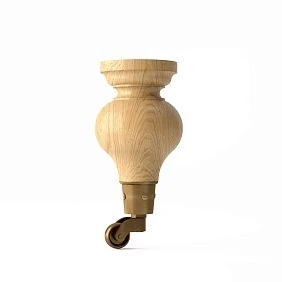
MN-148 is a cone-shaped support made of solid wood with a decorative metal insert. The load-bearing and visually main part is made of beech or oak. The metal is located in the lower zone and forms an accent resembling stainless steel or brass.
Therefore, the correct formulations look like this:
-
wooden leg with metal insert;
-
turned cone-shaped support made of solid wood;
-
furniture leg MN-148 with metal decor;
-
wooden support with a silver or brass accent.
The phrases "fully metal leg MN-148", "stainless steel leg MN-148", or "brass support MN-148" are misleading. Stainless steel and brass in the product card refer to the decorative hardware option, not to the material of the entire body.




Why the product is still found by metal-related queries
A search query rarely describes the construction precisely. A person sees the bottom tip and searches by the most noticeable feature. Color matters to them: silver to mimic stainless steel or warm to mimic brass. Sometimes a buyer wants to match the legs with handles, lamps, a mirror frame, or a table profile, so they immediately type the word "metal."
Such a query is not erroneous as an expression of intent. The mistake begins when the search phrase is carried into an order without checking the product card. Then the client expects an all-metal construction but receives wooden supports with separate metal decor. The product itself may fully suit the project, but the expectation is formed incorrectly.
Our factory also produces:
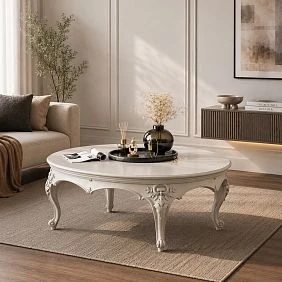
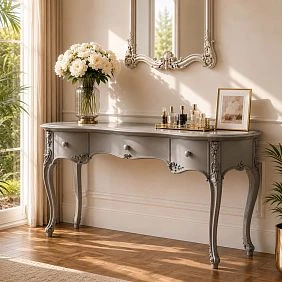
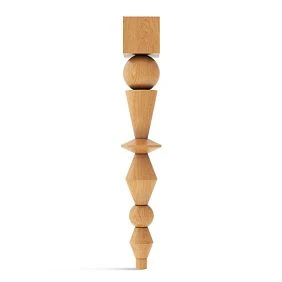
What the wooden base provides
Solid wood allows the legs to be matched with the furniture body through finishing. The wooden part can be prepared for opaque enamel or for a coating that preserves the natural texture. This way, the same shape can work with a white dresser, a dark oak console, a colored nightstand, or a table in a natural finish.
An all-metal support is structured differently: metal defines both the construction and the look of the entire leg. In MN-148, metal does not replace wood but highlights the lower point of the cone. It is the combination of materials that makes the model interesting for furniture that needs a modern accent without the feel of a cold all-metal frame.
Get Consultation
Brief specification of MN-148 before calculating the set
| Parameter | Confirmed choice | What this changes for the buyer |
|---|---|---|
| Article number | MN-148 | Allows assembling a matching series without mixing up the model |
| Type | Cone-shaped wooden support with a metal insert | It cannot be considered a fully metal leg |
| Main material | Beech or oak | Determines the type of wood and the finishing approach |
| Height | Options from 100 to 750 mm | Allows using one form for furniture of different heights |
| Transverse dimension | Checked against the drawing of the selected size | Needed for the seating area and visual scale |
| Metallic accent | Stainless steel or brass look | Coordinated with handles and other hardware |
| Wood preparation | For enamel or tinting | Selected before applying the finish coat |
| Furniture construction | Frameless solutions; for tall freestanding items, additional rigidity is required per the project | One scheme cannot be transferred to any height and load |
| Fastening | Selected separately | The mounting method depends on the cabinet and the selected hardware |
| Floor protectors | Offered as accompanying elements | Help protect the floor and, with the selected model, adjust the position |
| Quantity | By furniture design | Four legs is a common but not universal option |
The table shows the main thing: the article MN-148 denotes the shape and product model, but not a single fixed configuration. Inside the card, the buyer selects several parameters. Therefore, the line "MN-148 — 4 pcs." is too short for an accurate order.
What a complete order line should look like
Safe wording:
MN-148, height ___ mm, wood — beech/oak, preparation — for enamel/tinting, metal insert — for stainless steel/brass, quantity — ___ pcs., fasteners — according to the selected system, glides — yes/no.
For a specific dresser, the entry might look like this:
MN-148, height 150 mm, beech, for enamel, insert for brass, 4 pcs.; fasteners and glides to be calculated separately.
For a wall-mounted console:
MN-148, height 700 mm, oak, for toning, insert for stainless steel, 4 pcs.; body construction and rigidity confirmed by the furniture maker.
The second line is especially important. A high leg does not turn just any tabletop into a stable console. You need the body, connections, and rigidity calculation.
Fully metal support and MN-148: the difference you see after purchase
| Criterion | Fully metal support | MN-148 |
| Main material | Metal | Solid beech or oak |
| The role of metal | Forms the entire structure | Serves as a decorative lower accent |
| Visual character | Colder, more technically strict | Warmer due to wood |
| Case finishing | Depends on the factory coating of the metal | The wooden part can be finished to match furniture |
| Combination with the facade | Often built on contrast | May match the facade or countertop |
| Working with color | The entire metal surface is changed | Wood and insert are selected separately |
| Search expectation | "Metal leg" matches the construction | The metal query describes only the visible part |
| Order | Usually, the size and color of the coating are chosen | Height, wood species, preparation, insert, fastening, and quantity are chosen |
It cannot be claimed that one option is better than another. They solve different tasks. If a project requires an all-metal frame, MN-148 should not replace it just because of the silver tip. If you want to preserve the wood and add a small metallic accent, an all-metal support may be too visually rigid.
The leg height starts not with the catalog, but with the finished furniture
Buyers often choose the height based on the item's name: low for a dresser, medium for a table, high for a console. This is a useful starting point, but not a ready calculation.
The final height of the furniture consists of several parts:
body or tabletop height + MN-148 height + mounting assembly + floor glide = final product height.
If a dresser must have a certain overall height, first measure the body. Then subtract the thickness of the mounting part from the target value to get the allowable leg height. The reverse order is dangerous: a leg you like may raise the furniture above the project.
Low options for dressers and cabinets
Heights at the lower end of the range are considered for cabinet furniture that needs to be raised off the floor, maintain a stable scale, and open space for cleaning. However, even here, 100 or 150 mm cannot be automatically assigned.
Check:
-
body height;
-
position of the lower drawers;
-
visible plinth line;
-
distance to the floor;
-
possibility of operation of a robot vacuum cleaner or a regular nozzle;
-
center of gravity;
-
mounting platform;
-
presence of a central support for a long body.
A low leg makes the dresser visually lighter, but at the same time changes the position of the handles and tabletop relative to a person. For a bedside table, a too-high support can raise the top surface above the mattress. For a TV stand, the screen line will change. Therefore, the name of the furniture does not replace the overall size.
Medium options for coffee and side tables
A buyer looking for metal legs for a coffee table often wants thin supports and a noticeable silver or brass bottom. MN-148 meets this visual request, but remains a wooden structure.
For the table, you need to determine:
-
desired tabletop height;
-
The thickness of the tabletop;
-
angle or position of supports;
-
distance between mounting points;
-
leg overhang beyond the tabletop projection;
-
number of supports;
-
tabletop weight;
-
need for a lower tie or frame.
If the tabletop is thick, a center leg may result in too high a total. If it is thin and large, one height is not enough — rigidity of the entire base is required.
Tall options for console and table
Tall MN-148 legs are suitable not as universal "legs for any table," but as elements of a calculated design. For a lightweight wall-mounted console or vanity table, conditions differ from a freestanding writing or dining table.
A tall thin support increases the load arm. The higher the furniture and the farther it is from the wall, the more important the frame, apron belt, fasteners, and geometry become. Therefore, for a freestanding structure, the furniture maker must confirm additional rigidity.
The request "buy metal console legs" in the case of MN-148 should be understood as follows: the buyer chooses tall wooden legs with a metal insert, not four metal posts that by themselves create a ready-made underframe.
Dresser on four legs: basic set and its limitations
Four identical supports are the most straightforward order. For a rectangular dresser, they are placed at the corners of the body and create a symmetrical base. But the word "four" does not guarantee that the structure is calculated correctly.
What to check before adding four MN-148
-
Are there reliable attachment points in the body.
-
Does the size of the mounting area match the selected hardware.
-
Do the legs interfere with the bottom drawer.
-
Is the bottom rigid enough.
-
Is a central support needed.
-
How is the mass of the filled dresser distributed.
-
Do all four product configurations match.
-
How will the finish be done before installation.
A long body is especially dangerous. Four corner supports can leave a large free span in the middle. If the bottom sags, additional central or intermediate support is determined by design, not aesthetics.
When a fifth leg is needed
The fifth support is often placed closer to the center of a long dresser or cabinet. But it cannot be added automatically. It must have a load transfer point and the correct height. If the central leg is even slightly higher than the others, the body will rock on it; if lower, it will not work until sagging appears.
When ordering five MN-148, check that the central support:
-
does not interfere with drawers;
-
does not fall into an empty thin panel;
-
has its own reinforcement;
-
is adjustable or exactly matches in height;
-
does not spoil the front appearance.
Sometimes it is more reasonable to use a technical hidden support of a different shape for the center. The decision is made by the furniture maker.
Six legs for a wide or heavy body
Six supports can be arranged in two rows of three. This scheme is used not for the number's sake, but for load distribution. The outer four MN-148s shape the furniture's appearance, while the two additional ones support the middle.
If all six are visible, the buyer must order them as one configuration and one batch. If the middle supports are hidden, the project may include other technical details. Do not buy six decorative legs just because "it's more reliable": extra visible supports can overload the composition and complicate leveling.
Nightstand: a small body does not exempt from calculation
A nightstand seems simpler than a dresser. It is shorter, lighter, and more often uses four legs. But mistakes here are more noticeable: the furniture is near a bed, sofa, or work chair, so incorrect height immediately affects comfort.
For a bedside nightstand, compare the top surface with the mattress. For a TV stand, with the bottom line of the screen. For a hallway nightstand, with the seat or mirror. If you install tall legs just for a trendy silhouette, the piece may lose connection with its surroundings.
Metal legs for a nightstand are sought for lightness and shine near the floor. MN-148 gives a similar impression through a metal insert, but the wooden part allows painting the legs to match the body color. As a result, the furniture looks more cohesive: from afar, a thin leg is visible, and up close, the transition from wood to metal.
Coffee table: four legs do not always mean a stable base
A coffee table has low height, but a large tabletop can create significant leverage. A person leans on the edge with a hand, moves the table, places heavy items. Therefore, stability depends on the arrangement of supports and connections.
What to consider before ordering
-
length and width of the tabletop;
-
thickness;
-
material;
-
distance of the legs from the edge;
-
installation angle;
-
width of the base on the floor;
-
possibility of mounting the mounting plate;
-
presence of a frame;
-
final height.
The conical shape of MN-148 makes the table visually lighter. The metal insert emphasizes the lower point and can support a lamp, handles of an adjacent cabinet, or a thin metal profile. But decorative coincidence does not replace structural verification.
Straight and inclined position
The installation angle is determined by the mounting system and the project. You cannot simply turn the leg outward and secure it in a random way. The tilt changes the projection, the width of the base, and the load on the fasteners.
If a pronounced "spread" of the legs is needed, check the compatible mounting plate and drawing in advance. The foot pad must properly contact the floor.
Console: a tall support requires a wall, frame, or apron belt per the design
A console is often perceived as a lightweight tabletop on thin legs. In the visualization, it appears almost weightless. In reality, the tall base must resist lateral forces.
Wall console
If the furniture is fixed to the wall, part of the stability is provided by the cabinet attachment. But this does not mean the wall joint can be left uncalculated. You need to know the wall material, the position of the fastening points, and the weight of items on the tabletop.
In the interior solutions section, you can view an interior with MN-148 legs and assess how thin supports work in a finished composition. Such an image helps choose the proportion and metal color, but does not replace a working drawing of your own furniture.
Freestanding console
Without a wall, the structure must be rigid on its own. For tall legs, the cabinetmaker provides an apron belt, frame, or another method of connection. Four independent attachment points to a thin tabletop should not be considered a ready-made underframe.
Vanity table
Here, the seating height, knee space, drawers, and mirror are important. The legs can be tall, but the fastening must not interfere with the internal contents. A brass insert supports warm hardware well, while a silver one supports cold handles and lighting.
Beech or oak: the choice is made not by the word "more expensive," but by the future surface
The two wood species give the buyer different options. The choice depends on whether the wood will be covered with an opaque color or remain visible.
Beech for enamel
Beech is reasonable to consider when the wooden part is painted:
-
in white;
-
black;
-
graphite;
-
blue;
-
green;
-
beige;
-
facade color according to the project.
With opaque enamel, the natural grain ceases to be the main feature. The shape of the cone, the quality of preparation, and the neat transition to the metal insert come to the forefront.
This does not mean that beech is always required under enamel. The card configuration and finish are coordinated with the manufacturer and the painter. But from a commercial standpoint, there is no point in overpaying for pronounced texture if it will be completely covered, unless the project specifically requires oak.
Oak for tinting
Oak is chosen when the wood grain needs to be preserved and the legs need to be tied to the tabletop, facade, frame, or other solid wood. A translucent finish highlights the pores and texture.
For four or six visible legs, it is advisable to order one batch and finish them at the same time. Natural wood is not a printed pattern: individual pieces may differ. The craftsman distributes them across the sides of the furniture so that the set looks cohesive.
Oak under enamel and beech under tinting
Such solutions are not prohibited as a universal rule, but require a deliberate design. Oak under opaque paint loses part of the visual advantage of its texture. Beech under a transparent finish gives a different pattern than oak. You cannot expect stain to turn one wood species into another.
Under enamel or under tinting: this needs to be decided before the cart
Wood preparation is tied to the future coating. If the legs will be painted with opaque enamel, the appropriate configuration is chosen. If the texture must remain visible, preparation for tinting is considered.
Erroneous line:
MN-148, oak/beech, paint later, 4 pcs.
Correct line:
MN-148, beech, under enamel, height 150 mm, brass insert, 4 pcs.
Or:
MN-148, oak, under tinting, height 700 mm, stainless steel insert, 4 pcs.
The painter should receive not just wooden blanks, but an agreed set with markings. Metal inserts are best stored separately until finishing is complete to avoid soiling or scratching them.
Brass or stainless steel: choose based on the existing metal
The insert occupies a small area, but it is near the floor and repeats on each leg. Four identical accents create a noticeable rhythm. Therefore, the color of the hardware affects the entire piece.
When brass is appropriate
A warm metallic shade supports:
-
brass or golden handles;
-
warm lighting fixtures;
-
a golden mirror frame;
-
warm patina;
-
cream and deep colored facades;
-
oak in a warm tone.
But the word "brass" does not guarantee a complete match with all golden details. Different finishes vary in temperature, shine, and saturation. It is better to compare real samples in daylight and artificial light.
When stainless steel is appropriate
The cold silver variant is associated with:
-
chrome handles;
-
nickel-plated fittings;
-
silver profile;
-
appliances;
-
cool gray facades;
-
glass and stone;
-
minimalist modern interiors.
And here one cannot promise a perfect match with any chrome. You need to compare actual shades and the degree of gloss.
What to do if handles have not been chosen yet
First, determine the main metal of the furniture. It is easier for the buyer to start with legs or handles, but they cannot be chosen independently. In the catalog, you can Buy wooden furniture handles and choose the shape, wood, and finish so that the handles do not clash with the lower insert MN-148.
If the handles are fully wooden and painted to match the cabinet front, the metal insert can tie in with the lighting or the frame. If there is no other metal in the room at all, the lower accent becomes standalone—then its color should be especially deliberate.
The metal insert is part of the set, but not the entire leg
The decorative piece is supplied separately from the wooden base. This is important not only for shipping. The separation allows you to finish the wood first, then install the clean metal insert.
What to check upon receipt
For a set of four legs, the following must match:
-
four wooden bases;
-
four metal inserts of the same color;
-
four selected heights;
-
one wood species;
-
one finish;
-
surface condition;
-
Set of fastening hardware to order.
Do not mix brass and stainless steel inserts for the sake of an "interesting design" if such a scheme is not intended by the designer. Random differences often look like a configuration error.
Why the insert is installed after finishing
Enamel, stain, oil, or varnish can get on the metal. Masking tape does not always protect a complex joint without traces. Separate work simplifies preparation and maintains a neat material boundary.
Sequence:
-
check the parts;
-
perform a dry fit;
-
remove the metal inserts;
-
prepare and finish the wood;
-
wait for the coating to dry completely;
-
install the inserts;
-
mount the legs onto the body;
-
check geometry and contact with the floor.
This sequence does not replace the manufacturer's instructions for finishing materials and mounting hardware.
Fasteners for MN-148: the leg article number does not determine the entire mounting system
The buyer can correctly choose the height and finish, but receive an incomplete set if the fasteners are left "for later." The MN-148 product page offers studs, mounting plates, mounting kits, and foot pads. However, the availability of related products does not mean that any of them fits any structure.
Fasteners are selected based on five initial data points:
-
material and thickness of the body base;
-
presence of an embedded insert;
-
straight or inclined position of the leg;
-
required disassembly capability;
-
load and rigidity of the furniture.
In the category you can Buy hardware for furniture legs after the furniture maker has determined the connection scheme. Buying a mounting plate just because it is shown next to the leg is wrong. First, you need a drawing of the joint.
Straight mounting
For vertical installation, the support must have a flat mounting surface and a reliable connection to the body. It is important that the fastener does not fall into a void, does not interfere with the drawer, and does not damage the thin panel.
If a threaded stud is used, the body must have a compatible mating part. If a mounting plate is used, its dimensions and holes are checked against the base. Screws are selected based on the body material and the thickness of the embedded part.
Inclined mounting
The inclination changes the direction of the load and the width of the furniture base on the floor. The plate must set the intended angle. The inclination must not be created with a random washer, incomplete tightening, or by cutting the wooden part on site.
Before ordering, check:
-
angle;
-
direction of inclination;
-
the projection of the leg;
-
position of the foot pad;
-
the distance to the edge of the body;
-
intersection with adjacent parts;
-
the ability to tighten the fastener.
Knock-down furniture
If a chest of drawers or a table must pass through a narrow opening, be transported, or be assembled repeatedly, the joint is designed as serviceable. Glue without mechanical fastening can make disassembly impossible. A random self-tapping screw after several cycles can weaken the wood base.
Serial production
For a batch of furniture, one proven joint is repeated on all items. First, a sample is assembled, the actual height is measured, and stability is checked. Only then is the full volume of legs and hardware ordered.
Glide: a small part affecting height and floor
The glide separates the lower part of the support from the floor covering. Depending on the chosen model, it can protect the floor, reduce scratches, or help level furniture.
But the glide cannot be considered a neutral addition. It adds its own height and changes contact with the floor. If four supports received different glides or one is installed deeper, the furniture may wobble.
When an adjustable option is needed
Adjustment is useful on floors with slight unevenness and in long structures with an additional central support. It helps align all points in one plane. However, the adjustment range is not intended to correct a gross error in leg height.
When a felt glide is appropriate
Felt reduces the risk of scratches on sensitive flooring. But the soft layer compresses and gets dirty over time. For heavy furniture, the solution is checked against the design and operating conditions.
How to count glides
One visible set of four MN-148 usually requires four identical glides, if they are provided. For five supports — five. Spare parts are counted separately.
It is useful to write in the request:
MN-148 — 4 pcs.; glide of the selected model — 4 pcs.; check the added height and compatibility with the bottom metal insert.
Full set for a dresser, nightstand, table, and console
| Product | Base number of visible MN-148 | What to check beyond the quantity | Possible additional support |
| Compact nightstand | 4 | Final height, drawers, seating area | Based on the body construction |
| Medium width dresser | 4 | Bottom deflection, load placement | Central when required by calculation |
| Long dresser | 4 or 6 | Rigidity of long body | One or two hidden supports |
| Coffee table | 3 or 4 per design | Tabletop size, base width, angle | Not assigned without calculation |
| Vanity table | 4 | Legroom, drawers, wall mounting | Along the frame |
| Wall-mounted console | 2 or 4 as per design | Wall fixation and frame | Depends on the design |
| Freestanding console | 4 | Apron belt or other connection | Does not replace the frame |
| Writing or dining table | 4 or more | Rigidity of the underframe, load, distances | According to underframe calculation |
The table does not establish a universal number. It shows what questions arise for each item. The specific scheme is determined by the furniture designer.
Four identical legs are one batch, not four random purchases
Even if the card allows adding items individually, the furniture set must be assembled as a whole. In repeat orders, there may be differences in the wood batch, preparation, or available hardware.
What is checked for all supports
-
SKU MN-148;
-
height;
-
beech or oak;
-
preparation for enamel or tinting;
-
color of the metal insert;
-
mounting method;
-
thrust bearing;
-
quantity;
-
purpose in the project.
Marking after receipt
Convenient scheme:
-
K1 — front left;
-
K2 — front right;
-
K3 — rear left;
-
K4 — rear right;
-
K5 — central.
Marking is especially useful for oak under a transparent finish. The craftsman can distribute the grain and shade so that the front pair looks consistent.
Why one damaged leg cannot be replaced with just any MN-148
The article number will match, but the height, wood, insert, and finish may differ. Before reordering, the original specification is retrieved. If it is not available, compare the sample, drawing, and actual dimensions.
What to order together with MN-148
It is better to assemble the set around the furniture structure, rather than around a single beautiful part. One project may require hardware, glides, finishing materials, and handles.
| What to add | Purpose | What to check | Commercial transition |
| Unpainted MN-148 legs | Main furniture base | Height, wood, insert | buy furniture legs MN-148 with a metal insert |
| Mounting hardware | Connecting legs to the body | Base type and angle | Buy hardware for furniture legs |
| Floor protectors | Floor protection and adjustment | Diameter, height, contact with insert | In the hardware section |
| Finishing materials | Enamel, tinting, wood protection | System compatibility | Order materials for furniture installation and finishing |
| Furniture handles | Connection of facade with metal color | Shade, shape, center distance | Buy wooden furniture handles |
| Other unpainted legs | Comparison of shape and size | Drawing and purpose | Buy unpainted furniture legs |
| Legs with coating | Purchasing a ready-made color | Matching the shade with furniture | buy furniture legs with a ready-made coating |
| Other wooden supports | Style alternative | Size, material, and construction | Order wooden furniture legs |
| Interior solutions | Checking scale and combinations | Do not upload photos without a drawing | Order elements for a furniture project |
Links do not replace the specification. Each category opens for a specific choice: leg, fastener, coating, or related hardware.
Unpainted or with a ready-made coating: which path is more beneficial for the project
MN-148 is in the unpainted legs section. This gives freedom of finishing, but adds steps and costs. The buyer should compare not the price of the blank with the price of the finished leg, but the cost of a fully completed set.
Unpainted support
Suitable when:
-
the exact color of the facade is needed;
-
the craftsman paints the entire set together;
-
the oak texture is preserved;
-
the project requires a non-standard shade;
-
Finishing is already included in furniture production.
The estimate includes preparation, materials, labor, drying, and protection of metal inserts.
Coated support
Suitable when an available ready-made shade matches the project and no custom painting is required. The buyer saves time on painting work but must check the actual color and compatibility with the cabinet body.
Cannot choose based only on the card price
Full cost of MN-148:
leg price + metal inserts per selected configuration + fasteners + floor glides + finishing materials + painter's labor + installation + delivery.
If the furniture production already has a painting section, an unpainted leg may be more convenient. For a one-off home remodel, a ready-made coating sometimes reduces complexity if a suitable option exists.
How not to confuse MN-148 with similar solutions
With an all-metal leg
Check the material of the main body. For MN-148, it is wooden.
With a wooden leg without metal decoration
A regular support has no bottom insert. It is calmer and easier to combine with fully wooden furniture.
With a leg where metal serves as the mounting base
For MN-148, the bottom metal is a decorative accent. Mounting is done with separate hardware at the top.
With a ready-made metal underframe
Four MN-148 units do not form a connected frame by themselves. For a high table or console, a structure that unites the supports is required.
With a leg of a different height of the same article
The article matches, but the final furniture will be different. The height is specified in each order line.
With oak and beech of the same color
After enameling, the breeds may look similar, but that does not make them identical. Under the transparent coating, the difference is especially noticeable.
With a genuine brass support
The brass version MN-148 refers to the color of the metal insert, not a solid brass leg.
With a stainless steel leg
The silver insert does not turn the wooden body into stainless steel.
With a support for a rail construction
MN-148 is declared for frameless
Cabinet
A tall console or writing desk must be rigid. A thin silhouette does not cancel the frame. The silver insert supports modern technology, the brass one supports warm lamps and handles.
Forty mistakes when buying MN-148
Mistake 1. Considering the entire leg to be metal
The main part is made of wood. This affects finishing and installation.
Mistake 2: Ordering "four metal MN-148"
The wording does not specify the wood species, height, or insert.
Mistake 3: Specifying only the article number
Inside MN-148, there are several configurations.
Mistake 4: Choosing height based on a photo
Photos do not show the real scale of the furniture.
Mistake 5: Not calculating the final height
The cabinet body, fasteners, and base plate are added to the leg.
Mistake 6: Assuming 100–150 mm is universal for a dresser
The height depends on the body and purpose.
Mistake 7. Using high supports without a frame
Freestanding furniture may lose rigidity.
Mistake 8. Mistaking a frameless design for a lack of reinforcement
A tall item may still need a belt or frame.
Mistake 9. Ordering four legs for a long dresser without checking for deflection
The center of the body may require support.
Mistake 10. Adding a fifth support without reinforcement
It will hit the thin bottom and not transfer the load correctly.
Mistake 11. Making the central leg taller
The furniture will wobble.
Error 12. Mixing different heights
The same article number does not guarantee the same size.
Error 13. Ordering part in beech, part in oak
After clear finishing, the difference will be obvious.
Error 14. Not specifying "for enamel"
The supplier does not know the future finish.
Error 15. Not specifying "for tinting"
The texture may not match expectations.
Error 16. Painting metal together with wood
The insert loses its clean appearance.
Error 17. Install the insert before finishing.
It is easy to scratch or stain.
Error 18. Mistaking the brass color for solid brass.
This is a decorative hardware option.
Error 19. Mistaking the silver insert for a stainless steel leg.
The load-bearing body remains wooden.
Error 20. Choosing metal separately from handles.
The furniture gets mismatched accents.
Error 21. Comparing shades only on screen.
Color and shine change under real lighting.
Error 22. Not checking the insert set
Four legs require four identical parts.
Error 23. Ordering legs at different times
Wood batches and finishes may differ.
Error 24. Not marking parts
After staining, the intended grain distribution is lost.
Error 25. Choosing a random mounting plate
The angle and holes may not match the cabinet.
Error 26. Fastening into a thin panel without an insert
The connection does not receive the necessary base.
Error 27. Not accounting for internal drawers
Fasteners may get into the guide.
Error 28. Tilt legs without calculation
The base and load direction change.
Error 29. Not accounting for the foot pad in height
Furniture ends up taller than the project.
Error 30. Using different foot pads
Supports get different heights and floor contact.
Error 31. Treating the foot pad as a fix for crooked assembly
Adjustment does not replace a precise frame.
Error 32. Not ordering hardware
Legs arrive, but installation is postponed.
Error 33. Buying fasteners without a frame drawing
It is impossible to check the length and fit.
Error 34. Considering four legs as a ready-made underframe
There is no connection between them without a frame or base.
Error 35. Not checking the tabletop load
Thin supports are chosen together with the structure.
Error 36. Buying only by search query
"Metal legs" do not accurately describe material MN-148.
Error 37. Do not ignore the cost of finishing.
The price of the blank is not the price of the finished set.
Error 38. Do not skip a test paint sample.
The color of wood and metal may not match expectations.
Error 39. Do not save the specification.
A repeat order turns into guesswork.
Error 40. Start production without a control sample.
The error multiplies across the entire series.
Who MN-148 is truly suitable for
The model is worth considering if the buyer needs:
-
wooden supports with a modern metal accent;
-
option to paint the legs to match the body color;
-
a choice between beech and oak;
-
height options for different furniture;
-
brass or silver lower part;
-
apronless design with calculated fastening;
-
set for a dresser, nightstand, table, or console;
-
option to select hardware and glides separately.
When it's better to choose another product
MN-148 is not suitable if:
-
a full-metal load-bearing support is required;
-
the project involves a welded frame;
-
a ready-made frame is needed instead of separate legs;
-
it is impossible to perform wood finishing;
-
the metal insert is unnecessary;
-
the heights from the card do not match the project;
-
the seating area does not allow installing fasteners;
-
tall furniture does not get the required rigidity;
-
a different shape or a more massive cross-section is required.
In this case, it is useful Order wooden furniture legs another model or open the category of ready-made solutions.
How to place an order on STAVROS
Open the MN-148 card
Check that the main model URL is selected, not a similar card or an interior solution image.
Select the height
Match it with the body, mounting part, and base plate.
Specify the wood
Beech or oak must be the same for the entire set.
Confirm the preparation
For enamel or for tinting.
Select the metal insert
For brass or stainless steel.
Count the quantity
Four, five, six, or another number — according to the project.
Add the fasteners
Open the fittings section after approving the mounting assembly.
Add foot pads
Check the height and type of floor contact.
Select finishing materials
The system must match the wood and the purpose of the furniture.
Save the order line
Pass it to the designer, cabinetmaker, painter, and installer.
Completed order lines
Chest of drawers
MN-148, height ___ mm, birch, for enamel, insert for brass, 4 pcs.; fasteners ___; floor glides ___; final dresser height ___ mm.
Long cabinet
MN-148, height ___ mm, oak, for tinting, insert for stainless steel, 6 pcs.; two middle supports confirmed by the design; fasteners ___; floor glides ___.
Coffee table
MN-148, height ___ mm, beech, for enamel, insert for stainless steel, 4 pcs.; installation angle ___; mounting plate ___; tabletop ___ × ___ mm.
Wall console
MN-148, height ___ mm, oak, for tinting, insert for brass, 4 pcs.; wall mounting provided; frame/apron belt ___; support feet ___ .
FAQ: questions before ordering MN-148
MN-148 — is it a metal leg?
No. The main part is made of solid wood, and metal is used in the lower decorative insert.
Why does it appear when searching for "metal legs for a dresser"?
Because the photo shows a metal accent. The search query describes the visual feature, but not the entire material.
What type of wood is MN-148 made from?
From beech or oak. The selected wood type must be specified for all legs in the set.
What metal options are available?
The insert can be for stainless steel or brass.
Is this a real stainless steel leg?
No. The silver option refers to the insert, while the body remains wooden.
Does a brass insert mean the leg is made of brass?
No. Brass describes the metal trim option.
What heights are available for MN-148?
The card offers options from 100 to 750 mm. The specific size is chosen based on the final furniture height.
How to calculate the final height of the dresser?
Add the heights of the body, leg, mounting part, and floor cap. Compare the result with the project.
Will 100 mm fit any dresser?
No. The height depends on the body, center of gravity, drawers, and surrounding furniture.
How many legs are needed for a dresser?
Often four, but a long body may require a central or intermediate support based on calculations.
When is a fifth leg needed?
When the structure requires support in the middle. There must be a reinforced mounting point underneath it.
Can six MN-148 legs be installed?
Yes, if the cabinet design provides for six visible supports. They should be purchased as one configuration.
Does the cabinet need a central leg?
Only if it is calculated as necessary. It should not interfere with drawers and should not be higher than the outer supports.
Are MN-148 legs suitable for a coffee table?
Yes, if the height, placement, and fasteners match the tabletop and the base structure.
Can the legs be installed at an angle?
Yes, if there is a suitable mounting system and a projection calculation. Random tilting is not allowed.
Will tall MN-148 legs suit a console?
For a light wall-mounted structure — per the design. A freestanding console needs additional rigidity.
Can a dining table be made on tall MN-148 legs?
It can only be considered together with an apron frame, a frame, or another calculated underframe.
What does a frameless (apronless) construction mean?
This is furniture without a traditional apron between the legs. However, tall freestanding furniture may still require reinforcement.
Which breed to choose for white enamel?
Beech is often considered if the texture will be completely covered. The configuration is coordinated with the painter.
What to choose for a clear finish?
Oak for tinting, if a pronounced texture is important.
Can beech be tinted?
It can be done after a test stain, but it will not look like oak.
Can oak be painted with enamel?
It can be done using an agreed technology, but the natural texture will be covered.
When is the metal insert installed?
After finishing and drying the wooden part.
Is the insert pre-glued?
It is supplied separately from the wooden base, which simplifies finishing.
Do I need to buy the insert separately?
The configuration of the selected card is checked before payment. Its variant must be specified in the order.
How to avoid confusing the color of the inserts?
Specify one variant in the specification and check all parts upon receipt.
Do I need to match handles to the color of the insert?
It doesn't have to match completely, but the metals should form a deliberate composition.
Can brass inserts be combined with silver handles?
Only as an intentional mixing of metals. Random differences look like a mistake.
What is included in the fasteners?
Specific hardware is selected separately based on the cabinet structure and installation angle.
Can I buy any mounting plate?
No. The size, angle, and holes must match the design.
Are floor glides needed?
It depends on the floor, load, and need for adjustment. They affect the final height.
How many thrust pads are needed?
One for each leg, if the chosen system provides for them.
Can different leveling feet be installed on the same piece of furniture?
Not recommended: height and floor contact will vary.
Do the legs need to be painted before installation?
Yes, finishing is easier to do before final installation, after a dry assembly.
What is a test finish?
This is treating a sample of the same wood with the chosen system to check color and surface.
Can I order one leg as a sample?
Yes, to check scale and finish. For a production order, possible batch differences should be considered.
Why is it better to buy a set in one batch?
This way it's easier to get matching wood, height, hardware, and a uniform finish.
How to store metal inserts during painting?
Separately, in labeled packaging, protecting from scratches and contamination.
What to check when receiving four MN-148?
Article number, height, wood species, preparation, number of inserts, their color, and condition of wooden parts.
Where to compare MN-148 with other legs?
In this section you can Buy unpainted furniture legs and compare the drawings.
Where to see finished legs with coating?
In the category you can buy furniture legs with a ready-made coating and check available options.
Can I arrange a full furniture project?
Yes, in the solutions section you can Order elements for a furniture project and select related parts.
How to check the current price?
Open the card of the selected height, wood species, and insert right before placing the order.
Is MN-148 delivered across Russia?
Delivery conditions are checked in the product card and when placing a specific order.
Final cart check
Before payment, read one line:
MN-148 — height ___ mm — beech/oak — for enamel/for tinting — insert for stainless steel/brass — quantity ___ — fastener ___ — foot cap ___ — final furniture height ___ mm.
Then answer the questions:
-
Do you need a wooden support with metal or a fully metal leg?
-
Does the height match the finished cabinet?
-
Are four supports enough?
-
Is there reinforcement for a fifth or sixth one?
-
Is one material selected for the entire batch?
-
Is finishing preparation specified?
-
Do the colors of all inserts match?
-
Is the fastening confirmed?
-
Are the glides taken into account?
-
Is a frame for tall furniture needed?
If at least one answer is missing, the order is not ready yet.
Three calculation examples: how numbers turn into an order
The abstract advice "take four identical legs" is useful only until the first drawing. Below are three calculation models that show how the order changes along with the body. These are not universal load standards, but a way to organize the initial data.
Example 1. Compact dresser on four supports
The body without legs has a height of 680 mm. The design height of the finished dresser is 800 mm. Between the body and the support, a mounting part of 5 mm is provided, and the glide adds another 5 mm.
Calculated leg height:
800 − 680 − 5 − 5 = 110 mm.
The card may not have an option of exactly 110 mm. This means you cannot silently take the nearest 100 or 150 mm. You need to change one of the project elements: the final height, the cabinet, the mounting unit, or the selected leg model.
The correct reaction is not to trim the finished support on site, but to return the calculation to the designer and furniture maker. If the 100 mm option is approved, the final height will be 790 mm. If 150 mm — 840 mm. Both results need to be agreed upon before purchase.
Set after approval:
-
MN-148 of one size — 4 pcs.;
-
one wood species;
-
one surface preparation;
-
four inserts of one color;
-
four identical mounting units;
-
four support feet, if provided.
Example 2. Long TV stand with central support
The wide body is designed on four visible MN-148 legs. The designer identifies a risk of sagging in the middle and adds a fifth support. The buyer is tempted to order five identical legs and place one in the center. But the middle support may be visible differently, interfere with the plinth, or not align with the reinforced part.
Before ordering, clarify:
-
will the central leg be decorative or hidden;
-
does its height match the outer ones;
-
does the body allow mounting in the center;
-
can the contact with the floor be adjusted;
-
does it not intersect with a drawer or cable channel.
If the fifth MN-148 remains visible, it is included in the same batch and configuration. If it is hidden, the designer may choose a technical support. Saving on central support is not allowed, but buying an expensive decorative leg without necessity is unreasonable.
Example 3. Tall wall-mounted console
The customer chooses long MN-148 legs made of oak with a brass insert. Four legs give the desired look, but the tabletop without a frame moves under lateral force. The solution is based not on replacing 700 mm with 750 mm, but on strengthening the structure.
The specification adds:
-
the method of connecting the legs to the body;
-
an apron belt or a frame, if provided;
-
the attachment of the console to the wall;
-
drawer placement;
-
floor protectors;
-
the sequence of finishing and assembly.
This example shows the limit of a product card: it allows you to choose a support, but does not design furniture instead of a designer.
How to calculate the cost of not one leg, but a finished base
The price of MN-148 depends on the selected height, wood, and metal insert. Therefore, options should be compared in the same configuration and for the full quantity.
The estimate formula:
cost of one MN-148 in the selected configuration × quantity + fasteners + support pads + finishing + installation + delivery = cost of the finished base.
For five or six supports, the difference in wood species price is multiplied by the entire set. The same applies to finishing: the craftsman calculates not one trial leg, but the preparation of all surfaces, drying, sanding between coats, and protection of metal parts.
Why the price of four legs does not equal the price of a finished dresser on legs
After purchase, the following work remains:
-
prepare the cabinet body;
-
install embedded anchors;
-
perform a trial assembly;
-
apply the coating;
-
install the inserts;
-
secure the legs;
-
align the furniture;
-
check the drawers and stability.
If the contractor estimates these operations separately, they are included in the budget before placing the order.
How to compare beech and oak honestly
Compare two complete estimates, not the prices of a single blank:
-
a set of four beech legs for enamel with painting;
-
a set of four oak legs for tinting with a clear finish.
Not only the materials differ, but also the painting processes. Sometimes a more expensive blank requires a different finishing cost; sometimes in-house production makes one path more profitable. There is no universal answer without an estimate.
Specification for transfer between designer, production, and installer
It is convenient to use a table where each participant sees their part of the task.
| Field | What to record | Who checks |
| Model | MN-148 | Manager and Picker |
| Height | ___ mm | Designer and engineer |
| Quantity | ___ pcs. | Designer and Estimator |
| Wood | Beech or oak | Designer and Painter |
| Preparation | For enamel or tinting | Painter |
| Insert | Stainless steel or brass | Designer |
| Mounting | Article/Scheme ___ | Designer and Installer |
| Thrust bearing | Model ___ | Construction set |
| Position | Straight/Inclined | Construction set |
| Final height of the furniture | ___ mm | Designer |
| Reinforcement Availability | Yes/No, Scheme ___ | Construction set |
| Finishing | System and Color ___ | Painter |
After filling in the table, the order becomes verifiable. If legs of a different height or with a different insert arrive at the site, the discrepancy is immediately visible. Without a specification, the dispute comes down to the phrase "we thought it would be like in the picture."
Repeat order: how to get the same set a year later
Save:
-
a link to the card;
-
SKU MN-148;
-
height;
-
the wood;
-
preparation;
-
insert color;
-
fastener and foot part numbers;
-
finishing recipe;
-
photo of the sample;
-
order date.
When making a repeat purchase, still check the current product card. Availability, prices, and individual options may change. The saved specification is needed not for automatically copying the old cart, but for accurate comparison with the current offer.
MN-148 is purchased not as a "metal leg," but as an agreed furniture set
The main conclusion is simple: MN-148 meets part of the request for metal legs, but is not an all-metal support. Its character is based on a combination of solid wood and a lower metal insert. That is why the model offers more finishing options but requires a more detailed specification.
For a dresser or cabinet, you need to choose the height and check whether four supports are enough. For a long body, central support may be needed. For a coffee table, the base width and mounting are calculated. For a tall console or table, the frame, apron belt, and stability of the entire structure are checked.
Before ordering, seven parameters are fixed: height, wood species, preparation, insert color, quantity, fasteners, and floor glides. Then four MN-148s truly become a set, not four similar items.
On the STAVROS website, you can open the exact product page, select wooden legs with metal insert MN-148, choose hardware, finishing materials, and handles. This route helps maintain a single article number, one height, one wood, and one metal color throughout the entire order. The buyer receives exactly the furniture base that the designer, cabinetmaker, and finisher agreed upon, not a random replacement for an all-metal leg.