Article Contents:
- Black-and-white classic: from minimalism to Scandinavian
- Minimalism: graphics as ideology
- Scandinavian style: white space with black accents
- Modern classic: contrast as elegance
- Black mirror frame: graphic accent on the wall
- Why a black frame works in any interior
- Black frame width: from thin graphics to monumental border
- Black frame profile: simple or carved
- Black frame material: wood, metal, MDF
- White baseboard: visual lightness and architectural clarity
- Why exactly a white baseboard in a graphic interior
- White baseboard height: from minimalist to classic
- White baseboard profile: simple or classic
- White baseboard finish: matte or semi-matte
- Contrast combinations in one space: play of black and white
- Black mirror on white wall: classic contrast
- Black mirror on gray wall: softened contrast
- White baseboard and black floor: contrast inversion
- Group of black mirrors and white background: graphic wall
- Gray walls as a connecting link between black and white
- Shades of gray: from light to graphite
- Warm or cool gray: undertone influence
- Gray walls and wooden elements: natural warmth in a graphic interior
- Composition of several black mirrors: graphic gallery wall
- Symmetric composition: classic order
- Asymmetric composition: modern dynamics
- Round and rectangular mirrors in one composition
- Mirrors and graphics: black frames for posters
- Matte vs. Glossy Finish: Texture in Black-and-White Interiors
- Matte Black Frame: Velvety Depth
- Glossy Black Frame: Mirror Shine
- Semi-Matte (Satin) Texture: A Compromise
- Mixing Textures: Matte Black and Glossy White
- Questions and Answers: Black-and-White Interiors Without Mistakes
- Won't a Black-and-White Interior Be Too Cold?
- Can You Add Color to a Black-and-White Interior?
- What Size Black Mirror Is Optimal for a Living Room?
- Is a High Baseboard Needed in a Minimalist Interior?
- How to Care for a Matte Black Frame?
- Is a Black Mirror Suitable for a Small Room?
- Can Black Mirrors Be Used in a Bathroom?
- How Much Does a Mirror in a Black Frame Cost?
- Conclusion: graphics as a philosophy of space

How many colors are needed to create a perfect interior? Two. Black and white. This sounds radical in an era when designers juggle fifteen shades of gray and ten tones of beige. But black-and-white contrast is not simplification; it's concentration. It's a rejection of visual noise in favor of architectural purity. It's graphics that slice space into clear zones of light and shadow.Mirror in a black frameon a white wall is not just a functional item. It's a graphic statement. It's a visual accent that stops the gaze, organizes space, creates drama without color overload. And when this black mirror is paired witha white wooden baseboard, a contrast emerges not only in color but also in space—the darkness of the top and the whiteness of the bottom create visual balance, architectural logic, and modern elegance. Let's explore how this graphic aesthetic works and why black-and-white interiors never go out of style.




Black-and-White Classic: From Minimalism to Scandinavian
Black and white are not a style; they are a philosophy. These two colors (or rather, achromatic tones) are used in a variety of stylistic directions, each interpreting the contrast in its own way.




Minimalism: Graphics as Ideology
Minimalism was born from rejection. Rejection of decoration, excess, and visual noise. In a minimalist interior, every element is justified by function or geometry. Nothing superfluous. Color is also reduced to a minimum.
Black and white are the perfect colors for minimalism. White walls create a background, space, and air. Black elements—a wall mirror in a black frame, black furniture, black accents—create graphic spots that organize this white background.
Modern interiors in minimalist styleuse black-and-white contrast to create visual structure without ornamentation. A black mirror on a white wall is not a decoration; it's an architectural element. Its clear geometry and contrasting frame create a visual focal point that draws the eye.
In a minimalist interior, the baseboard is low (6-8 cm), white, with a simple profile without carving. It almost blends with the white wall, creating a delicate boundary between the floor and the wall. It's a visual pause, not a dominant feature.
Our factory also produces:


Scandinavian Style: White Space with Black Accents
Scandinavia is a cult of light. In countries where winter lasts half the year, white in the interior compensates for the lack of sun. White walls, light floors, and white ceilings create a sense of spaciousness, cleanliness, and airiness.
But an all-white interior is lifeless. It needs accents, visual anchors. And here black appears. A black mirror frame, black furniture legs, black light fixtures, black hardware — these small elements create graphic quality without destroying the light harmony.
White baseboard in Scandinavian interiorcreates a visual continuation of the walls, increasing the height of the room. A medium-height baseboard (8-10 cm), painted the same white as the walls, almost dissolves, leaving only the delicate relief of the profile.
A black mirror in this white space is a bold accent. It doesn't get lost, doesn't dissolve, but is clearly legible, creating a visual focal point around which the composition is organized.
Get Consultation
Modern classic: contrast as elegance
Neoclassicism is classical proportions in a modern interpretation. White walls with delicate moldings, high ceilings, herringbone parquet. And against this backdrop — black accents that create graphic quality, modernity, a rejection of heavy gilding.
A black mirror frame in a neoclassical interior can be carved, but the carving is simplified, stylized, without Baroque excess. The frame profile is clear, symmetrical, painted in a deep black color — matte or semi-matte.
A white baseboard in neoclassicism is tall (12-16 cm), with a classic profile — beads, coves, fillets. Painted white, it creates an architectural foundation upon which the entire interior is built. The contrast of the black mirror and white baseboard creates visual dynamics — the darkness of the top and the whiteness of the bottom balance each other.
Black mirror frame: a graphic accent on the wall
Black is a color that never goes out of style. It is universal, goes with any shades, creates depth, contrast, visual definition.mirrors in black framesbecome not just functional items, but graphic objects that organize the space.
Why a black frame works in any interior
Black is a neutral color. It is neither warm nor cold; it exists outside the temperature scale. Therefore, a black mirror frame looks equally good on warm (beige, cream, peach) and cold (gray, blue, white) walls.
A black frame creates a clear boundary. It separates the mirror surface from the wall, makes the mirror an independent object, not a window in the wall. This is especially important on light walls — the black border creates visual definition.
Black doesn't age. Unlike trendy colored frames (green, pink, blue), which look outdated after a couple of years, a black frame is timeless. It is relevant both today and in ten years.
Modern trends in mirror selectionshow: black remains one of the most popular colors for frames. Minimalism, Scandinavian style, industrial style, modern classic — all these directions use black frames as a basic element.
Width of a black frame: from thin graphics to a monumental border
The width of the frame determines the character of the mirror. A thin frame creates delicacy, a wide one — monumentality.
Thin black frame (2-4 cm) — minimalist graphics. The frame is almost unnoticeable, all focus is on the reflection. Such a frame is suitable for large mirrors (from 80 cm in diameter or height), where a wide frame would visually overload. A thin black line on a white wall — that's pure graphics, architectural precision.
Medium black frame (5-8 cm) — a balance between minimalism and decorativeness. The frame is expressive enough to create a visual accent but does not dominate the mirror. This is a universal width for medium-sized mirrors (60-100 cm), which works in most interiors.
Wide black frame (10-15 cm) — monumental framing. The frame becomes a visual dominant, creates massiveness, architectural significance. A wide black frame is suitable for classic, neoclassical interiors, where the mirror should be not just a functional item, but an art object.
Profile of a black frame: simple or carved
A black frame can be completely smooth (flat profile, modernity, minimalism) or have relief (carved profile, classic, decorativeness).
Flat black frame — modern graphics. The profile is rectangular or square, without protrusions, without carving. The surface is perfectly smooth, painted in deep black. Such a frame creates clear geometry, a graphic spot on the wall. It is suitable for minimalist, industrial, modern interiors.
Black frame with a simple profile — delicate relief. The frame has one or two beads creating volume, but without carving. This is a compromise between minimalism and classic. The profile creates a play of light and shadow, volume, but without decorative excess.
Carved black frame — classical decorativeness in a modern interpretation. The carving is simplified, stylized — geometric patterns, delicate beads, stylized palmettes. Painted black, the carving is read through light and shadow, creating visual complexity without color variety.
Material of a black frame: wood, metal, MDF
A black frame can be made from different materials, each giving its own visual and tactile effect.
Solid wood, painted black — a classic solution. Oak, beech, ash are painted with black paint or stain. The wood texture (visible pores, growth rings) remains under the paint, creating natural warmth even under the black coating. Wood is tactilely warm, alive, unlike cold metal or plastic.
Metal (steel, aluminum) — industrial aesthetics. The metal frame is thin (2-4 cm), sturdy, creating a sense of lightness and modernity. Black metal can be matte (powder coating) or glossy (enamel). Metal feels cold to the touch, which creates an industrial, urban character.
MDF with black paint — a budget-friendly solution. MDF is milled to create any profile, then painted black. The surface is perfectly smooth and uniform. MDF is lighter than solid wood, cheaper, but lacks the natural wood grain. After high-quality painting, it is visually indistinguishable from painted solid wood.
White baseboard: visual lightness and architectural clarity
A baseboard is not just a functional strip covering the joint between the floor and wall. In a black-and-white interiorwhite wooden skirting boardit becomes an architectural element that creates visual lightness, increases the perceived height of the room, and emphasizes the graphic nature of the contrast.
Why specifically a white baseboard in a graphic interior
A white baseboard on white walls creates visual unity. The baseboard seems to extend the wall downward, visually increasing its height. The boundary between the wall and baseboard is only perceived through the relief of the profile, through the play of light and shadow.
A white baseboard contrasts with a dark floor. If the floor is dark (wenge, black, dark gray), a white baseboard creates a clear boundary, architectural definition. This is a graphic solution that emphasizes the geometry of the space.
A white baseboard is visually lighter than a dark one. A dark baseboard creates a sense of heaviness, solidity. A white one creates a sense of airiness, lightness, and visual expansion of space. In rooms with low ceilings (250-270 cm), a white baseboard is preferable to a dark one.
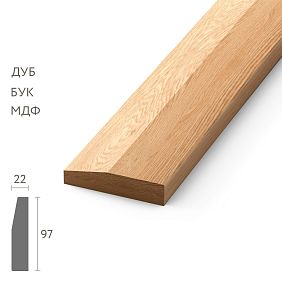
White MDF baseboard— a universal solution. MDF allows for the creation of any profile, from a simple rectangular one to a complex classical one. After painting with white paint, the MDF baseboard creates a perfectly smooth surface, visually indistinguishable from plaster molding.
Height of a white baseboard: from minimalist to classical
The height of a baseboard determines its visual presence in the interior. A low baseboard is delicate, a high one is monumental.
Low white baseboard (6-8 cm) — a minimalist solution. The baseboard is almost unnoticeable, especially if painted the same white as the walls. It creates a delicate boundary, a visual pause, but does not dominate. A low baseboard visually increases the floor area, making the room appear wider.
Medium white baseboard (10-12 cm) — a universal height. The baseboard is expressive enough to create architectural definition but does not overload the space. This is the optimal size for most interiors with ceiling heights of 270-300 cm.
High white baseboard (14-18 cm) — classical monumentality. A high baseboard creates a visual foundation, an architectural plinth upon which the interior is built. It is suitable for rooms with high ceilings (from 300 cm), where a low baseboard would get lost and fail to create the necessary proportions.
Profile of a white baseboard: simple or classical
The profile of a baseboard determines its stylistic affiliation. A simple profile — minimalism, modernity. A complex classical profile — neoclassicism, traditional elegance.
Simple rectangular profile — minimalist geometry. The baseboard is a rectangular strip without protrusions or relief. After painting white, it creates a clear geometric boundary between the floor and wall. This is a modern solution for minimalist, Scandinavian interiors.
Profile with a single bead — delicate relief. A bead (concave curve) creates a smooth transition from the vertical part of the baseboard to the horizontal shelf. This softens the rigidity of the right angle, creating visual softness and a play of light and shadow. The bead is especially well-perceived on white — light glides over the concave surface, creating a delicate shadow.
Classical multi-tiered profile — beads, coves, shelves. A complex profile creates visual complexity and architectural richness. Painted white, each element of the profile is perceived through light and shadow. This is a classical solution for neoclassical interiors, where the baseboard is not just a functional element but an architectural detail.
Painting a white baseboard: matte or semi-matte
The degree of paint sheen affects the visual perception of the baseboard.
Matte white paint — modern elegance. A matte surface does not produce glare or reflect light. It creates a velvety texture, visual softness, and hides minor surface imperfections. A matte white baseboard is suitable for minimalist, Scandinavian interiors where visual delicacy is important.
Semi-matte (satin) white paint — a compromise between matte and glossy. The surface has a slight silky sheen that creates a play of light but does not produce harsh glare. Semi-matte paint is easier to maintain than matte — it can be wiped with a damp cloth without risk of leaving streaks. This is a universal solution for most interiors.
Glossy white paint — a classical solution. A glossy surface reflects light, creates bright highlights, and visual richness. A glossy white baseboard is suitable for classical, neoclassical interiors where formality and visual richness are important. However, gloss highlights all surface imperfections — any unevenness or scratch becomes noticeable.
Contrasting combinations in one space: the interplay of black and white
When a black mirror and a white baseboard are present in the same room, they create a visual dialogue. The darkness of the top and the whiteness of the bottom balance each other, creating a graphic composition.
Black mirror on a white wall: classic contrast
A white wall is the perfect backdrop for a black mirror. The contrast is maximal. The black frame is perceived as a graphic spot, a clear geometric object on a pure white background.
The size of the mirror determines the strength of the accent. A small black mirror (40-50 cm) on a large white wall is a delicate accent. A large black mirror (100-120 cm) is a visual focal point that organizes the entire space around it.
A white baseboard on the same wall creates a lower boundary. Visually, a composition is formed: a white wall (background), a black mirror (upper accent), a white baseboard (lower boundary). This is graphic architecture where each element has a clear role.
Black mirror on a gray wall: softened contrast
A gray wall is an intermediate tone between black and white. On a gray background, a black mirror is not as contrasting as on white, but still reads as an accent.
The shade of gray matters. On light gray (almost white), a black mirror is contrasting. On dark gray (almost black), the mirror almost blends with the background—contrast is minimal, and the accent is created only through reflection.
A medium-gray wall (50% gray) is the optimal background for a black mirror in a graphic interior. The contrast is sufficient for the mirror to be legible, but not harsh, avoiding a visual shock.
A white baseboard on a gray wall creates a lower boundary, visually lifting the floor. Gray becomes the connecting link between the black mirror and the white baseboard.
White baseboard and black floor: inverted contrast
If the floor is black (black tile, dark parquet, black epoxy floor), a white baseboard creates a sharp contrast. A white line on a black background is pure graphics.
This solution is dramatic and requires boldness. A black floor is visually heavy and absorbs light. A white baseboard visually detaches the wall from the floor, creating a sense that the wall floats above the black base.
A black mirror in this space creates a visual echo of the black floor. The top and bottom are connected by black, while the white baseboard and white walls form an intermediate zone of light between two black planes.
Group of black mirrors and white background: graphic wall
Severalblack mirrors of different sizesplaced on a white wall, create a graphic composition. Mirrors can be round, rectangular, square—different geometries create visual variety while maintaining color unity.
Placement can be symmetrical (strict grid, classic order) or asymmetrical (free composition, modern dynamism). Symmetry creates solemnity and order. Asymmetry creates liveliness, informality, and artistic flair.
A white baseboard on this wall creates the lower boundary of the composition, a visual foundation upon which the vertical structure of mirrors is built.
Gray walls as a connecting link between black and white
Gray is a mixture of black and white. It exists between the two poles, creating a visual bridge, a connecting link.
Shades of gray: from light to graphite
Gray is not uniform. There are hundreds of shades—from almost white to almost black. Each shade creates its own atmosphere.
Light gray (10-20% black) is almost white, but with a slight cool undertone. On a light gray background, a black mirror is contrasting and reads clearly. A white baseboard on light gray almost blends, creating a delicate boundary.
Medium gray (40-60% black) is true gray, neutral, balanced. It creates a calm background on which a black mirror reads as an accent, but without harsh contrast. A white baseboard on medium gray is contrasting, creating a clear lower boundary.
Dark gray (70-80% black) is almost black, but with a slight gray undertone. On a dark gray background, a black mirror almost blends; the accent is created through reflection, not through frame contrast. A white baseboard on dark gray is sharply contrasting, creating a dramatic white line on a dark background.
Warm or cool gray: the influence of undertone
Gray can be warm (with a slight beige or brown undertone) or cool (with a bluish or greenish undertone). The undertone influences the atmosphere.
Warm gray creates coziness, softness, a homely atmosphere. It pairs well with wood and natural textures. A black mirror on a warm gray background appears softer, less graphic than on a cool one.
Cool gray creates modernity, urbanity, industrial aesthetics. It is associated with concrete, metal, and glass. A black mirror on a cool gray background enhances graphic quality, modernity, and minimalist purity.
Gray walls and wooden elements: natural warmth in a graphic interior
Gray pairs well with wood. The natural texture of wood softens the coolness of gray, creating visual warmth.
If the baseboard is wooden (not painted white but with preserved wood texture), it creates a natural accent in a graphic black-white-gray interior. This is a compromise between naturalness and graphics.
But in a strictly graphic interior, the baseboard should be white, painted so that the wood texture is not visible. A white baseboard against a gray background is pure graphics, architectural clarity without natural motifs.
A composition of several black mirrors: a graphic gallery wall.
One mirror is an accent. Several mirrors are a composition that turns the wall into an art object.
Symmetrical composition: classic order.
Three black mirrors of the same size, placed at the same height with equal intervals, create a symmetrical composition. This is classic order, solemnity, visual stability.
Symmetry calms, creates a sense of control, organization. It suits classic, neoclassical interiors where formality and order are important.
The size of the mirrors should correspond to the size of the wall. On a 300 cm wall, three 60 cm mirrors with 30 cm intervals create a balanced composition. Larger mirrors would visually overload, smaller ones would get lost.
Asymmetrical composition: modern dynamics.
Mirrors of different sizes, placed at different heights, without strict geometry — this is an asymmetrical composition. It creates dynamics, movement, visual interest.
Asymmetry requires artistic flair. One must feel the visual balance — a large mirror on the left is balanced by two small ones on the right, a tall mirror at the top is balanced by a wide one at the bottom.
Asymmetrical composition suits modern interiors where individuality, artistry, and rejection of rigid rules are valued.
Round and rectangular mirrors in one composition.
Mixing shapes creates visual variety. Two round black mirrors and one rectangular; three rectangular mirrors with different orientations (vertical and horizontal) — such combinations create visual complexity while maintaining color unity.
The black color of the frames unites different shapes into a single composition. If the frames were different colors, visual chaos would be inevitable. But black creates graphic unity, allowing the forms to vary.
Mirrors and graphics: black frames for posters.
Black mirrors can be combined with black-and-white posters or photographs in black frames. This creates a gallery wall where mirrors and images mix, creating a visual game — what is a reflection, what is an image?
Such a wall requires a large space — at least 250x200 cm. Elements are placed with 10-15 cm intervals, creating a dense but not overloaded composition.
A white baseboard on this wall creates the lower boundary of the gallery, a visual foundation on which the vertical structure is built.
Matte versus glossy finish: texture in a black-and-white interior.
In a black-and-white interior, where color is reduced, texture becomes critically important. Matte and glossy surfaces reflect light differently, creating visual variety.
Matte black frame: velvety depth.
Matte black paint absorbs light, does not produce glare. The surface appears velvety, deep, almost like a black hole that draws the eye in.
Matte black creates modernity, minimalist elegance, a rejection of shine. It suits interiors where visual delicacy and the absence of harsh glare are important.
A matte black frame pairs well with matte white walls and a matte white baseboard. All surfaces are matte — texture unity creates visual harmony.
Glossy black frame: mirror-like shine.
Glossy black paint reflects light, creates bright highlights. The surface appears lacquered, wet, mirror-like.
Glossy black creates drama, visual luxury, classic elegance. It suits neoclassical, Art Deco interiors where formality and shine are important.
A glossy black frame pairs with glossy white walls (painted with glossy paint) and a glossy white baseboard. All surfaces shine — this creates visual richness, a play of reflections.
Semi-matte (satin) texture: a compromise.
A semi-matte surface has a slight silky sheen — less than gloss but more than matte. It is a compromise that creates a delicate play of light without harsh glare.
A semi-matte black frame and a semi-matte white baseboard are a universal solution suitable for most interiors. It is less radical than total matte or total gloss but creates visual variety.
Mixing textures: matte black and glossy white
You can combine different textures. A matte black mirror frame and a glossy white baseboard—such a combination creates visual contrast not only in color but also in texture.
Matte black absorbs light, glossy white reflects it. This creates visual dynamics, a play of light and shadow, and textural diversity within a monochrome palette.
Or the opposite: a glossy black frame and a matte white baseboard. Glossy black creates a dramatic accent, matte white—a calm foundation.
Questions and Answers: Black-and-White Interiors Without Mistakes
Won't a black-and-white interior be too cold?
It won't, if you add natural materials. Wooden flooring, textiles (throws, pillows), and live plants create warmth and soften the graphic quality. The black-and-white base is a platform on which textures and materials work.
Can you add color to a black-and-white interior?
You can, but in measured doses. One bright accent (a red armchair, a green plant in a large planter) against a black-and-white background creates a visual impact and attracts attention. But numerous colored accents will disrupt the graphic purity.
What size of a black mirror is optimal for a living room?
For a living room of 20-30 sq.m — a mirror 80-100 cm in height or diameter. For a living room of 40+ sq.m — 120-150 cm. The mirror should be proportional to the size of the wall and the room.
Is a high baseboard needed in a minimalist interior?
No, in minimalism, a low baseboard (6-8 cm) is preferable. A high baseboard creates classical monumentality, which contradicts minimalist lightness.
How to care for a matte black frame?
Wipe with a dry, soft cloth. The matte surface is afraid of greasy stains (they leave marks), so avoid touching it with your hands. Once a month, you can wipe it with a slightly damp cloth.
Is a black mirror suitable for a small room?
Yes, a black frame creates a clear boundary that makes the mirror a visually independent object. In a small room, this is better than a frameless mirror or one with a very thin frame that gets lost.
Can black mirrors be used in a bathroom?
Yes, but the frame must be moisture-resistant. Solid wood with high-quality water-resistant paint or metal with anti-corrosion coating. Avoid MDF without hydrophobic impregnation—it will swell from moisture.
How much does a mirror in a black frame cost?
From 10,000 to 100,000 rubles depending on size, frame material, and presence of carving. A 70x100 cm mirror in a simple black MDF frame—about 15,000-20,000 rubles. In a carved solid oak frame—from 40,000 rubles.
Conclusion: graphics as a philosophy of space
A black-and-white interior is not an absence of color; it is a presence of purity. It is a rejection of visual noise in favor of architectural clarity. It is a space where form, texture, and light work without color crutches.
Mirror in a black frame— is not just a functional item. It is a graphic statement, a visual accent that organizes the space around itself. A black frame on a white wall—this is a contrast that never goes out of style. It is a graphic style that worked in 1920s interiors, works today, and will work for decades to come.
white wooden skirting board— creates visual lightness, architectural clarity, a lower boundary on which the vertical structure of the interior is built. A white baseboard on white walls—this is a delicacy that doesn't shout but creates order. A white baseboard on gray walls—this is a contrast that emphasizes the geometry of the space.
Together, a black mirror and a white baseboard create a visual dialogue. The darkness of the top and the whiteness of the bottom balance each other. This is not a random combination but a thoughtful composition where each element has an architectural role.
The company STAVROS understands the philosophy of graphic interiors.Mirror frames made of solid wood, painted in a deep black color, create visual certainty, clarity, and graphic purity. Baseboards made of solid wood or MDF, painted in impeccable white, create an architectural foundation on which the entire interior is built.
STAVROS doesn't just manufacture wood products. STAVROS creates elements that shape space. A black mirror frame that turns a functional item into an art object. A white baseboard with a classic profile that creates visual lightness and architectural clarity. Each product undergoes several processing stages—milling, sanding, priming, multi-layer painting, final polishing. The result—a perfectly smooth surface, deep saturated color, and durability measured in decades.
When you choose STAVROS products, you don't just get quality items. You get the opportunity to create an interior that speaks the language of graphics, architecture, and visual purity.a wall mirror in a black framethat catches the eye and organizes the space.White baseboardthat creates visual lightness and architectural definition.
A black-and-white interior is not a trend that will fade in a season. It's a classic, reinterpreted in a modern context. It's a space where color is unnecessary because form, light, and contrast create all the required visual complexity. This is an interior for those who value architectural purity, graphic definition, and timeless elegance.
Make your home like this. Start with a black mirror from STAVROS, add a white baseboard — and feel how graphics transform a room into a space organized by light and shadow, black and white, contrast and balance.