Article Contents:
- Short answer: where is the best place to buy stucco
- Why it's better to choose stucco not by a single photo, but by a system
- What a good stucco catalog should have
- Which stucco elements to buy for walls
- Moldings for wall frames
- Overlays for accent zones
- Decor for moldings: corner and central elements
- Decor for the hallway and corridor
- What to buy for the ceiling
- Polyurethane cornices
- Socket for chandelier
- Ceiling moldings for decorative frames
- How to choose a stucco shop
- What to look at first
- What else to check
- How to choose stucco by task
- Stucco price: what to clarify before buying
- How not to buy extra stucco
- How to choose stucco for your interior style
- Classic
- Neoclassicism
- Modern classicism
- Art Deco
- Minimalism
- Country house, interior with wood
- Mistakes when buying stucco
- What to buy together with stucco
- FAQ: Answers to Key Questions
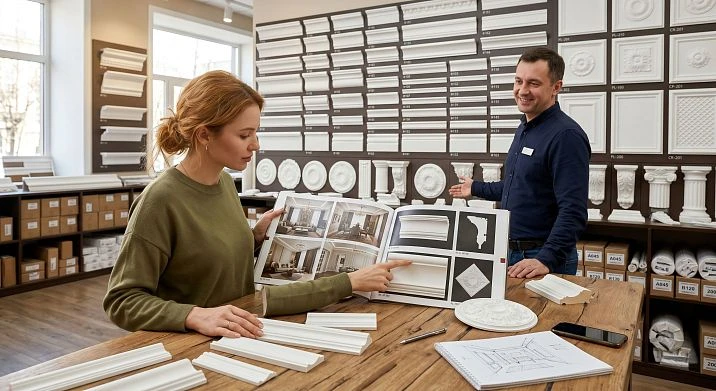
The question "where to buy stucco" seems simple exactly until a person starts to understand. They open several tabs, look at photos — and stop. Because one beautiful photo still does not answer the question: will this element suit their room, their ceiling height, their furniture style?
True Moldings shop — this is not a showcase with beautiful pictures. This is a catalog from which you can assemble a system: moldings, cornices, overlays, rosettes, decor — all in one style, with clear dimensions, with application logic. It is this approach that allows Buy molding without errors, without extra elements, without inconsistency in the end.
This article is written for those who have already made a decision — and now want to do it right. We'll break down what to look for in the catalog, how to choose elements for specific tasks, what to pay attention to when choosing a store, and how not to spend money on something that turns out to be unnecessary.
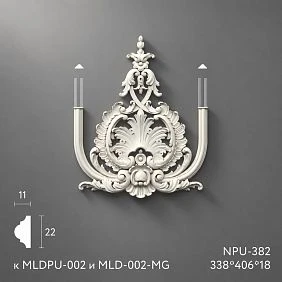
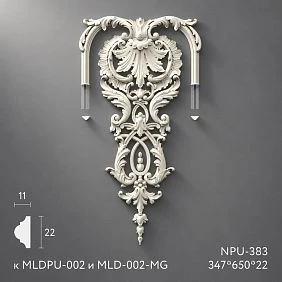
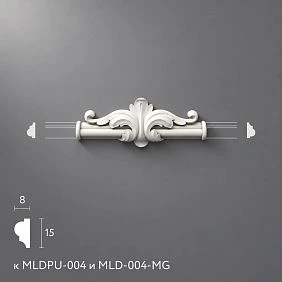
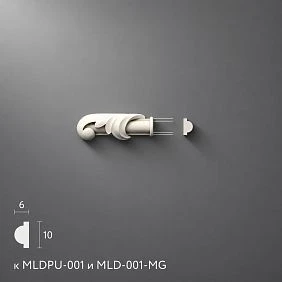
Short answer: where is the best place to buy molding
Before moving on to the details — a short and honest answer to the main question.
It is better to buy polyurethane molding where five conditions are met simultaneously:
First: a clear catalog by type of elements. Moldings, cornices, overlays, rosettes, decor for moldings, baseboards — each category separately, with clear navigation. If everything in the catalog is dumped into one pile under the name "decor" — it's almost impossible to choose what you need.
Second: a complete system in one style. You can choose a molding, to it — a cornice of the same stylistic direction, to the cornice — PU overlays in the same ornament plastic. If the store offers disparate elements without the ability to assemble a system — this is a risk of incompatibility during installation.
Third: dimensions, profile, and purpose are indicated. Width, height, overhang, element length — all this should be in the product card. Without dimensions, molding is just a picture.
Fourth: there are elements for painting. Most interior tasks are solved with molding in white or in the color of the walls — that is, for painting. The store should offer products with a surface suitable for final painting with acrylic enamel.
Fifth: you can assemble the entire project. Not just one molding for a trial, but a complete set for a wall, ceiling, or entire room — including Polyurethane wall decor, cornices, rosettes, and baseboards in a unified system.
moldings catalog stavros.ru meets these criteria: here each category is a separate section with dimensions, profiles, and application logic.




Why it's better to choose stucco decoration by system, not by a single photo
The temptation is great: you saw a beautiful molding in a photo, liked it — bought it. But this is exactly how most mistakes happen when buying decorative stucco.
Why is a photo not enough? Because a single item in a catalog says nothing about how it will look in a specific room. In a professional shot, the molding is photographed in good light, on a neutral background, in an 'ideal' context. Your room is a different story.
Here's what you need to consider when choosing systematically:
Room proportions. A 60 mm molding looks the same in a photo — but in a 12 m² room with a 2.5 m ceiling, it will take up relatively more 'visual space' than in a 30 m² hall with a 3 m ceiling. The scale of elements should match the scale of the room.
Ceiling height. This is the main parameter when choosing a cornice and molding for wall panels. For a 2.4 m ceiling — a cornice of 40–60 mm. For 2.8–3.0 m — 80–110 mm. For 3.5 m and above — 130–200 mm. An incorrectly chosen size breaks all proportions.
Compatibility of elements. polyurethane decor works as a system: molding with one style profile + cornice with a different ornament = stylistic mismatch. Classic elements should be combined with classic ones, geometry with geometry.
Connection with furniture and doors. Stucco does not exist in a vacuum. If the room has white doors in a neoclassical style, the stucco should be laconic, without overloaded ornaments. If the interior is traditionally classic — — everything must correspond to the chosen era. can be richer. All this cannot be understood from a single photo — only by viewing the catalog as a system.
The conclusion is simple: choose polyurethane molding like an architect — first the task, then the type of element, then the size, then the style, then the quantity. Not the other way around.
Our factory also produces:
What a good stucco catalog should have
Not every online store deserves to be called a catalog of stucco molding in the full sense of the word. A good catalog is a navigation system that helps the buyer make the right decision, not just a showcase.
Here is what a full-fledged catalog should have:
-
Clear division by types: Moldings made of polyurethanecornices, PU overlays, sockets, baseboards, Decor for Molding — in separate sections
-
Dimensions of each product: width, profile height, projection, length of the strip or linear footage
-
Profile cross-section photo — not only the front side, but also the section to understand the profile shape
-
Description of purpose: for wall, ceiling, furniture facade, building facade
-
Element style: classic, neoclassical, art deco, modern
-
Ability to view compatible elements — what matches this molding, which cornice goes with it
-
Availability . Clear lines, created using modern technologies, emphasize the strict aesthetics of the room. Each decorative element harmoniously fits into the overall concept, creating a sense of order and thoughtfulness. — elements for accent zones, not just linear profiles
-
Facade elements are separate — because exterior decor is fundamentally different from interior decor
It is this structure that allows a person who comes with a specific task — "I want to make molding frames in the living room" — to sequentially select molding, corner inserts from decoration for moldings, cornice and baseboard in a unified system, without switching between different sites and without risking getting incompatible elements.
Get Consultation
Which stucco elements to buy for walls
Wall molding — this is a separate story, because a wall in an interior solves several tasks at once: it is a background, it is an accent, it is an architectural plane. And the approach to choosing decor depends on what role this wall plays in the space.
Moldings for wall frames
The main element for the wall system is Moldings made of polyurethane. They create rectangular frames on the wall, structuring the plane and giving it an architectural character.
Selection principle:
-
For a modern interior: narrow profile 20–30 mm, without ornament, even rectangle
-
For neoclassicism: molding 35–50 mm with rounded or stepped edges
-
For classics: expressive profile 50–70 mm with fillet or multi-step section
A wall with molding frames is not a decorative technique, it is an architectural solution. It changes the perception of space: vertical proportions of frames make the room taller, horizontal ones make it wider.
Overlays for accent zones
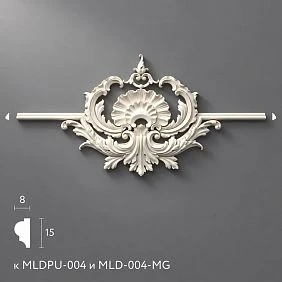
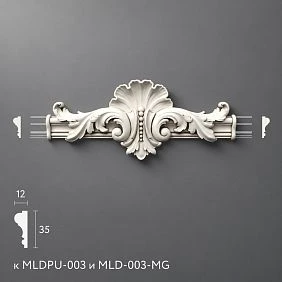
Decorative stucco in the form of applied ornamental elements — medallions, rosettes, cartouches, leaf ornaments — is used for accent zones. This is not linear molding, it is piece decor.
Examples of accent zones:
-
TV wall: molding frame around the TV + applied elements at the corners of the frame
-
Wall behind the sofa: several frames of different sizes + decorative medallions in the center of the upper frames
-
Bed headboard: one wide frame the width of the bed + an ornamental accent at the top
You can buy ready-made stucco matching the Baroque style. Calculate the quantity: linear meters of cornices and moldings, number of rosettes, pilasters, consoles, corner elements. Add a ten to fifteen percent allowance for trimming. for an accent zone, you need, knowing the scheme in advance: first the frame (molding + corner inserts), then the accent (overlay in the required size and style). Buying overlays without understanding the context is risky.
Decor for moldings: corner and center elements
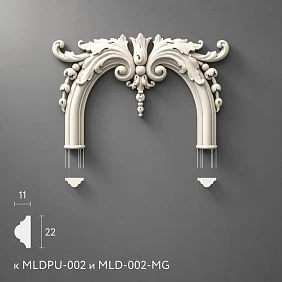
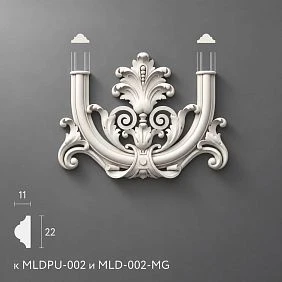
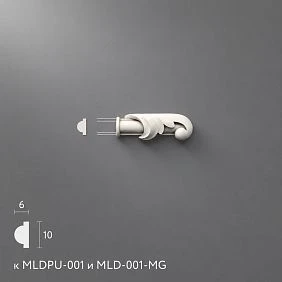
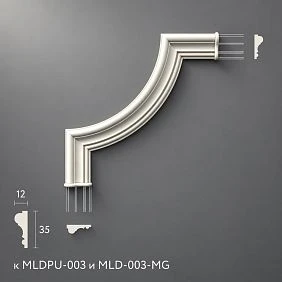
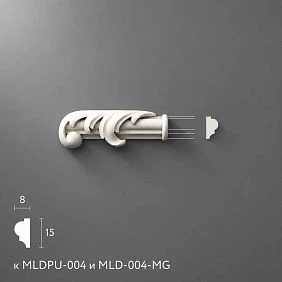
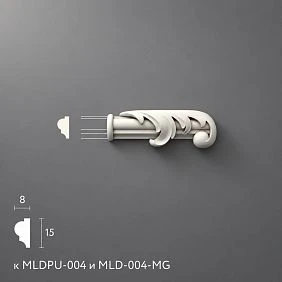
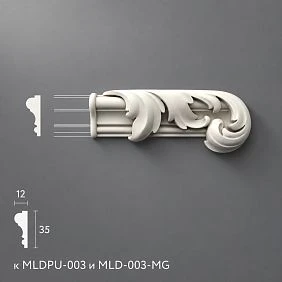
Decor for Molding — these are special elements designed for installation at intersections of moldings: in frame corners (corner inserts) and on straight sections (central accents).
Without decor, frame moldings look like simple rectangles. With corner inserts, they appear as architectural frames. This is a small addition to the budget that fundamentally changes the visual level of the system.
Decor for hallway and corridor
The hallway is the first room that greets guests. And it is here that Molding on the Wall works as a "business card" of the interior. Frames made of narrow moldings + a laconic cornice — this is enough for the hallway to look well-thought-out.
For the corridor — vertical molding lines or narrow horizontal bands that visually expand the space. In a narrow corridor, it is important not to overload the walls with decor — one or two neat horizontal bands work better than a complex frame system.
What to buy for the ceiling
ceiling molding — a separate category of tasks. The ceiling is perceived completely differently than a wall: it is the "fifth element" of the space, and it sets the feeling of height, lightness, or monumentality.
Polyurethane cornices
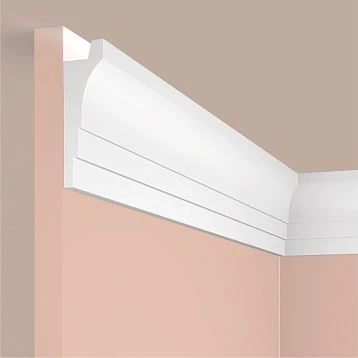
Polyurethane Crown Molding — the main ceiling element. They are installed at the junction of the wall and ceiling along the perimeter of the room, creating an architectural transition.
Why is the cornice important? Without it, the ceiling and walls seem "unfinished," the boundary between them is too sharp. The cornice softens this transition and simultaneously creates a horizontal line that holds the entire space.
Selecting size based on ceiling height:
-
Ceiling up to 2.6 m — cornice 40–65 mm
-
2.7–3.0 m — cornice 70–110 mm
-
3.0–3.5 m — cornice 110–150 mm
-
Above 3.5 m — cornice 160–220+ mm
For low ceilings — it's better to choose a cornice with a laconic profile without overloaded ornament. Large relief on a low ceiling creates a feeling of tightness. For high rooms — an expressive multi-tiered profile with an ornamental band enhances monumentality.
Socket for chandelier
cornice under the chandelier — a ceiling rosette is one element that makes the chandelier the center of the composition. Without a rosette, the chandelier 'hangs in the void'. With a rosette, it becomes part of the ceiling architecture.
How to choose the diameter:
-
For a small room (up to 16 m²) — rosette 35–55 cm
-
For a living room (18–25 m²) — rosette 55–80 cm
-
For a large hall (30+ m²) — socket 80–120 cm
-
The socket diameter should be 15–25 cm larger than the chandelier lampshade diameter
Do not buy a socket without the exact chandelier size. This is the most common mistake when ordering ceiling decor. A socket smaller than the lampshade — and the accent is lost. A socket four times wider — and the proportion is ruined.
Ceiling moldings for decorative frames
Ceiling caisson frames made of moldings are a solution for rooms with a height of 2.9 m or more. Below this mark, ceiling frames visually lower the space.
buy polyurethane molding For ceiling frames, it should be in the same style as the cornice: if the cornice is classic — the moldings for caissons should also be classic. Mixing styles on the ceiling is immediately noticeable.
How to choose a stucco store
Let's break down this question practically — without general words about 'reliability' and 'quality'.
What to look for first
Assortment is the first criterion. If the store only has cornices and a few moldings — it's not a full-fledged Moldings shop. For a systematic interior design, you need: linear profiles (moldings, cornices, baseboards), individual decorative elements (overlays, sockets), Decor for Molding (corner inserts, central accents), specialized Wall Decor.
Product description is the second criterion. If a product card lacks dimensions, it's not a catalog, it's a picture gallery. Serious moldings catalog always includes: length, width, profile height, projection, material, style, purpose (interior/façade).
Presence of system categories is the third criterion. It's good if the catalog allows you to sequentially navigate from a task to a specific element: 'I want to decorate a wall' → 'wall decor' section → moldings of the desired profile → compatible overlays. This reduces the likelihood of errors.
What else to check
The ability to purchase elements for painting. Most interior tasks involve white decor or stucco in the color of the walls. Ensure the product surface is smooth enough for a final coat of acrylic enamel without multiple layers of primer.
Availability of elements for different rooms. Kitchen, living room, bedroom, hallway, country house, façade — these are different tasks with different requirements for elements. In a good store, this differentiation is reflected in the catalog.
Stucco SPB and other regional requests — this is about availability and delivery. It's important that the store can ship to your region without disproportionate logistics markups. This is especially relevant for Saint Petersburg and Moscow, as these markets are the most active buyers of interior polyurethane stucco.
How to choose stucco based on the task
| Task | What to buy | Link |
|---|---|---|
| Frames on the wall | Moldings made of polyurethane | Moldings |
| Accent zone, medallion | PU overlays | Overlays |
| Corner inserts in frames | Decor for Molding | Corner decor |
| Wall/ceiling transition | Polyurethane cornices | Cornices |
| Ceiling center point | Ceiling rosette | Rosettes |
| Lower wall finish | Polyurethane skirting board | Baseboards |
| Wall decor without frames | Polyurethane wall decor | Wall decor |
| Classic interior | Moldings + cornice + overlays + rosette | Catalog |
| Building facade | Facade stucco | Facade elements |
The table is a guideline, not a rigid algorithm. A real project is always more complex than a single task: in most cases, several categories of elements are needed at once, and they must be selected consistently.
Stucco molding price: what to clarify before purchasing
Molding price — a question that becomes specific only when there is a specific list of elements. Without this, any number is approximate. Here's what you need to know before calculating the budget.
The size of the element directly affects the price. A 20 mm molding and a 70 mm molding with the same style are different price points. A 60 mm cornice and a 140 mm cornice have fundamentally different costs per linear meter.
The number of linear meters is the main figure for linear elements. For cornice: room perimeter + 10% for trimming. For moldings: sum of perimeters of all frames + length of belts + 12–15% reserve.
Number of corners. Each corner is a cut. In a room with a niche or bay window, there are twice as many corners as in a rectangular room.
Number of frames. One frame is the perimeter of one frame in meters of molding + 4 corner decorative elements. Eight frames = eight perimeters + 32 corner inserts.
Profile complexity. A simple molding with a straight profile is cheaper than an ornamental one. A smooth cornice is cheaper than a cornice with a leaf frieze. This is an objective difference in production cost.
Decorative nature of overlays. A small corner insert costs less than a large medallion with multi-level relief. If overlays are the main accent of the decor, their cost can be a noticeable line in the budget.
Socket. Counted per piece. One chandelier — one socket. Price depends on diameter and complexity of the ornament.
Installation and painting. This is not the cost of elements, but it is part of the final budget: glue, joint putty, primer, paint, master's work. Add 25–40% to the cost of the products themselves, depending on the scope of work.
Allowance for trimming. For moldings and cornices — 10–15%. No more, but no less: without a reserve, any unforeseen change in the scheme means a repeat order.
How not to buy extra stucco molding
This is a practical question that sounds naive — but it is precisely this that determines whether the buyer will stay within budget.
Draw a diagram of the wall or ceiling. Not necessarily to scale. Just a sketch with dimensions. Mark where the frames will be, where the cornice, where the overlays. This simple step takes 15 minutes — and reduces the risk of unnecessary purchases by 80%.
Count the perimeter of the frames, not the length of the wall. Molding for frames is needed in an amount equal to the sum of the perimeters of all frames. The length of the wall is not the required quantity. The difference can be threefold.
Cornice — a separate calculation. The cornice goes along the perimeter of the room. Moldings for frames — along the perimeter of the frames. These are different numbers that cannot be mixed.
Don't take overlays without an installation location. "I'll take a couple of beautiful medallions — I'll find a place to put them" — almost never works. Overlay elements need to be selected for a specific point on the diagram.
Don't mix too many styles. One or two close stylistic directions — maximum for an interior. Classic cornice + geometric art deco moldings + rocaille overlays — that's three different languages on one wall.
Don't buy large elements for a small room. A 150 mm cornice in a room with a 2.5 m ceiling is visual discomfort, not decor.
A reserve — yes, "just in case" — no. A 10–15% reserve for trimming is mandatory. Extra elements "might come in handy" — unnecessary expenses. Polyurethane elements last a long time, but there's no point in unused decor.
How to choose stucco molding for interior style
Style is not a decorative preference, it's a system of rules. Molding that doesn't match the interior style destroys it more precisely than the absence of decor altogether.
Classic
A classic interior requires a systematic approach: expressive multi-tiered cornices with an ornamental band, large rosettes under a chandelier with multi-level ornamentation, moldings with a fillet and curves, PU overlays with leaf or floral relief. Classic is a richness of details in a strict system. Not overload, but completeness.
Neoclassicism
Neoclassical — a lighter version of classic. Laconic cornices 70–100 mm, moldings with minimal profile, corner inserts without excessive ornamentation. Symmetry is strictly observed, but decorative density is moderate. Buy molding for neoclassical — means choosing profiles where form is more important than ornament.
Modern classic
This is a style where classical architectural techniques are used in a modern context. Moldings in the color of the walls — the so-called "invisible decor": frames exist, but they don't contrast with the wall, they create relief. The cornice is small, laconic. Decorative stucco — only at key points, without systematic coverage of all walls.
Art Deco
Vertical lines, geometry, contrast of dark and light. Moldings — rectangular, without curves. Cornices — tiered, with horizontal bands. Overlays — geometric, without floral motifs. Polyurethane moldings In the Art Deco style, it is often painted in a contrasting color relative to the wall — gold, bronze, dark.
Minimalism
Here, stucco molding is not the main tool. Thin profiles 15–20 mm, as laconic as possible, without ornamentation. Ideal are rectangular moldings in the color of the walls, creating relief without decorative expressiveness. One cornice with a simple profile. No overlays, no rosettes — only lines.
Country house, interior with wood
Relevant for a country house polyurethane moldings with more voluminous elements — cornices with rods, beam imitations, rosettes in a "rustic" style. Facade stucco for a country house is a separate category: exterior profiles resistant to moisture and temperature fluctuations.
Mistakes when buying stucco molding
Let's break them down specifically — no theory, only practice.
Choosing only based on a beautiful photo. Beauty in a picture does not guarantee a match with the size of your room, ceiling height, and furniture style. Look at the dimensions, not just the striking image.
Not checking the dimensions. A 25 mm molding and a 75 mm molding can look the same in a photo. In a room, the result is completely different. Always check the dimensions in the product description.
Buying moldings without calculating the quantity. "I'll take 10 meters and see" — almost certainly means a repeat order with delivery wait time or, conversely, unpacked leftovers.
Forgetting about corners and trimming. Every corner is a loss of material for trimming. Without a 10-15% reserve, at the right moment there will always be a few centimeters missing.
Choosing a cornice without considering ceiling height. A 130 mm cornice on a 2.5 m ceiling creates a feeling of overhang. This is a visual mistake that cannot be corrected after installation — only dismantled.
Mixing different stucco styles. A cornice with rocaille + moldings with geometric ornament + overlays with acanthus leaves — these are three different decorative languages. The interior will not digest them.
Not considering furniture and doors. Types of moldings are chosen in a system with other interior elements. If the doors are white with clear geometric lines — the stucco should be laconic. If the furniture is in a classic style — the stucco can be richer.
Not planning the paint color. Stucco in the color of the walls — one approach. White stucco on colored walls — another. Gilding of accent elements — a third. Each option requires different finishing materials and different labor resources.
Buying interior elements for the facade. This is a fundamental mistake. Interior polyurethane moldings is not intended for outdoor use — it is not designed for atmospheric loads, temperature changes, and humidity. For the facade, special facade elements are needed.
What to buy together with stucco
For a complete project — an approximate list by category:
Moldings made of polyurethane — main linear element for wall frames, horizontal belts, furniture facades, and decorative lines.
Polyurethane Crown Molding — for wall/ceiling transition. Main ceiling linear element.
PU overlays — piece decorative elements for accent zones, TV walls, headboards, portals, and decorative medallions.
Decor for Molding — corner inserts and central accents for the molding frame system. An essential part of any frame system.
Polyurethane wall decor — special decorative elements for walls: ornamental fragments, decorative belts, thematic inserts.
Ceiling rosettes — for chandeliers, counted individually, selected based on the diameter of the light fixture.
Baseboards — lower finish of the wall system. Selected in the style of the cornice.
Ready-made wall kits — system sets for decorating accent zones. Convenient if you have no experience selecting elements from scratch.
Facade elements — for exterior decoration of buildings. A special category with different requirements for material and installation.
Installation materials — liquid nails adhesive or polyurethane mounting adhesive, acrylic putty for joints, primer.
All polyurethane decor — in the stavros.ru catalog, sorted by type, with the ability to choose a system for any task.
FAQ: Answers to Key Questions
Where to buy polyurethane stucco molding?
It's better to choose Moldings shop, where the full catalog is presented: moldings, cornices, overlays, Decor for Molding, rosettes, baseboards, and facade elements — in a unified system with specified dimensions and a description of the purpose.
How to choose stucco molding in the catalog?
Start with the task: wall, ceiling, facade, accent area, or full room. Determine the type of element, select the size according to the ceiling height and room scale, choose a style, and ensure all elements belong to the same stylistic direction. After that, calculate the quantity — and only then proceed to purchase.
What to buy for wall stucco molding?
For wall decoration, you most often need: Moldings made of polyurethane for frames, Decor for Molding for corner inserts, PU overlays for accent points. With baseboard and cornice, the system becomes complete.
What to buy for ceiling molding?
For the ceiling — a cornice around the perimeter and cornice under the chandelier (ceiling rosette). For high ceilings (from 3.0 m) — additionally ceiling moldings for coffered frames. The size of the cornice is chosen strictly according to the ceiling height.
Why does the price of molding differ?
Molding price is determined by the size of the element, complexity of the profile, type (linear or piece), ornament style, and the number of required parts. One linear meter of a thin molding costs less than a meter of a wide ornamental cornice. Piece overlays with detailed relief are more expensive than smooth corner inserts. The total cost of the project is made up of all these items together.