












































































Article Contents:
- Materials of the future: polyurethane versus traditional solutions
- Polyurethane: a technological breakthrough in decorative arts
- Alternative materials: comparative analysis
- Architectural typology of facade elements
- Columns and pilasters: the foundation of monumental architecture
- Cornices and moldings: architectural logic of the building
- Window and door frames: accents and details
- Stylistic directions in facade decoration
- Classicism: Rigor and Nobility
- Baroque: luxury and theatricality
- Modernism: natural forms in architecture
- Modern eclecticism: freedom of creativity
- Practical aspects of applying facade molding
- Planning and design
- Installation and mounting
- Painting and protective treatment
- Regional Characteristics and Climatic Factors
- Temperature effects
- Humidity and atmospheric precipitation
- Ultraviolet radiation
- Economic aspects of facade decoration
- Cost of Various Materials
- Cost savings in construction work
- Long-Term Economic Efficiency
- Trends in facade decoration development
- Digital technologies in production
- Smart Materials and Technologies
- Ecological innovations
- Individual Approach and Personalization
- Custom Projects
- Modular Systems
- Regional Traditions in Modern Interpretation
- Russian Classicism
- Ancient Russian architecture
- Regional Characteristics
- The future of facade decoration
- Master Classes and Demonstration Zones
- Adaptive architecture
- Biomimetic solutions

What makes an ordinary house a work of art? What transforms a typical building into a unique architectural masterpiece, impossible to pass by without emotion? The answer lies in the details — in those exquisite decorative elements capable of radically transforming any building. When it comes time to bring dreams of a beautiful home to reality, the opportunity to buy facade molding of the highest quality becomes the key to creating an unparalleled architectural appearance.
Facade molding is not just a decorative element. It is the language of architecture, capable of telling the story of the house, highlighting the status of the owner, and creating an atmosphere that will delight the eyes for decades. In the modern world of construction technologies, materials have emerged that have made this type of decoration accessible to anyone who strives for beauty and individuality.
Imagine a facade where every detail is thought out to the smallest detail: elegant columns support delicate cornices, window openings are framed by expressive sills, and the foundation is adorned with noble balustrades. Such an effect can be achieved by properly selecting and applying modern decorative elements.




Materials of the future: polyurethane versus traditional solutions
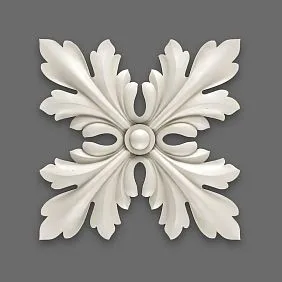
A revolution in facade decoration occurred due to the introduction of innovative materials, among which polyurethane holds a leading position. This material has managed to combine all the advantages that architects and builders have sought for centuries: lightness, strength, durability, and the ability to create complex decorative forms.




Polyurethane: a technological breakthrough in decorative arts
Polyurethane products have radically changed the perception of the possibilities of facade decoration. If traditional stone molding required a strong foundation and created a colossal load on the building's structure, then Polyurethane molding allows creating a stylish and presentable exterior of a house, while the material retains its qualities in any weather conditions. weighing dozens of times less can be installed on any walls without additional reinforcement.
The density of polyurethane is only 500-700 kg/m³, which is five times lighter than concrete and three times lighter than plaster. A massive column three meters high weighs no more than 15 kilograms, allowing one person to easily handle the installation. At the same time, the material's strength is so high that the products withstand significant mechanical loads, do not deform, and do not crack.
Polyurethane's moisture resistance is another revolutionary advantage. The material absorbs almost no moisture, with a water absorption coefficient of less than 1.5%. This means decorative elements do not deteriorate due to temperature fluctuations, do not crack from frozen water, and retain their original appearance under any climatic conditions.
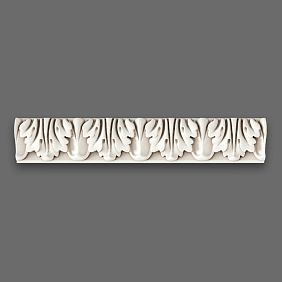
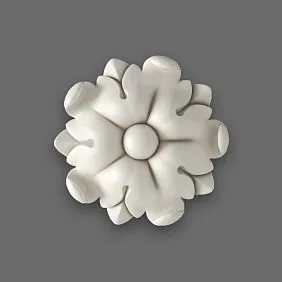
Our factory also produces:



Alternative materials: comparative analysis
Polystyrene is a more budget-friendly option for facade decoration. Its main advantage is the lowest cost, making architectural decoration accessible even with a limited budget. However, polystyrene requires mandatory protective coating and regular renewal every 5-7 years.
Fiber concrete and architectural concrete have high strength and durability, but their weight and installation complexity significantly limit their applications. Additionally, the cost of such products is several times higher than polyurethane equivalents.
Gypsum molding is traditionally considered the standard of quality, but its use on facades is extremely problematic due to the material's hygroscopic nature and susceptibility to damage from atmospheric exposure.
Get Consultation
Architectural typology of facade elements
The world of facade molding is impressive in its variety of forms and functions. Each type of decorative element solves specific architectural tasks and creates a unique aesthetic atmosphere.
Columns and pilasters: the foundation of monumental architecture
Vertical decorative elements create a sense of monumentality and grandeur. Decorative elements for facades In the form of columns and pilasters, they can radically change a building's architectural style, giving it characteristics of classicism, baroque, or modern neoclassicism.
Full columns require a special approach to facade planning. They must harmoniously fit into the building's overall proportions without overpowering the architecture with their massiveness. The column's diameter is usually 1/8–1/10 of its height, ensuring visual slenderness and elegance.
Pilasters — flat elements imitating columns — are ideal for buildings with limited space in front of the facade. They create vertical accents without occupying extra area and can even be used on narrow urban lots.
Column capitals determine the stylistic affiliation of the decoration. Doric capitals with simple geometric forms suit modern buildings, Ionic capitals with characteristic volutes create a sense of elegance, and Corinthian capitals with vegetal motifs add luxury and grandeur.
Cornices and moldings: architectural logic of the building
Horizontal decorative elements perform the most important function of visual structuring of the facade. They divide the wall surface into zones, create rhythm, and emphasize the architectural logic of the building.
Basement cornices visually separate the lower part of the building from the main volume, creating a sense of a solid foundation. Their profile is usually more massive and geometric, emphasizing the load-bearing function of the basement floor.
Interfloor cornices divide the facade horizontally, creating a human scale even in tall buildings. Properly placed interfloor bands make the facade more readable and harmonious.
Crowning cornices complete the facade composition, creating a transition from the wall to the roof. Their size and profile complexity must correspond to the overall scale of the building — the higher the building, the more expressive the crowning cornice should be.
Window and door frames: accents and details
Frame elements perform a dual function: practical — they protect the junction between the wall and window or door frame from atmospheric exposure, and aesthetic — they create expressive accents on the facade.
Window sills can be simple geometric or richly decorated with vegetal motifs. The choice depends on the building's overall style and the owner's personal preferences. Simple profiled sills suit modern facades, while complex ornamented sills are appropriate for buildings in historical styles.
Sashings — decorative elements above windows — add expressiveness to the facade and protect windows from rain. They can be straight, arched, or triangular, each shape creating its own mood and fitting a specific style.
Window sills unite windows on one floor into a single composition, creating a horizontal rhythm on the facade. They look especially effective on buildings with a large number of windows.
Stylistic directions in facade decoration
The choice of facade decoration style determines the character of the entire building and must correspond to the architectural concept, surrounding development, and the owner's personal preferences.
Classicism: strictness and nobility
The classical style in facade decoration is characterized by strict proportions, symmetrical compositions, and noble restraint of decorative elements. Polyurethane facade decoration In the classical style, it features clear geometric profiles and vegetal motifs of ancient architecture.
The foundation of classical decoration consists of order elements — columns with capitals, entablatures, pediments. The proportions of these elements are strictly regulated by the canons of classical architecture, developed in antiquity and refined by Renaissance masters.
The color palette of a classical facade is traditionally restrained — white, cream, gray tones. Decorative elements are usually painted white against darker walls, creating a striking contrast and emphasizing the architectural logic of the building.
A characteristic of the classical style is its mathematical precision. Each element has strictly defined proportions, and distances between elements are calculated using specific formulas. This creates a sense of harmony and perfection, which is unconsciously perceived as beauty.
Baroque: luxury and theatricality
Baroque facade decoration is the complete opposite of classical restraint. It is a style of luxury, abundance, and theatrical expressiveness. Every element of baroque decoration strives to impress the viewer with its complexity and richness.
Plant motifs in baroque acquire special lushness — grapevines intertwine with roses, oak leaves neighbor palm branches. Putti — little angels — frolic among floral garlands, creating an atmosphere of celebration and abundance.
Architectural elements in baroque lose the strict geometricity of classicism. Columns become twisted, cornices — complexly profiled, pediments — broken and adorned with cartouches and coats of arms.
The color scheme of a baroque facade can be very diverse — from traditional white on a colored background to polychromatic compositions using gold leaf, patination, and artificial aging.
Modern: natural forms in architecture
The modern style brought completely new principles of form creation to facade decoration. Instead of geometric ornaments — flowing plant lines, instead of symmetry — painterly asymmetry, instead of canonical proportions — free creativity.
Plant motifs in modern style are stylized and generalized. Irises, lilies, and seaweed become the basis for creating abstract compositions. Especially popular in modern style are images of insects — butterflies, dragonflies, which symbolize lightness and changeability.
Architectural elements in modern style acquire sculptural plasticity. Columns may imitate tree trunks, cornices — ocean waves, window casings — blooming flowers.
Modern eclecticism: freedom of creativity
The modern approach to facade decoration is characterized by freedom in choosing and combining various stylistic elements. Architects and designers create unique compositions, combining classical forms with modern materials and technologies.
Minimalism in facade decoration implies the use of simple geometric forms that create expressive accents without excessive ornamentation. A few precisely placed elements can radically change the perception of the facade.
High-tech introduces elements of modern technology into decoration — built-in lighting, interactive elements, use of modern materials with unusual properties.
Practical aspects of applying facade moldings
Successful use of facade decoration requires not only good taste but also understanding of the technical characteristics of various materials and methods of their application.
Planning and design
Creating a harmonious facade begins with careful planning. It is necessary to determine the main stylistic concept, select the scale of decorative elements, plan their placement and interrelation.
The scale of decoration must correspond to the size of the building. On a small house, massive elements will look inappropriate, while on a large building, small details will be lost. There are time-tested proportional relationships that help create a harmonious composition.
Symmetry or asymmetry of the facade is determined by the architectural style and layout of the building. Classical styles require strict symmetry, while modern styles allow for free composition.
The number of decorative elements should be balanced. Excess decoration creates a sense of overload, while lack — monotony and incompleteness.
Installation and mounting
The quality of facade decoration installation determines not only its appearance but also its durability. Architectural elements for exterior finishing require a professional approach to installation.
Surface preparation is a critically important stage. The wall must be cleaned of dust, dirt, and peeling coatings. Irregularities exceeding 5 mm must be leveled with plaster or putty.
Installation of elements is done using a combined method — adhesive and mechanical fasteners. Adhesive compositions ensure even load distribution, while mechanical fasteners provide secure fixation.
Sealing joints prevents moisture ingress and ensures the monolithic integrity of the decorative coating. Elastic sealants are used, which retain mobility during thermal deformations.
Painting and protective treatment
The final finish of facade moldings determines its appearance and protective properties. Modern paint and coating materials allow creating any decorative effects and ensure the longevity of the coating.
Priming is a mandatory stage of preparation for painting. Primer ensures paint adhesion to the surface and prevents peeling.
Base painting is performed using special facade paints resistant to atmospheric effects. The most durable are acrylic and silicone compositions.
Decorative finishing allows creating various effects — patination, gilding, imitation of stone or metal. Special decorative paints and application techniques are used.
Adaptation to Russian climate
The choice of materials and technologies for facade decoration should take into account the climatic characteristics of the region. The Russian climate, with its sharp temperature fluctuations, high humidity, and aggressive atmospheric phenomena, imposes special requirements on exterior finishing.
Temperature effects
The temperature range under Russian conditions may vary from -40°C in winter to +40°C in summer. Such fluctuations create significant thermal stresses in decorative material.
Polyurethane has a low coefficient of thermal expansion, which minimizes deformation under temperature changes. The material retains elasticity at low temperatures and does not soften at high temperatures.
Polystyrene is more sensitive to temperature effects and requires a high-quality protective coating to prevent deformation.
Humidity and atmospheric precipitation
High humidity and abundant precipitation are characteristic features of many Russian regions. Facade decoration materials must be resistant to prolonged exposure to moisture.
Polyurethane's hydrophobicity provides excellent protection against moisture. The material does not absorb water and does not degrade during repeated freeze-thaw cycles.
Quality painting creates an additional barrier against moisture and increases the durability of decorative elements.
Ultraviolet radiation
Intense solar radiation may cause degradation of polymer materials. Modern polyurethane formulations contain UV stabilizers that prevent damage from sunlight.
Lightfast dyes and pigments ensure the preservation of decorative elements' color for many years of use.
Economic aspects of facade decoration
Investments in facade decoration should be considered not only in terms of initial costs but also long-term economic efficiency.
Cost of various materials
Polystyrene is the most cost-effective solution with an initial cost of 800 rubles per linear meter for simple elements. However, the need for regular renewal of protective coating increases operating expenses.
Polyurethane has a higher initial cost — from 1500 rubles per linear meter, but practically requires no maintenance over decades of use.
Natural stone costs 5000 rubles per linear meter, requires a strong foundation and professional installation, significantly increasing the overall project cost.
Savings on construction work
The lightness of modern materials allows significant savings on building structure reinforcement. No modification of the foundation, slab strengthening, or installation of additional supports is required.
Ease of installation reduces labor costs and shortens construction time. Many elements can be installed by a small crew without requiring heavy construction equipment.
Long-term economic efficiency
Quality facade decoration increases property market value by 15-25%. A unique architectural appearance makes the house more attractive to potential buyers.
Some decorative elements have energy-saving properties that reduce heating costs. An additional thermal insulation layer around the foundation and cornices reduces heat loss.
Minimal operating costs — polyurethane elements require no special care, regular painting, or repairs for 20-30 years of use.
Trends in facade decoration development
The facade decoration industry continues to evolve, adopting new technologies and materials that meet the changing needs of architects and property owners.
Digital technologies in production
3D modeling allows creating virtual facade models with various decoration options. The client can see the result before production begins and make necessary adjustments.
CNC machines ensure the highest precision in manufacturing decorative elements. Complex ornaments are reproduced with micron-level accuracy, which was impossible with manual production.
Automated production reduces the cost of items and improves surface quality. Automatic lines operate 24/7, ensuring high productivity.
Smart materials and technologies
Self-cleaning coatings with titanium dioxide nanoparticles break down contaminants under sunlight. The facade remains clean without additional maintenance.
Photocatalytic additives in paints clean the air from harmful impurities. Decorative elements become not only ornaments but also active environmental purifiers.
Integrated lighting transforms facade decoration into illuminated elements. Built-in LEDs create an eye-catching effect at night.
Ecological Innovations
Recycling materials has become an important factor when selecting decorative elements. Polyurethane can be recycled into new products, reducing environmental impact.
Biodegradable additives in polystyrene accelerate its disposal under natural conditions. The material retains its operational properties but breaks down faster after its service life ends.
Using renewable energy sources in production reduces the carbon footprint of decorative materials.
Individual approach and personalization
Modern technologies allow creating unique decorative elements that fully match the client's individual preferences.
Custom projects
Collaboration with designers opens up boundless creative possibilities. Sculptural elements for exteriors can be created according to individual sketches, embodying the most daring architectural fantasies.
Family crests, monograms, commemorative dates — all of this can be integrated into decorative elements, making the facade truly personal and unique.
Adapting historical elements to modern needs allows creating stylizations of historic architecture using modern materials and technologies.
Modular systems
A design-oriented approach to facade decoration allows creating various compositions from basic elements. A single set of modules can be used to create numerous different decorative solutions.
Interchangeability of elements simplifies installation and maintenance. Any element can be replaced without dismantling the entire composition if necessary.
The ability to expand decoration as needed makes investments more flexible. One can start with a minimal set of elements and gradually enhance the composition.
Regional traditions in modern execution
Russia is rich in architectural traditions that can be reinterpreted and embodied in modern materials.
Russian Classicism
Traditions of Russian Empire and Classicism of the 18th-19th centuries find new embodiment in modern materials. Strict proportions, noble restraint of decoration, use of national symbols create a recognizable Russian architectural style.
Double-headed eagles, floral ornaments, geometric compositions — all these elements can be reproduced in polyurethane with astonishing accuracy.
Ancient Russian architecture
Motifs of ancient Russian architecture — carved window casings, intricate cornices, rich floral ornamentation — find new life in modern interpretations.
Stylization to resemble wood allows creating an illusion of traditional carving while retaining all advantages of modern materials.
Regional characteristics
Each region of Russia has its own architectural traditions that can be adapted for modern facades. Northern restraint, southern opulence, Siberian solidity — all of this is reflected in the choice of decorative elements.
The future of facade decoration
Advancements in technology open new horizons for facade decoration. Integration with smart home systems, use of artificial intelligence to optimize compositions, application of nanotechnology — all of this shapes the appearance of future facade decoration.
Interactive elements
Decorative elements can respond to external conditions — change color depending on temperature, glow when people approach, display information on built-in displays.
Air quality sensors integrated into facade elements can activate cleaning systems when pollutant concentrations exceed permissible levels.
Adaptive architecture
Facade elements of the future will be able to change their geometry depending on weather conditions or time of day. Movable sunshades, decorative panels changing orientation — all of this will become reality within the next few decades.
Biomimetic solutions
Studying natural forms and processes inspires the creation of new decorative elements. Self-sharpening surfaces analogous to shark skin, self-cleaning coatings like lotus leaves — nature offers numerous solutions for future facade decoration.
STAVROS stands at the forefront of these innovations, constantly refining production technologies and expanding the range of decorative elements. Decades of experience in polyurethane products, deep understanding of architects' and builders' needs, use of the most advanced technologies — all of this makes STAVROS a reliable partner in creating unique facade solutions. Choosing STAVROS products, clients receive not just decorative elements, but tools to realize the boldest architectural ideas, creating buildings that will become landmarks in any district and sources of pride for their owners.


