












































































Article Contents:
- History of Molded Art: From Antiquity to the Present Day
- Birth of Traditions
- Renaissance and Baroque
- Modern Revolution in Molded Decoration Technologies
- Polyurethane — Material of the 21st Century
- Advantages of Modern Materials
- Classification of Facade Moldings Elements
- Functional Decorative Elements
- Decorative Architectural Elements
- Stylistic Directions in Facade Moldings
- Classicism: Eternal Harmony
- Baroque: Theatrical Grandeur
- Modern: Natural Motifs
- Modern Directions in Facade Decoration
- Minimalism: beauty of simplicity
- High-Tech: Technological Aesthetics
- Technological aspects of production
- Creating Master Models
- Product Quality Control
- Installation and Operation of Facade Moldings
- Preparatory work
- Fastening technology
- Finishing
- Regional application specifics
- Northern Regions
- Southern Areas
- Economic Aspects of Molded Decoration Application
- Cost analysis
- Impact on property value
- Innovations and development prospects
- Smart materials
- Digital technologies
- Frequently Asked Questions about Facade Moldings
- Which material is better to choose for facade decoration?
- How long does it take to manufacture decorative elements?
- Can moldings be installed in winter?
- Does molding require special maintenance?
- Can the color of molding be changed after installation?
- How to calculate the required quantity of elements?
- Is molding compatible with facade insulation?
- What warranty is provided for molded decoration?
- Can molding be used for restoring historical buildings?
- How to choose a reliable manufacturer of architectural moldings?
- Conclusion: craftsmanship proven by time

Look at the majestic facades of St. Petersburg or the elegant mansions of old Moscow — what causes us to stand in awe? Of course,Facade molding decorationwhich transforms ordinary walls into works of architectural art. Every scroll, every rosette, every curve of the cornice tells a story of the architects' skill and their pursuit of beauty.
In the modern world, where architecture often strives for simplicity and functionality, ornamental facade decoration becomes a way to return soul and individuality to buildings. This is not just decoration — it is the language through which architecture speaks, expressing the character and mood of the building, the status and tastes of its owner.




History of ornamental art: from antiquity to our days




Birth of traditions
The art of creating decorative moldings originated in ancient times. Ancient Egyptians adorned their temples with relief images, while Greek masters perfected the art of architectural decoration. The Romans developed these traditions, creating canonical orders with their characteristic elements — capitals, friezes, cornices.
What motivated ancient masters to spend years creating complex decorative compositions? The pursuit of beauty was inseparable from understanding architecture as an art capable of elevating the human spirit. Each elementdecorative insertscarries not only aesthetic but also symbolic significance.
Our factory also produces:



Renaissance and Baroque
The Renaissance returned ancient ideals of beauty and harmony to architecture. Masters of that time studied ancient examples but creatively reinterpreted them, creating new interpretations of classical forms. Baroque took decorative art to unprecedented heights — palace and church facades were literally submerged in a sea of ornamental decorations.
Russian Baroque of the 18th century created its unique architectural decoration samples. Rastrelli's facades of the Winter Palace and the Smolensk Cathedral impress with the richness and variety of ornamental elements. Each element was meticulously crafted by masters who created their works from traditional materials — stone, plaster, wood.
Get Consultation
Modern revolution in ornamental decoration technologies
Polyurethane — material of the 21st century
Modern technologies have fundamentally changed the possibilities of creating architectural decoration.Polyurethane ItemsThey have opened a new era in facade decorative finishing. This revolutionary material combines the beauty of classical forms with the practicality of modern technologies.
Imagine: an element that looks like a heavy stone cornice, weighs ten times less, yet possesses greater strength and durability. The density of quality polyurethane is only 500-700 kg/m³, allowing the creation of large-scale decorative compositions without critical load on the building's load-bearing structures.
Advantages of modern materials
WhyFacade molding decorationWhy are polyurethane moldings gaining recognition among leading architects worldwide? The answer lies in the unique combination of material properties. Frost resistance up to -50°C allows using elements in the harshest climatic conditions. Water absorption coefficient less than 1.5% guarantees geometric parameter stability under any humidity.
Resistance to ultraviolet radiation is ensured by special stabilizers in the material composition. This means that even after decades of exposure to blazing sun, the decoration will retain its original appearance and color.Moldings, cornices, pilastersMade from quality polyurethane can serve 30-50 years without loss of operational properties.
Classification of facade molding elements
Functional decorative elements
Architectural decoration is conventionally divided into functional and purely decorative elements. The first category includes details that perform not only an aesthetic but also a practical role. Cornices protect walls from rainwater, foundation elements protect the lower part of the building from moisture, and window casings improve window opening insulation.
Modern functional elements can integrate engineering systems — hidden lighting, drainage, ventilation. This approach allows creating not only beautiful but also technologically advanced facades, meeting all modern operational requirements.
Decorative architectural elements
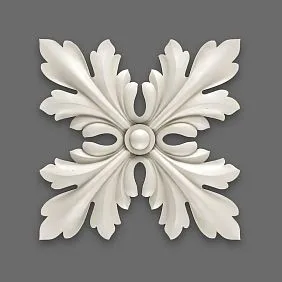
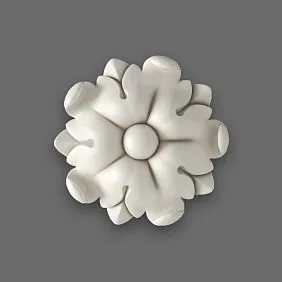
Purely decorative elements create the artistic image of a building, forming its stylistic affiliation. Rosettes, cartouches, garlands, mascarons — all these details serve solely beauty. They can be placed in pilasters between windows, decorate gables, create accents on building corners.
Decor collectionsModern manufacturers offer thousands of different elements, allowing to create unique compositions in any architectural style. From strict classical forms to fantastical modernist interpretations — the possibilities of modern ornamental decoration are truly limitless.
Stylistic Directions in Facade Moldings
Classicism: Eternal Harmony
The classical style is based on ancient canons of beauty and proportions. Doric, Ionic, and Corinthian orders, with their characteristic elements, remain the standard of architectural perfection to this day.Decor in Solid WoodIn a classical execution, it requires perfect knowledge of canons and virtuoso craftsmanship.
Each element of classical decoration has strictly defined proportions, tested over centuries. Deviation from canons immediately becomes obvious and destroys the composition's harmony. Therefore, when creating classical decoration, it is especially important to work with proven manufacturers possessing deep knowledge of architectural traditions.
Baroque: Theatrical Opulence
Baroque decoration is characterized by dynamic forms, abundance of curved elements, and rich ornamental motifs. Scrolls, cartouches, garlands create a sense of movement, play of light and shadow. This style requires not only technical perfection from the craftsman but also artistic taste.
Modern technologies allow reproducing the most complex baroque compositions with millimeter precision. At the same time, polyurethane elements are significantly lighter than traditional materials, enabling the creation of large-scale decorative compositions without risking overloading building structures.
Modern: Natural Motifs
The modern style introduced motifs of living nature into architectural decoration. Plant ornaments, flowing forms, asymmetrical compositions create a sense of organicness and naturalness. This style is especially popular in suburban construction, where buildings must harmoniously blend into the natural surroundings.
Creating decoration in the modern style requires a special artistic sensitivity. Unlike classicism, there are no strict canons — each composition is unique and irreplaceable. Modern materials and technologies allow designers to realize the most daring fantasies.
Modern Directions in Facade Decoration
Minimalism: the beauty of simplicity
Modern architecture often leans toward simplicity and minimalism in form. However, this does not mean abandoning decoration — it simply becomes more restrained and geometric. Clear lines, simple forms, emphasis on quality of execution and materials — these are the principles of minimalist decoration.
In minimalism, the perfection of every detail is especially important. The slightest irregularities, asymmetry, or surface defects immediately become noticeable in minimalist compositions. Therefore, creating minimalist decoration requires the highest level of technical skill.
High-tech: technological aesthetics
The high-tech style demonstrates the beauty of modern technologies and materials. Metallic surfaces, glass elements, and distinctly technical forms create an image of a building of the future. Even traditional molding elements in this style acquire a modern sound.
Integration of decorative elements with engineering systems is a characteristic feature of the high-tech style. Cornices may include LED lighting, ventilation grilles become decorative elements, and solar panels are integrated into the facade composition.
Technological aspects of production
Creating Master Models
The production process begins with creating high-precision master models. Experienced sculptors and carvers manually create originals of future items, carefully refining every detail. These master models become standards against which working molds are produced.
Modern technologies allow combining traditional handcraft methods with digital technologies. 3D scanning of historical samples enables creating accurate copies of lost elements. Computer modeling allows optimizing element construction, reducing their weight without compromising strength.
Product Quality Control
Each production stage is accompanied by strict quality control. The composition of raw materials, polymerization temperature regime, and geometric parameters of finished items are checked. Modern manufacturers use non-destructive control methods — ultrasonic testing, X-ray scanning.
Final control includes checking the appearance, dimensions, and absence of internal defects. Each batch of products is accompanied by a quality certificate indicating the main material characteristics. This approach guarantees consistently high product quality.
Installation and Operation of Facade Moldings
Preparation Work
Quality installation begins with careful preparation of the base. Walls must be flat, dry, and free of contaminants and peeling coatings. Any surface defects may lead to poor element fitting and premature fastener failure.
Priming the base with special compositions ensures reliable adhesion between the wall and decorative elements. The choice of primer depends on the wall material — different compositions are required for concrete, brick, and aerated concrete.
Fastening Technology
Modern fastening systems ensure reliable fixation of elements of any size and weight. Lightweight polyurethane parts can be attached using special adhesive compositions. Heavier elements require additional mechanical fastening with anchors or dowels.
Sealing joints is a critically important installation stage. Quality sealants must have high elasticity, resistance to thermal deformation, and UV radiation. Proper sealing ensures the monolithic integrity of the decorative system and prevents moisture penetration.
Final finishing
Polyurethane elements are supplied in white and require final painting. This allows the client to choose any color, create any color combinations, or change the facade’s color scheme if needed.
Quality exterior paints must have high adhesion to polyurethane, elasticity, and resistance to fading. Modern paint systems allow creating various effects — from matte to glossy, from single-tone to imitating various materials.
Regional application specifics
Northern regions
Severe northern climate conditions impose special requirements on facade materials. Temperatures down to -50°C, sharp temperature fluctuations, intense UV radiation from snow — all of this must be withstood by quality decoration. The frost resistance of quality polyurethane exceeds 300 freeze-thaw cycles.
Special attention is paid to sealing joints and fasteners. Under large temperature deformations, any imperfections may lead to moisture penetration and system damage. Special frost-resistant sealants and adhesives are used.
Southern regions
Hot climate creates another set of problems. High temperatures, intense solar radiation, infrequent but intense precipitation require special material durability. UV stabilizers in the polyurethane composition prevent polymer degradation under sunlight.
Light colors are preferable to dark ones, as they heat up less in the sun. This reduces thermal stress in the material and extends the service life of the decorative system.
Economic aspects of applying molded decoration
Cost analysis
The initial cost of quality facade molding may seem high, but an analysis of total ownership cost demonstrates the economic justification of such investments. The longevity of modern materials, minimal operating expenses, and the possibility of repainting without dismantling ensure rapid return on investment.
Quality decorative finishing significantly increases the market value of real estate. Buildings with striking facades enjoy higher demand from buyers and tenants. Investments in facade decoration pay off not only through long service life but also through increased property value.
Impact on property value
High-quality decorative finishing significantly increases the market value of real estate. Buildings with striking facades are in high demand among buyers and tenants. Investments in facade decoration pay off not only due to their long service life but also due to the increase in property value.
Innovations and development prospects
Smart Materials
The future of facade decoration is linked to the development of 'smart' materials capable of altering their properties depending on external conditions. Thermochromic coatings change color with temperature changes, photocatalytic surfaces self-clean under sunlight.
Materials with integrated photovoltaic elements capable of generating electricity are being developed. Such innovations will transform facade decoration from a purely aesthetic element into a functional part of the building's energy system.
Digital technologies
The introduction of digital technologies fundamentally changes approaches to designing and manufacturing decoration. Virtual and augmented reality allow clients to preview results even during the design phase. BIM technologies ensure precise integration of decorative elements into the building's overall model.
3D printing opens new possibilities for creating unique elements with complex geometry. The technology allows manufacturing prototypes and small batches of elements not achievable through traditional production methods.
Frequently Asked Questions about facade molding
What material is better to choose for facade decoration?
For Russian climate conditions, the optimal choice is high-density polyurethane. It combines lightness, strength, frost resistance, and durability. The material withstands temperatures from -50°C to +80°C, does not deform from moisture, and is resistant to UV radiation.
How long does it take to manufacture decorative elements?
Standard catalog elements are delivered within 1-3 weeks. Manufacturing unique elements according to individual projects may take 6-12 weeks depending on complexity. When planning construction, it is recommended to order decoration in advance.
Can molding be installed in winter?
Installation of polyurethane decoration is possible at temperatures down to -10°C using special frost-resistant adhesives. However, optimal working conditions are temperatures from +5°C to +25°C and humidity not exceeding 80%. Winter installation requires additional measures and increases labor costs.
Does molding require special maintenance?
Polyurethane decoration requires almost no maintenance. It is sufficient to periodically wash elements with water and mild detergent. It is recommended to conduct visual inspections twice a year to promptly identify possible damage.
Can the color of molding be changed after installation?
Yes, polyurethane elements can be repainted using special exterior paints. This allows updating the facade's appearance or changing the color scheme without dismantling the decoration. Quality coating lasts 7-12 years.
How to calculate the required quantity of elements?
Calculation is performed based on architectural drawings with precise indication of all dimensions. Professional manufacturers provide services for preparing specifications. It is recommended to include a reserve of 5-10% for trimming and possible damage during installation.
Is molding compatible with facade insulation?
Yes, modern facade decoration systems are fully compatible with insulation systems. Elements can be installed over insulation or integrated into the insulation layer. It is important to follow the installation technology and use compatible materials.
What warranty is provided for molded decoration?
Quality manufacturers provide a 15-25 year warranty on the preservation of material properties. The warranty covers frost resistance, UV resistance, and geometric stability. It is important to keep documentation and follow usage conditions.
Can stucco be used for restoring historical buildings?
Modern materials are widely used in restoration work. Polyurethane allows for precise reproduction of historical details while ensuring better durability. For architectural monuments, coordination with cultural heritage protection authorities is required.
How to choose a reliable stucco manufacturer?
When choosing a manufacturer, pay attention to the presence of their own production, work experience, project portfolio, quality certificates. Warranty obligations and after-sales support are important. It is recommended to visit the production facility and familiarize yourself with the technological processes.
Conclusion: craftsmanship, proven over time
Facade stucco is more than decoration—it is a way to give architecture a lively character and unique individuality. In a world where standardization often defeats beauty, high-quality stucco decoration becomes an island of true craftsmanship and artistic taste.
Modern technologies and materials open up boundless opportunities for creativity, allowing to realize any architectural fantasies. At the same time, new materials surpass traditional ones not only in performance characteristics but also in the variety of design solutions.
Investing in high-quality facade decoration is investing in long-term prospects. Properly selected and professionally installed stucco will delight owners for decades, preserving its beauty and functionality.
Choosing materials and technologies is only part of success. Equally important are the manufacturer's professionalism, manufacturing quality, and proper installation. Each element must be perfect, every detail thought out to the smallest detail.
STAVROS combines all components of a successful facade decorative project. Decades of experience in architectural decoration, own production facilities, use of the most modern technologies and materials—all this allows STAVROS to create products of the highest quality. The wide product range includes elements for any architectural styles—from classical to ultra-modern. Strict quality control at all production stages, professional technical support, flexible pricing policy, and reliable warranty obligations make STAVROS an ideal partner for implementing projects of any complexity. Entrusting your architectural dreams to STAVROS professionals guarantees a result that will be a source of pride for years and delight everyone who sees it with its perfection.


