


























Article Contents:
- What is a wooden cornice
- Where wooden cornices are used
- Ceiling area of living spaces
- Top of wall and frieze
- Door portals and openings
- Furniture groups
- Libraries and studies
- Fireplace areas
- Living rooms, bedrooms, halls
- Country houses
- How a wooden cornice differs from molding and baseboard
- Cornice — top finish
- Molding — decorative line
- Baseboard — bottom finish
- Three-belt principle
- How to choose the size of a wooden cornice
- Ceiling Height
- Room scale and wall width
- Furniture size for a cornice
- Profile projection
- How to choose a profile shape
- Smooth cornice
- Shaped cornice
- Cornice with decorative frieze
- Cornice for painting
- Cornice for varnish or tinting
- Wooden cornice for the ceiling
- How a wooden cornice ties the interior together
- Ceiling cornice in the office
- Ceiling cornice in a country house
- Wooden cornice for furniture
- Why furniture without a cornice looks unfinished
- Cabinets and cabinet groups
- Sideboards and chests of drawers
- Kitchen cabinets
- Libraries
- Wooden cornice for portal and opening
- What is a portal cornice
- How to choose a cornice for a portal
- Portal cornice in the hall
- Wide opening without door
- Material and coating of wooden cornice
- Solid beech
- Solid oak
- MDF for painting
- Coatings and finishing
- Wooden cornice and molding system: how to create a unified interior
- Mistakes when choosing a wooden cornice
- Where to buy a wooden valance
- About the company
- FAQ - answers to popular questions
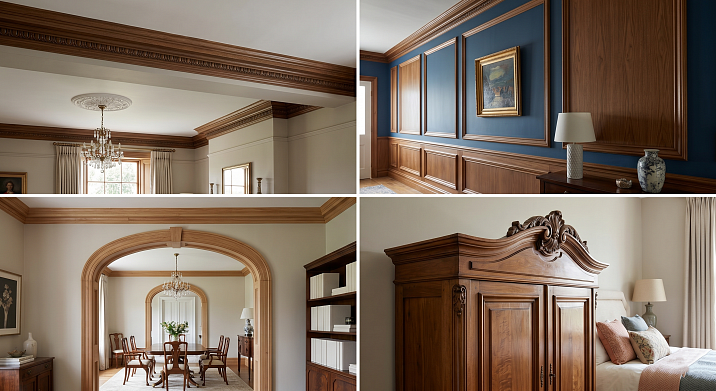
There are things that don't catch your eye immediately, but their absence is felt instantly. A wooden cornice is exactly that detail. It doesn't demand to be noticed first. It works quietly, precisely, and convincingly: it connects the wall to the ceiling, completes the top of a cabinet, frames a portal, and maintains proportion throughout the space. Remove it, and the interior will instantly lose that very composure you've been trying to create for months.
A wooden cornice is not a curtain rod, although many confuse these concepts. It is a decorative profile made of solid wood or MDF that performs an architectural task: it completes a plane, organizes the transition between surfaces, and makes furniture and walls a finished statement. This is exactly what this commercial, practical, and comprehensive article is about — how to choose wooden cornice for any task in the interior.




What is a wooden cornice
Let's start with a definition, because in Russia the word "cornice" carries at least two completely different meanings. The first is a curtain rod: a functional horizontal rod on which textile panels hang. The second is a decorative architectural cornice: a profile molding element that completes the upper zone of a wall, furniture, or opening.
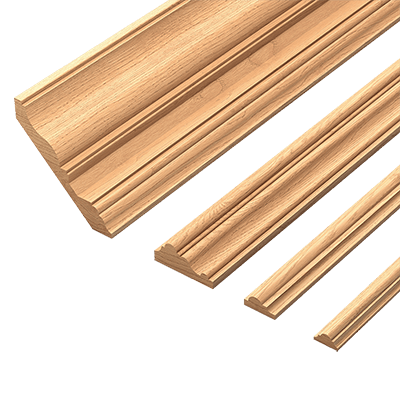
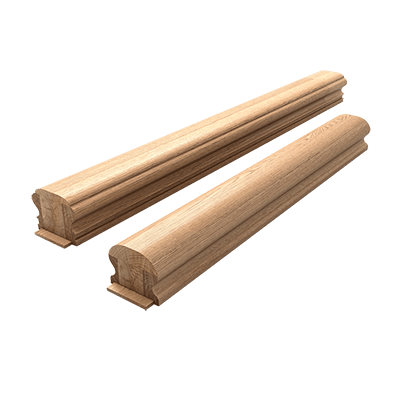
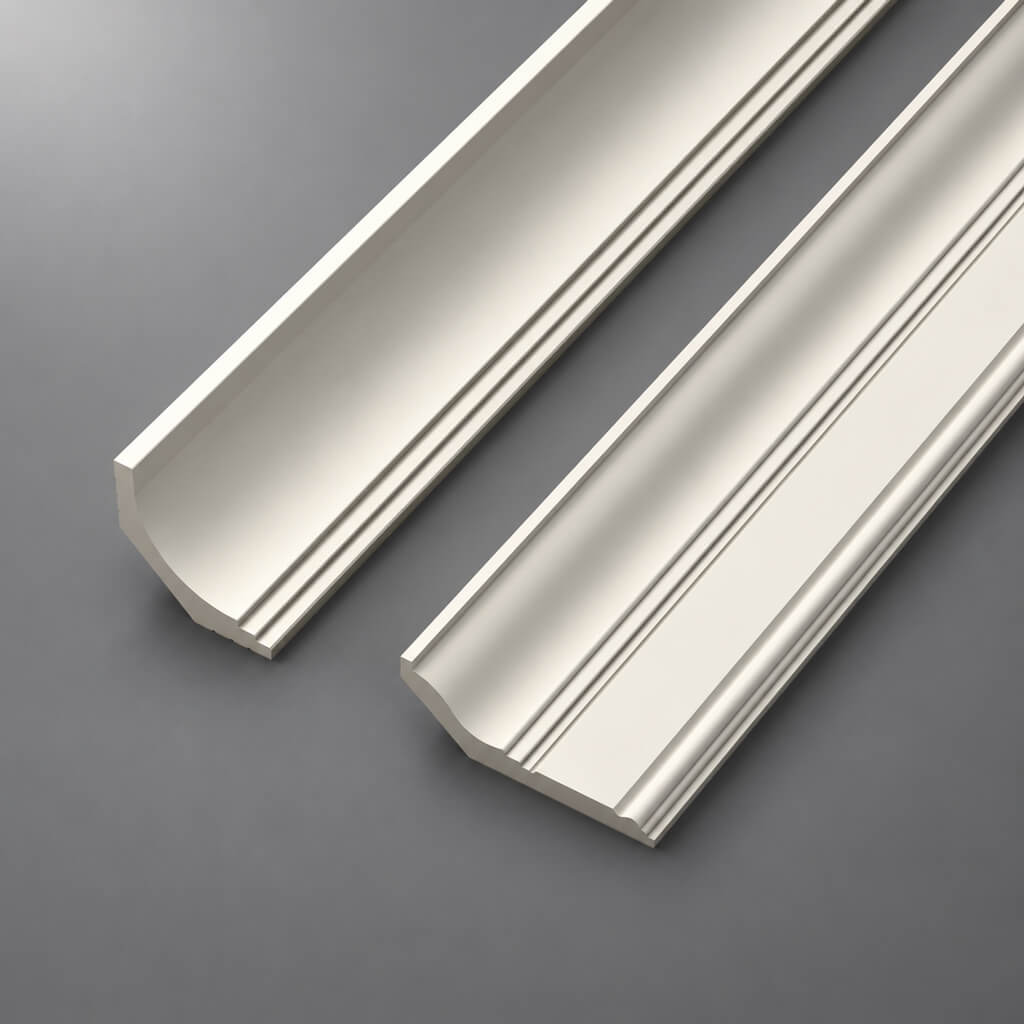
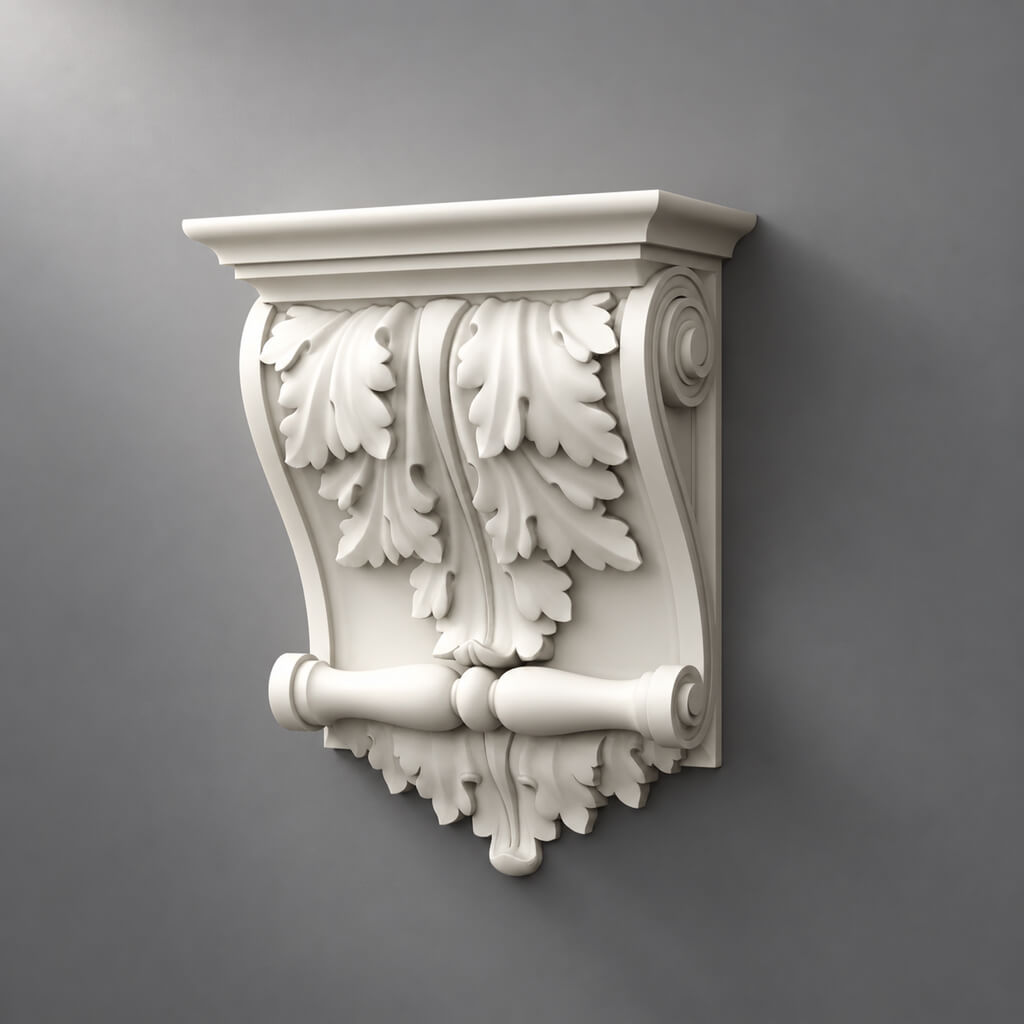
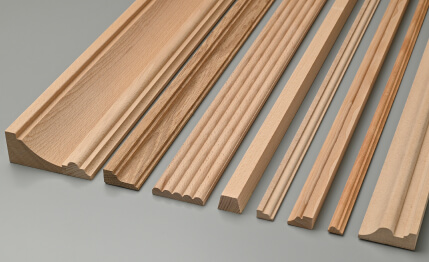
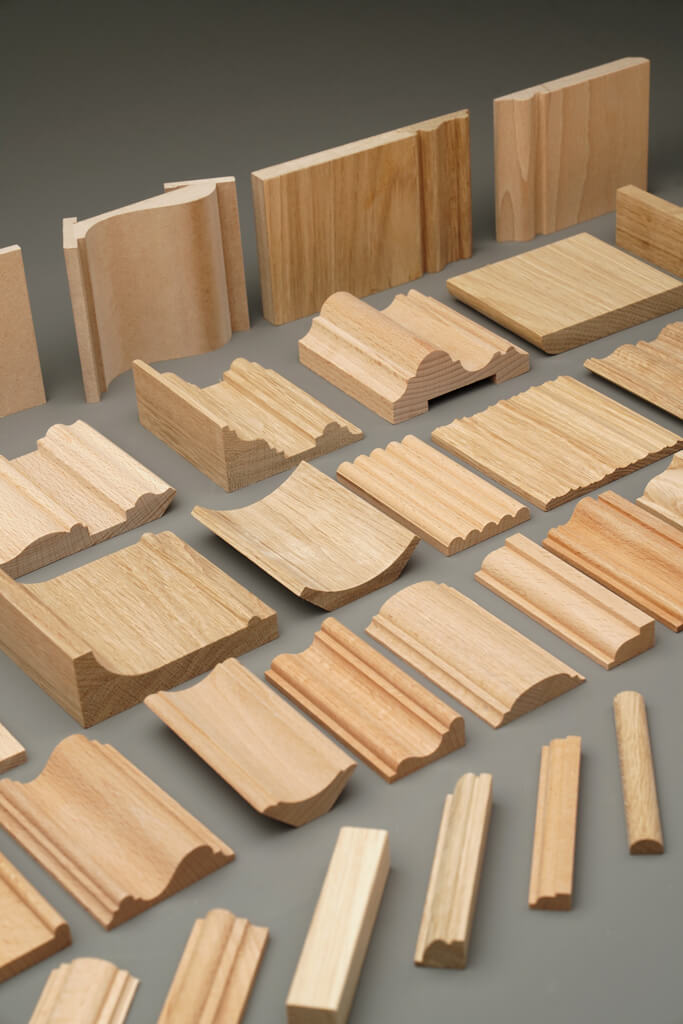
We are interested in the second. An architectural wooden cornice is a shaped profile made of solid wood or MDF, manufactured by milling. It has a specific cross-section with relief: rods, fillets, ogee, reverse ogee, cyma, shelf — all these are elements of a classic cornice profile. It is the shape of the section that determines the character of the product: strict and modern, or rich and classic.
The cornice is mounted horizontally in the upper zone of the wall, on furniture, around the perimeter of an opening, or in the ceiling area. It creates a visual "closure" of the top edge of any vertical plane — where it transitions into the ceiling, another plane, or the void above a piece of furniture.
When a master says that "the cabinet is not finished" or "the wall looks incomplete" — in nine out of ten cases, it is precisely about the absence of a cornice profile in the upper zone. It is the element that turns a set of planes into an architectural composition.
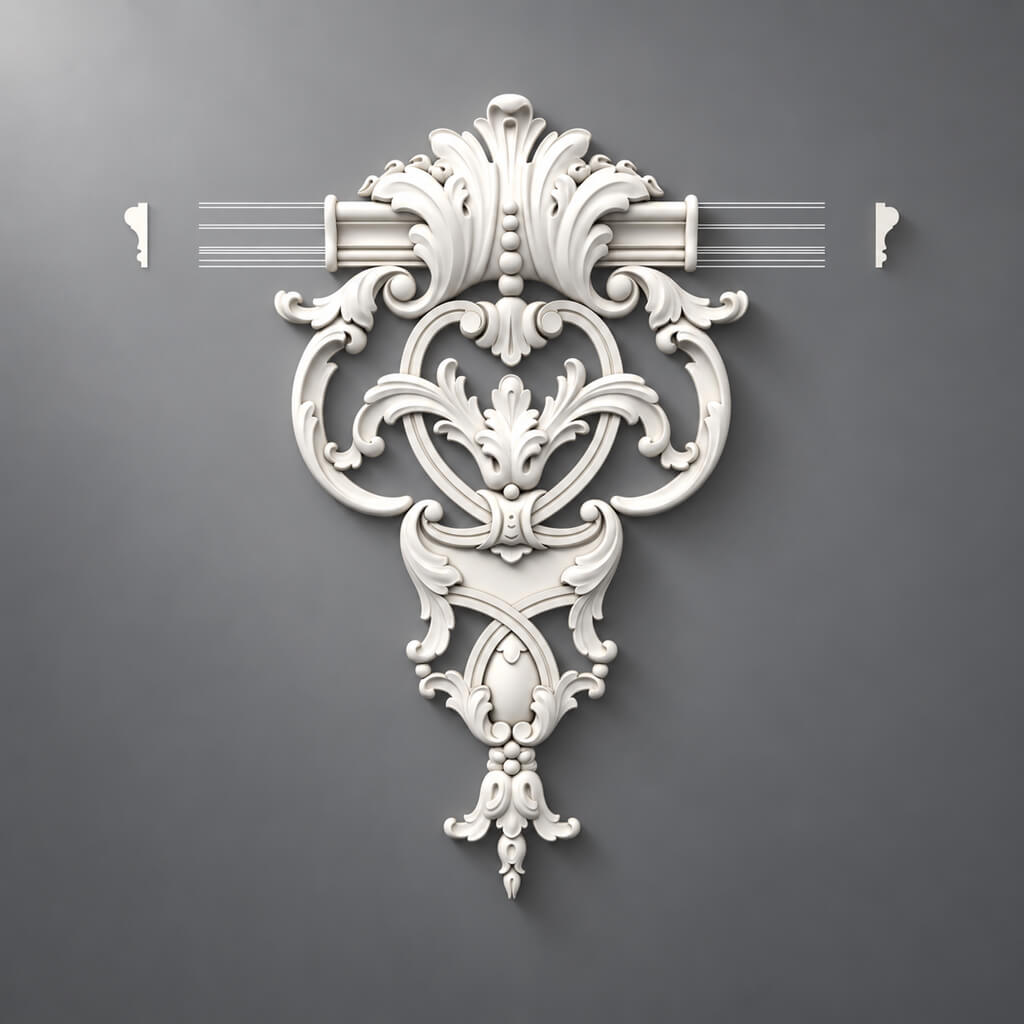
In the of the STAVROS wooden cornice models range from compact profiles KZ-004 and KZ-016 to wide decorative cornices with inserts KZ-001-4 and KZ-001-11 — for any scale of task and any interior style.

Where wooden cornices are used
The answer to this question is broader than it seems. A wooden cornice is a universal architectural element, and its use is not limited to one scenario.
Our factory also produces:


Ceiling area of residential rooms
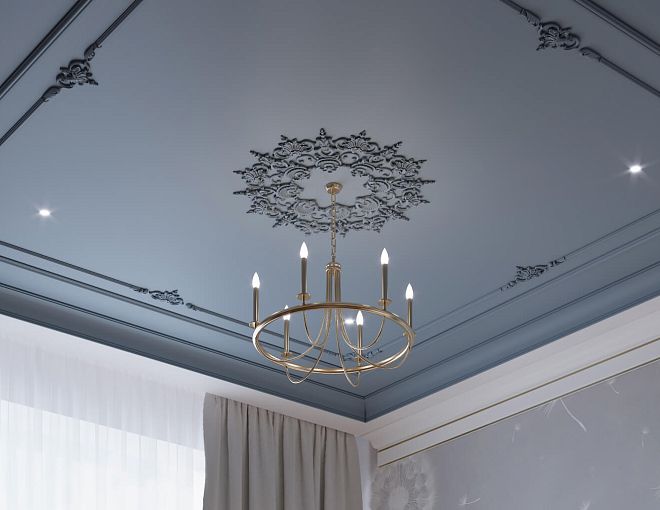
The traditional place for a cornice is the upper perimeter of the room, at the junction of the wall and ceiling. Here, the wooden profile performs the same role as a polyurethane fillet, but with a fundamentally different material quality and texture. Solid beech or oak with a relief profile creates a completely different feeling — warm, lively, tangibly luxurious.
In classic interiors, country houses, timber and log houses, as well as in studies and library rooms Wooden cornice in the upper zone of the wall — this is a historically justified and architecturally flawless solution.
Get Consultation
Top of the wall and frieze
In interiors with high ceilings, the cornice can be installed not at the junction of the wall and ceiling, but lower — as a frieze marking the upper zone of the wall panel. This is a classic technique: the lower wall panel, the middle zone, and the frieze with a cornice on top form a three-part division of the wall, known since antiquity.
Door portals and openings
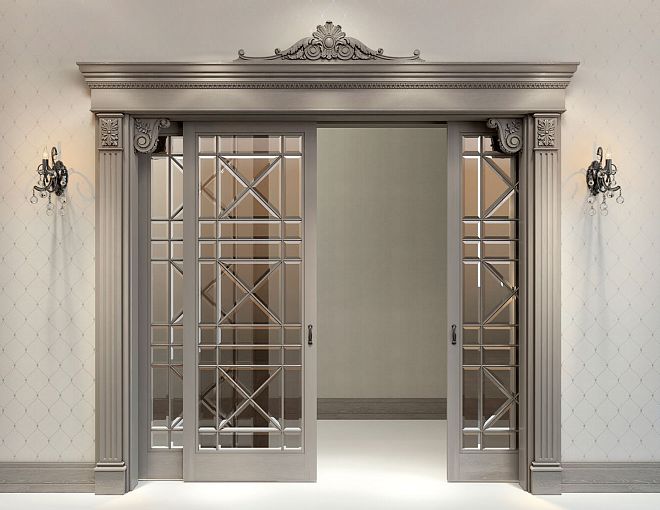
A portal is the architectural framing of a door or archway. Its upper horizontal part — the architrave with a cornice — is the central element that gives the portal completeness and scale. Without a cornice profile on top, the portal looks 'unlocked,' open and unfinished. With a cornice, it becomes a true architectural statement.
Furniture groups
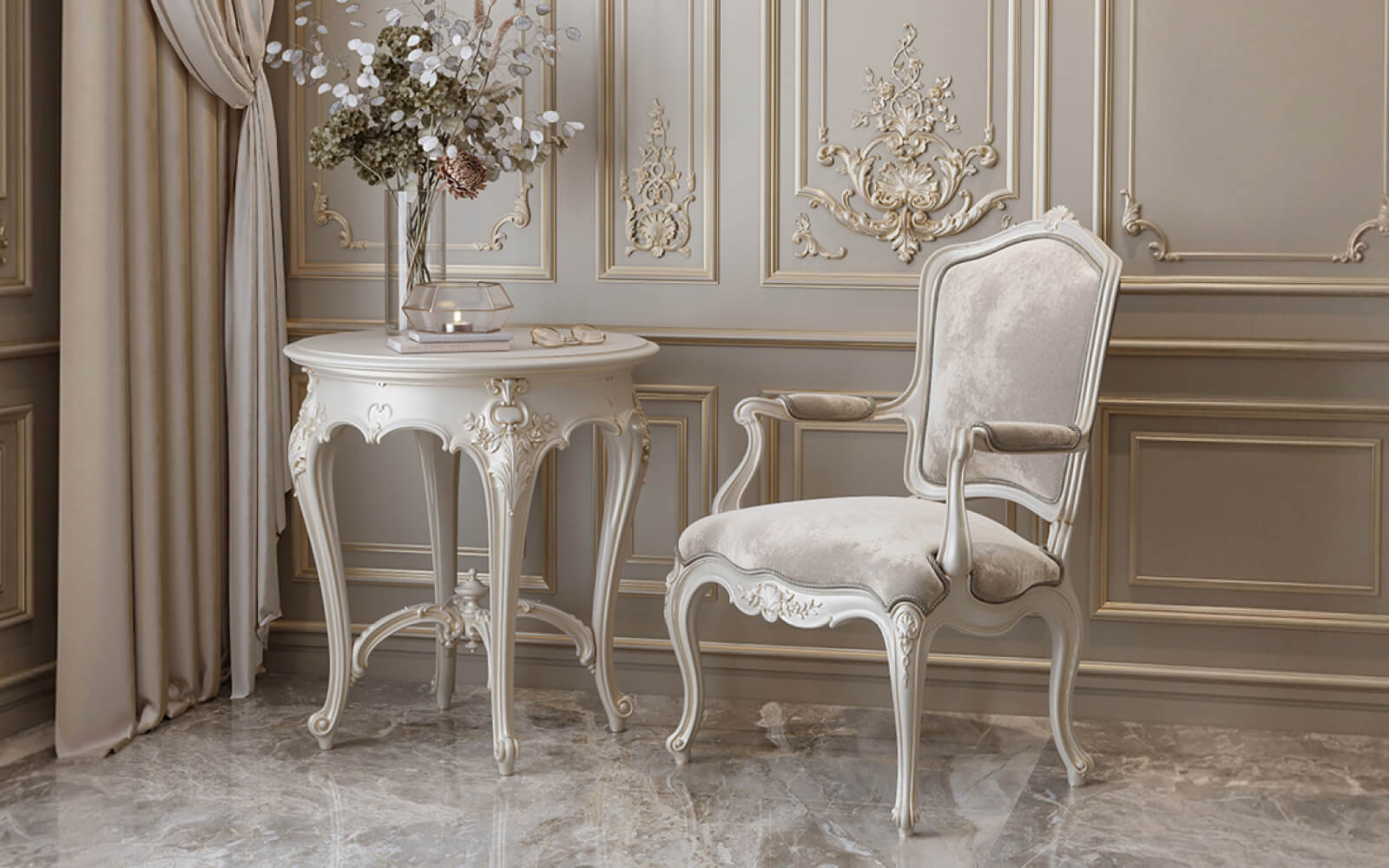
Here, a wooden cornice works like furniture molding: it frames the top edge of cabinets, sideboards, library shelves, kitchen modules, chests of drawers, and display cases. It is the cornice that gives the top of the furniture an architectural "crown" — a finish that distinguishes a handmade piece or expensive factory furniture from a mass-produced economy-class product.
Libraries and studies
A study with wooden bookshelves reaching the ceiling is one of the most expressive spaces in a classic interior. A cornice at the top of the bookcases is essential here: it connects the furniture to the ceiling, makes the shelving monumental and complete, and transforms simple shelves with books into an architectural library wall.
Fireplace areas
A fireplace portal is a separate architectural object in a room. Its cornice shelf (the shelf above the firebox) and side and top profiles are direct relatives of the architectural cornice. A wooden profile in the fireplace area creates a warm, homey, classic look.
Living rooms, bedrooms, halls
Wherever wood is present in the interior — in furniture, flooring, wooden windows, or doors — a solid wood cornice organically complements the decor system. It ties the wooden elements together, creating a cohesive look.
Rural homes
In a country house — whether it's a classic wooden, stone, or brick cottage — a wooden cornice holds special significance. It continues the tradition of wooden architecture, bringing it into the interior space of the home. wooden casings and house carving in such a house, they complement the cornice molding, forming a unified decor system made of natural wood.
How a wooden cornice differs from molding and baseboard
This is one of the most common questions asked when choosing wooden moldings. And it's the right question — because cornices, moldings, and baseboards do look similar, but they serve different purposes.
Cornice — top finish
A cornice is a top finishing profile. Its main function is to cover the upper edge of a vertical plane (wall, furniture, opening) and create a visual "closure" at the top point. The cornice profile typically has a protruding lower part — a "shelf" or "drip edge" — which creates a horizontal shadow and emphasizes the spatial transition.
Molding is a decorative line
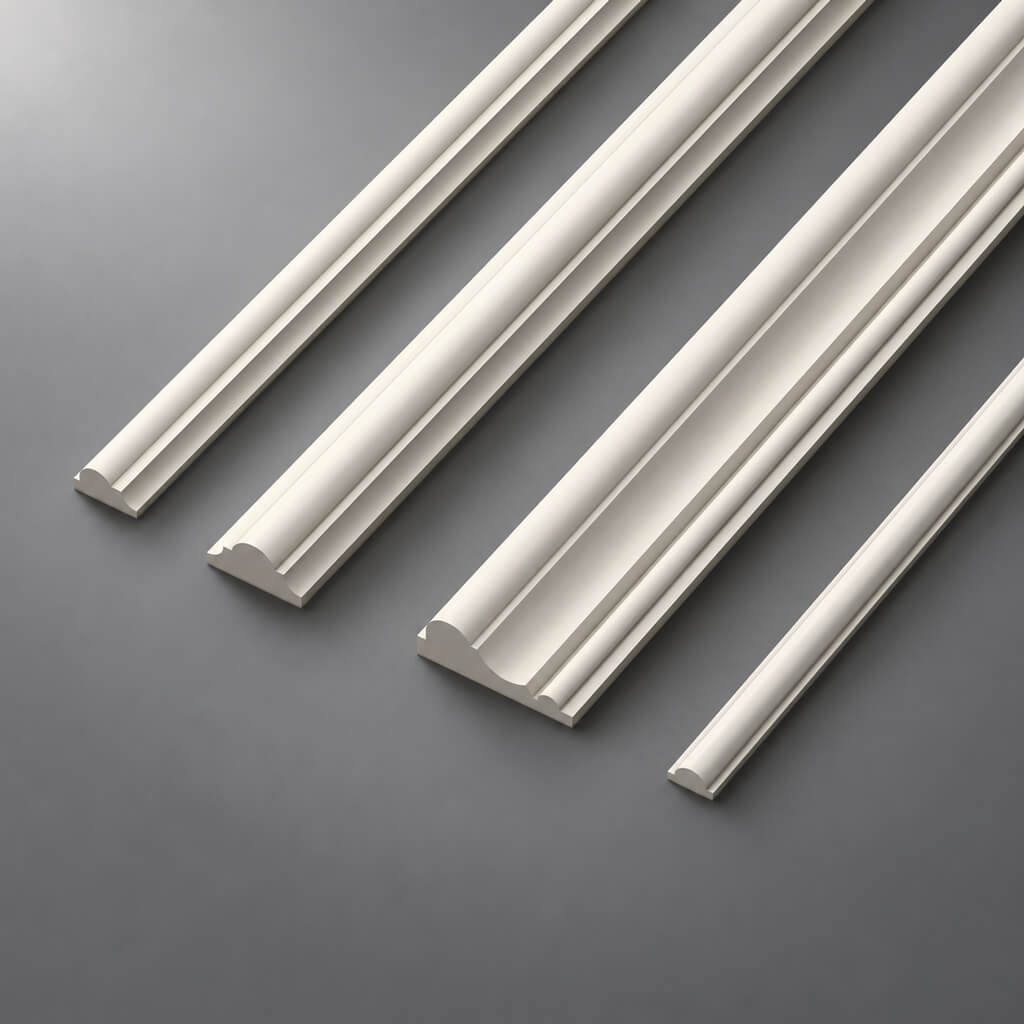
Wooden moldings — these are linear decorative profiles that create horizontal or vertical stripes on the wall, form frames and panels, and divide planes. Molding does not complete a zone — it decorates it from within, adding rhythm, texture, and volume. Molding is installed at any height, in any direction, and can be either flat or embossed.
Baseboard is a bottom finish
Wooden baseboard — a lower finishing profile. Its task is symmetrical to the cornice: to cover the lower edge of a wall or furniture at the point where it meets the floor. A baseboard can also be furniture-grade — for finishing the lower part of a cabinet or sideboard body.
The principle of three belts
The classic system of wooden millwork operates on the principle of three horizontal belts: baseboard at the bottom, moldings in the middle zone, cornice at the top. All three elements must be proportionate, consistent in style, and come from the same ornamental family. This is how a cohesive, professional-looking interior is created.
Confusing a cornice with a baseboard during installation means placing the profile upside down. Confusing a cornice with a molding means using the wrong tool for a different task. Therefore, the distinction between them is fundamental.
How to choose the size of a wooden cornice
The size of a cornice is not just about centimeters. It is a matter of proportions, visual weight, and architectural proportionality. An incorrect size can ruin even a perfectly chosen profile.
Ceiling height
This is the first and main guideline. The higher the ceiling, the more massive the cornice should be.
| Ceiling Height | Recommended cornice height |
|---|---|
| Up to 2.5 m | 4–6 cm |
| 2.5–3.0 m | 6–10 cm |
| 3.0–3.5 m | 10–15 cm |
| Above 3.5 m | 15–25 cm and more |
On a low ceiling, a massive cornice with a high profile literally "descends" from above, visually compressing the space. Here, a thin, laconic profile is needed — it will cover the transition without taking away height.
Room scale and wall width
A small room 3–4 m wide requires a delicate cornice. A spacious living room of 30–40 square meters can afford a wide decorative cornice with rich relief. The proportion should be such that the cornice is perceived as part of the room's architecture, not as a separate object screwed to the wall.
Furniture cornice size
A furniture cornice is proportional to the cabinet it sits on. For a cabinet 60 cm deep and 220 cm high, the optimal cornice height is 7–12 cm. For a low chest of drawers or sideboard — 5–8 cm. For a tall library shelf up to the ceiling — the cornice can be wider: 12–20 cm, since it works both as a furniture profile and a ceiling profile.
Profile projection
Projection is the horizontal extension of the cornice forward from the plane of the wall or furniture. It creates a shadow under the profile and determines the spatial "weight" of the cornice. For modern interiors, a projection of 3–5 cm is sufficiently expressive. For classic ones — the projection can reach 8–15 cm. The larger the projection, the more monumental the cornice looks.
How to choose a profile shape
The profile shape is the style of the cornice. This is where the decision is made: classic or modern, rich relief or strict geometry.
Smooth cornice
A smooth profile with clear edges and minimal relief — a choice for modern interiors: contemporary classic, art deco, minimalism. This wooden cornice works through shape and shadow, not ornament. Models KZ-004, KZ-015, KZ-016 in the STAVROS catalog are examples of this approach.
Figural cornice
A figural profile with rods, ogee, shelves, and relief transitions — this is a classic architectural cornice. It carries an ornamental charge, emphasizing the interior's belonging to classical, neoclassical, or baroque traditions. Such profiles are appropriate in formal rooms, libraries, studies, and living rooms with high ceilings.
Cornice with decorative frieze
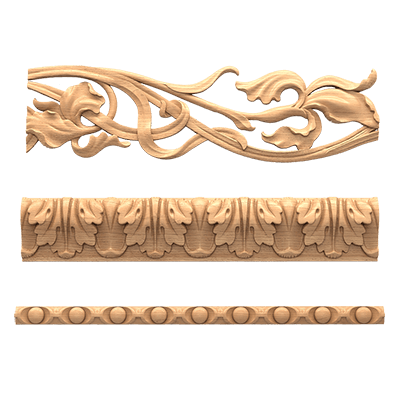
A separate category — cornices with inserts and decorative friezes: models KZ-014, KZ-001-4, KZ-001-11 in the STAVROS catalog. They include carved or relief elements within the profile body — ornamental bands, ionics, guttae, acanthus leaves. This is a formal solution for ceremonial interiors, fireplace halls, portal frames, and libraries.
Cornice for painting
If you plan to paint the cornice in the color of the walls or ceiling, choose an MDF cornice or a wooden cornice made of beech with a clean smooth surface. MDF profile ensures perfect geometry and accepts any enamel from the RAL catalog. Wood for painting requires preliminary priming, but the result is a monolithic surface without visible material joints.
Cornice for varnish or tinting
Solid oak and beech look great under clear varnish, oil, or tinting. The wood texture shows through, the profile looks lively and warm. This option is especially good in country houses, interiors in Provence, rustic, Scandinavian classic, and modern country style.
Wooden cornice for the ceiling
Ceiling application of a wooden cornice is the most traditional and historically justified. Back in the 18th–19th centuries, rich interiors in mansions and palaces were decorated precisely with wooden cornice profiles, which architects called "entablature."
Today, a wooden cornice in the upper zone of a room is a way to create an interior that works without polyurethane stucco but looks no less complete and significantly more "alive" in terms of material feel.
How a wooden cornice connects the interior
Let's consider a specific scenario. Living room: oak parquet, wooden window frames, classic furniture with wooden legs and facades. All of this is a wooden system. And the ceiling wooden cornice cornice at the top of the wall closes this system: it literally "stitches" the ceiling to the walls, creating a sense of architectural integrity. Add Wooden baseboard a baseboard from the same series at the bottom of the wall — and the space acquires a unified wooden contour that holds the entire composition.
Ceiling cornice in a study
For a classic-style study, a solid wood ceiling cornice is an essential element. It adds strictness and weightiness to the room, which is impossible with lightweight white polyurethane profiles. Dark tinted oak under the ceiling, floor-to-ceiling bookshelves, oak parquet — that's the classic of a men's study, where the wooden cornice is not just decor but a system-forming architectural element.
Ceiling cornice in a country house
In a country house made of logs or timber, as well as in a wooden frame cottage, a wooden ceiling cornice is a continuation of the building's architectural logic itself. Wood on the outside continues with wood on the inside. Wooden trim in such a house, it is not a decoration, but an organic part of the space.
Wooden cornice for furniture
A furniture cornice is a separate and very important story. It is often what "finishes" furniture to the level where it begins to read as expensive and architectural.
Why furniture without a cornice looks unfinished
Any cabinet, sideboard, or display case ends with a horizontal edge at the top. Without a cornice, this edge is just a cut of material protruding into the space. The eye registers the exposed edge as incompleteness. A wooden cornice covers this edge, giving the top of the furniture a "roof" — a silhouette that completes the form.
That is why expensive handmade furniture always has a cornice. And that is why a furniture cornice is the first thing ordered when upgrading a cabinet or kitchen set.
Cabinets and cabinet groups
For built-in cabinets and cabinet groups, the cornice is mounted along the top edge of the bodies and creates a single horizontal line along the entire length of the wall. This turns a set of cabinet blocks into a single architectural wall. Here, the cornice can run from one wall to another, creating a continuous horizontal accent under the ceiling.
Sideboards and chests of drawers
For freestanding furniture — sideboards, chests of drawers, tall cabinets — the cornice frames the upper perimeter of the body and visually "covers" the piece of furniture. The richer the cornice profile, the more formal and majestic the furniture looks.
Kitchen cabinets
In the kitchen, a furniture cornice covers the top edge of wall cabinets. It can be installed flush with the ceiling — then the cabinets look built-in. Or with a small gap — leaving space for lighting, which illuminates the cornice from below and creates soft, diffused light above the work area.
Libraries
A wooden cornice for a library shelving unit is a solution that transforms simple shelves into the category of "architectural furniture." A wide cornice with a decorative frieze works especially well — for example, models with inserts from the STAVROS catalog. Such a cornice creates a visual connection between the bookshelves and the ceiling, making the library wall monumental.
Wooden cornice for a portal and opening
A portal is a door that knows itself. A neat door frame with a simple casing is function. A portal with a cornice, pilasters, and architrave is architecture.
What is a portal cornice
A portal cornice is a horizontal profile installed above a doorway as a crowning element. It is the upper part of a classic portal framing and creates a sense of "heavy" — in a good sense — architectural significance of the opening.
Without a cornice, a portal is just an opening with a casing. With a cornice, it is an architectural entrance that announces the space behind the door even before you enter it.
How to choose a cornice for a portal
A cornice for a portal should be 3–5 cm wider than the casing on each side and project forward — creating a horizontal "canopy" over the opening. The greater the projection, the more ceremonial the portal looks. The profile of the cornice should echo the profile of the casing: if the casing has a straight profile, the cornice should also be strict; if the casing has moldings, the cornice should have a richer relief.
Portal cornice in the hallway
In the hall or entryway, a portal cornice above the front door creates the first impression. It is the "grand entrance" into the home, and its architectural design sets the tone for the entire interior. A wooden cornice made of solid oak with tinting works most convincingly here: heavy, dark, confident.
Wide opening without a door
An equally interesting application of a portal cornice is framing a wide open passage between rooms: between the living room and dining room, between the hall and living room. Here, a cornice with side pilasters turns the opening into a "gateway" — an architectural frame that holds the space and creates a sense of enfilade.
Material and coating of the wooden cornice
Solid beech
Beech is dense, uniform, and light in tone. Its fine-porous structure allows for perfectly clean milling when creating the profile. A beech cornice withstands loads up to 45 kg, accepts varnish, tinting, and enamel well. It is a versatile material suitable for both painting and transparent coatings that reveal the texture.
Solid oak
Oak is heavier, harder, with a more pronounced texture and a noble pattern of annual rings. An oak cornice has a special natural beauty that is especially good under oil or clear varnish. Oak products withstand loads up to 60 kg and last for decades without losing shape or appearance. This is a choice for those who value natural material in its most expressive form.
MDF for painting
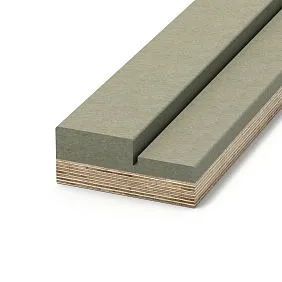
MDF cornice — perfect geometry, stable dimensions, ideal base for painting. The board thickness of 16–22 mm ensures the necessary rigidity of the profile. An MDF cornice for painting is a choice for those who want a cornice in white, in the color of the walls, or in a non-standard RAL color. It is also a more economically affordable solution for large linear footage.
Coatings and final finishing
-
Clear varnish — preserves the color and texture of the wood, provides protection from moisture and mechanical impact. Refreshed every 3–4 years.
-
Oil and wax — gives the wood a matte, lively look, emphasizes the texture, and is easily refreshed without complete disassembly.
-
Tinting — changes the shade of the wood, making it darker or cooler, while preserving the visibility of the structure.
-
Enamel for painting — complete coverage of the structure, any RAL color, ideal matte or glossy surface.
Wooden cornice and molding system: how to create a unified interior
A wooden cornice works most effectively when it is part of a unified wooden molding system. This system is built on the principle of stylistic and material unity: all elements are made of the same wood, with a similar profile, and the same finish.
Here is what the complete system consists of:
-
Ceiling cornice — the upper finish of the wall and connection to cabinets or a library.
-
Wooden moldings — the middle zone of the wall, frames and panels.
-
Wooden baseboard — the lower finish of the wall.
-
Wooden trim — additional linear profiles: architraves, glazing beads, moldings.
-
wooden casings and house carving — framing of door and window openings.
When all elements of the system come from one source and one ornamental tradition, the interior looks like a unified architectural space, rather than a set of details from different catalogs. This feeling is the main result of professional work with wooden molding.
Mistakes when choosing a wooden cornice
Even with extensive experience in renovation and design, some mistakes occur surprisingly often. Let's analyze them honestly and specifically.
Confusing an architectural cornice with a curtain rod. These are fundamentally different products. A curtain rod is a functional rod for hanging textiles. An architectural cornice is a decorative profile for interior design. They cannot be used interchangeably in terms of shape, purpose, or installation method.
Choosing too massive a profile for a low ceiling. A cornice 15 cm high with a ceiling of 2.5 m is not luxury, but a proportion error. Such a cornice literally "eats up" the height, creating a feeling of tightness and a looming ceiling. Follow the proportion: the cornice should not occupy more than 5–6% of the wall height.
Not considering baseboards and trims. A cornice that does not match the profile of the baseboard and trims looks alien. Always select a ceiling cornice paired with a lower baseboard — from the same series or with a similar style.
Mixing different wood shades. Dark stained oak on top and light beech on the bottom is not contrast, it's a stylistic conflict. If you want a mix of shades, it must be deliberate and coordinated with the overall color scheme of the interior.
Choosing a cornice separately from furniture. A furniture cornice should be selected simultaneously with the furniture or for a specific piece of furniture. The size, profile, and material of the cornice are determined by the size and style of the furniture it is intended for.
Not calculating linear meters. Cornices are sold by linear meters. Measure all surfaces where you plan to install it, add 15% for trimming and reserve — and only then place your order. A shortage in the middle of installation means work stoppage and additional costs.
Forgetting about corners and joints. Internal and external corners are the most vulnerable part of any cornice molding. 45-degree joints require precise cutting or ready-made corner blocks. Without properly executed corners, even an expensive profile looks amateurish.
Not allowing for trimming waste. Molding always requires cutting to size. Add 10–15% above the calculated footage — this is standard practice in professional installation.
Where to buy wooden cornices
When all parameters are determined — style, size, profile, material, footage — the main practical question arises: where to buy a solid wood cornice that meets professional standards?
The STAVROS catalog features a full line of wooden cornices and related molding elements:
-
wooden cornice — a section with the full assortment: from minimalist profiles KZ-004 and KZ-016 to wide cornices with inserts KZ-001-4 and decorative friezes KZ-014.
-
Wooden moldings and baguettes — linear profiles from beech and oak solid wood for decorating walls, furniture, and openings.
-
Wooden moldings — decorative profiles for frames, panels, and the middle zone of the wall.
-
Wooden baseboard — lower finishing profile in a unified system with the cornice.
-
wooden casings and house carving — for comprehensive design of door openings and portals.
-
Full catalog of wood products — for forming a complete order for all interior zones.
All products are manufactured using 3D milling and hand-sanded. Available in beech and oak solid wood, as well as MDF for painting. STAVROS works retail and wholesale, accepts custom orders for non-standard sections and sizes.
About the Company
STAVROS is a Russian manufacturer of wooden decorative products for interiors and facades, with production in St. Petersburg and warehouses in Moscow. The company specializes in the production of wooden moldings from beech and oak solid wood: cornices, moldings, baseboards, architraves, baguettes, carved moldings, and house carving. All products are manufactured using 3D milling and hand sanding, ensuring high profile accuracy and clean relief. STAVROS offers a standard range and custom manufacturing, working with designers, furniture manufacturers, construction companies, and private customers throughout Russia.
FAQ — answers to popular questions
What is a wooden cornice in the interior?
An architectural wooden cornice is a decorative profile made of solid wood or MDF that completes the upper zone of a wall, furniture, or opening. It creates a horizontal "closure" of the top edge, connects planes, and makes the interior architecturally complete.
How is a wooden cornice different from a curtain rod?
These are fundamentally different products. A curtain rod is a functional bar for hanging textiles. An architectural cornice is a decorative molding profile for interior design, furniture, and openings. They cannot be used interchangeably.
Where are decorative wooden cornices used?
In ceiling areas of rooms, on door portals and openings, on the top of cabinets, sideboards, library shelves, kitchen units, fireplace areas, hallways, and living rooms.
How to choose the size of a wooden cornice?
Consider the ceiling height: for ceilings up to 2.5 m — a cornice height of 4–6 cm, for 2.5–3.0 m — 6–10 cm, for rooms higher than 3.0 m — 10–15 cm or more. The cornice should not occupy more than 5–6% of the wall height.
Can a wooden cornice be used on furniture?
Yes, a furniture cornice is one of the most common applications of wooden profiles. It decorates the top edge of cabinets, sideboards, libraries, and kitchen units, giving furniture architectural completeness.
How to combine a wooden cornice with baseboards and architraves?
All wooden molding elements should be made of the same material (or similar wood shades) and from a single ornamental tradition. Ideally, order the cornice, baseboard, and architraves from one manufacturer within the same series.
Is a wooden cornice suitable for painting?
Yes. MDF cornice is ideal for painting with any RAL enamel. A massive beech cornice can also be painted after preliminary surface priming.
Which is better: a smooth or figured wooden cornice?
It depends on the interior style. A smooth profile is for modern interiors, art deco, and minimalism. A figured one with rods and relief is for classic, neoclassical, and baroque styles. The profile choice should match the overall style of the space.
How to calculate the amount of wooden cornice?
Measure the perimeter of all surfaces where installation is planned. Add 15% for trimming and allowance for joints and corners. For furniture, calculate the total length of all upper edges of the cabinets plus a 10–15% allowance.
Where to buy a solid wood cornice?
In the Stavros catalog — stavros.ru/products/izdeliya-iz-massiva/vid_izdeliya_karniz/. Full range of wooden cornices made of solid beech and oak, as well as MDF for painting, with Contact us to confirm shipping to your destination.