Article Contents:
- Wooden Block: What It Is and Why the Definition Matters
- Types of Wooden Blocks by Degree of Processing
- Grades: From 'Extra' to Technical
- Wood Species for Blocks: Not All Wood is Equally Useful
- Pine: The Workhorse of the Construction Market
- Larch: The Aristocrat Among Conifers
- Oak: A Name That Needs No Advertising
- Spruce, Beech, Ash, Birch: The Other Players
- Wooden Block Dimensions: Standards You Need to Know
- Block for Construction: Where and How It Works at Every Stage
- Frame House Construction: Block as a Structural Element
- Battens: Three Tasks for One Material
- Formwork: Temporary but Responsible
- Floor Joists: The Invisible Foundation of Comfort
- Facade Structures: DIY Ventilated Facade
- Wooden Block in Interior: From Rough Construction to Art Object
- Decorative Beams: History on the Ceiling
- Slatted Partitions: Space with Character
- Shelves and Racks: Function with Style
- Furniture from Blocks: Honest Geometry
- Decorative ornaments and patterns
- Wooden Block in Creativity: From Candle Holder to Children's Toy
- Children's Toys: Returning to the Roots
- DIY Household Items and Decor
- Holiday Decor from Wood
- How to Choose a Wooden Block: Step-by-Step Algorithm
- Step One: Purpose
- Step Two: Wood Species
- Step Three: Moisture Content
- Step four: visual inspection
- Wooden block price: what makes up the cost
- Wooden block protection: how to extend material life
- Antiseptic treatment: a mandatory stage
- Fire protection: regulatory requirement and common sense
- Finishing coatings: beauty and protection in one bottle
- Wooden block installation: technology that doesn't tolerate carelessness
- Acclimatization: a mandatory step often skipped
- Fasteners: nail, screw or anchor — what and when
- Expansion gaps: wood always moves
- Wooden block and interior decor system: think comprehensively
- Wood ecology: why it matters especially now
- Where to buy wooden blocks: how not to make a mistake with the supplier
- FAQ: answers to the most frequently asked questions

Imagine a material equally suitable in the hands of an experienced foreman building a frame house and in the workshop of an artist creating an interior installation. A material that doesn't become obsolete, doesn't go out of fashion, and doesn't lose relevance with any turn of technological trends.Wooden block— is exactly such a phenomenon. Over millennia of presence in human life, it hasn't changed its nature: still the same wood, still the same warmth of fiber, still the same honesty of a material that doesn't pretend to be what it's not. And it's this honesty that's especially valued today — in an era when the interior world has grown tired of imitations and is reaching for the authentic.
This article is written for those who want to truly understand wooden blocks: not at the level of 'bought — nailed', but deeply, with knowledge of species and cross-sections, with understanding of why one block lasts twenty years while another warps in the first winter. Read carefully — there's no fluff here, but there is experience accumulated over decades of working with wood.


Wooden block: what it is and why the definition matters
It might seem, why delve into terminology? A block is just a block. However, it's precisely confusion in concepts that leads to the wrong material being delivered to construction sites, paying extra money, or getting a structure that needs redoing within a year. So — let's clarify clearly.
A wooden block is lumber with rectangular or square cross-section where both sides don't exceed 100 millimeters. This parameter is the boundary: as soon as at least one side exceeds 100 mm — you're dealing with timber, not a block. The difference isn't just terminological: timber carries fundamentally different loads, is used in load-bearing structures, and costs accordingly more. A block is compact, maneuverable, multi-purpose.
It's produced by longitudinal sawing of sawlogs on frame saws, band saws, or circular saws. Then, depending on purpose, the blank goes through different processing stages: remains sawn, is planed on four sides, profiled, or undergoes kiln drying. Each of these stages significantly affects the material's final characteristics — and, of course, its price.




Types of wooden blocks by processing degree
Sawn block — the most basic option. From the saw — to work. Surfaces are rough, with fuzz, geometry approximate, moisture high. Such material is taken for rough, hidden work: formwork, temporary structures, base for finishing. Its main advantage — low price. Main risk — unpredictable behavior when drying: warping, cracking, geometry changes.
Planed block — processed on a jointer or four-sided planer. Surfaces even, smooth, pleasant to touch. Geometry precise. Such blocks can already be used in visible structures: exposed beams, decorative shelves, furniture elements. Under transparent oil or varnish, a planed pine block with live texture — that's already an interior object.
Kiln-dried block — underwent forced drying in special chambers. Moisture brought to 8–14%, which corresponds to equilibrium state in normal operating conditions. Geometry stabilized — such block won't warp or twist during installation. This is the choice for responsible work: finish structures, furniture, interior decor.
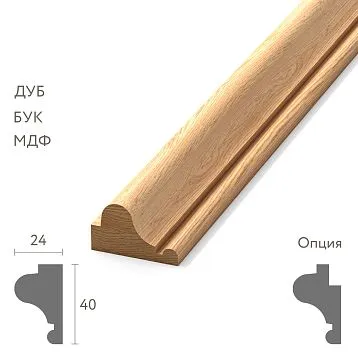
Profiled block — connecting elements milled on side faces: grooves, tongues, chamfers. Used where precise joining without gaps is needed — in furniture production, in products with high assembly quality requirements.
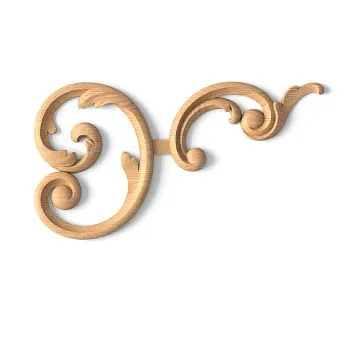
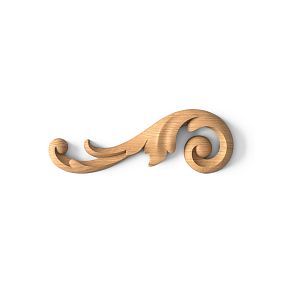
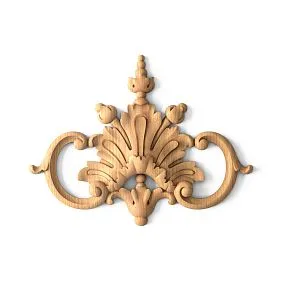
Our factory also produces:




Grades: from 'Extra' to technical
Wooden lumber is classified according to GOST. Highest class — 'Extra': practically without knots, cracks, blue stain, with perfect geometry. Next — grade 'A', 'AB', 'B', 'C', technical. For furniture and visible structures, 'Extra' and 'A' are suitable. For finishing under paint — 'AB'. For rough and hidden structures — 'B' and 'C'. Important to understand: saving on grade in finish work always backfires — knots will show through paint, cracks will open when drying, geometry will shift.
Get Consultation
Wood species for timber: not all wood is equally beneficial
Species selection isn't about aesthetics or snobbery. It's an engineering decision that determines structure lifespan, its behavior in humid environments, ability to hold fasteners and withstand loads. Before choosing a wooden block for a specific task, you need to understand that each species has its own character.
Pine: the workhorse of the construction market
Pine timber is the absolute leader in terms of application volume. There are several reasons for this. Pine is lightweight, which is convenient for installation. It is resinous—natural resins provide a certain degree of biological protection. It can be worked with any tool effortlessly. It holds nails and screws well. It is available in any region of the country. The price is one of the most affordable among coniferous species.
Visually, pine is beautiful: a warm amber hue, expressive annual rings, sometimes resin pockets that add character. Under transparent oil or varnish, planed pine timber looks dignified even in visible structures. The only limitation is softness: pine scratches and dents easily upon impact, so for flooring and furniture under heavy load, it's better to consider harder wood species.
Larch: the aristocrat among conifers
If pine is the workhorse, then larch is the warhorse. Dense, heavy, incredibly resistant to moisture. The natural resinousness of larch is so high that it does not rot in water—and with prolonged contact with moisture, it only becomes harder. It is on larch piles that a significant part of old Venice stands.
Larch timber is the choice for everything that operates in harsh conditions: terraces, open verandas, garden structures, constructions above basement spaces. Over time, under the influence of ultraviolet light and moisture, larch acquires a silvery-gray hue—a patina highly valued in Scandinavian and Japanese design. The price is about 30–50% higher than pine, but this difference is offset by a significantly longer service life.
Oak: a name that requires no advertising
Oak timber is already a premium category in every sense. The density of oak is such that it sinks in water—which eloquently speaks of its strength. High hardness, phenomenal wear resistance, expressive texture. Oak structures in historical European buildings have stood for several hundred years.
In modern interiors, oak timber is used where durability and a prestigious appearance are important: furniture frames, stair elements, decorative beams, countertops. When a solid wood Balusters for staircase from the same solid wood is installed next to an oak timber frame, the space gains a monumentality and integrity that cannot be achieved with any imitations.
Spruce, beech, ash, birch: the other players
Spruce is similar to pine in properties but slightly softer and less resinous. Good for interior work; outdoors without protective coating, it darkens quickly. Beech—uniform fine-grained structure, light pink hue, decent hardness. Indispensable in kitchen furniture production but sensitive to humidity fluctuations. Ash—elastic, viscous, with a fibrous, expressive texture. Bends well without losing strength. Birch—an affordable species with a light tone, takes paint and varnish well, suitable for economy-class furniture and decorative items.
Wooden timber dimensions: standards you need to know
A discussion about dimensions is a discussion about precision. It is the correctly chosen cross-section that determines whether a structure will withstand the load, whether there will be material overuse, and whether the estimate will fit within the planned budget.
Standard dimensional range of wooden timber: 20×20, 25×25, 30×30, 40×40, 40×60, 50×50, 50×70, 50×100, 60×80, 75×100 mm. Length of standard blanks—from 1.5 to 6 meters, with three-meter and six-meter lengths being the most common. An important practical nuance: actual dimensions may slightly differ from nominal ones due to shrinkage during drying and sawing tolerances. For precise calculations, always allow a tolerance of 1–2 mm—this will prevent surprises during installation.
How to match the cross-section to the task? Here's practical logic. For wall battens under clapboard or drywall—20×40, 25×50, or 40×40 mm. For ceiling battens—40×40 or 50×50 mm. For subfloor joists—50×100 or 50×150 mm. For frame partition studs—50×100 or 50×150 mm. For decorative shelves—40×180 or 50×200 mm. For furniture frames—40×40, 50×50, 60×60 mm. For rafter battens under metal roofing—50×50 or 50×100 mm depending on spacing. For slatted partitions—40×40 or 50×50 mm.
This table is not dogma but a guideline. Specific loads and spans always require engineering calculations, especially in load-bearing structures. But for most household and finishing tasks, the given values work reliably.
Timber for construction: where and how it works at each stage
Construction is not a single process but a sequence of stages, each with its own material requirements. And wooden timber appears at each of them—with different cross-sections, different wood species, different degrees of processing.
Frame house construction: timber as a structural element
Frame technologies are experiencing steady growth—and this is no coincidence. Construction speed, good thermal insulation, material availability, and the ability to build a structure by hand without special equipment make frame houses attractive to a wide audience. At the core of any frame house are studs, headers, braces, and plates. All are made from wooden timber with cross-sections of 50×100, 50×150, or 100×100 mm.
In a frame structure, timber works simultaneously in compression and bending, so serious requirements are placed on it: kiln drying, moisture content no higher than 18%, minimal defects in areas of maximum loads, precise dimensions for tight assembly. Mistakes in material selection here are costly—not only financially but also in terms of structural safety.
Battens: three tasks of one material
Battens are a basic concept in construction vocabulary, and behind it lie several applications at once. Roof battens under metal roofing, corrugated sheets, or ondulin—a spaced system of timber with spacing depending on the type of roofing material. Counter-battens—timber along rafters, creating a ventilation gap between waterproofing and roofing material. Without it, condensation year after year destroys both insulation and rafters. Wall battens for drywall or clapboard—horizontal or vertical timber forming a flat plane for attaching finish materials.
When battens are installed accurately and evenly—finish work becomes a pleasure. When crooked—no decor will save it. That is why the quality of timber for battens directly affects how the finished wall with wooden skirting board, moldings, or with wooden cornices will look. A level base—a level result. This is an axiom.
Formwork: temporary but responsible
When pouring concrete structures—strip foundations, monolithic floors, stair steps—formwork holds the concrete mass in the desired shape until it sets. Wooden timber forms a rigid frame to which formwork panels are attached. Requirements for such timber: bending strength under concrete pressure, affordable price (formwork material is often used once), absence of major defects that would reduce load-bearing capacity. Sawn pine timber with a cross-section of 50×100 or 50×150 mm is the optimal choice.
Floor joists: the invisible foundation of comfort
Wooden floors on joists—a solution tested for centuries and still relevant. Joists—horizontal timber laid across the future decking—provide it with a level, rigid, slightly elastic base. Standard cross-section: 50×100 or 50×150 mm, spacing—400–600 mm. For rooms with high humidity or above ground—larch. For living rooms on the first and higher floors—dry pine. A mandatory condition—antiseptic treatment: the hidden structure under the floor is in conditions of limited ventilation for years, and without protection, the wood will begin to degrade.
Facade Structures: DIY Ventilated Facade
Hinged ventilated facades are an increasingly popular solution for building insulation and cladding. The system's foundation consists of vertical and horizontal battens secured to the building wall, forming a framework for the facade material. The key requirement for such battens is resistance to moisture and biological effects. Larch or antiseptic-treated pine are optimal choices. The cross-section is 40×60 or 50×50 mm, with a 20–40 mm gap for ventilation.
Wooden Batten in Interior Design: From Rough Construction to Art Object
Construction is the first life of a batten, hidden within walls and under floors. Its second life—open, decorative, creative—unfolds within interior spaces. And here, this material reveals itself in a completely different way.
Decorative Beams: History on the Ceiling
Ceiling beams made of solid wood are one of the most powerful interior design techniques, effective regardless of style or era. In a country house, they create a sense of coziness and roots. In a loft—industrial brutality. In a Scandinavian interior—light organic feel. In a classic interior—solemnity and weight.
Moreover, beams do not necessarily have to be load-bearing. Decorative 'pseudo-beams' made from battens with a cross-section of 80×80 – 120×150 mm, mounted on the ceiling with anchors or metal brackets, provide the same visual effect at incomparably lower cost and installation effort. An aged or thermally treated batten with patina—and the interior gains a depth that cannot be bought in a ready-made furniture store.
Slatted Partitions: Space with Character
Wooden battens arranged vertically are one of the most elegant and modern ways to zone open-plan layouts. Such aSlatted partitionpartition does not cut the space in half—it establishes a rhythm, hints at a boundary between zones without destroying the airiness. Light filters between the elements. The gaze slides through the vertical lines. The space remains unified but gains structure.
For such partitions, square battens of 40×40 or 50×50 mm are used, installed with a spacing of 8 to 20 cm depending on the desired degree of 'transparency'. Staining in a dark color—expressive and modern. Natural pine without coating—soft and Scandinavian. Oak with oil—prestigious and long-lasting. If you are interested in specific solutions and installation diagrams—a detailed article aboutDIY slatted partitionwill provide comprehensive answers to all technical questions.
Shelves and Racks: Function with Style
A wall-mounted shelf made from a solid batten is a project that ranks first in any DIY rating for the 'simplicity of execution / quality of result' ratio. A planed, dry batten 50×200 mm, 80–120 cm long, on invisible brackets—and you already have a finished interior object. For books, for plants, for ceramics. Complement such a shelfwooden furniture handleswith a bedside table on drawers next to it—and the unity of material creates a sense of thoughtfulness unattainable with assembled furniture from different sources.
A rack made from battens and metal pipes is a story in itself. Industrial aesthetics, ease of assembly, and endless configuration variability have made this structure a symbol of loft interiors. Pipes with a diameter of 25–32 mm, wooden shelves made from 50×200 battens—and a storage system that can be reconfigured endlessly.
Furniture from Battens: Honest Geometry
The rectangular geometry of a batten is ideal for minimalist furniture, where form follows function and does not apologize for its simplicity. A coffee table from a 60×60 batten with metal legs, a dining table from aged battens, a garden bench from solid larch—items where there is nothing superfluous. This very laconicism is today's luxury.
For furniture with a long history, choose oak or ash. For light and modern furniture—birch or stained pine. Woodenfurniture legsfittings made from solid wood, matched to the tone of the batten, complete the look and give the structure visual integrity. For those who want a ready-made solution without self-assembly, stavros.ru offersClassic Furnituremade from solid wood—where the wooden batten is the foundation of the entire structural logic.
Decorative Ornaments and Patterns
Battens of various cross-sections serve as building material for decorative geometric compositions: wall panels, spatial objects, decorative screens.wooden ornamentA composition of neatly cut and stacked battens is an independent artistic technique, popular in Scandinavian minimalism and Japanese design. No special equipment required—only a miter saw, sandpaper, oil, and a bit of patience.
Wooden Batten in Creativity: From Candle Holder to Children's Toy
There is a whole world of applications for wooden battens that construction articles usually remain silent about. This world is creative, domestic, craft-oriented. And it is no less important than industrial construction.
Children's Toys: Return to Origins
Wooden toys are experiencing a true renaissance. Parents, tired of plastic with flashing lights, are returning to natural materials—and discovering that wooden blocks, pyramids, sorters, and construction sets develop a child far more deeply than electronic toys. The foundation of all this diversity is the batten. Birch, linden, or beech, kiln-dried, without large knots, coated with non-toxic oil or wax—this is what the best children's toys are made from.
DIY Household Items and Decor
A small piece of batten, a drill, and a bit of imagination—already a candle holder, a desk organizer, a phone stand, or a key holder. Cut at a 45° angle—you get an original book stand. Drill three holes diagonally—an elegant wine bottle holder. This genre of woodworking does not require complex tools or professional skills—but the result always looks worthy because natural wood is beautiful in itself.
Complement such productspicture framewith a solid wood frame on the wall nearby — and the home workshop becomes a source of truly unique, one-of-a-kind items. Items with personality.
Holiday decor made of wood
Timber of various lengths and cross-sections is excellent material for holiday decor. They are used to make Christmas trees (a triangle of timber pieces of different lengths fastened in a vertical plane), advent calendars with holes for small boxes, candle holders for the holiday table, frames for family photos. Such decor is eco-friendly, will last a long time, and looks much more interesting than mass-produced plastic — because it has the warmth of handcrafted work.
How to choose wooden timber: a step-by-step algorithm
A good question precedes a good purchase. Before choosing material, you need to answer four questions sequentially: for what purpose, from which wood species, of what cross-section, and of what moisture content.
Step one: purpose
This is the main question on which everything else depends. Rough construction work for finishing — sawn pine timber of natural moisture. Lathing for drywall or paneling — planed dry timber 40×40 or 50×50 mm. Fine furniture and interior decor — planed kiln-dried timber, pine or larch, oak or beech. Outdoor structures, open terraces, garden gazebos — timber made of larch or antiseptic-treated pine with moisture content not exceeding 18%. Children's toys and household items — birch or beech, kiln-dried, non-toxic coating.
Step two: wood species
After determining the purpose, the choice of wood species becomes logical. A universal solution for most tasks — pine. Maximum moisture resistance outdoors — larch. Premium strength and aesthetics — oak. Affordable furniture classic — beech or birch.
Step three: moisture content
Moisture content is a parameter that cannot be ignored. Freshly sawn timber contains 40–60% moisture. As wood dries, it shrinks — and does so unevenly: across the grain much more than along it. The result — warping, cracks, changes in geometry. For interior work, the optimum is 10–14%. For exterior and rough work — up to 18–20%. Checked with a moisture meter: two probe needles into the surface — and the device shows the actual moisture content. Without this tool, an experienced craftsman does not accept an expensive batch.
Step four: visual inspection
Blue stain on the ends or surface — fungal infection. Such material cannot be used in damp rooms and in visible structures. Deep through cracks — reduced strength in the fracture zone. Surface cracks are acceptable. Warping and twisting — the material has already deformed during storage; it will be extremely difficult to straighten it during installation. Large knots in load-bearing zones — unacceptable. Loose dark spots with damaged structure — rot, such timber is not suitable for use.
Wooden timber price: what makes up the cost
The price range on the market for wooden timber is wide — and this is natural, because 'timber' is not one product, but an extensive family of items with different characteristics.
The most affordable option — sawn pine timber of natural moisture. Next in price is planed dry pine timber — approximately 1.5–2 times more expensive. Larch timber costs another 30–50% more than pine. Oak timber — premium category, the difference from pine is multiple. Special factory processing — antiseptic treatment, profiling, sanding — adds 15–30% to the price.
The final cost is also influenced by the length of the blank: non-standard long pieces (5–6 m) are more expensive than three-meter ones. Grade also seriously affects the price: the gap between 'Extra' and 'C' can be two- or threefold. When calculating the budget for construction or renovation, it is important to consider not only the cost of the material itself, but also the expenses for antiseptic treatment, fasteners, and delivery. Good material, properly installed, is ultimately cheaper than cheap material that will have to be redone.
Protection of wooden timber: how to extend the material's life
Wood is vulnerable — this is a fact to work with, not fight against. Competent protection neutralizes most risks and allows wooden structures to serve for decades.
Antiseptic treatment: a mandatory step
Antiseptic compounds protect wood from three types of biological threats: rot (fungi), mold, and insect pests (primarily wood-boring beetles). Water-soluble antiseptics — for interior work, no strong odor, do not change the color of the wood. Oil-soluble ones penetrate deeper, suitable for exterior application. Oil-based compounds — maximum protection for the harshest conditions. Must be applied before installation, treating all surfaces and especially the ends — through them, wood absorbs moisture first.
Fire protection: a requirement of standards and common sense
Fire retardants slow down combustion — this does not make wood non-combustible, but significantly increases the time until critical structural failure. For roofing and attic structures, fire-retardant treatment is normatively mandatory. For other wooden elements of residential premises — recommended. Some modern compounds combine antiseptic and fire retardant — one treatment solves two tasks at once.
Finishing coatings: beauty and protection in one bottle
Wood oil — natural or synthetic — penetrates the fiber structure, reveals the grain, preserves the tactile warmth of wood. Does not form a film, so the wood 'breathes' and remains alive. Requires periodic renewal — every 1–3 years. Varnish creates a protective film on the surface. Glossy, matte, satin — there are a huge number of options. More durable than oil, but if damaged, requires more complex repair. Stains and tints change the color of the wood while preserving the grain. Used before applying varnish or oil.
When timber becomes the base for an overlayfurniture decoror a frame formoldings, the quality of the finishing coating determines how the entire composition will look as a whole. Evenly painted, properly varnished timber is the foundation for high-class decor.
Installation of Wooden Beams: A Technology That Does Not Forgive Carelessness
Proper material loses half its merits when installed incorrectly. Several rules that experienced craftsmen strictly adhere to.
Acclimatization: A Mandatory Step That Is Often Skipped
Beams brought from outdoors or a warehouse cannot be immediately installed in a heated room. The wood must acclimate to the temperature and humidity of the installation site. For dry beams — at least 48 hours. For material with high moisture content — up to a week. Neglecting this rule leads to the installed structure beginning to deform within the first weeks: beams dry out, gaps form, and cladding warps.
Fasteners: Nail, Screw, or Anchor — What and When
Wood screws — a universal solution for joining wooden elements together. They provide reliable fixation and allow disassembly if necessary. The screw diameter should be at least 1/10 of the beam thickness. Nails — faster and cheaper, but non-removable. Optimal for rough structures. Anchor bolts — for fastening to concrete and brick bases. Indispensable for installing joists and wall battens. Metal brackets and perforated plates — reinforce nodal connections and distribute load. Essential in post-and-beam structures.
Expansion Gaps: Wood Always Moves
When air humidity changes, wood expands or contracts — significantly across the grain, minimally along it. This is physics, and there's no arguing with it. When installing any wooden decking, cladding, or floors, always leave expansion gaps: 3–5 mm between elements, 10–15 mm from walls. Lack of gaps is a direct path to floor buckling and cladding deformation at the first seasonal humidity change.
Wooden Beams and Interior Decor System: Think Holistically
A professional approach to woodwork is not about solving individual tasks, but about creating a system. Beams as a structural base, decorative moldings as finishing elements — two levels of the same logic.
A level batten frame made of beams ensures thatFloor wooden skirtingwill lay without gaps or trimming. A precise frame determines howceiling wooden skirtingwill fit. The beam structure of a partition dictates how organicallyWooden moldingsorWooden casings.
When all wooden decor — from beams in the wall to finishing moldings — is chosen from the same material and uniform quality, the interior ceases to be a collection of random details. It becomes a cohesive story about wood, nature, and thoughtful taste. This exact approach is implemented in the full catalog ofof solid woodon stavros.ru: from structural elements to the finest decor — all in one system, all made from real wood.
When next to a wooden beam frame appearwooden balusters for staircasecarvedwooden lace of architravesabove windows and neatWooden trimaround the perimeter of rooms — the space gains depth and character unattainable by any imitation.
The Ecology of Wood: Why It Matters Now More Than Ever
Wood is the only building material that literally grows from air. During its life, a tree absorbs carbon dioxide and stores it in its structure. When wood is made into beams and used in construction, this carbon is 'preserved' in the structure for decades. A wooden building is a carbon depot — this is not a metaphor, but a climatically significant fact.
The production of wooden beams requires incomparably less energy than the production of steel, concrete, or aluminum. With responsible forestry and mandatory reforestation, forests are a renewable resource. At the end of their service life, wooden structures decompose naturally — without the centuries-long toxic legacy left by plastic.
By choosing wooden beams, you are making not only a practical but also an ethical choice. This choice is for a natural material, for something living, for authenticity. And that matters too.
Where to Buy Wooden Beams: How Not to Make a Mistake with the Supplier
The lumber market is vast and heterogeneous. Alongside conscientious suppliers, there are sellers who pass off wet material as dry, third-grade as first-grade, softwood as valuable species. Several practical guidelines will help you avoid pitfalls.
Check moisture content — this is the first and most important step. Ask the seller to show a moisture meter reading: a professional supplier will do this without objection. Look closely at the ends: a fresh cut differs visually and tactilely from a long-dried one. Request documents: a declaration of conformity is a sign of a serious supplier. Compare not only price: cheap, wet beams ultimately cost more due to deformations, rework, and additional material costs. Work with specialized sellers: companies focused on wooden products and finishing materials generally understand the product better and are responsible for its quality.
Onstavros.ruyou will find a wide range of solid wood products — here, wooden beams are part of a complete system: from structural base to final decor, fromwooden trimto solid wood architectural elements andpolyurethane products.
FAQ: answers to the most frequently asked questions
What is the difference between a block and a beam?
A beam (brusok) is lumber with both sides of the cross-section not exceeding 100 mm. A timber (brus) is a more massive material, with at least one side exceeding 100 mm. Beams are lighter, more compact, cheaper, and used in a wider range of tasks.
Which beam is best for drywall stud framing?
Planed dry pine 40×40 or 50×50 mm, moisture content not exceeding 14%, free from visible deformations and large knots. Wet or warped material will create an uneven surface, and installing drywall will become a torment.
Is it mandatory to treat the timber with an antiseptic?
In living spaces with normal humidity for concealed structures — advisable, but not mandatory. In bathrooms, toilets, kitchens, basements, and external structures — mandatory without exceptions.
How long does naturally moist timber take to dry?
Approximately 1 mm of thickness per day when stored under a canopy with normal ventilation. A 50×50 mm timber will reach equilibrium moisture content in 1.5–2 months. Kiln drying reduces this period to 3–7 days depending on the wood species and initial moisture content.
What is the difference between planed timber and sawn timber?
Sawn — straight from the saw: surface is rough, geometry is approximate, fibers have fuzz. Planed — processed on a planer: surfaces are smooth and even, geometry is precise. For visible structures and furniture — only planed.
How to properly store wooden timber?
Outdoors — stacked on supports at least 15 cm off the ground, with gaps between rows, under a canopy to protect from precipitation, but without tight polyethylene covering. Indoors — in a dry place without sharp temperature fluctuations, preferably where installation will take place.
Which timber to choose for a terrace?
Larch — the optimal choice in terms of price and durability for open external structures. If larch is unavailable — pine, necessarily treated with an antiseptic for exterior work, with moisture content not exceeding 18%.
Can you paint a wooden batten?
Yes, and it is necessary — especially for exterior applications. Facade paints or impregnating compounds for outdoors. Acrylic paints or varnish for interiors. Before painting, the surface is sanded with 80–120 grit, dusted, and primed if necessary.
How to calculate the amount of batten for lathing?
Divide the surface area by the batten spacing (0.4–0.6 m), multiply by the row length — you get linear meters. Add 10–15% for waste and cutting. For example: a 3×5 m wall with 50 cm spacing — about 32–35 linear meters of 40×40 timber.
What does 'kiln drying' mean and why is it needed?
Kiln drying — forced removal of moisture from wood in special drying chambers under controlled temperature and air humidity. Allows achieving in a few days the moisture content that would require months with natural drying. The result — stable geometry, minimal risk of deformation during use. For critical work, this is not an option, but a requirement.