Article Contents:
- What is a wooden door with a pattern
- Where carved wooden doors are appropriate
- Office and Library
- Living room and hall
- Bedroom
- Country house and cottage
- Restaurant, hotel, club
- How a door with a pattern differs from a regular smooth door
- What patterns are on wooden doors
- Floral ornament
- Geometric pattern
- Russian style and folk carving
- Classic frame composition
- Central Medallion
- Openwork Through Carving
- How to Choose a Pattern for Your Interior Style
- Classic and neoclassic
- Country house in Russian style
- Modern classicism
- Office and Library
- Scandinavian and minimalist style
- Material and Coating of Patterned Wooden Doors
- Solid wood
- MDF with Decorative Milling
- Veneer
- Coating: what to choose
- How to Combine a Carved Door with Trim and Handles
- Baseboards
- Handles
- Moldings and baseboards
- Carved Door for a Study: Status and Aesthetics
- Carved Door for a Country House: Organic and Character
- Entrance and Interior Doors in a Country House
- Mistakes When Choosing Patterned Wooden Doors
- Carved door in the interior system: how to build an ensemble
- Technical aspects: dimensions, construction, installation
- Standard door leaf sizes
- Door leaf construction
- Installation and mounting
- Caring for wooden doors with ornament
- Where to buy wooden doors with pattern
- FAQ: Answers to Popular Questions
- About the manufacturer
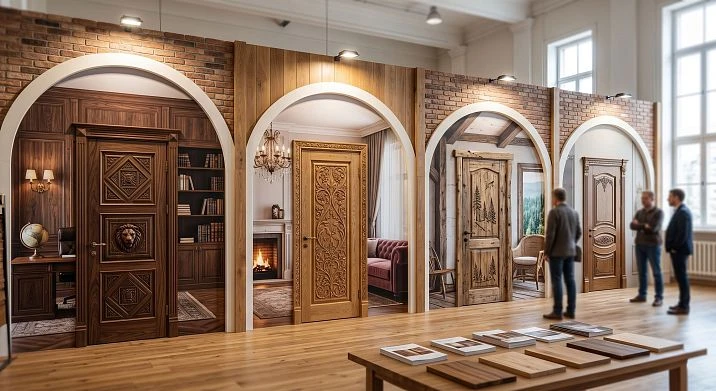
A door is not just an opening closed by a wooden leaf. It is the first thing a person sees when entering a room. It is the boundary between spaces, and at the same time — a statement about the interior, about the owner's taste, about how consciously and holistically the entire design is built. Wooden doors with pattern speak about this louder than anything else. They not only divide the space — they decorate it, shape the atmosphere, and set the tone for everything behind them.
But choosing wooden doors with pattern is not an easy task. It is important to understand here: which ornament is appropriate in a specific interior, how the door combines with furniture, architraves, baseboards, and handles, which material will ensure durability, and which coating will create the desired character. This article answers all these questions — consistently, specifically, without fluff.

What is a wooden door with a pattern
The concept of a "patterned door" is broader than it seems. It's not just an MDF routing made to reduce production costs. A true carved wooden door is a product where the decorative ornament is part of the door's architecture: it is built into the structure, interacts with light and shadow, creating depth and visual expressiveness.
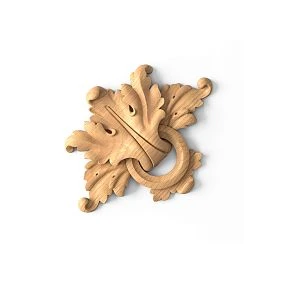
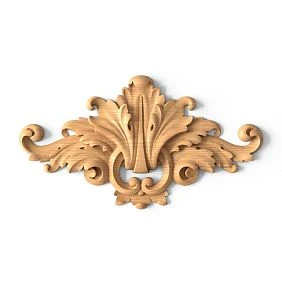
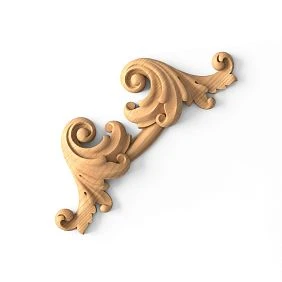
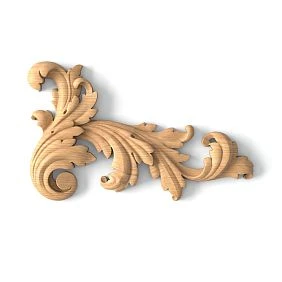
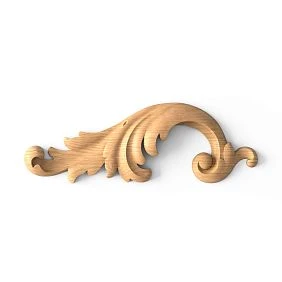
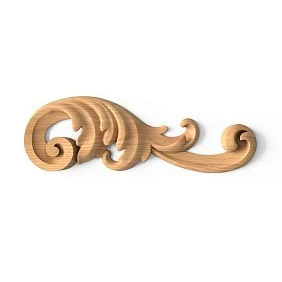
The pattern on a wooden door can be of several types. Relief carving — when the ornament protrudes above the surface or is recessed into it. Through openwork carving — when the design penetrates the door leaf completely, creating a light effect. Decorative inset panels — when individual sections of the door are adorned with ornamental elements inserted into the frame. Finally, a combined option: a frame with profile moldings and an ornamental central panel.
A patterned door is an interior accent. It does not work neutrally like a smooth door leaf. It demands attention — and a well-thought-out environment. That is why its selection must be approached systematically, not based on the principle of "liked the picture in the catalog."




Where carved wooden doors are appropriate
Before discussing how to choose, you need to understand where a carved door is generally appropriate and where it will look out of place. It is not a decoration for all occasions. It has its own environment.
Our factory also produces:
Office and library
A study — a space that conveys status, intellect, and taste. Carved door for a study — this is not a luxury, but a logical continuation of the concept. Dark wood with classic ornament, clear lines, and a solid frame profile creates an image that reads instantly: a serious person works here. In a library space, a carved door with a floral ornament or geometric frame adds depth and historical resonance — especially if the walls are paneled with wood or lined with bookshelves.
Get Consultation
Living room and hall
The living room is the main representative space of the house. The door leading into it is perceived as part of a ceremonial route: from the entrance through the hall — to the most formal place. Here a door with a carved pattern works as an architectural statement. A symmetrical composition, a central medallion, or an ornamental frame around the perimeter — all this enhances the sense of the space's significance.
In the hall, a carved door sets the first impression of the house. This is perhaps the only place where a door with an active pattern is appropriate even with modest square footage — because the hall is perceived as a transitional zone, not a living space.
Bedroom
Here, the carving should be finer and more delicate. An active ornament in the bedroom creates visual tension — an undesirable effect. The optimal option: a frame pattern around the perimeter of the panel, a light openwork insert, or a geometric composition with soft lines. Such a door decorates without weighing down.
Country house and cottage
In a wooden country house, a carved door is a continuation of the building's architectural language. If the house is finished with wood both outside and inside, carving on the doors becomes an organic part of this language. house carving from wood on the facade and carved doors inside — a unified image that speaks of a love for natural materials and respect for tradition.
Restaurant, hotel, club
Commercial interiors with a claim to style are increasingly turning to wooden doors with ornamentation. A carved door in a restaurant with a classic interior or in a boutique hotel is not a stylization, but a genuine decorative accent that guests notice and remember.
How a door with a pattern differs from a regular smooth door
A smooth door is a neutral participant in the interior. It does not draw attention, does not conflict with furniture, and easily fits into any style. This is its strength and at the same time its limitation: it does not create the character of the space, it only serves it.
A door with a pattern works differently. It is an interior actor, not an extra. The ornament on the panel creates a visual rhythm that echoes other decorative elements — wooden moldings, cornices, frames, overlays. The relief of the door plays with light: in the morning — one picture, in the evening under a directed lamp — a completely different one.
But that is precisely why a door with a pattern requires a well-thought-out environment. If next to it there are simple plastic architraves, cheap baseboards, and furniture without character, the ornament will sound like a dissonance. A beautiful door in an unsuitable environment looks ridiculous. Therefore, choosing a carved door is always a conversation about a system: doors, architraves, baseboards, handles, furniture.
What patterns are there on wooden doors
Before talking about stylistic compatibility, let's break down the typology of ornaments — because it is the type of pattern that determines in which interior the door will work.
Floral ornament
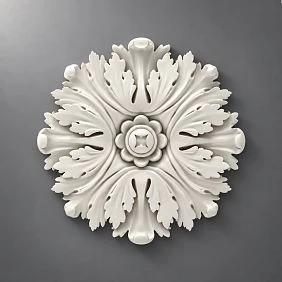
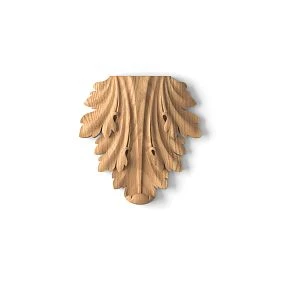
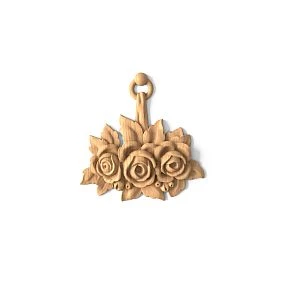
Acanthus leaves, grapevines, floral rosettes, shoots — classics of European decor, rooted in antiquity. The floral ornament is soft, organic, not geometrically rigid. It works well in classic, baroque, and neoclassical interiors. Carved wooden decoration with floral motifs — one of the most sought-after requests in classic design.
Geometric pattern
Rhombuses, coffers, square and rectangular frames, hexagons — strict, symmetrical, mathematically precise. Geometric patterns are universal: they work equally well in classic, modern interiors, and art deco style. Coffered doors with square or rectangular sections are especially good.
Russian style and folk carving
Khokhloma motifs, wickerwork, solar signs, birds and animals in ornament, rowan branches — this is a door with a national character. It is appropriate in homes conceptually oriented towards Russian tradition: country estates, houses in the terem style, Russian cuisine restaurants, hunting lodges.
Classic frame composition
A frame around the perimeter of the panel with a profile molding and a central decorative insert is the archetype of a classic door. Simple, elegant, universal. It works everywhere where there is even a hint of classic or neoclassical style.
Central medallion
An ornamental accent in the center of the panel: a rosette, coat of arms, monogram, complex floral motif. Such an element makes the door truly grand. It is appropriate in the hall, in the executive office, in formal rooms.
Openwork through carving
Found in decorative inserts and transoms above the door. It lets light through, creating a lace effect. Especially good in interiors with live lighting — candles, fireplace, directional lamps.
How to choose a pattern for the interior style
This is a central practical question. Because the same door with an ornament in one interior will be a masterpiece, and in another — a mistake.
Classicism and neoclassicism
Here, a plant ornament with high relief, a frame composition with profile moldings, and a central medallion are appropriate. Dark wood tones (walnut, wenge, dark oak) or light cream enamel with gilding. The door should echo wooden moldings on the walls and ceiling.
Country house in Russian style
Folk motifs, wickerwork, berry and flower shoots, Khokhloma style. Light wood under natural varnish or honey-colored tinting. Such a door harmoniously combines with house carving on the facade and trim.
Modern classic
Geometric ornament, coffered panels, strict symmetry, a minimum of plant motifs. Coating — matte varnish, dark tinting, or white enamel. The door is laconic in ornament but expressive in form.
Our factory also produces:
Office and library
Dense ornament with deep relief, dark coating, massive frame. The door should look solid and weighty — not elegant, not light, but precisely weighty. There is no place for airy openwork motifs here.
Scandinavian and minimalist style
Formally, a carved door contradicts minimalism. But if a wooden accent is needed — choose a very light geometric frame around the perimeter, as restrained as possible, without ornament. Light wood species, matte varnish — and the door will become an interesting detail without breaking the concept.
Material and coating of wooden doors with a pattern
The material determines everything: both the appearance, durability, finishing possibilities, and sound insulation. Let's consider the options without illusions.
Solid wood
The most honest and durable material. Solid wood door with decorative pattern — is a product that lasts for decades. Solid wood holds its shape, is well-suited for carving, and accepts any finish. Main species: oak (hard, expressive texture, durable), beech (dense, uniform, takes paint well), pine (light, warm tone, for country houses), ash (light, strong, with expressive grain).
Solid wood is more expensive. But it is a justified investment, especially for formal areas: hall, study, living room.
MDF with decorative milling
A more affordable option. MDF is easy to mill, holds its shape, and does not warp with humidity changes. Suitable for living spaces with normal microclimate. Takes enamel and film coating well. Not suitable for wet areas or rooms with extreme temperature fluctuations.
Veneer
Base made of MDF or HDF, veneered with natural wood veneer. Combines affordability with natural surface texture. The ornament on such a door is milled on the veneered surface. Visually close to solid wood, but requires more careful handling.
Coating: what to choose
Natural lacquer — preserves the texture and color of the wood. Ideal for solid wood with beautiful grain. Matte, semi-matte, or glossy — depending on the desired effect.
Stain and tinting — change the color of the wood while preserving the texture. Dark walnut, wenge, rosewood, light ash, bleached oak — a wide range of options.
Enamel — an opaque coating. White, cream, anthracite, gray enamel on a door with a relief ornament creates a stucco effect. Very popular in neoclassical interiors.
Patina — an aging effect: a dark base with lightened relief highlights. The ornament literally "emerges" from the darkened surface. Ideal for classic, baroque, and hunting styles.
Paint-ready coating — the door is supplied unfinished and is painted on-site in the desired color. Allows for an exact match to the facade, walls, or furniture tone.
How to combine a carved door with architraves and handles
This is the block that separates an amateur choice from a professional one. A carved door is not a standalone item; it is part of a system. If the system is not well-structured, even the most beautiful door will look absurd.
Door Casings
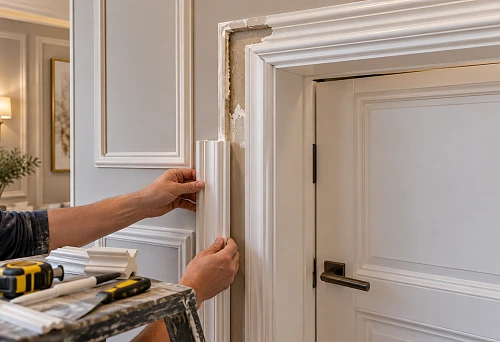
An architrave is the framing of a doorway. In a classic interior, it is an architrave molding: a profiled frame that architecturally completes the doorway. The architrave should be of the same style and preferably the same coating as the door leaf.
Wooden architraves and frames made of wood — the right choice for a carved door. A plastic or MDF architrave next to a solid oak door with ornamentation is an obvious stylistic failure. Wood to wood — the main rule.
The style of the architrave should support but not repeat the door's ornament. If the door has a floral ornament, the architrave can have a profile molding and a small decorative element in the keystone. There is no need to duplicate the panel's ornament — a unified stylistic language is sufficient.
Handles
Wooden door handles — a logical choice for a wooden door with ornamentation. But here it is important to understand: the handle must match the scale of the door. A thin, elegant handle on a heavy oak door with deep relief looks disproportionate. A massive door requires a massive handle.
An alternative is metal handles in a classic style: brass, bronze, aged metal. They pair well with dark wood and patinated finishes. Chrome and matte nickel — for more modern options.
Key rule: the handle and the escutcheon must be from the same collection and in the same finish. Mixing hardware from different series is one of the most common and noticeable mistakes.
Moldings and baseboards
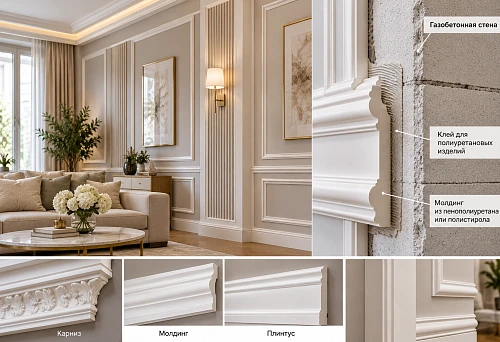
If the interior has Wooden moldings — on walls, ceiling, as panels — they should create a visual dialogue with the door. One tone, one profile style, a unified logic of application. A molding on the wall of the same color as the door is a cohesive interior. A molding of a different tone is a break.
The baseboard is also part of the system. A high-profile wooden baseboard under a solid wood door is correct. A plastic baseboard 5 cm high is incorrect.
Carved door for a study: status and aesthetics
A study is a space of special purpose. Here decisions are made, negotiations are conducted, impressions are created. The door to the study is the first thing a visitor sees, and it already says a lot about the owner.
Carved wooden doors for a study are chosen considering several factors. First is the height of the panel. The standard height of 2000–2100 mm is insufficient for a study with high ceilings. Doors 2400–2700 mm high add pomp and scale. Second is the width. A wide door (from 900 mm and wider) for a study is not a luxury, but part of the architectural concept.
The ornament for a study door is strict, symmetrical, with deep relief. A floral ornament is appropriate but must be structured: not chaotic shoots, but a built symmetrical composition with a clear center. The material is solid oak or ash. The finish is dark tinting, matte varnish, patina.
Double doors to the study are a solution that automatically adds status. The symmetry of two panels with a mirror ornament creates a solemn visual effect.
Carved door for a country house: organic and character
A country house is a space where a person rests from the city, recovers, and lives at a different pace. The materials here should be authentic: stone, wood, metal, clay. Synthetics in a country house are always perceived as a compromise.
A carved door for a country house is an organic part of the overall concept. If the house is made of timber or logs, the door should speak the same language. Light folk carving, woven ornament, solar symbols, simple plant motifs — this is not stylization, but genuine decor rooted in the centuries-old tradition of wooden architecture.
house carving from wood — platbands, gable boards, shutters, ridge poles, fascia boards — combined with carved doors, creates a unified image. This is not the "country style" from a furniture store, but real wooden architecture.
For a country house, the practical aspect is also important: wood in conditions of temperature and humidity fluctuations requires proper treatment. High-quality varnish or oil with wax protects the wood and preserves the ornament in its original form.
Entrance and interior doors in a country house
An entrance door with carving is the calling card of the house. Everyone approaching the porch sees it. Here, a large ornament with high relief, readable from several meters away, is appropriate.
Interior doors inside a country house are slightly more delicate. The ornament here is finer, the scale is proportionate to the room. For a spacious living room in a country house — medium relief with a plant or geometric motif. For a bedroom — light frame carving.
Mistakes when choosing wooden doors with a pattern
An expensive purchase made with a mistake is a double disappointment. Let's look at typical miscalculations.
Ornament that is too active for a small room. A heavy door with dense relief in a small space creates visual overload. A small room — light ornament, geometric frame, minimal relief.
Do not ignore the style of furniture. A carved door in a classic style next to high-tech furniture is a visual conflict. The door and furniture should speak the same language, even if with different intonation.
Plastic architraves next to an oak door. This is the most common and most noticeable mistake. A synthetic architrave next to natural wood is always a dissonance that catches the eye.
Mixing different ornaments. If in one hallway there are doors with floral ornaments, geometric carvings, and folk motifs, it's not eclecticism, it's chaos. All doors in a room should belong to the same collection or at least the same ornamental register.
Not thinking through the color of the finish. A dark door in a dark corridor without sufficient lighting 'falls through' — the ornament becomes unreadable. A light door against a dark background, on the contrary, looks torn out. The door color must be coordinated with the color of the walls, floor, and lighting.
Forgetting about the handle. A beautiful door with a cheap handle is like an expensive suit with plastic buttons. The handle must match the class and style of the door.
Choosing a door separately from the floor and baseboard. A dark door on a light floor without a proper transition in the form of a baseboard and threshold looks unfinished. Everything in the doorway area must be coordinated.
Not considering the height of the opening. A standard door 2000 mm high in a room with a ceiling of 3500 mm looks squat and gets lost. For high ceilings — tall doors or a transom above the door leaf.
Not thinking about lighting. A carved door fully reveals itself only with proper lighting. Directional light from the side or below creates deep shadows in the ornament — that's exactly what is needed. Diffuse overhead light makes the relief 'flat'. Consider accent lighting near the door — it's a small investment with a big visual result.
A carved door in the interior system: how to build an ensemble
A carved door never lives alone. It is part of the interior system. Building this system correctly means getting a space that is perceived as a cohesive work, not a collection of random objects.
Door + wall moldings. Wooden moldings On the walls, the same tone as the door creates a dialogue that "pulls together" the interior. The molding establishes the rhythm of the walls, and the door is its culmination.
Door + wooden floor. The same wood species or close tones is the right choice. A complete match of door and floor color visually "removes" the door — it dissolves. A slight contrast — the door darker than the floor or vice versa — keeps it in focus.
Door + furniture with wooden details. If the interior has wooden furniture — a chest of drawers, a table, a chair with wooden legs, shelves — it should echo the door in tone. Not necessarily an exact match, but a clear connection.
Door + carved decor. Carved wooden decoration On walls, shelves, as applied elements — this extends the "decorative field" of the door throughout the interior. When the ornamental motif of the door echoes the ornament on a shelf or cornice, the interior gains musicality, with a theme and its variations.
Technical aspects: dimensions, construction, installation
Standard door leaf sizes
-
Width: 600, 700, 800, 900, 1000 mm
-
Height: 2000, 2100, 2200, 2400 mm
-
Non-standard sizes — made to order
For formal areas and offices, a width of 900 mm and a height of 2200 mm are recommended. This creates proper proportions and adds significance to the opening.
Door leaf construction
Panel construction: several layers of wood glued crosswise. Stable, does not warp. A good base for doors with milled ornamentation.
Frame-and-panel construction: a solid wood frame with inserted panels (smooth or ornamental). A classic type for carved doors — allows the use of individual ornamental panels as panels.
Solid wood: monolithic or composed of several lamellas. The most expensive and durable option. Requires proper drying and treatment.
Installation and Mounting
A carved solid wood door is a heavy product. Its installation requires high-quality hinges with a load capacity of at least 80–100 kg per pair. Three hinges are standard for heavy doors. Check the frame's levelness before installation: an uneven frame means a sagging door in a year.
Care for wooden doors with ornamentation
A beautiful door requires minimal but regular care.
Daily: wipe the surface with a soft dry cloth. Pay special attention to the recesses of the ornament where dust accumulates.
Once a month: light damp wiping with instant drying. Use a soft cloth moistened with water and a small amount of neutral soap.
Once a year: renew the protective coating where it has worn off. For doors with oil or wax coating, this is a mandatory procedure.
Never: do not use abrasive products, solvents, or hard brushes. Avoid prolonged contact with moisture — especially in the threshold area.
A properly treated and maintained wooden door with ornament retains its original appearance for decades. This is not a consumable item — it is a long-term investment in quality of life.
Where to buy wooden doors with pattern
When choosing where to buy a wooden door with a pattern, it is important to focus on a manufacturer with real experience working with wood — not a reseller, but someone who actually makes it. Because a door is not a purchase you can "look at and return." It is a decision for decades.
In the STAVROS catalog wooden doors with pattern both ready-made solutions with developed ornaments and the possibility of manufacturing according to an individual project are presented. Here it is important that the company works comprehensively: together with the door, you can choose Wooden handles, Moldings, Carved Wall Decor и house carving for platbands — everything in a single style, from a single material, with a single coating. This is the systematic approach that distinguishes a professional solution from a random purchase.
If you are looking for Wooden products for interior in a wide range — from doors to furniture handles, from moldings to church decor — all collected in a single catalog. There is no need to go to different places and then assemble an ensemble from parts of different origins.
FAQ: Answers to popular questions
How to choose a wooden door with a pattern?
Determine the interior style, choose the type of ornament that matches it, coordinate the finish with the tone of furniture and walls, select trims and handles in the same style. Do not choose a door in isolation from its surroundings — only as part of a system.
Where are carved wooden doors appropriate?
In studies, living rooms, halls, libraries, bedrooms with classic interiors, country houses, restaurants, hotels, and any spaces where a pronounced decorative accent is needed.
How is a door with a pattern different from a regular door?
A smooth door is neutral — it does not create character. A door with an ornament is an interior accent that requires a thoughtful environment. Carving interacts with light, creating depth and visual expressiveness.
Which patterns are suitable for a classic interior?
Floral ornament, frame composition with molding, central medallion, geometric coffers. Dark finish or white enamel with patina.
Is a carved door suitable for a study?
Yes, it is one of the best options. A carved door in a study conveys the owner's status, taste, and seriousness. Choose dark wood, symmetrical ornament, and a tall door leaf.
How to combine a carved door with architraves?
A wooden architrave of the same tone and style. No plastic next to oak. The architrave profile should support but not repeat the door's ornament.
Which handles are suitable for a wooden door with a pattern?
Wooden handles of the same tone or metal in a classic finish: brass, bronze, aged metal. The handle should match the scale and weight of the door.
Can a door with carved decor be painted?
Yes. Doors without coating are specially produced for self-painting. Scheme: primer → enamel or tinting → finishing varnish. This allows you to hit the exact desired color.
Won't a door with a pattern overload the interior?
It depends on the scale of the ornament and the size of the room. In a large room — no, any saturation of the ornament is appropriate. In a small one — choose light frame carving without an overloaded relief.
Where to buy wooden doors with a pattern?
The STAVROS catalog features carved wooden doors with different types of ornaments. Go to: wooden doors with pattern.
About the manufacturer
STAVROS is a Russian manufacturer of solid wood products for interior and architectural decor. The company specializes in carved wooden doors, moldings, house carving, furniture handles and a wide range wooden carved decoration. All products are made from stabilized dry wood with quality control at every stage. If you are looking for a wooden door with a pattern for an office, living room, hall or country house — in the catalog STAVROS you will find a solution that matches your style, scale and task.