Article Contents:
- What Are Decorative Mouldings for Furniture
- How Mouldings Differ from Other Types of Furniture Decor
- What Furniture Mouldings Are Made Of
- What Furniture Is Suitable for Furniture Mouldings
- Decorative Mouldings for Cabinet Fronts
- Mouldings for Dressers and Nightstands
- Mouldings for Kitchen Fronts
- Mouldings for Doors and Furniture Panels
- Moldings for classic and neoclassical furniture
- Which decorative moldings to choose: wood, shape, profile, relief
- Wooden moldings: why it matters
- Smooth and carved profiles
- Narrow and wide moldings
- Combining molding and overlays
- How moldings differ from applied furniture decoration
- When you specifically need molding
- When overlays are better
- When you need a set: molding + overlays + handles
- Where to use decorative molding on furniture fronts
- Rectangular frame around the perimeter
- Highlighting the central part of the door
- Drawer decoration
- Symmetry on classic furniture
- Visually enhancing the front without replacing furniture
- What to buy together with furniture moldings
- Overlays for moldings
- Carved decor for moldings
- Furniture handles
- Furniture Legs and Supports
- Elements for classic furniture
- How to choose furniture moldings to match the interior style
- Classic
- Neoclassicism
- Baroque and Palace Decor
- Calm classic without overload
- Mistakes when choosing decorative moldings for furniture
- Too large profile
- Mixing different ornaments
- Conflict between molding and handles
- Weak proportion on small fronts
- Drift into wall decor instead of furniture decor
- Where to buy decorative moldings for furniture
- Why it's important to choose from a single catalog
- What to look for when choosing
- Why a single catalog is more convenient
- FAQ: answers to popular questions about furniture moldings
- What's better for a cabinet facade: molding or applied decor?
- How does furniture molding differ from wall molding?
- Can wooden molding be used on an MDF facade?
- Which moldings are suitable for classic furniture?
- What to buy together with molding for a furniture facade?
- How many meters of molding are needed for one facade?
- How to glue moldings at 45°?
- Can moldings be painted together with the facade?
- How to choose the width of the molding for the facade?
- How does carved furniture decor differ from smooth?
- What are constructor overlays?
- Can moldings be ordered with pre-applied coating?
- Are wooden moldings suitable for kitchen facades considering humidity and steam?
- Are there moldings for the 'Provence' or 'Scandinavian classic' style?
- How to care for wooden moldings after installation?
- About the Company STAVROS

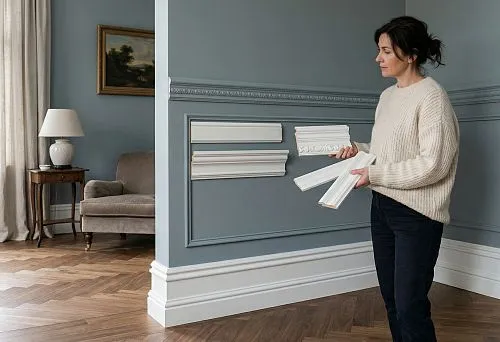
When you want to give a cabinet aristocratic elegance, fill a chest of drawers with the spirit of classicism, or make kitchen facades more luxurious without a complete redesign — preciselydecorative moldings for furnituresolve this task quickly, accurately, and with a lasting result. These are not just profiled strips of wood. This is an architectural language, transferred from the facades of palaces and ceremonial halls — onto the surface of your furniture. PreciselyMoldings for furnituretransform ordinary cabinets into items with character, history, and a stylistic statement.
Wooden furniture decor has existed in master catalogs since the times of the Italian Renaissance, and today it remains relevant — whether it's a new kitchen in a neoclassical spirit, the restoration of an antique chest of drawers, or an upgrade of a standard sliding wardrobe. In this guide, you will find everything you need: how to choose molding for a specific facade, how it differs from applied decor, what to buy as a set, and where to get it all in one place.





What are decorative moldings for furniture
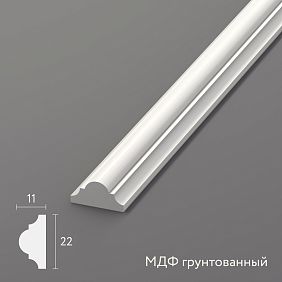
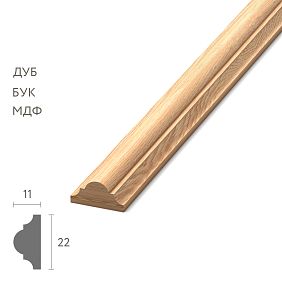
Before talking about selection, it's important to understand the terminology. The word 'molding' comes from the Latin 'modulus' — measure, sample. In furniture making,furniture moldingis a profiled decorative strip with a specific cross-section, which is attached to the surface of the facade, forming frames, belts, trims, or visual zones.




How molding differs from other types of furniture decor
In the world of wooden decor, there are several fundamentally different types of products, and confusing them means making a mistake in selection:
-
Furniture molding — a long profiled strip, cut to size, glued at a right or 45° angle, forms a frame contour on the plane of the facade.
-
applied decoration for furniture— separate applied elements: rosettes, cartouches, corner and central ornaments, which are mounted in an area already framed by molding or independently.
-
Carved furniture decor— intricate carvings of complex shapes with floral, botanical, and baroque patterns, often hand-carved or CNC-machined.
-
Wooden ornamental overlays — flat or three-dimensional panels that create complete decorative compositions on wide facades.
Understanding the difference between these categories is key to competent furniture decor design. Molding creates structure and geometry. Overlays and carved elements fill it with content and artistic emphasis.
Our factory also produces:


What are furniture moldings made of
The bestWooden moldingsare made from solid beech and oak. Both materials have a uniform, dense structure, hold their profile excellently during milling, do not warp, and readily accept paint and varnish finishes. Oak provides a more pronounced texture and a noble dark tone. Beech is neutral, light, and ideal for painting in any color.
In addition to solid wood, the market also offers MDF and polyurethane moldings—but for classic and neoclassical furniture, professionals always choose natural wood: it holds its shape better when painted, does not yellow over the years, and does not deform with changes in humidity.
Get Consultation
What furniture are furniture moldings suitable for
The scope of application is wider than many think.to buy, which will allow you to transform your furniture using carved wooden elements. You can use the C-003-3 decor set to decorate furniture, walls, doors, or any other surface. The C-003-3 decor set is made of oak or beech, known for their strength, durability, and beauty. You can buy the C-003-3 decor set at the Stavros decor store, which specializes in producing and selling decorative elements and hardware for furniture and interiors. At the Stavros decor store, you will find a wide selection of decor sets of various shapes, sizes, and styles. You can choosefits organically into a wide variety of furniture scenarios — from a single wardrobe in a hallway to a complete living room set.
Decorative moldings for cabinet fronts
The cabinet is the most obvious application. A simple flat door transforms into a genuinely classic piece when a molding frame is applied. A rectangular outline around the perimeter of the door creates the effect of a paneled front—exactly how high-end case furniture in English classic, French Empire, and Italian neoclassical styles looks.
For wardrobes with wide fronts, dividing the surface into several zones with molding is relevant: a horizontal crossbar in the middle plus a vertical band create a division comparable to an architectural facade. This is not just decoration—it's a visual scale that 'reads' when looking at the furniture.
Moldings for dressers and cabinets
A dresser is an item with several 'speaking' surfaces: the front wall and the drawer fronts. Herefurniture moldingsthey work in two ways: as a single frame around each drawer—and as a common band around the perimeter of the body. This solution turns even an inexpensive MDF dresser into an item reminiscent of antique furniture.
Cabinets—bedside, TV, corner—benefit from using narrow moldings with shallow relief: they don't overload a small surface but create the desired 'price' visual signal.
Moldings for kitchen fronts
The kitchen is undoubtedly the leader in the volume of furniture molding application. In classic and neoclassical style kitchen sets, framed fronts are the standard. Here, the molding performs three functions at once: it decorates a flat MDF or plywood front, imitates an inserted panel, and creates a unified visual rhythm across the entire kitchen front.
For upper cabinets and display cases, narrower, lighter profiles are often used—they don't visually weigh down. For lower cabinets and floor-standing cabinets, wider and deeper relief moldings are suitable: they handle the visual load that falls on the lower zone of the kitchen.
Moldings for doors and furniture panels
Doors of built-in wardrobes, sliding door wardrobes, wardrobes with hinged doors, bookcases, display cabinets — all these items perfectly accept frame molding around the perimeter of the door leaf. Often, such decoration is applied not singly, but in pairs: the outer frame is slightly wider and stricter in profile, the inner one is narrower and with a finer relief.
Furniture panels — the side walls of cabinets, chests, partitions — are also decorated with molding. This is especially relevant for corner elements of a furniture ensemble that are visible from the side.
Moldings for classic and neoclassical furniture
Classic Furnitureis built on a system. Proportions, symmetry, rhythm — these are the three pillars on which its beauty rests.Wooden moldingin this system is a load-bearing element of decor. It does not exist separately from overlays, handles, and legs: all the decor works in an ensemble, creating a unified stylistic message.
You can read more about the principles, proportions, and rules for selecting elements of classic furniture in the detailedguide to classic furniture— there you will also find a rich visual database for inspiration.
Which decorative moldings to choose: wood, shape, profile, relief
Choosing molding isn't just about 'looking nice.' It's about precisely matching the style, the scale of the facade, and the technical compatibility with the main material of the furniture.
Wooden moldings: why it matters
Wooden moldings— is a material that 'works' together with the surface. It is painted the same color as the facade, takes on a patina, is sanded, and varnished. Wood provides a living texture even under several layers of paint — polyurethane, for all its cheapness, never creates such an effect.
When choosing a wood species, consider the final finish: if tinting or glazing is planned — choose oak with its pronounced structure. For white or cream enamel, beech with its even, fine-pored surface is ideal.
Smooth and carved profiles
-
Smooth molding — clean geometric forms without ornamental relief. Suitable for neoclassicism, modern classicism, restrained Empire style. Strict, yet elegant.
-
Carved molding — a profile with relief in the form of egg-and-dart, beads, leaves, laurel bands. This is high classicism: Baroque, Louis XVI, Italian carved furniture.
The cross-section profile is also important: straight (rectangular), with a roundover, with a quarter-round, with a striking projection — each creates its own play of light and shadow. The deeper the profile, the richer the shadows and the more 'expensive' the surface looks under side lighting.
Narrow and wide moldings
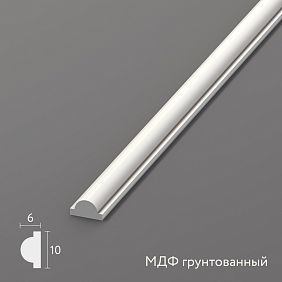
Narrow moldings (10–20 mm) are ideal for delicate framing of small drawers, cabinets, bedside tables. They do not overload the surface, adding a light touch of classicism.
Wide moldings (30–60 mm and more) are a tool for large facades: sliding wardrobes, kitchen base cabinets, wardrobes. They create a substantial framing effect and focus on scale.
Combination of molding and overlays
A professional technique is to use molding as a structural frame, and insert into the corners or centerdecorative elements for furniture: corner overlays, rosettes, ornamental cartouches. This is exactly how truly classical facades in the palace style are constructed. Stavros specifically produces constructor overlays with joining elements that perfectly join with profiled moldings from the same range — this guarantees geometric and stylistic compatibility.
How moldings differ from applied furniture decor
This question is asked most often — and rightly so. The difference is fundamental, and the final result depends on it.
When molding is specifically needed
furniture molding is indispensable where it is necessary to create a geometric frame structure on a plane. It is glued around the perimeter, forming a contour — it is the contour that is the central element of a classical frame facade. Without molding, the facade looks flat. With molding — structured, detailed, classical.
When an overlay is better
applied decoration for furniture is an accent element: it draws the eye to a specific point on the facade. A rosette in the center of a door, corner acanthus leaves, a cartouche on a dresser drawer — all these are overlays. They can work independently — and then it is minimalist decor with one focal point. Or work together with molding — and then it is a full-fledged classical ensemble.
When you need a set: molding + overlays + handles
For a serious classical or baroque facade, ideally you need a set: the molding defines the geometry,to buy, which will allow you to transform your furniture using carved wooden elements. You can use the C-003-3 decor set to decorate furniture, walls, doors, or any other surface. The C-003-3 decor set is made of oak or beech, known for their strength, durability, and beauty. You can buy the C-003-3 decor set at the Stavros decor store, which specializes in producing and selling decorative elements and hardware for furniture and interiors. At the Stavros decor store, you will find a wide selection of decor sets of various shapes, sizes, and styles. You can choosein the form of overlays decorates the corners and center, andFurniture Handlescomplete the look. In such an ensemble, each element enhances the other. Disparate purchases from different styles are the main mistake that destroys integrity.
Where to use decorative molding on a furniture facade
Skillful placement of molding is a separate art that follows several clear rules.
Rectangular frame around the perimeter
The most common and versatile technique. The molding is glued around the perimeter of the facade with an equal indentation from the edge — 30–50 mm. This creates a classic frame that visually structures the surface and adds depth. The corners are joined at 45° — this is a mandatory condition for a clean result.
Highlighting the central part of the door
On wide facades, a double frame is often made: an outer molding around the perimeter and an inner one of a smaller size — to highlight the central zone. An ornamental overlay or rosette is inserted into the center. This is a baroque technique that has long become classic.
Drawer Design
Each drawer of the chest is framed with its own molding. It's important to maintain a uniform indentation from the edge on all drawers—only then does rhythm and strictness emerge. The horizontal division of the chest's surface transforms it into an item with a distinct stylistic statement.
Symmetry in Classic Furniture
Symmetry is the law of classic style. Two moldings, two overlay elements, two handles—everything is built along the axis of mirror reflection. Asymmetry is permissible only in author-designed furniture, but not in classic furniture. Violating this principle is immediately 'read' as a mistake.
Visually Enhancing the Facade Without Replacing Furniture
One of the most in-demand scenarios is when the furniture is good, sturdy, but visually 'cheap.' Applying furniture moldings to the facades of a mass-produced wardrobe, adding corner overlays, and replacing the handles—this takes one to two days and costs incomparably less than new furniture. And the result often looks better than an item from the next price category. Detailed techniques and methods of furniture decoration are described in the article on the art of furniture decoration—there you'll find specific transformation methods and inspiring examples.
What to Buy Along with Furniture Moldings
This is one of the most practical sections of the guide. Because molding never works alone—it is part of an ensemble.
Overlays for moldings
to buy, which will allow you to transform your furniture using carved wooden elements. You can use the C-003-3 decor set to decorate furniture, walls, doors, or any other surface. The C-003-3 decor set is made of oak or beech, known for their strength, durability, and beauty. You can buy the C-003-3 decor set at the Stavros decor store, which specializes in producing and selling decorative elements and hardware for furniture and interiors. At the Stavros decor store, you will find a wide selection of decor sets of various shapes, sizes, and styles. You can choose—in the form of overlays—are the first thing purchased along with molding. Corner overlays cover the joint area at frame corners, central ones create an accent on wide facades. Stavros offers constructor overlays with a profile cutout for the molding, ensuring a perfectly smooth, gapless connection.
Carved decor for moldings
If the goal is a Baroque or palace-style facade—moldings alone are not enough.Carved furniture decor—with acanthus leaves, rocaille, floral garlands, cartouches adds scale and luxury. The Stavros catalog features the author's collection "Summer Garden" with exquisite botanical motifs in a Baroque interpretation—it perfectly complements the profiled moldings from the main assortment.
Furniture handles
Furniture Handles—is the final touch that makes or breaks the look. If the moldings are wooden and the profile is classic—the handle should be either wooden in the same spirit or metal in a historical style.wooden furniture handles—made of beech or oak without coating—is a universal solution: they can be painted exactly to match the facade color or left natural for an accent.
Furniture legs and supports
Furniture Supports—is just as much a full-fledged participant in the style ensemble as molding and handles. A classic chest of drawers on turned carved legs looks completely different than the same chest on straight square block legs.furniture legs—made of natural wood without coating allows you to independently select the final color for the project.
Elements for classic-style furniture
For those building an interior in the spirit of classicism, neoclassicism, or baroque — the Stavros catalog has a sectionclassic furniturewith ready-made products and ensembles. This allows you to see how everythingdecorative elements for furnitureworks when assembled.
How to choose furniture moldings to match the interior style
Style is not decoration. It is a system that requires adherence to rules. A molding chosen not in accordance with the style creates dissonance even with flawless installation.
Classic
For true classicism — a straight or slightly curved profile with clear relief, without excessive opulence. Frames are strict, symmetrical. Material — oak or beech with white or natural finish. Corner overlays — modest, with a geometric or delicate floral motif.
Neoclassicism
Neoclassicism allows for greater freedom. Here, the molding can be thinner and more modern in proportion, but it must retain the classical framing logic. Color — often white, ivory, light gray. Overlays — minimalist, with one or two decorative details.
Baroque and palace decor
Baroque requires volume, opulence, and ornamental complexity. Wide molding with carved relief, corner cartouches, central overlays with garlands and rocaille, patination and gilding — all these are components of a truly Baroque facade. This is high-level craftsmanship that requires precise selection of each element.
Calm classic without overload
If you don't want pomp, a single thin frame of smooth molding without ornament and a delicate handle is enough. This solution works in any interior: from a modern apartment to a country house. Minimum decor, maximum style—a principle that never goes out of fashion.
Mistakes when choosing decorative moldings for furniture
Professionals know: in furniture decor, mistakes show up immediately and after installation, they cannot be fixed without dismantling. Here are the most common ones.
Too large a profile
The most common mistake is to take molding with a deep, wide profile for a small front. On a small door of a cabinet or bedside table, massive molding looks cartoonish. The proportion rule: the width of the molding should not exceed 8–10% of the width of the front.
Mixing different ornaments
Using molding with beads plus overlays with acanthus plus handles with meander—this is a disaster for style. All elements of one front should belong to the same ornamental school. Mixing is only possible consciously and with an understanding of stylistic systems.
Conflict between molding and handles
Wooden molding with baroque relief plus a metal Scandinavian handle—a typical style conflict. The handle should 'speak' the same language as the molding. Either both elements are classic, or both are modern.
Weak proportion on small fronts
The opposite extreme is to take too thin a narrow molding for a large front. It will look anemic and random. On an 800×600 mm front, the molding should be no narrower than 20–25 mm.
Diverting to wall decor instead of furniture
It is important not to confuse furniture moldings with wall moldings. Baseboard moldings, cornice profiles, ceiling covings—all these are intended for large-scale horizontal surfaces. On a furniture front, their proportions will look out of place. Always choose molding specifically designed for furniture.
Where to buy decorative moldings for furniture
Why it is important to choose from a single catalog
Assembling furniture decor from different sources is a risky endeavor. Wood tones, profiles, sizes, ornament styles—all must match. If the molding is bought in one place, overlays in another, and handles in a third, achieving a cohesive ensemble is extremely difficult. That is why purchasingfurniture decorfrom one catalog is not just a convenience, it is a guarantee of results.
What to look for when choosing
Consider ceiling height, room size, interior style, and functionality.furniture moldingPay attention to:
-
Material: solid oak or beech is the best choice for a serious project.
-
Profile width and height: they should be proportional to the facade size.
-
Relief style: smooth — for neoclassical and minimalist classic; carved — for baroque and high classic.
-
Compatibility with overlays: ensure overlays and moldings are from the same collection.
-
Stock availability: fast delivery is critical if a construction or renovation project is underway.
Why one catalog is more convenient
When moldings, overlays, handles, and legs are from one catalog — you know the wood species is the same, the finish is compatible, and the stylistic logic is maintained. No need to make samples and check at the joint. Everything is guaranteed to work together.
FAQ: answers to popular questions about furniture moldings
What is better for a cabinet facade: molding or overlay decor?
For creating a frame effect on the facade — molding is indispensable: it forms a geometric structure around the perimeter.applied decoration for furnitureenhances the result by adding ornamental accents in the corners and center. The perfect option is to use both types together.
What is the difference between furniture molding and wall molding?
furniture moldingIt is designed for small surfaces—its width and profile height are proportionate to the furniture front. Wall moldings (cornices, baseboards) have different proportions and purposes. Confusing them when decorating furniture is a common mistake that ruins the result.
Can wooden molding be used on an MDF front?
Yes, and this is one of the most popular methods of application. The MDF front provides a smooth, clean base.Wooden moldingIt is glued with PVA or special wood glue, and then everything is covered with a single coat of paint. When executed correctly, the boundary between MDF and wood under the paint is completely invisible.
Which moldings are suitable for classic furniture?
Forclassic furnitureThe best choice is molding with a pronounced profile: quarter-round, cove, or ogee. Ornamental relief (beads, egg-and-dart, straps) adds authenticity. Strict symmetry and precise geometry of frames are essential.
What should be purchased together with molding for a furniture front?
The optimal kit:furniture moldings + decorative overlaysfor corners and center +Furniture Handlesin a unified style. If decorating the cabinet — addfurniture legsin the same style.
How many meters of molding are needed for one cabinet front?
For one standard 600×700 mm door, one frame is needed: 2×0.6 + 2×0.7 = 2.6 linear meters with a small allowance for miter cuts. The actual purchase is 3 meters per door. For a kitchen with 10 fronts — about 30 meters with allowance.
How to glue moldings at a 45° angle?
The ends of the molding are cut at a 45° angle using a miter box or miter saw. Two adjacent strips form a clean corner without a visible gap. Be sure to check the squareness of the front corner — deviations will create a gap in the joint.
Can moldings be painted together with the cabinet front?
Yes, this is standard practice. The moldings are glued, the seams are filled with putty, sanded — and then the entire front is painted in a single color. This is exactly how the effect of a monolithic framed front, indistinguishable from a factory-made one, is achieved.
How to choose the width of the molding for the cabinet front?
Guidelines: 400 mm front - molding 15–20 mm; 600 mm front - 20–30 mm; 800 mm and wider front - 30–50 mm. The frame should occupy no more than 15–20% of the front width on each side.
WhatCarved furniture decorHow does it differ from smooth?
Carved decor refers to products with three-dimensional relief: floral motifs, ornaments, cartouches, historical styles. Smooth decors are flat or have minimal geometric relief. The former suits Baroque, the latter suits Neoclassicism and modern classicism.
What are constructor overlays?
These are modular decorative elements with joining grooves, designed for assembly into rows and chains. They connect to each other and align with profiled molding without visible seams—an ideal solution for long horizontal bands on kitchen fronts.
Can moldings be ordered with pre-applied coating?
Yes. Stavros offers products both without coating (for self-finishing) and in painted versions—white, black, brown, clear varnish. This saves time on final finishing.
Are they suitablewooden moldings for kitchen frontsconsidering humidity and steam?
With proper finishing—yes. Molding made from solid oak or beech, coated with high-quality varnish or enamel, is resistant to typical kitchen conditions. Important: do not leave ends untreated, ensure good kitchen ventilation.
Are there moldings for the 'Provence' or 'Scandinavian classic' style?
For Provence, moldings with a light profile without complex relief, painted white or pastel with light aging are suitable. For Scandinavian classic - a minimalist smooth profile in white. In both cases, choose narrow or medium-width products.
How to care for wooden moldings after installation?
Standard care: wiping with a damp cloth, regular renewal of the varnish layer every few years with intensive use. Abrasive agents and aggressive solvents are not used. For chips - spot restoration with putty and touch-up painting.
About the company STAVROS
Everything written about in this article - moldings, overlays, carved decor, handles, legs - is all collected in one catalog of the company STAVROS. This is a Russian manufacturer and distributor of wooden decor for furniture and interiors, working with natural beech and oak wood and offering over 400 models of overlays, dozens of molding profiles, over 130 types of furniture legs, and a collection of wooden handles.
STAVROS is the choice of professional designers, furniture manufacturers, restorers, and private buyers who understand: details decide everything. Orders are possible from a single piece, popular items are always in stock, delivery is available throughout Russia and CIS countries. Self-pickup is available from warehouses in Moscow and St. Petersburg.
The next time you look at a boring wardrobe and think about how to revive it - remember: a few meters of the right molding, a couple of overlays, and new handles can create furniture that people say 'this is something special.' It is precisely such transformations that STAVROS makes - accessible, beautiful, and durable.