








































































Article Contents:
- What are decorative elements for furniture and why are they needed
- What decorative elements for furniture can be bought in Moscow
- Decorative Overlays: The Foundation of Furniture Decor
- Rosettes and accent decorative elements
- Moldings and decorative cornices
- Capitals, pilasters and columns
- Brackets, legs and additional carved details
- What furniture decorative elements are suitable for
- For cabinets: from simple to full-fledged system
- For dressers: rhythm and discipline
- For nightstands: minimalism in action
- For kitchen fronts: a three-component system
- For doors and interior panels
- For classic furniture and restoration
- How to choose decorative elements for furniture: 7 main criteria
- By furniture style
- By purpose: where the element is installed
- By shape: silhouette and readability
- By degree of decorativeness: from delicate to rich
- By size and proportions: the law of proportionality
- By material: oak, beech, for enamel or for tinting
- Combination with other elements
- Which materials are best for furniture decor
- Why solid wood is better than imitations
- When to choose for enamel
- When to choose for tinting
- How to combine decorative elements with each other
- Principle of a unified collection
- Overlays and rosettes: center and accent
- Moldings and cornices: structure of space
- Capitals, pilasters, and legs: top and bottom
- Three maximum: the rule of quantity
- Common mistakes when choosing decorative elements for furniture
- Choosing without measuring the facade
- Too large decor
- Mixing different ornamental motifs
- Ignoring the furniture style
- Buying without a compositional plan
- Overloading with details
- Where to buy decorative elements for furniture in Moscow
- STAVROS catalog: over 4000 products with filtering
- Pickup and delivery: convenient for Moscow and regions
- Showroom in Moscow: see in person before purchase
- Consultation and assistance in selection
- Who decorative furniture elements are especially suitable for
- For private buyers
- For furniture workshops and manufacturers
- For interior designers
- For restorers
- Checklist: what to check before purchasing decorative elements
- FAQ: Answers to Popular Questions
- What decorative furniture elements are the most popular in Moscow?
- What to choose for facades: overlays, moldings, or rosettes?
- Are decorative elements suitable for restoring old furniture?
- What decorative elements are used for classic furniture?
- Is it possible to select decor for a wardrobe and a chest of drawers in a unified style?
- What is better: laconic furniture decor or carved elements?
- Where to buy decorative elements for furniture in Moscow?
- Can decorative elements be used for kitchen fronts?
- Conclusion
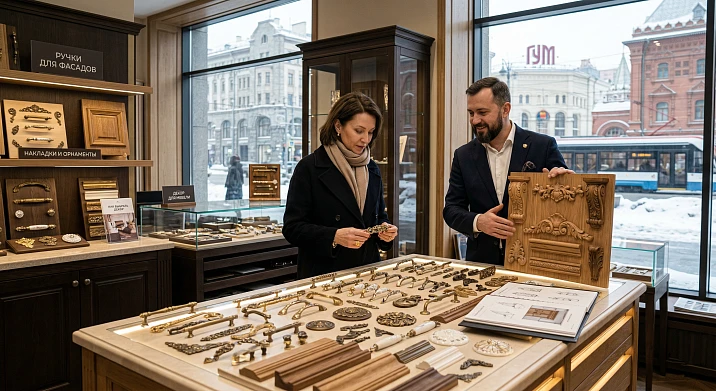
There are things that explain everything without words. You walk into a room — and immediately understand: they thought about the details here. A wardrobe with molding frames on each door. A chest of drawers with identical carved overlays on each drawer. A kitchen set with a decorative cornice along the top perimeter. This is not a coincidence — it's a decision. And behind each such decision lies a correctly selected Wooden Furniture Decor.
Buying decorative elements for furniture in Moscow today is a task that requires understanding. The market is wide, the assortment is large, there are many offers. But the right choice is not 'liked the shape'. It's a system: furniture style, front size, element type, material, compatibility. This is exactly what the entire further conversation is about.
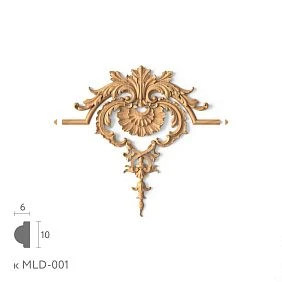
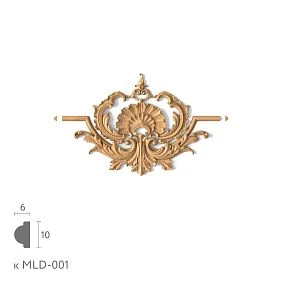
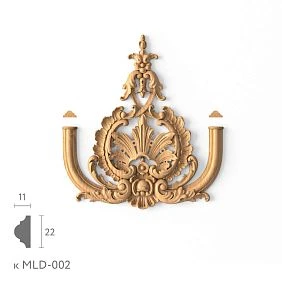
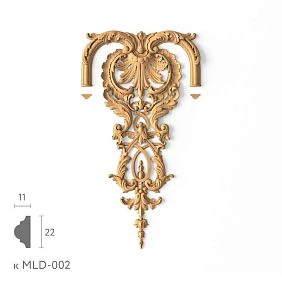
What are decorative elements for furniture and why are they needed
Decorative elements for furniture are an extensive category of products that are attached to the surface of furniture fronts, doors, panels, cases and create the decorative image of an item. They do not carry a structural load — their task is different: to form style, emphasize proportions, create a sense of completeness and handcrafted work.
The role of furniture decor is underestimated. It seems: why add overlays or moldings if the cabinet stands fine without them? The answer is simple: without decor, furniture performs a function. With decor — it becomes part of the interior. The difference between 'a storage space' and 'an item with character.'
Wooden decor for furniture is especially in demand for three reasons:
-
Natural material — solid oak or beech with a living texture that no synthetic analogue can reproduce
-
Durability — wooden elements maintain their shape, relief, and ornament for decades without degradation
-
Unity with the furniture — when the facade and decor are made of the same material, paint and varnish create a uniform tone without visible seams
Wooden decor for furniture in Moscow is sought by interior designers, furniture manufacturers, restorers, private owners with custom interior projects, and simply people who want their cabinet to look different from all their neighbors'.




What decorative elements for furniture can be bought in Moscow
Before talking about choice — you need to understand what generally falls into the category 'decorative elements for furniture.' This is not one type of product, but a whole system where each element solves its own task.
Our factory also produces:
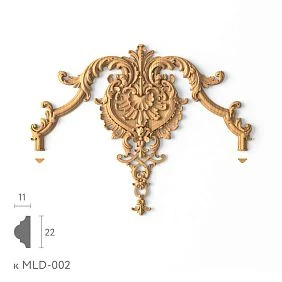
Decorative Overlays: The Foundation of Furniture Decor
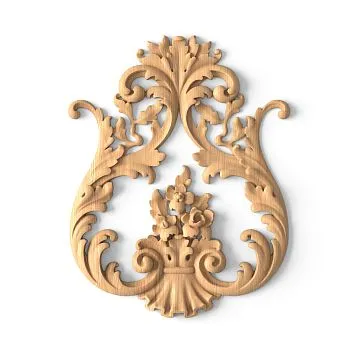
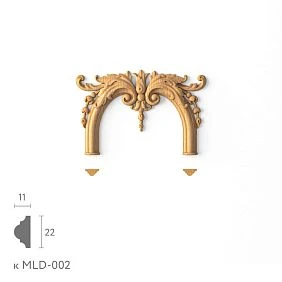
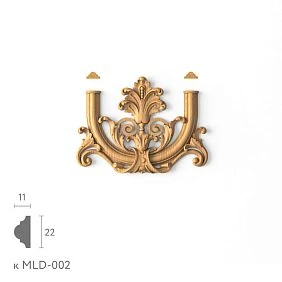
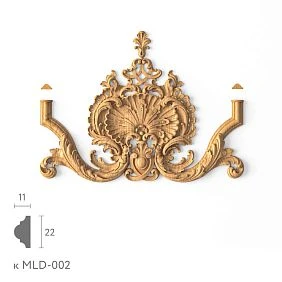
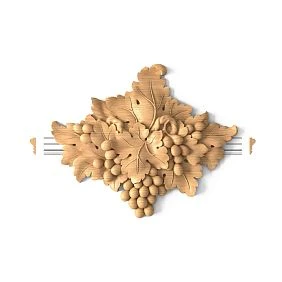
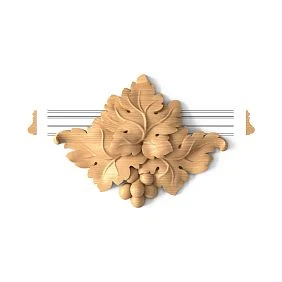
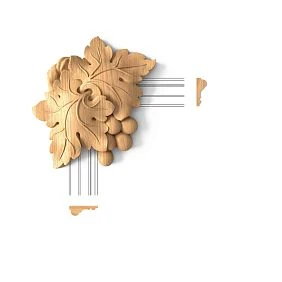
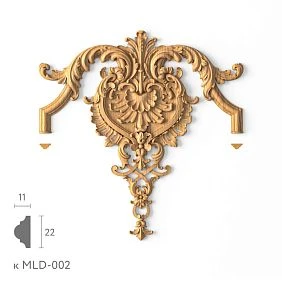
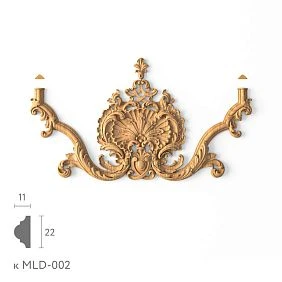
Overlays — the broadest and most in-demand type of decorative elements for furniture facades. These are three-dimensional products with a relief ornament that are attached to the surface of a door, facade sheet, drawer, or side panel.
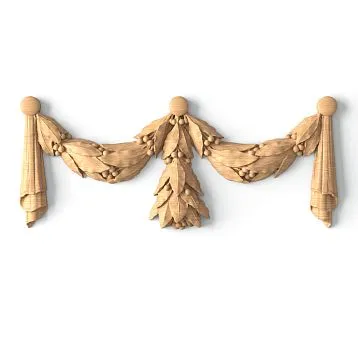
inSTAVROS decorative overlays catalog— over 400 models made of solid oak and beech. Sizes range from miniature 3×3 cm to large ornamental panels 40×25 cm. Relief depth — from 5 to 28 mm. Ornamental motifs: acanthus leaves, floral garlands, rocaille, cartouches, heraldic themes, geometric patterns, designer collections.
Types of overlays by purpose:
-
Central — the main accent in the geometric center of the door panel
-
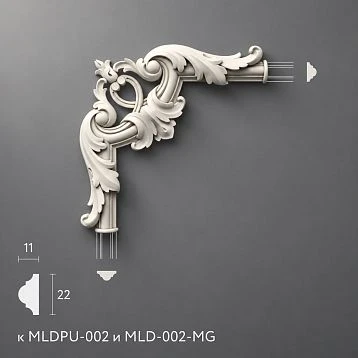
Corner (L-shaped) — for corner positions in molding frame systems
-
Symmetrical pairs — mirrored pairs for symmetrical decoration of wide fronts
-
Horizontal — for dresser drawers and waist-level positions
-
Constructor overlays — with a groove for molding profile, integrate into the frame system without visible seams
Catalog price — from 920 rubles per element to 31,540 rubles for full front decoration sets.
Get Consultation
Rosettes and accent decorative elements
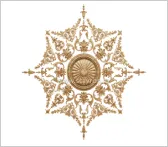
Wooden furniture rosettes— these are round, oval, or square elements with symmetrical ornamentation. Historically, the rosette is one of the oldest decorative motifs, dating back to ancient architecture. In furniture decor, it functions as a focal accent: installed precisely in the center of the front or at key points of the decorative system.
Wooden rosettes range in size from 5 to 25 cm. Small rosettes are suitable for small cabinet and drawer doors. Large ones are for central fronts of cabinets, display cases, and sideboards.
A rosette paired with a molding frame is a classic, time-tested solution. The frame organizes the facade space, the rosette anchors its center. Together they create decorative door architecture.
Moldings and decorative cornices
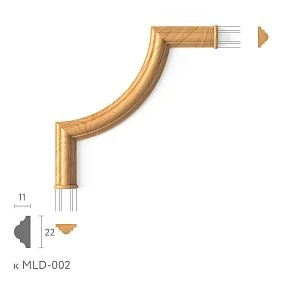
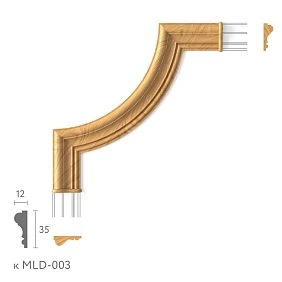
Wooden moldings— linear profiles that create frames, rhythmic bands, and structure on the facade plane. Without molding, a facade is just a rectangular plane. With molding, it becomes a system with a center, perimeter, and proportions.
Types of moldings by application:
-
Frame molding — along the door perimeter, creates a classic panel
-
Horizontal band — divides zones of a tall cabinet
-
Vertical — visually narrows a wide facade
-
Corner — finishes the joint of panels in case furniture
Decorative cornices — top finishing profiles for cabinets, sideboards, kitchen units. A cornice turns a case cabinet into an item with architectural completion. Without a cornice, a tall cabinet 'cuts off' at the ceiling — with a cornice, it finishes properly, like an architectural structure.
Capitals, pilasters, and columns
furniture capitals— decorative finishes for vertical pilasters and columns. These are elements of high classicism: Ionic, Doric, Corinthian forms adapted for furniture production.
Pilasters — vertical decorative flat columns attached to the side surfaces of cabinets, corner areas of case furniture, and frame structures. They visually break up the monolithic plane and create a sense of a colonnade.
Truedecorative columns for furnitureand balusters are used in buffets, open shelving, bar counters, library furniture. This is already architectural furniture decor — for representative interiors.
Brackets, legs, and additional carved details
Decorative bracketsmade of wood — these are supporting and decorative elements for shelves, cornices, and protruding structures. A carved bracket under a shelf is both a support and a decorative accent.
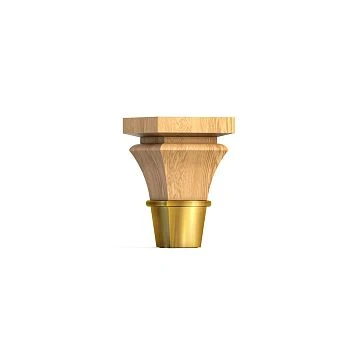
Wooden furniture legs— figured turned or carved supports. A proper leg completes the object's image from below just as a cornice completes it from above. The concave cabriole leg, straight tapered leg, turned leg with carved decor — each type carries a stylistic message.
Carved finials, decorative inserts, ornamental details for drawers — this entire range of additional elements allows building a decorative system for furniture from legs to cornice in a unified style.
For which furniture decorative elements are suitable
For Cabinets: From Simple to a Full System
The cabinet is the largest item in most interiors. Its front occupies a significant part of the wall and creates the first impression of the room. That is why the cabinet is the main object for wooden furniture decor.
Minimal solution: a molding frame around the perimeter of each door. This alone radically changes the look of the cabinet—a standard flat surface turns into a classic paneled front.
Full system: molding frame + central overlay + corner elements at frame intersections + decorative cornice on top. The cabinet gains architectural elaboration: a top finish, rhythm of the fronts, decorative accents. This is already furniture with character.
For tall cabinets up to the ceiling: decorative pilasters that break up the monolithic plane vertically. A horizontal molding belt at 2/3 of the body height, dividing the cabinet into two visual tiers.
For Dressers: Rhythm and Discipline
A dresser is a horizontal stack of drawers. Each drawer is a separate plane. Wooden decor works differently here than on a cabinet: not as architecture, but as rhythm.
The rule for a dresser: the same element on each drawer. The same size. The same ornamental motif. Strictly centered. This creates a vertical rhythm—the eye moves down and finds order. No randomness, no 'variety' for the sake of variety.
Horizontal decorative wooden overlays are especially good for a dresser—they emphasize the horizontal nature of the item and are proportionate to the rectangular planes of the drawers.
For Sideboards: Minimalism in Action
Bedside table, TV stand, hallway console — small items with small fronts. Here the principle 'one precise element is better than two random ones' applies.
A small wooden overlay in the center of the door. Or a delicate molding around the perimeter — without an overlay. Or a small rosette that coordinates with the decor of the adjacent cabinet. A cabinet does not require an abundance of decor — it requires precision.
For kitchen fronts: a three-component system
The kitchen is an area with heightened requirements for finishing. Humidity, grease vapors, temperature fluctuations. Wooden furniture decor is used here, but only with proper preparation: material with furniture moisture content of 8 ± 2%, reliable coating with water-resistant varnish in several layers.
Three-component system for a classic kitchen: molding frames on the fronts + small overlays on key doors + decorative cornice along the upper perimeter of the unit. This scheme completely transforms the appearance of the kitchen — from a neutral set of drawers into a classic unit with a unified decorative logic.
For doors and interior panels
Wooden decor extends beyond furniture. Interior doors with applied frames and central decorative elements, wall panels with a molding cellular structure, decorative niches with carved accents — all of this uses the same range of wooden decorative elements for furniture as the items themselves.
This is important from the standpoint of interior consistency: decor for furniture, doors, and wall panels from one collection creates a unified ornamental language for the space.
For classic furniture and restoration
Restoration is a special scenario that places the highest demands on the material. It is necessary to reproduce a lost overlay, restore a broken ornamental element, replace worn molding. And only wood fully copes with this task.
The STAVROS assortment features historical ornamental motifs characteristic of furniture in classic styles of the 18th–19th centuries: acanthus, rocaille, cartouches, garlands. This allows for selecting an element for the restoration of antique furniture with high accuracy of match.
How to choose decorative elements for furniture: 7 main criteria
By furniture style
Style is the first and main parameter. Decor enhances the style of furniture, not creates it. If styles don't match — neither quality of craftsmanship nor beauty of ornament will help.
Clear correspondence table:
| Furniture style | Recommended elements | Character of decor |
|---|---|---|
| Baroque | Garlands, acanthus, shells, cartouches | Deep relief, lushness |
| Rococo | Rocaille, asymmetry, flowers | Light, airy |
| Empire | Acanthus, geometry, strict symmetry | Clear silhouette, weightiness |
| Neoclassical | Moderate floral and geometric motifs | Restraint, clarity |
| Provence | Simple plant motifs | Soft, flat relief |
| Modern Classic | One delicate element | Minimum decor, maximum precision |
By purpose: where the element is installed
Center of the facade, corner of the frame, horizontal belt, drawer, decorative insert — each position has its optimal type of element. Start by determining the position, then move on to shape and ornament.
If you need a central element — look in the category of central overlays or rosettes. If you need to finish the corner of a molding frame — corner overlays. If you need linear decor — moldings and cornices.
By shape: silhouette and readability
The shape of a decorative element determines its visual 'voice':
-
Vertical forms — on narrow tall facades, they elongate the plane
-
Horizontal — on drawers and waist positions, reinforce horizontality
-
Square and round — universal, neutral central elements
-
Corner L-shaped — strictly for frame systems
-
Asymmetric — for custom, non-standard solutions
By degree of decorativeness: from delicate to rich
Not every interior requires deep carving. Three levels of decorativeness:
-
Minimalist — flat or low-profile molding. For modern classics, neutral solutions, restrained interiors
-
Moderate — classic ornaments with 5–10 mm relief. For neoclassicism, classic furniture of medium richness
-
Accent carved — deep relief of 12–25 mm or more. For Baroque, Empire, rich classics, representative interiors
By size and proportions: the law of proportionality
The central decorative element occupies 20–30% of the facade width. This is a visual law, and violating it is immediately noticeable.
Quick calculation:
-
Facade width 30 cm — overlay or rosette 6–9 cm
-
Facade width 50 cm — overlay 10–14 cm
-
Facade width 70 cm — overlay 14–20 cm
-
Facade width 90 cm and more — large elements or composite systems
Always evaluate the size of the element in the context of the facade — not as a separate item, but as a detail of a specific plane.
By material: oak, beech, for enamel or for tinting
STAVROS wooden decorative elements for furniture are made from kiln-dried solid oak and beech, moisture content 8 ± 2%. Details — on the page"Materials and Product Quality".
Oak — dense, with a pronounced coarse texture. For tinting that preserves the texture, dark saturated interiors, executive offices.
Beech is homogeneous, fine-textured, and takes paint well. Suitable for dense enamel painting, neoclassical, Provence, and white classic styles.
Enamel blank - slats without color or texture matching. Tonal differences are completely hidden under a dense coating. More affordable cost.
Toning blank – slats matched by color and texture. For transparent or semi-transparent finishing that preserves the natural wood grain.
Two levels of surface treatment:
-
«Standard» – machine sanding, optimal for primer and dense painting
-
"Prestige" - machine plus detailed manual sanding of hard-to-reach areas. For premium finishing and transparent varnishing
Regarding combination with other elements
Wooden decorative elements for furniture are not standalone. They work within a system. Overlay + molding frame + corner elements + cornice - that's a complete system. And all parts of this system must belong to the same ornamental 'family': one motif, one relief depth, one style.
Choose all elements from the same STAVROS catalog collection – this guarantees their compatibility without the need for independent coordination.
Which materials are best for furniture decor
The question of material is a question of what you want to use the decor for and how you will finish the furniture.
Why solid wood is better than imitations
Wood as a material for furniture decor has no fundamental alternatives in the classic segment:
-
The only material that reacts identically with the furniture front to paint, varnish, patina
-
The only material that can be restored multiple times — sanded, repainted, repatinated
-
The only material with a living texture that cannot be reproduced artificially
-
The only material that holds the sharp edges of deep carving without deterioration for decades
Polyurethane is cheaper. MDF is easier to produce. But when coated with varnish, different materials on one front always create a visible boundary after a few years — due to different thermal expansion. Wood on wood is a unity that remains unbroken.
When to choose for enamel
The blank 'for enamel' is the correct choice if:
-
The furniture will be fully painted in a solid color (white, gray, colored).
-
Cost accessibility is important.
-
There is no need to preserve the visibility of the wood texture.
-
Several layers of primer are planned before painting.
When to choose for tinting.
The 'for tinting' blank is the right choice if:
-
The furniture is finished with a clear or semi-transparent varnish.
-
The natural wood grain, its warmth and vibrancy are important.
-
The interior is designed in natural wood tones — walnut, oak, American cherry.
Important to remember: for tinting finishes, STAVROS recommends using a tinting compound, not a clear varnish. This ensures an even color across the entire surface, despite natural tonal variations between slats from the same batch.
How to combine decorative elements with each other
This is one of the most practical questions that often remains without a clear answer. How to assemble a system of several wooden decorative elements so that the result looks organic?
Principle of a Single Collection
First and foremost: all elements on one piece of furniture are from the same collection. This eliminates mismatches in ornamental motifs, relief scale, and artistic design.
In the STAVROS catalog, each series is a family of compatible elements: center overlays, corner overlays, rosettes, coordinating moldings. Series C-015 to C-021 are ready-made kits for full-scale facade design.
Overlays and rosettes: center and accent
An overlay and a rosette can be used together only with a clear delineation of roles. The rosette is strictly in the center of the facade. Overlays are placed symmetrically on the sides or in the corner positions of the frame. Mixing roles (two rosettes + a center overlay) creates visual uncertainty.
Optimal scheme: central wooden rosette + four corner overlays at the intersections of the molding. Simple, proven, classic.
Moldings and cornices: structuring space
A molding frame creates the structure of the facade. The cornice finishes the case. Together, they are the architectural framework of the furniture, on which the rest of the decor is placed.
Principle: if there is a cornice, its ornament (or its absence) must be coordinated with the ornament of the overlays. Smooth cornice + carved overlays is a working pair. Carved cornice + carved overlays is a pair that requires careful scale coordination, otherwise, a 'competition' of elements arises.
Capitals, pilasters, and legs: top and bottom
Decorative pilasters with capitals and furniture legs are vertical accents that set the rhythm along the height of an item. Their ornamental language should match that of overlays and moldings.
FigurativeWooden legsEmpire-style legs plus Ionic order capitals plus overlays with acanthus ornamentation—this is a cohesive, stylistically consistent system.
Three maximum: the rule of quantity
Three types of decorative elements on one facade is the optimum for most classic solutions. A molding frame + a central overlay + corner elements. That's enough.
Four or more different types risk 'cluttering' the facade. Exception: monumental furniture with facades 2.5 m or taller, where the surface is comparable to an architectural wall plane.
Common mistakes when choosing decorative elements for furniture
Practice shows: most unsuccessful results are predictable. Here are the most common mistakes.
Choosing without measuring the facade
The most common one. The overlay is chosen 'by eye' — it ends up either tiny on a large door or oppressive on a small one. Measuring is the first step before selecting any decorative elements.
Oversized decor
A large overlay on a small facade — a violation of proportion that is immediately noticeable. Worse yet: a large element on a small door does not create a sense of richness — it creates discomfort.
Mixing different ornamental motifs
Baroque acanthus in the center and a corner geometric element—these are two different languages on one facade. They do not create richness—they create conflict. One ornamental motif across the entire piece.
Ignoring the furniture style
Carved decor with lush garlands on a minimalist cabinet in a modern classic style — a stylistic conflict. Decor can only enhance the existing style, not create a new one.
Purchasing without a compositional plan
One element is bought, a week later—another one, a month later—a molding. In the end—a set of parts from different series without common logic. The correct approach: first design the entire decorative system of the facade, then order everything needed at once.
Overloading with details
Five types of decorative elements on one door is not 'rich decor'. It's visual noise. Three elements is the maximum for a standard facade. One properly chosen element is better than five poorly selected ones.
Where to buy decorative elements for furniture in Moscow
STAVROS catalog: over 4000 products with filtering
Full catalogfurniture decorative elementsincludes:
-
Facade overlays - over 400 models
-
Rosettes for furniture and interior
-
Moldings and decorative profiles
-
Furniture cornices
-
Capitals and pilasters
-
Decorative brackets
-
Figurative furniture legs
-
Columns and balusters
Catalog filtering: by product type, collection, shape, ornament, availability in Moscow. This allows narrowing down the selection to relevant models in just a few clicks.
Pickup and delivery: convenient for Moscow and regions
If the item is available at the Moscow warehouse, pickup is available. Order placement conditions, payment methods, and up-to-date delivery information are on the page"Payment and Delivery".
Delivery is carried out throughout Russia — by transport companies or courier in Moscow.
Showroom in Moscow: see in person before purchase
Wooden decor needs to be seen and touched. A photograph conveys the shape, but not the tactile sensation of the relief, the smell of wood, the liveliness of the texture. This is exactly what the STAVROS Moscow showroom is for.
Address: Volokolamskoye Highway, 3. In the showroom you can:
-
Compare the quality of 'Standard' and 'Prestige' finishes in person
-
Assess the actual scale of the products
-
Match elements to your own furniture samples
-
Get specialist consultation for selection tailored to a specific project
Contacts, working hours, and directions — on the page"Contacts. Moscow".
Consultation and assistance in selection
You can place an order through the online store or by phone 8-800-555-46-75 (call is free). Specialists will help you match elements to a specific piece of furniture, calculate the quantity, determine the optimal type of blank, and the quality of processing.
Who decorative furniture elements are especially suitable for
For private buyers
Want to update an old Soviet wardrobe? Transform a standard kitchen set into a classic one? Give a bedroom chest of drawers character? Wooden furniture decor is the most effective tool for transforming furniture without replacing it.
For furniture workshops and manufacturers
Carved decorative elements for facades— a professional component for furniture manufacturers of any scale. Purchase from a single item, wholesale order capability, stable availability in the assortment.
For interior designers
For design projects requiring coordinated decoration of furniture, doors, and wall panels, the STAVROS assortment allows creating comprehensive decorative systems from a single source — overlays, rosettes, moldings, cornices, columns, brackets in a unified ornamental solution.
For restorers
For the restoration of antique furniture, wooden overlays made of oak and beech are the only material compatible with the original in terms of behavior under finish. The wide selection of historical ornamental motifs in the STAVROS catalog ensures high accuracy of matching when restoring classic furniture.
Checklist: what to check before purchasing decorative elements
-
For which piece of furniture is the decor needed — wardrobe, chest of drawers, kitchen, cabinet?
-
What are the exact dimensions of each facade?
-
What is the furniture style and which ornamental motif corresponds to it?
-
Is one accent element needed or a full system (frame + center + corners)?
-
How will the furniture be finished — enamel or toning?
-
Oak (for toning) or beech (for enamel)?
-
Standard or Prestige in surface finish quality?
-
Has the availability of required items in Moscow been checked?
FAQ: Answers to popular questions
What decorative elements for furniture are the most popular in Moscow?
The most in demand are decorative overlays for facades (central and corner), wooden moldings for creating frame systems, wooden rosettes as accent elements, and decorative cornices for finishing cabinet cases.
What is better to choose for facades: overlays, moldings, or rosettes?
Not 'or', but 'and'. The most effective result is a system of molding frame, central overlay, and corner elements. If one element is needed — for the central position, choose an overlay or rosette depending on the furniture style.
Are decorative elements suitable for restoring old furniture?
Perfectly suitable. Solid oak or beech behaves identically to original wooden parts when sanded, painted, and patinated. For restoration — only natural solid wood.
What decorative elements are used for classic furniture?
For classic style: acanthus overlays, floral rosettes, cornices with profiled ornamentation, carved brackets, figured legs. All from one collection with a coordinated ornamental motif.
Is it possible to select decor for a wardrobe and a chest of drawers in a unified style?
Yes, and that's the correct approach. All elements for the wardrobe and for the chest of drawers are from the same collection. The size of the overlays for the wardrobe will be larger, for the chest of drawers — smaller, but the ornament matches. This creates stylistic unity of the items.
What is better: laconic furniture decor or carved elements?
Depends on the interior and furniture style. Laconic decor is appropriate in modern classic and neutral solutions. Carved elements with deep relief are for rich classic, empire, baroque, representative interiors.
Where to buy decorative elements for furniture in Moscow?
At STAVROS — a manufacturer with its own CNC production. Catalog with over 4000 products, availability in stock in Moscow, pickup, showroom at Volokolamskoye Shosse, 3. Details on the website stavros.ru.
Is it possible to use decorative elements for kitchen fronts?
Yes, provided the material is properly prepared and a reliable water-resistant coating is applied. Solid wood with furniture moisture content of 8 ± 2% plus water-resistant varnish in several layers is the standard approach for wooden decor in the kitchen.
Conclusion
Buy decorative furniture elements in Moscow— means deciding what the space around you will be like. Not 'adding a detail,' but building a system. Proper decor is not an embellishment on top of furniture, but its organic part, conceived from the very beginning. This is how good furniture decor is perceived: as if it has always been there.
STAVROS is a manufacturer of wooden furniture decor with its own CNC production and manual finishing. Over 4000 products made of solid oak and beech:Decorative Inserts, Outlets, Moldings, Crown Molding, Capitals, Brackets, Furniture legs. Two quality levels — Standard and Prestige. Orders from one item. Showroom in Moscow: Volokolamskoye Shosse, 3. Contact us to confirm shipping to your destination. Free phone: 8-800-555-46-75.
STAVROS — wooden decor where every detail works as part of the concept.