








































































Article Contents:
- When you can't do without a decorative headboard
- What headboard options can be made from wood — from simple to complex
- Wooden frame around the bed — the architecture of sleep
- Wooden panel behind the bed — a monolith of texture
- Headboard with moldings — a universal constructor of elegance
- Headboard with carved decor — luxury you can touch
- Combined solution — panel + moldings + decorative overlays + baseboard/top profile
- How to choose a headboard style for your bedroom — to avoid dissonance
- Modern style: smooth panels, simple profile, minimal relief
- Neoclassicism: symmetry, moldings, calm coloring
- Classic: carved elements, wide profile, expressive frame
- Country house: natural wood texture, stain, varnish, oil
- Art Deco: geometry, contrast, clear lines
- Which elements to use — your decorator's palette
- Wooden moldings — skeleton and graphics
- Moldings — the musculature of the composition
- Decorative panels — the skin of your wall
- Wall panels — modularity and seamless finish
- Wooden frames — pure access and aesthetics
- Decorative elements — accents and meaning
- Carved decor — the soul of the interior
- Baseboards and architraves — connecting threads
- Elements for painting — invisibility or accent as you wish
- Mistakes that make a headboard look cheap — a debriefing
- What to buy for headboard design — a checklist for ordering
- FAQ - answers to popular questions
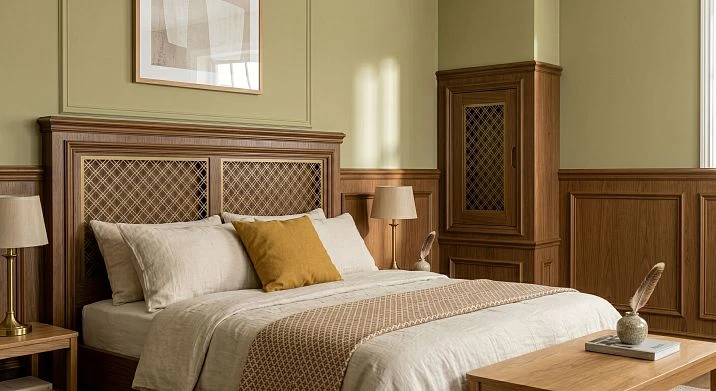
You can make a bedroom visually more expensive without buying a new bed: design the headboard with a wooden frame, moldings, panels, trim, or carved decor. This solution covers the empty wall behind the bed, makes the composition cohesive, and helps connect the bed with furniture, baseboards, doors, and the overall style of the room.
A familiar picture: the renovation is done, the furniture is in place, the bedding is on — but your eye still catches on the empty wall above the headboard. The bed is good, high-quality, but... faceless. Mass-produced. Not "that one." The one from the magazine. The one from the hotel that costs twenty thousand a night. The one where the headboard is not a structural detail but an architectural accent that sets the tone for the entire sleeping area. And you think: "I need to change the bed." Stop. Don't change the bed. Change the context. It is the wall behind the headboard that is the very canvas where the perception of the bedroom as an expensive, cohesive, designer interior is born. And wood here is not just a material. It is the language spoken by true aesthetics.
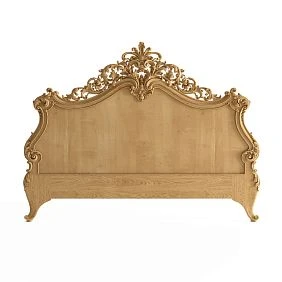
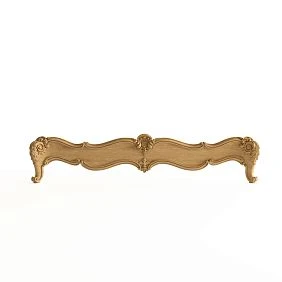
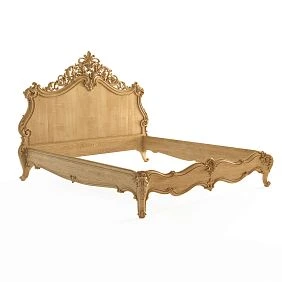
When a decorative headboard is indispensable
There is a clear checklist of situations where designing a headboard ceases to be decor and becomes a necessity. Check yourself:
-
A bed without an expressive headboard — a metal frame, a simple MDF panel, a low-profile upholstered headboard that gets lost against the wall.
-
An empty wall behind the bed — a blank slate, a "hole" in the composition, a visual vacuum that draws attention and prevents the eye from focusing.
-
A simple bedroom after renovation — walls painted, floor laid, but the room looks like an apartment hotel room: functional but soulless.
-
The furniture looks too mass-produced — exactly like the neighbors', like in a catalog, like everyone else's. Individuality is lost from the start.
-
You want a classic or neoclassical accent — symmetry, rhythm, proportions, historical references, readable in an instant.
-
You need to update the interior without replacing the bed — budget is limited, deadlines are tight, the bed is new and high-quality, it's a shame to throw it away.
If you recognized your situation in at least two points — this article is for you. And the solution is closer than it seems.




What headboard options can be made from wood — from simple to complex
Wood gives a freedom that neither fabric, plastic, nor drywall can offer. It is structure, decor, texture, color, and history all in one. Let's break down the main types of solutions — from minimalism to an intimate palace.
Our factory also produces:
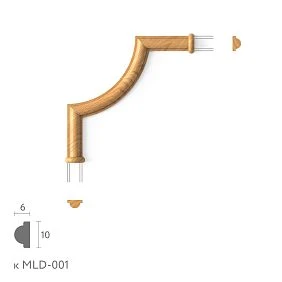
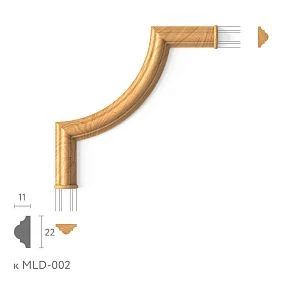
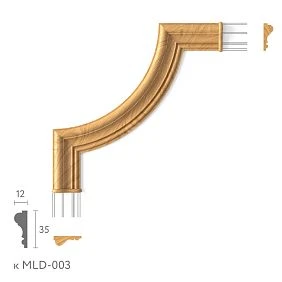
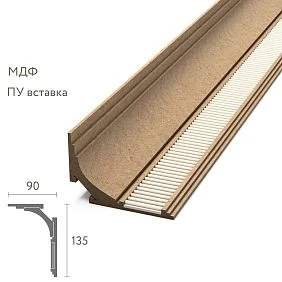
A wooden frame around the bed — the architecture of sleep
Suitable for classic, neoclassical, and calm interiors where restraint and proportion are valued. wooden frame — it's not just a frame. It's a portal. The boundary between sleep and reality, between the private zone and the room's space.
Structurally: two vertical posts on the sides of the bed + a top crossbar. Profile cross-section — from thin molding 30×20 mm to massive baguette 80×50 mm. The frame can be solid or with infill: panel, lattice, fabric, glass, mirror. wooden frames Custom-made allow for any geometry: rectangle, arch, trapezoid, complex profile with capital and base.
Geometry is important: the frame should be 10–30 cm wider than the bed on each side or extend to the nightstands. Height — from 120 cm (low bed) to 180–200 cm (ceilings 3m+). It's better to align the top crossbar with the cornice level or the top line of doors — this way the frame fits into the overall system of room horizontals.
Material: oak, beech, ash, thermowood — for natural texture under oil/varnish. MDF for painting — for a uniform color with the walls. Pine — for budget projects with subsequent tinting.
Get Consultation
A wooden panel behind the bed — a monolith of texture
A good option for a modern bedroom and a country house. Wooden panels create a solid textured plane that works as an accent wall, but without dirt, plaster, or waiting for drying.
Types of headboard panels:
-
Smooth solid wood panels — oak, beech, walnut, cherry. The wood texture is visible up close; from a meter away, it acts as a noble background. Installed with glue or on brass.
-
Slatted panels — vertical slats on a fabric base or rigid base. They provide rhythm, light and shadow, depth.Rafter panelsMDF panels for painting or solid oak — quick installation, perfect geometry.
-
3D-milled panels — geometry, waves, art deco, organic shapes. The play of light on the relief changes the perception of the wall throughout the day.
-
Veneered panels — MDF stability + natural veneer pattern. More budget-friendly than solid wood, visually close.
Installation: the panel is attached to the wall before installing the bed or with a 5–10 mm gap behind the headboard (for ventilation and laying the bedspread). Panel height — 100–150 cm from the floor or up to the ceiling. Width — from the edge of the nightstand to the edge of the nightstand or 20–40 cm wider than the bed.
Headboard with moldings — a universal constructor of elegance
The most versatile option: you can create frames, verticals, symmetry, classic, neoclassical, art deco, modern minimalism. Wooden molding — it's a profile that assembles into a composition like Lego, but with a museum-level result.
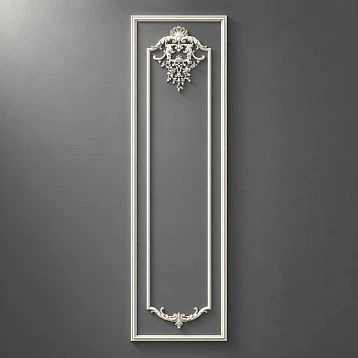
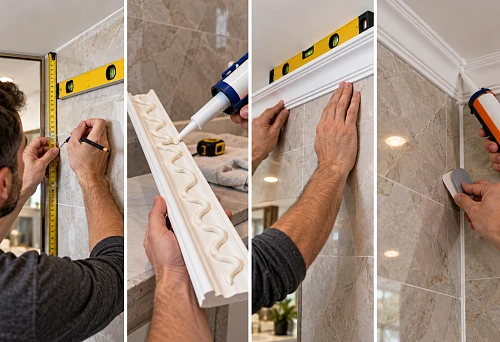
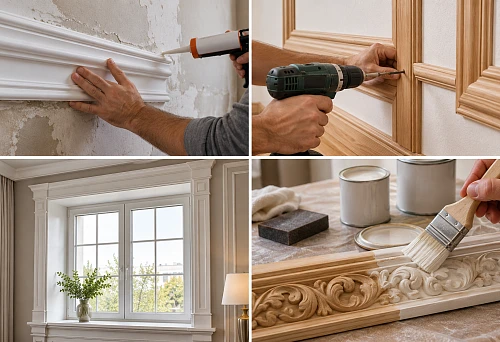
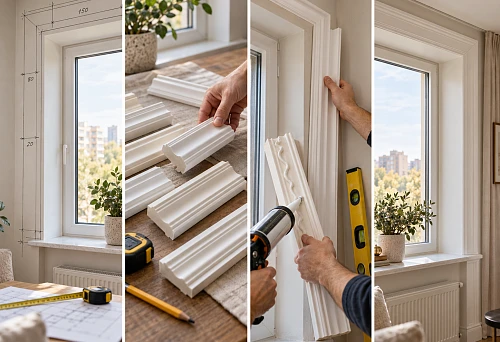
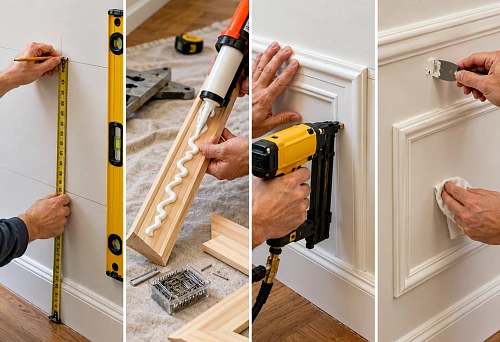
Operating principle: markings for the composition are made on the wall. Moldings are glued/nailed using liquid nails or molding adhesive. Joints are puttied, sanded, and everything is painted in 2–3 coats. The result is a cohesive architectural composition that reads as built into the wall.
Standard compositions for the headboard:
-
Rectangular frame — perimeter 15–20 cm wider than the bed. Inside — painted in the wall color or an accent shade.
-
Two to three nested frames — depth effect, 'window within a window'. Works in classic and neoclassical styles.
-
Vertical pilasters — two moldings on the sides, connected by a top crosspiece. Visually lifts the ceiling.
-
Molding grid — 3×2, 4×2, 5×3 cells. Rhythm, order, graphic quality. For Art Deco and modern classicism.
-
Asymmetrical composition — shifted center, different cell sizes. For modern interiors with character.
Wooden moldings selected based on profile width: 20–40 mm for fine grids, 50–80 mm for basic frames, 100–150 mm for capitals and cornice profiles. Profiles: smooth, fluted, with beads, egg-and-dart, wave, classic 'base-shaft-capital' profile.
Headboard with carved decor — luxury you can touch
For a classic bedroom, Baroque, Art Deco, premium interior. Carved wooden decoration This is not a decoration. It is a statement. It says: "Here lives someone who values craftsmanship, time, matter."
What is included in the arsenal of carved decor for the headboard:
-
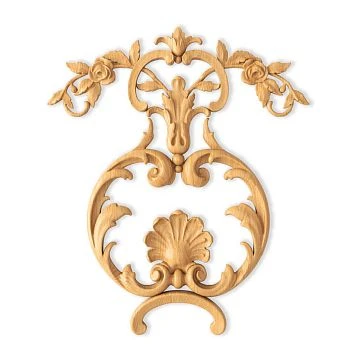
Central symmetrical overlay — a large ornament above the center of the bed. Width 50–70 cm for a bed 160–180 cm. This is the visual completion of the bed, creating a "frame" for the entire sleeping area.
-
Paired overlays on pilasters — on the sides, in the upper part of the verticals. They balance the center.
-
Rosettes in the corners of the frames — the finishing point of the composition.
-
Frieze inserts — horizontal bands of ornament under the top crossbar.
-
Capital and bases on pilasters — if the moldings are assembled into a classical order.
wooden patterns are selected according to style: acanthus and palmette — for Baroque/Rococo/Classical; geometry, steps, sun — for Art Deco; Scandinavian diamonds, herringbone, simple waves — for modern interiors with an ethnic accent. Carving can be handcrafted (unique, expensive, time-consuming) and machine-made (serial, affordable, precise). STAVROS offers both — the catalog of carved decor includes hundreds of items.
Combined solution — panel + moldings + decorative overlays + baseboard/top profile
The pinnacle is when all elements work in an ensemble. Example: wall panel made of oak slatted array across the entire width of the wall behind the bed. Around the perimeter — a frame of wide molding with a capital. In the center of the panel — decorative insert in the form of a rosette. At the bottom — a high baseboard 100–120 mm, extending into side pilasters. At the top — a cornice profile continuing the line of the ceiling cornice. The bed stands against this wall — and becomes part of it. Not furniture against the wall, but an integrated architectural element.
This approach requires a project, measurements, coordination with electrical (sockets, switches, lighting), but yields a result that in premium furniture catalogs costs up to a million rubles. And the cost of materials and installation is 5–10 times lower.
How to choose a headboard style for the bedroom — to avoid dissonance
Style is not in a vacuum. It is dictated by the room's architecture, ceiling height, shape of windows and doors, furniture style, floor color, wall texture. Ignoring context is the main mistake.
Modern style: smooth panels, simple profile, minimal relief
Pure geometry. Without a touch of history. Wooden trim straight section 20×10 mm, 30×15 mm — for a thin frame. Panel — smooth, made of array with open texture under matting oil or varnish. Color — natural oak, thermobeech, wenge, or painted in wall color (tone-on-tone). No rosettes, capitals, overlays. Only proportion, material, light. Works in bedrooms with low ceilings (2.5–2.7 m), where any voluminous decor "weighs down".
Neoclassicism: symmetry, moldings, calm coloring
The golden mean. Moldings medium width (40–70 mm) with a soft profile. Symmetrical composition: central frame, paired pilasters, upper frieze. Coloring — matching the wall color (matte enamel) or half a tone darker/lighter. Emphasis — on surface quality, perfect 45° angles, absence of seams. Decorative Inserts — only a central rosette 20–30 cm, restrained, geometric. Doors, baseboards, architraves — in the same language. This is the style of "expensive silence."
Classic: carved elements, wide profile, expressive frame
Here, decor is not an accent, but a system. Wide moldings 80–150 mm, composite capitals, bases, friezes. Carved Decor — mandatory: central overlay, corner rosettes, pilaster capitals. Wood — oak, beech, linden (for carving). Tinting to resemble valuable species: wenge, rosewood, mahogany. Patina, wax, varnishing in 4–6 layers. Ceilings from 3 m, windows with architraves, doors with capitals — the context requires an adequate response. The headboard becomes the main accent of the bedroom, its "face."
Country house: natural wood texture, stain, varnish, oil
Here, wood is not decor, but a living environment. Solid Wood Items with an open, grainy texture: rusty oak, thermowood, bleached pine, cedar, larch. The panel behind the bed — solid slats or a slatted panel without paint. Only oil-wax, natural varnish, brushing (removing soft wood layers). Frame — from 60×40 mm timber with a chamfer. Overlays — only if there is a common idea (e.g., the ornament repeats the carving on the ceiling beams). The main thing is honesty of material and tactility.
Art Deco: geometry, contrast, clear lines
Drawing is law. Moldings with profiles like "step", "sun", "trapezoid". Contrasting colors: black frame on white wall, gold overlay on black background, lacquered wenge on beige. Strict symmetry, the central axis is unshakable. wooden patterns — stylized, graphic, without naturalism. Backlighting in the frame, in the frieze, behind the pilasters is mandatory. Art Deco does not tolerate half-measures: either bright and clear, or not Art Deco.
Which elements to use — your decorator's palette
Don't run around stores looking for "something suitable". Systematic approach — order everything from one manufacturer, in one wood species, from one batch of timber, with one drying and milling technology. STAVROS provides this system. Here is your set:
Wooden moldings — skeleton and graphics
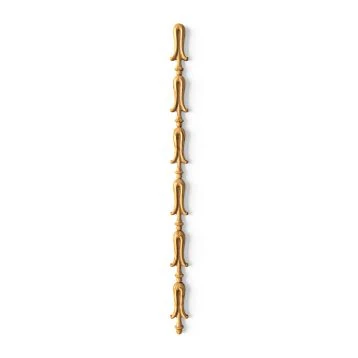
Wooden trim — these are baguettes, slats, profiles of different sections. From 8×8 mm to 100×50 mm. Oak, beech, pine, thermowood. Smooth, milled, patterned. For painting, for varnish, for oil. Ideal for: headboard frames, pilaster verticals, frieze horizontals, grilles, slatted panels, removable section frames. Provides a clean line, stable geometry, and the ability to paint in any shade.
Moldings — the musculature of the composition
Wooden molding — profile overlays for walls, ceilings, furniture. Width 15–180 mm. Profiles: classic, modern, art deco, minimalism. Ready-made series for room sets — base, shaft, capital, frieze, cornice. Assemble the headboard like a construction set, get an architectural element. Wooden moldings do not bend, do not crack when properly dried (8–10% moisture), maintain geometry for decades.
Decorative panels — the skin of your wall
decorative wall panels — solid, slatted, 3D, milled. Made from solid wood, MDF, veneer. On adhesive base, on frame. Any sizes, any millings for grilles, for cutouts for pipes/sockets. For headboards — panels with cutout for the bed, with integrated lighting, with texture matching nightstand facades. Installed in a day. Provide the effect of permanent finishing without wet processes.
Wall panels — modularity and seamless finish
Wall Panels — modular, seamless, for installation on glue or on lath. Cutouts for air conditioner/pipes are made at the factory — according to your drawing. For headboards — ideal if you need to cover a large area (the entire wall from floor to ceiling) and integrate sockets, switches, lighting, sensors. Invisible joints, perfect geometry, any millings.
Wooden frames — clean access and aesthetics
wooden frame — for access hatches, for cutouts in panels, for grilles. Custom — any geometry, any profile. For headboards — frames for central inserts (fabric, glass, mirror, grille), for access to sockets/switches, for ventilation gaps. wooden frames make technical necessities invisible or aesthetic.
Decorative elements — accents and meaning
Decorative Inserts, inserts, sockets, cartouches. For accentuating corners, joints, the center of the composition. decor for furniture — same as for walls, just different scale and mounting. to buy, which will allow you to transform your furniture using carved wooden elements. You can use the C-003-3 decor set to decorate furniture, walls, doors, or any other surface. The C-003-3 decor set is made of oak or beech, known for their strength, durability, and beauty. You can buy the C-003-3 decor set at the Stavros decor store, which specializes in producing and selling decorative elements and hardware for furniture and interiors. At the Stavros decor store, you will find a wide selection of decor sets of various shapes, sizes, and styles. You can choose allows linking the headboard with bedside tables, dresser, mirror — repeating motifs.
Carved decor — the soul of the interior
Carved wooden decoration — rosettes, corner pieces, capitals, bases, friezes, consoles. For classic, baroque, modern, art deco. Solid wood, hand and machine carving. Elevates from "renovation" to "interior". Central symmetrical overlay above the headboard — a powerful visual anchor. Paired overlays on pilasters — balance. Corner rosettes — finish.
Baseboards and architraves — connecting threads
Wooden baseboard — floor, ceiling, high (60–120 mm), shaped, straight. Oak, beech, MDF for painting. For finishing the headboard box at the bottom, for connection with the floor. Casings — window, door, carved, shaped. For linking the headboard with the window/door area. A unified design line — a unified interior.
Elements for painting — invisibility or accent as you wish
Wooden items — primed, sanded, ready for enamel, latex, acrylic. Any RAL, any NCS. For an invisible box, for a uniform color with the wall, for an accent shade. Painting in wall color — best camouflage. Painting in accent — best focus.
Mistakes that make a headboard look cheap — a breakdown analysis
Let's look at the main pitfalls that clients, contractors, and sometimes designers fall into. Knowing the mistake is half the battle.
-
Making the headboard too high in a small room. A panel reaching the ceiling with a height of 2.5 m and a bed of 1 m feels oppressive. It visually eats up the space. Solution: composition height 120–140 cm from the floor, top edge at or below the level of windows/doors.
-
Using small decor behind a large bed. A 15 cm rosette above a 200 cm bed is invisible. A 20 mm wide molding on a 4 m wall is a thread. The scale of decor should be readable from a distance of 3–4 m. Centerpiece: 50–70 cm, pilasters: 60–100 mm wide.
-
Not accounting for the width of the bed and nightstands. A headboard narrower than the nightstands looks like a mismatch for a different bed. Wider than the nightstands by 30 cm eats up space. Ideal: centered on the nightstands or symmetrical to them. If nightstands are different, center on the bed and integrate the nightstands into the composition.
-
Not connecting the headboard with baseboards and furniture. A baseboard stops at the bed leg, molding doesn't reach the ceiling by 5 cm, the frame color differs from the nightstand by a shade. The eye catches this instantly. All verticals in one system, all horizontals in one, all tones in one palette.
-
Overloading the bedroom with carvings. Central overlay + corner rosettes + frieze + capitals + consoles + bases + rosettes on pilasters = visual noise. A bedroom needs breathing room. One strong accent (center) + quiet companions (pilasters) + clean planes. That's enough.
-
Forgetting about outlets and switches. An outlet behind the bedside table ends up in the center of the composition. A switch at the entrance lands on a pilaster. Think before installation: removable magnetic cover, cutout in the panel with a decorative frame, shifting the molding. Don't paint the outlet the wall color—it will disappear, and charging your phone in the dark becomes a quest.
-
Choosing wood that doesn't match the doors and floor. Natural oak on the floor, rustic oak on the panels, wenge oak on the doors—three different oaks, three different moods. Either everything in one species/tone, or a deliberate contrast (light floor—dark panel, dark floor—light panel). Half-measures are the enemy of style.
What to buy for headboard design—a checklist for ordering
A system order from one manufacturer saves 30–50% of time and 20–30% of budget on logistics, color matching, and drying quality. STAVROS has everything:
-
Wooden trim — for frames, carcasses, grilles, slats, profiles.
-
Moldings — for frames, pilasters, capitals, friezes, cornices.
-
decorative panels — for solid textured planes, 3D relief, slat solutions.
-
Wall Panels — for large zones, modular installation, engineering integration.
-
wooden frames — for inserts, access panels, grilles, accent windows.
-
Decorative Inserts — for accents, corners, centers, joints.
-
Carved Decor — for classics, art deco, premium, uniqueness.
-
Baseboards — for completing the composition from below, connection with the floor.
-
Casings — for connection with windows/doors.
-
Elements for painting — for tone-on-tone, for accent color, for a unified palette.
-
Solid Wood Items — all of the above in natural oak, beech, thermowood, with a drying guarantee of 8–10%, with certificates, with Contact us to confirm shipping to your destination.
Order samples — here — before a large order. Feel the texture, see the tone in your own light, match it to the upholstery fabric, to the floor, to the door. Save nerves and money on rework.
FAQ — answers to popular questions
Can you make a bed headboard from wooden moldings?
Yes. Moldings allow you to assemble frames, verticals, and a decorative composition behind the bed without replacing the bed itself. This is the most affordable, technologically advanced, and flexible method. It is assembled with glue in 2–4 hours, puttied, sanded, and painted. The result is an architectural element, not an overlay.
How to update a bed without buying a new one?
You can decorate the wall behind the bed wooden frame, with a panel, moldings, or carved overlays. Then the bed will look like part of a cohesive interior composition. The cost of materials is 15–30% of the price of a new quality bed with a headboard. The effect is a 100% transformation of the sleeping area.
What is better for a bedroom — smooth panels or carved decor?
For a modern interior, smooth panels and a simple profile are better. trimFor classic and neoclassical styles, Moldings, Frames moderate Carved DecorDon't mix styles in one area — either a clean plane or a readable ornament system.
Can you paint a wooden headboard?
Yes. Wooden elements it can be painted in the color of the wall, furniture, doors, or made an accent shade. Use a penetrating primer, matting or eggshell acrylic enamel in 2–3 coats. For solid wood, pre-isolate resinous canals with shellac. Painting in the wall color is the best way to make the headboard part of the architecture.
What size headboard should I choose?
Usually, the headboard is made 10–30 cm wider than the bed on each side, or the composition is extended to the nightstands to make the area look cohesive. Height — 120–150 cm from the floor for standard ceilings, up to the ceiling for high ones (3 m+). It's better to align the top edge with the top line of doors or the cornice.
What wood should I choose for a bedroom headboard?
Oak, beech, ash, thermowood — for natural texture under oil/varnish. MDF for painting — for a uniform color with the walls. Pine — for budget projects with tinting. In the bedroom, eco-friendliness is important: only dry wood (8–10%), safe adhesives (E1/E0), water-based varnish/oil or natural oil-wax.
Is a gap needed between the headboard and the wall for ventilation?
If the panel is solid and glued on — no gap is needed, the wall under the panel "breathes" through the micropores of the glue and wood. If the panel is on a lath/frame — a 5–10 mm gap at the bottom and top is desirable for convection. If there are pipes/wires inside the box — ventilation is mandatory (perforation, gaps, grilles).
Can I make a headboard with lighting?
Yes, and it's an excellent technique. LED strip 4.8–9.6 W/m, 2700–3000 K, CRI>90 in vertical pilasters, in the top crossbar, behind the trim, in the panel groove. Power supply and remote — in the bedside table or behind a removable panel. Dimmer — mandatory. The light-shadow pattern on a slatted panel or carved decor makes the bedroom feel like a hotel at night.
How to attach a heavy solid wood panel to the wall?
With glue (construction adhesive for wood/MDF) + mechanical fixation (screws into lath/profile, plugs under wooden dowels). For panels from 20 kg/m² — only on a frame (aluminum profile or wooden lath 40×40 mm, spacing 400 mm). Frame on dowels into the wall, panel on frame — with glue + screws around the perimeter. Removability — via magnets or latches — if access behind the panel is needed.
STAVROS is not just a decor store. It's a production facility in St. Petersburg and Moscow, our own drying shop, our own milling, our own carving, our own quality control. We make Wooden trim, Moldings, decorative panels, Wall Panels, Crown Molding, Frames, applique, carved decor, wooden patterns, Solid Wood Items, moldings, Casings — everything needed so the wall behind the bed stops being an empty space and becomes the main accent of the bedroom. Come to the warehouse, see, touch, take samples. We deliver across Russia. We assemble to order. We help with calculations, drawings, and installation. STAVROS — decor that works.