Article Contents:
- Why Oak Timber is the Choice of Professionals and Enthusiasts
- Color Palette and Toning of Oak
- Furniture Design: From Idea to Blueprint
- Calculating the Required Amount of Material
- Tools and Equipment for Working with Oak Timber
- Measuring Tools and Marking
- Ready-Made Furniture Frames: A Professional Foundation for Creativity
- Combining Frames with Oak Timber
- Joinery: Reliability and Aesthetics
- Reinforcing Joints and Fasteners
- Creating a Dining Table: A Step-by-Step Project
- Finishing the Tabletop
- Benches and Settles: Simplicity of Construction and Expressiveness of Forms
- Bench with a Storage Drawer
- Shelving and Shelves: Organizing Space in Style
- Hanging Shelves Made from Oak Timber
- Decorative Elements and Personalization
- Hardware and Accessories
- Caring for Furniture Made from Oak Timber
- Protection from Pests and Biological Damage
- Frequently Asked Questions About Creating Furniture from Oak Timber
- Conclusion: STAVROS Company — Your Partner in Furniture Creation
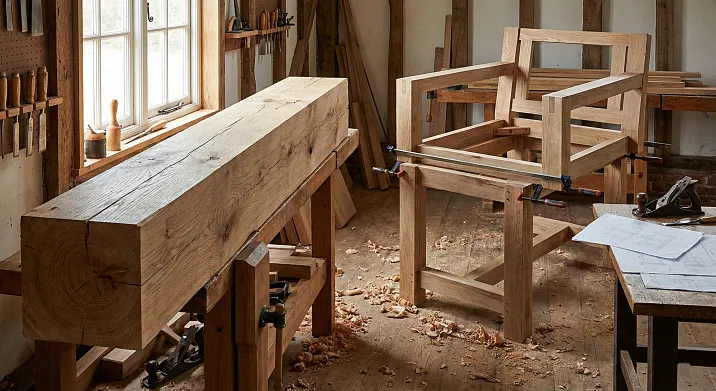
Making furniture with one's own hands is experiencing a true renaissance in the era of mass production. The opportunity to create a unique piece that precisely matches one's ideas of beauty, functionality, and individual style is attracting more and more people to woodworking creativity.Oak beambecomes a key material for realizing ambitious furniture projects thanks to its unparalleled strength, durability, and aesthetic expressiveness. Combining quality timber with ready-madefurniture framesopens limitless possibilities for creativity, allowing even novice craftsmen to create professional pieces that will last for decades.
Oak wood has been considered the benchmark of quality in furniture production for centuries. Its density reaches 700-800 kilograms per cubic meter, providing oak structures with exceptional stability and resistance to mechanical loads. The high content of tannins gives the wood natural resistance to rot, fungal damage, and moisture. The expressive texture with clearly distinguishable annual rings and medullary rays makes each piece a unique work of natural art. When working with oak timber, a craftsman creates not just a utilitarian household item, but a full-fledged interior element filled with character and individuality.



Why Oak Timber is the Choice of Professionals and Enthusiasts
The mechanical properties of oak wood determine its versatility in furniture manufacturing. The compressive strength of oak along the grain is about 500-600 kilograms per square centimeter, allowing for the creation of structures that can withstand significant static and dynamic loads. This is critical for making tables, benches, shelves, where supporting elements must ensure reliability over many years of use.wooden strips, beamsOak furniture does not deform under the weight of books on shelves, does not sag under the weight of dishes on tabletops, and does not become loose in chair joints even with intensive use.
Stability of geometric dimensions is another advantage of properly dried oak timber. The volumetric swelling coefficient of oak is approximately 13-15 percent, which is lower than that of many other hardwood species. When the drying technology to a moisture content of 8-10 percent is followed and the material is subsequently acclimatized before use, dimensional changes during operation are minimal. Furniture made from oak timber does not dry out, does not warp, and maintains the precision of joints and the tightness of element fit. This stability is especially valuable for products with complex geometry, where even a slight deformation of one element disrupts the harmony of the entire structure.
The workability of oak requires certain skills and proper tools, but rewards the craftsman with the ability to create complex joints and detailed elements. Hard oak wood mills well, allowing for the creation of precise grooves, tenons, and profiled edges. Sawing oak requires sharp tools and patience, but the result is clean cuts without chips or frayed fibers. Sanding an oak surface reveals the depth of the grain, brings out the beauty of the natural pattern, and creates a smooth, pleasant-to-touch surface.Oak beamAfter quality processing, it becomes a material that combines natural power with man-made perfection of form.




Color palette and toning of oak
The natural color of oak wood varies from light golden to rich brown with gray or olive shades depending on the tree's growing conditions. The sapwood—the outer part of the trunk—has a lighter shade, while the heartwood—the central part—is darker and more saturated. This natural variability allows for selecting timber to match specific interior color concepts, creating contrasting or monochromatic compositions, and playing with shades within a single product.
Toning oak wood opens up additional decorative possibilities. Water-based, alcohol-based, or oil-based stains penetrate the porous structure of oak, coloring the fibers and revealing the grain with maximum expressiveness. Cool tones—gray, graphite—give oak a modern industrial sound, relevant for loft and minimalist interiors. Warm shades—walnut, wenge, mahogany—enhance the classic nobility of the material, making furniture visually richer and more solid. Patination—the technique of artificially aging wood—creates an antique furniture effect, imbuing the product with history and character.
Bleached oak is a popular solution for Scandinavian and Provence interiors, where light wood creates a sense of airiness and lightness. Special bleaching compounds penetrate the pores of oak wood, lightening it to creamy or gray-white shades while preserving the visibility of the grain. Such treatment makes massive oak furniture visually less heavy, which is important for small spaces where dark wood could create a sense of clutter.
Our factory also produces:




Furniture design: from idea to drawing
Any furniture project begins with a clear understanding of functional requirements and aesthetic preferences. Whether you are creating a dining table for family dinners, a desk for a home office, a shelf for a library, or a bench for an entryway—each product has specific parameters that determine its construction. Dimensions, proportions, height, width, depth—these basic characteristics set the overall configuration of the future furniture piece.create furniture with your own handsMeans taking responsibility for every decision, turning an abstract idea into precise dimensions and specific materials.
Ergonomics—the science of human interaction with the object environment—determines the comfort and functionality of furniture. The height of a dining table should be 72-76 centimeters to ensure comfortable seating for people of average height. The seat depth of a chair is 40-45 centimeters, height from the floor is 45-48 centimeters. A desk requires a height of 74-76 centimeters for seated work and 100-110 centimeters for standing work. The depth of shelves in a rack depends on the type of items stored—25-30 centimeters is sufficient for books, while 35-40 centimeters may be needed for decorative objects. Ignoring ergonomic norms leads to creating beautiful but uncomfortable furniture that will cause discomfort during use.
Creating a detailed drawing is a critical design stage that prevents errors during material cutting and assembly. The drawing should contain a general view of the product with main dimensions indicated, detailed views of individual nodes and joints, and a specification of all elements with exact dimensions and quantities. Even if you work by hand on paper, the accuracy of dimensions and scaling is critical to the project's success. Modern 3D furniture modeling software allows visualizing the future product, examining it from all sides, and making adjustments before starting work with the material.
Get Consultation
Calculation of the required amount of material
Accurate calculation of timber requirements prevents excessive costs and situations of material shortage during work. Based on the drawing, a specification of all elements is compiled, indicating length, cross-section, and quantity. Allowances for trimming are taken into account—usually 5-10 centimeters per element for end leveling and possible size adjustment. A reserve of 10-15 percent is added for possible defects, cutting errors, and spoiled parts. For large projects—tables, benches, shelves—the need for timber can reach tens of linear meters, requiring thoughtful logistics and material storage.
The cross-section of the timber is selected based on the functional load of the element in the structure. For table legs and massive supporting elements, timber with a cross-section of 50x50 or 60x60 millimeters is used, providing the necessary load-bearing capacity and visual solidity. Aprons—horizontal connecting elements between legs—can have a smaller cross-section of 40x40 or 40x60 millimeters. Decorative elements, slats for backs, and shelf crosspieces can be made from timber of 20x20 or 30x30 millimeters. Proper selection of cross-sections optimizes material consumption and creates harmonious proportions of the product.
Tools and equipment for working with oak timber
Processing hard oak wood requires quality tools capable of ensuring cutting precision and cleanliness. A handsaw with fine teeth and a hardened blade can handle oak but requires significant physical effort and time. A jigsaw with blades for hard wood provides faster cutting, suitable for curved cuts, but leaves a rough surface requiring subsequent sanding. A circular saw is the optimal tool for straight cuts, providing clean, precise cutting with minimal effort. A miter saw is ideal for precise fitting of elements to size, ensuring perpendicular cuts, which is critical for tight joints.
A router opens wide possibilities for creating joints, profiling edges, cutting grooves, and rabbets. Mortise and tenon joints—a traditional method of joining wooden elements without using metal fasteners—are created using a router and special tenoning jigs. Rounded edges, chamfers, decorative profiles—all of this is done with a router using appropriate bits. Working with a router on oak requires a powerful tool with a power of at least 1200-1500 watts and sharp, quality carbide-tipped router bits.
Sanding equipment ensures the final surface preparationof oak timberBefore applying protective coatings. A belt sander is effective for processing large flat surfaces—tabletops, seats, fronts. An orbital sander provides finer processing, removes marks from belt sanding, and prepares the surface for finishing operations. An angle grinder with flap discs is suitable for processing hard-to-reach places, internal corners, and complex profiles. Sanding is performed sequentially with abrasives of increasing grit—from 80-120 grit for rough processing to 220-320 grit for final preparation.
Measuring tools and marking
Precision in furniture manufacturing determines the quality of joints and the overall appearance of the product. A metal tape measure 3-5 meters long is necessary for measuring long elements. A carpenter's square ensures perpendicularity during marking and cutting control. A spirit level checks the horizontality and verticality of elements during assembly. A caliper accurately measures thickness, groove depth, and hole diameter with precision to tenths of a millimeter.
Marking tools include pencils, markers, marking knives. A hard graphite pencil leaves a thin, clear line on wood and is easily erased after work is completed. A marking knife creates a more precise line, cuts fibers, and prevents chipping during subsequent sawing. A marking gauge—a traditional carpenter's tool for drawing parallel lines at a set distance from an edge—is indispensable when marking mortise and tenon joints and other repeating elements.
Ready-made furniture frames: a professional foundation for creativity
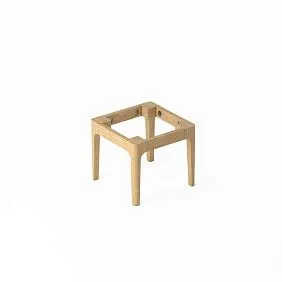
Using ready-madefurnitureSignificantly simplifies the process of creating complex furniture pieces, allowing one to focus on decorative and finishing aspects of the project. Professionally manufactured frames for tables, chairs, and sofas ensure geometric accuracy, structural strength, and joint reliability. All technically complex operations—creating mortise and tenon joints, precise fitting of elements, balancing supports—are already performed at the factory using high-precision equipment. The craftsman only needs to complement the frame with a tabletop, seat, decorative elements, giving the product individuality and conformity to a specific interior.
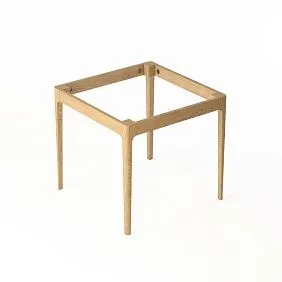
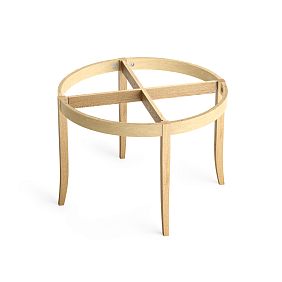
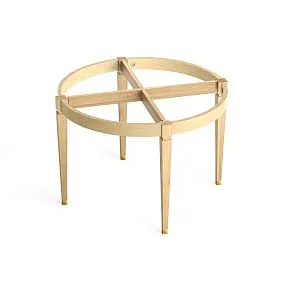
Frames for tables of various shapes and sizes represent a ready-made supporting structure on which the tabletop is mounted. Classic four-legged frames are suitable for rectangular and square tables of various sizes. Frames on a central support—understructures with a massive central leg and a cross-shaped base—are ideal for round and small square tables, where freedom of chair placement without interference from corner legs is important. Frames with longitudinal supports—massive sides connected by a crosspiece—create a monumental look, suitable for large dining tables in classic or rustic style.
Chair and armchair frames include a ready-made seat and back frame on which decorative and functional elements are mounted. The basic construction provides necessary strength and ergonomics—correct backrest angle, optimal seat height, stability of supports. The craftsman complements the frame with wooden or upholstered seats, carved or slatted backs, armrests, creating a unique design that matches the overall style of the setting. The ability to create a whole set of chairs with identical basic construction but variable decorative solutions allows combining unity and diversity in the interior.
Combining frames with oak beams
Combining a ready-made frame with elements made of oak beams creates professional-quality furniture with minimal labor costs. A tabletop made of solid oak boards or a glued panel is mounted on a ready-made base, creating a dining or work table with an expressive natural wood texture. Oak legs, armrests, and decorative overlays on the chair frame give the product individuality, setting it apart from standard factory furniture.Oak timber beamcan be used as an alternative material to create contrasting combinations, where light beech wood is combined with a dark oak frame or vice versa.
Additional elements made of beams enhance the structural reliability and decorative expressiveness of furniture. Cross-bracing between table legs, made of oak beams, adds extra rigidity to the structure, preventing wobbling during long-term use. Decorative aprons with milled edges or carved elements transform a simple frame into an exquisite piece. Overlay moldings, rosettes, and corner elements made of oak enrich the visual perception of the furniture, creating a play of light and shadow on the surface.
Joinery: reliability and aesthetics
The quality of furniture is determined not only by the beauty of the material but also by the reliability of the joints, which ensure the durability of the structure. Mortise and tenon joint is a classic method of joining wooden elements, where the protruding part of one piece (the tenon) fits into the recess of another piece (the mortise or socket). The tight fit of the tenon in the mortise ensures mechanical strength of the joint even without the use of glue. Adding wood glue significantly strengthens the joint, creating an almost inseparable bond between the elements. Mortise and tenon joints are used in critical furniture components—joints of legs with aprons, frame element connections, and attaching backs to seats.
Dowel joint is a simplified alternative to the classic mortise and tenon joint, accessible for implementation with a minimal set of tools. Dowels are cylindrical wooden rods with a diameter of 6-10 millimeters—inserted into precisely aligned holes in the parts to be joined. Glue applied to the holes and dowels creates a strong joint after drying. Proper marking of the hole positions is critical for assembly accuracy—the slightest misalignment leads to mismatched elements and distortion of the structure's geometry. Special jigs for drilling dowel holes ensure the necessary precision even for novice craftsmen.
Dovetail joint is the strongest woodworking joint, characterized by a trapezoidal profile of tenons that fit into corresponding grooves. The expanding shape of the tenon provides a mechanical lock, preventing the elements from separating even under significant loads. This joint is traditionally used in drawers, boxes, and case furniture, where maximum strength and durability are required. Hand-cutting dovetails requires high skill and precision, but using special router jigs makes this operation accessible even for hobbyists.
Reinforcing joints and fasteners
Metal fasteners complement or replace traditional woodworking joints in modern furniture. Confirmat screws—special furniture screws with a countersunk head—provide reliable right-angle connections, often used in case furniture. Metal corner plates reinforce leg-to-apron joints, preventing the structure from wobbling. Furniture brackets, hidden from view on the inside of the structure, add rigidity without compromising the appearance.wooden strips, beamscan serve as decorative elements, concealing metal fasteners while simultaneously reinforcing the structure.
Wood glue is a critical element of reliable joints. PVA glue for wood creates a strong, flexible joint resistant to vibrations and variable loads. Polyurethane glue provides a waterproof joint suitable for furniture used in damp conditions. Epoxy compounds create maximally strong joints capable of withstanding extreme loads. Proper glue application—a thin, even layer on both surfaces to be joined—and secure clamping of the parts during drying ensure optimal strength of the adhesive bond.
Creating a dining table: a step-by-step project
A dining table is a central piece of furniture in any home, a place for family gatherings and entertaining guests. Its dimensions are determined by the number of seats and available space. For comfortable seating of one person, 60 centimeters of tabletop width is required; for four people, a table measuring 120x80 centimeters is sufficient; for six to eight people, a table 180-200 centimeters in length is needed. A rectangular shape is the most practical and economical to manufacture, while an oval or round shape creates a more informal atmosphere conducive to conversation.
The tabletop can be made from a solid panel—oak boards glued lengthwise to form a monolithic surface. The width of individual boards is typically 10-15 centimeters, and the thickness of the finished tabletop is 25-40 millimeters, depending on the table size and desired visual massiveness. Gluing the boards is done on a flat surface using clamps that ensure even pressure along the entire length. An alternative is a framed tabletop, where a frame made ofof oak timberis filled with thinner boards or plywood, reducing weight and solid wood consumption while maintaining strength.
Mounting the tabletop on a ready-madefurniture frameis carried out considering the possibility of thermal and moisture-related wood deformation. Rigidly attaching a solid wood tabletop to the frame can lead to cracking due to seasonal humidity changes. The correct solution is to use mounting brackets with elongated holes, allowing the tabletop to expand or contract slightly without creating internal stress. Fasteners are placed around the perimeter of the base with a spacing of 30-40 centimeters, ensuring secure fixation while maintaining the necessary freedom of movement.
Finishing the tabletop
The tabletop surface is subjected to the most intensive impact during use—mechanical loads, moisture, hot objects, and dirt. The protective coating must provide maximum durability while preserving the natural beauty of the oak wood. Oil treatment penetrates the wood structure, highlights the grain, and creates a silky matte surface. Specialized oils for tabletops contain polymerization accelerators and additives that enhance resistance to water and stains. Application is done in 2-3 coats with intermediate sanding using 320-400 grit abrasive.
Oil-wax blends combine the penetrating protection of oil with the surface barrier of wax, creating more effective moisture protection. The wax layer gives the surface a soft satin sheen, pleasant to the touch and visually noble. Periodic renewal of the wax coating—every 6-12 months—maintains protective properties and preserves the aesthetic appearance of the tabletop.
Polyurethane varnish creates a hard, wear-resistant film on the wood surface, providing maximum protection against mechanical damage and moisture. Modern water-based polyurethane varnishes are eco-friendly, have no strong odor, and dry quickly. Application is done in 3-4 thin coats with intermediate sanding to remove raised fibers and create a perfectly smooth surface. Matte and semi-matte varnishes preserve the natural look of the wood, while glossy ones create a more formal appearance suitable for classic interiors.
Benches and stools: simplicity of construction and expressiveness of forms
A bench is one of the simplest furniture projects, accessible for DIY even for beginners. The basic design includes a seat and supports connected by simple straight joints. A minimalist bench made of solid oak boards and blocks embodies the philosophy of functionalism, where beauty stems from the honesty of the construction and the expressiveness of the material. The length of the bench is determined by the number of seats—50-60 centimeters is sufficient for one person, while a family bench can reach 150-180 centimeters. Seat width is 30-40 centimeters, and height from the floor is 45-50 centimeters for a dining bench.
The seat can be made from a single wide board, a glued panel of several boards, or a set of parallel slats with gaps. A solid seat creates a monolithic look, emphasizing the massiveness of the oak, but requires a wide board, which can be expensive and prone to warping. A panel seat is more stable, easier to make, and visually less massive. A slatted seat lightens the structure physically and visually, creates a modern graphic look, and provides ventilation—relevant for benches in hallways, saunas, or open terraces.
Bench supports can have various configurations. Classic four legs made of square-section beams provide maximum stability and ease of manufacture. Massive side panels made of wide boards or glued panels create a monumental look suitable for large benches in public spaces or spacious hallways. X-shaped supports add dynamism to the structure, are visually interesting, but require more complex joinery. The choice of support configuration is determined by interior style, bench size, and the craftsman's skill level.
Bench with a storage drawer
A functional extension of the basic bench design is integrating a storage drawer under the seat. This solution is especially practical for hallways, where space is needed for shoes, accessories, or seasonal items. The bench seat is made hinged or completely removable, providing access to the interior space. The drawer body is formed by sides, a bottom, and a back panel, joined with mortise and tenon or confirmat screws.create furniture with your own handswith additional functionality means thinking through every detail—the opening mechanism, ventilation of the interior space, and ease of access.
A hinged seat on piano hinges ensures smooth opening and secure fixation in the open position. Gas lifts—pneumatic closers—make opening even more comfortable, preventing the lid from slamming shut. The interior space can be divided by partitions into sections for organized storage of various items. Drawers inside the bench body add an extra level of functionality but complicate the construction and require precise manufacturing of the guides.
Shelving and shelves: space organization in style
A shelving unit made of oak beams and boards is a practical and aesthetically pleasing solution for storing books, decorative objects, and collections. The open design does not visually overload the space, maintaining a sense of airiness even with a significant product height. Side posts made of solid beams with a cross-section of 50x50 or 60x60 millimeters provide load-bearing capacity for several tiers of shelves. Shelves made of oak boards 25-40 millimeters thick support the weight of books without sagging on spans up to 80-100 centimeters. A back wall may be absent in minimalist versions or made of thin plywood, slats, or panels, creating a visual background and additional structural rigidity.
The configuration of the shelving unit is determined by the available space and functional requirements. A vertical narrow shelving unit saves floor area, utilizing the room's height to accommodate the maximum number of shelves. A horizontal low shelving unit can serve as a space divider, zoning the room without installing solid partitions. A corner shelving unit effectively utilizes often-empty room corners, creating additional storage without occupying valuable wall space. A modular construction of several independent sections allows flexible adaptation of the shelving unit to changing needs by rearranging or adding sections.
Attaching shelves to side posts can be done in several ways. Mortise joints, where the shelf fits into a groove in the post, create a clean minimalist look without visible fasteners. This method requires precision in cutting the grooves and fitting the shelves, but the result is visually flawless. Mounting on wooden or metal shelf supports provides the ability to adjust shelf height, which is convenient for storing items of various sizes. Hidden fasteners—metal brackets located on the inside of the joint—preserve the clean appearance while simplifying installation.
Suspended shelves made of oak beams
Suspended shelves on cables, chains, or leather straps are a modern solution combining functionality with decorative expressiveness. A solid oak board suspended on four cables creates a light, weightless structure that contrasts with the visual heaviness of the material. Stainless steel cables with a diameter of 3-5 millimeters provide the necessary load-bearing capacity with minimal visual mass. Ceiling mounting is done on anchors capable of supporting the weight of the shelf with items placed on it—typically 30-50 kilograms per mounting point.
Adjusting the height of a suspended shelf is achieved using clamps on the cables or a pulley system. This allows adapting the shelf for various functions—lowering it for a work surface, raising it for decorative placement of objects, or temporarily moving it up to the ceiling when it's necessary to free up space. Multi-tiered suspended structures with shelves at different levels create a dynamic spatial composition, especially effective in rooms with high ceilings.
Decorative elements and personalization
Custom furniture differs from factory-made furniture by the presence of unique decorative elements that reflect the individuality of the creator and owner. Carving on oak wood is a traditional art that transforms utilitarian items into works of decorative and applied art. Geometric patterns, plant motifs, and complex compositions can adorn the front parts of drawers, chair sides, and table aprons. Carving is done by hand with chisels of various configurations or using an electric rotary tool with carving attachments. Deep relief carving creates a play of light and shadow, emphasizing the three-dimensionality of the form.
Milled edge profiles give the product completeness and elegance. A simple chamfer—a beveled edge—softens the perception of massiveness, making the edges visually lighter. Rounded edges eliminate sharp corners, increase safety, and are especially relevant for children's furniture. Complex profiles—flutes, beads, coves—create an architectural resonance, linking the furniture with classical tradition. Combining different profiles on one product requires a sense of proportion—excess decoration can lead to visual overload.
Contrasting inserts from other wood species or materials create visual accents and enrich the product's color palette. Light beech slats in a dark oak tabletop, copper strips in grooves on the surface, inlay with mother-of-pearl or stone—these techniques make the furniture unique, turning it into an individual statement.Oak timber beamin combination with oak creates a warm natural contrast, where the pinkish hue of beech complements the golden-brown range of oak.
Hardware and accessories
Quality hardware completes the look of the furniture, ensures the functionality of mechanisms, and affects the durability of the product. Handles and keyholes made of brass, bronze, or wrought iron create stylistic harmony with the traditional character of oak furniture. Minimalist aluminum or steel handles suit modern forms. Hidden drawer opening mechanisms without visible handles create clean minimalist fronts, relevant for contemporary interiors.
Hinges, drawer guides, and folding mechanisms must correspond to the weight and dimensions of the furniture. Oak drawers are significantly heavier than constructions made of chipboard or plywood, requiring the use of reinforced ball-bearing guides with a load capacity of 30-50 kilograms. Piano hinges for hinged lids of benches and chests must be long enough for even load distribution. Gas lifts are selected based on the weight of the opening element and the required opening force.
Care for furniture made of oak beams
Proper care ensures the longevity of oak furniture and the preservation of its aesthetic qualities for decades. Daily dry cleaning with a soft cloth removes dust and prevents its accumulation in the wood texture. Wet cleaning is permissible for varnished surfaces, but oil finishes require minimal contact with water. Spilled liquids must be wiped up immediately to prevent absorption into the wood and stain formation. Hot items should only be placed on coasters that protect the surface from thermal damage.
Refreshing the oil finish is performed as the protective layer wears—typically once a year for intensively used surfaces, once every 2-3 years for less loaded elements. The surface is cleaned, lightly sanded with 320-400 grit abrasive to remove contaminants and open the wood pores. Oil is applied in a thin layer, excess is removed after 15-20 minutes, and the surface is polished with a soft cloth. After 24 hours, the procedure may be repeated to enhance the protective effect.
Minor scratches and dents on an oiled surface are eliminated by local sanding of the damaged area and reapplication of oil. Deep damage may require more serious repair—filling the defect with hard wax or wood paste, sanding, and complete renewal of the finish. Oak wood is so durable that the surfaceof oak timbercan be sanded and renewed multiple times without compromising the product's structure.
Protection from pests and biological damage
The high content of tannins makes oak wood naturally resistant to insect pests and fungal damage. However, under conditions of high humidity, even oak can be susceptible to biological degradation. Maintaining normal room humidity—40-60 percent—is critical for the longevity of wooden furniture. In damp rooms, additional protection of the wood with antiseptic impregnations before applying finishing coatings is necessary.
Regular inspection of furniture allows for the detection of signs of biological damage at early stages. The appearance of small holes, wood dust near them, or discoloration of the wood in certain areas are signals that measures need to be taken. Local treatment of affected areas with insecticidal or fungicidal compositions stops the spread of damage. In most cases, properly dried and treated oak wood serves for decades without any pest-related problems.
Frequently asked questions about creating furniture from oak beams
Is it difficult for a beginner craftsman to work with oak beams?
Oak wood is harder than pine or spruce, which requires sharper tools and more effort during processing; however, with power tools, the difference in difficulty is minimal. It is recommended to start with simple projects—a bench, a shelf—where the number of operations is small and mistakes are easily correctable. Using ready-madefurnituresignificantly simplifies the creation of complex items—tables, chairs—allowing focus on finishing operations. at room temperature. Using under-dried material leads to shrinkage and deformation during use; over-dried material leads to cracking when humidity increases. By purchasing beams from specialized manufacturers, you receive material with guaranteed moisture content, which eliminates future problems.
What moisture content of oak beams is optimal for furniture production?
For furniture used in residential premises, the wood moisture content should be 8-10 percent, which corresponds to the equilibrium moisture content at room temperature. Using under-dried material leads to shrinkage and deformation during use; over-dried material leads to cracking when humidity increases. By purchasing beams from specialized manufacturers, you receive material with guaranteed moisture content, which eliminates future problems.
Are special skills required for creating woodworking joints?
Traditional mortise and tenon joints require practice and precision, but modern devices – router jigs, templates – make them accessible to hobbyists. Alternative methods – dowel joints, confirmat screws, metal brackets – provide sufficient strength with simplified technology. The main things are marking accuracy and careful execution of operations, which are achieved through attentiveness and using quality tools.
How long does it take to make a piece of furniture?
Time costs depend on project complexity and the craftsman's experience. A simple bench can be made over a weekend – one day for cutting and assembly, one day for sanding and finishing. A medium-sized dining table requires 3-5 days of work. A complex shelving unit or furniture set can take several weeks. Using ready-made frames reduces manufacturing time by 30-50 percent, allowing focus on the creative aspects of the project.
How to correctly calculate material costs for a project?
Based on a detailed drawing, compile a specification of all elements indicating dimensions and quantity, add 10-15 percent for allowances and possible defects, account for the cost of fasteners, glue, protective coatings, abrasives. For reference: making a dining table measuring 160x80 centimeters will require approximately 6-8 linear meters of timber with a cross-section of 50x50 millimeters for the base and 2-3 square meters of board with a thickness of 40 millimeters for the tabletop. Accurate calculation prevents unpleasant surprises during the work process.
Conclusion: STAVROS company – your partner in furniture creation
create furniture with your own handsfrom quality oak timber means bringing to life a personal concept of beauty, functionality, and durability. Every item created with one's own hands carries a part of the creator's individuality, becoming not just a piece of furniture, but an object filled with personal history and emotional value. Choosing quality material is the first and critical step on the path to successful project implementation.
STAVROS company specializes in the production of millwork and furniture blanks from valuable wood species, offering craftsmen materials of professional quality. Years of experience working with oak, beech, and other noble species, modern high-precision equipment, strict control of humidity and quality at every stage of production – all this guarantees thatOak beam, wooden strips, beamsandfurniture framesfrom STAVROS will become a reliable foundation for creating furniture that will last for generations.
By turning to STAVROS, you receive not only quality material but also professional consultation on choosing optimal solutions for your project, technical support at all stages of work, prompt delivery across Russia and CIS countries. Create furniture worthy of your home using materials tested by time and the trust of thousands of craftsmen. Choose quality, choose STAVROS.