

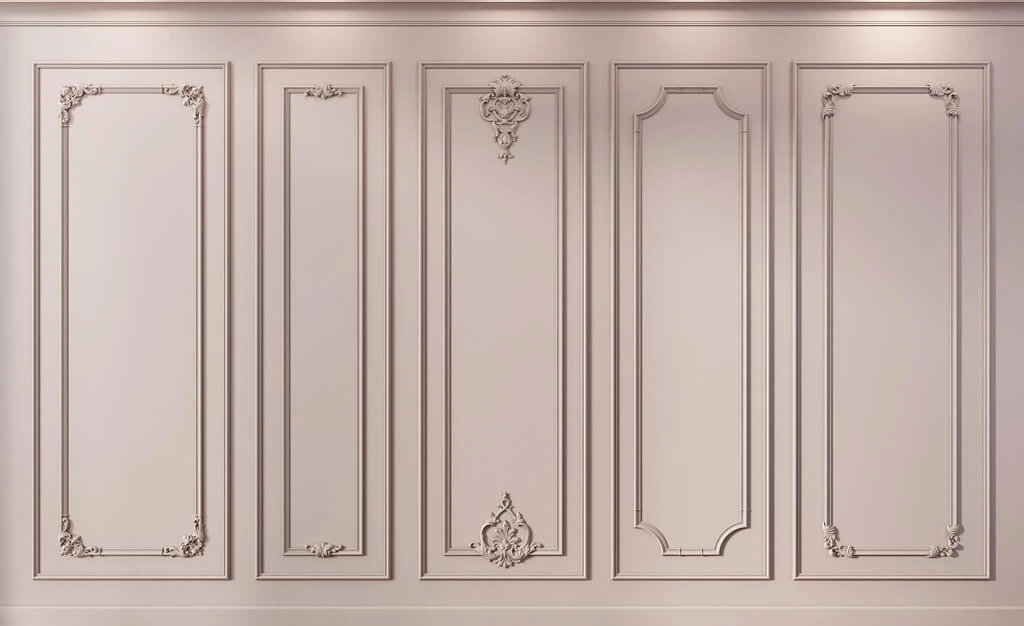
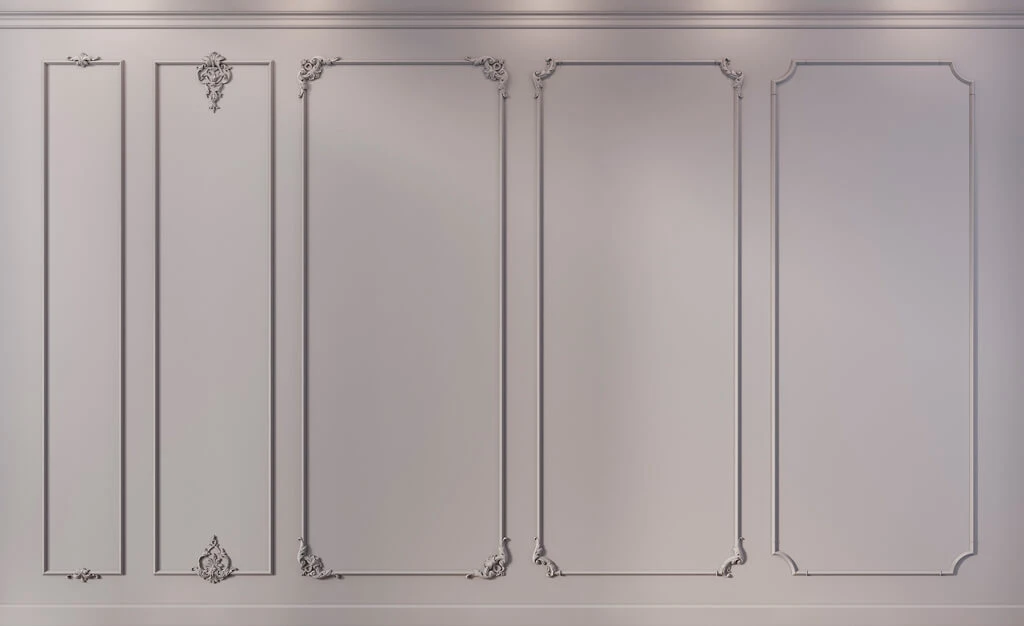
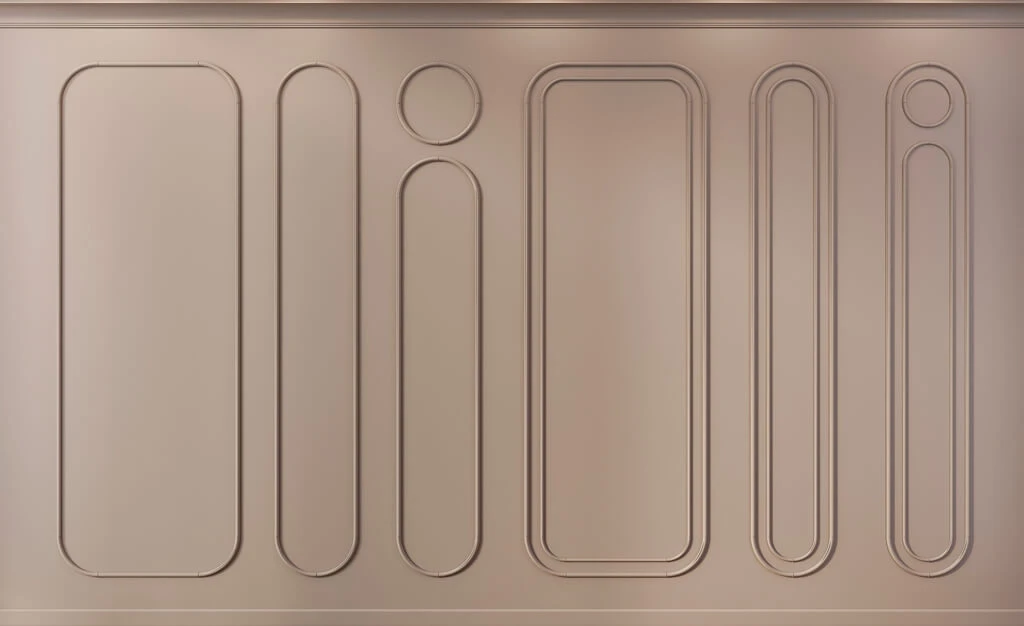
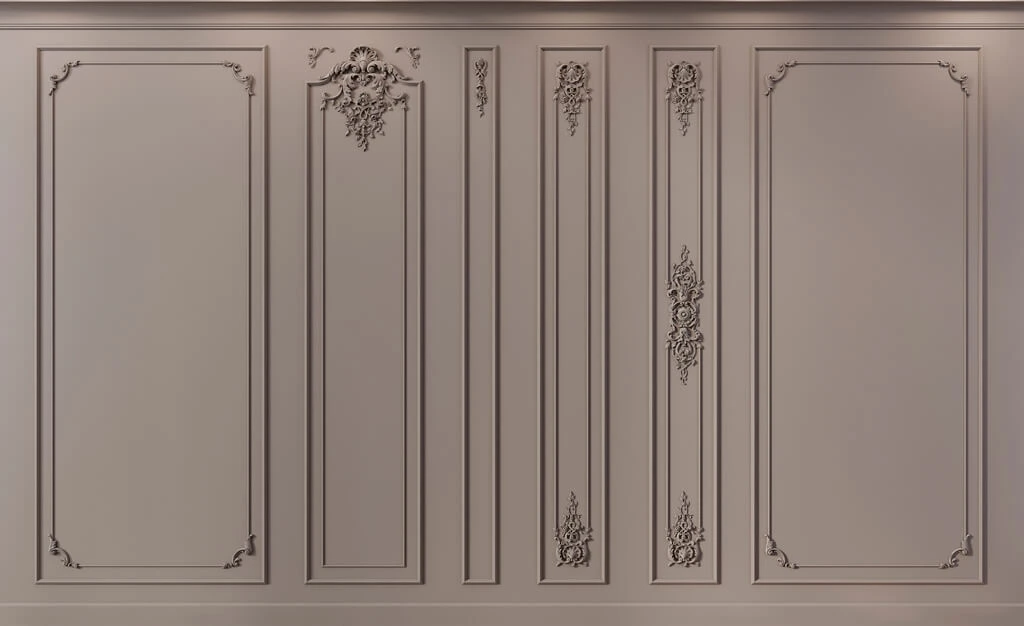
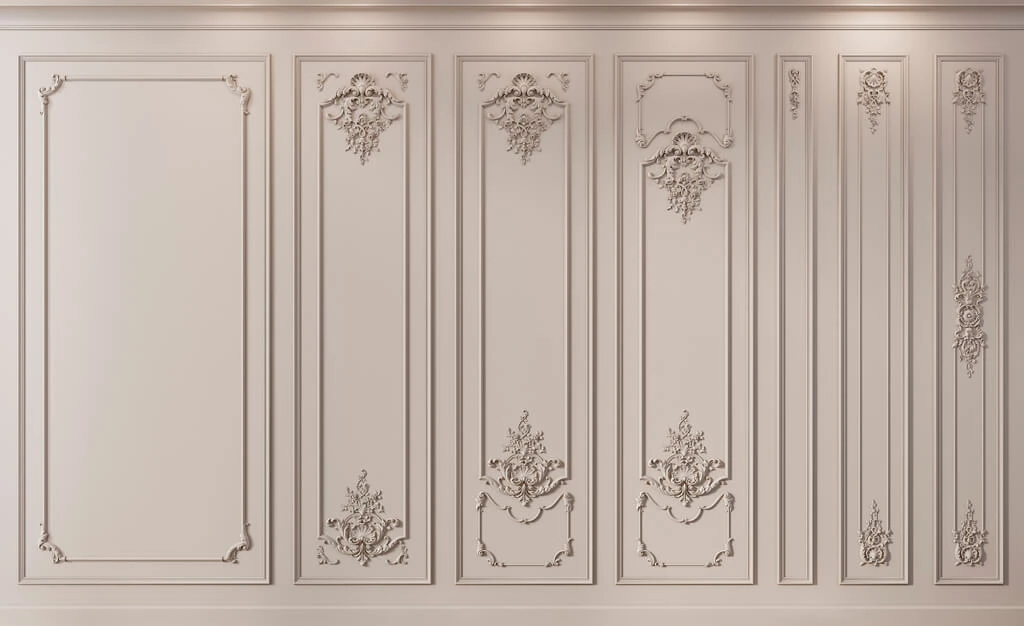
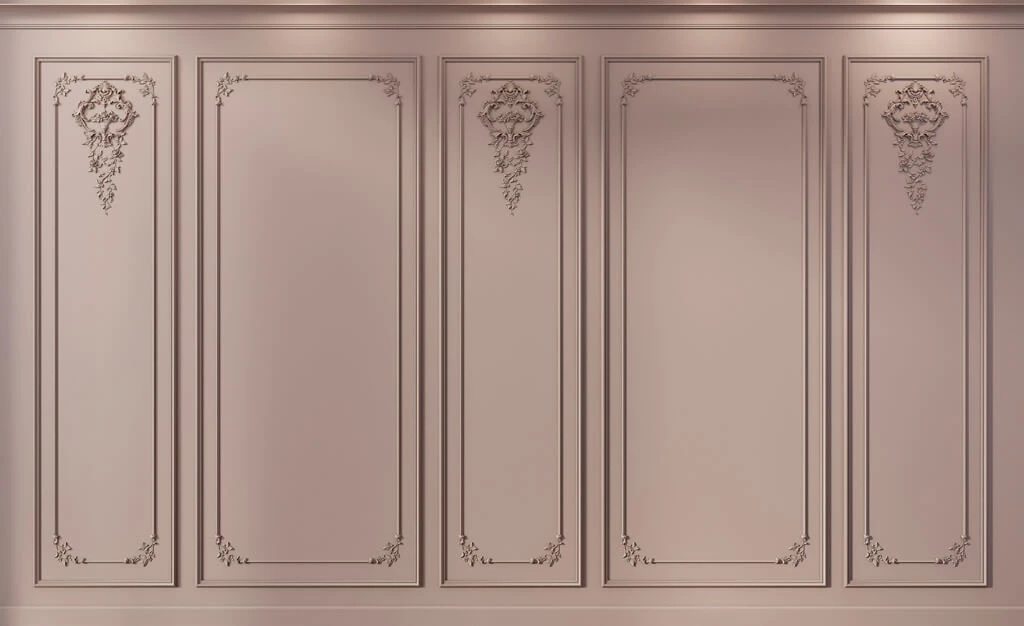
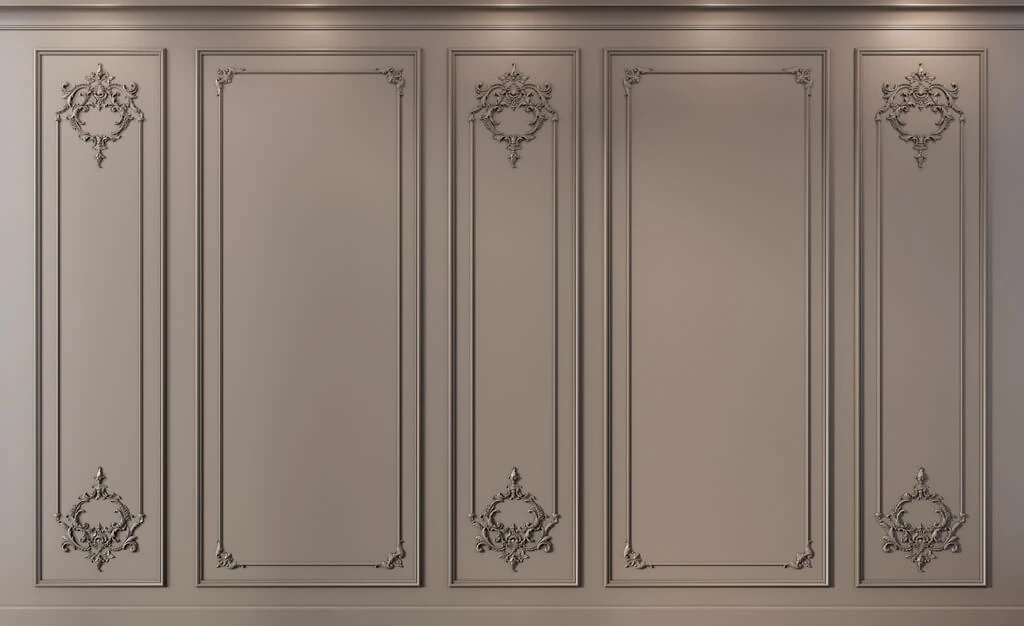
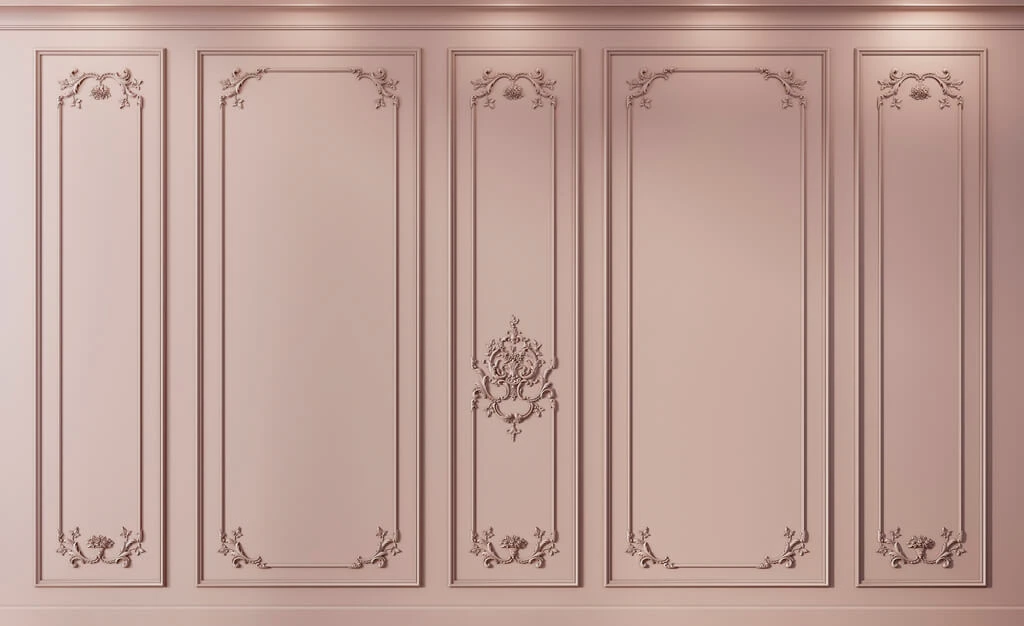
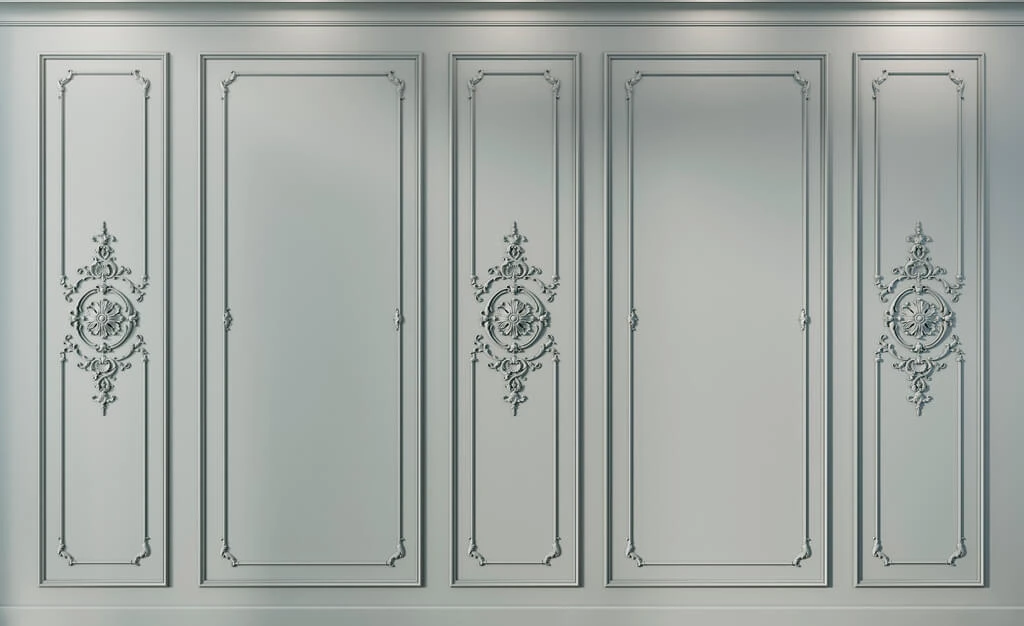
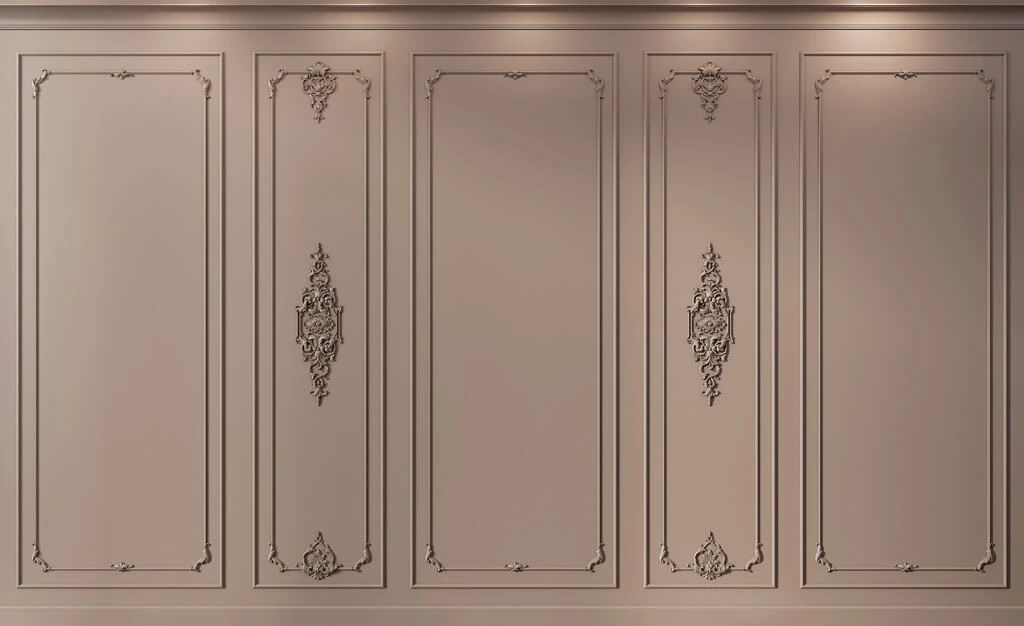
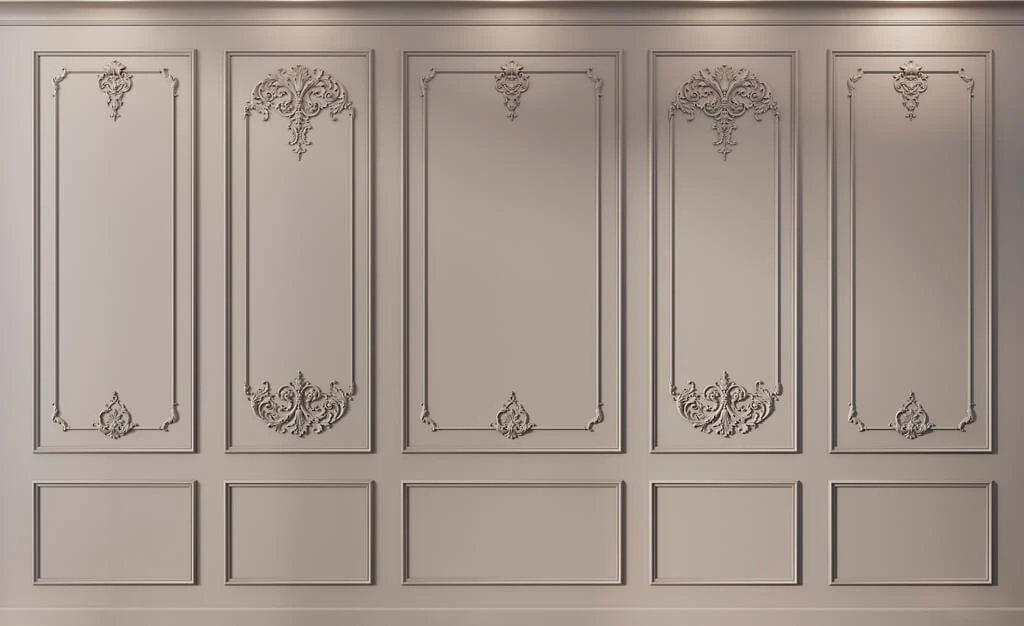
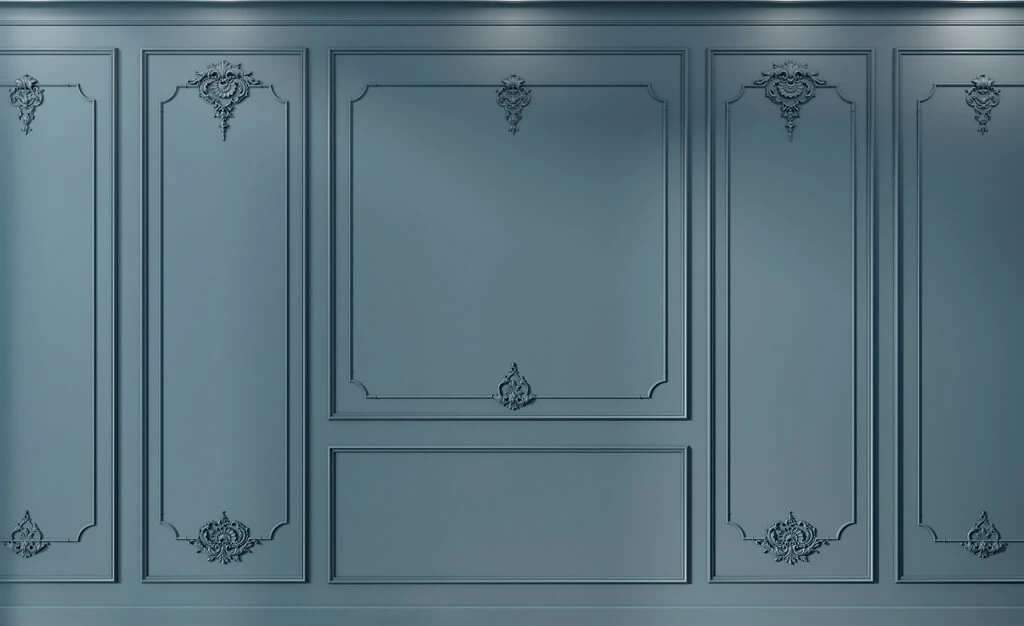
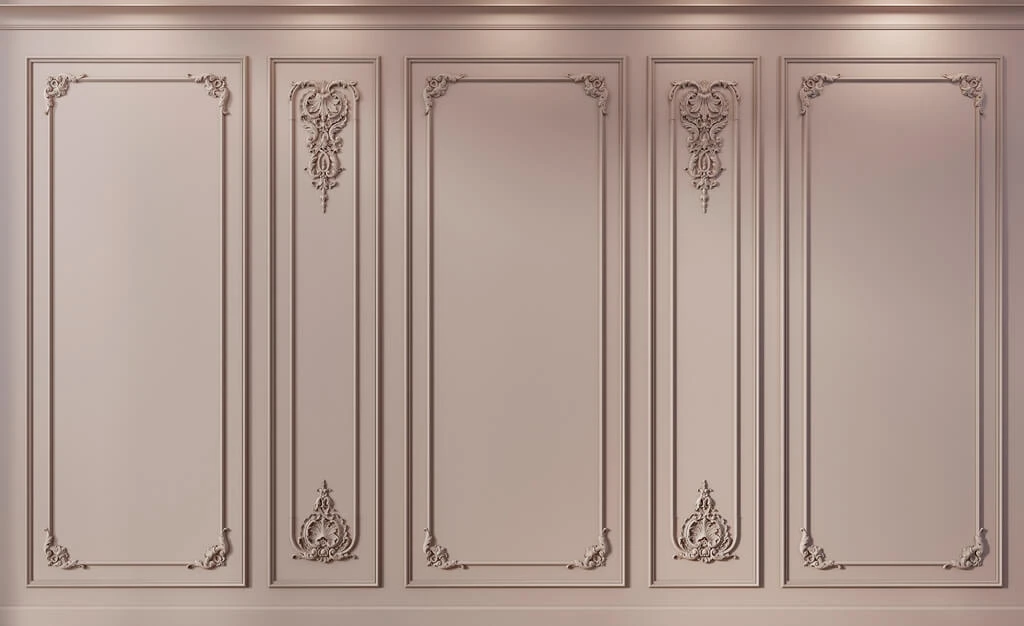
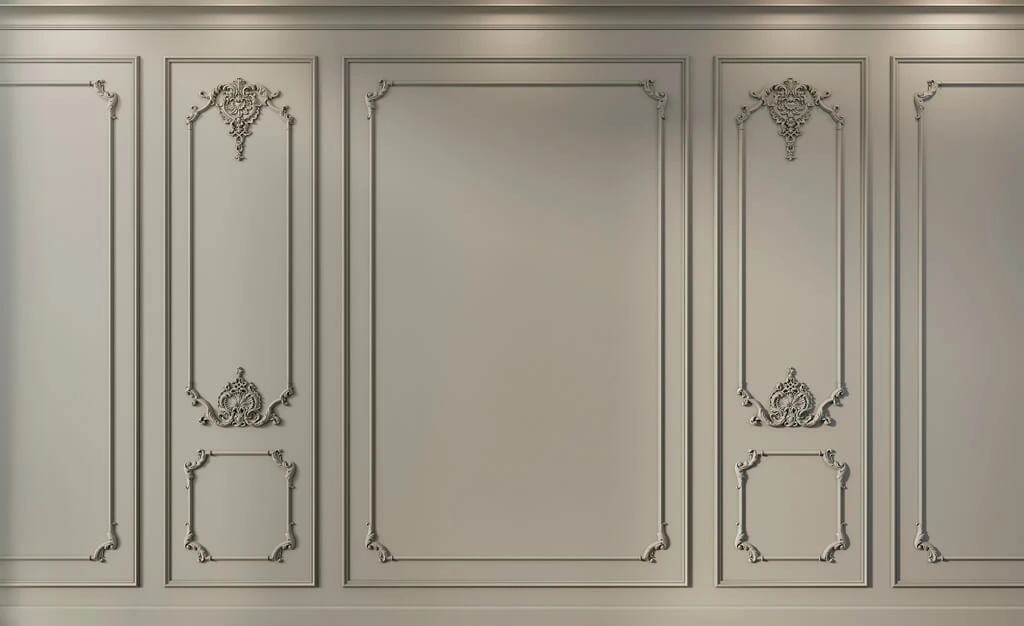
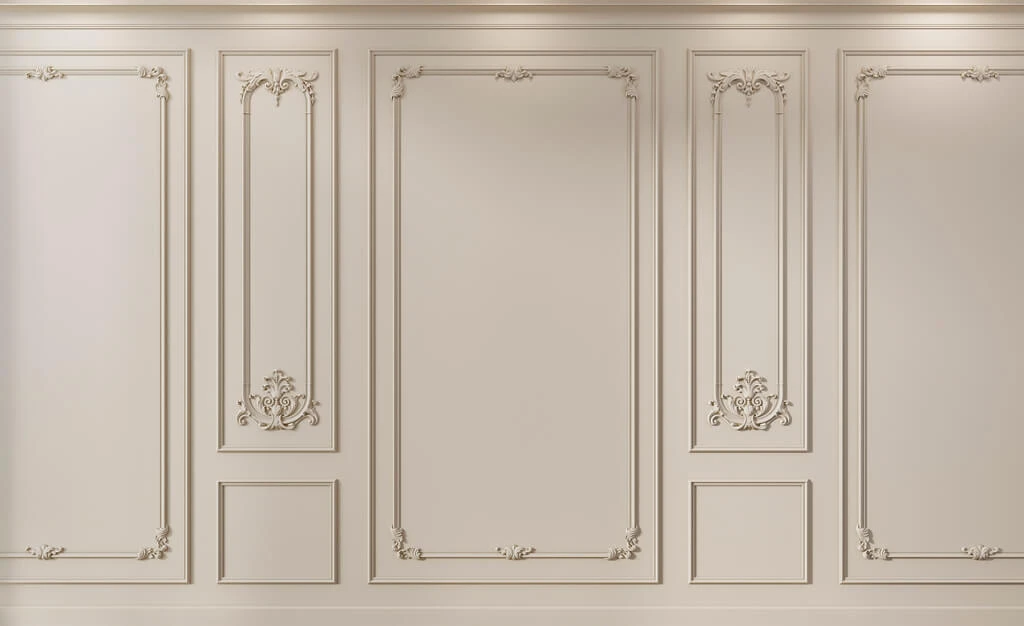
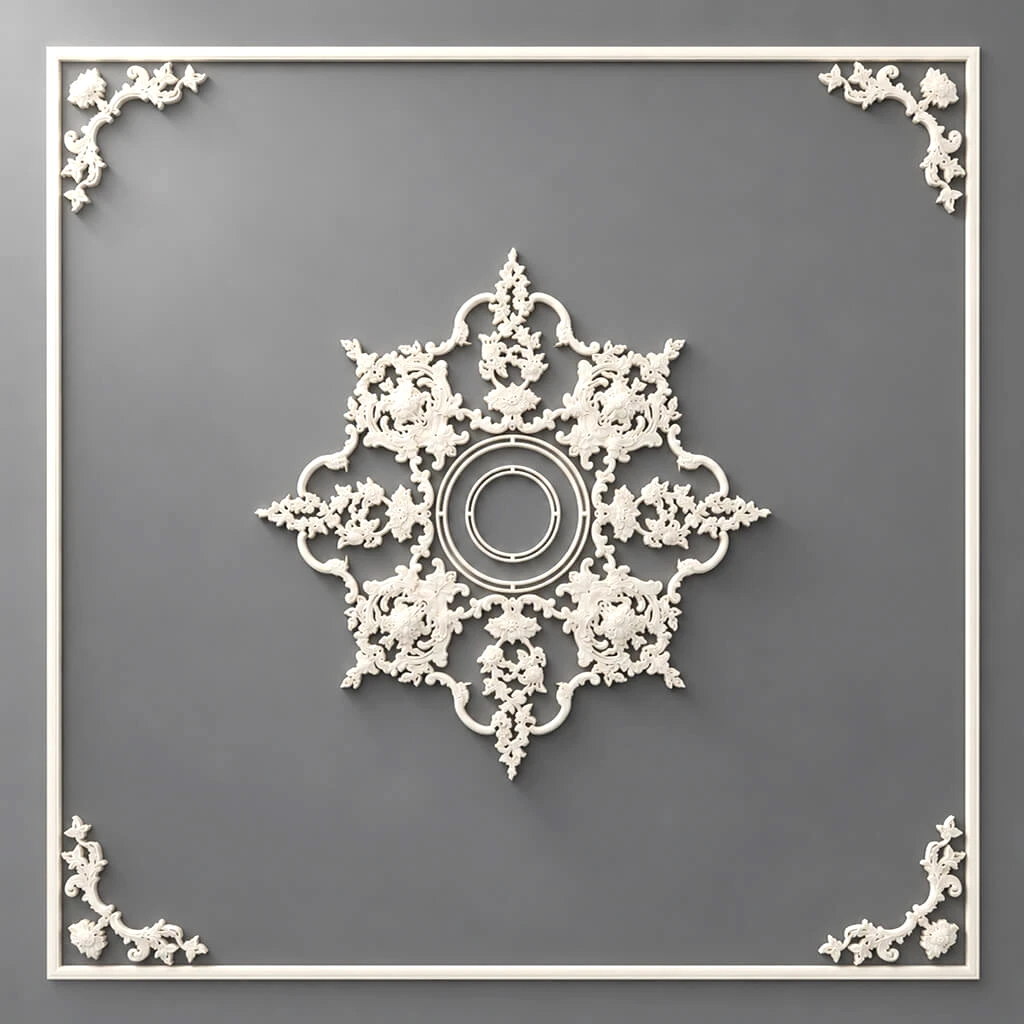






















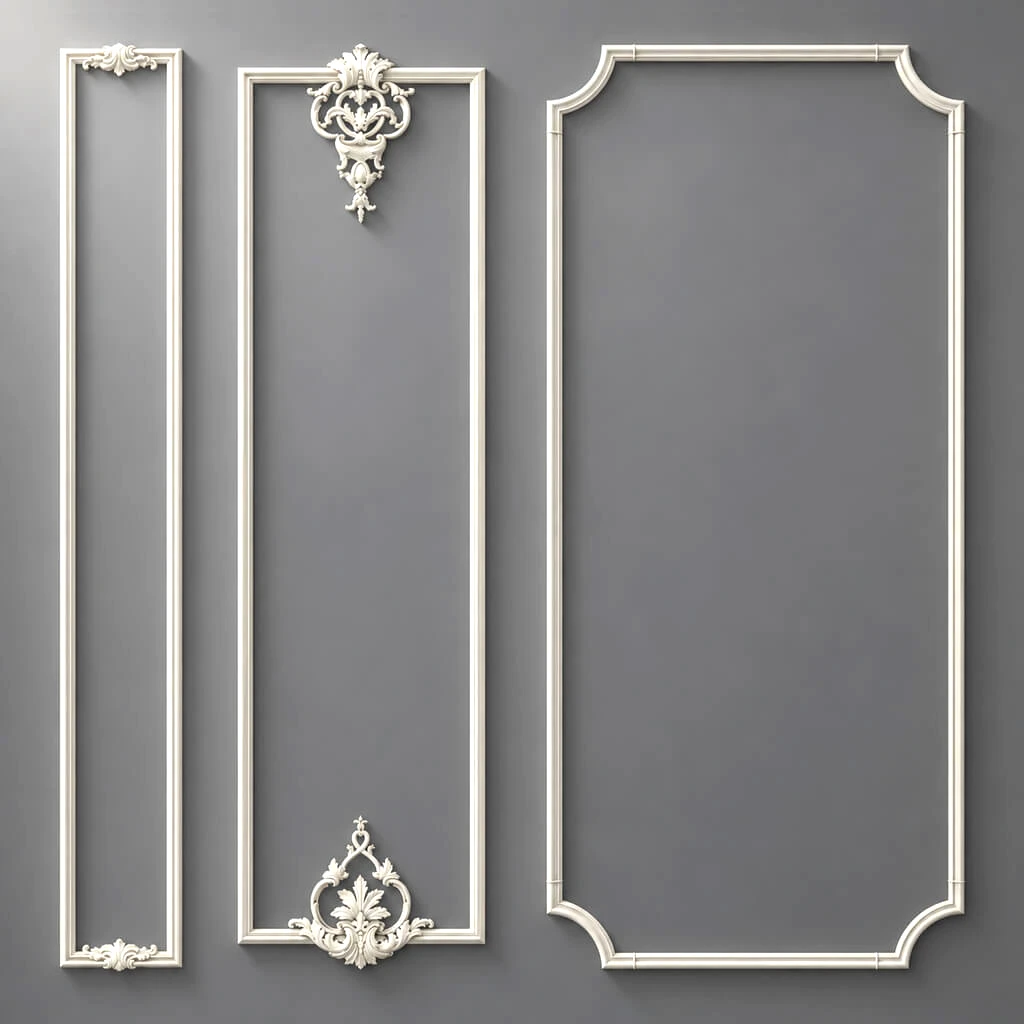
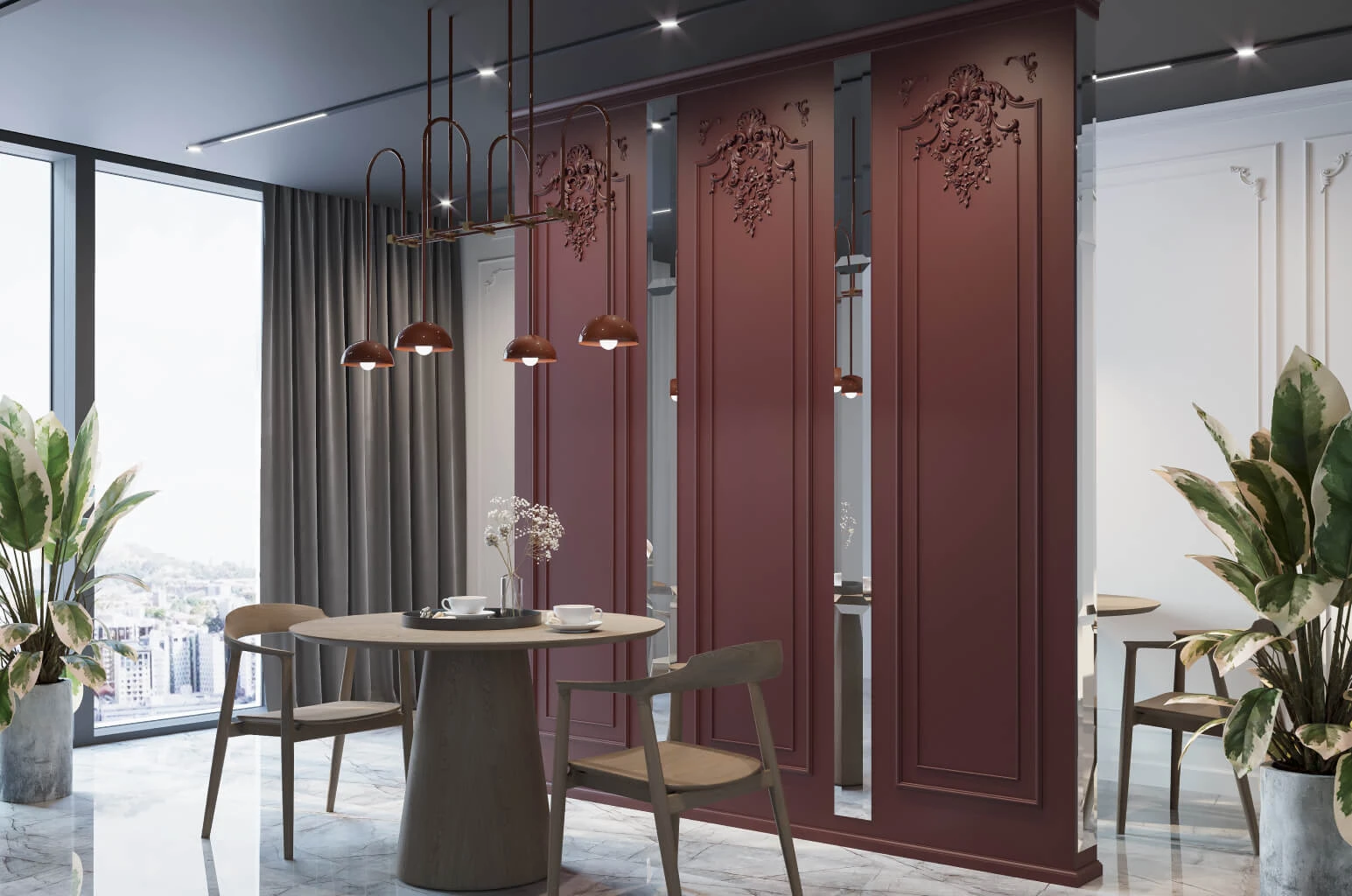
Decor idea for wall panels "Versailles Light" INTPU-017
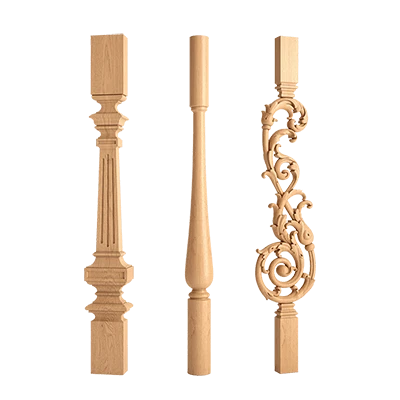
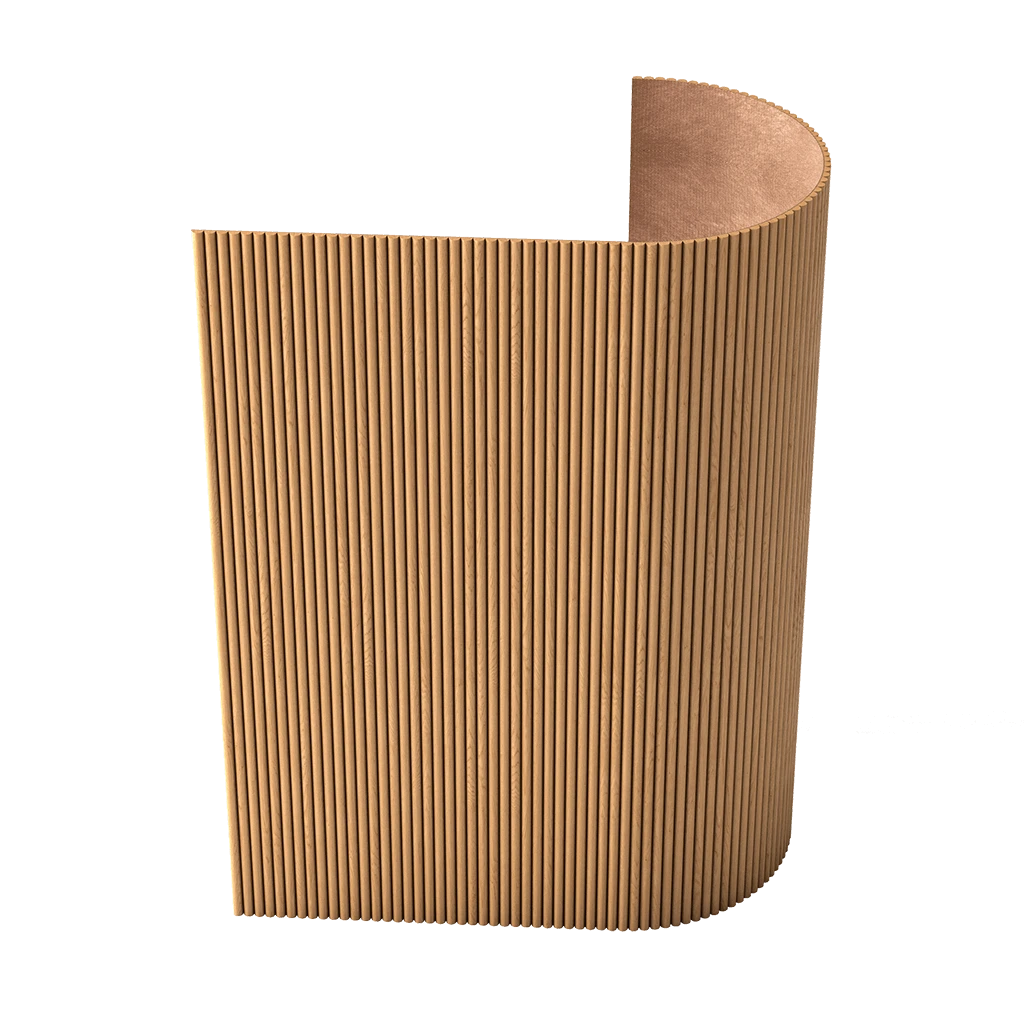
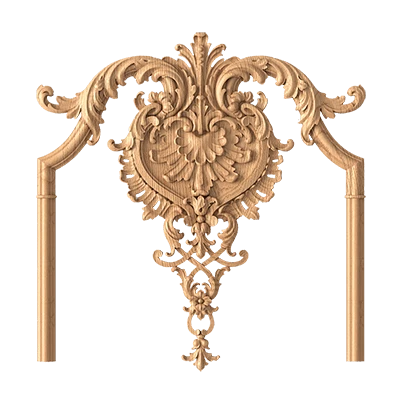
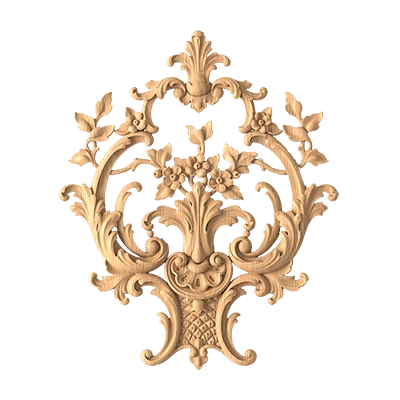
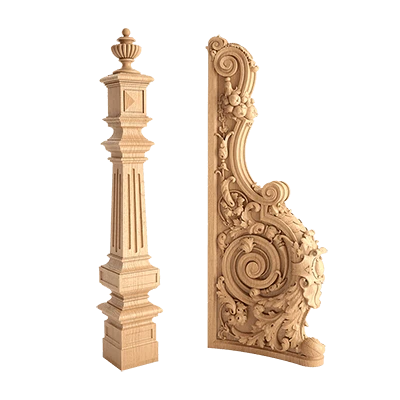
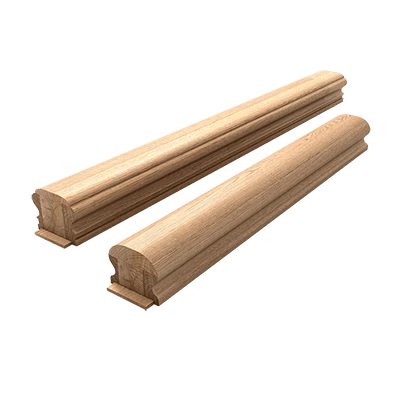
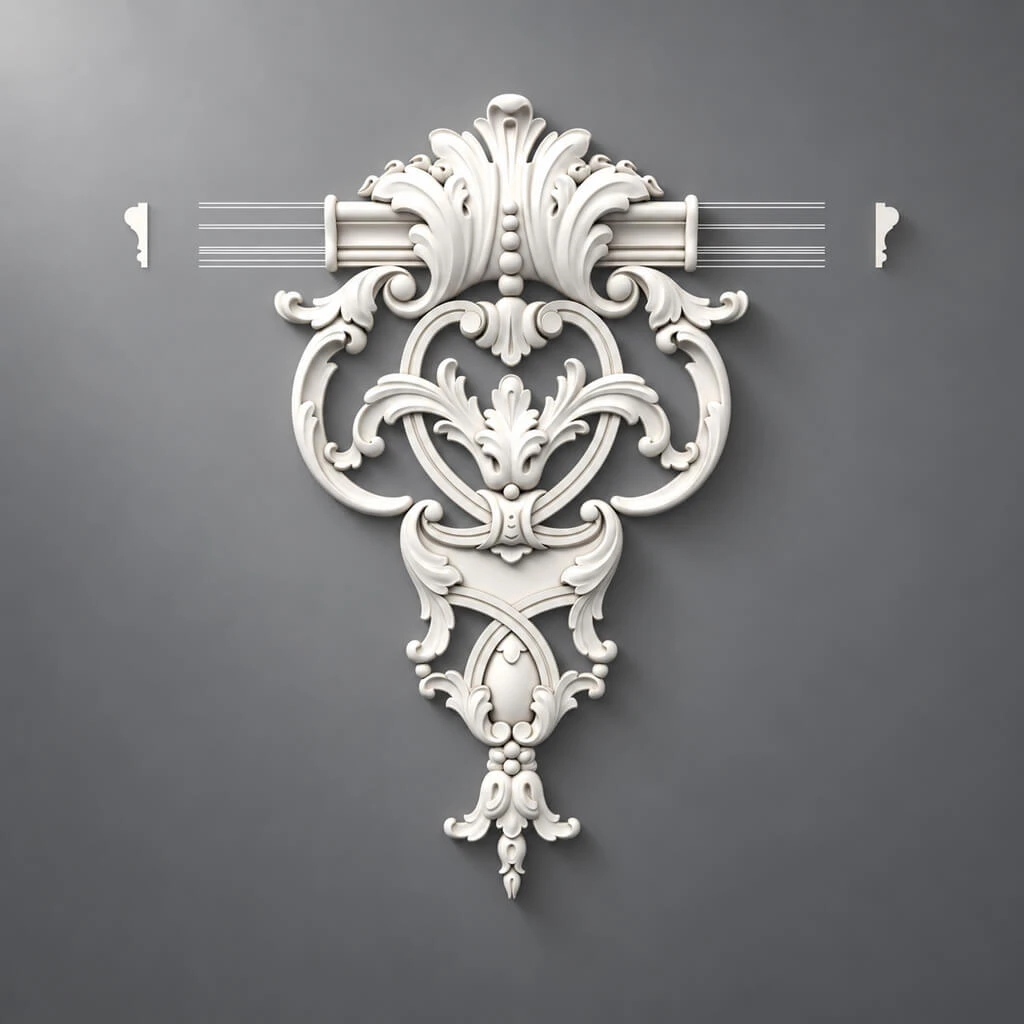
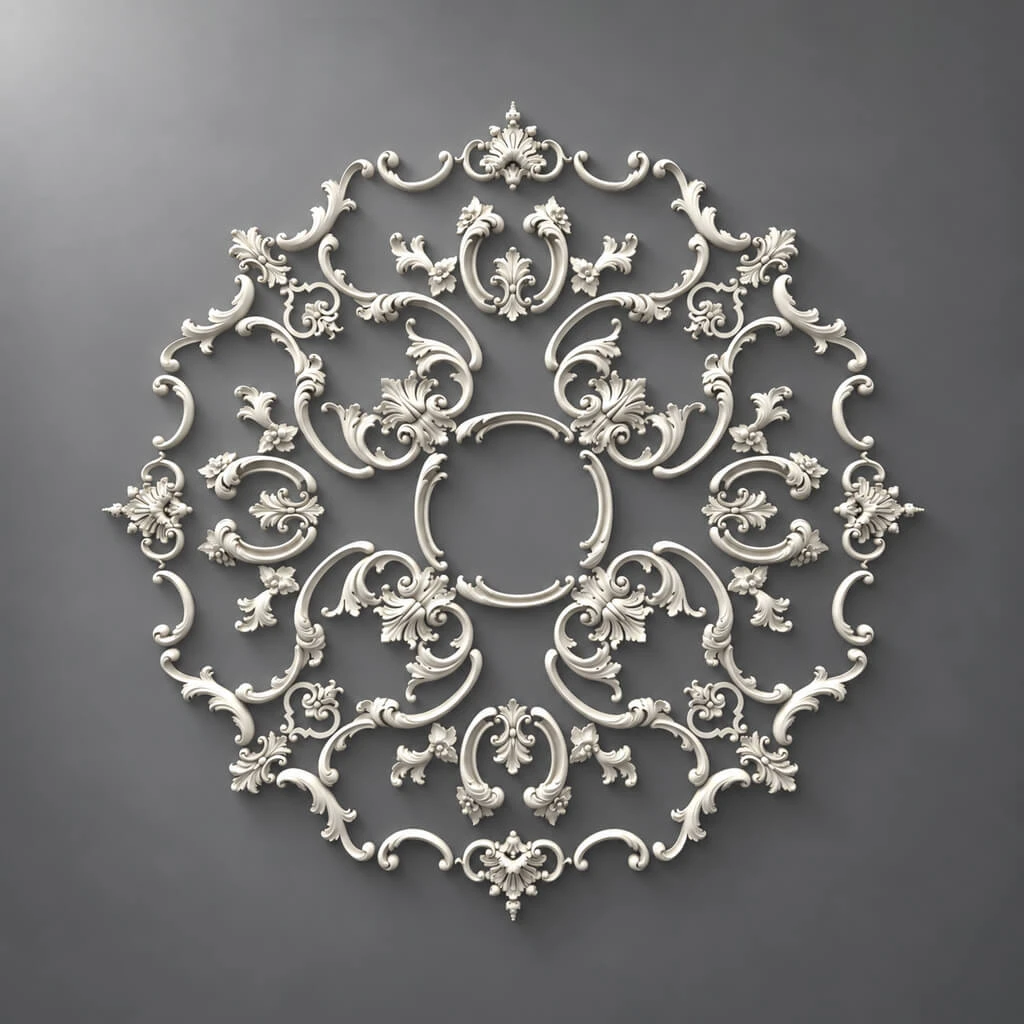
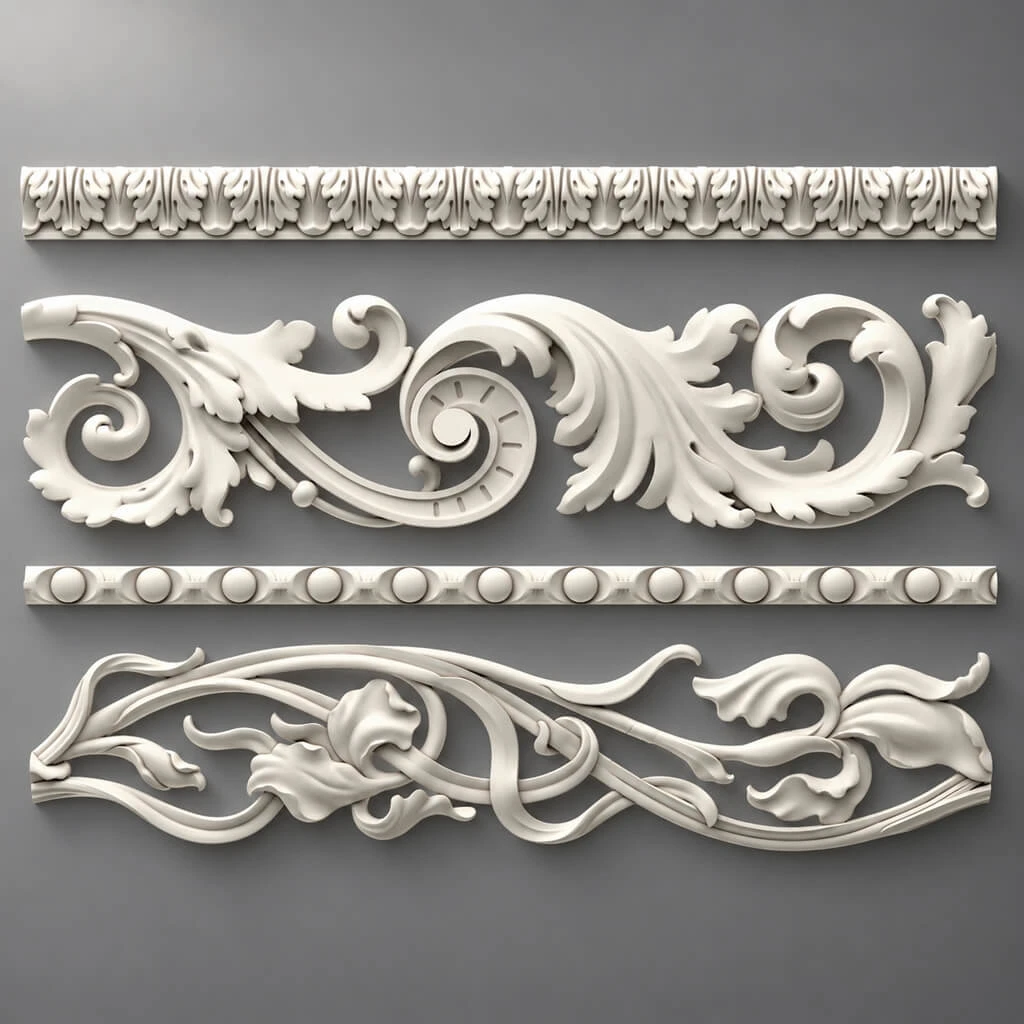
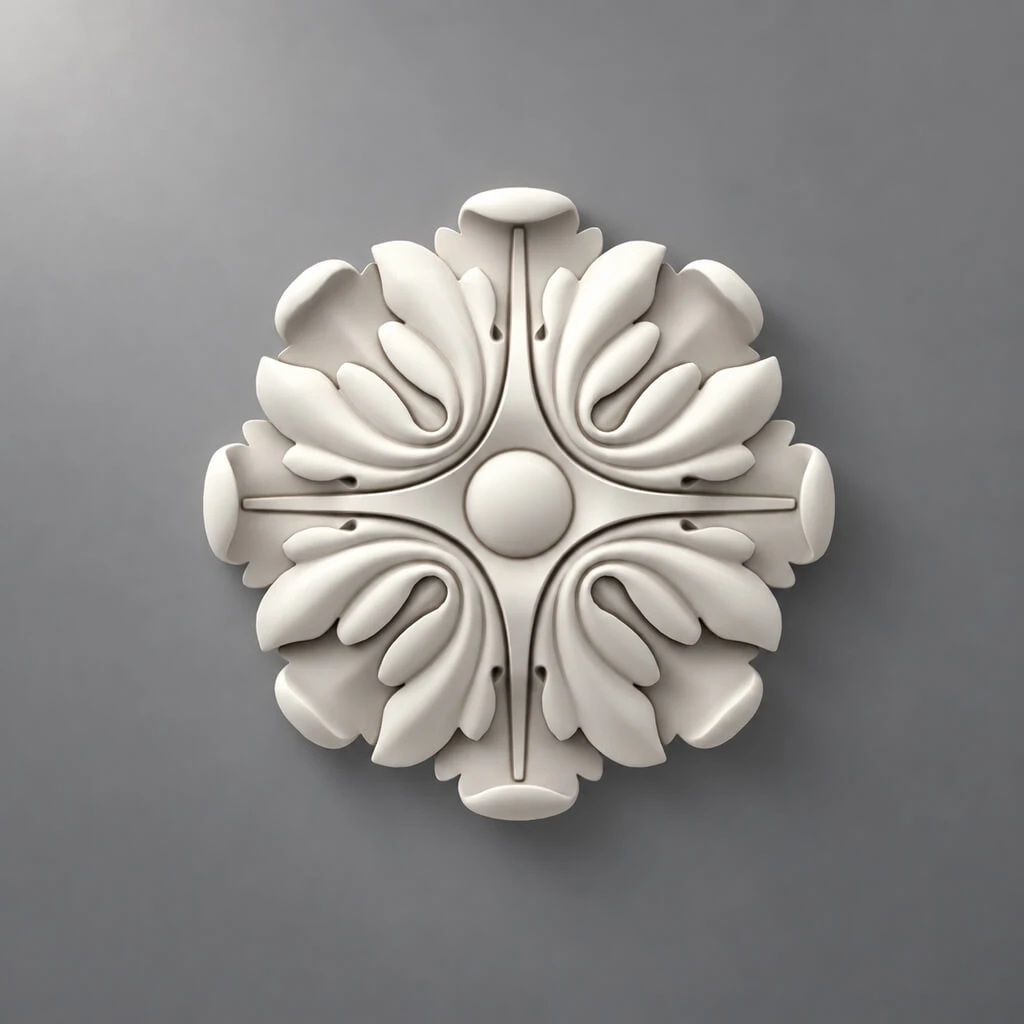
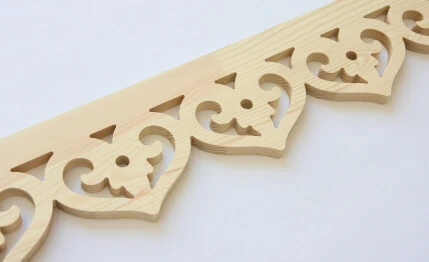
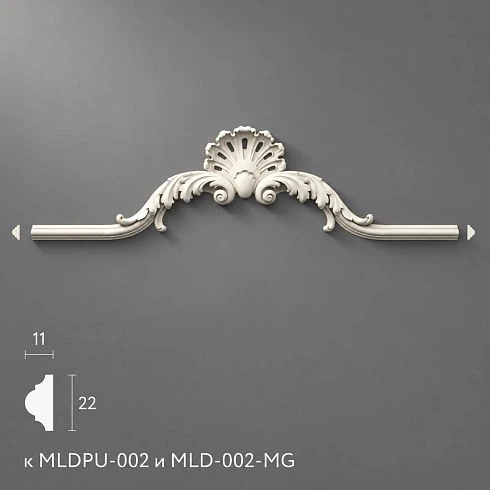
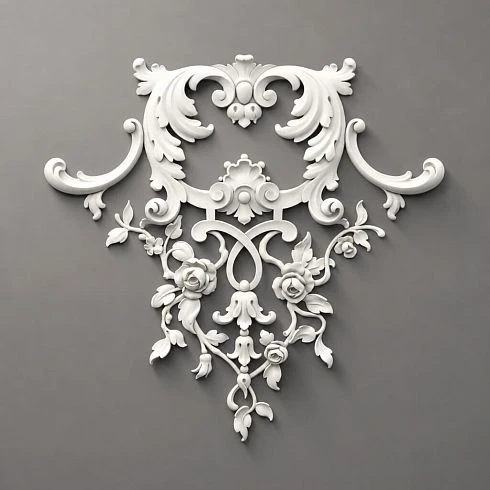
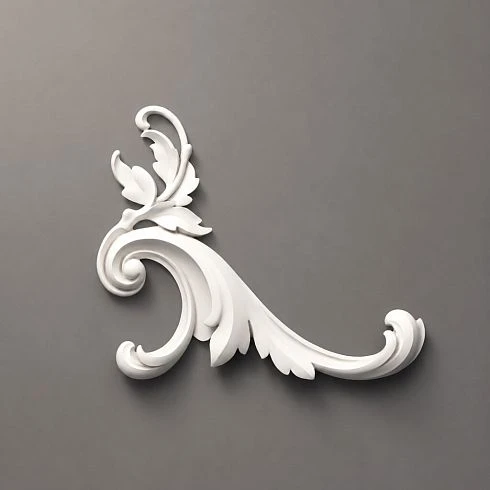
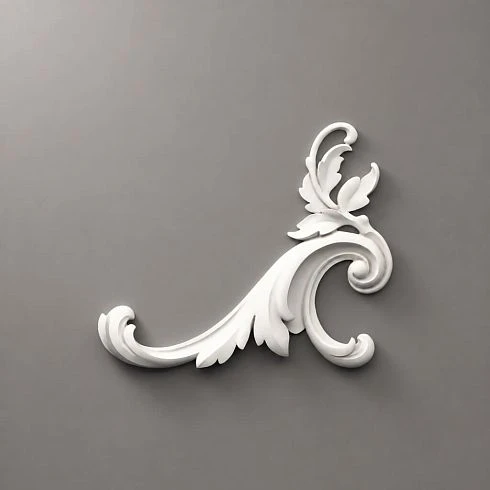
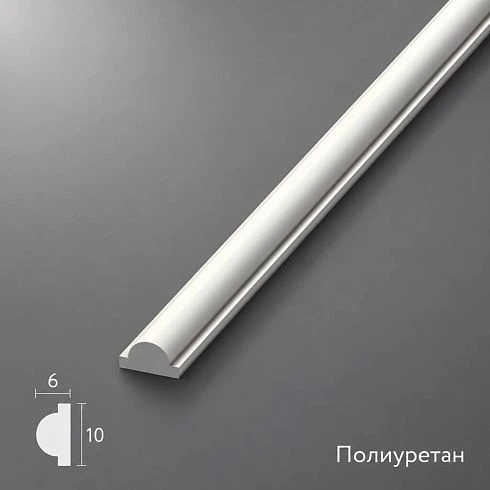
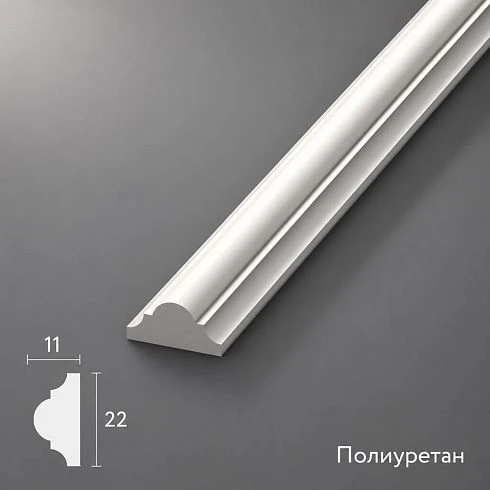
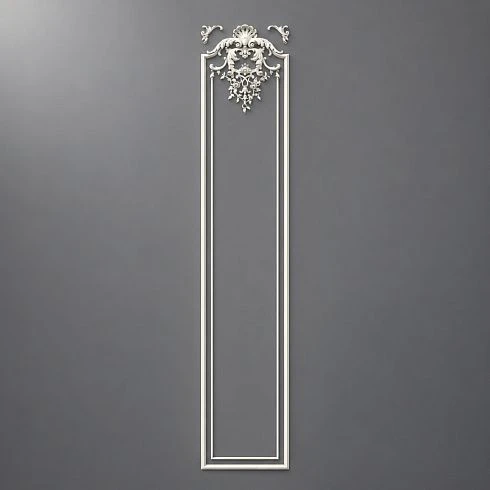
Used elements from the STAVROS array
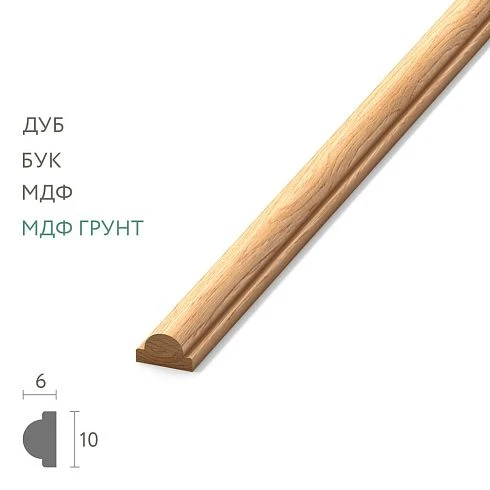
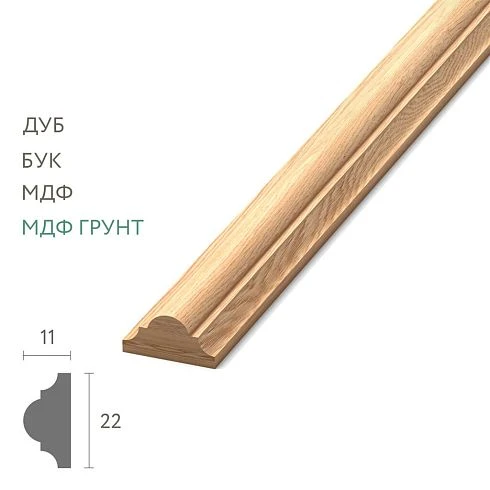
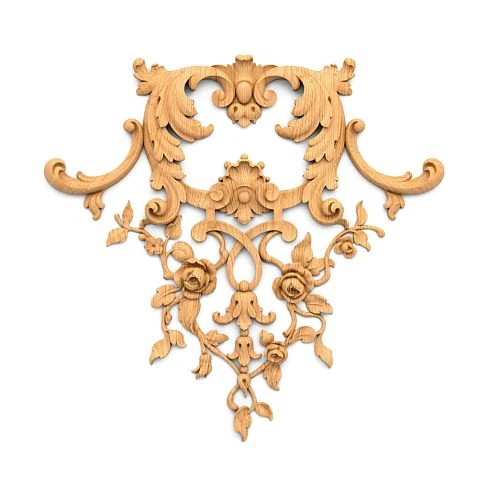
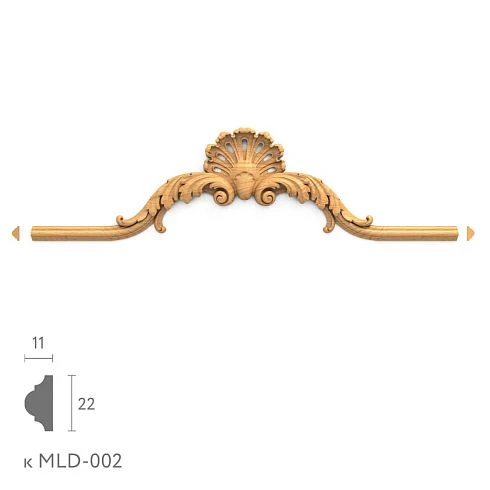
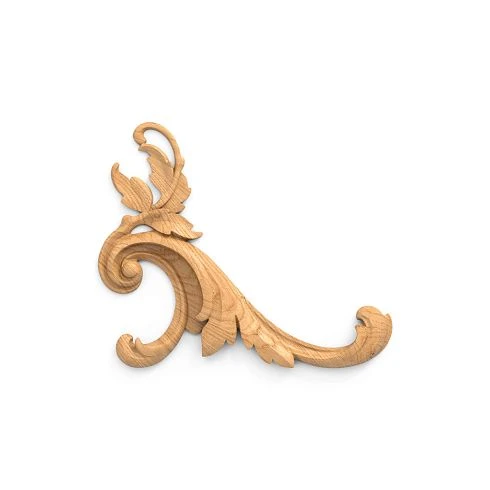
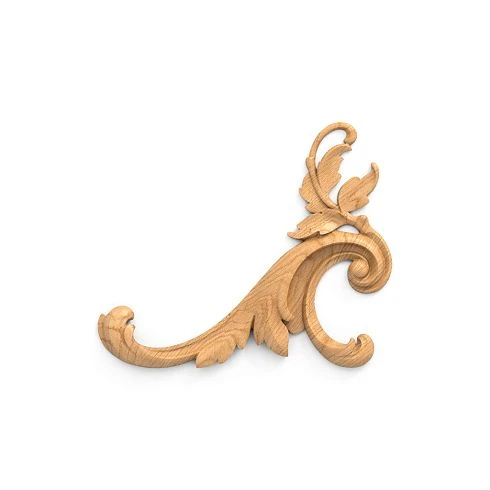
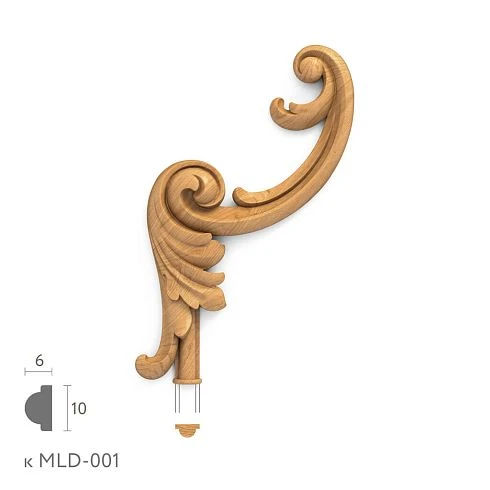
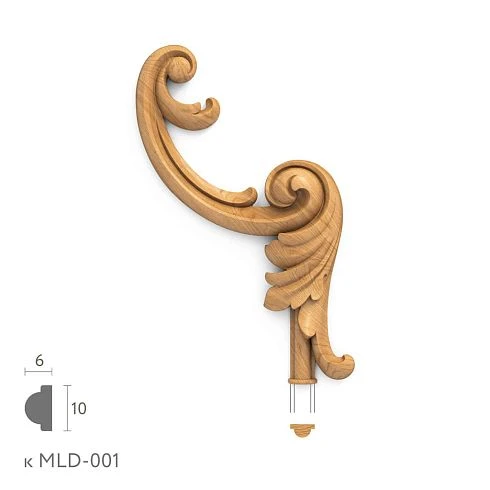
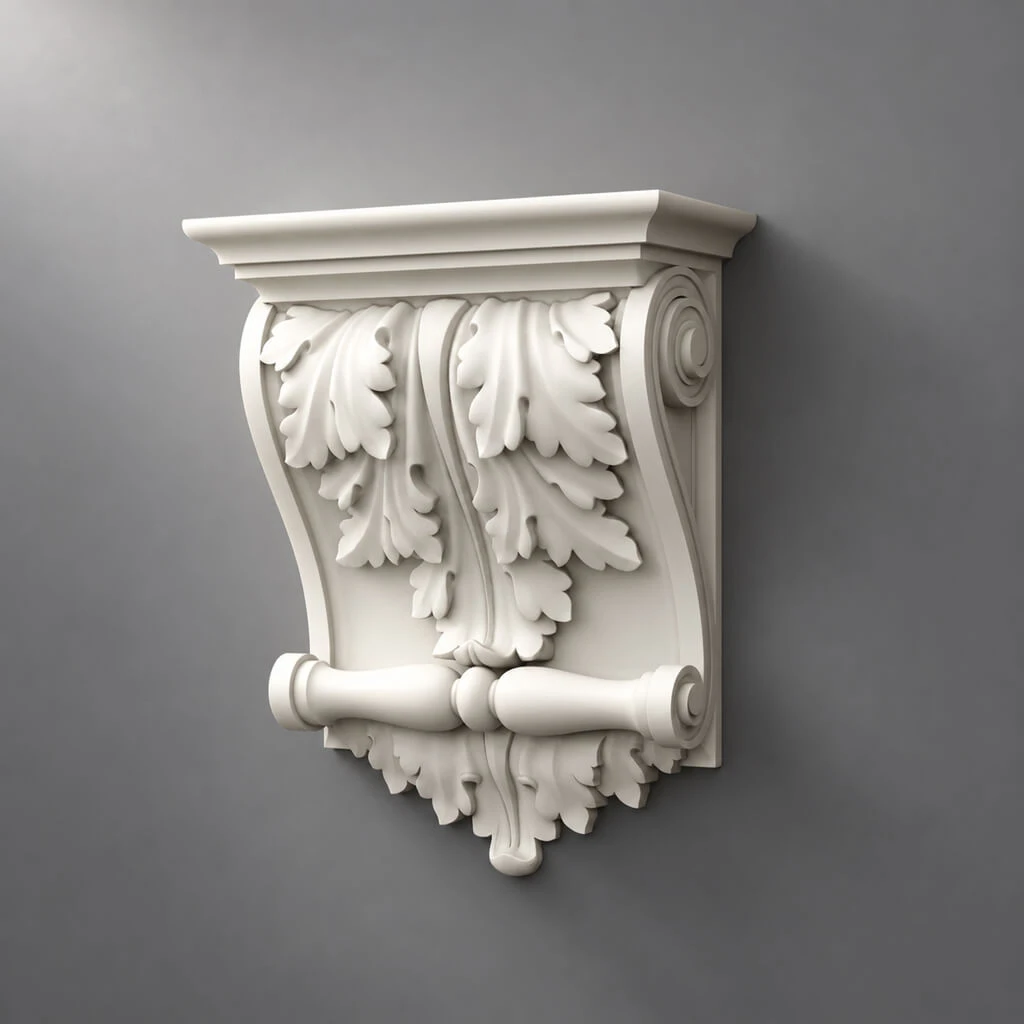
Polyurethane elements used: STAVROS
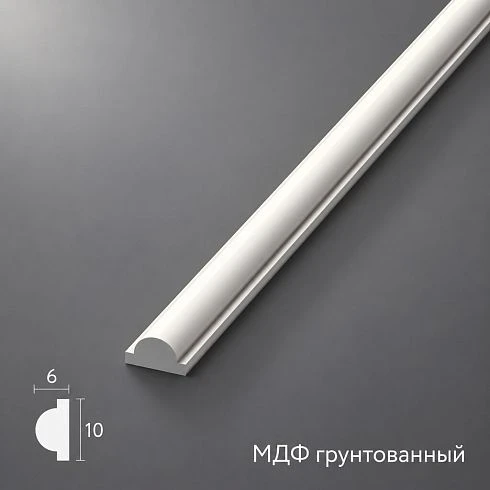
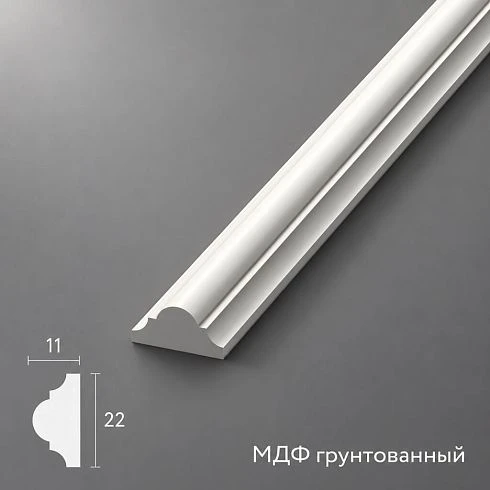
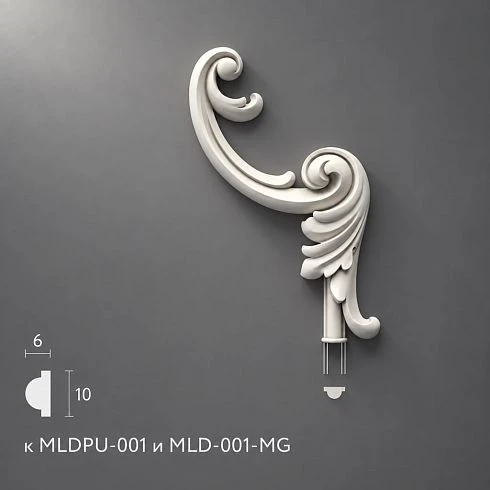
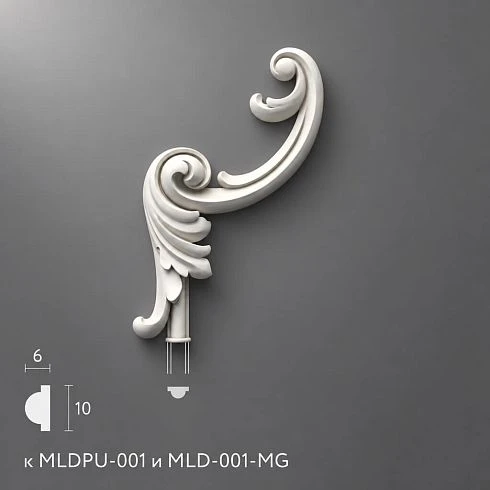
We will help you implement the project
Measurements
You send us furniture, interior, and preferences dimensions
Design
Our specialists will create a project (paid service, from 2000 rub.)
Kitting
After project approval, you receive a specification
Implementation
We will select partners in your city for painting and mounting decor
You may also be interested in
Frequently asked questions
Our showrooms are located in Saint Petersburg and Moscow. Production is located in Saint Petersburg.
Moscow contacts: /contacts_all/
Contacts of Saint Petersburg: /contacts_all/
Send us the product codes, quantities and delivery destination. Contact our team to confirm availability and order details.
Please contact us to confirm shipping availability, costs and delivery times for your destination.
Delivery cost depends on the size, weight of the item, and delivery address.
Please ask our team to confirm shipping costs and delivery arrangements for your destination before placing an order.
Prices and availability of items on the website are always current. Data is updated daily.
Note: items in stock are stored on the warehouse in unpolished form and shipped within 3 working days.
If the item is not in stock, average production time: 5–10 working days.
This is the quality of polishing of the items.
Standard — machine polishing, at a more attractive price.
Prestige — detailed hand polishing, items do not require further work.
More details: /information/kachestvo/
This is the type of veneer of the items.
Under enamel: produced by gluing wooden laminates without color and texture matching. Contrast tonal and textural differences are noticeable. This blank should be chosen if the item is intended for opaque coating.
Under tinting: produced by gluing wooden laminates with color and texture matching. Tonal and textural differences may occur. This blank should be chosen if the item is intended for semi-transparent finish.
More details: /information/kachestvo/
Beech — dense, non-porous wood, most often used for items covered with enamel.
Oak — dense, porous wood with clearly visible natural grain. Due to its strength and decorative properties, it is often used in items with semi-transparent coating, highlighting the wood pattern.
Custom-made, if non-standard items are required, we can produce products from other types of wood, including blanks provided by the customer, manufactured according to our technical specifications.
All our furniture legs can withstand a vertical load of at least 100 kg.
Average production time for custom-made items: 5–10 working days.
Most items are stored on the warehouse in unpolished form. We need time to polish and pack orders.
Yes, we manufacture non-standard items according to individual projects, but we only accept orders with a minimum quantity.
We can manufacture items of the desired size, but we only work with bulk orders. For details, please consult the sales department manager.
Yes, some of our products can be used outdoors. For example, polyurethane items, as well as carved door casings made of pine.
Other items are produced to order using PUR glue, if minimum quantity is available. No warranty is provided for such products, as outdoor conditions are considered aggressive.
Please contact our team to confirm available finishes, minimum quantities and a quotation for your order.
- Dust removal. After sanding, the surface must be dusted.
- Priming. Apply primer in an even layer.
- Matting. After the primer has fully dried, the surface should be matted (lightly sanded for better adhesion).
- Finish coating. Apply finish coating: lacquer or enamel, in 2 layers, with interlayer drying.
More details: /information/sovety/
Apply adhesive to the decor. Attach to the surface and press briefly. Then, remove the decor from the surface and leave it open for 3–5 minutes. Press the decor firmly onto the surface and hold for 5–10 seconds.
More details: /information/sovety/
Ideally, you should prepare a design project before placing an order.
You can do this yourself by downloading drawings of our products from our website, or you can order a project from us.
If the number of decorative elements and fittings is small, our company's manager can assist you with selection.
Unfortunately, this service is not provided.
The packaging method depends on the type of items, but in each case, we ensure sufficient protection for safe transportation.
We most often use corrugated cardboard and stretch film. Fragile items are additionally secured on a rigid base to prevent damage during transport.
Please confirm the minimum order quantity for your selected products and finishes with our team.
Please contact our team to discuss measurement and installation requirements for your project and destination before ordering.
Also see
Idea for decorating wall panels Versailles Light INTPU-017 for interior zoning
Open plan is freedom and space. But behind this freedom lies a serious design challenge: how to divide the kitchen, dining room, and living room so that each zone feels independent without losing the unity of the entire space? A solid wall is too radical. Curtains are too temporary. Furniture arrangement is too conditional. A decorative partition with moldings, stucco overlays, and mirror inserts is the precise answer.
The idea of decorating wall panels "Versailles Light" INTPU-017 is a ready-made solution for zoning a kitchen-living room, decorating a dining area, and creating an architectural accent in a neoclassical interior. Burgundy wall panels, strict moldings, stucco ornamental overlays, and vertical mirror inserts combine into a single decorative system that simultaneously divides the space, adds depth, and creates that "expensive" look of the interior — without heavy pomposity, with a confident neoclassical character.
Wall decor in neoclassicism always balances between two risks: excess and emptiness. INTPU-017 finds the balance point: enough ornament for the interior to be classic; enough restraint for it to remain modern and lively.
What is the INTPU-017 idea
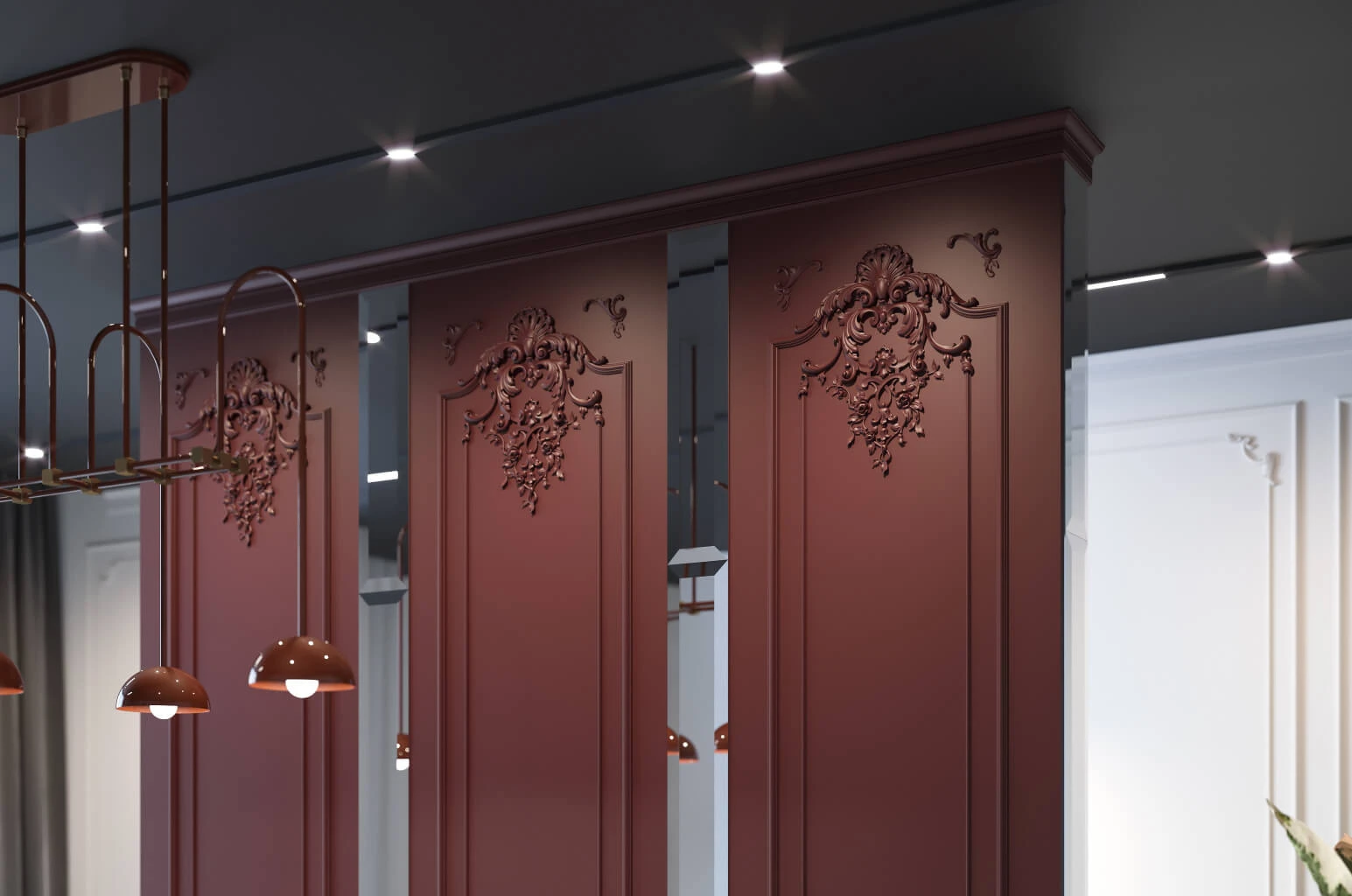
The photo shows a clear architectural logic. Vertical panels in a rich burgundy-wine shade alternate with narrow mirror inserts — they break up the wall monolith, add light reflection and visual depth. Moldings around the perimeter of each panel form strict rectangular frames with classic geometry. At the top of the panels are stucco overlays — ornamental elements in the "Versailles Light" style: elegant but not overloaded.
Pendant lights above the dining table are integrated into the vertical rhythm of the panels, enhancing it. Live plants create an organic contrast with the geometry of the moldings. The entire system works as a single decorative object, not as a set of randomly assembled parts.
The key feature of INTPU-017 compared to previous ideas: here, wall panels function not only as decor but also as a zoning tool. They create a visual boundary between zones without physically closing off the space. Mirror inserts further soften this boundary—they reflect the adjacent space, maintaining a sense of openness.
What makes INTPU-017 recognizable
-
Rich burgundy-wine shade of the panels—a strong color accent
-
Alternation of solid panels and vertical mirror inserts
-
Classic molding frames around the perimeter of each section
-
Decorative stucco overlays in the upper third of the panels
-
Vertical rhythm working as an architectural rhythm of the partition
-
Connection with the dining area: table, lights, plants as part of the overall picture
-
Modern neoclassicism without palatial heaviness
The "Versailles Light" wall panels in INTPU-017 combine two qualities rarely found together: decorative richness and spatial lightness. This is what makes the idea work not only for formal interiors but also for everyday living spaces.
Where to use Versailles Light INTPU-017 wall panels
The wide range of applications for INTPU-017 is due to its dual function: it is both a wall decoration and a space zoning tool. It is this combination that opens up broad possibilities for the idea.
Kitchen-living room. The main and most obvious context. Decorative panels for zoning a kitchen-living room are a solution increasingly found in modern open-plan apartments. INTPU-017 makes such zoning architectural and prestigious.
Dining area. An accent wall next to the dining table is a classic technique that works in both apartments and restaurants. Decorating the dining area with moldings and stucco overlays turns an ordinary eating place into a full-fledged dining hall.
Living room. The wall behind the sofa or the wall opposite the window — both work well with INTPU-017. Burgundy panels create a powerful color accent that holds a large living space.
Hall and entryway. A decorative partition in the hall or an accent wall in the entryway with INTPU-017 greets guests solemnly and convincingly.
Study. The burgundy color and classic ornament are a combination traditionally associated with a representative workspace. Designing a study in neoclassical style with INTPU-017 creates exactly the image needed.
Restaurant. In a restaurant interior, the wall decoration behind the dining table is a key element of the atmosphere. INTPU-017 makes the restaurant seating area festive and photogenic.
Coffee shop and cafe. In establishments with a neoclassical concept, burgundy panels with moldings and mirrors create exactly the atmosphere guests come for — depth, warmth, the feeling of a "real place."
Hotel. In the hotel's restaurant area or lobby, INTPU-017 acts as a marker of the establishment's premium level.
Beauty salon and showroom. Where it's important to create a strong first impression and maintain it — the INTPU-017 decor handles this task precisely and without unnecessary words.
Zoning a kitchen-living room using decorative panels
This is perhaps the most relevant and commercially significant application scenario for INTPU-017. Modern apartments with open floor plans pose the same question to designers and owners: how to separate the kitchen from the living room without destroying the space?
A solid wall is a physical division that destroys spaciousness. A bar counter is practical but not always an appropriate solution. A sofa with its back to the kitchen is conditional zoning that doesn't work at the level of interior image. A decorative partition between the kitchen and living room is an architectural answer: it creates a visual boundary but does not close off the space.
INTPU-017 as a decorative partition works on several levels simultaneously. First, the burgundy panels create a clear color signal: a different zone begins here. Second, the mirror inserts preserve the feeling of openness — they reflect the adjacent space, maintaining a visual connection between the kitchen and living room. Third, the moldings and stucco overlays make the partition a full-fledged architectural element, not just a screen.
Zoning a living room and dining room using wall panels is a technique actively used in premium residential design projects. INTPU-017 translates it into an accessible format: without capital construction, without complex technology, without long implementation timelines. Decorative panels are mounted on an existing wall or on a lightweight frame structure — and the space is zoned.
Three zoning scenarios with INTPU-017
Scenario 1: Accent on the wall. The wall between the kitchen and dining area already exists — it just needs to be decorated. INTPU-017 is mounted on the existing wall, turning it from a neutral background into an architectural accent.
Scenario 2: Half-partition. A small decorative partition from floor to ceiling or from floor to a height of 180–200 cm, installed in an open space. INTPU-017 finishes both its surfaces — on the kitchen side and on the living room side.
Scenario 3: Niche or opening. If there is already a partial wall with an opening between zones, INTPU-017 decorates the piers on both sides, creating a ceremonial framed entrance from one zone to another.
Decorating the dining area in a neoclassical style
The dining area is a special place in the home. The family gathers here, guests are received here, conversations that are remembered happen here. The dining room interior should match this — be significant but not oppressive; beautiful but not distracting.
Decorating the wall behind the dining table in a neoclassical style with INTPU-017 creates exactly this context. The burgundy panels form a warm, deep background against which the dining table, chairs, and lighting fixtures look like a well-thought-out stage design. The stucco overlays add a vertical ornamental rhythm — it echoes the verticality of the chair legs and the lines of the lighting fixtures.
Decorating the dining area with moldings is a technique with history. In classical mansions, the dining hall always had wall paneling: panels, moldings, cornices. This is no accident — wooden or stucco paneling improves the acoustics of the space, reduces echo, and makes conversation at the table more pleasant. INTPU-017 reproduces this principle in a modern format.
Classic decor for the dining area with mirror inserts solves another practical task: mirrors reflect candles and lights, doubling the warm light in the evening. In restaurants, this technique is used everywhere — now it is also available for private interiors.
Mirror inserts in wall panels
Mirrors in INTPU-017 are not a random decorative element. They are built into the architectural logic of the composition and perform several functions, each of which adds value.
Visual depth. A narrow vertical mirror insert between two panels creates the illusion of space continuing — as if there is another hall behind the wall. This is especially valuable in small dining areas and kitchen-living rooms where every meter counts.
Light reflection. Mirrors reflect pendant lights, sconces, and daylight. Thanks to this, panels with mirror inserts in the interior look lighter and livelier than solid panels of the same area.
Lightening the partition. If INTPU-017 is used as a partition, the mirror inserts prevent it from looking massive and heavy. They restore transparency to the space while maintaining a visual boundary between zones.
Premium effect. Mirror inserts in molding panels create an image consistently associated with expensive interior solutions. Mirrors in classic molding frames have been present in the best European interiors for centuries. INTPU-017 translates this archetype into a modern, practical format.
Photogenicity. Mirrors reflect people at the dining table, lights, plants — creating a living picture that photographs well. For restaurants and cafes, this is a direct marketing tool.
How to properly position mirror inserts
The mirrors in INTPU-017 are positioned vertically — between wide panels, creating a rhythmic alternation. The optimal width of a mirror insert is 15–25 cm. Wider mirrors begin to dominate the composition and disrupt the balance with the burgundy panels. Narrower ones get lost and fail to provide the desired optical effect.
The height of the mirror insert typically matches the height of the main panel — from the lower horizontal profile to the upper one. This creates a clear vertical rhythm without unnecessary horizontal divisions.
What elements are used in the composition
Practical understanding of the INTPU-017 composition is important both for designers planning a project and for owners calculating a budget.
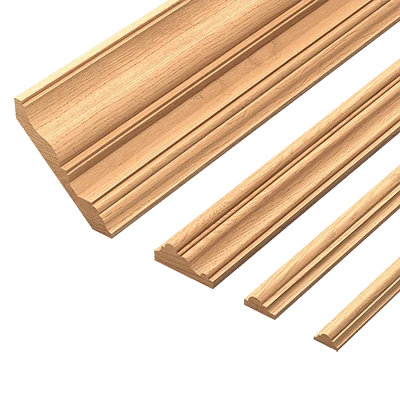
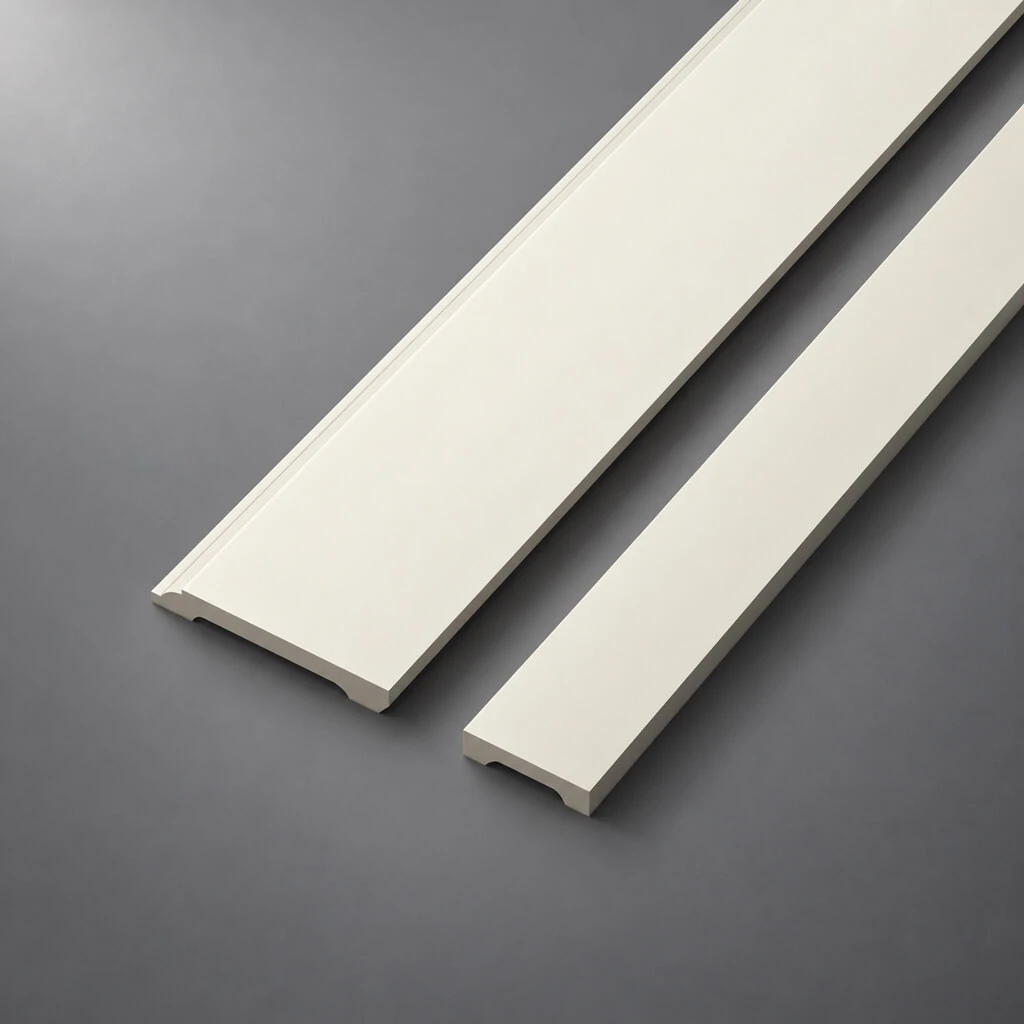
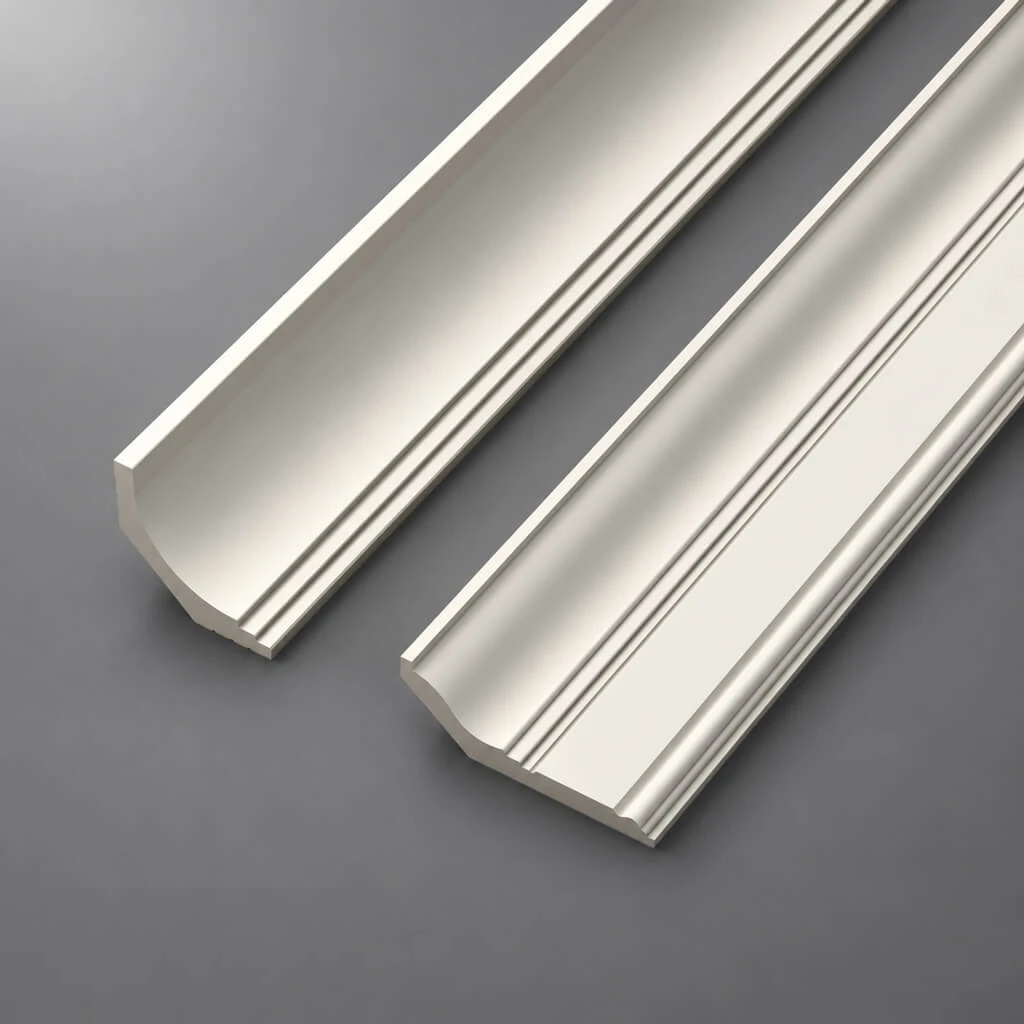
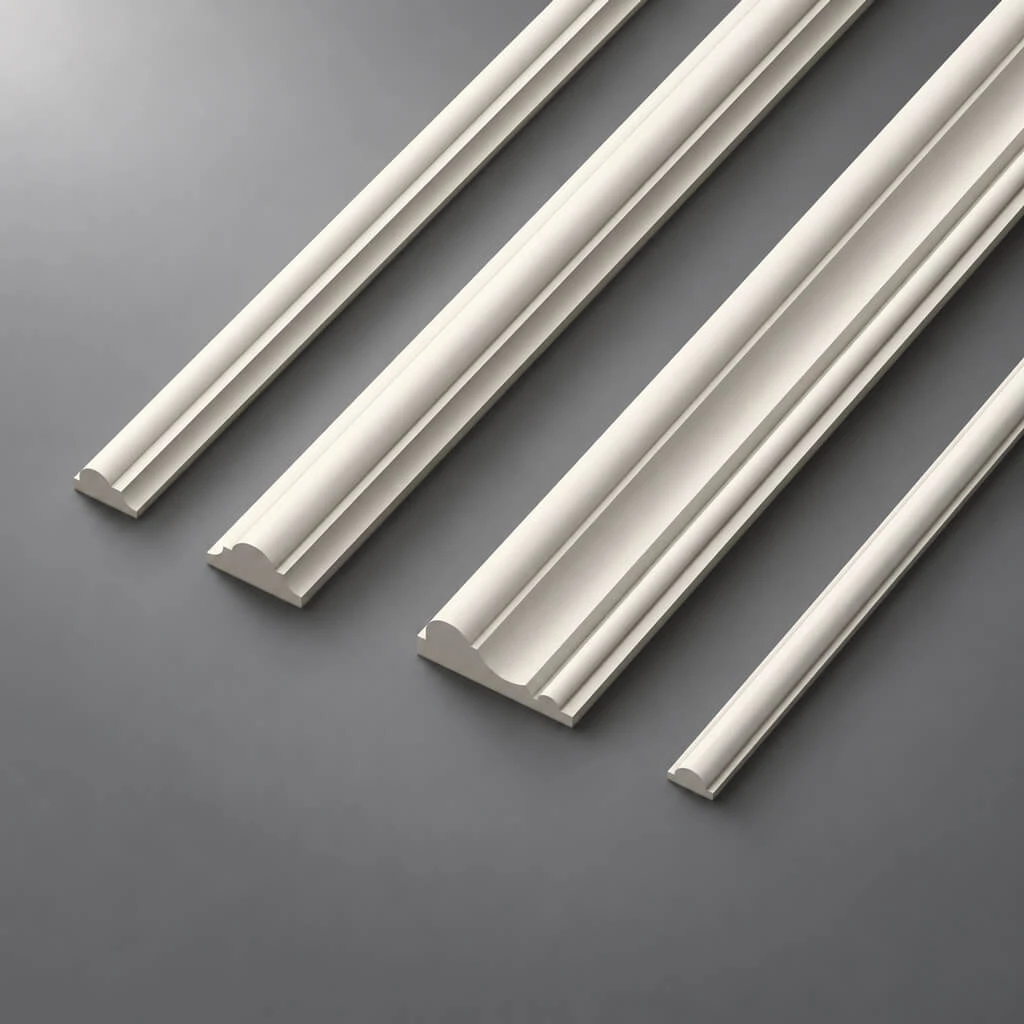
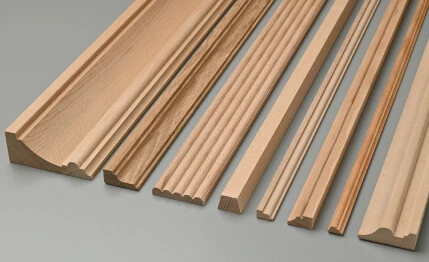
Moldings for frames — straight horizontal and vertical profiles that form rectangular frames around each panel. This is the structural framework of the entire composition. STAVROS polyurethane moldings are produced in several cross-section variants, allowing you to select a proportionally correct profile for any room height.
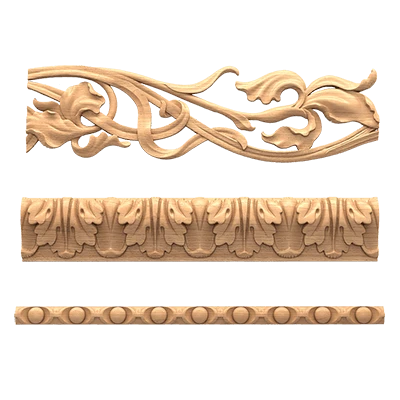
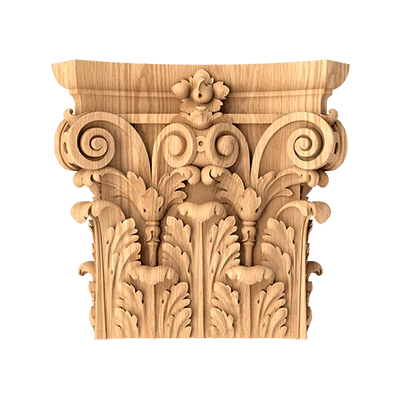
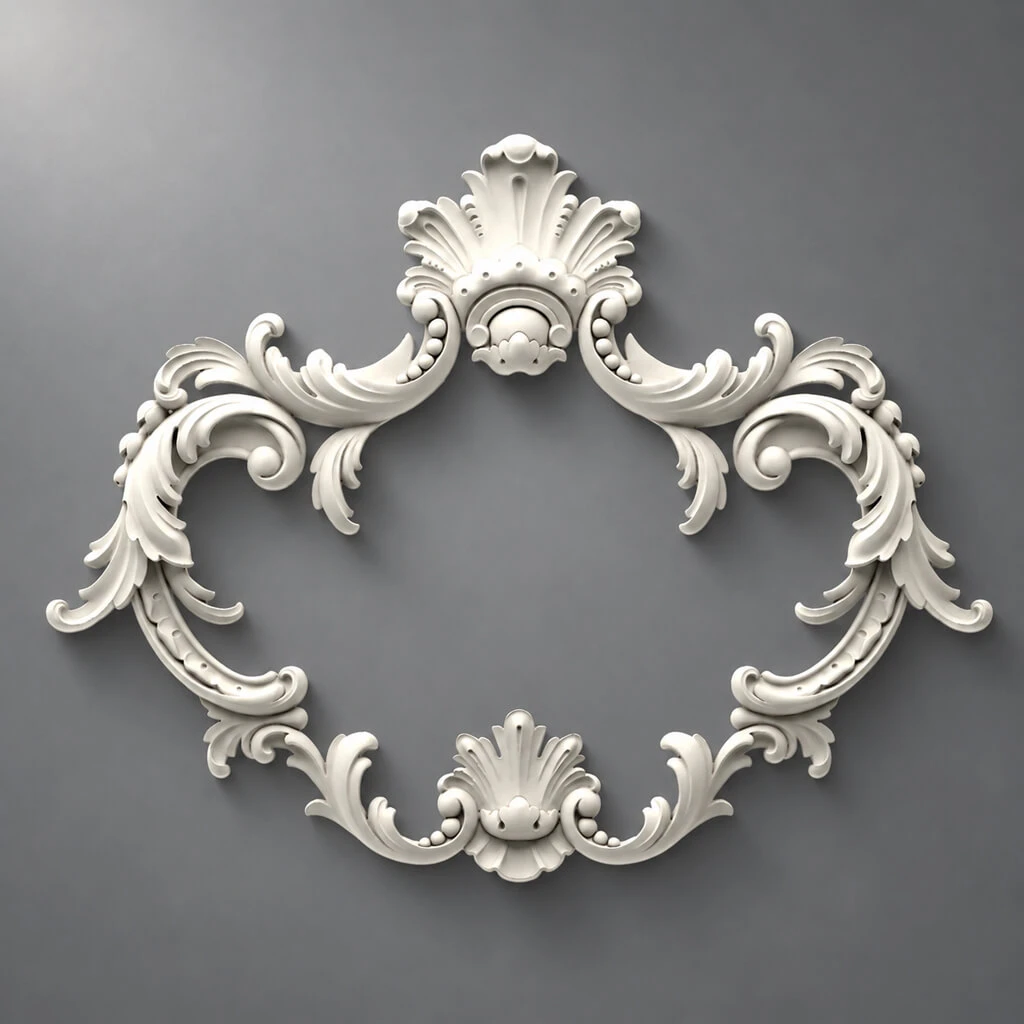
Decorative stucco overlays — the ornamental layer of the composition. In INTPU-017, they are located in the upper third of each panel, creating a vertical accent. STAVROS PU decorative overlays — a separate category of products with a wide range of ornamental forms in the classical and neoclassical spirit.
Vertical dividing profiles are thin moldings that create vertical pauses between wide panels and mirror inserts. They maintain the rhythm of the composition and create a neat border between the burgundy surface and the mirror.
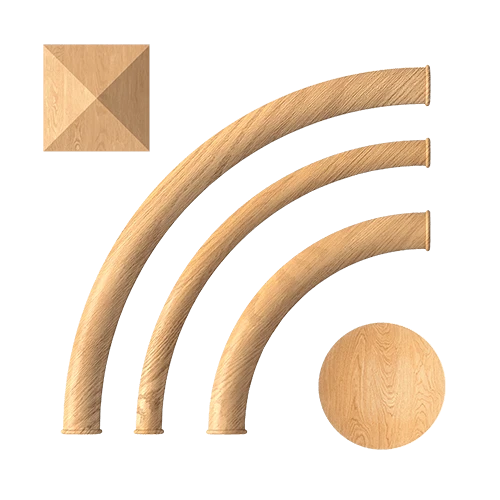
Corner elements are decorative blocks at the intersection points of moldings. They simplify installation and add ornamental detailing to the composition. Decor for STAVROS moldings offers a wide selection of corner blocks for different styles and scales.
The upper cornice is the top finish of the panel system. The cornice creates a clear horizontal boundary between the wall panels and the ceiling or the ceiling part of the partition.
The bottom finish is a baseboard or lower profile. Depending on whether INTPU-017 is a wall decoration or a separate partition, the bottom finish can be a baseboard attached to the floor or a horizontal profile at the required height.
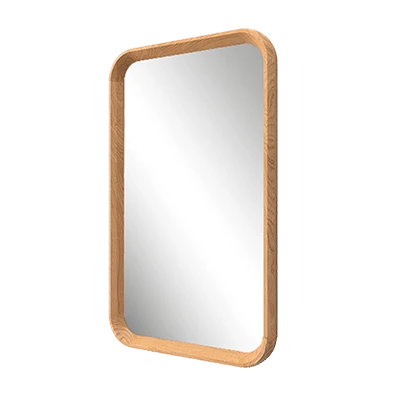
Mirror inserts are vertical mirrors installed in a molding frame between wide panels. The mirror is attached with glue or special mirror dowels and is framed with a thin vertical profile around the perimeter.
All decorative elements are part of the system of STAVROS polyurethane wall decor and are fully compatible with each other in style and installation technology. The combination of these elements forms an architectural system that can be accurately reproduced on any object — from a small apartment niche to a restaurant hall.
Polyurethane as a material for decorative partitions
When it comes to a decorative partition—a freestanding structure, not just wall decor—the requirements for the material increase. Polyurethane polyurethane products from STAVROS fully meet them: the lightweight material does not create excessive load on the partition frame, is resistant to mechanical stress, easily painted in any shade, and requires no specialized maintenance. At the same time, it is visually indistinguishable from historical plaster molding—precise relief, sharp edges, and accurate detailing.
What to pair with burgundy wall panels and stucco decor
INTPU-017 requires a well-thought-out context: burgundy is intense enough to be demanding of its surroundings. Properly selected materials and furniture enhance it. Incorrect ones conflict with it.
Light wood. A dining table, chairs, or bench made of oak or ash in a natural or light-toned finish creates a natural contrast with burgundy. The warmth of wood and the warmth of burgundy are allies, not competitors.
Marble floors and surfaces. White or light gray marble with thin veins is an ideal horizontal base for a vertical burgundy composition. The cool stone balances the warm shade of the panels.
Dark ceiling. An unexpected but powerful solution: a dark gray or anthracite ceiling acts as a "lid" that pulls together the entire vertical of the interior and makes the burgundy panels even more expressive.
Copper and bronze light fixtures. Warm metal supports the burgundy-classic palette. Pendant lights with bronze finish over the dining table are an ideal complement to INTPU-017.
Green plants. Several large plants—monstera, olive tree, yucca—create a living natural contrast with the classic geometry of the panels. In the photo of INTPU-017, it is the plants that add that sense of lived-in coziness that makes an interior feel real.
Light walls in adjacent areas. If INTPU-017 zones a kitchen-living room, it is better to keep adjacent walls neutral—light beige or white. The burgundy accent looks advantageous against a light background, without turning the entire space into a dark "tunnel."
Neoclassical furniture. Upholstered chairs, a dining table with wooden legs, straight-back benches — they rhyme with the geometry of INTPU-017 and support its neoclassical character.
Graphite or dark gray curtains. Heavy curtains in a neutral dark shade create a vertical accent that works in tandem with the vertical rhythm of INTPU-017 panels.
What does not go with INTPU-017
A few combinations to consciously avoid:
-
Bright colored furniture — red, blue, green accents compete with burgundy and create visual chaos
-
White furniture in large volumes — too sharp a contrast devalues the elegance of burgundy
-
Minimalist interior without decorative details — INTPU-017 requires context, not emptiness around it
-
Colorful textiles — multicolored pillows, bright tablecloths. Textiles here should be neutral
How to replicate the INTPU-017 idea in your interior
A practical guide for those ready to move from inspiration to action.
Step 1. Define the task. Decide what exactly is needed: pure wall decor or functional space zoning. This determines whether INTPU-017 will be wall decor or a freestanding partition on a frame.
Step 2. Measure. Measure the width and height of the area or intended partition. Note the location of sockets, switches, and other utilities.
Step 3. Divide into vertical modules. Determine the rhythm of alternating panels and mirrors. Standard INTPU-017 scheme: wide panel (60–80 cm) → mirror insert (15–20 cm) → wide panel → mirror insert. Specific sizes are adjusted to the total wall width.
Step 4. Choose locations for mirror inserts. Ensure mirrors are placed opposite light sources — they will reflect and multiply it. In dark corners, mirrors work less effectively.
Step 5. Select moldings and overlays. Choose the molding profile and style of stucco overlays from the Versailles Light STAVROS collection. The size of the overlay should be proportional to the panel width.
Step 6. Paint color. Choose a shade. Burgundy is a strong and precise solution for INTPU-017. Alternatives: deep olive, graphite, dark green — preserve the same architectural logic while changing the emotional character.
Step 7. Top cornice and bottom finish. A cornice at the top and a baseboard or bottom profile at the bottom of the panel system are mandatory — without them, the entire structure looks unfinished.
Step 8. Coordinate lighting and furniture. Determine the placement of pendant lights before final panel installation — wiring is laid before decorative work begins.
Step 9. Installation. Laser level marking is the foundation of precise installation. Moldings are attached with glue, joints are puttied and sanded. Mirrors are installed last after final painting. The full technology is described in the guide installing polyurethane molding and professional guide installing polyurethane molding.
Step 10. Final painting. All elements — moldings, frames, overlays, wall or partition base — are painted in a single shade. 2–3 coats of acrylic paint with intermediate sanding. Mirrors are covered with painter's tape during painting.
Who the INTPU-017 idea suits
INTPU-017 has its own audience — those who see decor not just as decoration, but as a tool for space management.
Owners of open-plan apartments are the main target group. They need zoning that does not destroy the spaciousness but creates architectural order. INTPU-017 solves this task precisely and beautifully.
Owners of private houses furnishing spacious kitchen-dining rooms or formal dining halls.
Interior designers working in classic, neoclassical, and "modern classic" segments. For them, INTPU-017 is a ready-made solution that easily fits into any open-plan project.
Architects designing living spaces with functional zoning using decorative means.
Owners of restaurants and cafes with a neoclassical concept. Wall decor behind dining tables is one of the main tasks of restaurant design, and INTPU-017 solves it convincingly.
Hoteliers creating restaurant areas, lobby bars, and waiting zones in a classic style.
Owners of showrooms and premium offices, where space zoning must be both functional and representative.
Developers of premium-class apartments and residential complexes, furnishing apartments with finishing.
Buy decor for Versailles Light wall panels
To realize the INTPU-017 idea means to correctly select elements and implement them in exact accordance with the logic of the composition. All necessary assortment is presented at STAVROS.
System entry point — Versailles Light collection by STAVROS: ready-made decor sets in a unified style, specially designed for classic and neoclassical interiors. The set elements are stylistically coordinated and intended for joint use.
For individual assembly, use several resources: Polyurethane wall decor — a wide range of wall decorative systems; STAVROS polyurethane moldings — profiles of different sections for frames, cornices, and dividing elements; PU decorative overlays — ornamental elements for accent placement; Decor for Molding — corner blocks, keystones, and rosettes to enrich joints.
All products are combined into the category polyurethane products from STAVROS, manufactured from high-density polyurethane with precise reproduction of classic profiles and ornaments. The material is ready for painting without additional treatment, resistant to mechanical stress, and retains its shape throughout its service life.
Buy decorative panels for zoning, buy Versailles Light moldings, buy stucco decor for walls, order wall decor in neoclassical style, buy a ready-made wall decor solution — all these tasks are solved through the STAVROS assortment. For large commercial projects — restaurants, hotels, residential complexes — wholesale supply conditions are provided.
The INTPU-017 idea adapts to any scale: a small partition in a kitchen-living room with an area of 4 square meters or a grand wall of a restaurant hall 12 meters long — the system logic remains, proportions are recalculated. This scalability is one of the main advantages of INTPU-017 as a design tool.
A space that is zoned smartly and decorated beautifully is something people notice immediately and remember for a long time. INTPU-017 is exactly such a solution.
Frequently asked questions
Is INTPU-017 suitable for a kitchen-living room?
Yes, this is one of the most organic application scenarios for INTPU-017. Decorative panels with moldings and mirror inserts create a visual boundary between the kitchen and living areas without physically closing off the space. Mirror inserts preserve a sense of openness and reflect light.
Can the idea be used as a full-fledged decorative partition?
Yes. INTPU-017 can be implemented on a freestanding lightweight frame structure. Moldings and panels are mounted on both sides of the frame, creating a two-sided decorative object. Mirror inserts are especially valuable in this case — they make the partition visually intangible.
Where is the best place to place Versailles Light INTPU-017 panels?
Optimal zones: the wall behind the dining table, the wall between the kitchen and living room, the wall opposite the dining room entrance, the restaurant area behind seating. In commercial interiors — the reception area, hotel lobby, cafe lounge zone.
Why are mirror inserts needed in decorative panels?
Mirrors solve three tasks simultaneously: visually expand the space, reflect and multiply light flows, make the partition lighter and airier. In the dining area, they reflect candles and lights, creating an evening atmosphere with minimal means.
Can INTPU-017 be implemented in a different color, not burgundy?
Yes. Polyurethane moldings and panels accept any paint. The same compositional principle in a deep olive, graphite, dark green, or petrol shade gives a completely different emotional reading with the same architectural logic.
How to calculate the number of elements for a specific wall?
For the calculation, you need to know the length and height of the wall, the desired width of the panels and mirror inserts, and the height of the ornamental overlays. STAVROS specialists assist with calculations when you provide the exact room dimensions and zoning task.
Is it difficult to install mirror inserts?
No, if you follow the sequence: first install all moldings and frames, then perform the final painting, then install the mirrors. The mirror is glued with a special mirror adhesive and framed with a thin vertical profile around the perimeter. The joints of the profile with the mirror are additionally sealed with transparent silicone.