

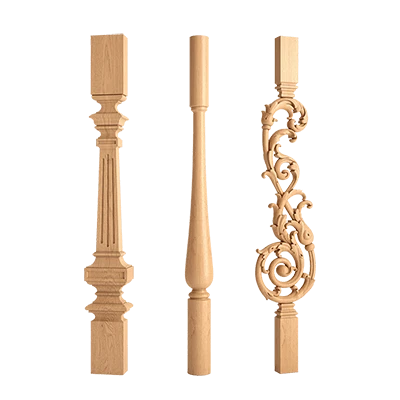
























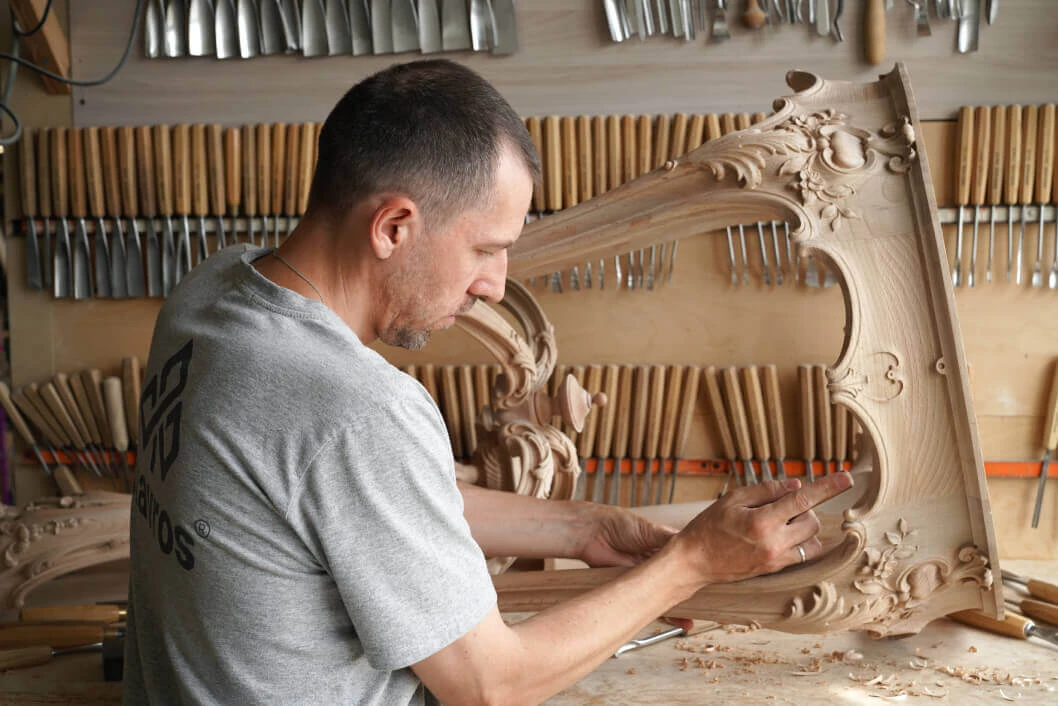
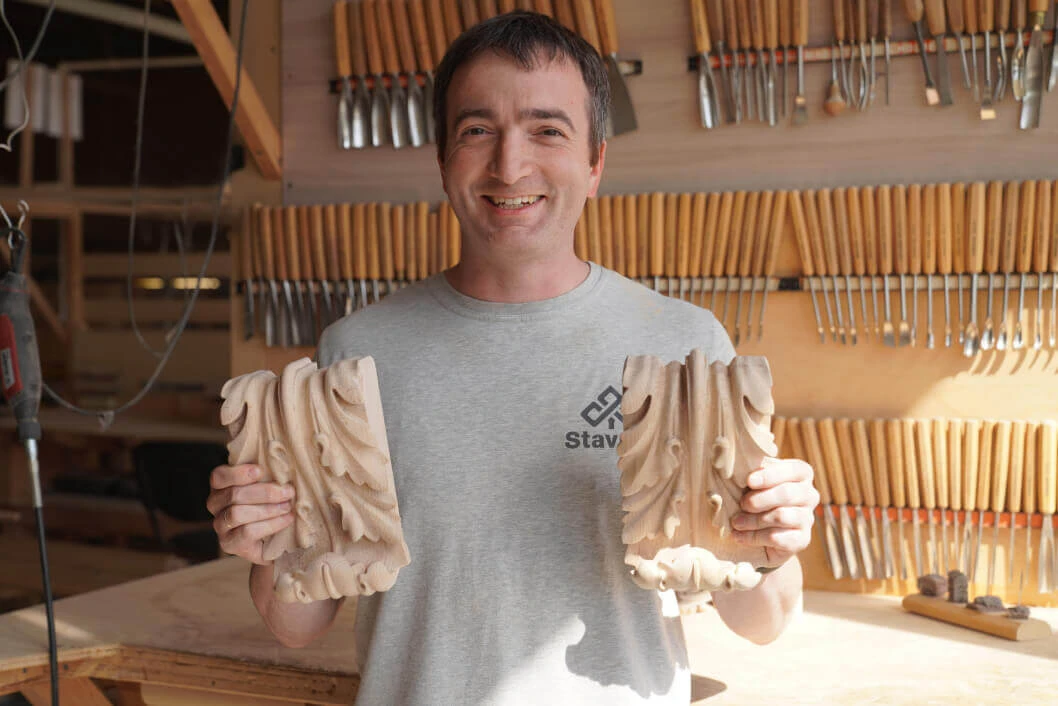
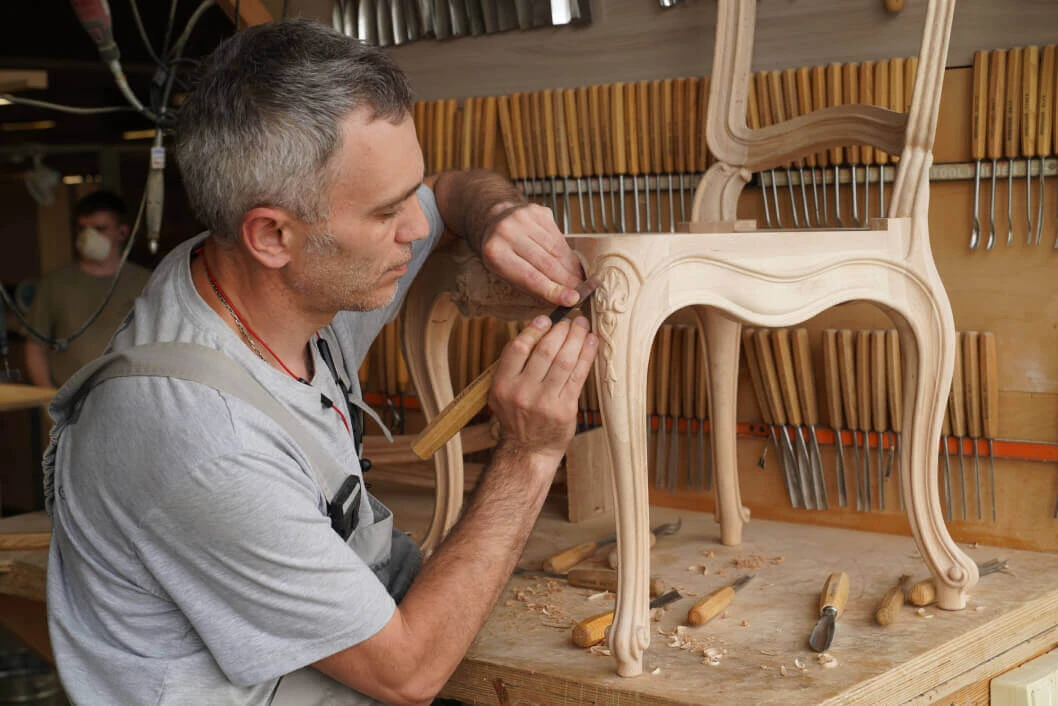
The company's success began in 2002, when two artists — Andrey Ragozin and Evgeny Tsapko — created a small creative workshop for producing wooden carved items. The masters' work was quickly noticed, and within a year they were invited to participate in the reconstruction of the Konstantinovskiy Palace in Strelna.
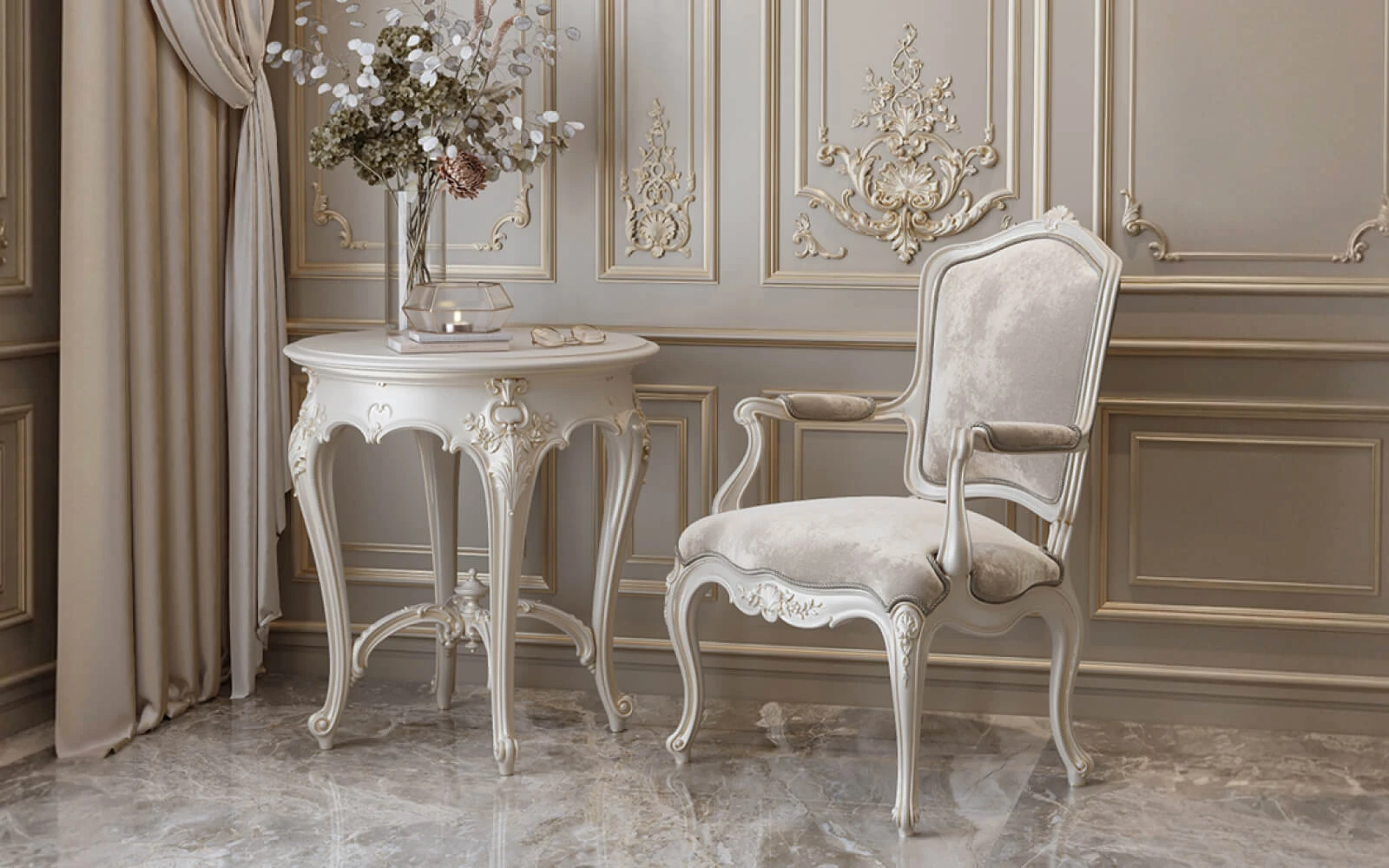
After the success of this project, the company focused on recreating palace interiors, furniture, church furnishings, and carved decorations in various artistic styles. They worked with cultural heritage sites: The Hermitage, the Alexandrovsky Palace, the Troitsko-Izmaylovsky Cathedral, the Sheremetyevsky Mansion, and many others.
The masters' task — and still is — to create wooden items with the highest level of detail and understanding of every element, based on impeccable knowledge of artistic laws and interior styles.
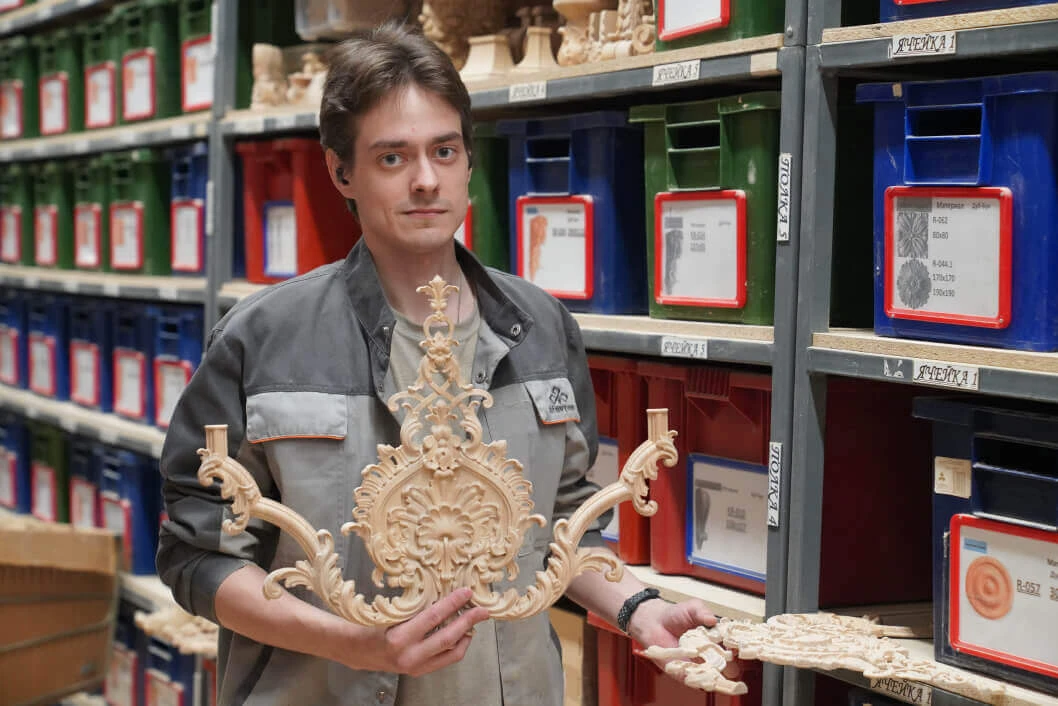
We save your time, peace of mind, and budget
We solve your tasks with maximum speed
Streamlined process reduces all risks
Quality service regardless of order volume
Reliable partner — the foundation of your business
Our showrooms are located in Saint Petersburg and Moscow. Production is located in Saint Petersburg.
Moscow contacts: /contacts_all/
Contacts of Saint Petersburg: /contacts_all/
Send us the product codes, quantities and delivery destination. Contact our team to confirm availability and order details.
Please contact us to confirm shipping availability, costs and delivery times for your destination.
Delivery cost depends on the size, weight of the item, and delivery address.
Please ask our team to confirm shipping costs and delivery arrangements for your destination before placing an order.
Prices and availability of items on the website are always current. Data is updated daily.
Note: items in stock are stored on the warehouse in unpolished form and shipped within 3 working days.
If the item is not in stock, average production time: 5–10 working days.
This is the quality of polishing of the items.
Standard — machine polishing, at a more attractive price.
Prestige — detailed hand polishing, items do not require further work.
More details: /information/kachestvo/
This is the type of veneer of the items.
Under enamel: produced by gluing wooden laminates without color and texture matching. Contrast tonal and textural differences are noticeable. This blank should be chosen if the item is intended for opaque coating.
Under tinting: produced by gluing wooden laminates with color and texture matching. Tonal and textural differences may occur. This blank should be chosen if the item is intended for semi-transparent finish.
More details: /information/kachestvo/
Beech — dense, non-porous wood, most often used for items covered with enamel.
Oak — dense, porous wood with clearly visible natural grain. Due to its strength and decorative properties, it is often used in items with semi-transparent coating, highlighting the wood pattern.
Custom-made, if non-standard items are required, we can produce products from other types of wood, including blanks provided by the customer, manufactured according to our technical specifications.
All our furniture legs can withstand a vertical load of at least 100 kg.
Average production time for custom-made items: 5–10 working days.
Most items are stored on the warehouse in unpolished form. We need time to polish and pack orders.
Yes, we manufacture non-standard items according to individual projects, but we only accept orders with a minimum quantity.
We can manufacture items of the desired size, but we only work with bulk orders. For details, please consult the sales department manager.
Yes, some of our products can be used outdoors. For example, polyurethane items, as well as carved door casings made of pine.
Other items are produced to order using PUR glue, if minimum quantity is available. No warranty is provided for such products, as outdoor conditions are considered aggressive.
Please contact our team to confirm available finishes, minimum quantities and a quotation for your order.
More details: /information/sovety/
Apply adhesive to the decor. Place it on the surface and press briefly. Then, lift the decor from the surface and leave it open for 3–5 minutes. Press the decor firmly onto the surface and hold for 5–10 seconds.
More details: /information/sovety/
Ideally, you should prepare a design project before placing an order.
You can do this yourself by downloading drawings of our products from our website, or you can order a project from us.
If the number of decorative elements and fittings is small, our company's manager can assist you with selection.
Unfortunately, this service is not provided.
The packaging method depends on the type of items, but in each case, we ensure sufficient protection for safe transportation.
We most often use corrugated cardboard and stretch film. Fragile items are additionally secured on a rigid base to prevent damage during transport.
Please confirm the minimum order quantity for your selected products and finishes with our team.
Please contact our team to discuss measurement and installation requirements for your project and destination before ordering.
43123
287
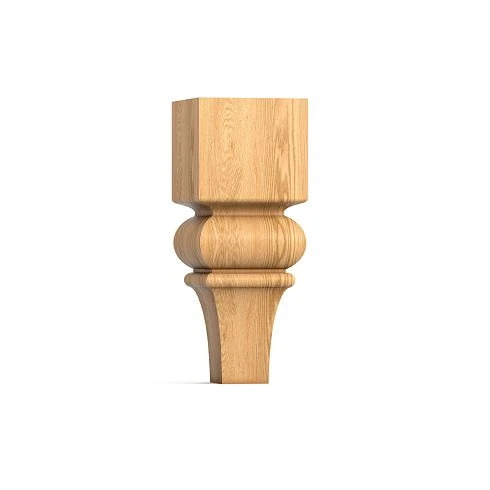
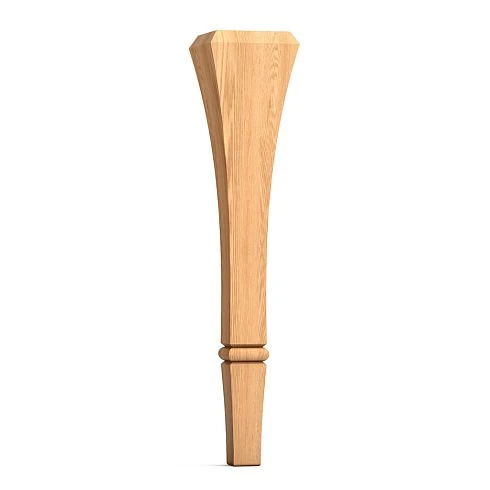
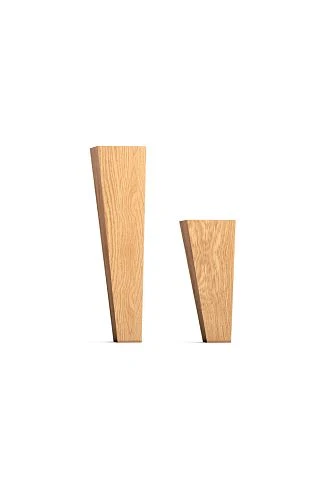
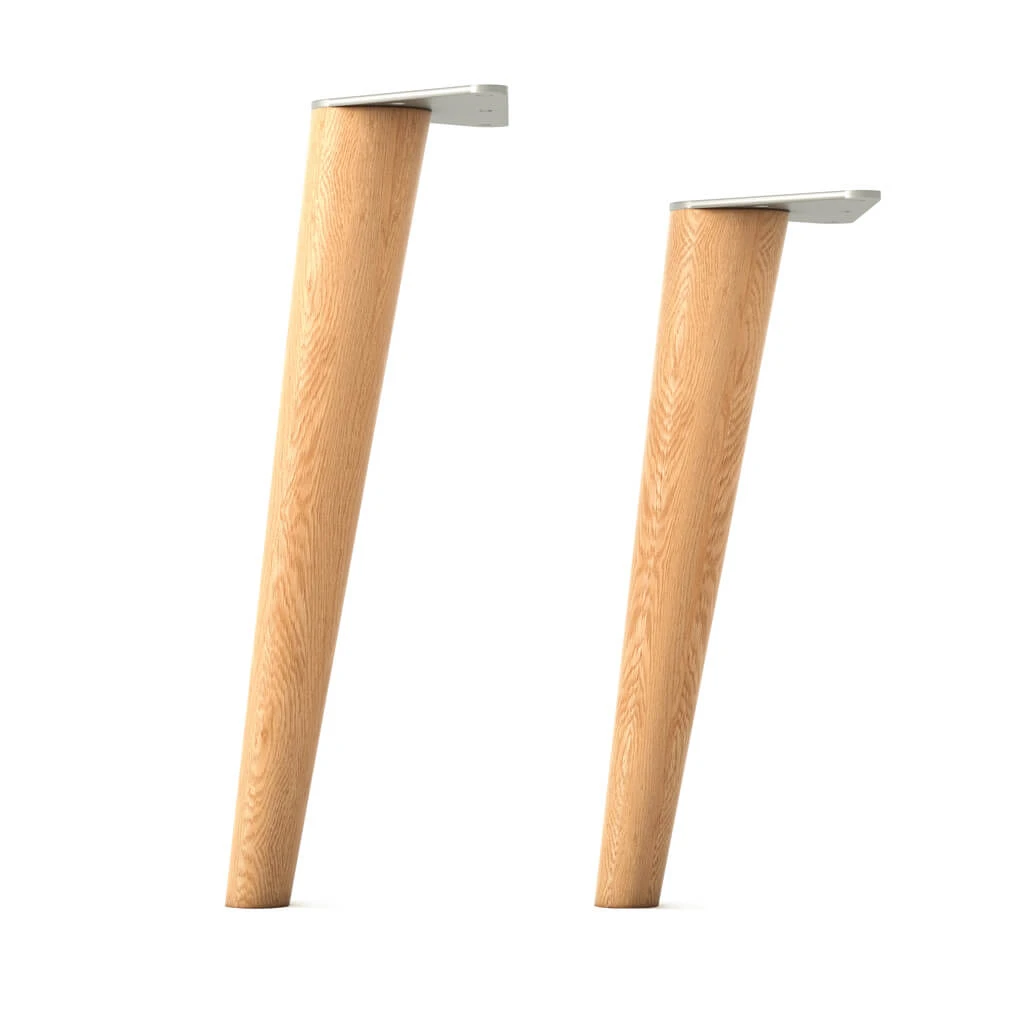
The MN-242 furniture leg is a tall wooden support with an expressive angle, a neat taper of the body, and a metal mounting plate at the top. This design is noticeably different from classic straight furniture legs: the support becomes part of the furniture item's architecture, shapes its silhouette, and visually lightens a massive body. The model is suitable for modern upholstered and cabinet furniture, where not only a reliable base and natural material are important, but also carefully considered proportions.
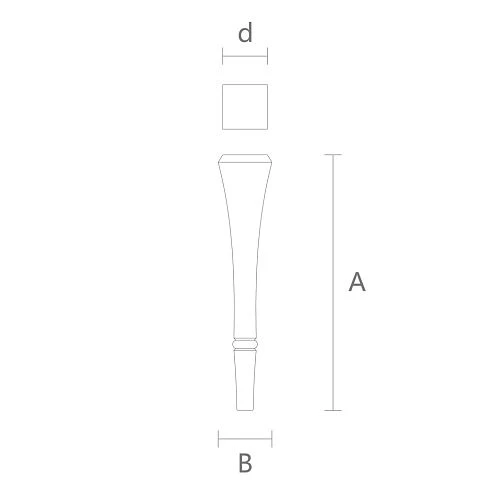
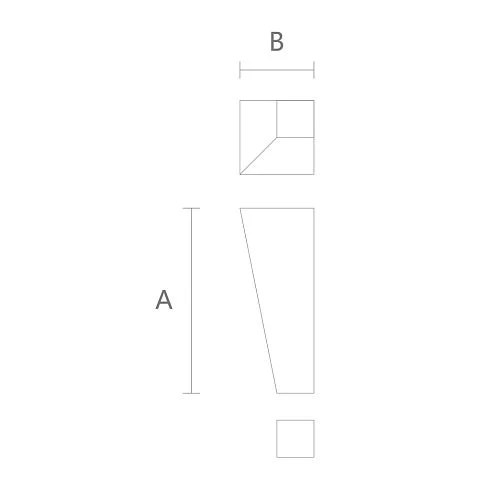
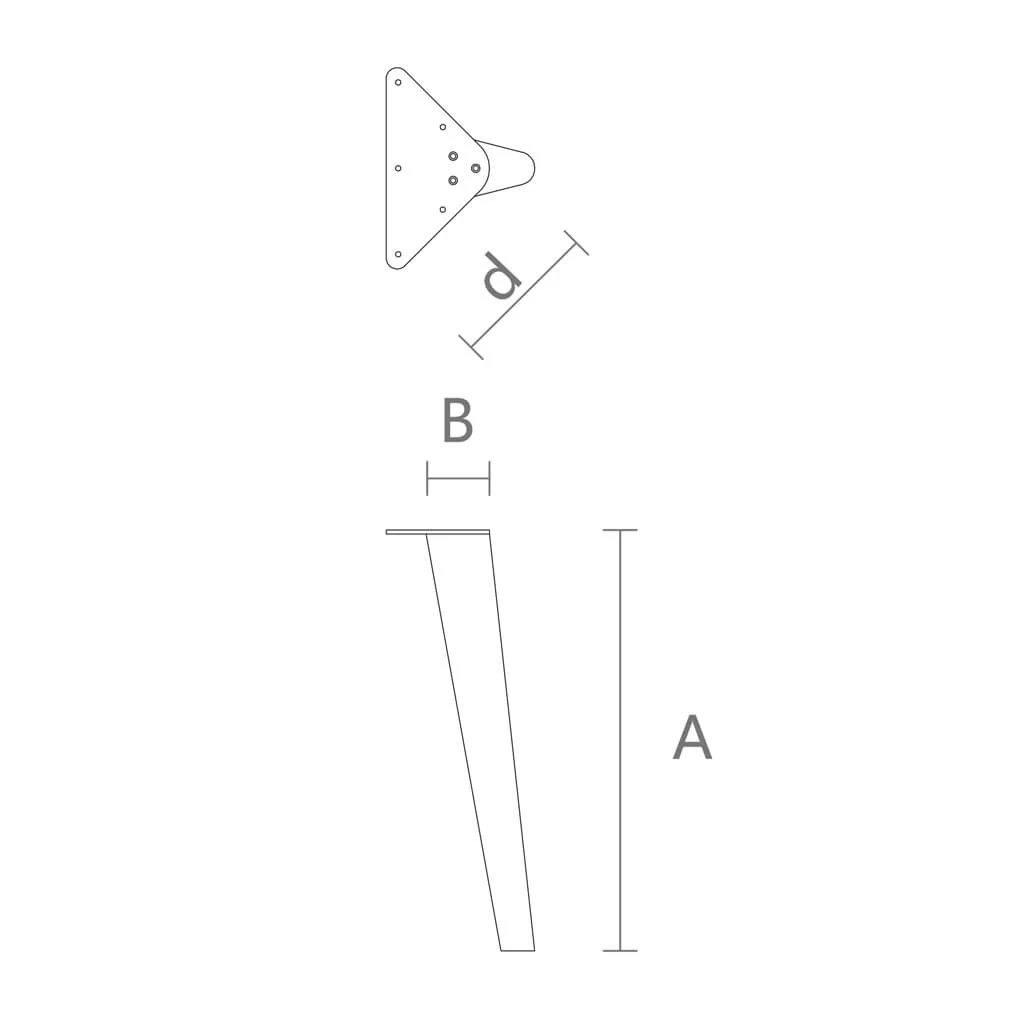
MN-242 is available in two height options — 350 and 400 mm. For both sizes, parameter B is 60 mm, and parameter d according to the product diagram is 141 mm. Beech or oak can be selected for manufacturing. The surface is finished with Prestige sanding quality, and the standard production time is from 5 to 10 working days.
The main feature of the model is the combination of natural wood with modern angled geometry. The leg does not look heavy even at a significant height. The body gradually tapers toward the lower part, and the specified installation angle creates a characteristic dynamic silhouette. Thanks to this, tall furniture on such supports is perceived as lighter, free space appears between the body and the floor, and the base itself becomes a full-fledged decorative element.
When designing modern furniture, legs are increasingly viewed not as an element that needs to be hidden, but as an important part of the design. This is especially noticeable in sofas, armchairs, consoles, chests of drawers, and small cabinet items raised above the floor. If a standard vertical support is used, the lower part of the furniture remains as neutral as possible. The angled wooden leg MN-242, by contrast, adds direction, rhythm, and recognizability to the item.
The geometry of the model is built on several visual techniques. The wooden body has a fairly large upper part, which smoothly transitions into a narrower lower part. The longitudinal direction of the fibers emphasizes the height of the support. The angle enhances the sense of movement and makes the base visually less static. The metal plate is located in the mounting area and functionally connects the wooden leg to the furniture body.
This solution is especially interesting for projects in which the designer seeks to avoid the impression of a massive furniture “box” standing directly on the floor. Tall legs create a gap between the floor and the cabinet, making the piece appear lighter. At the same time, the shape of the support itself becomes noticeable, so higher demands are placed on the choice of material, proportions, and quality of finishing.
MN-242 is designed specifically for this role. It is not a decorative overlay or a small standard support hidden under furniture. A height of 350 or 400 mm makes the leg a noticeable element of the composition. Therefore, it makes sense to choose this model at the furniture design stage, rather than treating it as a random replacement for an already specified structural solution.
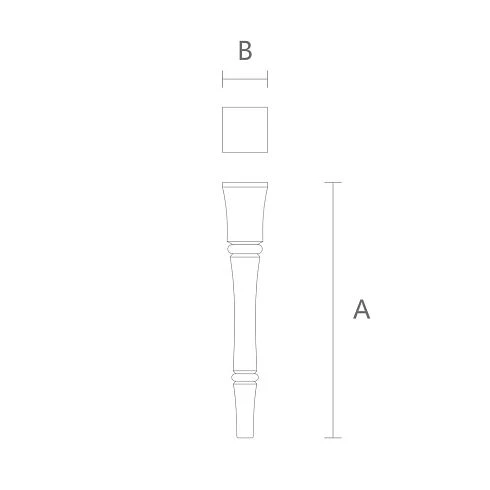
The model is produced in two height sizes. The first option has parameter A of 350 mm, the second has A of 400 mm. A difference of 50 mm can significantly affect the proportions of the finished product, so the choice should be made taking into account the overall height of the cabinet, the purpose of the furniture, and the required distance from the floor.
For the 350 mm size, the following parameters are provided: height A — 350 mm, B — 60 mm, d — 141 mm. The leg can be made of beech or oak with “Prestige” sanding quality.
For the 400 mm size, the parameters are: height A — 400 mm, B — 60 mm, d — 141 mm. Beech and oak are also available, finished with “Prestige” sanding quality.
| Parameter | MN-242, option 1 | MN-242, option 2 |
|---|---|---|
| Height A | 350 мм | 400 мм |
| Size B | 60 мм | 60 мм |
| Dimension d according to the diagram | 141 мм | 141 мм |
| Material | Beech or oak | Beech or oak |
| Sanding | «Prestige» | «Prestige» |
| Production time | from 5 to 10 business days | from 5 to 10 business days |
When choosing a size, it is important to consider that the height of a furniture leg affects not only the distance from the cabinet to the floor. The visual relationship between the lower and upper parts of the furniture also changes. The shorter 350 mm version helps maintain compact proportions. The 400 mm option more strongly emphasizes the elongated geometry of the support and provides a more noticeable clearance under the cabinet.
If the leg is used in a new project, it is better to first determine the required final height of the furniture, and then distribute it among the cabinet, supports, possible stretcher, frame, and other structural elements. For upholstered furniture, it is also necessary to take into account the thickness of the seat and the internal base. For a console or cabinet, take into account the height of the cabinet and the work surface.
One of the versions of MN-242 is a furniture leg made of beech. Beech is widely used in furniture production due to its dense structure and characteristic relatively uniform texture. On elongated elements of simple shape, this material makes it possible to achieve a calm surface without an overly active pattern.
This is especially useful in modern interiors, where the leg should remain wooden but not draw attention away from the front, upholstery, or the overall shape of the furniture. With the longitudinal arrangement of the fibers, the wood texture further emphasizes the height of the model.
The beech version can look harmonious in light-colored furniture, interiors with a natural palette, modern minimalist projects, and compositions where several wooden elements of the same or a similar shade are used.
When choosing a material, it is important to consider that wood is a natural material. Its texture, fiber arrangement, and natural tonal transitions should not be perceived as an artificially repeatable pattern. It is the natural variability that distinguishes a wooden furniture leg from a support whose surface only imitates wood.
The second option is MN-242 made of oak. Oak attracts with a more noticeable wood pattern. On a tall leg 350 or 400 mm long, the natural texture has a sufficiently large surface for visual expression, so the material becomes an important part of the design.
An oak leg is well suited for projects where the customer wants to emphasize the naturalness of the furniture. It can be combined with oak tabletops, fronts, decorative moldings, frames, armrests, or other solid wood details.
On the laconic form of MN-242, the oak texture does not compete with the carved decor, because the geometry of the leg itself is sufficiently restrained. It is precisely due to this that an interesting combination is achieved: a modern form and a traditional natural material.
When assembling a set of legs for a single piece of furniture, it is recommended to take into account the natural variability of wood. Wood is not a monochromatic synthetic material, so slight differences between elements are natural. If visual consistency of the set is especially important for the project, the requirements for shade and further finishing should be determined before manufacturing.
One of the most important features of MN-242 is the inclination of the wooden support provided by its geometry. It changes the perception of the product much more strongly than it might seem when considering the leg separately.
For a vertical furniture leg, the direction coincides with the vertical lines of the cabinet. The structure is perceived as calm and static. With an angled placement, a diagonal appears. It is diagonal lines that create a sense of movement, so even a simple rectangular cabinet can look significantly more interesting.
This principle is especially characteristic of furniture with references to mid-century modern aesthetics, contemporary Scandinavian furniture, and certain trends of retro-modernism. However, MN-242 cannot be limited to a specific style. Its laconic surface allows the leg to be used in completely modern projects as well.
It is important that the inclination here is not created by random installation of an ordinary straight leg. The geometry of the product itself and its mounting unit form a single structure. Therefore, during design, one must rely on the drawing and the actual dimensions of MN-242.
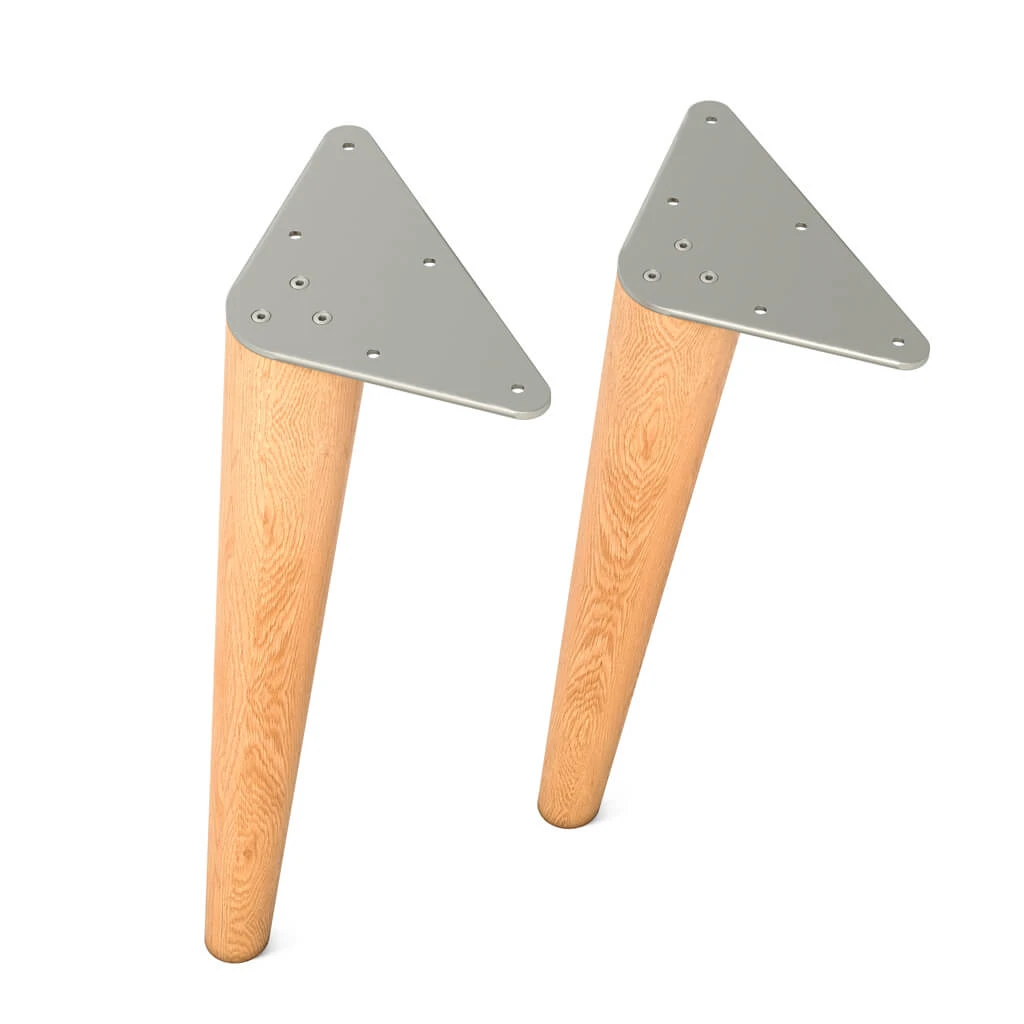
At the top of the furniture leg, a metal mounting plate is provided. In shape, it is a wide plate with several holes for fastening. In photographs of the product, it is clearly visible that the plate has a significantly larger area than the wooden part of the leg at the connection point.
This design solution is important for several reasons. First, it creates a clear mounting interface between the wooden support and the furniture base. Second, the wide plate makes it possible to distribute the fastening points over the area. Third, the mounting element determines the orientation of the leg relative to the cabinet.
When developing furniture, it is necessary to check in advance exactly where the mounting plate will be located and whether there is enough space on the lower part of the product for its installation. This is especially important when there are aprons, internal partitions, transformation mechanisms, drawers, slides, and other parts that may be located near the mounting area.
The location of holes must not be determined solely from a product photo. To prepare a production drawing, one should rely on the current product diagram and the physical parameters of the selected version.
It is also necessary to determine in advance the method of fixing the metal mounting plate to the specific furniture base. The fastening requirements depend on the material and construction of the cabinet. A base made of solid wood, plywood, furniture panel, or another material may require different installation solutions.
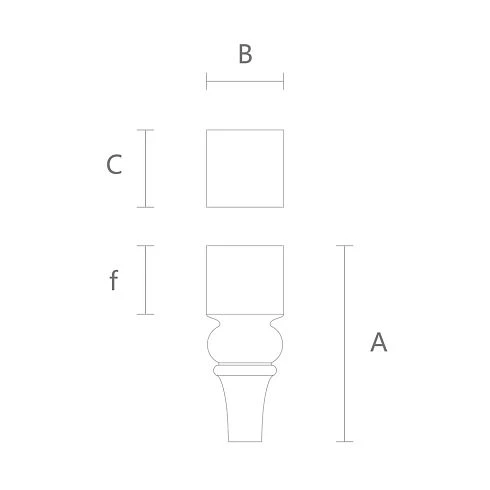
In addition to height A, the MN-242 diagram indicates two more parameters: B = 60 mm and d = 141 mm. These values are the same for both heights — 350 and 400 mm.
When describing the product, it is important not to replace the manufacturer's designations with your own interpretations. Therefore, the parameter d 141 mm should be understood specifically as dimension d indicated on the MN-242 technical diagram. It should not automatically be called a diameter unless this is directly defined by the manufacturer. Similarly, dimension B should be compared with the graphic drawing when designing the assembly.
For a designer, engineer, or furniture manufacturer, these dimensions are needed no less than the overall height. The leg must not merely visually suit the furniture — it is necessary to ensure compatibility with the actual cabinet construction.
Before putting the furniture into production, it is reasonable to build the installation assembly to scale, taking into account the tilt of the support, the position of the mounting plate, the distance to the edge of the cabinet, and possible intersections with internal elements.
For MN-242, the sanding quality is specified as “Prestige.” For a tall modern furniture leg, surface quality is especially important, since most of the wooden part remains exposed and clearly visible.
A laconic form has virtually no decorative elements capable of distracting attention from the surface of the material. Therefore, the neatness of the finish, the smoothness of the lines, and the quality of the wood preparation become part of the visual result.
A sanded surface makes it possible to use the leg in a subsequent finishing project in accordance with the furniture design. The specific finish option must be selected taking into account the other wooden parts and the required shade.
If the legs are being purchased for a serial or individual furniture project, it is advisable to determine the color solution for the entire set at the same time. This is especially important if other solid wood elements are nearby.
MN-242 is interesting primarily where the supports remain visually exposed. Placing a designer tall leg under a structure that almost completely covers it with a plinth usually makes no sense: the model's main feature would simply disappear.
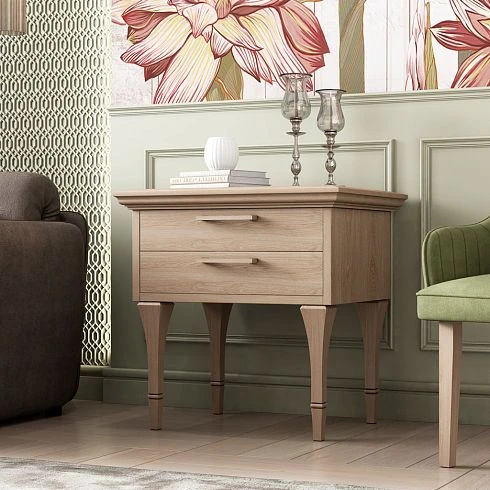
The shape is well revealed on furniture where a significant open gap remains between the body and the floor. These can be consoles, compact tables, tall cabinets, certain models of armchairs, benches and sofas, designer cabinets, chests of drawers, and other items.
At the same time, one cannot rely on appearance alone. For each type of furniture, the designer must separately check the design scheme, the number of supports, their installation points, the weight of the furniture, the expected operational loads, and the properties of the base. For MN-242, the permissible load is not specified in the provided characteristics, so when designing loaded structures this parameter must be clarified separately.
Particular care should be taken with upholstered furniture. A sofa or armchair experiences not only a constant static load from its own weight. Dynamic loads also arise during use. Therefore, design compatibility of the model does not automatically mean confirmed structural compatibility with any sofa.
The 350 mm version of MN-242 may be of interest for projects where a noticeable tall support is needed, but a relatively compact overall height of the item must be maintained.
Due to the angled shape, 350 mm is perceived differently than on a standard straight leg. The diagonal visually increases the dynamism of the base, while the tapering body does not look bulky.
This modification can be considered when designing a bench, a small console, a cabinet, a compact furniture module, or another structure where the support height should become an important part of the composition.
When choosing, it is necessary to take into account the actual height A — 350 mm, and not try to determine the dimensions from a photograph. Images help to understand the shape and proportions, but numerical characteristics are used for a working project.
Version MN-242 with a height of 400 mm emphasizes the supports even more. The additional 50 mm compared to the 350 mm model is noticeable in the overall composition, especially if the furniture body is relatively low.
This size can be used in projects where it is necessary to visually separate the main volume from the floor and create a pronounced lower tier. Long angled wooden legs can make even a rectangular body lighter and more graphic.
At the same time, the more noticeable and higher the support, the more important it is to correctly select the proportions of the entire furniture. A too massive top and a too thin visual base may look inconsistent. Therefore, the 400 mm model is better evaluated not separately, but on a sketch or 3D model of the future product.
The difference between the two modifications seems small only when reading the table. In finished furniture, 50 mm can significantly change the position of the body, the overall height, and the visual proportions.
The choice can begin with the required level of the lower part of the body above the floor. Then it is necessary to check the final height of the item and its functional purpose. For a table, sofa, armchair, bench, and console, the requirements will be completely different.
You should not choose a tall leg just because it looks more striking in a standalone photo. In furniture, all dimensions work in relationship with each other. If the cabinet has already been manufactured, you must first determine what overall height will result from installing the selected version of MN-242.
Also take the angle into account. A long angled component creates not only a vertical but also a horizontal contribution to the overall dimensions. This is especially important near the edges of the cabinet.
Modern design does not mean that plastic or metal must be used. Natural wood remains in demand precisely because it can combine warm texture with simple geometry.
MN-242 demonstrates this principle well. Its shape does not imitate a classic baluster, is not overloaded with carving, and does not contain complex historical ornament. At the same time, the material remains obviously natural.
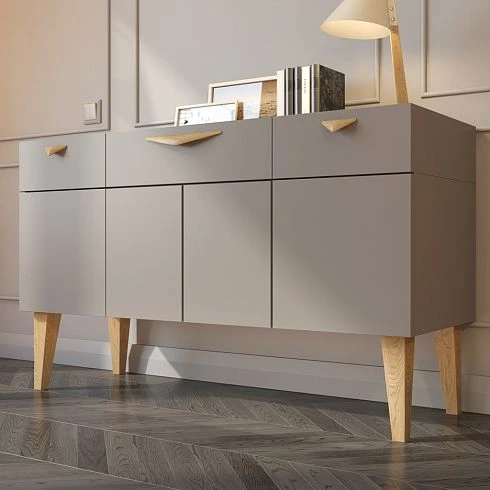
Thanks to this, a wooden furniture leg can become a linking element between the strict geometry of the cabinet and a warmer interior. For example, furniture with solid-color fronts or calm fabric upholstery gains a natural accent through wooden supports.
Repeating the material works especially well. If oak or beech is used not only in the legs but also in handles, the tabletop, decorative slats, armrests, or other details, the composition looks more cohesive.
Angled wooden legs are closely associated with the aesthetics of mid-20th-century furniture. This direction is characterized by cabinets raised above the floor, relatively thin supports, expressive wood, and visual lightness.
MN-242 can be used as a modern interpretation of this technique. At the same time, the model does not require fully copying the style of retro furniture. It can be combined with modern materials, clean-lined cabinets, and minimalist finishes.
To preserve the mid-century character, overall proportions are usually important: the body should not visually overpower the legs, and the wood should remain a noticeable part of the piece. The exact finish and shade are chosen already in the context of the project.
For Scandinavian interiors, the combination of a simple form and natural wood is especially natural. Thanks to its calmer texture, beech MN-242 can fit well into light-colored furniture, where visual cleanliness is valued.
The oak version gives a more pronounced wood grain and can become more noticeable against a light-colored body.
For minimalism, another aspect is important — the absence of unnecessary decoration. MN-242 gains expressiveness not through ornaments, but through geometry: the angle, the elongated body, the taper, the ratio of wood and metal.
This makes the model interesting for projects in which decorativeness should be built directly into the shape of the part.
MN-242 can be especially useful in custom furniture making. In an individual project, the designer gets the opportunity to build the proportions of the body in advance specifically for the selected supports.
You can determine the required height, choose between beech and oak, coordinate the placement of the legs relative to the edges of the body, and check the appearance in a visualization.
In serial production, the same actions are transferred to the model development and prototype stage. Before launching a series, it is advisable to manufacture and test a trial piece of furniture with the actual legs. This allows you to evaluate not only the appearance, but also the manufacturability of assembly.
Before ordering, it is advisable to finalize the selected height — 350 or 400 mm, the wood species — beech or oak, and also make sure that the dimensions B 60 mm and d 141 mm match the project.
It is necessary to check the installation location of the metal plate on the furniture base, the position of each leg, the tilt direction, and the absence of conflicts with the internal structural elements.
If several MN-242 are used in one product, the installation direction should be recorded on the drawing. With angled supports, orientation plays a much greater role than with symmetrical vertical legs.
It also makes sense to think in advance about the visual combination of the wood with the furniture body. If the product is manufactured in a specific shade, it is better to consider the legs as part of the overall material map rather than selecting the color after assembly.
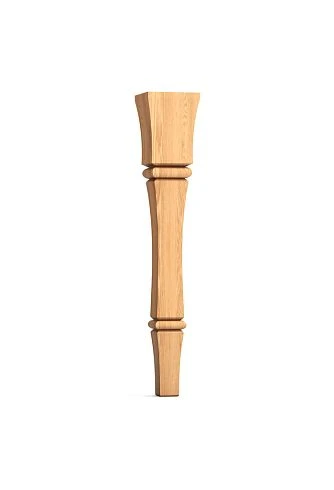
Photos of MN-242 show the appearance, wood texture, tilt, and shape of the metal plate well. However, an image does not replace technical specifications.
Exact installation distances, hole dimensions, permissible load, the type of required fasteners, or compatibility with a specific furniture structure should not be determined from a photo. If these parameters are critical for the project, they must be clarified before manufacturing the body.
This is especially important for professional furniture manufacturing: a small error in the location of the fastening point may require redoing an already finished part.
Visually, MN-242 is built on the contrast of two materials. The main body is made of natural wood, while a metal structural element remains in the upper part.
Depending on the furniture's design, the platform may be almost hidden by the lower surface of the body. From certain angles, part of the metal element may remain visible. This should be taken into account in the design project.
This combination of wood and metal fits well with modern furniture, where the construction is often not fully concealed but becomes part of the overall aesthetic.
The simpler the geometry of a part, the more noticeable the material and quality of workmanship. On a carved leg, attention is distributed among a large number of elements. On MN-242, the main visual characteristics become the silhouette, the surface, and the wood grain.
Therefore, the choice between beech and oak can truly change the perception of the same model. Beech makes it calmer, oak makes it more textured.
The long longitudinal lines of the wood additionally work together with the elongated body. That is why natural wood here is not just a material of manufacture, but part of the design.
One of the main effects of tall legs is the appearance of air under the body. When open space remains between the furniture and the floor, the item is perceived as less massive.
This technique is especially useful for small spaces, where heavy solid bases can visually overload the interior. A raised body allows the continuation of the floor covering to be seen, so the space seems more open.
MN-242 enhances this effect through tapering and tilt. The supports do not form a rigid vertical wall under the furniture, but appear as separate slender elements.
Unlike a straight leg, the angled MN-242 requires attention to direction. The appearance of the finished furniture depends on whether the legs are oriented parallel, splay outward, and how they relate to the geometry of the carcass.
The specific scheme depends on the project. It cannot be universally stated that there is a single correct direction for any furniture.
The designer should draw the legs at the four installation points and check the front, side, and perspective views. Sometimes a solution that looks good in the front view turns out to be less successful from the side.
In addition, the lower point of an angled leg is not located strictly under the center of its upper attachment. This must be taken into account when determining the actual space occupied by the furniture item.
MN-242 in two heights offers an interesting opportunity to use a similar shape of supports in several items of the same collection. For example, different products may differ in the height of the carcass and legs, but retain the overall plasticity of the base.
This approach helps create a visually connected furniture series. The characteristic tilt, wood, taper shape, and mounting logic are repeated, while the items themselves may have different purposes.
For a designer, this is more convenient than trying to combine several completely different types of supports in one collection.
For both MN-242 modifications, the production time is stated as 5 to 10 business days. This should be taken into account when planning a furniture project and furnishing the site.
If the legs are needed for a specific assembly stage, it is advisable to place the order taking the production schedule into account. This is especially important for custom furniture, where the carcass may be fully ready, but final assembly is impossible without the supports.
When ordering several wooden elements as a set, it is advisable to synchronize their production in advance so that the different parts arrive by the time the project is assembled.
To avoid confusion in project documentation, it is better to specify the model in full: MN-242, A 350 mm, B 60 mm, d 141 mm or MN-242, A 400 mm, B 60 mm, d 141 mm, and then add the selected wood species.
This method is significantly more reliable than the designation “high leg MN-242,” especially if the order passes through several participants: designer, engineer, purchaser, production, and installers.
The more precise the specification at the start, the lower the risk that the wrong size will be ordered for the furniture.
Modern furniture is increasingly built on the quality of individual parts. A good facade, neat hardware, a well-chosen handle, or an expressive base can completely change the perception of the item.
MN-242 is one of those details that can influence the overall character of furniture. Its tall angled shape is immediately visible, so the leg can become one of the recognizable elements of the project.
Made from beech or oak, it preserves the natural tactility and visual depth of the wood. This is especially valuable in interiors where it is important to avoid the feeling of a completely artificial, impersonal surface.
This model makes sense to consider if the project requires a tall wooden furniture leg, a noticeable angle, a modern minimalist shape, and an open clearance under the furniture body.
MN-242 will be appropriate when an ordinary vertical leg seems too neutral, and a decorative carved support is too complex for a modern piece.
It will also suit projects where it is necessary to combine natural beech or oak with a metal mounting element and maintain a visually light base.
However, if the leg should be almost completely hidden, the furniture stands on a low plinth, or the design is not intended for a tall open clearance, the advantages of this model may not be fully realized.
MN-242 is not just a wooden leg for raising a furniture body above the floor. Its main value lies in the combination of functional support and expressive geometry. The tall tapering body, characteristic angle, natural beech or oak, and metal mounting plate form a modern base that noticeably influences the look of the entire piece of furniture.
The model is available in two sizes: A 350 mm and A 400 mm. For both options, dimension B is 60 mm, and d is 141 mm according to the product diagram. Manufacture from beech or oak is provided, sanding quality is “Prestige,” and production time is from 5 to 10 working days.
The 350 mm high version is suitable for more compact proportions, while the 400 mm leg allows you to emphasize the high clearance and elongated silhouette of the base even more. The choice between beech and oak makes it possible to control the character of the wood grain: from calmer and more uniform to pronounced natural texture.
When designing, it is necessary to take into account not only the height, but also the position of the angled leg, the dimensions of the mounting unit, the orientation relative to the cabinet body, and the characteristics of the base material. For critical furniture structures, design loads and the fastening method are checked separately.
As a result, the MN-242 wooden furniture leg becomes a rational choice for modern designer pieces in which the supports remain visible and must perform on par with the cabinet body, fronts, and finish. This is a component for furniture where the base is not hidden but deliberately included in the design.
Our manager will contact you within 5 minutes