












































































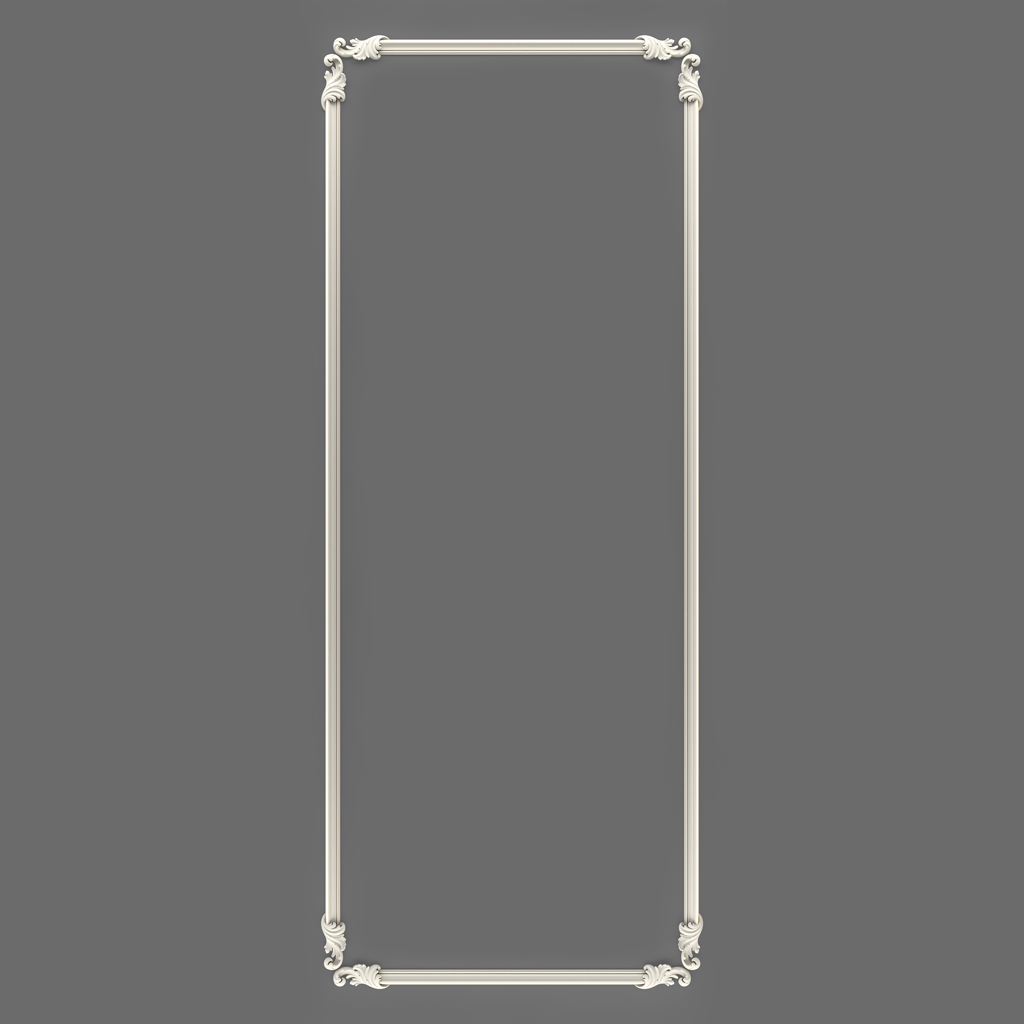
CPU-1-4 Molded Decoration Set
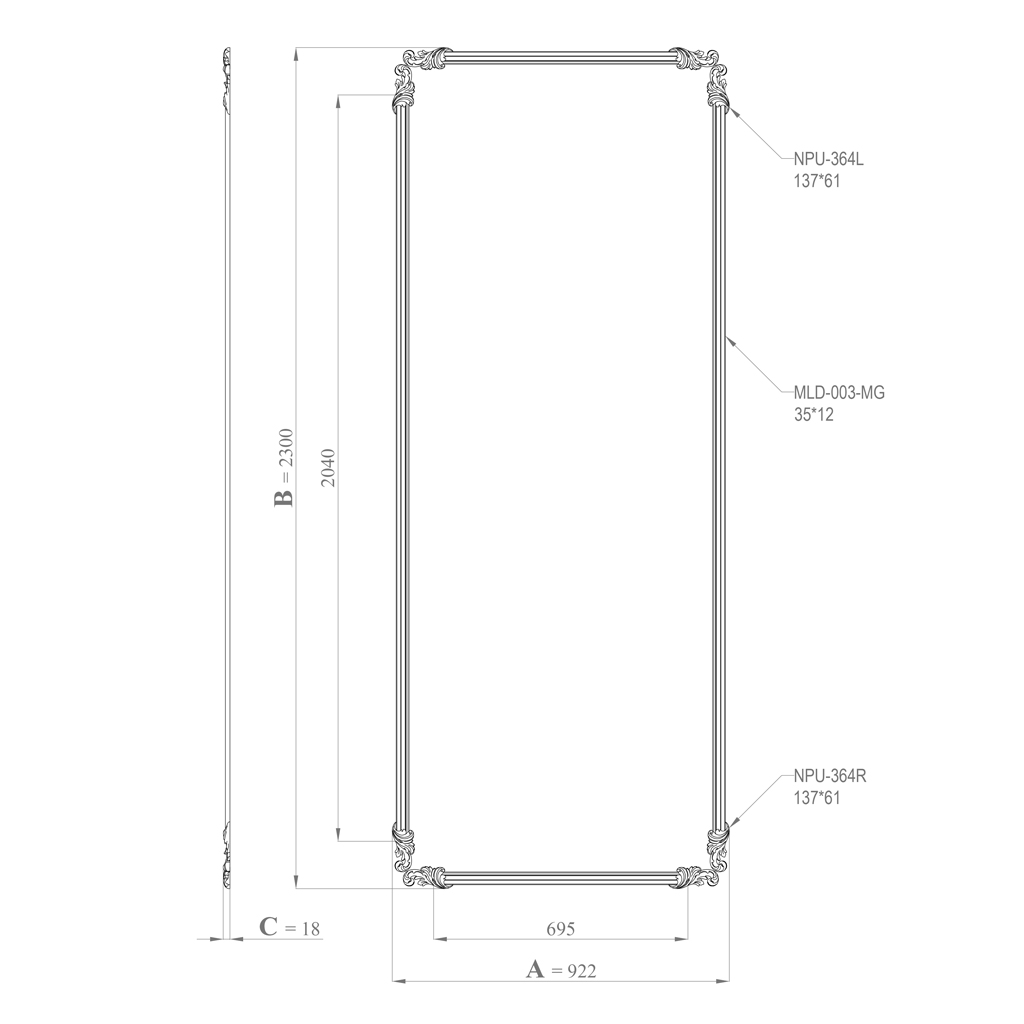
Dimensions and Options
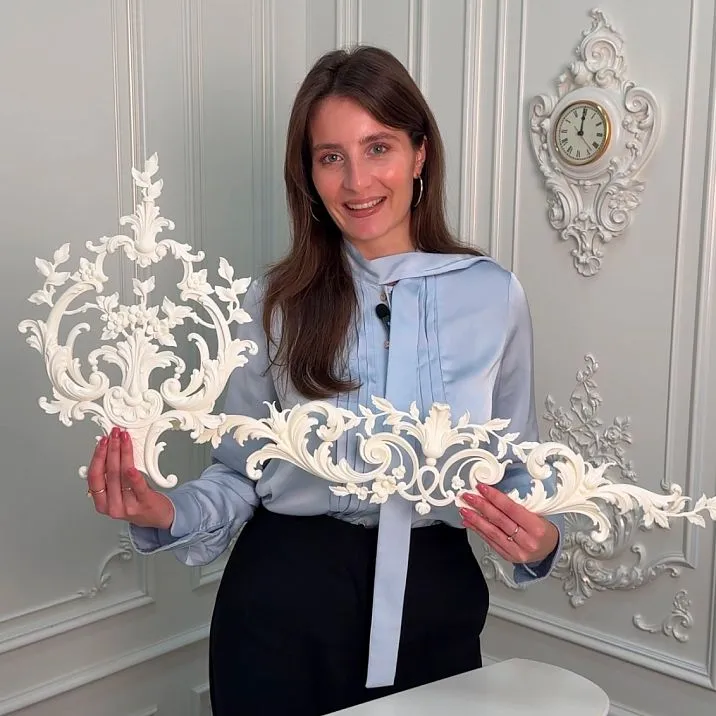
Set Composition


Have questions?
Customers also buy


Marina D.
February 15, 2026
The company ordered the pens for us when we ordered furniture. But I decided to write a review personally because they are amazing! Stylish, expensive, high-quality!
Polina Sh.
February 4, 2026
Went on a tour. To say I'm delighted is an understatement. The largest production facility in Russia, impressive in its scale and dedication to the craft! It was very interesting and informative. You can immediately see - true masters of their trade! We were welcomed in the best possible way, were polite...
Svetlana A.
January 30, 2026
It's great that you can almost always find the necessary elements for the project. The products match the description, with prompt feedback and delivery!
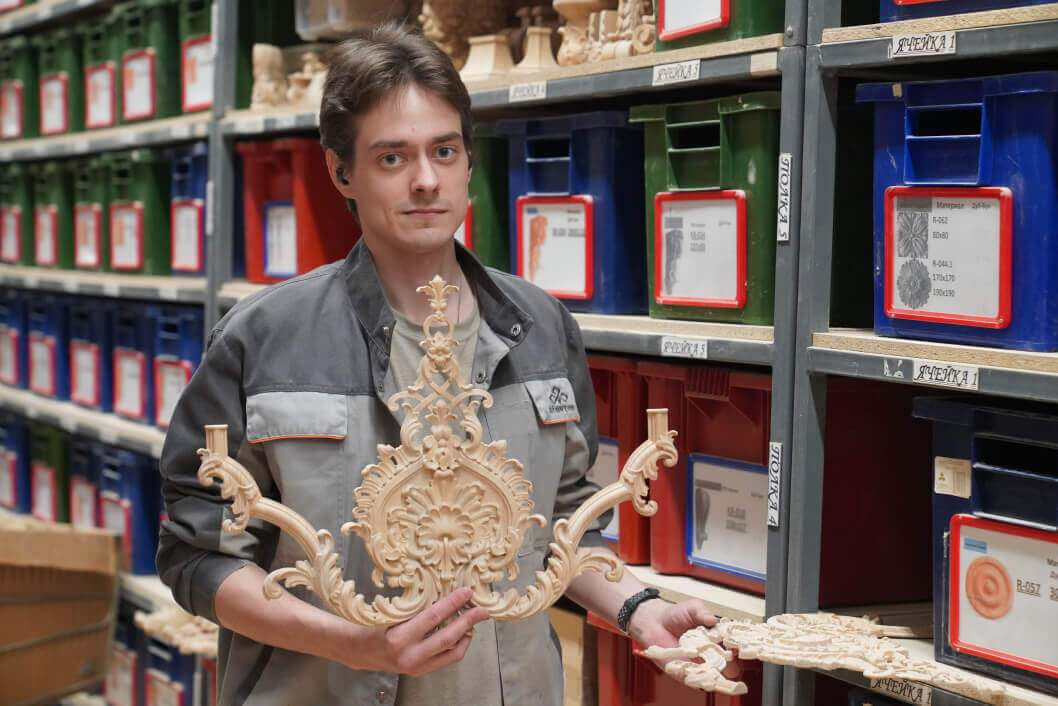
More than 20 years on the market
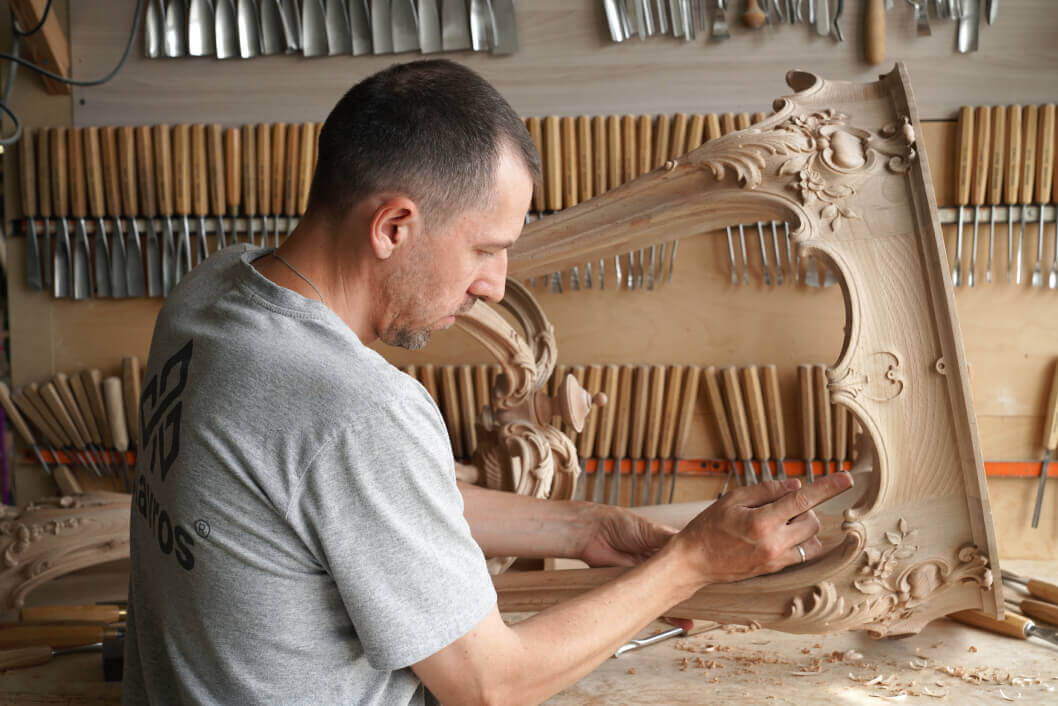
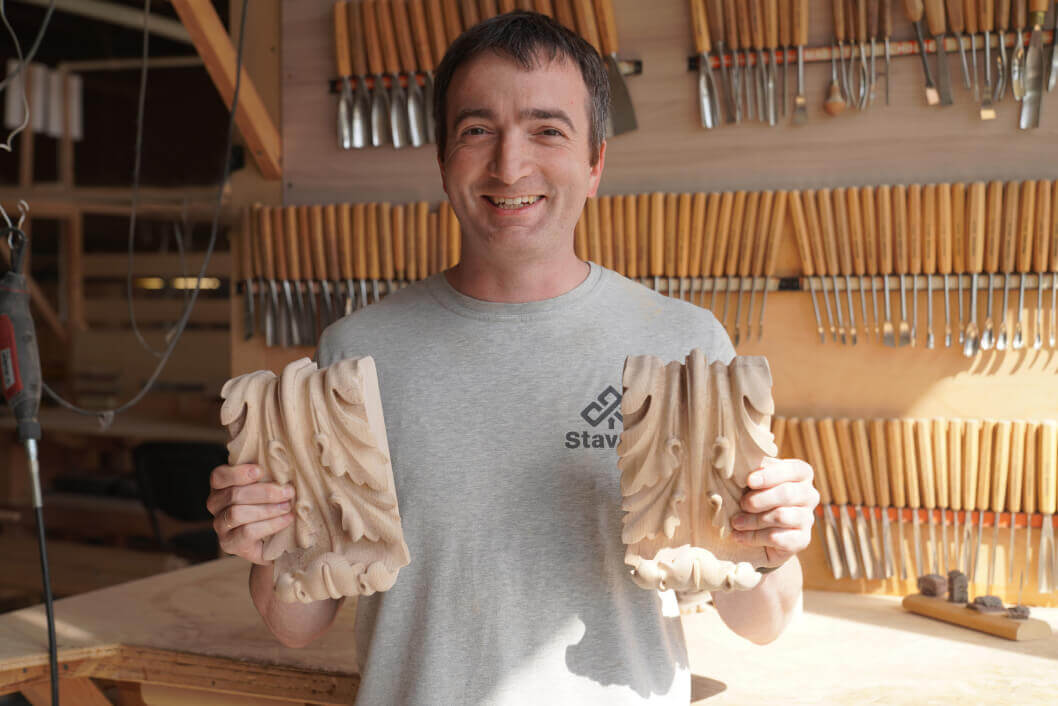
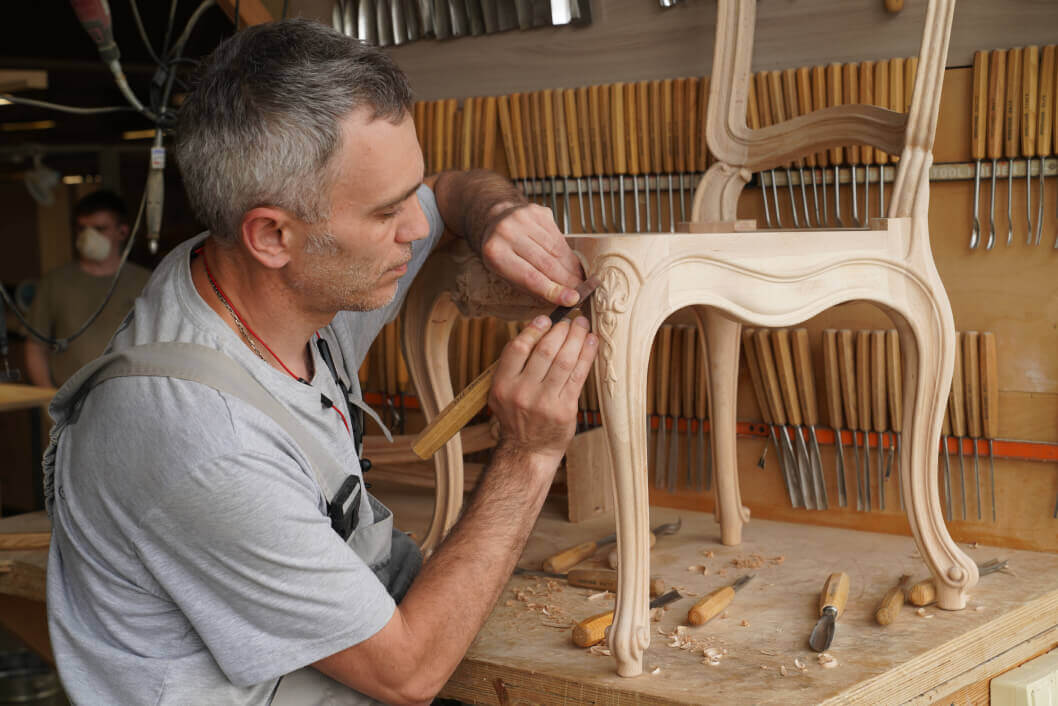
The company's success began in 2002, when two artists — Andrey Ragozin and Evgeny Tsapko — created a small creative workshop for producing wooden carved items. The masters' work was quickly noticed, and within a year they were invited to participate in the reconstruction of the Konstantinovskiy Palace in Strelna.
After the success of this project, the company focused on recreating palace interiors, furniture, church furnishings, and carved decorations in various artistic styles. They worked with cultural heritage sites: The Hermitage, the Alexandrovsky Palace, the Troitsko-Izmaylovsky Cathedral, the Sheremetyevsky Mansion, and many others.
The masters' task — and still is — to create wooden items with the highest level of detail and understanding of every element, based on impeccable knowledge of artistic laws and interior styles.
STAVROS Guarantees
Quality of products without complaints
We save your time, peace of mind, and budget
Large warehouse program
We solve your tasks with maximum speed
Adherence to production deadlines
Streamlined process reduces all risks
Delivery from 1 piece throughout Russia
Quality service regardless of order volume
Your positive business reputation
Reliable partner — the foundation of your business
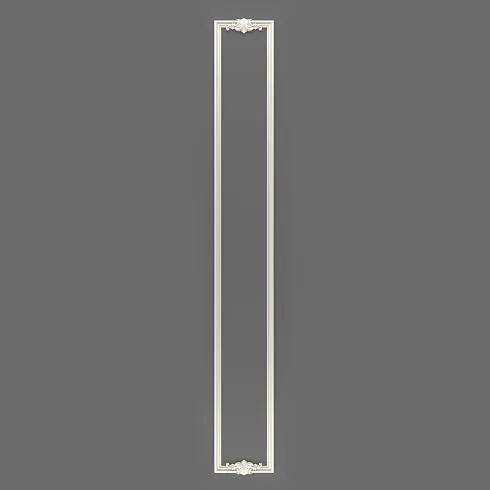
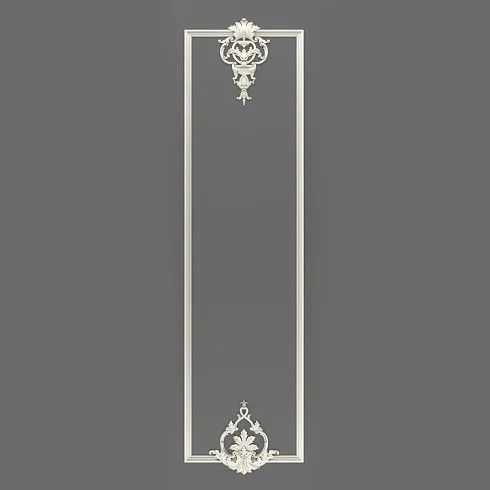
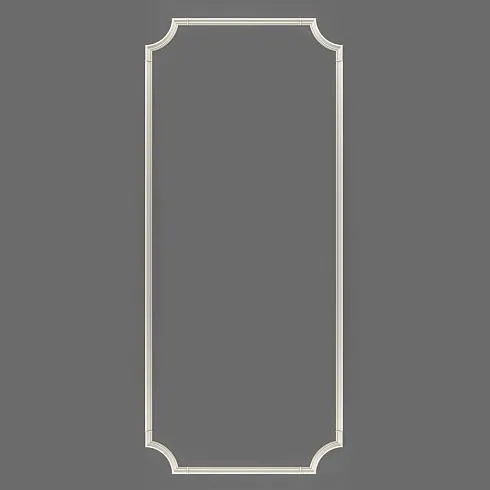
More items in the collection "Neoclassic"
Frequently asked questions
Our showrooms are located in Saint Petersburg and Moscow. Production is located in Saint Petersburg.
Moscow contacts: https://www.stavros.ru/contacts_all/?tab=msk
Contacts of Saint Petersburg: https://www.stavros.ru/contacts_all/?tab=spb
- Send request by email [email protected]
- Write to us at Telegram
- Write to us at WhatsApp
- Order by phone +7 (800) 555-46-75
- Visit our showroom in Saint Petersburg and Moscow
Yes, we ship orders throughout Russia and to CIS countries.
We cooperate with transportation companies such as СДЭК and DPD.
You can also arrange pickup of your order through any convenient transportation company for you.
Delivery cost depends on the size, weight of the item, and delivery address.
When placing an order, the delivery cost is calculated automatically and displayed as a separate line on our website.
Prices and availability of items on the website are always current. Data is updated daily.
Note: items in stock are stored on the warehouse in unpolished form and shipped within 3 working days.
If the item is not in stock, average production time: 5–10 working days.
This is the quality of polishing of the items.
Standard — machine polishing, at a more attractive price.
Prestige — detailed hand polishing, items do not require further work.
More details: https://www.stavros.ru/information/kachestvo/
This is the type of veneer of the items.
Under enamel: produced by gluing wooden laminates without color and texture matching. Contrast tonal and textural differences are noticeable. This blank should be chosen if the item is intended for opaque coating.
Under tinting: produced by gluing wooden laminates with color and texture matching. Tonal and textural differences may occur. This blank should be chosen if the item is intended for semi-transparent finish.
More details: https://www.stavros.ru/information/kachestvo/
Beech — dense, non-porous wood, most often used for items covered with enamel.
Oak — dense, porous wood with clearly visible natural grain. Due to its strength and decorative properties, it is often used in items with semi-transparent coating, highlighting the wood pattern.
Custom-made, if non-standard items are required, we can produce products from other types of wood, including blanks provided by the customer, manufactured according to our technical specifications.
All our furniture legs can withstand a vertical load of at least 100 kg.
Average production time for custom-made items: 5–10 working days.
Most items are stored on the warehouse in unpolished form. We need time to polish and pack orders.
Yes, we manufacture non-standard items according to individual projects, but we only accept orders with a minimum quantity.
We can manufacture items of the desired size, but we only work with bulk orders. For details, please consult the sales department manager.
Yes, some of our products can be used outdoors. For example, polyurethane items, as well as carved door casings made of pine.
Other items are produced to order using PUR glue, if minimum quantity is available. No warranty is provided for such products, as outdoor conditions are considered aggressive.
Yes, we paint items when ordering products for a total amount of 150,000 rubles or more.
- Dust removal. After sanding, the surface must be dusted.
- Priming. Apply primer in an even layer.
- Matting. After the primer has fully dried, the surface should be matted (lightly sanded for better adhesion).
- Finish coating. Apply finish coating: lacquer or enamel, in 2 layers, with interlayer drying.
More details: https://www.stavros.ru/information/sovety/
Apply adhesive to the decor. Place it on the surface and press briefly. Then, lift the decor from the surface and leave it open for 3–5 minutes. Press the decor firmly onto the surface and hold for 5–10 seconds.
More details: https://www.stavros.ru/information/sovety/
Ideally, you should prepare a design project before placing an order.
You can do this yourself by downloading drawings of our products from our website, or you can order a project from us.
If the number of decorative elements and fittings is small, our company's manager can assist you with selection.
Unfortunately, this service is not provided.
The packaging method depends on the type of items, but in each case, we ensure sufficient protection for safe transportation.
We most often use corrugated cardboard and stretch film. Fragile items are additionally secured on a rigid base to prevent damage during transport.
We ship all items starting from 1 piece.
Room measurements and item installation can be performed by our partners — carpentry companies represented in most regions of Russia.
Often searched in category Wall Decor
CPU-1-4 Molded Decoration Set: Symmetrical Composition for Refined Interiors
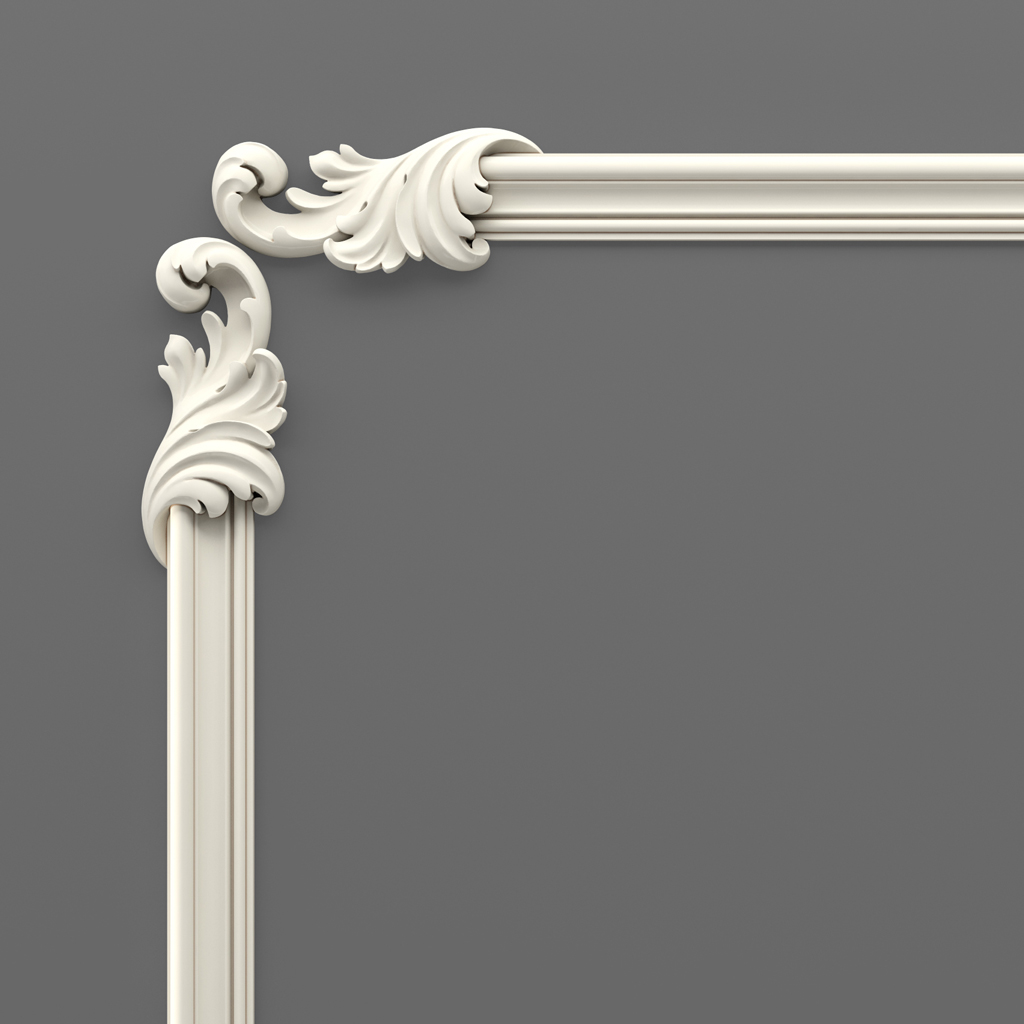
The CPU-1-4 Molded Decoration Set from the 'Neoclassic' collection presents a unique solution with mirror decorative elements designed to create symmetrical compositions on walls in an elegant neoclassical style. This specialized set includes a pair of mirror polyurethane overlays — left and right — and a primed MDF molding, which together form a harmonious composition for decorating side elements of panels, creating vertical accents, and decorating door and window openings.Neoclassic CollectionOffers thoughtful solutions for realizing symmetrical compositions characteristic of classical architectural aesthetics.
Composition of the Molded Decoration Set
The CPU-1-4 set consists of three types of carefully selected elements, forming a complete system for creating symmetrical decorative compositions.
NPU-364L Polyurethane Moldings (Left Overlay)
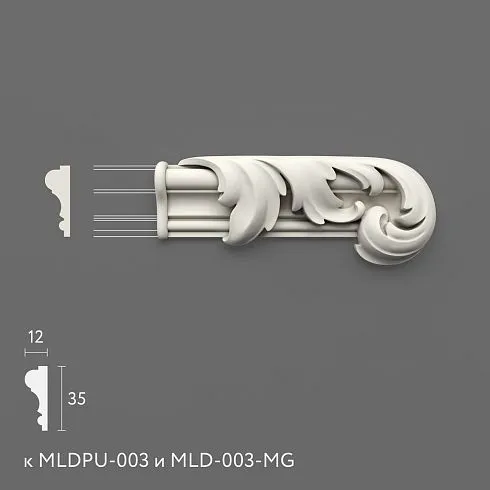
The NPU-364L polyurethane overlay, measuring 137 x 61 x 18 mm, is the left element of the mirror pair, intended for placement on the left side of the composition. Its elongated vertical form with proportions of 137 x 61 mm makes it ideal for creating side accents in panels, framing door openings, decorating pilasters, and decorating wall recesses.
The material is high-quality European polyurethane with a density ranging from 150 to 420 kg/m³, providing an optimal combination of strength, lightness, and durability. The overlay weighs only a few dozen grams, significantly simplifying installation and allowing multiple elements to be placed on a single wall without risking overloading the base.
The relief surface of the overlay is highly detailed, reproducing an elegant asymmetrical ornament characteristic of a side element. The relief depth is 18 mm, creating a pronounced three-dimensional effect with rich play of light and shadow. This depth is optimal for creating noticeable accents visible from a distance and adding depth to the composition.
The NPU-364L ornament is a neoclassical composition featuring plant motifs, scrolls, volutes, and geometric elements developing vertically. The ornament's asymmetry is due to its position on the left side of the composition — decorative elements are directed toward the center, creating a visual movement.
The vertical orientation of the overlay, 137 mm high and 61 mm wide, makes it ideal for creating vertical accents that visually raise the ceiling and add additional height to the room. The compact width of 61 mm allows overlays to be placed even in narrow wall recesses and on limited wall areas.
The overlay is supplied in white, ready for painting in any shade using acrylic, latex, or water-dispersive paints. The surface has a fine-porous structure, ideally accepting paint, ensuring even coverage without streaks or spots.
Polyurethane has exceptional moisture resistance, allowing the overlay to be used in rooms with high humidity — kitchens, bathrooms, and toilets. The material does not absorb water, does not swell, does not deform, and does not develop mold even under prolonged exposure to moisture and condensation.
NPU-364R Polyurethane Moldings (Right Overlay)
The NPU-364R polyurethane overlay, with identical dimensions of 137 x 61 x 18 mm, is the mirror reflection of the NPU-364L overlay, intended for placement on the right side of the composition. Using the mirror pair ensures perfect symmetry of the composition, which is a fundamental principle of classical design.
All material characteristics — density, strength, lightness, moisture resistance, durability — are identical to the left overlay, ensuring uniform properties across all elements of the set. This guarantees consistent material behavior under temperature and humidity changes, preventing deformations and symmetry disruptions.
The relief surface of the NPU-364R overlay is an exact mirror reflection of the NPU-364L overlay, with the same relief depth of 18 mm and identical ornament detail. The asymmetrical ornament of the right overlay is directed toward the center of the composition, creating a harmonious symmetrical pair with the left overlay.
Using mirror pairs of overlays is a characteristic feature of classical architectural moldings, where symmetry is not merely an aesthetic technique but a fundamental compositional principle. The left and right overlays are perceived as a single element divided by the central axis of symmetry.
The vertical orientation of the right overlay fully corresponds to the left, creating a unified rhythm and direction of the composition. When placing the pair of overlays on either side of a panel, door, mirror, or other central element, it creates a framing effect that draws attention to the center.
The overlay is also supplied in white and possesses all the advantages of polyurethane — moisture resistance, resistance to temperature fluctuations from -60 to +80°C, eco-friendliness, absence of toxic vapors, and durability exceeding 30 years with proper use.
Primed MDF Molding MLD-003-MG
The MLD-003-MG molding serves as a framing element of the set, creating a frame for the composition and connecting the mirror overlays into a single structure. The item is made of high-quality MDF — medium-density fiberboard — characterized by uniform structure, dimensional stability, and excellent workability.
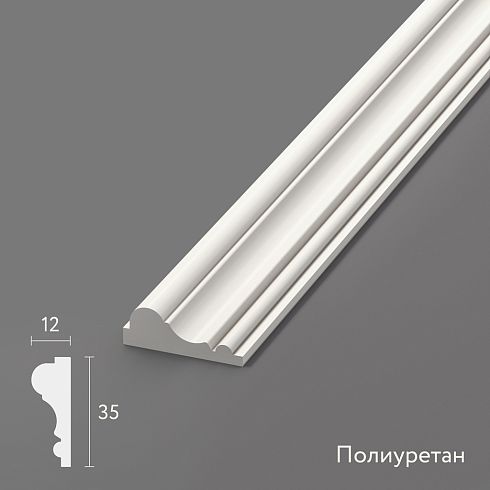
The molding has a profile width of 35 mm and thickness of 12 mm — proven optimal parameters for creating a noticeable frame without excessive bulk. The width of 35 mm harmoniously complements the dimensions of the overlays (137 x 61 mm), creating a proportionally harmonious composition. The panel length is 2600 mm, allowing the creation of panels of various sizes with minimal joints.
The molding can be easily cut to any size and angle using a circular saw, a miter box, or a fine-toothed hacksaw. The MDF material is processed cleanly without chips or scratches, ensuring a neat cut. For achieving ideal 45° or 90° angles, it is recommended to use a circular saw with precise angle adjustment.
The molding is supplied primed to 'Premium' quality, meaning all surfaces have been meticulously hand-sanded using abrasives of various grits and professionally applied factory-grade primer. This treatment ensures a perfectly smooth surface without dents, scratches, roughness, or other defects.
The MLD-003-MG molding profile is designed in a minimalist neoclassical style with smooth lines and restrained relief. The shape features a multi-step structure with alternating convex and concave elements, creating a delicate play of light and shadow. This shape harmoniously complements the mirror overlays NPU-364L and NPU-364R, not competing with them for attention but delicately framing and accentuating their beauty.
The profile of molding MLD-003-MG is designed in a minimalist neoclassical style with smooth lines and restrained relief. The shape features a multi-tiered structure with alternating convex and concave elements, creating a delicate play of light and shadow. This form harmonizes beautifully with mirror inlays NPU-364L and NPU-364R, complementing them subtly without competing for attention.
MDF has high dimensional stability and does not deform under changes in humidity and temperature within reasonable limits typical for residential spaces.Wall decoration from polyurethane and MDFcreates an optimal balance of aesthetics, functionality, and economy.
Features of the CPU-1-4 set
The CPU-1-4 set has unique characteristics that define its application and advantages in designing symmetrical interiors.
Mirror symmetry
The main distinguishing feature of the set is the presence of a mirror pair of appliqués — left NPU-364L and right NPU-364R. This configuration ensures perfect compositional symmetry, which is a fundamental principle of classical architecture and interior design.
Mirror elements are perceived as a single whole, creating visual balance and harmony. Symmetrical placement of appliqués on both sides of the compositional central axis creates a sense of order, stability, and completeness, which is psychologically perceived as comfort and beauty.
The use of mirror pairs is characteristic of high classical style, where each element on the left side of the composition corresponds to an identical element on the right. This is the principle of Palladian architecture, French classicism, and Neoclassicism.
Vertical orientation
The elongated vertical shape of the appliqués with proportions 137 x 61 mm (height-to-width ratio over 2:1) makes them ideal for creating vertical accents in interiors. Vertical elements visually raise the ceiling, creating a sense of height and spaciousness, which is especially important for rooms of standard height.
Vertical orientation also emphasizes the architectural nature of the composition, referring to classical architectural elements — pilasters, columns, vertical panels. Such elements structure the wall, create rhythm, and organize space.
Compactness and versatility
The size of the appliqués 137 x 61 mm makes them sufficiently compact for use in various compositions and in rooms of different sizes. Compactness does not mean invisibility — the relief depth of 18 mm ensures expressiveness of the elements even at small sizes.
The versatility of the set is manifested in its ability to be used both for creating full-scale panels and for local accents — framing mirrors, decorating doorways, decorating pilasters, creating vertical decorative elements on the wall.
Economic solution
The CPU-1-4 set offers a ready-made solution for creating a symmetrical composition at an affordable price. Using two small mirror appliqués instead of large-format elements reduces cost without compromising aesthetics and decorative effect.
Economic efficiency is also reflected in the low paint consumption for coating compact elements, low transportation costs due to small weight and volume, and ease of installation without requiring specialists.
Variants of Application in Interior
The CPU-1-4 decorative set with mirror elements opens up specific opportunities for creative wall decoration in various rooms.
Side framing of panels
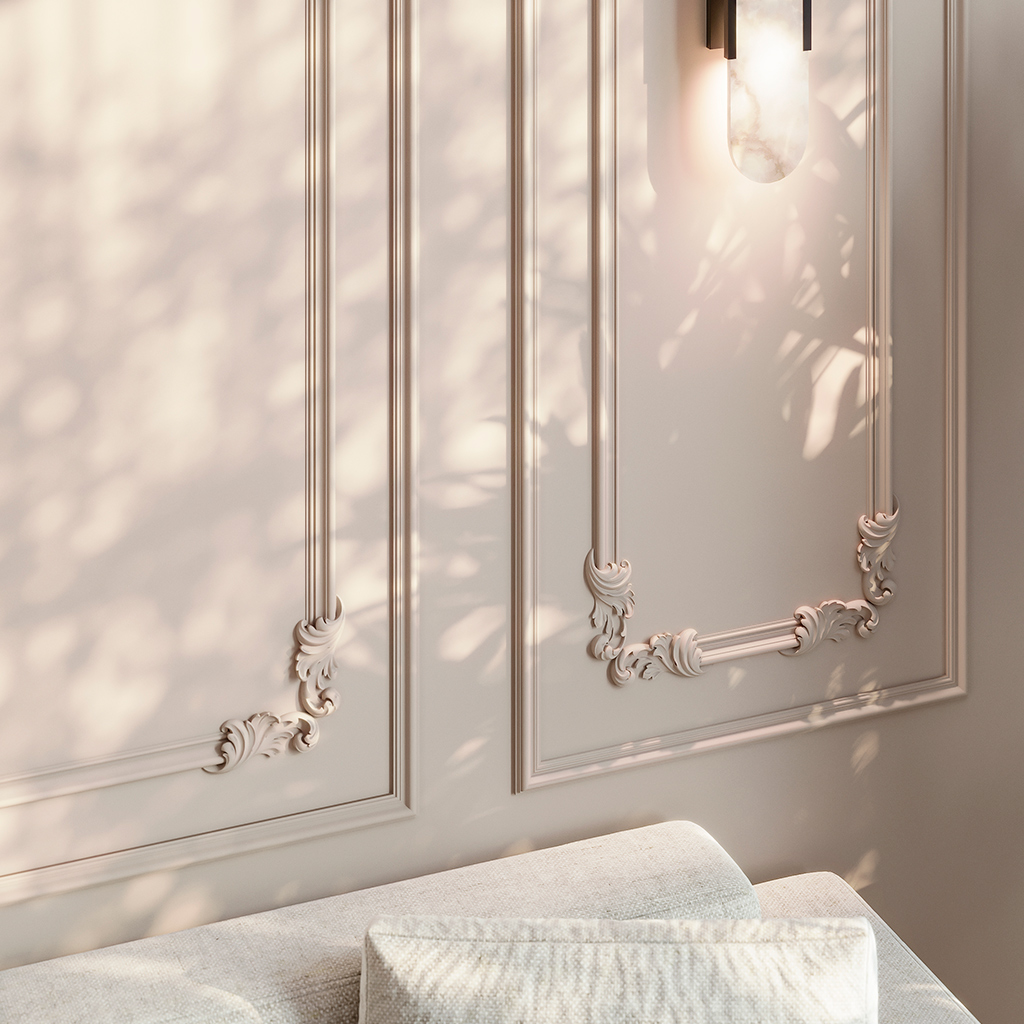
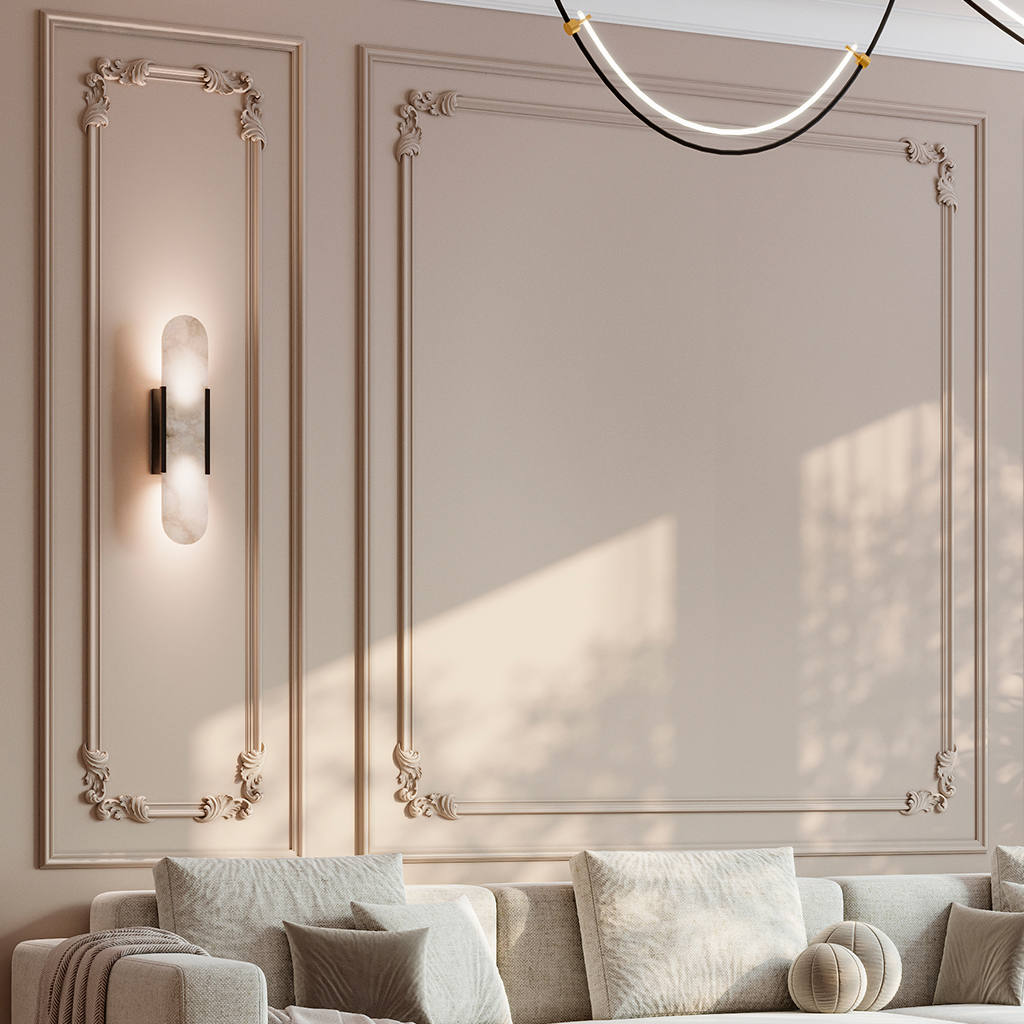
Traditional application of the set — placing mirror appliqués on both sides of a rectangular vertical panel. The molding MLD-003-MG forms the panel frame, appliqués NPU-364L and NPU-364R are placed symmetrically on the left and right sides, either inside or outside the frame, creating additional vertical accents.
Such placement emphasizes the verticality of the composition, gives it an architectural character, and creates the effect of pilasters or vertical panels. Such a solution looks especially effective on high walls, where vertical elements emphasize the scale of the room.
The interior space of the panel is painted in a contrasting color, covered with wallpaper, decorated with plaster. It is possible to place a mirror, a painting, or a wall-mounted light fixture inside the panel, transforming the decorative composition into a functional element.
Framing doorways
The CPU-1-4 set is ideally suited for decorative framing of doorways with symmetrical placement of appliqués. The molding frames the opening along the perimeter, mirror appliqués NPU-364L and NPU-364R are placed symmetrically on both sides of the door at the upper third of the opening, creating decorative vertical accents.
Such framing visually increases the height of the opening, gives it a sense of grandeur and importance, turning an ordinary door into an architectural element. Such a solution looks especially effective with contrasting decoration and wall colors — white decoration on a dark wall creates a dramatic effect.
Appliqués can also be placed in the lower third of the opening or symmetrically placed in two pairs — top and bottom — to create a more saturated composition. The choice of configuration depends on the height of the opening and the overall interior style.
Decorating mirrors
Mirror appliqués from the CPU-1-4 set create an elegant frame for wall mirrors. The molding forms a rectangular frame around the mirror, appliqués are placed symmetrically on both sides, creating the effect of a luxurious frame.
Such a solution turns an ordinary mirror into an interior decorative element that attracts attention. High vertical mirrors with side framing look especially effective, emphasizing their elongated proportions.
Decoration can be placed either directly on the mirror frame (if it is wide enough) or on the wall around the mirror. The second option creates a more substantial composition and integrates the mirror into the overall wall structure.
Wall panel trim
In the pilasters between windows, in narrow sections of the wall between the door and the corner, in niches, the CPU-1-4 set is used to create vertical decorative elements. Mirror inserts are placed on narrow walls, creating an illusion of pilasters or vertical panels.
Moldings frame the pilaster along the perimeter or create vertical strips into which inserts are fitted. This solution transforms a problematic narrow wall into a decorative element that attracts attention and structures the space.
Such a solution is especially relevant in rooms with many windows, where wide walls are absent and pilasters appear uninteresting. Decorative pilaster treatment creates a rhythmic structure, unifying windows into a single composition.
Vertical accents on the wall
On a wide wall, mirror inserts from the CPU-1-4 set are used to create vertical decorative strips dividing the wall into sections. Moldings form vertical frames within which inserts are placed, forming a repeating vertical motif.
This solution creates a rhythmic wall structure, visually raising the ceiling and adding architectural character to the interior. It is possible to create a series of identical vertical elements or combine them with horizontal panels to form a complex composition.
Vertical elements can be placed at equal intervals, creating a regular rhythm, or grouped to create a dynamic asymmetrical composition. The choice of configuration depends on the interior style and personal preferences.
TV Zone Decoration
In the living room, the CPU-1-4 set is used to create symmetrical framing around the TV zone. The molding forms a rectangular frame around the television, and mirror inserts are placed symmetrically on both sides, creating vertical accents and integrating modern technology into a classic interior.
Placing inserts on both sides of the television visually expands the TV zone, creating a balance between the horizontal screen and vertical decorative elements. The decor distracts attention from the black rectangle of the turned-off screen, transforming the TV zone into a full architectural element.
It is possible to place additional functional elements within the composition — shelves for equipment, hidden niches for wires, decorative lighting.Molding for the living roomtransforms the technological zone into an aesthetic center of the interior.
Installation technology of the set
Installation of elements from the CPU-1-4 set is performed using a proven technology, taking into account the specifics of mirror elements.
Wall surface preparation
The wall must be flat, clean, dry, and strong to ensure reliable adhesion of the adhesive to the base. Significant unevenness exceeding 5 mm over a 2-meter length is leveled with putty followed by sanding with abrasive grit 120-180. Minor defects up to 2-3 mm are permissible.
The surface is thoroughly cleaned of dust using a vacuum cleaner or a damp cloth, degreased with a solvent or special compound. After this, the wall is primed with an acrylic deep-penetration primer to improve adhesive bond, strengthen the surface layer, and reduce the absorbency of the base.
The primer is applied with a roller or wide brush in one layer, with full drying before installing the decor. The drying time for the primer is usually 2-4 hours at a temperature of 20-25°C and normal humidity of 40-60%. Priming is mandatory for porous bases — plaster, drywall, concrete.
Designing a symmetrical composition
Before installation, carefully design the composition taking into account symmetry — the main principle of working with the CPU-1-4 set. The central axis of symmetry of the composition is determined — usually this is the center of the wall, the center of the panel, the center of the door or mirror.
Equal distances are marked from the central axis to the left and right to determine the position of mirror inserts NPU-364L and NPU-364R. It is important to ensure absolute symmetry — equal distance from the axis, identical placement height, identical orientation relative to the horizontal.
Detailed marking is performed on the wall using a laser level, ensuring perfect vertical and horizontal alignment, a construction level, a tape measure, and a pencil. The central axis of symmetry is marked with a vertical line, molding placement lines, and centers of mirror insert placement.
It is recommended to make a sketch of the composition on paper to scale or in a graphic editor to visualize the result and identify possible errors before starting installation. A symmetrical composition does not tolerate even the slightest deviation — a difference of several millimeters between the position of the left and right inserts will be noticeable to the eye and disrupt harmony.
Preparation of elements for installation
Elements of the set must be acclimated to the room's climate for 24 hours before installation, especially if they were stored in a cold warehouse or delivered during winter. This allows materials to adjust to the room's temperature and humidity, preventing deformation after installation.
Moldings are cut to size using a circular saw or a miter box to achieve precise angles. For vertical elements, straight cuts at 90° are usually required, while for framing, 45° angles are needed. A sharp blade with fine teeth (at least 60 teeth) is used to achieve a clean cut without chipping.
Mirror inserts NPU-364L and NPU-364R are checked for completeness and mutual compatibility. It is important not to mix up the left and right inserts during installation — markings L (left) and R (right) help avoid errors. It is recommended to lay out the inserts on the floor in the correct orientation before lifting them onto the wall.
Molding installation
Moldings are installed first, forming the composition's frame, to which mirror inserts are then added. For installing MDF moldings, a special wood adhesive, universal polymer adhesive (liquid nails), or acrylic mounting adhesive is used.
Adhesive is applied to the back of the molding using a thin zigzag pattern with 10-15 cm intervals or two parallel strips along the strip to ensure even contact. To ensure secure fixation, adhesive is also applied to the ends of the moldings at the joints.
The molding is pressed firmly against the wall strictly according to the marking, using a level to control vertical or horizontal alignment, and held for 30-60 seconds until the adhesive sets. It is important not to shift the molding after pressing. For long strips, temporary fixation with painter's tape may be required until the adhesive fully dries (24 hours).
Excess adhesive protruding from under the molding is immediately wiped away with a damp cloth or sponge before it dries. Joints between moldings in corners must be as tight as possible without gaps. If small gaps remain, they are filled with acrylic sealant or wood putty, followed by sanding after drying.
Installation of mirror inserts
After installing and drying the moldings, install the polyurethane mirror overlays NPU-364L and NPU-364R. For mounting, use a special polyurethane adhesive that ensures a secure bond with various substrates and an elastic seam compensating for material thermal expansion.
The adhesive is applied to the entire back surface of the overlay in a thin, even layer or in spots with an interval of 3-5 cm. For small overlays measuring 137 x 61 mm, it is sufficient to apply adhesive along the perimeter and in the center — only 6-8 adhesive points.
It is extremely important to correctly orient the mirror overlays — the left NPU-364L is placed to the left of the central axis of symmetry, the right NPU-364R — to the right. The overlays must be mirror images of each other relative to the central axis, at the same height, and at the same distance from the axis.
The overlay is pressed firmly against the wall at the marked location, strictly following the marking, and held for 30-60 seconds until the adhesive sets. Due to the lightweight nature of the polyurethane overlay (less than 50 grams), additional fixation is not required. Excess adhesive is removed with a damp cloth.
After installing both overlays, visually assess the symmetry of the composition — the overlays should appear as a single unit divided by the central axis. Any deviations in position, height, or orientation must be corrected before the adhesive fully cures.
Final finishing
After the adhesive has fully dried (usually 24 hours under normal conditions), perform the final finishing of the entire composition. Joints between elements, gaps between the decor and the wall, and areas where moldings meet the overlays are carefully filled with white acrylic sealant.
The sealant is applied using a caulking gun in a thin, neat bead, then smoothed with a damp finger, rubber spatula, or special tool for forming a neat seam. Excess sealant is removed with a damp sponge before it sets.
The entire surface of the decor is lightly sanded with fine-grit sandpaper (grit 220-320) to remove irregularities, adhesive droplets, sealant marks, and prepare for painting. Sanding is done carefully without excessive pressure to avoid damaging the relief of the overlays.
MDF moldings, when primed, usually do not require additional priming before painting. Polyurethane overlays are recommended to be primed with acrylic primer to improve paint adhesion and coating uniformity, especially when using dark, saturated colors.
Painting is done using water-based acrylic or latex paints with a small roller for moldings and a brush for overlays in 2-3 coats with intermediate drying times of 2-4 hours. The first coat is applied thinly to fill pores, subsequent coats are applied to achieve a rich color.
For painting the relief areas of the mirror overlays, use a brush of the appropriate size to ensure all ornament recesses are painted. It is important to paint both overlays identically to maintain visual symmetry of the composition.
Stylistic compatibility
The CPU-1-4 set with mirror elements fits organically into various stylistic directions where symmetry is an important compositional principle.
Neoclassicism
The neoclassical style, with its devotion to symmetry, balance, and proportion, finds its ideal embodiment in the CPU-1-4 set. Mirror overlays placed on both sides of the central axis create a harmonious symmetrical composition characteristic of neoclassicism.
The color scheme tends toward light neutral tones — white, cream, light gray, beige. Pastel accents are possible — dusty rose, mint, lavender. Furniture — with clean lines, symmetrical forms, quality materials. Textiles — natural, with noble texture.
French Classicism
The French classical style, with its elegance, refinement, and attention to detail, is beautifully complemented by the CPU-1-4 set. Mirror elements with vertical orientation evoke classic French interiors with their pilasters, panels, and friezes.
Color palette — white, cream, gray, with possible accents in gold, silver, blue. Furniture — refined, with curved legs and decorative elements. Atmosphere — refined elegance with a touch of romance.
American classic
American Classicism, with its inclination toward symmetry, proper proportions, and restrained ornamentation, finds in the CPU-1-4 set an appropriate tool. Vertical mirror elements create architectural character typical of traditional American interiors.
Color palette — warm neutral tones of beige, cream, gray-brown, with possible accents in dark blue, burgundy, green. Furniture — classic forms made of natural wood. Atmosphere — home comfort with aristocratic elements.
Italian Classicism
The Italian classical style, with its love for symmetry, architectural elements, and quality materials, harmonizes beautifully with the CPU-1-4 set. Mirror overlays imitate classical architectural details of Italian palazzi and villas.
Color scheme can be light monochromatic or contrasting, using terracotta, ochre, olive tones. Furniture — substantial, made of natural wood, with carved elements. Atmosphere — Mediterranean luxury.
Modern classic
Modern Classicism, combining classical principles with contemporary aesthetics, finds in the CPU-1-4 set a balance between tradition and current trends. Subdued ornamentation, clean lines, symmetry without excessive pomp characterize this style.
Color scheme can be contrasting — white decor on dark walls or vice versa. Furniture — modern forms with classical references. The combination of classicism and modernism creates a timeless, universal interior.
Combination with other collection elements
The CPU-1-4 set is part of the 'Neoclassic' collection and can be used independently or in combination with other elements.
Combination with corner overlays
Using the CPU-1-4 set in combination with corner overlays from the CPU-1-3 set allows creating a complex composition with decorative elements in the corners and along the sides of the panel. Corner overlays are placed in four corners, vertical mirror overlays — along the sides, creating a multi-point composition.
This solution is characteristic of high-style classical interiors, where decoration is rich but not overloaded. It is important to maintain balance — the number of decorative elements should correspond to the scale of the room.
Adding central elements
Combining the CPU-1-4 set with central inserts, inserts, or other decorative elements from the 'Neoclassic' collection creates a three-part composition — center and two side elements. The central element is placed on the axis of symmetry, with mirrored inserts on either side.
This composition has a clear hierarchy — the central element dominates, while the side elements support and frame it. This is a classical scheme used in architecture and interior design for centuries.
Creating complex multi-level compositions
Using multiple CPU-1-4 sets together with molding of various profiles allows creating a multi-level composition with several rows of mirrored elements. Such compositions create depth, complexity, and richness of decoration.
It is important to maintain symmetry at all levels of the composition — each element on the left must have a mirrored counterpart on the right. Breaking symmetry destroys the harmony of the classical composition.
Care and Maintenance
The CPU-1-4 decorative set requires no complex maintenance and retains its original appearance when simple rules are followed.
Regular dust cleaning
To remove dust from the surface of the decoration, it is sufficient to periodically wipe it with a dry, soft microfiber cloth. Raised areas of mirrored inserts are cleaned with a soft brush, a vacuum cleaner with a furniture attachment on minimal power, or a specialized decorative brush.
The cleaning frequency depends on the intensity of room use. In the living room and hallway, weekly cleaning is recommended; in the bedroom, cleaning every two weeks is sufficient. Regular cleaning prevents the accumulation of dirt in the recesses of the relief.
Wet cleaning
If more thorough cleaning is required, the decoration is wiped with slightly damp (not wet) cloth. To remove stubborn stains, use soft cleaning agents for painted surfaces, diluted in warm water according to instructions.
The solution is applied with a sponge, dirt is carefully removed without vigorous rubbing, then the surface is wiped with a clean damp cloth and dried thoroughly. Abrasive agents, stiff brushes, solvents, and aggressive chemicals must not be used.
Repair of damage
Scratches or paint chips are repaired by local touch-up with the same paint. Paint is applied with a fine brush, and after drying, it is slightly blended for a seamless transition. It is important to touch up both inserts symmetrically to maintain visual unity.
Polyurethane inserts, due to their elasticity, are practically not prone to chipping. When an element detaches, the surfaces are cleaned of old adhesive, fresh adhesive is applied, and the element is reinstalled.
Interior refresh
Painted decoration can be repainted multiple times when changing the color concept. The surface is sanded, primed if necessary, and painted in a new color. The ability to repaint makes the set a long-term investment in interior design.
Advantages of choosing a set from Stavros
The CPU-1-4 decorative set from the company Stavros is a guarantee of quality, precision of execution, and aesthetic perfection.
Ideal mirror symmetry
Production of mirror elements NPU-364L and NPU-364R is carried out using precise master models and professional molds, ensuring absolute symmetry. Every detail of the relief on the right insert is an exact mirror reflection of the left one, guaranteeing a harmonious composition.
Premium materials
European-made polyurethane meets strict quality and ecological safety standards. MDF for molding is produced on modern equipment. All materials are certified and safe for residential spaces.
High dimensional accuracy
Modern CNC equipment and multi-stage control ensure dimensional accuracy of elements. Mirror inserts have identical dimensions, which is critically important for symmetrical compositions. Molding has a smooth profile along the entire length.
Detailed relief work
Mirror inserts NPU-364L and NPU-364R feature the highest level of ornament detail. Using professional master models and modern molding technology ensures reproduction of the finest details with clarity and precision.
Ready for use
Molding is supplied primed to 'Prestige' quality, ready for painting without additional preparation. This saves time and guarantees professional-quality finish.
Professional Support
Stavros company provides consultations on creating symmetrical compositions, material calculations, design assistance, and installation recommendations. Experienced specialists will help implement a project of any complexity.
Conclusion
The CPU-1-4 decorative set fromthe Neoclassic collectionis a specialized solution for creating symmetrical compositions in the classical style. The unique configuration with mirror inserts NPU-364L and NPU-364R ensures perfect symmetry, a fundamental principle of classical design. Vertical orientation of elements, compactness, high material and execution quality, ease of installation, and universal application make this set the optimal choice for those who value harmony, balance, and classical aesthetics in interior design.Polyurethane wall decorFrom Stavros allows creating an interior with flawless proportions and classical beauty that stands the test of time.
Your request has been sent!
Our manager will contact you within 5 minutes