










































































Brussels Collection
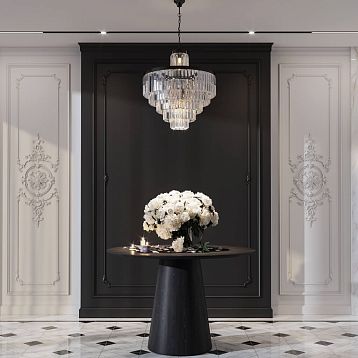
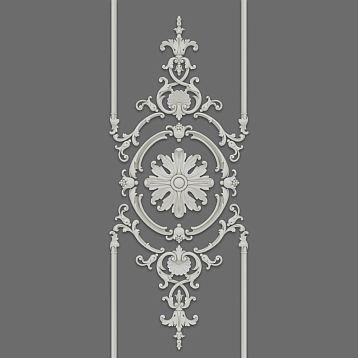
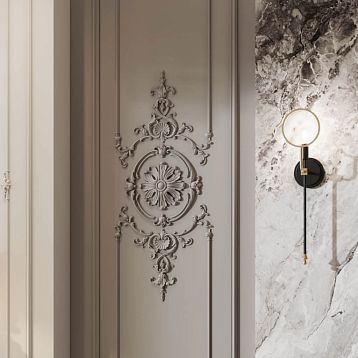
Application Gallery


The "Brussels" collection — polyurethane stucco decor for walls
European character in every detail
There are names that immediately set the coordinates. "Brussels" is not just an article label, not a conditional word for a catalog. It is an aesthetic program: the European architectural tradition in its restrained, precise, carefree-refined version. Brussels is a city that can be both strict and lively, grand and humane, historical and modern. It is these qualities — restrained expressiveness, architectural precision, European taste without excess — that define the character of the collection.
Wall stucco decor from the "Brussels" collection by STAVROS is a series of decorative polyurethane elements created for designing wall panels, molding frames, accent zones, and any interior surfaces that should speak the language of architectural finishing, not random decor.
If you are looking fordecorative wall molding that will work as a system — not one detail "for beauty," but a well-thought-out set of elements with logic, symmetry, and stylistic consistency — you are in the right section. "Brussels" is created precisely for this: for those who build an interior, not decorate it.
What is the "Brussels" collection: decor with systemic logic
A collection is not just a set of similar details. It is a dictionary. And like any dictionary, "Brussels" consists of words that work together: corner elements, central overlays, side inserts, decorative accents — each detail occupies a specific position in the system and gains full meaning only as part of the composition.
STAVROS polyurethane decor from the "Brussels" collection is intended for walls — and only for walls. Not for ceilings, not for furniture, not for facades. This is what makes the collection a specialized tool: each element was created with an understanding of how the wall is perceived by a person at different distances, under different lighting, in different proportions of space.
Key features of the collection:
-
Material — polyurethane (injection molding using high-precision molds)
-
Surface — ready for painting with interior paints
-
Purpose — wall panels, molding frames, accent zones, piers, niches
-
Style range — classic, neoclassical, art deco, Parisian style, European interior, modern classic, eclectic
-
Installation — adhesive mounting, no dowels required
-
Application — residential and commercial interiors
Each element of the collection has precise dimensions, a specific projection, and a defined role in the wall composition. This allows the decorative panel to be designed as an architectural solution: with calculated proportions, an understanding of rhythm, and a balanced interplay between ornamental richness and visual clarity.
Composition of the "Brussels" collection: what you can find here
Corner decorative elements
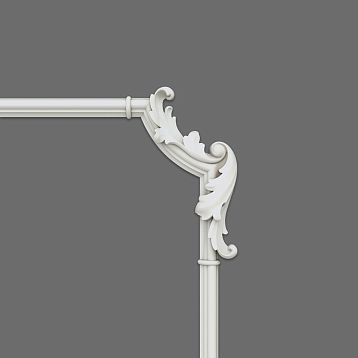
Corner — the key point of the molding frame. It is here that the vertical and horizontal meet, and it is here that a simple molding profile transforms into a decorative system.Decorative polyurethane corner elementsThe "Brussels" collection covers the joint of moldings and adds an ornamental relief to the corner of the frame: elegant, precise, not drawing attention to itself, but distinctly present.
Corner elements are typically presented in pairs: left-handed (L) and right-handed (R). This is not a marketing convention — it is a geometric necessity. A frame has four corners: two upper and two lower, left and right. Mirror-image parts are needed for a symmetrical result. The "Brussels" collection fully meets this need.
Central overlays and medallions
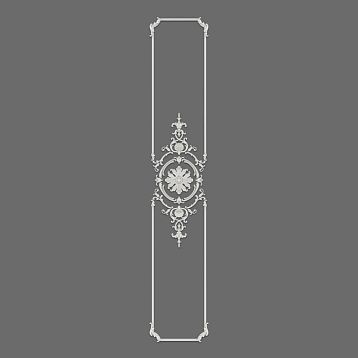
The center of a decorative panel is a place for an accent.Wall-mounted stucco decorThe collection includes central overlays of various shapes and scales: from compact inserts that delicately mark a semantic pause in the vertical rhythm of the frame, to more prominent elements with expressive relief that claim the role of the decorative dominant of the panel.
What is important to understand about central elements: they work in conjunction with corner pieces and molding. In isolation — it is just a beautiful overlay. In a system — it is the point around which the entire decorative scenario of the wall is organized. It is this systemic logic that distinguishes "Brussels" from a random set of decorative parts.
Horizontal and vertical inserts
A long vertical frame without intermediate accents is monotony. Intermediate inserts create rhythm: they divide the height of the panel into readable segments, add ornamental pauses, and prevent the eye from aimlessly sliding along the perimeter of the frame.
The "Brussels" collection includes both vertically and horizontally oriented inserts. This expands layout possibilities: vertical elements support the up-down dynamics of the frame, while horizontal ones create semantic "horizons" that structure the panel by height.
Decorative details for moldings
A separate category —molding decorative elements: small relief overlays that are installed directly on the molding or next to it. They add detail where the molding itself only creates a geometric outline. It is these details that transform the frame from a "construction profile" into the category of "decorative architecture."
Why people buy decor from the "Brussels" collection: real application scenarios
The question "why?" in interior design is always specific. Let's look at what tasks are actually solved by thestucco decorative wall collection "Brussels".
Decorative frames from moldings
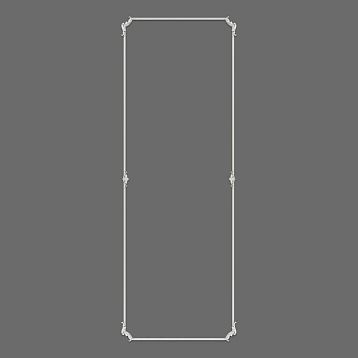
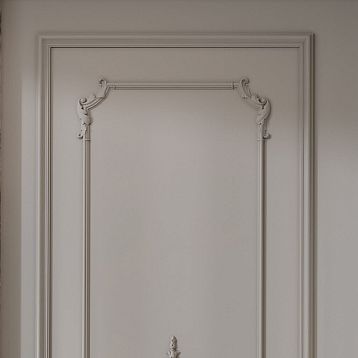
The most common application scenario. Molding frames — vertical or horizontal rectangles on the wall, bounded by a molding profile and completed with corner decorative overlays. The molding sets the geometry. The elements of the "Brussels" collection make it lively: add ornamentation to the corners, accentuate the center of the panel, create a decorative rhythm vertically.
Ready-madedecorative wall frame from moldings with "Brussels" elements is not a craft "for show." It is an architectural structure that holds the gaze and creates the feeling of a genuine design solution.
Accent Wall in Living Room
Accent wall — the main decorative argument of the living room. Everything that happens in the room unfolds against its background or refers to it. Three vertical frames with "Brussels" elements in an equal rhythm turn a flat wall into a decorative system with architectural weight.molded decor for the living roomfrom this collection creates exactly that effect — without expensive plaster molding, without plaster structures, without weeks of installation.
Question: how saturated should the accent wall in the living room be? The answer depends on ceiling height, wall width, interior style, and personal preferences. "Brussels" offers a scalable solution: one element — a minimal accent, three frames — a full decorative system.
Wall at the head of the bed
Stucco decor for the bedroom — a zone of special delicacy. The bedroom is a space of rest that does not tolerate overload. Elements of the "Brussels" collection, used to decorate the wall at the headboard, create a calm architectural accent: a frame with ornamental details frames the bed headboard, creating a decorative "portal" without heaviness.
When painted in the wall color — the effect is quiet, textured, almost meditative. With contrasting paint — an expressive decorative accent that makes the bedroom recognizable and memorable.
Hall and entryway: the first word about taste
The entryway is a place that all guests see and all hosts remember.Decorative stucco for the hall and entrywayfrom the "Brussels" collection transforms a transit space into a representative one. One vertical frame on the side wall of the entryway — and the interior immediately gains additional scale and character.
In a hall with high ceilings, "Brussels" works especially convincingly: vertical frames emphasize the height, and ornamental details create a feeling of "a place with history" — even in a new renovation.
TV zone: architectural framing for technology
A TV on the wall without context is a visual problem. The black screen "hangs" in emptiness, not fitting into any decorative logic of the space. Two side vertical frames with "Brussels" elements create a symmetrical portal: the screen integrates into the system, ceases to be alien, and becomes the center of a well-thought-out decorative composition.
Spaces between doorways
A pier is an architecturally awkward spot: too narrow for a painting, too visible for emptiness.Stucco for piersfrom "Brussels" solves this task precisely: compact vertical frames turn the pier into an independent decorative element — neat, proportionate, appropriate.
Decorative niches and built-in zones
A niche in the wall is a gift that many do not know how to use correctly. Elements of the "Brussels" collection, mounted along the perimeter of the niche's back wall or its opening, turn the niche into a decorative "portal" with an ornamental frame. This fundamentally changes the perception of the niche: it ceases to be a technical recess and becomes an architectural detail.
Study, library, work area
Stucco decor for the studyfrom "Brussels" creates the atmosphere of a place where decisions are made. Molding frames on the office walls create a library-like weightiness — a feeling that the space is organized intentionally, with meaning and respect for the activities carried out there.
Commercial spaces
Restaurant, beauty salon, boutique, showroom, hotel lobby — in these spacespolyurethane stucco decoration for commercial interiorsworks as a marketing tool. Walls with decorative frames and ornamental details create the feeling of an establishment with a claim to a certain level. The guest reads this unconsciously — and their expectations are shaped accordingly before the first word from the staff.
The "Brussels" collection is good in a commercial context for its versatility: it is neither too "loud" nor too quiet. It creates the right background — expressive, but not distracting from the product or service.
Polyurethane stucco: why it is the right material for walls
Before talking about specific elements, it is worth understanding the material. Polyurethane as a base for wall decor is not a compromise or a replacement for "real stucco." It is an independent solution with its own advantages that make it preferable for most modern interior tasks.
Light weight: freedom of installation
Polyurethane has a density of 0.6–0.8 g/cm³. For comparison: gypsum is 1.2–1.4 g/cm³, that is, about twice as heavy. This is a fundamental difference during installation:lightweight polyurethane stucco for wallsIt is held on mounting glue without dowels, anchors, or metal brackets. It can be installed on drywall, plastered surfaces, painted walls — virtually without restrictions on the base.
This is freedom. The freedom to choose a location for the panel without worrying about the wall's load-bearing capacity. The freedom to move the frame if the initial position turns out to be unsuccessful. The freedom to work independently, without a team of installers with power tools.
Reproduction accuracy: matrix casting
Each element of the Brussels collection is cast using a high-precision matrix. This means that all copies of the same item are identical: the same relief, the same projection, the same surface texture. When installed symmetrically (L and R on opposite sides of the frame), two mirrored elements form a perfect pair — without visual mismatch, without 'one slightly larger than the other.'
For decorative systems where symmetry is a key decorative argument, this is a critically important property.decorative polyurethane elementsIt is not 'handmade' — and in this case, it is an advantage, not a drawback.
Expressive relief: depth and shadow
The quality of the polyurethane relief is determined by the quality of the matrix. At STAVROS, matrices allow reproducing detailed ornamental patterns with clear contours, smooth transitions, and deep 'hollows' between decorative protrusions. It is this depth that creates a shadow under side lighting — and it is the shadow that makes the relief visible and expressive.
Wall stucco decor for paintingFrom Brussels in a solid color, it 'lives' due to this shadow. Under side lighting (wall sconces, floor lamps, built-in lights), the relief becomes maximally readable. Under frontal diffused light, it recedes into a quiet architectural background.
Compatibility with paints: no restrictions
The polyurethane surface is chemically neutral: it accepts acrylic, latex, and water-dispersion interior paints without a special primer. Light sanding of the surface is recommended before the first application (sandpaper grit 180–220). Two finish coats of paint provide an even result — the relief retains clarity with any color.
Durability with proper use
Interior polyurethane stucco moldingis not afraid of standard household humidity in living spaces, does not crack during normal temperature changes, and does not crumble at the edges of the relief upon accidental contact. Service life under normal use is many decades. The painted surface can be refreshed with repainting without restrictions.
How "Brussels" works with moldings
The most common question from customers choosing wall decor for the first time: "Do I need a molding if I am taking stucco elements?" The answer is yes, in most cases you do. Here's why.
Molding is geometry, stucco is character
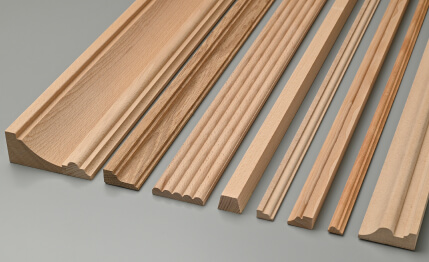
MDF moldingor polyurethane creates a geometric frame contour: a clear straight line that defines the decorative area on the wall. Without molding, the stucco elements "float" in emptiness — they exist but do not form a system.
With molding, the picture is different. The molding contour gives decorative details a "foundation": corner elements occupy specific corners of the frame, central overlays are inside a clearly defined area, inserts work within a structured space. Architectural logic emerges.
Symmetry as a mandatory condition
Decorating walls with moldings and stucco is based on symmetry. This is not an aesthetic wish — it is a structural requirement. An asymmetrical frame in details is perceived as a mistake. The human eye unmistakably notices a violation of symmetry — even if it cannot articulate what exactly is "wrong".
The "Brussels" collection provides paired elements (L/R) for all symmetrical positions. This ensures that with proper marking, the result will be flawless in terms of symmetry.
Repeatability of panels
One of the main advantages of working with a collection as a system is the ability to repeat panels. One set of elements = one frame. Three identical frames in equal rhythm = a decorative wall system. All frames will be identical because all elements are the same — matrix casting guarantees this.Stucco for vertical wall panels the "Brussels" collection was created specifically for this.
For which interior styles is the "Brussels" collection created
Neoclassicism: precise stylistic match
Neoclassicism is built on three principles: symmetry, vertical rhythm of molding frames, restrained ornament.Molding for neoclassicism"Brussels" literally meets all three requirements. Corner details with neat relief, central overlays without excessive baroque, a molding contour with a clear profile — this is the vocabulary of neoclassicism in its pure form.
In a white or cream solid color, "Brussels" in a neoclassical interior looks organic, as if it was originally designed together with it. It is this effect of "built-in" that is the highest praise for a decorative system.
Modern classic: a delicate architectural shadow
Modern classic is neoclassicism with the "gold" removed and simplified profiles. The same vocabulary, the same principle — but without the solemn heaviness.Decorative stucco for a classic interior"Brussels" in modern classic is painted to match the wall — and exists as an architectural layer that is felt but not declared. The relief is only visible under side lighting. In diffused light, the wall looks calm and clean — but it clearly "works."
Art Deco: geometry and ornament in equal measure
Art Deco loves strict geometry enriched with ornament. The rectangular molding frame with decorative corner details "Brussels" is a literal embodiment of the Art Deco principle. When painted in metallic colors (matte gold, bronze, graphite, powder copper), the collection acquires a distinct Art Deco character — especially if the wall is painted in a dark, rich tone.
Parisian style: ornament on top of ornament with logic
A Parisian interior is layering. Molding frames with stucco are the first, structural layer that holds all subsequent decorative layers (wallpaper, paintings, textiles, mirrors) in a system. Without this first layer, a Parisian interior turns into a collection of beautiful things. With it, it becomes a well-thought-out space with decorative logic.European-style stucco decor from "Brussels" — exactly the first layer that is needed.
European style: name as a program
The "Brussels" collection is a direct reference to the European architectural tradition. The European interior style in its best manifestations is the ability to create a space with historical context using modern materials and technologies.European-style stucco molding made of polyurethane — exactly that tool.
Eclecticism: a system-forming role
In an eclectic interior, architectural frames on walls act as an anchor: they create a structure within which any style mix looks like a deliberate decision, not a random set. The "Brussels" collection in eclecticism is discipline for a disobedient space.
Premium modern interior
A high-end modern interior is not one that denies ornament. It is one that uses ornament precisely and sparingly. One decorative element from "Brussels" in an empty space with expensive materials is enough to create the necessary tension point that makes the interior memorable.
"Brussels" in the STAVROS collection system: how to choose correctly
The "Brussels" collection is part of a large lineof STAVROS polyurethane wall decor. How to understand that "Brussels" is your choice, and not the neighboring collection?
"Brussels" vs "Botanical Garden"
The "Botanical Garden" collection is a soft, natural, botanical pattern: leaves, flowers, branches, natural forms. It works well in bedrooms, boudoirs, children's rooms, and feminine spaces with a floral or romantic concept.
"Brussels" is an architectural, European, more formal pattern. It is better suited for formal areas, living rooms, halls, studies, commercial spaces — anywhere where decorative strictness is needed, not natural softness.
Tip: if your interior has room for both strictness and softness — use both collections in different zones. This is a professional technique that creates a decorative contrast between spaces.
"Brussels" vs "Tauride Garden"
The "Tauride Garden" collection— another classic STAVROS collection with a focus on traditional decor. If "Tavrichesky Sad" leans toward the domestic classical tradition, then "Brussels" emphasizes a European character — more restrained, "Nordic" in spirit, oriented toward the Western European architectural school.
The choice between them is a matter of nuance and personal taste. Both collections work in similar styles but give a different "temperature" to the decor. "Tavrichesky Sad" is slightly warmer and more ornamentally rich. "Brussels" is slightly cooler and architecturally stricter.
How to choose elements from the "Brussels" collection: a practical guide
Choosing decorative elements for a wall is a mini-design project. Here is the sequence of decisions you need to make.
Step 1: determine the role of the element in the composition
Each detail in the wall decor system occupies a specific position:
-
Corner element — the joint of molding in the four corners of the frame
-
Central element — the axis of symmetry, the semantic center of the panel
-
Vertical insert — a rhythmic accent along the vertical axis
-
Horizontal insert — a rhythmic accent along the horizontal axis
-
Small decor — filling transition zones, creating decorative density
Before choosing a specific item, answer the question: what position in your composition does this part need to fill?
Step 2: determine the scale
The size of the element should match the scale of the frame and the room. For a narrow vertical frame (400–500 mm) — compact corner pieces (100–150 mm) and small central inserts. For a wide frame (800–1000 mm) — larger elements with corresponding projection. For a high ceiling — vertically elongated details that support the vertical dynamics of the space.
Step 3: check symmetry
Make sure that for each L-element you take a mirrored R-element in the same quantity. Asymmetry in paired parts is the most common mistake when choosing decor independently.
Step 4: consider the projection
Projection is the thickness of the element, its protrusion from the wall plane. In one frame, it is recommended to use elements with consistent projections: corner pieces may have a slightly larger projection than the molding (creating a stepped relief), but the central element should not be lower than the corner ones — otherwise the logic of 'main — subordinate' will be disrupted.
Step 5: decide on painting before installation
If you plan to paint the decor to match the wall — all seams between elements will be hidden by paint, and the requirements for joint precision are slightly lower. If you plan a contrasting color — seams will be visible, and their quality is critical. This affects the installation technology: with contrasting painting, all seams must be sealed and sanded especially carefully.
Installation of Brussels stucco molding: from marking to painting
Surface preparation
Wall before installationpolyurethane wall moldingmust be level (deviations no more than 2 mm on a 2-meter rule), dry, and free of dust and grease. Surfaces with deep irregularities must be puttied before installation — otherwise gaps will form between the elements and the wall.
Marking: the main stage
Don't rush with the glue. First, complete marking with a pencil. A laser level allows for perfectly vertical and horizontal lines. The vertical axis of the frame — symmetry is built from it. Horizontal lines of the top and bottom of the frame — checked with a level. Positions of corner elements — measured from the axis.
Only after checking all markings, from a distance of 2–3 meters (this is the distance from which the finished frame is perceived), proceed with installation. A marking error of 5 mm is noticeable from a distance of 4–5 meters.
Adhesive selection
Forinstalling stucco molding on a walluse acrylic or polyurethane construction adhesive (liquid nails for polyurethane products). Do not use solvent-based adhesives — they can deform the surface of the elements. Apply the adhesive in dots or a zigzag pattern to the back surface, press the element against the wall for 30–120 seconds depending on size.
Puttying and sanding
After the glue has completely dried (24 hours), all joints between elements and between elements and the wall are filled with acrylic sealant. After the sealant dries, sand with 180–220 grit sandpaper. This step "removes" the joints and creates the feeling of a monolithic surface.
Painting
Two to three coats of interior paint. The first coat is thin — it covers the surface and creates a base. The second is the finish coat. When working with relief details, use a soft flat brush to paint the recesses of the ornament — a roller does not reach into deep relief.
Advantages of the "Brussels" collection: everything you need to know
-
System logic — elements are designed as parts of a unified decorative vocabulary
-
European character of the ornament — restrained expressiveness of the Western European architectural tradition
-
Paired elements — guarantee of symmetry without extra effort
-
Polyurethane with high-quality relief — high-precision matrix casting
-
Light weight — installation on any base without dowels
-
For any paint — wall tone, contrasting, metallic
-
Wide range of applications — from a compact hallway to a restaurant hall
-
Compatibility with moldings and cornices — a unified decorative system
-
Durability — the material is not afraid of household humidity and does not lose its shape
-
Accessibility for DIY installation — no special skills required
Buy stucco decor from the «Brussels» collection by STAVROS
The «Brussels» collection is available in full in the sectionof STAVROS polyurethane wall decor. Here are also other collections of wall decor, moldings, cornices, baseboards, and complete solutions for creating wall panels of any scale.
If you are preparing a complex project — several rooms, a large number of panels, a commercial property — use the consultation of specialists. In the full catalogof polyurethane moldings STAVROS there are solutions for any scale of task: from one decorative frame in the bedroom to the design of a hotel lobby.
FAQ: questions about the «Brussels» collection and stucco decor for walls
How is «Brussels» different from other STAVROS wall decor collections?
"Brussels" is a collection with a European, architecturally strict character of ornament. Unlike "Botanical Garden" (plant motifs) and "Tauride Garden" (classic domestic character), "Brussels" is oriented towards the Western European architectural tradition: restrained, precise, without baroque splendor.
Is molding necessary to use "Brussels" elements?
In most cases, yes. Molding creates a geometric frame contour, within which "Brussels" elements acquire architectural meaning. The exception is single central overlays, which can be used as an independent wall accent without a frame.
Can polyurethane elements be painted multiple times?
Yes. The surface is sanded with sandpaper (grit 220) between repaintings. The number of paint layers is practically unlimited: with quality application and sanding, the relief retains clarity even after several repaintings.
Are "Brussels" elements suitable for wet rooms?
Polyurethane is resistant to household humidity in living spaces. For bathrooms and rooms with high humidity, moisture-resistant paint and silicone sealant for joints are recommended.
How do I know which elements are needed for my frame?
Determine the frame size, ceiling height, wall width or panel width. Then select corner elements (one pair L/R for each corner — four pieces), a central element (if a decorative accent is needed in the center), and additional inserts along the vertical axis. STAVROS specialists will help select the composition for specific parameters.
How many frames can be made from one set of decor?
It depends on the composition and quantity of purchased elements. One set of corner elements (4 pieces L/R) = corners for one frame. If you want three identical frames, you need three sets of corner pieces.
Can "Brussels" be combined with elements from other collections?
Yes, provided there is stylistic compatibility. "Brussels" blends organically with "Tauride Garden" — both collections work within classical and neoclassical aesthetics. Combination with "Botanical Garden" is possible but requires more careful stylistic alignment.
How long does polyurethane decor last on the wall?
With proper installation (level surface, quality adhesive, curing until fully dry) — decades. Polyurethane does not dry out, crack under household conditions, or lose its shape.
Which molding best suits "Brussels"?
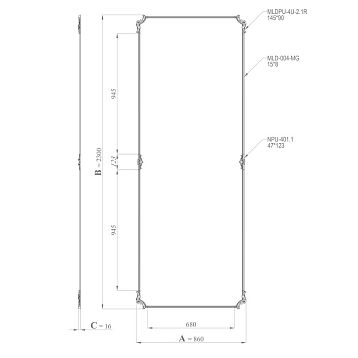
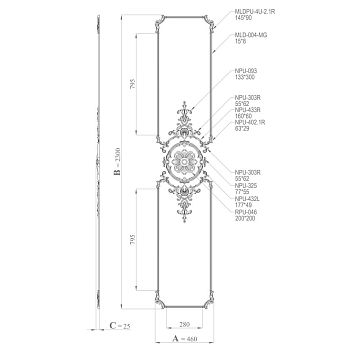
Primed MDF molding MLD-004-MG (profile 15 × 8 mm) is a proven pair for "Brussels" elements. The compact profile does not draw attention to itself and gives decorative initiative to the ornamental details of the collection.
Is there delivery throughout Russia?
Yes. Check current delivery terms and timelines on the STAVROS website when placing an order.
Order a call
Do you have questions? Fill out the form and send it.
Your request has been sent!
Our manager will contact you within 5 minutes