








































































Article Contents:
- Why use stucco decor for zoning
- Where zoning with moldings is especially needed
- Studio apartment
- Kitchen-living room
- Living Room
- Bedroom
- Children's room
- Home office or work area in the living room
- Main methods of zoning with stucco decor
- Method 1: One large frame
- Method 2: Several symmetrical frames
- Method 3: Vertical lines from moldings
- Method 4: Decorative panel made of moldings
- Method 5: Central Decorative Element
- Method 6: Combining Moldings with Wall Color
- Which Elements to Use for Zoning
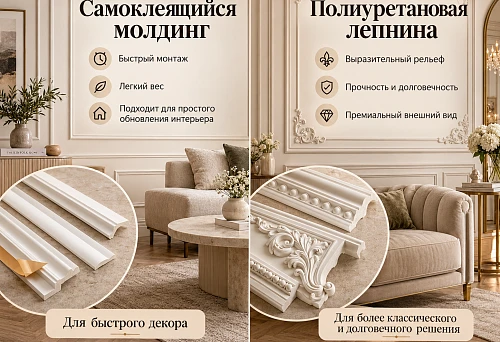
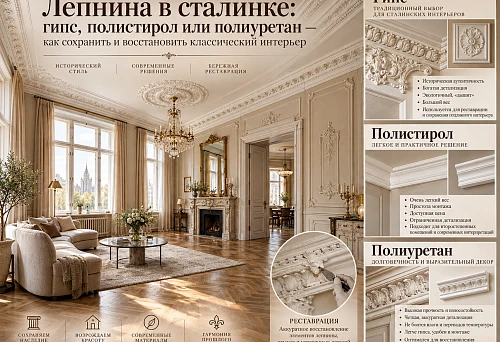
- Polyurethane moldings
- Decor for moldings
- Decorative polyurethane overlays
- Ready-made sets of stucco decor
- How to Choose the Size of Moldings for Zoning
- How to Zone an Interior Without Overloading
- Which Styles Are Suitable for Zoning with Stucco Decor
- Neoclassicism
- Neoclassical Light
- Jatoba
- Versailles Light
- Modern classicism
- Mistakes When Zoning Walls with Moldings
- Zone Does Not Match the Furniture
- Frames Too Small
- Moldings are too thin for the space
- The decor clashes with the baseboard and cornice
- Too many decorative elements
- No unified rhythm
- Forgot about outlets, switches, radiators
- Zoning is not connected to the interior
- What to buy for interior zoning
- Frequently Asked Questions
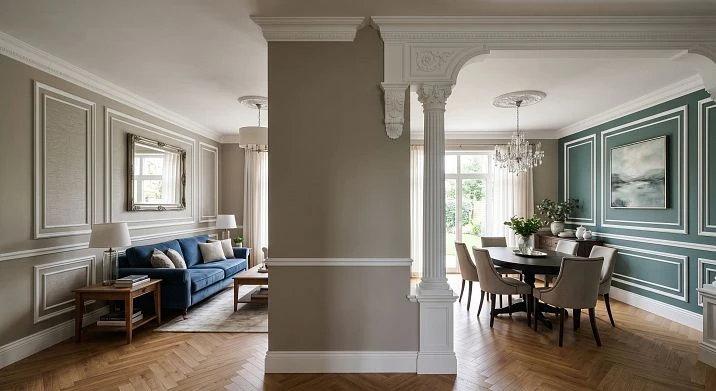
A partition is not the only way to divide a space. And far from the best. It eats up area, blocks light, creates a feeling of crampedness, and requires full construction intervention. Meanwhile, there is a tool that works more subtly, smarter, and significantly cheaper —zoning an interior with stucco decorusing polyurethane moldings, frames, decorative panels, and overlays.
The essence of the method is simple yet profound: a person perceives space not only physically but also visually. If one zone of the wall is designed differently from the neighboring one, the brain reads them as different spaces, even if there is no physical boundary between them. This is the principle behind decorative wall zoning with moldings. Not a wall-fence, but a wall-signal. Not a boundary, but an accent.
Room zoning doesn't have to be done with partitions.Polyurethane wall decor, moldings and ready-made STAVROS kits help highlight the desired zone directly on the wall: behind the sofa, bed, dining table, or workspace — without renovation, without losing space.
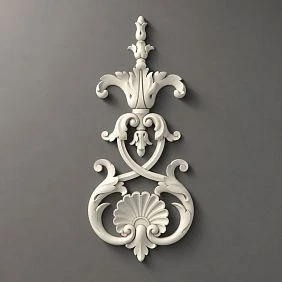
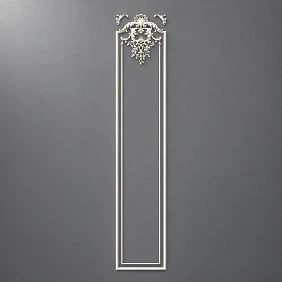
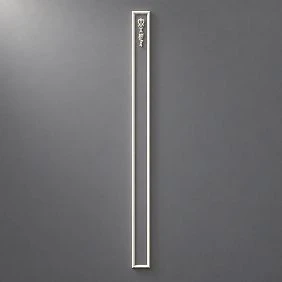
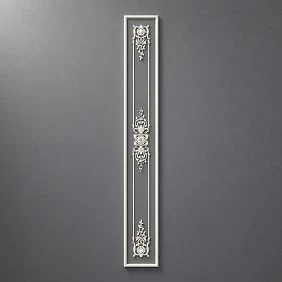
Why use stucco decor for zoning
That's a fair question. After all, there are other ways to divide space: rugs, different floor levels, furniture groups, curtains, shelving units, bar counters. Why specifically moldings?
Because moldings work vertically — on the wall. And the wall is the main plane that a person sees in the room. It forms the first impression, sets the scale and mood of the space. When the wall in the sofa area is decorated with a frame system of moldings, and the wall in the work area is not, the zoning is read instantly, without effort. It doesn't need to be explained — it's visible.
The second advantage:moldings for zoningmade of polyurethane do not 'eat up' space. Not a single centimeter. They are mounted on an existing wall and protrude 10–25 mm above it — depending on the profile. At the same time, they visually create a full-fledged division of zones.
Third: polyurethane moldings can be installed without major renovation. A puttied wall, construction adhesive, a hacksaw, and a few hours of work — and the zoning is ready.installing polyurethane molding — with a step-by-step guide that allows you to do the work yourself.
Finally, the fourth and perhaps most important point: stucco decoration makes the area not just "separate," but beautiful. Zoning with moldings is an aesthetic act. It not only functionally divides the space but also enriches it architecturally: adding relief, symmetry, depth, and stylistic definition.




Where zoning with moldings is especially needed
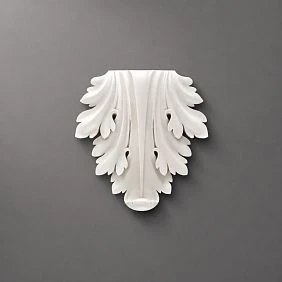
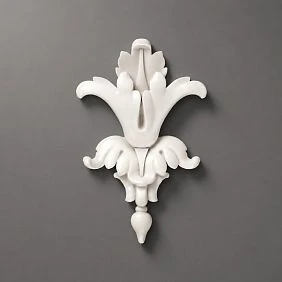
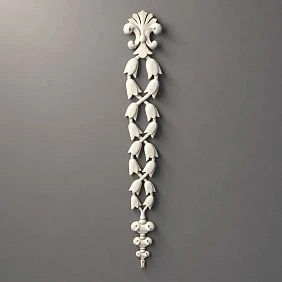
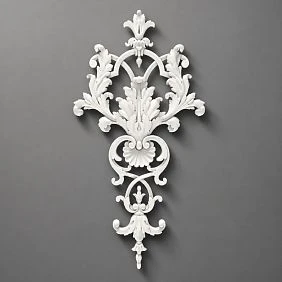
Our factory also produces:

Studio apartment
A studio apartment is the most acute case. One space serves as a bedroom, living room, kitchen, and sometimes an office. Without zoning, it's chaos with no single "place": no place for relaxation, no place for sleep, no place for work.
Zoning a studio apartment with moldings allows solving this problem delicately. The wall behind the sofa gets a frame system of moldings — the sofa area is visually separated from the kitchen and hallway. The wall by the bed — moldings in the form of a headboard — the sleeping area gains a boundary. The wall by the desk — vertical profiles or a small frame — the workspace gets its own "office" without walls.
stucco decor for a small apartment — with principles of zoning and choosing the scale of decor for compact spaces. It's important not to overdo it: a studio apartment does not tolerate overload. One or two accents — maximum.
Get Consultation
Kitchen-living room
An open-plan kitchen and living room is the standard for most modern apartments. But "open plan" does not mean "structureless space." Zoning a kitchen-living room with moldings helps create the feeling of two independent zones within a single space.
How does it work? The wall behind the sofa — the main element of the living room zone — gets a decorative frame system. The wall behind the dining table — its own accent decor. The transition between zones can be marked by vertical profiles or a change in wall design.stucco decor for a kitchen-living room — with a detailed breakdown of zoning for open-plan layouts.
Living Room
In the living room, zoning with stucco decor solves different tasks. Here, there's no need to separate "bedroom and kitchen" — you need to highlight specific functional zones within one room: the sofa group, TV area, fireplace or console area, library corner.
Each zone gets its own accent decor. The wall behind the sofa is a frame system.Polyurethane TV zone decor— symmetrical moldings on the sides of the panel. The fireplace zone is a profile frame. All this creates a sense of a well-thought-out space divided into "chapters."
Bedroom
The bedroom increasingly combines functions: a sleeping area, a vanity table, and a workspace.Zoning the bedroom with moldings— an elegant way to create the feeling of "separate places" without walls or partitions.
The wall at the head of the bed is the main accent: a frame that integrates the bed into an architectural setting.Stucco molding set for the bedroom— with ready-made solutions and principles of proportions. The workspace by the window features vertical moldings separating the zone from the main space. The vanity table has a small frame around the mirror.
Children's room
In a children's room, zoning with moldings is especially practical. A child needs a place for sleeping, studying, and storage—and each zone should feel like "their own." Decorative frames made of moldings above the bed, above the desk, and in the play area create a psychological separation of space. This is not just decor—it's organization.
Home office or workspace in the living room
A separate office is a luxury not everyone can afford. But a workspace framed with moldings on the wall gains its own character even within a living room or bedroom.Wall decor in the study— with options ranging from minimalist to representative.
Basic methods of zoning with stucco decor
Method 1: One large frame
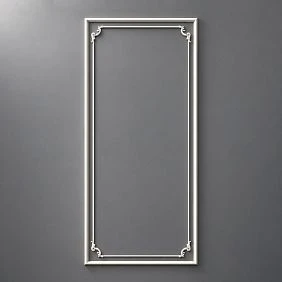
The simplest and most effective technique. One large frame made of moldings, covering the entire area behind the sofa, bed, or dining table. It sets the scale, centers the space, and creates a "place" where there was none.
Frame proportions are critically important. The width of the frame should match the width of the furniture beneath it or be slightly wider — about 30–50 cm on each side. The height — from the level above the furniture to the ceiling or to the decorative cornice. A frame that is too small on a large wall looks timid. One that is too large with a low ceiling feels oppressive.
polyurethane wall decor behind the sofa— with precise frame proportions for different living room formats.
Method 2: Several symmetrical frames
Two or three identical rectangles in a row — a classic system derived from palace interior architecture. For a living room with a wide wall, this is the ideal option: three frames behind the sofa, each a third of the sofa's width. Or two frames — on either side of a central element.
symmetric polyurethane wall decor— about the principles of building symmetrical systems and choosing axes of symmetry. Symmetry in zoning is not just about beauty. It is psychological stability: the space looks organized, predictable, and calm.
Method 3: Vertical lines from moldings
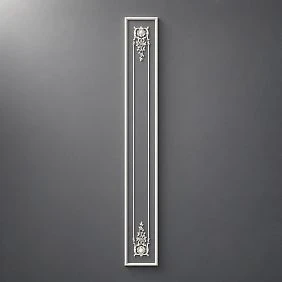
Vertical profiles running from baseboard to cornice work differently than horizontal frames. They divide the wall into vertical strips — like columns or pilasters. Each zone between the verticals becomes a separate "field."
This technique is especially good in long narrow corridors and in studios where you need to create rhythm on a large wall. Two vertical moldings on either side of the sofa — and the sofa area is separated from the rest of the space without a frame.
polyurethane decorative wall panels — with an analysis of vertical and horizontal zoning systems.
Method 4: Decorative panel made of moldings
A decorative panel is a composite structure: several moldings forming a single plane or a protruding frame system. In terms of visual effect, it resembles a wooden panel or veneered board, but it weighs little and is installed without special tools.
For zoning a work area or dining table area, a decorative panel works especially well: it creates a "background" for the table or workspace, making it visually independent.
Method 5: Central decorative element
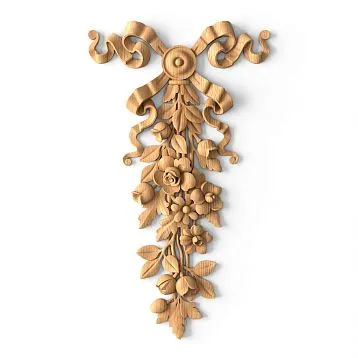
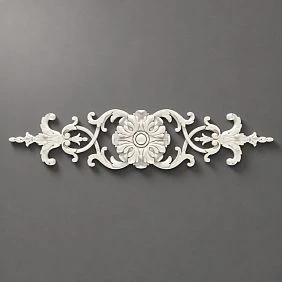
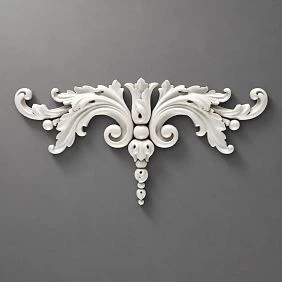
Sometimes one strong accent is enough for visual zoning: a decorative overlay, rosette, or relief cartouche in the center of the zone. It fixes the gaze, marks the center of the composition, and sets the scale of the zone without a frame system.
Polyurethane decorative appliques — for central accents in zones with sconces, mirrors, fireplaces, or consoles. In minimalist interiors, one expressive overlay often does what a whole system of frames requires in neoclassicism.
Method 6: Combination of moldings with wall color
The most "designer" of all methods. The area behind the sofa is painted in a different shade — slightly darker, slightly warmer, with a different saturation — and framed with moldings along the perimeter of this area. The color boundary is enhanced by the relief of the molding, making the area read clearly and expressively.
This technique works in two ways: moldings at the boundary of color zones fix the transition and prevent the edges from looking sloppy.Stucco decor for walls for painting — about combining moldings and different paint zones.
For simple zoning, use Moldings made of polyurethane. If a more expressive composition is needed, use Decor for Molding with corner inserts and Polyurethane decorative appliques for central accents.
Which elements to use for zoning
Polyurethane moldings
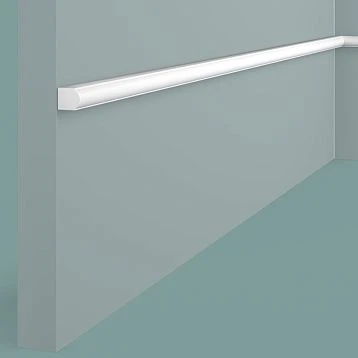
moldings for zoning — the main tool. The linear profile is cut to the required size, forming rectangular or square frames, vertical lines, horizontal belts. The choice of profile cross-section determines the character of the decor.
| Profile width | For which spaces | Style |
|---|---|---|
| 18–24 mm | Studios, small rooms, Japandi | Minimalism |
| 25–34 mm | Bedrooms, studies, neoclassical light | Modern Classic |
| 35–45 mm | Living rooms, dining areas, neoclassical | Neoclassical |
| 46–60 mm | Grand interiors, Versailles Light | Classic |
For a studio apartment — profile 20–28 mm. For a living room with high ceilings — 38–50 mm. For a study in a modern interior — 28–35 mm.
Decor for moldings
molding decorative elements— corner inserts, rosettes, decorative "locks" for joints. They complicate a simple frame, turning it from a geometric structure into an architectural ornament.
Corner inserts are a key element of the frame system in neoclassicism. A square corner insert with relief on each of the four corners of the frame transforms even a simple rectangular profile into a full-fledged decorative element.
Polyurethane decorative overlays
PU overlays— voluminous decorative elements for fixing accent points in the area. Above the sconce — an overlay with an ornament. In the center of the headboard frame — a small rosette. On the sides of the TV panel — symmetrical overlays.
In zoning, overlays act as "markers": they signal that a given zone is special, that attention is drawn to it. This works even in interiors with minimal decor — one expressive overlay in the center of the wall behind the sofa already creates a sense of thoughtfulness.
Ready-made sets of stucco decor
Ready-made molded decor kits — a system of elements matched by style, scale, and proportions. For zoning, this is the optimal choice: there is no need to calculate the linear footage of moldings, select corner inserts, or worry about style consistency. The kit already contains everything needed.
Ready-made molding frames for the wall — about the principles of working with ready-made systems and their installation.
How to choose the size of moldings for zoning
This is one of the most practically important questions asked before purchase. A mistake in the profile size — and the result will be either unnoticeable or overloaded.
Scale rule: the molding should be visible from the main viewing distance of the zone. If the sofa area is located 3–4 meters from the entrance, a 20 mm profile will be unnoticeable. The minimum width for a living room with normal depth is 28–32 mm.
Ceiling height rule: the lower the ceiling, the thinner the profile and the more modest the frame.stucco decor for walls with low ceilings — with specific recommendations on the scale of decor depending on height. With a ceiling of 2.5 m, frames should not be too high: maximum frame height 170–180 cm. With a ceiling of 3 m, frames can be taken almost to the ceiling.
Furniture binding rule: a frame or molding system for zoning must be tied to the furniture — in width and along the axis of symmetry. A frame behind the sofa that is 30–40 cm wider than the sofa on each side is normal. Headboard frame: width = bed width + 20–40 cm on each side.
Unity rule: if several zones in one room are decorated with moldings, all profiles must be from the same series — with the same cross-section. Different profiles on one wall are not "variety," they are inconsistency.
Studio rule: in a studio apartment, moldings should be calm and concise. The task is not to decorate, but to demarcate. Thin profiles 20–25 mm in the color of the wall, frames without ornament.stucco decor for a small apartment— about the rules for working with limited space.
How to zone an interior without overloading
It's easy to overdo zoning with moldings. If every wall in a room is decorated with frames, it's no longer zoning, but a decorative carpet. Rhythm, repetition, and symmetry work well; chaotic duplication is destructive.
A few practical rules for balance:
-
No more than two accent zones in one room. If the wall behind the sofa is decorated, the TV zone can have more modest decor. And vice versa.
-
Uniform indents. If the gap between the frame and the edge of the sofa is 35 cm, then on the other side it should also be 35 cm. Different indents create a feeling of carelessness.
-
Moldings should 'know' about the baseboard and cornice. A frame system that is not aligned in height with the baseboard or not connected to the ceiling cornice looks detached from the interior.
-
Don't make small frames on a large wall. Small frames on a large wall are visual clutter. One large frame is better than five small ones.
-
In a studio, a maximum of three decorative zones. Sofa, dining, sleeping — no more needed.
symmetric polyurethane wall decor— about the principles of rhythm and balance when decorating multiple walls.
Which styles are suitable for zoning with stucco decor
Neoclassicism
Neoclassical Stucco Decor— this is symmetry, frames, corner decorative inserts, profiles with a medium width of 35–50 mm. Zoning in neoclassicism is always architectural: each zone gets a clear structure, with horizontal and vertical elements creating the feeling of a "room within a room."
The color of moldings in neoclassicism is white or cream on neutral walls. Sometimes moldings in the color of the wall — for the most delicate zoning.stucco decor in the color of the wall or contrasting— about choosing a color strategy.
Neoclassicism Light
Stucco decor Neoclassic Light— a modern, lightweight version. Frames without ornament or with minimal corner inserts, profiles 22–32 mm, moldings in the color of the wall or with a soft contrast. This is a style that works in most modern apartments with a ceiling of 2.7–3 m.
For studio apartments and kitchen-living rooms — it is neoclassic light that gives the optimal result: structure without excess, zoning without pomposity.
Japandi
Moldings and decor in the Japandi style— absolute minimalism. Thin profiles 18–24 mm in the exact tone of the wall. Frames without corner inserts. No ornamentation — only geometry. Zoning in Japandi happens almost imperceptibly: the wall maintains a unified character, but at the same time is clearly divided into meaningful zones.
This is the most delicate zoning option. It does not draw attention to decor — it creates a structure that you feel, not see.
Versailles Light
Versailles Light stucco decor— for those who want not just zoning, but ceremonial beauty. Wider profiles with relief, decorative overlays, classic ornamentation. Zoning in Versailles Light is an architectural statement: each zone is designed solemnly and weightily.
Suitable for large apartments with ceilings from 2.9 m, for living-dining rooms, for bedrooms with a representative character.
Modern classic
Smooth moldings with rectangular or semicircular cross-section, large frames, moldings in the tone of the wall or with minimal contrast. This is a universal style for modern apartments: structured enough to create zoning, calm enough not to overload the interior.
Mistakes when zoning walls with moldings
Here an honest conversation is appropriate — about what really ruins the result.
The zone does not align with the furniture
The frame of moldings is not above the sofa, but next to it — shifted 30–40 cm to the side. Visually, this reads as carelessness: there is no feeling that the decor 'embraces' the furniture. The frame must be centered strictly along the axis of the furniture.
Frames are too small
Small frames get lost on a large wall — especially if the wall is light and the moldings match the tone. The minimum frame width for a living room is 80 cm. For the wall behind the sofa — the width of the sofa plus 60–80 cm.
Moldings are too thin for the space
A 15 mm profile in a living room with a wall width of 4 m — this decor doesn't work. It's simply not visible from a distance. For a large space — at least 32–35 mm.
The decor clashes with the baseboard and cornice
Frame moldings — 35 mm in neoclassical style, baseboard — plastic 22 mm modern profile. This mismatch is noticeable even to an untrained eye. The baseboard, cornice, and wall moldings should be coordinated in style and scale.how to combine stucco decor with baseboards and cornices — with a coordination table of elements.
Too many decorative elements
Frames on all four walls, overlays in every corner, decor for moldings on all frames — this isn't a palace interior, it's overload. Zoning should highlight specific areas, not cover all surfaces at once.
No unified rhythm
If one room has three zones with moldings and each has a different profile style, different frame sizes, and different corner elements, the interior loses unity. Moldings for all zones in one room should be from the same series.
Forgot about sockets, switches, radiators
A frame made of moldings crossed by an electrical socket is a problem that needs to be solved before installation, not after. Before placing the frame system, all electrical points and pipes must be marked on the wall diagram.
Zoning is not related to the interior
Moldings only decorated one wall, while the others are bare. Zoning 'hangs in the air': it's unclear where it ends and why. Even a minimal element — a thin baseboard and a small molding on the adjacent wall — creates a sense of unity.
What to buy for interior zoning
A specific list of elements needed to implement any of the described zoning methods:
-
polyurethane wall moldings — linear profiles for frames, vertical lines, and horizontal belts.
-
Polyurethane wall decor — overlays, panels, decorative elements for accent zones.
-
Decor for Molding — corner inserts and elements for frame systems.
-
Polyurethane decorative appliques — for central accents and special points in the zone.
-
Polyurethane Items — full catalog of all decorative elements.
-
Ready-made molded decor kits — for a quick start without self-calculations.
If you don't want to calculate proportions and select elements yourself, choose ready-made STAVROS collections:Neoclassical, Neoclassic Light, JapandiorVersailles Light. Each collection is a balanced system for a specific style.
Frequently asked questions
Can you zone a room using only moldings, without other techniques?
Yes. Moldings on the wall create visual zoning that works on its own. You can additionally enhance the zoning with color, lighting, or a rug — but even without that, the frame system on the wall behind the sofa clearly separates the sofa area from the rest of the space.
Which moldings should you choose for a studio apartment?
Thin profiles 18–25 mm in the color of the wall — for maximum delicacy. Frames without ornamentation. One or two accent zones: behind the sofa and near the bed. Don't overload.stucco decor for a small apartment — with a full breakdown.
How to highlight a dining area with moldings?
A frame of moldings on the wall behind the dining table, centered on the table's axis. Width — matches the table width plus 40–60 cm. Height — up to the ceiling or to a decorative cornice.Wall decor in the dining area — with options and calculations.
How to separate a sleeping area without a partition?
A molding headboard frame is the main tool. Moldings on the sides of the bed, a horizontal element above it. In a studio, additionally a vertical profile at the edge of the sleeping area, separating it from the living room.Stucco molding set for the bedroom — with ready-made solutions.
Are polyurethane moldings suitable for a kitchen-living room?
Yes. Polyurethane is not afraid of humidity and temperature changes typical for the kitchen area. The main thing is not to place moldings directly above the stove or sink, where direct exposure to steam and grease is possible.
How to zone a small room?
The principle of minimalism: one accent, a thin profile, moldings in the color of the wall. One large frame works better than several small ones.stucco decor for walls with low ceilings — with recommendations for working with limited space.
What is better: individual moldings or a ready-made set?
Individual moldings — if you have non-standard wall proportions or a custom concept. A ready-made set — if you need a quick and reliable result without self-calculations. For most zoning tasks, a ready-made set is the optimal choice: elements are already selected and tested as a system.
Can moldings be painted the color of the wall?
Yes. Polyurethane moldings are painted with acrylic paint in any color. Moldings in the color of the wall create delicate zoning: the structure is there, but the decor does not dominate.installation of polyurethane molding — with recommendations for painting after installation.