












































































Article Contents:
- The Principle of Three-Level Harmony: Architecture Instead of Chaos
- Why Visual Connection Between Levels is Important
- Classical Interiors: The Birthplace of the Three-Level System
- Modern Interiors: Minimalism with a Systematic Approach
- Ceiling Skirting: Architectural Completion of the Top
- Cove, Cornice, Molding: What's the Difference
- Height and Proportions of Ceiling Skirting
- Ceiling Skirting Profile: Repetition or Variation
- Ceiling Skirting Material: Wood, MDF, Polyurethane
- Floor Skirting: Visual Foundation of Walls
- Floor Skirting Height: From Standard to Monumental
- Floor Skirting Profile: From Simple to Carved
- Color and Finish of Floor Skirting
- Mirror Frame: The Central Element of the Three-Level Composition
- Baguette Frame: The Language of Classical Framing
- Mirror Frame Width: Proportion with Skirting Boards
- Pattern Repetition: Visual Rhyme Across Three Levels
- Mirror Placement: Vertical Center of the Composition
- Profile Repetition: Unified Rhythm Without Monotony
- Direct Repetition: Mirror Symmetry
- Variational Repetition: Unity in Diversity
- Simplification for Modernity: Geometric Kinship
- Classical Interior: Symmetry and Balance as the Foundation
- Symmetry as a Visual Law
- Balance of Masses: Visual Weight of Elements
- Material Unity: Wood as a Unifying Foundation
- Color Harmony: Monochrome or Delicate Variations
- Questions and Answers: Three-Level Harmony Without Mistakes
- Is exact repetition of the profile required on all three levels?
- Can different materials be used for the three elements?
- What color should be chosen for a three-level system?
- Is a three-level system suitable for small spaces?
- Does the ornament need to be repeated absolutely identically?
- Can a three-level system be combined with a modern style?
- How to select a set of elements for a three-level system?
- How much does it cost to create a three-level system?
- Conclusion: Architectural Thinking in Interior Design

Look at the room. Not at the furniture, not at the wall color. Look at the architecture. Where does the ceiling begin? Where does the floor end? Where is the mirror hanging? Three horizontal lines — upper, lower, central. In most interiors, they exist on their own, unrelated, random. But what if these three elements spoke the same language? What ifceiling wooden skirting, the wooden floor baseboardandframed mirrorrepeated one profile, one rhythm, one decorative logic? A vertical harmony would arise — a visual connection that would turn a set of elements into an architectural system. This is not just decor. It is a way of organizing space, where every detail is part of a whole, where the top and bottom of the room are connected by a visual echo, where the mirror in the center becomes not a random accent, but a logical link in a three-level composition. Let's understand how this vertical harmony is created and why it turns an ordinary room into an architecturally complete space.


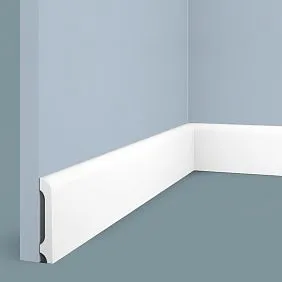
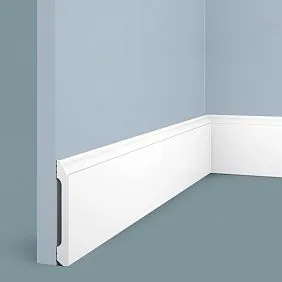
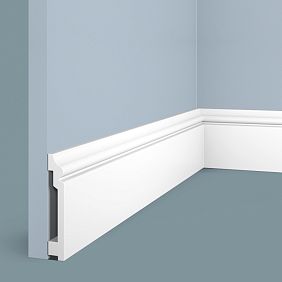
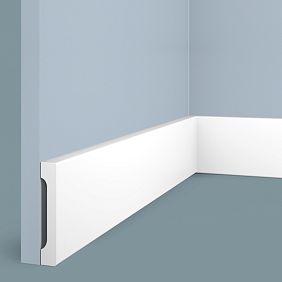
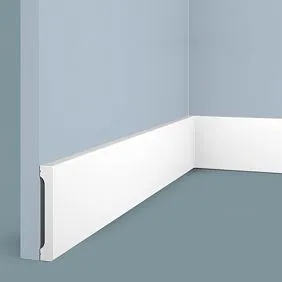
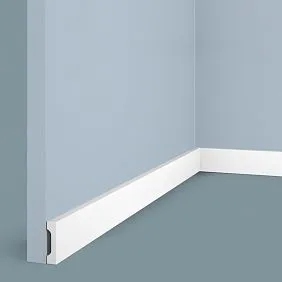
The Principle of Three-Level Harmony: Architecture Instead of Chaos
A room is not an empty cube. It is a vertically organized space where each level has architectural significance. The floor is the foundation, the support, the horizontal plane on which everything else stands. The ceiling is the completion, the upper boundary that defines the volume. The walls are the verticals that connect the floor and ceiling, creating an enclosed space.




Why Visual Connection Between Levels is Important
In a chaotic interior, each level lives its own life. The ceiling cornice is one style, the floor baseboard is another, the mirror frame is a third. Everything is random, everything is disjointed. The eye finds no visual connections, the space seems unassembled, unfinished.
When three levels are connected by a common decorative logic, architectural integrity arises. The eye sees a repeating motif — a profile, an ornament, a proportion — and understands: this is a thoughtful system, not a random set of elements. This creates a sense of order, harmony, visual calm.
A three-level system works like a musical theme with variations. The main melody (profile, ornament) sounds at the upper level (ceiling cornice), repeats at the lower level (floor baseboard), and varies in the center (mirror frame). Repetition creates recognizability. Variations create diversity. Together — harmony.
Our factory also produces:


Classical Interiors: The Birthplace of the Three-Level System
Classical architecture has always been built on repetition and rhythm. Ancient temples, Baroque palaces, Classical manor houses — everywhere there is a visual connection between cornices, plinths, and door/window surrounds. The same ornament — meander, egg-and-dart, acanthus leaves — repeats at different levels, creating architectural unity.
In a classical interior, the ceiling cornice, floor baseboard, door and window surrounds, and mirror and picture frames were executed in a unified style. The woodcarver used one set of ornaments, one profile logic. All decorative elements were parts of a single system.
This tradition is relevant today. Modern neoclassicism, traditional interiors, classicism in all its manifestations are built on the principle of three-level harmony. This is not copying the past, but applying timeless architectural principles in a contemporary space.
Get Consultation
Modern Interiors: Minimalism with a Systematic Approach
Minimalism rejects decorativeness, but not systematicity. A modern interior is also built on the repetition of forms, proportions, materials.
Ceiling skirting in a minimalist space - a simple rectangular profile without molding. Floor skirting - the same simple profile, either the same height or proportionally smaller. Mirror frame - thin, rectangular, without decoration. All three elements are minimalist but connected by a common geometric logic - rectangular cross-section, clean lines, absence of ornament.
The repetition of simple forms creates a visual rhythm that organizes space without decorative excess. This is a modern interpretation of the classical principle: not ornament, but pure geometry becomes the unifying element.
Ceiling Cornice: The Architectural Completion of the Top
Wooden ceiling baseboardis not just a decorative strip at the wall-ceiling boundary. It is an architectural element that visually completes the vertical of the wall, creates a transition to the horizontal of the ceiling, and defines the character of the entire room.
Cove, Cornice, Molding: What's the Difference
The terms are often confused, but each denotes a specific type of profile.
Cove molding — a simple concave profile creating a smooth transition from vertical wall to horizontal ceiling. Cove molding is narrow (3-8 cm), delicate, minimalist. It serves more of a technical function (covering the joint, concealing unevenness) than a decorative one. Cove molding suits modern, Scandinavian interiors where visual lightness is important.
Cornice — a complex multi-tiered profile with rolls, scotias, and shelves. Cornice is wide (8-15 cm and more), decoratively rich, creates classical solemnity. Cornice can be smooth (profile only without carving) or ornamented (with carved elements — acanthus leaves, palmettes, rosettes). Cornice suits classical, neoclassical interiors where architectural expressiveness is important.
Molding — a general term for any decorative wall overlay. Molding can be ceiling (at the wall-ceiling boundary), wall (anywhere on the wall to create panels, frames), floor (as a baseboard). Molding can have any profile — from simple rectangular to complex carved.
In the context of three-level harmony, it is important that the ceiling element (cove molding, cornice, or molding) repeats the logic of the floor baseboard profile and the mirror frame.
Height and proportions of ceiling baseboard
Ceiling baseboard height is determined by ceiling height and interior style.
Low ceilings (240-270 cm) require a narrow ceiling baseboard (3-6 cm). A wide cornice will visually lower the ceiling further, creating a feeling of pressure. A narrow cove molding will delicately mark the boundary without overloading the space.
Medium ceilings (280-300 cm) allow the use of a medium-width ceiling baseboard (6-10 cm). This can be a simple cornice with one or two rolls or a cove molding with a delicate profile. This height creates visual completeness without monumentality.
High ceilings (310 cm and above) require a wide cornice (10-15 cm and more), otherwise the ceiling baseboard will get lost, failing to create the necessary visual weight. A wide multi-tiered cornice with carved ornamentation creates classical solemnity, worthy of high-ceilinged rooms.
The proportion between ceiling and floor baseboard is important. If the floor baseboard is 12 cm high, the ceiling one should not be narrower than 6 cm (visually unbalanced). Optimal ratio: ceiling baseboard is 50-80% of the floor baseboard height. For example, floor 12 cm, ceiling 8 cm. Or floor 10 cm, ceiling 7 cm.
Ceiling baseboard profile: repetition or variation
The ceiling baseboard can exactly repeat the profile of the floor baseboard (creating mirror symmetry of top and bottom) or vary it (creating visual diversity within a common logic).
Exact profile repetition — a classical technique. If the floor baseboard has a profile with two rolls and a scotia, the ceiling cornice repeats the same profile, possibly inverted. This creates strict symmetry, architectural logic, classical harmony.
Profile variation — a freer approach. The floor baseboard has a simple profile with one cove. The ceiling cornice is more complex — two rolls, a scotia, a shelf. The profile elements are different, but the logic is the same — rolls, scotias, smooth transitions. This creates visual diversity with a common decorative language.
Simplification for modernity — a minimalist approach. Both ceiling and floor baseboards have a simple rectangular profile without decoration. But proportions are repeated — if the floor baseboard is 10 cm high and 2 cm thick (ratio 5:1), the ceiling one is 8 cm high and 1.6 cm thick (same ratio 5:1). Geometric logic creates connection without ornament.
Ceiling baseboard material: wood, MDF, polyurethane
Ceiling baseboard material affects visual perception and durability.
Solid wood — a classic solution. Oak, beech, ash are milled, creating any profile. Wood is tactilely warm, has a natural grain that is perceptible even under paint. Wooden ceiling baseboard is heavier than polyurethane, requires sturdy fastening, but creates a sense of material richness, natural authenticity.
MDF — a compromise between wood and polyurethane. MDF is milled, creating a precise profile. After painting, visually indistinguishable from solid wood, but lighter and cheaper.MDF ceiling baseboardcan have a cable channel for hidden lighting wiring, which is functionally convenient.
Polyurethane — a modern material, lightweight, moisture-resistant, durable. Polyurethane cornice can have the most complex ornamentation, which would be impossible or too expensive in wood. But polyurethane is visually lighter, more plastic than wood. It lacks natural grain, which suits modern interiors but may seem artificial in classical ones.
In a three-level system, the material must be coordinated. If the floor baseboard is wooden, the ceiling one is preferably also wooden (or MDF painted to imitate wood). If the floor baseboard is MDF or polyurethane, the ceiling one can be polyurethane. Mixing materials is possible but requires thoughtfulness — visually the elements should be perceived as a unified system, not a random assortment.
Floor baseboard: visual foundation of walls
the wooden floor baseboard— is not just a strip covering the floor-wall joint. It is an architectural foundation, a visual plinth on which the walls stand. In a three-level system, the floor baseboard is the lower level, which must harmonize with the upper (ceiling baseboard) and central (mirror frame) levels.
Floor baseboard height: from standard to monumental
Floor baseboard height determines its visual presence in the space.
Standard baseboard (7-9 cm) — a universal solution for most interiors. It is expressive enough to create an architectural boundary but does not dominate. Standard baseboard suits rooms with ceilings 250-280 cm, where a high baseboard would visually lower the ceiling.
High baseboard (10-14 cm) — classical elegance. A high baseboard creates a visual foundation, monumentality, architectural significance. It suits rooms with ceilings from 280 cm, where a standard baseboard would get lost, failing to create the necessary proportions.High floor baseboardoften used in neoclassical, traditional interiors.
A very high skirting board (15-20 cm and more) is palatial luxury. Such a skirting board requires high ceilings (from 320 cm) and a classical style. It creates a sense of formality, solemnity, and material wealth. A very high skirting board can have a complex multi-tiered profile with carved ornamentation.
In a three-level system, the height of the floor skirting board determines the scale of the entire composition. If the floor skirting board is high (12-14 cm), the ceiling skirting board should be proportionally wide (8-10 cm), and the mirror frame should also be wide (10-15 cm). If the floor skirting board is standard (8 cm), the ceiling skirting board is narrower (5-6 cm), and the mirror frame is of medium width (6-8 cm). Proportionality creates harmony.
Floor skirting board profile: from simple to carved
The profile of the floor skirting board determines its decorative character.
Rectangular (smooth) profile — minimalist geometry. The skirting board is a rectangular plank without protrusions, without relief. This is a modern solution for minimalist, Scandinavian interiors. In a three-level system, the rectangular profile of the floor skirting board should be repeated in the ceiling skirting board and mirror frame — all elements are simple, geometric, without decoration.
Profile with a cavetto — classical delicacy. A cavetto (concave curve) creates a smooth transition from the vertical part of the skirting board to the horizontal shelf. This softens the rigidity of the right angle and creates a play of light and shadow. If the floor skirting board has a cavetto, the ceiling skirting board should also have a concave element (cavetto or ovolo), and the mirror frame should have a smooth profile without sharp angles.
Multi-tiered classical profile — beads, ovolos, shelves. A complex profile creates visual complexity and architectural richness. Each element of the profile (bead, ovolo, shelf) should be repeated in the ceiling skirting board and mirror frame, creating a visual echo across three levels.
Carved profile with ornamentation — classical luxury. Carving can be delicate (simple beads, fluting) or lush (acanthus leaves, palmettes, grapevines). The carved ornament on the floor skirting board should be repeated in the ceiling cornice and mirror frame — the same motif (acanthus, palmettes) on three levels creates decorative unity.
Color and finish of the floor skirting board
The color of the floor skirting board affects the visual perception of space.
Skirting board in the color of the floor — creates a visual continuation of the floor onto the wall, visually increasing the floor area. A dark floor with a dark skirting board creates a sense of solidity and stability. A light floor with a light skirting board creates a sense of airiness and lightness.
Skirting board in the color of the walls — creates visual unity of the wall, increasing its height. White walls with a white skirting board are a classic of Scandinavian style, visually expanding the space. Gray walls with a gray skirting board are modern elegance.
Contrasting skirting board — creates a clear boundary between the floor and the wall. Dark floor, white walls, white skirting board — a graphic solution that emphasizes the architecture. Light floor, dark walls, dark skirting board — dramatic contrast.
In a three-level system, the color should be coordinated. If the floor skirting board is white, the ceiling skirting board is also white, and the mirror frame is white — monochrome harmony. If the floor skirting board is dark (matching the floor color), the ceiling skirting board can be white (matching the ceiling color), and the mirror frame can be natural wood tone — a balanced palette where the color varies, but proportions and profiles create a connection.
Mirror frame: the central element of the three-level composition
framed mirrorin a three-level system — it is not just a functional item. It is the central element that connects the top (ceiling skirting board) and the bottom (floor skirting board), creating the visual middle of the composition.
Picture frame molding: the language of classical framing
Mirror in a baguette frameuses the same decorative language as the architectural elements of the interior — skirting boards, cornices, moldings. Picture frame molding is a profiled strip that can have a simple or complex cross-section, be smooth or carved, painted or with preserved wood texture.
In a three-level system, the profile of the picture frame molding should echo the profile of the skirting boards. If the floor and ceiling skirting boards have beads and ovolos, the mirror frame should also have beads and ovolos — perhaps in a different proportion, but the same profile logic.
Simple picture frame molding — rectangular or trapezoidal cross-section without complex relief. Suitable for modern interiors where skirting boards are also simple, without decoration. Simple picture frame molding can be painted in the color of the skirting boards (white, black, gray), creating monochrome harmony.
Classical picture frame molding with a profile — beads, ovolos, shelves, creating volume and play of light. Suitable for neoclassical interiors where skirting boards have a complex profile. Classical picture frame molding can be painted white (creating a visual connection with white skirting boards) or left in natural wood (creating a material accent).
Carved picture frame molding with ornamentation — acanthus leaves, palmettes, grapevines, geometric patterns. Suitable for classical interiors where skirting boards also have carved ornamentation. Carved picture frame molding creates maximum decorativeness, turning the mirror into an art object.
Width of the mirror frame: proportion to the skirting boards
The width of the mirror frame should be proportional to the height of the skirting boards. If the skirting boards are narrow (floor 8 cm, ceiling 5 cm), a wide mirror frame (15-20 cm) will visually unbalance the composition. If the skirting boards are wide (floor 14 cm, ceiling 10 cm), a narrow mirror frame (5-6 cm) will get lost and fail to create a visual connection.
Optimal ratio: the width of the frame is 70-100% of the height of the floor skirting board. For example:
-
Floor skirting board 8 cm → mirror frame 6-8 cm
-
Floor skirting board 12 cm → mirror frame 10-12 cm
-
Floor skirting board 16 cm → mirror frame 12-16 cm
This creates visual proportionality, where all three elements are perceived as parts of a single system.
Ornament Repetition: Visual Rhyme on Three Levels
When the same ornament repeats on the ceiling molding, baseboard, and mirror frame, a visual rhyme emerges—a recognizable motif that unites three levels into a single composition.
Acanthus leaves—if the baseboard features carved acanthus, the ceiling cornice also has acanthus (perhaps larger or stylized), and the mirror frame is adorned with acanthus. Three levels, one ornament, visual echo.
Palmettes—a symmetrical fan-shaped ornament characteristic of Classicism and Empire style. Palmettes on the baseboard (spaced rhythmically every 40-50 cm), palmettes on the ceiling cornice (in corners or along the entire perimeter), palmettes on the mirror frame (in corners or on the sides). Unity of ornament creates stylistic coherence.
Geometric patterns—meander, beads, fluting. The meander on the baseboard repeats on the ceiling cornice and the inner edge of the mirror frame. Beads (a chain of small convex elements) on the baseboard's torus repeat on the ceiling cornice's torus and the frame's profile.
Floral motifs—grapevine, oak leaves, roses. Grapevine carved on the baseboard repeats on the ceiling cornice and mirror frame, creating a natural theme that unites three levels.
Ornament repetition should not be absolutely identical. Scale can vary—the ornament on the ceiling cornice is larger, on the baseboard smaller, on the mirror frame medium. Stylization is also acceptable—acanthus on the ceiling is more lavish, on the floor more restrained. But the motif must be recognizable so the eye perceives the connection.
Mirror Placement: Vertical Center of the Composition
In a three-level system, the mirror is placed on the wall to visually link the upper and lower levels. The mirror's center is typically at eye level (160-170 cm from the floor), ensuring comfortable use and visual balance.
The distance from the mirror's top edge to the ceiling molding should be proportional to the distance from its bottom edge to the baseboard. If the mirror hangs too high (close to the ceiling), visual balance is disrupted—the top is overloaded, the bottom empty. If too low (close to the floor), the same problem occurs in reverse.
Optimal placement: position the mirror so the distance from its top edge to the ceiling molding is approximately 100-150% of the distance from its bottom edge to the baseboard. This creates visual lightness at the top (more air between the mirror and ceiling) while maintaining stability at the bottom (the mirror visually rests on the baseboard as a foundation).
Profile Repetition: Unified Rhythm Without Monotony
Repeating the profile across three levels creates a visual rhythm, but it's important to avoid monotony. Absolutely identical repetition can be boring. Variations create visual interest while maintaining a common decorative language.
Direct Repetition: Mirror Symmetry
Ceiling molding—an exact mirror copy of the baseboard, only inverted. If the baseboard has a profile: bottom shelf → torus → ogee → top shelf, then the ceiling cornice: bottom shelf → ogee → torus → top shelf (mirror reflection).
The mirror frame repeats the same profile, possibly on a reduced scale or with slight variations. This creates strict symmetry, classical order, architectural definition.
Direct profile repetition suits classical interiors where solemnity, symmetry, and adherence to canons are important.
Varied Repetition: Unity in Diversity
All three elements have tori and ogees, but in different combinations. Baseboard: one torus and one ogee. Ceiling cornice: two tori and one ogee. Mirror frame: one torus without an ogee. The profile elements are the same (torus, ogee), but the combinations differ.
This creates visual diversity while maintaining a common decorative language. The eye sees repeating elements (torus, ogee) and understands: these are parts of one system. But variations prevent boredom, creating visual interest.
Varied repetition suits neoclassical, eclectic interiors where freedom within order and individuality within style are important.
Simplification for Modernity: Geometric Kinship
In minimalist interiors, there are no tori, ogees, or carvings. But the profiles are still geometrically related. All three elements have rectangular cross-sections with identical proportions (e.g., width-to-height ratio of 1:5).
Baseboard: 10 cm tall, 2 cm thick. Ceiling molding: 8 cm tall, 1.6 cm thick (same 1:5 proportion). Mirror frame: 6 cm wide, 1.2 cm thick (again 1:5).
Repeating proportions creates visual connection without decorative elements. This is a modern interpretation of the classical principle—geometry instead of ornament, proportion instead of carving.
Classical Interior: Symmetry and Balance as Foundation
A classical interior embodies the principle of three-level harmony. Symmetry, balance, ornament repetition, proportionality—all create architectural integrity that transforms a space into a complete work of art.
Symmetry as a Visual Law
In a classical interior, symmetry is mandatory. If one wall has a mirror in a carved frame, the opposite wall must have a symmetrical element (another mirror, a painting in a similar frame, a console with symmetrical decor).
Ceiling and baseboard moldings create a symmetrical frame for the room—upper and lower boundaries that are visually mirrored. The wall mirror is placed exactly at the wall's center (distance from the left edge to the mirror frame equals distance from the right edge).
Symmetry creates visual tranquility, a sense of order, control, and classical harmony. The eye does not wander in search of balance—balance is already present, inherent in the architecture.
Balance of masses: the visual weight of elements
Balance is not only about symmetrical placement but also the coordination of visual weight. If the ceiling cornice is massive, wide, and carved, while the baseboard is thin, narrow, and smooth, the visual imbalance is obvious—the top is heavy, the bottom is light, and the composition feels top-heavy.
In a balanced three-level system, visual weight is distributed harmoniously. If the ceiling cornice is wide (10 cm) with carving, the baseboard should be tall (12-14 cm) with similar carving. The mirror frame should be wide (12-15 cm) with the same level of decorativeness.
All three elements are visually balanced—none dominates, none gets lost. The top, middle, and bottom create a trinity, an architectural triad that holds the space in visual balance.
Material unity: wood as the unifying foundation
In classical interiors, all architectural elements were traditionally made from the same material—wood. Ceiling cornice made of solid oak, baseboard made of solid oak, mirror frame made of solid oak. Unity of material created visual and tactile coherence.
Today, mixing materials is acceptable (wooden baseboards, MDF cornice, polyurethane moldings), but visually they should be perceived as a unified system. The same finish (all elements painted white) or imitation (MDF painted to resemble wood grain) creates visual unity despite material diversity.
Color harmony: monochrome or delicate variations
Classical interiors allow two approaches to the color of architectural elements.
Monochrome harmony—all elements are the same color. Ceiling cornice white, baseboard white, mirror frame white. This creates visual purity and architectural definition. White is a classic choice, creating a bright, formal space.
Delicate variations—elements of different colors, but within the same tonal range. Ceiling cornice white, baseboard cream (ivory shade), mirror frame light gray. Variations create visual richness within an overall light harmony.
Contrast while preserving unity—ceiling cornice white, baseboard dark (matching the floor color), mirror frame gilded. Contrast creates visual dynamism, but unity of profile and ornamentation maintains the architectural connection.
Questions and answers: three-level harmony without mistakes
Is it necessary to exactly repeat the profile on all three levels?
Not necessarily. What's important is the common decorative language—if the baseboards have beads, the mirror frame should also have a bead (perhaps in a different proportion). Exact repetition can be monotonous; variations create interest.
Can different materials be used for the three elements?
Yes, but visually they should be perceived as a unified system. Wooden baseboard, polyurethane ceiling cornice, MDF mirror frame—all painted white, with a similar profile. The materials are different, but visual unity is achieved.
What color to choose for a three-level system?
White is a universal solution, creating a bright, formal space. If you want contrast, the baseboard can be dark (matching the floor color), with the ceiling and frame white. The main thing is visual balance.
Is a three-level system suitable for small rooms?
Yes, but the elements should be proportionally smaller. In a small room, a tall baseboard (14 cm) and a wide ceiling cornice (10 cm) would visually overwhelm. Use standard sizes (baseboard 8 cm, ceiling cornice 5-6 cm, frame 6-7 cm).
Does the ornament need to be repeated absolutely identically?
No, what's important is the recognizability of the motif. The acanthus on the ceiling can be larger and more lush, smaller on the floor, and medium on the frame. But the motif should be the same—the eye should see a visual rhyme.
Can a three-level system be combined with a modern style?
Yes, by using simplified profiles without carving. Rectangular baseboards and frames with repeating proportions create three-level harmony in a minimalist key.
How to select a set of elements for a three-level system?
It's best to consult a manufacturer offering comprehensive solutions. A company producing baseboards, cornices, and frames from the same material, with coordinated profiles, guarantees visual unity.
How much does creating a three-level system cost?
Depends on the room size and material. For a 20 sq.m room: wooden baseboards (floor and ceiling) + mirror frame—from 60,000 to 150,000 rubles. MDF or polyurethane—from 30,000 to 80,000 rubles.
Conclusion: Architectural Thinking in Interior Design
Interior is not a collection of furniture and decor. It is an architectural system where every element matters, where top, middle, and bottom are connected by visual logic. Three-level harmony —Ceiling Skirting, baseboard, framed mirror— these are not random elements, but parts of a unified composition.
When the profile of a ceiling cornice echoes the profile of a floor skirting board, when a mirror frame repeats the same decorative language, visual echo occurs. The eye sees the repeating motif and understands: this is a thoughtful system, architectural integrity, a complete space.
This is not just beautiful. It creates a sense of order, harmony, visual peace. In a space where three levels are connected by a common logic, it is more comfortable to be. The eye does not wander searching for connections — connections are already there, embedded in the architecture.
For over half a century, STAVROS has been creating comprehensive interior solutions where every element is part of a system.Wooden Skirting Boardsmade from solid oak, beech, ash with classic and modern profiles.Ceiling cornices and covingsmade from wood and MDF, from simple to carved.Mirror Frameswith picture frame profiles coordinated with architectural elements.
STAVROS understands: details create the whole. When a ceiling cornice, floor skirting board, and mirror frame are designed as a unified system, when profiles are coordinated, patterns are repeated, proportions are precise, architectural magic arises. A room ceases to be a collection of walls, floor, and ceiling. It becomes a space organized by the laws of classical harmony.
Every STAVROS product is created with attention to architectural logic. Profile milling on high-precision equipment (deviation no more than 0.3 mm). Hand-finishing of carved elements by master carvers. Multi-layer painting with intermediate sanding for a perfectly smooth surface. The result is elements that are not just beautiful on their own, but create visual unity in space.
By choosing STAVROS products, you gain the ability to think architecturally. Not to decorate walls with random elements, but to create a three-level system where every detail is part of the whole.Mirror in a baguette framewhich does not hang randomly, but logically connects the ceiling and floor levels. Skirting boards that do not just cover joints, but create architectural boundaries that organize the space.
Three-level harmony is not a luxury available only to palaces. It is an architectural principle that works in any space — from a small bedroom to a spacious living room. The main thing is understanding the logic, attention to proportions, coordination of elements.
Create your three-level system with STAVROS. Start by choosing a profile that resonates with you — simple minimalist or classic carved. Repeat this profile on three levels — ceiling, floor, mirror. And feel how disparate elements transform into an architectural symphony, where top, middle, and bottom resonate in a single rhythm.


