












































































Article Contents:
- Architectural logic of wooden corner
- Geometry of corner joints
- Profiling: from simple to complex
- Size chart and its application
- Wood species: material character determines the result
- Oak: The Benchmark of Strength and Longevity
- Ash: Contrastive Expressiveness
- Beech: uniformity for perfect geometry
- Larch: northern resilience
- Pine: affordability with nuances
- Application of corners on stairs: function meets form
- Step edge protection: wear mechanics
- Visual definition of staircase geometry
- Combination with other staircase elements
- Wall corners: architectural articulation of space
- External corner protection: practical necessity
- Creating vertical accents
- Framing reveals: finishing openings
- Production Technology: From Raw Material to Finished Item
- Wood Drying and Stabilization
- Profile milling: precision and clean processing
- Sanding: from coarse to finish
- Protective Treatment and Final Finishing
- Installation of wooden corners: flawless mounting technology
- Surface preparation: foundation of reliable fastening
- Adhesive bonding technology
- Corner joining: geometric precision
- Interior styles: how corners define space character
- Classic: nobility and solidity
- Scandinavian minimalism: function over form
- Loft: industrial aesthetics and wood
- Eco-style: maximum naturalness
- Economics of Choice: Investment in Quality
- Total cost of ownership calculation
- Cost optimization without compromising quality
- Impact on property value
- Installation in challenging conditions: non-standard solutions
- Curved Surfaces
- Uneven angles and non-standard geometry
- Joining with dissimilar materials
- Maintenance and Care: Extending Service Life
- Regular Cleaning and Preventive Maintenance
- Updating protective coating
- Repair of local damage
- Frequently Asked Questions
- What size corner bead to choose for stairs?
- Can pine corner beads be used on stairs?
- How to protect wooden corner beads from moisture?
- Do corner beads need to be acclimatized before installation?
- Can wooden corner beads be painted?
- How Often Should the Finish Be Renewed?
- How to join corner beads at a forty-five degree angle?
- What is the difference between a corner bead and molding?
- Can corner beads with custom profiles be manufactured?
- Which wood species to choose for damp rooms?
- Conclusion: perfection in details

Touch a corner. The most ordinary corner in your apartment — where two walls meet, where a stair step ends, where window reveals join. Feel that sharp transition? The geometric rigidity? Now imagine that corner framed with wood — a warm, living material that transforms a technical necessity into an elegant detail.Wooden corner bead for stairs— is not just a protective strip. It is a tool for transforming space, a way to make an interior complete, harmonious, thought through to the smallest details.
Why do corners require special attention? Because they bear the main mechanical load during the room's operation. Wall corners get bumped by furniture during rearrangement, wear down during regular cleaning, suffer from accidental impacts. Stair step corners get scuffed by shoe soles, losing their initial crisp lines. Window and door reveals endure temperature fluctuations, condensation, mechanical impact from opening and closing.Buy Wooden Anglemeans investing in long-term protection of these vulnerable zones while simultaneously improving aesthetics.
Unlike plastic or metal counterparts,Decorative wooden corner piecepossesses a unique ability to organically fit into any interior style — from classic to high-tech. Wood itself is neutral and universal: it can be stained, painted, patinated, or left in its natural state. The wood grain adds tactile depth to space, creates a sense of materiality, weightiness, quality. When you walk past a wall with wooden corner beads, even without touching them, your subconscious reads information about the naturalness of materials, about the effort invested, about people living here who value details.

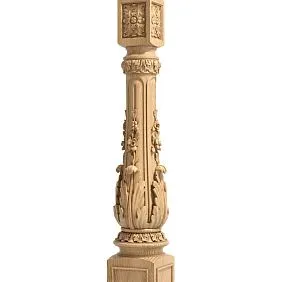
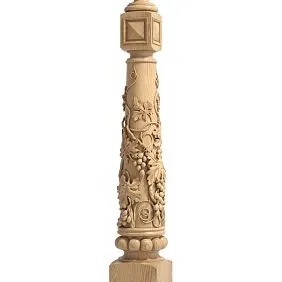

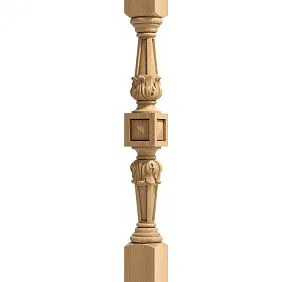
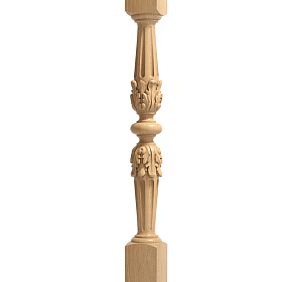


Architectural logic of the wooden corner bead
Every interior element must have its justification — functional, aesthetic, or psychological.Wooden corner bracketcombines all three aspects. Functionally, it protects the most vulnerable points of the room from damage. Aesthetically — it creates clear, expressive lines that structure the space. Psychologically — it brings a sense of order, completeness, thoughtfulness of every interior detail.




Geometry of corner joints
Understanding geometry is the key to the correct application of wooden corner beads. A ninety-degree angle is a mathematical abstraction rarely found in real construction. Walls have deviations, reveals are not parallel, steps are not always strictly horizontal. The wooden corner bead, due to its pliability during installation, can compensate for these imperfections, creating a visual illusion of perfect geometry.
Equal-leg corner bead — the most common type, where both sides have the same width. Cross-sections range from minimalist fifteen by fifteen millimeters to massive fifty by fifty. The size choice is determined by the scale of the room and the nature of the protected surface. For living rooms with careful use, a twenty-five by twenty-five millimeter corner bead is sufficient. For public spaces, high-traffic stairs, active use zones, forty by forty or fifty by fifty millimeter corner beads are required.
Unequal-leg corner bead is used in situations where two converging planes have different significance or different finishing materials. For example, when framing a door reveal, where one leg attaches to the wall with a width of thirty millimeters, and the second to the reveal edge with a width of twenty millimeters. Such asymmetry allows for more flexible adaptation of the corner bead to specific installation conditions without visual imbalance.
Our factory also produces:


Profiling: from simple to complex
The simplest wooden corner bead consists of two perpendicular rectangular sections joined at a ninety-degree angle. This basic profile meets functional requirements but aesthetically may appear somewhat crude, especially in refined interiors. The next level of complexity — a corner bead with rounding or chamfer on the outer edge. A radius of two to three millimeters softens perception, makes the detail more tactilely pleasant, reduces the risk of injury from accidental contact.
Profiled corner beads include additional decorative elements: beads, coves, flutes. Such products transform a functional strip into a full-fledged decorative element capable of becoming an accent in an interior composition. In classic interiors, corner beads with carved ornaments are used, repeating the motifs of moldings, baseboards, casings — this creates stylistic unity of all wooden elements in the room.
Bent corner pieces are used for framing curvilinear surfaces — arched openings, bay windows, columns, spiral staircases. Manufacturing bent elements requires special technology: the wood is steamed at a temperature of one hundred to one hundred and ten degrees, then molded using a template of the required radius. After drying, the material retains its given shape without internal stresses. The minimum bending radius for beech corner pieces is three hundred to four hundred millimeters, for oak — five hundred to six hundred millimeters.
Get Consultation
Size chart and its application
The logic for selecting the size of a corner piece is based on the principle of proportionality. The larger the scale of the room, the higher the ceilings, the more massive the architectural elements — the larger the corner piece should be. In a standard apartment with a ceiling height of two meters seventy, corner pieces of twenty-five by twenty-five or thirty by thirty millimeters are optimal. In a country house with ceilings of three meters twenty and above, corner pieces of forty by forty, forty-five by forty-five are appropriate.
For stair treads, corner pieces of at least thirty by thirty millimeters are recommended — a smaller size will not provide sufficient protection against intensive abrasion. On public stair treads with high traffic, corner pieces of fifty by fifty or even sixty by sixty millimeters are used. Such massive profiles not only protect the tread edge but also serve as an additional visual guide, enhancing movement safety.
Thin corner pieces of fifteen by fifteen or twenty by twenty millimeters are used for decorative framing without a pronounced protective function — for example, for creating frame compositions on walls, framing mirrors, paintings, decorative panels. In such cases, the corner piece works as a molding, creating visual boundaries and accents.
Wood species: the character of the material determines the result
Choosing the wood species for manufacturing corner pieces is not only a matter of budget but also understanding the properties of the material, its behavior in specific operating conditions. Each species has its own texture, density, hardness, resistance to external influences. An incorrect choice can lead to rapid wear, deformation, loss of appearance.
Oak: the standard of strength and durability
Oak corner piece — an investment in durability. Wood density of seven hundred to seven hundred fifty kilograms per cubic meter provides the highest resistance to mechanical damage. Hardness on the Brinell scale of three point seven to three point nine makes oak practically invulnerable to scratches, dents, abrasion. Oak corner pieces on stair treads last fifty to seventy years without loss of profile clarity even under intensive use.
Oak texture is expressive and diverse. Tangential cut gives a wavy pattern of annual rings. Radial cut exposes medullary rays — light strokes creating a 'mirror' effect. This natural decorativeness makes oak corner pieces self-sufficient: even without additional processing, covered with transparent oil or matte varnish, they look noble and expensive.
The natural resistance of oak to biological influences is explained by the high content of tannins — tanning substances that protect the wood from rot, mold, wood-boring insects. This allows the use of oak corner pieces in rooms with high humidity — bathrooms, saunas, covered terraces, in basement and ground floor levels. With proper treatment with moisture-protective compounds, oak corner pieces withstand direct contact with water without deformation and loss of properties.
The color palette of oak is wide: from light yellow young oak to dark brown mature heartwood. Toning expands possibilities even more: oak accepts stains excellently, allowing the creation of shades from bleached Scandinavian to almost black wenge. Bog oak with its gray-black tones and silvery sheen — the pinnacle of decorativeness, a material for exclusive projects.
Ash: Contrastive Expressiveness
Ash is close to oak in strength characteristics but surpasses it in elasticity and impact toughness. This makes ash corner pieces the preferred choice for places where dynamic loads are possible — impacts, sudden effects. Ash density of six hundred eighty to seven hundred kilograms per cubic meter provides sufficient strength with less weight compared to oak, simplifying installation.
Ash texture is more contrasting than oak. Light and dark stripes of annual rings alternate with high frequency, creating a dynamic, active pattern. On the surface of a corner piece, this looks like alternating light and dark strokes, visually lengthening the element, creating a sense of movement. In modern interiors, this expressiveness of ash is used as an accent, drawing attention to architectural details.
The natural color of ash varies from light gray to yellowish-brown. A feature of the species is its excellent ability to accept toning without loss of texture visibility. Toned ash is often used as a more affordable alternative to exotic species: with proper treatment with stains, ash is indistinguishable from walnut, wenge, teak. This allows the creation of luxurious interiors using local wood species.
Thanks to its elasticity, ash is ideal for manufacturing bent corner pieces. The minimum bending radius after steaming is seven hundred to eight hundred millimeters, allowing the framing of arched openings, curvilinear walls, spiral staircases.a round wooden handrailAsh handrails in combination with ash corner pieces on treads create stylistic unity of the staircase structure.
Beech: uniformity for perfect geometry
Beech corner piece — the choice of those who value purity of form without visual noise of texture. Beech structure is fine-pored, uniform, annual rings barely distinguishable. Natural color — delicate pinkish, after technological steaming becomes uniformly pinkish-brown. This uniformity makes beech corner pieces an ideal base for toning and painting.
Beech density of six hundred twenty to six hundred eighty kilograms per cubic meter provides sufficient strength for most interior applications. Hardness of three point six on the Brinell scale is only slightly inferior to oak. Beech processes excellently: mills, sands, polishes to a mirror smoothness. Profiled beech corner pieces with complex relief have clear, chip-free edges thanks to the fine-grained wood structure.
The main advantage of beech is its ability to evenly absorb stains without forming spots and streaks. Painted beech corner piece has a rich, even color over the entire surface. This is critically important for interiors where precise matching to a specific shade, conformity to the color palette of the design project is required. Beech corner pieces painted with enamel are visually indistinguishable from MDF but significantly surpass it in strength and durability.
Steaming technology gives beech increased flexibility, allowing the creation of bent elements with a minimum radius of four hundred to five hundred millimeters. Beech corner pieces are used for framing bay windows, semicircular niches, curvilinear stair flights. A disadvantage of beech is increased hygroscopicity: the wood actively reacts to changes in air humidity. In rooms with unstable climate, beech corner pieces require especially reliable moisture-protective coating.
Larch: northern resilience
Larch occupies a special place among coniferous species thanks to a unique combination of density (six hundred sixty kilograms per cubic meter), strength, and natural resistance to moisture. High content of gum — natural resin — makes larch practically invulnerable to rot, mold, insects. Larch corner pieces can be used in the harshest conditions: on open terraces, in baths and saunas, in basements and cellars, on building facades.
Larch texture is expressive: contrasting annual rings, resin ducts, natural variations in shades create a lively, mobile pattern. Natural color — from yellowish-reddish sapwood to reddish-brown heartwood. Over time, under the influence of light, larch darkens nobly, acquiring a rich amber hue. This process of natural aging only increases the decorative value of the material.
Larch is denser than pine and spruce, which complicates processing but provides increased wear resistance. Larch corner pieces on stair treads wear down slower than pine ones by approximately two to two and a half times. Larch hardness is comparable to oak, allowing its use in areas of high mechanical load. At the same time, the cost of larch is significantly lower than oak, making it an economically attractive choice.
Pine: affordability with nuances
Pine corner piece — the most budget-friendly option among solid wood. Density four hundred fifty to five hundred kilograms per cubic meter, soft wood, easy processing. However, this affordability has a downside: pine is soft, easily scratched, dented from impacts, quickly loses its original appearance in areas of intensive contact. The use of pine corner pieces is justified in rooms with careful use — bedrooms, studies, living rooms without high traffic.
The resinousness of pine creates problems during finishing: resin exudes for years, appearing through the coating as amber droplets. Deresination — treatment with hot alkaline solutions — reduces this effect but increases cost and manufacturing time. Pine texture is bright, with contrast between early and late wood, resin pockets. This 'rustic' look is organic in interiors of country, Provence, chalet styles but inappropriate in classical or minimalist spaces.
An advantage of pine is the natural aroma of coniferous resin, creating a favorable microclimate in the room. Phytoncides of pine wood have a mild antiseptic effect, suppressing the development of pathogenic microorganisms. In baths, saunas, spa zones, pine corner pieces not only perform a protective function but also enrich the air with beneficial volatile substances. When heated, the release of aroma intensifies, creating an aromatherapy effect.
Application of corner pieces on stairs: function meets form
The staircase is perhaps the most demanding location for wooden corner pieces in a house. Here, the highest mechanical loads, safety requirements, and aesthetic tasks converge.Wooden corner bead for stairsIt simultaneously performs three functions: protects the stair tread edge from wear and tear, creates a visual guide that enhances movement safety, and forms a complete aesthetic appearance for the staircase structure.
Protection of the tread edge: the mechanics of wear
The front edge of a stair tread is the zone of maximum wear. With each step, the sole of a shoe contacts the edge, creating abrasive action. Over a year of intensive use, tens of thousands of steps pass over a tread. Without protection, the edge gradually wears down, loses its crisp line, and begins to crumble. The wooden corner piece takes on this destructive impact, protecting the main material of the tread.
Installing a corner piece on a tread requires precision. The corner piece should overhang the edge of the tread by two to three millimeters, creating a protective lip. The internal angle of the corner piece aligns precisely with the angle of the tread and riser. Fixing is done using special polyurethane adhesive combined with small finish nails or headless pins. The adhesive joint evenly distributes the load, while the mechanical fasteners ensure reliability until the adhesive fully cures.
For staircases with high traffic, reinforced profile corner pieces are used: wide flanges of forty to fifty millimeters, thickened cross-section, additional reinforcement with embedded elements. Some manufacturers offer corner pieces with anti-slip inserts made of rubber or abrasive material, enhancing movement safety in wet conditions. Such combined products unite the decorative quality of wood with the functionality of modern materials.
Visual delineation of staircase geometry
A contrasting corner piece on the treads performs the important function of visually delineating the staircase geometry. The human eye instantly reads the lines of the corner pieces, determining the number of steps, the height of the rise, and the direction of movement. This is critically important for safety, especially in low light or for people with impaired vision. A light corner piece on dark treads or a dark one on light treads creates the necessary contrast.
In curvilinear staircases — spiral, turning, winder — corner pieces help visually organize the complex geometry. A continuous line of corner pieces running along all the treads creates a visual rhythm that guides movement. The brain subconsciously follows this line, reducing the risk of misstepping on a non-standard tread. In darkness or twilight, it is precisely the corner piece, reflecting a minimal amount of light, that allows for safe orientation on the staircase.
The decorative function of the corner piece on the staircase is no less important. A crisp line framing each tread creates graphic quality, structure, and architectural expressiveness. A staircase made of simple wooden treads framed by contrasting corner pieces looks significantly more expensive and respectable than the same staircase without framing.interior wall decorIn combination with wooden corner pieces on the staircase, it creates stylistic unity of the space.
Combination with other staircase elements
The wooden corner piece should harmonize with other elements of the staircase structure: risers, stringers, balusters, handrails. The ideal option is when all wooden elements are made from the same wood species and have a uniform finish. Oak treads with oak corner pieces, oak balusters, and an oak handrail create a monolithic, integral structure where each element enhances the overall impression of quality and solidity.
Contrasting combinations — dark corner pieces on light treads or vice versa — create a modern, dynamic look. Light beech treads with dark wenge corner pieces, white painted risers with natural oak corner pieces — such combinations are characteristic of Scandinavian style and modern eclecticism. It is important that the contrast is a conscious design decision, not a random combination of uncoordinated elements.
Metal staircase elements — steel stringers, forged balusters, aluminum handrails — combine perfectly with wooden corner pieces. The contrast of the cold gleam of metal and the warm texture of wood creates an expressive visual effect. In loft, industrial, and high-tech styles, wooden corner pieces soften the brutality of metal structures, adding an element of coziness and comfort. Combining materials expands design possibilities, allowing for the creation of unique, memorable interiors.
Wall corner pieces: architectural articulation of space
Protecting and decorating wall corners is the second most significant area of application for wooden corner pieces. External wall corners are the most vulnerable points in any room. This is precisely where wallpaper peels first, plaster crumbles from accidental impacts, and paint wears off from regular contact.Decorative wooden corner pieceIt transforms a problem zone into an architectural accent.
Protection of external corners: a practical necessity
External wall corners are subjected to mechanical impact during furniture rearrangement, moving large items, active children's play, and cleaning with a vacuum cleaner. A wooden corner piece creates a rigid protective barrier that takes the blows. Hardwood withstands significant local loads without deformation or destruction. Even if the corner piece gets damaged, it is much easier to repair or replace than to restore a damaged wall corner.
Wall corner piece installation is done using polyurethane adhesive or liquid nails. Before installation, the wall corner must be carefully leveled, cleaned of dust, degreased, and primed. The corner piece is pressed against the surface and secured with painter's tape until the adhesive fully cures. For heavy, massive corner pieces, additional mechanical fastenings are used — thin screws, finish nails, which are countersunk into the wood and concealed with wood filler.
In high-traffic areas — corridors, halls, stair landings — wooden corner pieces become a mandatory element of finishing. They not only protect the walls but also reduce costs for repairs and maintaining the premises in decent condition. The costs of installing corner pieces are recouped many times over by savings on repairing damaged corners, which without protection require attention every three to five years.
Creating vertical accents
Wooden corner pieces installed on external wall corners create vertical lines that structure the space. In rooms with low ceilings, such verticals visually increase the height. Contrasting corner pieces — dark on light walls — work as graphic elements, organizing the wall plane and giving it architectural character. This solution is especially effective in large open spaces where it is necessary to visually break up the monotony of long walls.
In classic interiors, wooden corner pieces are combined with horizontal moldings, creating a system of rectangular panels on the walls. Such classic boiserie — wooden wall paneling — is characteristic of formal interiors, studies, and libraries. In this case, corner pieces work as vertical framing elements, creating the architectural framework of the composition. A properly designed system of moldings and corner pieces can completely transform a banal room, giving it the features of a respectable study or an aristocratic living room.
In modern minimalist interiors, wooden corner pieces are used sparingly — only on the most vulnerable or visually significant corners. Such targeted application creates subtle accents without overloading the space with decorative elements. A corner piece of natural color on white walls or one painted the same color as the walls but with a different surface texture — these subtle details are perceived subconsciously, creating a sense of thoughtfulness and completeness in the interior.
Framing reveals: finishing openings
Door and window reveals are another area of application for wooden corner pieces. Here they perform a framing function, creating a clear boundary between the opening and the wall. A corner piece on a reveal protects the end from mechanical damage, conceals the joint between different finishing materials, and creates a decorative frame that enhances the visual significance of the opening.
An unequal-leg corner piece is ideal for reveals: the wide flange (thirty to forty millimeters) is attached to the wall plane, the narrow flange (twenty to twenty-five millimeters) frames the end of the reveal. This configuration ensures reliable fastening and a neat appearance. The color and texture of the corner piece are usually coordinated with the architraves — this creates stylistic unity in the opening framing.
In combination with wooden architraves and window sills, corner pieces on reveals create a complete window framing system. All elements are made from the same wood species, have a uniform finish and profile. This comprehensive approach turns an ordinary window into an architectural element, an interior accent. This solution is especially effective in rooms with deep reveals, where wooden framing creates a sense of wall massiveness and structural solidity.
Technology of production: from raw material to finished product
The quality of a wooden corner is determined not only by the wood species but also by its manufacturing technology. Modern millwork production is a complex multi-stage process requiring precise adherence to technological regimes at each stage.
Wood drying and stabilization
Raw wood contains sixty to eighty percent moisture. Using such material in interior finishing will lead to catastrophic consequences: as it dries, shrinkage, warping, cracking, and profile deformation occur. Wood must be dried to an equilibrium moisture content of eight to twelve percent, corresponding to the operating conditions in a heated room.
Kiln drying is carried out in special drying chambers under controlled temperature, humidity, and air circulation. The drying regime is selected individually for each species: hard hardwoods dry slower than softwoods, thick blanks require more time than thin ones. Violation of the regime leads to defects: surface cracking, internal checks, residual stresses in the wood.
After kiln drying, the wood undergoes acclimatization — conditioning in the production facility for two to three weeks. During this time, moisture equalizes throughout the material volume, and internal stresses are relieved. Only after acclimatization is the wood ready for machining. Skipping this stage will cause the finished corner to warp, bend, and pull away from the substrate a few weeks after installation.
Profile milling: precision and finish quality
The corner profile is formed on a four-sided planer or specialized milling center. The workpiece — a block of the required cross-section — passes through a system of rotating cutters that remove material, creating the corner profile. Cutter rotation speed is six to eight thousand revolutions per minute; workpiece feed rate is selected depending on wood hardness and profile complexity.
Milling quality depends on tool sharpness, machine rigidity, and correct setup. Dull cutters tear fibers, leave fuzz, and scorch the wood. Insufficient machine rigidity leads to vibrations and inaccuracies in profile geometry. An experienced operator constantly monitors processing quality, regularly changes worn tools, and adjusts settings when switching to another wood species or batch.
The dimensional tolerance for the finished profile is plus or minus zero point three millimeters. Such precision ensures interchangeability of elements, high-quality corner joints, and minimal gaps during installation. Regular geometry checks with gauges and templates allow for early detection of deviations and prevent defects in finished products.
Sanding: from coarse to finish
After milling, the corner surface has cutter marks — fine transverse scratches. Sanding removes these defects, creating a smooth surface ready for coating application or use without further processing. Sanding is performed in several stages with abrasives of increasing fineness: P80 (coarse sanding, removing milling marks), P120 (intermediate), P180 (preparation for coating), P240 (finish for products under clear varnish or oil).
Each sanding stage removes marks from the previous one and creates a new, finer surface structure. Skipping an intermediate stage will result in finish sanding being unable to completely remove coarse scratches — they will show through after coating application, creating an untidy appearance. Quality sanding requires time, patience, and regular abrasive changes as it clogs with wood dust.
For corners with complex profiles, hand sanding is used with blocks that replicate the profile shape. This is a labor-intensive process requiring high operator skill. Machine sanding of flat and convex surfaces significantly speeds up the process, but for internal corners, narrow fillets, and decorative elements, handwork is irreplaceable. A combination of machine and hand sanding provides an optimal balance of speed and quality.
Protective treatment and final finishing
The finished corner can be supplied unfinished (for customer's own finishing) or with factory protective treatment. The choice of coating type depends on operating conditions and aesthetic preferences. Oil formulations deeply penetrate the wood structure, enhance the grain, and preserve the material's breathability. Oil does not create a surface film, so the wood remains tactilely pleasant and warm to the touch.
Varnish coatings create a protective film on the surface, shielding the wood from moisture, dirt, and mechanical damage. Water-based acrylic varnishes are eco-friendly, dry quickly, are odorless, and suitable for living spaces. Polyurethane varnishes provide maximum strength and wear resistance, recommended for stairs and other high-traffic areas. Gloss level varies from deep matte to mirror gloss — the choice is determined by the design concept.
Staining with wood stains or colored oils changes the wood color while preserving visible grain. Light beech can be turned into an imitation of dark walnut, oak can be stained to resemble wenge or fumed oak. Quality staining requires experience: it is necessary to apply the stain evenly, avoid spots and streaks, and achieve the desired color saturation. After staining, a protective coating — oil or varnish — is mandatory to fix the color and protect the wood.
Painting with enamels creates an opaque colored coating that completely hides the grain. Used when a specific color is required regardless of wood species. Corners for enamel are made from more affordable species (beech, pine), thoroughly primed to seal pores, sanded, and painted in two to three coats with intermediate drying and sanding. Quality enamel coating forms a smooth, even surface without drips, craters, or visible wood structure.
Installation of wooden corners: technology for flawless installation
Installation quality determines the durability and aesthetics of wooden corners no less than the quality of the product itself. Improper installation will lead to peeling, deformation, gaps, and squeaks. Adherence to installation technology is the guarantee of long, flawless service.
Surface preparation: the foundation of reliable fastening
The surface on which the corner is installed must be level, clean, dry, and strong. Irregularities exceeding two millimeters per linear meter should be leveled with filler or plaster. Peeling coatings, crumbling plaster, dust, and grease contamination reduce adhesive adhesion and lead to unreliable fastening. Before installation, the surface is degreased, vacuumed to remove dust, and primed with a deep-penetration primer.
For stair treads, geometric accuracy is especially important. The corner is installed on the angle between the horizontal tread and the vertical riser. If this angle differs from ninety degrees or has irregularities, the corner will not fit tightly, and gaps will form. Before installation, it is recommended to check the geometry with a square and, if necessary, trim irregularities with a plane or sander. A perfectly prepared surface is half the success of quality installation.
Acclimatization of corners before installation is mandatory. Products must lie in the room where they will be installed for at least forty-eight hours. During this time, the wood's moisture content will equalize with the room's air humidity, preventing subsequent deformation. Acclimatization is especially critical in winter when corners are delivered from a cold warehouse to a warm room: a sharp temperature change can cause wood cracking.
Adhesive bonding technology
Polyurethane adhesive is the optimal choice for installing wooden corners. It provides high bond strength, joint elasticity, and resistance to moisture and temperature fluctuations. Adhesive is applied to the back of the corner in a zigzag line or in dots spaced ten to fifteen centimeters apart. The amount of adhesive should be sufficient for a reliable bond but not excessive — excess will squeeze out when pressed, creating drips.
The corner is applied to the surface, pressed, and aligned with a level or string line. After alignment, the corner is pressed firmly along its entire length. For fixation until the adhesive sets, strips of painter's tape are used, placed every thirty to forty centimeters. The tape is applied so that it presses the corner against the substrate, preventing separation. Polyurethane adhesive setting time ranges from fifteen minutes to one hour depending on the formulation; full curing occurs in twelve to twenty-four hours.
For heavy corners with large cross-sections, adhesive bonding alone may be insufficient. Combined fastening is used: adhesive plus mechanical fasteners. Headless finish nails or thin screws are used, screwed in at an angle, countersunk into the wood by two to three millimeters, and the holes are filled with wood filler matching the corner color. After the filler cures, the fastening points are sanded and touched up — when done correctly, they are practically invisible.
Corner joining: geometric precision
When framing rectangular openings or creating frame compositions on walls, joining corners at a forty-five-degree angle is required. This operation requires precision: even a half-degree deviation will create a noticeable gap in the joint. A miter saw with a rotating table or a miter box with a fine-toothed saw is used for cutting. The saw blade must be sharp; the cut is made with one confident motion without back-and-forth movement — this minimizes chipping.
After cutting, the corner ends are matched, and the fit tightness is checked. Minor inaccuracies can be corrected by sanding the end on sandpaper fixed to a flat surface. For large corners, the technique of gluing the joint is used: adhesive is applied to the ends, parts are joined, and fixed with clamps or tape until the adhesive fully cures. A forty-five-degree glued joint is stronger than a simple butt joint and less noticeable.
Internal room corners are framed differently: corners are joined end-to-end, one butting into the other. This method is simpler to execute and does not require precise forty-five-degree cutting. It is important that the end of one corner is cut strictly perpendicular and fits tightly against the surface of the second corner. The joint can be additionally glued and secured with mechanical fasteners to increase connection strength.
Interior Styles: How a Corner Molding Defines the Character of a Space
The same corner molding can look completely different depending on the wood species, finish, and application method. Understanding the style allows you to correctly choose the type of corner molding for a specific interior.
Classic: Nobility and Solidity
In a classic interior, wooden corner moldings are a mandatory finishing element. Oak or ash corner moldings in natural shades or stained to resemble dark wood are used. A profile with a chamfer or decorative elements is preferable—this creates a play of light and shadow, enriching the visual image. Corner moldings are combined with massive baseboards, wide casings, and ceiling cornices—all wooden elements form a unified system that frames and structures the space.
On staircases in classic interiors, corner moldings are installed in combination with turned balusters, carved risers, and massive handrails. An oak staircase with oak corner moldings, finished with dark oil or walnut stain, creates an atmosphere of respectability, solidity, and connection to tradition. Each step, framed by a clear corner molding, is perceived as an architectural element, not just a functional detail.
Wall corner moldings in classic style protect external corners in combination with horizontal moldings, creating a system of rectangular panels. Inside the panels, there can be patterned wallpaper, decorative plaster, or fabric upholstery. The wooden framing emphasizes the value of what's inside, creating a picture gallery effect. In formal interiors—halls, living rooms, studies—this solution enhances the solemnity and representativeness of the space.
Scandinavian Minimalism: Function Over Form
Scandinavian style gravitates towards simplicity, functionality, and the naturalness of materials. Wooden corner moldings here are minimalist: simple rectangular cross-section without decorative excesses, light wood species (beech, pine, ash), natural color or white paint. Corner moldings are installed only where protection is truly necessary—on the most vulnerable corners, on stair treads. Decorative excess is alien to Scandinavian aesthetics.
White painted corner moldings on white walls are a characteristic solution. Here, the corner molding works not as a visual accent, but as functional protection, inconspicuous but necessary. The wood texture is hidden under the paint; only the form, clarity of lines, and quality of execution are important. A staircase with light treads and white corner moldings looks airy, light, and does not overload the space.
A contrasting solution—dark corner moldings on light surfaces—is acceptable in Scandinavian style as a measured accent. Dark gray or brown corner moldings on white walls create graphic quality without excessive decorativeness. It is important that there are few such contrasting elements: overloading with contrasts destroys the lightness and airiness characteristic of Scandinavian style.
Loft: Industrial Aesthetics and Wood
Loft style combines rough industrial aesthetics with cozy elements introduced by natural materials. Wooden corner moldings in a loft are used as a counterpoint to cold concrete, brick, and metal. Massive corner moldings measuring forty by forty or fifty by fifty millimeters made of oak or larch with expressive texture are preferred. The finish emphasizes the naturalness of the material: oil, wax, matte varnish, preserving the tactility of the wood.
On staircases in loft interiors, wooden treads with corner moldings are combined with metal stringers, minimalist handrails made of stainless steel or painted metal. The contrast of warm wood and cold metal is a hallmark of the style. Here, corner moldings are not just protection, but also an element that softens the brutality of metal structures, making the staircase comfortable for daily use.
Wall corner moldings in a loft are installed on raw concrete or brick walls without plaster. The rough texture of the wall combined with a smoothly sanded wooden corner molding creates an interesting play of textures. Deliberately simple, 'careless' installation with visible fasteners, without meticulous joint fitting, emphasizes the industrial theme. It is important not to overdo the carelessness—the line between stylish simplicity and sloppiness is very thin.
Eco-Style: Maximum Naturalness
Eco-style and biophilic design emphasize natural materials, natural textures, and connection with nature. Wooden corner moldings here are one of the key elements. Preference is given to species with expressive texture: oak, ash, larch. The finish is as natural as possible: oils, waxes that preserve the natural color and texture of the wood. Enamel coatings that hide the texture, glossy varnishes that create an artificial shine are unacceptable.
Corner moldings in eco-style can have deliberately simple processing: traces of hand-hewing, natural irregularities, preserved knots (if they do not compromise strength). This 'primitive' aesthetic emphasizes the connection with the natural material, its organic origin. It is important that the deliberate simplicity is the result of a thoughtful design decision, not a consequence of low manufacturing quality.
Combining wooden corner moldings with other natural materials—stone, clay, cork, bamboo—enhances the eco-theme. Stone stair treads with wooden corner moldings, clay plaster walls with wooden corner framing, cork panels with wooden frames—such combinations create a multi-layered, texture-rich environment conducive to physical and psychological comfort.
Economics of Choice: Investment in Quality
The cost of wooden corner moldings varies widely depending on the wood species, cross-section, profile complexity, and type of finish. Pine corner moldings with a simple profile are the most budget-friendly option. Oak corner moldings with a complex profile and factory finish are the premium segment with a corresponding price. How to make the right choice, balancing needs, budget, and long-term perspective?
Calculating Total Cost of Ownership
When assessing economic efficiency, one should consider not only the initial purchase cost but also installation costs, periodic maintenance, and possible replacement. Oak corner moldings cost two to three times more than pine ones but last three to four times longer. After fifteen to twenty years, pine corner moldings on a staircase will require replacement due to wear, while oak ones will retain functionality and aesthetics.
Installation cost is practically the same for corner moldings of any species—you pay for the craftsman's work, not the material. However, when replacing worn corner moldings, you will have to pay for the removal of the old ones, surface preparation, and installation of new ones—this doubles the costs. High-quality oak corner moldings, installed once, save money in the long term, eliminating the need for repeated repairs.
Maintenance of wooden corner moldings is minimal: periodic cleaning, renewing the protective coating every five to seven years. The cost of care does not depend on the wood species. However, softwood species (pine) require more frequent maintenance as they wear out faster, get scratched, and lose their appearance. Hardwood species (oak, ash) retain their aesthetics for decades with minimal care.
Cost optimization without loss of quality
Saving on wooden corner moldings is possible without compromising quality and durability. The first method is the correct choice of wood species depending on the application area. For staircases, where maximum wear resistance is required, oak or larch is necessary. For wall corner moldings in living rooms with careful use, beech or ash is sufficient. Using the optimal species for each zone allows reducing overall costs without compromising functionality.
The second method is purchasing corner moldings without factory finish for subsequent self-processing. The price difference between unfinished items and those with factory finish is twenty to thirty percent. With basic woodworking skills, you can sand, stain, and apply oil or varnish to the corner moldings yourself. Quality finishing materials are available in any hardware store; the process does not require professional equipment.
The third method is ordering standard profiles instead of custom ones. Manufacturers offer standard size ranges of corner moldings, produced in series on configured equipment. The cost of such items is significantly lower than custom orders for non-standard sizes. In most cases, standard profiles fully satisfy functional and aesthetic requirements—non-standard solutions are needed only for exclusive designer projects.
The fourth method is bulk purchasing for a comprehensive renovation. If planning to finish several rooms, staircases, and hallways, it makes sense to calculate the total requirement and order everything at once in one batch. Manufacturers provide volume discounts of five to ten percent for orders above a certain meterage. Additional savings on delivery: one shipment of the entire volume is cheaper than several small ones.
Impact on property value
High-quality finishing using wooden corner moldings increases the market value of real estate. Potential buyers or tenants pay attention to details: neat wall corners protected by wooden framing, a staircase with clear corner molding lines create an impression of care, thoughtfulness, and quality. In the premium real estate segment, the use of natural wood is a mandatory element; its absence reduces the attractiveness of the property.
Professional appraisers, when determining the value of real estate, specify the quality of finishing materials in a separate line. The presence of wooden elements made from valuable species increases the appraised value by five to ten percent compared to similar properties where plastic or MDF elements were used. This increase far outweighs the initial costs for wooden corner moldings.
When renting out real estate, high-quality finishing allows setting a higher rental rate. Tenants are willing to pay a premium for comfort, aesthetics, and durability. An apartment with wooden corner moldings, baseboards, and casings is perceived as higher-quality housing compared to budget finishing. The difference in rental rate recoups the investment in quality materials within three to five years.
Installation in Complex Conditions: Non-Standard Solutions
Sometimes, the installation of wooden corner guards is carried out under conditions that go beyond standard ones. Uneven corners, non-standard geometry, and complex junctions require a creative approach and professional skills.
Curved surfaces
Framing arched openings, bay windows, and spiral staircases requires bent corner guards. The minimum bending radius depends on the wood species and bending technology. For beech after steaming, the minimum radius is four hundred millimeters, for ash seven hundred millimeters, for oak about one meter. Attempting to bend wood to a smaller radius leads to fiber rupture on the outer side or folds on the inner side.
Bending technology requires special equipment and experience. The wood is steamed in a sealed chamber at a temperature of one hundred to one hundred ten degrees for one to two hours depending on thickness. The softened wood is placed in a mold of the required radius, clamped with clamps, and left to dry for several days. After drying, the material retains the given shape without internal stresses.
An alternative to bending is a segmented construction made of short straight segments installed along a curve with minimal gaps. With slight curvature (radius over two meters), the difference between segments is practically unnoticeable. Joints are carefully fitted, glued, and sanded. After finishing, the segmented construction is visually indistinguishable from a solid bent element but significantly simpler to manufacture and cheaper.
Uneven corners and non-standard geometry
In real construction, perfect ninety-degree angles are rare. Deviations of one to two degrees are common; sometimes angles of eighty-five or ninety-five degrees occur. A standard corner guard is designed for ninety degrees and, when installed on a non-standard angle, creates gaps. The solution is manufacturing corner guards for a specific angle or using flexible compensating materials.
For small deviations (up to two degrees), a thick layer of elastic adhesive can be used, which will fill the gaps. After curing, the adhesive holds the corner guard, compensating for the unevenness of the base. For larger deviations, trimming one of the flanges of the corner guard at the required angle is necessary. This operation is performed on-site with individual fitting of each element—labor-intensive but ensures perfect fit.
Joining corner guards in polygonal constructions (bay windows, polygonal columns) requires precise calculation of cutting angles. For a regular hexagon, the angle between adjacent faces is one hundred twenty degrees; each corner guard is trimmed at a thirty-degree angle. Errors in calculations or imprecise cutting will lead to joint misalignment, error accumulation, and inability to close the contour. Dry assembly without adhesive is recommended to check fitting accuracy.
Joining with heterogeneous materials
Wooden corner guards are often joined with other materials: ceramic tiles, natural stone, metal, glass. Each such junction has its own characteristics. Wood and ceramics have different coefficients of thermal expansion—a rigid connection can lead to tile cracking or corner guard detachment. Elastic adhesives and sealants that allow slight material movement relative to each other are used.
Metal elements (stainless steel corner guards on steps, aluminum profiles) are combined with wooden ones to create a modern, technological look. The contrast of warm wood and cold metal is visually appealing. Fastening is done mechanically: screws, bolts, rivets. It is important to use stainless steel fasteners to avoid corrosion and rust stains on the wood.
Joining with glass requires special care: glass is fragile and does not allow rigid mechanical fastening. Wooden corner guards for framing glass panels have a special profile with a groove into which the glass is inserted. An elastic gasket (silicone, rubber) is placed between the wood and glass, compensating for thermal deformations and protecting the glass from contact with hard wood.
Maintenance and Care: Extending Service Life
Wooden corner guards, with proper care, last for decades, preserving functionality and aesthetics. Regular maintenance prevents premature wear, allowing timely detection and elimination of minor damage before they turn into serious problems.
Regular Cleaning and Preventive Maintenance
Weekly cleaning of wooden corner guards includes dust removal with a dry soft cloth or vacuum with a soft brush. Wet cleaning is allowed with a well-wrung cloth without using aggressive detergents, solvents, or abrasives. For wooden surfaces, specialized wood care products or simply clean water with minimal addition of neutral detergent are suitable.
Corner guards on stair treads require more frequent cleaning due to intensive use. Dirt, sand, and street dust brought in on shoe soles act as abrasives, accelerating wear. Regular removal of contaminants reduces abrasive impact, extends the service life of the protective coating and the wood itself. In hallways and halls, installation of dirt-trapping mats is recommended to catch the bulk of contaminants.
Corner guards in high-humidity areas (bathrooms, kitchens) require special attention. After contact with water, the surface should be wiped with a dry cloth, avoiding prolonged moisture presence on the wood. Regular inspection of the protective coating condition allows timely detection of its damage and restoration before moisture penetrates into the wood thickness.
Updating protective coating
Protective coatings (oils, varnishes, waxes) wear out, abrade, and lose their properties over time. The frequency of renewal depends on the coating type and intensity of use. Oil coatings require renewal every twelve to eighteen months, varnishes last three to five years, waxes are renewed every six to twelve months.
The process of renewing an oil coating is simple: the surface is cleaned, degreased, lightly sanded with fine abrasive (P320-P400) to remove contaminants and create roughness for adhesion of the new layer. Oil is applied in a thin layer with a cloth or brush, excess is removed after ten to fifteen minutes. After twenty-four hours, the surface is ready for use. The renewed coating restores protective properties, refreshes the color, and returns an aesthetic appearance.
Renewing a varnish coating is more complex. With minor wear, light sanding and applying one or two refreshing coats of varnish are sufficient. With serious damage, complete removal of the old varnish by sanding or stripping, priming, and applying a new coating in two to three coats with intermediate drying and sanding is required. This is a labor-intensive process best entrusted to professionals.
Repair of local damage
Scratches, dents, chips—inevitable companions of wooden element use in actively used spaces. Small surface scratches are eliminated by light sanding of the damaged area with fine abrasive followed by application of a protective coating. Deep scratches penetrating the wood thickness require filling with wood putty, matched to the color of the main material.
Dents from impacts can be partially eliminated by steaming. A damp cloth is placed on the damaged area and ironed over with a hot iron. Steam penetrates the wood, causing compressed fibers to expand; the dent partially or completely disappears. The method works only for fresh damage where fibers are compressed but not destroyed. Old dents with destroyed wood structure are not amenable to steaming.
Chips and broken fragments are restored by gluing or replacing the section. The broken piece is glued back in place with PVA wood glue or polyurethane glue, clamped until fully cured. If the fragment is lost, the damaged area is cut out, and a new piece of wood of the same species is glued in its place; after the glue sets, the repair area is sanded, tinted, and coated with a protective compound. With quality execution, the repair is practically unnoticeable.
Frequently asked questions
What size corner guard to choose for a staircase?
For home staircases with moderate traffic, corner guards thirty by thirty or thirty-five by thirty-five millimeters are optimal. For staircases in public buildings, outdoors, or high-traffic areas, corner guards forty by forty or fifty by fifty millimeters are recommended. A too-thin corner guard will not provide sufficient protection; a too-massive one will visually overload the structure.
Can pine corner guards be used on a staircase?
Yes, but not advisable for staircases with intensive use. Pine is soft, wears quickly, and loses profile clarity. On a home staircase with careful use, pine corner guards will last seven to ten years. For long-term service, it is better to choose oak, ash, or larch—these species are two to three times stronger than pine.
How to protect wooden corner guards from moisture?
Use moisture-resistant protective coatings: oils with wax, yacht varnishes, special compounds for wet areas. Wood species also matters: oak and larch are naturally moisture-resistant due to tannin and gum content. Beech and pine require especially thorough protection. Ensure good room ventilation and avoid prolonged contact of wood with water.
Do corner pieces need to be acclimatized before installation?
Absolutely. Corner pieces must lie in the room where they will be installed for at least forty-eight hours, preferably seven to ten days. During this time, the wood's moisture content will equalize with the air humidity, preventing deformation after installation. Acclimatization is especially critical in winter when there is a significant temperature difference between the warehouse and the room.
Can wooden corner pieces be painted?
Yes, wooden corner pieces take paint very well. For a quality result, preparation is necessary: sanding, priming with a composition that blocks tannins (for oak) or resin (for coniferous species), applying paint in two to three coats with intermediate drying and light sanding. Use quality wood paints — acrylic for interior work, alkyd for increased wear resistance.
How often should the finish be renewed?
Depends on the type of finish and intensity of use. Oil finishes are renewed every year to a year and a half, wax finishes every six to twelve months, varnishes last three to five years. On high-traffic staircases, the lifespan is halved. A visual sign that renewal is needed is loss of gloss, appearance of matte spots in contact areas, slight roughening of the surface.
How to join corner pieces at a forty-five-degree angle?
Use a miter saw with a rotating table or a miter box. Set the angle to forty-five degrees, cut both elements mirroring each other. Check the fit, refine the joint with sanding if necessary. Apply glue to the ends, align the parts, secure with tape or clamps for twelve to twenty-four hours. After the glue cures, the joint is stronger than solid wood.
What is the difference between a corner piece and a molding?
A corner piece is an L-shaped profile for protecting and decorating corners (external wall corners, stair edges, reveals). A molding is an applied strip for framing planes (walls, ceilings, furniture). A corner piece is always installed on a ninety-degree angle, a molding on a flat surface. The primary function of a corner piece is protective, while a molding's is decorative.
Can corner pieces with a non-standard profile be manufactured?
Yes, most manufacturers offer custom manufacturing of corner pieces based on individual drawings. This requires making special milling cutters for your profile — which increases cost and production time. The minimum order quantity for non-standard profiles is usually from fifty linear meters. For small volumes, it is more cost-effective to choose from standard profiles.
Which wood species to choose for a damp room?
Oak and larch are optimal — these species are naturally resistant to moisture and biological effects. Ash is acceptable with quality moisture-protective treatment. Beech and pine are undesirable: beech is hygroscopic, easily absorbs moisture and deforms; pine releases resin when wet, can darken and warp. Quality room ventilation is mandatory regardless of the wood species.
Conclusion: perfection in details
Details create the overall impression. You can spend millions on expensive finishing materials, designer furniture, exclusive plumbing — and ruin the entire impression with untreated corners, scuffed stair edges, sloppy surface joints. Or you can use simple, affordable materials — but complement them with wooden corner pieces, thoughtful framing, neat finishing of all joints and transitions. The result of the second approach will look significantly more expensive and professional.
Wooden corner bracket— is the tool for transforming a construction box into an architectural space. It's a way to say: every detail here has been thought through, quality is valued here, people with a developed aesthetic sense live here. In an era of mass production and standardization, the ability to work with details becomes a sign of craftsmanship, taste, and understanding of the essence of a good interior.
The STAVROS production manufactory specializes in manufacturing millwork products from solid valuable wood species. For over two decades, the company has supplied the Russian market with wooden corner pieces, moldings, baseboards, door casings,Round wooden handrailsof the highest quality. Modern European equipment combined with the experience of old-school craftsmen guarantees geometric precision, clean finish, and product durability.
The STAVROS catalog features corner pieces of various cross-sections made of oak, ash, beech, larch. Standard profiles are available for immediate shipment from warehouses in Moscow. Custom production for a specific project, including manufacturing non-standard profiles, radius elements, complex carvings, is completed within ten to twenty-one days. Each product undergoes multi-stage quality control before shipment to the customer.
The STAVROS technical service provides consulting support at all stages: from selecting the optimal profile and wood species to recommendations on installation and further maintenance. Experienced specialists will help calculate the required material quantity, select finish combinations, and develop technical solutions for non-standard situations. The company's goal is not just to sell a product, but to ensure its successful application and long, flawless service.
Choosing STAVROS products means investing in quality tested by time. In the durability of natural wood processed with all technologies observed. In aesthetics that is independent of fashion trends. In details that create an overall impression of perfection. STAVROS wooden corner pieces are the point where functional necessity meets architectural beauty, where protection becomes decoration, where every corner of your home turns into a piece of joinery art.


