












































































Article Contents:
- Types of Wooden Countertops: Construction and Aesthetics
- Solid Laminate Countertops: Classic and Uniform
- Glued Solid Wood Panels: Cost-Effectiveness and Variability
- Slabs with Natural Edges: Uniqueness and Organic Form
- Countertops with Shaped Edges: Decorative Processing
- How the Countertop Sets the Tone for the Table
- Countertop Color and Interior Character
- Texture: Expressive or Restrained
- Countertop Thickness and Visual Weight
- Countertop Shape and Functionality
- Table Base: How to Support the Character of the Countertop
- Wooden Legs: Continuation of the Material
- Metal Bases: Contrast and Modernity
- Aprons: Functional Frame
- Table Frames: Foundation for Classic Styles
- Countertop and Base Decoration: Connecting Elements
- Countertop Edge Decoration
- Carved Overlays on Aprons and Legs
- Color and Patina: Connection Through Finish
- Wooden Countertops in Different Interior Styles
- Classic Interior: Respectability and Tradition
- Scandinavian Style: Warmth and Minimalism
- Loft: Wood and Metal
- Country and Rustic: Warmth and Simplicity
- Caring for Wooden Countertops: Material Durability
- Daily care
- Periodic Coating Renewal
- Protection from Humidity and Temperature
- Frequently Asked Questions
- What Countertop Thickness is Optimal for a Dining Table?
- What is Stronger: Oak or Beech for a Countertop?
- Can a live-edge slab be used in a classic interior?
- How to protect a countertop from stains and moisture?
- What base to choose for a massive slab countertop?
- Is an apron needed for a dining table?
- How to coordinate the color of the countertop with the floor color?
- Can a scratched countertop be restored?
- How much does a quality wooden countertop cost?
- Where to buy a quality wooden countertop and table frame?
- Conclusion: the countertop as the soul of the table

Touch the wood. Feel the warmth that stone, metal, and plastic lack. Run your palm over the surface—and the texture responds, the unique pattern of the grain tells the story of growth, the years the tree lived before becoming part of the home.Wooden tabletops—it's not just a horizontal surface, a place for arranging plates or working. It's the main character of the table, the element that defines the character of the entire structure, sets the tone for the interior, creates the atmosphere.
Why specifically the countertop, and not the base, not the legs, not the decor? Because the countertop is what we constantly interact with. We place our hands on it, set down cups, spread out books, gather around it as a family. The countertop is the most visible, most tangible, most functional part of the table. And when it's made of natural wood, when the living texture is preserved, when each board is unique—the table ceases to be just furniture. It becomes a presence of nature in the home, a connection to the world outside the window, a reminder that beauty can be natural, not artificial.
A table with a wooden countertop radically changes the character of the interior. The space becomes warmer, more tactile, more human. Even in a minimalist interior, where everything is subordinated to geometry and whiteness, a single wooden table creates an accent, a focal point that draws life to it, around which people gather. Wood reconciles the coldness of modern materials, adds organicity, makes the interior livable, not exhibition-like.

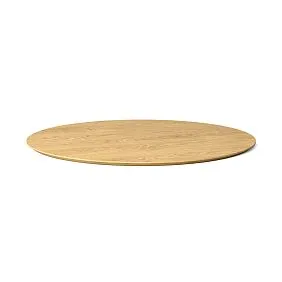


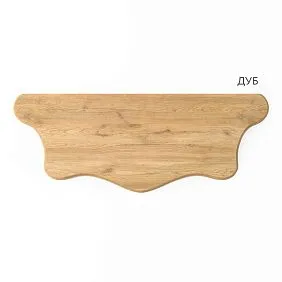
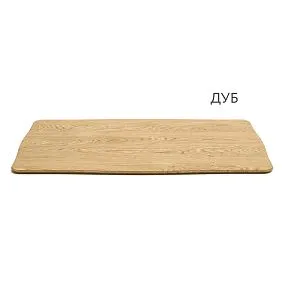

Types of wooden countertops: construction and aesthetics
A wooden countertop is not just a board. It's a construction where the choice of technology determines the appearance, strength, durability, and price. Three main types: solid-laminate, glued panels, slabs with a natural edge. Each has character, each dictates the style of the table.




Solid-laminate countertops: classic and uniform
A solid-laminate countertop is a panel assembled from lamellas (narrow boards 40-100 mm wide), glued lengthwise. The lamellas are selected from the same grade of wood, with similar grain patterns and close shades. After gluing and sanding, a uniform surface is obtained, where the boundaries between lamellas are barely noticeable.
Advantages of solid-laminate countertops: stability (narrow lamellas are less prone to warping than wide boards), uniformity of pattern (suitable for classic interiors where order is valued, not contrast), manufacturability (standard production process, affordable price).
Solid-laminate countertops are made from oak or beech. Oak provides an expressive texture (large pores, contrasting annual rings), beech is more uniform, with a fine pattern. The thickness of solid-laminate countertops is standard: 20, 28, 40 mm. For dining tables, a thickness of 28-40 mm is optimal—sufficiently massive to look solid, but not excessively heavy.
A solid-laminate countertop is the foundation forclassic furniture, where respectability, restraint, and lack of eccentricity are important. This is the choice of those who value traditional quality, the reliability of proven solutions.
Our factory also produces:


Glued solid wood panels: economy and variability
A glued panel is a countertop made from boards of varying widths (from 60 to 200 mm), glued widthwise. The boards can be matched by color and texture (resulting in a harmonious surface) or contrasting (resulting in an expressive, variegated pattern).
Glued panels are cheaper than solid-laminate ones, as wider blanks are used, requiring fewer gluing operations. At the same time, glued panels are less stable: wide boards react more strongly to changes in humidity, and gaps may appear between the boards (especially with dry winter air in heated rooms).
Glued panels are suitable for interiors where the wooden countertop should be expressive, with visible board boundaries, with contrast between light and dark areas. This is the choice for country, rustic, eco-styles, where naturalness and traces of the material's origin are valued.
Thickness of glued panels: 18-40 mm. For kitchen tables, 18-25 mm is sufficient (lightness, economy), for dining tables, 28-40 mm is better (massiveness, prestige).
Get Consultation
Slabs with a natural edge: uniqueness and living form
A slab is a solid longitudinal cut of a tree trunk, where the natural edge is preserved (the bark is removed, but the edge shape remains uneven, following the contour of the trunk). Slabs are the most impressive, most expensive, most exclusive type of countertop.
Each slab is unique. The width varies from one end to the other (the trunk tapers), the edge is wavy, the grain pattern is one-of-a-kind. Slabs are made from valuable species: oak, ash, walnut, elm. The thickness of a slab is 50-100 mm—monumental, massive, impressive.
Slabs require special processing. After sawing, they are dried for several months (to a moisture content of 8-12%), then sanded, impregnated with oil or epoxy resin (cracks are filled, the structure is stabilized), and polished. The natural edge is coated with a protective compound to prevent cracking.
Slab countertops — a choice for interiors where wood is the main accent. Loft, Scandinavian style, eco-style, Japanese minimalism. A slab transforms a table into a sculpture, into an object around which the entire space is built. Such a table does not need decoration — its beauty lies in its natural form, in the vitality of the material.
Countertops with shaped edges: decorative edge treatment
Countertop edges can be treated decoratively, which adds character, style, and connects the countertop with other furniture elements. Types of edge treatment:
Straight edge — the cut is perpendicular to the plane of the countertop, corners are sharp or slightly rounded (radius 2-3 mm). A straight edge is universal, suitable for all styles, from classic to minimalism.
Rounded edge (radius) — the corner of the countertop is treated with a rounding of radius 5-15 mm. Rounded edges are safer (no sharp corners), more pleasant to the touch, suitable for families with children.
Bevel — the edge is cut at a 30-45 degree angle, creating a chamfered facet 5-10 mm wide. A bevel adds graphic quality, lightness, and visually thins a massive countertop.
Shaped profile — the edge is treated with a router, creating a complex profile (ogee, bullnose, cove). Shaped edges are characteristic of classic tables, where the countertop aligns with the profile of furniture cornices and wall moldings.
Live edge — the natural contour of the trunk is preserved, uneven, wavy. Characteristic of slabs, it creates the feeling that the countertop has just come out of the forest.
The choice of edge treatment is determined by the style of the table and the interior. A classic table requires a shaped profile, a modern one — a straight edge or bevel, a rustic one — a live edge.
How the countertop sets the tone for the table
The countertop is the dominant feature of the table. It occupies a large area, it is horizontal (attracts the eye), it is visible from all sides. The color, texture, thickness, and shape of the countertop determine how the table is perceived as a whole.
Countertop color and the character of the interior
Light countertop (whitewashed oak, ash, birch) creates lightness, airiness, visually expands the space. Light countertops are suitable for Scandinavian, minimalist interiors where purity, openness, and an abundance of light are valued. Light wood pairs with white walls, light textiles, creating a monochrome, calming palette.
Medium tones (natural oak, beech, walnut) — are universal, fit into most styles. Medium tones are warm, cozy, create a sense of stability, reliability. This is the choice for classic, transitional interiors where wood is the foundation but not the only accent.
Dark countertop (fumed oak, walnut, wenge) creates drama, contrast, elegance. Dark countertops are suitable for interiors where luxury, depth, and visual richness are valued. Dark wood pairs with dark walls (creating a monolithic look) or with light ones (creating contrast).
The color of the countertop should coordinate with other wooden elements of the interior: floor, doors, furniture fronts. Rule: the countertop can be 1-2 tones lighter or darker than the floor, but not contrastingly different (if the floor is light ash, a countertop made of dark wenge looks out of place).
Texture: pronounced or restrained
Oak has a large, contrasting texture (pronounced annual rings, large pores). An oak countertop is accentual, noticeable, dominant. It attracts attention, creates visual richness.
Beech has a fine, uniform texture (thin rays, small pores). A beech countertop is calm, neutral, background. It does not draw attention, allows other interior elements to dominate.
The choice of texture is determined by the role of the table in the interior. If the table is a central object (dining table in a dining room, desk in a study), the expressive texture of oak emphasizes its significance. If the table is a functional element (kitchen table, craft table), the restrained texture of beech is not distracting, creates a neutral background.
Countertop thickness and visual mass
Thin countertop (18-25 mm) looks light, modern, suitable for minimalist interiors. Thin countertops are often combined with thin metal legs, creating visual weightlessness.
Medium thickness (28-40 mm) — universal, suitable for most tables. The countertop is noticeable, massive, but does not overwhelm the space.
Thick countertop (50-100 mm, characteristic of slabs) — monumental, dominant, creates a sense of power, reliability, luxury. Thick countertops require massive bases, otherwise disproportion arises (a thick countertop on thin legs looks unstable).
The thickness of the countertop should correspond to the size of the table. A small table (60x60 cm) with a thickness of 50 mm looks clumsy, a large table (250x120 cm) with a thickness of 20 mm — flimsy. Rule: the thickness in millimeters is 10-15% of the shorter side of the countertop in centimeters. A table 100 cm → thickness 10-15 cm (100-150 mm) for monumentality, or 30-40 mm for classic.
Countertop shape and functionality
Rectangular countertop — universal, accommodates the maximum number of people with minimum area, suitable for narrow rooms where the table is placed along a wall or in the center.
Square countertop — compact, suitable for small kitchens, studios, designed for 2-4 people. A square table creates equality: all seated are at an equal distance from each other, no one is at the head.
Round countertop — intimate, friendly, conducive to conversation. A round table has no corners, is safe for children, visually takes up less space than a rectangular one of the same area. Round countertops are suitable for dining rooms, living rooms where the table is a family gathering place.
Oval countertop — elegant, combines the advantages of rectangular (capacity) and round (lack of corners, smoothness of form). Oval tables are characteristic of classic interiors where elegance of lines is valued.
The shape of the tabletop determines the shape of the base. A rectangular tabletop requires four legs at the corners or two massive supports along the short sides. A round one requires a central support or three to four legs placed around the circumference. An oval one requires two supports on the long axis or four legs.
Table base: how to support the character of the tabletop
The tabletop sets the tone, the base supports it. The base (legs, supports, aprons, underframes) must be coordinated with the tabletop in style, scale, and material. Dissonance arises when a massive slab tabletop stands on thin chrome legs, or when a classic tabletop with a shaped edge rests on minimalist metal rods.
Wooden legs: continuation of the material
Wooden legs are a natural continuation of a wooden tabletop. The material is unified, creating a sense of integrity and solidity. Wooden legs can be simple (straight cylinders, cones, square beams) or decorative (turned with balusters, carved, cabriole).
For a tabletop made of natural oak, the legs should also be oak. The color and finish are identical: if the tabletop has an oil finish, the legs have an oil finish; if the tabletop is stained, the legs are stained. This creates material unity.
The shape of the legs is coordinated with the style of the tabletop. A solid wood tabletop with a straight edge requires straight or tapered legs without decoration. A tabletop with a shaped edge requires turned legs with balusters. A slab with a live edge requires roughly processed legs (unplaned beams preserving the texture of an axe or saw).
Leg height is standard for dining tables: 710-750 mm (tabletop height from the floor). For bar tables: 1050-1100 mm. For coffee tables: 400-500 mm. Height determines the table's function and affects perception: a low table is intimate, grounded; a high table is monumental, dominant.
Metal bases: contrast and modernity
Metal legs or frames create a contrasting combination with a wooden tabletop. Metal is cold, industrial, geometric. Wood is warm, organic, alive. The contrast creates tension, dynamism, modernity.
Metal bases are suitable for tabletops in modern styles: minimalism, loft, industrial, Scandinavian. Metal is usually matte black (steel with powder coating) or chrome-plated (shiny steel). Black metal is universal, fitting into most interiors. Chrome is more eccentric, suitable for glossy, techno interiors.
The shape of metal bases is diverse: thin rods (diameter 20-30 mm), flat plates (thickness 5-10 mm), tubes (square or round, cross-section 40-60 mm), complex frames (welded structures of tubes and plates). Thin rods create lightness, massive tubes create brutality.
The metal base must be proportional to the tabletop. A thick, massive tabletop on thin rods looks unstable. A thin tabletop on thick tubes looks overloaded with metal. The balance rule: the visual mass of the base should be 30-50% of the visual mass of the tabletop.
Apron: functional frame
An apron is a horizontal frame connecting the table legs under the tabletop. The apron serves a function: it gives rigidity to the structure, prevents wobbling, and increases load-bearing capacity. Simultaneously, the apron is a decorative element that can be adorned with carvings, moldings, or overlays.
The apron is made from the same wood as the tabletop and legs. Apron height: 80-150 mm (depends on table size). The apron can be smooth (for simple tables) or profiled (for classic ones).
A classic technique: the apron has a shaped lower edge (cut with arches, waves, scrolls), which visually lightens it and adds decorativeness. Carved overlays on the apron repeat the motifs of the carvings on the legs, creating ornamental unity.
The apron reduces legroom (especially if it's high), which is critical for dining tables. Solution: the apron is placed closer to the edges of the tabletop (not in the center), leaving free space in the middle.
Table frames: foundation for classic style
Table frames— ready-made bases made of solid wood, including legs, aprons, sometimes a central support. The frame is installed, the tabletop is attached on top—and the table is ready. Frames are produced for classic tables, where the coordination of elements is important: carved legs, profiled aprons, decorative overlays.
Using a ready-made frame guarantees stylistic unity. All elements (legs, aprons, overlays) are coordinated in profile, ornament, and finish. You just need to select a tabletop by size and color and secure it to the frame.
Frames are made of oak or beech, offered in several finish options: unfinished (for custom finishing to match the interior), stained (stain + varnish), painted (white, gray, black). This allows adapting the frame to any interior.
Frame height is standard (with a tabletop thickness of 28-40 mm, the final table height is 750-770 mm). Frame sizes: for tabletops from 120x80 cm to 250x120 cm. For non-standard sizes, custom frame manufacturing is possible.
Decoration of the tabletop and base: connection of elements
The tabletop and base must be connected not only structurally but also decoratively.Furniture decor— carved overlays, moldings, rosettes — create this connection, turning a set of elements into a cohesive object.
Decoration of the tabletop edge
The edge of the tabletop can be decorated with a carved molding glued along the perimeter. The molding creates a visual frame, thickens the edge, and adds decorativeness. The molding profile is coordinated with the apron profile: if the apron has a cove, the tabletop edge molding also has a cove.
Carved molding along the tabletop edge is characteristic of classic tables, where framing, completeness, and the absence of bare edges are valued. The molding hides the board ends (which may be less aesthetic than the face), creating a sense of massiveness and solidity.
Carved overlays on the apron and legs
The apron and the upper parts of the legs (where they connect to the tabletop) are decorated with carved overlays. The overlays can be floral (acanthus leaves, grape vines, flowers), geometric (meanders, rosettes, interlaces), or figurative (mascarons, putti, heraldic elements).
The ornament of the overlays is repeated on all elements of the table: on all four legs (identical overlays), on all four aprons (identical friezes). This creates rhythm, symmetry, and visual unity.
The carved overlays are glued onto the already assembled frame and then painted together with it. This allows for adding decoration to simple frames, transforming them into complex, individual pieces.
Color and patina: connection through finish
Even if the tabletop and the base differ in shape, they are connected by the finish. The same color (stain tinting), the same coating (oil, varnish, wax), and the same patina (dark patina in the recesses of the carving) create visual unity.
A classic technique: the tabletop is the natural color of oak (light brown), the base is tinted dark walnut, but the carved overlays are left light (contrast). This creates richness of shades, depth, and visual complexity.
Patinating — artificial aging — adds a sense of history and nobility. Patina is applied in the recesses of the carving, on the edges of the tabletop, and on the protruding parts of the legs, imitating natural darkening from time, touch, and use.
Wooden tabletops in different interior styles
Wood is universal, but its application varies depending on the style. Let's consider how wooden tabletops fit into different aesthetics.
Classical interior: respectability and tradition
In classic interiorclassic tableA table with a wooden tabletop is the central object in the dining room. The tabletop is made of oak or walnut, solid-laminate, with a shaped edge (molding around the perimeter). The color is dark or medium (natural oak, tinted walnut), with a glossy finish (varnish, creating shine).
The base is massive: carved legs (turned with balusters or cabriole), aprons with carved overlays. All elements are coordinated in style: the profile of the tabletop edge molding repeats the profile of the apron, the ornament of the overlays on the legs repeats the ornament on the aprons.
The table is placed in the center of the dining room, surrounded by classic chairs (with carved backs, fabric-upholstered seats). A chandelier (crystal or forged) hangs above the table, and a rug (oriental or classic European) lies under it. The entire ensemble creates an atmosphere of solemnity, solidity, and respect for tradition.
Scandinavian style: warmth and minimalism
Scandinavian interiors use wood as a source of warmth in a minimalist space. The tabletop is made of light oak, ash, or birch, solid-laminate or from a slab (with a live edge). The color is natural light, with a matte finish (oil, wax) that emphasizes the texture rather than creating shine.
The base is simple: straight tapered legs made of the same light wood, without carving, without an apron. The leg height is medium (200-300 mm), thickness is moderate (40-60 mm). The table appears visually light, despite the wooden construction.
The table is placed by a window (natural light emphasizes the wood texture), surrounded by simple chairs (white plastic, light wood, metal with wooden seats). Minimal items are on the table: white dishes, a glass vase with flowers, a linen napkin. The atmosphere is one of lightness, purity, and respect for the material.
Loft: wood and metal
Loft combines a wooden tabletop with a metal base. The tabletop is made from a slab or roughly processed glued panels (saw marks visible, knots, cracks filled with epoxy resin). The color is natural or tinted grey-brown. The finish is matte, emphasizing the roughness of the treatment.
Black metal base: welded frame made of square-section steel pipes (40x40 or 60x60 mm), powder-coated. Legs are straight or X-shaped, without decoration, functional. Welded seams and bolts are visible — this is part of the aesthetic.
The table is placed against a brick wall, concrete floor, exposed utilities. It is surrounded by metal chairs (industrial-looking), with rough ceramics and metal articulated lamps on the table. The atmosphere is industrial, brutal, honest.
Country and rustic: warmth and simplicity
Country style uses wood as the primary material, creating coziness and a homely atmosphere. The tabletop is made of glued panels (boards contrasting in color, boundaries visible), with a straight or rounded edge. The color is warm (honey oak, light walnut), with a matte or semi-matte finish.
The base is massive: thick straight legs (square or slightly tapered), an apron with simple overlays (carved rosettes in the corners, a frieze with geometric ornament). The entire construction looks reliable, functional, without excess.
The table is placed in a kitchen-dining room, surrounded by wooden chairs (with simple backs, no upholstery). The table has a checkered tablecloth, ceramic dishes, woven baskets. The atmosphere is familial, hospitable, conducive to long meals and conversations.
Caring for a wooden tabletop: material durability
A wooden tabletop requires care, but not excessive. With proper use, it serves for decades, becoming more beautiful with age.
Daily Care
Wipe the tabletop with a dry or slightly damp soft cloth after use. Remove crumbs and liquid stains immediately (do not let them soak in). Do not use abrasive sponges or aggressive cleaning agents (they damage the finish).
Use trivets for hot items (hot pots and pans leave marks on oil finishes and can cause varnish to crack). Use coasters (condensation from cold drinks leaves white rings on some finishes).
Avoid impacts and scratches from sharp objects (knives, forks). Cut on cutting boards, not directly on the tabletop.
Periodic coating renewal
If the countertop is coated with oil or wax, refresh the coating every 6-12 months. Clean the surface, apply a thin layer of oil (linseed, tung, specialized furniture oil), let it soak in for 20-30 minutes, and remove excess with a soft cloth. The oil restores protection, highlights the wood grain, and adds depth to the color.
If the countertop is varnished, no refresh is needed (varnish creates a durable film). However, if scratches or wear appear, the varnish can be renewed: sand the damaged area with fine sandpaper (grit 320-400), apply a new coat of varnish, and let it dry.
Protection from humidity and temperature
Wood reacts to air humidity: in dry air (winter, heating season) it shrinks, and gaps may appear between boards. In humid air (summer, rainy periods) it expands. This is natural, but excessive humidity fluctuations are undesirable.
Maintain stable indoor humidity: 40-60% (optimal for wood and people). Use humidifiers in winter when heating dries the air. Avoid placing the table directly next to radiators or fireplaces (local overheating and excessive drying of the wood).
Do not place the table in direct sunlight (wood fades, and the coating degrades from UV rays). If the table is by a window, use curtains or blinds during sunny hours.
Frequently asked questions
What is the optimal thickness for a dining table countertop?
For a dining table, an optimal thickness is 28-40 mm. This is substantial enough to look solid but not excessively heavy. A countertop of this thickness withstands daily loads, does not sag, and lasts for decades.
What is stronger for a countertop: oak or beech?
Oak is stronger (density 700-800 kg/m³) and harder than beech (650-700 kg/m³). An oak countertop is more resistant to scratches, dents, and wear. However, beech is easier to work with, cheaper, and has a more uniform grain. For heavily used dining tables, oak is preferable.
Can a slab with a live edge be used in a classic interior?
A slab with a live edge is an element of modern, eco, and loft styles. In a classic interior, it looks out of place, disrupting symmetry and formality. For classic interiors, choose solid-laminate countertops with straight or shaped edges.
How to protect a countertop from stains and moisture?
Apply a protective coating: oil (penetrates the wood, creating a water-repellent layer), wax (enhances the oil's protection), varnish (creates a dense film on the surface). Refresh the coating regularly. Wipe up spilled liquids immediately, and use coasters or tablecloths as needed.
What base to choose for a massive slab countertop?
A massive countertop requires a massive base. For a slab, suitable options are: thick wooden legs (beams with a cross-section of 100x100 mm), a metal frame made of thick-walled pipes (60x60 mm), or a massive central support. Thin legs will create a disproportion, and the table will look unstable.
Is an apron needed for a dining table?
An apron increases the rigidity of the structure and prevents wobbling. For large tables (length over 180 cm), an apron is desirable. For small tables (up to 120 cm), you can do without an apron if the legs are securely attached to the countertop.
How to coordinate the color of the countertop with the floor color?
The countertop can be 1-2 shades lighter or darker than the floor, but not in stark contrast. If the floor is light oak, the countertop should be light or medium oak. If the floor is dark walnut, the countertop should be medium or dark walnut. Contrast (light floor + dark countertop) is possible but requires support from other dark elements (furniture, doors).
Can a scratched countertop be restored?
Yes, a wooden countertop is repairable. Minor scratches are sanded with sandpaper (grit 220-320), and the coating is refreshed. Deep scratches are filled with wood-colored putty, sanded, tinted, and recoated. As a last resort, the countertop can be completely resanded (removing 1-2 mm of the surface layer) and recoated—it will look like new.
How much does a quality wooden countertop cost?
The price depends on the wood species, size, thickness, and type of construction. A solid-laminate oak countertop 200x100x4 cm: from 25,000 to 45,000 rubles. A glued panel of the same size: from 18,000 to 35,000 rubles. A slab with a live edge 250x100x6 cm: from 80,000 to 200,000 rubles (depends on the species and uniqueness of the grain).
Where to buy a quality wooden countertop and table frame?
Contact specialized manufacturers working with solid wood. Check the quality of the wood (moisture content 8-12%, no large knots or cracks), the quality of gluing (seams are invisible, no delamination), and the quality of finishing (surface is smooth, no tool marks). Request certificates and warranties.
Conclusion: The countertop as the soul of the table
A table is the horizontal plane on which life unfolds. Breakfasts, lunches, dinners, conversations, work, crafts, children's games. And it is the countertop—what we see, touch, and feel—that determines how this life feels.
Wooden tabletopsThey make the table come alive. A metal, glass, or plastic countertop is a surface, a function, a tool. A wooden countertop is a presence, a character, warmth. It is not perfect: the grain is unique, there may be knots, scratches and patina may appear. But this imperfection is part of its beauty, evidence that the material is genuine, lived-in, honest.
A wooden countertop changes the character of an interior because it sets the scale of naturalness permissible in a space. One wooden table in a white minimalist kitchen—and the kitchen becomes not sterile, but lived-in. One massive slab table in a loft—and the loft becomes not a cold warehouse, but a home where people live who value material, texture, authenticity.
Choosing the type of tabletop is choosing the character of the table. Solid lamella is for those who value order, classic style, and respectability. Glued panel is for those who embrace natural diversity, contrast, and the liveliness of the material. Slab is for those ready to make the table the main object of the interior, a sculpture around which everything else revolves.
The base should support the character of the tabletop, not compete with it. A massive tabletop requires a massive base. A lightweight tabletop requires a lightweight base. A classic tabletop requires a carved wooden base. A modern tabletop requires a metal or minimalist wooden base. Proportions, materials, and finishes are coordinated—and the table becomes a whole, not just a sum of parts.
The company STAVROS has been creating elements for furniture made from solid oak and beech for over two decades: tabletops, legs,Table frames, Furniture decor. Everything necessary for creatingclassic furnitureor modern furniture using natural wood.
STAVROS offers solid lamella and glued tabletops in standard and custom sizes, unfinished (for self-finishing) and with factory coating (oil, varnish, tinting). Tabletop thickness ranges from 20 to 60 mm, wood species include oak and beech, with premium wood quality (moisture content 8-10%, no major defects, thorough sanding).
STAVROS produces table frames in classic style: carved legs, profiled aprons, decorative overlays. The frames are coordinated with the tabletops in material, color, and style. You receive a ready-made base on which you install the tabletop—andclassic tableis ready, without the need to order custom manufacturing from scratch.
STAVROS works with private clients (designers, owners of country houses, restaurateurs creating interiors with wooden furniture) and with furniture manufacturers (supplying tabletops, frames, and decor in series). Custom manufacturing based on individual projects is possible: non-standard sizes, unique shapes, combined constructions.
Choosing STAVROS products means choosing quality that can be felt. The wood is carefully selected, drying is proper, processing is precise, and finishing is meticulous. STAVROS tabletops last for decades, becoming more beautiful, acquiring patina, history, and the value of a family heirloom.
A table with a wooden tabletop is an investment not in furniture, but in quality of life. It is pleasant to sit at such a table, pleasant to touch it, and you want to pass it on to your children. Because wood is a material that outlives fashions, trends, and seasons. Wood remains relevant always because it is part of nature, and nature is the foundation to which we always return, no matter what happens in the world of design.
Choose a wooden tabletop. Choose a suitable base. Create a table that will become the center of the home, a gathering place for the family, a witness to joys and everyday life. Because good furniture is not just an interior decoration, but the foundation of life unfolding in the home.


