Article Contents:
- The Phenomenon of MDF in Modern Construction
- Technological Breakthrough in Production
- Microstructure and Properties
- Architectural Possibilities and Design Solutions
- Geometric Universality
- Acoustic Characteristics
- Modern Methods of Oak Wood Processing
- Precision processing
- Quality control systems
- Innovative Installation Methods
- Hidden fastening systems
- Adhesion Technologies
- Ecological aspects and sustainable development
- Carbon Footprint of Production
- Certification and Environmental Standards
- Decorative Coatings and Final Finishing
- Multi-layer Coating Systems
- Imitation of natural materials
- Specialized Areas of Application
- Medical Facilities
- Educational institutions
- Economic Aspects and Profitability
- Lifecycle Cost Analysis
- Comparative Analysis of Alternatives
- Trends in Development and Future Technologies
- Practical Application: Advice for Designers
- Nanomaterials and Functional Additives
- Regional application specifics
- Climate adaptations
- Seismic-Resistant Structures
- Competition Among Wooden Materials
- Certification and Control
- American Standards
- Engineering Calculations and Design
- Static calculations
- Dynamic Characteristics
- Conclusion
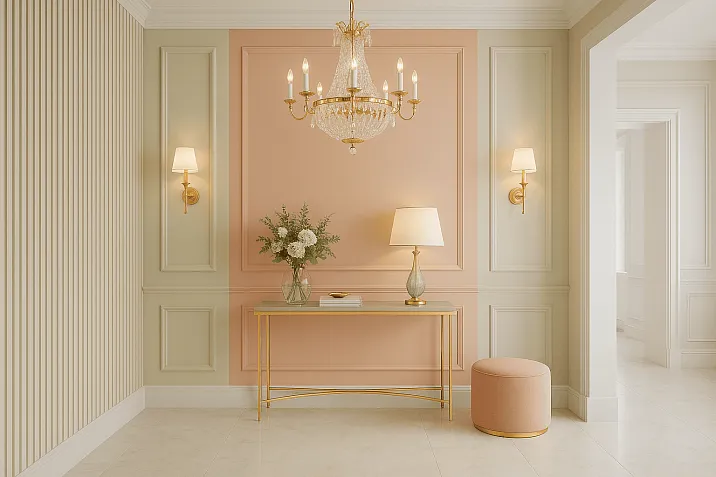
The world of decorative finishing is undergoing a true revolution, and at the heart of these changes are Wall MDF rails – an innovative solution that transforms the approach to interior space design. What makes this material so popular among architects, designers, and developers? The answer lies in its unique combination of functionality, aesthetics, and technological advantages.
Modern interior architecture requires materials capable of realizing the most daring design concepts while remaining practical and economically viable. MDF wall panels meet all these requirements, offering limitless possibilities for creating unique visual effects and functional solutions.


The Phenomenon of MDF in Modern Construction




Technological Breakthrough in Production
The history of MDF (Medium Density Fiberboard) creation began with the search for a material that would surpass traditional particleboard in all key parameters. The production technology, based on pressing wood fibers under high pressure using natural binders, allowed the creation of a product with unique characteristics.
The manufacturing process of MDF wall panels includes several critically important stages. Primary preparation of wood raw material occurs at a temperature of 170-180°C, ensuring complete moisture removal and activation of lignin – a natural binder component of wood. Subsequent pressing under 40-50 MPa pressure creates a homogeneous structure with a density of 600-800 kg/m³.
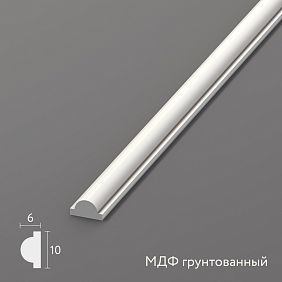
Our factory also produces:


Microstructure and Properties
Analysis of the microstructure of MDF panels under an electron microscope demonstrates uniform distribution of wood fibers 0.5-3 mm long, bonded with new-generation modified urea-formaldehyde resins. This structure ensures isotropy of properties – identical strength characteristics in all directions.
The linear expansion coefficient of MDF is only 6-8×10⁻⁶ 1/°C, which is 2-3 times less than that of natural wood. Such dimensional stability is critically important for of MDF wall railsused under variable temperature-humidity conditions
Get Consultation
Architectural possibilities and design solutions
Geometric universality
MDF wall rails open previously unseen possibilities for creating complex geometric compositions. Straight elements can be easily adapted to create curved surfaces by radial cutting from the back side. The bending radius is limited only by the rail thickness and ranges from 300 mm for 10 mm thick elements.
The modularity of the system allows creating fractal patterns and designs based on the mathematical principles of the golden ratio. This approach is especially relevant in public building projects, where architectural expressiveness plays a key role in forming corporate identity.
Acoustic characteristics
Perforated Wall MDF rails demonstrate outstanding acoustic properties. The sound absorption coefficient in the frequency range of 250-4000 Hz reaches 0.85-0.95 when using back-side acoustic insulation. This enables the creation of interiors that are not only aesthetically pleasing but also functionally effective in concert halls, office centers, and residential spaces.
The resonant frequencies of the "rail-air gap-base" system can be precisely calculated and tuned to suppress specific frequency ranges. This scientific approach to acoustic design opens new horizons in architectural acoustics.
Production technologies and quality control
Precision processing
Modern production lines ensure geometric accuracy of MDF wall rails with tolerances of ±0.1 mm in thickness and ±0.5 mm in width. This precision is achieved using multi-spindle calibrated grinding machines with numerical control.
Edge quality is critical for the appearance of the finished structure. Modern milling centers allow obtaining an edge with surface roughness Ra not exceeding 1.6 micrometers, ensuring ideal adhesion of coatings.
Quality control systems
The multi-level quality control system includes continuous monitoring of all technological parameters. Automated measuring complexes check the geometric dimensions of each rail, rejecting items that do not meet technical requirements.
Laboratory tests include determining bending strength, internal bond, swelling, formaldehyde emissions, and other critical parameters. Statistical analysis of results allows maintaining the highest level of quality stability.
Innovative installation methods
Hidden fastening systems
Revolutionary installation approach of MDF wall rails is based on the use of hidden fastening systems. Stainless steel clamps integrated into the back surface of the rails provide secure fastening without visible fasteners on the front surface.
The system allows for rapid disassembly and replacement of individual elements without compromising the structural integrity. This is especially important in commercial spaces, where access to engineering utilities laid behind decorative cladding may be required.
Adhesion technologies
The use of new-generation structural adhesives opens additional installation possibilities. High-elasticity polyurethane adhesives compensate for temperature deformations of the base, ensuring long-term durability of the joint.
The structural glazing technology, adapted for interior finishing, allows creating continuous surfaces of large areas. Architectural-grade silicone sealants ensure joint tightness while allowing for minor movements.
Ecological aspects and sustainable development
Carbon footprint of production
The life cycle of MDF wall rails is characterized by a relatively low carbon footprint due to the use of renewable wood raw materials. Modern production facilities utilize wood processing waste, aligning with circular economy principles.
Energy-efficient drying and pressing technologies reduce energy consumption by 30-40% compared to traditional methods. Cogeneration units operating on wood waste ensure energy autonomy of production complexes.
Certification and Environmental Standards
Products from leading manufacturers comply with the strictest environmental standards, including FSC (Forest Stewardship Council) and PEFC (Programme for the Endorsement of Forest Certification). These certifications guarantee that the wood originates from sustainably managed forests.
Formaldehyde emissions from high-quality MDF wall rails do not exceed 0.05 mg/m³ of air, corresponding to the strictest E0 class. These indicators allow using the material in children's facilities and medical facilities.
Decorative finishes and final surface treatment
Multi-layer coating systems
Modern decorative finishes for of MDF wall rails are complex multi-component systems. The base layer based on polyurethane primers ensures adhesion and fills micro-pores of the surface. Intermediate layers create the required texture and color base.
The finish coating made of new-generation polyacrylic lacquers provides resistance to abrasion, chemical exposure, and UV radiation. The hardness of the coating by pencil scratch test reaches 6H, comparable to automotive lacquers.
Imitation of natural materials
Modern printing technologies allow creating surfaces visually indistinguishable from expensive natural materials. High-resolution digital printing combined with embossing creates not only visual but also tactile imitation of wood, stone, or metal textures.
Multi-pass printing using special inks creates an effect of depth and volume of the image. Protective lacquers with varying gloss levels allow precise reproduction of the optical properties of the imitated materials.
Specialized application areas
Medical facilities
In medical facilities Wall MDF rails with antimicrobial coating are finding increasingly wider application. Silver ions integrated into the coating system provide suppression of pathogenic microorganism growth on the surface.
Smooth, non-porous surface easily withstands wet cleaning with disinfectants. Absence of gaps and joints eliminates accumulation of contaminants and creates unfavorable conditions for microbial growth.
Educational institutions
In kindergartens and schools, special attention is paid to material safety and resistance to mechanical impacts. MDF wall panels with enhanced impact resistance withstand intensive use without losing their appearance.
The possibility of creating interactive surfaces with integrated sensor elements opens new opportunities for modern educational processes. Magnetic and marker coatings transform walls into functional work surfaces.
Economic aspects and profitability
Life Cycle Cost Analysis
The economic efficiency of using MDF wall panels becomes evident when analyzing the total cost of ownership. Initial investments are recouped due to low operating costs and long service life of the material.
The average service life of quality MDF wall panels is 20-25 years under proper operating conditions. Maintenance costs are limited to periodic surface cleaning and local coating repairs every 7-10 years.
Comparative analysis of alternatives
Comparison with alternative materials demonstrates the advantages of MDF by cost-to-quality criteria. Natural wood requires more complex maintenance and is susceptible to biological degradation. Plastic panels lag behind in aesthetic qualities and tactile sensations.
Metallic structures, despite their strength, create a cold atmosphere and require special anti-corrosion protection. Ceramic and stone claddings are significantly more expensive and more complex to install.
Trends in development and future technologies
Digital integration
Future of MDF wall rails is linked to integration of digital technologies. Built-in LED elements transform decorative finishes into lighting system components. Programmable RGB matrices allow creating dynamic light compositions.
Integration with "smart home" systems opens opportunities for automatic control of lighting and color palette depending on time of day, weather conditions, or user preferences. Tactile surfaces with haptic feedback become elements of engineering system control interfaces.
Nanomaterials and functional additives
Application of nanomaterials in MDF composition opens new functional possibilities. Titanium dioxide nanoparticles provide photocatalytic activity of the surface, promoting decomposition of organic contaminants and unpleasant odors.
Graphene additives increase material electrical conductivity, enabling creation of anti-static surfaces and electromagnetic shielding elements. Such solutions are especially relevant in rooms with sensitive electronic equipment.
Regional application specifics
Climate adaptations
In different climatic zones, requirements for MDF wall panels may vary significantly. In high-humidity conditions, special hydrophobic impregnations are used, reducing water absorption to 2-3%. In regions with sharp temperature fluctuations, temperature deformation compensators are applied.
Freeze-resistant binder formulations have been developed for northern regions, maintaining elasticity at temperatures down to -40°C. In southern regions, special attention is given to UV resistance and thermal stability of coatings.
Seismic-resistant structures
in seismically active regions, the mounting systems of MDF wall rails must provide sufficient mobility to compensate for building deformations. Elastic connections with damping elements prevent damage to decorative cladding under seismic loads.
Special calculation methodologies account for dynamic loads and ensure structural safety during earthquakes up to 9 on the Richter scale. The modular design of the system allows for rapid restoration of damaged areas.
International standards and certification
European standards
Products from European manufacturers comply with EN 622 standards, which establish requirements for medium-density fiberboard. These standards regulate physical and mechanical properties, dimensional stability, formaldehyde emissions, and other key characteristics.
The REACH Directive (Registration, Evaluation, Authorisation and Restriction of Chemicals) sets strict requirements for chemical safety of all components used in manufacturing MDF wall studs. Compliance with these requirements is confirmed by comprehensive toxicological studies.
American standards
ANSI A208 and CARB (California Air Resources Board) standards set requirements for formaldehyde emissions at levels not exceeding those of natural wood. These standards are among the strictest in the world and serve as benchmarks for manufacturers worldwide.
GREENGUARD certification confirms low chemical emissions and suitability for use in spaces with high air quality requirements. Such certification is especially important for healthcare and educational facilities.
Engineering calculations and design
Static calculations
Designing structures using MDF wall studs requires precise engineering calculations taking into account all applied loads. Key calculation parameters include flexural modulus of elasticity (2500–3500 MPa), flexural strength (20–35 MPa), and compressive modulus of elasticity (2000–3000 MPa).
Deflection calculations are performed using the method of initial parameters, taking into account real boundary conditions of fixation. The material reliability coefficient is taken as no less than 1.3 to ensure the required safety factor.
Dynamic characteristics
Natural frequencies of vibration of structures made of of MDF wall rails are calculated using the finite element method, taking into account the real properties of the material and boundary conditions. The density of MDF (650–750 kg/m³) and modulus of elasticity (2500–3500 MPa) determine the dynamic characteristics of the system.
Damping properties of the material, characterized by a logarithmic decrement of damping 0.08–0.12, ensure rapid vibration decay. This is especially important in concert halls and recording studios.
Conclusion
Analysis of the current state and prospects for development of MDF wall stud production and application technologies demonstrates their exceptional potential in interior decorative finishing. The unique combination of technical characteristics, aesthetic possibilities, and economic efficiency makes this material an indispensable tool in modern design.
Revolutionary production technologies ensure consistently high product quality at competitive prices. Ecological safety and compliance with the strictest international standards open up wide application opportunities in the most demanding projects.
Innovative installation and mounting methods simplify the installation process and ensure the longevity of structures. The variety of decorative finishes and surface treatments allows for the realization of any design concept, from classic to ultra-modern.
Integration with digital technologies and "smart home" systems defines the industry’s development vector over the next decade. Functional additives and nanomaterials expand application areas and create new opportunities for innovative solutions.
Economic analysis confirms high return on investment for of MDF wall rails in projects of any scale. Low operating costs and long service life ensure rapid payback of investments.
Regional adaptations and climatic modifications allow successful application of the material in any geographical conditions. Seismic-resistant structures and special mounting systems guarantee safety in complex geological conditions.
International certification and compliance with leading global standards confirm the high quality and safety of the product. This is especially important for export-oriented projects and international cooperation.
The future of MDF wall studs lies in further refinement of production technologies, expansion of functional capabilities, and integration with modern building automation systems. This material will remain a key element of innovative interior design approaches.
STAVROS Company, with its long-standing experience and deep expertise in the production and supply of high-quality finishing materials, continues to be a reliable partner for architects, designers, and builders. Commitment to quality principles, innovation, and customer orientation make STAVROS a leader in its industry, capable of offering optimal solutions for any task in interior decorative finishing.