

































Article Contents:
- What is a Wall Decorative Batten
- Where Decorative Wall Battens Are Used
- Accent wall in the living room
- TV Area
- Bed headboard
- Hallway and corridor
- Batten Partitions for Zoning
- Designing a Niche, Column, and Wall Section
- What Sizes Do Wall Battens Come In and How to Choose Them
- Narrow Battens for Light Wall Graphics
- Medium Sizes for Universal Finishing
- More Massive Battens for Expressive Volume
- Which material to choose — beech or oak
- When beech is suitable
- When is it better to choose oak
- How to match material with budget and style
- What to choose — for enamel or for tinting
- Battens for painting
- Battens for natural wood finish
- What is more practical for a modern interior
- How to choose a decorative batten to match the interior style
- Modern Interior
- Japandi and minimalism
- Neoclassicism
- Commercial spaces and offices
- What's better — separate wall battens or ready-made panels
- How to calculate wall battens for a project
- Installation of decorative slats on the wall
- Foundation Preparation
- Marking
- Choosing the spacing
- Fastening
- Joining
- Lighting and decorative inserts
- Common mistakes when choosing wall batten
- How to choose a decorative batten for a specific task
- Conclusion
- FAQ: popular questions about decorative wall battens

A wall is not just an enclosure. It is a surface that either works for the interior or simply exists. The difference between 'just a wall' and 'a wall that speaks' is often in one detail: a decorative wall batten. A thin wooden strip that creates rhythm, depth, texture, and character where there was once a featureless plane.
If you are looking fordecorative wall batten— means you already understand what you want. Now it's time to figure out the details: size, material, wood species, type of finish, installation spacing, combination with style. This is exactly what we'll cover — in detail, without fluff, and with specific guidelines.
What is a wall decorative batten
First — a definition that's important to understand precisely.
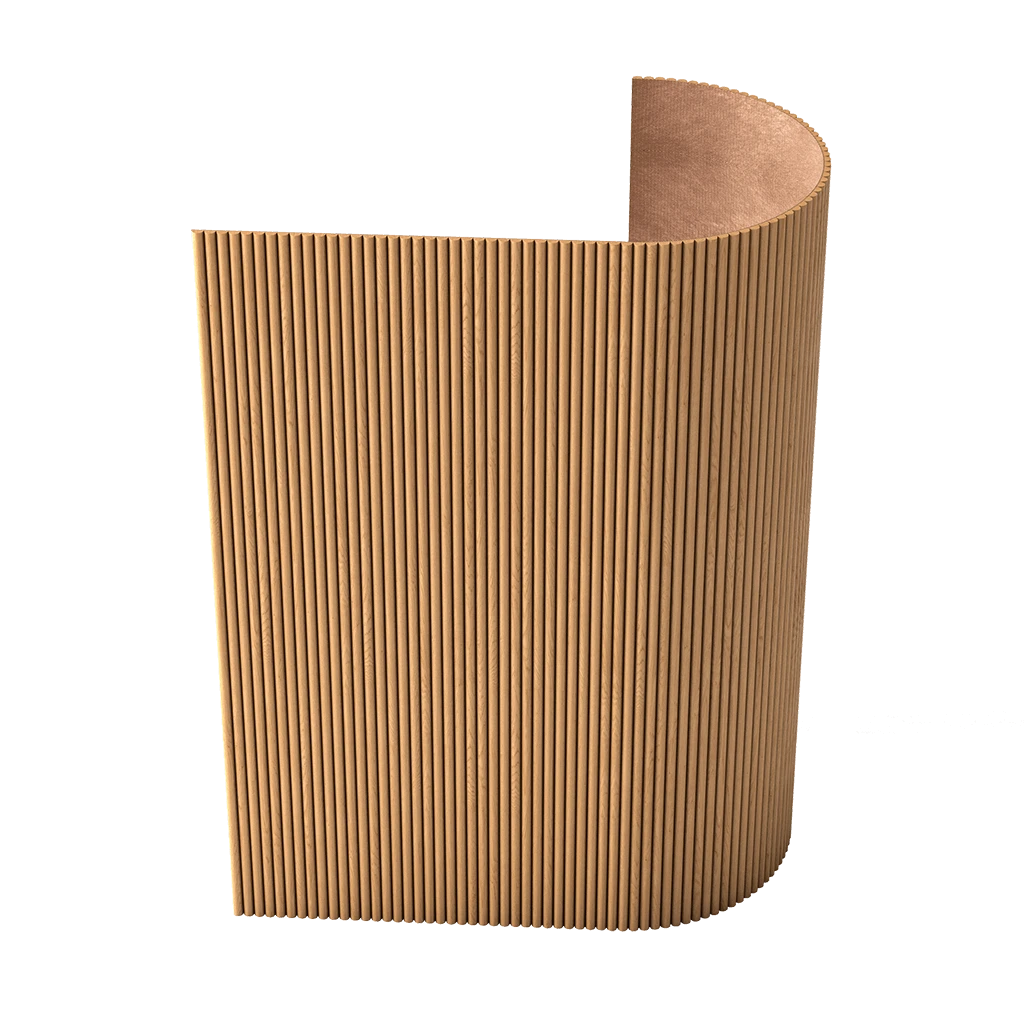
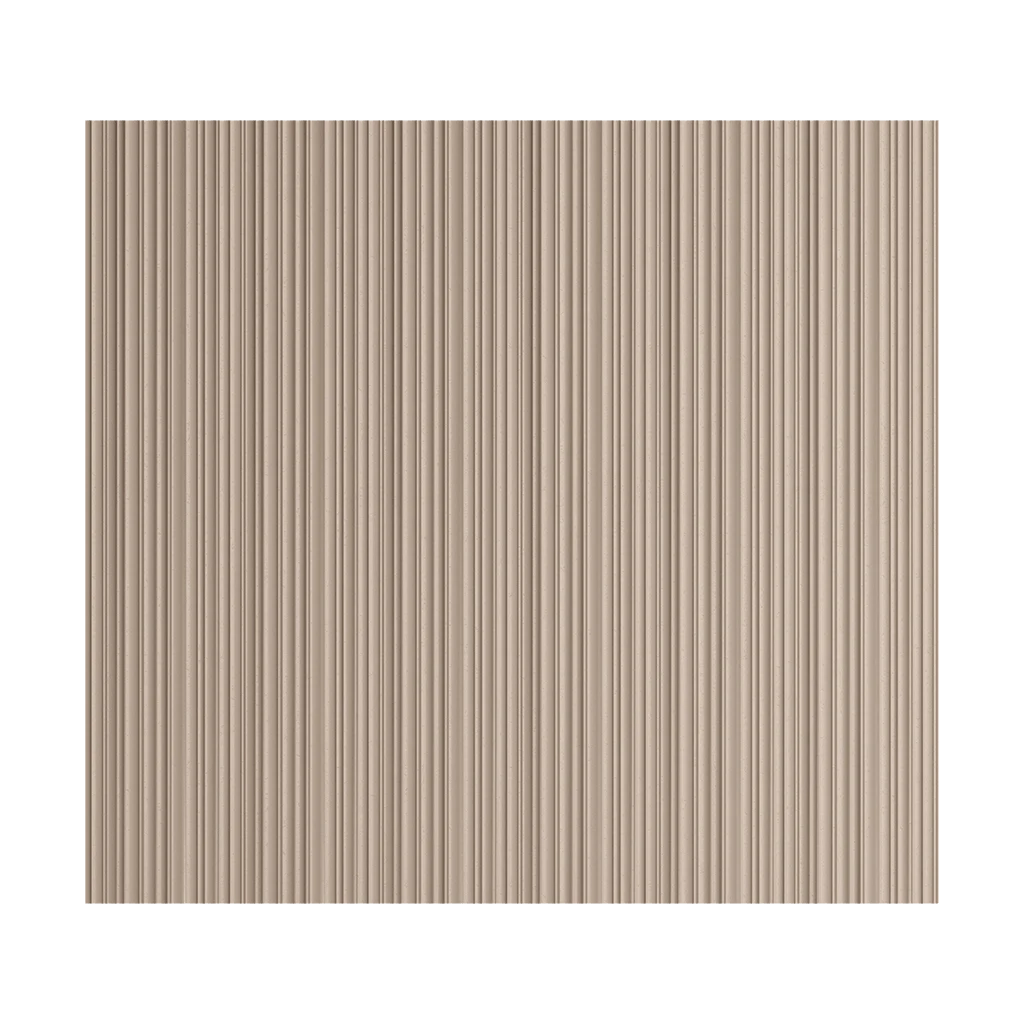
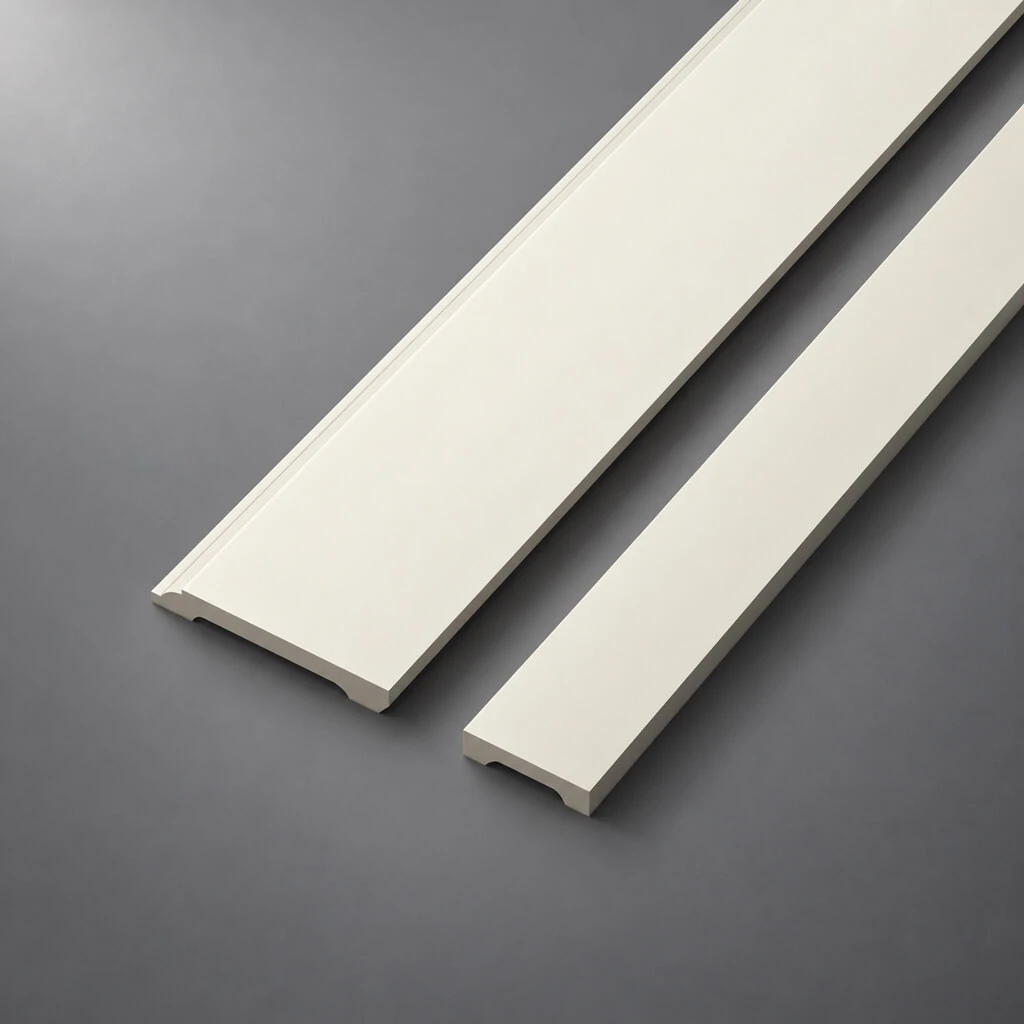
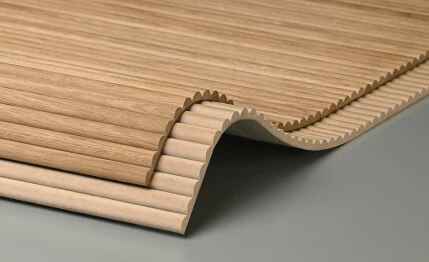
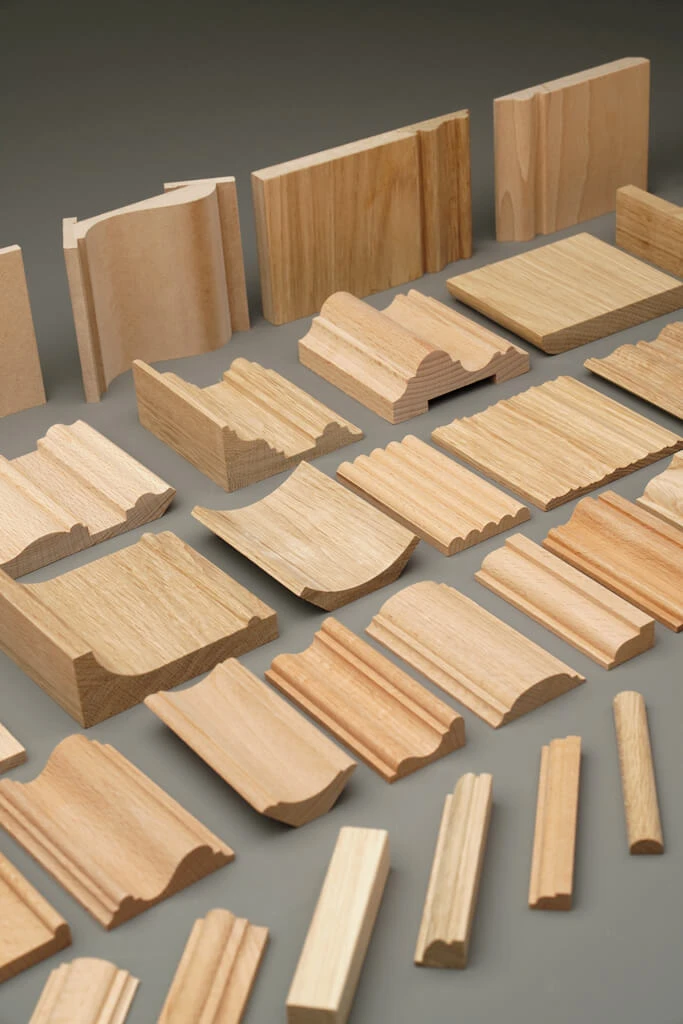
A decorative wall batten is a linear wooden profile of rectangular or other cross-section that is mounted on a wall parallel to other such elements at a specified interval. The batten does not completely cover the wall — it creates a rhythmic structure on its surface: both the profile itself and the wall between the battens are visible.
It is precisely the openness of the structure that is the main difference between a decorative wall batten and a panel. A panel covers the wall with a module. Battens create a surface with gaps, play of shadow, and tactile depth. This is a fundamentally different visual result.
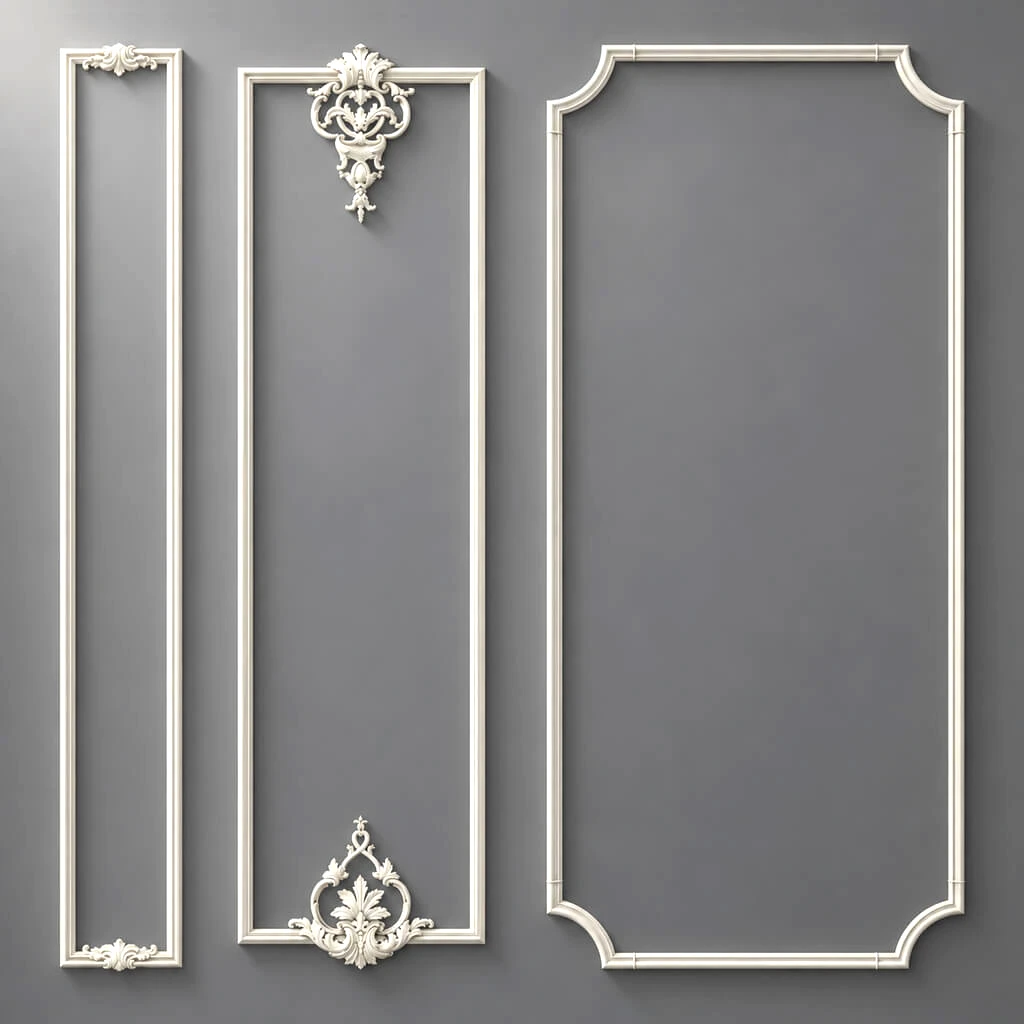
How does a wall batten differ from molding? Molding is an element of architectural decor that delineates surfaces, frames openings, and creates relief. A batten is an element of rhythmic layout: several parallel profiles form a surface. Molding works as a single element; a batten works as a system.
Why does wood remain the most in-demand material for wall battens? The answer is simple: no artificial material provides that combination of visual warmth, tactility, natural uniqueness of grain, and durability that natural wood offers. Wood on a wall is not just beauty, it's a feeling. And feeling is precisely what people create interiors for.


Where are decorative wall battens used
The range of applications for decorative wall battens is significantly wider than it might seem at first glance. And this is one of its main advantages.
Our factory also produces:




Accent Wall in Living Room
The living room gathers the eyes of guests and sets the tone for the entire space. An accent wall made of decorative battens is an architectural technique that works in any execution: from a delicate Scandinavian layout to expressive dark oak in a contemporary interior.
Key point: there should be only one accent wall. Attempting to create an 'accent' on two or three walls simultaneously devalues each of them. One expressive element on a neutral background is architecture. Slats everywhere is excess.
Get Consultation
TV area
The wall behind the TV is a special place. A dark rectangle of a screen on a bare wall looks random. Wooden wall slats solve this problem: they integrate the TV into the context, creating an architectural frame for it. With a well-chosen slat shade, the slats and the screen begin to work as a single visual volume.
Practical detail: it's better to mount slats in the TV zone vertically — they don't 'compete' with the horizontal line of the screen but complement it.
Bed headboard
The area behind the bed is the most intimate space in the bedroom. A decorative wall slat here creates not just decor, but a feeling of enveloping warmth. Narrow vertical oak slats with warm bottom lighting — one of the most beautiful lighting effects in a residential interior. Try it — and you'll understand what 'atmosphere' is, not as a word, but as a sensation.
Hallway and corridor
The hallway is the first and last thing the owner and guest see. Decorative slats on the wall in this zone work both aesthetically and practically: dense oak or beech slats are resistant to accidental bumps, bags, umbrellas. At the same time, a vertical layout in a hallway with a low ceiling visually stretches the space upward — a simple and reliable technique.
Slatted partitions for zoning
Open floor plans are the reality for most modern apartments. Studios, lofts, kitchen-living rooms — zoning is needed everywhere without solid walls. A decorative wall slat in the form of a partition is the perfect answer: it demarcates space without blocking light and air, without creating a feeling of crampedness.
A slatted partition between the kitchen area and the living room, between the bed and the dressing room, between the workspace and the relaxation area — in each case, the slats work as a visual boundary marker without physically closing it off.
Finishing a niche, column, and wall section
A niche with slatted finishing is one of the most interesting design techniques. Slats turn an ordinary architectural cavity into an expressive element. Lighting inside the niche enhances the effect many times over.
Columns with vertical slat arrangement gain slenderness and dynamism. The wall sections between windows, which often visually 'sag', acquire character and completeness.
What sizes do wall slats come in and how to choose them
Slat size is not just a technical parameter. It is the main tool for controlling the visual effect of a surface.
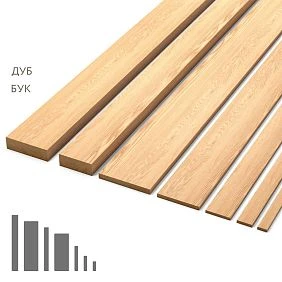
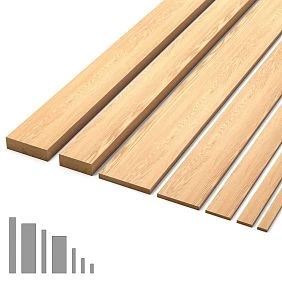
Wooden slat RK-001is produced with a length of 2400 mm — a standard that corresponds to most residential spaces with a standard ceiling height of 2.4–2.7 m. In terms of cross-section, the range covers a wide spectrum: from miniature 15×5 mm to expressive 80×23 mm and 90×10 mm. This is not a random assortment — it is a thoughtful system where each format solves its own task.
Narrow slats for a light wall graphic
Cross-sections of 15×5 mm, 24×5 mm, and 40×5 mm are thin, delicate profiles that create a light graphic rhythm on the surface. The shadow from such slats is minimal, the texture is barely perceptible. Choose this format when:
-
the room is small and requires lightness, not mass;
-
the style is Japandi, minimalism, Scandinavian;
-
the slats should be a background, not the main accent;
-
A subtle, almost calligraphic rhythm on a light wall is important.
Medium sizes for universal finishing
70×7 mm cross-section — an interesting format: wide enough for expressiveness, flat enough for subtlety. Looks good in modern interiors, neoclassical with a calm character, in offices and commercial spaces.
90×10 mm cross-section — a more massive slat with a tangible 'physical' presence on the wall. With a wide spacing between elements, it creates a pronounced rhythm without overload. With narrow spacing — a dense, rich texture.
More massive slats for expressive volume
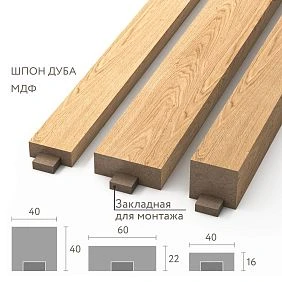
60×23 mm and 80×23 mm cross-sections — these are profiles with real depth. 23 mm thickness is not just a strip on the wall, it's a three-dimensional object casting a noticeable shadow. With directional lighting, such a slat creates a play of light and shadow that lives and changes throughout the day as the sun moves or artificial lighting changes.
This format is chosen for:
-
expressive accent walls in spacious rooms;
-
lofts with their love for large-scale details;
-
commercial interiors where a status visual effect is needed;
-
zones where rails work in combination with internal lighting
Practical selection table by cross-section:
| Cross-section (RK-001) | Visual weight | Recommended spacing | Style |
|---|---|---|---|
| 15×5 mm | Ultralight | 50–80 mm | Japandi, minimalism |
| 24×5 mm | Lightweight | 60–100 mm | Scandinavian |
| 40×5 mm | Medium | 80–120 mm | Modern |
| 70×7 mm | Expressive | 100–150 mm | Neoclassical, contemporary |
| 90×10 mm | Saturated | 120–200 mm | Modern, loft |
| 60×23 mm | Voluminous | 150–250 mm | Accent interior |
| 80×23 mm | Powerful | 200–300 mm | Loft, representative |
Which material to choose — beech or oak
Both materials are present in the lineof decorative wall slats made of solid wood. Both are natural solid wood. But there is a significant difference between them that is important to understand before purchasing.
When Beech is Suitable
Beech is a species with a density of 620–680 kg/m³, strong, easy to work with, and impact-resistant. The main feature of beech is its very uniform structure without a pronounced large grain pattern. This makes it ideal for:
Painting in any color. The uniform, fine-pored surface of beech accepts enamel perfectly: without a visible grain pattern, without uneven spots. If you want slats in a specific RAL color — beech under enamel will give the best result.
Interiors with neutral wood. When the slat should be present as a form, not as a 'declaration' of the wood species — beech works more delicately than oak with its pronounced annual rings.
Profile products of complex shape. Beech steams and bends well, and mills excellently. For shaped profiles, this is essential.
When it's better to choose oak
Oak is a material with character. Density 650–750 kg/m³, expressive grain pattern, visible annual rings, honey-golden or dark tone depending on the cutting and processing method.
Oak is chosen when:
A lively natural texture is needed. Oak wall slats under clear oil or tinting composition retain the entire natural pattern. Each slat differs slightly from the next — this is what creates the feeling of real wood.
Durability and repairability are important. Oak is denser and harder than beech on the Janka hardness scale (~5.5 kN vs. ~4.5 kN for beech). High tannin content provides natural resistance to biological effects.
The interior is built around natural wood. When the floor is oak, the furniture is oak, and the slats should be part of a unified wooden environment — the choice is obvious.
How to align material with budget and style
Oak is more expensive than beech — typically 15–30% more, depending on format and volume. However, oak is more economically justified when durability is considered: a material that lasts 40 years is cheaper per year of use than one that needs replacement after 10 years.
For painting white, gray, or any RAL color — choose beech: it gives a cleaner result with lower preparation costs. For tinting to look like natural wood, oil finishes, or preserving the natural grain — oak is unbeatable.
What to choose — for enamel or for tinting
Choosing the type of regluing and surface preparation is a decision made before purchase, not after installation.
Slats for painting
The 'for enamel' option involves regluing lamellas without matching by color or texture — since the final enamel hides all of this under an opaque coating. The surface is primed for painting. Advantage: lower price with the same quality of geometry and processing.
For which tasks this is the right choice:
-
a specific color from the RAL or NCS palette is needed;
-
the interior is built around color, not wood texture;
-
The battens should blend in shade with the painted wall;
-
A geometric monochrome accent is created.
Battens with a natural wood finish
The 'tinted' option involves selecting slats by color and texture so that the pattern looks consistent through the translucent coating. This is a more labor-intensive and expensive process, but it is precisely this that gives a lively, rich result with transparent coatings: oil, oil-wax, tinting varnish.
For which tasks this is the right choice:
-
you want the natural texture of wood in the finished form;
-
you plan to use an oil or varnish coating while preserving the pattern;
-
you need tinting to a specific shade (light oak, honey, tobacco, gray);
-
wood in the interior is the main material, not a background element.
What is more practical for a modern interior
Honest answer: it depends on the task. In modern interiors dominated by white, gray, and graphite surfaces, 'enamel' battens are often chosen—they become part of a strict geometric system. In interiors with natural materials—wooden floors, stone surfaces, linen textiles—'tinted' battens enrich the space with natural depth.
Economic argument: enamel rails are more affordable. Visual argument: tinted rails are richer. The choice is yours.
How to choose a decorative rail to match the interior style
Style is not a collection of pictures, it's logic. And each style has its own logic for choosing a wooden rail.
Modern interior
Medium and large cross-sections, neutral or warm oak tones, vertical layout. Dark tinting in tobacco or graphite is possible. Combines with concrete, matte steel, glass, dark ceramics. RK-001 rails in 70×7 or 90×10 mm cross-section are a good choice.
Japandi and minimalism
Thinnest, almost weightless layout. Cross-sections 15×5 or 24×5 mm, light or neutral tone, large gap between rails. Every detail must be deliberate and precise — no visual noise. Beech with light tinting or oak in a soft honey tone.
Neoclassicism
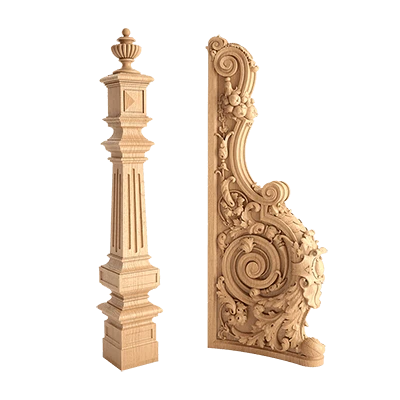
Wider profiles, warm wood tones, possibly combined withmoldings and cornices made of solid oak and beech. Unity of material across all room elements — from baseboard to cornice — is a hallmark of true neoclassicism. In this style, the rail is part of an architectural system, not an isolated accent.
Commercial spaces and offices
Negotiation rooms, office receptions, offices, showrooms, lobbies — in commercial spaces, wooden wall slats solve the task of 'instantly elevating the class' of the interior. Dark oak, large cross-section, directional lighting — and the space begins to speak of status and professionalism. 80×23 mm slats in a dark tint with recessed lights above each one are a classic of representative interiors.
What is better — individual wall slats or ready-made panels
A question asked by most buyers. The answer depends on the specific task — and here it is important to understand the logic of choice, not just look for 'what is cheaper' or 'what is more popular.'
Individual decorative slats for the wall provide maximum freedom:
-
any spacing between elements;
-
non-standard layout (different spacing in different areas of the wall);
-
working with niches, slopes, corner surfaces;
-
individual selection by shade and texture of each slat;
-
the ability to create a unique scheme.
Ready-madeRafter panelsprovide speed and precision:
-
Fixed pitch, guaranteed geometry;
-
Installation is 3–5 times faster than piece-by-piece;
-
Convenient for large, flat surfaces (from 10 m²);
-
Suitable for DIY installation.
Final recommendation: if the surface is standard and flat, and the area is significant — look towards panels. If the wall is non-standard, requires individual layout, or precise shade matching is important — take individual slats.
How to calculate wall slats for a project
Calculation is arithmetic, but mistakes in it are costly. Here's a simple algorithm.
Step 1. Measure the wall. Width and height of the working area. If the slats run the full height — use the room height as a guide. The length of RK-001 is 2400 mm: if your ceiling is higher than 2.4 m, trimming or laying with an (invisible) overlap will be required.
Step 2. Determine the pitch. The gap between the slats. For example: slat 40×5 mm, gap 60 mm → axial pitch 100 mm.
Step 3. Calculate the quantity. Wall width ÷ axial pitch = number of slats. For example: wall 3000 mm, pitch 100 mm → 30 slats.
Step 4. Add a margin. Allow 10–15% of the calculated quantity for technological waste from trimming, corner joints, and splicing.
Step 5. Check the edge battens. The battens at the edges of the wall must be symmetrical relative to the center. If the outermost gap is not a whole number, adjust the spacing by 2–3 mm to achieve symmetry.
Installation of decorative slats on the wall
Installing wooden wall battens is a task that both a professional crew and a thoughtful apartment owner can handle. The main thing is to follow the correct sequence.
Foundation Preparation
The wall must be:
-
dry (moisture content no more than 4% — check with a moisture meter);
-
level (deviation no more than 3 mm over 2 m length);
-
clean and degreased;
-
primed with an adhesion primer.
Skipping priming is a mistake. Without it, the adhesive loses up to 40% of its adhesion to the surface.
Marking
Determine the wall's axis of symmetry — marking proceeds in both directions from it. Use a laser level or a bubble level with a straightedge. Check verticality every 5–6 battens: on a long wall, cumulative deviation creates a noticeable 'slant' toward the edge.
Choosing the spacing
The spacing is set during the design stage, not installation. But it's important to understand: the same spacing on walls of different widths produces different visual results. A narrow 1.2 m wall with 80 mm spacing looks dense, rich. A wide 4 m wall with the same spacing looks neutral. Always create a visualization or at least a simple sketch on paper.
Fastening
Three reliable methods:
Mounting adhesive + finishing headless nails. Adhesive is applied in a zigzag or dots. The nail is countersunk, the hole is filled with color-matched putty. Universal and reliable.
Hidden clips. Metal brackets in the groove of the slat — a surface with no visible fasteners. Essential for expensive solid wood slats when perfect surface cleanliness is important.
Adhesive only. Acceptable for lightweight, thin slats on a good substrate. Mandatory clamping time: 20–40 minutes until the adhesive polymerizes.
Joining
Miter saw or hand saw with a fine blade. 90° angle for straight joints; 45° for external and internal corners. The gap between joining slats — no more than 0.5 mm. To conceal corner joints, use a decorative corner profile made of the same material.
Lighting and decorative inserts
LED strip in grooves — one of the key lighting techniques for slatted walls. Installed before mounting the slats: a channel or groove in the underlayment or directly on the wall. Warm light 2700–3000 K for warm wood tones, neutral 4000 K for gray and cool tints.
Common mistakes when choosing wall slats
These mistakes occur constantly — and almost always they can be prevented at the selection stage.
Too narrow slats on a large accent wall. 15×5 mm slats on a wall 5 m wide and 3 m high look like thin lines lost in the scale of the space. For large walls, more substantial profiles are needed: minimum 40×5 mm, preferably 60–80 mm in width.
Too massive a profile in a small room. 80×23 mm slats in a 10 m² room create a feeling of a 'cage' or visual overload. For small spaces — thin, delicate profiles with wide spacing.
Random color choice. Slats are ordered 'because they look nice in the picture' — without considering the floor, doors, furniture. Result: a mismatched interior. Always compare the sample with real materials in the room.
No layout plan. Installation starts 'from the edge' — and by the end of the wall, it turns out the last gap is 10 mm instead of 60. Always start from the center or calculate the layout in advance.
Ignoring ceiling height. Standard slat length is 2400 mm. If the ceiling is 2.6 m — trimming or joining is needed. If the ceiling is 3 m — long blanks or a composite layout with a well-thought-out hidden joint are needed.
Incorrect spacing between slats. Too narrow spacing: 'fence' effect, overload. Too wide spacing: slats are perceived as random stripes, not as a system. Optimal gap — from the width of the slat to twice its width.
How to choose a decorative slat for a specific task
Final section — a practical navigator. Specific task → specific choice.
For an accent wall in the living room — cross-section 70×7 or 80×23 mm, oak for tinting in a warm or medium shade, gap 100–150 mm, vertical layout. Combination with directional lighting.
For zoning an open plan — cross-section 40×5 or 60×23 mm, wider spacing (150–250 mm), so the partition 'breathes' and doesn't block the space.
For calm background decor (when slats serve as a neutral backdrop, not an accent) — thin profiles, light shade, wide spacing, minimal shadow.
For an expensive visual effect — massive 80×23 mm profiles, dark oiled oak, narrow gap, directed spot lighting from above.
For painting in a specific color — beech, 'under enamel' option, any cross-section for the task.
For wood-tone tinting — oak, 'for tinting' option, transparent or semi-transparent oil finish.
Conclusion
Decorative wall slat is not a trend or a seasonal fashion. It is an architectural tool that works exactly as long as people value natural wood, rhythm, proportion, and light. And that is forever.
Choosing a specific slat involves several decisions: material, cross-section, wood species, finish, installation spacing. Each of these decisions affects the final result. But they do not contradict each other — they form a system. When the system is coordinated, the result is predictably beautiful.
FAQ: popular questions about decorative wall slats
What is a decorative wall slat?
It is a linear wooden profile that is mounted parallel to other slats on a wall at a specified interval. Creates a rhythmic textured surface with gaps — the foundation of slat decor.
How does a wall slat differ from a panel?
Panel — a ready-made module with fixed slats. A single slat offers flexibility in spacing, layout, and adaptation to non-standard surfaces.
What sizes are available for the RK-001 slat?
Length 2400 mm. Cross-sections: 15×5, 24×5, 40×5, 70×7, 90×10, 60×23, and 80×23 mm. Material — beech or oak.
Beech or oak — which is better for a wall slat?
Beech — for painting to the desired color, more uniform surface. Oak — for natural tinting, pronounced texture, maximum durability.
What does 'for enamel' and 'for tinting' mean?
'For enamel' — re-glued without color or texture matching, for opaque painting. 'For tinting' — with lamella matching, for transparent or semi-transparent coatings that preserve the natural grain.
How to calculate the number of slats?
Wall width ÷ axial spacing = number of slats. Add 10–15% for cutting and technological waste.
Can planks be installed by oneself?
Yes, on a level, prepared base. Mounting adhesive + headless finish nails — a reliable and affordable method.
What spacing should I choose between slats?
Optimal spacing is from the width of the slat to twice its width. For small rooms—wider, for large accent walls—can be narrower.
Are wall slats suitable for a small room?
Yes. Thin profiles (15–24 mm), light shade, wide spacing, vertical layout—all this visually expands and elongates a small space.
The main mistake when choosing slats?
Choosing based on photos without considering the actual scale of the wall and room. Always create a layout diagram on paper and request a live sample for comparison in your space.
If you are looking for a manufacturer with real production, own quality control, and a range ofdecorative wall slats made from solid oak and beech, slatted wall panels, moldings and millwork products from solid woodand a full spectrum ofwooden products for interiors— pay attention to STAVROS company.
Over 20 years of manufacturing wooden interior decor. Own production facilities, controlled chamber drying of wood to 8–12% moisture content, geometric tolerance ±0.1 mm. Two quality levels — Standard and Prestige. Shipping from one piece, Contact us to confirm shipping to your destination. Assortment includes over 4000 models, 20,000+ modifications in 39 product groups.
STAVROS is when the quality of the material matches the quality of execution, and production meets your expectations. This is what makes an interior not just beautiful today, but worthy even twenty years later.