












































































Article Contents:
- What are glazing beads and moldings: professional terminology
- Door and furniture glazing: a classic technology that has lived for centuries
- Panel and decorative insert framing: graphics on walls
- Furniture facade decoration: how molding turns a panel into a work of art
- Picture frame and molding: where is the boundary and why it matters
- Mounting moldings and glazing beads: technical nuances for flawless results
- Finish nails
- Micro screws
- Adhesive
- Hidden fastening
- Corner Joints
- Wood species for moldings and glazing beads: from pine to exotic
- Pine: budget-friendly versatility
- Beech: Density and Uniformity
- Oak: the classic of durability
- Ash: Expressive Texture
- Linden: ease of carving
- Painting and finishing: how color changes perception
- Enamel painting: classic opacity
- Toning: changing color while preserving texture
- Transparent finish: showcasing the wood
- Patination: effect of time
- Detailing as a philosophy: why small things decide everything
- Cost and calculation: what affects the budget
- Frequently asked questions: practitioner's answers
- Can MDF moldings be used instead of wood?
- Which molding profile to choose for modern classic?
- Do moldings need to be primed before painting?
- How to coordinate furniture moldings and wall panel moldings?
- Where to buy quality moldings and glazing beads?
- Can moldings be made independently?
- What can replace glazing beads for glazing if they are out of stock?
- How to calculate the number of moldings for a facade with multiple frames?
- Are moldings needed for furniture in a modern style?
- What thickness of glazing bead is needed for 4 mm glass?
- Can glazing bars be painted after installation?
- How to store glazing bars before use?
- Creative application ideas: beyond the classics
- Glazing bars as shelves
- Glazing bars as drawer dividers
- Glazing bars as curtain guides
- Glazing bars as countertop decor
- Glazing bars as frames for mirrors and pictures
- Mistakes when working with glazing bars: what to avoid
- Inconsistent profiles
- Incorrect cross-section calculation
- Poor surface preparation before fastening
- Driving nails without pre-drilling
- Painting without sanding between coats
- Cutting corners on material quality
- Conclusion: small details create a big impression of STAVROS

Great architectural masterpieces differ from mediocre buildings in one detail — attention to the little things. Millimeter gaps between panels, barely noticeable transitions between planes, the thinnest framing of glazed sashes — it is these seemingly inconspicuous elements that create a sense of completeness, professionalism, and quality. And here the heroes of our story take the stage —wooden trimglazing bead and glazing bar. Miniature strips with a cross-section from eight to thirty millimeters, which hold glass in buffet doors, frame dresser panels, turn a flat wall into an architectural panel, and mask joints where different materials meet.
Can one do without them? Formally, yes — glass can be glued with silicone, panel joints can be filled with putty, panels can be simplified to solid boards. But the result will be different. Without glazing beads and glazing bars, the interior loses elegance, furniture loses detailing, and classic style loses persuasiveness. Because classic style is not just form and ornament, but also technology, where every element is executed as it was done centuries ago, when there was no silicone or acrylic, when glass was held by wood, and joints were covered with wooden overlays.
Wooden moldingis not just a decorative strip; it is a philosophy of a professional approach, where technical necessity turns into an aesthetic virtue, where concealing flaws becomes a demonstration of skill, where a miniature element with a cross-section of twelve by twelve millimeters creates architectural graphics on a furniture facade with an area of two square meters.
Why are these thin strips so important? Because a classic interior is built on a system of proportions, divisions, and rhythm. Large planes — walls, cabinet facades, door leaves — cannot remain monolithic; they require division into parts, creating a hierarchy of elements. And this division is carried out by glazing bars and glazing beads, which turn a large surface into a composition of small ones, organized according to the laws of classical architecture — symmetry, proportion, repetition, rhythm.


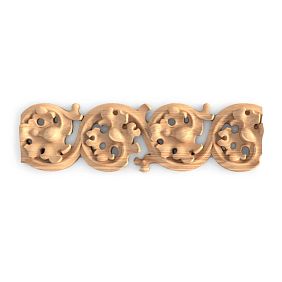

What are glazing bead and glazing bar: terminology of professionals
Let's start with definitions to avoid confusing concepts.wooden trimis a thin strip with a small cross-section (usually from 8×8 to 20×15 millimeters) with a simple profile (rectangle, rounded rectangle, triangle), whose main purpose is to secure glass in window frames, door leaves, and furniture glazing. The glazing bead presses the glass against the frame, covering the technological gap between the glass and the frame rabbet, ensuring the tightness and aesthetics of the connection.
Glazing bar is a broader concept.Wooden moldingincludes glazing beads as a subtype, but also covers wider strips with a cross-section up to 30×40 millimeters, used not only for glazing but also for decorating furniture facades, framing panels on walls, masking joints of dissimilar materials, and creating paneled surfaces. A glazing bar can have a simple profile (like a glazing bead) or a shaped one with milling (bevels, grooves, coves, beads).
Sometimes the terms are used interchangeably. In carpentry jargon, 'glazing bead' often means any thin strip regardless of purpose. In a professional environment, the distinction remains: glazing bead — for glazing, glazing bar — for decoration. We will use both terms, clarifying the context.
Another synonym is cover strip. This refers to glazing bars used to cover gaps (nashchel is an Old Russian word meaning 'gap'). Cover strips conceal joints of cladding panels, gaps between structural elements, and technological seams.
Trimming Itemsis a general name for all elements sold by linear meters: baseboards, casings, moldings, cornices, glazing bars, glazing beads, picture rails. Glazing beads and glazing bars are the most miniature representatives of this family, but no less important.




Glazing doors and furniture: a classic technology that has lived for centuries
How was glass inserted into doors a century ago, when there were no silicone sealants and acrylic adhesives? The technology was called 'glazing on glazing beads' and worked flawlessly, ensuring tightness, reliability, and aesthetics. The principle is simple: a rabbet — a step forming a recess around the perimeter of the opening — is milled into the door frame. The glass is inserted into this recess from the outside and pressed from the inside bywooden glazing bead, which is attached to the frame with thin nails or screws. The glass is clamped between the frame's rabbet and the glazing bead, held mechanically, and does not require adhesive.
The advantages of the technology are obvious. The glass is easily replaced if damaged—the glazing beads are removed, the broken glass is taken out, new glass is inserted, and the glazing beads are put back. The procedure takes fifteen minutes and requires no special skills. With silicone adhesive mounting, replacing the glass becomes a several-hour operation—cutting away the old silicone, cleaning the frame, applying new silicone, and waiting for it to cure.
Airtightness is also ensured. A thin rubber or silicone gasket is placed between the glass and the frame; the glazing bead presses it, creating an elastic seal. No drafts, no glass rattling when the door slams, and no moisture penetration into the space between panes (if double glazing is used).
The aesthetics are impeccable.wooden trim of the same color and wood species as the frame, visually blending with it to form a neat framing for the glass. Nails or screws are countersunk, filled, and painted—becoming invisible. The alternative—glass glued with a visible silicone bead around the perimeter—looks crude, cheap, and technical.
Where is glazing with glazing beads used today? In classic furniture—sideboards, display cabinets, china cabinets, glass-fronted wardrobes. The traditional technology persists because it is functional, aesthetic, and repairable. Modern furniture often uses frameless glass—adhesively mounted on hinges or completely frameless with magnets. But classic design requires a frame, and a frame requires glazing beads.
In interior doors of classic design—panel doors with glass inserts, stained-glass doors, doors with decorative glazing.Wooden molding holds the glass, creates a frame, and harmonizes with the profile of the door frame and panels.
In modern wooden European-style windows, glazing beads are also used, but with a modification—rubber seals are integrated into the glazing bead profile, ensuring airtightness without additional gaskets.
The cross-section of the glazing bead for glazing is chosen based on the depth of the frame's rabbet and the glass thickness. Formula: glazing bead cross-section ≥ (rabbet depth - glass thickness - gasket thickness) + 5 millimeters for glass overlap. Example: rabbet depth 15 millimeters, glass thickness 4 millimeters, gasket 1 millimeter. Difference 10 millimeters, the glazing bead should overlap the glass by 5 millimeters on each side, resulting in a cross-section of 10×10 or 12×12 millimeters.
The glazing bead profile can be rectangular (simplest, budget), rounded (one or both edges rounded with a 2-3 millimeter radius, looks softer, more delicate), or shaped (with a chamfer, groove, molding—for high-end furniture, creating detailing).
Attaching glazing beads—with thin headless nails 20-25 millimeters long (finishing nails) or micro-screws 1.5-2 millimeters in diameter. Fasteners are placed at 150-200 millimeter intervals, countersunk 1-2 millimeters, and filled with wax or wood filler matching the wood color.
Our factory also produces:


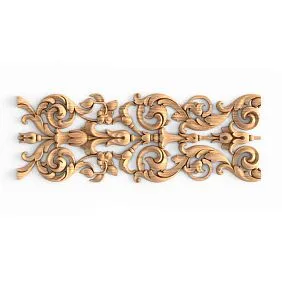


Framing panels and decorative inserts: graphics on walls
A wall of twenty square meters, painted a uniform color—is monotonous, boring, lacking architectural expression. A classic technique to enliven it is creating decorative panels. The wall is dividedwooden veneer into rectangular or square sections, the inner space of which is filled with a contrasting material—wallpaper with a pattern, fabric, veneer, decorative plaster. The molding forms frames that organize the wall plane, creating rhythm, proportions, and architectural graphics.
The working principle is simple. The wall is painted a base color (e.g., light gray). Panel positions are marked—typically three to five rectangular sections on the wall, arranged symmetrically along the room's vertical axis. Inside the marked sections, wallpaper is applied (e.g., with a classic damask pattern on a dark gray background). Around the perimeter of each section, moldingWooden molding with a cross-section of 20×10 or 30×15 millimeters is mounted, painted a contrasting color (e.g., white or dark brown). The molding covers the wallpaper edges, creates a clear frame, and turns the applied piece of wallpaper into a framed panel.
The result—the wall transforms from a smooth painted surface into an architectural element with divisions, relief, and composition. The moldings create vertical and horizontal lines that interact with the room's architecture—doorways, windows, ceiling cornices. The symmetry of the panels aligns with the symmetry of furniture arrangement. Panel proportions follow classical canons—golden ratio, height-to-width ratio of 1:1.6 or 2:3.
The panel infill material is chosen according to the interior style. Classic style—wallpaper with damask patterns, floral ornaments, heraldic motifs. Neoclassical—wallpaper with geometric patterns, stripes, solid textures. Provence—wallpaper with small floral prints, chintz motifs. Loft—brickwork (imitated with wallpaper or tile), concrete, metal. Art Deco—wallpaper with geometric ornaments, gold or silver accents.
Fabric infill—an expensive, luxurious solution. Fabric (silk, velvet, jacquard) is stretched over a rigid base (plywood, MDF 6-10 millimeters thick) using upholstery methods; the panel is mounted on the wall, and the perimeter is framed with molding. The tactility of the fabric, its soft sheen, and three-dimensional texture create a luxurious atmosphere suitable for studies, bedrooms, and dining rooms in classic interiors.
Veneer of precious woods—walnut, mahogany, rosewood—glued onto MDF panels and framed with molding creates the effect of wooden paneling, traditional for English studies, libraries, and billiard rooms. Varnished veneer creates depth, shine, and reveals the wood grain.
Decorative plaster with relief inside a panel framed by smooth molding—a contrast of textures, a modern technique that works in neoclassical and eclectic interiors.
The size of panel moldings is chosen based on the room's scale. For small rooms (15-20 square meters), molding with a cross-section of 15×8 or 20×10 millimeters—delicate, not overwhelming. For large spaces (30-50 square meters), molding 30×15 or 40×20 millimeters—more noticeable, creating architectural scale.
The molding profile is also important. Flat rectangular molding—minimalist, modern. Molding with a chamfer (beveled edge at a 45-degree angle)—classic, creating chiaroscuro play. Molding with a groove (longitudinal channel along the center)—more decorative, suitable for classic interiors.
Panel corners—a critical point. Moldings are joined at a 45-degree angle (cut with a miter saw), forming a neat connection without end cuts. The joint is filled with a thin layer of filler, sanded, painted—becoming invisible.
Get Consultation
Decorating furniture fronts: how molding turns a slab into a masterpiece
A wardrobe front made from a solid MDF slab measuring 60×200 centimeters, painted with enamel—functional, smooth, but impersonal, flat, lacking detail. Classic furniture requires dividing the front, creating a paneled structure where a large plane is divided into a frame and a central field. And hereFurniture layout works wonders.
The technology is simple. Moldings are glued onto a flat MDF front, forming a rectangular frame around the perimeter at a distance of 50-80 millimeters from the edge. The central field remains smooth or is additionally decorated. The front is painted with a single coat of enamel—the moldings and base form a visual unity, but the relief of the molding creates volume, chiaroscuro, and graphics. The flat slab has turned into a paneled door.
A more complex option is a double frame. The first layout is placed along the perimeter of the facade at a distance of 50 millimeters from the edge, the second at a distance of 100 millimeters. An intermediate field 50 millimeters wide is formed between them. The central field is even more compressed. Three levels of relief—the base, the intermediate field, and the central field—create complex graphics rich in chiaroscuro.
The geometry of layouts varies. Rectangular frames are classic, universal, and strict. Arched upper parts of frames evoke Baroque, Romanticism, and softness. Complex polygonal frames (octagons, combinations of rectangles and arches) suggest Art Deco, eclecticism, and individuality.
Furniture layoutIt can be flat (with a rectangular cross-section of 15×8 millimeters) or shaped (with milling—bevels, beads, grooves). Shaped layouts create a richer relief, suitable for high-level classical styles like Baroque, Empire, and Classicism. Flat layouts are for Neoclassicism, modern classicism, and minimalist interpretations of classicism.
Combining layouts of different cross-sections on one facade creates a hierarchy. A wide layout of 30×15 millimeters forms the outer frame, a narrow one of 15×8 millimeters forms the inner frame. Visual complexity increases, and the facade gains an architectural quality.
Contrasting coloring of layouts and the base enhances the graphics. White layouts on a gray facade create clear contrast and modern elegance. Gilded layouts on a white facade evoke luxury and classical formality. Patinated layouts (dark patina in the profile recesses) on a light facade suggest aging, vintage, and Provence style.
The central field of the facade, framed by layouts, can be additionally decorated. Milling—carved ornamentation done by CNC milling on MDF. Overlay decor—carved wooden or polyurethane elements (rosettes, cartouches, scrolls) glued onto the central field. Textured insert—rattan, leather, fabric, mirror—inserted into the central field, framed by layouts.
Where is furniture layout used? Kitchen fronts of classic kitchens—the most widespread application. Smooth MDF fronts under enamel with overlay layouts imitate traditional paneled constructions but are produced faster and cheaper. Sliding wardrobe doors with layouts—classic design instead of plain mirrors or photo prints. Dressers, sideboards, buffets, consoles of classic design—layouts create detailing inherent to classic furniture.
Interior doors with overlay layouts—a budget alternative to solid paneled doors. A smooth MDF door leaf is decorated with layouts forming panels, painted—visually resembling a classic paneled door.
Wall panels with layouts—boiserie, a traditional French technology of wall cladding with wooden panels featuring divisions.Wooden moldingIt divides the panel into sections, creates graphics, and turns the wall into an architectural element.
Molding and Layout: Where is the boundary and why is it important
A common question arises: how doeswooden molding by the meterdiffer from a layout? Both are sold by the linear meter, both are wooden, both are used for framing. The difference lies in width, profile complexity, and purpose.
Layout—a narrow strip with a cross-section of 8-30 millimeters, profile simple or moderately complex (bevel, groove, bead), purpose—glazing, facade decoration, panel framing, seam concealment. Molding—a wide strip with a cross-section of 30-100 millimeters, profile complex multi-stage (combination of protrusions, recesses, roundings, carved elements), purpose—framing paintings, mirrors, photographs, creating decorative frames.
wooden molding by the meteris purchased for making frames. A craftsman measures the painting or mirror, calculates the perimeter plus an allowance for miter cuts (10-15 percent), orders the required number of meters of molding. The molding is cut into four strips (two vertical, two horizontal), the ends are mitered at 45 degrees with a miter saw, the strips are joined into a frame (glued and fastened with staples or dowels). Glass (for a painting under glass), the painting or mirror itself, a plywood backer, and hanging hardware are mounted on the back of the frame.
Layouts are rarely used for making frames—they are too narrow and insufficiently decorative. But possible for minimalist frames where a thin border without a decorative accent is needed.
Molding on walls and furniture is used as a powerful decorative element. Wide molding 60-80 millimeters wide, overlaid on a wall, forms horizontal or vertical divisions, creating an architectural accent. Molding frames door and window openings—instead of standard 70-millimeter architraves, molding 100-120 millimeters wide with a carved profile is used, creating formality and luxury.
On furniture, molding is used to create cornices—upper decorative elements of cabinets, buffets, dressers. Molding is attached along the upper perimeter of the furniture, protruding forward by 30-50 millimeters, forming a visor, an architectural finish. Classic cabinets with a molding cornice look monumental, architectural, like miniature buildings.
Combining layouts and molding on one object creates a decorative hierarchy. A wall panel is framed by a thin layout with a cross-section of 20×10 millimeters, and a thin molding with a cross-section of 40×30 millimeters is overlaid on top of the layout—double framing, complex relief, rich detailing.
Attaching Layouts and Glazing Beads: Technical Nuances for Impeccable Results
How to attachwooden trimand layout so that the fastening is reliable but invisible? There are several methods, each with its own advantages.
Finish nails
Thin nails 20-30 millimeters long without heads or with a minimal head diameter of 1-2 millimeters. The nail is driven through the layout into the base (frame, facade, wall), countersunk 1-2 millimeters with a nail set (a metal rod with a blunt end placed against the nail head and struck with a hammer to sink the nail). The hole from the head is filled with wood filler or a wax crayon matching the wood color, sanded—becomes invisible after painting.
Advantages: simplicity, speed, reliability. Disadvantages: risk of splitting a thin layout when driving (requires pre-drilling a 1-millimeter diameter hole), visible fastener marks (though disguised).
Micro-screws
Self-tapping screws 2-3 millimeters in diameter, 20-35 millimeters long. A 1.5-millimeter diameter hole is pre-drilled, the screw is driven with a screwdriver, countersunk 2 millimeters, the hole is filled. Advantages: more reliable than nails (thread holds better), less risk of splitting (pre-drilling is mandatory). Disadvantages: slower than nails, requires a screwdriver, more noticeable holes (require careful filling).
Adhesive
Mounting PVA glue for wood or polyurethane mounting adhesive. Glue is applied in a thin strip to the back of the layout, the layout is pressed to the base, fixed with painter's tape or clamps during setting time (30-60 minutes). Advantages: no visible fasteners, smooth surface without nail marks. Disadvantages: lower reliability (glue holds worse than mechanical fasteners under load, vibration), impossibility of removal (glued layout breaks when removed), requires setting time.
Combined method—glue plus nails. Glue provides adhesion along the entire length, nails provide immediate fixation while the glue sets. The number of nails is minimal (one per 300-400 millimeters), they are only needed for fixation, the main load is borne by the glue. The method is optimal for furniture layouts.
Hidden fasteners
For high-end furniture, concealed systems are used. The molding is milled from the reverse side — a groove is created into which a metal plate or plastic clip is inserted, attaching to the base. The molding snaps onto the clips, holds without visible fasteners, and can be disassembled when needed. The method is expensive, requires precise milling, and is used in serial high-class furniture.
Jointing corners
The corners of moldings are the most noticeable area requiring precision. Joining at a 45-degree angle (miter joint) is the classic method. The ends of the moldings are cut at 45 degrees with a miter saw (necessary for angle accuracy and clean cut), joined to form a right angle without visible end cuts. The joint is glued and, if necessary, reinforced with a nail or dowel from the inside.
Cutting accuracy is critical. A deviation of 0.5 degrees creates a noticeable gap in the joint. A miter saw with a fixed 45-degree angle is essential. Hand-cutting at 45 degrees results in inaccuracy and an amateurish outcome.
Butt joint (straight connection) is a simplified method. One molding is cut at 90 degrees and butts against a wall or adjacent molding. The end is visible but less noticeable when painted the same color. The method is used in budget projects where speed is more important than aesthetics.
Wood species for moldings and battens: from pine to exotic
What arewooden trimand molding made from? The choice of species depends on budget, operating conditions, and finish.
Pine: budget versatility
Pine is the most affordable species, soft, lightweight, easy to work with, glues and paints well.Trimming ItemsPine is the budget standard for painted interiors and furniture. Under opaque enamel, pine is visually indistinguishable from oak but costs 3-4 times less.
Disadvantages of pine: softness (scratches easily, dents from impacts), resinousness (resin seepage at knots when heated, requiring deresination before painting), texture inconsistency (alternating dense latewood and porous earlywood, creating striping with transparent finishes).
Application: moldings and battens for painting in furniture, doors, wall panels for budget and mid-range segments.
Beech: density and uniformity
Beech is denser than pine, harder, more uniform in texture (fine-pored structure without sharp transitions). Color is light pink, neutral. Beech stains easily, accepting any color evenly.wooden trimBeech is the mid-range segment, a compromise between price and quality.
Disadvantage of beech: hygroscopicity (absorbs moisture, deforms more than oak or ash with humidity changes). Not suitable for damp areas without special treatment.
Application: moldings for mid-range and premium furniture under paint or stain, battens for doors, furniture showcases.
Oak: classic durability
Oak is a hard, dense, durable species with pronounced texture, beautiful color ranging from light golden to brown (depending on region). Oak is moisture-resistant, does not deform, does not rot.Wooden moldingOak is the premium segment, used in expensive furniture, elite interiors.
Advantages: durability (lasts decades without losing properties), beauty of texture (revealed under oil or varnish), restorability (scratches can be sanded, finish renewed).
Disadvantage: price (4-6 times more expensive than pine).
Application: moldings and battens for premium solid oak furniture, classic interiors with wooden elements under transparent finishes (oil, varnish).
Ash: expressive texture
Ash is similar to oak in hardness but has more contrasting, wavy, dynamic texture. Color is lighter than oak, with grayish tones. Ash suits modern classic interiors where expressive texture is needed without the heaviness of dark oak.
Linden: ease of carving
Linden is a soft, uniform species, ideal for carving. Decorative moldings with carved elements are often made from linden — it cuts easily, doesn't chip, holds fine details. Color is white with a creamy tint. Linden suits painted decor where carving is important, not wood texture.
Painting and finishing: how color changes perception
wooden trimand molding are typically sold unfinished — blanks for final finishing. The final coating determines appearance, protection, durability.
Enamel painting: classic opacity
White enamel is the most popular coating for classic furniture and interiors. White moldings on white fronts create relief decoration visible through light and shadow, but monochromatic, calm, elegant. Enamel hides the wood species, making pine and oak visually equal.
Technology: primer (fills pores, evens surface), sanding, first coat of enamel, sanding, second coat of enamel. Result — smooth opaque surface without visible wood grain.
Colored enamel — gray, beige, blue, green — creates a color accent. Contrasting color layouts on facades (e.g., gray layouts on a white facade) create graphics and modernity.
Toning: changing the color while preserving the texture.
Stains, colored oils, and tinting varnishes change the color of the wood but leave the texture visible. Pine toned to walnut looks warmer, more expensive, and more noble. Oak toned to gray acquires a Scandinavian lightness.
Toning allows the use of affordable wood species (pine, beech) to achieve the color of expensive ones (walnut, wenge, mahogany).
Clear finish: showcasing the wood.
Oil or varnish without tinting preserve the natural color and texture of the wood. Oak layouts under oil — a warm golden color, pronounced pores, tactile naturalness. Suitable for interiors where the naturalness of materials is valued.
Oil creates a matte surface, pleasant to the touch, emphasizing the wood. Requires renewal every 2-3 years. Varnish creates a glossy or semi-matte surface, more protected, not requiring frequent renewal.
Patina: effect of time
Patina — dark paint applied to the recesses of the layout profile and wiped off the raised parts. The layout acquires an aged appearance, as if used for decades. Dark patina in the grooves, light base — contrast emphasizing the relief.
Patination suits styles like Provence, vintage, shabby chic, where the effect of time is part of the aesthetic.
Detailing as a philosophy: why the little things decide everything.
Why does a classic interior look more expensive, richer, and more professional than modern minimalism with a comparable budget? Because classicism is detailing, small elements that create complexity, richness of visual experience, a sense of craftsmanship and skill.
Furniture layoutFifteen millimeters wide, an overlay on a facade with an area of one square meter occupies less than one percent of the area. But this one percent changes the perception of the entire facade. A smooth panel turns into a composition with a frame and a central field, graphics, and architectural quality. The eye catches the relief of the layout, reads the structure, perceives complexity.
Minimalism rejects such details — smooth surfaces, lack of divisions, purity of form. This is a philosophically justified choice, an aesthetic where 'less is more.' But for interiors striving for classical luxury, a sense of lived-in quality, history, and artisanal quality — detailing is essential.
Wooden moldingLayouts, glazing beads, moldings, cornices — this is the vocabulary of the classical language of architecture. Each element has a name, function, and history of application. A master who knows this vocabulary creates interiors that speak the language of tradition, connected to the history of architecture, convincing to those who understand this language.
Cost and calculation: what affects the budget.
How much do layouts and glazing beads cost, how to calculate the required amount? The price depends on the wood species, cross-section, and profile.
Pine, simple rectangular profile, cross-section 10×10 millimeters — 50-120 rubles per linear meter. Cross-section 20×15 millimeters — 100-200 rubles. Cross-section 30×20 millimeters — 150-300 rubles.
Beech, simple profile, cross-section 15×10 millimeters — 200-350 rubles. Cross-section 25×15 millimeters — 300-500 rubles.
Oak, simple profile, cross-section 15×10 millimeters — 400-700 rubles. Cross-section 25×15 millimeters — 600-1000 rubles.
Shaped profile (chamfer, groove, bead) adds 30-50% to the price. Carved profile (hand or CNC carving) — 100-200% to the price.
Calculation of linear footage for glazing: perimeter of one glass insert multiplied by the number of inserts. Example: a buffet door with a glass insert measuring 40×120 centimeters. Perimeter (40+120)×2 = 320 centimeters = 3.2 meters. The buffet has two doors = 6.4 meters. Plus 10% for reserve (trimmings, possible defects) = 7 meters.
Calculation for furniture facades: perimeter of the frame on each facade. Facade 60×200 centimeters, frame indented 5 centimeters from the edge, frame perimeter (50+190)×2 = 480 centimeters = 4.8 meters. Kitchen with 15 facades = 72 meters. Plus 15% for reserve (corners cut at 45 degrees, material loss) = 83 meters.
Calculation for wall panels: perimeter of each panel multiplied by the quantity. Panel measuring 80×150 centimeters, perimeter (80+150)×2 = 460 centimeters = 4.6 meters. Wall with five panels = 23 meters. Plus 10% = 25 meters.
For a medium-sized room (living room 20 square meters with decorative panels on two walls, classic kitchen 12 square meters with 12 facades, two doors with glazing) the total linear footage of layouts is 80-120 meters. When using pine for painting, material cost is 8000-15000 rubles. When using oak — 35000-70000 rubles.
Frequently asked questions: practitioner's answers.
Can MDF layouts be used instead of wood?
Yes, MDF layouts exist, costing 30-50% less than wooden ones. MDF is homogeneous, does not warp, and paints well. But MDF is less durable — chips upon impact, cannot be restored. Wood, if damaged, can be sanded, filled, and the finish renewed. For budget furniture for painting, MDF layouts are acceptable. For expensive furniture, premium-class interiors — wood is mandatory.
Which layout profile to choose for modern classic?
Modern classic (neoclassical) tends towards simplified profiles, laconic detailing. Flat rectangular layout or layout with one chamfer — optimal. Complex carved profiles, characteristic of Baroque, Classicism, are excessive here. Color — monochrome (white, gray, beige) or natural wood under oil in light tones (bleached oak, light ash).
Do layouts need to be primed before painting?
Absolutely. Primer fills the pores of wood, creates a uniform base for enamel, increases adhesion, and reduces paint consumption. Without primer, enamel applies unevenly, consumption increases by 1.5-2 times, and the durability of the coating decreases. Process: primer, drying (4-6 hours), sanding with fine sandpaper (grit 220-320), first coat of enamel, drying, light sanding, second coat of enamel.
How to coordinate the layouts of furniture and wall panels?
Perfect — identical layouts (profile, cross-section, color) for furniture and walls. Visual unity of the interior is maximized. Compromise — same profile and color, but different cross-section (wider layout on walls, narrower on furniture — corresponds to the scale of objects). Minimal coordination — same color with different profiles.
Where to buy quality layouts and glazing beads?
From specialized manufacturersmolding products, carpentry workshops, furniture factories. Construction hypermarkets offer a limited range — usually pine, standard cross-sections, simple profiles. For non-standard cross-sections, expensive wood species, shaped profiles — contact manufacturers directly.
Is it possible to make layouts yourself?
Simple rectangular layouts — yes, on a circular saw or router table, a board of the required wood species is ripped into strips of the needed cross-section, the strips are sanded. Shaped layouts require a router with profile cutters — more difficult, but possible with the right equipment and skills. Carved layouts — only on a CNC machine or by hand carving (very labor-intensive).
What can replace glazing beads for glazing if they are out of stock?
Temporary replacement — silicone sealant, but this is a compromise. Sealant holds the glass, but looks rough, replacing glass if damaged is laborious (silicone needs to be cut off). Alternative — thin casing or baseboard, sawn into strips of the required width. If you have a router — you can make glazing beads from any suitable wood board.
But it's better not to replace, but to order.wooden trim — an inexpensive element, mass-produced, available for delivery in 2-3 days. Saving on glazing beads results in a loss of glazing quality.
How to calculate the amount of layouts for a facade with multiple frames?
Count each frame separately. Facade 60×200 centimeters, outer frame with a 5-centimeter indentation from the edge — perimeter (50+190)×2 = 480 centimeters. Inner frame with a 10-centimeter indentation — perimeter (40+180)×2 = 440 centimeters. Total per facade 920 centimeters = 9.2 meters. Multiply by the number of facades, add 15% for offcuts when mitering corners.
Are layouts needed for furniture in a modern style?
Modern style (high-tech, minimalism, Scandinavian) does without layouts — smooth facades, no divisions, clean lines. But modern classic (neoclassical) uses layouts in a simplified form — thin, with a laconic profile, creating delicate graphics without baroque opulence. The decision depends on the specific interior style.
What thickness of glazing bead is needed for 4 mm glass?
Depends on the depth of the rabbet in the frame. Formula: the thickness of the glazing bead must provide an overlap of the glass by at least 3-5 millimeters on each side for secure fixation. If the rabbet depth is 15 millimeters, glass 4 millimeters, gasket 1 millimeter, 10 millimeters remain. The glazing bead should overlap the glass by 5 millimeters, resulting in a minimum glazing bead thickness of 10 millimeters. Standard cross-sections 10×10 or 12×12 millimeters are suitable.
Is it possible to paint layouts after installation?
Yes, but it's more difficult than before installation. When painting after installation, there's a risk of staining the base (facade, wall), requiring care and painter's tape for protection. The professional approach is to paint layouts before installation, installing them ready-made. Final touch-up of joints and fastener locations is done after installation with a fine brush.
How to store layouts before use?
In a dry room with humidity 40-60%, temperature 18-24 degrees, horizontally or vertically with support along the entire length (so they don't sag). Avoid sudden humidity changes — wood deforms. Layouts 2-3 meters long should be stored on shelves or suspended, do not lean against a wall at an angle — they will bend.
Creative application ideas: beyond classic
Traditional usewooden strip and layouts — glazing and framing. But creative designers find non-standard applications.
Layouts as shelves
Thick layouts with a 40×40 millimeter cross-section made of oak, fixed horizontally on the wall as cantilevers (attached internally to hidden brackets), form narrow shelves for books placed spine-forward, for decor, for framed photos. Minimalist graphics — horizontal lines on the wall, functional and decorative.
Layouts as drawer dividers
Inside deep drawers of dressers, layouts create sections for storage organization. Vertical layouts divide the drawer into compartments for linen, socks, accessories. Neat, functional, aesthetic.
Layouts as curtain guides
Horizontal wall-mounted layout above a window with hooks for curtain rings — a minimalist curtain rod for lightweight curtains. Suitable for Scandinavian, eco-interiors where metal rods are too cold, while wooden layout feels organic.
Layouts as countertop decor
Thin layouts, adhered to a table or dresser top in a geometric pattern (grid, herringbone, diagonal stripes), create textured decor. The countertop is painted together with the layouts — monochrome, yet volumetric. Or the countertop and layouts are contrasting — a graphic composition.
Layouts as frames for mirrors and paintings
Wide layouts with a cross-section of 40×20 millimeters, joined at a 45-degree angle, form a simple minimalist frame for a mirror or painting. Cheaper than ready-made molding, more personalized, with the ability to select the wood species and color precisely to match the interior.
Mistakes when working with layouts: what to avoid
Inconsistent profiles
Using layouts of different profiles on a single object (one layout with a chamfer, another with a groove on the same facade) creates chaos and unprofessionalism. Stick to a single profile within one object.
Incorrect cross-section calculation
A layout that is too thin on a large facade gets lost and fails to create the desired relief. One that is too thick on a small facade overloads it, making the facade heavy. Proportion is critical: for a facade 60-80 centimeters high, a layout of 15-20 millimeters; for a facade 120-200 centimeters high, a layout of 25-30 millimeters.
Poor surface preparation before fastening
A layout glued to a dusty or greasy surface will peel off. The base must be clean, degreased, and dry. Wipe with alcohol or solvent and let it dry.
Driving nails without pre-drilling
A thin layout with a cross-section of 10-15 millimeters will split when a nail is driven without pre-drilling. Always drill a hole with a 1-1.5 millimeter diameter drill bit before driving the nail.
Painting without sanding between coats
The first coat of enamel raises the wood grain, making the surface rough. Without sanding with fine sandpaper (grit 240-320), the second coat will adhere to the roughness, and the final surface will not be smooth. Always sand between coats.
Saving on material quality
Cheap layouts made from low-grade wood with knots, cracks, and imprecise geometry (warping, uneven cross-section) will ruin the result. QualityWooden moldingmade from select wood costs 30-50% more but delivers flawless results. Saving on material results in a loss of work quality.
Conclusion: small details create a big impression from STAVROS
wooden trimand layouts are not consumables, but tools for creating a quality classic interior. These are elements through which the craftsman's professionalism, attention to detail, and respect for woodworking traditions are manifested. These are fine lines that organize large planes, transform the simple into the complex, the functional into the aesthetic, the technical into the architectural.
Without layouts, a furniture facade is just a painted panel. With layouts — a composition with a frame and a central field, graphics, architectural quality. Without glazing beads, glazing is just silicone and glass, crude and temporary. With glazing beads — traditional technology, aesthetic, repairable, durable. Without layouts, a wall panel is just a piece of glued wallpaper. With a layout — a framed architectural panel, part of a classic wall articulation system.
STAVROS is a leading Russian manufacturer ofmolding productsmade from solid wood — offers a full range of glazing beads, layouts, and moldings for professional craftsmen, furniture factories, and private clients implementing classic interiors.
STAVROS glazing bead assortment — over 40 profiles, cross-sections from 8×8 to 25×20 millimeters, species: pine, beech, oak, ash, linden. Simple rectangular profiles for budget projects under paint. Shaped profiles with chamfers, grooves, beads for premium furniture. Carved profiles with ornaments for exclusive projects. Standard length 2000-3000 millimeters, cutting to required lengths is possible.
STAVROS layout assortment — over 60 profiles, cross-sections from 10×8 to 40×30 millimeters, same species as glazing beads.Furniture layoutfor facades, wall layout for panels, universal layout for framing, masking joints. Each profile is designed considering classical proportions, ergonomics, and production feasibility.
wooden molding by the meterSTAVROS — over 100 profiles with widths from 30 to 120 millimeters for making picture, mirror, and photo frames, for decorating walls and furniture. From simple rounded profiles to complex multi-step ones with carving. Species: oak, beech, pine, linden, ash. Finishes: uncoated for custom finishing, primed for painting, tinted in catalog colors, gilded, patinated.
Custom layout production — STAVROS manufactures layouts with non-standard cross-sections and profiles according to customer drawings. Need a layout with a 22×14 millimeter cross-section and a unique profile for serial furniture? STAVROS develops the profile, manufactures a trial batch for approval, and launches production. Minimum order from 100 linear meters, lead time 2-3 weeks.
Wood quality — kiln-dried to 8-10% moisture content, sorted by grade (extra, A, B), rejecting knots, cracks, and uneven coloring. Layout geometry is controlled — cross-section deviations no more than 0.3 millimeters, warping no more than 1 millimeter per meter of length. Professional quality ensuring precise joining and absence of deformation after installation.
Factory finishes — STAVROS offers layouts with ready-made finishes, saving time on finishing. Primed layouts — coated with white acrylic primer, ready for enamel painting (only two coats of enamel remain to be applied). Painted layouts — coated with enamel in white, gray, beige colors, ready for installation. Tinted layouts — stain plus varnish, ready-to-install elements. Patinated layouts — white enamel with dark patina in the profile recesses, aged effect, ready for installation.
Protective packaging — layouts are packed in shrink wrap in bundles of 10-20 pieces, additionally in cardboard to protect edges during transportation. Delivery across Russia via transport companies, Moscow and St. Petersburg — via own logistics with unloading to the customer's warehouse.
STAVROS specialist consultations help choose the right layouts. A designer evaluates the project, recommends the layout profile, cross-section, wood species, and finish. Calculation of linear footage considering waste for cuts and corners. Recommendations on fastening, painting, and corner joining technology.
Layout samples — STAVROS sends samples (layout sections 20-30 cm long) free of charge for profile evaluation, processing quality, and color assessment. Order samples before your main order to ensure they meet your expectations.
Related products — PVA wood glue, finishing nails, micro-screws, wood putty, wax pencils for fastener concealment — everything needed for working with layouts is sold by STAVROS as a kit with the layouts.
Quality guarantee — 2 years against deformation and cracking when storage and usage conditions are maintained (humidity 40-60%, temperature 18-25°C). Return and exchange within 14 days if the product's appearance is preserved.
Start creating a detailed classic interior today. Visit the STAVROS website, explore the catalogwooden baseboards, —, of moldings by the meter. Select the profile, cross-section, wood species, and finish. Order samples to verify quality. Calculate the required meterage, place your order. Receive layouts in 3-7 days and begin your work.
Transform smooth facades into paneled masterpieces. Glaze cabinet doors using the classic technique with glazing beads. Create decorative wall panels framed by elegant layouts. Add detailing that distinguishes professional work from amateur, classic interiors from imitations, quality furniture from bland.
Wooden moldingandwooden trimfrom STAVROS are not just wooden strips, but tools for creating interiors where small details combine into grand harmony, where every millimeter of the profile contributes to the overall impression of quality, craftsmanship, and classical beauty. Choose STAVROS — choose quality in details, professionalism in minutiae, perfection in subtleties. Create interiors that impress not only in overall appearance but also upon close inspection, where every joint is flawless, every corner precise, every layout perfectly placed, creating graphics, relief, and architectural character that transforms space into a work of art.


