Article Contents:
- What a heavy bottom brings to an interior
- Visual stability of space
- Psychology of security
- Status and respectability
- Proportions: the mathematics of visual balance
- Baseboard height relative to the ceiling
- Mirror frame width and its ratio to the baseboard
- Frame profile thickness
- Distance from the floor to the bottom edge of the mirror
- Materials: oak, stains, color
- Solid oak: the king of the heavy bottom
- Stains: from natural to fumed
- Surface treatment: matte vs. textured
- Wall color: depth instead of whiteness
- When massiveness is a plus
- Country house: connection to the earth
- Study: interior for concentration
- Library: temple of knowledge
- Dining room and wine cellar: interior for feasts
- Bedroom in classic style: tranquility and solidity
- When a heavy bottom is not suitable
- Low ceilings: the box effect
- Small rooms: disproportion of scale
- Minimalism and high-tech: stylistic incompatibility
- Scandinavian style: philosophy of lightness
- Building composition: how to connect baseboard and frame
- Unity of material and stain
- Profile repetition
- Vertical extension of the baseboard
- Rhythm of repeating elements
- Additional elements to enhance the effect
- Wall moldings
- Door casings
- Ceiling cornice: balancing the top
- Wall panels
- Lighting for the heavy bottom
- Natural light: windows and height
- Overhead lighting: general illumination
- Local lighting: accent on texture
- Frequently Asked Questions
- What is the maximum height for a baseboard in a living space?
- What type of wood is best for making wide skirting boards?
- Should an oak baseboard be painted or left in its natural color?
- Can a wide baseboard be combined with a stretch ceiling?
- How to install a very wide baseboard (180–200 mm)?
- Does a thick mirror frame make a room darker?
- How much does a mirror in a thick frame 100×150 cm weigh?
- Can a heavy bottom be used in a children's room?
- How often should the finish on an oak baseboard be renewed?
- What mirror frame thickness is optimal for a classic interior?
- Should the baseboard and frame be made from the same wood?
- Mistakes when creating an interior with a heavy bottom
- First mistake: massive bottom in a small space
- Second mistake: dark bottom with poor lighting
- Third mistake: lack of connection between elements
- Fourth mistake: heavy bottom in a Scandinavian interior
- Fifth mistake: poor installation quality
- STAVROS Company: 24 years of creating interiors with character

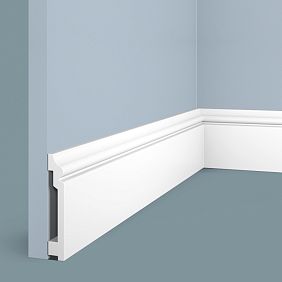
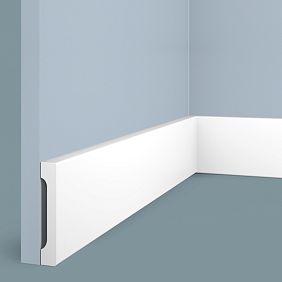
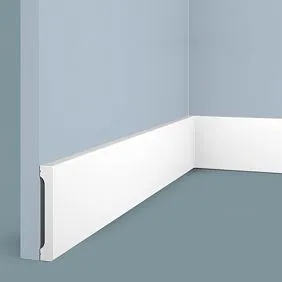
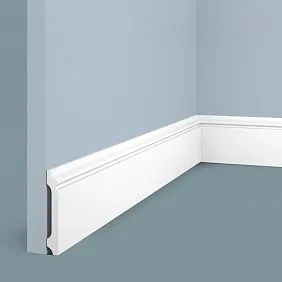
There are airy interiors, there are light interiors, and then there are those that stand firmly on the ground with their entire mass, like old mansions with meter-thick walls. An interior with a heavy bottom is about stability, monumentality, and the feeling that everything here is serious and built to last.Wide Wooden Skirting Boardwith a height of 120–200 mm anda mirror in a thick framewith a width of 10–15 cm — these are the elements that create the visual foundation of the space. They draw the eye downward, weigh down the lower part of the room, and give it a solid feel.
But a heavy base is not just a designer's whim. It's about working with proportions, the physics of perception, and the psychology of comfort. When is this technique appropriate? Who does it suit? And most importantly — how to avoid turning solidity into heaviness, and monumentality into oppressive massiveness?


What a heavy base gives to an interior
Imagine a tree. Its crown can be light, airy, sprawling, but the trunk is always powerful, rooted. This is exactly the feeling an interior with an accentuated base creates — stability, reliability, immutability. It's the opposite of Scandinavian lightness, where everything strives for weightlessness. Here, there is a deliberate weightiness.




Visual stability of space
The human eye seeks a point of support in space. If the top of a room is light (a high, light ceiling, airy cornices), and the base is massive (Wide wooden floor skirting board, heavy furniture, large mirror frames), a sense of balance arises. The space doesn't seem inverted or unstable — it stands firmly on its foundation.
In high rooms with ceilings from 3 meters, this technique is especially effective. A wide baseboard 150–200 mm high visually 'grounds' the volume, preventing it from floating away into uncertainty. At the same time, the height doesn't disappear — it remains, but gets a clear lower boundary from which the count begins.
Our factory also produces:


Psychology of security
Massive elements at the bottom create a subconscious feeling of security. This is connected to archetypal perception: thick walls, a strong foundation, a reliable base — all these are signals of safety. In such an interior, one wants to stay, settle down, establish oneself. This is a space not for running through, but for dwelling in.
This is precisely why a heavy base is so good in libraries, studies, living rooms of country houses — places where an atmosphere of solidity is important, where time flows slower, where every object exists for decades.
Get Consultation
Status and respectability
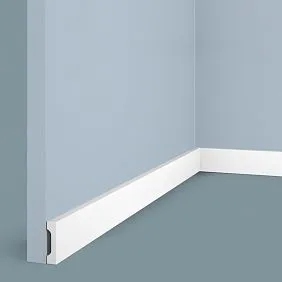
Wide wooden elements are always associated with quality and prosperity. A narrow 60 mm baseboard can be installed for economy, but a Wide Wooden Skirting Board solid oak baseboard 140 mm high — that's already a statement. It says: here they don't skimp on materials, here they value quality, here they build for centuries.
A thick mirror frame works on the same logic. A thin 3–4 cm frame can be stylish and modern, but it's light, almost weightless. But a frame 12–15 cm wide with a voluminous profile, carving, a massive cross-section — that's already a sculptural object that sets the tone for the entire room.
Proportions: the mathematics of visual balance
Creating an interior with a heavy base means building precise proportional relationships between the room's height, baseboard width, frame size, and furniture scale. You can't act randomly here — you need a system.
Baseboard height relative to the ceiling
The classic rule: the baseboard height should be 1/15–1/20 of the room's height. For 3-meter ceilings, that's 150–200 mm. For 3.5-meter ceilings — 175–230 mm. But this is specifically for classic interiors with a pronounced heavy base.
If you want to enhance the effect of massiveness, you can increase the ratio to 1/12 — then the baseboard becomes even more noticeable, almost an architectural element. For example, with a height of 3.6 meters, a 300 mm baseboard is already perceived as paneling on the lower part of the wall.
For rooms with ceilings of 2.7–2.8 meters, a wide baseboard should be used cautiously. Maximum — 120–140 mm, otherwise it will visually 'eat up' the height, making the room squat. Here, you won't be able to create a full-fledged heavy base — only a hint of it.
Mirror frame width and its relationship with the baseboard
a mirror in a thick frame should visually echo the baseboard in mass, but not repeat it literally. If the baseboard is 150 mm, the frame can be 100–120 mm — smaller, but still massive. If the baseboard is 200 mm, the frame can go up to 140–150 mm.
Important: the frame should not be wider than the baseboard. This would break the logic of the heavy base — it would turn out that an element hanging on the wall is more massive than the room's foundation. An exception is if the mirror is placed low, almost at baseboard level (for example, resting on a console 80 cm high). Then the frame and baseboard work as a single massive belt.
Frame profile thickness
Don't confuse frame width with its thickness (profile depth). A wide frame can be flat — and then it looks graphic, but not massive. To create a feeling of heaviness, you need a voluminous frame with a protruding profile 5–8 cm deep.
Such frames create deep shadows, play of light, a sense of sculptural quality. They don't hang on the wall — they grow out of it. This works especially effectively with carved elements, bevels, multi-level profiles.
Distance from the floor to the mirror's lower edge
If a mirror hangs too high (lower edge at 120–140 cm from the floor), the connection between the frame and the baseboard is lost. They exist in different visual zones and don't create a unified heavy belt.
For the heavy base effect, the mirror should be placed so that its lower edge is at a height of 80–100 cm from the floor. Then the frame ends up in the same visual zone as the baseboard, and they work together, reinforcing each other.
Even better — to place the mirror on a console or chest of drawers 70–90 cm high. Then the frame literally continues the baseboard vertically, creating a powerful composition of wood, mass, and texture.
Materials: oak, stains, color
A heavy base isn't just about size, but also about material. Not every wood creates a sense of massiveness. You need species with expressive texture, dense structure, and visual weight.
Solid oak: the king of the heavy base
Oak is the number one material for creating a substantial interior. Its density of 700–750 kg/m³ is felt not only physically but also visually. Expressive texture with large annual rings, contrasting transitions from dark to light, noble roughness—all this creates a sense of weight, age, reliability.
Wide wooden floor skirting boardA %s made of oak, 150–180 mm high, is not just a strip by the wall. It's an architectural element that sets the scale for the entire room. If it's also painted in a rich dark tone (ebonized oak, chocolate, graphite), the massiveness doubles.
A thick oak mirror frame with carving or textured treatment is already a small sculpture. Such a frame can weigh 15–20 kg, and this weight is felt with a glance. It doesn't float on the wall—it is solidly anchored to it.
Stains: from natural to ebonized
Natural light oak (without stain) creates a sense of massiveness but not heaviness. This is suitable for Scandinavian and modern interiors where solidity is needed without gloom.
Medium stains (walnut, cognac, honey oak) are a universal option for classic and neoclassical interiors. They add warmth, nobility, emphasize the wood's texture without making it too dark.
Dark and ebonized stains (wenge, black oak, graphite) offer maximum heaviness and drama. Such a baseboard and frame create an almost Gothic effect—monumentality, severity, a certain austerity. This is a choice for studies, libraries, wine cellars, rooms with high ceilings and strong lighting.
Surface treatment: matte vs. textured
A perfectly smooth matte surface is about modernity and restraint. A wide baseboard with such treatment looks solid but not aggressive.
Textured treatment (brushing, artificial aging, tool marks) is about history, about the feeling that the wood has lived its life. Such a surface enhances tactility and visual weight. Brushed oak seems heavier than smooth oak even with the same dimensions.
Glossy surfaces are not suitable for a heavy base. Gloss lightens, adds formality, but deprives the material of that weighty solidity needed to create a massive foundation for the interior.
Wall color: depth instead of whiteness
White walls and a massive dark base—a contrasting scheme that works but creates a certain graphic rigidity. For a true interior with a heavy base, deep, saturated wall tones are better suited.
Dark green, deep blue, burgundy, terracotta, gray-brown—these colors enhance the sense of mass, make the space dense, enveloping. A wide dark baseboard against a dark green wall does not create a sharp contrast—it smoothly grows out of the wall, becomes its continuation.
Light but not white tones (gray-beige, dusty pink, warm gray) also work, especially in classic interiors. They soften the severity of dark wood, add coziness.
When massiveness is a plus
Not everyone and not always needs a heavy base. But there are types of rooms and interior styles where it fully reveals itself, becomes not just appropriate but necessary.
Country house: connection to the earth
In a city apartment, the interior can be light, airy, almost weightless—this compensates for the density of the urban environment. But in a country house, especially a wooden or stone one, solidity is appropriate.
The house stands on the ground, and the interior should emphasize that.Wide Wooden Skirting BoardA %s, 180–220 mm high, made of solid oak in the living room of a country cottage is a continuation of the building's architectural logic. It echoes the massive ceiling beams, thick door frames, wide windowsills.
A thick mirror frame in the hallway of a country house is not decor but part of the structure. It should be as sturdy and reliable as the house itself. Best of all—made of the same oak as the baseboard, with the same stain. Unity of material creates a sense of integrity, thoughtfulness, architectural logic.
Study: an interior for concentration
A study is a place for serious work, for decision-making, for focus. Lightness and airiness are inappropriate here. An atmosphere of solidity, weightiness of thought is needed.
A massive baseboard 140–160 mm, wall paneling up to a height of 100–120 cm, a large %sa mirror in a thick frameabove the fireplace or behind the desk—all this creates an interior that sets the mood for work. Here, one doesn't want to fuss—one wants to think slowly, thoroughly, deliberately.
Dark oak stains (ebonized, wenge) in a study are especially good. They don't distract, don't irritate, create a calm, almost meditative background. A wide baseboard made of dark oak is a visual anchor that keeps attention down, prevents it from scattering.
Library: Temple of Knowledge
A library requires a special atmosphere—respect for books, for knowledge, for time. Here, massiveness is not just appropriate—it is essential.
Tall bookcases from floor to ceiling, a wide baseboard that transitions into the plinth of the cabinets, thick frames for mirrors and paintings—all this creates the feeling that you've entered an old manor library, where every volume has been in its place for a hundred years.
Trimming ItemsOak elements here work not only as finishing but as part of the furniture ensemble. The baseboard transitions into the cabinet plinth, the cabinet cornice echoes the ceiling cornice, mirror frames repeat the profile of door architraves. The result is a unified wooden shell within which books reside.
Dining Room and Wine Cellar: An Interior for Feasts
A place where people gather around a long table, drink good wine, and converse at length—this is a space that demands weightiness, solidity.
A wide baseboard in the dining room is not just wall protection, but an architectural element that makes the room more solemn. Especially if it's made of oak and matches a massive dining table of the same material.
A mirror in a thick carved frame on the dining room wall creates an effect of expanding the space, yet does not lighten it—the reflection doubles the massiveness, making the interior even denser, more saturated.
Bedroom in Classic Style: Tranquility and Substantiality
In modern bedrooms, a heavy lower part is rarely used—lightness is preferred there. But in classic bedrooms, especially in large houses, massive elements create a sense of protection, coziness, and solidity.
A wide baseboard of 120–140 mm, a wooden bed with a massive headboard, a dresser with a thick tabletop, a mirror in a wide frame—all this creates an atmosphere of stability. This is not a temporary lodging, but a full-fledged bedroom where one lives for years.
For the bedroom, it's better to choose medium or light wood colors—dark stains can make the space too heavy for rest. Walnut, cognac, honey oak—these are optimal choices.
When a Heavy Lower Part Is Not Suitable
There are cases where massive baseboards and thick frames are a mistake. They not only don't work but actively spoil the interior, making it cumbersome, oppressive, uncomfortable.
Low Ceilings: The Box Effect
If the ceiling height is less than 2.8 meters, a wide baseboard (over 100 mm) will create a feeling that the ceiling is pressing down. A massive lower part visually raises the floor level, making an already low room feel even lower.
In such rooms, it's better to use narrow baseboards of 60–80 mm and thin mirror frames of 4–6 cm. This preserves clean lines but doesn't steal precious centimeters of height.
Exception—if the ceiling is painted the same color as the walls (the 'enveloping color' technique). Then the boundary between wall and ceiling blurs, and the height is perceived as slightly greater than it is. But even in this case, the baseboard should not be wider than 100 mm.
Small Rooms: Disproportion of Scale
In a room of 10–12 sq.m, a baseboard 150 mm high will look disproportionate. It will occupy too large a share of the visual space, making the room feel even smaller.
A massive mirror frame in a small room—the same problem. A frame 12 cm wide on a mirror sized 60×80 cm means that almost a quarter of the mirror's area is taken up by the frame. This is no longer a mirror in a frame, but a frame with a mirror insert.
For small spaces, the rule applies: the smaller the room, the more delicate the details should be. Thin baseboards, thin frames, light furniture—this will give air and not overload the space.
Minimalism and Hi-Tech: Stylistic Incompatibility
Minimalism is about maximum simplification of form. A wide baseboard made of solid oak with a shaped profile is maximum complication. They contradict each other on an ideological level.
Minimalist interiors use hidden baseboards, thin metal profiles, shadow gaps—everything that makes the boundary between floor and wall almost unnoticeable. Massiveness is inappropriate here.
Hi-tech also dislikes a heavy lower part. Here, glass, metal, glossy surfaces dominate—everything that creates a sense of lightness, technological sophistication. An oak baseboard 160 mm high in a hi-tech interior is a stylistic error.
Scandinavian Style: The Philosophy of Lightness
Scandinavian style is built on maximum use of light, on lightness, on a feeling of spaciousness and air. A heavy lower part contradicts this philosophy.
Yes, Scandinavian interiors use wood, but it's light, almost bleached. Yes, they have baseboards, but they are narrow—60–70 mm, white or light gray. Yes, they have mirrors, but in thin frames or frameless.
If you want to combine wood and Scandinavian style, choose light stains, simple profiles, medium sizes. A baseboard of 80–90 mm made of light oak, a mirror frame of 5–6 cm—this is the maximum massiveness for Scandinavian aesthetics.
Composition Building: How to Connect Baseboard and Frame
A heavy base is not just two separate elements (baseboard and frame) that happen to be in the same room. It is a unified composition where each element enhances the other.
Unity of Material and Finish
The simplest way to connect a baseboard and a frame is to make them from the same wood and with the same finish. An oak baseboard in a stained oak color and an oak frame in the same color create an immediate visual kinship.
Using different wood species or different colors breaks the connection. A dark baseboard and a light frame exist in different visual registers and do not support each other.
Exception: intentional contrast, where the baseboard is dark and the frame is light, but then additional elements are needed to connect them (e.g., dark furniture and light doors).
Repeating the Profile
If the baseboard has a shaped profile with coves, chamfers, or decorative elements, the mirror frame should follow this logic. It is not necessary to copy the profile exactly, but the general character should match—a classic baseboard with a classic frame, a modern baseboard with a modern frame.
A baseboard with a clear geometric profile (a rectangle with a chamfer) and a frame with abundant Baroque-style carving create stylistic dissonance. They speak different languages.
Vertical Continuation of the Baseboard
The strongest compositional technique is to place the mirror so that its lower edge is close to the baseboard (at a height of 80–100 cm). Then the frame becomes a vertical continuation of the baseboard, and they are perceived as a unified wooden composition.
The effect can be enhanced by placing a console or a chest of drawers under the mirror, of the same width as the frame. This creates a vertical structure: baseboard—console legs—tabletop—mirror frame. All made of wood, all in the same finish, all working as a single whole.
Rhythm of Repeating Elements
If there are several mirrors or paintings in thick frames in the room, they should be identical in profile width and color. This creates a rhythm that connects them to each other and to the baseboard.
Three mirrors in frames of the same width on one wall form a series, a system. Three mirrors in frames of different widths create chaos. For a heavy base, order, repetition, and rhythm are important.
Additional Elements to Enhance the Effect
The baseboard and frame are the foundation of the composition, but it can be enhanced with additional wooden elements.
Wall moldings
Wall moldings at a height of 90–120 cm create a horizontal belt that connects the baseboard and mirror frames. This results in a three-level system: baseboard at the bottom, molding in the middle, frames at the level of the molding or slightly above.
Moldings should be made of the same wood and with the same finish as the baseboard. The width of the molding should be 40–80 mm, i.e., less than the width of the baseboard but sufficient to be noticeable.
Door Casings
Wide door architraves (80–120 mm) made of solid oak support the logic of a heavy base. They are vertical, like mirror frames, and massive, like the baseboard. If the architrave, baseboard, and frame are executed in a unified manner, a cohesive wooden shell for the room is created.
This works especially effectively in classic interiors, where a door is perceived not as a simple opening but as a portal, an architectural element.
Ceiling Cornice: Balancing the Top
If the base of the room is massive and the top is very light (just a white ceiling without a cornice), imbalance may occur. To avoid this, add a ceiling cornice.
The cornice should be smaller in height than the baseboard (if the baseboard is 150 mm, the cornice should be 80–100 mm) but made of the same wood. This creates a classic scheme: a massive base, a light top, but the top is not empty—it is finished with a cornice.
Wall Panels
Wooden wall panels up to a height of 100–120 cm (boiserie) maximize the enhancement of a heavy base. The entire lower part of the room becomes wooden, massive, and weighty.
Panels are made from the same oak as the baseboard, framed with moldings, and create a three-dimensional relief. A mirror in a thick frame against the backdrop of wooden panels looks organic—it does not hang on the wall but is integrated into the wooden structure.
Lighting for a Heavy Base
Massive wooden elements require proper lighting. Without it, they can appear dark, oppressive, and gloomy.
Natural Light: Windows and Height
A heavy base works best in rooms with large windows and abundant natural light. Sunlight highlights the wood texture, creates a play of light and shadow on the relief profiles, and enlivens the massiveness.
If the windows are small or face north, a dark wide baseboard and thick frames can make the room gloomy. In such cases, it is better to choose light wood tones or reduce the size of the elements.
General lighting: overall illumination
A central chandelier or recessed ceiling lights should provide enough light so that the lower part of the room does not sink into shadow. If the lighting is weak, a massive baseboard turns into a dark stripe that visually cuts the height.
The lighting power for rooms with a heavy base should be 20–30% higher than for light interiors. This compensates for the absorption of light by the dark wood.
Local lighting: accent on texture
Wall sconces directed downward illuminate the baseboard and create dramatic shadows. This enhances the sense of volume and makes the baseboard even more expressive.
Mirror lighting from above (above the frame) or from the sides highlights the frame from the space, emphasizing its massiveness. The light glides over the carving, reveals the relief, and creates depth.
Spotlights directed at wooden panels or moldings turn them into architectural objects, not just finishes.
Frequently asked questions
What is the maximum height for a baseboard in a living space?
Technically, a baseboard can be any height, but for living spaces, a maximum of 200–250 mm is recommended. At greater heights, it is no longer a baseboard but a wall panel. For rooms with ceilings of 3.5–4 meters, baseboards up to 300 mm can be used, but this is rare.
What wood is best for making wide skirting boards?
The optimal choice is oak. It is durable, beautiful, with an expressive texture. Beech is also good but less resistant to humidity. Ash and walnut are excellent options but more expensive and less common. MDF with oak veneer is a budget alternative to solid wood.
Should an oak baseboard be painted or left in its natural color?
It depends on the interior. Natural light oak is good for modern and Scandinavian styles. For classic, neoclassical, and English styles, tinting is better—walnut, cognac, stained oak. Tinting emphasizes the texture and makes the wood more noble.
Can a wide baseboard be combined with a stretch ceiling?
Yes, but it is important to maintain balance. A stretch ceiling is a modern solution; it looks light. A massive classic baseboard may conflict with it. It is better to choose a baseboard with a simple profile, medium width (100–120 mm), in a light tint.
How to attach a very wide baseboard (180–200 mm)?
A wide baseboard is heavy, so it must be securely fastened. Use dowels and screws at intervals of 40–50 cm. Pre-drill holes to avoid splitting the wood. Sink the screw heads and cover them with wooden plugs or wood-colored putty.
Does a thick mirror frame make a room darker?
Yes, if the frame is dark and wide, it reduces the area of the mirror surface, meaning less light is reflected. But this effect is compensated by proper lighting. If the room has enough light, a thick frame will not make it dark but will add character.
How much does a mirror in a thick frame 100×150 cm weigh?
It depends on the thickness of the mirror and the frame material. A 4 mm mirror weighs about 9 kg. An oak frame 12 cm wide and 6 cm thick will add another 15–18 kg. Total—24–27 kg. Such a mirror must be attached with reliable anchors; ordinary nails are not enough.
Can a heavy base be used in a children's room?
Not recommended. A children's room should be light, airy, and cheerful. Massive dark elements create a serious, almost adult atmosphere, which is not suitable for children. If you really want wood, choose light species, narrow profiles, and simple shapes.
After how many years should the finish of an oak baseboard be renewed?
With high-quality finishing and proper care—after 10–15 years. If the baseboard is coated with oil, it needs to be renewed more often—every 3–5 years. A varnish finish lasts longer, but when scratched, it requires a complete redo.
What thickness of a mirror frame is optimal for a classic interior?
For classic style, the frame should be voluminous—profile thickness 6–8 cm, width 10–14 cm. This creates the necessary massiveness and allows for the addition of carved elements, bevels, and multi-level profiles. Thin frames (3–4 cm) are already neoclassical or modern.
Should the baseboard and frame be made from the same wood?
Preferably, but not necessarily. Matching color and character of treatment is more important. An oak baseboard and a beech frame in the same tint will look harmonious. But light ash and dark wenge will not, even if both are natural.
Mistakes when creating an interior with a heavy bottom
First mistake: a massive bottom in a small room
A 160 mm baseboard and thick frames in a 12 sq.m room with a 2.6 m ceiling is a classic disproportion. The elements are too large for the scale of the room; they overwhelm it.
Solution: for small rooms, the maximum is an 80–100 mm baseboard and 6–8 cm frames.
Second mistake: a dark bottom with poor lighting
Dark stained oak in a room with one small north-facing window is a recipe for gloominess. The massiveness turns into oppressive heaviness.
Solution: either enhance the lighting (add fixtures) or choose light stains.
Third mistake: lack of connection between elements
Dark baseboard, light mirror frame, medium-toned trims — no unity, no system. Each element exists on its own.
Solution: choose one wood species and one stain for all wooden elements.
Fourth mistake: a heavy bottom in a Scandinavian interior
An attempt to combine the philosophy of lightness and massiveness is a stylistic contradiction that is jarring to the eye.
Solution: either change the style to classic/neoclassical, or lighten the wooden elements.
Fifth mistake: poor installation quality
A wide baseboard with gaps in the corners, uneven cuts, visible screw heads — this kills the entire effect. Massiveness requires flawless execution.
Solution: entrust installation to professionals, check every detail.
STAVROS Company: 24 years of creating interiors with character
When you chooseWide wooden floor skirting boardora mirror in a thick frame, you are not just choosing a finishing material. You are choosing the foundation of your interior, what it will stand on visually and literally. This is a decision for decades, and it requires impeccable quality.
STAVROS Company has been working with solid oak and beech since 2002. We know this wood from the inside — how it dries, how it behaves during processing, how it changes over time. Our production is equipped with European machinery that allows us to create profiles of any complexity with an accuracy of up to a tenth of a millimeter.
Wide Wooden Skirting Board STAVROS is not just a plank of wood. It is the result of multi-stage processing: drying to 8–12% moisture content, four-sided machining, multi-stage sanding, priming, and finishing. Every stage is controlled, every millimeter is measured.
We offer baseboards with heights from 60 to 200 mm, with straight and shaped profiles, in natural color or with professional staining. You can choose a ready-made solution from the catalog or order custom manufacturing according to individual sizes and drawings.
Mirrors in thick frames made of solid oak and beech are our pride. We create frames with widths from 50 to 150 mm, with and without carving, with patination, brushing, artificial aging. Each frame is a small sculpture that will live in your home no less than the house itself.
We work not only with Moscow and St. Petersburg but also deliver our products throughout Russia. The geography of our projects ranges from Kaliningrad to Vladivostok. Wherever you live, if you value natural wood, quality execution, and manufacturer responsibility — STAVROS is at your service.
A heavy bottom in an interior is a philosophy of solidity, a visualization of reliability, architecture that stands on the ground with its full mass. It is the choice of those who build not for a season, but for generations. And STAVROS creates precisely such solutions — for decades, with a quality guarantee, with respect for the material and for your home.