Article Contents:
- Planning and Preparation: From Idea to Sketch
- Choosing Materials and Tools
- Main Materials
- Tools for work
- 1. Preparing Rough Cuts and Cutting Wood
- 2. Making the Table Top
- 3. Making the Base: Foundation for the Table
- Base Variants
- Technical Aspects of the Base
- Installing the Base
- Combining the Table Top and Base
- Decorative Elements and Finishing
- Tips for Choosing and Purchasing Materials
- Tips for Organizing Your Workflow
- Example 1: Classic Wooden Dining Table
- Example 2: Loft-Style Table
- Example 3: Coffee Table with an Original Base
- Example 4: Custom Project 'Table Made to Order'
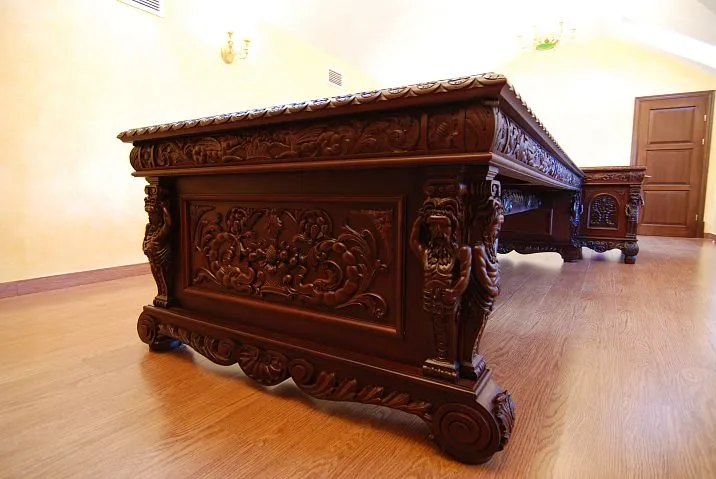
Creating your own wooden table is not only a way to showcase your creative potential, but also an opportunity to obtain a truly unique interior piece that reflects your style and individuality. In this article, we will thoroughly explain how to make a beautiful wooden table, paying attention to every detail—from selecting the wood to installing a sturdy and stylish base. We will cover the key points necessary for implementing this project and share professional tips for those aiming to create furniture worthy of attention even from the most discerning connoisseurs.


Planning and Preparation: From Idea to Sketch
Before starting to make the table, it is important to carefully plan the entire process. This includes not only choosing the design, but also the functional features that will determine the comfort of using the item. It is important to consider the following aspects:
● Purpose of the table. Decide for what purpose the table is intended: dining, kitchen, coffee, or decorative. This will help determine the size, shape of the tabletop, and type of base.
● Choosing the type of wood. Different types of wood have different characteristics: oak and beech are known for their strength, pine is more affordable and has a pleasant texture, while ash or walnut offer an elegant appearance. Quality raw material is the key to the longevity and aesthetics of the future table.
● Tabletop design. Pay attention to the shape and size of the tabletop. Round tables create a sense of coziness and harmony, while rectangular or oval tables emphasize a modern interior style.
● Base as the structural foundation. A reliable base is a key element that ensures the stability and longevity of the table. Depending on the style and purpose of the table, you can choose various options: from classic carved bases to modern loft-style models.
After you have defined the concept, create a detailed sketch of the future product. Consider all dimensions, proportions, and technical features to avoid errors during manufacturing.




Material and Tool Selection
The quality of the final result directly depends on the selected materials. When manufacturing a table, it is important to use only high-quality wood treated with special protective agents against moisture, insects, and mechanical damage.
Our factory also produces:





Main Materials
● Wood. Prefer solid wood, which provides natural beauty and high strength. For tabletops, you can use oak, beech, or walnut; for the base, use the same species to ensure a harmonious appearance.
● Fasteners. Reliable fasteners, screws, and brackets are essential components ensuring the longevity of the structure. They will help secure the tabletop to the base and prevent possible deformations.
● Protective coatings. Lacquers, oils, and waxes will preserve the natural sheen of the wood and protect it from external influences. The choice of coating depends on the desired effect: matte, glossy, or semi-gloss.
Get Consultation
Tools for Work
To create a table, you will need the following tools:
● Hand and electric saws for cutting wood;
● Hand plane, sander for surface processing;
● Drill, screwdriver for assembling parts;
● Screwdriver set, hammer, and measuring tools (tape measure, level, square).
Equipped with quality tools, you will be able to work faster and more accurately, significantly improving the quality of the finished product.
Manufacturing Stages: From Rough Cut to Final Finish
1. Preparation of blanks and wood cutting
The first stage is preparing the wood. Select high-quality blanks free of knots and cracks. Using a saw and hand plane, cut the blanks to the dimensions specified in the sketch. Pay special attention to the flatness and accuracy of the cut, as this is the key to the aesthetic appeal of the finished product.
2. Manufacturing the tabletop
The tabletop is the central element of the table. Depending on the chosen design, you can create a tabletop of various shapes: round, rectangular, oval, or even asymmetrical.
● Sanding and routing. After cutting, carefully process the tabletop surface: use a sander to remove burrs and imperfections. If decorative routing is planned, perform it according to the developed sketch.
● Applying protective coating. After sanding, treat the tabletop with varnish or oil to highlight the natural wood texture and protect it from external influences.
3. Manufacturing the base: the foundation of the table
The base is not only the support for the tabletop but also an important design element. It should be both functional and aesthetically pleasing. Here, you can use various options to emphasize the style of the future table.
Base Variants
● Classic wooden base. Traditional option using solid wooden legs or supports. Thiswooden base adds elegance and warmth to the product.
● Loft base. If your table is styled in an industrial style, pay attention to models with minimalist design.Loft Table Base often combines wood with metal elements, creating an effect of rough yet stylish construction.
● Round base. For round tables, choose models specifically designed for even load distribution.base for a round table – optimal choice for creating a harmonious look.
Technical aspects of the base
● Base dimensions and its height. When manufacturing the base, it is important to accurately calculate the dimensions to ensure the optimal table height.Base height should correspond to the table's purpose – dining tables usually have higher bases, while coffee tables have lower ones.
● Supports and legs for the base. Qualitylegs for the base ensure the stability of the structure. Depending on the design, they can be crafted in a classic carved style or have modern geometric shapes.
● Base color. Choosing the color can significantly affect the overall appearance of the table. If the tabletop is in warm natural tones, you can choose either a neutral white base, or contrastingblack base, to create a striking accent.
Base assembly
After manufacturing all parts, proceed to assemble the table. A secure connection between the tabletop and base is essential for the longevity of the product. Use fasteners specified in the design, and always check the stability of the structure at each assembly stage. If you prefer a custom approach, you can ordercustom table base, which will allow you to create an optimal solution taking into account all your preferences.
Table assembly: integrating all elements
Combining tabletop and base
After preparing the tabletop and manufacturing the base, it is time to combine these two key components. This stage requires maximum precision, as the correct connection affects not only the appearance but also the functional performance of the table.
● Edge alignment. The tabletop must fit perfectly with the support, without gaps or unevenness. For this, you can use special adhesives, as well as metal brackets for additional fastening.
● Level check. Use a level and square to ensure the tabletop is installed evenly and distributes load uniformly on the base. Incorrect leveling may lead to deformations and reduced stability.
● Final assembly. After securing all elements, allow the adhesive and fasteners to fully set. Then perform a final inspection of the structure, ensuring its stability and safety.
Decorative elements and finishing
To make the table not only functional but also aesthetically appealing, you can add decorative elements:
● Carving and inlay. If you wish to emphasize handcrafted work and the uniqueness of the item, add carving or inlay elements to the tabletop or base. This is especially relevant for classic interiors.
● Finish and polishing. The final stage is applying a protective finish. Lacquers, oils, or waxes not only protect the wood but also highlight its natural beauty. The treatment should be even to avoid streaks and dulling of the pattern.
● Finishing details. You can add metal or leather inserts, which will give the table a modern look and emphasize the interior style.
Practical tips from an expert
Tips for selecting and purchasing materials
- Wood quality. Choose wood without knots or cracks. Purchase materials from reputable suppliers to avoid quality issues.
- Hardware and fasteners. Do not skimp on fasteners. Reliable screws, adhesives, and brackets will ensure the longevity and stability of the table.
- Protective materials. Use professional wood treatment products. This will extend the lifespan of your item and preserve its original appearance for many years.
Work Process Tips
● Prepare your workspace. Ensure sufficient space for work to avoid safety and comfort issues.
● Step-by-step execution. Follow your pre-prepared plan and sketch. This will help avoid mistakes and save time.
● Thorough inspection. After each stage, conduct a quality check — measure dimensions, check level and structural stability.
● Consult professionals. If you have doubts or encounter difficulties at any stage, do not hesitate to consult experts. Sometimes it is better to entrust complex operations to professionals to ensure the result meets high standards.
Inspiration Examples: Ideas for your project
Example 1: Classic wooden dining table
Imagine a dining table where the tabletop is made of solid oak with natural grain, and the base is an elegantwooden base with carved elements. Such a table will become the centerpiece of any home, bringing family together around the table and creating an atmosphere of coziness and tradition.
Example 2: Loft-style table
For those who appreciate modern design, an ideal option would be a table in the loft style. In this case, the tabletop may be made of a combination of natural wood and glass, and the baseLoft Table Base with minimalist metal or wooden detailing. Such a table is not only functional but also stylish, highlighting the industrial charm of the interior.
Example 3: Coffee table with an original base
In small living rooms and offices, compact coffee tables are a practical solution. For example, a table with an elegant tabletop andbase for a coffee tabledesigned in modern minimalism, will fit perfectly into the interior. Such a table will not only be a functional element but also a striking design accent.
Example 4: Custom project "Table on order"
If standard solutions do not meet your requirements, you can order a custom-made table. In this case, you choose not only the materials and design of the tabletop, but alsocustom table basethe base, which will perfectly match your specifications. Such a table will become a unique work of art reflecting your taste and style.
Conclusion
Making a beautiful wooden table is not just a craft, it is true art, where every stage of work, from selecting the wood to installing the base, is crucial. Your table will not only be a functional piece of furniture, but also a central element of the interior, reflecting your individuality and taste.
Correct material selection, careful planning, and attention to detail allow you to create an item that will serve for many years, pleasing the eye and providing comfort. Special attention should be paid to the base — a reliable foundation of the table, ensuring its stability and aesthetic completeness. Regardless of whether you choose a classic wooden base, a modernLoft Base or adjustable model, it is important that it harmonizes with the overall concept of the item.
We hope this guide has inspired you to create your own table, which will reflect your ideas and creativity. Remember, every detail matters — from the elegant tabletop to the thoughtfully designedof the base for the table to buybase, capable of giving your furniture a unique character.
When selecting components for your table, pay attention to trusted sources and quality products, as your creativity deserves the best. May your project become not only a successful experiment but also inspiration for creating other masterpieces in the world of furniture.
Create your beautiful wooden table, and it will serve you faithfully, bringing family together, delighting guests, and becoming a symbol of your impeccable taste. For every successful thing begins with the small — with an idea that is realized in a unique item, made by your own hands.