












































































Article Contents:
- Humidity and protective coatings
- Rail panels and panels
- Skirting and floor skirting
- Impact resistance
- Color schemes
- Conclusion: function and beauty
- Frequently Asked Questions

The kitchen in a traditional Russian home was the heart of the household. Here, food was cooked on the stove, the whole family gathered around the table, and guests were received for tea. The kitchen was functional, but not cold — wooden benches, sturdy tables, shelves with dishes, carved moldings created an atmosphere of home comfort, solidity, and generational connection.
Modern kitchens retain this central role in the home, but add new challenges. This is a zone of high humidity (cooking, washing dishes), high temperatures (stove, oven), intensive use (daily cooking, cleaning), constant contamination (grease, steam, splashes). Materials here must not only be beautiful, but also exceptionally practical.
Wooden rails on the kitchen, wooden panels,wooden skirting for the floorAll of this is possible, but requires proper wood selection, quality protective treatment, and thoughtful construction. Russian style in the kitchen is not a stylization of a log cabin with a samovar, but a modern space where natural materials, traditional forms, and time-tested solutions create functional beauty.
In this article, we will examine how to use wooden elements in the kitchen in Russian style without compromising practicality. You will learn which wood species and protective coatings withstand humidity and heat, where rail panels and backsplashes are appropriate, how to properly install skirting boards, which finishes provide impact resistance, and which color schemes work best in the kitchen.


Humidity and protective coatings
The kitchen is the most humid room in the apartment after the bathroom. Cooking creates steam that settles on all surfaces. Washing dishes adds water splashes. Wet cleaning is a daily necessity. Wood, being a hygroscopic material, absorbs moisture, swells, may deform and rot if not properly protected.
Wood species for the kitchen. Not all species tolerate humidity equally. Softwoods (pine, spruce, linden) quickly absorb water, are easily attacked by mold, not the best choice for the kitchen. Hard and dense species containing natural resins and tannins are significantly more resistant.
Larch is the best choice for humid areas. Density 650-700 kg/m³, contains resin (natural wax) that makes the wood practically immune to rot and mold. Larch does not fear water — it was used for bridge piles, lower log beams in contact with water. In the kitchen, larch rails, panels, skirting boards serve for decades without signs of deterioration.
Oak — classic, tested over centuries. Density 700 kg/m³, contains tannins (tannic substances) that protect against biological damage. Oak elements in the kitchen are not only practical, but also noble — over time, oak darkens, develops a patina, becomes even more beautiful. The downside — high price.
Ash — a light alternative to oak. Density 690 kg/m³, good moisture resistance, but slightly lower than oak and larch. Ash elements are suitable for zones not directly in contact with water (upper panels, ceiling moldings, wall rails away from the sink).
Thermowood — any species (pine, birch, ash), processed at high temperature (180-230°C) in an oxygen-free environment. Thermal treatment alters the wood structure, making it practically non-hygroscopic (does not absorb water), stable (does not warp), resistant to rot. Thermowood is darker than usual, has a distinctive coffee-chocolate tone. It is an excellent option for the kitchen, though expensive.
Protective oils for the kitchen. Oil is the optimal coating for wooden elements in the kitchen. It penetrates into the wood, does not form a film on the surface, leaves the wood breathable, preserving its tactile quality. But not every oil is suitable for the kitchen — special formulations with enhanced water and dirt resistance are needed.
Oil with hard wax — a combination of natural oils (linseed, tung, sunflower) and hard waxes (carnauba, beeswax). The oil penetrates into the wood, while the wax remains on the surface, forming a protective layer. This coating is water-repellent, easy to clean, resistant to grease stains. Known brands: Osmo, Biofa, Saicos.
Oil for countertops — an even more durable coating, specifically developed for kitchen surfaces. Contains a higher concentration of hard wax, additional hardeners. After applying 3-4 layers, it creates a durable surface that withstands water, grease, and cleaning agents. Suitable not only for countertops, but also for skirting boards, panels, rails in the backsplash zone.
Oil application process: the wood is sanded (grit 150-180, then 220), cleaned of dust. The first layer of oil — diluted 10-20% with solvent (natural oil-based diluent) — is applied with a brush or cloth, worked into the wood. After 30-60 minutes, excess is wiped off with a dry cloth. Drying time: one day. Second and third layers — full concentration oil, same technique. The final layer can be polished with a soft cloth for a light sheen.
Kitchen varnishes. Varnish creates a hard protective film on the wood surface, does not allow water to pass through, is easy to clean. But varnish film does not breathe — when damaged (scratched), moisture penetrates under the varnish and the wood begins to rot from within. Only special moisture-resistant varnishes are suitable for kitchens.
Water-based polyurethane varnish — the strongest and most eco-friendly. No odor during application and use, dries quickly (4-6 hours between layers), creates an elastic film that does not crack during wood temperature expansion. Sheen level — from matte to glossy. For kitchens, semi-matte or matte finish is preferable — fewer fingerprints and water marks are visible.
Boat varnish — traditional choice for humid conditions. Contains alkyd resins, hardeners, plasticizers. Creates a very strong, elastic film. Drawbacks — strong odor during application (good ventilation required), long drying time (12-24 hours between layers), yellowish tint (changes color of light-colored wood).
Varnish is applied in 3-4 layers. Each layer, after drying, is sanded with fine sandpaper (grit 320-400), dust is removed, and the next layer is applied. The final layer is not sanded, only polished with a soft cloth (if desired sheen).
Enamel and paints. If the wood texture is not important, you can use covering enamels — they completely cover the wood, create an even color, and form a very durable coating. For the kitchen, water-based acrylic enamels (eco-friendly, odorless) or alkyd enamels (more durable, but with odor) are suitable.
Enamel is applied in 2-3 layers on a primed surface. Primer seals the wood pores, equalizes absorption, and creates a base for enamel. Between enamel layers — light sanding (grit 320), dust removal. The final layer creates a smooth, even surface that can be washed with any cleaning agent, is resistant to water and grease.
White enamel — classic for kitchens in Russian style. White wooden elements on the kitchen create cleanliness, freshness, and visually expand the space. For small kitchens, white is the best choice.
Structural moisture protection. In addition to coatings, proper construction is important. Wooden elements must not contact constantly wet surfaces. Baseboards are installed with a 2-3 mm gap from the floor, filled with sealant — water from the floor does not seep under the baseboard. Rails in the backsplash area are mounted with a 5-10 mm gap from the countertop — splashes do not reach the joint.
Ends of wooden elements (cutting areas) — the most vulnerable spots where wood actively absorbs moisture. Ends must be especially carefully treated with a protective compound — in 3-4 layers, with intermediate drying. Or covered with decorative plugs or overlays.
Ventilation is critically important. Wooden panels and rails must be mounted on a lathing that creates a 20-40 mm gap between the wood and the wall. Air circulates in the gap, moisture evaporates, and the wood remains dry. Full gluing of wood to the wall (without a gap) — a path to mold and rot.




Backsplash panels and rails
Backsplash — the wall area between the countertop and wall cabinets, the zone of maximum exposure: water and grease splashes, steam from boiling pots, high heat from the stove. Traditionally, the backsplash is covered with tiles or tempered glass. But can wood be used? Yes, with the right approach.
Horizontal wooden panels. Classic option — horizontal cladding of the backsplash with boards (plank, imitation of beam, planken). Boards are mounted horizontally, creating a rhythmic line pattern reminiscent of a log cabin. Board width 80-120 mm, thickness 15-20 mm. Material — larch or thermowood, finish — 3-4 layers of countertop oil or polyurethane lacquer.
Panel is mounted on a lathing of 30×40 mm beams, creating a ventilation gap. Bottom edge of the panel is set back 5-10 mm from the countertop (gap filled with transparent silicone sealant), top edge 5-10 mm from wall cabinets. Side joints (with tiles, with walls) also have gaps and sealant.
Important: wooden panel must not extend into the area directly behind the stove (stove zone ±30 cm horizontally). There, temperature is too high, wood may char or smoke. Behind the stove, the backsplash is made of fire-resistant materials (tiles, tempered glass, metal). Wood — on side areas of the backsplash, where there is no direct heating.
Vertical rails on the backsplash. Alternative to solid panel — vertical rails with gaps. Rails with cross-section 20×40 or 30×40 mm, spacing 10-15 cm. Between rails, the wall is visible, which must be moisture-resistant (painted with moisture-resistant paint, plastered with water-resistant plaster, tiled).
Vertical rails create a light, airy pattern, do not overload the space. They collect less grease and dirt than a solid panel (dirt mainly settles on the wall between rails, which is easy to clean). Cleaning — wiping each rail with a damp cloth and cleaning agent.
Rails in the backsplash area must be made of larch or thermowood, covered with at least 3 layers of oil with wax or lacquered. Installation — on lathing, with ventilation gap, with gaps at the bottom and top, filled with sealant.
Combined backsplash. Practical solution — combination of materials. Central part of the backsplash (behind the stove, behind the sink) — ceramic tiles or tempered glass. Side parts (less loaded) — wooden panels or rails. Results in a functional zone maximally protected, decorative zones add warmth and naturalness.
Joint between tile and wood is finished with a molding (wooden strip covering tile and wooden panel ends) or corner profile (aluminum, stainless steel), which protects the joint from moisture ingress.
Wooden panels on other walls. On walls not contacting the countertop (e.g., wall behind the dining table, end wall of the kitchen), wood can be used more boldly. Here, there are no sink splashes, no heat from the stove, only general kitchen humidity.
Vertical or horizontal panels 100-120 cm high (at chair back height) protect the wall, create a cozy atmosphere, and serve as a backdrop for the dining area. Material — pine, birch (more affordable species), finish — oil or enamel. Installation — on lathing, with ventilation gap.
Railing panels on the ceiling. The kitchen ceiling can also be finished with wooden rails. This creates a sense of coziness, reduces visual height (relevant for kitchens with high ceilings 3+ meters), and conceals utilities (ventilation, wiring).
Ceiling rails are thin (10×30 or 10×40 mm) to avoid a sense of pressure. Spacing 30-50 cm, can have gaps (between rails, painted ceiling surface is visible). Material — pine, birch (light species), finish — white enamel or light oil. Rails are mounted on ceiling lathing, within which hidden lighting (LED strip) can be installed.
Care for wooden panels in the kitchen. Daily dry cleaning — wiping with dry or slightly damp cloth, removing dust. Weekly wet cleaning — wiping with kitchen cleaning agent (degreaser), then wiping with clean damp cloth, then dry.
Every 3-6 months — general cleaning using special wood care products. Every 2-3 years (for oil finish) — refresh the finish: cleaning, light sanding, applying fresh oil layer. For lacquer and enamel — every 5-7 years.
Our factory also produces:


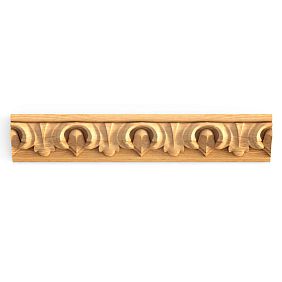


Skirting and baseboard
Lower part of the kitchen — area of special attention. Here, kitchen furniture contacts the floor, here water leaks are possible (from dishwasher, sink), here the floor is cleaned especially often. Skirting and baseboard panel must protect the wall and furniture, but without becoming a mold breeding ground.
Kitchen baseboard panel. Baseboard — vertical panel 10-15 cm high, covering the space between the bottom of kitchen cabinets and the floor. Traditionally, baseboard is made from the same material as kitchen facades (MDF, plastic, stainless steel). But wood can be used if approached correctly.
Wooden baseboard — from solid larch, oak, or thermowood. Thickness 18-22 mm, height 100-150 mm (standard baseboard height). Finish — 3-4 layers of polyurethane lacquer (maximum water resistance) or quality enamel. Color — to match kitchen facades or contrasting.
Baseboard mounting — not flush to the floor, but with a 3-5 mm gap. Gap is needed for air circulation (ventilation under cabinets, preventing mold) and to compensate for wood expansion. Bottom of baseboard rests on special adjustable legs (plastic or metal), holding it at the required height.
Top edge of baseboard extends into a groove in cabinet body or is mounted via a special mounting strip. Joints between baseboard panels (lengthwise, at corners) are made with a 2-3 mm gap, covered with overlay corner elements or filled with transparent sealant.
Wooden baseboard is beautiful, creates a sense of kitchen solidity, but requires more careful care than plastic. It must be wiped regularly, avoid prolonged contact with water (if something spills on the floor, wipe it immediately).
Baseboard. On the kitchen, baseboard performs the same functions as in other rooms (covers the joint between wall and floor), but operates under more demanding conditions. Here, the floor is cleaned more often, there is more water, higher risk of leaks. Baseboard must be maximally moisture-resistant.
Kitchen skirting board height — 100–140 mm (higher than standard 80 mm). A tall skirting board better protects the wall from splashes during floor cleaning and from leaks. Material — oak, larch, thermowood. Finish — polyurethane lacquer or enamel.
Kitchen skirting board profile is better simple, without deep recesses where dirt accumulates. Rectangular cross-section with rounded top edge and drip on the bottom edge (a protrusion interrupting water flow, preventing it from seeping under the skirting board).
Skirting board installation — not flush to the floor, but with a 2–3 mm gap filled with transparent silicone sealant. The sealant is elastic, compensates for wood expansion, and does not allow water to seep under the skirting board. Mounting — adhesive + hidden screws or clips (special holders attached to the wall, skirting board snaps into them).
Skirting board corners — cut at 45°, joint is coated with adhesive and sealant. If the angle is not perfectly straight (90°), use corner pieces (external and internal corners) to cover the joint and compensate for inaccuracies.
Skirting board with cable channel. On the kitchen, there are many electrical appliances, wires, and outlets. A skirting board with a cable channel is a practical solution. The channel runs along the back of the skirting board and is covered by a removable lid made of the same material and finish.
Wires from the refrigerator, dishwasher, microwave, and work zone lighting are laid into the channel. Wires are hidden, do not spoil the appearance, and can be easily added or replaced if needed. Important: there should be no wire joints or splices in the cable channel — only complete wires from outlet to appliance.
Joint waterproofing between floor and wall. In high-risk leak zones (near sink, dishwasher) it is advisable to apply additional waterproofing to the floor-wall joint before installing the skirting board. Liquid waterproofing (mastic, liquid rubber) or waterproofing tape is applied to the floor and wall (up to 10–15 cm height).
After waterproofing, install the floor covering (tile, laminate, wood), then install the skirting board. If a leak occurs, water will not penetrate the floor-wall joint, won’t reach neighbors below, and won’t cause the skirting board to rot. This is a small additional job, but it provides peace of mind for years.
Skirting board in built-in appliance zones. Behind built-in appliances (refrigerator, dishwasher, oven), skirting boards are usually not installed — appliances are placed flush against the wall, and the skirting board would prevent them from being pushed into place. However, skirting boards should be installed on both sides of the appliances to cover the floor-wall joint.
The joint between the skirting board and the side of the appliance is finished neatly: the skirting board is cut precisely along the appliance’s edge, the end is sanded, and an additional layer of lacquer or oil is applied. Decorative end caps (plastic, matching color) can be used on the skirting board’s end.
Get Consultation
Impact resistance
Kitchen — an area of active use. Here, pots, pans, and knives are dropped. Heavy objects strike furniture corners during rearrangement. Cabinet doors accidentally hit walls. Wooden elements must withstand these impacts without losing their appearance.
Wood hardness. Wood’s impact resistance depends on its density and hardness. The denser and harder the wood, the better it resists impacts, dents, and scratches. Hardness is measured on the Brinell scale (test: a steel ball is pressed into the wood under load, and the dent diameter is measured).
Softwoods (pine 1.6–2.5; spruce 1.3–1.5; linden 1.8) — easily dent, leaving marks from impacts. Not suitable for kitchen elements, especially in lower zones.
Medium-hardwoods (birch 2.6–3.0; beech 3.0–3.5) — acceptable for upper elements (moldings, ceiling rails), where impact loads are minimal.
Hardwoods (oak 3.7–3.9; ash 4.0–4.1; larch 3.1) — withstand intensive use. For skirting boards, baseboards, and panels in the kitchen’s work zone, this is the optimal choice.
Exotic superhardwoods (tata 4.8; merbau 4.9; ipe 6.0+) — excessive for interiors, expensive, and difficult to work with. Used in commercial spaces with maximum loads.
Protective coatings and impact resistance. Oil finish does not add impact resistance — it penetrates the wood, does not form a protective film on the surface. The wood itself suffers from impacts. However, oil is easy to repair: the dented area is sanded, a fresh layer of oil is applied — the mark becomes barely noticeable.
Lacquer finish creates a hard film that partially protects against impacts. Polyurethane lacquer (especially two-component, professional-grade) is very durable and withstands significant loads. However, under strong impact, the lacquer may crack, allowing moisture to penetrate under the film and initiate degradation.
Enamel finish (covering paint) works like lacquer but hides the wood’s texture. If enamel is damaged (scratch, chip), it can be locally repainted — the result is less noticeable than on lacquer.
Structural impact resistance. Besides material, construction matters. Solid elements (20–25 mm thick) are stronger than thin ones (10–15 mm). Wide elements (140 mm skirting board) are stronger than narrow ones (80 mm) — greater surface area distributes impact.
Rounded edges are stronger than sharp ones. A sharp edge easily chips under impact, while rounded (radius 3–5 mm) edges deform but do not break. All external angles of wooden kitchen elements must be rounded.
Corner elements (wooden corners on external wall corners, baseboard corners) absorb impacts, protecting the main structure. Corner pieces are easier to replace than to repair a chipped cabinet or wall corner.
Repairing damage. Even on the hardest wood, dents, scratches, and chips may appear over time. Repairability — the ability to restore damage without replacing the entire element — is crucial.
Minor scratches on oil finish — sanded with fine sandpaper (320–400), wiped clean, and a fresh layer of oil is applied. After 24 hours, the scratch is barely noticeable.
Dents — treated with steam (wet cloth on the dent, hot iron on top for 10–15 seconds). Steam relaxes the wood, fibers rise, and the dent levels out. Then sand and apply finish.
Chips — filled with wood-colored putty, sanded, and coated with oil or lacquer. For large chips, insert a matching wood piece shaped to fit, then sand smooth.
Deep damage (splinters, broken pieces) — such elements are better replaced. Therefore, when installing wooden elements in the kitchen, plan for replaceability: modular construction, accessible fasteners, and spare strips available.
Damage prevention. The best repair is the one that doesn’t need to be done. Simple preventive measures extend the life of wooden elements:
Soft pads on cabinet door edges that strike walls. Door stoppers to prevent handles from hitting walls. Mats under heavy items (mixer, food processor) to prevent scratches on countertops. Handle knives and sharp objects carefully — do not throw or drop them.
Regular coating condition check (every 3-6 months), timely renewal in worn areas (before damage becomes severe).
Color Schemes
Kitchen color sets the mood, atmosphere, perception of space. For Russian style, natural, earthy tones are characteristic, creating warmth, coziness, and a connection to tradition. However, a kitchen is a functional space, and color must serve not only aesthetics but also practicality.
Scheme 1: White kitchen with natural wood accents. Kitchen fronts, walls, ceiling — white or milk-colored. Countertop, baseboard, wall rails — medium-toned natural wood (oak, ash) with oil finish. Floor — wooden or laminate, slightly darker tone than elements.
This is a bright, spacious kitchen that visually appears larger than its actual area. White reflects light, creating cleanliness and freshness. Wooden accents add warmth, coziness, and prevent sterility. Practical: white fronts are easy to clean (every speck of dirt is visible, but also easy to wipe off), medium-toned wood is not prone to stains.
Connection to Russian style — through the lightness of Northern Russian interiors, where whitewashed walls combined with light wood. Modern interpretation of tradition.
Scheme 2: Contrast of dark wood and light walls. Kitchen fronts — dark (wenge, stained oak, painted dark brown or black). Walls — light (white, light gray, beige). Baseboard, rails, plinth — dark wood, matching fronts. Countertop — light (stone, quartz aggregate) or contrasting (white, gray).
This is a graphic, expressive kitchen with a strong character. Dark wood creates solidity, dignity, nobility. Light walls compensate for the heaviness of the dark lower section, preventing the kitchen from appearing gloomy. Practical: dirt and grease are less visible on dark fronts.
Connection to Russian style — through the tradition of dark oak wood in country house interiors, the contrast of dark and light, characteristic of classicism.
Scheme 3: Natural palette of earth tones. Kitchen fronts, walls, wooden elements — shades of beige, brown, ochre. No pure white or black, only natural colors of earth, wood, clay. Countertop — terracotta, brown, sandy. Floor — wood or terracotta-tinted tile.
This is a warm, cozy kitchen that evokes the feeling of a country house and connection to nature. All colors are natural, all materials are natural. Such a kitchen calms, invites long family meals, and slow cooking. Practical: medium tones are not prone to stains, less dust and grease visible than on light or dark tones.
Connection to Russian style — through the colors of traditional dwellings: untreated wood, clay dishes, linen fabrics, earthen floors (in old log cabins).
Scheme 4: Calm gray-blue. Kitchen fronts — gray (from light gray to graphite), walls — white or light blue (sky, linen). Wooden elements — light wood (ash, birch) with light gray tinting or painted gray. Countertop — white or gray (stone, quartz). Floor — light plank or gray tile.
This is a modern, restrained kitchen with Scandinavian aesthetics. Gray and blue — cool colors, but combined with wood they become softer, warmer. Such a kitchen suits people who appreciate minimalism, clean lines, and absence of visual clutter.
Connection to Russian style — through Northern Russian aesthetics, where gray and blue tones are traditional (color of linen fabrics, northern sky, water).
Scheme 5: Bold accent on neutral background. Kitchen fronts, walls, wooden elements — neutral (white, gray, light wood). But one wall (dining zone) or one section (backsplash, plinth) is painted in a bold, deep color: terracotta, deep green (emerald, malachite), blue (ultramarine, indigo), burgundy.
Bold accent makes the kitchen memorable, energetic, but does not overload space with color. Neutral background calms, bold accent energizes, sets the mood. Practical: neutral fronts are universal, never boring; a bright wall can be repainted if you want a change.
Connection to Russian style — through the tradition of bright colors in folk paintings, embroidery, ceramics. Red, green, blue were favorite colors, but used sparingly, on neutral backgrounds.
Practical color recommendations. For small kitchens (6-8 m²) — light schemes (No. 1, No. 4 with light palette). Dark colors visually reduce already limited space.
For kitchens without windows (or with one small window) — maximum white and light tones, compensating for lack of natural light.
For large kitchen-living rooms (15+ m²) — any scheme, including dark and contrasting. Large space can handle saturated colors.
For kitchens with southern windows (lots of sun) — can use cool tones (gray, blue), balancing warm sunlight. For kitchens with northern windows (little sun) — warm tones (beige, ochre, terracotta), compensating for cold northern light.
Conclusion: Function and Beauty
A kitchen in Russian style is not decoration, but a functional space where natural materials, traditional forms, and proven solutions create an environment for daily life. Wood on the kitchen is possible and desirable, but requires proper approach: moisture-resistant species, quality protective coatings, thoughtful construction, regular maintenance.
decor in Russian styleOn the kitchen — not excess, but honesty of materials, clarity of forms, respect for function. High baseboard protects walls. Recessed panels create texture and absorb impacts. Plinth panel completes the lower part of the kitchen, making it solid. Everything works, everything has purpose, everything lasts long.
A properly designed kitchen in Russian style serves generations. Larch elements under quality oil look even better after 20 years, acquiring patina. Oak baseboard will outlast multiple floor coverings. White enamel fronts can be repainted, updating the kitchen without replacing furniture. This is an investment in long-term quality of life.
STAVROS Company produces a full range of wooden kitchen elements in Russian style. Floor baseboards from 80 to 200 mm high in oak, larch, ash, thermowood. Rails of all cross-sections for panels, backsplashes, ceilings. Plinth panels to custom sizes. Mouldings, casings, corner elements.
All made from solid wood air-dried (humidity 8-10%), precise dimensions (tolerance ±0.3 mm), ready for installation. We offer items for painting (sanded, sanded, primed) and factory-finished (painted, tinted, oiled, lacquered with special compounds for humid areas).
We advise on wood species selection, protective coatings, structural solutions for kitchens. We calculate material quantities, assist with installation technology. We manufacture non-standard elements, custom profiles, carved details according to sketches.
Warehouse program — standard positions in stock, shipment on the day of order. Delivery across Russia. We work with designers, furniture makers, construction companies, private clients. 23 years on the market, thousands of kitchens with our elements across the country — this is our reputation and responsibility.
When contacting STAVROS, you get quality that withstands the harshest kitchen conditions, materials that last for decades, and a partner who understands the specifics of working with wood in humid environments.
Frequently asked questions
Can pine be used for wooden elements in the kitchen?
For upper zones (moldings, ceiling beams, panels away from the work area) — yes, if coated with polyurethane lacquer in 3-4 layers. For skirting boards, baseboards, and panels in the work zone — not recommended; better to use larch or oak. Pine is too soft and susceptible to moisture for intensive use.
Which finish is better for a wooden backsplash — oil or lacquer?
For a backsplash, polyurethane lacquer is better — it creates a waterproof film, is easy to clean, withstands grease and cleaning agents. Oil is more natural but less moisture-resistant and will require frequent renewal (every 1-2 years). If choosing oil, use a special one for countertops, in 3-4 layers.
How much does it cost to finish a 10 m² kitchen with wooden elements?
Oak skirting board 120 mm, perimeter 12 m — 900 rub/m.п. × 12 = 10,800 rub. Recessed panel for one wall 2.5×2.5 m — 12,000 rub. Larch baseboard, 3 m — 6,000 rub. Moldings, casings — 8,000 rub. Materials: 36,800 rub. Work (installation, finishing): 25,000–35,000 rub. Total: 60,000–70,000 rub.
How often should oil finish on a kitchen be renewed?
In the work zone (backsplash, countertop) — every 1-2 years. On skirting boards and panels away from the work zone — every 3-5 years. Signs of needing renewal: dullness, water absorption (droplet doesn’t roll off), roughness. Renewal: cleaning, light sanding, applying a fresh layer of oil.
Can a wooden backsplash be installed directly behind the stove?
Not recommended — high temperature, grease, and soot will quickly damage the wood. Behind the stove, better to use tile, tempered glass, or metal (stainless steel). Wood should be on the side sections of the backsplash, away from direct heating. Minimum horizontal distance from the stove to wood — 30-40 cm.
Do wooden kitchen elements' ends need to be treated?
Absolutely! Ends (cut surfaces) are the most vulnerable areas, where wood actively absorbs moisture. Ends are treated with oil/lacquer in 3-4 layers or sealed with plugs or overlays. Especially important for skirting boards, baseboards, and panels in high-humidity zones.
Which color is more practical for a kitchen — light or dark?
For flooring — medium or dark (on light floors, every speck is visible). For cabinet fronts — medium tones (light ones stain easily, dark ones show fingerprints). For walls — light (they expand space, less dirt accumulates). Optimal: light walls, medium-toned cabinet fronts and wood, medium/dark flooring.
How to protect a wooden baseboard from leaks from the dishwasher?
Install the baseboard with a 3-5 mm gap from the floor, cover with moisture-resistant lacquer in 4 layers. Place a special protective drip tray (plastic or metal) under the dishwasher, which will collect water in case of a leak and prevent it from spreading across the floor. Regularly check the condition of dishwasher hoses and connections.
Can thermowood be used in the kitchen?
Yes, thermowood is an excellent choice for the kitchen. It practically does not absorb moisture, does not warp, does not rot, and is not susceptible to mold. Thermowood color — coffee-chocolate, from light to dark (depending on the degree of processing). The downside — high cost, but longevity compensates for the expense.
Is it necessary to obtain permission for installing wooden elements in the kitchen?
No, this is finishing, not reconstruction. Skirting boards, beams, panels do not alter the apartment’s structure and do not require permission. Important: do not block ventilation openings or access to utilities (gas pipes, plumbing, electrical panel). If ventilation is behind the planned panel, install a vent grille in the panel for air circulation.


