












































































Article Contents:
- Philosophy of unified material space
- Why material unity is more important than diversity
- Psychology of perceiving a wooden kitchen
- Wood species for the kitchen: character and practicality
- Oak: the unbeatable classic of kitchen space
- Beech: a warm alternative for cozy kitchens
- Ash: contrasting beauty for bold solutions
- Larch: coniferous strength for wet areas
- Skirting height and handle size: laws of proportion
- Low skirting 60-70 mm: modern conciseness
- Medium skirting 80-100 mm: universal solution
- High skirting 110-120 mm: classic representativeness
- Color harmony: how to coordinate wood tones
- Principle of one batch
- Toning as a unification tool
- Contrast as a deliberate technique
- Texture and surface treatment
- Smooth sanded surface
- Brushed texture
- Aged surface
- Coatings for kitchen conditions
- Wax-Based Oil
- Water-resistant varnish
- Polyurethane coating
- 2026 kitchen styles and wood palette
- Scandi kitchen: light wood and minimalism
- Modern classic: dark wood and elegance
- Loft kitchen: brutal wood and material honesty
- Provence kitchen: pastel wood and coziness
- Practical aspects of installation
- Installing skirting boards in the kitchen
- Installing handles on cabinet fronts
- Caring for wooden kitchen elements
- Daily care
- Periodic maintenance
- Updating decorative finishes
- Ecological and health benefits
- Authenticity without compromise
- Renewability and responsibility
- The economics of durability
- Plastic handles: 3-5 years
- Wooden handles: 20-50 years
- Frequently Asked Questions
- Can different wood species be used for handles and skirting boards?
- How often should the oil coating be renewed?
- Will a wooden skirting board withstand water leakage?
- Can wooden handles be washed with kitchen cleaning agents?
- What handle length is optimal for kitchen cabinet fronts?
- Is a gap needed between furniture and the skirting board?
- How to choose skirting board height for the kitchen?
- Does Wood Darken Over Time?
- Can wooden skirting boards and handles be painted?
- What's better for the kitchen: oil or varnish?
- Conclusion: wooden harmony under the sign of STAVROS quality

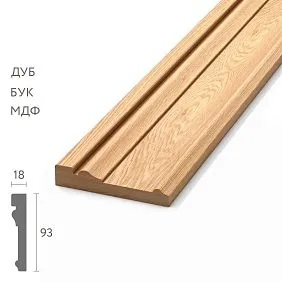
The kitchen of 2026 is not just a place for cooking. It's the heart of the home, where tradition meets innovation, where wood finds new life in the hands of those who understand its language. Wooden handles and wooden skirting boards become the main characters of modern kitchen space, creating a unified material history that can be read with a glance and felt with a touch.
Why wood specifically? Because in an era of plastic and artificial materials, people are drawn to the authentic, to what grew, breathed, remembers sun and rain. Wooden elements in the kitchen are not a tribute to fashion, but a return to origins, to a time when every object had a soul and history. When wooden handles on kitchen fronts echo skirting boards made from the same solid wood, a magic of unity arises—the space gains a voice, character, individuality.
Imagine a morning in such a kitchen. A sunbeam touches the oak skirting board near the floor, glides across cabinet fronts, stops on a wooden handle, and this entire composition sounds like a chord—harmonious, balanced, natural. This isn't a random coincidence of details, but a thoughtful system where every element knows its place and role.




Philosophy of unified material space
In modern design, what wins is not luxury, but thoughtfulness. A kitchen where wooden handles are made from the same oak or beech as the wooden skirting board at the floor—this is a manifesto of a considered approach to space. It's a rejection of chaotic material mixing in favor of a holistic concept where wood plays the leading role.




Why material unity is more important than variety
The human eye is designed to seek patterns, rhythms, repetitions. When one material repeats in an interior—wood of a specific species, with recognizable texture and color—the brain reads this as order, logic, thoughtfulness. A feeling of calm, reliability, completeness arises. When materials are disparate—plastic handles, MDF skirting, unsystematic metal inserts—the space feels restless, random, temporary.
Solid wood handles create tactile contact with natural material dozens of times a day. Every cabinet opening, every touch—is a micro-dialogue with wood, with its warmth, texture, living surface. And when the gaze lowers and sees skirting made from the same material, there's a feeling that the entire kitchen is carved from a single solid piece, like a ship from a whole tree trunk.
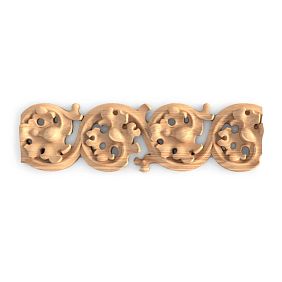
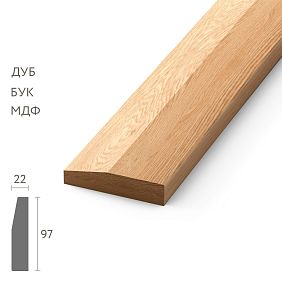
Our factory also produces:




Psychology of perceiving a wooden kitchen
Wood calms. This is a scientific fact. The presence of natural wood in interiors reduces stress levels, normalizes blood pressure, improves mood. In the kitchen, where we spend a significant part of our lives, this effect is especially important. Morning coffee surrounded by wood tastes better. Evening dinner in a wooden kitchen is calmer. This isn't mysticism, but the physiology of perception.
When to buy a wooden skirting board and install it in the kitchen together withsolid wood furniture handlesYou're investing not just in finishing, but in the quality of everyday life. In those moments when your hand reaches for the handle and feels the pleasant smoothness of sanded oak. When your gaze glides along the smooth line of the skirting board and rests on the natural texture.
Get Consultation
Wood Species for the Kitchen: Character and Practicality
Not every wood is suitable for the kitchen. Here, conditions are special: high humidity, temperature fluctuations, frequent contact with water and grease, mechanical loads. Choosing a species for handles and skirting boards is a compromise between aesthetics and functionality.
Oak: The Unbeatable Classic of Kitchen Spaces
Oak is the first choice for those who understand wood. A density of 700-800 kg/m³ at 12% humidity makes it practically invulnerable to kitchen loads. Oak skirting boards are not afraid of moisture, do not swell from spilled water, and do not deform from steam. Wooden oak handles last for decades, acquiring a noble patina over the years that only adds to their character.
The texture of oak is large, expressive, recognizable. Annual rings create a pattern that cannot be confused with anything else. The color varies from light golden in young oak to dark brown in bog oak. This variability allows you to match the tone to any kitchen concept—from light Scandinavian to dark English classic.
In the 2026 kitchen, bleached oak is especially relevant—wood processed in a special way to create a light, almost silvery shade. Such a wooden skirting board combined with handles of the same tone creates a feeling of airiness, cleanliness, and modernity. At the same time, all the strength and reliability of oak are preserved.
Beech: A Warm Alternative for Cozy Kitchens
If oak is masculinity and strength, then beech is warmth and coziness. A density of 680-750 kg/m³ is sufficient for kitchen conditions, and a uniform fine-pored structure makes beech ideal for tinting. A wooden beech skirting board can be any color—from natural pinkish to deep wenge—and will retain its natural texture.
Wooden beech handles are pleasant to the touch—smooth, warm, without coarse fibers. They work perfectly in modern kitchens where tactile comfort is valued. Beech sands well, accepts any finish, and does not crack with humidity fluctuations (with proper treatment). This is a universal wood suitable for both classic and modern interiors.
The only nuance is that beech is more hygroscopic than oak. Therefore, it requires high-quality moisture protection treatment. But with proper oil and wax or waterproof varnish coating, beech skirting boards and handles will last no less than oak ones.
Ash: Contrasting Beauty for Bold Solutions
Ash is a species for those who love expressive texture and contrasting patterns. Density 650-750 kg/m³, high strength, elasticity. The annual rings of ash are more contrasting than those of oak—dark and light stripes create a bright, dynamic pattern. This wood is for active, modern kitchens where energy, not calm, is valued.
A wooden ash skirting board brings movement and rhythm into the kitchen. And when wooden handles repeat this pattern, the effect is multiplied many times over. Ash takes tinting perfectly—you can emphasize the contrast of the texture with a dark stain or, conversely, soften it with bleaching. The versatility of processing makes ash a popular choice for 2026 kitchens.
Larch: Coniferous Strength for Wet Areas
Larch is the only coniferous species suitable for wet rooms without reservations. Density 650-700 kg/m³, high content of natural resins make it naturally moisture-resistant. Larch skirting boards can be installed even in the sink area—they will not rot, turn black, or lose their appearance.
The color of larch is warm, honey-golden, with a reddish undertone. The texture is expressive but not aggressive. Wooden larch handles are strong, durable, and resistant to wear. This is a practical choice for kitchens where functionality comes first.
Skirting Board Height and Handle Size: The Laws of Proportion
In kitchen design, size matters. A wooden skirting board can be of different heights—from 60 to 120 millimeters, and each option creates its own impression. Wooden handles also vary in length and shape. How to coordinate them?
Low Skirting Board 60-70 mm: Modern Laconicism
For minimalist kitchens where graphic quality and clean lines are valued, a low skirting board is suitable. It does not draw attention, works as a thin border separating the floor from the wall. In such a kitchen, wooden handles should also be restrained—short rails 120-160 mm, small cylindrical or square knobs 30-40 mm.
The proportion is simple: the lower the skirting board, the more elegant the hardware should be. Massive long handles against a narrow skirting board will look grotesque. But laconic shapes will create a sense of modernity, precision, and thoughtfulness. Buying a wooden skirting board 60 mm high and complementing it with short handles from the same wood means choosing the path of elegant minimalism.
Medium Skirting Board 80-100 mm: A Universal Solution
This is the golden mean, suitable for most kitchens. A wooden skirting board of this height is noticeable enough to create an architectural frame but does not dominate. Here, freedom opens up in choosing handles—from medium 160-200 mm to long 250-300 mm. The shape can be any: classic pulls, straight rails, U-shaped handles, inset profiles.
A medium skirting board allows you to create a balanced composition where wooden handles are read as active elements, attract attention, create accents, but do not conflict with the architecture of the space. This is the choice for those who want both practicality and aesthetics.
High Skirting Board 110-120 mm: Classic Representativeness
A high skirting board is a statement of status, of classic or neoclassical style. It requires a corresponding scale in everything: tall cabinets, massive countertops, large handles. Wooden handles here can be long—300-400 mm, with a pronounced profile, possibly with carved elements.
A high wooden skirting board in the kitchen creates a sense of solidity, reliability, and tradition. This is a kitchen where cooking is done thoughtfully, not on the run. Where the family gathers around a large table. Where quality and durability are valued. And the handles here should be the same—solid, noticeable, durable.
Color Harmony: How to Coordinate Wood Tones
Even one wood species can have different shades depending on growing conditions, cutting method, and processing. Oak from one forest may be lighter than oak from another. How to achieve color unity?
One batch principle
The ideal option is to purchase a wooden baseboard and handles from the same production batch. This ensures the wood comes from the same region, possibly even the same tree trunk. The color, grain, and density will match as closely as possible. This guarantees a visual unity that is impossible to achieve by purchasing elements from different places at different times.
Manufacturerswooden productsHigh-end manufacturers always indicate the batch, series, and wood characteristics. When ordering a kitchen, ask if it's possible to get the wooden baseboard and wooden handles from the same batch. This simplifies color coordination and yields the best result.
Toning as a unification tool
If achieving an absolute match isn't possible—if there's a slight difference in tone—toning comes to the rescue. Stains, oils with pigments, and tinting varnishes allow you to adjust the shade of the handles to match the baseboard or vice versa. The key is to entrust this work to a professional who understands how wood absorbs pigment, how the color changes after drying, and how the grain will appear.
Toning opens up wide possibilities. You can make light beech match the color of dark oak. Or create a bleached wood effect on natural ash. Wooden handles after toning can perfectly match the baseboard in color while preserving the natural grain and tactile feel.
Contrast as a deliberate technique
Sometimes a perfect match is boring. That's when contrast works. A dark wooden baseboard made of stained oak and light handles made of bleached ash. Or vice versa—a light baseboard and dark handles. But the contrast must be supported by other kitchen elements: the countertop, backsplash, and cabinet fronts. Otherwise, it will feel random.
Contrast works when it's intentional, when there's an idea behind it. For example, in a Scandinavian-style kitchen with light walls and floors, light wooden baseboards, but dark handles as accents—dots that pull the composition together. And this dark color is repeated in the lighting fixtures, dishes, and textiles. Then everything works.
Texture and surface finish
Even perfectly matched wooden handles and a wooden baseboard can clash if the surface finishes are different. One element is smoothly sanded and coated with glossy varnish, the other is wire-brushed and matte. The textures don't match, and the unity is broken.
Smooth sanded surface
The classic option is wood sanded to perfect smoothness. Roughness Ra 6-12 µm, a satin surface, pleasant to the touch. The wood pores are sealed, the grain is visible but not felt tactilely. This finish is suitable for modern kitchens where clean lines and forms are valued.
A wooden baseboard with smooth sanding and handles with the same treatment create a sense of neatness, respectability, and quality. This is the choice for those who love order and perfection. Caring for a smooth surface is easier—dust and dirt don't get trapped in the pores; a simple wipe with a damp cloth is enough.
Wire-brushed texture
Wire-brushing is a treatment where soft wood fibers are removed with special brushes, leaving the hard ones. This creates a textured surface where the annual rings stand out, forming a tactile pattern. This is wood with character, with emphasized naturalness.
Wooden handles with a wire-brushed surface are pleasant to hold—there's something to grip, a sense of the material. A wooden baseboard with wire-brushing looks impressive, especially with side lighting—shadows in the grooves create volume and play of light. This is a choice for kitchens in loft, country, or Provence styles, where authenticity is valued.
But wire-brushing requires more thorough care. Dust and grease can accumulate in the texture. Regular cleaning with a soft brush and periodic renewal of the protective coating are needed.
Aged surface
Artificial aging is a whole set of techniques: patination, creating wear marks, wormholes, and dents. The wood looks as if it's a hundred years old, even though it's new. This technique is for interiors with history, for kitchens in chalet, Provence, or vintage styles.
A wooden baseboard with an aged effect and handles in the same spirit create the atmosphere of a cozy country house where time flows slowly and traditions are valued. It's important that the degree of aging matches—if the baseboard is lightly patinated, the handles shouldn't look as if they were found in the attic of a century-old house. Balance is the key to harmony.
Coatings for kitchen conditions
Wood in the kitchen faces serious challenges. Water, steam, grease, cleaning agents, mechanical stress. Without the right protective coating, even the hardest wood species will quickly lose its appearance. What coatings are suitable for handles and baseboards?
Oil with hard wax
This coating is for those who value naturalness. Oil penetrates the wood pores, enhances the grain, and provides a slight sheen. Wax creates a protective film on the surface. The wood remains 'breathable,' pleasant to the touch, and warm. Wooden handles with an oil-wax coating are a delight to touch.
Pros: naturalness, beauty, repairability (can be refreshed locally). Cons: requires regular maintenance (apply a fresh coat every year or two), less resistant to water than varnish. For a wooden baseboard in the kitchen, oil is suitable if the area isn't too humid. For handles—ideal.
Water-resistant varnish
Varnish creates a durable film on the wood surface, protecting it from moisture, grease, and mechanical damage. Modern water-based varnishes are eco-friendly, odorless, and dry quickly. The level of sheen varies from matte to glossy—the choice is yours.
A wooden baseboard with a varnish coating practically requires no maintenance—just wipe with a damp cloth. Handles with varnish are also durable and low-maintenance. This is a practical choice for busy people who want beauty without hassle. The downside is that repairing a damaged varnish layer is more difficult than with oil.
Polyurethane coating
This is maximum protection for the harshest conditions. Polyurethane creates a strong, elastic, waterproof film. Wooden handles with such a coating can withstand anything—they can be washed, cleaned, won't darken from grease, and won't swell from water.
A wooden skirting board with a polyurethane coating is suitable for high-risk areas — near the sink, stove, or dishwasher. This is a professional solution that guarantees durability. The downside is a higher price compared to oil or water-based varnish, and some loss of the natural tactile feel of the wood.
2026 Kitchen Styles and Wooden Palette
Each style has its own philosophy, its own approach to materials and forms. How do wooden handles and wooden skirting boards integrate into different stylistic directions?
Scandi Kitchen: Light Wood and Minimalism
Scandinavian style reigns in 2026 kitchens. Light tones, natural materials, functionality without excess. Here, the wooden skirting board is light (whitewashed oak, ash, birch), 60-80 mm high, with a simple rectangular profile. Handles are laconic, possibly inset profiles or short rails 120-160 mm.
Color is uniform, light, with a slight gray or white undertone. Finish is matte oil or matte varnish. The wood grain is visible but not obtrusive. Everything is aimed at creating a feeling of light, air, and cleanliness.wooden itemsIn Scandinavian style, it's about simplicity that is more complex than it seems.
Modern Classic: Dark Wood and Elegance
Neoclassicism in the kitchen is restrained luxury, where dark-toned wood creates a sense of solidity. Wooden skirting board 100-120 mm high, made of oak or ash, stained dark brown, wenge, or graphite. The profile is classic — with a bead or a torus.
Wooden handles are brackets 200-300 mm long, possibly with light carving or milling. Color matches the skirting board, finish is semi-matte varnish, emphasizing the nobility of the wood. This is a kitchen for those who value tradition but are not ready for heavy classicism.
Loft Kitchen: Brutal Wood and Material Honesty
Loft is about sincerity, about showing materials as they are. The wooden skirting board here can be made from roughly processed boards, without profiling, just a 100x40 mm beam of oak or larch. Possibly with an aged effect, preserving tool marks.
Wooden handles are massive, brutal, possibly combined with metal. Brushing, emphasized texture, matte oil finish without gloss. Color is natural dark or fumed. This is a kitchen for strong personalities who are not afraid of character.
Provence Kitchen: Pastel Wood and Coziness
Provence is about warmth, coziness, rustic romance. Wooden skirting board of medium height 80-100 mm, most often painted in pastel tones — milky, lavender, mint, olive. Patina, a worn effect, as if the skirting board has been painted many times, is possible.
Wooden handles — rounded shapes, mushroom-shaped knobs, short brackets with a curve, also painted or patinated. Tactile softness, pleasantness in the hand is important.decor for furnitureIn Provence style, it's about soulfulness, about things made with love.
Practical Installation Aspects
Beautiful design in a picture is one thing. Implementation is another. How to properly install wooden skirting boards and handles in the kitchen so that they last long and please the eye?
Installing Skirting Boards in the Kitchen
Kitchen skirting boards experience special loads. The floor is washed more often here, humidity is higher, and leaks are possible. Therefore, proper installation is important. The base must be level, dry, and clean. The wall should be plastered or puttied, without irregularities.
Fastening — with screws or adhesive. Screws are more reliable for heavy, solid skirting boards. Fastening spacing is 40-50 cm. Pre-drilling holes in the skirting board is mandatory, otherwise the wood may crack. Fastening points are later filled with putty and painted to match the wood tone.
Adhesive is used for light skirting boards or as a supplement to screws. Special wood adhesive, resistant to humidity. Important: there must be a 1-2 mm expansion gap between the skirting board and the floor — wood is a living material, it expands or contracts with changes in humidity.
Installing Handles on Fronts
Wooden handles are fastened with screws through holes in the front. The distance between holes (center-to-center) is standardized — 96, 128, 160, 192 mm. Before installation, you need to mark precisely, drill holes from the back of the front to avoid chips on the face.
Important: the screw should not protrude from the back of the handle and scratch your hand. The screw length is selected according to the front thickness. For an 18-19 mm front — a 25-30 mm screw. Tighten without fanaticism, so as not to over-tighten and crack the wood of the handle.
If it's a knob handle — one hole in the center. If it's a bracket — two holes symmetrically. Marking accuracy is critical — even a millimeter of misalignment will be visible. Use templates, a level, a ruler.
Caring for Wooden Kitchen Elements
Wood requires attention. But not complicated — just regular. How to care for skirting boards and handles so they last for decades?
Daily Care
After cooking, wipe wooden handles with a damp cloth, removing grease splashes and hand marks. This takes a minute but prevents the accumulation of dirt. Also wipe the wooden skirting board during wet floor cleaning — dust and small debris settle on it.
Avoid aggressive detergents, abrasives, and stiff brushes. Wood is delicate. Even durable oak can be scratched if rubbed too hard. A soft cloth, warm water, mild soap — that's enough.
Periodic Maintenance
Once a month — a more thorough cleaning. Special wood care products that clean while simultaneously nourishing and renewing the protective layer. For oil finishes — oil cleaner. For varnish finishes — wood furniture polish.
Once every one to two years (for oil finishes) — renewing the protective layer. Light sanding with fine sandpaper (grit 220-320), applying a fresh coat of oil with wax. The wooden baseboard and handles look like new again. It's simple and can be done yourself in a couple of hours.
Repairing minor damages
Scratches, dents, and wear marks are inevitable with active use. But wood can be beautifully restored. A small scratch on a handle can be sanded, touched up, coated with oil — and it disappears. A chip on the baseboard — fill with wood putty matching the tone, sand, touch up.
Deep damage is more complex but can also be repaired. As a last resort, you can replace a single element — one handle, one section of baseboard. This is simpler and cheaper than replacing everything.
Ecological and Health Benefits
By 2026, the topic of ecology had ceased to be a trend — it became a necessity. People are increasingly thinking about what surrounds their homes, what furniture is made of, what surfaces are coated with. Wood is the most eco-friendly material.
Naturalness Without Compromise
Solid wood handles contain no formaldehyde, phenols, or other volatile substances that particleboard and MDF are notorious for. Wooden baseboard is also pure — it's simply wood that grew in a forest, dried, and processed. Even modern coatings — natural-based oils, water-based varnishes with minimal VOC content — are safe.
In the kitchen, where food is prepared, where vapors are breathed, where temperature and humidity change — eco-friendliness is especially important. Wooden elements do not emit harmful substances, do not create an allergenic background, quite the opposite — wood can regulate humidity, absorb odors.
Renewability and Responsibility
Wood is a renewable resource, unlike oil (plastic) or iron ore (metal). With responsible forestry, where a new tree is planted in place of a felled one, the production of wooden products does not harm nature. FSC certification guarantees that the wood comes from managed forests.
When you buy wooden baseboard and handles from a responsible manufacturer, you vote with your ruble for a sustainable future. For the forest that will live. For the air your children will breathe.
The Economics of Durability
Wood is more expensive than plastic and MDF. That's a fact. But if you calculate the cost of ownership over the long term — wood is more economical.
Plastic handles: 3-5 years
Cheap plastic handles in the kitchen yellow from the sun, crack from temperature changes, break with active use. After 3-5 years they lose their appearance, and you have to replace them. Saving at the start turns into repeated expenses.
Wooden handles: 20-50 years
Quality solid wood handles last for decades. Over the years they darken, develop a patina, acquire character — they only get better. If the coating wears off — renew the oil. If there's a scratch — sand it. But you don't need to replace them. The economics are simple: pay once — use for half a lifetime.
The same with baseboard. MDF baseboard will last about 7-10 years, then it will swell, lose its shape. Oak wooden baseboard — 30-50 years, or even more. It can be repainted, refinished, adapted to a new interior. This is not an expense, it's an investment in your home.
Frequently asked questions
Can different wood species be used for handles and baseboard?
Yes, but you need to carefully coordinate the color through tinting. Ideally — one species, one batch. If the species are different — let it be a deliberate contrast, supported by other kitchen elements.
How often should the oil finish be renewed?
On baseboard — once every 2-3 years, it is less subject to wear. On handles — once every year to a year and a half, especially if the kitchen is actively used. But this depends on the intensity of use and the quality of the oil.
Will wooden baseboard withstand a water leak?
If the leak is quickly fixed and the baseboard is wiped dry — yes. Oak and larch are particularly resistant. But if water stands for hours — even the strongest wood will suffer. It's important to react quickly to leaks.
Can wooden handles be washed with kitchen cleaning products?
Neutral, mild ones — yes. Aggressive ones, with abrasives, with chlorine — no. They will damage the coating, may discolor the wood. Better — soapy water or special wood care products.
What handle length is optimal for kitchen cabinet fronts?
For upper cabinets (height 70-90 cm) — handles 128-160 mm. For lower ones (60 cm) — 96-128 mm. For wide pull-out drawers (80-120 cm) — 160-300 mm. Proportion: approximately 1/4-1/3 of the front width.
Is a gap needed between the furniture and the baseboard?
Yes, 5-10 mm, so the furniture doesn't press against the baseboard. This allows cabinets to be pushed flush against the wall, and the gap is visually unnoticeable.
How to choose the height of a kitchen skirting board?
For a kitchen up to 10 m² with ceilings 2.5-2.7 m — a 60-80 mm skirting board. For a kitchen 12-15 m² and above — 80-100 mm. For spacious kitchen-living rooms from 20 m² — 100-120 mm.
Does wood darken over time?
Yes, especially oak and walnut. This is a natural oxidation process. Light wood becomes warmer, more golden. Dark wood becomes even darker. This is not a defect, but a noble patina of time. For the skirting board and handles to age synchronously, it is important that they are from the same batch.
Can wooden skirting boards and handles be painted?
Yes, wood paints beautifully. You can change the color to match a new interior, refresh a faded surface. It is important to use paint for wood, prime beforehand, and properly prepare the surface by sanding.
What is better: oil or varnish for the kitchen?
For skirting boards away from the sink — oil (beauty, tactility). Near the sink and stove — varnish or polyurethane (maximum protection). For handles — oil with wax (more pleasant to the touch) or semi-matte varnish (more practical).
Conclusion: Wooden Harmony Under the Sign of STAVROS Quality
The kitchen is a laboratory of taste, a workshop for culinary experiments, and simultaneously a place where the family gathers around the common table. It deserves the best materials, thoughtful design, and attention to detail. Wooden handles and wooden skirting boards are not just finishing elements. They are what create the atmosphere, what you touch every day, what will serve for decades.
A unified wood palette—when handles and baseboards are made from the same wood species, the same tone, with the same finish—is the pinnacle of design mastery. This requires attention during the planning stage, precision in material selection, and skill in installation. But the result is worth the effort. The kitchen gains integrity, character, and soul.
The STAVROS company has been creatingSolid wood productsof the highest quality for over 20 years. The assortment includesskirting boards made of oak, beech, ashwith heights from 60 to 140 mm, with various profiles and finishing options.Furniture Handles— classic and modern, carved and minimalist, with lengths from 96 to 400 mm. All products are made from selected solid wood with controlled moisture content of 8-12%, having undergone multi-stage drying and processing.
The advantage of working with STAVROS is the ability to get skirting boards and handles from the same batch of wood. This guarantees a perfect match in color, texture, and density. You won't have to painstakingly match elements from different manufacturers, risking mismatched tones. Everything is coordinated, everything is thought out, everything is precise.
STAVROS offers a wide palette of finishes: from natural wood under oil to painted and patinated options. Brushing, aging, tinting in any color — technological capabilities allow for the realization of any designer's vision. The coatings are eco-friendly, certified, and safe for health.
In addition to skirting boards and handles, STAVROS produces a full line ofmolding products: moldings, cornices, architraves, battens, blocks. This allows for creating a comprehensive solution for the entire kitchen and home, where every element is coordinated, every detail is in its place. A single material, a single style, a single philosophy of quality.
When you choose STAVROS, you choose not just a product, but a partner in creating your dream home. Experienced consultants will help you select the wood species, decide on dimensions, and choose the finish and coating. Production will execute the order with jeweler's precision. Logistics will deliver on time and intact. And the quality of the products will delight you for decades.
Buying wooden skirting boards andSolid wood handlesfrom STAVROS means investing in the beauty, durability, and health of your kitchen. It means choosing the path of quality over compromise. It means creating a space where it's pleasant to cook, where you want to gather as a family, where every detail speaks of your taste and values.
Wood is a material with history, with soul, with character. It will outlive fashions and trends, remaining relevant in both five and twenty years. A kitchen with wooden handles and solid wood skirting boards is a kitchen for centuries, a kitchen with dignity, a kitchen you can be proud of.
May your 2026 kitchen sound like a single melody, where wooden handles and wooden skirting boards are the notes of one chord. Where every morning begins with a touch of warm wood. Where beauty and practicality go hand in hand. Where quality is not a declaration, but a reality you can feel.
STAVROS — your guide to the world of natural wood. A world where quality is measured in decades, where beauty does not fade over time, where traditions meet innovation. Create kitchens that inspire. With STAVROS, it's simple.


