

























Article Contents:
- Carved Window Casings: Why They Make the Window the Focal Point of Design
- What Are Carved Window Casings
- Types of Carved Window Casings
- By Carving Style
- By design
- By Application Area
- Wooden Carved Window Casings: What Are the Advantages
- How to Choose Carved Window Casings
- By House Style
- By Pattern Character
- By size
- By color and finish
- Carved window trims for wooden houses
- Carved window trims in modern and classic designs
- For classic facades
- For Russian style
- For interiors with wooden decor
- For accent decoration of a single window or group of windows
- What's better: ready-made carved trims or decorative overlays for trims
- What to combine carved window trims with
- Carved trims + moldings
- Carved trims + cornices
- Carved window trims + carved decorative elements
- Carved window trims + moldings
- Carved window trims + door decoration
- Dimensions and proportions of carved window trims
- How much do carved window trims cost
- Installation of carved window trims and decorative elements
- STAVROS: carved window trims and decorative overlays for windows
- Frequently Asked Questions
- Which carved window trims are better to choose
- Where to buy wooden carved window trims
- What's better: solid carved trim or overlay system
- Can carved window trims be painted?
- What patterns are suitable for a wooden house?
- How to match carved decor to the facade?
- How many overlays are needed per window?
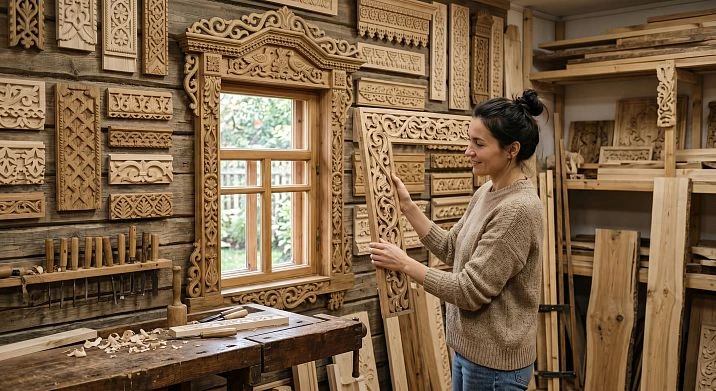
There are houses that are memorable. You walk past them—and you stop. Not because of architectural extravagances or expensive facade materials. But because of the carving in the windows. Delicate, confident, unique. Carved window trims give a house its face. Its character. A sign that aesthetics are considered here.
This is no exaggeration. A carved window trim works just like a well-chosen coat collar or a picture frame—it pulls the entire look together, gives it a starting point. Without it, a facade or interior can be neat, but faceless. With it—it becomes a statement.
If you're already looking for where to buy carved window trims—this article will give you a complete understanding: what types of carving exist, how to choose a trim to match the house style, what sizes, wood species, and finishes to select, and why a system of carved overlays often works better than a solid carved profile.
Looking forCarved window casingswith ready-made decorative overlays and wooden carved decor? Check out the STAVROS catalog—natural materials, professional milling, a full range for any style of decoration.
→ Select carved window trims and decorative overlays
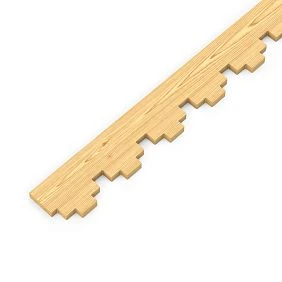
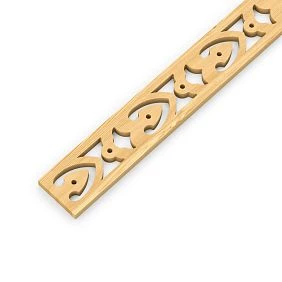
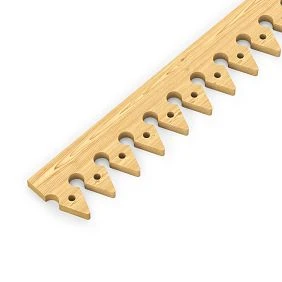
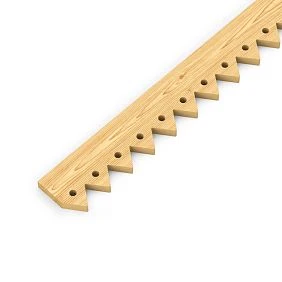
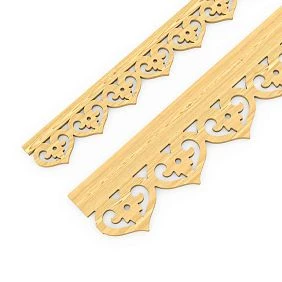
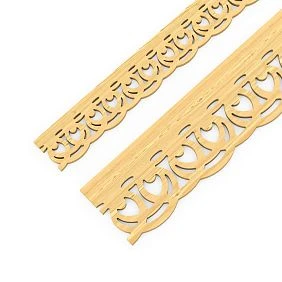
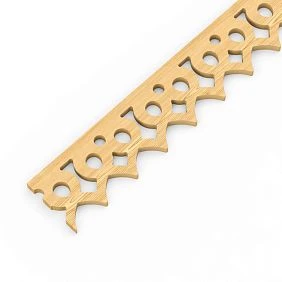
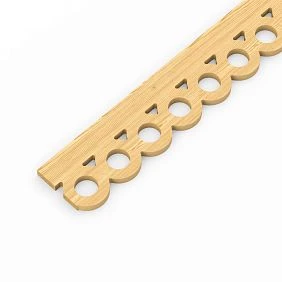
Carved window trims: why they make the window the focal point of the design
When an architect designs a facade, they think about hierarchy: what is primary, what is secondary, what catches the eye. The window is one of the main elements of the facade. It is a source of light, proportion, visual rhythm. And the trim around it either enhances this rhythm or devalues it.
A plain smooth trim is neutral. It performs its technical function: covering the seam, framing the opening. But it says nothing. A carved trim speaks. It communicates style, level of attention to detail, belonging to tradition or a conscious break from it.
Look at wooden houses from the 19th century: it was the trims that made them unique. Each craftsman carved their own pattern—lace-like, geometric, floral. The houses were similar in construction but different in face. This face was shaped by the trims.
What specifically does a carved window trim provide today:
-
Visual depth. The relief of the carving creates shadows in daylight. With oblique light, the pattern becomes three-dimensional, alive. A flat trim never works like that.
-
Stylistic identity. Lace-like openwork carving is for a wooden house or Russian style. Acanthus ornament is classic. A concise geometric relief is a modern interpretation. Choosing a pattern is a statement about style.
-
Prestige. Carved wood is perceived as an indicator of quality. This is a stable psychological mechanism: handcrafted or machine-made relief requires skill and material—and it shows.
-
Connection with other elements. A carved window surround opens up the possibility of a decorative dialogue with moldings, cornices, brackets, and carved furniture details.
Wooden carved window trims— is not a luxury. It's a conscious choice for expressiveness.
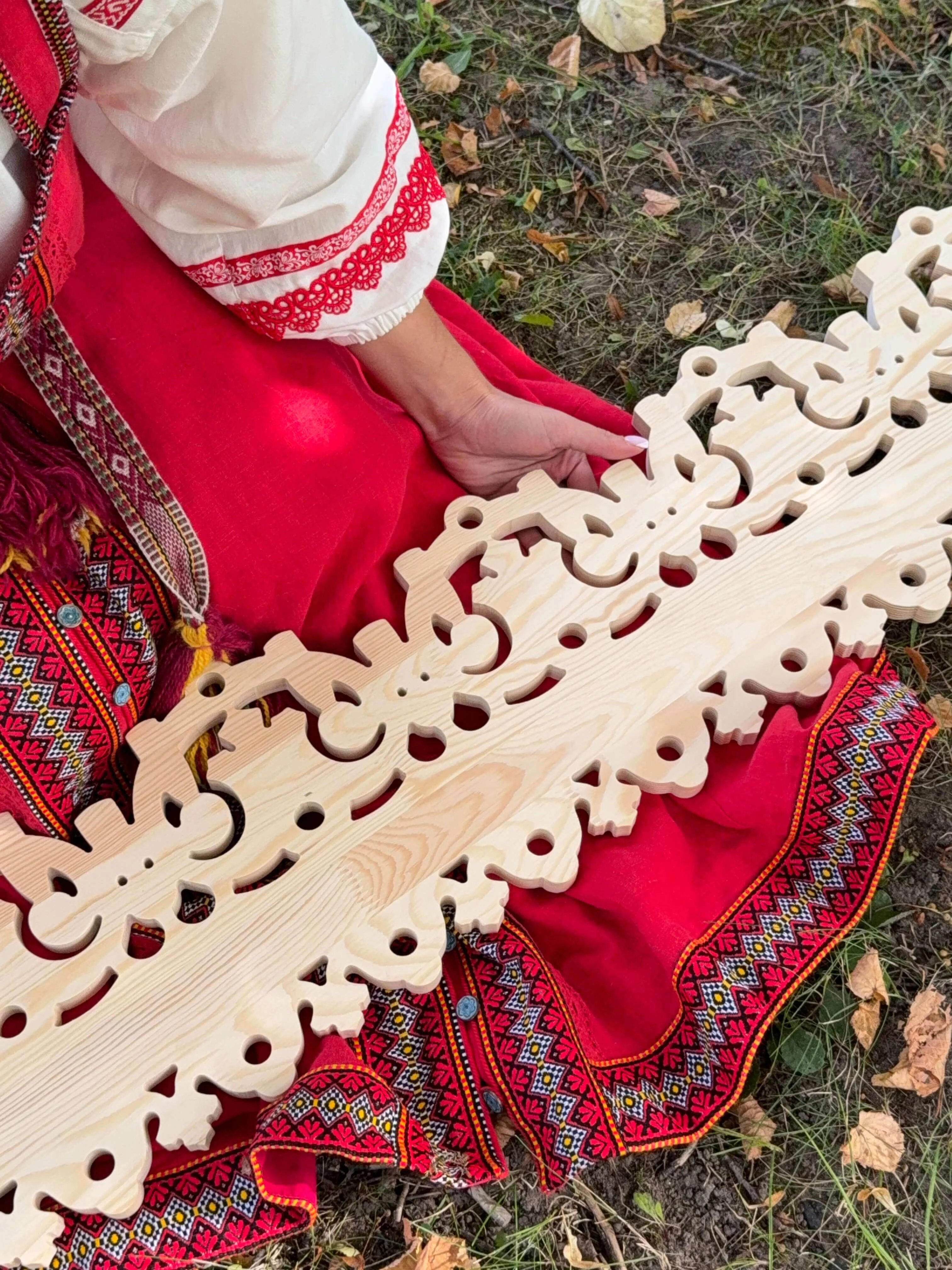
What are carved window trims
To make the conversation substantive, let's first define the concepts.
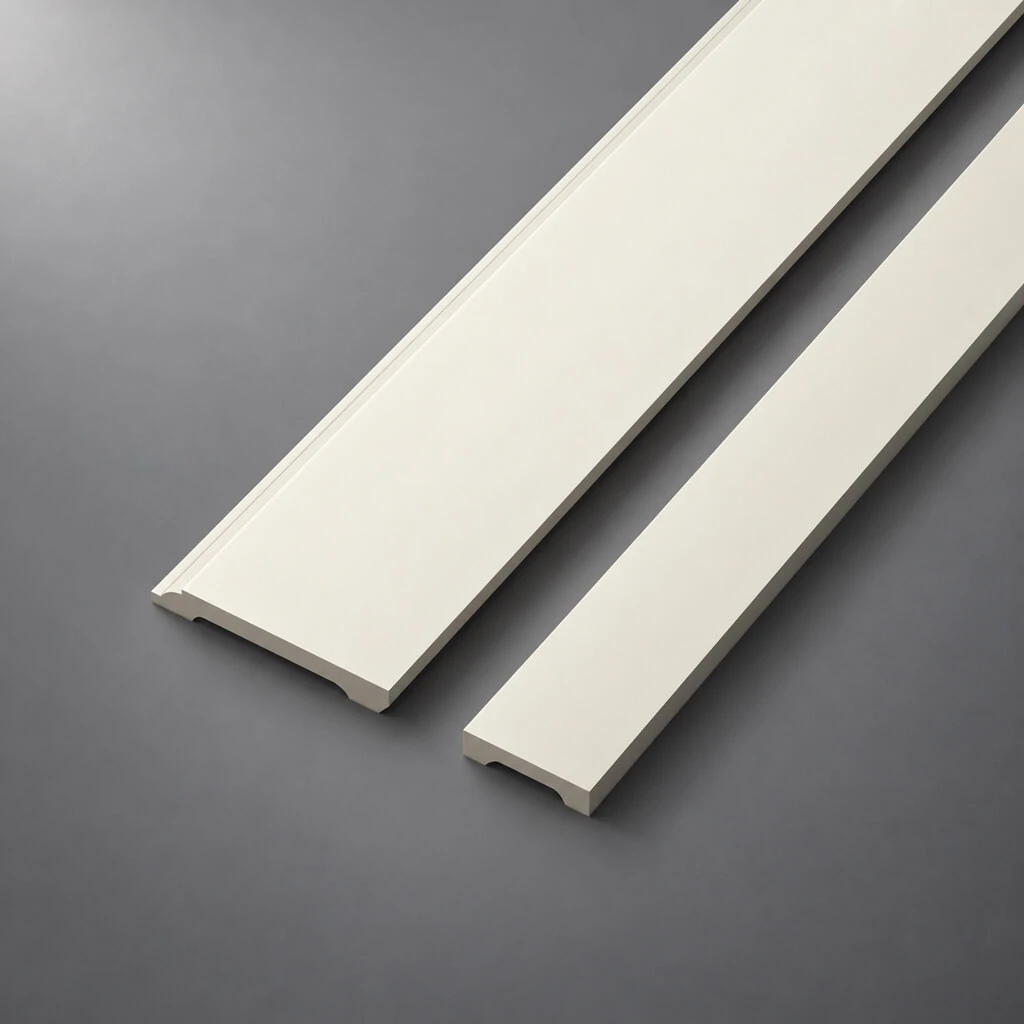
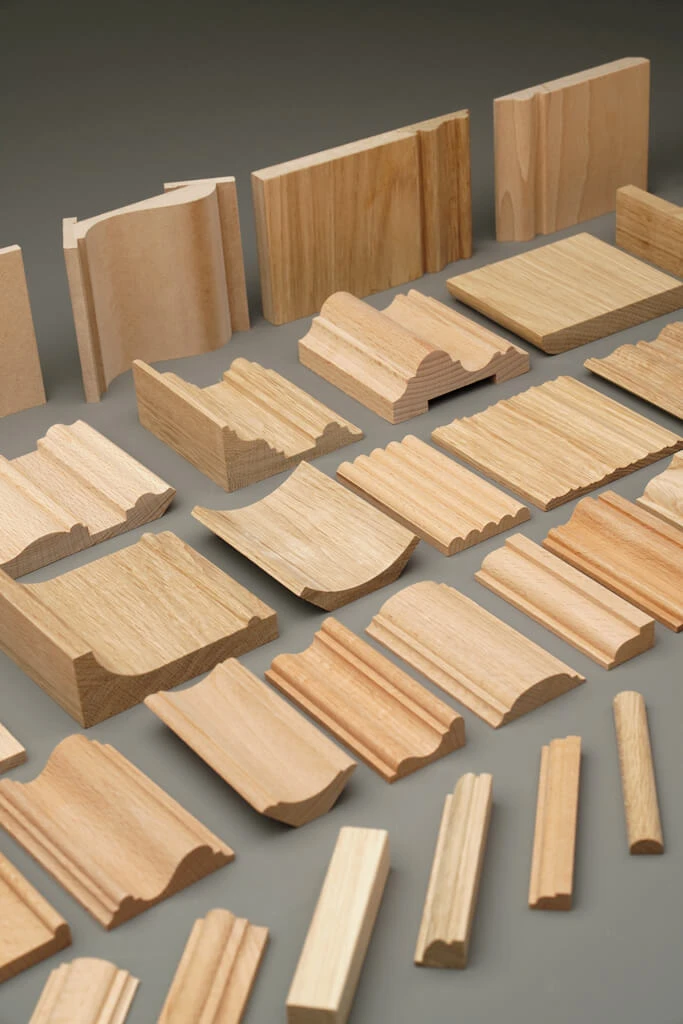
A window trim is a profiled strip that is mounted around the perimeter of a window opening and covers the joint between the frame and the wall (or the joint between the reveal and the wall surface). This is the basic function of any trim—both smooth and carved.
A carved trim differs from a regular one by having a decorative relief. This relief can be:
Executed in the body of the trim—the profile is milled or cut in such a way that the ornament is part of the product itself. This is a solid carved trim.
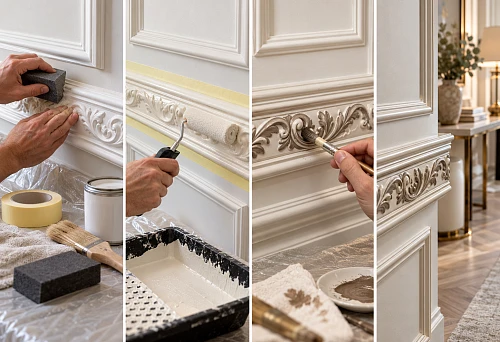
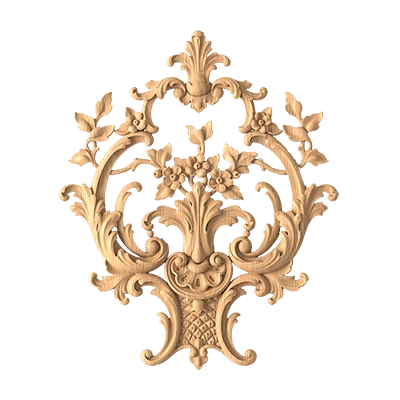
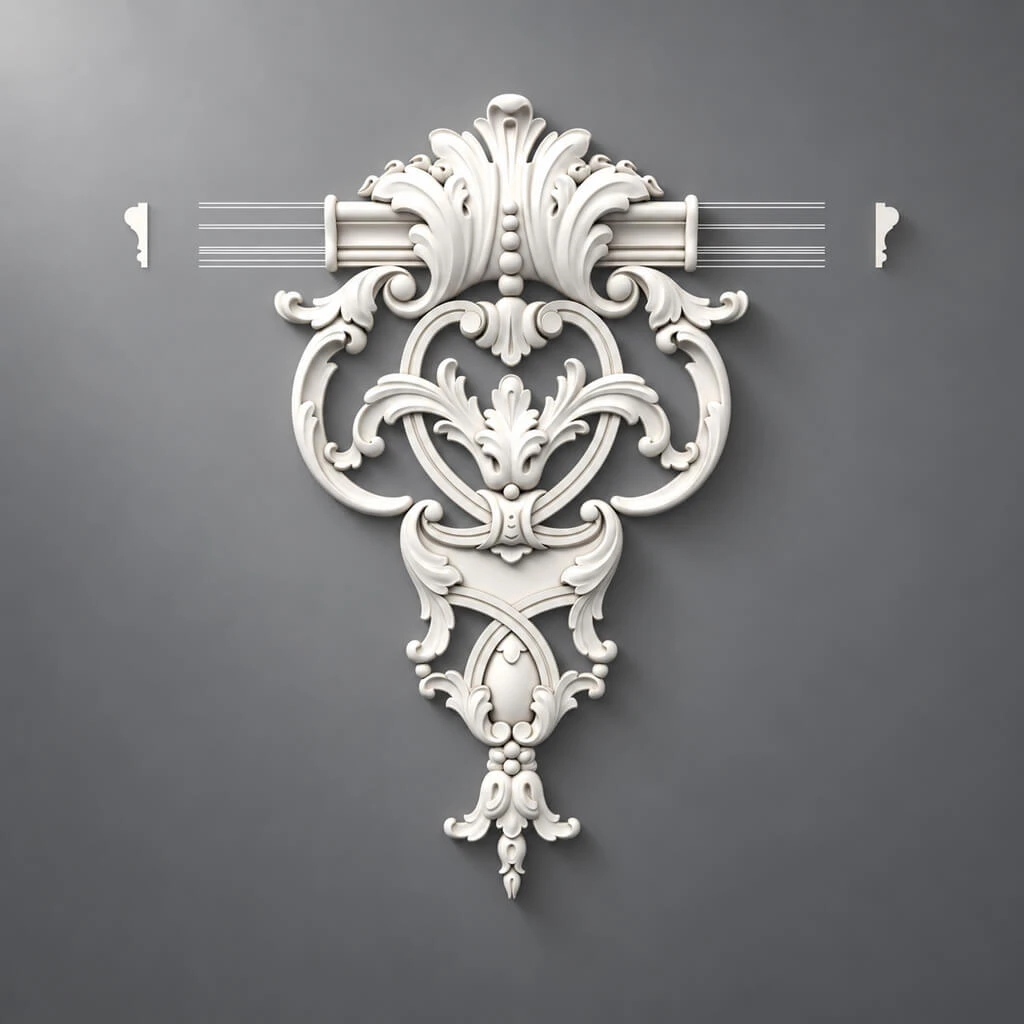
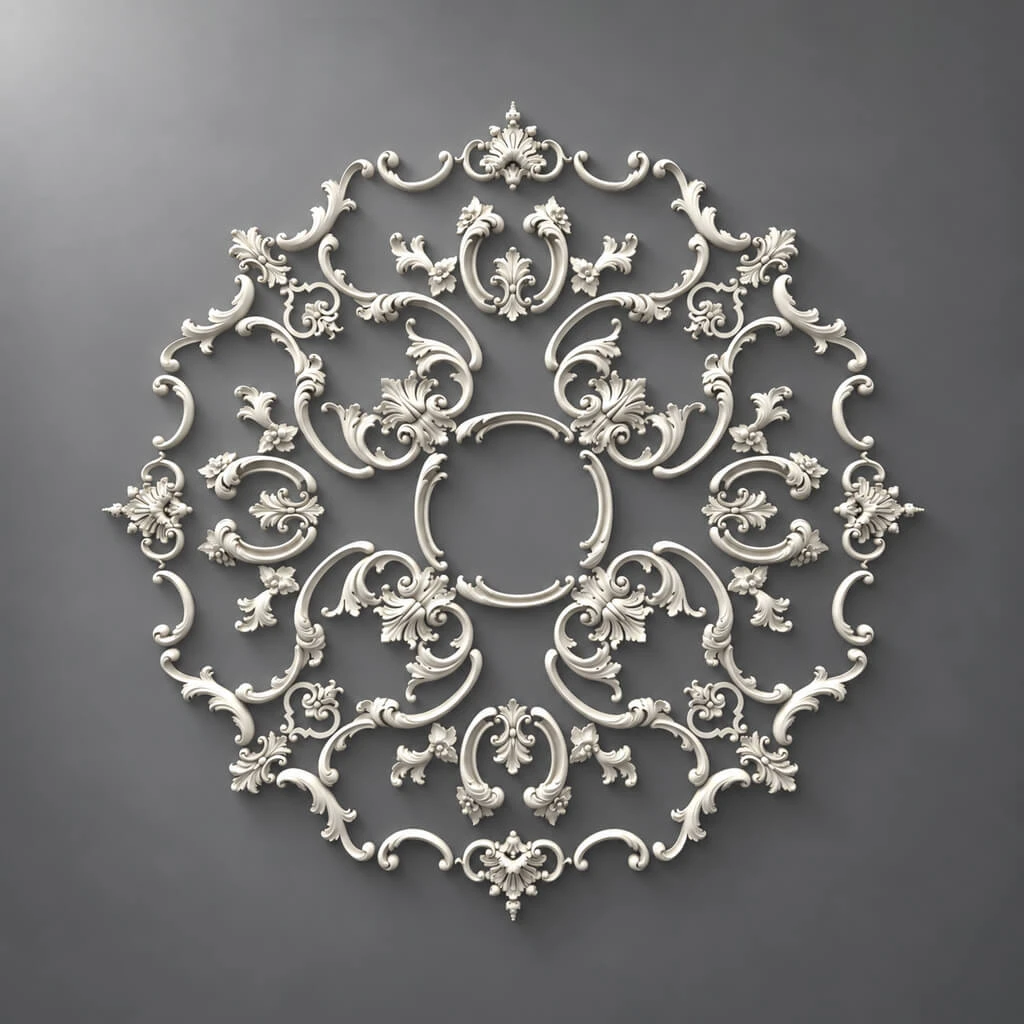
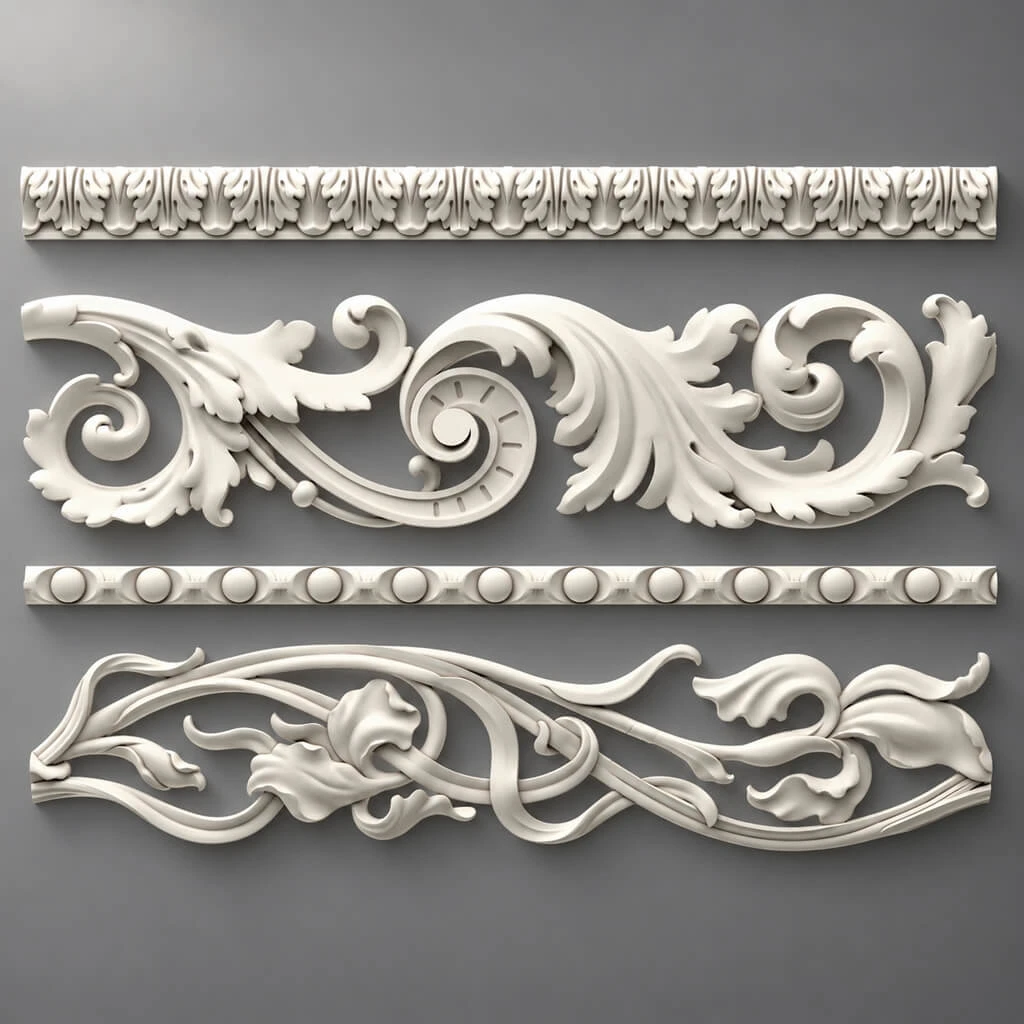
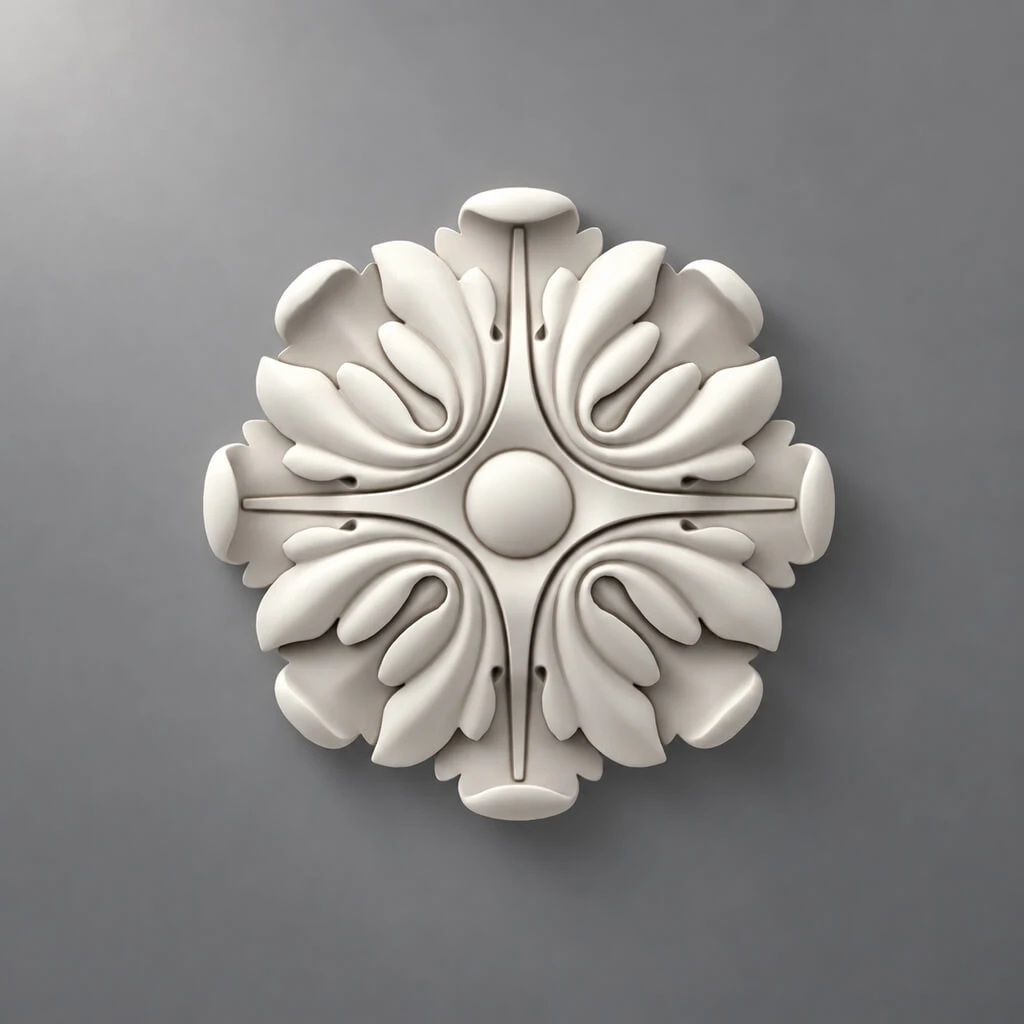
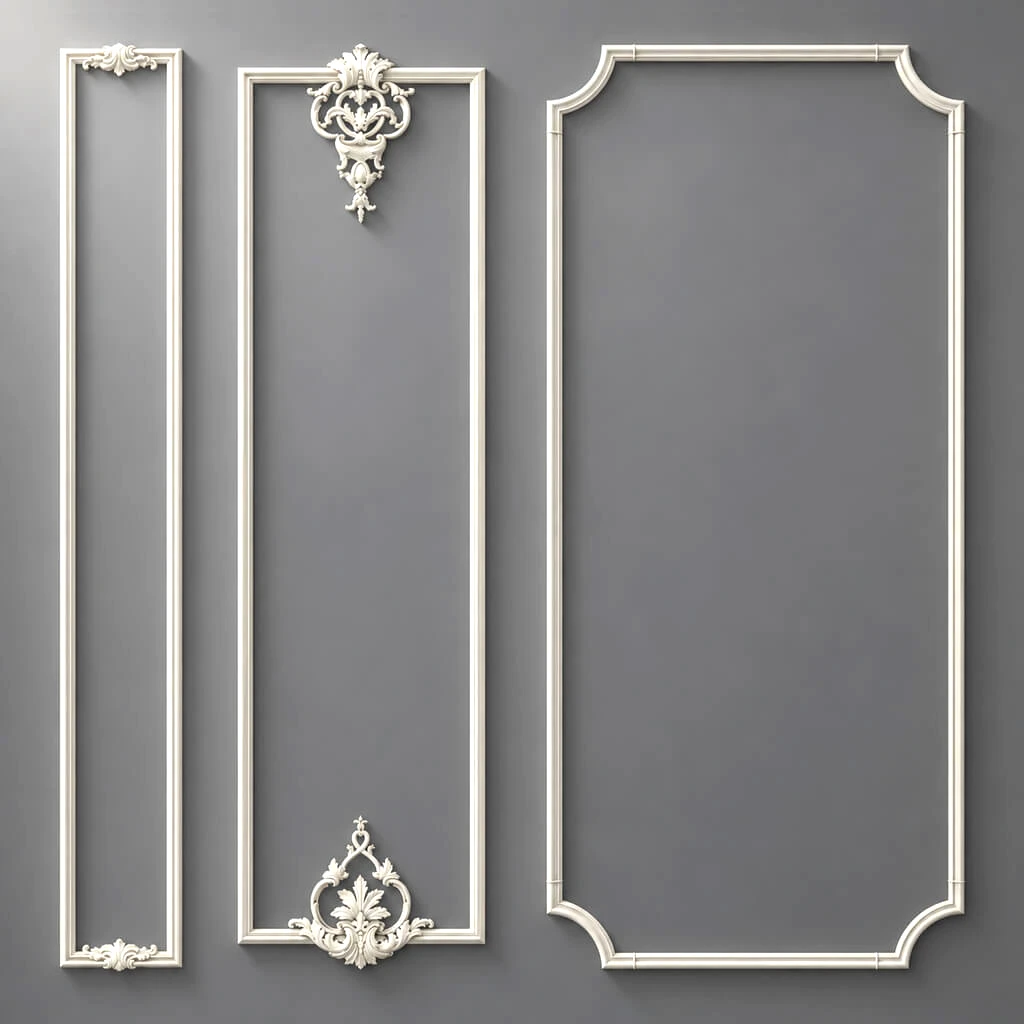
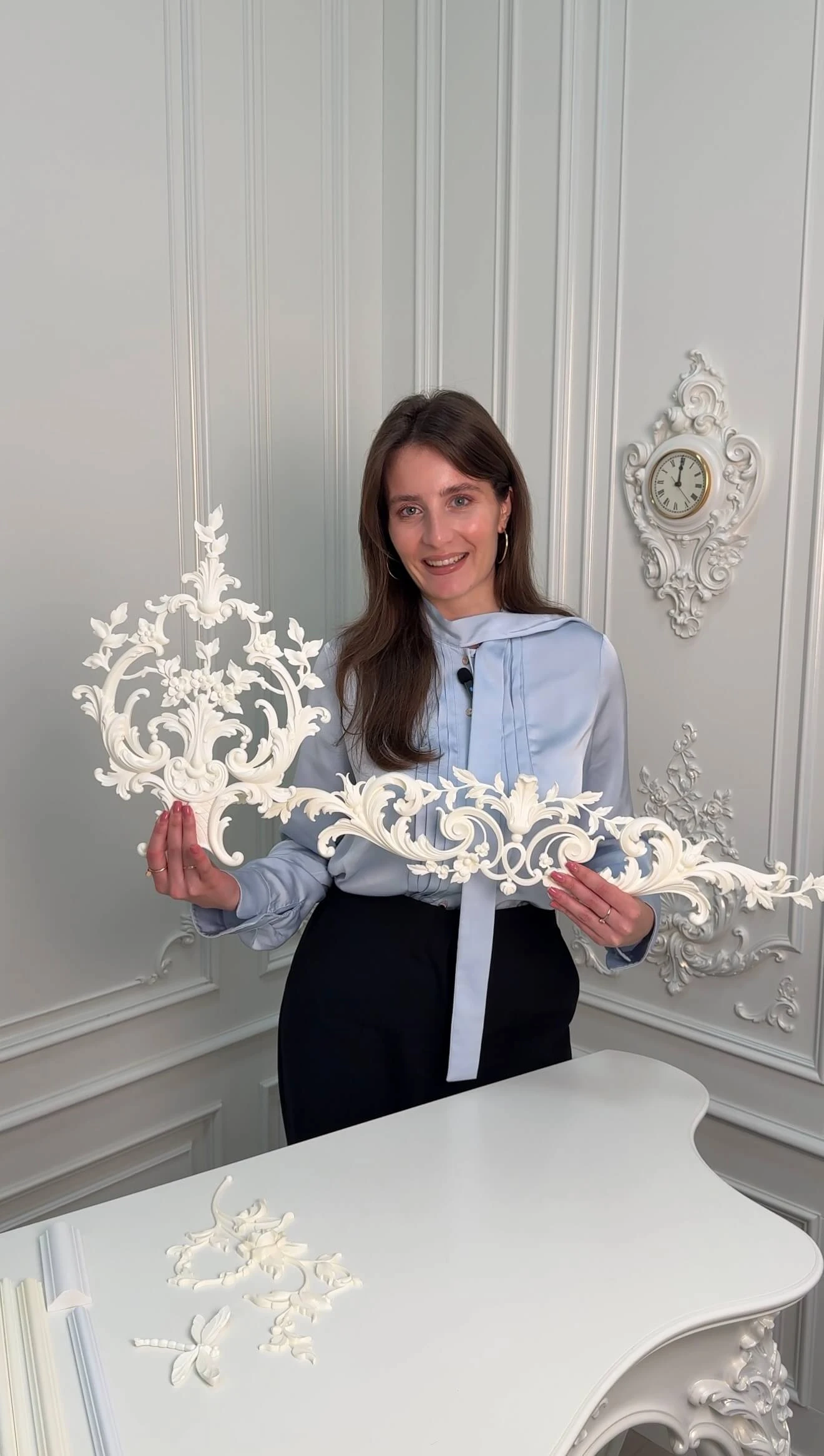
Applied as overlay elements—individual decorative carved overlays are mounted onto a basic smooth or simple shaped profile: corner elements, a central medallion, vertical inserts. This is overlay carved decor.
The second option is more common in modern practice—and here's why: it allows combining any basic profile with any decorative solution. You are not tied to a specific type of solid trim. You assemble the system yourself.
Where carved decor is used on trims:
-
Wooden house facade (log, timber, frame with wooden cladding)
-
Brick or plastered facade with wooden elements
-
Classic and neoclassical interior
-
Formal rooms: entrance hall, living room, study
-
Any interior where wood is the foundational finishing material
Our factory also produces:
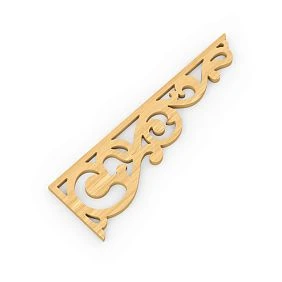
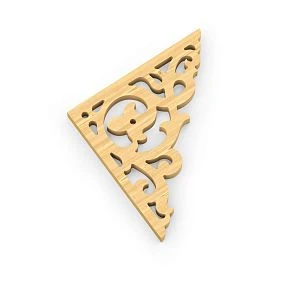
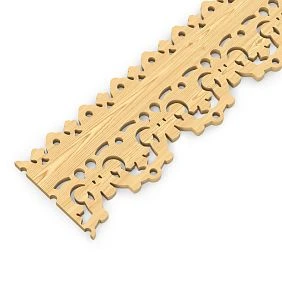
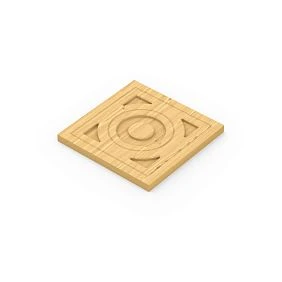
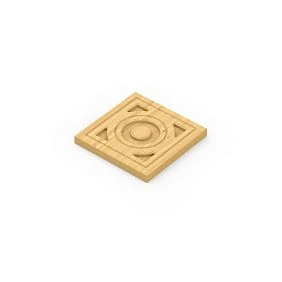
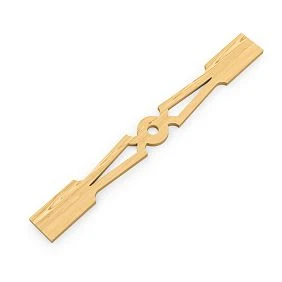
What types of carved window trims exist
Get Consultation
By carving style
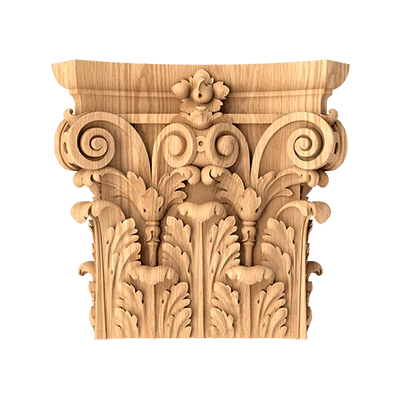
Classical style. Acanthus, volute, laurel branches, medallion, egg-and-dart, meander. This is the decorative language of European architecture from antiquity to neoclassicism. Strict symmetry, clear relief, architectural logic. For city apartments with high ceilings, country houses in classical style, formal rooms.
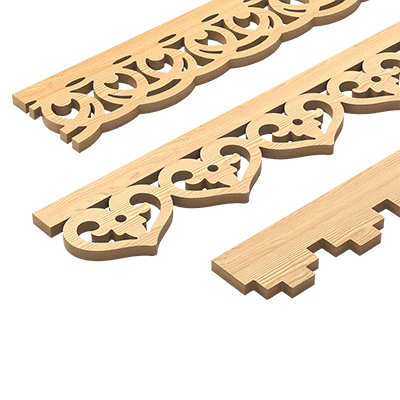
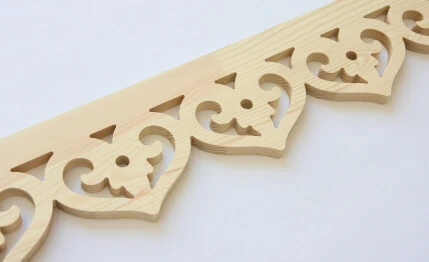
Russian style. Openwork (lace) carving with plant, zoomorphic, and solar motifs. Traditional house carving that adorned wooden houses in Russia from the 17th to 19th centuries. High relief, thin crosspieces, complex multi-tiered compositions. For wooden houses, country estates, any facade where expressive national identity is desired.
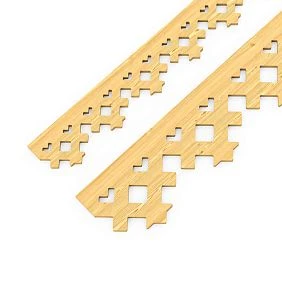
Openwork carving. A special technique: through cuts are made in the body of the wooden element, creating an openwork effect. A trim with an openwork pattern casts a patterned shadow on the wall when lit—this is a living decoration that changes throughout the day.
Geometric decor. Diamonds, squares, triangles, stars—a rhythmic ornament with precise geometry. Works in both traditional and contemporary contexts. Pairs well with minimalist interiors: geometric patterns look restrained but not bland.
Modern interpretation. A laconic relief without ornamental overload. One clear motif, minimal details, impeccable proportions. For modern classics, Scandinavian style, any interior where wood is present as an accent.
By construction
Solid carved architraves. The ornament is part of the profile itself. Produced on CNC milling equipment or by hand. Advantage: monolithic construction—no joints between the base and decoration, no risk of delamination. Disadvantage: limited assortment—each type of architrave has a fixed ornament.
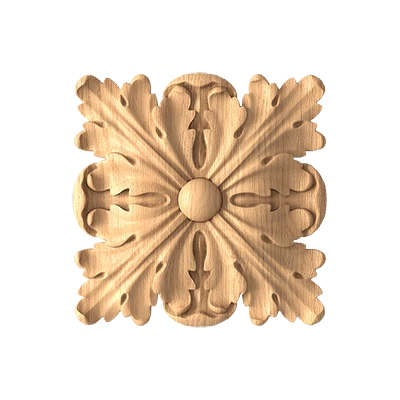
Architraves with applied decoration. Basic profile + carved applied elements: corner, central, side.Carved overlays for architravesare mounted on a finished profile with glue or fasteners, painted together with the base. Advantage: flexibility—any profile can be combined with any decoration.
Compositions of overlays, moldings, and ornaments. A full decorative system for an opening: architrave + corner elements + molding insert + central medallion +wooden corniceabove the window. This is the level of architectural design, not just framing an opening.
By Application Area
For the facade. Here, the requirements for material and coating are the highest: atmospheric exposure, temperature fluctuations, humidity. The wood must be properly dried, the coating must be water-resistant. Openwork carving on the facade must be protected on all sides—otherwise, moisture penetrates the slits and destroys the wood from the inside.
For a wooden house. Architraves here are part of the house's architectural language. They must be organic: not alien, not modest to the point of invisibility, not overloaded to the point of grotesqueness. Traditional openwork carving, natural tinting, or white enamel are classic solutions for a wooden house.
For a dacha. Practicality is important, but aesthetics are no less so. Simple carved profiles or architraves with a few decorative overlays are a good balance.
For interior use. Indoor requirements for coating durability are lower, so the selection is wider. Any pattern, any wood species, any finish — from white enamel to natural oil.
Wooden carved window casings: what are the advantages
Someone might ask: why specifically wood? There's polyurethane, PVC, MDF with printed wood-grain patterns. They're all cheaper. Why pay extra?
I'll answer directly: because the difference is visible. Not in a photo, not from a distance — but during ordinary viewing in natural light.
Natural texture. A wooden casing with a relief pattern shows both the design and the wood grain under side lighting. This is a double decorative effect. Polyurethane under the same light only shows the shape — without the living texture.
Material prestige. Wood is perceived as an expensive, conscientious material. This isn't an illusion: wood requires more processing time, it's more finicky in production, it can't simply be cast in a mold. It's labor and quality — and that's understood.
Possibility of any finish. Staining to resemble oak, wenge, walnut. White matte enamel. Colored paint. Natural oil with wax. Woodencarved window decoraccepts any finish — and after painting looks like a single piece with the casing.
Repairability. A scratch on a wooden carved casing isn't a catastrophe. Light sanding and a coat of paint — the defect disappears. A damaged polyurethane element must be completely replaced.
Durability with proper care. With quality drying, correct installation, and timely coating renewal, wooden trim lasts 30–50 years. During this time, synthetic materials will be replaced several times.
Compatibility with wooden moldings.wooden trim items— baseboards, moldings, cornices, friezes — form a unified system. Wooden trim integrates organically into this system. MDF or polyurethane are always slightly 'different,' and this is noticeable.
How to choose carved window trims
This is the central practical section. We'll break it down by each criterion.
By house style
Wooden house. Here it's unequivocal: only natural wood, only carving that is organic to the wooden context. Openwork fretwork in Russian or Scandinavian style, traditional motifs. No polyurethane imitation, no smooth white trims — they are alien here.
Classical country house. Brick or plaster, tall windows, symmetrical facade. Trims with classical ornamentation: strict symmetry, acanthus leaves, corner rosettes. Width from 80 mm, solid beech or oak, white enamel or light wood stain.
Modern country house. Here, carving is not necessarily ornamental. A laconic relief, geometric pattern, or a single decorative insert is enough for the trim to be perceived as made with intention.
Classical / neoclassical interior. Wide trim from 90 mm, decorative corner overlays, central medallion, molding insert. Combination withwith decorative wooden moldingson the walls creates a complete architectural system.
By pattern type
The ornament is not chosen based on 'liked it' — but on the principle of suitability. Here is the working table:
| Pattern type | Style | Scale | Where it works |
|---|---|---|---|
| Openwork pierced | Russian, folk | Medium / large | Wooden house, dacha, facade |
| Floral (acanthus, vine) | Classic, neoclassic | Medium / large | Urban interior, classical facade |
| Geometric | Universal | Small / Medium | Modern interior, Scandinavian style |
| Rosette, medallion | Classic | Medium / large | Formal interior, entrance group |
| Concise relief | Modern | Small | Minimalism, modern classic |
By size
The width of the carved casing should correspond to the scale of the window and the height of the room. General rule: the larger the window and the higher the ceiling, the wider and richer the casing can be.
-
40–60 mm — small windows, narrow openings, delicate decor
-
65–80 mm — standard, universal option
-
85–100 mm — wide expressive casing for large windows
-
105–120 mm — monumental, for high ceilings and formal decoration
For a carved casing, not only the width but also the depth of the relief is important. Fine, shallow carving on a wide profile gets lost. Large, high-relief ornamentation on a narrow strip creates overload. Proportionality between the relief and the profile width is the key condition.
By color and finish
White carved casings. A classic that works on any facade with white windows. White enamel in RAL 9003 or 9010 is standard. Important: matte enamel looks softer, glossy is more formal. When applied to a carved profile, gloss accentuates every contour of the relief—it's beautiful but requires a perfect surface.
Natural wood finish. Clear or tinted varnish, oil with wax. The wood grain pattern is preserved, the wood breathes, and the surface is pleasant to the touch. The best choice for a wooden house where the naturalness of the material is a fundamental value.
Tinted. In oak, wenge, walnut, tobacco—a rich color program that preserves the texture. A dark tinted casing on a light wall creates a strong visual contrast.
Aged. Patina effect, brushing, crackle. For rustic, country, Provence, or aged classic styles. Creates a sense of history that cannot be achieved with a new synthetic product.
Carved window casings for a wooden house
A separate conversation. Because this is the most vibrant, the strongest segment of the topic.
A wooden house is an architectural organism. Everything in it is made of the same material, all in one organic system. Log or timber, wooden floor, wooden beams—and casings. Only wooden, only with carving.
Why is the attraction to carved casings so strong specifically in a wooden house? Because it's about completeness. Wood is everywhere: in the walls, floor, ceiling, furniture. And if the window casing is made of PVC or MDF, it sticks out of this system like a foreign body.
How to choose carving for the facade of a wooden house:
Consider the character of the log structure. Delicate lace-like carving on a rough log facade creates dissonance. Timber is a more delicate base, accepting both fine lace-like carving and strict geometric patterns.
Maintain consistency. All window trims should be of a unified style. A mishmash of patterns on the facade creates chaos, not individuality.
Avoid overloading. A multi-tiered system with bargeboards, under-eave decorations, towel-like ornaments, and brackets is traditional. But applying it without understanding proportions makes the house resemble a gingerbread house. A good principle: one expressive pattern on the trim, one decorative element on the cornice. The rest are details.
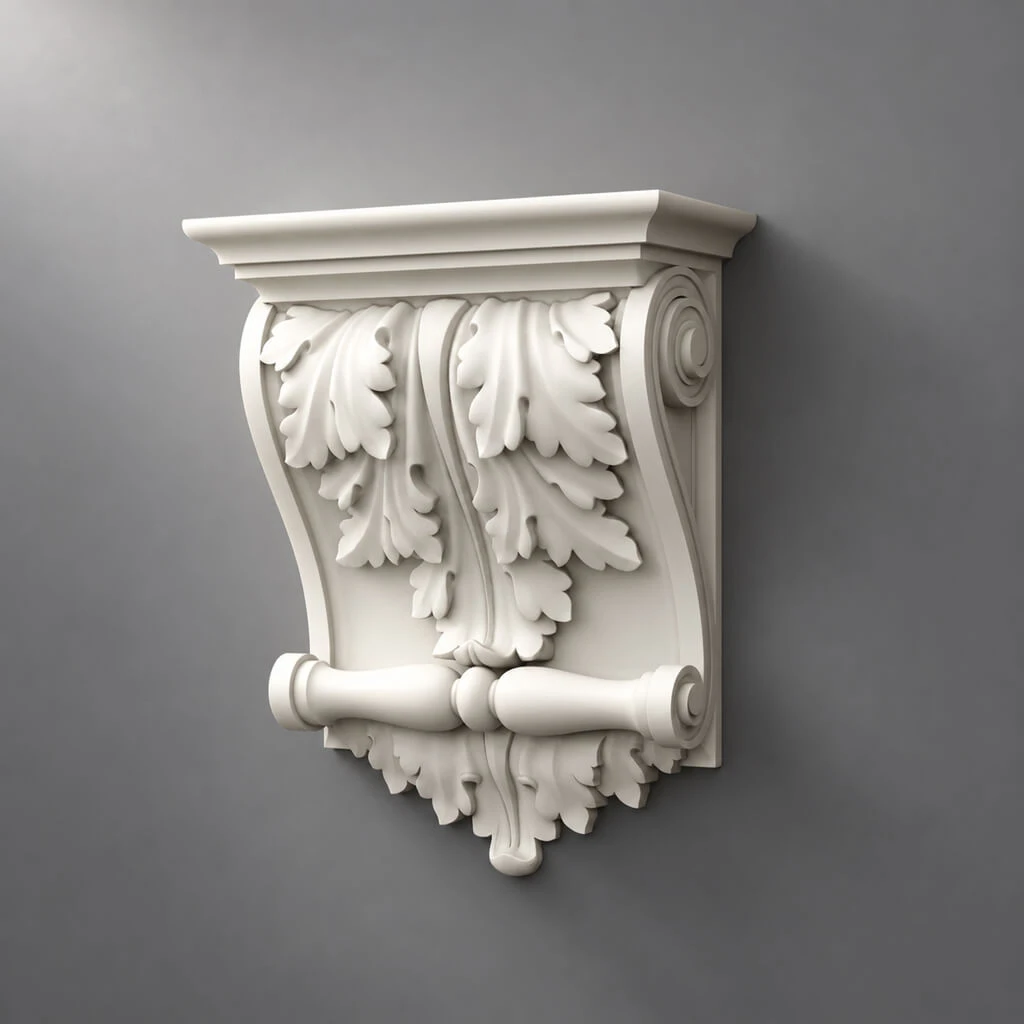
Combine with cornices and brackets.Wooden cornicesFor roofing, brackets, carved bargeboards — all of these should speak the same ornamental language as the window surrounds.
Buy carved window surrounds for a wooden houseWith a selection of decorative overlays and carved elements — in the STAVROS catalog.
Carved window surrounds for windows in modern and classic designs
For a classic facade
A classic facade is symmetry, order, rhythm. Here, window surrounds should support the architectural logic, not decorate it arbitrarily.
Key solutions:
-
Wide window surround with a classic shaped profile — minimum 85 mm
-
Corner decorative rosettes or overlays with acanthus at junction points
-
Central medallion or keystone element on the horizontal part
-
White enamel or light tinting — to connect with the facade color system
For Russian style
Here, openwork carving with traditional motifs is appropriate: solar signs, plant scrolls, birds, fish. A multi-tiered system with an upper horizontal part in the form of a "towel" and side posts with symmetrical ornamentation.
Important detail for the facade: openwork elements must be protected with primer and paint on all sides, including the edges of the cutouts. Otherwise, moisture destroys the wood in the narrow crosspieces of the ornament.
For interiors with wooden decor
Inside the premises, the requirements for coating weather resistance are lower, so there is more freedom. Natural varnish, tinting, oil — everything works. Carved window trims in a classic interior combine withwooden moldings, cornices, wooden panels — and this entire system makes the space architecturally complete.
For accent decoration of one window or a group of windows
Sometimes there is no need to decorate all windows the same way. One main window in the living room—with rich carved decor, corner overlays, and a central medallion. The others are simpler. This is a sensible approach that allows creating a focal point without excessive costs.
What is better: ready-made carved trims or decorative overlays for trims?
Direct question—direct answer.
A solid carved trim is a product where the ornament is part of the profile. The advantage is monolithic and uniform. The disadvantage is limited assortment. If you need a specific ornament, specific width, and specific wood species—finding all of this in one solid product is extremely difficult.
A trim with decorative overlays is a basic profile plus separate carved elements. The advantages are obvious:
| Parameter | Solid carved | System with overlays |
|---|---|---|
| Assortment of ornaments | Limited | Wide |
| Flexibility of selection | Low | High |
| Compatibility | Tied to one product | Any profile + any decor |
| Installation | More complex (requires cutting) | Simpler |
| Repair | Replacement of the entire strip | Replacement of an individual overlay |
| Price for the result | Higher | Below |
Decorative overlays for window casings— this is the modern standard of decorative finishing. You choose a standard casing profile (or already have one installed), add corner elements, a central medallion, side inserts — and get a full-fledged decorative system.
An assembled composition as a concept. One central medallion on the top horizontal part + paired corner rosettes + symmetrical vertical inserts along the length of the side casings = full-fledged carved finishing. With a unified style, it looks like an author's work, not like a set of random parts.
What to combine carved window casings with
A carved window surround is a strong decorative element. But it does not exist in a vacuum. Its power multiplies when it is integrated into a decorative system.
Carved window surrounds + moldings
Decorative wooden moldingson the walls create the horizontal rhythm of the room. Carved window surrounds on the windows are vertical accents. Together they form an architectural grid, in which every opening is framed, every wall is structured.
The principle of coordination: the profile of the molding should be stylistically close to the ornament of the window surround. A classic molding with ovolos + classic corner appliqués with acanthus — a system. A Scandinavian smooth molding + an openwork pierced appliqué in the Russian style — a conflict.
Carved window surrounds + cornices
wooden corniceat the ceiling — the top horizontal line of the interior. Carved window surrounds — accents in the middle zone. The baseboard — the bottom line. When all three levels are in a single ornamental language, the room gains integrity.
Carved window surrounds + carved decorative elements
Applied carved decor for a windowcan organically combine with carved furniture details, decorative overlays on doors, carved inserts into wooden wall panels. This is not repetition — it is a dialogue. One ornamental language, different points of application.
Carved window surrounds + millwork
Wooden trim— baseboards, friezes, battens, corner profiles — creates a system where the carved casing doesn't look like a lonely accent, but is part of a well-thought-out whole.
Carved casings + door framing
A logical and strong technique: casings on windows and doors — in the same style, with identical or echoing decorative elements. This creates a sense of a unified architectural solution for the entire room.
Dimensions and proportions of carved window casings
Proportion is not mathematics. It's a feeling that is developed with experience. But there are specific guidelines that help avoid obvious mistakes.
Casing width vs. window frame width. The casing should not visually overlap the frame. Standard frame 70 mm — casing 70–90 mm. Wide frame 100 mm — casing 90–110 mm.
Casing width vs. room height. Ceiling 2.5 m — casing up to 75 mm. Ceiling 3 m — casing 80–100 mm. Ceiling 3.5 m and above — casing 100 mm and wider.
Pattern relief vs. profile width. Narrow casing + large high-relief ornament = visual overload. Wide casing + small surface carving = the ornament gets lost. The relief should occupy 40–60% of the profile width.
How to frame a large window. Large window — large casing, complex decorative system. Central medallion + corner overlays + vertical inserts. Three types of decorative elements create an architectural framing proportionate to the scale of the opening.
How not to overload a small window. Small window — delicate ornament. One corner overlay in each corner or a small central element. Intricate, complex carving on a small casing will turn the window into a caricature.
Symmetry. This is a fundamental point. Asymmetrically placed overlays on the casing are an error that immediately catches the eye. Paired elements must be mirrored down to the millimeter.
How much do carved window casings cost?
Pricing in this category depends on several specific factors. Knowing these factors helps avoid overpaying and being deceived.
Material. Pine is the most affordable wood. Beech, oak, ash are more expensive. Hardwoods require more complex processing, sharper tools, and longer milling time. The price difference between pine and oak for the same profile is 30–50%.
Depth of carving. A shallow surface relief is one technological operation. High-relief carving with undercutting involves several operations. Openwork pierced carving additionally requires drilling and manual trimming of bridges. Each level of complexity increases the cost.
Size. A long casing with ornamentation along its entire length costs more than a short one. A wide casing means more material and more powerful equipment.
Finish. Sanded for painting is the base price. Ready-made white enamel adds to the cost. Multi-stage tinting is even higher.
Type of solution. A solid carved casing has a higher unit cost but fewer items in the order. A system of a base profile + decorative overlays has a lower cost per component and flexibility in configuration.
General rule: a qualitycarved window casingMade of oak with expressive ornamentation — this is a product that lasts for decades and does not require replacement. A cheap alternative made of poorly dried pine with superficial ornamentation will warp in 3–5 years, the coating will crack, and the casing will have to be replaced. Saving at the start turns into double the cost.
Installation of carved casings and decorative elements
This is not a DIY section. This section is about how not to ruin a good product with poor installation.
Surface preparation. The wall and slope surface must be even, dry, without loose layers of plaster or paint. This is more important for a carved casing than for a smooth one: the carving does not hide base irregularities.
Symmetrical marking. Before installation — marking with a pencil and level. Corner overlays are marked using a template: one cardboard template with the overlay position is used for all corners. Only this way can identical placement of paired elements be guaranteed.
Fastening. The wooden casing is fastened with finishing nails (length 40–50 mm, diameter 1.2–1.5 mm). The heads are countersunk with a nail set, the holes are filled with putty, sanded, and painted. For decorative overlays — PVA wood glue or liquid nails + additional fixation with brads.
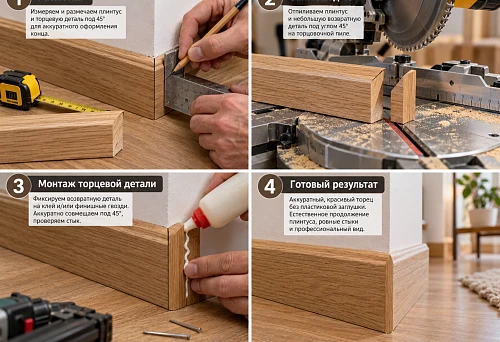
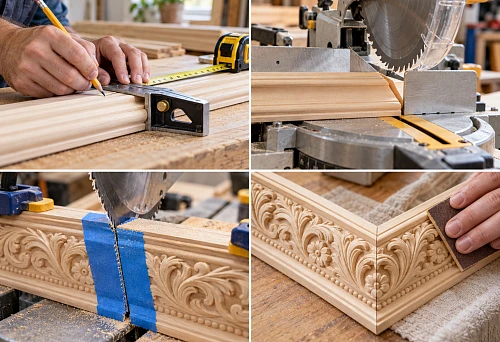
Cutting corner joints. The horizontal and vertical parts of the casing are joined at a 45° angle. The cut is made with a miter saw or a manual miter box. An uneven cut is always visible. For a carved profile, this is especially critical — any mismatch at the joint point is glaring.
Neat joining. In a composite system (casing + overlays), all components are first dry-fitted, symmetry and position are checked, then — final fixation.
How to avoid visual misalignment. Check each element with a level. A wooden casing on a wall that is not perfectly vertical may start to "wander." Do not rely on the wall, but on the window frame and a plumb line.
STAVROS: carved casings and decorative overlays for windows
Choosing a supplier for decorative window trim elements is a choice of result quality. A carved wooden element made from poorly dried wood will warp in six months, ruining the entire decorative solution.
STAVROS is a manufacturer of solid wood products with a full production cycle. Chamber drying to 8–12% residual moisture, geometry control at every stage, CNC-precision machine milling, and manual surface finishing before shipment.
In the STAVROS catalog for carved window decoration:
-
Carved overlays and decorative elements— corner, center, side elements for window and door trim
-
Window and door trim— base profiles for painting and tinting
-
Wooden moldings— for walls, ceiling transitions, decorative frames
-
wooden cornices— for ceiling design and architectural transitions
-
Wooden trim— a complete natural wood finishing system
-
Facade Decoration— carved trim, openwork elements, brackets, fascia boards
Working with retail customers, designers, architects, and construction organizations. Contact us to confirm shipping to your destination.
Frequently asked questions
Which carved window trim is best to choose?
Depends on the style of the house and interior. For a wooden house — openwork fretwork in Russian or Scandinavian style. For a classic interior — acanthus ornaments, corner rosettes, central medallions. For a modern house — a concise geometric relief. The main rule: the ornament should match the style of the other decorative elements of the house.
Where to buy carved wooden window trims?
In the catalogSTAVROS— carved overlays and decorative elements for window trims made of natural wood. Basic trim profiles, moldings, and all wooden millwork for creating a unified finishing system are also available there.
What is better: a solid carved trim or a system with overlays?
For most projects, a system with decorative overlays is preferable: it is more flexible, cheaper, allows combining any basic profile with any ornament, and is easier to install and repair.
Can carved trims be painted?
Yes. Wooden carved trims accept any coating: white and colored enamel, tinting, varnish, oil. It is optimal to paint the trim together with the overlays after installation to achieve a uniform coating without visible seams.
What patterns are suitable for a wooden house?
Openwork fretwork with traditional motifs (plant scrolls, solar signs, birds) is the most organic choice. For a more modern wooden house, geometric ornaments and Scandinavian motifs are also suitable. The main thing is the unity of style for all trims on the facade.
How to match carved decor to the facade?
Determine the stylistic category of the facade: Russian traditional, European classical, Scandinavian, contemporary. Each category has its own relief texture and ornament type. Open the catalogdecorative insertsand select elements that stylistically match your home. If in doubt — consult a STAVROS advisor.
How many overlays are needed for one window?
Minimum decorative set for one window: 4 corner elements (one in each corner) + 1 central medallion on the top horizontal part. The extended version adds symmetrical vertical inserts along the length of the side architraves. This is 7–9 elements per window.