


























Article Contents:
- What is carved window trim for the house and why is it needed
- What types of carved window trims are there for the house
- Smooth profile with carved elements
- Fully carved window trim
- Classic carved window trim
- Russian carved window trim
- Carved window trim made from solid wood
- Why wooden carved window trim is the best solution for the house
- How to choose carved window trim for a house
- By house type
- By window size
- By depth and character of carving
- By facade style
- By material and finish
- Carved window trim for a wooden house, timber house, and cottage
- For a log wooden house
- For a timber house
- For a log house
- For a country house
- For a cottage in classic style
- Which patterns and styles of carved window trims are most commonly chosen
- Geometric ornament
- Floral ornament
- Russian ornament: solar symbols and archaic motifs
- Classical symmetry and Empire motifs
- Concise carved decor for modern facades
- How to complement carved window trim for a house
- House carving and facade decor
- Wooden cornices
- Ornaments and overlays
- Trim
- Facade carved decor
- Mistakes when choosing carved window trim for a house
- Where to buy carved window trim for the house
- Manufacturer or Middleman
- What to look for when buying
- About prices: what costs how much
- Ready-made or custom order
- Why STAVROS is suitable for choosing carved window trim for the house
- Conclusion
- Frequently Asked Questions (FAQ)
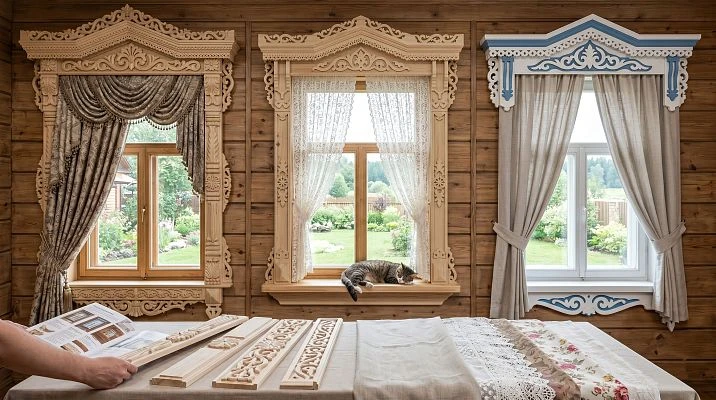
There is a moment when you look at a house and immediately understand: a soul lives here. Not pompousness, not expensive brick, not perfectly smooth plaster—but precisely that special warmth created by wooden carved decor. And at the center of this image is carved window trim for the house. A strip of wood the width of a palm, encircling the window around the perimeter, can turn an ordinary facade into an architectural statement.
This is not an exaggeration. If you have ever seen an old Russian wooden house with carved window frames—you understand what we're talking about. Lacy openwork patterns, three-dimensional blind carving, complex cornice transitions—all of this works as a single decorative system, in which carved window trim for the house are the main notes.
Today, this decorative language is experiencing a renaissance. Country house construction, timber houses, log cabins made of rounded logs, country cottages—everywhere, genuine wooden carved window trim for the house is in demand again. People want to buy it, order it, try it on their own facade. And this is exactly what this article is about: how to choose, where to buy carved window trim for the house, how not to make a mistake with the pattern, proportions, and material, and why the best result comes not from a single piece of trim, but from an integrated system of facade decor.
What is carved window trim for the house and why is it needed
Before talking about choice—we need to understand the subject of conversation without oversimplification.
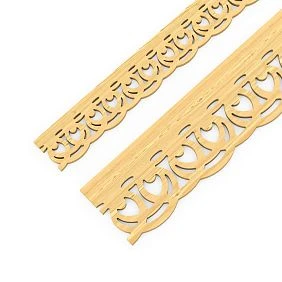
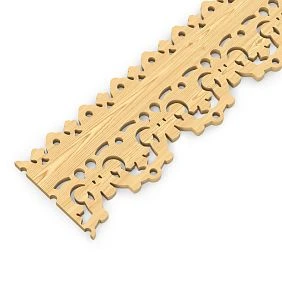
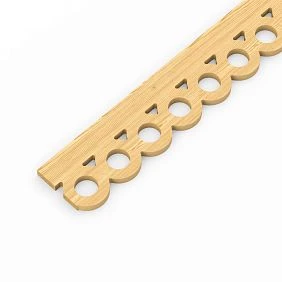
Carved window trim for the house are decorative wooden planks with ornamentation, installed around the perimeter of a window opening on the exterior of a building. They serve several purposes at once.
Structural function. The casing covers the installation gap between the window frame and the log house, timber, or wall. In wooden houses, this gap is especially important: wood 'moves,' settles, and slightly changes geometry—the casing provides a movable closure for this area without interfering with the natural movements of the log house.
Protective function. A carved window casing for the house covers the sill, insulation in the adjoining area, and the side part of the frame from direct exposure to precipitation and wind. A properly installed casing significantly increases the durability of the installation assembly.
Decorative function — the main one. This is where the reason for choosing carved casings so carefully begins. Carved window casings for the house set the visual rhythm of the facade, create a 'frame' for each window, and shape the overall architectural image of the building. They can emphasize the height of a floor, create accents between windows, and add depth and shadows to a flat wall.
A carved casing is not just an 'add-on' decoration. It is a structure-forming element of the facade.
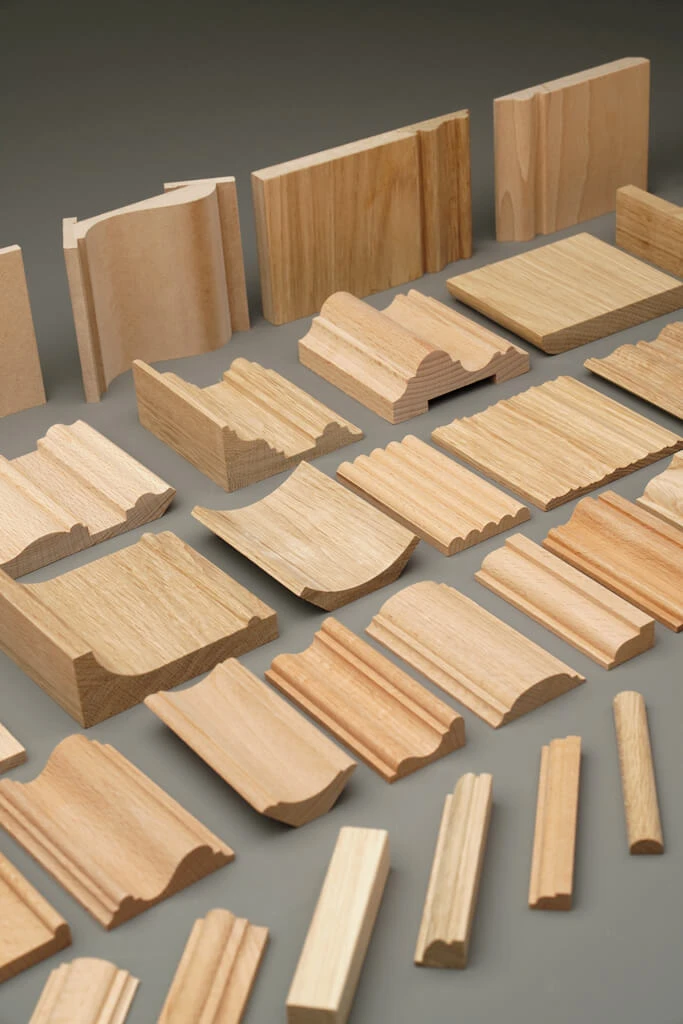
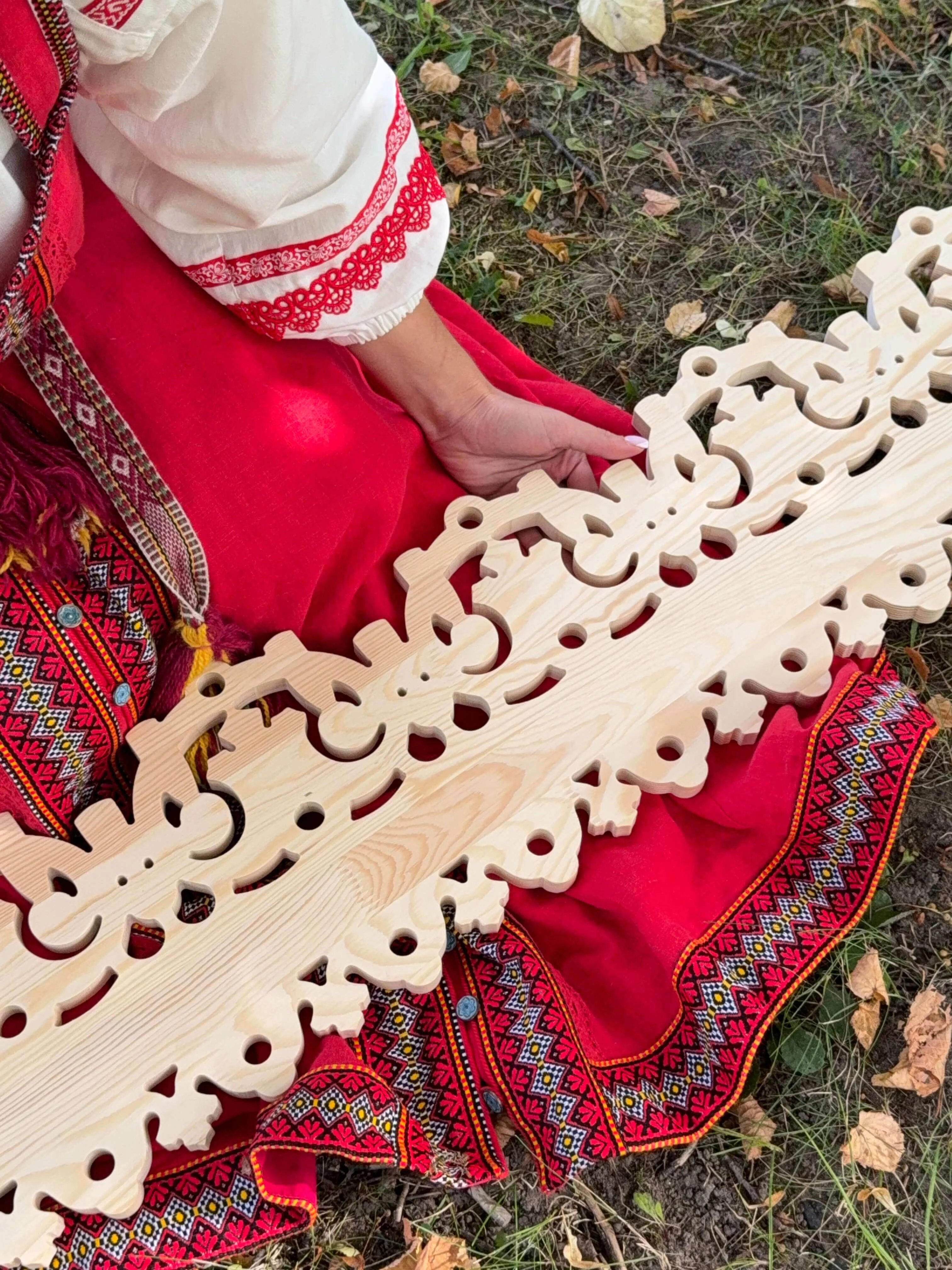
Types of carved casings for the house
The variety of carved casings is vast. But it is well-structured if you understand the key differences.
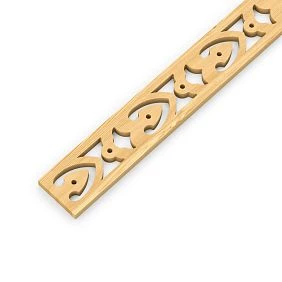
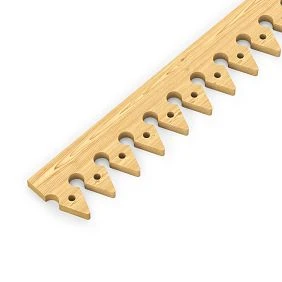
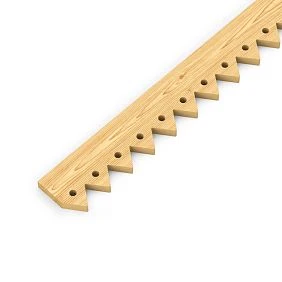
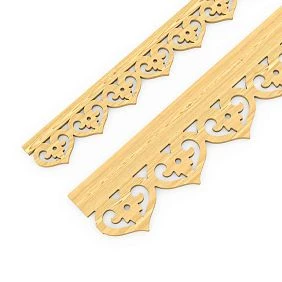
Our factory also produces:
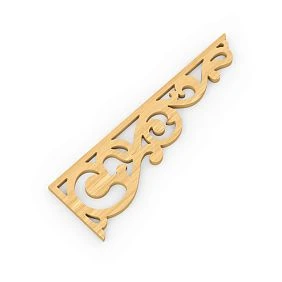
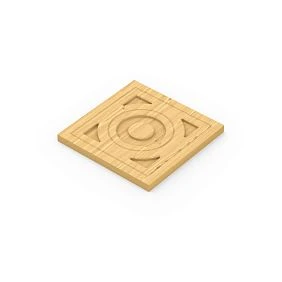
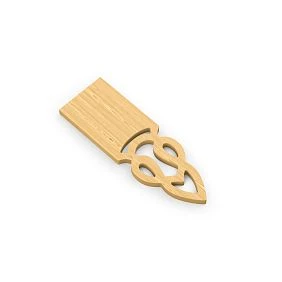
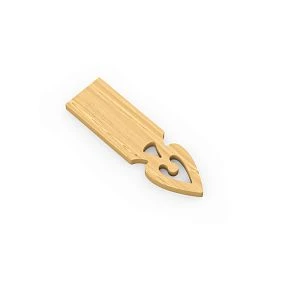
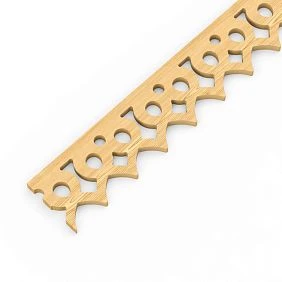
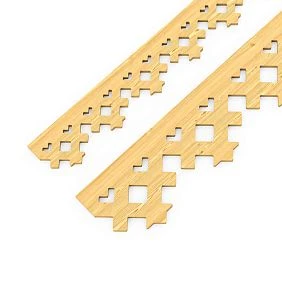
Smooth profile with carved elements
This is perhaps the most common option: a rectangular board with a profiled cross-section, onto which a carved element is applied—a towel, kokoshnik, or side posts with an ornament. Overlay carving provides volume and relief, while the base remains strong and practical.
Such a decorative carved casing for the house is beneficial because it combines the strength of the structural base with the richness of decoration. It is easier to install, resistant to deformation, and a damaged carved element can be replaced without replacing the entire casing.
Get Consultation
Fully carved casing
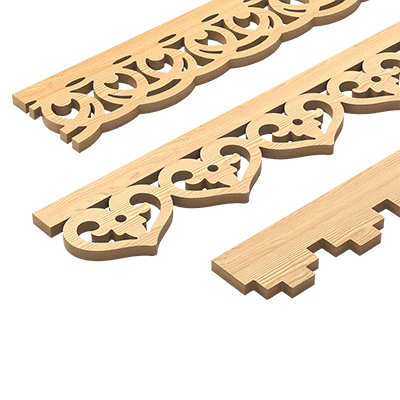
Through-cut carving across the entire panel is a classic of Russian wooden architecture. Delicate lace that shows through against the wall creates a unique visual effect. Such window trims are especially expressive on dark or contrasting walls.
Important nuance: through-cut carving requires high-quality impregnation and painting of the ends, otherwise moisture will quickly destroy the thin pattern details. But the result is unforgettable.
Classical carved window trim
A classical carved window trim is built according to strict compositional rules: vertical posts, horizontal crossbars at the top and bottom, a supra-window element (kokoshnik or straight cornice with a profile). Inside this frame are symmetrical patterns: geometric, floral, or mixed.
This type of window trim suits both traditional Russian houses and country cottages in a classical style: it doesn't shout for attention but delicately emphasizes the architecture.
Russian carved window trim
A Russian carved window trim is a special topic. A rich kokoshnik with solar symbols, floral ornamentation, or geometric rosettes; side posts with columns or balusters; a lower 'towel' with a relief motif.patterns on wooden house mouldingsIn the Russian tradition, they carried not only aesthetic but also symbolic meaning: protection of the home, images of nature, sun, fertility.
Todaycan decorate cornices, window sills and other interior elements, emphasizing their decorative value.They are experiencing a wave of interest—and it's not nostalgia but a search for identity. A Russian window trim on a modern timber house looks organic and convincing if the execution is worthy.
Carved window trim made from solid wood
Material is no less important than the pattern. A carved window surround made from solid wood is a product crafted from solid or glued boards without using an MDF base. It is solid wood that provides the necessary thickness for deep relief, the required density for fine details, and the essential durability for an exposed facade.
Solid Wood Items— is always a choice for years. The surface lives, accepts finishes, and allows for restoration. That is why buying carved window surrounds made from solid wood for your home means acquiring a product that will remain beautiful in ten years, not lose its shape in two.
Why a wooden carved window surround is the best solution for a home
Can you install a synthetic carved window surround on a house? Technically, yes. But let's examine why a wooden carved window surround for a home is worth its price.
Texture that cannot be faked. Even the most skillful polyurethane or PVC cannot replicate the living texture of wood. In sunlight, in shade, under rain — solid wood behaves differently than any synthetic counterpart. This is not a prejudice, but a difference in perception that the eye immediately senses.
Staining and painting to match any style. Buying a carved wooden window surround for your home means having complete freedom in finishing: white enamel for a Provencal-style house, natural varnish for a log cabin, walnut stain for dark timber, patina 'aging' for an English-style manor. Wood accepts any final coating with a perfect result.
Possibility of restoration. A scratched, faded, or worn wooden window surround does not require replacement, but sanding and repainting. The cost of restoration is a negligible fraction of the price of a new surround. A synthetic counterpart would have to be thrown away.
Compatibility with a wooden house. For a carved window surround for a wooden house made from solid wood, nature responds with nature: there is no visual conflict of materials, no 'fakeness'. Wood on wood — unity, harmony, integrity.
System of facade decor. It is from wood that they make wooden window cornices, Wooden patterns on houses, wood trim items for transitions and joints. Only from solid wood can you assemble a truly unified facade image: window surrounds + cornices + house carving — without compromise in materials.
Price vs. value. The cost of carved wooden window trims is higher than synthetic ones. But it's an investment in the home's image and in the durability of the decor. And—in the pleasure from the result, which is hard to measure in rubles.
How to choose a carved window trim for your home
Before buying carved window trims for your home, you need to answer five questions.
By house type
Different architectural types require different trims.
| Type of house | Suitable carved window trim |
|---|---|
| Log cabin | Wide, rich in ornament, kokoshnik, openwork or applied carving |
| Timber, profiled timber | Medium width, symmetrical ornament, applied carving |
| Frame house | Concise profile with carved elements, without overload |
| Country house, garden house | Simple but expressive — geometric ornament or solar symbols |
| Cottage in classic style | Classic type with cornice, symmetrical floral ornament |
To window size
The width of the casing should correspond to the window size and facade proportions. Practical guidelines:
-
Small windows (up to 900 mm wide): casing 80–120 mm;
-
Standard windows (900–1,400 mm): casing 100–160 mm;
-
Wide and double-leaf windows (1,400+ mm): casing 140–200 mm;
-
Decorative upper window part (kokoshnik): height — 1/3 of the window width.
Rule: the larger the window and the higher the number of floors, the wider and richer the window trim should be.
By depth and character of carving
The depth of relief sets the 'weight' of the decoration on the facade. Surface engraving (2–4 mm) — delicate, almost unnoticeable from a distance. Relief overlay carving (8–15 mm) — expressive, readable from 20–30 meters. Through openwork carving — maximum decorativeness, lace-like effect.
For houses with a high plinth and two floors, it is better to choose window trims with deep relief — a fine pattern is simply not visible from a distance.
By facade style
How to choose a carved window trim for the facade is a question that requires an honest assessment of the house's style. If the facade is restrained, minimalist — an overly rich kokoshnik will look random. If the house is a classic log cabin in Russian style — a modest smooth window trim will deprive it of character.
Tip: look at the house as a whole. What is the rhythm of the logs or beams? Is there a carved ridge on the roof, carved boards? All these elements should harmonize — and the window trim ties them into a single theme.
By material and finish
Which material is best for a carved window trim:
-
Pine — the optimal choice in terms of price, workability, and durability. It cuts well with a router and by hand; its resin content provides natural protection from moisture.
-
Spruce — similar to pine, but slightly more difficult to carve due to its fibrous nature;
-
Linden — ideal for fine openwork carving, soft and pliable, but requires good finishing;
-
Oak — maximum durability and hardness, a premium option for serious architecture;
-
Beech — geometric stability, dense texture, holds detail precision well.
Buy carved oak window trims— means investing in decades of flawless appearance. Pine is a more affordable option, but with proper finishing it is no less impressive.
Carved window trim for a wooden house, timber house, and cottage
Different types of wooden houses — different approaches to choosing window trim. Let's examine each case separately.
For a log wooden house
A log cabin is the most 'textured' type of wooden house. Rounded logs, horizontal rows, the massive weight of the wall — all this creates a background that requires proportionate decoration. A carved window trim for a log house should be wide, with a rich kokoshnik and deep carving. This is precisely where openwork through-carving,Wooden patterns on mouldingsin the Russian spirit, ornaments with solar motifs — all of this is organic and convincing.
For a timber house
Profiled and laminated timber provides a smoother, more modern facade. A carved window surround for a timber house can be slightly more modest in size, but the pattern should be precise and clear. Geometric ornament, classic symmetry, medium-depth applied carving — these work well on a timber house. Be sure to combine it withwith wooden cornicesabove the window — it emphasizes the horizontal line and adds completeness to the window unit.
For a log house
If the house is made of rounded logs — the window surround can be slightly more austere than for a hand-hewn log house. The rounding gives the wall order, and the surround should support this rhythm, not compete with it. Medium width, symmetrical ornament, clean silhouette.
For a country house
A carved window surround for a country house is a balance between expressiveness and economy. It doesn't have to be the richest pattern: a clear silhouette, a beautiful kokoshnik, and neat side posts are enough. Made of pine for painting — durable and festive.Buy Wooden Patternsseparately and add to a simple surround — another approach for those who want to create an accent without high costs.
For a cottage in a classic style
A carved window surround for a cottage in a classical style features strict symmetry, correct proportions, high-quality profile, and a floral or geometric ornament without excessive fragmentation. Here, it is appropriate to havefacade decorative elementsin a unified style with the window surrounds: corner pilasters, cornice profiles, decorative rosettes. It is precisely within such a system that a cottage looks like an architectural object, not just a 'big house'.
Which patterns and styles of carved window surrounds are most often chosen
The pattern is the heart of a carved window surround. And each type of ornament has its own character and appropriateness.
Geometric ornament
Diamonds, triangles, zigzags, stars — geometry in wood carving dates back to ancient times. It is strict, clear, and easily readable from a distance.Wooden patterns on windowsof a geometric nature are a universal solution: suitable for a Russian house, a Scandinavian one, and a modern country cottage.
Floral ornament
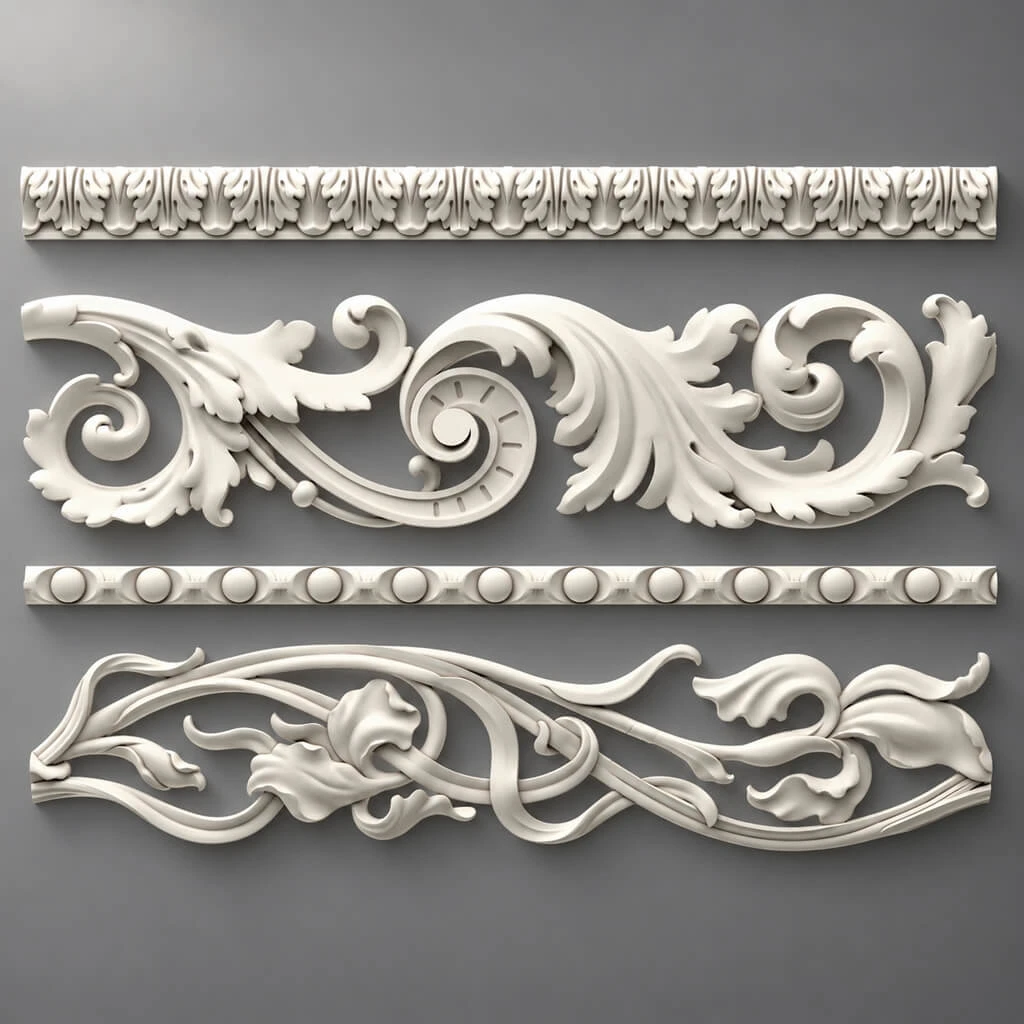
Grapevines, acanthus leaves, floral rosettes, stems — floral ornamentation is soft, lively, and rich in detail. Window surrounds with wooden ornamentation in a floral theme are especially appropriate in classical houses and estates.Carved wooden ornament – this is an art that preserves traditions of the past and finds its place in modern interiors. It can decorate any space, adding style, elegance, and individuality. Use wooden ornaments to create expressive accents, decorate facades, furniture, and walls, and you will transform your space, making it unique and irreplaceable!with floral motifs is one of the most popular requests from owners of country houses.
Russian Ornament: Solar Symbols and Archaism
Sun wheels, diamonds with a dot inside (symbol of a sown field), 'burrs' and 'grasses' — traditionalcan decorate cornices, window sills and other interior elements, emphasizing their decorative value.on window frames carry a deep semantic code. For those building a house with an ideology — this is exactly it.Wooden patterns on mouldingsin the Russian style are experiencing a renaissance today: they are ordered more and more often, not only for log houses but also for houses made of glued laminated timber.
Classical Symmetry and Empire Motifs
Laurel branches, acanthus leaves, medallions, rosettes — the classic vocabulary of European architecture. For a cottage in the Empire or Neoclassical style — this is exactly the type of pattern. Strict, expensive, solemn.
Concise Carved Decor for Modern Facades
For those who want carved decor but without 'overload' — there are window frames with minimalist relief: thin straight slits, a lightweight silhouette, one accent detail in the kokoshnik. Such decorative carved window frames for a house look good on houses in the 'modern classic' or 'eco-minimalism' style.
How to Complement Carved Window Frames for a House
A separate carved window frame is good. But the true magic begins when it becomes part of a system.
House carving and facade decor
Decorative elements for the facade of a house— it's not just window surrounds. It's a complete 'library' of decor: bargeboards, pediment ornaments, corner overlays, soffits, towels. Together they create an architectural ensemble.Wooden patterns on houses— is a comprehensive theme where each element echoes another.
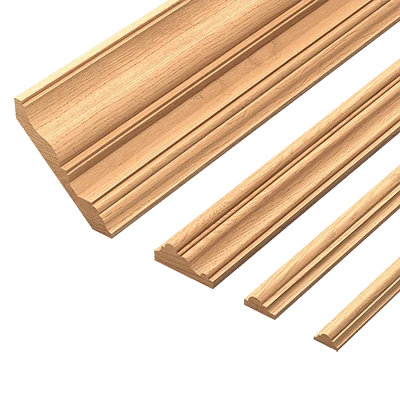
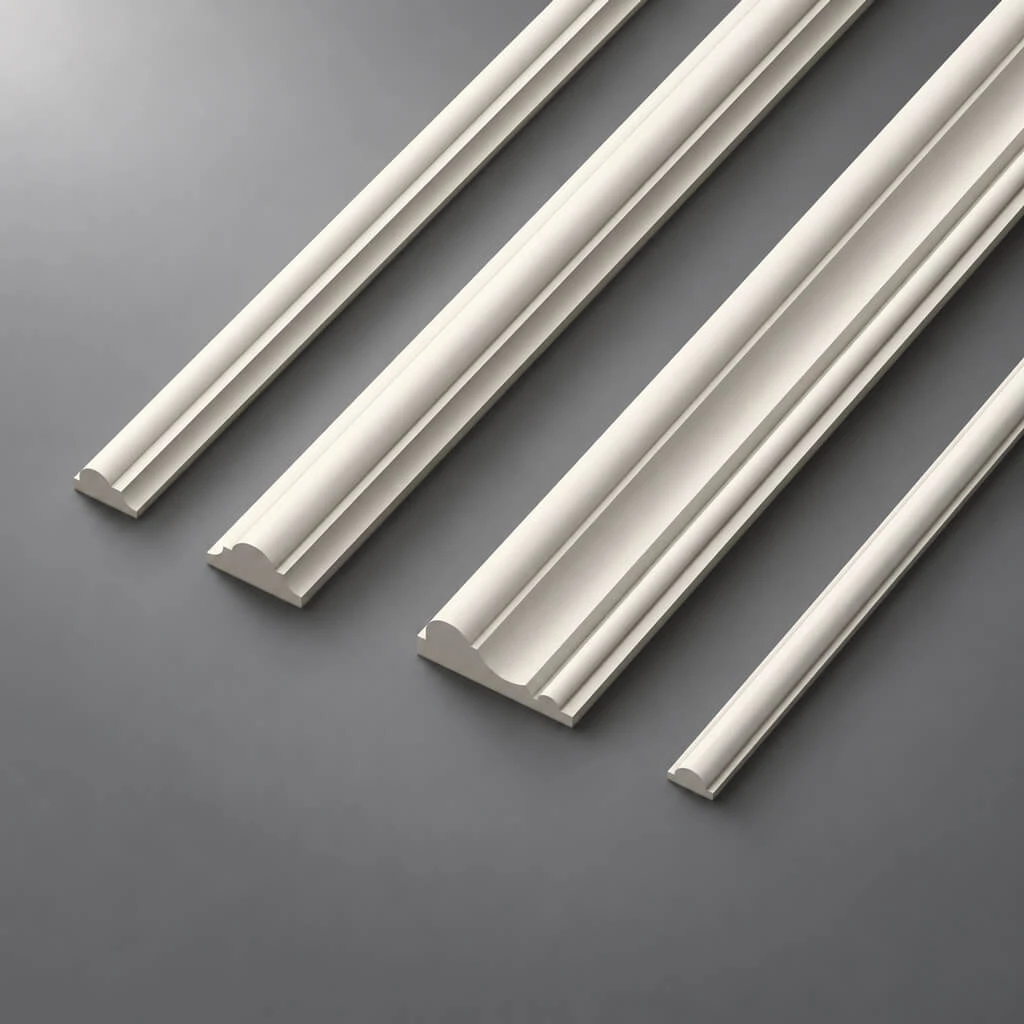
are decorative elements that cover the joints between walls and ceilings, creating smooth lines and visually increasing the height of the room. They give the interior a finished and special charm, making it more refined and expressive.
wooden cornice above the window — a horizontal accent that 'puts a dot' above the window surround. It creates shadow, adds volume, unites several windows into a single horizontal line.wooden cornice above the window opening — a classic facade technique, familiar from historical wooden houses of Russia. Wooden cornice can be purchased as a separate element or as part of a window group.
Ornaments and overlays
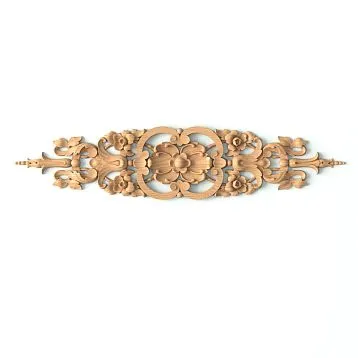
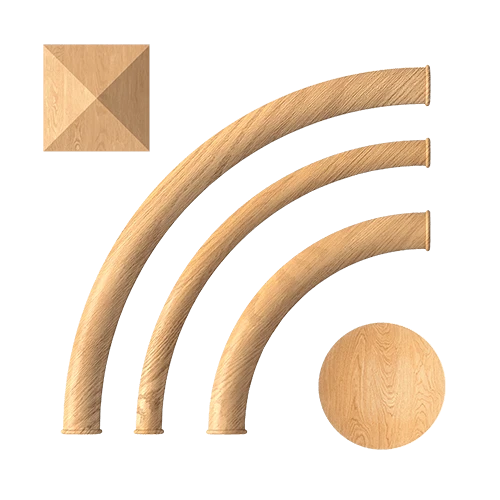
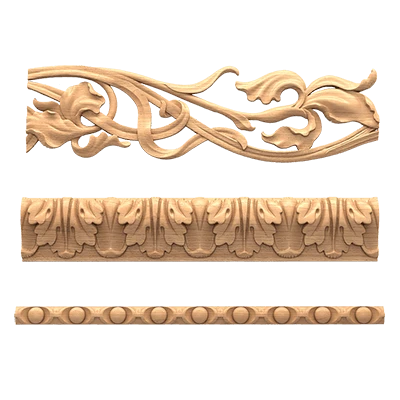
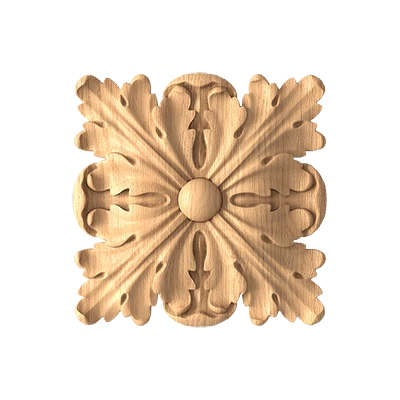
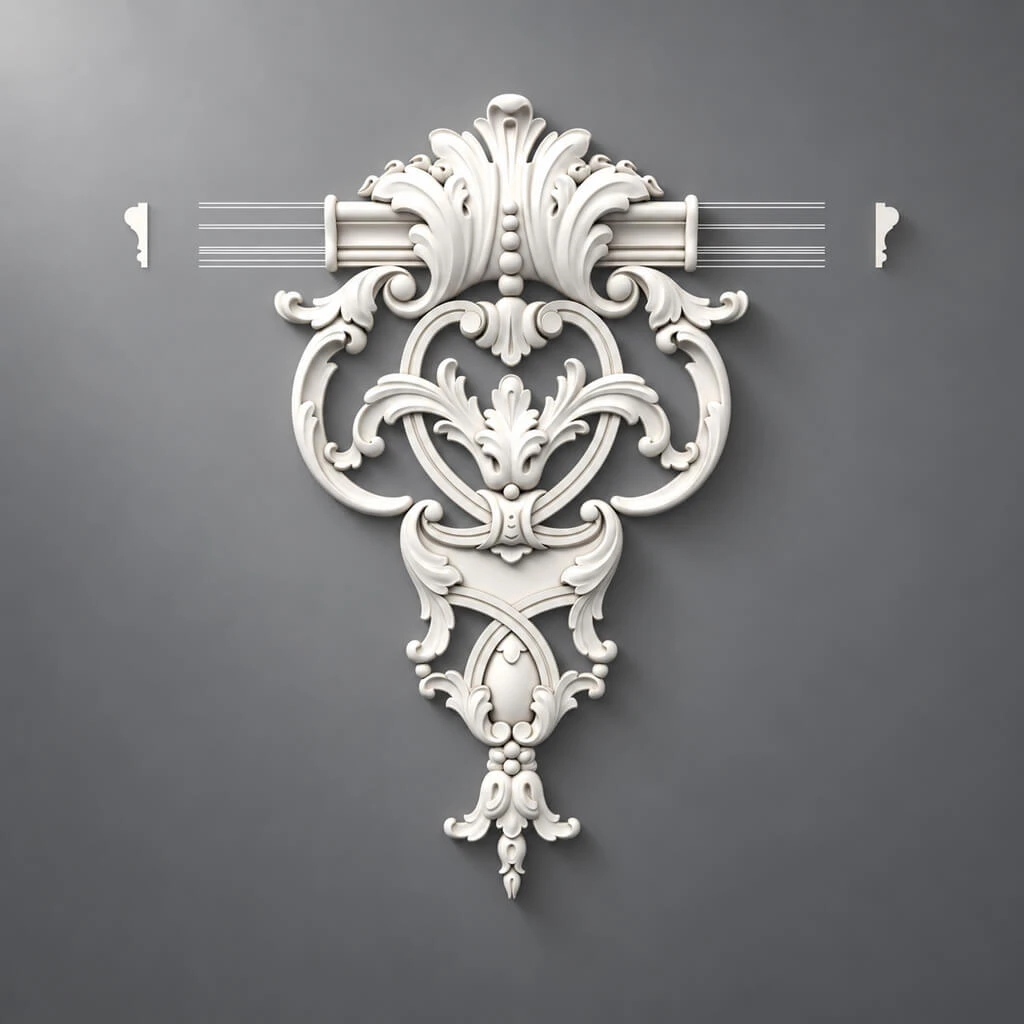
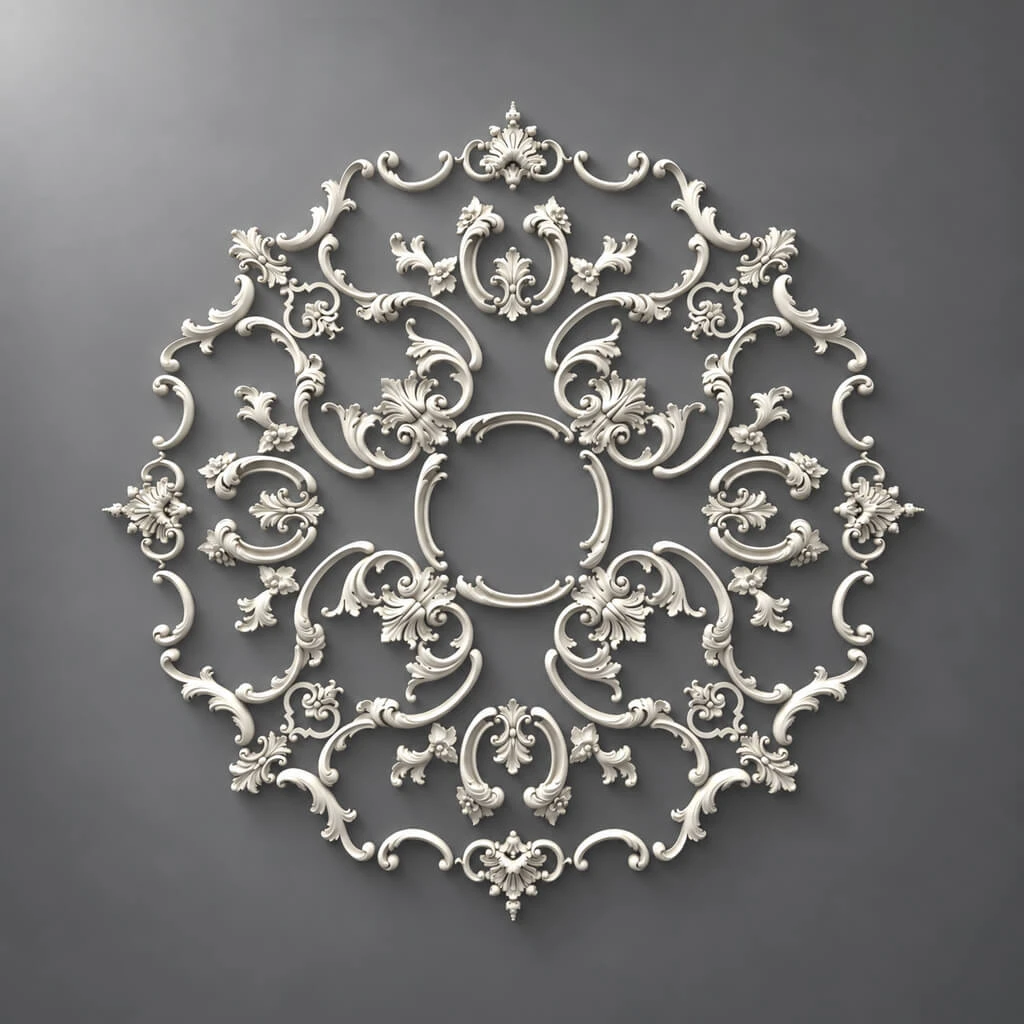
Decorative Wooden Patterns — overlay elements to enrich the surface of the window surround or wall near the window: rosettes, corner inserts, frieze strips with ornament.wooden ornament on the window surround — is both an artistic and commercial argument: such a product is more valuable and looks exclusive.
Molding
Trimming Items — glazing beads, battens, corners, profiles — cover the joints around the window surround, ensure clean abutments and complete the installation picture.Wooden trim from the same wood species as the window surround — a sign of a systematic approach to finishing.wood trim items in a single catalog with window surrounds — is what allows assembling a window unit without compromises.
Facade carved decor
facade decorative elements— this is everything that turns a set of parts into an architectural story. Corner pilasters, decorative beams, pediment ornaments, window sill brackets — each element works in tandem with the window trims, creating a unified visual narrative of the facade.
Mistakes when choosing a carved window trim for a house
Others' mistakes are the best textbook. Here's what most often goes wrong.
Too small a pattern for a large facade. If the house is two-story with large windows, and the trim is narrow with fine engraving — from a distance of 10 meters, the decor won't be visible at all. The scale of the facade requires the scale of the trim. The pattern should 'read' from the street.
Excessive carving for a simple house style. An ornate kokoshnik with multi-level openwork carving on a small garden house looks out of place — like an evening dress in a vegetable garden. How to choose the pattern of a carved window trim correctly: proceed from the scale of the house and the density of the decor overall.
Weak combination with cornices and other decor. A window trim with a floral ornament + geometric cornices + straight prichelinas = visual conflict. All facade elements should be from the same 'dictionary' of ornamentation. How to select a carved window trim for the facade — think about everything at once: trim + cornice + house carving.
Choosing only by picture without considering the material. A synthetic trim with a beautiful photo in the catalog, after two or three winters on an open facade, will turn into a source of disappointment. Open outdoor decor requires real wood with proper coating.
Lack of a unified facade composition. The most common mistake is to buy trims without considering everything else. The correct approach: first, the facade concept, then the selection of all elements — trims, cornices,Carved wooden items occupy a special place in this regard. Wood carving not only emphasizes the aesthetics of a room but also gives it warmth, lively energy, and uniqueness. In modern interiors, carved elements are widely used due to their unique properties and adaptability to any style—from classic to minimalism., moldings — as a system.
Mismatch between casing width and window opening size. A casing that is too narrow makes the window look 'bare', while one that is too wide overwhelms the wall. Proportion is key.
Where to buy carved casing for a house
Practical section for those who have already made their choice and want to know — how to avoid mistakes when purchasing.
Manufacturer or intermediary
Carved casings for the house from the manufacturer — always the preferred option. Direct price without markups, the ability to order a non-standard size or custom ornament, quality control at all stages. A middleman is convenient, but the price will be higher, and customization options — lower.
What to look for when purchasing
Material. Precise specification of wood species, moisture content (8–12% for exterior products), and type of blank (solid wood or glued panel).
Quality of carving. Clean lines, absence of tear-outs and fuzz on parts, uniform relief along the entire length. If there is a sample — inspect it in person, don't limit yourself to photos.
Availability of a system. The best supplier is one who simultaneously has Wooden casingcornices,decorative elements and trim in a unified style. This eliminates the 'profile mismatch' problem during assembly.
Completeness. Full set per window: side jambs, top and bottom elements (or a ready-made 'turnkey' kit), corner joints or cuts.
About prices: what costs how much
The price of carved window trim for a house depends on the wood species, pattern complexity, carving type, and configuration:
-
Pine, applied carving, medium pattern: 2,500–6,000 RUB/set per window;
-
Pine, openwork carving, rich ornament: 5,000–12,000 RUB/set;
-
Oak, applied carving, classic: 8,000–20,000 RUB/set;
-
Author's hand carving, exclusive: from 15,000 RUB and up.
Price for carved window trim for a house for the entire house with 6–8 windows: from 30,000 rubles for mid-range pine trim to 150,000+ rubles for oak with rich hand carving.
Ready-made or custom order
Ready-made carved window trim for a house is optimal for standard windows. Order the exact opening dimensions in advance. Ordering carved window trim for a house individually is the best option for non-standard windows or exclusive projects. Custom manufacturing time: usually 2–5 weeks.
Why STAVROS is suitable for choosing carved window trim for a house
STAVROS is a manufacturer with a full catalog of wooden decor for facades and interiors. In it, carved window trim exists not in isolation, but as part of an integrated home design system.
Carved products in the catalog. In the assortment —carved window trims for the home, house carving,Buy carved wood decor available directly from the manufacturer — high quality, with clean surface finishing.
Ornaments and patterns.wooden ornament in the STAVROS catalog — from classic floral to traditional Russian.Decorative Wooden Patterns — a separate category of overlay elements for enriching surfaces.
Cornices.wooden cornice above the window from the same collection as the trim — this is unity of profile, proportions, and style. This is what distinguishes a systematic facade from a set of random details.
Molding.Wooden trim for closing all joints around the window unit — in the same catalog. No need to search for 'compatible' trim from other suppliers.
Solid wood products.Wooden itemsAt STAVROS, it's always natural material with correctly specified wood species. Oak, beech, pine — depending on the task and budget.
Façade decor as a system.facade decorative elementsIn a unified style with window trims — this is a solution that allows assembling a complete look for the house, not just framing individual windows.
Conclusion
A carved window trim for a house is not just a 'frame around a window'. It is one of the most powerful tools for shaping the architectural image. It defines the character of the façade, creates the individuality of the house, making it recognizable and memorable.
To achieve a result that will please for a long time, it's worth thinking not about one trim, but about a system: buy carved trims for the house where you can simultaneously accessWooden cornices, Facade DecorationandTrimming Itemsin the same style and from the same material. Only this way you get not 'repaired windows', but a cohesive artistic image of the house.
STAVROS offers exactly this approach:Carved wooden items occupy a special place in this regard. Wood carving not only emphasizes the aesthetics of a room but also gives it warmth, lively energy, and uniqueness. In modern interiors, carved elements are widely used due to their unique properties and adaptability to any style—from classic to minimalism., decorative elementsfor the façade, ornaments, cornices, and moldings — all in one catalog, all from solid wood, all with unified quality control. This is a manufacturer that understands: a beautiful house begins with the right choice of every detail.
Frequently Asked Questions (FAQ)
What is the difference between pierced and applied carved window trims?
Pierced — made from a single board by through-cutting the pattern: creates an openwork, 'lace-like' effect. Applied — a separately made carved element with relief is attached to a flat base: more voluminous, resistant to deformation, practical for installation and repair.
Should carved window trim be treated before installation?
Absolutely. All wooden trims for exterior use require treatment before installation: antiseptic impregnation (especially the ends), priming, and a finish coat — paint, enamel, or varnish with a UV filter. Coating after installation is inconvenient and less effective.
How many years later does the coating on carved window trim need to be renewed?
Depending on the climate and quality of the initial finish — every 3–7 years. Southern regions with active ultraviolet light require more frequent renewal. Oil-based compositions require renewal more often than varnishes; enamels — less often. Wooden window trim is easily restored by sanding and repainting.
Can wooden carved window trim be installed on a brick or aerated concrete house?
Yes, and this is being done more and more often. Wooden trims on a stone facade are an authorial contrast of materials that works very expressively in country architecture. The main thing is proper antiseptic treatment and a ventilated gap between the trim and the wall.
How to calculate the amount of window trim needed for a house?
Measure the perimeter of each window (2 heights + width) for one set. Multiply by the number of windows. Add 10–15% for cutting and possible errors. For a house with 8 standard-sized windows (900×1,400 mm), approximately 8 sets will be needed, each including side posts and a lintel element.
How to properly join window trim at corners?
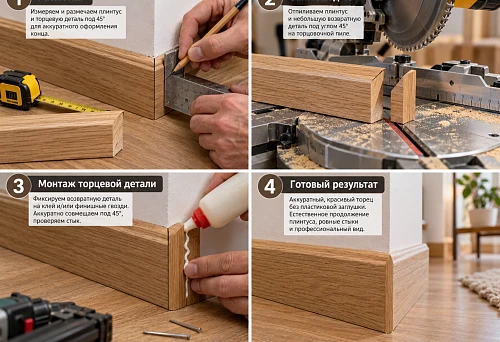
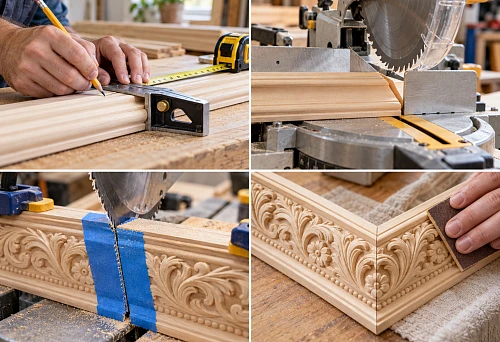
Two methods: miter cut at 45° (requires precise tools) or a butt joint using a corner overlay-rosette. For carved trims, the corner overlay is preferable: it hides mitering inaccuracies and itself becomes a decorative element.
Which pattern to choose if I'm unsure?
Geometric ornament is a universal solution for most homes: it's easily readable, timeless, and pairs with any style. Floral ornament is for classic and estate architecture. Russian ornament is for log houses and homes with a pronounced national theme.
What are the 'towel' and 'kokoshnik' in carved window surrounds?
"Kokoshnik" is a decorative element above the window in triangular, semicircular, or rectangular shape, the most decoratively rich part of the surround. "Towel" is the vertical lower element under the window with carved ornamentation, completing the vertical frame. Together they form a complete window surround ensemble.