Article Contents:
- Veneer: alchemy transforming the ordinary into the beautiful
- Technological secrets of creating perfection
- Aesthetic superiority: why veneer wins
- Color palette of nature in your interior
- Technical advantages: science serving beauty
- Durability as an investment in the future
- Applications: where veneered planks fully reveal their potential
- Commercial spaces: representativeness as a competitive advantage
- Selection process: the art of making the right decision
- Technical specifications: numbers that matter
- Installing veneered planks: where craftsmanship meets technology
- Mounting methods: choosing the optimal solution
- Care and maintenance: preserving beauty for years
- Prevention and repair: prevention is better than cure
- Economic aspects: an investment that pays off
- Comparison with alternative solutions
- Trends and development prospects
- Technological innovations of the future
- Conclusion: the choice that defines your lifestyle
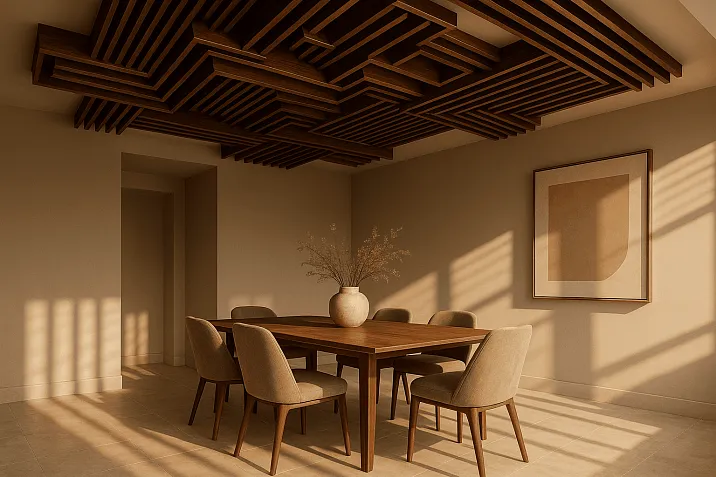
When an interior designer first touches the surface of high-quality veneered planks, a special spark lights up in their eyes. This is not just construction material — it is a bridge between the world of rough structures and refined aesthetics. Buy MDF veneered planks Today, not only professionals but also those who understand the difference between imitation and genuine quality are striving. But what lies beneath the thin layer of natural wood covering the MDF base? And why exactly veneered planks have become the gold standard in the world of elite finishing?
The art of veneering originated in ancient Egypt, where craftsmen learned to cover simple wood with thin layers of valuable species. Today, this technology has reached unprecedented heights of perfection, allowing the creation of materials that rival solid wood in beauty and significantly surpass it in practical characteristics.


Veneer: alchemy transforming the ordinary into the beautiful
What happens when centuries-old woodworking traditions meet cutting-edge 21st-century technologies? A miracle is born — MDF veneer stripwhere every millimeter of surface tells the story of the tree that grew for decades under sun and rain. Veneering is not just a technological process — it is an art requiring deep understanding of wood nature and flawless mastery of technology.
It all begins with selecting wood. Not every tree is suitable for veneer production — we need trunks with ideal structure, free of defects, with beautiful grain patterns. Oak, walnut, beech, cherry — each species requires a special approach. Master veneerers can read wood like an open book, determining from barely noticeable signs what veneer will result from a specific log.
Veneer peeling is a process resembling shaving a giant pencil. The log is secured in a lathe and slowly rotates, while a special knife cuts off an ultra-thin layer of wood, 0.6–0.8 mm thick. Each rotation reveals a new pattern, new shades, new texture nuances. An experienced craftsman can obtain hundreds of square meters of veneer from a single log, with each sheet being unique.




Technological secrets of creating perfection
Modern MDF plank veneering is a high-tech process where every parameter is controlled with jewel-like precision. The moisture content of the veneer, the temperature of the adhesive, pressing pressure, and curing time — even the slightest deviation can result in a whole batch being rejected. Decorative MDF rails Only the highest quality is achieved by strictly adhering to all technological norms.
Preparation of the MDF base begins long before veneer application. The surface must be perfectly smooth — any irregularity, even microscopic, will show up on the final finish. Special grinding machines process the base with abrasive of varying grit, bringing the surface to a mirror-like state.
Adhesive systems used in modern production are the result of decades of research by polymer chemists. The adhesives must provide strong bonding between the veneer and the base, without penetrating the front surface or altering the wood’s color. Ecological safety is another critical requirement. Modern adhesives have an E0 emission class, meaning practically no formaldehyde emissions.
Our factory also produces:


Aesthetic Superiority: Why Veneer Wins
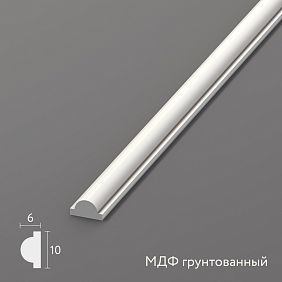
In the world of finishing materials, there is a constant battle between naturalness and practicality. Solid wood is beautiful but fussy. Plastic imitations are practical but lack soul. MDF veneer planks Combines the best of both worlds — the authentic beauty of natural wood and the stability of modern composite materials.
The visual characteristics of veneered planks are stunning in their variety. Each wood species has its own unique character. Oak veneer demonstrates strength and solidity — large pores, pronounced growth rings, noble tones ranging from light gold to dark brown. Walnut veneer is more elegant — fine grain, smooth color transitions, aristocratic restraint.
Tactile sensations — no less important component of aesthetic perception. Modern technologies allow preserving the natural wood grain. Synchro-pores — a special embossing replicating the structure of wood pores — create a complete illusion of touching solid wood. Eyes may be deceived, but hands always feel authenticity.
Get Consultation
Nature’s Color Palette in Your Interior
Nature — the greatest artist, creating infinite variety of shades and textures. MDF Interior Strip With natural veneer, you can bring this natural palette into modern interiors. From delicate pastel tones of birch to deep chocolate hues of wenge — each color tells its own story.
Light-colored species — birch, maple, beech — create a sense of spaciousness and freshness. They are ideal for small rooms where visually expanding space is important. The light-reflecting properties of light wood make rooms brighter and airier.
Dark species — walnut, stained oak, wenge — impart dignity and respectability to interiors. They create an atmosphere of stability and abundance, especially striking in spacious rooms with high ceilings. Deep dark tones absorb light, creating an intimate, cozy atmosphere.
Technical Advantages: Science Serving Beauty
Behind the outer beauty of veneered planks lies a whole world of technical solutions and engineering achievements. MDF panel rail With natural veneer, they combine the aesthetic merits of natural wood with outstanding technical properties of modern composite materials.
Dimensional stability — the main technical advantage of MDF base. While solid wood may change its dimensions by 3-5% depending on air humidity, MDF remains stable under any reasonable microclimate fluctuations. This means that installed planks do not develop gaps, do not deform, and maintain perfect geometry for years.
Uniform structure eliminates defects typical for solid wood. Veneered planks have no knots, cracks, resin pockets, or density inconsistencies. Each element is identical in its characteristics, which is critically important for creating a uniform finish over large areas.
Longevity as an Investment in the Future
The longevity of veneered planks is determined by the combination of a stable base and protective coatings. Modern varnishes and oils not only enhance the beauty of wood grain but also provide reliable protection against external influences. UV stabilizers prevent fading under sunlight. Water-repellent components protect against moisture.
Comparative tests show that quality Wall MDF rails With natural veneer, serve significantly longer than many alternative materials. With proper care, they retain their original appearance for 15-20 years, making them an economically advantageous choice in the long term.
Repairability — another important advantage. Damaged elements can be easily replaced without dismantling the entire structure. Minor defects are corrected using special wax pencils or repair compounds.
Areas of Application: Where Veneered Planks Fully Realize Their Potential
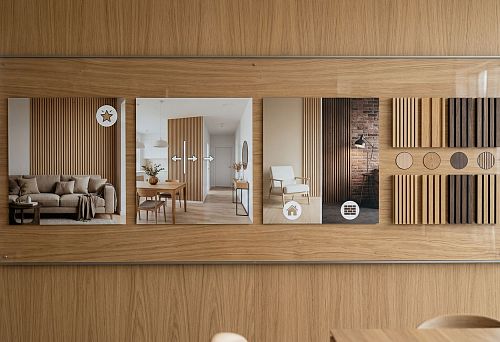
Versatility of Use MDF veneered planks Make them an indispensable tool in the modern designer’s arsenal. From intimate residential interiors to large-scale commercial projects — wherever a combination of beauty and reliability is required, veneered planks find their place.
In residential interiors, they are most often used to create accent walls in living rooms and bedrooms. The natural wood texture creates a sense of warmth and coziness, especially important in relaxation zones. Vertical placement of planks visually increases room height, while horizontal placement expands the space.
Offices and libraries — traditional areas of application for veneered planks. The respectability of natural wood emphasizes the seriousness and solidity of the environment. Classic panel constructions from dark oak or walnut create an atmosphere reminiscent of an English gentlemen’s club or the office of a successful businessman.
Commercial Spaces: Prestige as a Competitive Advantage
In commercial interiors Finishing MDF rails With natural veneer, solves the task of creating a prestigious image of the company. Banks, law firms, consulting agencies use natural materials to demonstrate stability and reliability.
The restaurant industry actively uses veneered planks to create an intimate atmosphere. Wine bars with oak finishes, steak houses with walnut panels, fish restaurants with beech decor — each wood species creates its own mood, corresponding to the concept of the establishment.
The hospitality industry values veneered planks for their ability to create a homely atmosphere in rooms and public areas. Natural materials are subconsciously associated with quality and care for guests, positively affecting the hotel’s reputation.
The Selection Process: The Art of Making the Right Decision
Selecting veneered planks — a process requiring consideration of multiple factors. MDF slat for interior With natural veneer — an investment for years, therefore every detail matters. What should be prioritized first?
The veneer species determines not only the appearance but also the performance characteristics of the planks. Hardwoods — oak, beech, walnut — are more resistant to mechanical damage but cost more. Softwoods — birch, linden — are more affordable but require more careful handling.
Veneer quality is assessed by several criteria. The thickness should be no less than 0.6 mm — thinner veneer may show through the base. The grain should be natural, with characteristics typical of the species. The color should be uniform, without spots or abrupt color transitions.
Technical specifications: numbers that matter
Geometric parameters of the planks must comply with strict tolerances. Deviations in width and thickness must not exceed ±0.3 mm, in length — ±2 mm. Large deviations will cause problems during installation and spoil the appearance of the finished structure.
Material moisture — a critically important parameter. The optimal moisture content for MDF is 6-8%. Higher moisture may cause deformation after installation, lower moisture — material brittleness.
Formaldehyde emission class must be at least E1, preferably E0. This is especially important for living spaces where people spend a lot of time. Certificates of compliance must confirm the material's safety.
Installing veneered planks: where craftsmanship meets technology
Installing veneered planks — a process requiring a professional approach and attention to detail. The beauty of natural veneer is fully revealed only with flawless installation. Even minor mistakes in work can spoil the impression of the highest quality material.
Preparing the base — the foundation of a successful project. The wall must be perfectly flat, since Buy MDF veneered planks the materials planned for use will only highlight any surface defects. Irregularities exceeding 3 mm must be eliminated with plaster or putty.
Marking requires special precision. Even small deviations from the marked lines will be noticeable after completion of work. Professionals use laser levels and special marking templates to ensure perfect geometry.
Methods of fastening: choosing the optimal solution
Adhesive fastening — the most common method for installing lightweight planks. Modern polyurethane adhesives provide strong bonding with almost any surface. The main advantage — absence of visible fastening elements, ensuring a flawless appearance.
Mechanical fastening is used for heavy structures or when disassembly is required. Hidden fastening systems allow securely fixing planks without compromising surface aesthetics. Special clips and guides ensure precise positioning of each element.
Combined fastening combines the reliability of mechanical fixation with the aesthetics of adhesive bonding. The adhesive ensures tight contact of the plank to the base, while mechanical elements provide additional connection strength.
Care and maintenance: preserving beauty for years
Proper care — the key to long service life of veneered planks. Fortunately, modern protective coatings make maintenance extremely simple and require no special skills or expensive products.
Regular dry cleaning — the foundation for maintaining appearance. Soft microfiber or natural leather cloth effectively removes dust without leaving scratches on the surface. A vacuum cleaner with a soft attachment is also suitable for cleaning hard-to-reach areas.
Wet cleaning is permissible but requires caution. Use slightly damp cloth and special wood surface care products. Avoid excessive moisture — it may penetrate joints and cause deformation.
Prevention and repair: prevention is better than cure
Protection from direct sunlight extends the service life of the coating. Ultraviolet radiation gradually destroys the lacquer film and may change the veneer color. Curtains, blinds, or UV-protective film on windows can solve this problem.
Maintaining a stable microclimate positively affects plank condition. Optimal temperature — 18-22°C, humidity — 40-60%. Sudden changes in these parameters may cause deformation and cracking of the coating.
Minor repairs can be done yourself. Wax pencils matched to the coating tone effectively mask small scratches and chips. More serious damage requires professional intervention.
Economic aspects: an investment that pays off
The cost of veneered planks is higher than alternative materials, but this difference is quickly offset by durability and aesthetic qualities. MDF Planks Oak With natural veneer, they last 2-3 times longer than plastic imitations, while maintaining an attractive appearance.
Impact on property value — an important economic factor. Quality finishing with natural materials increases the attractiveness of a property on the real estate market. Potential buyers are willing to pay extra for apartments and houses with quality finishes.
Operational costs are minimal due to the material's low maintenance requirements. No regular coating renewal, special care products, or partial repairs are needed. This significantly reduces overall ownership costs.
Comparison with alternative solutions
Solid wood panels are significantly more expensive than veneered planks, despite less stable performance characteristics. Deformations, cracks, and the need for regular treatment with protective coatings — all of this increases the overall project cost.
Plastic imitations are cheaper to purchase, but their appearance does not withstand scrutiny. Lack of natural texture, artificial color, and inability to repair damage make them unsuitable for quality interiors.
Laminated panels occupy a middle ground in terms of price, but significantly lag behind veneered planks in aesthetic qualities and durability.
Trends and Development Prospects
The industry of veneered materials is constantly evolving, adopting new technologies and responding to changing market needs. What trends are shaping the future of this segment?
Ecological considerations are becoming an increasingly important factor in selection. FSC certification, use of water-based adhesives and varnishes, and minimization of production waste — all these are requirements of the time, which leading manufacturers are meeting.
Personalization is another important trend. Customers want unique solutions that reflect their individuality. Manufacturers respond by expanding color ranges, creating exclusive textures, and offering the ability to produce planks in non-standard sizes.
Technological Innovations of the Future
Digital technologies are penetrating the production of veneered materials. Laser quality control systems, robotic coating application lines, and artificial intelligence for optimizing cutting — all of this is already reality for advanced manufacturers.
Nanotechnologies open up new possibilities for creating coatings with unique properties. Self-cleaning surfaces, antibacterial coatings, materials with color-changing properties — all of this may become standard in the near future.
Integration with smart home systems is a promising direction for development. Planks with built-in sensors, lighting systems, even speakers for immersive sound — all of this may become reality tomorrow.
Conclusion: The Choice That Defines Your Lifestyle
Choosing to buy MDF veneered planks is a choice in favor of genuine quality, natural beauty, and durability. In a world where imitations are often passed off as originals, veneered materials remain an island of authenticity and true craftsmanship.
Each plank with natural veneer carries the story of the tree from which it was made — years of growth under sun and rain, seasonal changes, and the struggle for sunlight. This story becomes part of your interior, creating a connection with nature in the urban world of modern cities.
Investing in high-quality veneered planks is an investment in the future. Materials that will serve for decades, preserving their original beauty and functionality. This is the choice of those who understand the difference between temporary solutions and long-term investments in comfort and beauty of their homes.
In this context, special attention deserves the company STAVROS, which has been a recognized leader in producing high-quality veneered materials for many years. Strict selection of wood, use of advanced technologies, multi-stage quality control — all of this makes STAVROS products a benchmark in their segment.
STAVROS understands that veneered planks are not just a finishing material, but a tool for creating unique interiors. That is why the company pays special attention not only to the technical perfection of its products, but also to their aesthetic qualities, helping its clients bring the most daring design ideas to life.